Source: The Conversation – UK – By Nophar Geifman, Professor of Health and Biomedical Informatics, School of Health Sciences, Digital Health Expert Group, University of Surrey
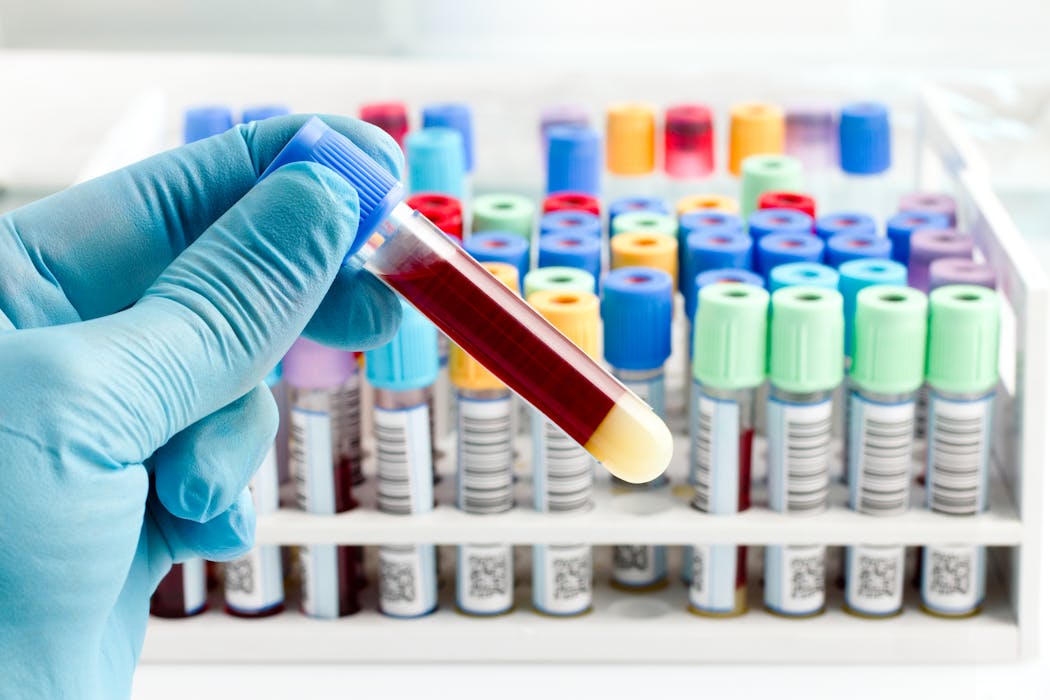
Imagine if a simple blood test could offer a glimpse into your future health. Not just whether you have heart disease or cancer today, but whether your overall risk of dying in the next five or ten years is higher or lower than expected.
It is the kind of idea that has hovered on the edges of medicine for decades, appearing in headlines every time a new biomarker is discovered. In practice, though, predicting long-term health has remained frustratingly imprecise. Doctors still rely heavily on age, weight, smoking history and a handful of routine blood tests, most of which provide only broad, population-level estimates.
At the same time, modern medicine is moving rapidly towards earlier detection and prevention. Health systems around the world are grappling with rising rates of chronic disease and ageing populations. Clinicians increasingly need tools that can identify risk before symptoms appear, allowing earlier intervention. The question is whether the clues to future health might already be circulating in our blood.
That is what our latest study explores. By measuring thousands of blood proteins in tens of thousands of people and tracking who survived or died over time, we found that certain protein patterns appear to be linked to a greater risk of dying from any cause other than accidents.
The analysis used data from more than 38,000 adults aged 39 to 70 who took part in the UK Biobank study. This is a long-running national health resource that collects biological samples and health information from half a million UK volunteers. Participants provided blood samples and ongoing comprehensive health and lifestyle data. We examined nearly 3,000 proteins in each blood sample and looked for proteins whose levels correlated with death within five or ten years.
After accounting for risk factors already known to adversely affect life expectancy, such as age, body mass index (BMI) and smoking, we identified hundreds of proteins linked to the overall chance of dying from any cause, and to the chance of dying from specific diseases, including cancer and cardiovascular disease.
Our research team then sifted those long lists to isolate a small number of proteins known as protein panels. These panels contained ten proteins that associated with ten-year risk of all-cause mortality, and six proteins that associated with five-year risk.
They improved forecasting ability over traditional models that rely on age, BMI and lifestyle factors. In statistical terms, models based only on demographic and lifestyle data performed poorly, with accuracy close to random. Models that incorporated the protein panels performed better, although the gains were still limited.
This suggests that some proteins in blood may carry hidden signals about long-term health that go beyond current disease. Traditional risk factors such as age, weight, smoking, alcohol consumption and physical activity offer important but often imprecise clues about health decline.
Blood proteins, by contrast, provide real-time snapshots of what is happening inside the body. Some may reflect slow chronic changes such as low-level inflammation, tissue breakdown or subtle organ stress. Others may indicate more immediate risks linked to the heart, blood vessels or immune system. Our study shows that the risk of dying can also be partially captured in the levels of circulating proteins.
Common risk factors like age, weight, smoking, alcohol consumption and activity levels give insight, but these clues are often imprecise. Carles Iturbe/Shutterstock
Even so, this is far from a perfect test. The predictive power is better than chance but still modest. These protein signatures cannot be treated as definitive indicators of when someone will die. They could however, with further validation, function more like a warning that may prompt early action.
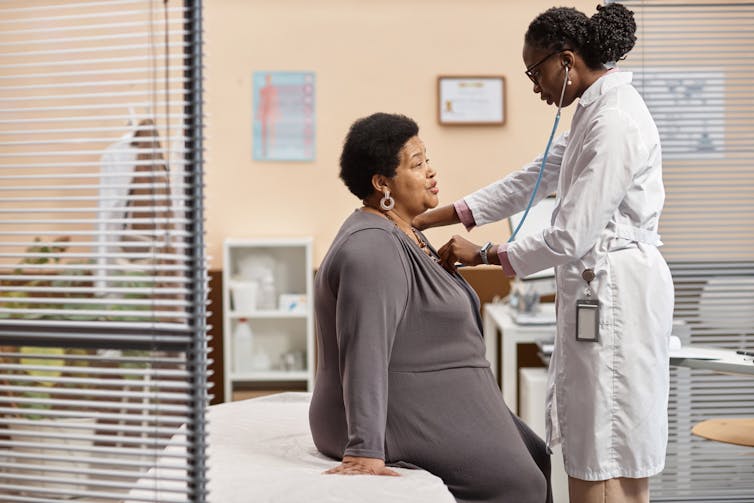
For example, a GP might advise more frequent check-ups or suggest earlier screening for cardiovascular problems if a patient’s protein profile looks concerning. An elevated profile does not signal imminent death. It signals a higher risk compared with someone who has a different protein pattern, everything else being equal.
Beyond diagnosis of current disease
The study also merely focused on associations. The proteins may not be causing the increased risk. They may simply be markers of underlying biological processes that have not yet produced symptoms. The authors further note that combining all causes of death into one outcome makes interpretation difficult. This is because the pathways leading to death vary widely. Heart disease, cancer, infections and organ failure each involve very different biological mechanisms.
Even with these caveats, the findings point to a future where routine blood tests may look beyond diagnosing current disease. A simple snapshot could alert doctors that a patient faces an elevated risk of health decline even when nothing obvious appears wrong. This could trigger earlier action such as closer monitoring, lifestyle guidance or preventive treatments.
This type of risk stratification is becoming increasingly important as populations age and chronic disease rates rise, placing growing pressure on healthcare systems. Such a test could help doctors target care more effectively.
Future research will determine how realistic this vision is. Large-scale validation studies in diverse populations will be needed to ensure that protein panels are accurate and reliable across different ages, ethnicities and health backgrounds. Only then can they be considered suitable for routine clinical use.
Further, any results would still need to be interpreted alongside a person’s medical history, lifestyle and symptoms. Protein panels could offer an extra layer of insight, helping clinicians build a fuller picture rather than replacing traditional assessments.
Nophar Geifman receives funding from UK Research & Innovation (UKRI), Kidney Research UK, the Human-Animal Bond Research Institute (HABRI), and Zoetis Inc.
Have you ever wondered what keeps you warm in your winter jacket? Most jacket insulation is made from human made synthetic fibres (polyester) or natural down from ducks or geese. Some winter jackets are insulated with something a little more surprising – bulrushes.
A biomaterials company called Ponda is using the seed heads of bulrush cultivated in peatlands to create BioPuff as insulation for puffer jackets, an alternative to synthetic fibres and goose down. These jackets help to encourage wetter farming on peatlands, a practice known as paludiculture that helps keep carbon locked into the ground.
While paludiculture is a relatively new way of farming in the UK, my research investigates how this emerging farming practice is being implemented in north-west England.
It is crucial that peatlands remain wet or are rewetted to prevent the release of stored carbon. Once drained, peatlands emit a significant amount of carbon – degraded peatlands account for 4% of the UK’s total greenhouse gas emissions. Most (88%) of these emissions come from degraded lowland peatlands, which account for only 16% of the UK’s total peatland land area.
While the complete restoration of lowland peatland habitats is necessary, in many cases landowners and managers may not be willing to fully stop cultivating or grazing on parts of their agricultural peatland. Paludiculture has been proposed by UK policymakers and researchers as an innovative farming practice. In this scenario, peat soils remain wet to reduce peatlands’ carbon emissions. Simultaneously, landowners and managers can theoretically make an income from cultivating paludiculture crops.
The UK Paludiculture Live list consists of 88 native species that could be used for farming via paludiculture. This list is divided into categories including food crops (such as cranberry and celery), growing media (Sphagnum moss), fabrics (bulrush) and construction materials (such as common reed and freshwater bulrush).
Crop trials
Over the past five years there has been a growing network of researchers, landowners, land managers, conservationists, businesses and government advisors innovating and implementing paludiculture trials in north-west England. Celery, lettuce, blueberries, bulrush, and Sphagnum moss are some of first paludiculture crops that have been grown in this region.
One of the trials, delivered in partnership with the Lancashire Wildlife Trust, a tenant farmer, the landowner and Ponda, shows how paludiculture offers an opportunity for both the farming community and the sustainable fashion industry.
This trial was established with the aim to grow bulrush on five hectares (12 acres) of previously drained lowland peat soils.
After raising the water table level to between 30cm below ground level and the peat surface, the bulrush seeds were sown in June 2024 using a drone. More than a year later, the bulrush was successfully harvested in August 2025 using a specialised digger equipped with a reed-cutting bucket.
Bulrush seeds being sown by a drone at one of Lancashire Wildlife Trust’s paludiculture trial sites.
This trial was successful due to collaboration between the organisations and people in the partnership who shared paludiculture knowledge that specifically related to this region and farming practices on lowland peatlands elsewhere in the UK.
Additionally, it is crucial that paludiculture crops are supported by a concrete business case and market route so that landowners and land managers do not have to rely on variable government funding.
Uncharted waters
While paludiculture has progressed in the UK over the past five years, there are still challenges in upscaling this farming practice.
In terms of food crops, supermarkets may not accept paludiculture grown celery or lettuce if they do not match retailer requirements. The entire paludiculture market chain faces barriers from cultivation to commercialism.
These include challenges such as managing water table levels, having robust storage, handling, and processing infrastructure, market regulations and the market visibility of paludiculture products. These hurdles can make it difficult to expand trials up to larger farm and landscape scales.
Because much of the UK’s peatlands are owned by private landowners and often managed by tenant farmers, paludiculture must develop as a financially stable farming practice to ensure there is buy in from everyone involved.
However, transitioning from conventional drainage practices to wetter farming is not just a financial matter. Landowners, farmers and peatland practitioners must acquire new peatland rewetting knowledge and be willing to grow crops on wet soils. The paludiculture trial in the north-west demonstrates how these partnerships can form and help pave the way for more wetter peatland systems.
The next time you pass a wetland area, see if you can spot a bulrush. These boggy plants can help tackle climate change by storing carbon and could even be transformed into your next puffer jacket.
Don’t have time to read about climate change as much as you’d like?
Mistletoe is a richly symbolic winter plant with an unusual life cycle. With more than half of England’s traditional orchards lost since the mid-20th century, it would be easy to assume mistletoe is disappearing too. But that’s not the case. Despite dramatic changes in land use, mistletoe in Britain and Ireland is not in decline – and in some places it may even be spreading.
Mistletoe is a name used for a variety of different plants across the world, but in Britain it generally means European mistletoe (Viscum album), a semiparasitic plant that grows on the branches of trees. Being semiparasitic means it takes water and some of its nutrients from the tree on which it grows, while also capturing its own energy through photosynthesis.
This unusual feature allows mistletoe to thrive high in the tree canopy, but also makes it dependent on both suitable host trees and the animals that help it reproduce.
Mistletoe is best known today for the tradition of kissing beneath it at Christmas, a custom that became popular in the 19th century. The plant also features in Greek and Norse mythology and has some tenuous associations with ancient druidic practices in Britain.
These cultural associations have helped cement mistletoe’s image as a plant of tradition, protection and continuity, even as its ecology proves surprisingly dynamic.
A complicated life
Mistletoe’s life cycle is more complicated than the average plant. It’s among the 6% or so of flowering plants where male and female flowers grow on separate plants. Both produce tiny green flowers that smell sweet and fruity to attract pollinators such as flies and bees. The female plant grows white berries which are coated in a sticky substance called viscin.
Mistletoe has colonised this apple tree – the leaves and branches are from different organisms. Tom Meaker / shutterstock
Seeds tend to be dispersed by birds. Species such as mistle thrushes, waxwings and blackcaps eat the berries and then either poop seeds out or wipe them off their beaks and feet onto nearby branches. The sticky coating helps the seeds adhere to the bark, where they can germinate.
The fact that it has separate male and female plants, and its reliance on birds, makes mistletoe surprisingly slow to spread. If a lone plant is growing in a new location, it could be years before more arrive. These biological constraints have traditionally limited mistletoe to places with the right combination of climate, host trees, pollinators and seed dispersers.
Orchards to gardens
Mistletoe is most commonly associated with orchards, especially apple trees, though it can also grow on poplars, lime, hawthorne and willow, and very rarely on oak. It is found all across England, but is most abundant in the south-west midlands. The plant is the official county flower of Herefordshire, where it has long been associated with the county’s orchards.
Mistletoe is evergreen, and is particularly noticeable in winter when its host sheds its leaves. Dietrich Leppert / shutterstock
Over the 20th century, however, the National Trust estimates that 56% of England’s traditional orchards have vanished. You might expect this would mean wild mistletoe is in trouble – at least in England.
But that’s not the case. Its conservation status in Britain is “least concern”, and although it is often found in orchards, mistletoe is now most common in gardens. Its abundance in the south-west midlands of England could be more due to a wet and warm climate than the presence of orchards.
Waxwings visit the UK in winter, often from Scandinavia. They feed on berries – like mistletoe. Dmytro Komarovskyi / shutterstock
There have been reports of mistletoe spreading quickly in places such as Essex and Cambridge. Blackcaps, a key disperser of mistletoe seeds, have only recently started overwintering in Britain. Warmer winters have altered their migration, increasing the time they spend in the UK and therefore the time they have to spread mistletoe seeds. Changes in bird behaviour linked to climate change may therefore be affecting the distribution of one of Britain’s most familiar plants.
If you would like to get involved with mistletoe research, there is a citizen science project run by the TreeCouncil called MistleGO! in which you can record sightings, helping researchers to track its distribution. You can also buy mistletoe growing kits, although it is best to wait to sow the seeds until early spring – and it might be several years before your mistletoe plant is large enough to harvest for your Christmas party.
Even as its traditional orchards disappear, mistletoe will remain a festive fixture. It’s a living example of how complex interactions between different species amid climate change and changing landscapes make it hard to predict what the wildlife of the future will look like.
This article would not have been possible without reference to the work of John Briggs, who has an excellent website called The Mistletoe Pages https://mistletoe.org.uk/mp/ and who authored several key works including a 2021 review in the journal British & Irish Botany titled: ‘Mistletoe, Viscum album (Santalaceae), in Britain and Ireland; a discussion and review of current status and trends’.
Source: The Conversation – UK – By Jane Aspell, Professor of Cognitive Neuroscience, Faculty of Science and Engineering, Anglia Ruskin University
If you’re driving home for Christmas (insert Chris Rea earworm here) – and by that I mean the old family home – you’re likely to be experiencing a familiar mix of excited anticipation and faint dread of being trapped in close quarters with relatives. There’s nothing like Christmas for mental time travel triggered by family traditions and well-worn arguments.
You might also have the sort of family, like mine, which often insists on perceiving and treating you as you were 40-plus years ago. Although I’m closer than I’d like to 50, my father still voices concerns about me crossing roads, “wrapping up warm” and leaving electric plugs switched on. I will forever be his little girl.
Since our identity is in part created by how those around us see us and behave towards us, the festive season can temporarily cause us to regress to a past, childish version of our self – and this isn’t always welcome. But I’d like to suggest there is a silver lining of opportunity here though: the chance to gain access to forgotten memories.
As a professor of cognitive neuroscience, I’ve been lucky enough to be able to test this idea with colleagues in my lab. In particular, we wanted to scientifically investigate whether people can recall more detailed childhood memories if they can “reinhabit” the body they had as a child.
I think it makes intuitive sense that this might work: the body I had as a child was very different to the one I currently occupy in middle age, and it seems reasonable to suppose that a (usually overlooked) aspect of our childhood memories – indeed of all memories – is the kind of body we used to have.
Our bodily experience is so ever-present that we usually don’t even notice it unless we are in some pain or discomfort. But there is not a minute of your life when your brain does not receive a mass of sensory input from and about your body: the sight of your hands in your peripheral vision, the sound of your footsteps and breathing, the beating of your heart, the contractions of your stomach and the tension in your muscles. Since the body is a big part of what we perceive in every moment, its varying form (as we age and change) should also be encoded in our memories.
As time passes, remote memories can dim, and some may even seem to disappear. But in most cases, they are never really “gone” from the brain – we just need the right trigger to reactivate them and bring them back into our consciousness.
A magic mental jigsaw
Memory is a bit like a magic mental jigsaw. Once you get hold of one jigsaw piece, a linking piece can suddenly pop into your mind. Our idea was to give participants in our lab the piece that enables them to re-experience their childhood bodies, in the hope that this could enable better access to memories that were laid down when they occupied those younger bodies.
We did this by causing our participants to experience a body illusion known as the “enfacement illusion”. We asked them to sit facing a computer screen with an attached webcam. On the screen, they could see a live video of their own face as filmed by the camera, but for half the participants there was a twist: the video had been distorted by a popular Snapchat app filter. Instead of seeing a video of their face as it currently looked, they saw their face morphed into a childlike version: their face resembled how it looked when they were a child.
The ‘enfacement illusion’ experiment explained. Video: Anglia Ruskin University.
We instructed them to move their head from side to side for 90 seconds while keeping their eyes fixed on the screen. This movement was important, as it provided crucial information to their brains about the self-relatedness of the image they saw.
Given that the face on screen moved exactly in time with their own face, this tricked the brain that the face on screen was really theirs. It was as though the participant was looking into a mirror but seeing the face they had as a child looking back at them. A different group of participants watched an undistorted video of their own face as they made the same movements.
To test whether this brief illusion has effects on memory recall, immediately after the illusion the participants took part in an “autobiographical memory interview”. The lead researcher – my former PhD student Utkarsh Gupta – followed a strict protocol to ask them a series of questions that would result in them describing an individual memory from their childhood in as much detail as possible. These interviews were recorded, and the transcripts were later numerically rated for specificity and detail by two researchers who were blind to the group that each participant had been assigned to.
Although the illusion was very brief, we found a significant difference between the memories described by participants in each group. As we had predicted, those who “re-embodied” their childlike faces were able to recall significantly more detailed memories than the participants who viewed their current face.
Our study was therefore able to show that body, self and memory interact, as indeed they must, in order for our brains to create our experience of personal identity – what makes “me” the person that I am.
Our identity necessarily evolves over time (even though our parents may sometimes have difficulty recognising that). And integrating memories of our past with the present moment is not always easy.
Our memories are not only records of the things that we previously saw, thought, smelt and heard. They are also records of the kind of body that our self used to drive around in. All our past selves are etched into our brains. The ghosts of Christmases past never really melt away.
Jane Aspell receives funding from the Leverhulme Trust and has previously been funded by Versus Arthritis, the Bial Foundation, the British Academy, The Urology Foundation and the Wellcome Trust.
Within the first notes of many classic Christmas songs, we’re transported directly to the festive season. Why is it that it’s these particular pieces of music that get us thinking of the holidays?
In his book Music’s Meanings, the popular music researcher Philip Tagg explores the ways in which we as listeners construe the music that we hear. Tagg applies semiotics, the study of how we interpret signs in the world around us, to music. These signs may be viewed differently by different people and may change their meaning over time.
To illustrate this concept, Tagg cites the example of the pedal guitar, originally drawn from Hawaiian musical tradition and carrying connotations of the islands. Eventually this instrument found its way into country music, so successfully that Tagg argues at this point, we are likely to immediately think of country music when hearing the instrument, without the concept of Hawaii ever crossing our minds.
As the pedal guitar may place us immediately within the realm of country music, there is one instrument that will likely do the same for Christmas – sleigh bells.
Sleigh bells
From light orchestral pieces such as Prokofiev’s Troika (1933), right through to Ariana Grande’s Santa Tell Me (2014), sleigh bells have long acted as convenient shorthand for composers to tell their listeners that this piece belongs to the Christmas canon.
The reasons for this link stem from the non-musical world. We associate Christmas with the winter season and snowy weather. Sleighs, through their use as transport in such weather, developed a direct associative link with Christmas, and as a result, so did the bells used to warn pedestrians of their approach. As with Tagg’s pedal guitar example, we’ve reached the point where we generally link sleigh bells directly with the concept of Christmas, rather than thinking of the intermediary idea of the sleigh at all.
Santa Tell Me uses sleigh bells to evoke a Christmassy sound.
There’s a link to the wider instrument family of bells too. Through the practice of churches ringing out their bells, particularly in celebration of the birth of Christ, larger bells have also developed a presence, not only in Christmas music, but in Christmas decorations and art.
There are other musical elements which help spread the Christmas cheer, from lyrical melodies to strident brass parts. Most of these elements though, have one thing in common. They aren’t modern sounds, or particularly common in modern pop music, and instead, they remind us of the past.
The nostalgia of Christmas
Christmas is a nostalgic holiday, in more ways than one. The word “nostalgia” initially referred to a type of homesickness, rather than the fond remembrance of a hazy past time that we more commonly use it to refer to now. But both senses of the word can be used to describe the feelings we associate with Christmas.
It’s a time where many of us travel home to family, taking not only a geographical trip, but a temporal one, immersing ourselves in a world of well-worn tradition and familiarity, where the pace of our day-to-day life doesn’t apply.
Artists know this, feeding our nostalgia through music, lyrics and visuals which evoke the past. This is possibly why most Christmas albums consist of interpretations of past holiday classics, rather than original material. It’s a straightforward appeal to the nostalgic and the familiar; if we already know a song, it’s easier to immediately latch on to this new recording. Some artists though, take the nostalgia trip one step further, emulating what is arguably the ultimate Christmas style of music – the easy listening crooner song.
Billie Eilish performs Have Yourself A Merry Little Christmas in 2023.
Whether it’s Bing Crosby or Nat King Cole, the warmth of a crooning voice nestled among light orchestral instrumentation has become inextricably linked with Christmas. It’s a sound that, unless you have a personal affinity with the style, you’re unlikely to hear much outside of the festive season.
It’s telling that when Billie Eilish performed a version of Have Yourself a Merry Little Christmas on Saturday Night Live in 2023, she eschewed her usual synthesised sounds in favour of a traditional trio of piano, drums and upright bass, and delivered the vocal in a gentle, warming tone. It all conspires to make us think of some imagined, simpler past, with chestnuts by the fire and picturesque snow settling outside.
Finally, we return to that list of the most-streamed Christmas songs. There’s one artist, and indeed one album, that makes the top 20 with two entries – Michael Bublé, with his 2011 album Christmas. Checking this album against our list of Christmas musical elements reveals a clean sweep. It’s crooned from top to bottom, features lightly orchestrated versions of classic Christmas songs, and yes, includes sleigh bells. It doesn’t get much more Christmassy than that.
Looking for something good? Cut through the noise with a carefully curated selection of the latest releases, live events and exhibitions, straight to your inbox every fortnight, on Fridays. Sign up here.
Samuel J Bennett does not work for, consult, own shares in or receive funding from any company or organisation that would benefit from this article, and has disclosed no relevant affiliations beyond their academic appointment.
Loneliness is the pain we feel when our social connections fall short of fulfilling our needs. At its core, it reflects a fundamental human need: to feel close to and connected with others. But it is also often an invisible experience.
Loneliness is not just a personal issue. It is also a workplace one. Gallup’s 2025 global workplace report showed that 22% of employees felt lonely on their previous workday. Managers weren’t immune either: 23% of them reported feeling lonely.
Workplace loneliness can affect anyone and can quietly damage engagement, wellbeing and performance. For leaders, the stakes are high. When they experience loneliness, it can subtly shape how they interact with their teams. They may communicate less openly, avoid feedback or appear withdrawn. A lonely leader influences their entire workplace environment, shaping team dynamics, morale and performance.
With our colleagues, Michelle Hammond (Oakland University) and Keming Yang (Durham University), we have studied loneliness in the workplace and found that managers might feel lonely due to the demands of their role and the things they experience during the workday. These things can vary from day to day.
As managers move up the hierarchy, their status and responsibilities increase, which can create distance from both their team members and peers. Building connections depends on being able to show vulnerability. But daily pressures, tough decisions and confidentiality constraints often make it difficult for managers to open up. As a result, their need for social connection can go unmet on some days, while on other days they may feel engaged and well connected.
Our research looked at the consequences of short-term loneliness among leaders. In two independent studies with UK managers, we found that fluctuations in their loneliness levels had implications for how they approached leadership.
On days or in situations when managers felt lonely, they engaged less with their work (this could be spending time on matters unrelated to work or letting others do their tasks) and lower levels of engagement with their team members (avoiding their employees, for instance).
The consequences of short-term loneliness for managers did not stop at the end of the workday. After a day in which they felt lonely, managers distanced themselves more from others in the evening. This created a loop that perpetuated loneliness into the next workday, and it helps to explain why managers sometimes feel lonely for extended periods.
But our research uncovered a key resource outside of work that helped managers mitigate the consequences of loneliness and stopped it from affecting them for a longer period. This centred on how important their relationships with family and friends were in their life – something we called “family identity salience”.
Managers who placed greater value on their family and social connections were better able to switch off from work in the evenings, and loneliness from their workday did not spill over into their home life. Loneliness still affected their leadership at work, but it didn’t lead them to withdraw socially at home. As a result, they were able to start the next workday with a clean slate.
This “family identity salience” motivates managers to create protective boundaries between their daily work and home domains. It helps them shift out of work mode and reconnect with their friends and families after work – especially important on tough days.
Not just managers
Although managers’ loneliness has the greatest implications for the health of the workplace overall, anyone can feel lonely at work sometimes, whether or not they are a manager.
It may be helpful for workers to explore which experiences and situations make them feel lonely. They could also consider the situations when their manager might feel lonely. On the other hand, some situations might make them feel close to others, including managers. Talking to peers and sharing experiences can help to raise awareness of the issue.
To prevent occasional loneliness, workers could make themselves (and others) aware of the networks and groups that offer connection. These could be immediate team members, peers, (senior) managers, colleagues in other departments or external partners. They should think about what connects them with each of these groups and the steps they can take to strengthen their connection with them.
In addition to workplace networks, employees should invest in their relationships outside work. They can remind themselves why these relationships matter, and keep family and social goals visible (with photos, reminders or personal notes) to reinforce a sense of identity beyond work. The energy and support resources that people gain from time with friends and family outside work can unlock benefits in the professional sphere too.
Workers can also take steps to sustain and expand their relationships outside of work. For example, they might be the one who arranges dates, phone calls and shared activities with the people they value.
The best way for people to shield themselves from workplace loneliness is by not placing all their eggs in their “work basket”. Building resilience by nourishing and investing in interests and connections to places and people is a good way to celebrate all the facets of what makes us human.
The authors do not work for, consult, own shares in or receive funding from any company or organisation that would benefit from this article, and have disclosed no relevant affiliations beyond their academic appointment.
There are nearly one million young people in the UK who are not in employment, education or training (so-called Neets). After falling in number during the 2010s before the pandemic, this cohort of 16 to 24-year-olds has grown from 750,000 only six years ago. This is a worrying shift, for several reasons.
Research shows that a spell of unemployment at a young age can have outsized negative effects on the young person. Workers who were unemployed for even a short time at a young age have to contend with lower wages and poorer mental health even years later. In the three months to October, unemployment in the UK climbed to 5.1%, with young people particularly badly affected.
To address these challenges, the UK’s autumn budget introduced a package of measures intended to help young people move into stable work. The announcements include more apprenticeships, employment support and a guaranteed work placement for long-term unemployed young people.
There were also policies aimed at young people already in work. The government previously promised to abolish the “discriminatory” lower minimum wage for 18 to 20-year-olds. As a step towards that, the minimum wage for this age group will increase by 85p per hour in April 2026, from £10 to £10.85. This compares to an increase of 50p per hour, from £12.21 to £12.71, for workers aged 21 or over.
To make sure employers play by the rules, the government also announced stricter enforcement of employment regulations, including the minimum wage, by the new Fair Work Agency.
Together, these policies have a range of implications for young workers. The minimum wage increase means that full-time workers aged over 21 will earn around £900 more per year. And those aged 18 to 20 will receive about £1,500 more.
Stronger enforcement should reduce the risk of young people being underpaid. This year, more than 40,000 workers won compensation for earning less than the minimum wage. But of course, these are only employees of firms that have been caught – the actual number of underpaid workers is likely to be higher. More effective enforcement should boost workers’ pay and living standards.
The guaranteed jobs scheme is expected to create around 55,000 jobs – and research indicates that programmes of this kind can help young people remain in employment even after the placement ends. More funding for apprenticeships also opens up opportunities for young people to enter skilled careers.
The other side of the coin
But there are also downsides. Although the minimum wage has increased substantially over the past few years from a maximum of £8.91 in 2022 to £12.71 from April, living costs have been rising as well. As the table below shows, increases in other costs have absorbed much of the rise. In particular, average monthly rents have been rising nearly as fast as the minimum wage over the last few years.
Not only that, but employers may respond to higher minimum wages by reducing new hires or relying more heavily on flexible arrangements, such as zero-hours contracts. Evidence shows that as the minimum wage has risen, employers have moved towards flexible, temporary and hourly-paid jobs.
This is concerning for full-time workers, but also for young people relying on part-time work in sectors such as hospitality or retail while studying.
For businesses, the debate has centred on rising costs, but the picture is actually more nuanced. Higher minimum wages do increase labour and administration costs. And employing young workers can be riskier – they have less experience and it is not easy for firms to know how productive they might be compared to more seasoned workers. As a result, higher minimum wages for young workers can encourage firms to substitute towards hiring older, and possibly less risky, workers.
A more cautious approach might have been for the government to address the challenges for young people sequentially, first expanding employment opportunities, and then later raising their minimum wage.
Yet the measures in the budget could create opportunities. Evidence has consistently shown that higher minimum wages can reduce staff turnover by encouraging workers to stay in their jobs, which are now worth more to them. This is particularly true for younger workers, who tend to move jobs more often. This can lower recruitment costs and reduce interruptions for businesses, especially when they have invested in training staff.
Small and medium-sized firms will benefit directly from government-funded apprenticeships. They will no longer have to pay 5% of the training costs, making employing an apprentice more cost effective. And more flexible rules around apprenticeships give businesses greater freedom to tailor training to their needs, helping them build a workforce with relevant skills at a time of increasing technological change.
Today’s young people face significant uncertainty – nobody knows what the labour market will look like in five years’ time. But these changes represent a modest step towards supporting them.
But by increasing the minimum wage at the same time, the government is taking a gamble. On the one hand, higher wages alongside policies aimed at reducing the number of Neets could help young people into work and encourage them to stay there. But on the other, the wage increase could undermine these efforts if firms begin hiring fewer young workers. In that case, even well-designed employment schemes would struggle to offset the loss of opportunities.
Source: The Conversation – in French – By Sylvain Bellefontaine, Économiste senior, spécialiste des pays émergents et en développement et analyste risque pays, en charge de l’économie internationale, de la Chine, de la Turquie, du Mexique et du Nigeria, Agence Française de Développement (AFD)
Donald Trump s’en prend avec virulence au Mexique, le présentant comme un pays trop laxiste à l’égard du passage vers son territoire de nombreux migrants, comme un hub du trafic de drogue à destination des États-Unis et comme le cheval de Troie des importations en provenance de Chine. Dans ce contexte, l’administration de gauche de Claudia Sheinbaum défend les intérêts nationaux avec pragmatisme, en donnant des gages de bonne volonté (déploiement des militaires à la frontière, mesures « anti-Chine ») mais sans représailles, contrairement au Canada. Dans un scénario de guerre commerciale universelle sans remise en cause profonde du partenariat privilégié au sein de l’espace économique nord-américain, le Mexique pourrait ressortir comme un « gagnant relatif » et préserver sa rente géoéconomique. Le scénario du pire serait bien entendu une répudiation pure et simple de l’accord Canada-États-Unis-Mexique (ACEUM, ex-ALENA) par l’administration Trump.
Les tensions commerciales avec les États-Unis mettent en exergue l’ultra-dépendance du modèle économique mexicain vis-à-vis de la première puissance économique mondiale.
Les perspectives positives pour le Mexique en termes de commerce et d’investissements amorcées sous l’administration Biden par des mesures telles que l’Inflation Reduction Act) et suscitées par le nearshoring dans le cadre de la reconfiguration des chaines de valeur sont sérieusement remises en question depuis la réélection de Donald Trump.
Pour le gouvernement mexicain, ce contexte ajoute un degré supplémentaire de complexité à une situation marquée par une croissance économique poussive, la déliquescence du secteur pétrolier, les contraintes pesant sur les finances publiques, et les divers freins au développement socio-économique et à la transition énergétique – même si le Mexique ne présente plus les fragilités macroéconomiques des années 1980-1990 susceptibles de générer une crise de balance des paiements.
Le Mexique, premier fournisseur des États-Unis
Déployé depuis les années 1960, le modèle des maquiladoras – ces usines situées à la frontière nord du Mexique (mais aussi dans le centre du pays) qui produisent des biens pour l’exportation – a structuré un écosystème transfrontalier, employant quelques 3 millions de Mexicains et profitable à des milliers d’entreprises états-uniennes.
Le Mexique a pleinement capitalisé sur les avantages comparatifs fondés sur sa position géographique privilégiée, un faible coût du travail et l’accord de libre-échange nord-américain (ALENA depuis 1994 et ACEUM depuis 2020). Des économies d’échelle ont été réalisées dans certains secteurs comme l’automobile, l’électronique et l’aéronautique.
D’après l’Organisation des Nations unies pour le développement industriel (UNIDO), le Mexique se classait en 2023 au 9e rang en termes de contribution à la valeur ajoutée manufacturière mondiale (1,8 %). Près de 80 % de ses exportations de biens manufacturés sont des produits medium et high-tech : dans ce domaine, le Mexique occupe le 4e rang mondial derrière Taïwan, les Philippines et le Japon.
Toutefois, la production locale est constituée essentiellement de chaînes d’assemblage de produits finis ou semi-finis. La valeur ajoutée domestique intégrée dans les exportations est donc estimée à seulement 9 % des exportations totales mexicaines en 2020 (OCDE, base de données TiVA, 2020.
Profitant des tensions commerciales entre Washington et Pékin depuis 2018, le Mexique est devenu en 2023 le premier fournisseur des États-Unis. Face à la tourmente commerciale mondiale depuis le début de l’année 2025, les recettes d’exportations mexicaines vers les États-Unis ont, jusqu’à présent, affiché une bonne résistance.
Évolution de l’excédent commercial bilatéral de la Chine et du Mexique avec les États-Unis entre 2000 et 2024 (en milliards de dollars). Évolution de la part de marché de la Chine et du Mexique dans les importations américaines entre 2000 et 2024 (en %). Bureau de recensement du ministère du commerce des États-Unis, FMI (DOTS), calculs fournis par l’auteur, Fourni par l’auteur
La part de marché du Mexique a culminé à 15,5 % en 2024, contre 13,5 % pour la Chine (cette dernière était à 21,6 % en 2017). La part des exportations mexicaines à destination des États-Unis a crû de 79,5 % en 2018 à 83,1 % en 2024 – essentiellement des biens manufacturés ou semi-finis, mais aussi des produits agricoles et du pétrole brut. Particulièrement décrié par Donald Trump, l’excédent commercial bilatéral sur les biens avec les États-Unis s’est accru continûment depuis 2009 pour atteindre 247 milliards de dollars (210 milliards d’euros) en 2024, au deuxième rang mondial derrière la Chine (360 milliards de dollars).
Les autorités mexicaines souhaitent désormais anticiper la révision de l’Accord Canada États-Unis Mexique (ACEUM) prévue en juillet 2026, en comptant sur une position moins radicale et plus pragmatique de l’administration Trump.
À date, le taux moyen de droits de douane acquitté par le Mexique est estimé à 5 % (contre 0,2 % en 2024), alors que le taux moyen appliqué par les États-Unis serait de 11 % au niveau mondial (contre 2 % en 2024) et de 40 % sur les importations chinoises (contre 10 % en 2024).
Selon le ministère des finances du Mexique, mi-2025, 81 % des exportations mexicaines vers les États-Unis étaient conformes à l’ACEUM et seraient entrées sur le territoire sans droits de douane, contre à peine 50 % en 2024. Cette progression s’explique notamment par des efforts en matière de traçabilité.
Par ailleurs, le Mexique cherche à diversifier ses partenaires commerciaux. Le pays est signataire de 14 autres accords de libre-échange avec une cinquantaine de pays, sans compter le nouvel Accord global modernisé avec l’UE conclu le 17 janvier 2025, en cours de ratification.
En parallèle, des tarifs douaniers de 10 à 50 % devraient être imposés sur certains produits importés au Mexique, notamment venant de pays avec lesquels il n’a pas d’accord de libre-échange. Les produits en provenance de Chine et d’autres pays sans traités de libre-échange seront taxés jusqu’à 50 % afin de protéger l’emploi dans les secteurs sensibles.
En réponse, la Chine évoque des mesures de représailles envers le Mexique, devenu un partenaire commercial important au cours des dix dernières années, notamment dans l’automobile.
Rester attractif pour les investisseurs
L’attractivité du Mexique pour les investisseurs étrangers post-pandémie pourrait être remise en cause par la politique protectionniste de l’administration Trump, à l’origine de l’attentisme de certaines firmes et d’une possible révision de leur stratégie de nearshoring vers les États-Unis ou d’autres pays.
En 2024, le Mexique a accueilli un niveau record d’investissements directs étrangers (IDE) depuis 2013 (44 milliards de dollars, ou 37 milliards d’euros, soit 2,4 % du PIB), devenant le 9e récipiendaire mondial et le 2e parmi les pays émergents, derrière le Brésil et devant l’Inde, l’Indonésie, le Vietnam et surtout la Chine, dont les flux d’IDE se sont effondrés.
Flux entrants d’IDE du Mexique, du Brésil, de l’Indonésie, du Vietnam de l’Inde et de la Chine entre 2000 et 2024 (en milliards de dollars). FMI (DOTS), calculs fournis par l’auteur, Fourni par l’auteur
Depuis 2018, la majorité des IDE entrants au Mexique sont provenus des États-Unis ; pourtant, l’encours total demeure dominé par les entreprises européennes (54 %), devant les entreprises états-uniennes ou ayant investi depuis les États-Unis (32 %), les investisseurs chinois ne constituant que 1 % des IDE installés.
Si les flux d’IDE totaux sont demeurés très dynamiques au premier semestre 2025 (+ 2 % par rapport à 2024), ils ont baissé dans le secteur manufacturier. Des projets d’investissements ont été annulés, suspendus ou reportés depuis la réélection de Donald Trump et l’adoption de la réforme judiciaire mexicaine.
Le contexte international ne suscite pas d’inquiétude majeure, à ce stade, quant à un risque de dérive des comptes externes mexicains à court ou à moyen terme.
Le déficit du compte courant de la balance des paiements est structurellement modéré (- 0,9 % du PIB en moyenne sur 10 ans et – 0,3 % du PIB en 2024) et couvert par les flux nets d’IDE (2,1 % du PIB en moyenne sur 10 ans). Les réserves de change sont confortables et la Banque centrale n’intervient pas sur les marchés des changes, laissant flotter le peso librement. L’endettement externe est aussi modéré (36 % du PIB).
Le compte courant a pu profiter des mannes records de recettes touristiques (33 milliards de dollars, ou 28 milliards d’euros, soit 1,8 % du PIB en 2024), minorant le déficit de la balance des services, et surtout de remesas, c’est-à-dire les transferts d’argent de la diaspora (64 milliards de dollars, ou 54 milliards d’euros, soit 3,5 % du PIB en 2024).
Mais ces remesas, à 97 % en provenance des États-Unis, ont chuté de 6 % au premier semestre 2025 par rapport au premier semestre 2024. Leur évolution sera importante à suivre, compte tenu de leur rôle de soutien au pouvoir d’achat de nombreuses familles mexicaines. Les transferts hors virements bancaires, soit environ les trois quarts des transferts totaux, seront assujettis à une taxe de la part des États-Unis à compter de janvier 2026.
Par ailleurs, la structure de son commerce extérieur explique les difficultés du Mexique à générer des excédents commerciaux pérennes (hors période Covid), affichant un déficit de la balance des biens de 0,4 % du PIB en moyenne sur 10 ans.
En effet, dans le cadre de l’intégration industrielle nord-américaine, les importations mexicaines de biens intermédiaires ont représenté pas moins de 77 % des importations totales en moyenne depuis 2010, induisant une forte corrélation entre la dynamique des importations et celle des exportations et limitant la valeur ajoutée nette locale.
Parallèlement, la balance énergétique du Mexique est déficitaire depuis 2015 (- 1,2 % du PIB), compte tenu de la baisse de production de pétrole et de la dépendance aux produits raffinés en provenance des États-Unis.
Le solde du compte courant est aussi affecté par le déficit substantiel de la balance des revenus primaires (- 2,7 % du PIB sur 10 ans), lié aux rapatriements de profits et dividendes des nombreuses firmes étrangères implantées sur le territoire.
Prendre son destin économique en main, sans renier l’ancrage nord-américain
Au final, les tensions avec les États-Unis interrogent sur le modèle économique mexicain.
Pays émergent, le Mexique a vu sa croissance économique plafonner au niveau de celle des pays développés en moyenne sur les vingt dernières années (1,7 %), le positionnant dans le Top 10 des pays émergents et en développement les moins dynamiques. Le niveau et la volatilité de la croissance illustrent les limites de l’arrimage au marché nord-américain, en l’absence de puissants leviers de croissance endogènes (consommation, investissement public et privé, financement de l’économie par les banques).
Préserver la rente géo-économique, diversifier les marchés d’exportation et autonomiser le régime de croissance par un renforcement de la demande interne sont les principaux défis pour les prochaines années. Y répondre passera par des réformes repoussées ad vitam aeternam, notamment en matière fiscale et énergétique, de gouvernance publique et d’environnement des affaires.
Les orientations de politiques économiques et de politiques publiques seront cruciales afin de préserver les finances publiques tout en répondant aux importants besoins en termes de dépenses sociales, de retraite et d’infrastructures pour libérer le potentiel de croissance et assurer à la fois la stabilité macro-financière, le développement socio-économique et la transition énergétique du pays.
Sylvain Bellefontaine ne travaille pas, ne conseille pas, ne possède pas de parts, ne reçoit pas de fonds d’une organisation qui pourrait tirer profit de cet article, et n’a déclaré aucune autre affiliation que son organisme de recherche.
On le sait, les ressortissants des pays africains éprouvent souvent de grandes difficultés pour obtenir des visas vers l’Europe. Mais qu’en est-il de leur capacité à voyager ou à émigrer à l’intérieur même du continent ? Examen de la situation en Afrique de l’Ouest, où des dispositions visant à rendre ces déplacements moins fastidieux existent, mais où les infrastructures de transport sont lacunaires et la tendance semble être à une méfiance toujours plus grande à l’égard des étrangers.
Citée en modèle en Afrique, la Communauté économique des États d’Afrique de l’Ouest (Cédéao) est une des huit communautés économiques régionales africaines, la seule à être parvenue à faire de son espace une région de libre circulation entre l’ensemble de ses membres. L’Afrique de l’Ouest se caractérise par une forte mobilité des personnes, surtout intra-régionale, avec de grandes variations entre pays. Cette mobilité est pourtant menacée.
Les Ouest-Africains, parmi les moins bien pourvus en termes de droits à la mobilité hors de la région
Dans le classement de la puissance des passeports dans le monde, établi en fonction du nombre de pays imposant un visa d’entrée à leurs détenteurs, les premières nationalités ouest-africaines figurent aux 65e (Ghana) et 66e (Cap Vert) rangs sur 94. En dernière position, le Nigéria est à la 86e place.
Cette capacité de mobilité limitée (le taux de refus pouvant être important) s’observe également au sein de l’Afrique. Malgré le Protocole de l’Union africaine pour la libre circulation adopté en 2018 mais ratifié par seulement 4 États membres sur 55, moins d’un tiers des voyages intra-africains se font sans visa. Par exemple, les Sénégalais ont besoin d’obtenir un visa avant le départ pour se rendre dans 22 pays africains, mais n’imposent cette obligation qu’à 6 nationalités.
Tandis que la demande de visa avant le départ est une démarche contraignante (en termes de documents à fournir et de déplacement à l’ambassade), l’achat du visa à l’arrivée a surtout un but financier. Les Sénégalais doivent acheter un visa à l’arrivée dans 9 pays africains, et 25 nationalités africaines doivent payer un visa à l’arrivée à Dakar.
En dehors d’accords régionaux, c’est bilatéralement que se prévoient des avantages. Les Sénégalais entrent sans visa en Mauritanie et au Maroc, sur une base réciproque. En revanche, s’ils entrent sans visa au Tchad, les Tchadiens doivent obtenir un visa à l’arrivée au Sénégal. Avec la France ou l’Espagne, c’est sur une base asymétrique que Français et Espagnols entrent sans visa au Sénégal, tandis que les Sénégalais se voient souvent refuser le visa avant le départ vers ces destinations. L’Afrique de l’Ouest est la région la plus ouverte au monde, mais ses citoyens peuvent difficilement circuler hors de la région.
Un espace sans visa mais pas sans contrôles ni obstacles
Dès sa création en 1975, la Cédéao avait fixé l’objectif d’assurer liberté de mouvement et de résidence des citoyens de la Communauté entre ses 15 membres. Le Protocole de 1979 a défini la démarche, sur 15 ans, et plusieurs textes sont venus ultérieurement engager les États membres. Depuis 40 ans, les citoyens ouest-africains peuvent circuler sans visa, munis d’un passeport ou d’une carte d’identité. Cette condition est d’autant plus importante qu’à la différence de l’espace Schengen, la Cédéao n’a pas supprimé les contrôles aux frontières internes. Au contraire, par voie terrestre, les postes-frontières sont multiples et les contrôles s’exercent aussi bien aux frontières qu’à l’intérieur des États.
Les « tracasseries » sur les routes – euphémisme utilisé pour désigner la corruption forcée – sont documentées depuis des années, sans grande amélioration. Même avec tous les papiers en règle, il faut souvent payer. L’absence de papiers, qu’il s’agisse du document de voyage ou du carnet de vaccination, n’empêche pas toujours de franchir la frontière, mais elle fait monter la facture.
Voyager par avion est plus sûr, mais les vols sont très chers et rarement directs, même entre grandes capitales ouest-africaines.
« Afrique : vols indirects, prix non-stop », AJ+, 2 avril 2025.
Le train est inexistant et le transport par voie maritime est rare et peu sûr. Le manque d’infrastructures ne facilite pas la mobilité.
Dans un contexte d’insécurité croissante dans la région, notamment sa partie sahélienne, les velléités de mieux contrôler les déplacements s’intensifient, justifiant l’adoption de réglementations plus sévères ainsi que l’aménagement et la modernisation des postes-frontières.
Une insécurité juridique
La Cédéao est une organisation respectueuse de la souveraineté des États membres et le droit communautaire offre généralement la possibilité d’atténuer les engagements pris. Par exemple, le Protocole de 1979 garantit la libre entrée au sein de la zone Cédéao, mais autorise les États membres à refuser celle des étrangers « entrant dans la catégorie des immigrants inadmissibles aux termes de leurs lois et règlements en vigueur », ce qui leur laisse une large marge de manœuvre.
Les règles sont aussi diversement respectées par les États membres. En 2014, ceux-ci ont décidé la création d’une carte d’identité biométrique Cédéao (ENBIC), qui servirait de document de voyage. À ce jour, seuls six États la délivrent à leurs citoyens. La même année, une série d’actes a été adoptée, renforçant substantiellement le droit de circulation et de résidence. Jusqu’alors, la liberté de circulation valait pour 90 jours, au-delà desquels l’étranger communautaire devait demander un titre de séjour. En 2014, la limite de 90 jours et la nécessité de demander une carte de résident ont été supprimées. Or, ce droit est resté méconnu dans la Communauté, y compris des policiers, des magistrats ou des avocats.
En 2024, la Commission de la Cédéao a lancé une campagne de plaidoyer dans plusieurs pays, avec un triple objectif : accélérer le déploiement de l’ENBIC, amener à la suppression de la limite de 90 jours et de la carte de résident. Plusieurs États imposent encore cette carte. Dans d’autres, sans forcément procéder à des contrôles, les autorités sont convaincues que les ressortissants communautaires devraient la détenir.
« Carte nationale d’identité biométrique | Cédéao | République de Guinée | Guinée-Conakry », 13 septembre 2020.
La méconnaissance du droit est facteur d’insécurité juridique car les citoyens peuvent être confrontés à des difficultés en fonction de leur interlocuteur, sans pouvoir faire valoir leurs droits. La réciprocité dans l’accès aux emplois est aussi très diversement appliquée d’un pays à l’autre.
L’insécurité juridique s’est récemment accentuée avec le départ de trois États membres. Le Burkina Faso, le Mali et le Niger ont quitté la Cédéao en janvier 2025 après avoir créé l’Alliance des États du Sahel (AES). L’AES est aussi un espace de libre circulation, et ses propres passeports sont en cours de création. Afin de maintenir des droits auxquels les citoyens sont très attachés, l’AES de son côté, la Cédéao du sien ont déclaré continuer à garantir réciproquement la liberté de circulation et le droit de résidence.
Néanmoins, ces droits ne bénéficient plus de la stabilité du cadre juridique multilatéral, mais s’appuient sur des déclarations sujettes aux aléas diplomatiques. Il est vrai que le trio sahélien demeure membre de l’Union économique et monétaire ouest-africaine (l’UEMOA), un espace de libre circulation partagé avec cinq États de la Cédéao (Bénin, Côte d’Ivoire, Guinée-Bissau, Sénégal et Togo), mais plusieurs questions pratiques restent ouvertes. Par exemple, les citoyens de l’AES doivent-ils aussi être dispensés de carte de résident ? Conservent-ils l’accès aux emplois sur une base égalitaire avec les nationaux des pays d’accueil ?
Ces privilèges du droit communautaire sont mis à mal au sein même de la Cédéao.
Nationalismes et xénophobie
Le départ des trois États sahéliens a pris corps dans un contexte régional – comme mondial – de montée des nationalismes. C’est au nom de la défense de leur souveraineté qu’ils ont annoncé en 2023 leur intention de quitter la Cédéao, considérée comme étant sous influence extérieure.
Le nouveau régime du Niger a d’ailleurs immédiatement abrogé une loi de lutte contre le trafic de migrants, adoptée en 2015, vue comme servant les intérêts de l’Europe, qui amenait Niamey à violer les règles de la libre circulation dans la Cédéao. Les pays européens exercent effectivement une pression sur les États ouest-africains pour les conduire à renforcer les contrôles des mobilités, contenir les migrants, développer la biométrisation des documents d’identité et de voyage, élaborer des stratégies de lutte contre la migration irrégulière. Ils influencent ainsi les politiques et le narratif autour des migrations et contribuent sans doute à la stigmatisation des migrants et à la politisation de la question migratoire.
Des expulsions collectives de citoyens ouest-africains ont été menées par des dirigeants locaux, en dépit de discours panafricanistes, sans condamnation par les institutions de la Cédéao. Dans certains pays, c’est parfois au nom du patriotisme que des collectifs appellent à l’expulsion de voisins ouest-africains, prônent la préférence nationale, réclament des restrictions aux frontières, désignent certaines nationalités comme responsables de tous les maux de la société et leur réservent des appellations dénigrantes.
Face à ces racismes qui ont souvent des racines anciennes, mais tendent à être occultés par un discours de fraternité africaine, les dirigeants de la Cédéao ont tout intérêt à valoriser la migration ouest-africaine et à soutenir le statut de « citoyens communautaires ».
La performativité des discours sur la migration n’est plus à démontrer et c’est par l’amélioration du narratif que l’on peut au mieux contribuer à l’unité ouest-africaine et endogénéiser le discours sur la migration. Encore s’agit-il de la connaître car la migration intra-régionale est aujourd’hui bien moins documentée que la migration africaine vers l’Occident, au cœur de toutes les attentions. Il en est de même du droit de la Cédéao, insuffisamment connu et enseigné dans la région.
Il est primordial de contrer les fausses informations sur la présence et l’impact des étrangers, et de développer la connaissance et la sensibilisation pour favoriser le vivre-ensemble.
Delphine Perrin ne travaille pas, ne conseille pas, ne possède pas de parts, ne reçoit pas de fonds d’une organisation qui pourrait tirer profit de cet article, et n’a déclaré aucune autre affiliation que son organisme de recherche.
Source: The Conversation – in French – By Karen Sandoval, Postdoctoral Research Fellow at the University of Ottawa, Faculté droit civil, L’Université d’Ottawa/University of Ottawa
Imaginez recevoir un message « Félicitations pour votre grossesse »… après une fausse couche. On pourrait croire à un épisode de la série techno-dystopique Black Mirror, mais c’est la réalité que certaines applications de santé féminine pourraient engendrer, transformant vos données intimes en outils exploités bien au-delà de votre écran.
Ces applications, appelées Femtech (pour female technologies) désignent l’ensemble des produits et services technologiques médicaux qui ciblent notamment la santé reproductive des femmes, à savoir la contraception, la grossesse, les menstruations et d’autres dimensions de la santé gynécologique. Le marché mondial des FemTech, évalué à 25 milliards de dollars en 2021, pourrait atteindre 100 milliards d’ici 2030, avec déjà 1400 start-up actives à cette date. Parmi les exemples notables figurent des applications telles que Flo, Period Tracker, Clue, Glow ou encore Natural Cycle.
Ces données sont sujettes à des fuites, des usages détournés ou des traitements algorithmiques souvent insensibles à la vulnérabilité des utilisatrices. Au Canada, l’ampleur du problème est palpable : même après une fausse couche, ces applications peuvent continuer à diffuser des publicités ciblées. À Toronto, l’hôpital Sunnybrook a lancé la campagne #UnsilenceTheConversation, une initiative de sensibilisation destinée à briser le tabou entourant la perte de grossesse et à dénoncer l’insensibilité des algorithmes publicitaires. Dans la foulée, l’hôpital a développé Baby Ad OptOut, une extension de navigateur qui permet aux parents endeuillés d’échapper à ces messages. Ces initiatives révèlent la collision entre intimité, publicité et données sensibles, un enjeu central des Femtechs.
Face à l’opacité de ces technologies, nous avons lancé le projet Jeunes femmes branchées, mais à quel prix ! « FemTech » et risques pour la vie privée. Soutenus par le Commissariat à la protection de la vie privée du Canada, nous cherchons à montrer dans quelle mesure la loi fédérale peine à encadrer la collecte massive de données de santé des femmes.
Si ces applications ont permis de lever certains tabous sur la santé des femmes, ce secteur fait l’objet de critiques, qu’il s’agisse de la tendance à compartimenter la santé des femmes, de l’exclusion potentielle de personnes appartenant à la communauté LGBTQIA+, ou encore des préoccupations persistantes liées à la confidentialité des données.
En effet, les applications de suivi menstruel collectent les données portant sur les dates de règle, les tentatives de conception, la géolocalisation, les données de santé mentale. Or, beaucoup d’utilisatrices ignorent que ces informations peuvent alimenter un modèle d’affaires lucratif basé sur la revente et l’exploitation de données sensibles à des fins, entre autres, publicitaires.
Un risque élevé pour la sécurité et la santé mentale
Les risques pour les utilisatrices sont multiples. Une étude de l’Université A&M du Texas souligne que 61 % de ces applications présentent des failles de sécurité majeures, ce qui expose directement ces données à des risques d’exploitation. Les garanties contractuelles sont faibles : 85 % des politiques de confidentialité manquent de clarté sur les dispositifs de sécurité, augmentant le risque d’atteinte à l’intimité et l’asymétrie d’information.
Au-delà du vol de données, perdre le contrôle sur des informations aussi intimes que ses cycles, ses tentatives de grossesse ou, au contraire, la gestion de sa contraception peut provoquer un sentiment de trahison profond. Le partage de données sensibles alimente la publicité ciblée agressive pour des traitements de fertilité ou des campagnes idéologiques anti-avortement, pouvant provoquer de la culpabilité et du harcèlement.
Enfin, l’exploitation de ces données par des employeurs ou des assureurs fait peser un risque réel de discrimination, tant sur le plan professionnel que sur le coût de la couverture santé.
Ce danger n’est plus théorique. Des litiges aux États-Unis révèlent le partage non consenti de données de santé par les applications de fertilité. En 2023, la Federal Trade Commission, équivalent au Bureau de la concurrence ou aux agences de protection du consommateur canadiennes, a sanctionné Premom pour avoir partagé des données sensibles (cycles menstruels, grossesses, localisation) avec notamment Google. L’autorité a également enquêté sur Flo Health, accusée d’avoir divulgué des informations à de tierces parties, y compris Facebook et Google. Les plaignantes affirment que Flo a autorisé Meta, Google et d’autres à obtenir des données de santé confidentielles sans consentement, grâce à des composants logiciels intégrés.
À la suite d’une action collective, Google paiera 48 millions de dollars et Flo 8 millions. Meta, jugée responsable de violation de la vie privée, interjettera appel.
Femtechs au Canada : une protection à deux vitesses ?
Face à ces menaces, les Canadiennes sont mal protégées. La Loi fédérale sur la protection des renseignements personnels et les documents électroniques (LPRPDE), datant de 2000, est inadaptée à l’économie numérique. Elle repose sur l’autorégulation des entreprises et n’encadre pas strictement les transferts de données vers l’étranger. Les données transférées aux États-Unis perdent la protection canadienne, faute d’une législation fédérale états-unienne unifiée pour le secteur privé, la protection y variant fortement selon les États.
Au Canada, l’écart se retrouve aussi entre provinces : le Québec, grâce à sa Loi 25inspirée du modèle européen, impose une confidentialité par défaut et des sanctions dissuasives, tandis que les réformes fédérales restent bloquées au Parlement.
Déjà des milliers d’abonnés à l’infolettre de La Conversation. Et vous ? Abonnez-vous gratuitement à notre infolettre pour mieux comprendre les grands enjeux contemporains.
Moderniser, encadrer, sanctionner
Pour rétablir la confiance, des mesures individuelles existent (minimisation des données, refus des traceurs, choisir des applications sobres en données), mais restent insuffisantes. Le Canada doit impérativement moderniser son cadre législatif. La réforme doit encadrer sévèrement les transferts internationaux et classer les données de santé reproductive comme « sensibles », exigeant un consentement explicite pour tout partage commercial.
Enfin, il est crucial de doter le Commissariat à la protection de la vie privée de véritables pouvoirs de sanction, incluant des amendes importantes, afin de passer de la recommandation à l’action coercitive.
Les scandales autour des Femtechs soulèvent une rupture de confiance et la fragilité de la souveraineté numérique canadienne face aux structures états-uniennes. Moderniser la loi fédérale LPRPDE n’est pas un luxe, mais une urgence pour la dignité, la santé publique et les droits à la vie privée des citoyennes. Tant que la réforme fédérale demeure en suspens, les données intimes de millions de Canadiennes risquent d’être exploitées à des fins commerciales ou pourraient être transférées aux forces de l’ordre de juridictions où le droit à l’avortement est restreint.
Une action du gouvernement fédéral en vue de réformer la loi fédérale est donc impérative, car la santé des femmes, déjà sujette à des inégalités systémiques, ne doit pas devenir un vecteur de vulnérabilité juridique supplémentaire.
Karen Sandoval a reçu des financements du Commissariat à la protection de la vie privée du Canada.
Céline Castets-Renard a reçu des financements du Commissariat à la protection de la vie privée du Canada.