Musées, expositions et sinologie : les nouveaux instruments du soft power chinois

Source: The Conversation – in French – By Stéphane Aymard, Ingénieur de Recherche, La Rochelle Université

Alors que de nombreuses critiques visent son système politique et certaines de ses pratiques économiques, la Chine multiplie les initiatives d’influence à l’étranger. En France, musées, expositions et centres de sinologie jouent un rôle clé dans la diffusion d’une image apaisée et avantageuse du pays, centrée sur sa richesse culturelle et artistique ainsi que sur ses liens d’amitié avec la France qui remontent à plusieurs siècles. Examen des principaux instruments de ce soft power chinois.


En France, et plus généralement dans les pays occidentaux, la République populaire de Chine a été, ces dernières années, largement critiquée pour sa volonté d’hégémonie, pour la concurrence déloyale que ses industries représentent pour leurs homologues européennes, pour les conditions de travail, la liberté d’opinion, la politique conduite dans la région du Xinjiang (Ouïghours) ou encore les tensions autour de Taïwan, liste non exhaustive.

Face à ces nombreuses critiques de son modèle, Pékin a décidé de développer des actions visant à redorer son image. Ces actions relèvent de ce que le politologue américain Joseph Nye a désigné dans les années 2000 comme le soft power : il s’agit de mettre en œuvre des stratégies d’influence par la diplomatie, l’aide économique ou encore la culture. Le but est d’améliorer sa réputation, d’orienter en sa faveur les décisions des acteurs internationaux et d’attirer les acheteurs étrangers.

Critères de définition du soft power
Critères de définition du soft power selon Mc Clory. Cliquer pour zoomer.

Après l’implantation dans de nombreux pays au milieu des années 2000 des instituts Confucius qui visent à promouvoir la langue et la culture chinoise à l’international, de nouvelles actions ont émergé, ciblant davantage le volet culturel, historique et artistique. Celles-ci passent par les musées et les expositions.

Musées et expositions comme vision bienveillante de la culture chinoise

En 2001, Paris et Pékin signent une convention sur l’ouverture d’un centre culturel chinois en France. En 2002, le Centre culturel de Chine est inauguré à Paris sur 4 000 mètres carrés. C’est le premier centre de ce type dans un pays européen. Le jardin de style chinois comprend une reproduction de la Cité interdite et une statue de Confucius, deux symboles forts de la culture chinoise. En plus des cours de langue, le centre organise de nombreuses manifestations culturelles et dispose d’une bibliothèque-médiathèque.

En dehors des fêtes traditionnelles ou des festivals thématiques, les expositions y tiennent une place majeure. Leurs thèmes sont naturellement orientés vers une présentation harmonieuse et apaisée de la Chine (céramiques, calligraphie, porcelaine, zodiaque, costumes, médecine, pandas), et elles cherchent souvent à mettre en avant les relations amicales entre les deux pays (par exemple, en septembre 2025 ont été organisés le troisième festival mode et culture sino-français et une exposition sur les premiers dictionnaires français-chinois).

C’est aussi l’occasion de présenter la Chine comme destination touristique et de mettre en valeur sa diversité. Les provinces font régulièrement l’objet d’expositions aux titres évocateurs : « Xinjiang, une destination incontournable », mai 2025 (qui montre le côté tourisme et diversité, y compris chez les Ouïghours, pour contrer les critiques) ; « Pourquoi le Yangtsé est-il si fascinant », 2025 ; « Exposition thématique sur le tourisme culturel du Zhejiang », 2023 ; « Saveur de Chine, voyage gastronomique au Ningxia », 2023 ; et bien d’autres encore.

Peu après l’ouverture du Centre culturel de Chine à Paris, une vingtaine d’instituts Confucius ont été créés en France. Vingt ans après, il y en a aujourd’hui 17, répartis dans les différentes régions françaises. Ils associent le monde universitaire, les collectivités territoriales, le monde associatif.

La moitié d’entre eux sont des instituts cogérés par une université française et une université chinoise. Ces instituts culturels chargés de diffuser la culture et la langue s’inspirent du réseau de l’Alliance française (créée dès 1883), du British Council (1934), du Goethe Institute (1951), de l’Institut Cervantes (1991) et d’autres (une vingtaine de pays). Ils visent à faire connaître le pays de façon positive et attractive à travers sa culture : littérature, gastronomie, tai-chi, kung-fu, calligraphie, cérémonie du thé, etc.

Ainsi, ce soft power a été agrégé à la notion confucéenne d’harmonie comme fondement de la société (unité, camaraderie, paix et coordination permettant de s’appuyer sur la force morale plutôt que physique). Néanmoins, le Sénat a ouvert en juin 2021 une mission d’information conduisant à un rapport d’information intitulé « Mieux protéger notre patrimoine scientifique et nos libertés académiques ». Ce rapport abordait la question des instituts Confucius et rappelait que plusieurs dizaines ont fermé en Europe et en Amérique du Nord.

Aujourd’hui, ces instituts sont gérés par une fondation chinoise qui s’inspire dans son fonctionnement du modèle des alliances françaises. L’objectif est la dépolitisation de la dimension culturelle. Ainsi, tout ce qui est sujet à polémique est évité pour laisser la place aux sujets consensuels sur l’histoire, les traditions, les arts, le commerce.

Musées et expositions comme témoins de l’amitié franco-chinoise

L’amitié franco-chinoise repose sur plusieurs siècles de coopération et notamment sur les premiers échanges entre l’empereur Kangxi et Louis XIV.

Cette relation sert de levier pour renforcer les coopérations. Dès 2011, la coopération entre la Cité interdite et le musée du Louvre s’est renforcée, avec l’exposition « La Cité interdite s’expose au Louvre », consacrée à « l’histoire croisée des deux dynasties » et alliant architecture et œuvres d’art (costumes impériaux, portraits d’empereurs, objets de jade, porcelaine, bronze…). L’objectif est d’admirer la Chine impériale et son raffinement. L’idée est aussi de mettre en avant les similitudes et différences entre les deux pays et leurs cultures.

Plus tard, deux expositions « La Chine à Versailles. Art et diplomatie au XVIIIᵉ siècle » auront lieu pour célébrer le 50e anniversaire de l’établissement des relations diplomatiques (1964).

La première exposition, en 2014, vise à mettre en évidence les relations entre les deux pays dès le règne de Louis XIV, les liens d’admiration et d’intérêt réciproques et de nombreuses découvertes mutuelles. La famille royale à Versailles avait un attrait pour tout ce qui venait de Chine. L’exposition rappelle aussi le rôle des missionnaires jésuites envoyés en Chine et la naissance de la sinologie française. Au XVIIIᵉsiècle, il y a eu en France une fascination pour les produits artistiques chinois (porcelaines, étoffes, papiers peints, meubles en laque…). En 1775, la reine Marie-Antoinette fit aménager un jardin anglo-chinois, à proximité du petit château de Trianon avec un « jeu de bague chinois » (sorte de manège avec des paons, dragons et figures chinoises).

L’opération a été renouvelée en 2024 à l’occasion du soixantième anniversaire. Le château de Versailles et le musée du Palais de la Cité interdite ont présenté une exposition consacrée aux échanges entre la France et la Chine aux XVIIᵉ et XVIIIᵉ siècles. Celle-ci présente des collections des deux musées liées aux sciences, à l’art, à la diplomatie et aux échanges commerciaux. Elle montre comment, à la cour de France, la Chine et l’art chinois sont appréciés (importations, transformation, imitation des produits de la Chine…), et que l’art chinois a constitué une source d’inspiration pour les artistes français (peinture, architecture, jardins, littérature, musique, sciences…). Les œuvres rassemblées à Pékin visent aussi à montrer la réciprocité (intérêt des empereurs chinois pour les connaissances scientifiques françaises) et les liens d’amitié entre les deux pays.

Fontaine à parfum en porcelaine : Chine, début de l’époque Qianlong (1736-1795). Bronze doré : Paris, vers 1743.
Musée national des châteaux de Versailles et de Trianon
Salle d’exposition avec des peintures et des objets chinoises des XVIIᵉ et XVIIIᵉ siècles
L’exposition « La Cité interdite et le château de Versailles » avait lieu du 18 décembre 2024 au 4 mai 2025.
Fourni par l’auteur

Toujours en 2024, une année franco-chinoise du tourisme culturel a été programmée pour « faire découvrir les grands chefs-d’œuvre d’hier et d’aujourd’hui de la culture chinoise en France ». En France, le Musée national des arts asiatiques (musée Guimet) a été sollicité et a proposé des œuvres sur la Chine (porcelaines, orfèvreries Ming, œuvres d’art, peintures, calligraphie) issues des musées chinois. Un partenariat a ainsi été noué avec l’agence Art Exhibitions China et des représentations d’opéra chinois ont été organisées. Le centre Pompidou a lui aussi participé avec le West Bund Museum de Shanghai avec des artistes contemporains, témoins du changement de la Chine sur les dernières décennies. D’autres institutions, en province, ont été partenaires : exposition à Deauville, parc animalier du Morbihan, opéra de Bordeaux.

Enfin, un musée tient une place à part : le musée historique de l’Amitié Franco-Chinoise en France, situé à Montargis dans un ancien bâtiment de plus de 400 mètres carrés datant de plus de 300 ans, et acheté par le gouvernement de la Province du Hunan en 2015. L’inauguration officielle a lieu en 2016. Le musée, complété par diverses places, lieux et monuments dans la ville de Montargis, musée présente l’histoire du mouvement des étudiants-travailleurs chinois en France dans les années 1920 à Montargis. L’idée est de diffuser la culture, mais aussi de rappeler l’amitié et la compréhension mutuelle entre les deux pays. Le Mouvement Travail-Études avait à l’époque accueilli en France de futurs leaders chinois, tels que Zhou Enlai (1898-1976), arrivé en France en novembre 1920 et reparti en Chine en septembre 1924, ou Deng Xiaoping (1904-1997), arrivé en France en 1920 et reparti en Chine en 1927 (après une année en URSS).

Ces jeunes travailleurs ont étudié le marxisme et sont à l’origine de la fondation du Parti communiste chinois. Plus de 2 000 jeunes Chinois vont venir à Montargis comme étudiants-ouvriers.

Salle d’exposition du musée de Montargis dans le département du Loiret.
Fourni par l’auteur
Deng Xiaoping (à gauche) et Zhou Enlai.
Fourni par l’auteur

Les centres de sinologie comme vecteur de la culture chinoise dans le monde académique

Plus récemment, la Chine a développé la notion de centres de sinologie avec notamment la création du Centre mondial de sinologie de l’Université des langues et cultures de Pékin, basé à Qingdao, dans la province du Shandong. L’objectif est de faire coopérer des sinologues de plus de 100 pays et de regrouper de nombreuses ressources (centre de connaissances, de traduction, de conférences…). Le Centre s’appuie sur l’expérience de l’Université des langues et cultures de Pékin (BLCU), communément appelée « la petite ONU », spécialisée notamment dans l’enseignement du chinois à l’échelle mondiale. Dans sa présentation officielle, il est indiqué que « le centre s’engage à contribuer à la construction d’un avenir commun pour l’humanité, ainsi qu’à la promotion des échanges culturels et de la compréhension mutuelle. […] Les experts du monde entier pourront mieux comprendre la Chine, raconter son histoire et avoir une compréhension plus claire de la culture chinoise ».

La Chine a également développé des centres et des chaires de sinologie dans différents pays. L’exemple de la Grèce est assez parlant avec le Hellenic Sinology Center (HSC). L’Université ionienne et l’Université des langues et cultures de Pékin ont signé un accord-cadre établissant le HSC, qui fonctionne comme un institut de recherche conjoint dans le cadre du Centre universitaire pour la recherche et l’innovation de l’Université ionienne (UCRI). Il est par ailleurs soutenu par la chaire Unesco sur les menaces pesant sur le patrimoine culturel et les activités liées au patrimoine culturel de l’Université ionienne. Il sert de pont pour la collaboration universitaire entre la Chine et la Grèce. La sinologie y est définie de la manière la plus large possible.

Affiche du film documentaire sino-français Kangxi et Louis XIV, sorti en 2024.
Fourni par l’auteur

Toutes ces actions vont dans le même sens et ont le même but : promouvoir l’image de la Chine à travers sa richesse culturelle, en s’appuyant sur les liens existants et l’amitié entre les pays. Afin de ne pas se heurter à des critiques habituelles, l’idée de réciprocité est mise en avant par la Chine : les expositions et musées font l’objet de projets croisés (en France et en Chine). Les commissaires d’expositions sont français et chinois, à part égale.

L’exemple le plus symbolique est le film documentaire Kangxi et Louis XIV, sorti l’an dernier en France et en Chine, réalisé par le cinéaste français Gilles Thomson et le cinéaste chinois La Peikang, co-produit et appuyé par des conseillers scientifiques français et chinois.

On constate que l’ensemble de ces actions vont dans le même sens et sont coordonnées. L’objectif semble atteint, au regard du succès des manifestations, de l’engouement du public, et plus généralement de la consommation continue et croissante de produits chinois (le but final). Même si pour cette dernière, il est difficile de mesurer les effets réels du soft power, il semblerait que celui-ci joue un rôle. Ainsi, des critiques peuvent aussi exister à l’encontre de l’hégémonie américaine (McDonald’s, Apple, Google… ont fait l’objet de critiques et de sanctions) et il semble qu’aujourd’hui, à choisir entre Tesla et BYD, l’opinion publique française penche pour le produit chinois. Cette opinion est très volatile mais le soft power peut aider et, en la matière, les initiatives chinoises sont plus nombreuses que celles des États-Unis.

The Conversation

Les auteurs ne travaillent pas, ne conseillent pas, ne possèdent pas de parts, ne reçoivent pas de fonds d’une organisation qui pourrait tirer profit de cet article, et n’ont déclaré aucune autre affiliation que leur organisme de recherche.

ref. Musées, expositions et sinologie : les nouveaux instruments du soft power chinois – https://theconversation.com/musees-expositions-et-sinologie-les-nouveaux-instruments-du-soft-power-chinois-270913

Enseigner la langue des signes, c’est important pour tous les élèves, sourds et entendants

Source: The Conversation – in French – By Diane Bedoin, Professeure des Universités en Sciences du langage, Laboratoire DYLIS, Université de Rouen Normandie

Si la langue des signes française (LSF) est officiellement reconnue par l’État depuis 2005, sa place dans les écoles reste fragile. Les récentes menaces sur le concours de recrutement de professeurs de LSF dans le second degré témoignent d’une méconnaissance des enjeux sous-jacents à la diffusion de cette langue.


Pour la première fois depuis sa création en 2010, le concours pour devenir professeur de langue des signes française dans le second degré (Capes de LSF) a failli ne pas ouvrir en 2026.

À la suite de sa suspension fin septembre 2025, un mouvement d’ampleur s’est mis en marche réunissant des étudiants – avec le lancement d’une pétition, des enseignants-chercheurs – avec une lettre ouverte adressée au ministère de l’enseignement supérieur – et des représentants de la communauté sourde – avec des courriers de la Fédération nationale des sourds de France (FNSF) et de l’Association nationale des parents d’enfants sourds (ANPES).

Face à cette forte mobilisation, relayée par des médias spécialisés comme généralistes, le ministère de l’éducation nationale est revenu sur sa décision fin octobre 2025 : le Capes de LSF ouvrira à la session 2026 au niveau de la Licence 3, conformément à la réforme de la formation et du recrutement des enseignants, publiée au Journal officiel le 19 avril 2025.

Cet événement a une portée symbolique. Même s’il aboutit à une victoire, il est révélateur de la fragilité de l’enseignement de et en langue des signes française (LSF) au sein du système éducatif français et de la méconnaissance des enjeux sous-jacents à la place de cette langue à l’école et dans la société.

Une histoire engagée de l’enseignement de/en LSF à l’école

Après le Congrès de Milan de 1880, qui déclare la supériorité de la méthode oraliste dans l’enseignement des élèves sourds, l’usage de la méthode gestuelle dans l’éducation des jeunes sourds est interrompu. Elle était pourtant l’héritage de l’œuvre de l’abbé de L’Épée qui avait fondé une école pour enfants sourds à Paris en 1760. Il faut attendre près d’un siècle pour que les langues des signes, et la LSF en particulier, retrouvent progressivement une place dans les établissements scolaires.

À partir des années 1970, les sourds entrent sur la scène publique et revendiquent la reconnaissance de leurs spécificités linguistiques et culturelles. Au cours de cette période appelée Réveil Sourd, les recherches menées sur la LSF – notamment par Bernard Mottez en sociologie et Christian Cuxac en linguistique – démontrent que la LSF est une langue à part entière, disposant notamment d’une grammaire et d’un lexique qui lui sont propres, et qu’elle est porteuse d’une culture, celle de la communauté sourde. Dans la mesure où tout ce qui s’exprime en français peut se signer en LSF (et inversement), les contours d’une éducation en LSF se dessinent et il est possible alors d’envisager « le droit de l’enfant sourd à grandir bilingue ».

Des progrès institutionnels ont été accomplis en ce sens. L’un des événements le plus significatif est la loi du 11 février 2005. Elle réaffirme et renforce la possibilité de choix linguistique pour l’enfant sourd et sa famille, établie par la loi du 18 janvier 1991 : « dans l’éducation et le parcours scolaire des jeunes sourds, la liberté de choix entre une communication bilingue, langue des signes et langue française, et une communication en langue française est de droit ».

C’est par cette loi également que l’État reconnaît officiellement la LSF (article 75), ce qui permet et incite à son recours dans l’éducation, les médias ou encore les services publics. Ont suivi la mise en place de l’option LSF au baccalauréat (2008), des pôles LSF (2008, devenus PASS en 2010 puis PEJS en 2017), permettant une mutualisation de moyens au service de la scolarisation collective des jeunes sourds en fonction de leur choix linguistique, des programmes d’enseignement de la LSF (2008-2009, puis 2017-2020), du Capes de LSF (2010) et, plus récemment, les programmes d’enseignement bilingue langue française écrite-langue des signes française pour les cycles 1 et 2 (2023).

Un combat permanent pour la reconnaissance de la LSF à l’école

Malgré ces avancées conséquentes, les Pôles d’enseignement des jeunes Sourds (PEJS) ne sont toujours pas déployés dans toutes les académies, comme le prévoit pourtant la circulaire n° 2017-011 du 3 février 2017. Parmi les PEJS bilingues mis en place, seule une minorité propose une offre complète de scolarisation en LSF de la maternelle au lycée (comme c’est le cas à Lyon, à Poitiers ou à Toulouse). Selon les données fournies par le ministère, si 33,7 % des élèves sourds ont formulé le choix d’une scolarisation en LSF à la rentrée, seuls 3,2 % sont scolarisés en PEJS bilingues.

Dans les faits, si les parents ont le « choix » du parcours de scolarisation pour leur enfant sourd, ils sont bien souvent contraints de déménager ou de se résigner à scolariser leur enfant dans une autre modalité. Ainsi, à ce jour, l’accès à un cursus bilingue n’est toujours pas garanti en France.

Semaine mondiale des sourds, à Poitiers (France 3 Nouvelle-Aquitaine, septembre 2025).

Ces progrès timides peuvent trouver leur source dans le nombre limité de personnes concernées par ces mesures : le nombre de candidats au concours n’a cessé de baisser depuis son ouverture (de 108 inscrits en 2010 à 10 en 2025) et le nombre d’étudiants se destinant au métier de professeur de LSF reste faible.

À cela s’ajoute le peu d’élèves potentiellement concernés par un enseignement de la LSF : 10 600 élèves sourds à la rentrée 2019, selon le rapport du conseil scientifique de l’éducation nationale, dont 3 573 ont fait le choix de la LSF dans leur parcours scolaire. De même, on compterait 100 000 sourds locuteurs de la LSF et 250 000 personnes pratiqueraient la LSF – sourds et entendants confondus.

L’engagement de l’État en faveur de la participation sociale et de la citoyenneté des personnes sourdes ne peut pourtant pas être assujetti à des logiques comptables. Dans le domaine scolaire, cet engagement doit prendre forme à deux niveaux : celui de la scolarisation des élèves sourds selon leur choix de langue première, et celui de la formation à la LSF et la sensibilisation à la surdité des élèves entendants.

L’enseignement de/en LSF : un enjeu fort pour une société plus inclusive

Pour les élèves sourds dont la LSF est la langue principale de communication, cette langue est à la fois langue enseignée et langue d’enseignement, comme l’est le français pour les élèves entendants. La LSF est enseignée comme langue première et le français écrit est enseigné (en LSF donc) comme langue seconde.

Dans cette situation, le regroupement des élèves signeurs et un enseignement dispensé directement en LSF par des professeurs bilingues, souvent eux-mêmes sourds, permettent de répondre aux besoins éducatifs particuliers des élèves sourds qui sont des êtres bilingues en construction. La LSF n’est pas tant un choix ici qu’une nécessité d’accessibilité, car, pour ces élèves, l’enseignement ne pourrait se faire efficacement en français vocal.

Même s’ils concernent peu d’élèves, ces PEJS bilingues sont donc essentiels pour garantir l’égalité des chances à l’école et permettre aux élèves sourds signeurs d’envisager une poursuite d’étude ultérieure, sans restriction.

Si l’enseignement de la LSF est vital pour les élèves sourds signeurs, il a aussi son importance pour les élèves entendants (ou sourds dont le français vocal est la langue principale). Certes, pour eux, la LSF est uniquement une langue enseignée et à titre facultatif. Mais cet enseignement participe d’une meilleure inclusion des sourds dans la société, car certains de ces élèves, sensibilisés à la langue des signes et à la culture sourde, vont poursuivre leur apprentissage de la LSF dans le supérieur (cinq universités proposent une licence avec une filière LSF : Lille, Rouen, Paris 8, Poitiers et Toulouse). Ils se destinent parfois à des carrières professionnelles en lien avec la LSF : enseignants, éducateurs, interprètes, orthophonistes, etc.

Face aux enjeux importants de l’enseignement de et en LSF aujourd’hui en France, la situation décrite ici suscite l’inquiétude de la communauté sourde, des enseignants de/en LSF et des universitaires engagés dans ces filières. Les élèves et les étudiants sourds mais aussi leurs familles, en majorité entendantes, sont également impactés.

Une information complète sur les différentes modalités de communication et de scolarisation possibles pour les enfants sourds et les bénéfices de la LSF dans leur développement langagier permettrait de dessiner ensemble un avenir favorable au bénéfice de chacun et de tous, sourds comme entendants.


Cet article est publié en partenariat avec la Délégation générale à la langue française et aux langues de France du ministère de la culture.

The Conversation

Diane Bedoin a reçu des financements de l’Agence Nationale de la Recherche (ANR) pour le projet DinLang (2021-2025) portant sur les pratiques langagières multimodales dans les dîners familiaux en français et en LSF.

Marie Perini est chargée de mission auprès de la DGESIP (Service de la stratégie des formations et de la vie étudiante), sur la question des formations universitaires en lien avec la LSF et le public sourd.

ref. Enseigner la langue des signes, c’est important pour tous les élèves, sourds et entendants – https://theconversation.com/enseigner-la-langue-des-signes-cest-important-pour-tous-les-eleves-sourds-et-entendants-271130

Avion : qui est prêt à payer plus pour polluer moins ?

Source: The Conversation – in French – By Sara Laurent, Assistant Professor en marketing, Montpellier Business School

Les perspectives de croissance que connaît le secteur aérien mettent à mal ses tentatives technologiques pour se décarboner. Celles-ci, coûteuses, devront pour se déployer être répercutées sur le prix des billets. Mais les passagers sont-ils prêts à payer plus cher pour des vols plus vertueux ? Une enquête menée auprès de 1 150 personnes dans 18 pays nous donne quelques éléments de réponse.


Bien que le transport aérien ne représente qu’une part limitée des émissions de CO₂ (2,1 %) et de gaz à effet de serre (3,5 %), le secteur se trouve confronté à une situation complexe.

D’un côté, il a développé au cours des dernières décennies de nombreuses innovations technologiques qui lui permettent de réduire la consommation de kérosène et, par ricochet, les émissions de CO₂ par passager aérien transporté. De l’autre, la croissance du trafic aérien n’a jamais été aussi forte qu’au cours des années passées – la parenthèse du Covid-19 mise à part. Les prévisions semblent conforter cette tendance pour les vingt prochaines années, en particulier dans les pays en développement, ce qui gomme tous les efforts déployés par les acteurs de l’aérien.


Fourni par l’auteur

Face à ce défi, le secteur aérien court après des innovations plus radicales, des carburants d’aviation plus durables, en passant par l’avion électrique. Mais ces innovations « vertes » sont complexes et coûteuses à développer et à adopter par les compagnies aériennes.

Un surcoût que les compagnies seront tentées d’absorber en les répercutant sur le prix du billet d’avion, ce qui pourra affecter directement le portefeuille des passagers. Mais ces derniers sont-ils vraiment prêts à accepter de payer plus cher pour voyager plus vert ? Nous avons essayé de répondre à cette question à travers une expérimentation menée dans 18 pays d’Europe, d’Amérique du Nord, d’Asie et d’Océanie, auprès de 1 150 personnes que nous avons interrogées pour mieux comprendre comment elles choisissent leurs billets d’avion.

Près de 10 centimes de plus pour 1 kg de CO₂ de moins

Nous leur avons proposé des vols avec différentes options : prix, confort, bagages, durée… mais aussi selon le type de carburant utilisé et les émissions de CO2. Le but ? Savoir s’ils étaient prêts à payer un peu plus pour des avions moins polluants.

Différentes innovations, chargées d’une empreinte environnementale plus ou moins forte, ont été proposées. Pour chacune d’entre elles, nous parvenons, sans jamais poser explicitement la question aux répondants, à calculer leur propension à payer, c’est-à-dire le montant supplémentaire qu’ils sont prêts à débourser pour réduire leurs émissions de CO2.

L’enquête a principalement montré que les passagers sont prêts à payer 10 centimes d’euros en moyenne pour diminuer leurs émissions de 1kg de CO2. Autrement dit, pour un vol domestique (à l’intérieur de la France) qui va émettre 80 kg de CO2, nos passagers seraient prêts à payer en moyenne 8 euros de plus pour ne pas polluer du tout.

Ces montants restent néanmoins modestes au regard des surcoûts réels liés à l’adoption de ces innovations. Par exemple, les carburants d’aviation durable coûtent 4 à 6 fois plus cher que le kérosène, de sorte que le surcoût pour la compagnie serait bien plus élevé que les 8 euros supplémentaires que nos passagers seraient prêts à payer.

Ceux qui culpabilisent sont prêts à payer plus

Pour autant, tous les passagers aériens ne sont pas prêts à payer le même montant, et certains accepteraient bien plus que 10 centimes par kilogramme. Qui sont ceux qui acceptent ?

Contrairement à ce que l’on pense, les jeunes (qui revendiquent généralement de plus fortes valeurs environnementales) ne sont pas enclins à payer plus que le reste de la population, et les personnes ayant un plus haut niveau d’études ne sont pas plus sensibles à ce sujet.

Certaines variables psychologiques semblent en revanche jouer un rôle bien plus important. Les passagers qui éprouvent une forte honte à l’idée de prendre l’avion (flight shame) – environ 13 % des répondants – se disent d’accord pour payer entre 4 et 5 fois plus que ceux n’en ressentent pas (27 centimes/kg, contre 6 centimes/kg de CO₂).

De même, les personnes ayant de fortes valeurs environnementales ou qui adoptent un comportement écologique au quotidien ont tendance à présenter une plus forte propension à payer (entre 17 et 34 centimes pour réduire leurs émissions de CO₂ d’un kilogramme).

De même, sur le plan comportemental, les voyageurs fréquents et les voyageurs d’affaires considèrent qu’ils pourraient payer autour de 15 % de plus que les autres voyageurs pour réduire les émissions de CO₂ liées à leurs vols.

Les compagnies aériennes devraient donc adopter une approche plus ciblée en se concentrant en priorité sur les passagers aériens motivés par leurs valeurs ou leurs comportements à faire des efforts.

La nécessité de mieux informer sur les innovations

Au-delà de ces résultats chiffrés, notre étude invite à une réflexion stratégique pour les acteurs du transport aérien. Les compagnies aériennes ne peuvent pas compter uniquement sur la bonne volonté des consommateurs pour financer leur transition écologique. Si les passagers sont globalement favorables à une aviation plus verte, leur consentement à payer reste inférieur aux besoins réels de financement.

Deux leviers s’avèrent donc essentiels : la pédagogie et les incitations.

  • D’un point de vue pédagogique, il est crucial de mieux communiquer sur les bénéfices environnementaux concrets des SAF (Sustainable Aviation Fuels, ou carburants d’aviation durable) et des autres technologies de rupture. Cette meilleure communication pourrait familiariser le grand public à ces innovations et ainsi augmenter leur confiance envers le secteur, voire leur propension à payer plus. Pour cela, des campagnes marketing ciblées et pédagogiques pourraient être mises en place. Tout en évitant le greenwashing, elles doivent s’ancrer dans une logique d’éducation et de transparence.

  • Côté incitations, mettre en place une tarification attractive sur les vols à faible impact ou valoriser les comportements écoresponsables dans les programmes de fidélité des compagnies pourrait permettre de convaincre une partie du public plus réticent, en les poussant à adopter des comportements plus vertueux pour des raisons autres que celles liées à l’environnement.


À lire aussi :
Après le « greenwashing », le « greenhushing » ?


L’inévitable réduction du trafic aérien

Alors, payer plus pour polluer moins ? Nos résultats montrent que les voyageurs sont prêts à faire un effort, mais pas à hauteur des besoins colossaux de la transition. L’aviation durable ne pourra donc pas reposer uniquement sur la bonne volonté des passagers : elle nécessitera une mobilisation collective, où compagnies, pouvoirs publics, industriels et voyageurs devront agir de concert.

En effet, la consommation de SAF est limitée par les capacités d’approvisionnement actuelles pour répondre aux besoins de tous les secteurs industriels et notamment le transport routier. Le recours aux nouvelles formes d’énergie par l’aérien n’est donc qu’une partie de la solution pour agir à moyen et long terme. La réduction du trafic et les actions sur la demande sont inévitables pour baisser les émissions de CO₂ de l’aérien.

Aux compagnies de jouer la carte de la transparence, pour susciter la confiance et entraîner les comportements. Aux passagers et aux décideurs publics d’assumer leur part du prix d’un ciel plus vert. Car la question qui se profile n’est pas seulement de savoir combien coûtera le billet d’avion demain, mais de déterminer qui, collectivement, sera capable d’inventer un modèle de vol durable.


Article publié en collaboration avec d’autres chercheurs de la chaire Pégase (MBS School of Business) de l’Université de Montpellier et du Bauhaus Luftfahrt – Ulrike Schmalz, Camille Bildstein et Mengying Fu.

The Conversation

Sara Laurent est membre de la Chaire Pégase, une chaire dédiée à l’économie et au management du transport aérien. Cette chaire collabore régulièrement avec des acteurs du secteur aérien (compagnies aériennes, aéroports, constructeurs, régulateurs, etc.)

Anne-Sophie Fernandez est membre de la Chaire Pégase, une chaire dédiée à l’économie et au management du transport aérien. Cette chaire collabore régulièrement avec des acteurs du secteur aérien (compagnies aériennes, aéroports, constructeurs, régulateurs, etc.

Audrey Rouyre est responsable des activités spatiales de la Chaire Pégase, une chaire dédiée à l’économie et au management du transport aérien. Cette chaire collabore régulièrement avec des acteurs du secteur aérien (compagnies aériennes, aéroports, constructeurs, régulateurs, etc.

Paul Chiambaretto est directeur de la Chaire Pégase, une chaire dédiée à l’économie et au management du transport aérien. Cette chaire collabore régulièrement avec des acteurs du secteur aérien (compagnies aériennes, aéroports, constructeurs, régulateurs, etc.)

ref. Avion : qui est prêt à payer plus pour polluer moins ? – https://theconversation.com/avion-qui-est-pret-a-payer-plus-pour-polluer-moins-270810

What has — and hasn’t — changed in the way news addresses sexual violence

Source: The Conversation – Canada – By Tuğçe Ellialtı-Köse, Assistant Professor of Sociology, University of Guelph

Despite decades of commitments to gender equality, women remain marginalized in news media. According to the latest report of the Global Media Monitoring Project (GMMP) — the largest research study on gender equality in the media — women constitute only 26 per cent of news subjects and sources.

This imbalance is especially concerning in Canada where local news outlets are increasingly shuttered and national newsrooms continue to shrink. As such, whose voices make it into the headlines matters now more than ever.

The problem, however, is not only underrepresentation but also misrepresentation. The GMMP report notes news stories that challenge simplistic, widely held beliefs about women and men are rare, indicating that gender stereotyping in news coverage is more pronounced than at any point in the past 30 years.

Equally alarming is the finding that stories of gender-based violence seldom make the news. In fact, fewer than two out of every 100 news articles, and only a third of these, focus on sexual assault and harassment against women.

These findings challenge the myth of post-feminism in 21st-century media and raise important questions such as:

Our research explored these questions.

Examining sexual assault reporting after 2017

We analyzed news articles published after the viral spread of the #MeToo hashtag in 2017. We examined how Canadian news media report, portray and comment on sexual violence, primarily its causes, contexts and consequences.

The results are mixed.

On the one hand, there has been increased recognition of sexual violence as a widespread social problem.

On the other hand, news coverage remains fraught with sympathetic portrayals of perpetrators, skepticism toward victims/survivors and a reluctance to contextualize sexual violence within broader gender norms and inequities.

This creates a paradoxical picture, where the integration of feminist ideas and the much-discussed “narrative shift” — a transformation in how the public perceives and discusses sexual violence that moves from silence and stigma to validation and demands for accountability — that remains inconsistent.

Subtle language choices reinforce old myths

Our key finding is that news coverage still reinforces false, stereotypical beliefs about rape, rape victims and rapists that minimize, deny or justify sexual violence, often shifting blame from the perpetrator to the survivor.

Although victim-blaming and “overt sexism” seem to finally be diminishing in prevalence, news articles continue to cast doubt on the credibility of victims’/survivors’ accounts. This helps sustain the myth of false allegations and of the lying (female) victim.

In our study, the term “allege” and its derivatives appeared 525 times across 106 out of 162 articles, and words like “accuse” and its variations were used 240 times across 72 articles. While such language reflects legitimate legal precautions, its repeated and unexamined use in sexual violence reporting can shift attention away from victims’ experiences.

We also found that news coverage often casts perpetrators in a positive light, underscoring, for example, their social status even when it adds little to the case.

Across our pool of samples, accused perpetrators were described in flattering ways including “a top pain specialist during his four decades at Toronto Mount Sinai Hospital,” “the biggest stars of the Canadian entertainment industry” and “one of the wealthiest and most famous soccer players in the world.” These portrayals feature successful careers and draw attention to credentials and accomplishments.

Given the incorrect societal perception that high-status individuals are less likely to commit sexual assault, this complimentary language is problematic.

The consequences of selective storytellling

Our research shows that news articles tend to give the most attention to high-profile cases involving popular figures or celebrities.

While this selective focus often reflects the media outlets’ strategies to boost readership, it has real consequences. It shapes which stories get told and which do not, leaving many ordinary yet equally important cases without coverage.

This unequal attention can make sexual violence seem like an issue confined to a few “high-profile” settings such as film sets, business corporations or professional sports.

In doing so, it risks overlooking the fact that sexual victimization affects people across all backgrounds, with low-income, Indigenous and racialized women being at higher risk. It also echoes long-standing critiques of #MeToo for centring the experiences of white, affluent, young and able-bodied women, and lacking an intersectional perspective.

This can be mitigated through small but intentional efforts such as explicitly addressing known inequities in reporting.

Toward more responsible journalism

Prior research noted that news coverage relied heavily on political and criminal justice officials when relaying crime stories, including gender-based violence. Our research shows this is starting to change.

Notably, we are starting to hear from the victims/survivors, who have largely been left out from media accounts for being “unreliable narrators and testifiers.” This is significant as it sheds light on the firsthand experiences of the victims/survivors.

Our work, however, suggests that reporting on sexual violence remains inconsistent.

One significant observation is that even the articles that recognize the lasting impact that sexual violence has on victims/survivors tend to fail to provide support-service information. Only 10 out of the 162 articles in our study included such information. This is concerning given the significant positive impact that victim services have for victims/survivors and the media’s role in raising awareness on this topic.

It is timely to call for more news coverage that is not only accurate and reliable but also socially conscious and gender-equitable.

Editorial guidelines, for example, recommend using specific language that reflects the violating nature of sexual assault and avoids euphemisms like “inappropriate behaviour,” “sex scandal” or “sexual incident” to describe it.

This work is particularly important as the news remains the place Canadians turn to for information that they trust the most.

The Conversation

The authors do not work for, consult, own shares in or receive funding from any company or organisation that would benefit from this article, and have disclosed no relevant affiliations beyond their academic appointment.

ref. What has — and hasn’t — changed in the way news addresses sexual violence – https://theconversation.com/what-has-and-hasnt-changed-in-the-way-news-addresses-sexual-violence-270008

Supreme Court case about ‘crisis pregnancy centers’ highlights debate over truthful advertising standards

Source: The Conversation – USA – By Carly Thomsen, Associate Professor of English and Creative Writing, Rice University

The latest Supreme Court case related to abortion is not technically about the legal right to have one. When the court heard oral arguments on Dec. 2, 2025, the word “abortion” came up only three times. The first instance was more than an hour into the 82-minute hearing.

Instead, First Choice Women’s Resource Centers Inc. v. Platkin hinges on whether First Amendment rights to freedom of speech and association give a chain of five crisis pregnancy centers in New Jersey the right to protect its donor records from disclosure to state authorities. The centers are Christian nonprofits that try to stop pregnant women from obtaining abortions.

There are more than 2,500 of them across the United States.

I’ve done extensive research regarding crisis pregnancy centers, and I’ve written about that work in more than a dozen articles in academic journals, books and the media.

Resembling doctors’ offices in appearance only

Many critics of the centers call them “fake clinics” because the centers appear to be medical facilities when they are not.

Often, their waiting rooms look like those at doctors’ offices, and their volunteers wear white lab coats or medical scrubs. And they offer free services that people think of as medical, such as pregnancy tests and ultrasounds. But these pregnancy tests are typically the same kind that drugstores sell over the counter.

They’re able to function without medical professionals because it’s generally legal in the U.S. to operate ultrasound machines without any specialized training. They ask clients to read their own pregnancy tests so they can avoid laws regarding medical licensing.

Under current law, crisis pregnancy centers don’t need to tell their clients that they are not medical clinics. Nor must they disclose that they don’t provide abortions or birth control.

After California enacted a law that would force the centers to provide their clients with accurate information, the Supreme Court ruled in 2018 that it was unconstitutional.

A person holds an umbrella that reads '#EndTheLies' during a rally outside the Supreme Court.
Supporters of abortion rights rally outside the Supreme Court in 2018, as the court hears a case regarding California’s regulation of crisis pregnancy centers.
AP Photo/Andrew Harnik

The centers also don’t have to tell their clients that they are not bound by the Health Insurance Portability and Accountability Act, or HIPAA, or other patient privacy laws. They don’t have to say that few, if any, members of their staff are licensed medical professionals or that their ultrasounds are not typically intended to diagnose anything.

Crisis pregnancy centers far outnumber the 765 abortion clinics operating across the United States as of 2024 – two years after the Supreme Court allowed states to ban abortion in its Dobbs v. Jackson ruling.

Deceptive by design

The centers’ deceptive tactics appear before clients walk through their doors.

A team of researchers found that 91.3% of crisis pregnancy center websites misleadingly imply that they provide medical services.

In many cases, as I’ve previously explained, these centers are branded confusingly, with names suggesting they are clinics that provide abortions.

Their websites and mobile vans are often emblazoned with medical imagery.

Many operate near abortion clinics, adding to the confusion.

Researchers found that 80% of crisis pregnancy center websites include false information about abortion, including that it is linked to mental health issues, infertility and breast cancer.

All of these claims have been disproved. Many major medical organizations have issued statements to this effect, including the American College of Obstetricians and Gynecologists, the American Psychological Association and the Mayo Clinic.

In response to these concerns, crisis pregnancy centers often reference the goods and services they offer to women in need. But the resources they offer are often slim – far less than what is necessary to care for a baby – and may be contingent on participation in the Christian centers’ classes on parenting and other topics.

First Choice, when asked for comment, said that it “provides women and families free, compassionate care, including ultrasounds, educational resources, baby clothes and food.”

Photo of a storefront location for a place called Problem Pregnancy with a sign outside offering 'free testing and counseling.'
Problem Pregnancy, a crisis pregnancy center located near a Planned Parenthood facility in Worcester, Mass., offers ‘free testing and counseling.’
Pat Greenhouse/The Boston Globe via Getty Images

First Choice’s practices

First Choice, the organization that brought this case, uses many of these tactics.

Four of its five centers in New Jersey are located within one mile of an abortion clinic.

Its homepage includes a photo of a woman dressed like a medical professional, wearing teal scrubs with a stethoscope around her neck.

The chain’s name, First Choice Women’s Resource Center, uses the language of “choice,” which has long been associated with the abortion rights movement.

First Choice’s website suggests that abortion can lead to depression, eating disorders and addiction. It makes claims about the prevalence of what it calls “post-abortion stress disorder,” a nonmedical term used by anti-abortion activists who have sought to falsely frame abortion as if it is something most women regret.

In reality, long-term studies show that 95% of women who have had abortions believe they made the right decision.

State consumer fraud investigation

In November 2023, New Jersey Attorney General Matthew Platkin began investigating First Choice Women’s Resource Center to see whether the nonprofit had violated state consumer fraud laws by misrepresenting its services to clients, donors and the public.

Part of that probe, which was interrupted by the litigation that culminated in this Supreme Court case, included requesting documents about the center’s donors.

The next month, First Choice sued Platkin in federal court.
The lawsuit asserted that the First Amendment protects the privacy of First Choice’s donors.

A district court and appeals and court determined that this case should be heard in state court.

But instead of pursuing the case at the state level, First Choice appealed directly to the Supreme Court, which decided in June 2025 to take the case.

New Jersey’s fraud investigation and the “sweeping subpoena” it issued “may chill First Amendment freedoms,” said attorney Erin Hawley, when she argued the case before the Supreme Court on behalf of First Choice.

Following oral arguments, Platkin released a statement that said “First Choice – a crisis pregnancy center operating in New Jersey – has for years refused to answer questions about its operations in our state and the potential misrepresentations it has been making.”

Analyzing training manuals

Many crisis pregnancy centers like First Choice are affiliated with large networks that provide training materials.

For example, First Choice is affiliated with Heartbeat International, a Christian anti-abortion global network, which says that it has 45,000 active volunteers. Because those volunteers undergo training, I’ve been learning more about the centers by examining the network’s volunteer and staff manuals.

I’ve analyzed nearly 1,600 pages of these materials put together by large anti-abortion networks, including Heartbeat International. Along the way, I’ve tracked medical misinformation and references to confidentiality, privacy and data retention.

These training guides instruct volunteers to highlight the “medical services” their center provides and to omit “Christian language” from their branding and materials.

But the manuals I examined indicate that advancing their religious beliefs, rather than providing health care, is the centers’ primary goal. One manual says, “Heartbeat International is convinced that the loving outreach of a pregnancy center in the name of Jesus Christ is the most valuable ‘service’ provided, no matter what else is on the list of services.”

Heartbeat International’s Talking About Abortion manual includes medical misinformation about the supposed risks of having an abortion, such as cancer and mortality risks. It encourages volunteers to share these claims with clients.

None of that information, which includes official-sounding statistics, is backed by peer-reviewed scientific research.

A sign advertises free pregnancy tests and abortion information outside a building identified as the Woman's Choice Pregnancy Resource Center.
Crisis pregnancy centers, like this one in Charleston, West Va., sometimes have names that suggest they offer abortions, evoking the pro-choice branding of the abortion rights movement.
AP Photo/Leah M. Willingham

Client privacy not protected

Although First Choice sued in part due to concerns about its donors’ privacy, crisis pregnancy centers do not necessarily protect the privacy of the health data they collect from their clients.

The training manuals use the language of HIPAA, referencing the policy itself or its protections of private medical data. At the same time, the manuals inform volunteers that crisis pregnancy centers are “not governed by HIPAA” precisely because they are not medical clinics.

Instead, the manuals make clear that the centers can offer clients the opportunity to request confidentiality. But as stated in Heartbeat International’s Medical Essentials training manual, they “are under no obligation to accept or abide” by that request.

To New Jersey Attorney General Platkin, these kinds of approaches seemed worthy of investigation.

Fewer obstacles ahead?

Should the Supreme Court majority rule in favor of First Choice, I believe states may have more trouble trying to investigate crisis pregnancy centers’ practices, while anti-abortion networks may face even fewer obstacles to their efforts to publicize medical misinformation.

Indeed, Aimee Huber, First Choice’s executive director, has said she hopes other states would “back off” any other efforts to probe crisis pregnancy centers.

But based on my 20 years of experience researching crisis pregnancy centers, I also believe that this case can be helpful for abortion rights supporters because it shows that the crisis pregnancy center industry understands that greater public awareness of its practices may restrict its power.

Heartbeat International did not respond to a request for comment by The Conversation.

The Conversation

Carly Thomsen consults for Reproductive Health and Freedom Watch. She has contributed to the Public Leadership Institute’s policy playbook regarding crisis pregnancy centers and she has testified in support of Vermont’s legislation regulating crisis pregnancy centers.

ref. Supreme Court case about ‘crisis pregnancy centers’ highlights debate over truthful advertising standards – https://theconversation.com/supreme-court-case-about-crisis-pregnancy-centers-highlights-debate-over-truthful-advertising-standards-271254

America faced domestic fascists before and buried that history

Source: The Conversation – USA – By Arlene Stein, Distinguished Professor of Sociology, Rutgers University

Fritz Kuhn, center, is congratulated by fellow officers of the German American Bund in New York on Sept. 3, 1938. AP Photo

Masked officers conduct immigration raids. National Guard troops patrol American cities, and protesters decry their presence as a “fascist takeover.” White supremacists openly proclaim racist and antisemitic views.

Is the United States sliding into fascism? It’s a question that divides a good portion of the country today.

Embracing a belief in American exceptionalism – the idea that America is a unique and morally superior country – some historians suggest that “it can’t happen here,” echoing the satirical title of Sinclair Lewis’ 1935 book about creeping fascism in America. The social conditions required for fascism to take root do not exist in the U.S., these historians say.

Still, while fascist ideas never found a foothold among the majority of Americans, they exerted considerable influence during the period between the first and second world wars. Extremist groups like the Silver Shirts, the Christian Front, the Black Legion and the Ku Klux Klan claimed hundreds of thousands of members. Together they glorified a white Christian nation purified of Jews, Black Americans, immigrants and communists.

During the 1930s and early ’40s, fascist ideas were promoted and cheered on American soil by groups such as the pro-Nazi German American Bund, which staged a mass rally at New York’s Madison Square Garden in February 1939, displaying George Washington’s portrait alongside swastikas.

The Bund also operated lodges, storefronts, summer camps, beer halls and newspapers across the country and denounced the “melting pot.” It encouraged boycotts and street brawls against Jews and leftists and forged links to Germany’s Nazi party.

Yet the Bund and other far-right groups have largely vanished from public memory, even in communities where they once enjoyed popularity. As a sociologist of collective memory and identity, I wanted to know why that is the case.

The Bund in New Jersey

My analysis of hundreds of oral histories of people who grew up in New Jersey in the 1930s and ’40s, where the German American Bund enjoyed a particularly strong presence, suggests that witnesses saw them as insignificant, “un-American” and unworthy of remembrance.

But the people who rallied with the Bund for a white, Christian nation were ordinary citizens. They were mechanics and shopkeepers, churchgoers and small businessmen, and sometimes elected officials. They frequented diners, led PTA meetings and went to church. They were American.

Hundreds of American Nazis walk on a country road.
Nearly 1,000 uniformed men wearing swastika armbands and carrying Nazi banners parade past a reviewing stand in New Jersey on July 18, 1937.
AP Photo

When they were interviewed decades later, many of those who had seen Bundists up close in their communities remembered the uniforms, the swastika armbands, the marching columns. They recalled the local butcher who quietly displayed sympathy for Nazism, the Bund’s boycotts of Jewish businesses, and the street brawls at Bund rallies.

German American interviewees, who remember firsthand the support the Bund enjoyed before the U.S. entered World War II, 50 years later laughed at family members and neighbors who once supported the organization. Even Jewish interviewees who recalled fearful encounters with Bundists during that period tended to minimize the threat in retrospect. Like their German American counterparts, they framed the Bund as deviant and ephemeral. Few believed the group, and the ideas for which it stood, were significant.

I believe the German Americans’ laughter decades after the war was over, and after the revelations of the mass murder of European Jews, may have been a way for them to distance themselves from feelings of shame or discomfort. As cognitive psychologists show, people tend to erase or minimize inconvenient or painful facts that may threaten their sense of self.

Collective memories are also highly selective. They are influenced by the groups – nation, community, family – in which they are members. In other words, the past is always shaped by the needs of the present.

After World War II, for example, some Americans reframed the major threat facing the U.S. as communism. They cast fascism as a defeated foreign evil, while elevating “reds” as the existential threat. Collectively, Americans preferred a simpler national tale: Fascism was “over there.” America was the bulwark of democracy “over here.” This is one way forgetting works.

Communities will remember what they have forgotten or minimized when history is taught, markers are erected, archives are preserved and commemorations are staged. The U.S. has done that for the Holocaust and for the Civil Rights Movement. But when it comes to the history of homegrown fascism, and local resistance to it, few communities have made efforts to preserve this history.

Remembering difficult pasts

At least one community has tried. In Southbury, Connecticut, community members erected a small plaque in 2022 to honor townspeople who in 1937 organized to keep the Bund from building a training camp there. The inscription is simple: “Southbury Stops Nazi Training Camp.”

Mounted police form a line in front of hundreds of people.
New York City mounted police form a line outside Madison Square Garden, where the German American Bund was holding a rally on Feb. 20, 1939.
AP Photo/Murray Becker

The story it tells provides more than an example of local pride – it’s a template for how communities can commemorate the moments when ordinary citizens said “no.”

When Americans insist that “it can’t happen here,” they exempt themselves from vigilance. When they ignore or discount extremism, seeing it as “weird” or “foreign,” they miss how effectively such movements borrowed American idioms, such as patriotism, Christianity and law and order, to further hatred, violence and exclusion.

Research shows that some Americans have been drawn to movements that promise purity, unity and order at the expense of their neighbors’ rights. The point of remembering such histories is not to wallow in shame, nor to collapse every political dispute into “fascism.” It is to offer an accurate account of America’s democratic vulnerabilities.

The Conversation

Arlene Stein does not work for, consult, own shares in or receive funding from any company or organization that would benefit from this article, and has disclosed no relevant affiliations beyond their academic appointment.

ref. America faced domestic fascists before and buried that history – https://theconversation.com/america-faced-domestic-fascists-before-and-buried-that-history-268978

Shaping the conversation means offering context to extreme ideas, not just a platform

Source: The Conversation – USA – By Graham Bodie, Professor of Media and Communication, University of Mississippi

Tucker Carlson triggered outrage in some quarters of the conservative movement by interviewing white supremacist Nick Fuentes. J. Scott Applewhite/AP

The Oct. 27, 2025, interview between former Fox News host Tucker Carlson and political streamer Nick Fuentes created a rare public divide inside the MAGA movement.

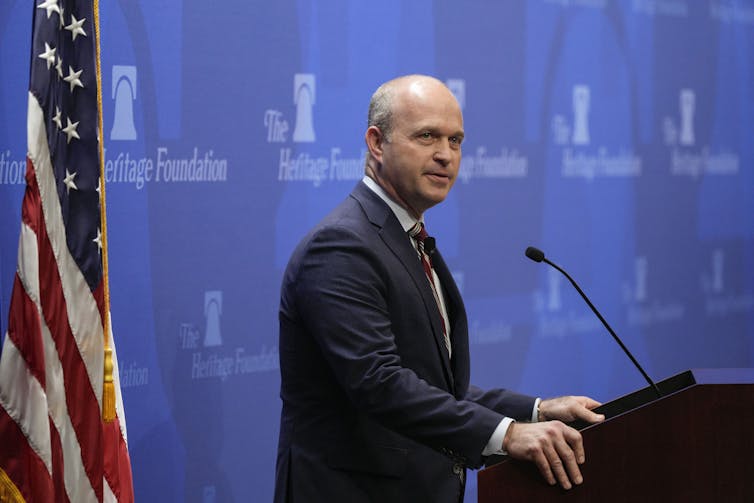
Critics say Carlson gave Fuentes a national platform to advance his antisemitic and white nationalist views. Some conservatives, including President Donald Trump and Heritage Foundation president Kevin Roberts, defended the conversation as necessary to understand a growing segment of the movement.

These reactions may seem incompatible, but both contain slices of the truth. Public debates about extreme views often pull us toward simple binaries – platform or censor, engage or avoid – when the real issue is how the engagement is structured and the purpose it serves.

The current tension raises a broader question that extends beyond any single interview: When does a conversation with someone who holds extreme views illuminate their beliefs, which could serve the public interest, and when might it risk being interpreted as validation?

As a communication scholar who studies how people engage across deep divides, I see this as a question not about whether to interact with individuals who espouse extremist views, but how to structure that engagement and to what end.

Engaging ideas does not mean endorsing

When public figures say they are “just asking questions” or having a “respectful debate,” it’s easy to assume they believe that all conversation is valuable. Indeed, Carlson opened his interview by claiming he is simply “trying to understand” what Fuentes “affirmatively believes.”

In practice, however, the format and tone of an interview do much of the ethical work. Some conversations interrogate ideas. Others normalize them, meaning they make extreme claims sound ordinary or socially acceptable – in other words, treating them as just another position in public debate rather than as views outside widely shared norms. A conversation that presents all viewpoints as morally equivalent risks signaling that even extreme positions belong within normal political discourse.

Kevin Roberts, the president of the Heritage Foundation, defended the interview with Nick Fuentes.
Kevin Roberts, the president of the Heritage Foundation, has defended Carlson’s decision to interview Fuentes, leading to some resignations from Heritage staff and board members.
Jess Rapfogel/AP

This is the concern raised by Carlson’s interview. Fuentes has made a series of claims about Jewish people that mainstream conservatives have rejected for decades. Although Carlson pushed back at one point, saying Fuentes’s views are “against my Christian faith,” the overall tone of polite exchange allowed some listeners to interpret the discussion as a meeting of two legitimate positions rather than as a critical examination of ideas widely understood as bigoted.

Listening is not neutrality

One explanation for these differing interpretations comes from a recent series of experiments showing speakers often confuse “active listening” with agreement. Even when they had maintained eye contact and signaled attention using short phrases like “I see,” listeners who disagreed were consistently judged as worse listeners. Because people tend to assume their own views are correct, they often infer that anyone who disagrees must not have listened well.

This psychological tendency complicates how the public interprets interviews like Carlson’s. Conversations can sound civil while failing to challenge harmful claims, leaving listeners with the mistaken belief that those claims are widely held.

Listeners operating from a humanizing mode attempt to understand the person behind the belief, asking questions such as “When did you first encounter this idea?” or “What was happening in your life at the time?” or “What concerns does this belief address for you?” A decade ago, a Dutch study found that extremist views often grow from fear, misinformation, isolation and a desire for belonging, along with other demographic, personality and social factors. Understanding those roots helps explain how individuals arrive at certain worldviews.

But understanding is not the same as acceptance. Good listening does not have to signal agreement.

Examples of this kind of engagement exist outside politics. Former extremists such as Christian Picciolini, who founded the Free Radicals Project, and musician Daryl Davis, known for building relationships with members of the Ku Klux Klan, have shown that humanizing conversations can help people leave hate groups without normalizing the ideas those groups promote. Their work illustrates that it is possible to confront harmful beliefs while still recognizing the humanity of the people who hold them.

Moving beyond just calling out

The ongoing debate about Carlson and Fuentes also reflects a broader tension in terms of how society responds to harmful speech.

Calling someone out, usually in public, focuses on blame. “Calling someone in,” a term developed by scholar and activist Loretta Ross, emphasizes private accountability and the possibility of correction. In a media setting, this might look like an interviewer saying, “I want to understand what you mean by that claim, because some viewers may hear it as targeting an entire group. Can you clarify how you see the people affected by this?” This approach challenges the idea while signaling curiosity about the speaker’s reasoning.

Nick Fuentes, a white nationalist commentator, appeared at a Donald Trump campaign event in 2020.
Right-wing podcaster Nick Fuentes has had occasional differences with Donald Trump, but the president defended the decision by commentator Tucker Carlson to interview him.
Jacquelyn Martin/AP

A similar approach, described by authors Justin Michael Williams and Shelly Tygielski, is known as “calling forward.” This framework focuses less on correcting a single remark, less on past mistakes and more on future growth by inviting reflection about how a belief fits within a person’s broader values. In practical terms, calling forward means setting clear boundaries around unacceptable beliefs while still recognizing an individual’s potential to change.

Using a “calling forward” approach, Carlson might have followed his mild pushback that Fuentes’s ideas are against his “Christian faith” by exploring how Fuentes understands the tension between his political claims and widely held moral or religious principles.

By stating directly when a claim is false or discriminatory but still allowing the conversation to explore how someone came to that belief, the interview places the idea in a fuller social and psychological context. The emphasis shifts to curiosity paired with accountability, and it can encourage someone to examine the roots and consequences of their beliefs without framing the exchange as a clash between equal positions.

Most people will never interview a national figure or decide whether to put an extremist on camera. Ideally, most of us won’t be faced with the burden of listening to views that question our or others’ humanity.

Even so, each of us likely has a relationship with someone who holds a belief we find troubling. More broadly, families, classrooms and community groups all face moments when someone introduces an idea that others find threatening.

The Carlson–Fuentes interview has become a flash point partly because it forces a public reckoning with a private question: What is the cost of engagement, and what is the cost of refusing it? Understanding that distinction requires paying attention not only to who is invited to speak, but also to how the ways in which we listen fundamentally shape the conversation.

The Conversation

Graham Bodie does not work for, consult, own shares in or receive funding from any company or organization that would benefit from this article, and has disclosed no relevant affiliations beyond their academic appointment.

ref. Shaping the conversation means offering context to extreme ideas, not just a platform – https://theconversation.com/shaping-the-conversation-means-offering-context-to-extreme-ideas-not-just-a-platform-269883

Rising electricity prices and an aging grid challenge the nation as data centers demand more power

Source: The Conversation – USA (2) – By Barbara Kates-Garnick, Professor of Practice in Energy Policy, The Fletcher School, Tufts University

Energy prices are going up – still. zpagistock/Moment via Getty Images

Everyone – politicians and the public – is talking about energy costs. In particular, they’re talking about data centers that drive artificial intelligence systems and their increasing energy demand, electricity costs and strain on the nation’s already overloaded energy grid.

As a former state energy official and utility executive, I know that many of the underlying questions involving energy affordability are very complex and have been festering for decades, in part because of how many groups are involved. Energy projects are expensive and take a long time to build. Where to build them is often also a difficult, even controversial, question. Consumers, regulators, utilities and developers all value energy reliability but have different interests, cost sensitivities and time frames in mind.

The problem of high energy prices is not new, but it is urgent. And it comes at a time when the U.S. is deeply divided on its approaches to energy policy and the politics of solving collective problems.

A person in an elevated bucket works with tools and wires.
To stay reliable, the electricity grid needs long-term investment, not just repairs after storms.
Miguel J. Rodriguez Carrillo/Getty Images

Rising costs

From September 2024 to September 2025, average U.S. residential electricity prices have risen 7.4%, from 16.8 to 18 cents per kilowatt-hour. Government analysts expect prices will continue to rise and outpace inflation in 2026.

With household earnings basically flat when adjusted for inflation, these increases hit consumers hard. They take up higher percentages of household expensesespecially for lower-income households. Electricity prices have effects throughout the economy, both directly on consumers’ budgets and indirectly by raising operating costs for business and industry, which pass them along to customers by raising prices for goods and services.

The problem

By 2030, energy analysts expect U.S. electricity demand to rise about 25%, and McKinsey estimates that data centers’ energy use could nearly triple from current levels by that year, using as much as 11.7% of all electricity in the U.S. – more than double their current share.

The nation’s current electricity grid is not ready to supply all that energy. And even if the electricity could be generated, transmission lines are aging and not up to carrying all that power. Their capacity would need to be expanded by about 60% by 2050.

Orders of key generating equipment often face multiyear delays. And construction of new and expanded transmission lines has been very slow.

A Brattle Group analysis estimates all that new and upgraded equipment could cost between US$760 billion and $1.4 trillion in the next 25 years.

The reasons

The enormous scale of the work needed is a result of a lack of investment over time and delays in the investments that have been made.

For instance, since at least 2011 there has been an effort to bring Canadian hydropower to the New England electricity grid. Political opposition to cutting a path for a transmission line through forestland meant the project was subjected to a statewide referendum in Maine – and then a court case that overturned the referendum results. During those delays, inflation raised the estimated price of the project by half, from $1 billion to $1.5 billion – an added cost that will be paid by Massachusetts electricity customers.

That multiyear effort is just one example of how the vast web of companies that generate power, transmit it from power plants to communities, and distribute it to homes and businesses complicates attempts to make changes to the power grid.

State and federal government agencies have roles in these processes. States’ public utilities commissions oversee the utility companies that distribute power to customers. The Federal Energy Regulatory Commission oversees connections of power generators to the grid and the transmission lines that move electricity across state lines.

Often, those efforts aren’t aligned with each other, leading to delays over jurisdiction and decision-making.

For instance, as new generators prepare to operate, whether they are solar farms or gas-fired power plants, they need permission from FERC to connect to the transmission grid. The commission typically requests technical engineering studies to determine how the project would affect the existing system. Delays in this process increase the timeline and cost of development and postpone adding new capacity to the grid.

The costs

A key question for regulators and consumers alike is who should pay for adding more electricity to the grid and making the system more reliable.

Utilities traditionally charge customers for the costs of generating and delivering power. And it’s not clear how much power the data centers will ultimately require.

Some large data centers have taken to paying to build their own on-site power plants, though often they can supply energy to the grid as well.

In some states, efforts have begun to address public concern about electricity bills. In November 2025, two utility commissioners in Georgia, who had consistently approved electricity rate hikes over the previous two years, were voted out of office in a landslide.

New Jersey’s Gov.-elect Mikie Sherrill has pledged to declare a utility-price emergency and freeze costs for a year.

In New York, Gov. Kathy Hochul has paused implementation of state law, driven by environmental concerns, requiring that all new buildings over seven stories tall only use electricity and not natural gas or other energy sources. Hochul has said that requirement would increase electricity demand too much, raising prices and making the grid less stable.

In Massachusetts, Gov. Maura Healey has filed legislation seeking to provide energy affordability, including eliminating some charges from utility bills, capping bill increases and barring utility companies from charging customers for advertisement costs.

A wind turbine stands near a large group of block-shaped buildings.
Generating more power – from wind, nuclear or other sources – is only part of the potential solution.
Scott Olson/Getty Images

The solutions

Clearly, there are no quick fixes or easy solutions to this complex situation.

However, innovation in regulation, combined with new technologies and even AI itself, may enable creative regulatory and technical solutions. For instance, devices that can be programmed to use energy efficiently, time-sensitive pricing and demand monitoring to smooth out peaks and valleys in electricity use can potentially ease both grid load and customers’ bills. But those solutions will work only if all the players are willing to cooperate.

There are a lot of ideas about how to lower the public’s burden of paying for data centers’ power. New ideas like this need careful scrutiny and possible revisions to ensure they are effective at lowering costs and increasing reliability.

As the country grapples with the effort to upgrade the grid, perform long-deferred maintenance and build new power plants, consumers’ costs are likely to continue to rise, further increasing pressure on Americans. Existing regulations and government oversight may no longer lower electricity costs immediately or help people plan for the rising costs over the long term.

The Conversation

Barbara Kates-Garnick receives funding from

I received funding from the Mass Clean Energy Center through Tufts University for a grant on Offshore wind..
I serve on the board of Resources for the Future

ref. Rising electricity prices and an aging grid challenge the nation as data centers demand more power – https://theconversation.com/rising-electricity-prices-and-an-aging-grid-challenge-the-nation-as-data-centers-demand-more-power-271465

Where the wild things thrive: Finding and protecting nature’s climate change safe havens

Source: The Conversation – USA (2) – By Toni Lyn Morelli, Adjunct Full Professor of Environmental Conservation, UMass Amherst; U.S. Geological Survey

Much wildlife relies on cool streams and lush meadows in the Sierra Nevada. Ron and Patty Thomas/E+ via Getty Images

The idea began in California’s Sierra Nevada, a towering spine of rock and ice where rising temperatures and the decline of snowpack are transforming ecosystems, sometimes with catastrophic consequences for wildlife.

The prairie-doglike Belding’s ground squirrel (Urocitellus beldingi) had been struggling there as the mountain meadows it relies on dry out in years with less snowmelt and more unpredictable weather. At lower elevations, the foothill yellow-legged frog (Rana boylii) was also being hit hard by rising temperatures, because it needs cool, shaded streams to breed and survive.

A ground squirrel with a skinny tail sits up on its back legs.
A Belding’s ground squirrel in the Sierra Nevada.
Toni Lyn Morelli

As we studied these and other species in the Sierra Nevada, we discovered a ray of hope: The effects of warming weren’t uniform.

We were able to locate meadows that are less vulnerable to climate change, where the squirrels would have a better chance of thriving. We also identified streams that would stay cool for the frogs even as the climate heats up. Some are shaded by tree canopy. Others are in valleys with cool air or near deep lakes or springs.

These special areas are what we call climate change refugia.

Identifying these pockets of resilient habitat – a field of research that was inspired by our work with natural resource managers in the Sierra Nevada – is now helping national parks and other public and private land managers to take action to protect these refugia from other threats, including fighting invasive species and pollution and connecting landscapes, giving threatened species their best chance for survival in a changing climate.

An illustration shows protected lakes and glaciers and shaded streams
Examples of climate change refugia.
Toni Lyn Morelli, et al., 2016, PLoS ONE, CC BY

Across the world, from the increasingly fire-prone landscapes of Australia to the glacial ecosystems at the southern tip of Chile, researchers, managers and local communities are working together to find and protect similar climate change refugia that can provide pockets of stability for local species as the planet warms.

A new collection of scientific papers examines some of the most promising examples of climate change refugia conservation. In that collection, over 100 scientists from four continents explain how frogs, trees, ducks and lions stand to benefit when refugia in their habitats are identified and safeguarded.

People walk along a mountain ridge with a glacier in the background.
Chile has been rapidly losing its glaciers as global temperatures rise. Humans and wildlife depend on them for water.
Joaquin Fernandez

Saving songbirds in New England

The study of climate change refugia – places that are buffered from the worst effects of global warming – has grown rapidly in recent years.

In New England, managers at national parks and other protected areas were worried about how species are being affected by changes in climate and habitat. For example, the grasshopper sparrow (Ammodramus savannarum), a little grassland songbird that nests in the open fields in the eastern U.S. and southern Canada, appears to be in trouble.

We studied its habitats and projected that less than 6% of its summer northeastern U.S. range will have the right temperature and precipitation conditions by 2080.

The grasshopper sparrow. American Bird Conservancy

The loss of songbirds is not only a loss of beauty and music. These birds eat insects and are important to the balance of the ecosystem.

The sand plain grasslands that the grasshopper sparrow relies on in the northeastern U.S. are under threat not only from changes in climate but also changes in how people use the land. Public land managers in Montague, Massachusetts, have used burning and mowing to maintain habitat for nesting grasshopper sparrows. That effort also brought back the rare frosted elfin butterfly for the first time in decades.

Protecting Canada’s vast forest ecosystems

In Canada, the climate is warming at about twice the global average, posing a threat to its vast forested landscapes, which face intensifying drought, insect outbreaks and destructive wildfires.

We have been actively mapping refugia in British Columbia, looking for shadier, wetter or more sheltered places that naturally resist the worst effects of climate change.

A young moose and an adult moose run through a meadow.
Forests and wetlands used by moose and other wildlife are becoming more vulnerable to climate change as temperatures rise.
Alexej Sirén, Northeast Wildlife Monitoring Network

The mapping project will help to identify important habitat for wildlife such as moose and caribou. Knowing where these climate change refugia are allows land-use planners and Indigenous communities to protect the most promising habitats from development, resource extraction and other stressors.

British Columbia is undertaking major changes to forest landscape planning in partnership with First Nations and communities.

Lions, giraffes and elephants (oh, my!)

On the sweeping vistas of East Africa, dozens of species interact in hot spots of global biodiversity. Unfortunately, rising temperatures, prolonged drought and shifting seasons are threatening their very existence.

In Tanzania, working with government agencies and conservation groups through past USAID funding, we mapped potential refugia for iconic savanna species including lions, giraffes and elephants. These areas include places that will hold water in drought and remain cooler during heat waves. The iconic Serengeti National Park, home to some of the world’s most famous wildlife, emerged as a key location for climate change refugia.

Giraffe wander among trees with a mountain in the distance.
In East Africa, climate change refugia remain cooler and hold water during droughts. Protecting them can help protect the region’s iconic wildlife.
Toni Lyn Morelli

Combining local knowledge with spatial analysis is helping prioritize areas where big cats, antelope, elephants and the other great beasts of the Serengeti ecosystem can continue to thrive – provided other, nonclimate threats such as habitat loss and overharvesting are kept at bay.

The Tanzanian government has already been working with U.S.-funded partners to identify corridors that can help connect biodiversity hot spots.

Hope for the future

By identifying and protecting the places where species can survive the longest, we can buy crucial decades for ecosystems while conservation efforts are underway and the world takes steps to slow climate change.

Across continents and climates, the message is the same: Amid our rapidly warming world, pockets of resilience remain for now. With careful science and strong partnerships, we can find climate change refugia, protect them and help the wild things continue to thrive.

The Conversation

Toni Lyn Morelli receives funding from U.S. Geological Survey.

Diana Stralberg receives funding from Natural Resources Canada, the Governments of the Northwest Territories and British Columbia, Canada, and the Wilburforce Foundation.

ref. Where the wild things thrive: Finding and protecting nature’s climate change safe havens – https://theconversation.com/where-the-wild-things-thrive-finding-and-protecting-natures-climate-change-safe-havens-270350

The US already faces a health care workforce shortage – immigration policy could make it worse

Source: The Conversation – USA (2) – By Bedassa Tadesse, Professor of Economics, University of Minnesota Duluth

As Americans gather for holiday celebrations, many will quietly thank the health care workers who keep their families and friends well: the ICU nurse who stabilized a grandparent, the doctor who adjusted a tricky prescription, the home health aide who ensures an aging relative can bathe and eat safely.

Far fewer may notice how many of these professionals are foreign-born, and how immigration policies shaped in Washington today could determine whether those same families can get care when they need it in the future.

As an economist who studies how immigration influences economies, including health care systems, I see a consistent picture: Immigrants are a vital part of the health care workforce, especially in roles facing staffing shortages.

Yet current immigration policies, such as increased visa fees, stricter eligibility requirements and enforcement actions that affect legally present workers living with undocumented family members, risk eroding this critical workforce, threatening timely care for millions of Americans. The timing couldn’t be worse.

A perfect storm: Rising demand, looming shortages

America’s health care system is entering an unprecedented period of strain. An aging population, coupled with rising rates of chronic conditions, is driving demand for care to new heights.

The workforce isn’t growing fast enough to meet those needs. The U.S. faces a projected shortfall of up to 86,000 physicians by 2036. Hospitals, clinics and elder-care services are expected to add about 2.1 million jobs between 2022 and 2032. Many of those will be front-line caregiving roles: home health, personal care and nursing assistants.

For decades, immigrant health care workers have filled gaps where U.S.-born workers are limited. They serve as doctors in rural clinics, nurses in understaffed hospitals and aides in nursing homes and home care settings.

Nationally, immigrants make up about 18% of the health care workforce, and they’re even more concentrated in critical roles. Roughly 1 in 4 physicians, 1 in 5 registered nurses and 1 in 3 home health aides are foreign-born.

State-level data reveals just how deeply immigrants are embedded in the health care system. Consider California, where immigrants account for 1 in 3 physicians, 36% of registered nurses and 42% of health aides. On the other side of the country, immigrants make up 35% of hospital staff in New York state. In New York City, they are the majority of health care workers, representing 57% of the health care workforce.

Even in states with smaller immigrant populations, their impact is outsized.

In Minnesota, immigrants are nearly 1 in 3 nursing assistants in nursing homes and home care agencies, despite being just 12% of the overall workforce. Iowa, where immigrants are just 6.3% of the population, relies on them for a disproportionate share of rural physicians.

These patterns transcend geography and partisan divides. From urban hospitals to rural clinics, immigrants keep facilities operational. Policies that reduce their numbers – through higher visa fees, stricter eligibility requirements or increased deportations – have ripple effects, closed hospital beds.

While health care demand soars, the pipeline for new health care workers could struggle to keep pace under current rules. Medical schools and nursing programs face capacity limits, and the time required to train new professionals – often a decade for doctors – means that there aren’t any quick fixes.

Immigrants have long bridged this gap – not just in clinical roles but in research and innovation. International students, who often pursue STEM and health-related fields at U.S. universities, are a key part of this pipeline. Yet recent surveys from the Council of Graduate Schools show a sharp decline in new international student enrollment for the 2025-26 academic year, driven partly by visa uncertainties and global talent competition.

If this trend holds, the smaller cohorts arriving today will mean fewer physicians, nurses, biostatisticians and medical researchers in the coming decade – precisely when demand peaks. Although no major research organization has yet modeled the full impact that stricter immigration policies could have on the health care workforce, experts warn that tighter visa rules, higher application fees and stepped-up enforcement are likely to intensify shortages, not ease them.

These policies make it harder to hire foreign-born workers and create uncertainty for those already here. In turn, that complicates efforts to staff hospitals, clinics and long-term care facilities at a moment when the system can least afford additional strain.

The hidden toll: Delayed care, rising risks

Patients don’t feel staffing gaps as statistics – they feel them physically.

A specialist appointment delayed by months can mean worsening pain. Older adults without home care aides face higher risks of falls, malnutrition and medication errors. An understaffed nursing home turning away patients leaves families scrambling. These aren’t hypotheticals – they’re already happening in pockets of the country where shortages are acute.

The costs of restrictive immigration policies won’t appear in federal budgets but in human tolls: months spent with untreated depression, discomfort awaiting procedures, or preventable hospitalizations. Rural communities, often served by immigrant physicians, and urban nursing homes, reliant on immigrant aides, will feel this most acutely.

Most Americans won’t read a visa bulletin or a labor market forecast over holiday dinners. But they will notice when it becomes harder to get care for a child, a partner or an aging parent.

Aligning immigration policy with the realities of the health care system will not, by itself, fix every problem in U.S. health care. But tightening the rules in the face of rising demand and known shortages almost guarantees more disruption. If policymakers connect immigration policy to workforce realities, and adjust it accordingly, they can help ensure that when Americans reach out for care, someone is there to answer.

The Conversation

Bedassa Tadesse does not work for, consult, own shares in or receive funding from any company or organization that would benefit from this article, and has disclosed no relevant affiliations beyond their academic appointment.

ref. The US already faces a health care workforce shortage – immigration policy could make it worse – https://theconversation.com/the-us-already-faces-a-health-care-workforce-shortage-immigration-policy-could-make-it-worse-271586