Positive psychology experts don’t follow their own advice. What they actually do may be the key to wellbeing

Source: The Conversation – UK – By Jolanta Burke, Associate Professor, Centre for Positive Health Sciences, RCSI University of Medicine and Health Sciences

None of the experts actively “chased” happiness or positivity – they accepted the good and the bad in their lives. OlgaBudrina/ Shutterstock

Positive psychology forms the backbone of wellbeing programmes around the world. Many people aiming to improve their mental health and live a good life are told to follow a programme of activities that focus on making an intentional effort to improve their wellbeing.

But recent research I conducted with colleagues shows that while wellbeing experts often recommend these activities to others, in real life they rarely practice them themselves. This discrepancy may tell us something important about what truly sustains wellbeing over time.

I interviewed 22 experts and practitioners in positive psychology – some with more than a decade of experience. All of them regularly recommended wellbeing activities to clients, friends and family members and told me they would tailor each activity according to an individual’s needs.

But when I asked them about their own application of positive psychology practices, it became apparent that they didn’t engage in these activities regularly. They only tended to use them during difficult periods, when they felt a need for a wellbeing boost.

Positive psychology programmes often recommend patients activities like “gratitude journaling” (writing down the things one is grateful for) daily, or undertaking three acts of kindness each week. The key emphasis with these programmes is to make an intentional, concerted effort to be more positive.

But our study showed that experts don’t use wellbeing the way many positive psychology programmes teach it. Instead of following a schedule of activities, their wellbeing came from having a flexible, wellbeing-oriented mindset, which we termed a “meliotropic wellbeing mindset”.

The term is derived from the Latin “melior” (better) and Greek “tropism” (movement towards). It’s about moving toward what makes life worth living. This way of thinking meant that experts didn’t treat wellbeing as a set of tasks they needed to complete – but rather merely as part of everyday life.

It also meant that none of the experts actively “chased” happiness or positivity. When they had a bad day, they just let it be – accepting that life sometimes comes with difficulty.

Our participants did not make the kind of drastic, intentional changes in their lives that they’d recommend patients make to improve wellbeing. They already regularly did things in their day to day that made their lives feel more meaningful – for example making time to read a book daily, volunteering for a local charity, cooking a favourite meal or even practising yoga.

While these kinds of activities may be recommended as part of a positive psychology programme, the difference here is that the experts did these activities because they were part of their identity or because it helped them feel balanced, instead of only doing them because they’d been advised to.

They were also in tune with their bodies, caring for them as attentively as they cared for their minds by prioritising sleep, nourishing food and regular movement.

And because they were highly attuned to how their physical and social environment affected them, they weren’t afraid to take proactive steps to protect their wellbeing. For instance, if their work made them unhappy, or if someone in their social circle was consistently draining, they didn’t hesitate to seek alternatives or to limit contact.
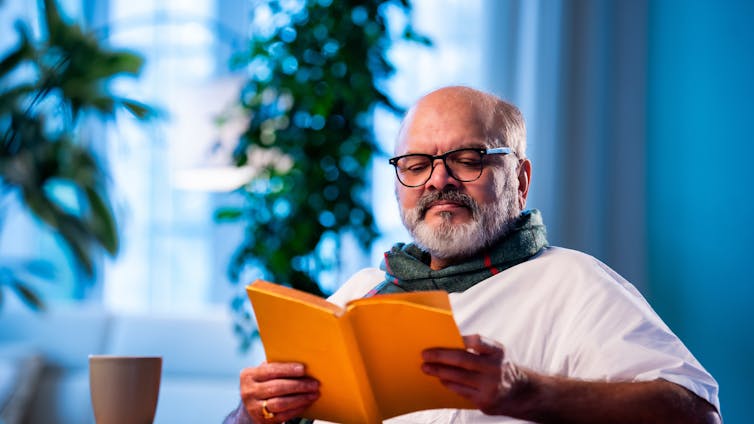
A bald, middle-aged man with a white beard reads from an orange book.
The experts focused on making small changes everyday to look after their wellbeing and make life feel more meaningful.
StockImageFactory.com/ Shutterstock

In addition, they were open to opportunities that allowed them to embrace life. One participant described waiting outside the school to pick up her child. The weather was so beautiful that she slipped off her shoes and walked barefoot across a patch of grass – a simple act that boosted her mood.


Read more:
Finding joy in the little things really can benefit your wellbeing – a scientist explains


Another one had a really bad day but when she finally got into bed that night, she was struck by a feeling of gratitude for the warmth and safety of her home, compared to all the people who have been displaced by war.

Their understanding of positive psychology helped them notice these regular opportunities to boost wellbeing.

Mindset change

Every year, new wellbeing apps appear, schools incorporate wellbeing into their curricula and organisations invest heavily in workplace wellbeing programmes. Yet the impact of these initiatives remains modest. And, some reports suggest that wellbeing programmes may even have a negative effect.

Our study’s findings may help explain why the impact of these programmes is so varied – and shows these positive activities may not be as effective for people who have applied wellbeing practices extensively in their lives.

The study also highlights an urgent need for positive psychology researchers and experts to rethink their priorities. Rather than creating ever-longer wellbeing programmes or promoting the pursuit of happiness, which evidence shows is not necessarily beneficial, we should focus on understanding the longer-term impact of wellbeing practices.

For anyone trying to improve their wellbeing, our findings are an important reminder that you don’t have to constantly “work on yourself” or pursue happiness. Experts in wellbeing rarely rely on dramatic life changes or wellbeing programmes.

Instead, they quietly cultivate a mindset that helps orient themselves toward what really matters. It’s not about chasing happiness or forcing ourselves to think positively on a bad day. It’s about gently moving toward the things that make life feel more worthwhile, in ways that fit who you are. That shift in mindset is something that all of us can adopt.

The Conversation

Jolanta Burke does not work for, consult, own shares in or receive funding from any company or organisation that would benefit from this article, and has disclosed no relevant affiliations beyond their academic appointment.

ref. Positive psychology experts don’t follow their own advice. What they actually do may be the key to wellbeing – https://theconversation.com/positive-psychology-experts-dont-follow-their-own-advice-what-they-actually-do-may-be-the-key-to-wellbeing-266737

Our Jane Austen year – a free ebook, loads of expert insights and a six-part podcast

Source: The Conversation – UK – By Naomi Joseph, Arts + Culture Editor, The Conversation

For the arts team at The Conversation, 2025 will largely be remembered as the year of Jane Austen. Since January, we have been tirelessly working towards December 16, which marked 250 years since her birth. To celebrate, we explored the world of Austen in a series of articles plus a six-part podcast – to determine the best of her work and get to know the elusive writer behind them.

The scholarship on Austen is incredibly diverse. We have published fascinating pieces from experts all over the country – some exploring specific themes in her books such as walking as an act of female resistance, and respite as an ingredient for romance. Others delved into the history of her time and how it’s represented in her work – exploring, for example, Regency balls and contemporary diversity.

We have chosen ten of our favourite articles and collated them into a free ebook, which you can download here.


This article is part of a series commemorating the 250th anniversary of Jane Austen’s birth. Despite having published only six books, she is one of the best-known authors in history. These articles explore the legacy and life of this incredible writer.


Fans of Jane Austen have very strong feelings regarding her work, and we also wanted to find out what our readers love most about her literary worlds. In that spirit, arts and culture editor Anna Walker launched the Jane Austen Fight Club: a series of articles where academics made the case for their favourite novel, heroine and leading man. Each includes the opportunity for you to have your say.

Let us know which of her books you think is best by answering the poll below.

The cherry on the top of the Austen sundae is our podcast, Jane Austen’s Paper Trail. Over six episodes – one for each of her major novels – we take you on a journey through the writer’s life and times with the help of some of the UK’s top Austen experts.

Along the way, we enjoy some buns in a scandal-filled tearoom in Bath to ask whether Austen was a gossip; we attend a glittering Regency ball to find out whether she was a romantic; and we call on her house in Hampshire to find out what she thought about being a writer. We also dive into the pages of each book to see what more we can glean with the help of our Austen specialists.

There will be a final bonus episode in January 2026, in which we will answer listeners’ questions with a panel of experts. So please tell us what you’d most like to know about Austen and her work, either by emailing podcast@theconversation.com or in the comments below.

I have to confess something. Before this year, if you had asked me if I liked Jane Austen, I would have said no. I enjoyed the humour in the few books I had read and appreciated the skill of her writing, but found the formulaic narrative arcs frustrating. They ended too neatly, in my opinion.

Having got to know her intimately this year, you’ll be glad to hear my opinion has changed. I now have a deep and sincere reverence for her books – particularly Northanger Abbey, which is such a funny and incisive takedown of snobby readers. While I am ready to move on to 2026, I must admit I feel a little sad to be leaving Miss Austen behind.


Looking for something good? Cut through the noise with a carefully curated selection of the latest releases, live events and exhibitions, straight to your inbox every fortnight, on Fridays. Sign up here.


The Conversation

ref. Our Jane Austen year – a free ebook, loads of expert insights and a six-part podcast – https://theconversation.com/our-jane-austen-year-a-free-ebook-loads-of-expert-insights-and-a-six-part-podcast-272464

Raz-de-marée démocrate dans les villes américaines : un avertissement pour Trump ?

Source: The Conversation – in French – By Frédéric Castel, Chargé de cours aux départements de Sciences des religions et d’Études urbaines et touristiques, Université du Québec à Montréal (UQAM)

La ronde des diverses courses électorales du mois de novembre, close en décembre, constituait un test depuis l’arrivée au pouvoir du président américain Donald Trump. Les démocrates ont marqué des avancées notables, sans contre-tendance favorable aux républicains à l’échelle nationale, régionale ou locale.

Les sondages de sorties des urnes permettent d’éclairer certains enjeux auxquels les électrices et les électeurs ont été particulièrement sensibles en fonction de leurs inclinaisons politiques et profils socioculturels. Ces sondages ont été menés par le SSRS pour le compte du consortium des grands réseaux médiatiques dont CNN et Fox News.

J’ai une formation de géographe, d’historien et de religiologue. Depuis 25 ans j’étudie l’évolution de la diversité ethnoreligieuse au Québec. Depuis 2016, je m’intéresse aux élections à diverses échelles (Montréal, Québec, Canada, États-Unis) afin de tracer les mouvements sociopolitiques à travers le temps et l’espace à l’aide de la cartographie des résultats électoraux.

Une « Gringa » démocrate à Miami

Il a fallu attendre le 2 décembre pour qu’un second tour établisse un gagnant à Jersey City, puis le 9 à Albuquerque et à Miami.

En Floride, l’État de résidence du président, l’élection de la démocrate Eileen Higgins à la mairie de Miami, première femme à obtenir ce poste, est particulière. La victoire de celle-ci (59,5 %) contre le républicain Emilio Gonzalez (40,5 %) met fin à 28 ans de règne républicain. La Magic City devient ainsi la seule des vingt grandes villes en élection cet automne à changer de couleur.

Parlant espagnol, La Gringa, comme elle s’amuse à se faire appeler, a mis l’accent sur le logement abordable tout en exprimant ses préoccupations concernant les opérations de contrôle de l’immigration par l’ICE, thèmes qui résonnent dans une ville à majorité latino-américaine.


À lire aussi :
Les politiques de Donald Trump sont plus qu’idiotes – elles sont stupides, selon des chercheurs… en stupidité


Un ilot rouge au milieu de beaucoup de maires bleus

Parmi les villes de plus de 220 000 habitants (au recensement de 2020), 20 élections pour la mairie ont été disputées en novembre.

À New York, Charlotte, Pittsburgh, Buffalo et La Nouvelle-Orléans, les élections se faisaient sur une base partisane, c’est-à-dire que les candidats se présentaient sous la bannière d’un parti, démocrate, républicain ou autre.

En 2024, alors que l’État pivot de la Pennsylvanie basculait en faveur de Donald Trump, Pittsburgh demeurait démocrate en préférant Harris (59,7 %). Cette année, le démocrate Corey O’Connor (85,6 %) rafle la mairie devant le républicain Tony Moreno.

Dans l’État de New York, le démocrate Sean Ryan (71,8 %) a remporté la mairie de Buffalo devant le républicain James Gardner. C’est toute une différence à comparer au scrutin présidentiel où la ville avait accordé 54,8 % de ses voix à Kamala Harris.


À lire aussi :
Aux élections présidentielles américaines, les groupes religieux sont plus divisés qu’on ne le croit


Les 15 autres élections suivaient un mode non partisan. Bien que les candidates et les candidats se présentent sans étiquette politique, les affiliations politiques ne faisaient généralement pas de mystère.

À Minneapolis (Minnesota), malgré la kyrielle de candidats à la mairie, les quatre meneurs étaient tous démocrates. C’est au second tour d’un suffrage préférentiel que Jacob Frey obtient 50 % des voix pour son troisième mandat devant le démocrate socialiste Omar Fateh. Au Michigan, la démocrate Mary Sheffield (77 %) devient la première mairesse afro-américaine de Détroit en battant Solomon Kinloch jr, lui aussi démocrate.

En augmentant leurs marges de victoire, les démocrates Andre Dickens (85,8 %) et Aftab Pureval (78,3 %) ont été reconduits aux mairies d’Atlanta (Géorgie) et de Cincinnati (Ohio). Dans cette dernière lutte, le candidat défait était Cory Bowman, le demi-frère de J.D. Vance, vice-président et sénateur de l’État.

Des maires de filiation démocrate ont aussi été élus à Charlotte, Seattle, Boston, La Nouvelle-Orléans, Cleveland et Saint Paul.

La ville d’Hialeah, voisine de Miami, est la seule dont la mairie a été remportée par un républicain, Bryan Calvo devant deux adversaires du même parti.

C’est dire qu’au total, les 19 autres maires sont désormais associés plus ou moins directement au parti démocrate.


À lire aussi :
Le Canada comme 51ᵉ État américain ? Les républicains ne seraient pas au pouvoir de sitôt !


Au-delà d’un pépin socialiste dans la grosse pomme

À New York, Zohran Mamdani marque l’histoire en devenant le premier maire musulman de la ville. Celui-ci a gagné l’appui de la moitié de la population (50,8 %) devant l’indépendant Andrew Cuomo (41,3 %) et le républicain Curtis Sliwa (7 %).

À l’échelle des arrondissements, Mamdani a obtenu la majorité des suffrages de Brooklyn (57,1 %), de Manhattan (52,7 %), du Bronx (51,8 %) et du Queens (47,9 %). Les soutiens à Cuomo sont majoritaires à Staten Island (55,2 %) tout en prédominant au sud de Brooklyn et à l’est du Queens.

Le NYC Election Atlas aide à trouver du sens à cette configuration. En recoupant le vote partisan et le profil des quartiers, on remarque que la moitié (50,8 %) des secteurs où les propriétaires sont majoritaires ont choisi Cuomo, alors que les secteurs où les ménages modestes prédominent ont penché du côté de Mamdani (52,4 %). Avec des nuances selon les quartiers et la proportion de propriétaires, les secteurs où les diplômés universitaires sont majoritaires ont préféré Mamdani (54,2 %).

La géographie des résultats confirme que le vote pro-Trump de 2024 s’est majoritairement acheminé vers Cuomo moyennant des pertes en faveur de Mamdani.

Selon les sondages, bien que dans des proportions moindres qu’en Virginie et au New Jersey, la majorité des électorats afro-américain (57 %) et hispanique (52 %) ont préféré Mamdani. L’électorat eurodescendant s’est divisé presque moitié-moitié entre Cuomo et Mamdani.

Alors que 67 % des partisans de Cuomo avaient le crime comme premier sujet de préoccupation, 66 % des partisans de Mamdani se souciaient d’abord du coût de la vie. Ce dernier enjeu prédominait (55 %) pour l’ensemble des New-Yorkais.


Déjà des milliers d’abonnés à l’infolettre de La Conversation. Et vous ? Abonnez-vous gratuitement à notre infolettre pour mieux comprendre les grands enjeux contemporains.


La Virginie « mère des présidents » donne naissance à sa première gouverneure

La démocrate Abigail D. Spanberger s’est gagné l’appui de 57,6 % des électeurs contre sa rivale républicaine Winsome Earle-Sears (42,2 %), l’ancienne lieutenante-gouverneure élue en 2021. C’est un gain démocrate.

Quoique la cartographie réalisée par l’Associated Press soit similaire à celle du scrutin présidentiel de 2024, la marque démocrate a progressé partout dans l’État, y compris dans l’espace rural. Dans les villes et les banlieues de Charlottesville, Richmond, Norfolk et Fairfax le vote démocrate a franchi le cap des 70 % voire des 80 %.

L’économie était la préoccupation principale de 48 % des Virginiens.

Floraison démocrate au New Jersey

Pour le poste de gouverneur de l’État jardin, la démocrate Mikie Sherrill a gagné 56,9 % des suffrages devant son adversaire républicain Jack Ciattarelli (42,5 %). En 2021, son prédécesseur démocrate n’avait obtenu que trois points d’avance. Sherill est la première femme démocrate à remporter ce poste après la victoire de la républicaine Christine Todd Whitman en 1994.

En comparant la cartographie de l’Associated Press des résultats cette élection avec celle du scrutin présidentiel, on constate que les appuis démocrates ont connu des hausses allant de 5 à 16 points dans presque tous les comtés. À comparer au scrutin présidentiel, quelques majorités républicaines locales ont basculé en faveur du parti démocrate au nord et au sud de l’État. Sept personnes sur dix ont voté démocrate à Trenton et à Newark collé sur New York. Les taxes (35 %) et l’économie (32 %) constituaient les enjeux prédominants.


À lire aussi :
La diplomatie donnant-donnant de Donald Trump en Ukraine, un échec pour arrêter l’agression russe


Quand l’anxiété économique surfe sur une marée électorale

Au New Jersey et en Virginie, à comparer aux élections locales antérieures, les appuis au parti démocrate ont connu un bond important avec l’élection des deux nouvelles gouverneures.

Selon les sondages publiés par CNN et Fox News les taux d’approbation et de désapprobation du travail du président étaient de 42 % contre 56 % au New Jersey et de 39 % contre 59 % en Virginie.

La majorité des électeurs indépendants et des gens qui n’avaient pas voté au scrutin présidentiel ont voté démocrate. Les deux tiers des Hispaniques et neuf Afro-Américains sur dix ont suivi, ce qui indique un retour aux tendances prévalant avant 2024.

À l’échelle des mairies, le camp démocrate était souvent en terrain favorable. Au printemps 2026, on disposera d’un portrait plus complet des tendances alors que quelques courses auront lieu dans le Sun Belt. Le passage de la mairie de Miami des mains d’un républicain à celles d’une démocrate n’est toutefois pas pour rassurer le camp républicain.

Les revirements politiques repérables géographiquement et les sondages de sortie des urnes montrent que l’anxiété économique a surfé à travers le pays. Bien que l’immigration reste un enjeu majeur pour les électeurs républicains, l’économie s’est érigée en tête de liste des préoccupations populaires à New York, en Virginie et au New Jersey.

Au sortir des élections, la marque républicaine a perdu des plumes. Si la promesse de Donald Trump de maîtriser l’inflation a favorisé son élection à la présidence, l’actuelle montée de l’anxiété économique a alimenté le mouvent inverse.

En même temps que les sondages des dernières semaines rappellent que la crise de l’« abordabilité » se ressent de plus en plus sur le plan des dépenses quotidiennes, l’agrégateur de sondages RealClear Polling indique que le taux d’approbation de la gouvernance du président continue de diminuer.

Selon le sondage publié par Politico, une partie des électeurs de Trump commencent à le tenir responsable de la crise. Le dernier sondage de NBC fait voir que si la base MAGA approuve fortement la gestion du président, c’est au prix de la réduction de son poids numérique derrière la montée de ceux qui se disent « républicains traditionnels ».

La Conversation Canada

Frédéric Castel ne travaille pas, ne conseille pas, ne possède pas de parts, ne reçoit pas de fonds d’une organisation qui pourrait tirer profit de cet article, et n’a déclaré aucune autre affiliation que son organisme de recherche.

ref. Raz-de-marée démocrate dans les villes américaines : un avertissement pour Trump ? – https://theconversation.com/raz-de-maree-democrate-dans-les-villes-americaines-un-avertissement-pour-trump-271471

Violence against women and girls: four key takeaways from a strategy that aims to change society

Source: The Conversation – UK – By Sophie King-Hill, Associate Professor at the Health Services Management Centre, University of Birmingham

As the UK government launches its violence against women and girls strategy, the situation it is seeking to remedy makes for hard reading.

One in eight women in England and Wales experienced sexual assault, domestic abuse or stalking between March 2024 and March 2025. Between June 2024 and June 2025, almost 200 rapes were recorded daily. More than 150 women are killed each year.

The picture is similar for young people too: 39% of teens aged 13 to 17 experience emotional or physical abuse in a relationship.

The strategy emphasises prevention and early intervention – stopping violence before it occurs, or before it worsens. It centres support for victims and accountability perpetrators.

The strategy is built off the back of a number of interventions that have already taken place. These include making sexually explicit deepfakes a criminal offense, laws on cyberflashing and the introduction of interventions of “honour” abuse.

The goal is to halve violence against women and girls in a decade. It’s an ambitious target that requires action in multiple different areas. Below are four key points from the strategy and consideration as to why they’ve been included.

1. A major societal shift for men and boys

Significantly, the strategy envisages a whole-society approach to this problem. That means that it recognises male violence as a public health crisis rooted in patriarchal norms and hegemonic masculinity.

Addressing this requires early socialisation of boys, safe spaces for them to explore difficult issues and identity development and emotional literacy, which will shift the focus from blame to prevention and cultural change.

Attached to the strategy is an explanatory note that discusses men and boys as victims of violence and explores how this violence not only causes harm but also influences future behaviours and experiences.

One thing that isn’t explicitly mentioned is the importance of safeguarding language when abuses and violence is experienced by boys. Ensuring terminology is inclusive, legally accurate and reflects all children and young people, not just girls, is important in this context.

An important part of the strategy is the idea that reducing violence against women and girls requires a fundamental shift in how society engages men and boys. It argues that focusing solely on survivors and those who cause harm is insufficient because the roots of this issue lie in deeply embedded gender norms that sustain patterns of inequality.

To dismantle these norms, men and boys must be seen not as potential risk factors but as key stakeholders in change. The note calls for education that equips boys and men to challenge inequitable attitudes and behaviours, fostering empathy, respect and healthy relationships.

2. Starting early to prevent problem behaviour

As part of a goal to disrupt harmful behaviour before it begins, schools will get help to deliver education on misogyny and consent education. There are also plans to work with parents and carers which include a 2026 public campaign to help them reinforce respectful relationships at home.

An online parent hub will offer guidance on media literacy and online safety and a new digital service under the best start in life strategy to provide trusted advice and connect families to local support. There will also be campaigns and awareness raising activities to generate a national public conversation around violence against women and girls.

Running parallel to this is a focus on supporting young men and boys in understanding these issues and giving them support when concerns are raised. This aspect of the strategy links strongly with the new guidance given to schools on relationships, sex and health that is due to become statutory in 2026.

3. A ‘relentless pursuit of perpetrators’

A key term in the strategy is the “relentless pursuit of perpetrators”. To ensure that justice for victims is swift and robust, domestic abuse specialists will be embedded into emergency services response teams and specialist rape and sexual offence teams will be introduced.

These changes reflect recommendations made by the independent inquiry into child sexual abuse for stronger accountability and specialist expertise in responding to sexual abuse.

4. Support for survivors

For victims and survivors, there will be a push to address what is seen as an inconsistent approach. The intention is to meet their needs, not only via specialist services but also within the criminal justice system.

This means creating a more trauma-informed approach in courts and policing, improving communication and procedural fairness and embedding specialist training for justice professionals. Victims should experience consistent, respectful treatment wherever they seek help, whether through dedicated support services or during legal processes, so that justice feels accessible, safe and supportive.

The strategy recognises that helping people move on with their lives after experiencing violence requires a joined-up approach, not just to the criminal justice element but to housing and healthcare. This again reflects recommendations made by the independent inquiry into child sexual abuse, which stressed that support needs to be ongoing (beyond the immediate situation) and tailored to individual needs, as requirements often change over time.

This strategy marks a significant step forward. Its whole-society, public health approach and focus on prevention, survivor support, cultural change and accountability are essential elements that are needed to reduce violence in all its forms.

Its success will depend on sustained investment, cross-sector collaboration and a commitment to embedding these principles and actions into everyday life. By addressing root causes, supporting survivors and engaging men and boys as partners in change, we can move closer to a future built on respect, equity and safety for all.

The Conversation

Sophie King-Hill received funding from the ESRC.

ref. Violence against women and girls: four key takeaways from a strategy that aims to change society – https://theconversation.com/violence-against-women-and-girls-four-key-takeaways-from-a-strategy-that-aims-to-change-society-272096

Medieval Londoners’ cheaply imported mass-produced Christmas gifts look surprisingly familiar

Source: The Conversation – UK – By Justin Colson, Senior Lecturer in Urban and Digital History, School of Advanced Study, University of London

We often imagine medieval life as dull, dirty and short, with little in the way of material comfort or decoration. However, medieval Londoners were importing toys, treats and trinkets by the boatload centuries before the modern festive rush.

Searching in the records of imports contained within London’s extensive late medieval customs accounts, we found that medieval Londoners, much like their modern-day counterparts, were hooked on mass-produced, cheaply imported items.

Everyday goods from tennis balls to children’s dolls and board games were imported by the thousands, with prices that show they were not elite luxuries. This reveals that medieval people had plenty of “stuff” and suggest an attitude to consumerism that’s not so very different from our own.

Our new project has digitised records of more than 200,000 consignments of imports and exports which passed through the Port of London between 1380 and 1560.

Historians have looked at these sources for generations, particularly to analyse exports of English wool and cloth. Until now though, little attention has been paid to the imported goods themselves. These records give a real insight to the variety and rich material culture of everyday life. We have counted thousands of different commodities, from printed alphabets to zinziber (ginger).

By analysing the goods on which Londoners paid customs duty each November and December we have uncovered a detailed picture of the objects imported in time for Christmas celebrations.

Some of the richest Londoners, such as the Cely family whose letters from the 1470s survive, travelled to Bergen-op-Zoom, near Antwerp, in modern Belgium, to buy from the “Cold Mart”. One of Europe’s biggest trade fairs, this market, which began on November 6 each year, could be seen as a forerunner of a modern Christmas Market.

For most people, however, homewares, trinkets and gifts were imported by an army of merchants, many of them Dutch and Flemish. These traders then sold them on in London’s haberdashers’ shops – many of them on London Bridge – and via travelling chapmen (pedlars) who sold door-to-door in the countryside.

Seasonal highlights included children’s rattles and dolls, tennis balls, gaming boards, dice, devotional items such as rosary beads and Agnus Dei jewellery. Large quantities of fruit and spices appear throughout the records alongside jewellery and fine leather gloves, which were particularly common gifts.

In November 1480, one single consignment included dozens of paintings, whistles, harp strings, hundreds of candlesticks, a “box of japes” (tricks or toys)’, and “14 dozen Jesuses”.

We’ve found amazing amounts of evidence for Londoners’ reading, and writing habits, with printed books imported by the basket, chest, or even by the barrel from the 1480s onward. The aptly named Wynkyn de Worde, England’s second recorded printer, paid custom duties on “one hoggeshede bookes” (yes, the same as a hogshead beer barrel) worth 50 shillings in 1507.

Frustratingly, though we hardly ever get the title or description of individual books. Paper, both for writing, and as wrapping paper, was an equally regular import. While spectacles, often with matching cases, were routinely imported by the hundred.

Less common, but fascinating consignments illustrate London’s emerging global connections. These include coconut shells, often set with silver to turn them into cups, and “popingays” (pet parrots), one of which was assessed for customs duties in 1421 along with a sack of seeds supplied as its food.

It’s striking that so many of these objects were clearly ubiquitous but have otherwise left so little trace. That’s precisely because they were meant to be cheap and disposable. Customs accounts provide rare evidence of the everyday possessions, and shopping habits, of ordinary medieval people, revealing how many goods were lost to time.

While London Museum holds some of the finest surviving examples of medieval household objects, the customs accounts show how many more once existed.

By looking at these records as sources for cultural history, we can begin to trace the movement of tastes and consumer preferences across borders. Our approach reveals that customs accounts don’t only document trade, but illuminate life.


Looking for something good? Cut through the noise with a carefully curated selection of the latest releases, live events and exhibitions, straight to your inbox every fortnight, on Fridays. Sign up here.


The Conversation

Justin Colson receives funding for this project from the Arts and Humanities Research Council (AHRC) and German Research Foundation (DFG).

Werner Scheltjens receives funding for this project from the Arts and Humanities Research Council (AHRC) and German Research Foundation (DFG).

ref. Medieval Londoners’ cheaply imported mass-produced Christmas gifts look surprisingly familiar – https://theconversation.com/medieval-londoners-cheaply-imported-mass-produced-christmas-gifts-look-surprisingly-familiar-272218

EU agrees €90 billion loan to Ukraine, but squabbles over frozen Russian assets expose the bloc’s deep divisions

Source: The Conversation – UK – By Richard Whitman, Member of the Conflict Analysis Research Centre, University of Kent; Royal United Services Institute

By agreeing to provide a loan of €90 billion (£79 billion) for the years 2026-2027, EU leaders have set the direction for the future of support for Ukraine.

At stake at the meeting of the European Council on December 18 was not just Kyiv’s ability to continue to defend itself against Russia’s ongoing aggression, but also the credibility of the EU as a player in the future of European security.

The key decision for the EU’s leaders was whether, and how, they would provide financial support for Ukraine over the next two years. Europeans have provided a vital drip-feed of ongoing financial assistance to Kyiv throughout almost four years of war.

But they have also struggled to fill, in its entirety, the hole created by the withdrawal of US support since the return of Donald Trump to the White House in January 2025.

The estimated €136 billion of budget support needed by Ukraine in 2026 and 2027 is a relatively fixed figure regardless of whether any peace initiative comes to fruition. A large part of it – €52 billion in 2026 and €33 billion in 2027 – is for military support.

The EU-agreed loan of €90 billion, “based on EU borrowing on the capital markets backed by the EU budget headroom”, thus covers at least the essential military needs of Ukraine. It The loan? will either contribute to the ongoing war effort or help create a sufficiently large and credible defence force to deter any future aggression by Russia.

Brussels is now the most important financial partner for Ukraine by any measure.

To fund the support the EU wants to provide to Ukraine, the commission developed two proposals. The most widely supported – and ultimately rejected – proposal was to use the Russian assets held by the Belgium-based Euroclear exchange as collateral to for a loan to fund Ukraine’s defence and reconstruction over the next few years.

In view of Belgian opposition because of insufficient protections against likely Russian retaliation, the European Commission had also proposed joint EU borrowing to fund support for Kyiv. Despite resistance from a group of EU member states, it was the only agreeable solution at the end.

The agreement on a loan to Ukraine funded from EU borrowing achieves the primary goal of securing at least a modicum of budgetary stability for Kyiv. But it came at the price of EU unity.

An “opt-out clause” had to be provided for Hungary, Slovakia and Czechia. All three countries are governed by deeply Euro-sceptical and Russia-leaning parties.

The deep irony is that by opposing EU support for Ukraine, they expose Ukrainians to a fate similar to that they suffered when the Soviet Union suppressed pro-democracy uprisings in Hungary in 1956 and then Czechoslovakia in 1968.

The EU until now managed to maintain a relatively united front on sanctions against Russia, on political, economic and military support for Ukraine, and on strengthening its own defence posture and defence-industrial base.

Over the past year, these efforts have accelerated in response to Trump’s return to the White House. This has shifted the US position to one which is in equal measure more America first and more pro-Russia than under any previous US administration.

And the pressure on Kyiv and Brussels has increased significantly over the past few weeks.

First there was the 28-point peace plan, which may have been a US-led proposal, but read as if it was Kremlin-approved. Then the new US national security strategy, which gave significantly more space to criticisms of Europe than to condemnation of Russia for the war in Ukraine.

No longer casting Russia as a threat to international security shows how detached the US has become from reality and the transatlantic alliance.

Russia’s president, Vladimir Putin, keeps insisting that he will achieve his war aims of fully annexing another four Ukrainian regions – in addition to Crimea – by force or diplomacy. Giving his usually optimistic outlook on Russia’s military and economic strength, Putin reiterated these points at his annual press conference on December 19.

EU divisions widen

In light of how squeezed Brussels and Kyiv now are between Washington and Moscow, the agreement on EU financing for Ukraine, despite its flaws and the acrimony it has caused within the EU, is a significant milestone in terms of the EU gaining more control over its future security. But it is not a magic wand resolving Europe’s broader problems of finding its place and defining its role in a new international order.

The agreement reached at the summit between the EU’s leaders on how to financially support Ukraine was overshadowed by their failure to overcome disagreement on signing a trade agreement with the South American trade group, Mercosur.

A decision on this trade deal with Argentina, Bolivia, Brazil, Paraguay, Uruguay and (currently suspended) Venezuela had been 25 years in the making. The deal was due to be signed on December 20, but this has now been postponed until January.

This is meant to provide time for additional negotiations to assuage opponents of the deal in its current form, especially France, Italy and Poland, who fear that cheaper imports from Mercosur countries will hurt European farmers. Those farmers staged a fiery protest at the European parliament ahead of the European Council meeting.

The delay does not derail the trade deal, which aims to create one of the world’s largest free trade areas. But it severely dents the EU’s claim to leadership of an international multilateral trading system based on rules that prioritise mutual benefit, as an alternative to the Trump administration’s unpredictable and punitive America-first trade practices.

Both disagreements continue to hamper the EU’s capacity for a decisive international role more generally. Where Trump’s US offers unpredictability, Brussels for now only offers extended procrastination on key decisions.

This places limits on the confidence that the EU’s would-be partners in a new international order can have in its ability to lead the shrinking number of liberal democracies. Without skilled and determined leadership, they will struggle to survive – let alone thrive – in a world carved up between Washington, Moscow and Beijing.

The Conversation

Richard Whitman has received funding from the Economic and Research Council of the UK as a Senior Fellow of the UK in a Changing Europe initiative. He is a past recipient of grant funding from the British Academy of the UK, EU Erasmus+ and Jean Monnet Programme. He is a Senior Associate Fellow at the Royal United Services Institute (RUSI), and an Academic Fellow of the European Policy Centre in Brussels. He is a past Associate Fellow and Head of the Europe Programme of the Royal Institute of International Affairs (Chatham House).

Stefan Wolff is a past recipient of grant funding from the Natural Environment Research Council of the UK, the United States Institute of Peace, the Economic and Social Research Council of the UK, the British Academy, the NATO Science for Peace Programme, the EU Framework Programmes 6 and 7 and Horizon 2020, as well as the EU’s Jean Monnet Programme. He is a Trustee and Honorary Treasurer of the Political Studies Association of the UK and a Senior Research Fellow at the Foreign Policy Centre in London.

ref. EU agrees €90 billion loan to Ukraine, but squabbles over frozen Russian assets expose the bloc’s deep divisions – https://theconversation.com/eu-agrees-90-billion-loan-to-ukraine-but-squabbles-over-frozen-russian-assets-expose-the-blocs-deep-divisions-272095

Local democracy is holding strong, but rural communities are falling behind, new survey of Michigan officials shows

Source: The Conversation – USA – By Stephanie Leiser, Director, Center for Local, State, and Urban Policy, University of Michigan

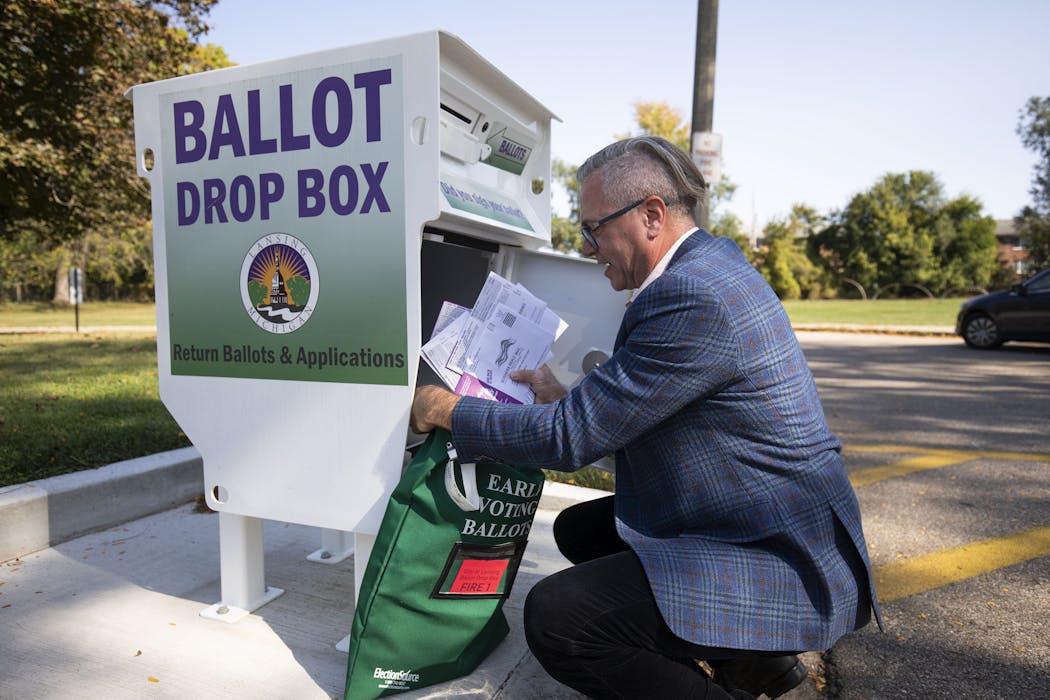
Lansing City Clerk Chris Swope collects absentee ballots from a drop box in 2024. Bill Pugliano/Getty Images

According to our recent survey of officials in Michigan communities, local democracy is humming along and city hall is taking care of business.

The federal government was shut down in October and November 2025, but cities and towns around the United States continued to fill potholes, purify drinking water, respond to emergency calls and issue construction permits, mostly with little fanfare.

But Michiganders should not take this local resilience for granted. Officials – especially in rural communities – are also raising some red flags about declining public engagement, deteriorating public discourse and harassment.

The view from city hall

At the University of Michigan’s Center for Local, State and Urban Policy, we have been surveying local officials in Michigan’s 1,856 cities, villages, counties and townships since 2009. About 70% of local governments in the state complete our survey each year, which means that our results reflect the opinions of everyone from township clerks in the Upper Peninsula to mayors of larger cities in the Metro Detroit area.

This Michigan Public Policy Survey has covered a wide variety of local issues over the years. One topic we track closely is how democracy is functioning in local communities.

While many public opinion surveys ask how Americans feel about democracy, very few examine the viewpoints of local officials whose job it is to carry out the daily work of democratic governance. For example, instead of asking whether people trust their government, we flip the question around and ask local officials whether they trust their residents to be responsible participants in policymaking.

Democracy at its grassroots is strong

To get a high-level understanding of local democratic health, we ask Michigan local officials to rate the overall functioning of democracy in their communities on a scale of 1 to 10, from total breakdown to perfectly functioning.

Statewide, 82% reported a score of 7 or higher when we surveyed them in the spring of 2025. This percentage has remained remarkably steady since we first began tracking it in 2020.

At the other end of the scale, only 2% of communities this year rated democracy poorly – 4 or below – falling from a high of 7% in 2024.

Small and rural communities are falling behind

While these high ratings are good news for local democracy in general, when we break down the results by whether communities consider themselves more urban or rural, we see some divergence. While 82% of communities overall reported relatively good democratic health this year, this reflects 92% of urban communities and 79% of rural communities.

We also see evidence of a growing urban/rural divide in resident engagement, an essential ingredient of democratic health. When we asked local officials how engaged their residents were with their local governments, 64% of urban communities said their residents were somewhat or very engaged, but only 41% of rural communities felt the same. In fact, 13% of rural communities said their residents are not engaged at all, compared with only 5% of urban communities.

Similarly, local officials in urban communities have higher levels of trust in their residents to be responsible participants in local policymaking – for example, by contributing ideas, volunteering or speaking with elected officials. In Michigan’s urban communities, 48% of local officials said they trust their residents nearly always or most of the time. However, only 38% of rural local officials had the same level of trust in their residents.

The big picture looks less rosy

While rural communities currently appear to be struggling more than urban communities to engage with their residents, looking over time, democratic participation is getting worse everywhere. For example, 18% of Michigan communities statewide reported this year that civic discourse among residents was somewhat or very divisive, up from 11% in 2012.

Between 2012 and today, despite their efforts to expand engagement opportunities, particularly online, local officials’ satisfaction with their residents’ level of engagement has plummeted from 58% in 2012 to 38% in 2025. Among the most common frustrations are that their efforts attract the same people over and over and that a small vocal minority of residents is negatively affecting overall engagement.

Even more troubling, about half of local officials who responded to the 2022 version of our survey have experienced some kind of personal harassment, with 39% reporting in-person harassment such as hostile or aggressive comments, 31% reporting online harassment and 3% reporting violent actions like assault or destruction of property.

Looking ahead

While only 17% of Americans currently trust the federal government to “do what is right” “just about always” or “most of the time,” according to a recent Pew survey, 65% of Americans still trust their local government. And as our survey results suggest, most local officials feel pretty confident that they’re being good stewards of local democracy, despite declining help and input from their residents.

To any Americans worried about the state of their democracy, may we suggest heading to the next meeting of the local planning commission? We hear there are sometimes even snacks.

Read more of our stories about Michigan.

The Conversation

Stephanie Leiser does not work for, consult, own shares in or receive funding from any company or organization that would benefit from this article, and has disclosed no relevant affiliations beyond their academic appointment.

ref. Local democracy is holding strong, but rural communities are falling behind, new survey of Michigan officials shows – https://theconversation.com/local-democracy-is-holding-strong-but-rural-communities-are-falling-behind-new-survey-of-michigan-officials-shows-271672

It’s more than OK for kids to be bored − it’s good for them

Source: The Conversation – USA (2) – By Margaret Murray, Associate Professor of Public Communication and Culture Studies, University of Michigan-Dearborn

When children experience boredom, it can result in a brain boost that can push them to explore new activities. Richard Lewisohn/Connect Images via Getty Images

Boredom is a common part of life, across time and around the world. That’s because boredom serves a useful purpose: It motivates people to pursue new goals and challenges.

I’m a professor who studies communication and culture. I am currently writing a book about modern parenting, and I’ve noticed that many parents try to help their kids avoid boredom. They might see it as a negative emotion that they don’t want their children to experience. Or they might steer them into doing something that they see as more productive.

There are various reasons they want to prevent their children from being bored. Many parents are busy with work. They’re stressed about money, child care responsibilities and managing other parts of daily life. Making sure a child is occupied with a game, a TV show or an arts and crafts project at home can help parents work uninterrupted, or make dinner, without their children complaining that they are bored.

Parents may also feel pressure for their children to succeed, whether that means getting admitted to a selective school, or becoming a good athlete or an accomplished musician.

Children also spend less time playing freely outside and more time participating in structured activities than they did a few decades ago.

Easy access to screens has made it possible to avoid boredom more than ever before.

Many parents needed to put their children in front of screens throughout the pandemic to keep them occupied during work hours. More recently, some parents have reported feeling social pressure to use screens to keep children quiet in public spaces.

That is to say, there are various reasons why parents shy away from their kids being bored. But before striving to eliminate boredom completely, it’s important to know the benefits of boredom.

A young girl with dark hair lays on her stomach on a couch with her arms and legs splayed out.
Even very young children could benefit from experiencing boredom in short spurts.
Oscar Wong/Moment via Getty Images

Benefits of boredom

Although boredom feels bad to experience in the moment, it offers real benefits for personal growth.

Boredom is a signal that a change is needed, whether it be a change in scenery, activity or company. Psychologists have found that the experience of boredom can lead to discovering new goals and trying new activities.

Harvard public and nonprofit leadership professor Arthur Brooks has found that boredom is necessary for reflection. Downtime leaves room to ask the big questions in life and find meaning.

Children who are rarely bored could become adults who cannot cope with boredom. Boredom also offers a brain boost that can cultivate a child’s innate curiosity and creativity.

Learning to manage boredom and other negative emotions is an important life skill. When children manage their own time, it can help them develop executive function, which includes the ability to set goals and make plans.

The benefits of boredom make sense from an evolutionary perspective. Boredom is extremely common. It affects all ages, genders and cultures, and teens are especially prone to boredom. Natural selection favors traits that offer a leg up, so it is unlikely that boredom would be so prevalent if it did not deliver some advantages.

Parents should be wary of treating boredom as a problem they must solve for their children. Psychologists have found that college students with overly involved parents suffer from more depression.

Other research shows that young children who were given screens to help them calm down were less equipped to regulate their emotions as they got older.

Boredom is uncomfortable

Tolerating boredom is a skill that many children resist learning or do not have the opportunity to develop. Even many adults would rather shock themselves with electricity than experience boredom.

It takes practice to learn how to handle boredom. Start with small doses of boredom and work up to longer stretches of unstructured time. Tips for parents include getting kids outside, suggesting a new game or recipe, or simply resting. Creating space for boredom means that there will be some stretches of time when nothing in particular is happening.

Younger children might need ideas for what they could do when bored. Parents do not need to play with them every time they are bored, but offering suggestions is helpful. Even five minutes of boredom is a good start for the youngest children.

Encouraging older children to solve the problem of boredom themselves is especially empowering. Let them know that boredom is a normal part of life even though it might feel unpleasant.

It gets easier

Children are adaptable.

As children get used to occasional boredom, it will take them longer to become bored in the future. People find life less boring once they regularly experience boredom.

Letting go of the obligation to keep children entertained could also help parents feel less stressed. Approximately 41% of parents in the U.S. said they “are so stressed they cannot function,” and 48% reported that “most days their stress is completely overwhelming,” according to a report from the U.S. surgeon general in 2024.

So the next time a kid complains, “I’m bored!” don’t feel guilty or frustrated. Boredom is a healthy part of life. It prompts us to be self-directed, find new hobbies and take on new challenges.

Let children know that a little boredom isn’t just OK – in fact, it’s good for them.

The Conversation

Margaret Murray does not work for, consult, own shares in or receive funding from any company or organization that would benefit from this article, and has disclosed no relevant affiliations beyond their academic appointment.

ref. It’s more than OK for kids to be bored − it’s good for them – https://theconversation.com/its-more-than-ok-for-kids-to-be-bored-its-good-for-them-268826

Why are some Black conservatives drawn to Nick Fuentes?

Source: The Conversation – USA (2) – By George Michael, Professor of Criminal Justice, Westfield State University

Nick Fuentes believes that the country’s identity depends on preserving its white majority. AP Photo/Jacquelyn Martin

Far-right activist Nick Fuentes continues to gain momentum.

The openly racist and antisemitic podcaster has emerged as an influential figure on the American political right. Recent profiles in The Atlantic and The New York Times have elevated the 27-year-old into practically a household name.

But as a scholar of the American right, I’ve been fascinated by one aspect of Fuentes’ rise: the way some Black podcast hosts and political influencers have been receptive to some of his views.

“Isn’t that amazing?” Black pastor and radio host Jesse Lee Peterson gushed after hosting Fuentes on his show in 2023. “Finally, a white man standing up for what is right. And you heard him say it – he hate no one.”

At first blush, this might sound counterintuitive. Fuentes champions a racist vision of national populism. He has promoted the idea that the country’s identity depends on preserving its white majority. In the past, he’s defended Jim Crow, the segregationist legal regime that governed the South from the late-19th century to the 1960s, arguing that segregation was better for both Black and white Americans. He’s openly disavowed miscegenation, and castigated Vice President JD Vance for marrying an Indian woman and fathering mixed-race children.

Black people and white nationalists, however, have joined forces in the past. And a number of cultural and political shifts have broadened Fuentes’ appeal to Americans of all races.

Finding common ground

In the 20th century, Black and white nationalists were able to find common ground on the topic of racial separatism.

Marcus Garvey, a leading proponent of the back-to-Africa movement in the 1920s, and Elijah Muhammad, the former leader of the Nation of Islam, saw white nationalists as kindred spirits.

Garvey envisaged a new nation built by the descendants of African slaves. To him, the ostensible racism of the Ku Klux Klan helped drive home his message that the U.S. would never be a place that could incorporate Black people as equals. In 1922, he met with Edward Young Clarke, the Klan’s acting leader. Garvey later explained how the two shared the same vision: Clarke “believes America to be a white man’s country, and also states that the Negro should have a country of his own in Africa.”

Meanwhile, Muhammad embraced the idea of Black superiority.

In George Lincoln Rockwell, the leader of the American Nazi Party from 1959 to 1967, Muhammad saw a white man who may have disagreed about which race was superior but was nonetheless serious about carving out a territory somewhere in the U.S. to build a separate Black nation. Even though Rockwell spoke of Black people as a “primitive race” and had organized a “hate tour,” Muhammad invited him to speak at the Nation of Islam summit in 1962. To Muhammad, they both had the same goal: separation of the races.

Uniting in opposition to Israel

Importantly, among both Black nationalists and white nationalists, race mixing was often cast in an antisemitic framework, with Jews accused of spurring racial integration. Rockwell claimed Jewish communists were behind the Civil Rights Movement, while the Nation of Islam published a pseudo-historical book in 1991 claiming that Jews were responsible for the transatlantic slave trade.

Today, antizionism and antisemitism are where Fuentes and some Black conservatives appear to have found common ground.

Hamas’ attack on Oct. 7, 2023, and Israel’s ensuing annihilation of Gaza have destabilized politics not only in the Middle East but also in the U.S.

Historically, the mainstream media in the U.S. has championed Israel, while both of the country’s major political parties have backed Israel financially and militarily.

However, due to a number of factors – including Americans’ widespread exposure on social media to the destruction of Gaza, the growing diversity of the U.S. and its ballooning debtcracks in this uniform support have emerged.

Fuentes routinely implicates a “Jewish oligarchy” as the source of many problems that bedevil the world today, and his strident denunciation of Israel and the larger Jewish community has endeared him to antisemites and anti-Israel factions on the right, and this includes some Black Americans.

Take Myron Gaines, an internet personality who founded the “Fresh and Fit Podcast” in 2020. Born in Brooklyn, Gaines is of Sudanese descent and was raised as a Muslim. Originally, his podcast focused on issues related to the manosphere, a largely online movement that champions masculinity and opposes feminism.

But since the Oct. 7 attacks, Gaines became a vociferous critic of Israel, claiming “Zionist fingerprints” were “all over” the 9/11 attacks and JFK’s assassination. On this issue, he found common ground with Fuentes, who has frequently appeared as a guest on his program. On occasion, Andrew Tate, a popular British biracial social media personality, has joined them for discussions.

All three share an antisemitic worldview – promoting, at various points, the notion of Jewish control of finance, media and governments – with a pronounced misogynist streak.

Then there are the Hodgetwins, Keith and Kevin Hodge. The Black twin brothers launched their podcast in 2008 and now boast an estimated 2 million followers. They’ve recently interviewed a range of antisemitic guests on their program, including Fuentes, David Duke, Leonarda Jonie and Stew Peters.

In July 2025, Candace Owens hosted Nick Fuentes for a two-hour interview on her podcast. They had traded barbs in the past, but they had also, at times, praised each other. When Owens was fired from The Daily Wire for her criticism of Israel in 2024, Fuentes instructed his supporters to “stand with Candace.”

During the July 2025 interview, there were some tense moments: Owens needled Fuentes over why he hadn’t married and started a family. She also objected to his belief that race determined a person’s abilities and to his claim that Black civilization was inherently inferior. But the tone was generally cordial, and they agreed that the pro-Israel lobby had an outsized influence on American politics.

Race is becoming less black and white

There’s also a broader cultural shift at play: Racial identity is becoming increasingly fluid.

As political scientist Eric Kaufmann argued in his 2019 book, “Whiteshift: Populism, Immigration and the Future of White Majorities,” America may be becoming more racially diverse, but this doesn’t necessarily portend a politics of racial liberalism.

Instead, he argues that those with multiracial backgrounds will tend to identify – and be identified – with the largest and most socially dominant racial group. In other words, a significant number of multiracial Americans will “airbrush” their polyglot lineage and instead focus on their European provenance. As racial boundaries become more fluid, more people of multiracial heritage may come to culturally and politically identify as white.

Just as President Donald Trump was able to draw a higher share of Black and Latino voters than any GOP presidential candidate in recent memory, Fuentes has been able to connect with nonwhite audiences. And just as Stewart Rhodes, the founder of the right-wing, anti-immigrant Oath Keepers, is part Hispanic, the former leader of the “Western chauvinist” Proud Boys, Enrique Tarrio, is Afro-Cuban American.

Fuentes himself reflects this trend. He acknowledges his Mexican ancestry – from his paternal grandfather – and yet remains an unapologetic white nationalist, calling for “total Aryan victory.”

Black podcasters may be amenable to Fuentes due to the country’s racial reality. Any program of forced racial expulsion and separation simply doesn’t seem feasible in contemporary, multiracial America.

Fuentes seems to recognize this; in fact, he recently called for a united populist front to include the political left. He urged leftists to jettison their advocacy of open borders and wokeism. Meanwhile, he’s counseled the political right to abandon its reverence for the free market.

Perhaps Fuentes favors a form of national socialism not unlike the kind that emerged in fascist Germany and Italy. But for Gen Zers who are experiencing economic uncertainty and social isolation, such a program can sound attractive – no matter their race.

The Conversation

George Michael does not work for, consult, own shares in or receive funding from any company or organization that would benefit from this article, and has disclosed no relevant affiliations beyond their academic appointment.

ref. Why are some Black conservatives drawn to Nick Fuentes? – https://theconversation.com/why-are-some-black-conservatives-drawn-to-nick-fuentes-270437

Medieval peasants probably enjoyed their holiday festivities more than you do

Source: The Conversation – USA (3) – By Bobbi Sutherland, Associate Professor, Department of HIstory, University of Dayton

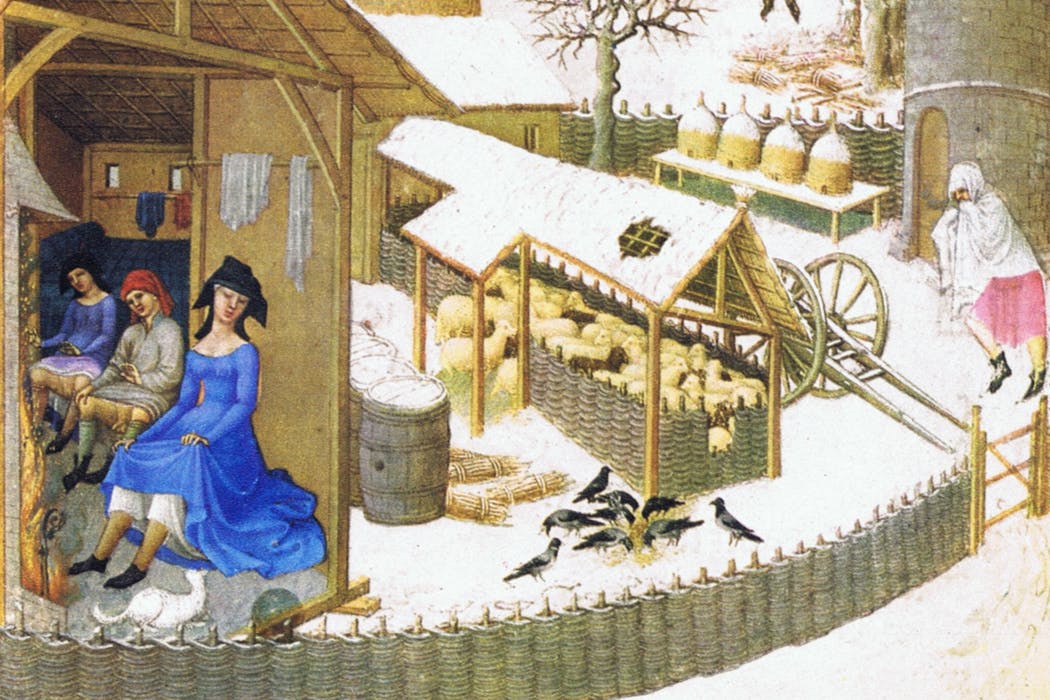
Winter in a peasant village, painted by the Limbourg brothers and published in the medieval illuminated manuscript ‘Très Riches Heures du Duc de Berry.’ Pierce Archive LLC/Buyenlarge via Getty Images

When people think of the European Middle Ages, it often brings to mind grinding poverty, superstition and darkness. But the reality of the 1,000-year period from 500 to 1500 was much more complex. This is especially true when considering the peasants, who made up about 90% of the population.

For all their hard work, peasants had a fair amount of downtime. Add up Sundays and the many holidays, and about one-third of the year was free of intensive work. Celebrations were frequent and centered around religious holidays like Easter, Pentecost and saints’ days.

But the longest and most festive of these holidays was Christmas.

As a professor of medieval history, I can assure you the popular belief that the lives of peasants were little more than misery is a misconception. They enjoyed rich social lives – maybe richer than ours – ate well, celebrated frequently and had families not unlike our own. For them, holiday festivities didn’t begin with Christmas Eve and end with New Year’s.

The party was just getting started.

Daily life in a peasant village

A peasant was not simply a low-class or poor person. Rather, a peasant was a subsistence farmer who owed their lords a portion of the food they grew. They also provided labor, which might include bridge-building or farming the lord’s land.

In return, a lord provided his peasants with protection from bandits or invaders. They also provided justice via a court system and punished people for theft, murder and other crimes. Typically, the lord lived in the village or nearby.

Peasants lived in the countryside, in villages that ranged from a few houses to several hundred. The villages had communal ovens, wells, flour mills, brewers or pubs, and blacksmiths. The houses were clustered in the center of the village along a dirt street and surrounded by farmland.

A photo of a primitive stone house with a thatched roof.
A 14th-century thatched cottage in what is now West Sussex, England.
David C. Tomlinson/The Image Bank via Getty Images

By today’s standards, a peasant’s house was small – in England, the average was around 700 square feet (65 square meters). Houses might be made of turf, wood, stone or “waddle-and-daub,” a construction very similar to lathe and plaster, with beamed roofs covered in straw. Houses had front doors, and some had back doors. Windows were covered with shutters and, rarely, glass. Aside from the fireplace, only the Sun, Moon or an oil lamp or candle provided light.

Strange sleep habits and sex without privacy

The day was dictated by seasons and sunlight. Most people rose at dawn or a bit before; men went out to their fields soon after to grow grains like wheat and barley. Women worked in the home and yard, taking care of children, animals and vegetable gardens, along with the spinning, sewing and cooking. Peasants didn’t have clocks, so a recipe might recommend cooking something for the time it took to say the Lord’s Prayer three times.

Around midday, people usually took a break and ate their largest meal – often a soup or stew. The foods they ate could include lamb and beef, along with cheese, cabbage, onions, leeks, turnips and fava beans. Fish, in particular freshwater fish, were also popular. Every meal included bread.

A historical photo shows peasants dancing around a tree.
15th-century peasants in France celebrate May Day.
Hulton Archives via Getty Images

Beer and wine were major components of the meal. By our standards, peasants drank a lot, although the alcohol content of the beer and wine was lower than today’s versions. They often napped before returning to work. In the evening, they ate a light meal, perhaps only bread, and socialized for a while.

They went to bed within a few hours of darkness, so how long they slept depended on the season. On average, they slept about eight hours, but not consecutively. They awoke after a “first sleep” and prayed, had sex or chatted with neighbors for somewhere between half an hour and two hours, then returned to sleep for another four hours or so.

Peasants did not have privacy as we think of it; everyone often slept in one big room. Parents made love with one another as their children slept nearby. Married couples shared a bed, and one of their younger children might sleep with them, though infants had cradles. Older children likely slept two to a bed.

A colorful illustration of a musician playing an instrument before a small audience.
A musician entertains a group of peasant farmers.
duncan1890/DigitalVision Vectors via Getty Images

Dreaming of a medieval Christmas

Life certainly wasn’t easy. But the stretches of time for rest and leisure were enviable.

Today, many people start thinking about Christmas after Thanksgiving, and any sort of holiday spirit fizzles by early January.

In the Middle Ages, this would have been unheard of.

Advent – the period of anticipation and fasting that precedes Christmas – began with the Feast of St. Martin.

Back then, it took place 40 days before Christmas; today, it’s the fourth Sunday before it. During this period, Western Christians observed a fast; while less strict than the one for Lent, it restricted meat and dairy products to certain days of the week. These protocols not only symbolized absence and longing, but they also helped stretch out the food supply after the end of the harvest and before meats were fully cured.

Christmas itself was known for feasting and drunkenness – and it lasted nearly six weeks.

Dec. 25 was followed by the 12 Days of Christmas, ending with the Epiphany on Jan. 6, which commemorates the visit of the Magi to Jesus, Mary and Joseph. Gifts, often in the form of food or money, were exchanged, though this was more commonly done on New Year’s Day. Game birds, ham, mince pies and spiced wines were popular fare, with spices thought to help warm the body.

Though Christmas officially celebrates the birth of Jesus, it was clearly associated with pre-Christian celebrations that emphasized the winter solstice and the return of light and life. This meant that bonfires, yule logs and evergreen decorations were part of the festivities. According to tradition, St. Francis of Assisi created the first nativity scene in 1223.

Christmas ended slowly, with the first Monday after Epiphany being called “Plough Monday” because it marked the return to agricultural work. The full end of the season came on Feb. 2 – called Candlemas – which coincides with the older pagan holiday of Imbolc. On this day, candles were blessed for use in the coming year, and any decorations left up were thought to be at risk of becoming infested with goblins.

Many people today gripe about the stresses of the holidays: buying presents, traveling, cooking, cleaning and bouncing from one obligation to the next. There’s a short window to get it all done: Christmas Day is the only day many workplaces are required to give off.

Meanwhile, I’ll be dreaming of a medieval Christmas.

The Conversation

Bobbi Sutherland does not work for, consult, own shares in or receive funding from any company or organization that would benefit from this article, and has disclosed no relevant affiliations beyond their academic appointment.

ref. Medieval peasants probably enjoyed their holiday festivities more than you do – https://theconversation.com/medieval-peasants-probably-enjoyed-their-holiday-festivities-more-than-you-do-241328