Ciencia 2025: six seven o el estado de digital de la cuestión

Source: The Conversation – (in Spanish) – By Laura G. de Rivera, Ciencia + Tecnología, The Conversation

N Universe/Shutterstock

Si no lo entiende, es normal. Es un título en clave que solo podrían descifrar los adolescentes de la casa, si no fuera porque aquí les traigo el spoiler. “6 7” (six seven) ha sido elegido el vocablo del año 2025 por Dyctionary.com, en encarnizada competencia con “rage bait” –ganadora según Diccionario Cambridge de inglés– y “parasocial” –la seleccionada por Diccionario Oxford–. Las tres nos interesan mucho, pero vayamos por partes.

6 7 es eso que no es nada y, a la vez, tiene el poderío suficiente para servir de respuesta para todo. Sirve como sustituto perfecto a “no sé”, “quizá”, “y a mí qué”, “quién sabe”, “me da igual”, “como quieras”, “paso de todo” o “vaya novedad”, por ejemplo. Pertenece, como escriben los autores de este interesante artículo, a la “jerga brainrot”, es decir, “términos intencionalmente absurdos y sin sentido diseñados para ser remezclados infinitamente y utilizados, incluso, como elemento de burla o incordio hacia adultos o profesores”. Por cierto, eso de “brainrot” significa “cerebro podrido” en inglés, que es como se nos queda la sesera cuando sucumbimos a los algoritmos adictivos de internet: dejamos de pensar, de ser, de saber… y nos convertimos en un pedazo de carne con un dedo que hace scroll.

¿Y qué tiene que ver con el resumen de 2025? 6 7 es la cara que ponemos cuando nos enteramos de que todos esos superpoderes que prometía tener la inteligencia artificial son, en lo que nos toca como ciudadanos de a pie, un jardín lleno de cacas de vaca. Porque, aparte de su papel estrella en la automatización de la industria y la investigación, en su uso doméstico está siendo algo que beneficia sobre todo a las plataformas digitales que usamos –o nos usan–.

Hora de analizar los efectos secundarios

Si 2024 destacó por ser el año en que todos, hasta el jurado de los Nobel, quedamos deslumbrados por la maravillosa promesa que el aprendizaje automático podía suponer para el avance de la humanidad, su hermano pequeño, 2025, es la revancha del sentido crítico.

Hemos sabido cómo, con analizar solo una foto nuestra, existen programas de inteligencia artificial que pueden hacer un retrato robot detallado de cómo somos, hasta de cuánto ganamos. No es que los algoritmos nos lean la mente, es que están diseñados para satisfacer los intereses económicos de las plataformas que hay detrás.

Hay quienes definen la tecnología mediática moderna como “técnicas que nos sumergen en una realidad constantemente retocada, filtrada y cada vez más distante de la experiencia directa”. A esa fabricación de lo real que sustituye lo vivido, Gunter Anders la llamó “fantasmas”“. Un riesgo que encaja con otra de las palabras del año, “parasocial”, entendida como aquello que finge el contacto entre personas, pero no es más que puro aislamiento: exactamente lo que hacen las redes sociales, cuando nos comunicamos con cientos de personas a base de corazoncitos… pero lo hacemos desde la inmensa soledad de nuestra pantalla rectangular. Y eso sin hablar de esos chatbots que se convierten en compañeros y confidentes, haciéndonos olvidar que son solo programas de ordenador.

Otra cosa que debemos recordar es que, al ser pura estadística, la IA se puede equivocar y no es fácil saber quién pagaría por esos errores, sean grandes o pequeños. Todo apunta a que es hora de adaptar las normas para prevenir los riesgos de la inteligencia artificial, de verdad y en la práctica.

Unos y ceros sin emociones

Por otra parte, cuando hablamos con ChatGPT como si fuera una persona y, peor aún, nos responde de la misma manera que lo haría una persona, podemos entrar un bucle pantanoso. Y es que otorgar cualidades humanas a la tecnología no nos ayuda a comprenderla, eso está claro. “El imaginario en torno a una tecnología determina el modo en que el público la entiende y, por lo tanto, guía su uso, su diseño y su impacto social”. Para empezar, la IA que tenemos hoy no siente ni padece: “no es una mente no biológica: es un proceso de optimización estadística”.

Somos nosotros, los usuarios humanos, los que sí tenemos emociones: descubrir cómo las plataformas digitales las explotan para engancharnos está detrás de otra de las palabras estrella de este año. “Rage bait” hace alusión a eso, a cómo hacemos clic, compartimos o comentamos un post o noticia solo porque ha encendido el botón de nuestra ira.

Pepitos Grillo imprescindibles

Los investigadores que firman nuestros artículos nos ayudan a aclarar confusiones. Hemos aprendido, por ejemplo, que Alphafold, el programa de IA para predecir la estructura de las proteínas por el que sus creadores recibieron el Nobel de Química, no es código abierto. No es ciencia abierta, como se nos dio a entender, sino un producto que la empresa privada DeepMind (Google-Alphabet) deja usar a los científicos, sin dejarles conocer sus entrañas ni modificarlo.

Otras voces denuncian que el lado oscuro de la tecnología está dando pie a una nueva especie de trabajadores, los neoesclavos digitales.

Científicos comprometidos

No es cuestión de ponernos sombríos, solo de ser conscientes de la realidad poliédrica. El avance tecnológico está bien, sí, de acuerdo. Pero también debemos exponer su lado no tan amable –o directamente oscuro–, esa otra cara de la moneda. Es necesario para avanzar de forma limpia y ética… y para que los tomadores de decisiones no tengan que sonrojarse a la hora de rendir cuentas a la ciudadanía.

Porque cada innovación debe ir acompañada de la evaluación de sus riesgos y de sus consecuencias no deseadas o no imaginadas. “La ciencia no puede desligarse de la sociedad, pues siempre está impregnada de valores, visiones del mundo y consecuencias prácticas”, tal y como señala otro de nuestros autores. Hoy, más que nunca, necesitamos científicos comprometidos, que hagan estudios independientes y ayuden a los gobernantes a emprender acciones mejor informadas, en beneficio de la gente.

La transición digital contamina

También hemos dado voz a interesantes estudios sobre los efectos secundarios del progreso informático: el impacto medioambiental de la inteligencia artificial. Por ejemplo, las consultas a ChatGPT consumen 1000 MWh cada día en el mundo, hasta el punto de que Microsoft, Alphabet (Google) y Amazon han firmado acuerdos para comprar energía de plantas nucleares, asegurando el flujo de vatios para sus centros de dato. En este contexto, varias investigaciones confían en la fotónica y en la nanotecnología para que la IA sostenible no quede en utopía.

Al mismo tiempo, hemos aprendido que solo una de cada díez baterías de litio (las que usan nuestros smartphones y portátiles) se recicla y que existen científicos devanándose los sesos para encontrar la manera en que el binomio “transición verde” e “impacto medioambiental de los minerales críticos” (como litio o silicio) no nos cree disonancia cognitiva.

Otra vertiente del progreso mal entendido son los tóxicos que llegan a la gente desde muy diversas fuentes, incluso juguetes con plomo, retardantes de llama y ftalatos, ropa con formaldehído y disruptores endocrinos o esos microplásticos persistentes que podrían invadir el perfecto y bello ecosistema que late en una gota del océano. Pero lo interesante no es quejarse, sino buscar soluciones: ya hay tecnologías que permiten descomponer plásticos usando bacterias o crear biomateriales de verdad biodegradables. Solo falta invertir en ellas e implementarlas.

La vida en cúbits

En el resumen de este año tampoco pueden faltar la mención al entrelazamiento entre luz y materia, con esos maravillosos artículos que nos ayudan a entender quién mató al pobre gato de Schrödinger o cómo la física cuántica entra de lleno en nuestras vidas. Este tema ha sido el protagonista del Nobel de Física 2025, otorgado a los experimentos pioneros que allanaron el camino para las computadoras cuánticas.

Forman parte de esos misterios apasionantes que nuestros autores se aventuran a explicarnos, como el origen de la primera superkilonova observada en el cosmos, las claves de la vida halladas en el asteroide Bennu o la materia oscura observada por primera vez. Porque el cielo siempre ha fascinado al ser humano y lo sigue haciendo. Si no que se lo digan a todos los amantes de contemplar eclipses, que el año que se avecina disfrutarán de lo lindo.

Nosotros seguiremos aquí, al pie del cañón, tratando de ofrecerles un fiel rompecabezas de la realidad científica y tecnológica para que puedan formarse una idea lo más completa e informada posible del lugar que quieren ocupar en el mundo.

The Conversation

ref. Ciencia 2025: six seven o el estado de digital de la cuestión – https://theconversation.com/ciencia-2025-six-seven-o-el-estado-de-digital-de-la-cuestion-272619

La gramática de la convivencia en el discurso de Navidad del rey

Source: The Conversation – (in Spanish) – By Ana Mancera Rueda, Profesora Titular de Lengua Española (Facultad de Filología), Universidad de Sevilla

En El discurso del rey, el monarca inglés Jorge VI tiene que aprender a controlar su voz para ser capaz de dirigirse a la nación en un momento de crisis. La película no solo trata de cómo afrontar un problema de dicción, sino de algo mucho más profundo: cómo el lenguaje y la manera de utilizarlo construyen autoridad, confianza y vínculo con la ciudadanía.

Salvando las distancias históricas y personales, algunos discursos institucionales actuales siguen cumpliendo esa misma función: articular una determinada idea de comunidad política. El mensaje de Navidad del rey Felipe VI es un buen ejemplo de ello.

En los días posteriores al discurso, gran parte de la atención mediática se ha centrado en la puesta en escena: el hecho de que el rey lo pronunciara de pie, el tono sereno del mensaje o su éxito de audiencia. Estos aspectos son relevantes, sin duda. Pero, más allá de cómo se dijo y de cuánta gente lo vio, resulta interesante analizar qué imagen de país se dibuja a través de sus palabras.

Convivencia y confianza

Una primera pista la ofrecen los términos que más se repiten a lo largo del texto. Si dejamos a un lado las preposiciones, conjunciones y artículos más habituales (como de, y, la, etc.), destacan algunas palabras clave que no aparecen por casualidad: nuestra, convivencia, confianza, España, todos o futuro. Se trata, en su mayoría, de sustantivos y adjetivos vinculados a la idea de comunidad y de proyecto compartido, lo que apunta ya a un discurso construido desde el “nosotros” y orientado a fortalecer los lazos colectivos.

Ese “nosotros” se refuerza, además, por la abundancia de posesivos en primera persona del plural. Por ejemplo, el uso de nuestra no es meramente gramatical: acompaña a conceptos clave como convivencia, democracia o capacidad de trabajo. De esta forma contribuye a presentar tales valores como principios comunes, que conciernen al conjunto de la ciudadanía, y cuya preservación es responsabilidad de todos. El propio rey no se sitúa por encima de los ciudadanos, sino dentro de ese “nosotros”, lo que atenúa la distancia institucional y subraya la idea de la convivencia democrática como una responsabilidad compartida.

Precisamente, entre esas palabras recurrentes, convivencia ocupa un lugar central. No aparece sola: a su alrededor se repiten verbos como preservar, fortalecer o construir. De este modo, la convivencia no se muestra como un ideal abstracto, ni como una fórmula retórica, sino como una realidad frágil, que exige cuidado y atención. Algo parecido ocurre con confianza. No se presenta como una promesa grandilocuente, sino como algo delicado, que puede romperse si no se cuida. De ahí la insistencia en el respeto, la escucha y el diálogo: pequeñas prácticas que, sumadas, sostienen la convivencia diaria.

Ese cuidado de la convivencia y de la confianza se apoya también en el uso reiterado de expresiones temporales. Las referencias a la firma del tratado de adhesión a las Comunidades Europeas “hace 40 años”, o al hecho de que “se han cumplido 50 años” del inicio de la Transición no funcionan como evocaciones nostálgicas, sino como marcos desde los que leer el presente. El pasado se dibuja así como una experiencia compartida, como un camino recorrido que ayuda a entender mejor dónde estamos y por qué merece la pena seguir avanzando juntos.

‘Avanzar’ y ‘futuro’

Desde esa perspectiva, el discurso insiste en que ese camino solo puede recorrerse entre todos. Palabras como futuro o avanzar aparecen ligadas a una idea sencilla: lo que viene no se construye en solitario ni a corto plazo, sino como un proyecto compartido. Avanzar, en este marco, no significa imponerse ni ir más rápido que los demás, sino hacerlo juntos, con acuerdos y renuncias, manteniendo el cuidado de la convivencia como horizonte común.

En la película El discurso del rey, el momento clave no es aquel en el que el monarca logra pronunciar su mensaje sin titubeos, sino aquel en el que su voz consigue convertirse en un punto de referencia compartido, justo en un momento de incertidumbre marcado por la Segunda Guerra Mundial. Salvando las distancias, el discurso de Navidad de Felipe VI cumple una función similar: no busca deslumbrar, sino ofrecer un marco común desde el que pensarnos como sociedad.

The Conversation

Ana Mancera Rueda no recibe salario, ni ejerce labores de consultoría, ni posee acciones, ni recibe financiación de ninguna compañía u organización que pueda obtener beneficio de este artículo, y ha declarado carecer de vínculos relevantes más allá del cargo académico citado.

ref. La gramática de la convivencia en el discurso de Navidad del rey – https://theconversation.com/la-gramatica-de-la-convivencia-en-el-discurso-de-navidad-del-rey-272621

La reconnaissance du Somaliland par Israël : un cadeau empoisonné ?

Source: The Conversation – France in French (3) – By Robert Kluijver, Docteur associé au Centre de Recherches Internationales CERI, Sciences Po/CNRS, spécialiste de la Corne d’Afrique., Sciences Po

Israël vient de devenir le premier pays à reconnaître l’indépendance du Somaliland, plus de trente ans après que celui-ci se soit de facto totalement détaché de la Somalie. À travers cette décision, Tel-Aviv cherche à obtenir une place forte sur la très stratégique mer Rouge, à faire pencher en sa faveur les équilibres géopolitiques régionaux et, possiblement, à expulser vers ce territoire de la Corne de l’Afrique de nombreux Palestiniens. Le Somaliland se réjouit de cette première reconnaissance internationale, mais est-il vraiment positif pour lui de se retrouver ainsi l’obligé d’Israël ?


Le 26 décembre dernier, Israël a surpris le monde entier en reconnaissant officiellement l’indépendance du Somaliland. Quelles sont les motivations de cette annonce inattendue, et quelles conséquences peut-elle avoir ?

Une anomalie diplomatique

L’État du Somaliland, formé en 1991, est indépendant à tous points de vue, mais Israël est le premier État souverain à le reconnaître. Pour tous les autres pays et les organisations internationales, le Somaliland (4,5 millions d’habitants) reste sous le contrôle de l’État somalien, duquel il a fait sécession après avoir subi une guerre aux allures de génocide à la fin des années 1980.

Aujourd’hui, l’État fédéral somalien est en proie aux attentats commis par les organisations Al-Chabaab et État islamique, connaît un niveau de violence élevé et un degré de corruption à battre tous les records.

En comparaison, le Somaliland est un havre de paix démocratique et stable, qui jouit de sa propre Constitution, d’un système politique et électoral qui fonctionne plutôt bien, de sa propre monnaie et de sa propre armée.

Billets de 500, 1 000 et 5 000 shillings du Somaliland. La monnaie a été introduite en 1994, trois ans après la proclamation d’indépéndance.
Somalilandstandard.com

Le président Abdirahman Irro avait certainement besoin de cette bonne nouvelle. Après sa victoire le 13 novembre 2024, son gouvernement s’est enlisé dans des conflits claniques et a fait peu de progrès sur les fronts critiques de l’emploi des jeunes, de la croissance économique et de la lutte contre l’inflation. Après l’annonce israélienne, des foules en liesse sont descendues dans les rues de Hargeisa, la capitale du Somaliland.

Qu’apporterait une large reconnaissance internationale aux Somalilandais, à part la fierté ? L’acceptation de leurs passeports et l’intégration dans les systèmes bancaires internationaux, ce qui facilitera le commerce, ainsi que la liberté pour le gouvernement d’emprunter de l’argent aux organisations financières internationales afin de financer le développement.

Mais on n’en est pas là. Le président Trump n’a pas donné suite à l’initiative israélienne. « Qui sait ce que c’est, le Somaliland ? » a-t-il demandé.

Cependant, on sait que les États-Unis ont récemment visité les côtes du Somaliland pour étudier la possibilité de l’implantation d’une base militaire.

Une ligne de fracture géopolitique

Les vives réactions de l’Union africaine, de l’Égypte, de la Turquie et de maints autres membres de l’Organisation de la coopération islamique, qui ont tous affirmé leur attachement à l’intangibilité des frontières de la Somalie, dessinent une ligne de fracture géopolitique qui risque de s’aggraver dans un proche avenir. De l’autre côté, les pays qui estiment que l’indépendance du Somaliland serait dans leur intérêt – les Émirats arabes unis, l’Éthiopie et le Kenya – gardent le silence. Le ralliement à ce camp d’Israël – et potentiellement, un jour, des États-Unis – lui donne cependant beaucoup plus de poids.

Officiellement, Israël n’a donné aucune explication spécifique justifiant cette reconnaissance. Mais la plupart des analystes s’accordent à dire que la sécurité des lignes maritimes menant, par la mer Rouge, au port israélien d’Eilat et au canal de Suez en est la raison principale. Les côtes du Somaliland, en face du Yémen et proches du détroit de Bab el-Mandab, offriraient à l’État hébreu une plate-forme pour prendre en tenaille le Yémen des Houthis et déjouer l’influence régionale turque.

Un deuxième intérêt moins cité est le désir israélien de trouver un pays qui accueillerait les Palestiniens que le gouvernement Nétanyahou cherche à expulser. Plus tôt cette année, les efforts israéliens et américains visant à négocier un accueil des Palestiniens dans divers pays, y compris au Somaliland, ont fait couler beaucoup d’encre. Bien qu’un tel scénario paraisse à ce stade hautement invraisemblable, l’État somalilandais pourrait y trouver son avantage, si cela impliquait une reconnaissance internationale plus vaste et d’importants transferts de fonds.

Rappelons à cet égard que l’exode de centaines de milliers de Palestiniens vers le Koweït et d’autres pays du Golfe après l’occupation de la Cisjordanie et de Gaza en 1967 contribua fortement au développement économique de ces pays. Mais les conditions étaient différentes. La main-d’œuvre palestinienne, éduquée et professionnelle, tombait à pic pour ces pays riches en pétrole mais manquant de ressources humaines, et par ailleurs arabophones. Au Somaliland, où 70 % des jeunes ne trouvent pas d’emploi, les Palestiniens auraient beaucoup plus de mal à s’intégrer.

Un troisième intérêt pourrait être de bouleverser un ordre régional globalement hostile à Israël. La reconnaissance du Somaliland, surtout si les Émirats, l’Éthiopie et les États-Unis venaient à emboîter le pas à Israël, sème le trouble parmi les rivaux de Tel-Aviv : l’Iran et le Yémen des Houthis, la Turquie et le Qatar (sponsors principaux de l’État fédéral somalien), ainsi que l’Égypte, alliée du Soudan, de l’Érythrée et de Djibouti pour isoler le rival éthiopien.

Un cadeau empoisonné ?

Cette reconnaissance surprise semble un pari risqué mais pourrait rebattre les cartes en faveur d’Israël. Un facteur clé est la légitimité domestique et la stabilité du gouvernement somalilandais, qui en fait un meilleur allié que le gouvernement de la Somalie fédérale.

À court terme, l’annonce semble jouer en faveur du président Irro et du légitime désir de reconnaissance du peuple somalilandais. Mais rentrer ainsi dans le camp israélien pourrait s’avérer, à moyen terme, un cadeau empoisonné. Les islamistes d’Al-Chabaab ont laissé le Somaliland tranquille depuis 2008 mais, de même que l’immense majorité des quelque 12 millions de citoyens de l’État fédéral, ils voient d’un très mauvais œil ce qui relève à leurs yeux d’une trahison à la fois de la cause palestinienne et de l’unité du peuple somalien. À suivre…

The Conversation

Robert Kluijver ne travaille pas, ne conseille pas, ne possède pas de parts, ne reçoit pas de fonds d’une organisation qui pourrait tirer profit de cet article, et n’a déclaré aucune autre affiliation que son organisme de recherche.

ref. La reconnaissance du Somaliland par Israël : un cadeau empoisonné ? – https://theconversation.com/la-reconnaissance-du-somaliland-par-israel-un-cadeau-empoisonne-272617

I volunteer in a repair cafe: we can help you learn to fix your broken Christmas gift

Source: The Conversation – UK – By Stuart Walker, Research Fellow in Sustainabilty Assessment, University of Sheffield

Hundreds of broken toys get thrown away after Christmas. Zamrznuti tonovi/Shutterstock

It’s a Wednesday evening in a town hall in Penryn in Cornwall, and my friend Pete and I are volunteering at our local repair cafe. We set up tables, get our tools ready, put up a sign outside and wait for people to arrive.

By the time we pack up three hours later, along with two other volunteers we have helped repair three vacuum cleaners, a pair of jeans, a laptop, a desk lamp, a clock and an electric skateboard, as well as replacing many buttons, zips, fuses, and bulbs. Some products have returned home with their owners, either to come back next time to fit a part we’ve ordered, or sadly because their design means we can’t repair them.

Repair cafes are often busy in the weeks post-Christmas when people discover their gifts are either broken or damaged in the post and they want to save them. One report found nearly half of toys received at Christmas will be broken and end up in landfill by spring.

The repair cafe movement tries to reduce the effect of this on the environment by encouraging citizens to repair rather than replace items. We regularly repair coffee machines, headphones, torches and fit new screens for computers.

The Repair Cafe International Foundation currently identifies 3,823 cafes globally, including 446 in the UK and 550 in Germany, and a total of 2,500 across the EU.

The “right to repair law”, officially the European Directive on Repair, was passed in April 2024, and is helping to drive the movement to repair more everyday items across Europe, by forcing manufacturers to do more to help consumers to get items repaired. A recent study found that around 35 million tonnes of goods were discarded across Europe, when they could have been repaired.

The value of the movement is in showing people they don’t need to replace products, and helping them learn how to fix themselves. Even if a volunteer ultimately does the fixing, sitting opposite someone as they realise their Christmas gift is no longer broken is a really positive experience. It can get quite emotional.

Stuart Walker (in white shirt) sitting at a table helping people repair items.
Stuart Walker (in white shirt) helping people repair items in Falmouth, Cornwall.
Falmouth and Penryn Repair Cafe

We always start with the simplest repair: cleaning. Often a proper clean either fixes a problem or reveals the cause. Then perhaps we’ll teach someone how to successfully glue parts back together using clamps to hold things in place, or to use a cotton bud to clean up after leaking batteries.

With complex products or electronics, I teach people to methodically work through the product, removing parts and testing with our tools as they go, until we can identify exactly which part isn’t working and why, making what seemed an overwhelming problem into a simple repair. We can then either fix, replace or remove any broken parts.

Recently I helped someone find the cause of their broken drill (a small wire disconnected from a light on the top). I showed them how to solder, and after a few practice runs on some spare parts they reattached the wire and repaired the tool. As they put it, “fixed drills and brand new skills”.

Repairs takes time. If you try to do it quickly, the repairer just ends up doing it all. That is less rewarding for most people. It makes the owner feel like they have to pay, changes the dynamic, and doesn’t teach anyone anything.

I’ve had lovely experiences repairing heirlooms and jewellery for elderly ladies, and toys for kids. Volunteer repairers don’t charge for their time, so a repair is either free or done for a small donation.

What we repair

Vacuum cleaners are one of the most common items brought in, and consistently in the top three items reported by 80 of the UK’s 446 repair cafes. Repairing a machine can delay the emission of the 70kg CO₂ related to the materials and manufacture of a new one.

Fixing things can be expensive if you take objects into commercial repairers. A 2021 study in Norway found the “consistently low price of new products” to be the most common barrier to commercial repair. If things are cheap, it can feel easier to just buy something new, and we don’t always think about the waste we are creating.

Repairs save people money, and by slowing the constant influx of new purchases it reduces global emissions as well, and we hope, over time, we are helping the wider public learn some of these forgotten skills too.


Don’t have time to read about climate change as much as you’d like?

Get a weekly roundup in your inbox instead. Every Wednesday, The Conversation’s environment editor writes Imagine, a short email that goes a little deeper into just one climate issue. Join the 47,000+ readers who’ve subscribed so far.


The Conversation

Stuart Walker works for the Grantham Centre for Sustainable Futures. He is affiliated with Hope Valley Climate Action and the Repair Cafe Movement.

ref. I volunteer in a repair cafe: we can help you learn to fix your broken Christmas gift – https://theconversation.com/i-volunteer-in-a-repair-cafe-we-can-help-you-learn-to-fix-your-broken-christmas-gift-271459

Heritage railway volunteers show how deep friendships can be formed without discussing emotions

Source: The Conversation – UK – By Tom Yarrow, Professor of Anthropology, Durham University

“Let’s face it, we’re just not that into emotions,” Brian tells me with a smile talking with other volunteers at a heritage steam railway in northern England. They are discussing a popular TV restoration show. Allan grimaces, parodying the presenter: “He’s always jumping around, shoving the microphone in their faces, like, ‘How do you feel?’ ‘Does this make you sad?’ You can almost see his glee when people actually cry!”

This parody of emotional disclosure captures something important about the values of a group of men I’ve spent years working alongside.

In public discourse and mental health campaigns, emotional expression is often viewed as essential to mental health. This weighs particularly heavily on discussions of older men. Research routinely links male emotional “repression” to “traditional” and even “toxic” forms of masculinity, connecting an inability to talk about feelings to social isolation and self-alienation.

My research suggests that this narrative misses something crucial about how connection actually works. To research this subject, I spent over four years working closely with volunteers at a heritage railway, observing their everyday interactions, and talking to them about their friendships.

The volunteers – mostly retired men from former industrial towns in north-east England – explicitly reject the modern emphasis on emotional disclosure. Through the work of restoring railways, they are preserving a form of friendship which is elsewhere increasingly rare – one characterised by the more “old-fashioned” value of taciturnity, where the discussion of emotions is not expected or required.

Rather than dismiss their approach as “repression”, I argue in a forthcoming paper that we need to appreciate how people can develop intimate and caring relationships, without naming emotions.

Feeling without emotion

Among the men I came to know, I was initially struck by the lack of talk about their personal lives. Even when facing difficult circumstances including health problems and bereavement, they rarely spoke about their feelings. Instead, they talked about shared interests in railways, and the work that they engaged in. It took me a long time to realise that this did not reflect a lack of care.

Working together on restoration projects creates what they call “camaraderie”, a form of friendship that is grounded in doing things together, rather than in the reflection on interior feelings that has become an increasing expectation of modern intimacy.

Restoring and repairing railway infrastructure involves physically demanding manual labour. They work alongside one another in close proximity for long periods of time.

As we struggled with a particularly stubborn toilet seat installation in a cramped coach cubicle, one volunteer wryly observed in a bantering tone that is common: “There’s more than one way of killing a pig and stuffing its arse with butter!” He later explained: “If the job’s too hard, there’s a simpler way of doing it.” Friendships are forged through the process of facing and overcoming these practical problems. Shared tasks create a sense of shared purpose.

Over the decades, this creates a distinctive form of intimacy. Closeness is brought about through shared activities and interests, not personal revelation.

Paradoxically, the more intimate these relationships are, the harsher the “banter” can be. And the closer their friendships, the more they feel comfortable in sharing silence. It may seem that this is uncaring, but in fact the reverse is true.

Connecting through silence

Ron was a taciturn former merchant navy worker in his 70s. As a regular volunteer for over a decade, concern quickly grew among the group when he stopped appearing. When he finally returned several weeks later, he was visibly breathless and struggled to walk. Nobody asked directly what was wrong. Instead, they offered tea and made jokes.

After he left, discussion made it clear that this was deliberate. His friends had observed him carefully and were worried. Their silence was a thoughtful response to his own: a way of giving him the “normality” that he seemed to want.

I observed these patterns of interaction in many other situations. What might look like emotional inarticulacy is actually a deliberate ethic of care. These men aren’t unable to discuss feelings. But often they choose not to, viewing these silences as a way to respect the autonomy and privacy of others. In this respect, my research builds on ethnographic accounts, for example of firefighters and male hospital porters that draw attention to forms of intimacy and connection that do not depend on the discussion of personal feelings and emotions.

Though men at the railway rarely discuss feelings, these are understood by other means. The way someone looks, or the manner in which they work can be telling. In response, they show care through deeds: checking in via phone calls, offering practical help, creating space for silent companionship without pressure to explain or disclose – “just being there”, as they sometimes say.

Mental health services and support initiatives increasingly target men with messages about “opening up”. Indeed, my research doesn’t suggest emotional expression is wrong or unhelpful. However, either/or framings, which view connection in opposition to repression miss important aspects of the many ways people sustain intimacy and support.

My work with railway enthusiasts shows how it is possible to create meaningful support networks that offer genuine intimacy and connection, without explicit discussion of emotions. Connection and care take multiple forms. For some, silence shared between friends isn’t an absence of feeling, just a different way of sharing it.

The Conversation

Tom Yarrow does not work for, consult, own shares in or receive funding from any company or organisation that would benefit from this article, and has disclosed no relevant affiliations beyond their academic appointment.

ref. Heritage railway volunteers show how deep friendships can be formed without discussing emotions – https://theconversation.com/heritage-railway-volunteers-show-how-deep-friendships-can-be-formed-without-discussing-emotions-266435

What to do if you fail at your new year resolution

Source: The Conversation – UK – By Janina Steinmetz, Professor in Marketing, Bayes Business School, City St George’s, University of London

Krakenimages.com/Shutterstock

Every year, many of us bravely announce our resolutions for the new year. A glass of champagne on New Year’s Eve might add to our confidence in our ability to do better in the coming year and save more, spend less, eat better, work out more, or binge-watch less.

But most of our resolutions fail. Even within the first weeks after New Year’s Eve, the majority of people have given up on them. Yet, not all tales of failure are the same, because the way you talk about the failure matters for your own motivation and other people’s confidence in your ability to try again.

So what can we do after we’ve given up on our resolution? We’ve announced our
good intentions to friends and family and now must admit failure. Research has shown the way you word your failed resolution can affect how people view it. And understanding the reasons most resolutions don’t work out can help us see it through in the future. Indeed, you can talk about your resolutions in a way that will make your failure more understandable and will sustain your motivation to keep going.

A constructive way to discuss your failed resolution is to focus on the controllability of the failure. Research shows that most resolutions will require some investment of time and of money. For example, getting in shape takes time for exercise and also normally requires money for a gym membership or for workout equipment. Because both of these resources are essential for pursuing our goals, many failed resolutions are due to the lack of either time or money, or both.

When talking about a failed resolution in the past, I’ve showed in my own research
that we should focus on how lack of money contributed to this failure, rather than
lack of time. In my 2024 study, people read about fictional as well as real panel participants who failed either due to lack of money or lack of time. Most participants felt the person whose failure was caused by lack of money would have more self-control going forward and was going to be more reliable at pursuing their goals.

This effect occurred because lack of money is seen as something that cannot be controlled very easily, so if this caused the failure, there wasn’t very much the person who failed could have done about it.

In this research, most of the failed resolutions were related to weight loss, better eating, or working out in the gym. Participants felt the same whether the person who failed was a man or a woman, presumably because it’s plausible that everyone needs some time and some money to pursue various goals regardless of gender or the specific resolution.

The role of controllability takes a different form when it comes to thinking about how we can do better next time.

The role of time

Research also shows the way we view time matters when it comes to failure. For the past, it’s better to think about things outside of our control that can help to take the negativity out of failure and bolster the belief that we can do better. This can mean, for example, to consider how our failure was due to lack of money or other resources outside of our control.

For the future, however, take an active perspective on time. Look at your schedule and make active decisions how to allocate time to your goal pursuit, by scheduling gym sessions or blocking time to prepare healthy meals. This can help to give us the motivation to try again because we’re not victims of our busy schedules.

Woman flopped over an exercise ball in living room.
Definitely not the only one.
Lopolo/Shutterstock

A study published in October 2025 that focused on how a lack of time contributed to failures showed that people can get back a sense of control by talking about “making time”, instead of “having time”. People who discussed their failures as an issue of not having made the time felt like they could do things differently in the future, and were more motivated to do so.

This is because “making time” suggests active control over one’s time and schedule, instead of “having time” that leaves us passive. For example, if you say you didn’t make the time to work out, that means you can make the time in the future if you choose to do so. In contrast, if you say you didn’t have time to work out, it feels like this lack of time is outside of your control and could happen again, preventing you from pursuing your exercise goals.

Find the joy

Another reason so many people struggle to keep to their new year resolution may be because they were too ambitious, or they neglected that joy and pleasure keep us going.

We need not only to have a goal in mind. Finding joy in the journey and belief in the ability to change is also important. For example, someone might want to get in better shape and work out more, but when they actually try to go to the gym, they lack the confidence to sign up for a class. Without some fun, it’s hard to follow through on a resolution even if we really want to pursue the goal. So, try to think of ways you can make the goal more enjoyable to work on and remind yourself you are capable.

The trend for new year resolutions isn’t a bad thing in itself. Although it might seem a bit paradoxical to start virtuous habits right after a big night with alcohol and overeating, research shows that we can indeed benefit from the “fresh-start” effect in which a new beginning in the calendar can provide a clean slate to start better habits.

But we don’t have to wait for the calendar to give us a fresh start. We can choose to make our own resolution (maybe a Valentine’s or Easter resolution?) to boost the motivation to pursue our goals.

The Conversation

Janina Steinmetz does not work for, consult, own shares in or receive funding from any company or organisation that would benefit from this article, and has disclosed no relevant affiliations beyond their academic appointment.

ref. What to do if you fail at your new year resolution – https://theconversation.com/what-to-do-if-you-fail-at-your-new-year-resolution-271050

Inside Uganda’s video halls, ‘video jokers’ transform Hollywood blockbusters into local entertainment

Source: The Conversation – UK – By Damien Pollard, Assistant Professor in Film, Northumbria University, Northumbria University, Newcastle

If you walk into a video hall in Uganda your attention will probably go straight to a person sitting at the front of the audience. Speaking rapidly into a microphone, they comment loudly and continuously, often drowning out the sound of the film itself. You may well ask who this person is, and why they keep interfering with the film that people have come to watch.

I’ve been conducting research into Uganda’s film landscape for the last couple of years and I’ve been privileged to visit several different venues where movies are screened. Uganda has few cinemas – there are only three in the capital city, Kampala, with a total of ten screens. Instead, the country has an extensive network of video halls, known locally as bibandas.

Video halls are found throughout the country, particularly in outlying urban areas and entrance is relatively cheap; typically around 1,000 Ugandan shillings, or 21 British pence (a cinema ticket, meanwhile, usually costs around 20,000 shillings or a little over £4). Inside a video hall, benches or seats are laid out in front of televisions and films are screened throughout the day. These are often pirated works from the US, India, Nigeria, Korea, China and elsewhere. Some of the film industry players that I have met during my research estimate that there could be as many as 3,000 video halls in Uganda.

Video hall owners have always had a problem, though. Despite Uganda’s history as a British colony, English is not spoken fluently by everyone. Neither are Hindi, Mandarin, Cantonese or Korean. In the 1980s, the “video joker” (VJ) emerged as a solution and soon became a key feature of the video hall.

The VJ sits at the front of the audience with a microphone and a sound mixer. Talking over the film, they explain its plot and paraphrase the dialogue in the Ugandan language appropriate to the location in which they are working (in Kampala this would generally be Luganda).

Importantly, the VJ’s version of what characters are saying and what is happening in the film may diverge significantly from the original version. They are known to give characters and locations Ugandan names, for example, and most interject hyperbole, jokes and social or moral commentary into their performances.

One of my interviewees told me of a VJ he had seen performing over Christopher Nolan’s 2023 film Oppenheimer, who frequently claimed: “This bomb is big enough to destroy the whole of Africa!” He was amping up the jeopardy (unnecessarily, perhaps) and bringing the film home by using a local frame of reference. The VJ, in other words, can only very loosely be considered a translator. Many of my interviewees likened them more to an MC or a sports commentator – someone who “spices” up a film by adding their own performance to it and keeping the audience “hyped”.

Many VJs are celebrities in Uganda and possess loyal fans who regularly turn out to watch them perform. In fact, the VJ is often more of a draw for audiences than the film they are voicing over. Celebrity VJs have sought to capitalise on their success by selling pirated films on DVD or via streaming platforms with their voice-over tracks baked in, so that their fans can enjoy their work at home.

Even Ugandan televisions stations have experimented with broadcasting foreign content overlaid with VJ tracks. Furthermore, the Kampala-based micro-studio known as Wakaliwood (after Wakaliga, the village where it is based) has raised the profile of the video joker outside of east Africa. It has released two films — Who Killed Captain Alex and Bad Black — on YouTube with an absurdly comic, English-language voice over performed by one of my interviewees, VJ Emmie. Wakaliwood have garnered a global cult following and their work has been screened at festivals and midnight-movie events around the world (sometimes with Emmie performing live).

VJ controversies

Back in Uganda, VJs remain very popular but they’re not without controversy. Their work raises significant issues around intellectual property protection since it relies on the pirating of films. The fact that VJs’ and video halls’ contravention of IP law often goes unpunished in Uganda has been a major stumbling block on the country’s path toward developing a sustainable domestic film production industry.

It’s hard for Ugandan producers to compete with VJs who get their films for free and face few overheads when selling their DVDs to the public. Many Ugandan filmmakers also take issue with the tradition of video joking on aesthetic grounds, arguing that it ruins the integrity of a film and trivialises the audience experience.

Trailer for Once Upon a Time in Uganda! da Wakaliwood Documentary.

The debates around video joking in Uganda won’t be settled soon but the tradition helps us to appreciate two important facts about the exhibition of films. First, what is considered a “normal” way to watch a film varies enormously around the world and is connected to a location’s specific social, cultural and economic context. The way of watching films which is most common in mainstream cinemas in Europe or North America for example, where viewers sit silently in the dark, is only one way of “doing cinema”.

Second, when it comes to our experience of a film, the film itself is only the starting point. Anyone who has ever dressed up and attended a screening of The Rocky Horror Picture Show or The Room will know this too. What those films mean to us has as much to do with the interpersonal experience of watching them as the movie itself. This is perhaps even true when we hold film nights at home, joking with friends as we watch.

So although the VJ is a Ugandan tradition, it has things to tells the rest of the world about the universal experience of watching films.


Looking for something good? Cut through the noise with a carefully curated selection of the latest releases, live events and exhibitions, straight to your inbox every fortnight, on Fridays. Sign up here.


The Conversation

The research presented in this article was supported by a British Academy/Leverhulme Trust Small Research Grant, awarded to Damien Pollard. Award number: SRG24241338.

ref. Inside Uganda’s video halls, ‘video jokers’ transform Hollywood blockbusters into local entertainment – https://theconversation.com/inside-ugandas-video-halls-video-jokers-transform-hollywood-blockbusters-into-local-entertainment-270126

I grew up in the world’s coldest city without central heating. Here’s what the world can learn from us

Source: The Conversation – UK – By Yangang Xing, Associate Professor, School of Architecture Design and the Built Environment, Nottingham Trent University

On winter mornings in Harbin, where the air outside could freeze your eyelashes, I would wake up on a bed of warm earth.

Harbin, where I grew up, is in northeast China. Winter temperatures regularly dip to -30°C and in January even the warmest days rarely go above -10°C. With about 6 million residents today, Harbin is easily the largest city in the world to experience such consistent cold.

Keeping warm in such temperatures is something I’ve thought about all my life. Long before electric air conditioning and district heating, people in the region survived harsh winters using methods entirely different from the radiators and gas boilers that dominate European homes today.

Now, as a researcher in architecture and construction at a British university, I’m struck by how much we can learn from those traditional systems in the UK. Energy bills are still too high, and millions are struggling to heat their homes, while climate change is expected to make winters more volatile. We need efficient, low-energy ways to stay warm that don’t rely on heating an entire home with fossil fuels.

Some of the answers may lie in the methods I grew up with.

A warm bed made of earth

My earliest memories of winter involve waking up on a “kang” – a heated platform-bed made of earth bricks that has been used in northern China for at least 2,000 years. The kang is less a piece of furniture and more a part of the building itself: a thick, raised slab connected to the family stove in the kitchen. When the stove is lit for cooking, hot air travels through passages running beneath the kang, warming its entire mass.

A traditional Chinese kang bed-stove.
Google Gemini, CC BY-SA

To a child, the kang felt magical: a warm, radiant surface that stayed hot all night long. But as an adult – and now an academic expert – I can appreciate what a remarkably efficient piece of engineering it is.

Unlike central heating, which works by warming the air in every room, only the kang (that is, the bed surface) is heated. The room itself may be cold, but people warm themselves by laying or sitting on the platform with thick blankets. Once warmed, its hundreds of kilograms of compacted earth slowly release heat over many hours. There are no radiators, no need for any pumps, and no unnecessary heating of empty rooms. And since much of the initial heat was generated by fires we’d need for cooking anyway, we saved on fuel.

Maintaining the kang was a family undertaking. My father – a secondary school Chinese literature teacher, not an engineer – became an expert at constructing the kang. Carefully building layers of coal around the fire to keep it alive over the night would be my mum’s job. Looking back, I realise how much skill and labour was involved, and how much trust families placed in a system that required good ventilation to avoid carbon monoxide risks.

But for all its drawbacks, the kang delivered something modern heating systems still struggle to deliver: long-lasting warmth with very little fuel.

Similar approaches across East Asia

Across East Asia, approaches to keeping warm in cold weather evolved around similar principles: keep heat close to the body, and heat only the spaces that matter.

In Korea, the ancient ondol system also channels warm air beneath thick floors, turning the entire floor into a heated surface. Japan developed the kotatsu, a low table covered by a heavy blanket with a small heater underneath to keep your legs warm. They can be a bit costly, but they’re one of the most popular items in Japanese homes.

Clothing was also very important. Each winter my mum would make me a brand new thick padded coat, stuffing it with newly fluffed cotton. It’s one of my loveliest memories.

Europe had similar ideas – then forgot them

Europe once had similar approaches to heating. Ancient Romans heated buildings using hypocausts, for instance, which circulated hot air under floors. Medieval households hung heavy tapestries on walls to reduce drafts, and many cultures used soft cushions, heated rugs or enclosed sleeping areas to conserve warmth.

The spread of modern central heating in the 20th century replaced these approaches with a more energy-intensive pattern: heating entire buildings to a uniform temperature, even when only one person is home. When energy was cheap, this model worked, even despite most European homes (especially those in the UK) being poorly insulated by global standards.

But now that energy is expensive again, tens of millions of Europeans are unable to keep their homes adequately warm. New technologies like heat pumps and renewable energy will help – but they work best when the buildings they heat are already efficient, allowing for lower set point for heating, and higher set points for cooling.

This highlights why traditional approaches to warming homes still have something to teach us. The kang and similar systems show that comfort doesn’t always come from consuming more energy – but from designing warmth more intelligently.

The Conversation

Yangang Xing does not work for, consult, own shares in or receive funding from any company or organisation that would benefit from this article, and has disclosed no relevant affiliations beyond their academic appointment.

ref. I grew up in the world’s coldest city without central heating. Here’s what the world can learn from us – https://theconversation.com/i-grew-up-in-the-worlds-coldest-city-without-central-heating-heres-what-the-world-can-learn-from-us-271657

El deporte no solo aleja a los adolescentes del móvil: les fortalece para usarlo mejor

Source: The Conversation – (in Spanish) – By Alejo García-Naveira, Profesor del Grado de psicología en la Universidad Villanueva, Universidad Villanueva

Pressmaster/Shutterstock

Sabemos que el uso excesivo del móvil distrae y puede perjudicar la salud mental, fomentar el sedentarismo, aumentar la distancia social y deteriorar funciones cognitivas como la reflexión, la concentración o la toma de decisiones. Pero las pantallas forman parte de la vida académica, social y emocional de los adolescentes: la pregunta relevante ya no es solo cómo conseguir que los adolescentes usen menos el móvil, sino qué factores les ayudan a usarlo mejor.

Más allá de prohibir determinados dispositivos a determinadas edades, establecer límites o dar ejemplo como adultos, podemos ayudarles a desarrollar recursos psicológicos que los protejan frente al uso compulsivo y la hiperconectividad.

La práctica de deporte o ejercicio físico es uno de estos recursos. Los adolescentes que hacen deporte no solo pasan menos tiempo con el móvil: muchos también consiguen gestionarlo de manera más saludable y equilibrada, pues el deporte les ayuda a desarrollar recursos psicológicos clave.

De la emoción a la conducta

Nuestro estudio reciente sobre el uso del móvil que realizan adolescentes de alto rendimiento deportivo y otros anteriores con adolescentes chinos muestran que aquellos que entrenan de forma regular muestran mayores niveles de responsabilidad, estabilidad emocional y resiliencia, además de estrategias de afrontamiento adaptativas centradas en la tarea o en la resolución de problemas.

Estos rasgos y habilidades –fortalecidos por la actividad física– permiten manejar mejor la frustración, el estrés y el aburrimiento, tres de los desencadenantes más frecuentes del uso excesivo del móvil.

Que el deporte pueda ayudar a mejorar la capacidad de autogestión emocional y conductual de los jóvenes nos ofrece una herramienta extra ante la prevención del uso excesivo. Ya no se trata solo del control externo (normas, límites, restricciones), sino de desarrollar una protección interna que puede llegar a ser más sólida: ayudar a los adolescentes a tolerar emociones, frustraciones y presiones sin depender del móvil para calmarlas.

Sedentarismo y hábitos saludables

Además, la práctica deportiva favorece hábitos de vida saludables que también se ven afectados por el mal uso de los dispositivos digitales, como un buen descanso y una alimentación equilibrada.

Existe una correlación entre la inactividad y la adicción al teléfono móvil en niños, adolescentes y adultos jóvenes que además tiende a retroalimentarse: el sedentarismo aumenta el uso del móvil, y el uso compulsivo del móvil aumenta el sedentarismo.

El deporte interrumpe ese círculo vicioso porque ofrece una alternativa emocional y social real: diversión, pertenencia, logros, conexión con iguales y apoyo del grupo.


Leer más:
Cómo motivar a los adolescentes a practicar deporte después del verano


¿Cuánto deporte es necesario para notar los beneficios?

Las revisiones más recientes apuntan hacia tres conclusiones claras:

  • No se necesita deporte de alto rendimiento para obtener beneficios.

  • La regularidad es más importante que la intensidad.

  • El componente social del deporte es un factor especialmente protector: practicar un deporte de equipo, a diferencia de hacerlo solo, fomenta la comunicación, la cooperación y el apoyo mutuo, fortaleciendo habilidades sociales, la autoestima y creando redes de apoyo que protegen frente al estrés y la soledad.

Entrenar dos o tres veces por semana en un entorno estructurado –un equipo, una escuela deportiva o un club– ya es suficiente para mejorar la estabilidad emocional y reducir la probabilidad de desarrollar dependencia digital.


Leer más:
¿En qué se diferencia la adicción a los videojuegos de otras adicciones en la adolescencia?


Si el adolescente ya usa el móvil de forma problemática, incorporar deporte puede ayudar, pero no como castigo ni sustitución obligatoria (“menos móvil, más deporte”), sino como una actividad significativa que genere motivación, placer y conexión social real.

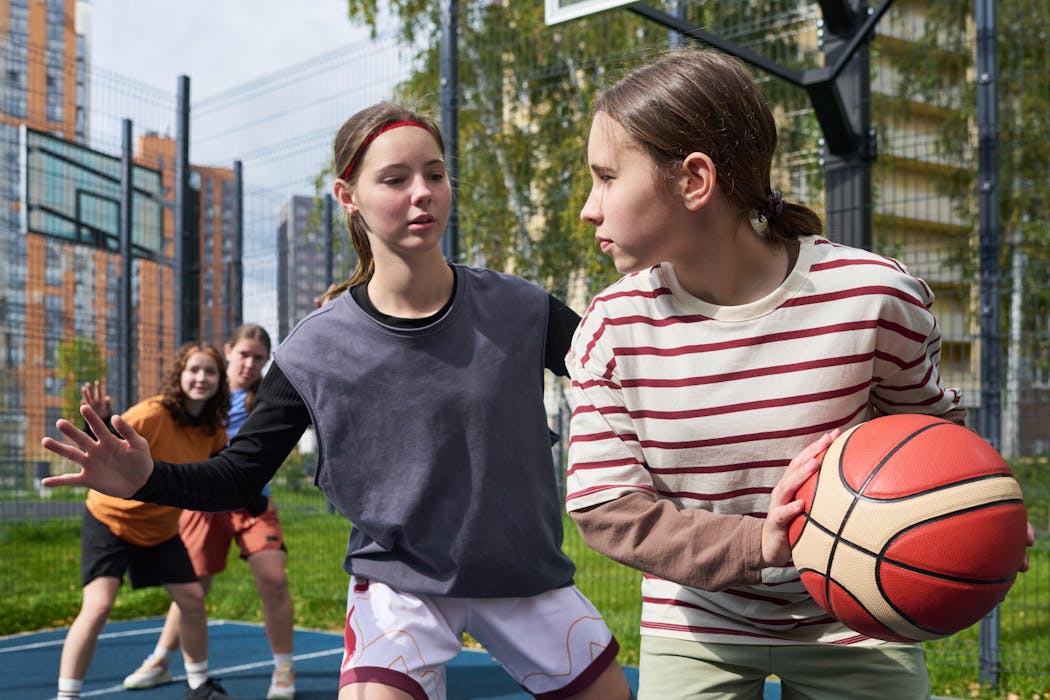
Por ejemplo, para motivar a un adolescente que abusa del móvil a probar el baloncesto, los padres pueden invitarlo sin presionar, elegir un buen club cercano y acompañarlo al principio, destacando la diversión y la amistad y celebrando pequeños logros para generar motivación real, incluso si no tiene hábito deportivo o no se siente muy hábil.

De esta manera, cuando el deporte se convierte en una fuente de bienestar y vínculo, compite con la recompensa inmediata del móvil… y la supera.

Construyendo la resiliencia digital

La investigación actual señala que la mejor protección frente al uso problemático del móvil no es solo controlar el acceso, sino fortalecer a la persona. El deporte ofrece algo que ninguna aplicación de control parental puede proporcionar: autoconocimiento, gestión emocional, resiliencia y sentido de pertenencia.

Si queremos que los adolescentes usen la tecnología de manera equilibrada, el mensaje no debería ser solo “Mira menos el móvil”, sino “Encuentra experiencias en la vida real que te hagan sentir bien contigo mismo… haz deporte”.

The Conversation

Alejo García-Naveira no recibe salario, ni ejerce labores de consultoría, ni posee acciones, ni recibe financiación de ninguna compañía u organización que pueda obtener beneficio de este artículo, y ha declarado carecer de vínculos relevantes más allá del cargo académico citado.

ref. El deporte no solo aleja a los adolescentes del móvil: les fortalece para usarlo mejor – https://theconversation.com/el-deporte-no-solo-aleja-a-los-adolescentes-del-movil-les-fortalece-para-usarlo-mejor-270236

La amenaza cuántica que se avecina: preparativos para el ‘Día Q’

Source: The Conversation – (in Spanish) – By David Arroyo Guardeño, Científico Titular. Ciberseguridad y protección de la Privacidad. Instituto de Tecnologías Físicas y de la Información "Leonardo Torres Quevedo" (ITEFI), Instituto de Tecnologías Físicas y de la Información Leonardo Torres Quevedo (ITEFI -CSIC)

Pingingz/Shutterstock

En algún momento del futuro –no sabemos si dentro de décadas o antes de lo esperado– podría llegar el llamado ‘Día Q’ (Q-Day): el día en que un ordenador cuántico lo bastante potente sea capaz de romper la criptografía que hoy protege prácticamente toda nuestra vida digital.

Para entender la magnitud del problema, basta imaginar que, de repente, todas las cerraduras digitales dejan de funcionar: la banca online, el correo electrónico, las aplicaciones de mensajería, los sistemas de los gobiernos o el comercio electrónico quedarían expuestos. Nada estaría protegido. Nada.

Qué es lo amenazado

La amenaza cuántica no afecta a los datos en sí, sino a las matemáticas que usamos para protegerlos. Cada vez que enviamos un mensaje por WhatsApp, accedemos a nuestra cuenta bancaria o compramos algo por internet, el texto legible (“texto en claro”) se transforma en un galimatías incomprensible (“texto cifrado”). Solo quien tiene la clave adecuada puede revertir el proceso. Es una versión moderna del trabajo de los espías de antaño, pero automatizada y basada en algoritmos matemáticos.

Los principios que hacen que estos sistemas sean seguros se establecieron ya a mediados del siglo XX, por ejemplo en los trabajos de la obra seminal de Claude Shannon sobre el secreto perfecto.

La criptografía: tipos y seguridad

Existen dos grandes tipos de criptografía. En la criptografía simétrica, emisor y receptor comparten una misma clave, como si ambos tuvieran una copia idéntica de la llave de una caja fuerte. El problema es evidente: ¿cómo se entrega esa llave sin que nadie más la copie? Aquí entra en juego la criptografía asimétrica o de clave pública, que usa un par de claves: una pública (que se puede compartir) y otra privada (que se guarda en secreto).

Algoritmos como Diffie-Hellman permiten que dos personas acuerden una clave secreta aunque estén hablando por un canal público, apoyándose en problemas matemáticos muy difíciles de resolver para los ordenadores actuales, como el logaritmo discreto.

Otro sistema para intercambiar claves secretas y cifrar mensajes, RSA, basa su seguridad en la dificultad de descomponer números enormes en sus factores primos, algo trivial para números pequeños pero casi imposible para los grandes.

Gracias a estas técnicas, además de cifrar, podemos firmar digitalmente documentos, del mismo modo que una firma manuscrita identifica al autor, pero con garantías matemáticas. Para saber quién hay detrás de una clave pública se usan los certificados digitales, emitidos por autoridades de confianza, algo parecido a un DNI digital.

Primeras grietas en la criptografía de clave pública

Durante años, estos sistemas han sufrido mejoras y correcciones, pero su base teórica parecía sólida… hasta que apareció el algoritmo de Shor. En 1997, el matemático estadounidense Peter Shor demostró que un ordenador cuántico suficientemente potente podría resolver con facilidad los problemas matemáticos en los que se basan Diffie-Hellman y RSA. Dicho de otro modo: las cerraduras actuales están diseñadas para ladrones clásicos, no para ladrones cuánticos.

Si ese ordenador existiera hoy, las comunicaciones bancarias y las que involucran secretos empresariales o datos gubernamentales podrían ser descifradas. Ese sería el temido Día Q.

¿Qué pasa tras Shor?

Del mismo modo que el ordenador cuántico presenta problemas, también depara soluciones. Así, es posible aprovechar propiedades de la mecánica cuántica, como el principio de no clonación de estados cuánticos, para establecer protocolos de distribución cuántica de claves (QKD, por sus siglas en inglés) simétricas. También es factible aprovechar la capacidad de cómputo paralelo derivada de propiedades como la superposición de estados cuánticos.

Por otro lado, la denominada criptografía post-cuántica haría viable implementar criptografía de clave pública mediante problemas matemáticos que son de elevada complejidad para los ordenadores actuales. Entre tales problemas se encontraría el aprendizaje con errores o LWE (Learning With Errors), teoría de códigos, resolución de sistemas de ecuaciones no lineales en varias variables sobre cuerpos finitos, la inversión de funciones hash, etc.

No basta con remplazar un algoritmo por otro

No basta con sustituir una pieza. Cambiar la criptografía implica actualizar protocolos de comunicación (como los que protegen las webs seguras), aplicaciones (correo cifrado, mensajería instantánea) y también dispositivos físicos: routers, servidores, tarjetas inteligentes o sistemas industriales antiguos que no se pueden renovar fácilmente. Es como cambiar todas las cerraduras de una ciudad sin detener su actividad diaria.

Por eso, organismos como la Comisión Europea o el NIST en Estados Unidos están definiendo hojas de ruta y estándares para una transición gradual y flexible. La posibilidad de estar a merced de una ventaja estratégica por parte de actores o países externos ha hecho que a nivel europeo se esté promoviendo el desarrollo de tecnología y de procedimientos para empezar a desplegar criptografía resistente a ataques cuánticos.

También asegurar las máquinas

Y no solo hay que preparar los productos software: también hay que adaptar los dispositivos hardware de comunicaciones, almacenamiento y cómputo de información. El reto es aún mayor en sectores industriales con maquinaria, sistemas y productos antiguos (legacy), donde una actualización puede ser costosa o arriesgada. Además, los cambios en seguridad suelen tener efectos inesperados, lo que hace que muchas organizaciones retrasen decisiones críticas, aun sabiendo que el riesgo crece con el tiempo.

En general, los sectores productivos tienen cierta inercia frente a cambios de consecuencias no anticipables. Los cambios en arquitectura y productos de seguridad, sobre todo en lo relativo a la criptografía, suelen tener consecuencias no esperadas, y esto hace que se paralicen cambios necesarios.

Autonomía estratégica y capitalización del talento

No sabemos cuándo llegará realmente el ordenador cuántico capaz de romper la criptografía actual, pero esperar sin prepararse no es una opción. Mientras ello ocurre es preciso invertir de forma adecuada tiempo y recursos para desarrollar competencias criptográficas y de desarrollo de hardware que nos permitan estar preparados frente a la irrupción de amenazas asociadas a la nueva computación.

La seguridad de un país o de una región depende de contar con talento, recursos y capacidad tecnológica propia. En el caso europeo, la fuerte dependencia de terceros en hardware y software de seguridad hace que invertir en conocimiento y autonomía estratégica sea clave para afrontar, con garantías, la llegada del Día Q.

The Conversation

David Arroyo Guardeño no recibe salario, ni ejerce labores de consultoría, ni posee acciones, ni recibe financiación de ninguna compañía u organización que pueda obtener beneficio de este artículo, y ha declarado carecer de vínculos relevantes más allá del cargo académico citado.

ref. La amenaza cuántica que se avecina: preparativos para el ‘Día Q’ – https://theconversation.com/la-amenaza-cuantica-que-se-avecina-preparativos-para-el-dia-q-222778