Source: The Conversation – UK – By Leonie Fleischmann, Senior Lecturer in International Politics, City St George’s, University of London
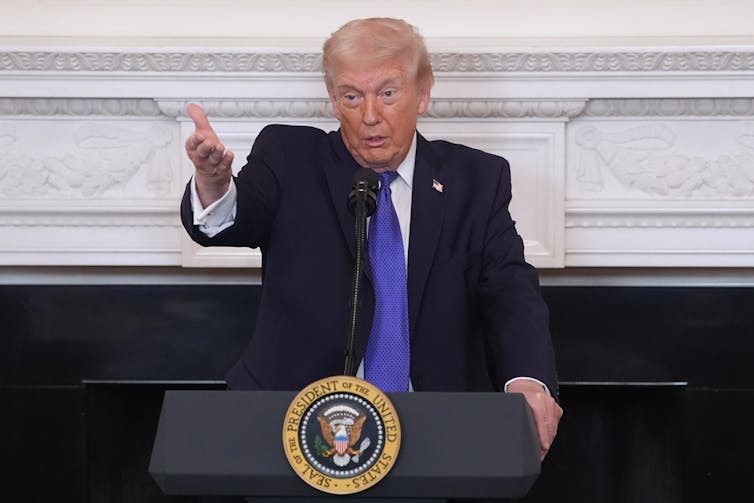
Progress towards achieving Donald Trump’s 20-point peace plan for Gaza is stalling. Israeli strikes across the territory on January 9 killed 13 Palestinians, with new raids days later claiming three more lives. The situation has now reached a critical juncture, with both Israel and Hamas reportedly preparing for a resumption in fighting.
The first phase of the US-brokered ceasefire, which came into effect in October, has mostly been completed. Israel’s military has withdrawn to the eastern half of the Gaza Strip, as required by the agreement. And dozens of Israeli hostages, living and dead, have been exchanged with hundreds of Palestinian prisoners.
However, some elements still need to be finalised. This includes the return of the remaining Israeli hostage, Ran Gvili, whose remains are still unaccounted for. And while humanitarian aid has been allowed into Gaza, the southern Rafah border crossing has yet to be opened fully.
This is restricting the flow of goods at a time when the inhabitants of Gaza face an acute humanitarian crisis. Harsh weather conditions, limited shelter, severe food shortages and continued military actions continue to exacerbate the situation. The UN said on January 12 that at least 1.1 million people in Gaza still urgently need assistance.
Advancement towards a permanent end to the war and the reconstruction of Gaza is thus urgent. However, later phases of the peace plan will need to address thorny issues such as Gaza’s post-war governance, Palestinian calls for a state and Israel’s demand that Hamas disarms. The potential for the negotiations to derail are high.
Trump is reportedly set to announce the Gaza “peace board”, which will be formed of global leaders to administer his post-war plan for the territory. Nickolay Mladenov, a Bulgarian diplomat and former UN envoy to the Middle East, has been named as the board’s director general.
But any progress towards realising Trump’s vision for Gaza, and permanently ending Israeli military action, hinges on the issue of the disarmament of Hamas.
The Israeli prime minister, Benjamin Netanyahu, has conditioned any progress in the peace plan on the demilitarisation of the Gaza Strip. This requires Hamas to relinquish all of its arms and hand over its governance of Gaza. These are non-negotiable demands from Israel for maintaining the ceasefire.
Hamas has said it will dissolve its existing government in Gaza once a committee of Palestinian technocrats takes over the territory. This committee will be headed by Ali Shaath, who previously served as the Palestinian Authority’s deputy transportation minister in the West Bank, and also includes Gaza chamber of commerce chairman Ayad Abu Ramadan.
But Hamas has so far publicly rejected giving up its arms. Some reports suggest that Hamas is ready to discuss “freezing or storing” its arsenal, while others have reported that Hamas would be willing to decommission its short- and long-range missiles. However, the group is not willing to give up its small arms and light weapons.
This is because Hamas believes it has a right to armed resistance as long as Israel is occupying Palestinian territory, with complete disarmament representing what the New York Times calls an “existential unravelling”. Unless resolved, the issue of disarmament will most likely lead to a resumption in fighting in the near future.
Plans for renewed hostilities
According to an unnamed Israeli official interviewed by the Wall Street Journal, if Hamas “doesn’t willingly give up its weapons, Israel would force it to do so”. Trump, following a meeting with Netanyahu at his Mar-a-Lago resort in December, has also said “there will be hell to pay” if Hamas does not agree to disarm.
But contrary to these directives, reports suggest that Hamas is focusing on rebuilding the infrastructure that was destroyed in Gaza during the past two years of war. This includes rebuilding its military capabilities and maze of tunnels, as well as replenishing its cash reserves through revenues generated by taxing goods and services coming into Gaza.
In early January, the Israel National News media network reported that Israeli intelligence has identified three main channels through which Hamas is attempting to rebuild its military capabilities. The first channel is the local production of weaponry, second is cooperation with the Iranian “axis of resistance” to leverage aid channels for military purposes, and third is using drones from Egypt to transfer weapons.
Further evidence of this is limited. However, Hamas was quick to reassert its power in Gaza after the ceasefire. And the New York Times reported in December that more than half of the group’s underground tunnel network is still intact and at least 20,000 Hamas fighters remain. This highlights the potential capacity for the group to reengage in fighting.
Expecting Hamas to refuse full disarmament, Israel has now reportedly drawn up plans to launch a renewed intensive military operation in Gaza in the spring. The focus of this operation would be on Gaza City, which remains largely under the control of Hamas.
Unless both sides engage in some pragmatism, or significant pressure is imposed on them to show restraint, the resumption of fighting seems inevitable. It will once again be the 2 million inhabitants of the Gaza Strip, who have already faced unimaginable loss and destruction and are struggling through a harsh winter, that will suffer.
Leonie Fleischmann does not work for, consult, own shares in or receive funding from any company or organisation that would benefit from this article, and has disclosed no relevant affiliations beyond their academic appointment.
Source: The Conversation – USA – By Konstantin Zhukov, Assistant Professor of Economics, Indiana University; Institute for Humane Studies
Neither of these men — US President Donald Trump, left, and Russian President Vladimir Putin — likes being held accountable by the press.Contributor/Getty Images
In its story about the search at Hannah Natanson’s home, at which FBI agents said they were searching for materials related to a federal government employee, Washington Post reporter Perry Stein wrote that “it is highly unusual and aggressive for law enforcement to conduct a search on a reporter’s home.”
And Jameel Jaffer, director of the Knight First Amendment Institute at Columbia University, told The New York Times the raid was “intensely concerning,” and could have a chilling effect “on legitimate journalistic activity.”
While the United States remains institutionally far removed from countries like Russia, the Trump administration has taken troubling early steps toward autocracy by threatening – and in some cases implementing – restrictions on free speech and independent media.
Trump sued the New York Times in 2025 for $15 billion for what he called ‘malicious’ articles; a judge threw out the case. Jakub Porzycki/NurPhoto via Getty Images
Public ignorance, free speech and independent media
Ignorance about what public officials do exists in every political system.
In democracies, citizens often remain uninformed because learning about politics takes time and effort, while one vote rarely changes an election. American economist Anthony Downs called this “rational ignorance,” and it is made worse by complex laws and bureaucracy that few people fully understand.
As a result, voters often lack the information needed to monitor politicians or hold them accountable, giving officials more room to act in their own interest.
Free speech and independent media are essential for breaking this cycle. They allow citizens, journalists and opposition leaders to expose corruption and criticize those in power.
Open debate helps people share grievances and organize collective action, from protests to campaigns.
Independent media also act as watchdogs, investigating wrongdoing and raising the political cost of abuse – making it harder for leaders to get away with corruption or incompetence.
When free speech and independent journalism disappear, citizens are less likely to learn about government corruption or failures. Ignorance becomes the regime’s ally – it keeps people isolated and uninformed. By censoring information, autocrats create an information vacuum that prevents citizens from making informed choices or organizing protests.
At the same time, the Kremlin built a vast propaganda machine to shape public opinion. This control over information helped protect the regime during crises. As I noted in a recent article, many Russians were unaware of Putin’s responsibility for military failures in 2022. State media used propaganda to shift blame to the military leadership – preserving Putin’s popularity even as the war faltered.
The threat to independent media in the US
While the United States remains far from an autocracy, the Trump administration has taken steps that echo the behavior of authoritarian regimes.
Consider the use of lawsuits to intimidate journalists. In Singapore, former Prime Minister Lee Kuan Yew and his son, Lee Hsien Loong, routinely used civil defamation suits to silence reporters who exposed government repression or corruption. These tactics discouraged criticism and encouraged self-censorship.
In Singapore, former Prime Minister Lee Kuan Yew, left, and his son, Lee Hsien Loong, routinely used civil defamation suits to silence reporters who exposed government repression or corruption. Roslan Rahman/AFP via Getty Images
President Donald Trump has taken a similar approach, seeking US$15 billion from The New York Times for publication of several allegedly “malicious” articles, and $10 billion from The Wall Street Journal. The latter suit concerns a story about a letter Trump reportedly signed in Jeffrey Epstein’s birthday book.
Although the show was later reinstated, the episode revealed how the administration could use the autocratic technique of bureaucratic pressure to suppress speech it disagreed with. Combined with efforts to prosecute the president’s perceived enemies through the Justice Department, such actions inevitably encourage media self-censorship and deepen public ignorance.
The threat to free speech
Autocrats often invoke “national security” to pass laws restricting free speech. Russia’s “foreign agents” law, passed in 2012, forced nongovernmental organizations with foreign funding to label themselves as such, becoming a tool for silencing dissenting advocacy groups. Its 2022 revision broadened the definition, letting the Kremlin target anyone who criticized the government.
Similar laws have appeared in Hungary, Georgia and Kyrgyzstan. Russia also uses vague “terrorist” and “extremist” designations to punish those who protest and dissent, all under the guise of “national security.”
The latter move is especially troubling, pushing the United States closer to the behavior characteristic of autocratic governments. The vagueness of the designation threatens to suppress free expression and opposition to the Trump administration.
Antifa is not an organization but a “decentralized collection of individual activists,” as scholar Stanislav Vysotsky describes it. The scope of those falling under the antifa label is widened by its identification with broad ideas, described in a national security memorandum issued by the Trump administration in the fall of 2025, like anti-Americanism, anti-capitalism, and anti-Christianity. This gives the government leeway to prosecute an unprecedented number of individuals for their speech.
As scholar Melinda Haas writes, the memorandum “pushes the limits of presidential authority by targeting individuals and groups as potential domestic terrorists based on their beliefs rather than their actions.”
Konstantin Zhukov does not work for, consult, own shares in or receive funding from any company or organization that would benefit from this article, and has disclosed no relevant affiliations beyond their academic appointment.
Source: The Conversation – Canada – By Gisèle Yasmeen, JW McConnell Professor of Practice, Max Bell School of Public Policy, McGill University
The Milan Urban Food Policy Pact recently renewed global commitments to sustainable and equitable urban food systems. The pact has been signed by 330 cities around the world that have pledged to improve food production and distribution and to reduce waste.
Street foods and vendors are an essential component of the urban foodscape, providing affordable nutrition and critical income for many city residents. However, vendors are frequently met with hostility from municipal authorities who cite traffic and public health concerns.
Addressing these issues requires the political will and investment to change our food systems for the better and make them more sustainable into the future.
Street food vendors
Many cities around the world feature vibrant street food scenes that provide livelihoods for vendors and high-quality, varied and delicious food for their customers. Scholars and advocates have argued that street foods are an essential part of the urban food system and often a healthier alternative to highly processed fast foods.
In many cities, waste pickers collect, sort and sell discarded materials like plastic, metal and paper for recycling or reuse. While waste pickers are more common in the cities of low and middle-income countries, they are also a feature of urban areas in wealthy countries.
Food loss and waste is responsible for eight to 10 per cent of greenhouse gas emissions. Much of this due to poor storage, poor supply chains, last-kilometre logistics, overly restrictive regulations and wasteful practices by wealthy consumers. A 2020 study estimated that nearly 60 per cent of all plastic collected for recycling was undertaken by informal waste pickers.
Much of this plastic is related to food and beverage packaging discarded in urban areas. The United Nations Environment Program recommends that the estimated 20 million waste pickers around the world become an integral part of municipal waste management.
Improved waste management, particularly in the cities of the Global South, requires significant investments in infrastructure. But waste management systems should not simply mimic the models of the Global North.
A review of approaches and outcomes around the world for integrating waste pickers into municipal waste management systems provided several recommendations. However, a barrier remains due to stigmatization of these livelihoods.
As the world continues to urbanize, more of us will rely on the vital roles played by street vendors and waste pickers. Inclusive policy and planning to recognize the contributions of these two livelihoods is essential to achieving a sustainable urban food future for all.
Gisèle Yasmeen has consulted for the World Bank to produce background papers that have, in part, fed into this work with permission.
Julian Tayarah and Umme Salma do not work for, consult, own shares in or receive funding from any company or organisation that would benefit from this article, and have disclosed no relevant affiliations beyond their academic appointment.
Source: The Conversation – Canada – By Julian Barling, Distinguished Professor and Borden Chair of Leadership, Smith School of Business, Queen’s University, Ontario
Management is often painted as a discipline of strategy, efficiency and resource allocation. Leadership, in this view, is largely about positioning people effectively — much like moving pieces on a chessboard — and success is won by promotions and annual bonuses.
This understanding is also reflected in how leadership roles are typically described and evaluated. Job status and responsibility are often inferred from the number of direct reports a manager oversees, with larger teams signalling greater prestige and organizational importance.
More than three decades ago, however, management scholar Henry Mintzberg challenged the main conceptions of managerial work. He argued that the role of managers goes beyond planning and control, and instead involves dealing with information, making decisions and managing relationships.
Despite this longstanding critique, the image of management and leadership as a largely technical and hierarchical activity remains influential, particularly as organizations undergo changes. One such change is “delayering” — a flattening of organizational structures by removing layers of middle management.
While these changes may reduce administrative costs, doing so leaves little to no time for leaders to foster complex relationships among employees or their own peers.
Leading relationships, not people
As it turns out, leading relationships, not people, is more complex than we first think.
Consider a simple example of a leader who oversees eight employees. This leader is not merely supervising eight units of work, but is overseeing up to 28 different dyadic relationships — relationships between two employees, or between a leader and an employee.
The nature of dyadic relationships dramatically increases the cognitive and emotional complexity and workload inherent in leadership roles.
Once the broader network of workplace relationships — including coalitions and alliances — is considered, the complexity moves far beyond leader-employee pairs. Leaders manage interpersonal relationships and political dynamics, not just individuals, along with the provision of resources and task co-ordination.
Leaders should encourage friends at work
Workplace relationship complexity is further intensified by what are known as “multiplex relationships.” These are relationships in which people share both instrumental and emotional ties with each other.
These relationships involve co-workers who support each other professionally while also serving as sources of genuine friendship and support. Such relationships are widespread in organizations and have been shown to be associated with higher work performance than either instrumental or social relationships alone.
These relationships are beneficial because employees are more willing to share complex and important information with peers who they trust.
An important caveat remains: the maximum number of multiplex ties for enhanced organizational performance is between five and seven. Beyond this point, the competing demands that make up emotional and instrumental relationships place further emotional and cognitive burdens on managers leading these relationships.
Given their prevalence and potential benefits for employee job performance, leaders need to pay more, not less, attention to relationships between employees. Leaders can play a role in shaping positive workplace dynamics within teams and across organizations.
Leaders who are better at fostering relationships inside and outside of organizations are more likely to improve their reputations and improve group performance than those who micromanage interactions within and between teams.
This requires a change in mindset. Management has long been framed as the act of managing people. Increasingly, it needs to be better understood as the work of leading relationships.
Ironically, delayering provides an opportunity to rethink and replace “management” with “leadership.” But leaders will only encourage and build multiplex relationships among their teams when they have received the training and resources to succeed in this new environment.
Yet, organizations have traditionally failed their leaders when it comes to training and development. Far too many people still get placed in leadership positions before they receive the training and development to enable them to succeed.
The new workplace reality demands that organizations support leaders not only to manage environments that reward individual performance, but in settings where complex and often messy relationships are central to leadership effectiveness.
Julian Barling receives funding from the Social Sciences and Humanities Council of Canada.
Kaylee Somerville receives funding from the Social Sciences and Humanities Council of Canada.
The wellbeing benefits of nature are often linked to forests or habitats that support diverse pollinators. Spending time in green spaces reduces stress and anxiety, for example.
By contrast, the benefits of the ocean are more commonly associated with fishing, exciting creatures such as whales and dolphins, or adventure watersports, rather than as a living system that directly supports human wellbeing. Yet growing scientific evidence shows that marine biodiversity is fundamental to the health of people, animals and the planet.
The “one health” concept (a term now widely used by the World Health Organization) captures this connection by recognising that human health, animal health and environmental health are inseparable. Our new paper in the journal BioScience applies this idea to seagrass meadows for the first time. We argue that healthy coastal ecosystems such as seagrass meadows are not optional extras, but essential infrastructure for resilient societies.
Coastal seas host some of the most biologically rich ecosystems on Earth. Kelp forests, oyster reefs, saltmarshes and seagrass meadows form the foundation of complex food webs that support fisheries, regulate water quality and protect shorelines. These habitats influence everything from food security and livelihoods to exposure to pollution and disease.
Take seagrass meadows as one example. These underwater flowering plants stabilise sediments, reduce wave energy and filter nutrients from coastal waters. The benefits ultimately reduce coastal flooding and make the environment cleaner. They also support young fish and invertebrates that later populate offshore fisheries.
Seagrass and water quality exist in a delicate balance. When the quality becomes too poor the seagrass becomes less abundant, and it’s then less able to act as a filter. This further exacerbates the water quality problems with implications for fish and other wildife.
Similar patterns are seen when kelp forests collapse or shellfish reefs are lost. This is why we need better recognition for the important roles these habitats play.
Marine biodiversity also helps regulate the Earth’s climate. Coastal habitats such as seagrass capture and store carbon and can reduce the negative effects of storms and flooding.
While saving these ecosystems can’t replace the need to cut greenhouse gas emissions, their loss can accelerate climate impacts at local and regional scales increasing risks to coastal communities.
Despite their importance, many marine ecosystems have been severely degraded. Pollution, overfishing, coastal development and warming seas have reduced biodiversity along coastlines around the globe.
These losses are rarely visible to the public as they’re hard to see. This is because these losses occur underwater and gradually. Yet their consequences are increasingly felt through declining fisheries, poorer water quality and greater vulnerability to extreme weather. These factors all ultimately affect our health and wellbeing.
Our new paper argues that restoring marine biodiversity requires a shift in how success is measured. Conservation and restoration efforts are often judged by the amount of hectares of habitat planting planted or short-term project outcomes. While these metrics are easy to calculate, they can obscure the real goal: the recovery of ecological function and long-term resilience.
A collaborative approach
This is where the one health perspective becomes particularly valuable. By linking environmental condition to human and animal health, it encourages collaboration across disciplines that rarely interact. Coastal management, public health, fisheries policy and climate adaptation are often treated separately yet they all depend on the same underlying ecosystems.
Examples from around the world show that biodiversity can do miraculous things, such as seagrass meadows trapping pathogens, reducing harmful bacteria in coastal waters that kills corals and contaminates seafood. That’s nature directly buffering human and animal health.
We also know that when habitat is degraded and lost, it displaces associated wildife. This can lead to greater interactions between wild and farmed animals. In the case of seagrass loss, typically we know that geese become displaced to farmland to graze. This has the potential to increase interactions with farmed animals and could enhance spread of diseases such as bird flu.
Recovery of our ocean habitats and the wildlife, plants and microbes that live there is possible. Where water quality improves and physical disturbance is reduced, marine habitats can rebound, bringing measurable benefits for biodiversity fisheries and coastal protection.
Importantly, the benefits then extend to people – cleaner water, a more affable environment and better, more abundant food. However restoration of these habitats alone cannot compensate for ongoing damage. Protecting what remains is consistently more effective and less costly than rebuilding ecosystems after they collapse.
Marine biodiversity may feel distant from everyday life but it quietly supports many of the systems that societies depend on. Recognising oceans and coasts as part of our shared health system rather than as separate from it could transform how we manage and value the marine environment. In a changing climate, this shift may prove essential not only for nature but for our own resilience.
Don’t have time to read about climate change as much as you’d like?
The authors do not work for, consult, own shares in or receive funding from any company or organisation that would benefit from this article, and have disclosed no relevant affiliations beyond their academic appointment.
Manifestants à Téhéran, 10 janvier 2026. Fourni par l’auteur
Près de la moitié des Iraniens ne sont pas des Perses. Si les habitants des régions périphériques — Kurdistan, Baloutchistan, Azerbaïdjan… — soutiennent le mouvement de contestation, ils redoutent également un éventuel retour de la monarchie Pahlavi, qui ne leur a pas laissé que de bons souvenirs…
Lorsque les manifestations actuelles en Iran ont commencé au Grand Bazar de Téhéran le 28 décembre 2025, le gouvernement les a d’abord considérées comme gérables et temporaires.
Les marchands des bazars ont toujours fait partie des groupes sociaux les plus conservateurs du pays, profondément ancrés dans la structure économique de l’État et étroitement liés au pouvoir politique. Le gouvernement estimait donc que leurs protestations n’étaient pas de nature révolutionnaire et qu’il ne s’agissait que d’une campagne de pression de courte durée visant à stabiliser une monnaie, le rial, en chute libre et à freiner l’inflation — deux phénomènes menaçant directement les moyens de subsistance des commerçants.
Lors de sa première réaction publique au mouvement du bazar, le guide suprême iranien Ali Khamenei a ouvertement admis que les commerçants avaient des raisons d’être mécontents. C’était la première fois qu’il reconnaissait la légitimité d’une manifestation contestataire. Rappelant l’alliance historique entre l’État et le bazar, il a indiqué que le gouvernement considérait que les troubles étaient maîtrisables.
Les autorités n’avaient pas prévu ce qui allait se passer ensuite : les manifestations se sont étendues à plus de 25 provinces et constituent désormais un risque direct pour la survie du régime, lequel a réagi par une répression violente au cours de laquelle plus de 6 000 personnes auraient déjà été tuées.
Spécialiste des groupes ethniques iraniens, j’ai observé la façon dont ces groupes minoritaires, malgré leurs doutes quant à l’issue du mouvement et quant aux projets de certaines figures centrales de l’opposition, se sont joints à la contestation.
Les minorités ethniques se joignent à la manifestation
L’Iran est un pays d’environ 93 millions d’habitants dont l’État moderne s’est construit autour d’une identité nationale centralisée, ce qui masque une importante diversité ethnique. La majorité perse représente 51 % de la population ; 24 % des habitants du pays s’identifient comme Azéris ; le nombre de Kurdes est estimé à entre 7 et 15 millions de personnes, soit environ 8 à 17 % de la population totale. Enfin, les minorités arabe et baloutche constituent respectivement 3 % et 2 % des Iraniens.
Carte de la répartition des groupes ethniques en Iran. Wikimedia
Depuis le lancement du projet de construction nationale par la monarchie Pahlavi en 1925, les gouvernements successifs, qu’ils aient relevé de la monarchie ou de la République islamique qui l’a renversée en 1979, ont toujours considéré la diversité ethnique comme un défi sécuritaire et ont réprimé à plusieurs reprises des revendications en faveur de l’inclusion politique, des droits linguistiques et de la gouvernance locale.
Dans les manifestations actuelles, les régions où les minorités sont présentes en nombre se sont au départ moins mobilisées que lors de la dernière vague importante de manifestations : celle de 2022-2023, conduite sous le slogan « Femme, vie, liberté », déclenchée par la mort d’une Kurde iranienne nommée Jina Mahsa Amini.
Les Kurdes ont commencé à se joindre aux manifestations actuelles le 3 janvier, dans la petite ville de Malekshahi (province d’Ilam). S’est ensuivie une violente descente des forces de sécurité contre des manifestants blessés à l’intérieur de l’hôpital d’Ilam, qui a provoqué l’indignation au-delà de la communauté locale et attiré l’attention internationale.
Depuis, les manifestations se sont poursuivies à Ilam. Dans la province voisine de Kermanshah, en particulier dans la région pauvre de Daradrezh, elles ont éclaté en raison de la précarité économique et de la discrimination politique dont les Kurdes sont victimes.
Une approche stratégique de la protestation
Les communautés d’Ilam et de Kermanshah continuent de subir une exclusion fondée sur leur identité kurde. Et ce, malgré le fait qu’elles partagent leur foi chiite avec le pouvoir en place à Téhéran — un facteur qui leur a historiquement permis d’avoir un meilleur accès au gouvernement que la population kurde sunnite.
À la suite du meurtre de plusieurs manifestants à Ilam et Kermanshah, les partis politiques kurdes ont publié une déclaration commune appelant à une grève dans toute la région.
Il convient de souligner que les dirigeants kurdes n’ont pas appelé à manifester, mais uniquement à faire grève. Lors du soulèvement « Femme, vie, liberté », le gouvernement avait traité les villes kurdes comme des zones rebelles, qualifiant les manifestations de « menace pour l’intégrité territoriale de l’Iran » et utilisant cette justification pour procéder à des massacres et à des exécutions massives.
En optant cette fois-ci pour des grèves, les dirigeants kurdes ont cherché à manifester leur solidarité avec le mouvement qui touche l’ensemble du pays tout en réduisant le risque de subir un nouveau massacre.
Téhéran, 10 janvier 2026. Fourni par l’auteur, CC BY
L’appel a été suivi : presque toutes les villes kurdes se sont retrouvées à l’arrêt.
Le Baloutchistan, dans le sud-est de l’Iran, a rapidement suivi le Kurdistan. Après les prières du vendredi 9 janvier, des manifestations ont éclaté, également motivées par la marginalisation ethnique et religieuse que la région subit depuis longtemps.
L’Azerbaïdjan iranien, une région située dans le nord-ouest du pays, s’est joint à la contestation plus tard et plus prudemment. Cette manifestation tardive et modeste reflète la position favorable dont jouissent actuellement les Azerbaïdjanais au sein des institutions politiques, militaires et économiques iraniennes. Historiquement, du XVIe siècle à 1925, les Turcs azéris chiites ont dominé l’État iranien, l’azéri étant la langue de la cour.
La période de la monarchie Pahlavi a marqué une rupture : la langue azerbaïdjanaise a été interdite et l’autonomie locale réduite. Mais depuis 1979, la République islamique a partiellement restauré l’influence azerbaïdjanaise, autorisant les religieux à s’adresser à leurs fidèles dans leur langue maternelle et intégrant des personnes d’origine azerbaïdjanaise dans le gouvernement central à Téhéran. L’actuel guide suprême, Ali Khamenei, est d’ailleurs d’origine azerbaïdjanaise.
Une longue histoire de répressions
Des mouvements politiques de nature ethnique ont vu le jour dans tout l’Iran immédiatement après la révolution de 1979, que de nombreux groupes minoritaires avaient soutenue dans l’espoir d’obtenir une plus grande inclusion et des droits plus étendus.
Mais ces mouvements ont été rapidement réprimés : la République islamique a écrasé les soulèvements dans l’Azerbaïdjan iranien, le Baloutchistan, le Khouzestan et d’autres régions périphériques.
Le Kurdistan a été l’exception : la résistance, les affrontements militaires et les violences étatiques, y compris les massacres, s’y sont poursuivis pendant plusieurs années.
Cette répression et l’impact de la guerre Iran-Irak, durant laquelle la mobilisation nationale a éclipsé les griefs internes, ont étouffé les revendications des minorités ethniques tout au long des années 1980. Celles-ci ont refait surface dans les années 1990, notamment sous l’impulsion d’un renouveau culturel et de la formation d’identités transfrontalières après l’effondrement de l’Union soviétique. Au Kurdistan iranien, la lutte armée a largement évolué en une lutte civile, tandis que de l’autre côté de la frontière, au Kurdistan irakien, les forces peshmergas ont conservé leurs armes et leur entraînement militaire. Le gouvernement iranien a considéré ce réveil comme une menace stratégique et a réagi en décentralisant les autorités sécuritaires et militaires afin de pouvoir réprimer rapidement les manifestations sans attendre l’approbation de Téhéran.
Les revendications divergentes des manifestants
Ces précédents expliquent pourquoi les manifestations actuelles en Iran ont été, du moins au début, plus centralisées que les soulèvements précédents. Les régions où vivent des minorités ethniques ne sont pas indifférentes au changement, mais leurs habitants sont sceptiques quant à l’issue du mouvement.
Depuis plus de quatre décennies, les revendications des minorités ethniques sont qualifiées par la République islamique de séparatistes ou de « terroristes » et ont donné lieu à de nombreuses arrestations et exécutions. Cette rhétorique a également influencé les principaux groupes d’opposition dominés par les Perses — couvrant tout le spectre idéologique, de la gauche à la droite, et opérant principalement en exil — qui perçoivent les exigences des minorités ethniques comme une menace pour l’intégrité territoriale de l’Iran.
La crainte d’un retour du chah
Reza Pahlavi, le fils exilé du dernier chah d’Iran, se positionne comme le leader de l’opposition et une figure de transition. Ce qui ne va pas sans inquiéter les communautés ethniques.
Le bureau de Pahlavi a publié une feuille de route pour un gouvernement de transition qui contraste fortement avec ses déclarations publiques selon lesquelles il ne cherche pas à monopoliser le pouvoir. Ce document présente Pahlavi comme un leader doté d’une autorité extraordinaire. Dans la pratique, la concentration du pouvoir qu’il propose sous sa direction ressemble fortement à l’autorité actuellement exercée par le guide suprême iranien.
Reza Pahlavi, le fils du défunt souverain iranien Mohammad Reza Pahlavi, a vu son soutien augmenter parmi les manifestants, comme ceux que l’on voit ici en Allemagne le 12 janvier 2026. John Macdougall/AFP
Pour les groupes ethniques minoritaires, cette perspective est particulièrement préoccupante. La feuille de route qualifie leurs revendications de menaces pour la sécurité nationale, reprenant ainsi les discours étatiques traditionnels plutôt que de s’en éloigner. Cette position explicite a renforcé le scepticisme dans les régions périphériques à l’égard du système qui pourrait venir remplacer la République islamique si celle-ci venait à chuter.
Contrairement à l’ayatollah Khomeini en 1979, dont la vision révolutionnaire était délibérément vague quant au statut futur des groupes ethniques, le projet actuel des dirigeants de l’opposition dépeint un ordre politique centralisé qui exclut l’inclusion ethnique et le partage du pouvoir.
Pour les communautés dont les langues ont été interdites et dont les régions ont été systématiquement sous-développées pendant la monarchie, la résurgence des slogans monarchistes dans les villes centrales renforce la crainte qu’un changement de pouvoir aboutisse à une nouvelle marginalisation des régions périphériques du pays.
Le mouvement de contestation peut-il ignorer les sentiments des régions provinciales ?
Les manifestations actuelles révèlent donc plus qu’une simple résistance à un régime autoritaire. Elles mettent en évidence une division fondamentale sur la signification du changement politique et sur ceux à qui il profitera.
Dans un pays aussi divers sur le plan ethnique que l’Iran, où des millions de personnes appartiennent à des communautés ethniques non persanes, un ordre politique durable ne peut être fondé sur un pouvoir centralisé dominé par une seule identité ethnique.
Toute transition future, qu’elle passe par une réforme du système actuel ou par un changement de régime, aura plus de chances de réussir si elle s’inscrit dans un cadre politique qui reconnaît et intègre les revendications de toutes les régions et communautés. Sans cette inclusion, la confiance dans le processus de changement restera difficile à gagner et les espoirs d’un avenir meilleur s’amenuiseront.
Shukriya Bradost est affiliée au Middle East Institute.
The world’s oceans are home to an exquisite variety of sharks and rays, from the largest fishes in the sea – the majestic whale shark and manta rays – to the luminescent but rarely seen deep-water lantern shark and guitarfishes.
The oceans were once teeming with these extraordinary and ancient species, which evolved close to half a billion years ago. However, the past half-century has posed one of the greatest tests yet to their survival. Overfishing, habitat loss and international trade have cut their numbers, putting many species on a path toward extinction within our lifetimes.
Scientists estimate that 100 million (yes, million) sharks and rays are killed each year for food, liver oil and other trade.
The volume of loss is devastatingly unsustainable. Overfishing has sent oceanic shark and ray populations plummeting by about 70% globally since the 1970s.
A manta ray’s wingspan can be 12 to 22 feet, and some giant ocean rays can grow even larger. Jon Hanson/Flickr, CC BY-SA
Sharks have had a rough ride since the 1970s, when overfishing, habitat loss and international trade in fins, oil and other body parts of these enigmatic sea dwellers began to affect their sensitive populations. The 1975 movie “Jaws” and its portrayal of a great white shark as a mindless killing machine didn’t help people’s perceptions.
One reason shark populations are so vulnerable to overfishing, and less capable of recovering, is the late timing of their sexual maturity and their low numbers of offspring. If sharks and rays don’t survive long enough, the species can’t reproduce enough new members to remain stable.
Losing these species is a global problem because they are vital for a healthy ocean, in large part because they help keep their prey in check.
The bowmouth guitarfish, shown here at the Shedd Aquarium in Chicago, is considered critically endangered.
Endangered and threatened species listings, such as the International Union for Conservation of Nature’s Red List, can help draw attention to sharks and rays that are at risk. But because their populations span international borders, with migratory routes around the globe, sharks and rays need international protection, not just local efforts.
That’s why the international trade agreements set out by the Convention of International Trade in Endangered Species, or CITES, are vital. The convention attempts to create global restrictions that prevent trade of protected species to give them a chance to survive.
New protections for sharks and rays
In early December 2025, the CITES Conference of the Parties, made up of representatives from 184 countries, voted to initiate or expand protection against trade for many species. The votes included adding more than 70 shark and ray species to the CITES lists for full or restricted protection.
The newly listed or upgraded species include some of the most charismatic shark and ray species.
The whale shark, one of only three filter-feeding sharks and the largest fish in the ocean, and the manta and devil rays have joined the list that offers the strictest restrictions on trade, called Appendix I. Whale sharks are at risk from overfishing as well as being struck by ships. Because they feed at the surface, chasing zooplankton blooms, these ocean giants can be hit by ships, especially now that these animals are considered a tourism must-see.
Manta rays are filter feeders. Their gills strain tiny organisms from the water as they glide. Gordon Flood/Flickr, CC BY
Whale sharks now join this most restrictive list with more well-known, cuddlier mammals such as the giant panda and the blue whale, and they will receive the same international trade protections.
The member countries of CITES agree to the terms of the treaty, so they are legally bound to implement its directives to suspend trade. For the tightest restrictions, under Appendix I, import and export permits are required and allowed only in exceptional circumstances. Appendix II species, which aren’t yet threatened but could become threatened without protections, require export permits. However, the treaty terms are essentially a framework for each member government to then implement legislation under national laws.
Another shark joining the Appendix I list is the oceanic whitetip shark, an elegant, long-finned ocean roamer that has been fished to near extinction. Populations of this once common oceanic shark are down 80% to 95% in the Pacific since the mid-1990s, mostly due to the increase in commercial fishing.
An oceanic whitetip shark (Carcharhinus longimanus) swims with pilot fish. Whitetip sharks are threatened in part by demand for their fins and being caught by commercial fisheries. NOAA Fisheries
Previously the only sharks or rays listed on Appendix I were sawfish, a group of rays with a long, sawlike projection surrounded by daggerlike teeth. They were already listed as critically endangered by the IUCN’s Red List, which assesses the status of threatened and endangered species, but it was up to governments to propose protections through CITES.
Other sharks gaining partial protections for the first time include deep-sea gulper sharks, which have been prized for their liver oil used for cosmetics. Gulper shark populations have been decimated by unsustainable fishing practices. They will now be protected under Appendix II.
Appendix II listings, while not as strong as Appendix I, can help populations recover. Great white shark populations, for example, have recovered since the 1990s around the U.S. after being added to the Appendix II list in 2005, though other populations in the northwest Atlantic and South Pacific are still considered locally endangered.
Tope and smooth-hound sharks were also added to the Appendix II list in 2025 for protection from the trade of their meat and fins.
Several species of guitarfishes and wedgefishes, odd-shaped rays that look like they have a mix of shark and ray features and have been harmed by local and commercial fishing, finning and trade, were assigned a CITES “zero-quota” designation to temporarily curtail all trade in their species until their populations recover.
Many of these species suffer from their anonymity: Most people are unfamiliar with them, and efforts to protect these more obscure, less cuddly ocean inhabitants struggle to draw attention.
So, how do we convince people to care enough to help protect animals they do not know exist? And can we implement global protections when most shark-human interactions are geographically limited and often support livelihoods of local communities?
Increasing people’s awareness of ocean species at risk, including sharing knowledge about why their numbers are falling and the vital roles they play in their ecosystem, can help.
The new protections for sharks and rays under CITES also offer hope that more global regulations protecting these and other shark and rays species will follow.
Gareth J. Fraser is an Associate Professor at the University of Florida, and receives funding from the National Science Foundation (NSF).
The growing ease of perpetrating sexual violence with novel technologies reflects the urgent need for tech companies and policymakers to prioritize AI safety and regulation.
I am a PhD candidate in public health. My research has largely focused on the intersection of gender-based violence and health, previously working on teams that leverage AI as a tool to support survivors of violence. The potential and actual harms of AI on a such a wide scale require new regulations that will protect the health of mass populations.
Other AI-powered programs for “nudifying” could be found in niche corners of the internet. Now, this technology is easily accessible at anyone’s fingertips.
Grok can be accessed either through its website and app or on the social media platform, X. Some users have noted that when prompted to create pornographic images, Grok says it’s programmed not to do this, but such apparent guardrails are being easily bypassed.
xAI’s owner, Elon Musk, released a statement via X that
the company takes action against illegal content on X by removing it, “permanently suspending accounts, and working with local governments and law enforcement as necessary.”
However, it’s unclear how or when these policies will be implemented.
This is nothing new
Technologies have long been used as a medium for sexual violence. Technology-facilitated sexual violence encompasses a range of behaviours as digital technologies are used to facilitate both virtual and face-to-face sexually based harms. Women, sexual minorities and minors are the most often victimized.
One form of this violence that has received significant attention is “revenge porn” — referring to the non-consensual distribution of an individual’s images and videos on the internet. Victims have reported lifelong mental health consequences, damaged relationships and social isolation.
Some social media websites have policies forbidding the distribution of non-consensual intimate content and have implemented mechanisms for reporting and removing such content.
Search engines like Google and Bing will also review requests to remove links from search results if they’re in violation of their personal content policies. Canada has criminalized “revenge porn” under the Criminal Code, which is punishable by up to five years in prison.
Similar to revenge porn, victims of deepfakes have reported mental distress, including feelings of helplessness, humiliation and embarrassment, while some have even been extorted for money.
Creators of sexually explicit deepfakes have also targeted prominent female journalists and politicians as a method of cyberbullying and censorship.
Now what?
This latest Grok controversy reflects a predictable major lapse in AI safeguards. Prominent AI safety experts and child safety organizations warned xAI months ago that the feature was “a nudification tool waiting to be weaponized.”
On Jan. 9, xAI responded by moving the image-editing feature behind a subscription for X users (though it can still be accessed for free on the Grok app) and has stopped Grok from automatically uploading the generated image to the comments.
However, X users are still generating sexualized images with the Grok tab and manually posting them onto the platform. Some countries have taken action to block access to Grok.
Looking to the future
This isn’t the first time, nor will it be the last time, a tech company demonstrates such a major lapse in judgment over their product’s potential for user-perpetrated sexual violence. Canada needs action that includes:
1. Criminalizing the creation and distribution of non-consensual sexually explicit deepfakes.
Legal scholars have advocated for the criminalization of creating and distributing non-consensual sexually explicit deepfakes, similar to existing “revenge porn” laws.
2. Regulate AI companies and hold them accountable.
Canada has yet to pass any legislation to regulate AI, with the proposed Artificial Intelligence and Data Act and Online Harms Act dying when Parliament was prorouged in January 2025. Canada’s AI minister referenced this in his response to these Grok issues, but the response lacks a dedicated timeline and a sense of urgency.
As AI progresses, major regulatory actions need to be taken to prevent further harms of sexual violence. Tech companies need to undergo thorough safety checks for their AI products, even if it comes at the expense of slowing down.
Three American senators have called on Apple and Google to remove Grok from their app stores for its clear policy violations, citing the recent examples of these companies’ abilities to promptly remove apps from their store.
3. Expand the scope of sexual violence social services to support those affected by non-consensual sexually explicit deepfakes.
As the perpetration of sexual violence via AI technologies becomes more prevalent, sexual violence organizations can expand their scope to support those affected by non-consensual sexually explicit deepfakes. They can do so by leveraging existing services, including mental health care and legal supports.
4. Dismantle the underlying rape culture that perpetuate these forms of violence.
The root of sexual violence is the dominance of rape culture, which is fostered in online environments where sexualized abuse and harassment is tolerated or encouraged.
Dismantling rape culture requires holding perpetrators accountable and speaking out against behaviour that normalizes such behaviours.
Kyara Liu does not work for, consult, own shares in or receive funding from any company or organisation that would benefit from this article, and has disclosed no relevant affiliations beyond their academic appointment.
Ice Core Storage at the Ice Memory Sanctuary in Concordia, Antarctica. Gaetano Massimo Macri/Ice Memory Foundation, Fourni par l’auteur
On Wednesday, January 14, 2026, the coolest library on Earth was inaugurated at the Concordia station, Antarctica. Samples from glaciers rescued worldwide are now beginning to be stored there for safekeeping. This will allow, among other things, future generations to continue studying traces of past climates trapped under ice, as glaciers on every continent continue to thaw out at a fast pace.
With its temperature of -50°C, the archive sanctuary built below the surface at Concordia will allow endangered ice cores extracted from the Andes, Svalbard, the Alps, the Caucasus, and the Pamir Mountains in Tajikistan to escape global warming without the need for technical intervention or refrigeration.
The Conversation: Could you give us a concrete example of how these ice cores stored in Antarctica could be used by scientists in the future?
Thomas Stocker: We can take the example of a new substance found in the atmosphere, like a pesticide. If in fifty years from now, a scientist wants to know what the concentration of that compound was in the year 2026, say in the European Alps or in Asia, they can now turn to an ice core.
If the ice core had not been collected and stored in Antarctica, the scientist would simply be at a loss to answer the question. But thanks to these ice cores that are now being safeguarded in Antarctica, researchers can analyse a sample of that core in Antarctica, measure the compound from the ice that was collected fifty or one hundred years ago, and reconstruct the data to answer that question.
But in order to allow future scientists to answer the many questions that will arise, we need to act quickly. A very recent article in Nature takes a global view of glacier loss and predicts that the number of glaciers to vanish will increase until around 2040, at which point annual glacier loss worldwide is set to peak.
Thereafter numbers will decline not because global warming has halted, but because one by one, glaciers disappear off the face of the earth, leaving fewer glaciers in a state of meltdown, a prospect which, in turn, ultimately destroys the prestigious and precious environmental archives available.
Temperatures in the Alps are rising about twice as fast as the global average, so it’s essentially a race against time. We need to secure these ice cores when water from the melting surface in summer has not yet penetrated the ice.
A weekly e-mail in English featuring expertise from scholars and researchers. It provides an introduction to the diversity of research coming out of the continent and considers some of the key issues facing European countries. Get the newsletter!
Since you started working, you have undoubtedly seen many methodological and technological advances that have enabled us to make the ice “talk”. What are your hopes for future generations? What factors would allow for further “dialogue” with the ice core that will be stored at Concordia?
T.S.: I can only extrapolate from what we have learned and experienced in science over the last fifty years. We witnessed the arrival of new technology that, all of a sudden, offers the analysis of parameters of elemental composition, of the concentration of gases trapped within the ice that suddenly, like a key, opens a door to a whole new series of information about our environmental system.
So what I can see happening is new optical methods to determine the isotopic composition of different elements in various chemical substances, the likelihood of high-precision analytical tools being invented in the next decades or so that go down to the picogram level or ‘pico’ – or femtomole level, to tell us something about atmospheric composition, and particles such as dust and minerals from various regions which have been deposited in these ice cores that give us information about the conditions or state of the atmosphere in the past.
How were the snow caves built for ice core storage?
You are an Emeritus Professor of Climate and Environmental Physics. Which other fields will the Ice Memory project be useful for?
T.S.: Biology come to mind. If you find organic remains or DNA in these ice cores, that’s biology. You can question the chemical composition of the atmosphere. That’s chemistry. If you question what’s the mineral composition of small dust particles that are deposited in these ice cores. That’s geology. And so, you have a whole range of different branches of science that can draw new information from these ice cores.
The Ice Memory Project brings together different scientific disciplines, as well as scientists of many nationalities. How challenging can this be in a time of increasing geopolitical tensions?
T.S.: Ice Memory is a case in point for how multilateralism plays out in the scientific community. It’s an opportunity for scientists in every nation to make use of this unique sanctuary in Concordia. And for us, it’s really an iconic endeavour that goes beyond frontiers, beyond political divisions, to really safeguard data from planet Earth, not only for the next generation of scientists, but for humanity in general.
Pamir Mountains ice core handed over by Tajikistan for Antarctic preservation.
During the Cold War, Antarctica was one of the few places on Earth where Russians and Americans could exchange ideas and conduct scientific research together. Could Antarctica still be a place where dialogue replaces rivalry?
T.S.: I am absolutely convinced that the unique environment Antarctica offers that’s so rich with nature and life, and so special on our planet, means that considerations surrounding each country’s position and values are secondary. The top priority, as we have demonstrated over the past fifty years of scientific exploration in the field, is really to understand our climate system, observe nature from the perspective of Antarctica, and to protect it. This gives us the opportunity to truly immerse ourselves, work together, and exchange ideas on specific scientific issues that concern us all, and in particular, concern the future of the planet we share.
Interview by Gabrielle Maréchaux, Environment Journalist at The Conversation France.
Thomas Stocker is the president of the Ice Memory Foundation.
En odontologie aussi, il est indispensable d’agir contre l’antibiorésistance en mettant à la disposition des chirurgiens-dentistes des guides de bonne pratique fiables pour accompagner leurs prescriptions d’antibiotiques.Ungvar/Shutterstock
Selon une étude récente, les recommandations relatives à la prescription d’antibiotiques en odontologie sont très variables et de qualités inégales d’un pays à l’autre… quand elles existent.
Nous avons tous contribué, dans une plus ou moins grande mesure, à la situation dans laquelle nous nous trouvons. En tant que patients, nous sommes nombreux à avoir sauté une dose d’antibiotiques, à ne pas avoir terminé le traitement ou à avoir directement pris les comprimés qui nous restaient d’un traitement précédent. Une autre part importante de la responsabilité incombe au secteur de la santé, car les antibiotiques sont souvent prescrits de manière inutile ou inappropriée.
La solution apparaît pourtant évidente. Si les professionnels ne prescrivaient ces médicaments qu’en cas de nécessité et que les patients suivaient leurs conseils, cette partie du problème serait résolue. Mais ce n’est pas si simple. Du moins pour les dentistes.
Que penseriez-vous si votre dentiste vous prescrivait des antibiotiques alors que leur principe actif porte la mention « à déterminer » ? C’est pourtant bien cette prescription que ce professionnel de santé devrait suivre dans certains cas s’il utilisait comme unique source d’informations les guides de bonne pratique clinique auxquels il a accès.
Tous les pays ne disposent pas d’un guide de référence
Ces guides correspondent à un ensemble de recommandations élaborées par des experts et des organismes tels que les ministères de la santé, les syndicats professionnels de dentistes (et autres organisations professionnelles représentatives de la profession, ndlr) ou l’Organisation mondiale de la santé, afin d’aider à la prise de décision. Ces recommandations sont basées sur une revue systématique des preuves scientifiques disponibles.
Cependant, comme nous l’avons découvert dans notre récente étude, dans laquelle nous avons analysé les recommandations qui existent au niveau international en matière de prescription d’antibiotiques, celles-ci ne sont pas toutes de même qualité, ils ne sont pas tous aussi fiables. D’ailleurs, tous les pays ne disposent pas de guides de ce type.
Tout d’abord, nous avons constaté que tous les dentistes ne disposent pas d’un document de référence : seuls neuf pays ont publié des recommandations sur la prescription d’antibiotiques pour les pathologies bucco-dentaires. De plus, seules 10 des 17 guides analysés peuvent être classés comme « recommandés » en fonction de leur qualité. Deux guides sont même classés comme « non recommandés ».
Les dentistes de Belgique, d’Espagne, d’Écosse et du Royaume-Uni sont les plus chanceux, car ce sont eux qui ont accès aux guides de meilleure qualité.
En Espagne, par exemple, le document qui répondait aux critères pour être considéré comme un guide de pratique clinique est le Guide thérapeutique antimicrobien de la région d’Aljarafe. Il a été créé par le ministère régional de la santé d’Andalousie et mis à jour dans le cadre du Plan national de résistance aux antibiotiques du ministère de la santé.
Quels antibiotiques les dentistes prescrivent-ils ?
Tout n’est pas négatif : en général, dans la plupart des cas, les guides disponibles s’accordent à dire que le dentiste doit prescrire en premier choix l’amoxicilline (un dérivé de la célèbre pénicilline de Fleming). Selon les études, c’est l’un des principes actifs les plus prescrits par les dentistes, qui font donc bien leur travail.
Les guides s’accordent également sur la durée de ce traitement, même si certains ne font aucune référence à la durée.
Cependant, la concordance diminue lorsque nous analysons les principes actifs recommandés pour traiter des maladies spécifiques. Et le problème est encore plus important lorsque le patient est allergique à l’amoxicilline (ce qui est relativement fréquent, puisque jusqu’à 25 % de la population pourrait l’être). Dans ce cas, les recommandations deviennent très disparates. 29 % des guides recommandaient le métronidazole, 24 % l’azithromycine, 24 % la clindamycine, 18 % les céphalosporines et 6 % la doxycycline. Et ces différences ne sont pas justifiées.
Comment améliorer les guides de bonne pratique
Ces documents peuvent être améliorés sur différents aspects concrets : la rigueur des preuves, la manière de présenter les informations et l’applicabilité des recommandations relatives à la prescription d’antibiotiques.
Améliorer tous ces aspects pourrait faciliter l’utilisation de ces guides et aider les dentistes à prendre les meilleures décisions. De plus, ces derniers seront moins enclins à s’informer auprès d’autres sources qui, a priori, pourraient présenter davantage de biais, à l’image de l’industrie pharmaceutique dont les intérêts commerciaux peuvent entrer en ligne de compte.
L’objectif final apparaît clairement : nous devons réduire les consommations inutiles d’antibiotiques. Nous ne pouvons pas rester les bras croisés. Le problème de la résistance aux antibiotiques n’est plus une menace, c’est une réalité. En Europe, environ cent décès par jour sont attribuables à des infections causées par des bactéries résistantes aux antibiotiques. Il est urgent d’agir ensemble, et nous avons besoin que les professionnels de santé disposent de sources fiables et pratiques leur permettant d’être certains qu’ils prennent la meilleure décision pour leurs patients.
Les auteurs ne travaillent pas, ne conseillent pas, ne possèdent pas de parts, ne reçoivent pas de fonds d’une organisation qui pourrait tirer profit de cet article, et n’ont déclaré aucune autre affiliation que leur organisme de recherche.