Young Latinos – and their commitment to social justice – are shaping the future of the Catholic Church

Source: The Conversation – USA (3) – By Hosffman Ospino, Professor of Hispanic Ministry and Religious Education, Boston College

A protester holds up a candle with the image of La Virgen de Guadalupe while marching in Los Angeles during a January 2026 vigil in solidarity with immigrants facing raids in Minneapolis. Ronaldo Bolaños/Los Angeles Times via Getty Images

On Ash Wednesday, 2026, two Roman Catholic priests and a religious sister entered an Immigration and Customs Enforcement facility in Broadview, Illinois, to celebrate Mass with detainees inside.

It might seem like a simple, routine event: a religious service to mark the start of Lent. But the Mass represented a legal win for the Coalition for Spiritual and Public Leadership, based in Chicago. Among its founders are Michael N. Okińczyc-Cruz and Joanna Arellano-Gonzalez, a young married couple dedicated to advocacy for migrant rights.

The coalition and other Catholic leaders sued the Trump administration after attempts to bring spiritual care to detainees in 2025 were blocked. On Feb. 18, 2026, a federal judge ordered authorities to allow clergy inside for Ash Wednesday.

That same day, Catholics in Communion, a new coalition of ministry organizations, religious orders, academic leaders and parish partners, launched its Season of Faithful Witness campaign. Spearheaded by faith-based community organizers such as Joseph Tomás McKellar and Sergio Lopez, the initiative invites Catholics to practice solidarity by praying and advocating on behalf of migrants.

And two weeks earlier, dozens of students at Juan Diego Catholic High School in Draper, Utah, many of them Latino, participated in a walkout to support migrants, although the school did not sanction the event.

What do these leaders have in common? They are young, Latino and Catholic. Most were born in the United States. Many of the migrants they advocate for are their relatives, friends and neighbors.

About 4 in 10 Catholics in the United States identify as Hispanic or Latino. Among young Catholics born after 1982, that rises to 5 in 10.

As Catholic theologians who have researched Latino Catholics for several decades, we believe they are redefining U.S. Catholicism. Young Latinos’ faith-based advocacy has put a spotlight on this group that will shape the future of the church.

Beyond stereotypes

Young people constitute the largest portion of the more than 68 million Latinos in the United States. Despite their diversity, though, their experiences tend to be lumped together, and often treated as the same as migrants’.

Most young Hispanics in the U.S., in fact, are not immigrants. Ninety-four percent of Latinos under age 18 were born in the U.S, as were 65% of millennial Latinos.

The vast majority of Latinos under age 35 are English speakers. Around 40% say they are bilingual, while around 20% say they are dominant in Spanish.

An estimated 30% of Latinos between 18-29, and 42% between 30-49, identify as Catholic – a decrease from older generations. Overall, 43% of Latino adults in the U.S. are Catholic, compared to 67% in 2010. Among ages 18-29, 15% are Protestant, and 49% are unaffiliated. Among ages 30-49, 23% are Protestant, and 29% are religiously unaffiliated.

Regardless of how Latinos identify, however, many of them grew up deeply influenced by a Catholic spirituality that permeates Latino culture, with traditions such as small altars in homes and businesses; “posadas,” a popular nine-day period of prayer leading up to Christmas that remembers Mary and Joseph’s search for a a place to rest before Jesus’ birth; and “quinceañeras,” a rite of passage when young women turn 15.

A young man and woman, both of whom wear white costumes, walk at the front of a small procession outside at night.
Young people playing Mary and Joseph take part in ‘las posadas,’ commemorating the Christmas story’s journey to Bethlehem, at Our Lady of Visitation Church in Denver in 2018.
AP Photo/David Zalubowski

The lives of young Latinos often unfold in between cultural worlds. This can be simultaneously a source of strength or confusion. Young Latinos often feel they don’t fully belong anywhere: that they are “too Latino for the U.S. Americans” but also “too North American for Latinos.”

Bridging faith and activism

Yet many of these young people, whether they are Catholic or not, are increasingly embracing their two or more cultures. They see that inheritance as a gift – and often as inspiration to advocate for social justice. Leaders we have interviewed see themselves as “gente puente,” or “bridge builders,” who can find fresh ways of being Catholic and American, grounded in faith-inspired commitments to justice.

In another recent study from Boston College, one of us, Hosffman Ospino, looked closely at 12 national organizations serving young Hispanic Catholics. The report concludes that initiatives that invite young Latinos to get involved with faith-based social justice are one of the most important ways to keep them engaged with their Catholic identity. When serving in their parishes, young Latinos are often involved with efforts to teach English to migrants, denounce racism, bring food to the hungry, protect life from “womb to tomb” and care for the environment, among others.

Many young Latino Catholics balance faith and public engagement through social justice immersion trips, visiting the U.S.-Mexico border, starting social ministries in their parishes or collecting food for families of migrants who have been detained. Others write letters to elected officials about immigration reform and just treatment of migrants and refugees, or help migrants file their taxes.

A small group of boys and girls walk two-by-two through a town square, holding protest signs.
Young Latinos hold signs in support of workers picked up during a 2019 immigration raid at a food processing plant in Canton, Miss., following a Spanish Mass at Sacred Heart Catholic Church.
AP Photo/Rogelio V. Solis

Present and future of the church

As the percentage of U.S. Catholics who are Latino rises, the country’s bishops have repeatedly asserted the importance of listening to young Latinos.

In 2018, for example, the bishops conference convened a gathering of 3,000 delegates as part of the Fifth National Encuentro for Hispanic/Latino Ministry. This multiyear process consulted nearly 300,000 Catholics, mostly Hispanic, about their faith and priorities. The “Encuentro” – or “Encounter” – highlighted the need to empower Latinos to participate in church and society.

In 2023, the bishops approved the National Pastoral Plan for Hispanic/Latino Ministry, which proposed 10 priorities to accompany Latino Catholics. Supporting Latino youth and strengthening young adult ministries were among the top four.

Pope Francis, too, emphasized the need to listen to young Catholics, and Latinos in particular. His 2019 apostolic exhortation “Christus Vivit” – “Christ is alive” – insisted that all in the church “need to make [more] room for the voices of young people to be heard.” Visiting Philadelphia in 2015, he told Hispanic Catholics, “By contributing your gifts, you will not only find your place here, you will help to renew society from within.”

It’s the kind of message that resonates with young Catholic Latino community organizers like Joseph Tomás McKellar, one of the leaders behind the Season of Faithful Witness campaign. Born in California to a Mexican mother and a Scottish father, he wrote in the book we edited that “bridge-building and kinship are at the heart of my family’s origin story.”

McKellar recalled speaking with a border patrol agent who, seeing his brown skin and name, accused him of lying about U.S. citizenship. Instead of making him resentful, the experience deepened his commitment to be a bridge builder. It galvanized his “sense of vocation,” renewing a commitment to “create a society where all people can belong and thrive.”

The Conversation

Hosffman Ospino works for Boston College.

Both authors, Hosffman Ospino and Timothy Matovina, interviewed Michael N. Okińczyc-Cruz, Joanna Arellano and Joseph Tomás McKellar for a book project cited in the article.

Timothy Matovina is a board member of Iskali, an Hispanic Catholic youth organization in Chicago, and co-director (with Hosffman Ospino), of Haciendo Caminos, a national initiative in pastoral theological education funded through a grant with the Lilly Endowment.

ref. Young Latinos – and their commitment to social justice – are shaping the future of the Catholic Church – https://theconversation.com/young-latinos-and-their-commitment-to-social-justice-are-shaping-the-future-of-the-catholic-church-277158

When US fights in the Middle East, American Muslim students often face discrimination

Source: The Conversation – USA (3) – By Amaarah DeCuir, Senior Professorial Lecturer in Education, American University

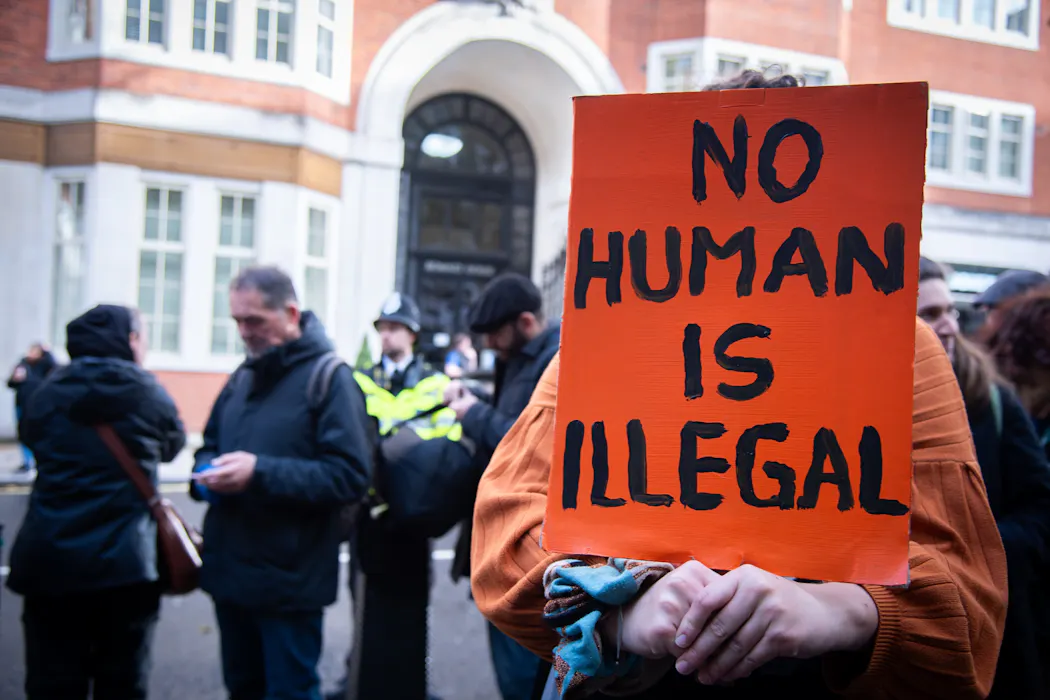
People protesting the U.S. and Israeli strikes on Iran gather in front of a New York Public Library location on March 8, 2026. Selcuk Acar/Anadolu via Getty Images

The war in the Middle East is rapidly expanding across the Gulf countries, including Iran and Lebanon. The conflict has already targeted the region’s civilians, natural resources, tourist destinations and U.S. military bases.

Some Muslim community leaders in the U.S. warn that people far from the conflict could experience backlash. They say Muslim and Arab communities in the U.S. may face increased hostility as the war intensifies.

Fouad Berry, a board member at the Islamic Institute of Knowledge in Dearborn, Michigan, said that the community center and mosque is heightening security because of the war.

“We get threatening calls all the time, especially when things like that happen in the Middle East,” he recently told WXYZ, a local ABC News affiliate. “And we’re anticipating that.”

The risk of violence is likely furthered by some national political leaders spreading anti-Muslim rhetoric. On March 9, 2026, Rep. Andy Ogles, a Republican from Tennessee, wrote on the social media platform X, “Muslims don’t belong in American society.” Rep. Randy Fine, a Republican from Florida, also recently wrote on X that the choice between dogs and Muslims is not a “difficult” one.

Anti-Muslim and anti-Arab discrimination was already on the rise in the U.S. before the Feb. 28 airstrikes on Iran by the U.S. and Israel.

Iran is not an Arab country. Most of its population is Persian and speaks Farsi. Still, some people may conflate Iran and Iranian Americans with Arab countries.

In 2025, 63% of Muslims in the U.S. said they experienced religious discrimination, according to the Institute for Social Policy and Understanding, a research organization that focuses on Muslim Americans. That percentage was comparable with what the Council on American-Islamic Relations, a Muslim civil rights and advocacy organization, reported in 2024 as the highest number of discrimination complaints received since it began recording.

This would not be the first time a conflict involving Muslim-majority countries led to increased discrimination against Muslim and Arab communities in the U.S.

I study Muslim and Arab student experiences in American public schools. My research shows that global conflicts in the Middle East tend to provoke Islamophobia, meaning hatred and fear of Muslim people, in the U.S.

A beige wall that says The Islamic Center of America has graffiti on it that says 'Go Home 911' and 'You Idol Worship'
Anti-Muslim graffiti defaces a Shiite mosque at the Islamic Center of America in January 2007 in Dearborn, Mich.
Bill Pugliano/Getty Images

A ‘war on terror’ reaches students

Days after the Sept. 11, 2001, terrorist attacks, President George W. Bush declared a “war on terror,” primarily targeting al-Qaida and the Taliban in Afghanistan.

In 2002, Bush helped establish the Department of Homeland Security, a new federal agency to prevent terrorism. As part of this work, the department began monitoring Americans’ phone records and other personal information, disproportionately monitoring Muslims.

Public attitudes also shifted quickly after the attacks. A Gallup poll conducted three days after Sept. 11 found that 3 out of 10 Americans had heard negative comments about Arabs since al-Qaida’s attack. More than half of those surveyed supported increased security measures aimed at Arab Americans.

Nine weeks after Sept. 11, the American-Arab Anti-Discrimination Council, an organization that advocates for Muslim and Arab Americans, reported an unprecedented number of anti-Arab discriminatory incidents, including cases involving students at schools.

In 2002, the FBI published hate crime statistics showing an increase in racial and religious hate incidents. The report did not specifically break down findings about particular religious or ethnic groups.

According to NPR, the FBI’s Uniform Crime Reporting Program did not specifically track statistics on Muslims and Arabs from 1992 through 2015.

A 2007 mental health study of Muslim American youth was among the other findings that revealed heightened discrimination and bullying toward Muslim students.

A fixed trend

This pattern of anti-Muslim and anti-Arab discrimination has continued since then.

In her 2016 book, “The 9/11 Generation,” scholar Sunaina Marr Maira explored how California students who were from communities targeted by the war organized to promote human and civil rights. They wanted to challenge stereotypes they often heard about Muslims and Arabs being violent and prone to terrorism.

In 2020, 51% of American Muslim families reported that their children experienced religious-based bullying at school, in the form of insults or physical assaults.

In 2021, mental health researchers documented lingering effects of 9/11 backlash. Students continued to describe facing discrimination at school, which resulted in anxiety, depression and post-traumatic stress disorder.

My own research from 2021 found that Muslim and Arab students tended to experience a spike in hate and bigotry during lessons on Sept. 11, when some educators and students conflated terrorism with Islam and Muslims.

Students I spoke with described being called terrorists and other Muslim and Arab tropes.

These findings likely only capture part of the problem, because anti-Muslim and anti-Arab hate crimes are often underreported.

After Hamas’ Oct. 7, 2023, attacks on Israel and Israel’s subsequent war in the Gaza Strip, Arab and Muslim students in the U.S. faced a spike in discriminatory and hateful incidents, according to Vision of Humanity, a project of the think tank Institute for Economics & Peace. In November 2023, three Palestinian students were shot in Vermont.

What teachers can do

The current, rapidly shifting war in the Middle East is sharply distinct from the war on terror. For starters, the U.S. in the early 2000s mainly fought against terrorist groups like al-Qaida and the Islamic State group, not a sovereign country like Iran.

But some elements are similar – including the fact that both wars have involved countries with majority Muslim populations.

It is not easy for educators to anticipate how this conflict may impact Muslim and Arab students.

But the war on terror offers some lessons that may help educators protect students and minimize anti-Muslim and anti-Arab hate.

My research shows that teachers create unsafe classrooms when they teach inaccurate narratives of international conflicts. Students can feel more isolated, and even targeted, if lessons replicate stereotypes. Teaching current events during times of war is difficult in K-12 classrooms. In many cases, teachers do not have up-to-date curriculum materials that they can use. But I still think it is necessary.

Some educator guides recommend teaching media literacy, including people’s firsthand experiences. Teachers could also help students learn about how to find reliable media sources to understand complex issues like U.S. foreign policy.

Next, I think classrooms can create safe and caring environments for students impacted by war. Muslim and Arab students with deep emotional and cultural ties to the Middle East could still experience trauma, even if they are not physically close to the war.

A 2025 Muslim community poll by the nonprofit research group Institute for Social Policy and Understanding found that educators and teachers are responsible for 1 of 3 reported incidents of anti-Muslim bullying, which could reflect their own biases.

But educators remain the best line of defense against anti-Muslim and anti-Arab bullying.

Teaching against Islamophobia and enforcing policies that prohibit discrimination can help build safe and supportive environments for Muslim and Arab students.

It is not clear what the future will bring to the Middle East, or to Muslim and Arab people in the U.S. But these lessons might help make schools and classrooms safer for Muslim and Arab students.

The Conversation

Amaarah DeCuir does not work for, consult, own shares in or receive funding from any company or organization that would benefit from this article, and has disclosed no relevant affiliations beyond their academic appointment.

ref. When US fights in the Middle East, American Muslim students often face discrimination – https://theconversation.com/when-us-fights-in-the-middle-east-american-muslim-students-often-face-discrimination-277676

I was teaching virtue and knowledge while lying on the side

Source: The Conversation – USA (3) – By Katherine Moses, Instructional Assistant Professor of Philosophy and Religion, University of Mississippi

Vice usually emerges from a series of small permissions and self-deceptions that gather steam. Rafa Elias/Moment via Getty Images

I had been with my boyfriend, Tyler, for almost 10 years when we finally agreed that we should get engaged and married. Up until then, our respective jobs – mine as an academic, his as a fisherman – had forced us to endure long stretches apart.

But I had been offered a permanent academic job teaching philosophy in Florida. Tyler said he was willing to start a business there. It seemed like the beginning of a new, stable chapter of our lives.

We moved before he officially proposed, however. Then he went to Canada for seasonal work.

In our new house in Florida, the engagement ring remained stashed away in a box for the three months he was in Canada, a period in which we didn’t see each other at all.

Alone in a new and exciting place, I tested the boundaries of our relationship to the breaking point.

Self-deception is at the heart of lying

Aristotle says that truthfulness is the virtuous middle ground between exaggeration and understatement when communicating with others. One can only become virtuous by habituation – one becomes just by doing just acts; one becomes truthful by practicing truth-telling.

Unfortunately, we can much more easily steer ourselves in the opposite direction. Vice emerges from a series of small permissions and self-deceptions that break down the walls of limits and restraint.

Aristotle said that lying is an unjust act. Every time we slide a lie into our testimony, we move a little closer to developing the vice of injustice.

I was, it turned out, failing in exactly this regard, at a time that I was studying and writing on Aristotle.

In Florida, I felt untethered. I threw myself into surfing. And exercising. And meeting people.

I also threw myself into dancing. I had already line danced a decent bit in the past, and I had even been salsa dancing once before.

But Florida’s dance culture was exhilarating. There were countless lessons to sign up for, parties where I could practice my moves, and festivals to attend. Each event was charged with undercurrents of romance and flirtation. I convinced myself that these were both harmless and fruitful, as dancing was allowing me to “get to know” other people in interesting ways.

When I was out late one night at a dance club, a young woman came up to me just to tell me how beautiful my dance partner and I looked together – how he treated me “like a queen.” At first concerned that she and others thought we were a couple, I quickly dismissed it as unimportant.

I didn’t tell Tyler about that encounter. Nor did I mention the night I spent a little too closely with someone else dancing alone.

The omissions multiplied.

I drove two hours to dance with a different man, driving home at 2 in the morning, half asleep at the wheel. Soon after, I stopped sharing my phone location with Tyler, reasoning that since I didn’t have his location, he shouldn’t have mine.

To act truly viciously after having been at least a half-decent person, you first have to persuade yourself that the bad habit you’ve developed isn’t so bad after all. Lying to another consistently, then, requires lying to oneself about either the value of the truth or about what actually counts as true.

The irony is that I’m a philosopher who studies knowledge and virtue. I had even attended a weeklong workshop on honesty shortly before moving to Florida. That fall, I taught Aristotle’s virtue ethics to undergraduates, lecturing about moral character without pausing to measure the distance between his theories and my own life.

Meanwhile, the ring sat unopened in a drawer.

A women with closed eyes is partially visible amidst the dense canopy of palm fronds.
It’s easy to fall into a pattern of rationalization.
Curly_photo/Moment via Getty Images

In truth-telling, timing is everything

In retrospect, my behavior in Florida didn’t come out of nowhere. A pattern had emerged years earlier.

Most of our relationship had unfolded across state lines. I moved to St. Louis for graduate school while he worked in Alabama. Later, he began working seasonally across the continent.

To ease my loneliness in graduate school, I spent much of my free time meeting people, including men – philosophy is a male-dominated field, after all.

Though I never became romantically involved with anyone, I would often spend time with other men, which, unsurprisingly, led to some unseemly situations. I might eat dinner out, one on one, with a male friend, or watch a movie with another guy at his house. There was the guy I’d take hourslong walks with occasionally, and the friend whose radio show I’d listen to every day.

Over time, it became clear that some of these men hoped for more.

One friend once asked, over coffee, “Are you sure you don’t have any single sisters?” Two other male friends often joked that my boyfriend must not exist, since they had never met him – that I invoked him only to deflect advances.

I avoided telling Tyler these stories in real time. I feared he would suggest creating distance. Instead, I waited until friendships faded naturally and then disclosed these sorts of details, reassuring myself that I was being transparent.

But truthfulness, like comedy, depends on timing. A late truth can function just like a lie, and Aristotle thought that the person who values the truth will always share it at the appropriate time.

Cold, hard truths

According to Aristotle, truthfulness as a virtue “requires us to honor truth above our friends.” In other words, truth should be honored utmost within a relationship, even if that means that your friend or partner may feel hurt by the truth. Truth is actually the foundation for a stable, virtuous friendship.

Tyler seemed to understand this instinctively, and, when I first began dating him, it didn’t take long to learn how brutally honest he could be.

Early in our relationship, I wanted to spend every day with him. But one day he told me that he would always need days where he was alone, because he didn’t always like to be around other people, including me. Later in our relationship, I joked about having a baby while being severely obese; Tyler responded plainly, “You’ll need to lose some weight before we have any kids.”

It was the first time anyone had ever told me that I needed to lose weight in order to have something I wanted or accomplish a goal.

I didn’t appreciate the wisdom of these messages, or see them as opportunities to learn and grow. Instead, I resented the messenger.

Aristotle thought that telling the truth is crucial in friendship and in general, even if it could lead to hurt feelings. Oftentimes, feeling wounded by the truth shows something in need of repair in you; maybe there is something you can do to improve yourself. If telling the truth harms the relationship, then your relationship was like a house of cards – it was built on lies, half-truths or omissions, making it fragile and susceptible to destruction when the truth finally shows up on the scene.

Justice is always accompanied by truth and trust for Aristotle; he believed that even political alliances and civic communities should be built on truthfulness rather than deception. For friendships and communities to really thrive, everyone involved has to value the truth for its own sake.

In many of these contexts, truth is not the priority; it didn’t used to be in my relationship either.

Honesty is a relationship’s beating heart

When Tyler got back to Florida, seeing him in person, I finally felt the guilt about what I had been doing – dancing in inappropriate ways, spending time with other men in romantic settings. As I told him the truth, I felt horribly ashamed. And rightly so: To tell the truth to Tyler was also to admit to myself that I had done something degrading and shameful.

In reality, my telling the truth was the only way for us to figure out whether the relationship could be and ought to be made whole again.

Tyler was always confident in the value of truth in his everyday life. I had been more skeptical, more prone to weakness of will and self-deception. His mindset didn’t change when the truth came out – he wanted to hear what I had to say, even though it hurt him deeply.

For Aristotle, truthfulness does not demand indiscriminate disclosure of every passing thought, nor does it license cruelty. But it does require an intention to be accurate and not mislead. And it was clear that throughout our relationship, I had been less than truthful and could take a page from Tyler’s book.

There is, of course, good reason for the clichés that “the truth hurts” and “the truth shall set you free.”

Taken together, they capture the idea that truth-telling can be a damaging yet liberating act, both for speakers and their audiences. I was – and often still am – resentful and disheartened when I hear difficult truths from Tyler, my parents or my friends.

But Aristotle emphasizes how the good and noble person – the magnanimous person – cares more about truth than about what other people think about him, and so he will be appreciative of the truth when he comes across it. He will also “speak and act openly,” including and particularly when others are doing something discreditable. When you have done something discreditable, Aristotle thinks that to become more good, to become more noble, you have to call yourself out for it.

Something changed after I opened up about what had been happening in Florida. I realized that I had resented Tyler for words that were true but hard to hear. And that was wrong; the truth should never be the source of resentment, but rather coming to know the truth should always be grounds for appreciation. Truth is not something that can override friendship; rather, truth is essential for genuine friendship.

In the moment, hearing the truth can feel uncomfortable or even devastating. But when the listener really values the truth, then even hearing something outrageously blunt or inappropriately timed can be made righteous – if it is used by the listener to become more self-aware and to make better decisions moving forward.

For Aristotle, truth is part of the aim of human life. That means that when human beings are at their absolute best, they are discovering truth and contemplating it once discovered.

After many months of rebuilding our relationship, Tyler and I eventually got engaged and married. We’re much stronger now because we’ve built a relationship explicitly on truthfulness, which involves both truth-telling and truth-seeking. We each recognize the importance of truth in giving us the chance to love one another more fully.

While rationalizing deception is easy to do, developing the virtue of truthfulness is not. But it’s an invaluable trait to develop – brutal honesty may temporarily wound, but deceptions, whether they’re small or large, will ultimately corrode all relationships.

The Conversation

This work was supported by the John Templeton Foundation grant “The Honesty Project” (ID#61842). Nevertheless, the opinions expressed here are those of the author and do not necessarily reflect the views of the Foundation.

ref. I was teaching virtue and knowledge while lying on the side – https://theconversation.com/i-was-teaching-virtue-and-knowledge-while-lying-on-the-side-270668

Pour éviter l’autoritarisme, démocratisons la démocratie

Source: The Conversation – in French – By Loïc Blondiaux, politiste, Université Paris 1 Panthéon-Sorbonne

Face au risque de voir le régime démocratique basculer vers l’autoritarisme en raison de la désaffection de ses citoyens, il est urgent de regagner leur confiance en leur donnant un plus grand rôle dans la conduite des affaires publiques, et en leur proposant une véritable éducation démocratique.


La démocratie en France souffre de pathologies dont beaucoup lui sont propres. Certes, la France n’est nullement le seul pays au monde à subir une désaffection croissante des citoyens vis-à-vis de leurs gouvernants, à connaître une montée en puissance des partis d’extrême droite, à se révéler incapable de juguler la montée des inégalités sociales ou de protéger ses citoyens des effets du dérèglement climatique et de la destruction de la biodiversité. Mais dans peu de pays européens comparables, le niveau de défiance des citoyens vis-à-vis de leurs institutions et de leurs gouvernants est aussi fort.


À lire aussi :
« Gilets jaunes » : quelle démocratie veulent-ils ?


Le système politique, quant à lui, semble incapable de répondre aux aspirations citoyennes. L’inertie du cadre institutionnel est forte. Alors que les citoyens approuvent assez largement l’introduction de la représentation proportionnelle ou l’élargissement du recours au référendum, toute réforme significative des institutions semble pour le moment pratiquement impossible.

C’est l’absence de volonté politique réelle en faveur de la transformation de ces mêmes institutions et la crainte de la part de ceux qui sont parvenus au pouvoir selon certaines règles d’en changer qui expliquent ce quasi-statu quo et cette impasse. Au final, tout se passe comme si les dirigeants des partis politiques français avaient fait leur la formule du prince Salina dans le roman le Guépard (1958), de Giuseppe Tomasi di Lampedusa : « Il faut que tout change pour que tout reste comme avant. » (« Se vogliamo che tutto rimanga come è, bisogna che tutto cambi »)

Nous voudrions pourtant défendre l’idée selon laquelle il existe des solutions politiques, disponibles dès à présent, pour sortir démocratiquement et par le haut de cette impasse.

Répondre aux problèmes de la démocratie par l’introduction de plus de démocratie

Il importe en premier lieu de repenser la place et le rôle des citoyens ordinaires dans le processus représentatif. Ceux-ci ne peuvent plus et ne veulent plus se contenter d’un rôle de simples consommateurs ou spectateurs de la politique. Si le cadre de la démocratie représentative, tel qu’il a été conçu à la fin du XVIIIᵉ siècle par les pères fondateurs du « gouvernement représentatif », en fait une simple « aristocratie élective » de représentants jugés plus sages et plus compétents que le peuple pour prendre des décisions, il est plus que jamais nécessaire de permettre et d’encourager la participation de ce dernier au pouvoir.

Tout indique par exemple, aujourd’hui, qu’il ne pourra y avoir de transition écologique juste sans une implication et une responsabilisation des citoyens. Le mouvement dit des « gilets jaunes » illustre cette nouvelle donne, puisqu’il s’est constitué dans un premier temps contre la « taxe carbone » imposée à tous, sans compensation pour les revenus les plus faibles et sans consultation aucune de la population.

Toute transformation affectant les modes de vie ou le pouvoir d’achat qui serait imposée d’en haut, sans que ceux qui sont les plus directement concernés puissent participer à des choix qui les touchent, risque d’être rejetée par une grande partie de la population.

L’exemple à l’inverse de la Convention citoyenne sur le climat a montré que, dès lors qu’ils sont associés et incités à s’impliquer dans la construction de politiques qui leur paraissent justes socialement et efficaces d’un point de vue environnemental, les citoyens jouent le jeu et sont beaucoup plus ambitieux que les élus.

Un choix à faire : la participation citoyenne ou le despotisme

L’un des principaux facteurs de la défiance actuelle des citoyens vis-à-vis des gouvernants est le sentiment de ne plus être représentés politiquement. Une fraction croissante de la population semble par ailleurs avoir perdu confiance dans la capacité des élections et des partis de gouvernement qui se succèdent au pouvoir à améliorer leurs conditions de vie. Ces deux attitudes les conduisent souvent à espérer qu’un pouvoir d’extrême droite se révélera à la fois mieux capable de tenir compte de leurs intérêts et de prendre des décisions politiques efficaces. Sauf à se résigner à un tel tournant autoritaire, le seul moyen aujourd’hui de légitimer les décisions prises et de redonner confiance en la politique est bien d’associer les citoyens au processus de décision.

Depuis maintenant près de deux décennies, des expériences de démocratie délibérative et participative se sont multipliées à travers le monde. Fondées sur le tirage au sort, elles ont souvent démontré que l’introduction de tels mécanismes, à l’échelle locale ou à l’échelle nationale, pouvait permettre de rendre les décisions politiques à la fois plus efficaces et plus légitimes. S’il est compliqué d’apporter la preuve objective et définitive de la supériorité épistémique et politique des choix construits avec la participation des citoyens, de multiples exemples vont dans ce sens. C’est le cas en particulier des quelques dispositifs qui sont parvenus à coupler démocratie délibérative et référendum, à l’instar des assemblées citoyennes irlandaises.

Est-il possible d’ailleurs d’envisager une autre solution pour rester en démocratie ? C’est la légitimité de l’action politique qui est en jeu. Une grande partie des citoyens, dont le niveau d’éducation moyen s’est élevé, ne supportent plus d’être mis devant le fait accompli et vivent tout projet ou législation les affectant directement sur lesquels ils ne seraient pas consultés comme arbitraire. Si le choix de la délibération et de la participation citoyenne n’est pas fait, la seule option possible pour imposer sa politique devient la force. Et c’est à la répression ou à l’intimidation de la contestation qu’ont tendance à avoir recours aujourd’hui de plus en plus fréquemment des gouvernements qui ne savent pas obtenir autrement le consentement de leur population.

Refondre la démocratie représentative par la responsabilité des élus devant les électeurs

Renforcer la place des citoyens dans le processus démocratique en leur permettant d’être à l’origine des lois (que cela soit sous la forme d’un référendum d’initiative citoyenne ou d’une convention citoyenne), d’être associés à leur rédaction ou de les voter (comme lors d’un référendum classique) implique également de repenser le processus de représentation lui-même et de le rendre plus démocratique.

Jusqu’à ce jour a prévalu une conception de la représentation politique fondée sur la délégation par les citoyens de leur pouvoir d’agir aux représentants via le vote. Un tel acte de délégation suppose, on le sait depuis Locke, une confiance entre le représentant et le représenté. C’est cette confiance qui autorise le représentant à agir pour et au nom de ceux qu’il représente, dans l’intervalle entre deux élections. Si cette confiance n’existe pas, et elle existe aujourd’hui de moins en moins dans les sociétés contemporaines, il convient de la vérifier régulièrement au travers d’épreuves de légitimité, c’est-à-dire la mise en place d’occasions et de situations au cours desquelles le représentant élu vient présenter ses projets aux citoyens afin de recueillir leur sentiment.

L’élu garde le droit de ne pas en tenir compte dans la logique du gouvernement représentatif, mais il devra se justifier et ne peut plus faire comme si les citoyens approuvaient ses choix si ce n’est pas le cas. Pour les citoyens, ces échanges continus avec les élus sont aussi le moyen de mieux former le jugement qu’ils se font de l’action de leurs dirigeants, afin de pouvoir exercer leur droit de les confirmer ou non lors de l’élection suivante.

Face à la démocratie participative, de faux contre-arguments

L’introduction d’une dose significative de participation s’impose donc à la fois pour des raisons normatives – qu’est-ce qu’une démocratie dans laquelle les citoyens sont voués à rester passifs la quasi-totalité du temps en dehors des périodes électorales ? – et pour des raisons pragmatiques du point de vue des gouvernants. Le seul moyen disponible aujourd’hui, hormis la force, pour avoir une chance de convaincre les citoyens qu’une décision est bonne pour eux est en effet de les consulter, et dans l’idéal de construire avec eux l’action publique.

L’un des arguments principaux affichés aujourd’hui et hier par les élus pour ne pas retenir cette option est l’apparent désintérêt des citoyens vis-à-vis de la politique, que toutes les enquêtes démontrent. Les citoyens ne souhaitent nullement remplacer les élus, certes, mais lorsqu’ils se sentent affectés par une question, ils sont capables de se mobiliser, de s’engager et même d’enquêter pour résoudre le problème auquel ils sont confrontés. Chaque jour, des centaines de « publics » au sens du philosophe américain John Dewey – c’est-à-dire un ensemble de personnes mobilisées sur des affaires communes, dotées d’informations sur ces affaires et posant des jugements publics et communs à leur sujet – se constituent et démontrent le caractère vivant de la démocratie dans sa réalité non institutionnelle.

L’autre argument mobilisé contre la participation est celui de l’incompétence du nombre. Mais si les citoyens ordinaires sont jugés incompétents pour décider, pourquoi le seraient-ils moins pour choisir ceux qui vont décider à leur place ? L’idéal démocratique repose sur un axiome de compétence politique universelle. Dans les faits, l’observation montre que les citoyens impliqués dans des dispositifs de type « mini-publics » – représentant en miniature la population pour débattre d’une question, comme lors de la Convention citoyenne sur le climat – ne deviennent jamais des experts de la question qui leur est posée. Ils disposent cependant à chaque fois de suffisamment d’informations pour juger politiquement de cette question, ce qui est l’essentiel.

Des obstacles réels à prendre en compte

La professionnalisation du métier politique est l’un des obstacles principaux au renforcement de la démocratie participative et délibérative. Elle est aussi l’un des éléments de la crise démocratique contemporaine. Rien ne démontre que les représentants professionnels sont plus à même de définir l’intérêt général sur des enjeux essentiels que des citoyens suffisamment informés et à qui on a donné du temps pour y réfléchir collectivement. Si l’on analyse l’impuissance et l’indifférence des représentants élus vis-à-vis du dérèglement climatique ou de l’extinction du vivant à l’aune de ce qu’ont pu produire différentes conventions citoyennes sur le climat qui ont été organisées en France et en Europe, l’inverse se vérifierait plutôt…

Un autre obstacle doit être pris en compte, cette fois-ci plus sérieusement : celui de la disponibilité des citoyens pour l’action politique, disponibilité à la fois matérielle et mentale. Le fonctionnement des sociétés capitalistes et consuméristes contemporaines implique une centralité des activités liées à l’économie. Depuis Hannah Arendt, nous savons que la condition politique, « l’action politique », n’est plus valorisée dans les sociétés contemporaines.

Comment le capitalisme nous infantilise, le titre de la traduction française d’un ouvrage trop méconnu de Benjamin Barber, semble résumer ce point : nous consacrons la majeure partie de notre temps aux activités productives, de loisirs, à la consommation et de plus en plus aux écrans. Cette captation de notre temps par les entreprises et de notre attention par les plateformes numériques implique logiquement une diminution du temps et de l’attention disponibles pour le suivi des affaires publiques et l’engagement politique.

C’est l’une des raisons pour lesquelles les espaces participatifs ou délibératifs sont souvent peuplés de personnes âgées qui ont précisément ce temps que les autres n’ont pas. Dès 1789, Sieyès voyait dans l’indisponibilité physique des citoyens-producteurs l’une des justifications principales de la représentation politique. Les nations modernes, à la différence des cités antiques, ne reposant pas sur l’esclavage, seul un petit nombre d’individus pouvaient selon lui se consacrer à la politique.

Ne peut-on pas, cependant, envisager de penser différemment la distribution sociale du temps ? En permettant aux citoyens, comme cela se fait pour les jurés de tribunaux, d’être détachés pour une certaine durée auprès de la collectivité afin d’y exercer des tâches politiques ? En élaborant un statut du citoyen participant ou en conditionnant l’octroi d’un revenu minimum à l’engagement au service de la cité ?

Un manque criant de formation démocratique

Une dernière limitation à l’extension du domaine de la participation citoyenne doit enfin être considérée : l’acquisition des compétences nécessaires à l’exercice du métier de citoyen fait aujourd’hui largement défaut dans la société française. Cette affirmation peut sembler contradictoire avec l’idée émise précédemment selon laquelle il n’existe pas de compétences requises pour participer en politique. Nous pensons au contraire qu’il est à la fois possible de considérer que tous les citoyens sont également capables de produire des jugements politiques sur des questions parfois techniquement complexes, et de noter que peu, aujourd’hui, ont le sentiment que leur point de vue pourra être entendu ou qu’ils seront capables de l’exprimer de manière convaincante.

Pour exercer son métier de citoyen, il faut en effet être sûr de son propre pouvoir d’agir ; avoir appris à travailler de manière coopérative avec d’autres ; à prendre la parole en public ; à écouter son interlocuteur sans chercher à l’interrompre ; à exprimer ses affects sans avoir peur ou au contraire à les retenir pour ne pas choquer celui auquel on s’adresse ; à passer des compromis ; à s’autolimiter dans ses demandes ; à faire preuve d’empathie et à accepter que la décision finalement prise ne soit pas celle que l’on avait souhaitée à l’origine de la discussion.

Tout ou partie de ces compétences et de ces « émotions démocratiques » peuvent s’acquérir ou se renforcer à travers la famille, mais aussi par l’entremise de l’école, du travail ou de structures d’éducation populaire. Malheureusement, en France, l’école semble aujourd’hui tournée vers d’autres objectifs que l’éducation à la citoyenneté – compétitivité individuelle, formation professionnelle, respect du savoir d’autorité, qualités de rédaction, acquisition de savoirs abstraits plutôt que de savoirs pratiques. Le système scolaire français ne joue ainsi pas sa fonction démocratique.

Simultanément, la capacité des milieux de travail et des structures d’éducation populaire à compenser cette absence de socialisation familiale ou scolaire à la participation politique s’est beaucoup affaiblie au cours des dernières années. Or, une démocratie sans citoyens disponibles et capables de participer au processus de décision n’est plus vraiment une démocratie.

L’enjeu de ce retour des citoyens ordinaires dans le processus de décision démocratique est, selon nous, considérable. Si la démocratie n’est qu’un mot et non une réalité pour la plupart, si elle relève exclusivement des professionnels de la politique ou d’institutions hors d’atteinte, fermées et sourdes à toute contribution externe, à quoi bon s’y intéresser ou la défendre ?

Au moment où, après la réélection de Donald Trump aux États-Unis, il est légitime de s’inquiéter sérieusement de la perspective d’un effondrement en cascade de l’ensemble des sociétés perçues jusqu’alors comme solidement démocratiques, il serait peut-être temps de transformer les concepts de « démocratie » et de « pouvoir citoyen » en réalités…


Cet article est tiré de l’ouvrage French Democracy in Distress. Challenges and Opportunities in French Politics (Palgrave Macmillan, 2025), sous la direction d’Élodie Druez, Frédéric Gonthier, Camille Kelbel, Nonna Mayer, Felix-Christopher von Nostitz et Vincent Tiberj.

The Conversation

Loïc Blondiaux est membre du CA de l’Institut de la Concertation et de la Participation Citoyenne ainsi que de la Commission Nationale du Débat Public.

ref. Pour éviter l’autoritarisme, démocratisons la démocratie – https://theconversation.com/pour-eviter-lautoritarisme-democratisons-la-democratie-270004

A Woman of Substance: Channel 4’s lavish remake revives the pleasures – and contradictions – of the bonkbuster

Source: The Conversation – UK – By Beth Johnson, Professor of Television & Media Studies, University of Leeds

When Channel 4 premiered its adaptation of Barbara Taylor Bradford’s A Woman of Substance in 1985, the saga of Emma Harte – the Yorkshire maid who becomes one of the richest women in the world – was a ratings juggernaut. The new eight-part remake arrives with a curious mix of nostalgia and reinvention: an attempt to revive the glossy melodrama of the 1980s bonkbuster, while reframing its heroine for a contemporary audience.

Episode one establishes the drama’s central tension through a double timeline. In 1970s New York, the elderly Emma Harte (Brenda Blethyn) presides over a vast retail empire, but faces betrayal from within her own family. Meanwhile, the narrative flashes back to 1911 Yorkshire, where the young Emma (Jessica Reynolds) works as a maid at the aristocratic Fairley Hall. She begins a forbidden romance with Edwin Fairley (Ewan Horrocks), the master’s youngest son.

It is a structure that foregrounds destiny: we know Emma will triumph, but the question is how.

Taylor Bradford’s 1979 novel is one of the great rags-to-riches fantasies of late-20th-century popular fiction. Its appeal lies partly in the audacity of Emma’s rise: from impoverished servant girl to international business titan.

The new Channel 4 version leans heavily into that mythology. The opening sequence places Blethyn’s Emma in 1970s New York, where young journalist Jim Fairley (Toby Regbo) intercepts her with news that leaked medical records have sent the share price of her Harte Stores empire tumbling. By the end of the episode, she tells him her entire life has been revenge for the way his family once treated her.

The trailer for A Woman of Substance.

The first episode lays the emotional groundwork for this transformation. At Fairley Hall, Emma is intelligent, observant and acutely aware of the rigid class system that constrains her life – a reality underscored by her mother’s dying advice to “get out and get on”. Her attraction to Edwin is therefore not merely romantic; it is a transgressive crossing of class boundaries.

The drama emphasises how precarious this relationship is within the Edwardian household, where servants and masters inhabit carefully maintained social worlds.

The episode also introduces the toxic atmosphere within the Fairley family, including a simmering love triangle between Adam Fairley (Emmett J. Scanlan), his wife Adele (Leanne Best) and her sister Olivia (Lydia Leonard). These aristocratic intrigues function as a mirror to Emma’s story, highlighting the moral hypocrisies of the ruling class she both envies and resents.

Melodrama with a modern sheen

Visually, the episode is sumptuous. Shot largely in Yorkshire, the landscapes and interiors evoke a heritage-drama aesthetic: sweeping moorland vistas, candlelit halls and meticulously detailed period costumes. The result is an unapologetically glossy period world.

Yet the storytelling retains the unabashed melodrama that made the original so popular. Affairs, rivalries and social scandal are introduced at a brisk pace, suggesting that the series intends to deliver the kind of sprawling, soap opera-style storytelling that once dominated Sunday night television.

Critics have already noted the show’s willingness to embrace these conventions. A Guardian review described the remake as “a lavishly absurd, cliche-packed tribute to simpler times”, acknowledging both its excesses and its entertainment value.

But there is also an attempt to frame Emma’s journey in more explicitly feminist terms. Her ambition is not portrayed as a moral failing but a necessary response to a system designed to exclude her. The rigid class hierarchy of Edwardian Britain defines the social boundaries Emma is determined to cross.

Much of the first episode’s success rests on Reynolds’ portrayal of the young Emma. She gives the character a mixture of vulnerability and steely determination, hinting at the formidable matriarch she will eventually become. Blethyn, meanwhile, lends the older Emma a commanding presence: sharp-tongued, elegant and clearly accustomed to power.

The interplay between these two performances helps ground the drama’s expansive narrative. In young Emma, we see both a hopeful-but-unconfident servant and the calculating mogul she will become.

Why Emma is returning now

Revisiting A Woman of Substance more than four decades after Taylor Bradford’s novel first appeared is not simply about nostalgia. While the 1985 TV adaptation became a landmark of glossy 1980s drama, the story’s appeal has always rested on something more durable: the scale of Emma’s transformation from servant to tycoon.

Episode one leans into that sense of narrative sweep. It offers spectacle, romance and simmering scandal, but also something slightly rarer: the slow construction of a life story.

Emma’s rise will unfold across decades, continents and generations, giving this drama a scope that foregrounds long-term ambition, rather than the tighter arcs typical of contemporary television storytelling.

By juxtaposing elderly Emma’s immense power with the precarious position of her younger self at Fairley Hall, the series foreshadows the distance she will travel – socially, economically and emotionally.

Whether the remake fully captures the addictive pacing that made Taylor Bradford’s novel such a phenomenon remains to be seen. But its first episode demonstrates why the story still has traction. Emma is a heroine defined not by romance but by determination, and the drama of watching her build – and defend – her business empire remains a compelling one.

The Conversation

Beth Johnson receives funding from the AHRC.

ref. A Woman of Substance: Channel 4’s lavish remake revives the pleasures – and contradictions – of the bonkbuster – https://theconversation.com/a-woman-of-substance-channel-4s-lavish-remake-revives-the-pleasures-and-contradictions-of-the-bonkbuster-278219

To win freedom from Trump’s America, Europe needs to overcome its ‘downward coping syndrome’

Source: The Conversation – UK – By Richard Youngs, Professor of International and European Politics, University of Warwick

The US military operation against Iran has demonstrated in the most dramatic terms the need for EU autonomy in global affairs. Responding to the situation, European Commission president Ursula von der Leyen has called for a new EU foreign policy to guide the bloc towards “European independence”.

But it is not enough for the EU simply to set itself against the Trump administration. It also needs to resolve a muddled “illiberal liberalism” that afflicts the way it has begun to pursue European autonomy. The EU can’t currently seem to decide whether it seeks independence so that it can preserve the liberal order or so that it can move beyond it.

The second Trump administration has supercharged the EU’s push for independence. It has prompted European governments to get far more serious about reducing their military and security dependence on the US and to reduce their broader external trade vulnerabilities. This is now the unrivalled driving force behind most European foreign and security policies.

But criticising the current US administration does not in itself amount to a vision for the EU’s place in the radically changed international order. Current debates have become unduly narrowed down to a focus on decoupling from and standing up to the US. This creates a false sense of comfort, as reacting against Trumpian excess is more straightforward than defining a coherent order-based geopolitical vision. The EU needs to ask not just what it is against but what it is for, and this remains unclear – at least, beyond rhetorical cliches.

An overly self-satisfied celebration of incipient EU resolution against the US – over Iran, Venezuela, Greenland, tariffs – draws the bloc away from clarifying the ultimate goal of toughened European autonomy.

In all this, the EU shows signs of what in psychology is known as “downward coping syndrome”. It seems to be feeling unjustifiably righteous about itself in comparison with the abominably low-standards of predatory diplomacy and illegality set by the Trump administration.

French president Emmanuel Macron’s speech at the Munich security conference, in which he merely ran through all the ways in which Europe stands in favourable contrast to the US, was an especially egregious case of this. Commentators also repeatedly celebrated the superiority of European rhetoric on peace, freedom, and rules and democracy compared to Maga’s civilisational chauvinism. These perspectives set a very low bar and do not interrogate whether European policies actually follow through on their own stated principles.

An illiberal turn

In practice, the EU is itself retreating from the very same liberal norms that it rightly excoriates the US for having jettisoned. Even if this policy drift is, of course, far more subtle than what is occurring in US foreign policies, it raises questions about what the EU really seeks to do with its emerging strategic autonomy.

At present, contradictory logics abound as the bloc advances towards greater independence. The EU is striking partnerships with illiberal regimes like the Gulf states and autocracies in Asia ostensibly in the name of preserving liberalism. It courts other powers with desperate neediness apparently as a way of showing it has less need of others. It is adopting hard power supposedly to contain hard power. It is adopting distortionary trade preferences in the name of defending free trade.

In many ways, as the EU resists illiberal powers, it is becoming more like them and yet frames such resistance as a way of defending its traditional liberal identity. In this, it increasingly conflates two aims that are quite distinct: protecting itself and protecting progressive values in international politics.

While military capability is needed to dissuade territorial invasion, the EU needs other kinds of resources and action to wield influence over other powers for non-military aims. There is a risk of the military-defence turn becoming so predominant that it draws effort away from these other forms of leverage. It may be that ultra-realpolitik is what some people want from Europe, but then it cannot convincingly pitch its geostrategy as a defence of liberal order, peace and democracy.

These conundrums can clearly be seen in European responses to events in Iran. European governments are entirely correct to defend international law against military intervention. Spain’s prime minister Pedro Sanchez has been especially impressive in setting out this position. But they have failed to map out policies that lie in the vast ground between illegal military attacks, on the one hand, and indulgent inaction towards repressive regimes on the other. Repeating fealty to international law and standing back in moral self-satisfaction does little to help citizens who are suffering under regimes like those in Iran and Venezuela. A liberal European autonomy would surely entail more proactive engagement for democratic change, even as the bloc stands back from US military actions.

The complex and spiralling crises in Iran and elsewhere require the EU to show firm resolve against Trump but also a critical self-reflection. European governments need to define whether EU autonomy is to be measured in terms of a conceptually distinctive “alternative power” or the more visceral power politics that other powers are now adopting. Without this, European independence is a ship setting sail with no destination set.

The Conversation

Richard Youngs receives project funding from EU bodies through Carnegie Europe.

ref. To win freedom from Trump’s America, Europe needs to overcome its ‘downward coping syndrome’ – https://theconversation.com/to-win-freedom-from-trumps-america-europe-needs-to-overcome-its-downward-coping-syndrome-277981

Cancer deaths fall to historic low in UK – this is probably why

Source: The Conversation – UK – By Ahmed Elbediwy, Senior Lecturer in Cancer Biology & Clinical Biochemistry, Kingston University

Roman Chekhovskoi/Shutterstock.com

Good news: cancer death rates in the UK have fallen to their lowest level on record.

According to the latest statistics from Cancer Research UK, between 2022 and 2024 around 247 people per 100,000 died from cancer each year in the UK. This is down from a peak of 355 deaths per 100,000 in 1989 – a decline of nearly 29%. Researchers say the long-term drop reflects decades of investment in cancer research, prevention and treatment.

Much of this progress comes from major improvements in several common cancers. Over the past ten years, deaths from stomach cancer have fallen by 34%, while lung cancer deaths have dropped by 22%. Ovarian cancer deaths declined by 19%, breast cancer by 14% and prostate cancer by 11%.

These gains reflect several factors working together. Advances in cancer screening, a growing range of new and effective treatments, and earlier diagnosis have all played a role in improving survival.

In prostate cancer, for example, breakthroughs in hormone-based therapies have helped slow tumour growth. Perhaps the most dramatic improvement has been in cervical cancer, where deaths have fallen by 75% since the 1970s. This is largely due to national screening programmes and the introduction of the HPV vaccine.

A major driver of falling cancer deaths has been screening. The NHS cervical screening programme has been particularly effective, detecting cancers at very early stages, and often identifying pre-cancerous changes before cancer develops.

The success of the HPV vaccine, introduced in 2008 and now given to millions of people, has strengthened this progress by preventing infections that can trigger the cellular mutations leading to cervical cancer.

Screening has also improved outcomes in other cancers. Programmes for breast and colorectal cancer help detect disease earlier, when treatment is more likely to succeed. Similarly, the introduction of PSA testing has improved detection of prostate cancer.

A gloved hand holding a phial of blood.
PSA tests have helped detect prostate cancer before symptoms become apparent.
luchschenF/Shutterstock.com

At the same time, advances in cancer research have transformed treatment options. Targeted therapies and personalised medicine are increasingly common, allowing doctors to tailor treatment to the biology of an individual patient’s tumour. Hormone therapies that block testosterone, for instance, have significantly improved outcomes in prostate cancer.

Immunotherapy is also advancing rapidly. Researchers are exploring preventive vaccines for cancers such as lung and ovarian cancer, raising the possibility that some cancers could eventually be prevented before they even develop.

Public health measures have also played a role. Policies such as smoking bans, alongside greater awareness of cancer risk factors, have contributed to falling death rates for several major cancers.

However, it is worth noting that while cancer death rates are falling, the total number of people dying from cancer is still rising. This is largely because the UK population is growing and people are living longer.

As we age, mutations and cellular damage accumulate, increasing the risk of cancer. The rise in deaths from some cancer types is now prompting researchers to focus more attention on these diseases. Many are linked to late-stage diagnosis, because symptoms often appear only once the disease is advanced. Expanding research and clinical trials in these areas could make a significant difference.

The cancers bucking the trend

Some cancers have actually seen deaths rise over the past decade. Deaths from skin, intestinal, bone, gallbladder and eye cancers have increased by 46%, 48%, 24%, 29% and 26%, respectively. Liver cancer deaths have risen by 14%, while kidney cancer deaths are up by 5%.

There are probably several reasons for these increases. Some cancers are harder to detect early, while others have fewer effective treatments. Lifestyle factors may also be contributing, including greater use of tanning beds and diets high in ultra-processed food. Meanwhile, mortality rates for cancers such as thyroid and pancreatic cancer, as well as some skin cancers, have remained largely unchanged.

Even so, the overall trend remains encouraging. Experts believe that with continued investment in research, clinical trials and NHS capacity, cancer mortality could fall further. Current projections suggest a decrease in death rates of around 6% between 2024-26 and 2038-40 within the next two decades.

While challenges remain, the latest figures highlight what sustained investment in research, prevention and treatment can achieve. As screening improves, therapies advance and prevention expands, further progress against cancer may be within reach.

The Conversation

The authors do not work for, consult, own shares in or receive funding from any company or organisation that would benefit from this article, and have disclosed no relevant affiliations beyond their academic appointment.

ref. Cancer deaths fall to historic low in UK – this is probably why – https://theconversation.com/cancer-deaths-fall-to-historic-low-in-uk-this-is-probably-why-277883

The Tasters: a quietly devastating film about the women forced to test Hitler’s food for poison

Source: The Conversation – UK – By Laura O’Flanagan, PhD Candidate, School of English, Dublin City University

Director Silvio Soldini’s wartime drama The Tasters is a gripping and deeply affecting film. Inspired by the testimony of Margot Wölk, who claimed in 2012 that she had been forced to taste Adolf Hitler’s food during the second world war, the film examines survival and moral compromise among those caught inside the machinery of the Nazi regime.

The film is adapted from Rosella Postorino’s 2018 historical fiction novel The Women At Hitler’s Table (also known as At The Wolf’s Table in the US), itself inspired by Margot Wölk’s account.

At its centre is Rosa Sauer (Elisa Schlott), a young woman who leaves Berlin in 1943 to live with her parents-in-law in rural East Prussia while her husband fights on the Russian front. Hoping to escape the bombing of the capital, she quickly finds herself facing a different danger when Nazi soldiers arrive and force her into a van with several other women from the village.

They are taken to the nearby Wolf’s Lair, Hitler’s secret headquarters, where the women are ordered to taste every meal prepared for the Führer to confirm that the food has not been poisoned. They sit together under guard to eat dishes prepared by the kitchen staff and then wait under supervision to see whether anyone falls ill.

The film unfolds within a muted visual palette that reflects the bleakness of its rural wartime setting. The countryside is drained of colour and the interiors appear subdued. This restraint extends to Hitler himself, whose presence is constantly acknowledged but never shown. The unseen dictator hangs over the film and shapes the lives of the women without ever appearing to them.

Elisa Schlott delivers a quietly commanding central performance. Her Rosa is observant and uneasy, a woman trying to understand a situation imposed on her without explanation. Schlott conveys the character’s anxiety through small gestures and careful silences, creating a performance with steady emotional weight which anchors the film.

The ensemble surrounding Schlott is equally impressive. The other women gradually come into focus, each drawn carefully with her own complexities. Emma Falck gives a strong performance as the wide-eyed and optimistic Leni, while Alma Hasun is compelling as the guarded Elfriede. Their shared circumstances create moments of closeness as well as distrust, so that survival becomes a matter of constant adjustment.

Rivalries emerge and alliances shift as the women spend long hours together under surveillance. Bonds form through conversation and secret gestures of care, and even within a system that treats them as expendable, the women continue to recognise one another as individuals.

The Nazi soldiers are a constant threatening presence. Their authority over the women is absolute and the violence behind it surfaces in sudden moments. One lieutenant (Max Riemelt) begins to single out Rosa and the two enter a clandestine sexual relationship that offers brief escape for them both before the reality of their situation, and their own role in the horror of war intrudes.

Soldini’s patient, understated direction allows the story to unfold through confined interiors and careful observation. Composer Mauro Pagani’s impressive score carries an insistence beneath the action, evoking the war beyond the boundaries of the film. The conflict remains outside the frame, while the score intrudes at key moments and unsettles the fragile calm of the women’s routines.

In the crowded field of second world war films, The Tasters is a rare story that places women at its centre. These women continue their lives as best they can within the constraints of their reality. They talk and confide in one another, and small acts of kindness carry enormous weight in an environment shaped by control and fear.

Exploring the fragile humanity which persists within an oppressive system, The Tasters is a thought-provoking, compelling and quietly powerful film that will devastate you softly.

This article features references to books that have been included for editorial reasons, and may contain links to bookshop.org; if you click on one of the links and go on to buy something, The Conversation UK may earn a commission.

The Conversation

Laura O’Flanagan does not work for, consult, own shares in or receive funding from any company or organisation that would benefit from this article, and has disclosed no relevant affiliations beyond their academic appointment.

ref. The Tasters: a quietly devastating film about the women forced to test Hitler’s food for poison – https://theconversation.com/the-tasters-a-quietly-devastating-film-about-the-women-forced-to-test-hitlers-food-for-poison-278222

The ten worst mothers in literature – according to our experts

Source: The Conversation – UK – By Alison Taft, Course Director of Creative Writing, Leeds Beckett University

For Mother’s Day, we asked ten of our academic experts to tell us who they think is the worst mother in literature. From serious villains to children’s book baddies, these mothers subvert every maternal instinct.

1. Mummy, Eleanor Oliphant is Completely Fine by Gail Honeyman (2017)

Isolated, broken and wedded to routine, 30-year-old Eleanor avoids mirrors, not due to the physical scars she bears, but because she sees “too much of Mummy’s face there”.

Readers meet “Mummy” only through her weekly conversations with Eleanor, but as a critical voice she is unsurpassed: “You’re not smart, Eleanor. You’re someone who lets people down. Someone who can’t be trusted. Someone who failed.” We soon learn there are no depths to which this mother hasn’t sunk.

The novel serves as a stark reminder that a mother’s reach goes far beyond childhood. “The two of us are linked forever, you see – same blood in my veins that’s running through yours. You grew inside me, your teeth and your tongue and your cervix are all made from my cells, my genes.”

The novel’s message – that recovering from an experience so embodied is possible – offers hope to all those with less than ideal mothers.

Alison Taft is a senior lecturer in creative writing

2. Edith Stoner, Stoner by John Williams (1965)

Stoner was the first novel that gave me a book hangover with its devastating family dynamics and tragic ending. Edith is a chilling example of maternal dysfunction. I only realised in later readings that her emotionally repressed upbringing and potential abuse result in her perpetuating familial dysfunction.

Edith is initially indifferent and cold towards her daughter Grace, but her interest awakens when a bond develops between Grace and her husband. Grace then becomes a weapon: Edith systematically isolates the girl from her father by controlling her time and manipulating her affections. Over time, she manages to place a wedge between them.

Grace eventually grows into a struggling young woman. She’s an alcoholic and escapes her troubled home when she accidentally falls pregnant and marries. She becomes a distant, unavailable mother herself. The novel’s engagement with trauma cycles left me feeling heartbroken for days.

Christina Hennemann is a PhD candidate in English

3. Arabella Don, Jude the Obscure by Thomas Hardy (1895)

The conniving Arabella Donn from Thomas Hardy’s Jude the Obscure illustrates the uncomfortable truth that being a bad mother can sometimes be essential for self preservation.

Hardy shows Arabella bathed in blood as she cheerfully slaughters a long-suffering pig, signalling her pragmatic refusal of feminine sentimentality. She approaches marriage, pregnancy and motherhood with similarly callous logic; as strategies for survival in a world offering women woefully little security. Arabella initially fakes pregnancy to trap Jude, and then blithely abandons her son when he proves inconvenient.

By conventional standards, Arabella’s maternity appears monstrous. Yet Hardy’s portrayal reflects a far more monstrous reality; selfless maternity is a dangerous liability in a society that neither protects women nor meaningfully supports motherhood. Arabella survives precisely because she is an appalling mother. Yet if we were to cast blame for her maternal failures, it lies less with Arabella than with the social conditions that make motherhood such a profoundly vulnerable predicament.

Angela Dunstan is a reader in English literature and visual culture

4. Samira, The Beginning and the End by Naguib Mahfouz (1949)

Egyptian Nobel laureate Naguib Mahfouz’s novel The Beginning and the End presents widowed mother Samira as a figure often praised for her strength and virtue. After losing her husband, she takes on the challenge of holding together a family reduced to poverty. She is strict and disciplined and expects her four children to sacrifice for one another.

For me, however, she is a deeply flawed mother. Like other neglectful maternal figures in Mahfouz’s work, she cloaks her selfishness and emotional blindness in the language of duty and sacrifice.

Nefisa, the plain member of the family, is pushed into making sacrifices for her brothers. Samira directs all her concern and ambition toward her sons, while remaining blind to her daughter’s needs.

Nefisa becomes a seamstress, starved of love and deprived of any prospect of marriage. Left unprotected, she encounters unsavoury characters on her way to and from work, and eventually becomes a sex worker.

Samira may seem a paragon of virtue, but her rigid morality and refusal to see her daughter’s suffering make her complicit in Nefisa’s tragic end.

Wen-chin Ouyang is a professor of Arabic and comparative literature

5. Mrs Wormwood, Matilda by Roald Dahl (1988)

Before “phubbing” – snubbing your child in favour of interacting with your phone – there was Mrs Wormwood, the mother of Roald Dahl’s Matilda.

Wormwood is in thrall to TV shows and TV dinners, looks not books. She is uninterested in her preschooler’s safety, let alone pastimes. While she plays bingo on weekday afternoons, four-year-old Matilda walks across town to the public library.

Mrs Phelps, a kindly librarian, is the first of two substitute mothers. She watches over Matilda while she reads, with concern but without interference, guiding her reading only when asked. Miss Honey – a mild, quiet and exceptionally empathetic teacher – stretches her clever little charge, while teaching the rest of the juniors to read.

When Matilda’s equally awful father gives her half-an-hour to pack for a permanent move to Spain, she arranges to be adopted by Miss Honey – with her mother’s blessing: “It’ll be one less to look after.”

Sarah Olive is a senior lecturer in English literature

6. Adora Crellin, Sharp Objects by Gillian Flynn (2006)

The struggle for maternal perfection turns monstrous in Gillian Flynn’s novel Sharp Objects.

Adora, matriarch of the Crellin family, has Munchausen by Proxy Syndrome, a psychological disorder where, as the book explains: “The caregiver, usually the mother, almost always the mother, makes her child ill to get attention for herself.”

Adora is monstrous because she takes the cultural ideal of the devoted mother too far. She harms her children so that they must blindly accept her medicines and perverse care, telling them it is only then that she will love them forever. For rejecting Adora’s toxic remedies, her daughter Camille is emotionally neglected.

Both girls act out against this suffocating mothering through risky sexual behaviour, self-harm and crime. Flynn’s portrayal of Adora as the “perfect mother” undercuts the ideal that motherhood is a natural role for all women.

Ailish Brassil is a PhD candidate in English literature

7. The ‘new’ Bobbie, The Stepford Wives by Ira Levin (1972)

In the suburb of Stepford, Connecticut, local women’s husbands conspire to murder their wives and replace them with compliant robot duplicates. Bobbie Markowe becomes one such replaced woman.

The “new” Bobbie’s children appear happy with their changed mother who “doesn’t shout any more” and “makes hot breakfasts”. But the Stepford wives are not built for the complex demands of motherhood. These wife replacement robots are designed by their husbands to please and appease them, and this treatment is extended by Bobbie to her sons.

Although not as obviously harmful as physical or verbal abuse, this dynamic of constant indulgence warps the children’s understanding of mothers and of women in general. And despite her supposed gentleness, in “new” Bobbie’s garden the family dogs have been chained up – an ominous warning to any dependants who become too messy or inconvenient.

Faye Lynch is a PhD candidate in English literature

8. Rose, On Earth We’re Briefly Gorgeous by Ocean Vuong (2019)

As Ocean Vuong opens his semi-autobiographical novel, readers are introduced to a mother who appears volatile and abusive. Yet as the story develops, Vuong decodes the layered identity of this seemingly monstrous mother, revealing a woman whose life has been profoundly shaped by forces beyond her control.

As a Vietnamese refugee in America, Rose’s experiences of violence and poverty – as well as the way her limited English marks her as an outsider – showcase how trauma and displacement can distort expressions of love.

Through his letters, fragmented memories and poetic reflections, Vuong illustrates how his mother’s violence is embroiled with sacrifice, fearsome resilience and an unspoken wish to protect her son in a world that has caused her so much pain. The result is a maternal figure who represents a nuanced portrayal of motherhood under duress.

Vuong frames Rose as a cubist figure, presenting her from several angles at once, revealing complex and contradictory sides of her personality. Her maternal identity is inseparable from her experience of displacement, and its enduring psychological toll.

Clodagh Guerin is a PhD candidate in refugee world literature

9. Tamora, Titus Andronicus by William Shakespeare (circa 1558)

There are few mothers in Shakespeare’s dramas, but Tamora in Titus Andronicus is one of the most memorable – for all the wrong reasons.

Tamora seeks revenge for the death of her eldest son at the hands of Titus. She is cunning and ruthless, scheming to wreak bloody havoc on Titus and his family. But this is Shakespeare’s take on ancient Rome, where might and masculinity rule, so violence breeds violence and the war hero Titus gets the last word.

In retaliation for Tamora’s crimes, Titus kills her wicked sons and, in the tragedy’s spectacular finale, serves them up to her baked in a pie. After this, Rome’s new emperor symbolically marks the regime change by expelling Tamora’s corpse from the city. Though Tamora has some maternal virtues – she is fiercely loyal at least – her vindictiveness, power and lust mean that she is destined for an unforgettable Shakespearean death.

Edel Semple is a senior lecturer in Shakespeare studies

10. Undine Spragg, The Custom of the Country by Edith Wharton (1913)

Undine Spragg is a strong candidate for the worst mother in literature. Ruthless, ignorant and narcissistic, this anti-heroine marries four times in a self-absorbed project of social climbing and celebrity seeking.

When her son Paul is born, Undine’s reaction is so unimportant that it is missing from the novel. When he’s a toddler, she forgets about his birthday because she is at a party (although Paul’s father also fails to turn up on time).

The final chapter of the novel opens on a description of the timid and tender nine-year-old Paul wandering alone through her latest residence. Undine’s lack of maternal feeling stands as an example of ultra-rich folly that has long thrilled and horrified Wharton’s largely middle-class readership.

Stephanie Palmer is a senior lecturer in English literature

Who do you think is the worst mother in literature? Let us know in the comments below.

This article features references to books that have been included for editorial reasons, and may contain links to bookshop.org. If you click on one of the links and go on to buy something from bookshop.org The Conversation UK may earn a commission.

The Conversation

The authors do not work for, consult, own shares in or receive funding from any company or organisation that would benefit from this article, and have disclosed no relevant affiliations beyond their academic appointment.

ref. The ten worst mothers in literature – according to our experts – https://theconversation.com/the-ten-worst-mothers-in-literature-according-to-our-experts-275252

‘Opera needs to attract good writers and tell better stories’: four experts on how opera can survive, thrive and reach new audiences

Source: The Conversation – UK – By Jen Harvie, Professor of Contemporary Theatre and Performance, Queen Mary University of London

Earlier this month, former English National Opera artistic director John Berry said opera in the UK needed to “attract good writers and tell better stories” that could tap into the zeitgeist, making the art form more contemporary and accessible. But is this kind of approach enough to capture the attention of new and younger audiences? In the same week, actor Timothée Chalamet caused a furore when he dismissed ballet and opera as art forms that younger people “did not care about”.

Often regarded as an “elite” art form, opera undoubtedly has an image problem in that it is seen as the preserve of rich older white people, which risks alienating those who feel it excludes and is not for them. At the same time – like much of the arts – opera is under attack from funding cuts and needs to attract new and more diverse audiences if it is to survive long term. So what is the position of opera in the UK and what does it need to do to secure its future? We asked four experts in the field.

Embrace a greater range of influences

Jen Harvie, Professor of Contemporary Theatre and Performance, Queen Mary University of London

John Berry’s comment raises crucial questions: more generally, what should the arts do? And for opera: what should a traditionally “elitist” art form do? My answer: publicly subsidised arts have an ethical duty to reach as wide an audience as possible.

This doesn’t mean the arts should dumb down – a horrible, patronising phrase. It means traditionally elite arts like opera must adapt to broaden their appeal. I am not alone in my view. Research commissioned by Arts Council England on opera in 2024 says the same thing: that opera’s audiences are usually white, older and richer than England’s general population.

To expand audiences, opera must embrace a greater range of influences, from musicals to concept albums and music videos. It should commission new English-language librettos and mixed spoken/sung operettas. It should commission stories that resonate with audiences across all ages, classes and ethnicities. At the same time, opera’s funders must support both formal innovation and arts education, to facilitate access to opera.

Opera is full of extraordinary performance, music, song, storytelling, stagecraft, costume and design. It faces an ethical responsibility – and an opportunity – to share these riches with more of us.

Popular Spanish singer-songwriter Rosalia’s latest album embraces all kinds of musical forms.

Transform the operatic ecosystem

Edward Venn, Professor of Music at the University of Leeds

Beneath its attention-grabbing provocations, Berry’s call for the evolution of opera contains a deceptively simple question: how are we going to
encourage writers? Clearly, opera benefits from showcasing authentic creative
voices that speak to a wide audience.

But the answer does not lie in enticing the latest Netflix sensation to pen a libretto. Rather, evolution requires the whole operatic ecosystem to transform so that those performing, directing and creating operatic stories better reflect our society.


This article is part of our State of the Arts series. These articles tackle the challenges of the arts and heritage industry – and celebrate the wins, too.


The opera industry is working hard within the considerable constraints of arts and education funding cuts and a wider cost-of-living crisis to effect such a transformation. But there is still a long way to go before the demographics of performers replicate those of wider society, and longer still for the creative teams backstage.

The industry tends towards creative reworkings of canonic repertoire rather than financially more risky new commissions. This means opportunities for composers and writers to produce new work that speaks to contemporary issues become vanishingly rare.

Sustainable evolution comes from nurturing a diverse, rich talent pool; such diversity can in turn result in a wealth of authentic, compelling operatic stories. But this requires creative risk-taking at a time when opera companies can ill afford to do so.

Itch by Alasdair Middleton and Jonathan Dove.

Develop new writers, composers and audiences

Jennifer Daniel, Senior Lecturer in Musical Theatre at Edge Hill University

To “own the zeitgeist in the performing arts”, as Berry suggests, opera does need to develop its form, its artists – and crucially, its audiences. Is that really about drawing big names into the writing process? Opera librettists are distinctive – they create musically, often in established partnerships with composers (such as Alasdair Middleton with Jonathan Dove).

They take on dramaturgical responsibility for musical storytelling, often finding ways to write less. Writing an opera can take years, is seldom profitable, and skills most often developed for the love of it rather than acclaim or financial reward. Opera writers really want to write opera. And companies such as Opera North have made the case that the publicly funded opera company has the public responsibility to develop those distinct artists in developing the form.

Just as important, audiences also have to be developed in readiness to receive. In the best cases, companies’ outreach and education work extends our understanding and enhances our reception of opera, including the challenging and the new.

Such initiatives are applied across an incredibly broad social and age spectrum by companies such as Opera North, ENO, Royal Opera and the rest. The balance of cost and popularity means that relatively few full-scale new operas are produced. Small, agile productions can be hugely innovative and accessible if we can tear ourselves away from the grandeur of the mainstage auditorium.

But concurrent and equally important to the development of new work is the development of a wide audience. There must be a commitment to ensuring that each generation anew is culturally primed and able to access an art form – from the 1700s right up to the present moment – that is live, spectacular, unmediated and essentially human. If “opera if wants to own the zeitgeist” in an age of AI, technology and unprecedented mediation, this is, perhaps, where we should place our attention.

Invest in well-conceived outreach programmes

Kiera Vaclavik, Professor of Children’s Literature & Childhood Culture and Director of the Centre for Childhood Cultures at Queen Mary University of London

When I was a teenager my class got on a coach to London to take part in a workshop with Glyndebourne Opera, where I sang and found out about Dvořák and his gripping mermaid story, Rusalka (1901). In the evening, we went to see that story performed. I was not much of a singer and there was no way I would have seen an opera otherwise. Nor would I have been able to make much sense of it without the workshop. The entire trip cost £5 and I’ve never forgotten it.

Opera companies don’t need TV writers as much as they need well-funded and well-conceived outreach programmes. They need to be operating within a culture where, from birth, children have opportunities to experience the sheer wonder of sound that a voice can produce. Fortunately, companies like HurlyBurly in shows like You Are The Sun are already offering this with great skill and care. We need children to be regularly singing, shouting and using their voices.

Young audiences can’t tell what they like or don’t like unless they get to experience it for themselves. Invest in outreach. And as the massive success of an artist like Rosalía suggests, don’t underestimate their eclecticism and openness.

The Conversation

Edward Venn has received funding from the AHRC.

Jennifer Daniel has received funding from the AHRC, Opera North Futures, and the Fund for Women Graduates.

Kiera Vaclavik has received funding from the AHRC Follow-on Impact Fund.

Jen Harvie does not work for, consult, own shares in or receive funding from any company or organisation that would benefit from this article, and has disclosed no relevant affiliations beyond their academic appointment.

ref. ‘Opera needs to attract good writers and tell better stories’: four experts on how opera can survive, thrive and reach new audiences – https://theconversation.com/opera-needs-to-attract-good-writers-and-tell-better-stories-four-experts-on-how-opera-can-survive-thrive-and-reach-new-audiences-277934