
Our unsung hero of science: Friedrich Miescher, the man who discovered DNA

Source: The Conversation – UK – By Kersten Hall, Author and Honorary Fellow, Centre for History and Philosophy of Science, University of Leeds
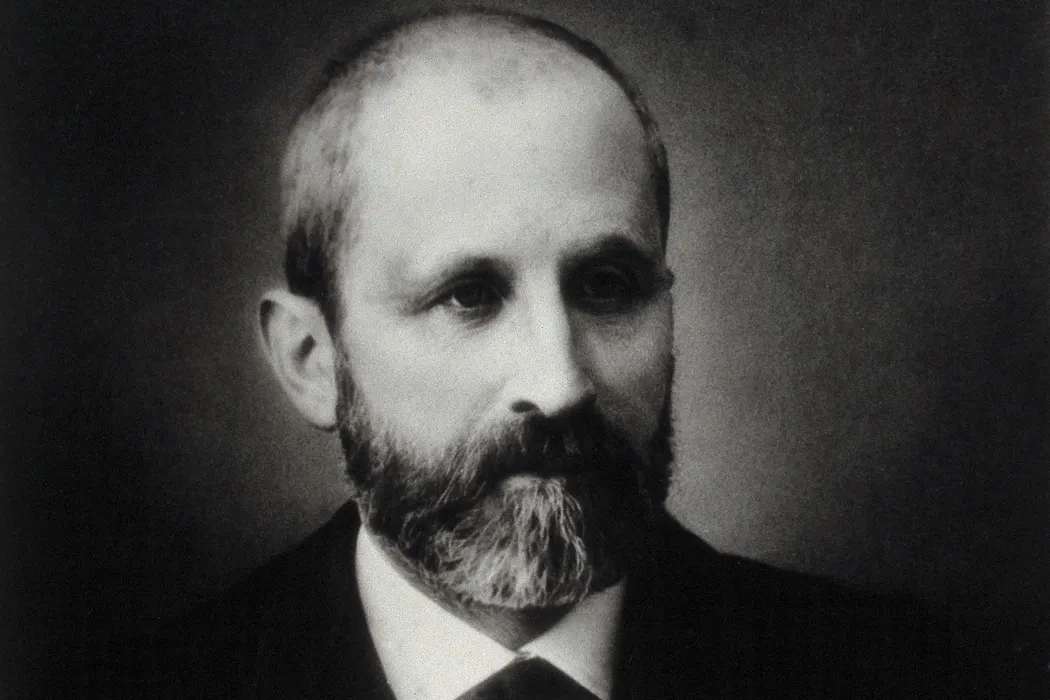
Wellcome Collection via Wikimedia, CC BY-NC

Whether through TV crime dramas or cinema blockbusters about dinosaur theme parks, DNA is a staple of modern popular culture – its double-helix structure one of science’s most iconic visualisations.

Yet remarkably, the young Swiss scientist who discovered DNA in the first place is largely forgotten.

Born in Basel in 1844, Friedrich Miescher only began his career as a researcher after developing a hearing impairment that forced him to shelve plans to be a doctor like his father. Working in the medieval castle that overlooks the old German town of Tübingen, Miescher’s aim was a grand one – to uncover the chemical nature of life itself.

But his working environment was rather different to today’s molecular biology laboratories. The University of Tübingen’s conversion of the castle kitchens into laboratories appears to have involved little more than swapping pots and pans for beakers and alembics used for distillation.

Working in what he likened to the laboratory of a medieval alchemist, the first stage of Miescher’s research was the unsavoury task of scraping pus from discarded surgical bandages, obtained from the local hospital.

The laboratory where Miescher isolated nuclein
The laboratory where Miescher isolated nuclein was located in the vaults of an old castle in Tübingen.
Paul Sinner via Wikimedia

Pus offered him a rich source of white blood cells, which were much easier to isolate and prepare than cells from solid human tissue. So, they were particularly well suited for analysing what molecules human cells are made of.

Over the winter of 1868-9, Miescher discovered a novel cellular substance with properties unlike anything else known at that time. Its chemical behaviour was significantly different to proteins, which were by then understood to be key structural and functional components of cells.

Unlike proteins, Miescher’s substance was rich in the element phosphorus. Observing that it was found almost exclusively within each cell’s nucleus, he called it “nuclein” – a term that was largely retained within its modern name of deoxyribonucleic acid, or DNA.

Little was known about the functions of the cell’s nucleus at the time, although several biologists suspected it to be central to cell growth and division. Miescher was convinced that nuclein must be closely involved in these processes.

He announced the discovery of DNA in 1871 in a paper titled On the Chemical Composition of Pus Cells. While it hardly sounded (or indeed read) like a page-turner, his studies of pus would prove a landmark moment in the history of science.

Nearly a century later, it led to the Nobel-winning discovery of DNA’s double-helix structure. The date of that landmark paper by James Watson and Francis Crick is now marked each year on April 25 as DNA Day. Yet Miescher’s contribution is largely unacknowledged.

From pus to salmon

The Swiss scientist’s move back to his home town in 1871 brought him a rich new source of nuclein that meant no longer having to scrape pus from old bandages.

Each year, salmon swim from the North Sea to their breeding grounds in the upper Rhine river, where the city of Basel is located. In preparation for mating, the male salmon’s testes grow massively and become laden with DNA.

Rising in the dark and cold of a winter morning, Miescher would walk down to the banks of the Rhine to catch salmon, then extract their DNA in his laboratory. This image gave us the title of our biography of Miescher, The Dawn Fisherman, to be published in June 2026.


Frank Malina beside a rocket

This series is dedicated to lesser-known, highly influential scientists who have had a powerful influence on the careers and research paths of many others, including the authors of these articles.


The intensity with which Miescher carried out his research was formidable. One of his students recalled that, on the day of Miescher’s wedding, friends had to drag him from his lab bench to attend the church.

His commitments grew. As well as researching Rhine salmon for the local fishing industry, Miescher worked for the Swiss government to improve the diets of prison inmates. And after founding Basel’s first institute of anatomy and physiology in 1885, there were the growing administrative burdens of being its director.

All these commitments brought a growing sense of frustration that he was spending less time on DNA. Looking to classical mythology for images of futility and despair, Miescher compared himself to rolling the boulder of Sisyphus up the mountain.

These strains took their toll on his health. In 1890, having contracted tuberculosis, he became a resident at a sanatorium in the alpine resort of Davos.

A second great insight

But during the final years of his life there, Miescher had his second great insight. Citing Charles Darwin’s speculations about the mechanism of heredity, Miescher proposed that the variation in biological traits of all living organisms might arise through variation in the physical structure of a large molecule – which he thought was most likely to be a protein.

Limited by the concepts and methods of his time, Miescher did not make the connection that nuclein (DNA) was, in fact, this very molecule.

He died in 1895 aged 51, burdened by a painful sense of failure and opportunities missed. “I will never know the happiness that belongs to the man who has lived up to their station in a harmonious way to the satisfaction of themselves and others,” Miescher wrote.

But his former mentor, the distinguished physiologist Carl Ludwig (1816-1895), was more confident that the achievements of his protégé would one day be recognised. “However often the cell will be studied and examined during the centuries to come,” he assured Miescher as he lay in the Davos sanatorium, “the grateful descendants will remember you as the ground-breaking researcher”.

Ludwig’s prediction turned out to be only partly accurate. DNA-based technologies have certainly transformed what we understand about life and disease. Yet Miescher is scarcely acknowledged as the scientist whose pioneering work led to them.

This article features references to books that have been included for editorial reasons, and may contain links to bookshop.org. If you click on one of the links and go on to buy something from bookshop.org The Conversation UK may earn a commission.

The Conversation

The authors do not work for, consult, own shares in or receive funding from any company or organisation that would benefit from this article, and have disclosed no relevant affiliations beyond their academic appointment.

– ref. Our unsung hero of science: Friedrich Miescher, the man who discovered DNA – https://theconversation.com/our-unsung-hero-of-science-friedrich-miescher-the-man-who-discovered-dna-281202


Five health conditions mothers can develop after giving birth

Source: The Conversation – UK – By Adam Taylor, Professor of Anatomy, Lancaster University

Postpartum pre-eclampsia can affect as many as 27% of mums. antoniodiaz/ Shutterstock

During pregnancy, a mother’s body undergoes vast structural and functional changes. But what many might not know is that the after-effects of these changes can last long after giving birth – and can even result in the development of new health conditions.

Here are just a few of the common conditions a mother can develop after giving birth:

1. Gallstones

One common condition that arises after pregnancy is gallstones. Approximately 12% of women are affected.

Gallstones are hard deposits commonly made of cholesterol that form in the gallbladder (an organ that releases bile to help the body digest fats). If these stones leave the gallbladder and become stuck in the ducts connecting the gallbladder and intestines, they can cause intense, sharp pain under the ribs (usually on the right-hand side) which may radiate into the back and shoulder. Gallstones can also cause vomiting and darkened urine.

During pregnancy, a mother’s gastrointestinal system slows down so that as many nutrients as possible can be delivered to the developing baby.

This gastrointestinal slowdown also slows bile leaving the gallbladder. Combined with the increase in cholesterol that happens in order to support foetal tissue development, this creates the perfect environment for gallstones to form.

But after giving birth, digestive motility increases again. This can sometimes force any stones that have formed to be flushed out the gallbladder.

Stones may need to be dissolved or the gallbladder removed in cases of severe symptoms.

2. Vision changes

The eyes can also be affected after pregnancy. The most common issues are blurry vision and dry eyes. These problems are caused by hormonal changes in the immediate period after delivery – namely the sharp drop in the hormones oestrogen and progesterone.

During pregnancy, changing oestrogen and progesterone levels cause fluid retention. This causes many tissues to swell – including the eyes. It also causes the eyes to gradually change shape.

But when hormones levels return to normal after pregnancy, any visual changes that have occurred can become more noticeable. Usually, these self-resolve – though for some the vision changes can remain as near- and far-sightedness.

In very rare cases, sight loss can even occur post-pregnancy – something which recently happened to one British mum. This was probably caused by optic neuritis, a condition where the protective layer of the optic nerve is attacked by the body’s own immune system.

During pregnancy, the maternal immune system is modified so it doesn’t attack and reject the foetus. But once the baby is born, mum’s immune system goes back to its pre-pregnancy state. In some, this results in the immune system over-reacting and attacking its own tissues.

Optic neuritis can be treated using corticosteroids which can restore vision. But in this mum’s recent case, these didn’t work.

She ended up having a plasma exchange – a procedure where the body’s plasma (the blood’s liquid component which carries hormones, nutrients and blood cells) is removed and replaced with donor plasma. Once she recieved the new plasma, her vision was mostly restored.

3. Postpartum thyroiditis

Another condition affecting around 10% of postpartum mums is postpartum thyroiditis. In mums with diabetes, as many as 20% may be affected.

This condition affects the thyroid. This gland produces hormones that help control metabolism, growth, energy levels and development. The thyroid is affected by the immune system’s postpartum rebound.

A digital drawing depicting the thyroid gland, which is located in the neck.
The thyroid gland controls many important processes.
Explode/ Shutterstock

Postpartum thyroiditis first causes the thyroid to become overactive (hyperthyroidism), leading to weight loss, anxiety, heat intolerance and tremors due to the thyroid hormones’ overstimulating effect on the nervous system.

This is then followed by underactivity (hypothyroidism) where mothers feel cold, low mood and tiredness.

The reason the thyroid is initially overactive is because it releases the hormonal stores it has built up. Once these stores are depleted, it’s function is reduced.

Both conditions can be treated with prescription drugs. Many mums can stop taking these after a few months, once inflammation in the thyroid has decreased.

4. Postpartum pre-eclampsia

One of the more life-threatening post-pregnancy conditions is postpartum pre-eclampsia. This condition can affect as many as 27% of mums and is characterised by high blood pressure after birth. It can happen anytime from hours after birth to six weeks after delivery.

For many, symptoms are mild and may even be unnoticed. But it can also present as severe headaches, shortness of breath, abdominal pain and vision changes, which represent the more severe symptoms.

The condition can happen both in mums who had pre-eclampsia during pregnancy and those that didn’t. If left untreated, it can lead to brain damage, stroke or even death.

Postpartum pre-eclampsia can be effectively managed with antihypertensive medications, which lower your blood pressure.

5. Blood clots

Pulmonary embolism (a blood clot in a major artery in the lungs) is a rare but dangerous postpartum condition. It’s one of the leading overall causes of maternal death and has a sixty-fold increase in risk compared to non-pregnant women.

This condition tends to present up to six weeks after birth. It causes shortness of breath, heart palpitations and potentially coughing up blood.

During and after pregnancy, a mother’s body is in a “hyperclotting” state to reduce blood loss after delivery. This hyperclotting state can subsequently cause blood clots to form elsewhere in the body, such as veins in the legs. These clots can become dislodged, travelling to the major arteries in the lungs and blocking them.

Clotting risk can be managed with various therapies, such as with injectable anti-coagulant drugs.

Pregnancy makes large-scale changes to a mother’s body. But as soon as the baby is delivered, these changes usually reverse back to baseline – often quicker than they happened during pregnancy. This sometimes means the body fails to adapt, leading to various health conditions.

If you’re a mother who has recently given birth and feel something isn’t right, it’s best to see your GP.

The Conversation

Adam Taylor does not work for, consult, own shares in or receive funding from any company or organisation that would benefit from this article, and has disclosed no relevant affiliations beyond their academic appointment.

– ref. Five health conditions mothers can develop after giving birth – https://theconversation.com/five-health-conditions-mothers-can-develop-after-giving-birth-280183

Microplastics have been found to interact with the gut microbiome – here’s what health effects they might have

Source: The Conversation – UK – By Nick Ilott, Senior Researcher and Lead Bioinformatician, The Oxford Centre for Microbiome Studies, University of Oxford

Microplastics have increasingly been linked to a range of health harms. SIVStockStudio/ Shutterstock

Through the air we breathe and the food we eat, we can’t help but inhale and ingest tiny bits of plastic every day.

These microplastics, as they’re known, have been found in many parts of the human body – including the lungs, placenta and blood vessels. Research has even linked the presence of microplastics to cardiovascular disease and poor health in humans.

Evidence also shows that microplastics can interact with the gut microbiome – and their presence could contribute to inflammatory bowel disease (IBD).

Microplastics are microscopic fragments of plastic that are smaller than 5mm long (and as small as 0.001mm) – and they’re everywhere. Some microplastics are created intentionally, glitter and confetti being obvious everyday examples. Others are created when larger plastic items are worn down (such as when plastic pollution in the ocean or environment is eroded).

Nevertheless, whether they’re shed from plastic chopping boards, in our drinking water or inadvertently added to processed food products, we could consequently be consuming up to 5g every week.

However, we don’t currently know the exact quantities of microplastics a single person may have in their body at any one time. Getting precise measurements of microplastics in human samples can be difficult. This is because other small fragments (such as some fats) in bodily samples can look like plastic to scientific instruments.

While scientists are sure that we’re eating microplastics, there’s also still some debate around their ability to enter our bloodstream and build up in body tissues.

Nevertheless, the fact that we consume them at all is enough for microplastics to meet our metabolic organ – the gut microbiome. Current research suggests that these encounters can reduce the good bacteria in our gut to contribute to IBD.

Microplastics and gut health

Our gut is home to trillions of microorganisms – known as the gut microbiome. Some 500 to 1,000 different microbial species work together in harmony to keep our gut healthy.

A major function of the microbiome is to take what we eat, chew it up and spit out breakdown products. These products are called metabolites and are critical for gut health.

A digital drawing depicting some of the many microbes found in the gut microbiome.
The gut microbiome plays an integral role in health.
Shobujsk/ Shutterstock

A well-studied group of metabolites are short-chain fatty acids. Short-chain fatty acids garnered attention around a decade ago, when they were found to be produced by good gut bacteria and could help prevent IBD.

IBD is an increasingly common disease, affecting around one in every 123 people in the UK. It can cause severe abdominal pain, diarrhoea, weight loss and fatigue.

One of the gut’s key short-chain fatty acids is butyrate, which is produced by bacteria when they break down dietary fibre. Butyrate has been found to be crucial for gut health, helping to boost immunity and preserve the gut barrier. However, if the gut microbiome is disturbed, microbes that produce butyrate are reduced and gut health is jeopardised.

The gut microbiome faces many challenges that now includes plastic pollutants.

Evidence for how microplastics influence the microbiome and gut health in humans is presently scarce, largely due to the previously mentioned difficulty in measuring microplastics in human samples. But work in mouse models has been more revealing, allowing us to observe the consequences of various types of microplastics in the gut.

A recently published study in the Journal of Hazardous Materials, showed that giving mice a group of polystyrene microplastics of various sizes makes the gut vulnerable to IBD. This happens because key members of the microbiome are reduced, stopping the production of butyrate and increasing the severity of inflammation.

Clearly microplastics are capable of inducing poor gut health. However, whether animal studies accurately capture levels of microplastics found in human tissues remains to be completely understood – something that will hopefully become possible with technological advances. It’s also still not clear exactly how microplastics do this.

Even with bans on intentionally produced microplastics, we still have to fight against those that are produced through wear and tear of plastic-containing materials.

What if we could use our bacteria to help us in this battle? There is some tantalising evidence that some bacteria found in human guts are capable of breaking down some types of microplastics. Although we don’t yet know if this breakdown happens in the gut (or whether it’s a good thing), there is a real, albeit distant, possibility that in collaboration with our microbiome we might be able to fend off some of the ill effects of microplastics.

With ever-growing technological advances, it is plausible that we could, in the future, harness the power of the microbiome to dispose of plastics outside, and inside, our guts.

The Conversation

Nick Ilott receives funding from The Kennedy Trust for Rheumatology Research, The Wellcome Trust, Guts UK, PSC Support and has received funding from Roche for a PhD project jointly with funding from the BBSRC as part of an iCASE DTP.

– ref. Microplastics have been found to interact with the gut microbiome – here’s what health effects they might have – https://theconversation.com/microplastics-have-been-found-to-interact-with-the-gut-microbiome-heres-what-health-effects-they-might-have-279372

Middle East conflict: how the US and Iran could step back from the brink

Source: The Conversation – UK – By David J. Galbreath, Professor of War and Technology, University of Bath

Donald Trump’s deadline for Iran to reopen the Strait of Hormuz or face a renewal of American bombardment was due to expire this week, but was extended at the last moment, this time with no defined time limit. But the risk of renewed escalation remains real, as both sides continue to block traffic through the Strait of Hormuz, one of the world’s most important – and contested – waterways..

Yet, despite hardline rhetoric on both sides, diplomacy has not collapsed. In fact, several plausible off‑ramps exist that could allow Washington and Tehran to cool tensions without either side appearing to capitulate.

Research in conflict resolution suggests that warring parties will be more likely to come to an agreement when both sides can take away what they consider a winning result. Often, this comes in trade-offs between what you are willing to give away in order to gain elsewhere. Nevertheless, it’s axiomatic in conflict resolution that it’s much easier to start a war than to stop it.

The most viable pathway to a settlement remains a reset of the nuclear file broadly along the lines of the 2015 Joint Comprehensive Plan of Action (JCPOA), albeit under a new political brand.

Iranian officials have proposed a staged arrangement that would cap uranium enrichment at 3.67%, well below the level needed for a nuclear weapon. Such an arrangement would return intrusive International Atomic Energy Agency inspections with the prospect of ultimately transferring stocks of higher‑enriched uranium out of the country in exchange for phased sanctions relief.

This would not represent a fundamental concession by Tehran. These were the parameters it accepted 11 years ago under the deal brokered by Barack Obama. But it would significantly lengthen Iran’s nuclear “breakout time” (the time it takes to produce enough weapons-grade uranium). It would also restore transparency that has been steadily eroded since the first Trump administration pulled out of the JCPOA in 2018.

For Washington, such a deal would fall short of longstanding demands for “zero enrichment” – but that position has so far proved unattainable. Even US officials now appear more focused on verifiable constraints than absolute prohibitions, understanding that China recognises the right to enrich uranium as a matter of sovereignty.

A capped and monitored programme would allow the US president to claim that Iran had been forced back under strict controls, while avoiding a further costly regional war. The irony is that this would largely put Iran back into an agreement that Obama agreed and which Trump, with considerable bluster, withdrew from in 2018. This appears to be a stumbling block for the US president.

A second and related off‑ramp concerns the duration rather than the existence of enrichment limits. Recent talks have stalled over US demands for a 20‑year moratorium on enrichment, which Iran has countered with proposals closer to five years. A compromise, such as a seven to ten-year limit with built‑in reviews, would give both sides something to sell domestically. It would represent long‑term risk reduction for Washington and for Tehran it would be a reaffirmation of Iran’s right to a nuclear future.

Time‑limited arrangements have precedent in arms control. They are known as confidence and security building measures and are often used in conflict prevention and resolution to build trust between parties while working towards a resolution. And they may be more politically durable than maximalist demands that are more likely to collapse as political conditions change.

Beyond the nuclear issue, the Strait of Hormuz has emerged as Iran’s most potent source of leverage. Roughly one-fifth of global oil passes through the waterway, and even limited disruption has sent energy prices climbing this year. Former Russian president, Dmitry Medvedev – a close ally of Vladimir Putin – recently described the strait as Iran’s “real nuclear weapon”. It’s a comment that captures how central maritime pressure has become to Tehran’s strategy.

An agreement guaranteeing the strait’s unconditional reopening without harassment, tolls, or threats, would provide immediate economic relief worldwide and give Washington a highly visible diplomatic win.

But Gulf states have expressed concern that such a bargain could end up managing rather than dismantling Iran’s leverage. It would effectively normalise – rather than remove – Iran’s ability to threaten shipping during crises.

For neighbouring countries, stabilisation without broader de‑escalation risks entrenching a dangerous precedent. This makes it all the more important that any Hormuz‑focused deal be tied to wider commitments on restraint and established confidence-building measures.

Lowering the stakes

Process matters as much as substance. Increasingly, mediators such as Pakistan, Oman and China appear to favour “sequenced de‑escalation”. This is where limited reciprocal steps, including mutual adherence to ceasefire agreements, shipping guarantees and relaxation of both sides’ maritime blockades, are locked in before negotiations widen to sanctions relief and regional security.

This approach lowers the political stakes of any single concession and reduces the risk that talks collapse under the weight of unresolved disputes. However, this scenario would make it harder for the US administration to define the agreement as a victory.

Similarly, there is the question of political narrative. The US president has vacillated between threats of overwhelming force and signals of fatigue with the conflict. This suggests he has a strong desire for an exit that can be framed as victory.

A narrowly defined agreement that could be rebranded, front‑loaded with Iranian compliance and heavy on enforcement language may prove more acceptable than a comprehensive treaty – even if its substance closely resembles older Obama-era frameworks.

The problem is the Trump administration’s failure to maintain a consistent narrative of what it wants from Iran. This presents a challenge to the established research on conflict resolution. The US president, in particular, has made understanding the US position difficult. In years to come, this crisis may be a useful case study when it comes to exploring conflict resolution theory. But, right now, it makes a settlement very hard to envisage.

The Conversation

David J. Galbreath has received funding from the UKRI.

– ref. Middle East conflict: how the US and Iran could step back from the brink – https://theconversation.com/middle-east-conflict-how-the-us-and-iran-could-step-back-from-the-brink-281203

Understanding incel culture – and how schools can address it

Source: The Conversation – UK – By David Smith, Lecturer, School of Applied Social Studies, Robert Gordon University

New Africa/Shutterstock

Incels – involuntary celibates – believe they have been unconditionally excluded from the dating market and are doomed to remain virgins. This has negative implications for their mood and self-esteem, as well as the women and girls they grow to resent.

For this reason, schools in England are now required to address incel communities, among other sources of online misogyny, in relationships, sex and health education. This is a challenging task when many teachers are already overstretched, and schools are increasingly expected to deal with problems that begin beyond the school gates.

Addressing gender based discrimination and violence requires experts who are well prepared and able to support discussion around these sensitive topics in a manner that does not further stigmatise young people.

Many young people worry about falling behind their peers socially and sexually. Sociological research shows this pressure is observable from high school onward, with pupils mocking each other if they do not appear sufficiently experienced or interested. Survey data finds inexperienced adults are seen as less desirable, even by those who share their inexperience.

Virginity and masculinity

Research in the US found that women were more likely to see their virginity as something to be shared with the right person, while men are more likely to see it as a source of shame to be opportunistically cast off. These sentiments reflect the traditional view of virginity in men as a sign of inadequacy.

Incels take this perception to the extreme, positioning themselves at the bottom of a natural male hierarchy because of women’s supposedly hardwired preferences for alpha males.

This is in contrast to other parts of the manosphere, populated by masculinity influencers. They start from a similar premise – that dating is unfair – but teach followers how to “game” the system. This may be through pseudoscience, body modification, coercion, dehumanisation and dominance.

Incels see their struggle to fit in with adulthood as something inflicted upon them by a combination of biology and social engineering. They envision the same sexual marketplace as the likes of Andrew Tate, but feel unable to compete in it. This perceived helplessness acts as a justification for their grievances. In this way, they outsource their sexual development, positioning women as gatekeepers to respectability and misogyny as transgressive rebellion.

Crucially, incels’ sense of exclusion goes beyond sexuality. An illustration of this was found in research which suggested that regional inequality is a predictor of incel activity on social media. In other words, economically unequal environments are associated with more incel sentiments. If young men can see “the good life”, but feel blocked from achieving it and their position at the bottom of a hierarchy is inescapable, it can make them feel trying is pointless.

It may seem counterintuitive that incels gravitate towards a philosophy that tells them their life cannot get any better. But this fatalistic worldview, that offers secret knowledge to explain romantic alienation as a scientific inevitability, offers temporary comfort. It absolves responsibility.

Incels often see themselves as rivals in a misery economy, where the goal is to be the most “trucel”: the person with the odds stacked most against them, who therefore has the best reason to be a virgin. But over time, the permanency of their position can become overwhelming as the sadness turns to rage. Most incels confine their anger to messageboards. But in extreme cases incel beliefs have inspired real-world violence including harassment, stalking and even acts of murder.

Research on the influence of “manfluencers” and incel culture in schools suggests that these online cultures do not remain confined to the internet. They spill into classrooms, shaping boys’ attitudes towards girls and women teachers. They normalise sexist behaviour, placing yet more responsibility on teachers to deal with the consequences. One outcome is that the Department for Education has seen a rising number of Prevent referrals related to inceldom.

Two boys in a school corridor.
Incel attitudes can spill into the classroom, affecting male teens’ relationships with their female peers and teachers.
MAYA LAB/Shutterstock

Social media and video sharing platforms play a large role in both spreading and profiting from this material, so are being increasingly targeted by regulators such as Ofcom. This may well become a catalyst for stricter digital governance.

But at a local level, a meaningful response to these issues must include expanded access to mental health support. Young people also need healthier outlets, both on and offline, for openness and connection.

In schools, education on rejection, empathy, relationship dynamics, self-worth and social skills can play a vital role here. It requires a whole-school approach in which teachers are themselves supported and equipped to respond. A whole-school approach should also mean that individual staff are not left to carry the burden.

This begins with the identification of whole school guiding principles for education interventions. Some schools are supporting all staff to recognise and respond to incel terminology, to recognise the eco-system and appeal of influencers. Specific workshops and lesson plans are also being developed and tested.

Schools and teachers should not be left to tackle this issue alone. Parents are the first port of call for safeguarding young people and they require education and support in recognising and challenging harmful online influences at home.

The Conversation

The authors do not work for, consult, own shares in or receive funding from any company or organisation that would benefit from this article, and have disclosed no relevant affiliations beyond their academic appointment.

– ref. Understanding incel culture – and how schools can address it – https://theconversation.com/understanding-incel-culture-and-how-schools-can-address-it-272566

US-Iran failed first round of talks in Pakistan: where did it all go wrong?

Source: The Conversation – France – By Marwan Sinaceur, Professor of Organizational Behavior, ESSEC

Empirical research in the behavioural sciences shows that the Trump administration has not, to date, adopted an efficient strategy to negotiate with Iran. Negotiations between the US and Iran on April 11-12 in Islamabad, Pakistan were deemed the last attempt at ending a war that’s on the verge of causing a global economic crisis.

To explain why the first round of negotiations between the US and Iran failed, US Vice President Vance said Iran did not agree to terms about its nuclear efforts and that the US gave Tehran its “final and best offer”. Vance put an end to the 21-hour long talks and the US delegation made a swift exit after it had stayed less than 24 hours in the country.

The US’s “final and best offer” has shown a deep misunderstanding of the dynamics and the psychology of negotiations. It would be laughable if world peace, looming world hunger, and a catastrophic economic crisis weren’t at stake.

What led to the breakdown in talks?

Contrary to what Vance claimed, putting an offer in the early stage of a negotiation is quite counter-productive to solving a conflict.

Empirical research on negotiations demonstrates that the timing of offers is critical. Making an early offer in negotiations decreases information exchange between negotiators and increases the competitive dimension of negotiations.

It often escalates into a war of positions where negotiators mostly seek to defend and argue about their positions, thus becoming cognitively rigid rather than trying to understand what drives the other party’s behaviour. In contrast, an offer in the later stages of negotiations enables everyone to first understand the underlying (unpublicised) interests, motivations, needs and concerns of the different parties.

When an offer is made later rather than earlier, negotiators have more leeway to exchange information and explore creative solutions that meet the different parties’ underlying interests; they are less likely to engage in positional, competitive bargaining early in the process (which then colours the entire subsequent interaction). What this means in plain terms is a key measure of negotiators’ effectiveness is their ability to seek information and ask questions rather than solely making claims.

Even when both parties are willing to reach painful compromises, a lot of time is required to explore underlying interests, discuss thorny issues, disclose sensitive information, and look for solutions that are mutually acceptable. In fact, research has shown that discussing multiple simultaneous offers, that is, discussing several potential scenarios and options for compromise at the same time, is more efficient than making a single unilateral offer.

Contrary to what the US Vice President claimed, the first offer or idea one devises is rarely the best offer or idea for reaching a compromise and solving a conflict as negotiators are often subject to biased information search and biased information processing (e.g., they interpret information incorrectly and fail to accurately understand the other party’s interests and preferences). This is even more the case when the conflict is not only about interests, but also about sacred values. In this case, offering concessions on values and symbols (e.g., symbolic recognition of the other party) is effective in making the other concede in return. For example, the Trump administration seems to misunderstand the importance of national pride and symbolic recognition in the uranium enrichment issue.

Timing is everything

Findings on negotiations additionally show that negotiators are not prone to making concessions early in negotiations. Putting an offer on the table at a early stage means putting an offer before the other party is ready to make concessions. Indeed, people are more likely to make concessions at the end rather than at the beginning of negotiations. Two reasons may explain that. First, at the beginning, there is little trust.

It takes time to build trust and at the beginning the parties interpret every move from the other side through the lens of the distrust they experience themselves. For example, people reject an offer that comes from the other side just because it comes from the other side: they evaluate an offer based on who makes it, regardless of how interesting it is intrinsically; this phenomenon characterises negotiation and has been termed reactive devaluation. This is because we construe that another person’s offer must be solely driven by their interests, and we construe our interests as antagonistic to theirs.

Second, the “psychological cost” of walking away from a negotiation evolves over time.

At the beginning of a negotiation, walking away and reaching an impasse bears little psychological cost because little energy or effort have been invested whereas at the end of a negotiation, walking away and reaching an impasse is far more costly: an impasse would mean that all the time spent was for nothing. This is an application of a bias that is well-known by psychologists, namely escalation of commitment. The more (the less) we invest time and pursue a certain course of action, the more (the less) we want it to succeed.

In fact, tactics that are used to exert pressure and make the other yield are more effective at the end rather than at the beginning of negotiations. For example, making a threat late in the process is much more effective than making a threat early in the process. Similarly, expressing anger at the other late in the process is much more effective than expressing anger early. In general, explicitly aggressive moves are less effective early and more effective late. The way aggressive tactics are perceived varies over time: they convey too much negative intentions at the opening and are deemed more acceptable once a relationship is built. Even though unpredictability can be effective, it is still better to start expressing positiveness earlier in the negotiation so that negotiators create positive impressions first.

Thus, results from empirical research converge to demonstrate that negotiation is a game with different phases or sequences: open discussions first; bargaining at the end. Using aggressive tactics early in negotiations makes finding out about interests and uncovering cooperative solutions very unlikely. The ability not to close one’s mind too early in the process and keep things open throughout as much as possible is critical. This is why patience is key in negotiations.

Managing the timing dimension in negotiations is clearly essential for success. The same behaviour put at the end rather than at the beginning of negotiations will yield completely different results.

In negotiations, it’s often a question of when to make a move rather than whether to make a move.

In this way, empirical research on negotiations suggests that negotiation is like a dance. One needs to proceed by trial and error before constructing compromises that are mutually acceptable. It takes time to understand someone else and build a relationship – exactly as is the case in a romantic relationship.

Needless to say, the aforementioned research has mostly been published in US academic journals dedicated to the behavioural sciences. It is well known to negotiation scholars and experts in the US.

Dissecting the telltale signs of amateurism

Vance’s position that the US gave Iran its “final and best offer” was, thus, that of an amateur. This is all the more apparent given that negotiations between the US and Iran are quite complex and include multiple issues: reopening the strait of Ormuz, implementation of steps to limit and control Iran’s nuclear program, ballistic missiles, access to a civil nuclear program, the lifting of economic sanctions, guarantees that war will not resume, etc.

Wanting to reach an agreement on such difficult issues in such little time denoted a lack of negotiation experience that was simply astonishing.

Negotiations that led to an agreement with Iran on nuclear matters under the Obama administration took more than 20 months, whereas those led by Vance in Pakistan earlier this month took 21 hours.

Experts like Federica Mogherini who was in charge of negotiations with Iran on behalf of the European Union, have underscored the Trump delegates’ substantial lack of knowledge and understanding of the technical aspects of negotiating.

In this respect, the failure of the US versus Iran talks in Pakistan was in no way surprising. It was fully consistent with, and predicted by, empirical research on the psychology of negotiation.

Making an early offer is very ineffective in solving conflict. For instance, the very same error explained why negotiations between Israelis and Palestinians failed in Camp David in 2000, even though the two parties wanted to reach a compromise at that time – the consequences of this failure have been catastrophic. As a close observer recalled, the parties made their initial offers early in the negotiation process, well before “neither the Israelis nor the Palestinians had been prepared to fully own up to the fears and needs of the other”.

All of this has denoted a major flaw by the Trump administration in how to handle negotiations with Iranians (among others) since the start of the war till now. Negotiating is not about imposing terms unilaterally on the other party. Nor is it about making the other party capitulate and accept an unconditional surrender. That strategy works in negotiations where there is only one variable to negotiate upon (typically, a competitive issue such as price), or when you undoubtedly are in a position of power – as would be the case if you were a wealthy real estate developer in New York city. But that strategy does not work in negotiations where there are multiple variables to negotiate upon and where meeting complex, underlying interests and discovering creative solutions is necessary to achieve a good deal, or when the balance of power is uncertain.

To paraphrase yet another Republican US President Eisenhower, negotiation is:

“The art of getting someone else to do something you want done because he wants to do it.”

On all counts, what happened between the US and Iranian delegations on April 11-12 in Pakistan did not look like real negotiations.


A weekly e-mail in English featuring expertise from scholars and researchers. It provides an introduction to the diversity of research coming out of the continent and considers some of the key issues facing European countries. Get the newsletter!


The Conversation

Marwan SINACEUR a reçu des financements de ESSEC Research Center, Fondation ESSEC, Fondation INSEAD, Stanford University.

– ref. US-Iran failed first round of talks in Pakistan: where did it all go wrong? – https://theconversation.com/us-iran-failed-first-round-of-talks-in-pakistan-where-did-it-all-go-wrong-281185

The Strait of Hormuz shows how everything is now about leverage

Source: The Conversation – UK – By Renaud Foucart, Senior Lecturer in Economics, Lancaster University Management School, Lancaster University

lavizzara//Shutterstock

Iran’s military might was never going to be a match for the US and Israel. So instead it turned to the highly effective weapon it has at its disposal – geography.

Blocking off the Strait of Hormuz has shaken the global economy. It has doubled the price of a barrel of crude oil, which has a knock-on effect on the price the rest of the world pays for everything from fuel to heating and food to holidays.

It also made Donald Trump have a rethink. The world is now waiting to see what happens next in a stretch of water which carries around 20% of the world’s oil and liquefied natural gas.

For Iran, the Strait of Hormuz has been an extremely valuable geopolitical asset. And its surprisingly strong negotiating position demonstrates a classic principle of game theory, the mathematical study of strategic interactions.

This principle, sometimes referred to as Rubinstein bargaining, basically says that during a conflict, each side’s strength depends on two things: how badly off it would be without a resolution, and how impatient it is to get things resolved.

Iran will certainly be badly off if the war continues, using up its stockpiles of missiles and drones while its infrastructure gets bombed. But dictatorships can afford to be patient, crushing dissent if it arises.

For the US, continuing with the conflict means spending billions more taxpayer dollars on those bombs, while a blocked-off Strait of Hormuz risks more rises in the price of fuel paid by American motorists. With midterm elections coming up in November, perhaps the White House will lose patience quickly.

The Strait of Hormuz, then, has played an enormous role in the conflict so far. The US’s position is much weaker than first thought because of a stretch of water the world can’t do without.

Game theory suggests that to achieve a position of strength, countries and regions need to come up with their own version of the strait – something others need which will strengthen their negotiating position.

It doesn’t have to be a shipping route, of course. China’s version could be its global dominance in manufacturing. It would be very hard for most countries to live without the things China makes.

Sub-Saharan Africa’s strength is its natural resources, such as most of the world’s cobalt being mined in the Democratic Republic of Congo. In the future, it may also be able to leverage the fact it is the last continent with a young and growing population, while the rest of the world is rapidly ageing.

The EU’s strength, meanwhile, has been the size of its united single market. It has been able to leverage this market to get preferential treatment, protecting its produce and exports. It also managed to impose European standards on food and products across the world.

But the EU’s strength is by no means guaranteed. Most economic growth is now expected to come from the likes of China, India or Indonesia, weakening Europe’s negotiating position. Research suggests the only way to get some of this strength back is to integrate European markets even more, and to enlarge the EU further.

This is also why the UK will soon probably return to the European single market, one way or another. Brexit has considerably weakened the international negotiating position of both the UK and EU.

Strait and narrow

Having a version of the Strait of Hormuz seems especially important now that alliances and divisions have become much less clear. Old alliances and promises have lost a lot of their meaning.

The US has threatened to leave Nato, and said it would annex Canada and Greenland. Both it and Russia have jointly campaigned for the failed re-election of Viktor Orbán in Hungary.

But in a world without reliable alliances, all countries are interdependent. Supply chains are so interconnected that a small change in one country can have a major impact on the other side of the world. Oil tankers not moving near Iran could mean no pork sausages in UK grocery stores this summer.

In these circumstances, game theory tells us that success requires two things: not relying on a single partner, and offering something that others cannot do without. When everything is about leverage, power comes from being impossible to ignore.

The countries that will thrive in the next decades will be those which manage to establish their own version of the Strait of Hormuz. And make sure they never need to sail through anyone else’s.

The Conversation

Renaud Foucart does not work for, consult, own shares in or receive funding from any company or organisation that would benefit from this article, and has disclosed no relevant affiliations beyond their academic appointment.

– ref. The Strait of Hormuz shows how everything is now about leverage – https://theconversation.com/the-strait-of-hormuz-shows-how-everything-is-now-about-leverage-280048

How Bafta helped elevate the video game to a respected art form worthy of celebration

Source: The Conversation – UK – By Charlotte Gislam, Researcher in Game Studies, University of Salford

To receive a nomination at the Bafta Game Awards is to be placed amongst the very best video games developed each year. This year’s ceremony saw 42 games nominated, demonstrating a wide range of gaming excellence. Among the nominees were designers, voice actors and composers, each contributing to the validation of video games as a cultural form.

Now in their 22nd year, the awards took place on April 17 in London where outstanding achievement in animation went to Dispatch, with Lego Party awarded best family game, Kingdom Come: Deliverance 2 best narrative, and the coveted best overall game gong going to Clair Obscur: Expedition 33.

For the winners, awards can result in boosted sales. Clair Obscur: Expedition 33 saw more than 92,000 copies sold overnight following the awards. The win adds to the game’s overwhelming success story both economically and culturally since its release in April 2025. Such accolades not only translate to individual success, they also gain legitimacy for the game industry as a whole. So how can an awards show aid an entire medium?

Part of the answer lies in how awards shape cultural perception, not just commercial success. Regardless of their aesthetics and storytelling prowess, video games are still considered by many as being an example of “low culture”. The Bafta awards have been one way to challenge this perception, offering a prestigious arena for celebration and recognition.

The British Academy of Film and Television Arts is a British arts charity that has been in operation since 1947 with a mission to “advance the art and technique of film”. The first film awards were held in 1949, with TV awards introduced in 1955. Games first gained recognition within the respected Bafta tradition in 2004.

A video game can take years of work to develop and requires the collaboration of many creatives across a variety of disciplines. Writers, artists, animators, programmers, sound designers, voice actors and musicians are all part of the process.

Bafta runs initiatives such as scholarships, mentorships and programmes for young game designers. Celebrating video games with the annual awards show makes a statement that the medium is as worthy as film or television in terms of cultural contribution.

How does recognition impact the industry?

Legitimacy is often accompanied by economic support at a regional, national and international level. The more video games are considered culturally valuable, the more governments and art charities are interested in investing in them.

However, video game development is currently risky, with thousands of layoffs this year so far. Young graduates looking for an entry role may not find much available even with large developers like Epic Games which laid off 1,000 workers in March, attributed to a downturn in Fortnite engagement that began in 2025.

Initiatives to support studios entering the industry have increased in frequency and monetary value since 2015 with the creation of the UK Games Fund (UKGF). The support programme started with a £4 million prototype fund to help small developers produce working mock-ups of ideas to show investors. Funding is vital for the development of the industry as it allows creatives to take risks with the medium without risking their livelihoods.

Economic support initiatives create positive feedback loops where developers have the freedom to advance the art and technique of games and then see their work acknowledged through awards. This subsequently raises the profile of video games to funders.

This year the Baftas follow an increase to the funding available for British game studios from the UK government. As part of the opening of the London Games Festival – a week of talks and demonstrations from the UK games industry held every April – the Department of Culture, Media, and Sport announced a £30 million “power up” for the UK games industry.

Grants from the fund will be split into three categories. Up to £20,000 is available to invest in newly formed companies, with £100,000 for the prototyping of new games and £250,000 to aid with completing games and helping established studios expand.

The Bafta Game Awards have been a key part of the festival’s programme since its inception in 2016. The money, announced just as the best of global video games are being celebrated, will be used to support next generation of exciting young video game developers.

The Conversation

Charlotte Gislam is part of GAMEMHEARTS which is supported by the European Union Horizon Research and Innovation Programme under grant agreement no. 101132543

Neta Yodovich is part of GAMEMHEARTS which is supported by the European Union Horizon Research and Innovation Programme under grant agreement no. 101132543.

– ref. How Bafta helped elevate the video game to a respected art form worthy of celebration – https://theconversation.com/how-bafta-helped-elevate-the-video-game-to-a-respected-art-form-worthy-of-celebration-281184

Mandelson vetting scandal: why Whitehall is the worst of all worlds when it comes to accountability

Source: The Conversation – UK – By Nathan Critch, Research Associate, Department of Politics, University of Manchester

Keir Starmer’s decision to appoint Peter Mandelson as ambassador to the US keeps coming back to haunt him. It has now emerged that Mandelson was granted security clearance by the Foreign Office, despite concerns raised during the
vetting process. Top Foreign Office civil servant Olly Robbins was sacked over these revelations.

Mandelson was controversial long before Starmer appointed him in 2024. A New Labour figure known as the “prince of darkness” due to his reputation as an adept but often ruthless and underhand political operator, Mandelson had already been embroiled in a number of scandals involving allegations of corruption. He was also known to have had a close relationship with convicted sex offender Jeffrey Epstein, as well as close business links in China.

Starmer fired him in September 2025 after emails were released showing Mandelson offering supportive messages to Epstein, who faced charges of soliciting a minor at the time. Further emails released by US officials suggested that Mandelson might have passed privileged and market-sensitive information to Epstein during the fallout of the financial crisis. In February 2026, the former ambassador was arrested on suspicion of misconduct in public office. He has denied criminal wrongdoing and has not been charged.

Therefore, it is perhaps unsurprising that Mandelson did not pass the vetting process carried out by the Cabinet Office’s UK Security Vetting team. Almost all civil servants are required to go through some form of vetting. But as a top diplomat, Mandelson was subject to the most intensive form of scrutiny. From what is known about the process, red flags were probably raised about Mandelson’s links with Chinese and Russian business interests, though the exact details have not been made public.

Starmer and his allies have argued that Robbins did not tell the prime minister about concerns raised in the vetting process as he should have. In giving evidence to MPs, Robbins said that Number 10 took a “dismissive” approach to the vetting process. He also said that he was under “constant pressure” to approve Mandelson’s clearance due to this being a political priority for Starmer. Mandelson’s appointment was announced publicly before the vetting took place.

The opposition is piling on the pressure for Starmer to resign. But behind speculation about the prime minister’s future stands a deeper set of constitutional questions about accountability and standards in public life.

From Starmer’s perspective, the scandal has revealed a pressing need to improve the independent scrutiny of appointments. He has ordered a review into vetting procedures, and argued that failings lie with civil servants in the FCDO and with the robustness of vetting processes – not with him.

On one level, this defence is an effort to deflect blame. Yet the response also fits with Starmer’s approach to politics as a follower of rules and lover of process.

In arguing for a more robust independent process around vetting in their attempts to avoid blame, Starmer and his allies invoke a longstanding critique of Whitehall culture. This view treats independent, depoliticised scrutiny and checks and balances as key missing links in British politics. Building these would be vital for ensuring transparency and accountability around appointments and politics more broadly.

Since coming to office, Starmer has consistently argued for a rewiring of the British state to modernise the government. Like academics, thinktanks, journalists and former Whitehall insiders before him, Starmer’s view suggests that Whitehall and the centre of the British state operate in an antiquated way. When it comes to accountability and standards, the government arguably lacks proper independent scrutiny and constitutional checks and balances to hold decision-makers to account.

Instead, Whitehall is too reliant on a “good chaps theory of government”, which suggests politicians typically act with the best of intentions and therefore do not need to be subject to independent scrutiny.

Who is responsible?

Critics, echoing Robbins’ testimony, have argued that Starmer and his allies pressed Mandelson’s ambassadorship as a political priority, announcing it before vetting procedures had been completed in order to push through the appointment.

Many have pointed out that Mandelson’s reputation as a potentially suspect character was well known before the release of the Epstein files. Within this narrative, blame for the appointment of Mandelson lies squarely with Starmer.

In a sense, this approach offers a different view of British politics. In terms of appointments – both to top civil service positions and to more political posts – the UK’s approach has been argued to resemble medieval “court politics”. Here, the ruler decides their key advisers on the basis of their own preferences and objectives.

This too implies a lack of proper checks and balances around appointments. But one of the proposed advantages of such a system is that it places accountability and responsibility for decisions clearly in the hands of elected politicians. Britain has a longstanding tradition of individual ministerial accountability.

Starmer, however, is now seemingly weakening this tradition by deflecting blame onto the civil service and its processes. It is this notion of direct political accountability that Starmer’s opponents are invoking when they call for his resignation.

Overall, these two images of British politics are contradictory and indicative of the emergence of an increasingly incoherent form of government. On the one hand, the state has failed to move towards modern and robust independent scrutiny of ministerial decision-making around appointments. On the other hand, politics has shifted away from a culture of clear, individual ministerial accountability.

This leaves Britain in a “worst of both worlds” scenario when it comes to accountability and standards in public life. It has neither robust independent scrutiny, nor clear lines of political accountability. More than anything, the Mandelson vetting scandal reveals the need to fix this broken system.

The Conversation

The authors do not work for, consult, own shares in or receive funding from any company or organisation that would benefit from this article, and have disclosed no relevant affiliations beyond their academic appointment.

– ref. Mandelson vetting scandal: why Whitehall is the worst of all worlds when it comes to accountability – https://theconversation.com/mandelson-vetting-scandal-why-whitehall-is-the-worst-of-all-worlds-when-it-comes-to-accountability-281159

6 African thinkers who help us understand the world – new book

Source: The Conversation – Africa – By Christophe Premat, Professor, Canadian and Cultural Studies, Stockholm University

Who counts as an intellectual? In many traditions, the figure of the intellectual is tied to the search for truth, social critique and public engagement. From the Dreyfus Affair (a political scandal in 1894 in France that mobilised writers and thinkers to defend justice) to postcolonial debates, intellectuals are those who intervene in society, not just to interpret the world, but to challenge it.

In the African context, this role takes on particular urgency. Intellectuals on the continent and in the diaspora have long navigated a complex terrain shaped by colonial legacies, political constraints and global inequalities. They are not simply producers of knowledge. They are mediators between worlds, engaged in a struggle over meaning, identity and historical narrative.

As a scholar of cultural studies and postcolonial thought, I’ve sought, in a new French book, to analyse their paths not as isolated figures, but as part of a broader constellation of what we’ve called “African intellectual sensibilities”.

These are ways of thinking that are at once critical, situated and globally engaged. This approach highlights how African thinkers contribute not only to debates about Africa, but also to the redefinition of knowledge production itself.


Read more:
Sophie Oluwole, the trailblazing Nigerian woman who redefined philosophy


So, identifying African thinkers is not just an exercise in recognition. It’s part of a broader effort to rebalance an intellectual history that has too often marginalised or misrepresented African contributions. As Congolese philosopher Valentin-Yves Mudimbe famously argued, Africa has often been constructed as an object of knowledge rather than a subject producing it.

From this perspective, here are six intellectuals whose work helps us rethink Africa and the world.

The famous

1. Valentin-Yves Mudimbe (1941-2025)

Mudimbe is one of the most influential African philosophers of the late 20th century. His seminal work The Invention of Africa dismantles what he calls the “colonial library”, the body of western knowledge that has historically defined Africa from the outside.

Rather than simply rejecting western thought, Mudimbe proposes a critical archaeology of knowledge. His work invites us to rethink how Africa can be known and, crucially, how it can speak for itself. He shifts the question from what Africa is to who has the power to define it.

His contribution goes further. By drawing on thinkers like Michel Foucault from France, he shows that knowledge is never neutral. It’s embedded in structures of power. This allows Mudimbe to expose how academic disciplines, from anthropology to history, have participated in constructing a distorted image of Africa.


Read more:
Valentin-Yves Mudimbe: the philosopher who reshaped how the world thinks about Africa


His work opened the way for a generation of scholars who now seek to produce knowledge from within African perspectives rather than about Africa as an external object.

2. Achille Mbembe (born 1957)

A major voice in contemporary global theory, Cameroonian historian Mbembe explores how power operates in postcolonial societies. In works such as On the Postcolony and Critique of Black Reason, he analyses the afterlives of colonial violence and their impact on subjectivity.

A bald African man in horn-rimmed glasses smiles broadly as he suits in an audience.
Mbembe: thinking about power, violence and the postcolonial condition.
Wikimedia Commons/Heike Huslage-Koch, CC BY-SA

Mbembe also emphasises the need for Africa to produce its own narratives. For him, intellectual work is inseparable from historical trauma, but also from the possibility of reinvention.

One of his key contributions is the concept of “necropolitics”, which examines how modern forms of power determine who may live and who must die. This framework has been widely used to analyse conflicts, borders and inequalities far beyond the continent.


Read more:
Achille Mbembe on how to restore the humanity stolen by racism


At the same time, Mbembe insists on moving beyond victimhood. His work points toward what he sees as an emerging African future, shaped by mobility, creativity and new forms of belonging in a globalised world.

The fascinating

3. George Ayittey (1945–2022)

Ghanaian economist and thinker Ayittey stands out for his uncompromising critique of postcolonial African elites. While acknowledging the impact of colonialism, he argues that many of Africa’s problems today stem from internal governance failures such as corruption, authoritarianism and institutional decay.

A balding African man in glasses sits in front of a microphone in a casual white shirt.
Ayittey: rethinking governance and postcolonial elites.
Wikimedia Commons/Gage Skidmore, CC BY-SA

One of his most influential ideas is the distinction between “cheetahs” and “hippos”. Cheetahs are a new generation of reform minded Africans, hippos are entrenched elites resistant to change. This captures a broader critique of political stagnation and elite capture.

Ayittey also insists on the importance of indigenous African institutions as resources for political renewal. His work is therefore not only critical, it is also programmatic, calling for a reconstruction of governance.

4. Kwasi Wiredu (1931-2022)

Ghanaian philosopher Wiredu is one of the most important figures in African philosophy. His central project, conceptual decolonisation, aims to free African thought from uncritically adopting western philosophical categories.

For Wiredu, language plays a crucial role. Philosophical problems are often shaped by the language they’re formulated in. By returning to African languages, he shows that debates about truth, personhood or political organisation can be reframed in very different ways.

His work on consensus-based political systems, inspired by Akan traditions, is particularly influential. Rather than relying on majoritarian democracy, Wiredu explores forms of deliberation that include agreement and social cohesion. In the process, he does not reject universality. He redefines it from within African intellectual traditions.

5. Oyèrónkẹ́ Oyěwùmí (born 1957)

Nigerian sociologist and gender scholar Oyěwùmí’s work offers a powerful critique of western ideas being applied to the rest of the world. In The Invention of Women, she argues that gender, as understood in western societies, was imposed on Yoruba social structures through colonialism.

An African woman with short hair sits smiling in a chair in front of African wood carvings.
Oyěwùmí: rethinking gender.
Wikimedia Commons/O Oyěwùmí, CC BY-SA

Her research demonstrates that social organisation in Yoruba society was not originally structured around gender in the same way.

Rather than gender serving as the main axis of social difference, other markers such as age and status played a more central role. This challenges the assumption that categories such as man and woman are universally foundational.

More broadly, her work invites us to question how knowledge travels and how it can distort the realities it claims to describe.

The rising

6. Sabelo Ndlovu-Gatsheni (born 1967)

Zimbabwean historian Ndlovu-Gatsheni is a leading voice in decolonial theory. His work focuses on coloniality, understood as the persistence of colonial patterns of power long after formal independence.

He criticises the global division of intellectual labour, where African scholars are often confined to producing data while the theory is developed elsewhere. For him, the issue is about who has the authority to produce knowledge.

His work calls for African perspectives to be put in the centre of global debates and for a transformation of the structures that continue to marginalise them.

Beyond a list

African intellectuals are not a uniform group. They operate across disciplines such as philosophy, history, economics, sociology and literature, and across spaces around the world.

What unites them is a shared engagement with a central question. How can Africa be thought critically in a world still marked by unequal power relations?


Read more:
Is ‘Africa’ a racial slur and should the continent be renamed?


There are, of course, many other prominent African thinkers whose work deserves attention. The figures here have been chosen because they are particularly representative of different ways of thinking from and about Africa.

Each of them opens a distinct intellectual pathway, whether through the critique of knowledge, the analysis of power, the rethinking of social categories or the transformation of political and philosophical frameworks.

The Conversation

Christophe Premat is a professor in Francophone cultural studies at the Department of Romance and Classical Studies at Stockholm University. He co-authored in 2025, with Buata B. Malela, the book Sensibilités intellectuelles africaines (Éditions Hermann).

– ref. 6 African thinkers who help us understand the world – new book – https://theconversation.com/6-african-thinkers-who-help-us-understand-the-world-new-book-280090