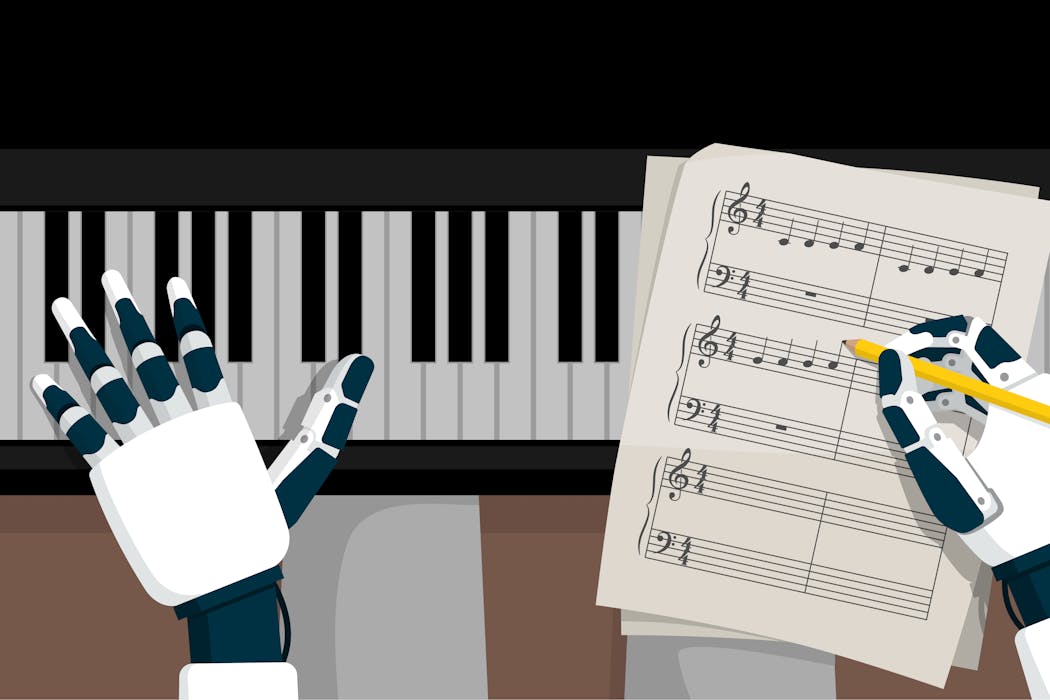
« Psychose induite par l’IA » : un danger réel pour les personnes à risque, selon un psychiatre

Source: The Conversation – in French – By Alexandre Hudon, Medical psychiatrist, clinician-researcher and clinical assistant professor in the department of psychiatry and addictology, Université de Montréal

L’intelligence artificielle est de plus en plus intégrée à la vie quotidienne, des agents conversationnels qui offrent une forme de compagnie aux algorithmes qui façonnent ce que nous voyons en ligne. Mais à mesure que l’IA générative (IA gen) devient plus conversationnelle, immersive et émotionnellement réactive, les cliniciens commencent à se poser une question délicate : l’IA générative peut-elle aggraver, voire déclencher une psychose chez des personnes vulnérables ?


Les modèles de langage de grandes tailles et les agents conversationnels sont largement accessibles et souvent présentés comme des outils de soutien, empathiques, voire thérapeutiques. Pour la majorité des utilisateurs, ces systèmes sont utiles ou, au pire, sans effet délétère.

Toutefois, récemment, plusieurs reportages médiatiques ont décrit des personnes présentant des symptômes psychotiques, dans des situations où ChatGPT occupe une place centrale.

Pour un groupe restreint, mais cliniquement significatif (les personnes présentant un trouble psychotique ou celles à haut risque), les interactions avec l’IA générative peuvent être beaucoup plus complexes et potentiellement dangereuses, ce qui soulève des questions importantes pour les cliniciens.

Comment l’IA s’intègre aux systèmes de croyances délirantes

La « psychose induite par l’IA » n’est pas un diagnostic psychiatrique formel. Il s’agit plutôt d’un raccourci émergent utilisé par des cliniciens et des chercheurs pour décrire des symptômes psychotiques façonnés, intensifiés ou structurés autour d’interactions avec des systèmes d’IA.

La psychose implique une perte de contact avec la réalité partagée avec le monde extérieur et intérieur. Les hallucinations, les idées délirantes et la désorganisation de la pensée en constituent les manifestations centrales. Les délires psychotiques s’appuient fréquemment sur des éléments culturels (religion, technologie ou structures de pouvoir politique) afin de donner sens à des expériences internes.

Historiquement, les thèmes délirants ont fait référence à divers objets ou forces, tels que Dieu, les ondes radio ou la surveillance gouvernementale. Aujourd’hui, l’intelligence artificielle offre une nouvelle avenue narrative.

Certains patients rapportent des croyances selon lesquelles l’IA générative serait consciente, transmettrait des vérités secrètes, contrôlerait leurs pensées ou collaborerait avec eux dans le cadre d’une mission spéciale. Ces thématiques s’inscrivent dans des schémas bien établis de la psychose, mais l’IA y ajoute un degré d’interactivité et de renforcement que les technologies antérieures n’offraient pas.


À lire aussi :
Se diagnostiquer grâce à l’IA : voici le potentiel et les pièges des applis en santé


Le risque d’une validation sans ancrage dans la réalité

La psychose est fortement associée à la saillance aberrante, soit la tendance à attribuer une signification excessive à des événements neutres. Les systèmes d’IA conversationnelle sont, par conception, capables de générer un langage réactif, cohérent et sensible au contexte. Chez une personne présentant une psychose émergente, cela peut être vécu comme une confirmation troublante, voire dérangeante.

Les recherches sur la psychose montrent que la validation excessive et la personnalisation peuvent intensifier les systèmes de croyances délirantes. L’IA générative est optimisée pour poursuivre les conversations, refléter le langage de l’utilisateur et s’adapter à l’intention perçue.

Si cela est sans conséquence pour la plupart des utilisateurs, ces mécanismes peuvent renforcer involontairement des interprétations déformées chez des personnes dont le test de réalité est altéré — c’est-à-dire la capacité à distinguer les pensées internes et l’imaginaire de la réalité objective et externe.

Il existe également des données indiquant que l’isolement social et la solitude augmentent le risque de psychose. Les compagnons d’IA générative peuvent réduire la solitude à court terme, mais ils peuvent aussi se substituer aux relations humaines.

Cela concerne tout particulièrement les personnes déjà en retrait des interactions sociales. Cette dynamique rappelle les préoccupations antérieures liées à l’usage excessif d’Internet et à la santé mentale, mais la profondeur conversationnelle de l’IA générative contemporaine est qualitativement différente.


À lire aussi :
L’IA gagne du terrain en santé. Comment les ordres professionnels peuvent-ils l’encadrer ?


Ce que la recherche nous apprend, et ce qui reste incertain

À ce jour, aucune donnée probante n’indique que l’IA cause directement une psychose.

Les troubles psychotiques sont multifactoriels et peuvent impliquer une vulnérabilité génétique, des facteurs neurodéveloppementaux, des traumatismes et l’usage de substances. Toutefois, certaines préoccupations cliniques suggèrent que l’IA pourrait agir comme facteur précipitant ou de maintien chez des individus vulnérables.

Des rapports de cas et des études qualitatives portant sur les médias numériques et la psychose montrent que les thématiques technologiques s’intègrent fréquemment aux contenus délirants, en particulier lors des premiers épisodes psychotiques.

Les recherches sur les algorithmes des médias sociaux ont déjà démontré que des systèmes automatisés peuvent amplifier des croyances extrêmes par des boucles de renforcement. Les systèmes de clavardage fondés sur l’IA pourraient présenter des risques similaires si les garde-fous sont insuffisants.

Il est important de souligner que la plupart des développeurs d’IA ne conçoivent pas leurs systèmes en pensant aux personnes vivant avec des troubles mentaux sévères. Les mécanismes de sécurité tendent à se concentrer sur l’automutilation ou la violence, plutôt que sur la psychose. Cela crée un décalage entre les connaissances en santé mentale et le déploiement des technologies d’IA.

Les enjeux éthiques et les implications cliniques

Du point de vue de la santé mentale, l’enjeu n’est pas de diaboliser l’IA, mais de reconnaître les vulnérabilités individuelles.

De la même manière que certains médicaments ou substances comportent des risques accrus pour les personnes vivant avec un trouble psychotique, certaines formes d’interaction avec l’IA peuvent nécessiter une prudence particulière.

Les cliniciens commencent à rencontrer des contenus liés à l’IA intégrés aux idées délirantes, mais peu de lignes directrices cliniques abordent la manière d’évaluer ou de prendre en charge ces situations. Les thérapeutes devraient-ils interroger l’usage de l’IA générative de la même façon qu’ils questionnent la consommation de substances ? Les systèmes d’IA devraient-ils détecter et désamorcer les idées psychotiques plutôt que d’y engager la conversation ?

Des questions éthiques se posent également pour les développeurs. Lorsqu’un système d’IA apparaît empathique et doté d’une autorité perçue, porte-t-il une forme de devoir de diligence ? Et qui est responsable lorsqu’un système renforce involontairement une idée délirante ?


Déjà des milliers d’abonnés à l’infolettre de La Conversation. Et vous ? Abonnez-vous gratuitement à notre infolettre pour mieux comprendre les grands enjeux contemporains.


Faire le pont entre la conception de l’IA et les soins en santé mentale

L’IA n’est pas appelée à disparaître. L’enjeu consiste désormais à intégrer l’expertise en santé mentale dans la conception des systèmes d’IA, à développer une littératie clinique autour des expériences liées à l’IA et à s’assurer que les utilisateurs vulnérables ne soient pas exposés à des préjudices involontaires.

Cela nécessitera une collaboration étroite entre cliniciens, chercheurs, éthiciens et technologues. Cela exigera également de résister aux discours sensationnalistes (qu’ils soient utopiques ou dystopiques) au profit d’échanges fondés sur les données probantes.

À mesure que l’IA adopte des caractéristiques de plus en plus humaines, une question s’impose : comment protéger les personnes les plus vulnérables à son influence ?

La psychose s’est toujours adaptée aux outils culturels de son époque. L’IA n’est que le miroir le plus récent à travers lequel l’esprit tente de donner sens à lui-même. Notre responsabilité collective est de veiller à ce que ce miroir ne déforme pas la réalité chez celles et ceux qui sont le moins en mesure de la corriger.

La Conversation Canada

Alexandre Hudon ne travaille pas, ne conseille pas, ne possède pas de parts, ne reçoit pas de fonds d’une organisation qui pourrait tirer profit de cet article, et n’a déclaré aucune autre affiliation que son organisme de recherche.

ref. « Psychose induite par l’IA » : un danger réel pour les personnes à risque, selon un psychiatre – https://theconversation.com/psychose-induite-par-lia-un-danger-reel-pour-les-personnes-a-risque-selon-un-psychiatre-273760


The public wants police to show up and care – will new reforms in England and Wales do this?

Source: The Conversation – UK – By John Coxhead, Visiting Professor in Solution Oriented Policing, De Montfort University

William Barton/Shutterstock

The government has announced a massive shake-up of policing in England and Wales, with the aim to balance providing a local police service across the country while also facing national threats. It involves the creation of a new National Police Service (touted as a “British FBI”) and reducing the number of forces across England and Wales from 43 to a possible 12 bigger, regional forces.

Elected police and crime commissioners will be replaced by regional mayors, or police and crime boards from 2028. And Whitehall will be given refreshed powers to intervene in failing forces.

The last strategic reform of policing in England and Wales was informed by a royal commission, in May 1962. This examined policing function, accountability, public relationships and staffing. It led to the current structure, cutting the number of forces down from 117.

The government claims its plans will deliver better governance and improve both national capabilities for challenging crimes and local visibility of policing. Yet, unlike in 1962, 2026 reform avoids addressing a key problem: the relationship the public wants with the police.

The idea of “policing by consent” underpins policing in the UK. Key to this is the police working with the public. But fewer than half of the public have confidence in their local policing. Data consistently shows the public do not like or want what they are getting.

The government is proposing to introduce new local policing guarantees, setting out “the minimum levels of service the public should expect to receive from their police force wherever in England and Wales they live”.

But this doesn’t need to involve a massive structural overhaul. Research tells us what the public wants is basic: they want the police to turn up, and care. Good policing relies on building relationships of trust – but you can’t achieve that by not being there.


Read more:
Police are failing to deliver a minimum standard of service, according to the UK public


Lack of response

The police inspectorate has noted in recent years that understaffing and inexperienced policing teams have left forces unable to respond effectively: “This can lead to non-emergency calls for help from the public waiting days for a response, or investigations failing because key lines of enquiry have been missed.”

As part of the overhaul, the government is proposing national response and performance targets for 999 calls and for officers attending a scene. Slow response times are one thing, but not turning up at all is the bigger issue. Reports of forces screening out calls sends a message to the public that the police don’t care, and to criminals that they can get away with it.

The government argues that its proposed approach will mean less pressure on local forces to address national issues, freeing up resources to deal with local crime. But the current largest force, the Met, struggles to solve large numbers of reported crimes. I would argue that moving local policing further away from communities will further erode any working relationship with policing’s greatest stakeholder: the public.

The Neighbourhood Policing Guarantee introduced in April 2025 promised to deliver better response times, but the public are still frustrated with the lack of police response to visible, low-level crimes.

Shoplifting alone is seen to be “spiralling out of control” with a brazen 20% increase in the year to March 2025. And yet the head of the Met police has called on shopkeepers to do more to protect themselves.

A cardboard cut-out of a police officer in the window of a WHSmith
Police response has been flimsy.
Neil Bussey/Shutterstock

The proposals aim to “ensure that shop theft and assaults on shopworkers will no longer go unpunished by bringing in new powers and providing additional funding to policing, working with retailers, to take further action”.

When the police do turn up, they do not need new powers, they just need to use the powers they’ve already got. But to do that warranted police officers (with actual powers of arrest) need to be the boots on the ground – not an app, a bot or a drone.

Just like ambulances, the public should be able to rely on the police in an emergency. There needs to be far more proactive, preventative work done with partners on long-term solutions. We simply can’t afford a perpetual reactive problem solving model.

Rebuilding trust

The government is proposing a number of reforms to increase policing standards and trust, including (a yet-to-be costed) “Licence to Practise” that police officers will need to renew over their career. But officers already swear an oath of operational independence for their warrant card – this risks adding more administrative burden on overly stretched officers, despite a claim that administrative red tape will be cut.

Police officer numbers are already falling, with forces losing nearly 1,500 this year alone, largely driven by losses at the Met. The government has committed to 13,000 more neighbourhood officers, but has also placed an emphasis on automative technology. This could, I argue, be used to justify fewer actual police officers in the future.

Rising crime, coupled with falling public confidence, represents a crisis in policing. The argument is that there is an “urgent” need to better tackle crime and improve trust and confidence, yet reforms of this scale will take time.

The police must work with the public on solutions that pay for themselves. This would not rely on restructuring necessarily, just listening to people about what good policing looks like, then working together on making that happen.

The Conversation

John Coxhead receives funding from the Police for Research.

ref. The public wants police to show up and care – will new reforms in England and Wales do this? – https://theconversation.com/the-public-wants-police-to-show-up-and-care-will-new-reforms-in-england-and-wales-do-this-274439

Short on resources, special educators are using AI – with little knowledge of the effects

Source: The Conversation – USA (2) – By Seth King, Associate Profess of Special Education, University of Iowa

In special education in the U.S., funding is scarce and personnel shortages are pervasive, leaving many school districts struggling to hire qualified and willing practitioners.

Amid these long-standing challenges, there is rising interest in using artificial intelligence tools to help close some of the gaps that districts currently face and lower labor costs.

Over 7 million children receive federally funded entitlements under the Individuals with Disabilities Education Act, which guarantees students access to instruction tailored to their unique physical and psychological needs, as well as legal processes that allow families to negotiate support. Special education involves a range of professionals, including rehabilitation specialists, speech-language pathologists and classroom teaching assistants. But these specialists are in short supply, despite the proven need for their services.

As an associate professor in special education who works with AI, I see its potential and its pitfalls. While AI systems may be able to reduce administrative burdens, deliver expert guidance and help overwhelmed professionals manage their caseloads, they can also present ethical challenges – ranging from machine bias to broader issues of trust in automated systems. They also risk amplifying existing problems with how special ed services are delivered.

Yet some in the field are opting to test out AI tools, rather than waiting for a perfect solution.

A faster IEP, but how individualized?

AI is already shaping special education planning, personnel preparation and assessment.

One example is the individualized education program, or IEP, the primary instrument for guiding which services a child receives. An IEP draws on a range of assessments and other data to describe a child’s strengths, determine their needs and set measurable goals. Every part of this process depends on trained professionals.

But persistent workforce shortages mean districts often struggle to complete assessments, update plans and integrate input from parents. Most districts develop IEPs using software that requires practitioners to choose from a generalized set of rote responses or options, leading to a level of standardization that can fail to meet a child’s true individual needs.

Preliminary research has shown that large language models such as ChatGPT can be adept at generating key special education documents such as IEPs by drawing on multiple data sources, including information from students and families. Chatbots that can quickly craft IEPs could potentially help special education practitioners better meet the needs of individual children and their families. Some professional organizations in special education have even encouraged educators to use AI for documents such as lesson plans.

Training and diagnosing disabilities

There is also potential for AI systems to help support professional training and development. My own work on personnel development combines several AI applications with virtual reality to enable practitioners to rehearse instructional routines before working directly with children. Here, AI can function as a practical extension of existing training models, offering repeated practice and structured support in ways that are difficult to sustain with limited personnel.

Some districts have begun using AI for assessments, which can involve a range of academic, cognitive and medical evaluations. AI applications that pair automatic speech recognition and language processing are now being employed in computer-mediated oral reading assessments to score tests of student reading ability.

Practitioners often struggle to make sense of the volume of data that schools collect. AI-driven machine learning tools also can help here, by identifying patterns that may not be immediately visible to educators for evaluation or instructional decision-making. Such support may be especially useful in diagnosing disabilities such as autism or learning disabilities, where masking, variable presentation and incomplete histories can make interpretation difficult. My ongoing research shows that current AI can make predictions based on data likely to be available in some districts.

Privacy and trust concerns

There are serious ethical – and practical – questions about these AI-supported interventions, ranging from risks to students’ privacy to machine bias and deeper issues tied to family trust. Some hinge on the question of whether or not AI systems can deliver services that truly comply with existing law.

The Individuals with Disabilities Education Act requires nondiscriminatory methods of evaluating disabilities to avoid inappropriately identifying students for services or neglecting to serve those who qualify. And the Family Educational Rights and Privacy Act explicitly protects students’ data privacy and the rights of parents to access and hold their children’s data.

What happens if an AI system uses biased data or methods to generate a recommendation for a child? What if a child’s data is misused or leaked by an AI system? Using AI systems to perform some of the functions described above puts families in a position where they are expected to put their faith not only in their school district and its special education personnel, but also in commercial AI systems, the inner workings of which are largely inscrutable.

These ethical qualms are hardly unique to special ed; many have been raised in other fields and addressed by early-adopters. For example, while automatic speech recognition, or ASR, systems have struggled to accurately assess accented English, many vendors now train their systems to accommodate specific ethnic and regional accents.

But ongoing research work suggests that some ASR systems are limited in their capacity to accommodate speech differences associated with disabilities, account for classroom noise, and distinguish between different voices. While these issues may be addressed through technical improvement in the future, they are consequential at present.

Embedded bias

At first glance, machine learning models might appear to improve on traditional clinical decision-making. Yet AI models must be trained on existing data, meaning their decisions may continue to reflect long-standing biases in how disabilities have been identified.

Indeed, research has shown that AI systems are routinely hobbled by biases within both training data and system design. AI models can also introduce new biases, either by missing subtle information revealed during in-person evaluations or by overrepresenting characteristics of groups included in the training data.

Such concerns, defenders might argue, are addressed by safeguards already embedded in federal law. Families have considerable latitude in what they agree to, and can opt for alternatives, provided they are aware they can direct the IEP process.

By a similar token, using AI tools to build IEPs or lessons may seem like an obvious improvement over underdeveloped or perfunctory plans. Yet true individualization would require feeding protected data into large language models, which could violate privacy regulations. And while AI applications can readily produce better-looking IEPs and other paperwork, this does not necessarily result in improved services.

Filling the gap

Indeed, it is not yet clear whether AI provides a standard of care equivalent to the high-quality, conventional treatment to which children with disabilities are entitled under federal law.

The Supreme Court in 2017 rejected the notion that the Individuals with Disabilities Education Act merely entitles students to trivial, “de minimis” progress, which weakens one of the primary rationales for pursuing AI – that it can meet a minimum standard of care and practice. And since AI really has not been empirically evaluated at scale, it has not been proved that it adequately meets the low bar of simply improving beyond the flawed status quo.

But this does not change the reality of limited resources. For better or worse, AI is already being used to fill the gap between what the law requires and what the system actually provides.

The Conversation

Seth King does not work for, consult, own shares in or receive funding from any company or organization that would benefit from this article, and has disclosed no relevant affiliations beyond their academic appointment.

ref. Short on resources, special educators are using AI – with little knowledge of the effects – https://theconversation.com/short-on-resources-special-educators-are-using-ai-with-little-knowledge-of-the-effects-259110

Grammys’ AI rules aim to keep music human, but large gray area leaves questions about authenticity and authorship

Source: The Conversation – USA – By Mark Benincosa, Teaching Associate Professor, West Virginia University

AI is making it hard for the music industry to embrace innovation while keeping it real. elenabs/iStock via Getty Images

At its best, artificial intelligence can assist people in analyzing data, automating tasks and developing solutions to big problems: fighting cancer, hunger, poverty and climate change. At its worst, AI can assist people in exploiting other humans, damaging the environment, taking away jobs and eventually making ourselves lazy and less innovative.

Likewise, AI is both a boon and a bane for the music industry. As a recording engineer and professor of music technology and production, I see a large gray area in between.

The National Academy of Recording Arts and Sciences has taken steps to address AI in recognizing contributions and protecting creators. Specifically, the academy says, only humans are eligible for a Grammy Award: “A work that contains no human authorship is not eligible in any categories.”

The academy says that the human component must be meaningful and significant to the work submitted for consideration. Right now, that means that it’s OK for me to use what’s marketed as an AI feature in a software product to standardize volume levels or organize a large group of files in my sample library. These tools help me to work faster in my digital audio workstation.

However, it is not OK in terms of Grammy consideration for me to use an AI music service to generate a song that combines the style of say, a popular male folk country artist – someone like Tyler Childers – and say, a popular female eclectic pop artist – someone like Lady Gaga – singing a duet about “Star Trek.”

This song, one of the most popular on Spotify in Sweden, was banned from the country’s music charts after reporters discovered that it was substantially generated by AI.

The gray zone

It gets trickier when you go deeper.

There is quite a bit of gray area between generating a song with text prompts and using a tool to organize your data. Is it OK by National Academy of Recording Arts and Sciences Grammy standards to use an AI music generator to add backing vocals to a song I wrote and recorded with humans? Almost certainly. The same holds true if someone uses a feature in a digital audio workstation to add variety and “swing” to a drum pattern while producing a song.

What about using an AI tool to generate a melody and lyrics that become the hook of the song? Right now, a musician or nonmusician could use an AI tool to generate a chorus for a song with the following information:

“Write an eight measure hook for a pop song that is in the key of G major and 120 beats per minute. The hook should consist of a catchy melody and lyrics that are memorable and easily repeatable. The topic shall be on the triumph of the human spirit in the face of adversity.”

If I take what an AI tool generates based on that prompt, write a couple of verses and bridge to fit with it, then have humans play the whole thing, is that still a meaningful and significant human contribution?

The performance most certainly is, but what about the writing of the song? If AI generates the catchy part first, does that mean it is ultimately responsible for the other sections created by a human? Is the human who is feeding those prompts making a meaningful contribution to the creation of the music you end up hearing?

AI music is here

The Recording Academy is doing its best right now to recognize and address these challenges with technology that is evolving so quickly.

Not so long ago, pitch correction software like Auto-Tune caused quite a bit of controversy in music. Now, the use of Auto-Tune, Melodyne and other pitch correction software is heard in almost every genre of music – and no barrier to winning a Grammy.

Maybe the average music listener won’t bat an eye in 10 years when they discover AI had been used to create a song they love. There are already folks listening to AI-generated music by choice today.

You are almost certainly encountering AI-generated articles (no, not this one). You are probably seeing a lot of AI slop if you are an avid social media consumer.

The truth is you might already be listening to AI-generated music, too. Some major streaming services, like Spotify, aren’t doing much to identify or limit AI-generated music on their platforms.

On Spotify, an AI “artist” by the name of Aventhis currently has over 1 million monthly listeners and no disclosure that it is AI-generated. YouTube comments on the Aventhis song, “Mercy on My Grave,” suggest that the majority of commenters believe a human wrote it. This leads to questions about why this information is not disclosed by Spotify or YouTube aside from “[h]arnessing the creative power of AI as part of his artistic process” in the description of the artist.

This AI-generated song has millions of listens on Spotify and views on YouTube.

AI can not only be used to create a song, but AI bots can be used to generate clicks and listens for it, too. This raises the possibility that the streaming services’ recommendation algorithms are being trained to push this music to human subscribers. For the record, Spotify and most streaming services say they don’t support this practice.

Trying to keep it real

If you feel that AI in music hurts human creators and makes the world less-than-a-better place, you have options for avoiding it. Determining whether a song is AI-written is possible though not foolproof. You can also find services that aim to limit AI in music.

Bandcamp recently set out guidelines for AI music on its platform that are like the Recording Academy’s and more friendly to music creators. As of January 2026, Bandcamp does not allow music “that is generated wholly or in substantial part by AI.” Regardless of your opinion of AI-generated music, Bandcamp’s approach gives artists and listeners a platform where human creation is central to the experience.

Ideally, Spotify and the other streaming platforms would provide clear disclaimers and offer listeners filters to customize their use of the services based on AI content. In the meantime, AI in music is likely to have a large gray area between acceptable tools and questionable practices.

The Conversation

Mark Benincosa does not work for, consult, own shares in or receive funding from any company or organization that would benefit from this article, and has disclosed no relevant affiliations beyond their academic appointment.

ref. Grammys’ AI rules aim to keep music human, but large gray area leaves questions about authenticity and authorship – https://theconversation.com/grammys-ai-rules-aim-to-keep-music-human-but-large-gray-area-leaves-questions-about-authenticity-and-authorship-274504

What Franco’s fascist regime in Spain can teach us about today’s America

Source: The Conversation – USA – By Rachelle Wilson Tollemar, Adjunct Professor of Spanish, University of St. Thomas

Protesters associated with a far-right group known as Nuncio Nacional extend a fascist salute on Jan. 24, 2026, demonstrating that the ideology still has some traction in Spain. Getty Images/Marcos del Mazo

Minneapolis residents say they feel besieged under what some are calling a fascist occupation. Thousands of Immigration and Customs Enforcement agents have been swarming a city whose vast majority in 2024 did not vote for Donald Trump – or for a paramilitary roundup of its diverse population.

Tragically, two residents have been killed by federal agents. Consequently, social media is aflame with comparisons of Trump’s immigration enforcers to Hitler’s Gestapo.

While comparisons to Hitler’s fascist regime are becoming common, I’d argue that it may be even more fitting to compare the present moment to a less-remembered but longer-lasting fascist regime: that of Francisco Franco, dictator of Spain from 1936 until his death in 1975.

In 2016, critics warned that Trump’s campaign rhetoric was grounded in textbook fascism, exhibiting signs such as racism, sexism and misogyny, nationalism, propaganda and more. In return, critics were met with intense backlash, accused of being hysterical or overly dramatic.

Now, even normally sober voices are sounding the alarm that America may be falling to fascist rule.

As a scholar of Spanish culture, I, too, see troubling parallels between Franco’s Spain and Trump’s America.

Putting them side by side, I believe, provides insightful tools that are needed to understand the magnitude of what’s at risk today.

A group of men in military uniforms walking down a street.
Gen. Francisco Franco, center, commander in the south, visits the headquarters of the northern front in Burgos, Spain, on Aug. 19, 1936, during the country’s civil war.
Imagno/Getty Images

Franco’s rise and reign

The Falange party started off as a a small extremist party on the margins of Spanish society, a society deeply troubled with political and economic instability. The party primarily preached a radical nationalism, a highly exclusive way to be and act Spanish. Traditional gender roles, monolingualism and Catholicism rallied people by offering absolutist comfort during uncertain times. Quickly, the Falange grew in power and prevalence until, ultimately, it moved mainstream.

By 1936, the party had garnered enough support from the Catholic Church, the military, and wealthy landowners and businessmen that a sizable amount of the population accepted Gen. Francisco Franco’s coup d’etat: a military crusade of sorts that sought to stop the perceived anarchy of liberals living in godless cities. His slogan, “¡Una, Grande, Libre!,” or “one, great, free,” mobilized people who shared the Falange’s anxieties.

Like the Falange, MAGA, the wing of the U.S. Republican Party named after Trump’s slogan “Make America Great Again,” repeatedly vilifies the left, who mostly live in cities, as godless anarchists who live like vermin.

Once in power, the Francoist regime commissioned a secret police force, the Political-Social Brigade – known as the BPS – to “clean up house.” The BPS was charged with suppressing or killing any political, social, cultural or linguistic dissidents.

Weakening resistance

Franco not only weaponized the military but also proverbially enlisted the Catholic Church. He colluded with the clergy to convince parishioners, especially women, of their divine duty to multiply, instill nationalist Catholic values in their children, and thus reproduce ideological replicas of both the state and the church. From the pulpit, homemakers were extolled as “ángeles del hogar” and “heroínas de la patria,” or “angels of the home” and “heroines of the homeland.”

Together, Franco and the church constructed consent for social restrictions, including outlawing or criminalizing abortion, contraception, divorce, work by women and other women’s rights, along with even tolerating uxoricide, or the killing of wives, for their perceived sexual transgressions.

Some scholars contend that the repealing of women’s reproductive rights is the first step away from a fully democratic society. For this reason and more, many are concerned about the U.S. Supreme Court’s recent overturning of Roe v. Wade.

The #tradwife social media trend involves far-right platforms echoing Francoist-style ideologies of submission, restriction, dependence and white male dominance. One of TikTok’s most popular tradwife influencers, for instance, posted that “there is no higher calling than being a wife and a mother for a woman.” She also questioned young women attending college and rebuked, on air, wives who deny their husbands sexual intimacy.

Weakening the economy

Economically, Franco implemented autarkic policies, a system of limited trade designed to isolate Spain and protect it from anti-Spanish influences. He utilized high tariffs, strict quotas, border controls and currency manipulation, effectively impoverishing the nation and vastly enriching himself and his cronies.

These policies flew under the motto “¡Arriba España!,” or “Up Spain.” They nearly immediately triggered more than a decade of suffering known as the “hunger years.” An estimated 200,000 Spaniards died from famine and disease.

Under the slogan “America First” – Trump’s mutable but aggressive tariff regime – the $1 billion or more in personal wealth he’s accumulated while in office, along with his repeated attempts to cut nutrition benefits in blue states and his administration’s anti-vaccine policies may appear to be disconnected. But together, they galvanize an autarkic strategy that threatens to debilitate the country’s health.

A man carries a box containing the remains of his uncle who was killed during Spain's fascist era.
In Spain, victims of Franco’s regime are still being exhumed from mass graves.
AP Photo/Manu Fernandez

Weakening the mind

Franco’s dictatorship systematically purged, exiled and repressed the country’s intellectual class. Many were forced to emigrate. Those who stayed in the country, such as the artist Joan Miró, were forced to bury their messages deeply within symbols and metaphor to evade censorship.

Currently in the U.S., banned books, banned words and phrases, and the slashing of academic and research funding across disciplines are causing the U.S. to experience “brain drain,” an exodus of members of the nation’s highly educated and skilled classes.

Furthermore, Franco conjoined the church, the state and education into one. I am tracking analogous moves in the U.S. The conservative group Turning Point USA has an educational division whose goal is to ‘reclaim” K-12 curriculum with white Christian nationalism.

Ongoing legislation that mandates public classrooms to display the Ten Commandments similarly violates religious freedom guarantees ratified in the constitution.

Drawing comparisons

Trump has frequently expressed admiration for contemporary dictators and last week stated that “sometimes you need a dictator.”

It is true that his tactics do not perfectly mirror Francoism or any other past fascist regime. But the work of civil rights scholar Michelle Alexander reminds us that systems of control do not disappear. They morph, evolve and adapt to sneak into modern contexts in less detectable ways. I see fascism like this.

Consider some of the recent activities in Minneapolis, and ask how they would be described if they were taking place in any other country.

Unidentified masked individuals in unmarked cars are forcibly entering homes without judicial warrants. These agents are killing, shooting and roughing up people, sometimes while handcuffed. They are tear-gassing peaceful protesters, assaulting and killing legal observers, and throwing flash grenades at bystanders. They are disappearing people of color, including four Native Americans and a toddler as young as 2, shipping them off to detention centers where allegations of abuse, neglect, sexual assault and even homicide are now frequent.

Government officials have spun deceptive narratives, or worse, lied about the administration’s actions.

In the wake of the public and political backlash following the killing of Alex Pretti, Trump signaled he would reduce immigration enforcement operations] in Minneapolis, only to turn around and have Defense Secretary Pete Hegseth authorize the use of an old military base near St. Paul, suggesting potential escalation, not de-escalation. Saying one thing while doing the opposite is a classic fascist trick warned about in history and literature alike.

The world has seen these tactics before. History shows the precedent and then supplies the bad ending. Comparing past Francoism to present Trumpism connects the past to the present and warns us about what could come.

The Conversation

Rachelle Wilson Tollemar does not work for, consult, own shares in or receive funding from any company or organization that would benefit from this article, and has disclosed no relevant affiliations beyond their academic appointment.

ref. What Franco’s fascist regime in Spain can teach us about today’s America – https://theconversation.com/what-francos-fascist-regime-in-spain-can-teach-us-about-todays-america-274248

From Colonial rebels to Minneapolis protesters, technology has long powered American social movements

Source: The Conversation – USA – By Ray Brescia, Associate Dean for Research and Intellectual Life, Albany Law School

Technology doesn’t create social movements, but it can supercharge them. Arthur Maiorella/Anadolu via Getty Images

Tens of millions of Americans have now seen video of the killings of Renee Good and Alex Pretti at the hands of federal agents in Minneapolis. The activities organized in response have not been initiated by outside agitators or left-wing zealots, but, rather, by everyday Americans protesting the tactics of federal agents in that city.

These community members are communicating over encrypted messaging apps such as Signal and using their cellphones to record Immigration and Customs Enforcement and Border Patrol officers. Some have been using apps such as ICEBlock to help monitor ICE activities. They are using 3D printers to mass-produce whistles for community members to blow to alert each other when federal agents are in the area.

While the technology in some of these instances is new, this pattern – grassroots activists using the latest technology literally at their fingertips – is older than the republic itself. As a legal scholar who has studied American social movements and their relationship to technology, I see that what regular Americans in Minneapolis are doing is part of a very American tradition: building on trusted interpersonal relationships by harnessing the most recent technology to supercharge their organizing.

a smartphone displaying a map
The app ICEBlock helps communities share information about the presence of federal officers in their areas. The Apple and Google app stores removed the app in October 2025 at the Trump administration’s request.
Justin Sullivan/Getty Images

From Colonial era to the Civil Rights Movement

As the first stirrings of the American revolutionary spirit emerged in the 1770s, leaders formed the committees of correspondence to coordinate among the Colonies and in 1774 formed the Continental Congress. They harnessed the power of the printing press to promote tracts such as Thomas Paine’s Common Sense. One of the first acts of the new Congress was to create what it called the Constitutional Post, a mail system from the Maine territories to Georgia that enabled the colonists to communicate safely, out of reach of loyalist postmasters.

And the date Americans will be celebrating in 2026 as the 250th anniversary of the United States, July 4, commemorates when the drafters of the Declaration of Independence sent the final document to John Dunlap, rebel printer. In other words, what we celebrate as the birth of our nation is when the founders pressed “send.”

In the 1830s, as the battle over slavery in the new nation began to emerge, a new type of printing press, one powered by steam, helped supercharge the abolitionist movement. It could print antislavery broadsides much more rapidly and cheaply than manual presses.

The introduction of the telegraph in 1848 helped launch the women’s rights movement, spreading word of its convention in Seneca Falls, New York, while similar meetings had not quite caught the public’s imagination.

Fast-forward over 100 years in U.S. history to the Civil Rights Movement. Leaders of that movement embraced and harnessed the power of a new technology – television – and worked to create opportunities for broadcast media to beam images of authorities attacking young people in Birmingham, Alabama, and marchers on the Edmund Pettus Bridge outside Selma, Alabama, into living rooms across the United States. The images galvanized support for legislation such as the Civil Rights Act and the Voting Rights Act.

Social movements today

Today, new technologies and capabilities such as the smartphone and social media are making it easier for activists – and even those who have never seen themselves as activists – to get involved and help their neighbors. But it’s important not to mistake the method of communication for a movement. Indeed, without people behind the smartphones or as members of a group chat, there is no movement.

And what is happening in Minneapolis and in places across the country is still people organizing. Mutual aid networks are sprouting up nearly everywhere that immigration enforcement agents are amassed to carry out the Trump administration’s deportation policies, helped but not supplanted by technology. These technologies are important tools to support and catalyze the on-the-ground work.

Minnesotans have been using 3D printers to mass-produce whistles for alerting each other to the presence of federal agents.

It’s also important for advocates and would-be advocates to know the limits of such technologies and the risks that they can pose. These tools can sap a movement of energy, such as when someone posts a meme or “likes” a message on a social media platform and thinks they have done their part to support a grassroots effort.

There are also risks with any of these digital technologies, something the founders realized when they created their independent postal system. That is, use of these tools can also facilitate surveillance, expose networks to disruption and make people vulnerable to doxing or worse: charges that they are aiding and abetting criminal behavior.

Technology and trust

Most importantly, while technological tools might facilitate communication, they are no substitute for trust, the type of trust that can be forged only in face-to-face encounters. And that’s another thing that activists across American history have known since before the nation’s founding.

Until the late 1960s, groups participating in the work of democracy have often formed themselves into what political scientist Theda Skocpol calls “translocal networks”: collectives organized into local chapters connected to state, regional and even national networks.

It was in those local chapters where Americans practiced what French aristocrat Alexis de Tocqueville described in his visit to the United States in the 1830s as uniquely American: the “infinite art” of association and organizing. Americans used this practice to solve all manner of local problems. The local manifestations of those groups would often then engage in larger campaigns, whether to promote women’s rights in the 19th century or civil rights in the 20th.

Today’s technologies are reigniting the kind of grassroots activism that is deeply rooted in trust and solidarity, one block, one text message, one video at a time. It is also a profoundly American method of protest, infused with and catalyzed – but not replaced – by the technology such movements embrace.

The Conversation

Ray Brescia does not work for, consult, own shares in or receive funding from any company or organization that would benefit from this article, and has disclosed no relevant affiliations beyond their academic appointment.

ref. From Colonial rebels to Minneapolis protesters, technology has long powered American social movements – https://theconversation.com/from-colonial-rebels-to-minneapolis-protesters-technology-has-long-powered-american-social-movements-274490

Can pre-workout supplements benefit your workouts?

Source: The Conversation – UK – By Justin Roberts, Professor of Nutritional Physiology, Anglia Ruskin University

Pre-workout supplements may modestly boost energy, strength, focus and stamina. Asier Romero/ Shutterstock

Finding the energy to exercise in the morning or after a long day is a common problem. This might explain why pre-workout supplements have become so popular. These supplements can bring you more focus and energy for your training sessions – making it possible to get to the gym, no matter how tired you are.

Pre-workout supplements usually contain multiple ingredients – each of which have different effects on the body.

The primary ingredient in most pre-workouts are stimulants such as caffeine or guarana (a plant which contains caffeine). Stimulants help increase focus and alertness. Caffeine may also make workouts feel easier.

Research shows even a single dose of pre-workout supplement containing caffeine before exercising can lead to small improvements in the number of repetitions a person can do, their power and the amount of weight they can lift during a session.

However, these benefits may solely be due to the caffeine itself. When pre-workout supplements are directly compared against the same dose of caffeine on its own, the supplements generally don’t outperform caffeine. Sometimes, caffeine even works as well or better in improving performance.

Taking between 3-6mg of caffeine per kg (around 225-450 mg for a 75kg person, the equivalent of 2-4 cups of strong coffee) can increase strength by around 7%. It can also enhance endurance by around 15%. This might not sound like much, but over time this can lead to significant training gains.

Alongside caffeine, pre-workout supplements contain other ingredients that reportedly help reduce fatigue and boost fitness gains. For instance, many pre-workouts contain beta-alanine – an amino acid usually found in meat which can counteract muscle tiredness.

One challenge of training is that we produce the chemical lactic acid. This can lead to fatigue and impact training quality, particularly if the training is hard.

This is where beta-alanine comes in. Beta-alanine increases muscle levels of carnosine, a molecule that buffers against lactic acid. This helps delay the fatigue we often experience lifting weights or doing intense training.

However, unlike caffeine, beta‑alanine doesn’t work from a single dose. It must be taken daily for around 2–4 weeks to have any effect.

Creatine is another nutrient added to pre-workout formulas to maximise training gains. Creatine works by restoring short-term energy. This helps us recover faster between sets, making it possible to do more work when training.

Creatine also works better if taken regularly for around four weeks. Taking a single dose of a pre-workout containing creatine probably won’t benefit training quality – though some research does suggest it may help reduce fatigue and boost brain power after a poor night’s sleep.

Alongside creatine, many blends include amino acids such as leucine and taurine. Leucine supports muscle gains, while taurine may help reduce muscle soreness. Both work alongside creatine to support training benefits.

A young woman in gym clothes holds a supplement shaker bottle in her hands.
Pre-workout supplements may help improve fitness.
Miljan Zivkovic/ Shutterstock

Other amino acids sometimes found in pre-workout formulations include citrulline and arginine. These nutrients increase nitric oxide, a molecule which increases blood flow and oxygen to muscles – helping them function more efficiently.

This effect may improve endurance ability or temporarily make muscles look bigger when doing resistance training, which many people look for. However, not all evidence supports this.

Some pre-workouts formulas also claim to contain ingredients that can help with weight loss or fat burning – such as green tea or carnitine.

These nutrients may enhance the body’s ability to burn fat for energy during and after exercise – although not all studies agree on this. It’s also not clear whether these nutrients actually lead to greater, long-term weight loss as a result.

More recently, supplements have begun including natural nootropics. These plant-based compounds support brain chemicals involved in concentration or energy required by the brain, which is why nootropics may help improve focus, alertness, mood and motivation.

Nootropics such as theanine can improve alertness and athletic performance. Others nootropics, such as ashwagandha or rhodiola rosea, may enhance endurance and the ability to deal with physical and mental stress.

The verdict

Looking at the evidence, pre-workout supplements can modestly boost energy, strength, focus and stamina when used alongside a training program. However, as it may take several weeks for specific ingredients to have an effect, such supplements may need to be taken consistently.

If you’re going to take a pre-workout supplement, it’s best to take it around 30-60 minutes before your workout so it can take effect. Preferably, choose products that are batch‑tested to ensure quality.


Read more:
Does coffee burn more fat during exercise? What the evidence tells us


Since the main ingredient in pre-workouts tends to be caffeine, those who train later in the day might want to use formulas with a lower caffeine content (or none at all) to avoid sleep issues and anxiety.

Excessive caffeine intake can also lead to gut issues for some, so always check the label to see what the doses are.

Most pre-workout formulas are generally considered safe for most people to use over a period of a few weeks.

However, those with heart issues should avoid formulas containing high levels of stimulants – particularly products containing p‑synephrine (bitter orange). This plant derivative has been linked with heart issues – especially when combined with caffeine.

Researchers also currently don’t know the effects of pre-workout supplements during pregnancy, so it might be best to avoid them – particularly if the caffeine content is high.

Some people may also experience side-effects from taking pre-workout supplements – most commonly tingling or itchiness which occurs around 30 minutes of taking a pre-workout. This is usually caused by higher intake of beta-alanine which affects sensory receptors in the skin.

These effects are harmless, and usually subside within an hour. Taking a smaller dose or using a timed-release formulation can minimise effects.

Overall, although the benefits of pre-workouts may be small, if the supplement helps you train more consistently, this will ultimately benefit your training results.

The Conversation

Professor Justin Roberts is employed by Anglia Ruskin University, Cambridge and Danone Research & Innovation, and has previously received external research funding unrelated to this article.

Fernando Naclerio is employed by the University of Greenwich (UK) and is a consultant for Crown Sport Nutrition, Spain.

Joseph Lillis does not work for, consult, own shares in or receive funding from any company or organisation that would benefit from this article, and has disclosed no relevant affiliations beyond their academic appointment.

ref. Can pre-workout supplements benefit your workouts? – https://theconversation.com/can-pre-workout-supplements-benefit-your-workouts-273496

Regulating sexual content online has always been a challenge – how we got here

Source: The Conversation – UK – By Helen Margetts, Professor of Society and the Internet, Oxford Internet Institute, University of Oxford, University of Oxford

JRdes/Shutterstock

When Tim Berners-Lee invented the world wide web, he articulated his dream for the internet to unlock creativity and collaboration on a global scale. But he also wondered “whether it will be a technical dream or a legal nightmare”. History has answered that question with a troubling “both”.

The 2003 Broadway musical Avenue Q brilliantly captured this duality. A puppet singing about the internet cheerfully begins the chorus “the internet is really, really good …” only to be cut off by another puppet who adds “… for porn!” The song illustrates an enduring truth: every new technological network has, ultimately, been used for legal, criminal and should-be-criminal sexual activity.

In the 1980s, even the French government-backed pre-internet network Minitel was taken over by what one publisher described as a “plague” – a “new genre of difficult-to-detect, mostly sexually linked crimes”. This included murders, kidnaps and the “leasing” of children for sexual purposes.

The internet, social media and now large language models are “really, really good” in many ways – but they all suffer from the same plague. And policymakers have generally been extremely slow to react.

The UK’s Online Safety Act was seven years in the making. The protracted parliamentary debate exposed real tensions on how to protect fundamental rights of free speech and privacy. The act received royal assent in 2023, but is still not fully implemented.

In 2021-22, the children’s commissioner for England led a government review into online sexual harassment and abuse. She found that pornography exposure among young people was widespread and normalised.

Action was slow to follow. Three years after the commissioner’s report, the UK became the first country in the world to introduce laws criminalising tools used to create AI-generated child sexual abuse material as part of the crime and policing bill. But a year on, the bill is still being debated in parliament.

cropped photo of three young people from the neck down, sitting on a concrete step and looking at computers and tablets
The Online Safety Act was several years in the making.
Inside Creative House/Shutterstock

It takes something really horrible for policymakers to take swift action. As the extent to which xAI chatbot Grok was being used to create non-consensual nudified and sexualised images of identifiable women and children from photographs became clear, it transpired that the provisions in the UK’s Data (Use and Access) Act 2025, which criminalises creating such images, had not been activated. Only after widespread outcry did the government bring these provisions into force.

When it comes to the issue of children and sexual images, AI has supercharged every known harm. The Internet Watch Foundation warned that AI was becoming a “child sexual abuse machine”, generating horrific imagery.

The UK public are increasingly in favour of AI regulation. In a 2024 survey of public attitudes to AI, 72% of the British public said that “laws and regulations” would make them more comfortable with AI, up 10 percentage points from 2022. They are particularly concerned about AI deepfakes. But bigger debates about what regulation of the internet means have stymied action.

The free speech question

Some politicians and tech leaders conflate the issue of regulating nonconsensual sexual content with the issue of free speech.

Grok’s abilities to create sexualised images of identifiable adults and children became evident at the end of last year, reportedly after Elon Musk, founder of xAI, ordered staff to loosen the guardrails on Grok because he was “unhappy about over-censoring”. His view is that only content that breaks the law should be removed and any other content moderation is down to the “woke mind virus”. When the controversy erupted, he claimed that critics “just want to suppress free speech”.

Linking regulation to attacks on a “free” internet has a long history that plays on the heartstrings of early internet enthusiasts. According to Tim Berners-Lee’s account, in 1996 when John Patrick, a member of the world wide web consortium, suggested there might be a problem with kids seeing indecent material on the web, “Everyone in the room turned towards him with raised eyebrows: ‘John, the web is open. This is free speech. What do you want us to do, censor it?’”

But the argument that child sexual abuse imagery is on a par with “woke” political criticism is patently absurd. Child sexual abuse material is evidence of a crime, not a form of meaningful expression. Political criticism, even when highly objectionable, involves adults exercising their capacity to form and express opinions.

Placing guardrails on Grok to stop it producing illegal content is not widespread censorship of the internet. Free speech has proven to be a convenient angle for US resistance to technology regulation. The US has persistently intervened in EU and UK AI safety debates.

The need for action

X has now announced that it would no longer allow Grok to “undress” photos of real people in jurisdictions where this is illegal. Musk has said that “Anyone using Grok to make illegal content will suffer the same consequences as if they upload illegal content.”

Yet reports have continued of the technology being used to produce on-demand sexualised photos. This time, Ofcom seems emboldened and is continuing its investigations, as is the European Commission.

This is a technical challenge as well as a regulatory one. Regulators will need the firepower of the best AI minds and tools to ensure that Grok and other AI tools comply with the law. If not, then fines or bans will be the only option. It will be a game of catch-up, like every technology spiral before, but it will have to be played.

Meanwhile, users will need to decide whether to use the offending models or obey Grok’s pre-backlash exhortation: “If you can’t handle innovation, maybe log off” – and vote with our feet. That’s a collective action problem – a problem even older than the sexual takeover of computer networks.

The Conversation

Helen Margetts has received funding for AI-related research from UK Research and Innovation, and currently receives funding from the Department of Science, Innovation and Technology (DSIT) and the Dieter Schwarz Foundation.

Cosmina Liana Dorobantu has received funding for AI related research from UK Research and Innovation.

ref. Regulating sexual content online has always been a challenge – how we got here – https://theconversation.com/regulating-sexual-content-online-has-always-been-a-challenge-how-we-got-here-274149

New limits on global trade of sharks won’t be enough to save them from overfishing – new research

Source: The Conversation – UK – By Hollie Booth, Senior Research Fellow, Conservation Science, University of Oxford; Bangor University

More than one-third of sharks and rays are now threatened with extinction, making them among the most imperilled vertebrates on Earth. Why? Overfishing, both as targeted catches for their valuable fins, meat, gills and liver oil, and as bycatch in nets and lines set for other fish.

In late 2025, governments took sweeping action for sharks and rays. At a global conference on wildlife trade in Uzbekistan more than 70 shark and ray species received new or stronger international trade limits.

Whale shark, oceanic whitetip shark, wedgefish, devil rays and gulper sharks were among those subject to stricter regulations. This is a major political milestone for shark conservation.

But here’s the uncomfortable truth: as I outline in my new research paper published in the journal Nature Ecology and Evolution, trade regulation alone won’t save sharks.

Cites, the convention on international trade in endangered species of wild fauna and flora, is the main global agreement regulating international wildlife trade, seeking to ensure the survival of the 41,000 species covered by the convention.


Read more:
The world wildlife trade regulator is 50 – here’s what has worked and what needs to change


Countries can only export most of the more than 1,000 shark and ray species covered by Cites regulations if they demonstrate trade is sustainable. A handful of highly threatened species (including sawfishes, manta and devil rays, whale shark, oceanic whitetip shark) are afforded the highest protection, where international trade is permitted only under exceptional circumstances.

In theory, these regulations can reduce fishing pressure. In practice, the pathway from paperwork to population recovery is far from guaranteed.

Promise and pitfalls

International trade is only one driver of shark overfishing. Shark and ray fishing mortality is also a byproduct of wild-caught fish. And, in many small-scale fisheries, sharks and rays are valuable secondary catch – meaning they are not the main target catch, but they still have value to fishers because they are sold in domestic markets or eaten locally.

These local drivers sustain fishing mortality, which means lots of sharks and rays get killed regardless of what happens to international trade.

Some shark fishing isn’t even driven by demand. In many coastal communities, production is supply driven: shaped mainly by the need to generate income and survive.

In Indonesia, when I’ve asked fishers what they’d do if shark prices fell, some say they’ll fish harder, not less, to maintain their income. In such contexts, Cites listings alone are unlikely to reduce fishing pressure unless trade regulations drive efforts to address local causes of overfishing.

Cites is also implemented through each country’s own policies and domestic management measures. Those can range from exemplary – with meaningful, well-implemented trade management that helps wild populations recover (such as the saiga antelope in Kazakhstan) to performative – where regulations exist on paper but are never implemented in practice (this includes, arguably, protection for some sharks, based on recent global trade analyses).

Even trade restrictions implemented with good intentions can backfire. For example, when supply is restricted but demand stays strong, prices rise – potentially incentivising more fishing and black markets.

This dynamic has played out with pangolins and ivory and cannot be ignored for sharks and rays, especially due to the “the snob effect” – when demand for a product increases as it becomes rarer or more expensive. When people consume shark products to display their status, scarcity can make them more attractive – meaning that restrictions on shark fishing might accidentally drive up demand rather than reduce it.

There’s also displacement to consider. When Indonesia protected manta rays, some fishers shifted to catching other unprotected ray species instead. Restrictions in one part of the market can redistribute pressure rather than reduce it.

From paperwork to positive outcomes

Three broad scenarios now lie ahead for sharks and rays.

In the best case, Cites catalyses integrated reforms across trade chains and the entire seafood sector. Supply countries establish sustainable catch limits to manage bycatch and targeted fisheries in small-scale and commercial contexts. Limits are implemented through effective compliance management including fair support for small-scale fishers already on the margins.

On the demand side, targeted demand management for shark products and other seafood with embedded negative impacts weakens the market signals that makes overfishing profitable in the first place. Overfishing halts and populations begin to recover. Evidence from mammals suggests this pathway is possible – but only if Cites triggers a range of global-to-local management measures.

In a business-as-usual scenario, the new listings deliver little. Countries adopt policies on paper while fishing continues unabated. Trade continues legally, in domestic markets or through new international bureaucracies, or moves illegally, through black markets and laundering. Current evidence on global shark trade flows suggests this is the direction of travel, though these new listings may shift the needle.

In the worst case, well-intended restrictions backfire. Prices spike, black markets expand, and fishers – squeezed economically – fish harder and riskier. Policy inadvertently accelerates decline.

Which future unfolds depends on what happens next. New Cites listings represent an opportunity for transformative change. But only if they are seen as a means to an end – one which catalyses broader reforms, from fisheries through to consumption, focused on limiting fishing mortality – rather than a standalone measure.

If the goal is a more sustainable future for both people and nature, then success must be measured in both the abundance and diversity of species and the wellbeing of people, not in the number of new policies. New trade regulations got the headlines. The harder, messier work of making them count starts now.


Don’t have time to read about climate change as much as you’d like?

Get a weekly roundup in your inbox instead. Every Wednesday, The Conversation’s environment editor writes Imagine, a short email that goes a little deeper into just one climate issue. Join the 47,000+ readers who’ve subscribed so far.


The Conversation

Hollie Booth is the Co-Founder and Director of Yayasan Kebersamaan Untuk Lautan, a marine conservation non-profit in Indonesia.

ref. New limits on global trade of sharks won’t be enough to save them from overfishing – new research – https://theconversation.com/new-limits-on-global-trade-of-sharks-wont-be-enough-to-save-them-from-overfishing-new-research-273256

How reproductive violence is being used in conflicts to deny people’s future

Source: The Conversation – UK – By Aldo Zammit Borda, Reader, City St George’s, University of London

A recent investigation by the Guardian newspaper and humanitarian NGO Insecurity Insight has exposed how childbirth and reproduction is being weaponised in conflicts worldwide. The evidence is alarming.

In Ethiopia’s Tigray conflict, soldiers reportedly inserted metal objects into women’s wombs. They told victims: “You will never be able to give birth.” In Russian detention facilities, Ukrainian men tell of being subjected to electric shock torture targeting their reproductive organs. Captors declared: “We’re going to sterilise you now.”

During its assault on Gaza, the Israeli military destroyed the territory’s largest fertility clinic in October 2023. The strike eliminated about 4,000 embryos and 1,000 sperm samples. The attack was cited by a UN investigation as a possible example of genocidal intent.

These are examples of reproductive violence. And they are not isolated atrocities. The International Criminal Court (ICC) has defined this as violence that “violates reproductive autonomy and/or it is directed at people on account of their actual or potential reproductive capacity, or perceptions thereof”.

Reproductive violence targets people’s capacity to have children. It is used as a tool of persecution, demographic control and collective punishment.

Serious atrocities such as murder, torture and rape make headlines and should be prosecuted as war crimes, as they often are. But systematic attacks on reproductive capacity remain, as scholars have noted, “in the shadows” of international law.

At the individual level, reproductive violence strikes at something deeply personal: the wish to have children and build a family. When a woman is forcibly sterilised, as has been reported about Uyghur women, the harm goes beyond physical injury. It takes away the possibility of motherhood.

When a man’s reproductive organs are targeted, as has reportedly happened to Ukrainian detainees, it is an assault on identity and future fatherhood. The knowledge that the loss could be permanent compounds the trauma.

At the collective level, reproductive violence enables the slow destruction of a group’s future. Mass killing provokes immediate international outrage. But destroying a fertility clinic or sterilising a population achieves the same outcome over time, with less visible evidence.

As one Uyghur survivor of China’s re-education camps put it: the strategy is “not to kill us in cold blood, but to make us slowly disappear. So slowly that no one would notice”.

Reproductive violence also offers perpetrators plausible deniability. Forced sterilisation can be framed as family planning as China insisted in the case of Uyghur women. Destroyed maternity wards may be explained as collateral damage, as the Israeli government has in the cases of hospitals destroyed in Gaza.

But deniability is not the only reason it is used. Reproductive violence is also devastatingly efficient. When Israeli forces destroyed Gaza’s largest fertility clinic, the United Nations commission of inquiry concluded that “the Israeli security forces knew of the function of the clinic and intended to target it”. One attack, thousands of potential children lost.

A hidden category of harm

While recognition of reproductive violence is growing, it remains poorly understood and rarely prosecuted. Several factors explain this gap.

First, reproduction has historically been classified as belonging to the “private sphere,” outside the proper concern of international law. Forced pregnancies, forced contraception and miscarriages are considered too intimate for public discourse. This creates what international legal scholar Fionnuala Ní Aoláin has called a “zone of silence”.

Second, reproductive violence has traditionally been absorbed into sexual violence. This approach has overshadowed reproductive violence as a distinct category. Rape and other sexual crimes have rightly gained attention. But it has also rendered reproductive violence invisible as a distinct category, with its own victims and its own harms.

As Ní Aoláin observed: “While rape in armed conflict makes headlines, obstetric violence against women and girls generally does not.”

Third, much reproductive violence operates indirectly and may appear almost routine. A woman who miscarries because a maternity ward was bombed has suffered reproductive violence. But there is no direct perpetrator with blood on their hands. The deaths are statistical, diffuse, and emerge over time.

Making the invisible visible

Addressing reproductive violence requires first understanding it. A key obstacle has been conceptual: existing definitions fail to unpack its different harms. While forced pregnancy, castration and forced abortion are all reproductive violence, they affect victims in very different ways.

Research I have published in the International Journal of Transitional Justice develops a new typology. It categorises reproductive violence by its consequences for victims.

Birth-compelling harms force unwanted pregnancies. Birth-preventing harms deprive victims of reproductive capacity. Birth-endangering or terminating harms endanger wanted pregnancies or destroy health infrastructure.

This typology matters for three reasons. It makes visible the distinct harms each category inflicts. It helps investigators spot seemingly isolated acts as part of a concerted plan. And it strengthens the case for accountability under international law.

Recognition is slowly emerging. Today, more organisations treat reproductive violence as a distinct form of gender-based violence. But recognition requires deeper understanding of why reproductive violence occurs and its effects on victims. For too long, the law has treated this violence as incidental to mass atrocities rather than central to their execution.

Perpetrators have always known otherwise: control over whether a people can have children is control over whether that people will exist at all.

The Conversation

Aldo Zammit Borda receives funding from Economic and Social Research Council. He served as Head of Research and Investigation for the informal Uyghur Tribunal (https://uyghurtribunal.com/), and Head of Research for the Yazidi Justice Committee (https://www.yazidijustice.com/). The views herein are those of the author alone and do not necessarily reflect those of any other person or organization.

ref. How reproductive violence is being used in conflicts to deny people’s future – https://theconversation.com/how-reproductive-violence-is-being-used-in-conflicts-to-deny-peoples-future-273910