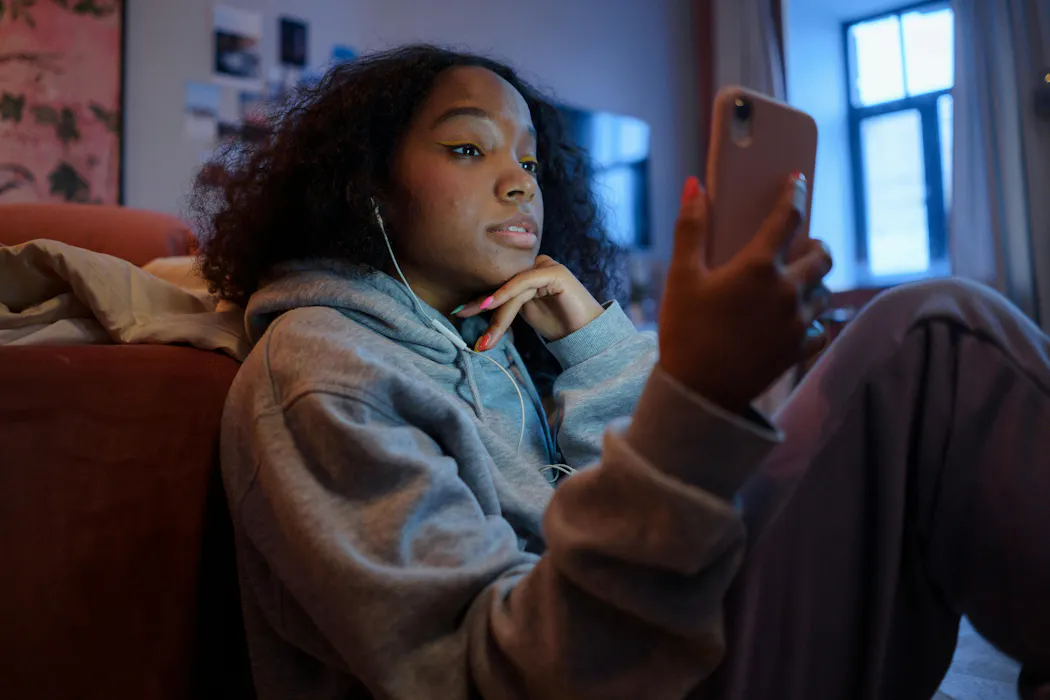
Adolescencia, paciencia y rendimiento académico

Source: The Conversation – (in Spanish) – By Pablo Brañas-Garza, Catedrático de Fundamentos del Análisis Económico, Universidad Loyola Andalucía

AlexandrMusuc/Shutterstock

La capacidad de posponer la gratificación, lo que comúnmente llamamos paciencia, está presente desde la infancia y mejora con la edad, aunque experimenta cambios relevantes durante la adolescencia. Gracias a la maduración y sofisticación de los mecanismos de toma de decisiones y planificación, los adolescentes comienzan a ser capaces de soportar esperas más largas, es decir, posponer la gratificación inmediata a cambio de un beneficio mayor en el futuro.

Tener más o menos paciencia en la adolescencia tiene su importancia: tanto los resultados escolares como los hábitos más saludables –menor consumo de alcohol y tabaco, menor IMC y mejor comportamiento en el colegio– están relacionados con la orientación al futuro. Es decir, con la capacidad de realizar acciones cuyos beneficios no son inmediatos.

Así como las personas pacientes esperan a que la fruta esté madura –frente a quienes la recogen antes de tiempo–, los estudiantes más pacientes tienden a obtener mejores resultados, hacen más deporte o ahorran (y sacrifican consumo presente) para tener resultados que llegarán más tarde.

La paciencia es un rasgo de la personalidad que puede evaluarse científicamente. La evidencia nos dice que hay personas con una paciencia innata, o que al menos traen parte de esta característica “de serie”; pero también que evoluciona con la edad y que puede modificarse mediante intervenciones en etapas tempranas.

A través del consorcio de investigación TeensLab hemos recabado datos de más de 5 000 adolescentes en 25 centros escolares españoles.
Hemos analizado si la paciencia cambia a lo largo de la adolescencia y cómo influye en los resultados académicos.


Leer más:
Razones científicas para retrasar dos horas la entrada al instituto


¿De qué depende la paciencia?

¿Qué explica entonces que algunos adolescentes sean más pacientes que otros? Nuestros resultados apuntan claramente en dos direcciones.

La primera tiene que ver con el control cognitivo –que no es lo mismo que el razonamiento abstracto o la inteligencia fluida– y que nos muestra cómo la gente se enfrenta a problemas de decisión. Los estudiantes con mayor capacidad de reflexión y razonamiento tienden a ser más pacientes. Esto sugiere que la paciencia no es únicamente una cuestión de carácter, sino que está estrechamente vinculada a cómo procesamos la información y tomamos decisiones.

La segunda tiene que ver con el entorno social. Observamos que los estudiantes pacientes tienden a rodearse de otros estudiantes también pacientes. Es decir, la paciencia “se agrupa” en redes de amistad. Aunque no podemos determinar si los adolescentes se influyen entre sí o, simplemente, si eligen amigos similares, lo que es evidente es que el entorno cercano importa mucho.

Curiosamente, nuestros datos dicen que los estudiantes más pacientes están en las clases más grandes y no en las más pequeñas.

¿Hay diferencias entre chicos y chicas?

No hemos encontrado diferencias relevantes en los niveles de paciencia entre ambos grupos, especialmente en las primeras etapas de la adolescencia.

A medida que los estudiantes crecen, sí aparecen algunos matices: las chicas tienden a tomar decisiones algo más “sofisticadas”, combinando opciones presentes y futuras en lugar de elegir siempre lo inmediato o siempre lo futuro. Pero esto no implica que sean más pacientes que los chicos, sino que su forma de decidir se vuelve más compleja.

¿La paciencia influye en las notas?

La respuesta es sí, aunque con matices. Encontramos que los estudiantes más pacientes tienden a obtener mejores resultados académicos. La relación no es enorme, pero sí consistente: aquellos que valoran más el futuro frente al presente (son más pacientes) parecen estar más dispuestos a invertir esfuerzo ahora para obtener a los resultados a medio plazo.

Esto encaja bien con la intuición: estudiar es, en gran medida, una inversión. Requiere esfuerzo hoy para obtener beneficios mañana. Los estudiantes más pacientes están mejor preparados para hacer ese tipo de sacrificios.

Ahora bien, nuestros resultados también sugieren que esta relación está en parte mediada por el control cognitivo. Es decir, la misma capacidad que facilita una mejor toma de decisiones –una mejor planificación temporal del esfuerzo debida a una menor impaciencia– también puede estar detrás de un mejor rendimiento académico, es decir, mejor asimilación de conceptos debida a mayor reflexión.

Implicaciones para la educación

¿Qué podemos aprender de todo esto? La primera lección es que la paciencia no es un rasgo fijo e inmutable: está relacionada con habilidades cognitivas que pueden desarrollarse y con entornos sociales que pueden moldearse.

Esto abre la puerta a pensar que la educación puede servir no sólo como una forma de transmitir conocimientos, sino también como una herramienta para formar preferencias. Educar a los estudiantes para posponer gratificaciones, para controlar la necesidad de resultados inmediatos, puede generarles mejores resultados a lo largo de la vida; por ejemplo, menor consumo de tabaco, alcohol y otras drogas. Hay evidencia de que intervenciones sobre atención, la autorregulación y la capacidad de reflexión mejoran la paciencia a edades muy tempranas.


Leer más:
Lectura profunda en tiempos de ‘scroll’: cómo volver a leer con intención


La segunda lección es que los compañeros importan. Las redes de amistad dentro del aula están asociadas a patrones similares de comportamiento, lo que abre la puerta a que ciertas intervenciones educativas puedan generar efectos indirectos, aunque identificar estos mecanismos de forma causal sigue siendo un reto. Por ejemplo, programas de autocontrol y cambios en la composición de los grupos o actuaciones sobre alumnos influyentes.

Mediciones con impacto académico

Por último, nuestros resultados indican que medir la paciencia de los estudiantes podría aportar información valiosa. Dado que existen herramientas sencillas para hacerlo, incorporar este tipo de mediciones podría ayudar a entender mejor las diferencias en el rendimiento académico y a diseñar políticas educativas más eficaces.

En definitiva, si queremos mejorar los resultados educativos, quizá deberíamos ir más allá de los conocimientos y enseñar también a tomar decisiones. Educar la toma de decisiones, especialmente cómo equilibrar beneficios presentes y futuros, no sólo influye en el rendimiento académico, sino que es una herramienta esencial para toda la vida.

The Conversation

Pablo Brañas-Garza recibe fondos de Ministerio de Economía y Competitividad (PID2021-126892NB-100), Excelencia-Junta (PY-18-FR-0007), Agencia Andaluza de Cooperación Internacional para el Desarrollo (AACID-0I008/2020) and the European Union’s Horizon Europe Research and Innovation Programme under Grant Agreement number 101095175 (SUSTAINWELL project).

ref. Adolescencia, paciencia y rendimiento académico – https://theconversation.com/adolescencia-paciencia-y-rendimiento-academico-279027

Dormir vigilados: cuando la tecnología que mide el sueño acaba empeorándolo

Source: The Conversation – (in Spanish) – By Alfredo Rodríguez Muñoz, Catedrático de Psicología Social y de las Organizaciones, Universidad Complutense de Madrid

Antonov Maxim/Shutterstock

Durante siglos, dormir fue un acto privado y bastaba con despertar descansado. Hoy, en cambio, la noche se ha llenado de sensores. Pulseras, anillos y relojes inteligentes registran nuestros movimientos, nuestro pulso y hasta nuestra respiración. El sueño ha pasado de ser una experiencia a convertirse en un dato: lo convertimos en gráficas, lo comparamos y lo evaluamos. Y, cuanto más lo medimos, más parece escaparse.

La popularización de dispositivos como Fitbit, Apple Watch y Oura ha llevado esta transformación a la vida cotidiana. Cada mañana millones de personas consultan una aplicación que les asigna una puntuación. Así, en teoría, pueden saber cuántas horas han dormido, cuánto tiempo han pasado en sueño profundo o en fase REM y cuántas veces se han despertado.

El mensaje implícito es claro: si medimos el sueño podremos optimizarlo.

Esa aparente precisión es, en gran medida, una ilusión. Estos dispositivos no leen el cerebro: infieren el sueño a partir de señales indirectas como el movimiento o el pulso. En noches tranquilas pueden estimar razonablemente cuánto hemos dormido, pero su precisión cae cuando intentan identificar las fases del sueño. En especial les cuesta distinguir entre estados como el sueño profundo y el REM, que solo pueden medirse mediante pruebas que registran directamente la actividad cerebral, como la polisomnografía.

Además, los márgenes de error no son menores. Estudios científicos muestran desviaciones que pueden superar la hora en la estimación del tiempo total de sueño. Al analizar las distintas fases las variaciones son aún mayores.

Dormir no es un examen

Sin embargo, cada vez más personas toman decisiones basándose en estos datos. Ajustan horarios, modifican rutinas y se preocupan por indicadores cuya fiabilidad es limitada. El problema no es solo técnico, sino también psicológico. Cuando el dispositivo se convierte en referencia, la experiencia subjetiva pierde peso.

Aquí entra en juego un fenómeno cada vez más frecuente: la “ortosomnia”, el insomnio nacido del intento obsesivo de dormir bien. Se trata de personas que se acuestan intentando hacerlo bien y que, al despertar, revisan compulsivamente las métricas en busca de confirmación. La ironía es evidente: el sueño no se lleva bien con el control. Dormir con un dispositivo que evalúa tu noche es, en cierto modo, como hacerlo con un supervisor en la mesilla.

Los datos pueden convertirse en una profecía autocumplida. Creer que hemos dormido bien puede mejorar nuestra percepción de energía. Creer que pasamos una mala noche puede hacernos sentir peor, incluso cuando el descanso ha sido suficiente. Es el efecto placebo y su reverso, el nocebo. La expectativa acaba moldeando la experiencia.

El auge de esta tecnología refleja una tendencia más amplia: la cuantificación de la vida cotidiana. En un mundo obsesionado con el rendimiento, el descanso ha pasado de ser una necesidad biológica a convertirse en una variable que optimizar. Pero el sueño no funciona como un indicador de productividad y no mejora cuanto más lo vigilamos.

Dormir exige condiciones relativamente simples como regularidad, tiempo suficiente y un entorno adecuado, pero también algo menos tangible. Nos referimos a la capacidad de soltar el control. Es precisamente eso lo que la monitorización constante dificulta. Convertir el descanso en un objeto de evaluación introduce atención, expectativa y juicio en un proceso que, por definición, requiere lo contrario.

Sobran pantallas y falta confianza

Por todo esto, el problema no es solo que los dispositivos se equivoquen (que lo hacen, incluso los más sofisticados), sino que transforman la relación que mantenemos con nuestro propio descanso. Antes uno se despertaba y sabía cómo estaba. Hoy cada vez más personas miran primero la pantalla y, a partir de ahí, deciden cómo se sienten.

Cuando el dato contradice al cuerpo casi siempre gana el dato. Utilizada con criterio, la tecnología puede ser útil para identificar patrones o mejorar hábitos generales. Pero sus datos no deben interpretarse como medidas precisas ni sustituir la percepción subjetiva o la evaluación clínica. Ante todo, conviene evitar una dependencia excesiva de estas métricas.

En ese sentido, quizá la recomendación más sensata en la era de los dispositivos no sea medir más el sueño, sino recuperar algo que hemos ido perdiendo. Es decir, la confianza en nuestra propia capacidad de dormir.

Porque el mayor riesgo no es dormir mal una noche, sino empezar a dudar de que sabemos hacerlo. Como resultado, podríamos acabar durmiendo para un dispositivo en lugar de para nosotros mismos.

(Una versión de este artículo fue publicada originalmente en la revista Telos de Fundación Telefónica).

The Conversation

Alfredo Rodríguez Muñoz no recibe salario, ni ejerce labores de consultoría, ni posee acciones, ni recibe financiación de ninguna compañía u organización que pueda obtener beneficio de este artículo, y ha declarado carecer de vínculos relevantes más allá del cargo académico citado.

ref. Dormir vigilados: cuando la tecnología que mide el sueño acaba empeorándolo – https://theconversation.com/dormir-vigilados-cuando-la-tecnologia-que-mide-el-sueno-acaba-empeorandolo-278637

The US-Israel ceasefire with Iran presses pause on a costly war, but can peace last?

Source: The Conversation – Global Perspectives – By Amin Saikal, Emeritus Professor of Middle Eastern Studies, Australian National University; The University of Western Australia; Victoria University

President Donald Trump’s acceptance of a Pakistani proposal for a two-week ceasefire in the war with Iran brings a sigh of relief to the international community.

Just hours before, many had been alarmed by Trump’s threats to bomb Iran back to “the stone age” and destroy its “civilisation”.

The ceasefire provides a breathing space for hammering out a “definitive agreement concerning long-term peace with Iran, and peace in the Middle East”, according to Trump.

However, the road to a final settlement will be complex and bumpy, though not insurmountable.

Underestimating the enemy

After six weeks of escalating war and rhetoric, starting with joint US-Israel attacks on Iran and the latter’s robust response, the three combatants have not only inflicted serious blows on each other. The region and the world have also suffered from a massive oil, liquefied gas and inflationary crisis as Tehran closed the Strait of Hormuz.

This was not something Trump had expected. He initially anticipated the combined US and Israeli military power would rapidly prevail. This would force Tehran, which had suppressed widespread public protests early in the year, to capitulate and thus open the way for favourable regime change.

But the Iranian government proved to be more resilient, entrenched and resourceful than anticipated. The government was also strategic in fighting back by hitting US assets across the Persian Gulf and Israel, as well as closing the strait.

Meanwhile, Trump could not solicit active support from US allies for his joint war endeavours with Israeli Prime Minister Benjamin Netanyahu. Netanyahu is under indictment by the International Criminal Court for war crimes in Gaza.

The allies had not been consulted. They didn’t consider it to be in their individual national interests to participate in a war contrary to international law and the United Nations Charter.

Costing billions

Further, the United States’ global adversaries, Russia and China – both having strategic cooperation agreements with Iran – vehemently opposed the war. They joined scores of other countries around the world in calling for de-escalation and measures to avoid more economic repercussions.

The conflict widened. Israel unleashed a campaign to occupy southern Lebanon in response to attacks from Iran-aligned Lebanese paramilitary group Hezbollah.

The costs of the war then soared for all sides. For the US alone, the price tag amounted to at least US$1billion (A$1.4 billion) a day. This added substantially to the federal debt of close to $40 trillion (A$56.6 trillion).

The situation evolved into a race between missiles and interceptors; it would just be a matter of who ran out first.

It was recently reported that Israel was getting low in interceptors and the Israel Defence Forces (IDF) faced a shortage of manpower.

Unpopular in the US

On the other hand, despite the US and Israeli decapitation of its leadership, air supremacy and bombardment of thousands of military and non-military targets, the Islamic Revolutionary Guard Corps (IRGC) maintained a sustained retaliatory capability. It managed to fire dozens of advanced missiles and drones on a daily basis against targets in the Gulf and Israel.

More importantly, the war proved increasingly unpopular in the United States. As the public felt the effects of it on the rising cost of living and at the petrol stations, some 61% of citizens opposed the war. Trump’s ratings plummeted in the opinion polls.

In view of these variables, Trump could not possibly stand by his promise of escalating Operation Epic Fury to the level of erasing such a sizeable country as Iran. Iranian cultural and patriotic features, as well as the devotion of the country’s many citizens to Shia Islam, mitigated against outside aggression, as in previous occasions in its history.

Long road ahead

This is not to claim that negotiating and concluding a comprehensive agreement for an enduring peace between the US and Iran will be easy.

But a crucial section of Trump’s acceptance of the ceasefire, which gives us an insight into his thinking, is as follows:

we received a 10 point proposal from Iran (in response to the US 15-point proposal), and believe it is a workable basis on which to negotiate. Almost all of the various points of past contention have been agreed to between the United States and Iran, but a two week period will allow the Agreement to be finalized and consummated.

The ten points include a secession of hostilities on all fronts, including Lebanon, though Israel has since claimed Lebanon is not included in the ceasefire.

Some of the other key elements are:

  • the US must fundamentally commit to guaranteeing non-aggression

  • the continuation of Iran’s control over the Strait of Hormuz

  • removal of primary and secondary sanctions on Iran

  • and acceptance of Iran’s right that it can enrich uranium for its nuclear program (for peaceful purposes).

It is now incumbent on Trump to pull into line Netanyahu, who has toiled for a long time not only to destroy the Iranian government, but also to reduce the Iranian state as a regional actor.

If this happens and all the parties negotiate in good faith, there is room for optimism. We could potentially see the dawn of a post-war regional order based more on a localised collective security arrangement than on a regional supremacy of one actor over another.

The Conversation

Amin Saikal does not work for, consult, own shares in or receive funding from any company or organisation that would benefit from this article, and has disclosed no relevant affiliations beyond their academic appointment.

ref. The US-Israel ceasefire with Iran presses pause on a costly war, but can peace last? – https://theconversation.com/the-us-israel-ceasefire-with-iran-presses-pause-on-a-costly-war-but-can-peace-last-280147

Donald Trump’s US ratings fall to a record low amid Iran war

Source: The Conversation – Global Perspectives – By Adrian Beaumont, Election Analyst (Psephologist) at The Conversation; and Honorary Associate, School of Mathematics and Statistics, The University of Melbourne

United States President Donald Trump’s net approval has fallen to a record low on the Iran war, while Democrats had a 25-point swing in their favour in a federal special election. On current polling, Democrats are likely to win the US House but not the Senate at midterm elections this November.

In analyst Nate Silver’s aggregate of US national polls, Trump’s net approval has dropped 4.1 points since March 5 to -16.9, with 56.5% disapproving and 39.5% approving.

Trump’s net approval is at a record low, below his previous lows of -15.0 in November 2025 and February. It’s also below what any past president since Harry Truman had at this point in their term, with Trump during his first term the closest at -12.8.

On four issues tracked by Silver, Trump’s net approval is -10.7 on immigration, -21.8 on the economy, -24.2 on trade and -33.6 on inflation. The Iran war has caused a slump for Trump recently on the economy, trade and inflation but not immigration.

Silver also has an aggregate of US support for the Iran war. Net support had fallen to a low of -18.1 on April 4, but has recovered to -15.1 now, with 53.8% opposed to the Iran war while 38.7% support it.

The polls will not have caught up to the ceasefire announcement between the US and Iran on Wednesday AEST. But the benchmark US S&P 500 stock market index was up 2.5% in last night’s trading session. Since a low on March 30, the S&P has surged 6.9% and is now only 2.3% below its peak in the week before the Iran war began.

Trump is likely to recover some ground on the stock market surge, particularly if fuel prices fall back. I believe as long as nothing goes badly wrong with the US stock market or the overall US economy, Trump will not become very unpopular.

Democrats have big swing in Georgia

A special election runoff occurred Wednesday AEST in Georgia’s 14th federal seat, and I covered this for The Poll Bludger.

At the March 10 jungle primary for this seat, a Republican and a Democrat had qualified. At the 2024 presidential election, Trump had defeated Democrat Kamala Harris by 37 points in Georgia 14.

While the Republican won by 55.9–44.1, this 12-point Republican margin was a 25-point drop from Trump’s 2024 margin. I also covered a Wisconsin Supreme Court election which the left-wing judge won by 20 points. Wisconsin voted for Trump by 0.9 points in 2024.

This Poll Bludger post covered the results of recent European elections and the upcoming Hungarian election on Sunday and three Canadian byelections on Monday.

Midterm elections in November

At November midterm elections, all of the House of Representatives and one-third of the Senate will be up for election. In Silver’s aggregate of the generic ballot polls, Democrats currently lead Republicans by 47.9–42.4, a 5.5-point margin. There has been very little change since January.

If Democrats win the House popular vote by this margin in November, they are very likely to gain control of the House. At 2024 elections, Republicans won the House by 220–215 and the Senate by 53–47.

There will be 35 seats up for election in the Senate in November (33 regular and two special elections). Republicans hold 22 and Democrats 13, but only two Republican seats are thought vulnerable: Maine and North Carolina.

At the 2024 presidential election, Harris won Maine by 6.9 points and Trump only won North Carolina by 2.2 points. Trump won all other states Republicans are defending by at least a double-digit margin. Even if Democrats win nationally by 5.5 points, they would gain only two seats on a uniform swing and Republicans would hold the Senate by 51–49.

It’s become increasingly difficult for Democrats to win the Senate, as the two senators per state rule skews Senate elections towards low-population, rural states.

US unemployment rate is low due to people leaving workforce

The March US unemployment rate was 4.3%, down 0.1% from February. Trump’s first full month in office was February 2025, when the unemployment rate was 4.2%. By this measure, there has hardly been any change in the US jobs situation.

However, the employment population ratio (the percentage of eligible Americans that are employed) was down 0.1% from February to 59.2% in March. This measure has dropped 0.5% since December and 0.7% since February 2025 (when it was 59.9%). The unemployment rate only remains low because of people leaving the workforce.

In Australia, the February unemployment rate was 4.3%, the same as in the US. But Australia’s employment population ratio is much higher than the US at 64.0%.

The Conversation

Adrian Beaumont does not work for, consult, own shares in or receive funding from any company or organisation that would benefit from this article, and has disclosed no relevant affiliations beyond their academic appointment.

ref. Donald Trump’s US ratings fall to a record low amid Iran war – https://theconversation.com/donald-trumps-us-ratings-fall-to-a-record-low-amid-iran-war-279965

Fake QR codes make for easy scams – be careful what you scan out there

Source: The Conversation – Global Perspectives – By Meena Jha, Head Technology and Pedagogy Cluster CML-NET, CQUniversity Australia

Proxyclick/Unsplash

It’s a simple thing we encounter many times every single week – often while in a hurry. You pull up at a parking spot, scan a QR code and pay within seconds. Or you sit down at a cafe, scan a code to view the menu and order your meal.

At the train station, you scan the code on the poster for timetable updates. QR codes are increasingly used in public transport systems worldwide for ticketing, payments and accessing real-time information.

Because QR codes are so widespread, scammers naturally find them appealing too. Here’s what you need to know to stay safe.

What are QR codes?

A QR (quick response) code is a type of barcode that stores information and encoded data in a square pattern of black and white pixels. They were first developed in 1994 by Japanese company Denso Wave for labelling automotive parts.

Today QR codes are widely used because they’re quick to create and easy to scan without needing a specialised scanner – a smartphone camera will do. They’re designed to remove friction: you scan, and something happens instantly.

However, a QR code doesn’t show you where it leads until after it’s scanned. Your device can perform a range of functions after scanning a QR code: open up a web page, check you in to a location, or even connect your device to a wireless network without needing to type anything.

That’s what makes it so useful, but also potentially risky. Malicious QR codes can redirect users to fake websites or prompt them to download harmful content. QR codes are so familiar and widespread, we tend to trust them without question. That’s exactly what scammers rely on.

What to look out for

Phishing – where cyber criminals “fish” for sensitive information – is the most common type of cyber crime, typically sent by email or text. When a QR code is involved, that becomes “quishing” – short for QR phishing.

Scammers now include QR codes in emails or text messages instead of clickable links. When scanned, the code directs users to fake login pages or payment sites.
Because there’s no visible link, these messages can seem more trustworthy and can even bypass some email security filters.

Malicious downloads

Some QR codes don’t just take you to a website – they trigger an app or file download, which could contain malware. This can give attackers access to your device, data or accounts. Because the action happens quickly, you may not have time to question whether the download is legitimate.

Fake QR codes in public places

One of the simplest methods to trick people involves placing a sticker with a fake QR code over a legitimate one. For example, scammers have been caught sticking fraudulent QR codes on parking meters. When drivers scan the code, they are taken to a fake payment page and asked to enter their card details. Posters, flyers and other signs in public places may also contain malicious QR codes.

Redirect scams

Even when a QR code looks legitimate, it may redirect you through multiple websites before landing on a fake page. This makes it harder to detect suspicious activity. By the time you see the final page, it may look convincing enough to trust.

How to stay safe

The good news is you don’t need to stop using QR codes. You just need to use them more carefully.

Treat QR codes like unknown links. If you wouldn’t click a random link, don’t scan a random QR code.

Check for signs of tampering. In public places, look closely at the code. Is it a sticker placed over another one? Does anything look out of place?

Look at the web address before proceeding. Many phones now show a preview of the hyperlink retrieved via the QR code before opening it. Don’t just hit “go”, take a moment to check it looks legitimate.

Avoid scanning codes from unsolicited messages. If you receive a QR code via email or text asking you to log in or make a payment, don’t use it. Go directly to the official website instead.

Don’t rush to enter personal details. If a site asks for sensitive information, pause. Double-check you’re on the correct website.

Keep your phone updated. Security updates may sometimes feel like a nuisance, but they do help protect your device against malicious sites and downloads.

QR codes are not dangerous by themselves. They are useful tools that make everyday tasks easier. But they remove a key safety step: the ability to see where you’re going before you get there.

The next time you scan a QR code, take a second to think. In a world where scams are getting smarter, the safest habit is simple – don’t trust the code and verify where it leads.

The Conversation

Meena Jha does not work for, consult, own shares in or receive funding from any company or organisation that would benefit from this article, and has disclosed no relevant affiliations beyond their academic appointment.

ref. Fake QR codes make for easy scams – be careful what you scan out there – https://theconversation.com/fake-qr-codes-make-for-easy-scams-be-careful-what-you-scan-out-there-279333

Cessez-le-feu au Moyen-Orient : l’approvisionnement en pétrole va demeurer instable, forçant des mesures que l’on croyait révolues

Source: The Conversation – in French – By Henri Chevalier, PhD student at School of Environment, Resources and Sustainability, University of Waterloo

Même si un cessez‑le‑feu provisoire a été conclu entre les États‑Unis et l’Iran, la tension sur l’approvisionnement mondial en pétrole reste vive, poussant certains gouvernements à envisager des mesures que l’on croyait révolues : rationnement et contrôle des prix.


Certains pays appliquent déjà de telles mesures. Les Philippines ont déclaré l’état d’urgence national en réponse aux risques pesant sur l’approvisionnement énergétique. Au Soudan du Sud, la capitale Juba commence à rationner l’électricité, tandis que l’île Maurice a instauré des restrictions pour réduire la consommation et limiter le gaspillage.

Ces développements s’inscrivent dans des précédents historiques. Mes recherches, récemment publiées dans la revue Sustainability : Science, Practice and Policy, s’appuient sur le cas du rationnement des vêtements en Grande-Bretagne pendant la Seconde Guerre mondiale pour montrer que lorsque les biens essentiels se font rares, les gouvernements ne peuvent pas compter uniquement sur les prix pour gérer la crise.

Si on laisse le marché décider seul, l’accès aux biens de première nécessité dépend alors de ceux qui peuvent payer le plus, ce qui signifie que les ménages à faibles revenus sont souvent les plus durement touchés.


À lire aussi :
Les armes à énergie : le futur de la défense ?


Un choc d’approvisionnement mondial

Les frappes américaines et israéliennes contre l’Iran ont déclenché un conflit plus large et interrompu le trafic maritime dans le détroit d’Ormuz. En conséquence, l’approvisionnement mondial en pétrole a chuté d’environ huit millions de barils par jour, soit près de 8 % de la demande mondiale.

La perturbation d’une voie transportant environ 20 % de l’approvisionnement mondial en pétrole fait grimper les prix et réduit la disponibilité, créant des conditions comparables à celles rencontrées par la Grande-Bretagne avant le rationnement.

Face à un tel choc pétrolier, les gouvernements du monde entier devraient s’inspirer du système britannique de rationnement des vêtements en mettant en place un rationnement et un contrôle des prix.

Ce fut le cas lors des chocs pétroliers des années 1970 au Canada. Les gouvernements ont maintenu les prix intérieurs du pétrole sous contrôle et ont contribué à couvrir le coût des importations plus coûteuses.

En 1979, le Canada a également conçu un plan national de rationnement de l’essence qui n’a finalement jamais été mis en place. Des timbres imprimés permettaient de limiter la consommation des automobilistes privés, tout en réservant un accès prioritaire aux ambulances, aux transporteurs de marchandises et aux agriculteurs.


À lire aussi :
Lorsque la guerre prend des allures de prophétie : comment les récits apocalyptiques américains façonnent la guerre contre l’Iran


Ce que l’histoire peut nous enseigner

Le Royaume-Uni a été confronté à d’importantes perturbations de l’approvisionnement pendant la Seconde Guerre mondiale, ce qui a conduit au rationnement pour atténuer les effets de la pénurie de matériaux, de l’inflation et de la pression croissante sur l’approvisionnement civil.

Pour y parvenir, le système de rationnement britannique s’appuyait sur trois principaux outils politiques.

Le premier était un système de coupons. Introduits en 1941, ces coupons servaient à réguler l’usage des matériaux plutôt que les prix. Chaque personne recevait un nombre fixe de coupons de vêtements par an : 66 au départ (environ les deux tiers des niveaux d’avant-guerre), puis seulement 36 en 1946.

Chaque type de vêtement nécessitait un nombre défini de coupons en fonction de la quantité de tissu utilisée. Par exemple, une robe en laine pouvait coûter environ 11 coupons, tandis qu’une chemise en coûtait cinq et une paire de bas deux. La réduction de seulement deux coupons par personne a permis d’économiser environ 27 millions de mètres de tissu.

La deuxième mesure était le « Utility Clothing Scheme » (programme de vêtements utilitaires). Lancé en 1942, il proposait des vêtements abordables et durables grâce à des normes strictes et des règles visant à économiser le tissu. Le raccourcissement des chemises pour hommes de cinq centimètres et la suppression des poignets doubles ont permis d’économiser 3,3 millions de mètres carrés de coton. En 1943, ce programme couvrait 80 % de la production britannique de vêtements.

La dernière mesure concernait le contrôle des prix. Le Board of Trade a reçu le pouvoir de fixer les prix et les marges sur toute la chaîne de production et de distribution. Grâce à ce mécanisme, les vêtements « Utility » restaient à un prix stable ou inférieur, alors que ceux hors « Utility » augmentaient, les articles « Utility » coûtant environ la moitié du prix des vêtements ordinaires.

Gérer la pénurie et l’équité

Ces politiques ont eu trois conséquences majeures. Premièrement, elles ont réduit la consommation globale. Sous le régime du rationnement des vêtements, la filature de laine a chuté de 44 % et la production de fil pour l’industrie de la bonneterie de 37 %, tandis que l’approvisionnement civil en textiles et la consommation de vêtements par personne ont chuté de 67 %.

Les achats de vêtements et de chaussures par habitant ont diminué de 34 %. Malgré six années de guerre, les civils avaient accès à moins de quatre ans de réserves de vêtements normaux.

Deuxièmement, ils ont garanti un accès équitable aux produits de première nécessité. Le rationnement à prix contrôlés a permis de s’assurer que les gens disposaient toujours de vêtements décents, réduisant ainsi la pauvreté et prévenant de graves pénuries.

Troisièmement, ils ont renforcé une culture de la réparation et de la réutilisation. S’appuyant sur la culture de la réparation déjà présente dans les années 1930, des campagnes telles que « Make Do and Mend » ont encouragé la réparation, la transformation, la conception modulaire et la réutilisation de matériaux tels que les couvertures, le tissu de black-out, les sacs alimentaires, la soie de parachute, les sabots en bois et même le fil de fourrure de chien.

Une vidéo sur le rationnement des vêtements en Grande-Bretagne, réalisée par l’Imperial War Museum.

Le système de rationnement a non seulement réduit la consommation et aligné la demande sur l’offre, mais il a également empêché que la pénurie ne devienne une aubaine pour les producteurs et une punition pour les ménages à faibles revenus. Il a également réduit le gaspillage et découragé la surconsommation – autant de leçons précieuses dans le contexte actuel de perturbation de l’approvisionnement mondial en pétrole.

Cela dit, le système n’était pas sans inconvénients. Le système de rationnement britannique était également technocratique, bureaucratique et peu démocratique.


Déjà des milliers d’abonnés à l’infolettre de La Conversation. Et vous ? Abonnez-vous gratuitement à notre infolettre pour mieux comprendre les grands enjeux contemporains.


Ce que les gouvernements peuvent faire aujourd’hui

Aujourd’hui, la véritable question n’est pas de savoir si les gouvernements interviennent, mais s’ils le font de manière équitable et efficace.

Le 20 mars, pour faire face à la pénurie actuelle d’approvisionnement en pétrole, l’Agence internationale de l’énergie a proposé une série de mesures de réduction de la demande, notamment le développement du télétravail, l’abaissement des limitations de vitesse, le renforcement de l’utilisation des transports en commun et le recours accru au covoiturage.

Bien qu’utiles, ces mesures ne constituent que des solutions à court terme. Si les pénuries s’aggravent, les gouvernements – y compris celui du Canada – pourraient devoir envisager les réponses structurelles suivantes :

1. Instaurer des systèmes équitables de répartition du carburant si les pénuries s’aggravent.

Certains gouvernements s’engagent déjà dans cette voie. Le Sri Lanka a mis en place un système d’autorisation de carburant basé sur des codes QR pour réguler la distribution d’essence et de diesel, avec des quotas hebdomadaires.

2. Plafonner les prix et les marges excessifs sur les produits de première nécessité.

Au Canada, sur les marchés concentrés du carburant et de l’alimentation, les marges des raffineurs et des entreprises agroalimentaires profitent souvent aux entreprises plutôt qu’aux consommateurs. Les bénéfices du raffinage ont bondi, les prix à la pompe augmentant plus vite que ceux du brut, tandis que transformateurs, distributeurs et détaillants gagnaient 83 cents pour chaque dollar dépensé en alimentation au Canada.

Le Canada pourrait s’inspirer de l’Autriche, de la Grèce et de l’Espagne, qui ont récemment plafonné respectivement les marges des détaillants de carburant, les marges des épiceries et les loyers.

3. Profiter de la crise pour mettre en place une transformation économique structurelle.

Les crises récurrentes liées aux ressources, à la géopolitique et à l’écologie montrent qu’il est nécessaire de réduire la dépendance aux chaînes d’approvisionnement mondiales fragiles, d’accélérer la décarbonisation et de repenser l’économie autour des ressources rares. Cela pourrait passer, par exemple, par une réduction de la publicité et par des plafonds de consommation fixés démocratiquement.

Cela permettrait de prioriser les besoins essentiels, de limiter la production et la consommation superflues, et de favoriser des biens durables et réparables, respectueux de l’environnement.


Pour ceux qui souhaitent approfondir cette recherche, une version vulgarisée et interactive de mon étude est disponible en ligne.

La Conversation Canada

Cette recherche a été financée par le Conseil de recherches en sciences humaines du Canada, Coboom et la Fondation HEC Montréal. 

ref. Cessez-le-feu au Moyen-Orient : l’approvisionnement en pétrole va demeurer instable, forçant des mesures que l’on croyait révolues – https://theconversation.com/cessez-le-feu-au-moyen-orient-lapprovisionnement-en-petrole-va-demeurer-instable-forcant-des-mesures-que-lon-croyait-revolues-280228

Presidential words can turn the unthinkable into the thinkable − for better or for worse

Source: The Conversation – USA – By Stephanie A. (Sam) Martin, Frank and Bethine Church Endowed Chair of Public Affairs, Boise State University

President Donald Trump’s rhetoric has grown increasingly violent. wildpixel/iStock via Getty Images Plus

Among the most disorienting things about President Donald Trump’s public language is how easily it can feel numbing and shocking in the same moment. He says something outrageous, the country recoils, and then the recoil itself begins to feel familiar.

As a scholar who studies presidential rhetoric, I know that over time that rhythm does its own kind of damage. It teaches the public to absorb the breach. What once might have sounded like a genuine political emergency or a violation of constitutional decorum begins to register as just another day in American political life.

But the past few days merit notice. The president’s demagoguery has taken a darker turn.

Trump’s rhetoric about Iran has become more than inflammatory. Beginning with posts to Truth Social in early April, he has used profanity-laden language – “Open the Fuckin’ Strait, you crazy bastards, or you’ll be living in Hell” – to threaten attacks on the country’s infrastructure. He urged Iranians to rise up against their government. He warned that “a whole civilization will die tonight” if Iran does not comply with U.S. demands.

The Associated Press treated those remarks as a significant escalation in the context of a live conflict, not merely as familiar Trumpian excess: “As the conflict has entered its second month, Trump has escalated his warnings to bomb Iran’s infrastructure.”

The International Committee of the Red Cross also issued the unusual reminder that the rules of war must be respected “in words and action,” suggesting that the rhetoric itself had become part of the danger.

But were Trump’s recent remarks really different from his many earlier outbursts?

I think they were. For years, Trump’s rhetoric has relied on insult, ridicule, threat and contempt. He has degraded opponents and helped coarsen the terms of public life.

What seems different about his words during the first week of April 2026 is the scale of violence his language primed people to imagine. His remarks about Iran moved beyond personal attacks or chest-thumping nationalism to take on a tone of collective punishment and civilizational destruction. The style was familiar. The horizon of harm was not.

A social media post from President Donald Trump threatening destruction of Iran's civilization.
President Donald Trump’s social media post of April 7, 2026, threatening the destruction of ‘a whole civilization,’ meaning Iran.
Truth Social

Politics of fear

Presidential rhetoric is more about permission than persuasion. Presidents do not only argue. They signal.

Through those signals, they tell the public what kind of situation this is, what kind of danger is at hand, and what kinds of response are reasonable. In that sense, the president can function like a human starting gun. His words cue journalists, legislators, party allies and ordinary supporters about how to classify events before anyone has fully processed them.

Political theorist Corey Robin’s work on the politics of fear is a useful lens for understanding what is happening with Trump’s violent rhetoric.

Fear, in Robin’s view, is not simply a feeling that arises naturally in response to danger. It is politically manufactured. Power teaches people what to fear, how to name danger, and where to direct their apprehension. Presidential rhetoric is an essential tool for performing that work.

Thus, a president does not only describe a threat. He also gives it shape and scale. He tells the public how large it is, how close it is, and what kinds of response should feel reasonable in its presence.

A good example of a president doing this happened after the Sept. 11, 2001, terrorist attacks when, while visiting ground zero in New York City, George W. Bush said, “I can hear you. The rest of the world hears you. And the people who knocked these buildings down will hear all of us soon.” With that sentence, Bush acknowledged the gravity of what had happened, but also promised to fight back and bring justice to the terrorists.

When it comes to statements like those Trump has recently made about Iran, the worry is not that the president has said something extreme. Instead, the larger concern lies in what repeatedly using extreme language does to the atmosphere in which judgment takes place.

Political hyperbole lowers the threshold of what the public can imagine as legitimate, as allowable. When presidents make threats like the ones Trump issued, mass suffering becomes more imaginable. The president’s words and social media posts test whether the public will continue to hear such language as over the line, or whether it will be absorbed as one more hard-edged negotiating tactic.

At ground zero after the 9/11 attacks, President George W. Bush acknowledged the gravity of what had happened, but he also promised to fight back.

Shaping reality

Presidential rhetoric matters for reasons that go beyond persuasion or style.

It helps arrange reality. It tells the public what is serious, who is dangerous, whose suffering counts, and what forms of violence can be described as necessary. President Barack Obama did this in 2012, when he was speaking at a vigil to honor the shooting victims at Sandy Hook Elementary School.

“We bear a responsibility for every child because we’re counting on everybody else to help look after ours,” he said. “That we’re all parents; that they’re all our children.” With these words, Obama called everyone to feel, up close, the horrific loss of 20 children shot dead, and to work for a solution to gun violence.

Trump has benefited from a public worn down by repetition. Every new breach arrives trailing the memory of earlier ones.

People begin to doubt their own reactions. Surely this is appalling, they may think, but also, somehow, this is what he always does. That dual feeling is part of the harm. A damaged baseline makes serious escalation harder to recognize and judge.

The disorientation and disgust that so many people experienced in response to Trump’s thundering, violent proclamations is important. Even after years of erosion of what was deemed normal, some lines remain visible.

Paying attention now is not about pretending Trump has suddenly become someone new. It is about recognizing more clearly what his presidency has been teaching the public to hear as thinkable. The most serious harm may lie not only in what follows such rhetoric, but in the world it helps prepare people to accept.

The Conversation

Stephanie A. (Sam) Martin does not work for, consult, own shares in or receive funding from any company or organization that would benefit from this article, and has disclosed no relevant affiliations beyond their academic appointment.

ref. Presidential words can turn the unthinkable into the thinkable − for better or for worse – https://theconversation.com/presidential-words-can-turn-the-unthinkable-into-the-thinkable-for-better-or-for-worse-280126

New research shows how forests can prevent floods of all sizes

Source: The Conversation – Canada – By Samadhee Kaluarachchi, PhD Student in Forest Hydrology, University of British Columbia

Flooding on British Columbia’s Highway 11 in November 2021. (B.C. Ministry of Transportation and Transit/flickr), CC BY-NC-ND

As large floods occur more frequently worldwide, many wonder what led to such devastating events. Greenhouse gas emissions from human activities, improper land management and forest removal increase flood frequencies and severity.

Increasingly destructive floods also re-ignite debate on how we can make communities more resilient. Should we rely solely on traditional infrastructure like dikes and dams? In many regions, traditional infrastructure is aging and becoming increasingly insufficient, especially due to climate change.

As a result, some governments are adopting solutions that incorporate or mimic nature. However, while many jurisdictions have expressed interest in nature-based solutions, most have yet to implement them on appreciable scales. Funding is limited and little is known about the effectiveness of nature-based approaches.

The idea that forests help reduce flood risk might seem a given to most people, but scientists who study this (forest hydrologists) remain divided.

Scientific and governmental reports have found that forests prevent small and moderate floods but have little impact on large floods.

Our recent paper challenges this conclusion. It comes from studies that don’t correctly reveal how changing forest cover causes changes in flood frequencies and sizes, leading them to underestimate what forests can do. Our methods that can causally link changes in forest cover to floods suggest that forests can mitigate floods of all sizes.

Flood risk

Floods occur when factors like rainfall, landscape wetness, snowpack and snowmelt combine. These factors vary randomly through time and over the landscape. Today, flood risk is escalating, and the stakes are high in many regions.

A flood event of a certain size and frequency can be generated by an infinite number of combinations of the same factors. Understanding the causes of rising risk means considering all possible flood-generating combinations.

Large floods happen naturally, but adding or removing forests can change their size and frequency. It’s important to consider how changing forest cover alters both factors. The dominant approach doesn’t do this; it only looks at how flood sizes change.

Forest hydrologists, engineers, policymakers, conservationists and industry leaders have long debated the extent to which we should rely on forests to mitigate floods. These debates often reflected competing interests, which in turn influenced policy.

The dominant method underestimates just how strongly even large floods react, giving the impression that degrading forests won’t influence large floods. In reality, floods could be happening much more frequently if not for forests.

Relying on that method can put communities in even more danger when losses of lives and livelihoods, economic damages and lawsuits are already piling up from improper land management and climate change.

It also makes us undervalue nature and miss out on novel opportunities to incorporate nature’s ability to mitigate floods. Our flood management therefore must be guided by strong science.

a road damaged by flooding
Flooding in the Peace Region in British Columbia on June 16, 2016.
(B.C. Ministry of Transportation and Transit/flickr), CC BY-NC-ND

Healthy forests are integral to flood management

Our study examined the core research questions and methods of both the dominant approach and a less dominant approach to determine which one reveals how changes in forest cover cause changes in flood risk. We stepped back to look at how flood risk is assessed more widely beyond forest influences, and how related disciplines like climate science answer similar questions.

Our study challenges the validity of the dominant non-causal method. Instead, our synthesis advocates for the less dominant causal method, which is in fact standard outside the field of forest hydrology.

The less dominant approach considers how the frequency and size of floods change when we add or remove forests. Accounting for all possible flood-generating combinations can reveal how changes in forest cover cause changes in large floods.

Although less dominant in the field, these studies exist, suggesting that floods of all sizes can be sensitive to changes in forest cover.

Forests return moisture back into the atmosphere, promote infiltration and, in snow environments, promote smaller snowpacks that melt slower. Consequently, forests can reduce the probability of even large floods, making them smaller and much rarer.

When we degrade forests, large floods can react strongly. Their frequency, in particular, can increase dramatically with larger shifts possible for larger floods.

These probability-based approaches are standard throughout science, including in flood-risk analysis and to understand how climate change influences weather extremes.

It’s time for forest hydrology to follow suit. We can no longer afford to justify non-causal work that greatly underestimates risk.

Incorporating strong science means recognizing that forests can reduce the risks of even large floods, making them much less common.

In regions where causal studies are limited, reports should acknowledge this difference among causal and non-causal studies elsewhere and encourage rigorous science.

Planning and management must consider both climatic and landscape drivers. Degraded landscapes, even in uplands thousands of kilometres away, can cause floods downstream. Governments must manage the land carefully, collaborating across jurisdictions to ease downstream risk.

There is concern that nature-based approaches can’t mitigate large floods, especially in forest-based initiatives. Our research, however, indicates that forests and other nature-based initiatives can address flooding and complement traditional infrastructure while providing a range of social and ecological benefits.

By adopting and promoting causal science, we can overcome key barriers for implementation and build a strong case for wider adoption of forests as an integral part of nature-based flood management.

The Conversation

Samadhee Kaluarachchi received funding from the Natural Sciences and Engineering Research Council of Canada, the Faculty of Forestry at the University of British Columbia, the Gordon and Nora Bailey Fellowship in Sustainable Forestry, and the Mary and David Macaree Fellowship.

Younes Alila receives funding from Mitacs and the National Science and Engineering Council (NSERC) of Canada.

ref. New research shows how forests can prevent floods of all sizes – https://theconversation.com/new-research-shows-how-forests-can-prevent-floods-of-all-sizes-277967

Just how bad are generative AI chatbots for our mental health?

Source: The Conversation – Canada – By Alexandre Hudon, Medical psychiatrist, clinician-researcher and clinical assistant professor in the department of psychiatry and addictology, Université de Montréal

Generative AI chatbots are now used by more than 987 million people globally, including around 64 per cent of American teens, according to recent estimates. Increasingly, people are using these chatbots for advice, emotional support, therapy and companionship.

What happens when people rely on AI chatbots during moments of psychological vulnerability? We have seen media scrutiny of a few tragic cases involving allegations that AI chatbots were implicated in wrongful death cases. And a jury in Los Angeles recently found Meta and YouTube liable for addictive design features that led to a user’s mental health distress.


Read more:
Neuroscience explains why teens are so vulnerable to Big Tech social media platforms


Does media coverage reflect the true risks of generative AI for our mental health?

Our team recently led a study examining how global media are reporting on the impact of generative AI chatbots on mental health. We analyzed 71 news articles describing 36 cases of mental health crises, including severe outcomes such as suicide, psychiatric hospitalization and psychosis-like experiences.

We found that mass media reports of generative AI–related psychiatric harms are heavily concentrated on severe outcomes, particularly suicide and hospitalization. They frequently attribute these events to AI system behaviour despite limited supporting evidence.

Compassion illusions

Generative AI is not just another digital tool. Unlike search engines or static apps, AI chatbots like ChatGPT, Gemini, Claude, Grok, Perplexity and others produce fluent, personalized conversations that can feel remarkably human.

This creates what researchers call “compassion illusions:” the sense that one is interacting with an entity that understands, empathizes and responds meaningfully.

In mental health contexts, this matters. Especially as a new wave of apps are created with a specific focus on companionship, such as Character.AI, Replika and others.

In this BBC documentary, broadcaster and mathematician Hannah Fry talks to Jacob about his Replika Chatbot ’girlfriend’ named Aiva.

Studies have shown that generative AI can simulate empathy and provide responses to distress, but lacks true clinical judgment, accountability and duty of care.

In some cases, AI chatbots may offer inconsistent or inappropriate responses to high-risk situations such as suicidal ideation.

This gap — between perceived understanding and actual capability — is where risk can emerge.

What the media is reporting

Across the articles we analyzed, the most frequently reported outcome was suicide. This represented more than half of cases with clearly described severity.

Psychiatric hospitalization was the second-most commonly reported outcome. Notably, reports involving minors were more likely to be about fatal outcomes.

But these numbers do not reflect real-world incidence. They reflect what gets reported. In general, media coverage of stressful events tends to amplify severe and emotionally charged cases, as negative and uncertain information captures attention, elicits stronger emotional responses and sustains cycles of heightened vigilance and repeated exposure. This in turn reinforces perceptions of threat and distress.

For AI-related content, media reports often rely on partial evidence (such as chat transcripts) while rarely including medical documentation. In our data set, only one case referenced formal clinical or police records.

This creates a distorted but influential picture: one that shapes public perception, clinical concern and regulatory debate.

Beyond ‘AI caused it’

One of our most important findings relates to how causality is framed. In many of the articles we reviewed, AI systems were described as having “contributed to” or even “caused” psychiatric deterioration.

However, the underlying evidence was often limited. Alternative explanations — such as pre-existing mental illness, substance use or psycho-social stressors — were inconsistently reported.

In psychiatry, causality is rarely simple. Mental health crises typically arise from multiple interacting factors. AI may play a role, but it is likely part of a broader ecosystem that includes individual vulnerability and context.

A more useful way to think about this is through interaction effects: how technology interacts with human cognition and emotion. For example, conversational AI may reinforce certain beliefs, provide excessive validation or blur boundaries between reality and simulation.

The problem of over-reliance

Another recurring pattern in media reports is intensive use. Many of the cases we reviewed described prolonged, emotionally significant interactions with chatbots — framed as companionship or even romantic relationships. This raises an issue: over-reliance.

Because these systems are always available, non-judgmental and responsive, they can become a primary source of support. But unlike a trained clinician or even a concerned friend, they cannot recognize when someone is getting worse, pause or redirect harmful interactions. They cannot take steps to ensure a person connects with appropriate care in moments of crisis.

In clinical terms, this could lead to what might be described as “maladaptive coping substitution:” replacing complex human support systems with a simplified, algorithmic interaction.

Lack of reliable data

Despite growing concern, we are still at an early stage of understanding the impact of generative AI chatbots on user mental health.

There is currently no reliable estimate of how often AI-related harms occur, or whether they are increasing. We lack reliable data on how many people use these tools safely versus those who experience problems. And most evidence comes from case reports or media narratives, not systematic clinical studies.

This is not unusual. In many areas of medicine, early warning signals emerge outside formal research (through case reports, legal cases or public discourse) before being systematically studied.

One example is the thalidomide tragedy, when initial reports of birth defects in infants preceded formal epidemiological confirmation and ultimately led to the development of modern pharmacovigilance systems.

AI and mental health may be following a similar trajectory.

Moving forward responsibly

The challenge is not to panic, but to respond thoughtfully.

We need better evidence. This includes systematic monitoring of adverse events, clearer reporting standards and research that distinguishes correlation from causation. Safeguards — such as crisis detection, escalation protocols and transparency about limitations — must be strengthened and evaluated.


Read more:
Danger was flagged, but not reported: What the Tumbler Ridge tragedy reveals about Canada’s AI governance vacuum


Furthermore, clinicians and the public need guidance. Patients are already using these tools. Ignoring this reality risks widening the gap between clinical practice and lived experience.

Finally, we must recognize that generative AI is not just a technological innovation — it is a psychological one. It changes how people think, feel and relate.

Understanding that shift may be one of the most important mental health challenges of the coming decade.

The Conversation

Alexandre Hudon does not work for, consult, own shares in or receive funding from any company or organisation that would benefit from this article, and has disclosed no relevant affiliations beyond their academic appointment.

ref. Just how bad are generative AI chatbots for our mental health? – https://theconversation.com/just-how-bad-are-generative-ai-chatbots-for-our-mental-health-279736

Artificial intelligence and biology: AI’s potential for launching a novel era for health and medicine

Source: The Conversation – Canada – By James Colter, Postdoctoral Scholar in Artificial Intelligence applied to Regenerative Competence, University of Calgary

It can be estimated theoretically that more unique biological interactions exist than stars in our known universe.

The biological foundations of life are built on an unimaginably vast network of interactions, where molecules, cells, systems and organisms are constantly colliding.

For centuries, scientists and doctors have relied on targeted techniques and isolated observations. Through slow, iterative, shared discovery over generations, we have developed our understanding of biology, applying fractional knowledge to enable life-changing approaches in only a subset of disease states and dysfunction.

Humanity is now entering a new era of scientific discovery, using artificial intelligence to learn and reason about complex biological challenges.

Artificial intelligence

Thoughtful implementations are revealing new information to solve significant problems at the intersection of biology and medicine.

Using AI enables us to organize and perceive the complexity of biological interactions at scales greater than the human brain is innately capable.
These frameworks are backed by growing experimental data made possible by rapidly improving analytical technologies.

One widely reported example of AI in biology is the 2024 Nobel Prize in chemistry for AlphaFold, an AI model that predicts protein structures and interactions from statistical regularities in structural and evolutionary data.

Proteins, responsible for an immense proportion of biological interactions, can now be systematically explored virtually in hours or days. This circumvents conventional methodologies that require weeks, months or even years of effort.

AlphaGenome, another of Google DeepMind’s AI-driven models, now allows researchers to quickly and efficiently predict how gene variants contribute to genetic landscapes that drive disease and dysfunction.

These disruptive AI approaches (and others) are already being applied broadly in cancer, Alzheimer’s disease, pandemic response and beyond.

Correlation versus cause and effect

Importantly, the AI field is presently dominated by modelling approaches that are statistical in nature; that is, these models learn correlations, rather than cause and effect.

This distinction is important. Statistical models are limited by the context within which they can be applied.

This leads us to the major overarching question in the field today: how do we capture the cause and effect of every interaction that exists within this nebulous network that we call biology?

Contemporary solutions to this question are explored through hybrid computational frameworks. These are models that combine what limited structured knowledge we have about biological systems and how they function with multi-modal datasets.

But what do I mean by knowledge? From a physical sciences perspective, established causal mechanisms or fundamental laws in physics, chemistry and biology.

From a medical perspective, established mechanisms of disease progression or aging.

And multi-modal datasets? Data obtained to observe biology and medicine from a range of perspectives. These could be:

  • Images of biology that inform spatial characteristics of healthy or diseased states.

  • Quantitative data that informs expression of metabolites, genes, proteins, epigenetics or other aspects of what makes up biological identity and function.

  • Medical data that informs the broad variables that may (or may not) play a role in disease onset and progression.

These are just a few examples. As you might imagine, this isn’t a simple task.

Training AI models

The Arc Institute is one of several groups tackling this by learning biological representations at the cellular level.

Arc Institute researchers train AI to understand how gene networks interact to make up cellular identity across more than 150 million cells from different organs within the body.

Researchers then perform perturbations: making informed disruptions to biology to understand the cause and effects that drive biological changes. These changes have implications for cellular function or identity.

The data obtained from these experiments inform causal mechanisms in biology.

This means informing direct cause and effect, alongside compensatory mechanisms (how biology tries to adapt in response to changes) and biological variance (how one cell may differ in its response from another).

Those results are integrated into the model architecture to optimize how well it learns to predict a statistical-causal representation of cell state. That is, a representation that is causally informed, but that also captures statistical representations of how large numbers of features (input variables) interact.

This approach and those like it are driving the fields of biology and medicine forward at an accelerated pace.

However, biology is very complex. The question remains of how we tie one aspect of biological state of being (such as genes expressed for a given cell identity or function) to the many other aspects that drive identity and function in biological contexts.

Extraordinary complexity

It is undeniable that causal-aware AI systems have the potential to accelerate drug discovery, optimize personalized treatment recommendations, and even offer novel mechanistic solutions across the breadth of biomedical science and medicine.

However, there are substantial challenges to achieving these outcomes. Biological systems are extraordinarily complex.

These systems are highly dimensional, meaning they operate at the intersection of a very large number of variables. They are also confounding, as biological variance makes it difficult to separate important information from noise.

Further, biology is rich in compensatory mechanisms that are ingrained in our evolution, as biology tries to correct or compensate itself when one variable output goes awry.

Even limited causal evidence is difficult to distinguish from correlation in biological systems, experimentally in the lab or medically in the clinic.

There are other challenges as well:

  • Insufficient data, or a lack of critical information within existing datasets.

  • Inconsistencies and bias in data collection, including but not limited to underrepresentation, and perspective biases in many contexts.

  • Ethics in AI, a topic upon which one could write books surrounding health, medicine and everything beyond.

The question yet remains: How can we reliably implement, interpret and translate these systems into solutions, in light of all these obstacles?

Regenerative competence

Our own team, the Biernaskie lab at the University of Calgary, is applying these very approaches.

We’re studying how reindeer regenerate their antlers, both seasonally and following injury. Our work is first to model, predict, then facilitate this regenerative competence in humans.

Our first goal is to regenerate healthy skin in burn survivors, or significantly improve healing outcomes.

Severe burns result in fibrotic scarring, an evolutionary mechanism that preserves life by minimizing risk of bleeding and infection. The result is dysfunctional scar tissue devoid of sweat glands, hair follicles or most of the cell types that co-ordinate healthy skin.

Burns are most common in children, and the physical, social, and psychological effects of severe burns create significant burden across survivors lifespans.

Other labs around the world are committed to using AI to solve complex problems in health and medicine, focusing on a wide range of approaches. These range from deeper integration of data across omics and imaging to improved theoretical and experimental frameworks for validating causal mechanisms, robust cyclical validation to advance predictions using pre-clinical experiments, and transparent, fair and ethical frameworks.

Professionals across the breadth of this trans-disciplinary field may together be on the precipice of a new era of solutions to some of the toughest challenges in health and medicine.

The Conversation

Dr. James Colter receives funding from the Canadian Institutes for Health Research (CIHR), and the Natural Sciences and Engineering Council of Canada (NSERC). He is a Postdoctoral Scholar for The University of Calgary.

ref. Artificial intelligence and biology: AI’s potential for launching a novel era for health and medicine – https://theconversation.com/artificial-intelligence-and-biology-ais-potential-for-launching-a-novel-era-for-health-and-medicine-275170