Source: The Conversation – (in Spanish) – By Yolanda Pérez Cortés, Profesora de Química Inorgánica en la Universidad Rey Juan Carlos e Investigadora asocidada en IMDEA Energía, IMDEA ENERGÍA
Si lee la etiqueta de productos de uso cotidiano como lubricantes, pesticidas y utensilios de cocina antiadherentes encontrará unas siglas en común: PFAS. Que significa sustancias perfluoroalquiladas y polifluoroalquiladas (PFAS). Se trata de un grupo de compuestos químicos creados por el ser humano que se caracterizan por repeler el agua, la grasa y la suciedad.
Existen miles de sustancias PFAS diferentes, más de 4 000 identificadas para ser exactos. Todas ellas tienen en común una estructura química muy resistente, formada por átomos de carbono y flúor unidos por enlaces extremadamente fuertes. Esta gran estabilidad hace que estos compuestos no se degraden fácilmente con el paso del tiempo. Como consecuencia, estas sustancias persisten en el medio ambiente y pueden acumularse en el suelo, el agua e incluso en los seres vivos.
Efectos en la salud humana
En la actualidad numerosos estudios científicos han analizado el impacto potencial de las sustancias PFAS en el cuerpo humano. Los resultados indican que la exposición a estos compuestos puede provocar efectos adversos para la salud como hepatotoxicidad, inmunotoxicidad, aumento del riesgo de cáncer, reducción de la fertilidad y enfermedades tiroideas, entre otros.
La Agencia Internacional para la Investigación del Cáncer (IARC, por sus siglas en inglés) ha clasificado el ácido perfluorooctanoico (PFOA) como carcinógeno para los seres humanos y el sulfonato de perfluorooctano (PFOS) como posible carcinógeno.
La principal fuente de exposición humana de estas sustancias es el agua de consumo, en la que algunos PFAS pueden llegar a tener una vida media de hasta 92 años.
Por todos estos motivos, la Unión Europea en su directiva sobre la calidad del agua destinada al consumo humano ha establecido el límite de todas las sustancias PFAS en 0,50 μg/L y la suma de 20 sustancias PFAS específicas en 0,1 μg/L.
En 2024, la Agencia de Protección Ambiental de Estados Unidos (EPA) anunció una nueva regulación sobre el agua potable que establece límites máximos para cinco sustancias PFAS en el agua de consumo humano. En particular, las concentraciones de PFOA y PFOS se han fijado en 4 ng/L, mientras el ácido perfluorohexano sulfónico (PFHxS), el ácido perfluorononanoico (PFNA) y el ácido dímero del óxido de hexafluoropropileno (GenX) se han limitado a 10 ng/L. Además, se prevé que en el futuro esta legislación continúe endureciéndose.
Una de ellas es la eliminación de PFAS mediante su adsorción –adherencia a la superficie– en materiales porosos. Este método resulta de especial interés debido a su alta eficiencia, bajo coste y potencial escalabilidad.
En particular, los carbones activos destacan como materiales porosos con una elevada superficie específica y una gran capacidad de adsorción, lo que les hace ser excelentes candidatos para eliminar contaminantes en el agua. Estos adsorbentes convencionales de bajo coste han demostrado ser muy eficientes para la eliminación de las sustancias PFAS de cadena larga (sustancias que contienen más de 6 átomos de carbono), pero resultan poco eficientes frente a PFAS de cadena corta (con menos de 6 átomos de carbono).
Este sistema se basa en el uso de materiales porosos avanzados, diseñados para atrapar estos contaminantes y que puedan integrarse fácilmente en los procesos habituales de potabilización del agua. El objetivo final es garantizar que el agua de consumo humano alcance niveles de PFAS seguros para la salud.
Yolanda Pérez Cortés recibe fondos de las ayudas para doctorados industriales de la Comunidad de Madrid (IND2024/AMB-34307).
Guillermo Morón Navarrete recibe fondos de ayudas para doctorados industriales de la Comunidad de Madrid (IND2024/AMB-34307). El trabaja para Canal de Isabel II como doctorado industrial.
Patricia Horcajada Cortés recibe recibe fondos de ayuda para doctorados industriales de la Comunidad de Madrid (IND2024/AMB-34307), y del proyecto “CMOFs4Water-CM” (TEC-2024/ECO-332 Comunidad de Madrid)
Source: The Conversation – (in Spanish) – By Diego Paniagua Martín, Lingüista clínico | Experto en Competencia Lingüística y disCapacidad, UNIR – Universidad Internacional de La Rioja
Marcos, un adolescente bilingüe que crece entre dos idiomas y dos formas distintas de enfrentarse a la lectura, sigue el ritmo con relativa normalidad en clase de Lengua y Literatura: lee despacio y comete algunos errores, pero comprende los textos y participa sin demasiadas dificultades. En Inglés, sin embargo, duda ante palabras frecuentes, pierde el hilo de la lectura y tarda mucho más que sus compañeros en escribir o descifrar frases aparentemente sencillas. Además, cuando le piden que lea en voz alta, baja la mirada incluso antes de que llegue su turno.
Este tipo de situaciones desconcierta a muchas familias y docentes. ¿Cómo puede alguien desenvolverse relativamente bien en un idioma y experimentar importantes dificultades en otro? ¿Puede la dislexia manifestarse de forma diferente según el idioma?
Lejos de ser anecdóticas, ambas preguntas aparecen cada vez con más frecuencia en contextos bilingües y multilingües. Plantean una cuestión central para la investigación actual: hasta qué punto las dificultades asociadas a la dislexia dependen no solo del cerebro que lee, sino también del sistema de escritura que ese cerebro intenta descifrar.
¿Idiomas que hacen más visible la dislexia?
La idea de que una persona pueda presentar dislexia en inglés, pero no en español, puede parecer contradictoria. Sin embargo, la evidencia científica actual apunta a que las dificultades asociadas a ese trastorno del aprendizaje pueden hacerse mucho más visibles en unos idiomas que en otros. Aunque la dislexia tiene una base neurobiológica –es decir, relacionada con la forma en que el cerebro procesa el lenguaje escrito–, sus manifestaciones también pueden variar según las características del sistema de escritura de cada lengua.
Esto es así porque no todos los idiomas presentan el mismo grado de regularidad en la relación entre letras y sonidos: justamente esta relación es la que el aprendizaje de la lectura automatiza. En inglés, por ejemplo, los mismos grupos de letras pueden sonar de formas muy diferentes (drought o brought no se pronuncian de la misma manera, al igual que mint, lint y hint se pronuncian de modo diferente a pint), lo que puede aumentar la complejidad del aprendizaje lector.
Estas diferencias no solo afectan a la lectura, sino también a la forma en que se aprende a escribir. La neurocientífica Taeko Wydell ha señalado que en sistemas de escritura como el japonés, en los que el aprendizaje combina repetición motora y pronunciación oral de los caracteres, algunas dificultades pueden manifestarse de manera diferente.
En este sentido, casos documentados de estudiantes bilingües que presentan dificultades en inglés, pero no en japonés, han contribuido precisamente a cuestionar la idea de una dislexia idéntica en todos los idiomas.
Idiomas transparentes y no tan transparentes
En la misma línea, un estudio reciente con adultos bilingües en galés e inglés con dislexia demostró que mostraban un perfil lector diferente al de los hablantes monolingües en inglés. Los participantes bilingües presentaban menores dificultades en tareas relacionadas con el procesamiento fonológico y la lectura de pseudopalabras (palabras inventadas utilizadas para evaluar el procesamiento de los sonidos del lenguaje), probablemente porque el galés posee una ortografía mucho más consistente, o transparente, que el inglés.
Como hallazgo principal, los autores concluyeron que aprender a leer simultáneamente en una lengua consistente, o transparente, y en otra inconsistente, o no tan transparente, puede modificar las estrategias lectoescritoras y alterar la forma en que se manifiestan las dificultades asociadas a la dislexia.
De hecho, revisiones científicas actuales señalan que algunas dificultades, como la velocidad de acceso a los sonidos del lenguaje o ciertas alteraciones en la fluidez lectora, tienden a mantenerse relativamente estables entre idiomas. Sin embargo, otras dificultades dependen mucho más de las características ortográficas de cada uno, lo que explica que estas diferencias puedan resultar más visibles en unos sistemas de escritura que en otros.
Cuando la dislexia pasa desapercibida
En idiomas consistentes como el español (es decir, en los que los sonidos de las letras y sus combinaciones se mantienen casi siempre regulares), muchas personas consiguen leer con relativa exactitud desde edades tempranas. Sin embargo, esa aparente normalidad puede resultar engañosa.
Aunque la lectura les exige más tiempo, más concentración y un mayor desgaste cognitivo, desde fuera puede parecer funcional. Sin embargo, tal y como se lleva documentando desde hace años en numerosas investigaciones, esto no significa que el problema desaparezca sino que, a menudo, logran compensar parcialmente estas dificultades durante años, lo cual explica que algunos alumnos obtengan buenos resultados académicos y, aun así, experimenten una enorme fatiga lectora.
No obstante, la situación cambia cuando estos estudiantes se enfrentan a ortografías más inconsistentes. Diversos estudios con personas bilingües indican que las dificultades tienden a hacerse más evidentes en idiomas ortográficamente más irregulares. Esto ocasiona que comiencen a aparecer errores que antes parecían inexistentes y que lleguen a desarrollar estrategias compensatorias diferentes dependiendo de las características ortográficas de cada uno.
Por ello, no es extraño que algunos casos de dislexia se detecten precisamente durante el aprendizaje de un segundo o tercer idioma dado que, en realidad, no “aparece” de repente sino que, simplemente, determinadas características lingüísticas hacen mucho más visibles dificultades previas.
La dislexia tiene una base neurobiológica relacionada con el procesamiento del lenguaje, pero sus manifestaciones dependen también de las características del sistema de escritura al que se enfrenta cada lector. Por eso, una persona puede parecer un lector competente en español y experimentar importantes dificultades en inglés. No porque sea disléxico solo en inglés, sino porque algunos idiomas actúan como una lupa sobre dificultades que hasta ese momento permanecían parcialmente ocultas, mientras que otros consiguen disimularlas durante años.
Y quizá esa sea una de las ideas más importantes que aporta la investigación actual: comprender la dislexia no implica únicamente entender cómo funciona el cerebro lector, sino también cómo este interactúa con los distintos idiomas que este aprende a descifrar.
En definitiva, entender cómo interactúan el cerebro y el lenguaje escrito en cada idioma no solo ayudará a desmontar futuros y pasados mitos, sino también a mejorar la respuesta educativa en aulas cada vez más diversas lingüísticamente.
Diego Paniagua Martín no recibe salario, ni ejerce labores de consultoría, ni posee acciones, ni recibe financiación de ninguna compañía u organización que pueda obtener beneficio de este artículo, y ha declarado carecer de vínculos relevantes más allá del cargo académico citado.
¿Es mejor tener mil amigos que poder contar con diez?
La respuesta parece sencilla, pero no lo es tanto. Vivimos rodeados de contactos, seguidores, grupos de WhatsApp y redes profesionales que prometen ampliar nuestras relaciones hasta límites impensables hasta hace apenas unas décadas. Pero mientras la tecnología multiplica nuestras conexiones, nuestra capacidad para construir vínculos significativos parece mantenerse obstinadamente estable.
Un millón de amigos
En 1975, el cantante brasileño Roberto Carlos popularizó una canción cuyo estribillo expresaba un deseo aparentemente inocente: “Yo quiero tener un millón de amigos”. Pero la ciencia tenía otros planes.
Tres décadas después, las redes sociales parecen haber hecho realidad aquel sueño. Hay usuarios con miles de contactos en LinkedIn, decenas de miles de seguidores en Instagram y grupos de WhatsApp que harían palidecer a cualquier guía telefónica.
Sin embargo, ese mismo año, un antropólogo británico llamado Rubin Dunbar llegó a una conclusión bastante menos optimista. Según sus cálculos, los seres humanos apenas podemos mantener unas 150 relaciones sociales estables y significativas. No 15 000, no 1 500, sino apenas 150.
La propuesta resultó tan provocadora como influyente. Hoy se conoce simplemente como el número de Dunbar y, aunque ha generado debates durante más de tres décadas, sigue siendo una de las teorías más fascinantes para comprender cómo nos relacionamos en una época obsesionada con la conectividad.
El cerebro tiene más límites de los que nos gustaría admitir
La idea surgió mientras Dunbar estudiaba primates. Observó que las especies que vivían en grupos sociales más complejos tendían a poseer un neocórtex (la región cerebral asociada a funciones cognitivas avanzadas) más desarrollado. A partir de esa relación entre tamaño cerebral y tamaño de grupo estimó que los seres humanos podían gestionar aproximadamente 150 relaciones estables.
Pero el hallazgo no se limita a una cifra redonda. Las investigaciones posteriores sugieren que nuestras relaciones se organizan en capas. En el núcleo aparecen unas cinco personas especialmente cercanas. Después unas quince amistades íntimas. Más tarde unas cincuenta relaciones significativas. Y, finalmente, un círculo de alrededor de 150 personas con las que mantenemos vínculos sociables estables.
En otras palabras: nuestro cerebro funciona más como una cebolla que como una lista de contactos.
Dunbar 1, redes sociales 0
Las redes sociales intentaron derrotar a Dunbar. Y Dunbar ganó
La llegada de internet parecía destinada a enterrar su teoría. Si podíamos comunicarnos instantáneamente con miles de personas, ¿por qué seguir limitados a 150 relaciones? La respuesta es sencilla: la tecnología puede multiplicar los contactos, pero no el tiempo.
Diversos estudios realizados sobre Facebook, telefonía móvil y otras plataformas digitales muestran que seguimos organizando nuestras relaciones en estructuras similares a las descritas por Dunbar. Las redes sociales amplían el alcance de nuestras conexiones, pero apenas modifican el número de personas con las que mantenemos vínculos realmente significativos.
Podemos almacenar diez mil nombres en el teléfono. Lo que no podemos hacer es preocuparnos genuinamente por diez mil personas.
Lo que el número de Dunbar explica sobre las organizaciones
La teoría también ayuda a comprender fenómenos aparentemente alejados de la amistad. Empresas, unidades militares, comunidades religiosas e incluso pueblos tradicionales suelen organizarse en tamaños que recuerdan a los 150 individuos.
Uno de los ejemplos más conocidos procede del mundo empresarial. En un momento dado, Bill Gore, fundador de W.L. Gore & Associates, la empresa creadora del tejido técnico Gore-Tex, observó que ya no conocía personalmente a la mayoría de las personas que trabajaban en una de sus fábricas. Por ello, decidió introducir una medida muy poco habitual para una compañía en plena expansión. En lugar de construir instalaciones cada vez más grandes, estableció que cada planta no superaría los 150 trabajadores. Cuando el negocio necesitaba crecer, se construía una nueva planta, a menudo junto a la anterior.
La lógica era sencilla: mantener un tamaño que permitiera a las personas conocerse, confiar unas en otras y colaborar de forma natural. Décadas después, la compañía cuenta con miles de empleados repartidos por todo el mundo, pero sigue organizando muchas de sus unidades siguiendo este principio.
La decisión de Gore fue anterior a la popularización del número de Dunbar, pero coincidía con sus conclusiones. Lo que el empresario había percibido intuitivamente en el día a día de su organización, la investigación científica terminaría explicándolo años después: cuando los grupos crecen más allá de ciertos límites, la cooperación espontánea comienza a deteriorarse y la confianza debe ser sustituida progresivamente por normas, procedimientos y estructuras jerárquicas.
Visto desde esta perspectiva, muchas reuniones podrían interpretarse como el precio que pagamos por superar nuestros límites biológicos.
La IA tampoco podrá cambiar eso
La revisión más reciente de la hipótesis del cerebro social, publicada por el propio Dunbar en 2024, concluye que la evidencia acumulada durante tres décadas continúa respaldando la existencia de restricciones cognitivas en el tamaño de nuestras redes sociales.
Por supuesto, la cifra exacta seguirá siendo objeto de discusión. Algunas investigaciones recientes han cuestionado que el límite sea exactamente 150 personas. Sin embargo, incluso los críticos coinciden en algo fundamental: nuestra capacidad para mantener relaciones profundas es limitada.
Quizás esa sea la lección más relevante en una época dominada por algoritmos, redes sociales e inteligencia artificial. Podemos aumentar exponencialmente nuestra capacidad para enviar mensajes, compartir contenidos o acumular contactos. Lo que no parece haber cambiado desde la prehistoria es nuestra capacidad para construir confianza.
Y la confianza, por fortuna o por desgracia, sigue sin tener botón de “añadir amigo”.
Fernando Díez Ruiz no recibe salario, ni ejerce labores de consultoría, ni posee acciones, ni recibe financiación de ninguna compañía u organización que pueda obtener beneficio de este artículo, y ha declarado carecer de vínculos relevantes más allá del cargo académico citado.
El término “balsámico” hace referencia a aquello que posee las propiedades de un bálsamo: es decir, que tiene un efecto calmante, curativo o suavizante. Es un término asociado a ciertos vinagres por, entre otras razones, su textura densa –tipo jarabe– y su alta aromaticidad; de tal modo que, en ocasiones, recuerdan a antiguos ungüentos medicinales.
Proceso de elaboración del Aceto Balsamico Tradizionale
Como apuntábamos, el vinagre balsámico es un condimento oscuro, espeso y muy aromático procedente de la región italiana de Emilia-Romaña, principalmente de las ciudades de Módena y Reggio Emilia. Una de sus principales características es su equilibrio entre sabores dulces y agrios, lo que lo hace muy atractivo al paladar y amplía su empleo gastronómico, en platos como ensaladas, carnes e incluso postres.
Su único ingrediente es el mosto de uva cocido, esto es, sometido a alta temperatura para que se evapore el agua y concentre todo su sabor, aroma y contenido azucarado.
Barricas de distintas maderas
En su elaboración, normalmente se parte de un tipo de uva, la variedad Trebbiano, que se concentra por calentamiento hasta dar un mosto muy espeso y con alto contenido en azúcar (el volumen se reduce hasta un tercio del de partida).
Bajo estas condiciones, solo levaduras capaces de soportar altos contenidos azucarados (levaduras osmófilas) pueden convertir el azúcar en alcohol. Este a su vez es transformado en el ácido ácetico que caracteriza al vinagre por bacterias acéticas, habitualmente del género Gluconoacetobacter.
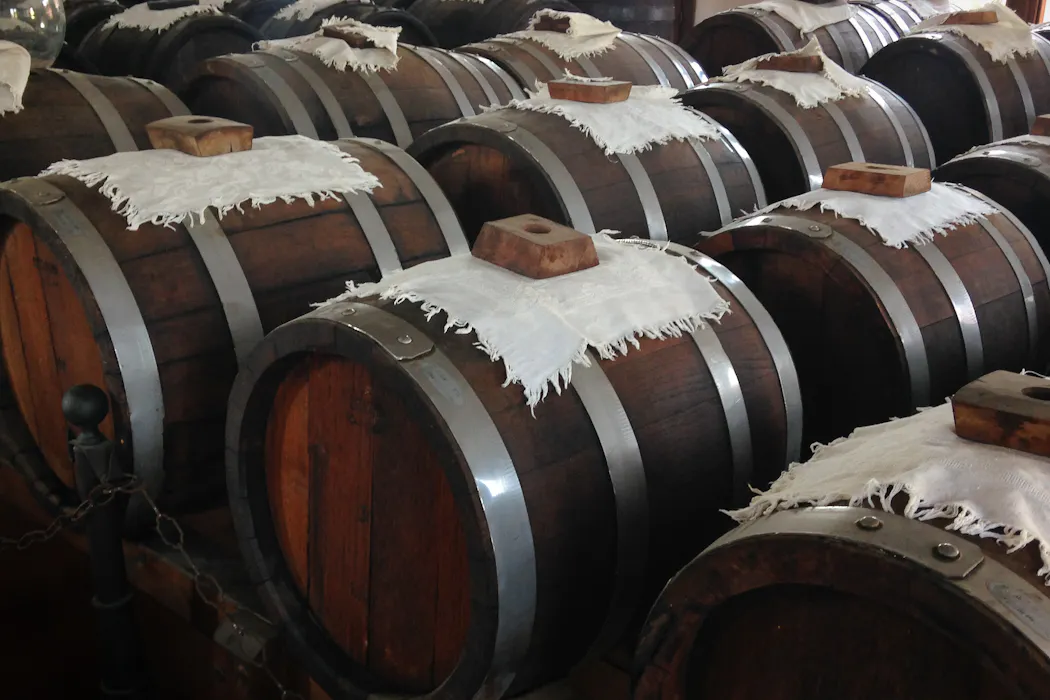
Todo ello ocurre de forma muy muy lenta, mientras el producto envejece en lo que se denomina una “batería de barriles”. No es más que un conjunto de barriles de distinta capacidad y diferentes tipos de maderas: roble, castaño, cerezo, fresno, morera, etc.
Los barriles se ordenan de mayor a menor capacidad y el vinagre en envejecimiento va pasando desde los más grandes a los más pequeños a lo largo de periodos de tiempo que alcanzan al menos los 12 años (Aceto Balsamico Tradizionale Affinato) o los 25 (Aceto Balsamico Tradizionale Extravecchio).
Cada año, se extraen del barril más pequeño –aquel que contiene el vinagre de más envejecido– como máximo unos dos litros, que es el que se comercializa.
Estos vinagres de alta calidad –y, por ello, de alto precio– habitualmente se usan en muy pequeñas cantidades en selectas carnes y postres.
Batería típica para los vinagres balsámicos tradicionales. Remedios Castro.
La versión más comercial: Aceto Balsamico di Modena
En segundo lugar, el Aceto Balsamico di Modena es la versión comercial y económica que encontramos habitualmente en el supermercado. En su elaboración se emplea mosto de uva cocido mezclado con vinagre de vino, lo cual abarata costes: al no perder volumen de materia prima por concentración, puede obtenerse más volumen de producto final.
También les diferencia que únicamente permanecen en barrica entre 60 días y 3 años y que para ello se emplea un solo tipo de madera (lo que se llama un “envejecimiento estático”).
Menos tiempo en barrica, menos enriquecimiento en aromas y compuestos saludables, menos calidad y con ello, menos precio. Son vinagres menos densos, menos oscuros, más ácidos y, dado su menor precio, pueden usarse de forma más habitual para todo tipo de platos.
Los balsámicos sin garantía oficial
Junto a estos vinagres de calidad, reconocidos bajo sellos oficiales, cada día nos encontramos con más y más presuntos vinagres balsámicos sin sello y sin garantía oficial de elaboración y calidad.
Bajo el nombre de “vinagre balsámico”, habitualmente encontramos todo tipo de líquidos avinagrados, procedentes de vinos comunes, que intentan imitar las cualidades organolépticas de los de calidad superior mediante la adición de almidón u otros espesantes y caramelo.
Estos productos no han sido envejecidos en madera, por lo que realmente no experimentan el enriquecimiento en compuestos aromáticos y biosaludables. Su calidad es claramente inferior.
Sello del vinagre balsámico tradicional.
Atención a las etiquetas
¿Y cómo podemos distinguir unos de otros?
La materia prima en los de mayor calidad es mosto de uva y no vinagre de vino. Si el primer ingrediente no es mosto, será un producto de peor calidad, más ácido y de aroma menos complejo.
Fíjese bien en los ingredientes: los de mayor calidad no contienen caramelo (E150), azúcares añadidos o espesantes, sustancias que no aparecen en su etiquetado.
Ambos son indicativos de su calidad; la diferencia es que la DOP exige que tanto la producción como la elaboración se realicen íntegramente en la región y dependan exclusivamente de ella, mientras que la IGP es más flexible y requiere solo que una fase del proceso se realice allí –la materia prima puede provenir de fuera–.
Por tanto, si queremos un vinagre balsámico de calidad para todos los días, el Aceto Balsámico di Modena con distintivo azul y amarillo nos hará disfrutar del plato. En caso de que nos encontremos ante una ocasión especial, los Aceto Balsamico Tradizionale, con distintivo rojo y amarillo, contribuirán a hacer de la ocasión un momento inolvidable. Y recuerde: si busca un producto saludable y de calidad, evite aquellos que no ostenten estos logos.
Remedios Castro Mejías no recibe salario, ni ejerce labores de consultoría, ni posee acciones, ni recibe financiación de ninguna compañía u organización que pueda obtener beneficio de este artículo, y ha declarado carecer de vínculos relevantes más allá del cargo académico citado.
Source: The Conversation – (in Spanish) – By Iratxe Antonio-Agirre, Associate Professor in the Department of Developmental and Educational Psychology, Universidad del País Vasco / Euskal Herriko Unibertsitatea
Laura, Joaquín y Carlos quieren ser docentes de educación secundaria. Los tres se han conocido en las clases del máster que los habilitará para ejercer esta profesión, después de haber obtenido cada uno el grado en Filología, Matemáticas y Educación Física, respectivamente. Más allá de las disciplinas en las que se han especializado y sobre las que enseñarán pronto a chicos y chicas de 12 a 16 años, hay muchas diferencias entre ellos.
Laura eligió el grado sabiendo que quería ser profesora. Joaquín estudió Matemáticas porque le encantan, pero al finalizar la carrera se dio cuenta de que una de las mejores salidas profesionales (por facilidad de acceso y por condiciones laborales) era la enseñanza. Carlos, apasionado del entrenamiento personal, aspira a poner en marcha un negocio más adelante, pero considera que dar clases de Educación Física durante unos años en un instituto le permitirá tener una estabilidad económica y el tiempo suficiente para alcanzar esa meta.
Cada uno de ellos representa un perfil de futuro docente, según nuestro estudio reciente realizado entre 76 estudiantes del Máster de Profesorado en Educación Secundaria de Mondragon Unibertsitatea. Hemos llamado a estos perfiles “desvinculado”, “sociocomunitario” e “instrumental”: estas tres categorías nos sirven para analizar sus motivaciones e ideas sobre lo que implica ser docente, algo clave en la calidad de su futura labor profesional.
Entender las razones que llevan a los futuros docentes a elegir esta profesión, en un momento en el que la docencia se enfrenta a una transformación profunda, nos puede ayudar a desarrollar medidas que frenen las preocupantes tasas de malestar psicológico y físico y de abandono. Sobre todo, nos puede llevar a diseñar una formación más ajustada y eficaz.
Tres maneras de llegar a la docencia
El primer perfil (Joaquín) corresponde a una identidad desvinculada. Concibe la docencia como una opción profesional más que vocacional. Mantiene una visión crítica del sistema educativo, pero sin percibirse como agente de cambio. Se trata de profesionales que le dan más importancia a la teoría que al impacto social de lo que enseñan. Este perfil se vincula con un menor compromiso y mayor abandono de la profesión docente. En nuestro estudio este perfil estaba formado mayoritariamente por hombres de 26 a 35 años, sobre todo de las áreas de Tecnología y Ciencias Sociales, aunque esto no significa que siempre sea así.
El segundo perfil (Laura) pertenece a la identidad sociocomunitaria. Se relaciona con prácticas docentes más efectivas y centradas en gestionar el aula, adaptar metodologías, atender a la diversidad y promover la inclusión. Sentirse competente hace que disfruten más de su trabajo como docentes y que apuesten por una enseñanza orientada a la transformación social. Lo integran, en su mayoría, mujeres de 26 a 45 años con estudios de Lenguas y Humanidades. Pero como decimos, esto no quiere decir que este perfil no pueda encontrarse en docentes de cualquier otra materia.
El tercer perfil (Carlos) responde a una identidad instrumental. Valora la docencia como medio para alcanzar metas personales, estabilidad y desarrollo profesional. Está formado por hombres y mujeres en proporciones similares que buscan estabilidad, pero consolidan su vocación al sentirse competentes y conectar con el alumnado. Son jóvenes menores de 25 años, mayoritariamente de Humanidades y Educación Física.
Una formación homogénea para perfiles diversos
En España, el pasaporte oficial para dar clases en secundaria es el Máster de Formación del Profesorado. Se trata de un programa intensivo de un curso académico cuyo objetivo es convertir a cualquier graduado en docente. Consiste en una mezcla de teoría psicopedagógica, lecciones para aprender a enseñar su propia disciplina y prácticas en un centro educativo.
El problema radica en que, a menudo, se aplica un molde de talla única a una realidad multicolor. Esto hace que tengan que pasar por el mismo embudo profesionales con perfiles muy distintos, sin tener en cuenta la diversidad de formas de entender y vivir la profesión docente.
Sin embargo, sabemos que los programas formativos más efectivos son aquellos que conectan con las características y motivaciones del profesorado en formación. Cuando esto no ocurre, existe el riesgo de generar desmotivación, desaprovechar potencial o incluso favorecer el abandono temprano de la profesión.
Transformar el máster no implica dinamitar su estructura actual, sino flexibilizarla. El punto de partida ideal es una evaluación inicial que nos desvele qué mueve a cada estudiante a querer dar clase. Con esa información sobre la mesa resulta mucho más fácil dirigir las tutorías o el enfoque de sus proyectos para responder a sus características particulares, dejando intacto un núcleo común diseñado para fortalecer a toda la clase por igual.
En la práctica, cada perfil necesita un enfoque personalizado. Para el perfil desvinculado, el reto es descubrir el impacto social de su trabajo. Esto se logra ofreciéndole experiencias prácticas como el aprendizaje-servicio en entornos reales y mentorías con profesorado experimentado. Un alumno como Joaquín quizá no sienta la misma vocación inicial, pero puede inspirarse al ver el compromiso de otros profesores y profesoras en activo.
Si hablamos del perfil sociocomunitario, este requiere de un escudo protector. Una alumna como Laura llega con una clara vocación e implicación, pero pueden padecer desgaste emocional. Su formación práctica debe incluir estrategias de apoyo para lograr protegerse del temido burnout antes de que sea tarde.
Por último, en el perfil instrumental, la estrategia cambia. Un estudiante como Carlos, aunque domina su materia académica, necesita profundizar en la pedagogía. Su paso por el máster debería priorizar la creación de portafolios reflexivos y una evaluación que le demuestre que enseñar es mucho más que impartir un temario. Este acompañamiento es vital para ayudarle a sentir una mayor vinculación con la tarea y que el estudiantado pueda beneficiarse de un profesor que sea capaz de llegar a las necesidades educativas de todo el aula.
Si cada persona que decide formarse para ser docente de secundaria no lo hace por los mismos motivos, ni tiene la misma percepción sobre la labor docente, la formación del profesorado tampoco debería ser la misma para todos y todas. Conocer sus motivaciones y ofrecer itinerarios más flexibles puede mejorar su preparación y ayudar al sistema educativo a responder a los retos actuales.
Las personas firmantes no son asalariadas, ni consultoras, ni poseen acciones, ni reciben financiación de ninguna compañía u organización que pueda obtener beneficio de este artículo, y han declarado carecer de vínculos relevantes más allá del cargo académico citado anteriormente.
Source: The Conversation – (in Spanish) – By Josep-Maria Arauzo-Carod, Professor of Economics, Chair of ECO-SOS and Vice-chair of IU-RESCAT, Universitat Rovira i Virgili
Cuando pensamos en innovación, solemos imaginar laboratorios y grandes empresas tecnológicas. Pero nuestra investigación sugiere que hay algo más en juego.
Una parte decisiva de la innovación ocurre en la calle. Ocurre cuando dos personas se encuentran por casualidad y comparten una cerveza. Ocurre en la cafetería del barrio, en el metro de camino al trabajo o en el transcurso de una breve conversación en la sala de espera del dentista.
En un artículo publicado en Growth and Change hemos analizado cómo se difunden la creatividad y la capacidad innovadora entre las personas que viven y trabajan en la misma ciudad y qué efecto tiene esa difusión sobre la creación de nuevas empresas.
Madrid como laboratorio
Para responder a estas preguntas utilizamos datos de casi tres millones de trabajadores afiliados a la Seguridad Social en la región metropolitana de Madrid en 2016. Dispusimos de información sobre dónde trabajaban y dónde vivían y con esos datos construimos un modelo de contagio social. La lógica es sencilla: igual que un virus se propaga entre personas que están cerca, el conocimiento y la creatividad también se transmiten entre quienes comparten espacios e interactúan cara-a-cara.
El modelo simula cómo los trabajadores creativos y los trabajadores en sectores de alta intensidad de conocimiento contagian a quienes les rodean, tanto en su lugar de trabajo como en la zona donde viven. Después analizamos si esos patrones de difusión estaban asociados con una mayor creación de empresas en cada zona.
El resultado principal es que la creatividad pesa más de lo que suele reconocerse. Tanto la creatividad como la capacidad innovadora se asocian positivamente con la creación de empresas, pero cuando se analizan conjuntamente la asociación de la creatividad resulta más robusta.
Dicho de otra forma: los trabajadores de las industrias culturales y creativas tienen un impacto sobre la economía local que va más allá de lo que generan directamente dentro de sus propias empresas. Su presencia transforma el ambiente del barrio y genera condiciones favorables para que otros innoven.
Este hallazgo matiza la idea extendida de que la innovación depende únicamente de los ingenieros o científicos. Los arquitectos, diseñadores, artistas o programadores de videojuegos también contribuyen a impulsarla. Y lo hacen de una manera que no es fácil de medir, pero que nuestro modelo permite capturar.
No toda la ciudad funciona igual
Sin embargo, el contagio no se da de forma homogénea por toda la región metropolitana. Aquí es donde el análisis espacial aporta una dimensión nueva y valiosa. La creatividad se difunde de manera más general y menos selectiva. Alcanza los barrios centrales de Madrid, pero también otros núcleos del área metropolitana como Alcobendas o Alcalá de Henares. Fluye allí donde hay interacción social, mezcla de usos y densidad de vida urbana.
La innovación tecnológica, en cambio, viaja por canales más especializados. Se concentra en torno al distrito de negocios de AZCA, en los parques empresariales y tecnológicos, como el de Tres Cantos, o cerca de los campus universitarios de ciencias. Su propagación es más selectiva y depende de infraestructuras específicas.
Un dato llamativo: el entorno del Museo del Prado registra niveles de contagio creativo más bajos de lo esperado. La explicación es urbanística: la amplitud de la trama urbana alrededor de los grandes museos y parques históricos puede suponer una barrera física y reducir la interacción entre personas.
¿Qué implica esto para las políticas urbanas?
Para su desarrollo, las ciudades suelen apostar por los mismos instrumentos: parques tecnológicos, inversión en I+D, atracción de empresas de alta tecnología. Aunque estas políticas tienen sentido, nuestros resultados apuntan a que no son suficientes.
Las políticas culturales también son políticas de innovación. Invertir en barrios creativos, en espacios de uso mixto y en vida cultural de proximidad tiene un retorno económico concreto y medible. Lo que ocurre en los barrios importa, no solo lo que pasa en los laboratorios.
Además, la innovación no es solo cosa del centro: el talento creativo también está presente en la periferia. Políticas que faciliten la conectividad y la interacción en esas zonas podrían desbloquear un potencial infrautilizado.
En conclusión
La diferenciación entre capacidad innovadora y capacidad creativa tiene implicaciones en el diseño de políticas públicas.
Para aprovechar el potencial de la capacidad innovadora, las políticas públicas
deberían seguir centrándose en la inversión pública en I+D y en infraestructuras regionales, así como en la formación de trabajadores con competencias en STEM (ciencia, tecnología, ingeniería y matemáticas) que resulten útiles para las nuevas empresas.
Al mismo tiempo, deben atender a las actividades sociales y culturales que puedan tener lugar en barrios residenciales, más allá de los centros de negocios tradicionales. Estas actividades también contribuyen a la capacidad de innovación y a la transferencia de creatividad, potenciando así la actividad económica de las ciudades.
La creatividad no se transfiere de forma automática ni por inversión directa. Se contagia en el entorno urbano (calles, barrios, gentes). Entender esta lógica es el primer paso para diseñar ciudades que innoven de verdad.
Federico Pablo Martí recibe fondos del programa de actividades de I+D con referencia PHS-2024/PH-HUM-530 (DiTeCaM-CM) financiado por la Comunidad de Madrid a través de la Dirección General de Investigación e Innovación Tecnológica.
Simón Sánchez-Moral recibe fondos de Ministerio de Ciencia, Innovación y Universidades
Proyectos CSO2016‐74888‐C4‐4‐R y PID2020‐112734RB‐C33, financiado por MICIU/AEI/10.13039/501100011033
Josep-Maria Arauzo-Carod no recibe salario, ni ejerce labores de consultoría, ni posee acciones, ni recibe financiación de ninguna compañía u organización que pueda obtener beneficio de este artículo, y ha declarado carecer de vínculos relevantes más allá del cargo académico citado.
Les quantités de drogue saisies par les forces de l’ordre françaises sont toujours plus importantes. Pourtant, ces saisies ne signifient pas que la lutte contre le narcotrafic est un succès. En effet, la consommation est, elle aussi, en forte croissance.
De fait, ces saisies témoignent d’un travail considérable des forces de l’ordre. Police, gendarmerie et douanes interceptent des flux massifs, parfois au prix d’opérations complexes, notamment sur les routes internationales du trafic.
Mais une question essentielle reste rarement posée : que nous disent ces chiffres de l’état et de la dynamique des marchés des drogues ?
Des saisies impressionnantes… face à des marchés encore plus vastes
Pour comprendre ce que représentent les saisies, il faut les comparer à l’ampleur réelle des marchés.
Nous avons fait un travail de reconstitution des volumes consommés en France à partir d’enquêtes en population générale, pour trois années : 2010, 2017 et 2023. Pour cette dernière année, nous estimons par exemple que ce sont environ 400 tonnes de cannabis qui ont été consommées, 47 tonnes de cocaïne, 8 tonnes d’héroïne, ainsi que des dizaines de millions de comprimés d’ecstasy.
Ces estimations, périodiquement réalisées à la demande de la Mission interministérielle de lutte contre les conduites addictives (Mildeca) et de l’Observatoire français des drogues et tendances addictives (OFDT), reposent sur un cadre théorique relativement simple où l’on cherche à reconstituer, pour une année donnée, les quantités consommées et les dépenses engagées par les usagers de stupéfiants pour assouvir leur consommation. Nous nous appuyons pour cela sur les réponses obtenues dans une série d’enquêtes, l’Enquête sur les représentations, opinions et perceptions sur les psychotropes (Eropp) de l’OFDT et le Baromètre de Santé publique France, permettant de documenter différents indicateurs de consommation (fréquence, intensité, prix, mode de consommation, etc.).
De fortes hypothèses sont toutefois nécessaires pour pouvoir travailler nos estimations. Par exemple, les traitements de substitution aux opiacés diminuent certainement la consommation d’héroïne des usagers, reste à savoir de combien ? Ou encore, à ce jour, on ne sait que peu de choses sur les fréquences et l’intensité de consommation des personnes utilisant du crack.
Malgré ces difficultés méthodologiques, ces estimations sont intégrées dans le calcul du produit intérieur brut (PIB) par les services de l’Insee, comme le recommande Eurostat.
Lorsque l’on rapporte les saisies opérées aux estimations de consommation, elles représentent, selon les années, de 20 à 30 % du marché pour le cannabis, de 13 à 16 % pour l’héroïne et souvent moins de 10 % pour l’ecstasy.
Autrement dit, la majorité des produits circule malgré les efforts d’interception.
Le paradoxe de la cocaïne : quand les saisies dépassent le marché
Le cas de la cocaïne est particulièrement révélateur. En 2017 et en 2023, les quantités saisies en France ont pu dépasser les volumes estimés comme consommés dans le pays. Dit autrement, nous avons estimé que les saisies de cocaïne pourraient représenter plus de 100 % du marché de la cocaïne en France pour ces deux années (c’est notamment ce qu’indique la borne supérieure d’estimation sur le graphique ci-dessus). Ce résultat peut sembler contre-intuitif, mais s’explique par au moins deux facteurs. D’une part, les trafiquants anticipent les saisies et leur production est en mesure de compenser les pertes, sans impacter les quantités consommées. D’autre part, la France tient un rôle particulier dans les routes du trafic international impliquant qu’une partie importante de la cocaïne saisie sur le territoire n’était pas destinée au marché français.
Du fait de sa position géographique – notamment via les Antilles et la Guyane –, la France constitue une porte d’entrée vers l’Europe. Les forces de l’ordre françaises interceptent ainsi des flux destinés à d’autres pays européens. Une part des saisies réalisées en France bénéficie en réalité à l’ensemble de notre continent.
Des marchés qui s’adaptent en permanence
Si les saisies avaient un effet durable sur les marchés, on devrait observer des signes de tension : hausse des prix de détail, baisse de la pureté, raréfaction des produits. Or, les résultats issus de nos travaux et d’autres montrent l’inverse.
Ces éléments suggèrent non seulement que les volumes de production agricole ou synthétique sont énormes, mais également que l’offre s’adapte rapidement aux pertes liées aux saisies. Les organisations criminelles diversifient leurs routes, multiplient les points d’entrée et ajustent leurs stratégies logistiques. Lorsqu’un flux est intercepté, d’autres prennent le relais.
Repenser les indicateurs de la politique antidrogue
Dans ce contexte, les saisies apparaissent comme un indicateur ambigu. Elles témoignent sans nul doute de l’intensité de l’action des forces de l’ordre. Mais elles renseignent beaucoup moins sur la disponibilité réelle des drogues. Dit autrement, des saisies élevées peuvent coexister avec des marchés en expansion, comme c’est le cas pour la cocaïne.
En se focalisant sur les volumes saisis, on peut donner l’impression d’un contrôle croissant, alors même que les indicateurs de marché racontent une autre histoire : disponibilité élevée, prix stables, qualité en hausse.
Il ne s’agit pas de dire que les saisies sont inutiles. Elles doivent en effet jouer un rôle important, notamment pour perturber certains réseaux ou intercepter des flux massifs. Mais elles ne suffisent pas, à elles seules, à réduire durablement l’offre.
Ces résultats invitent à élargir la manière dont on évalue les politiques publiques. Plutôt que de s’appuyer principalement sur les saisies, il serait nécessaire de considérer conjointement une batterie d’indicateurs composée des prix, de la pureté des produits circulant en France, de leur disponibilité et finalement des dynamiques de consommation.
Enfin, ces résultats rappellent que les marchés des drogues dépassent largement les frontières nationales. Les saisies réalisées par les forces de l’ordre françaises – en particulier pour la cocaïne – s’inscrivent dans une dynamique européenne. Elles contribuent à limiter l’approvisionnement de plusieurs pays, même si leur impact sur le marché français reste limité. Cela souligne l’importance d’une approche coordonnée à l’échelle européenne, plutôt que strictement nationale. La récente création d’une Agence de l’Union européenne sur les drogues et de la future Autorité douanière de l’Union européenne sont le signe d’une évolution nécessaire – mais peut-être pas suffisante.
Christian Ben Lakhdar a reçu des financements issus du programme PIRALAD de la MILDECA.
Sophie Massin a reçu des financements issus du programme PIRALAD de la MILDECA.
Quand nous lisons, nos yeux effectuent une série de mouvements rapides, appelés saccades.Michal Parzuchowski/Unsplash
La lecture est l’une des compétences les plus difficiles à acquérir. Les supports numériques rendent-ils ce processus encore plus complexe ? Que nous dit la recherche des différences entre lecture sur écran et lecture sur papier ?
Le gouvernement suédois a récemment annoncé qu’il renonçait à l’utilisation d’appareils numériques en classe pour revenir aux livres papier. Il a évoqué des inquiétudes liées à la baisse des résultats scolaires et à l’augmentation du temps passé devant les écrans.
Ces inquiétudes sont-elles fondées ? Et que dit la science des conséquences possibles des appareils numériques sur la lecture, en comparaison de la lecture sur papier ?
Pour répondre à ces questions, il convient de rappeler que, même si la lecture peut sembler une tâche facile, cette impression est trompeuse. La lecture est sans doute la compétence la plus difficile à acquérir : elle nécessite des années d’éducation formelle et de pratique pour être maîtrisée. Contrairement au langage oral, il s’agit d’une compétence à laquelle nous ne sommes pas biologiquement prédisposés.
Pourquoi lire est-il si difficile ?
Il faut d’abord en comprendre la physiologie de la lecture pour comprendre pourquoi cette tâche est si complexe.
Pendant que vous lisez cette phrase, vos yeux effectuent une série de mouvements rapides, appelés saccades, d’un mot à l’autre. Pendant ces saccades, le traitement de l’information visuelle est suspendu et n’est possible que pendant de brefs intervalles, appelés fixations, lorsque les yeux sont immobiles.
Des expériences visant à mesurer les mouvements oculaires pendant la lecture ont montré que nous fixons la plupart des mots, car notre capacité à extraire des informations visuelles lors de chaque fixation est extrêmement limitée.
Dans les langues, comme l’anglais ou le français, qui se lisent de gauche à droite, notre capacité à percevoir les caractéristiques qui distinguent les lettres est limitée à une petite zone du champ visuel appelée « champ de perception ». Ce champ s’étend de 2 à 3 espaces de lettres à gauche du point de fixation à 8 à 12 espaces de lettres à droite de celui-ci.
L’asymétrie de cette zone reflète le parcours du regard à travers le texte. Elle s’étend vers la gauche dans les langues comme l’arabe, qui se lisent de droite à gauche. La taille de cette zone est plus réduite pour les systèmes d’écriture denses, comme le chinois.
Nous savons également, grâce à des expériences d’oculométrie et d’imagerie cérébrale, que l’identification des mots prend du temps. Selon nos meilleures estimations, les informations visuelles mettent 60 millisecondes pour se propager des yeux au cerveau, et l’identification des mots nécessite ensuite 100 à 300 millisecondes supplémentaires (une milliseconde équivaut à un millième de seconde).
Ces contraintes limitent la vitesse maximale de lecture à 300-400 mots par minute, selon la difficulté du texte et le niveau de compréhension de chacun.
Le processus de lecture est complexe et suppose un grand niveau de coordination. Jess Morgan/Unsplash, CC BY
Les promoteurs de la lecture rapide, qui promettent à tort des vitesses de lecture plus élevées, vous apprennent à parcourir un texte en diagonale. La compréhension diminue dans une mesure inversement proportionnelle au gain de vitesse.
Il est important de noter que la vitesse de lecture maximale ne s’acquiert qu’au bout de plusieurs années de pratique, car elle exige que les systèmes cérébraux chargés de la vision, de l’attention, de la reconnaissance des mots, du traitement du langage et des mouvements oculaires fonctionnent de manière parfaitement coordonnée. Tout ce qui entrave cette coordination réduit donc la compréhension.
Les conséquences de la lecture sur écran
Quelles sont donc les conséquences probables de la lecture numérique ?
Avec certains appareils, comme les liseuses électroniques, il n’y a guère de raisons de penser que la lecture numérique diffère de la lecture sur papier, car ces deux formats favorisent les processus mentaux nécessaires à une lecture efficace.
Les dispositifs les plus discutables sont ceux qui introduisent des distractions (comme les sites d’actualités parsemés de publicités) ou qui présentent une mise en page peu optimale, comme un texte justifié au centre avec des espaces importants ou inégaux entre les mots. Ce dernier cas est rarement le fait des textes sur papier.
Bien que les conséquences de ces deux facteurs aient été peu étudiées, nos connaissances sur la cognition humaine sont désormais suffisantes pour formuler des prévisions éclairées.
Par exemple, des images et des sons sans rapport avec un texte, comme les publicités intempestives, peuvent capter l’attention. Si la plupart des adultes ont développé un niveau de contrôle exécutif suffisant pour ignorer de telles distractions, ce n’est pas le cas des jeunes enfants.
Les conséquences pour un enfant qui a du mal à saisir le sens d’un texte sont évidentes. Sa compréhension s’en trouvera affectée dans la mesure où il devra fournir un effort supplémentaire pour faire fi des distractions, ou s’il ne dispose pas encore de la coordination mentale nécessaire pour se rendre compte que la lecture du texte a été interrompue.
Des études fondées sur l’oculométrie montrent également que de nombreux environnements numériques, tels que les pages web, peuvent inciter à adopter des stratégies de lecture spécifiques, comme la lecture rapide, pour saisir l’essentiel ou la recherche d’informations.
La lecture sur smartphones est source de distraction. Ra Dragon/Unsplash, CC BY
Même si de telles stratégies peuvent s’avérer adaptées dans certains contextes, elles nuisent à la compréhension globale. Cette situation devrait être particulièrement préoccupante pour les enfants, car il faut des années de pratique pour coordonner les processus mentaux qui permettent d’atteindre un niveau de lecture équivalent à celui des adultes.
Ces préoccupations ont récemment fait l’objet d’une attention accrue, car le début de la pandémie de Covid-19 a entraîné un passage à l’enseignement en ligne et une augmentation sensible de la lecture numérique. Bien que ces changements aient été motivés par des impératifs pratiques, leurs conséquences à long terme restent incertaines.
Jusqu’à présent, les recherches sur l’oculométrie ont été menées sur des écrans d’ordinateur. De nouvelles technologies font leur apparition, qui nous permettront de comparer directement les mouvements oculaires et la compréhension entre les appareils numériques et le papier. Cela devrait nous aider à mieux cerner les avantages et les inconvénients des appareils numériques.
Étant donné que la capacité de lecture est un indicateur prédictif du niveau d’éducation, du statut socioéconomique et du bien-être d’une personne, on ne saurait trop insister sur l’importance d’évaluer les conséquences à long terme de la lecture numérique.
Erik D Reichle a reçu des financements de l’US National Institute of Health, l’US Institute of Education Sciences, le UK Economic and Social Research Council, et l’Australian Research Council.
Lili Yu ne travaille pas, ne conseille pas, ne possède pas de parts, ne reçoit pas de fonds d’une organisation qui pourrait tirer profit de cet article, et n’a déclaré aucune autre affiliation que son organisme de recherche.
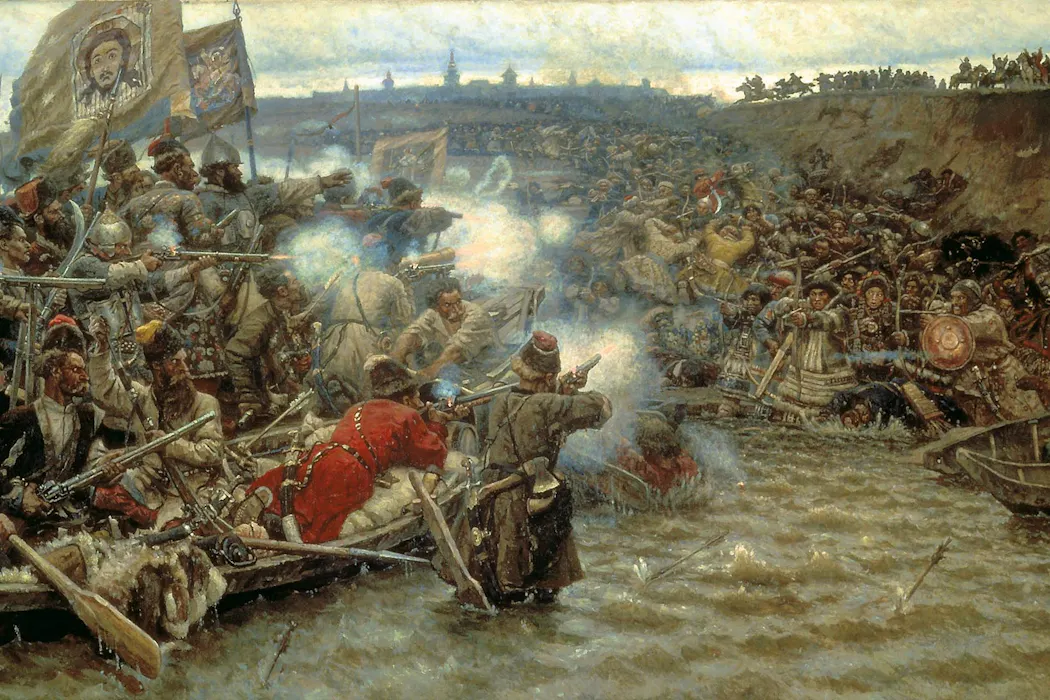
*La conquête de la Sibérie par Ermak*, tableau de Vassili Sourikov peint en 1895, représente une bataille en 1582 entre les forces russes conduites par Ermak, un chef cosaque au service d’Ivan le Terrible, et l’armée du khanat de Sibérie. Musée Russe (Saint-Pétersbourg)
Si la Fédération de Russie est aujourd’hui l’État le plus étendu de la planète, c’est parce que, des siècles durant, l’empire russe dont elle est la descendante directe n’a cessé de s’agrandir à force de conquêtes vers l’Est et vers le Sud. Pour autant, si cette dimension impériale est bien connue et documentée, l’aspect colonial de l’État russe est longtemps demeuré un impensé. Or, impérialisme et colonialisme ne sont pas synonymes. Dans son ouvrage la Russie de Poutine. Du tournant autoritaire à la guerre, qui vient de paraître aux éditions Le Cavalier Bleu, la politiste Clémentine Fauconnier, maîtresse de conférences à l’Université de Haute-Alsace, chercheuse à l’UMR Sociétés, acteurs, gouvernement en Europe et cofondatrice du Collectif de recherche sur la Russie contemporaine pour l’analyse de ses nouvelles trajectoires, CORUSCANT, met en lumière les tensions internes à la Russie – où vivent de nombreux peuples non russes qui, souvent, conservent un sentiment national spécifique – et participe au débat en cours sur le caractère colonial de la guerre que le Kremlin livre actuellement à l’Ukraine. Extraits.
« Nous, les représentants des peuples autochtones et des régions colonisées de la Fédération de Russie, déclarons ouvert le processus de décolonisation complète et générale de la Russie. » Déclaration du Forum des peuples libres de la post-Russie, le 17 juillet 2022.
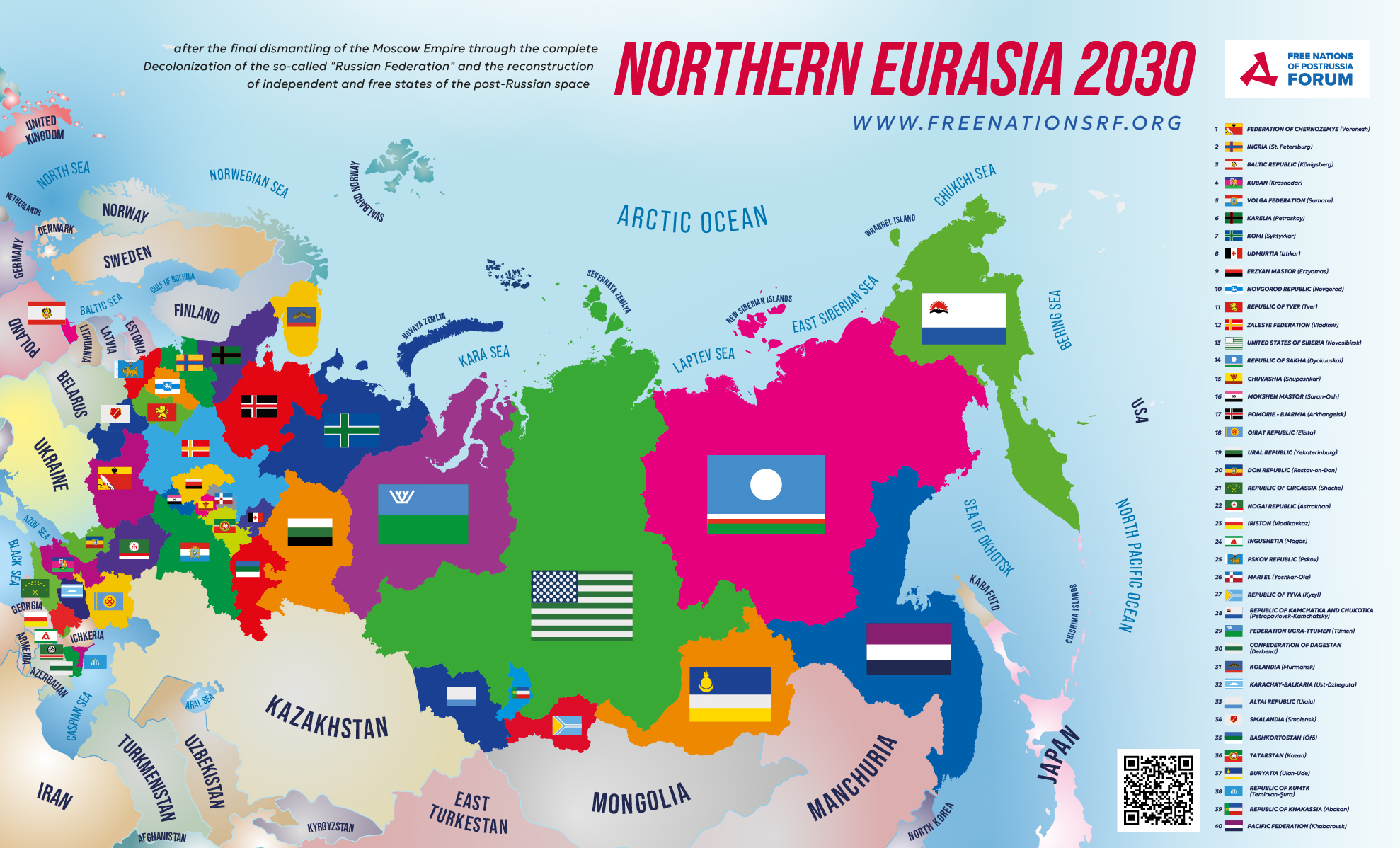
Fondé le 8 mai 2022 quelques semaines après l’invasion à grande échelle de l’Ukraine par la Russie, le Forum des peuples libres de la post-Russie s’est fait connaître par la diffusion d’une carte intitulée « L’Eurasie du nord en 2030 » représentant le territoire actuel de la Fédération de Russie morcelé en 41 États.
Aussi radicale dans ses aspirations que controversée dans sa réception, l’initiative a cependant bénéficié d’un certain écho en multipliant les interventions en Europe, y compris au Parlement européen, en Amérique du Nord mais aussi au Japon ou encore à Taiwan. Fondé par l’entrepreneur ukrainien Oleg Magaletskyi, fervent soutien des révolutions orange et du Maïdan, les activités de ce forum sont emblématiques des enjeux de la mise à l’agenda de la dimension coloniale de la politique conduite par l’État russe, aussi bien à l’intérieur qu’à l’extérieur de ses frontières.
Un processus constitutif de la construction de l’État russe : de la grille impériale à la grille coloniale
S’il y a aujourd’hui consensus pour considérer le poids de l’histoire impériale de la Russie dans sa politique intérieure et extérieure actuelle, la dimension coloniale fait en revanche l’objet de débats bien plus marqués (Colin Lebedev, 2022).
Fondé en 1721 par le tsar Pierre le Grand, l’État russe a officiellement été un Empire pendant près de deux siècles, jusqu’à la révolution bolchévique. Pour autant, les siècles précédents ont été très fortement marqués par la politique d’expansion territoriale des dirigeants de la Grande principauté de Moscou (1263-1547). De même, la création du Tsarat de Russie (1547-1721) fait explicitement référence aux empereurs romains et byzantins : le terme de tsar constituant une version russifiée de César – titre des empereurs romains – tandis que la qualification par Ivan le Terrible de Moscou comme une « troisième Rome » marque la continuité avec les centres impériaux de Rome et de Constantinople. Officiellement anti-impérialiste, l’État soviétique n’en présente pas moins un certain nombre de caractéristiques impériales : expansion territoriale, centralisation du pouvoir et reconnaissance du caractère plurinational de sa population tout en octroyant une prééminence à la langue et la culture russes.
Auto-désignée comme « État multinational » selon la Constitution de 1993, la Fédération de Russie a conservé une structuration du territoire reconnaissant un petit degré d’autonomie aux régions historiquement peuplées de minorités – dites « nationalités » dans la terminologie russe : les républiques, les okroug et oblast autonomes. De même, elle a introduit la distinction entre citoyenneté et nationalité russe. L’adjectif rossiiskiï – parfois traduit « russien » en français – désigne, en effet l’ensemble des citoyens de la Fédération, là où celui de rousskiï désigne les Russes au sens ethnique du terme. S’il n’y a pas de discrimination formelle entre les différentes composantes de la population, il y a bien la mise en place d’un processus de différenciation et de hiérarchisation associé à un statut particulier accordé à la langue russe, dont la réforme constitutionnelle de 2020 précise qu’elle est « la langue du peuple constitutif de l’État » (art. 68).
Alimentée par les tentatives plus ou moins fructueuses de la Fédération de Russie de maintenir une emprise sur les anciennes républiques soviétiques devenues États indépendants, l’apposition d’une grille de lecture coloniale à l’histoire de la Russie émerge à partir des années 2000 sans cependant réellement pénétrer le champ intellectuel russe lui-même. L’invasion à grande échelle de l’Ukraine a modifié la donne. L’envoi massif de représentants des minorités ethniques, demeurant bien souvent dans les régions les plus éloignées et les plus pauvres, sur le front ukrainien agit comme un révélateur et suscite un mouvement de protestation d’une vigueur significative dans un paysage par ailleurs fortement marqué par la répression et le musellement de toute voix dissidente. En parallèle, on note l’apparition de différents médias en ligne – académiques, politiques ou culturels – et chaînes Telegram à destination du lectorat russe qui abordent désormais frontalement les enjeux liés au colonialisme (Vokuev, 2024).
Nier l’existence de la nation ukrainienne : l’invasion russe au prisme de la domination coloniale
Ne se recoupant que partiellement, les logiques impériale et coloniale supposent toutes les deux des processus de contrôle de la part d’un État sur un territoire et une population qui ne sont jamais totalement assimilés en restant dans une situation d’infériorité et d’altérité.
Si la domination impériale peut passer par la force et la conquête militaire, elle suppose néanmoins une certaine tolérance vis-à-vis des minorités, ainsi que des échanges entre cultures majoritaire et subordonnées. L’empire désigne un processus de formation de l’État, où le pouvoir est centralisé de façon autoritaire, bien souvent personnelle, mais où cette autorité s’exerce de façon hétérogène en incluant, de façon certes hiérarchique et différentielle, l’ensemble de ses composantes.
L’entreprise coloniale est, à l’inverse, davantage le fait d’une unité stabilisée – dont le régime politique interne peut-être autoritaire ou démocratique – qui s’engage dans une démarche de peuplement et d’exploitation unilatérale d’un territoire, éventuellement situé outre-mer, ainsi que de ses ressources. La frontière entre colons et colonisés est bien plus grande, la domination des premiers sur les seconds bien plus violente et systématique.
Comme le notent Adam Lenton et ses co-auteurs, le terme russe d’osvoienie (appropriation) utilisé par les autorités de la Grande principauté de Moscou au sujet de la conquête de la Sibérie au XVIᵉ siècle présente quelques points communs avec celui de colonisation tout en indiquant bien la volonté des dirigeants de se démarquer, en tout cas dans la terminologie, des entreprises menées en parallèle par les puissances européennes. C’est en revanche lors de la conquête de la Transcaucasie et de l’Asie centrale au XIXᵉ siècle que les vocables de koloniia et kolonizatsia font leur apparition, avec une connotation positive avant que le pouvoir soviétique n’inverse la donne en se réclamant anti-impérial et anti-colonial, deux syndromes alors exclusivement associés au bloc de l’Ouest (Lenton et al., 2025).
Néo-impériale, irrédentiste, coloniale : les différentes approches visant à mettre en perspective la guerre que la Russie fait à l’Ukraine ne sont pas mutuellement exclusives, mais elles permettent, chacune, d’insister sur des enjeux et des aspects particuliers. En affirmant que la guerre en Ukraine est coloniale, l’historien Timothy Snyder insiste particulièrement sur la volonté manifestée par Vladimir Poutine de nier l’existence même d’une nation ukrainienne et de qualifier son État d’artificiel. De même, la référence au colonialisme lui permet de dénoncer le peu de cas fait du droit des peuples à disposer d’eux-mêmes dans les échanges russo-américains depuis le début du second mandat de Donald Trump qui évoquent un possible découpage pérenne du territoire sans associer de représentants ukrainiens.
De la violence impériale à la violence coloniale, il n’y a pas qu’une différence de degré mais aussi de nature. Qu’il soit tsariste, soviétique ou post-soviétique, l’appropriation brutale par l’État russe de territoires, accompagnée de l’exploitation de leurs ressources et leur population avait fait l’objet d’un retour réflexif et donné lieu à l’émergence d’une grille de lecture coloniale de l’histoire du pays.
L’invasion de l’Ukraine a considérablement accru et politisé des critiques venant aussi bien du peuple ukrainien que des minorités vivant sur le sol de la Fédération de Russie et qui dénoncent autant le pillage des ressources naturelles pratiquées par l’État central sur leur territoire que la sur-représentation de leurs ressortissants parmi les combattants envoyés au front parfois contre leur gré. Dans ce contexte, le prisme de la décolonisation permet d’inscrire les préoccupations liées à l’espace historiquement dominé par la Russie dans le cadre comparatif plus large des études et des revendications décoloniales ou postcoloniales, même si cela suppose un travail d’adaptation et de redéfinition dans la mesure où ces théories ont, pour l’essentiel, visé à comprendre la domination historique et multiforme des pays du Nord vis-à-vis des Suds.
Clémentine Fauconnier ne travaille pas, ne conseille pas, ne possède pas de parts, ne reçoit pas de fonds d’une organisation qui pourrait tirer profit de cet article, et n’a déclaré aucune autre affiliation que son organisme de recherche.
Source: The Conversation – in French – By Rossana De Angelis, Maîtresse de conférences en sciences du langage, Université Paris-Est Créteil Val de Marne (UPEC)
ChatGPT, comme les autres IA génératives de texte, invente une partie de ses réponses. Bertelli/Pexels, CC BY
Vous en avez peut-être déjà fait l’expérience : les intelligences artificielles, ou IA, génératives de texte inventent régulièrement des éléments de réponses, d’autant plus difficiles à détecter qu’ils s’intègrent à un ensemble qui paraît cohérent et se mêlent à des faits avérés. C’est en se penchant sur la manière dont ces IA recherchent des informations, sur leur façon d’analyser les textes « crawlés », ou scannés, que l’on peut comprendre pourquoi elles se trompent aussi régulièrement.
Cela fait déjà plus de trois ans que nous pouvons utiliser des intelligences artificielles (IA) génératives de textes et d’images. ChatGPT a été lancé en novembre 2022 dans une version gratuite, ouvrant la porte à un accès massif aux IA génératives, mais il n’avait pas encore accès au Web comme source d’informations. C’est à partir de janvier 2023 qu’il est devenu possible de poser toutes sortes de questions, soumettre des « prompts » ou « invites », car désormais, une large part de ce qui se trouve sur le Net peut être exploré par la machine.
Et c’est à partir de cette « présomption d’omniscience », autrement dit la capacité que nous attribuons à la machine de connaître toute chose, que nous avons commencé à faire l’expérience des « hallucinations » de l’IA : terme dérivant du latin hallucinatio, signifiant « méprise », construit à partir du verbe hallucinari qui veut dire « se tromper », « divaguer », mais aussi « tromper l’interlocuteur ».
J’ai été moi-même confrontée aux hallucinations de ChatGPT quand, à l’occasion de la préparation d’une conférence scientifique, j’ai demandé sur l’interface d’interaction : « Qui suis-je ? », pour tester les limites de l’interaction humain-machine dans le cadre d’un dialogue. Cette simple question a généré une expérience linguistique qui m’a permis de mieux comprendre comment naissent certaines hallucinations.
Cette expérience, qui a donné lieu à un article scientifique, me permet d’ébaucher de premières réponses aux questions : quand et pourquoi les IA génératives rédactionnelles se trompent-elles ?
Ce qui n’existe pas sur le Net n’existe pas pour l’IA générative
La présomption d’omniscience tombe si nous prenons en compte les critères qui permettent à une information d’être traitée par la machine. Premièrement, ces informations doivent être enregistrées sous forme de données numériques. Deuxièmement, elles doivent être disponibles à tout moment, car les machines fonctionnent seulement lorsqu’elles sont connectées aux serveurs qui assurent l’accès aux données porteuses d’informations. Troisièmement, ces informations doivent êtes repérables dans la masse considérable d’informations disponibles.
Les deux premières raisons permettent d’expliquer certains types d’hallucinations, car ce qui n’existe pas sur le Net n’existe pas pour les machines. Lorsque j’ai demandé à une IA générative rédactionnelle de répondre à la question : « Qui est ma grand-mère », en sachant que la grand-mère en question n’a pas de compte Instagram ni de blog ou de page institutionnelle, elle me répond : « Je ne peux pas savoir qui est ta grand-mère sans informations de ta part. Si tu me donnes son nom, le contexte, ou ce que tu veux savoir à son sujet, je pourrai t’aider au mieux. » J’ai alors donné « un nom », une étiquette valable pour que l’information soit repérée, ce qui a poussé la machine à proposer des descriptions incorrectes pour ne pas rester sans réponse.
La question du référencement
La troisième raison permet d’expliquer d’autres types d’hallucinations, car ce qui existe sur le Net mais n’est pas visible par les machines ne peut pas être immédiatement repéré par les IA génératives. Cette dimension est propre à l’écriture numérique : elle est liée au référencement des documents numériques à travers des étiquettes (les « tags ») qui indiquent ce qu’ils contiennent et ce à quoi ils renvoient, car les documents sont liés entre eux en formant un réseau de documents (le « Web »), les uns plus ou moins visibles par rapport aux autres. Il y a deux niveaux de référencement : le premier consistant à placer des mots clés et des liens utiles à la mise en avant des textes, et le deuxième consistant à acheter du trafic et des liens pour augmenter la visibilité des textes sur le Web.
Lorsque j’ai demandé à ChatGPT de me dire « Qui est Rossana De Angelis ? », la machine m’a proposé par erreur une définition de moi en tant qu’artiste, en raison de la présence sur le Net d’une artiste dont l’identité correspond partiellement à mon nom, avant de m’identifier comme chercheuse. Ceci s’explique par le fait que les documents dont se compose un site de vente d’objets d’art, où se trouvait la description de l’artiste en question, sont mieux référencés (et donc plus « visibles ») que les documents d’un site institutionnel, en raison de leurs enjeux commerciaux.
Les algorithmes qui dirigent les machines vers les données suivent les directions les plus visibles : les documents les mieux référencés, les mieux étiquetés sortent du lot en premier. Et si les documents les mieux référencés sont ceux qui ont une valeur commerciale, il en découle que les données les plus visibles sont celles liées à des enjeux commerciaux. Et cela, indépendamment de la qualité et de la véracité des contenus.
Les LLM, un fonctionnement complexe
Les trois critères de présence, de disponibilité et de visibilité n’expliquent pas toutes les hallucinations possibles, loin de là. La plus grande difficulté consiste à saisir la complexité propre au fonctionnement des IA génératives de textes et d’images qui utilisent des grands modèles de langage (LLM) pour traiter et générer du contenu.
Par exemple, pour la reconnaissance des images, les premiers traitements capturent des aspects fondamentaux, tels que les contrastes, les bords, les lignes, leurs orientations, etc. Les traitements qui suivent combinent ces données avec d’autres données concernant, par exemple, les textures ou les matières. Enfin, à partir de cet ensemble, les traitements ultérieurs permettent de construire des représentations numériques d’images, comme des objets ou des visages, en enregistrant en tant que « valeurs » les différences et les similarités entre les données. Le traitement des données fonctionne ainsi par couches superposées (deep learning) : plus cette superposition est profonde, plus la capacité d’analyse augmente.
Les IA organisent leurs données dans un « espace vectoriel » : un ensemble d’objets qui occupent chacun un lieu précis. Prenons le jeu de ficelles : c’est comme multiplier à souhait le nombre de fils, leur longueur, leur épaisseur sans changer les règles du jeu, et ensuite pouvoir identifier un nœud. Dans cet espace, la position de chaque objet est déterminée par les relations qu’il entretient avec les autres. L’ensemble de ces relations détermine ce qu’on appelle leur « valeur vectorielle » : une combinaison de nombres qui définit un lieu dans un espace. Ces valeurs permettent d’identifier les données en tant que positions tout comme les nœuds d’un jeu de ficelles.
Les valeurs vectorielles permettent d’identifier des régularités : les données proches (par exemple, les noms de fruits : fraises, cerises, abricots, etc.) portent des informations similaires (par exemple, ils peuvent être cueillis, coupés, cuisinés, mangés, etc.) Elles peuvent donc être repérées par leur proximité (par exemple, fruits similaires, actions similaires).
Pour repérer des données, et donc pour demander des informations, nous devons soumettre une demande (un « prompt » ou « invite ») à la machine qui va chercher ces régularités dans ces espaces vectoriels à l’aide de mots (par exemple, « recette du clafoutis aux cerises »). C’est la raison pour laquelle une IA générative rédactionnelle peut nous donner la bonne recette du « clafoutis aux cerises » d’abord en identifiant, puis en reproduisant la régularité des données à l’aide des mots « clafoutis, cerises, recette » (mots similaires, contextes similaires, actions similaires). La relation que les données entretiennent dans ces espaces dirige la reproduction plus ou moins correcte des informations, en complétant automatiquement des séquences de mots dans l’espace d’interaction.
Ce qui permet l’usage des mots réside dans leur valeur. C’est un principe qui se trouve à la base de la linguistique générale. Plus précisément, la valeur d’un mot est une valeur différentielle : au sein d’une langue, le mot « chien » se différencie du mot « chat », comme le mot « bleu » du mot « vert », et ils veulent dire ce qu’ils veulent dire justement en raison de cette différence. Or, cette valeur se définit par rapport aux autres mots présents dans le texte (contexte sémantique : ce qu’on dit avec les mots) et par rapport au contexte dans lequel le texte est intégré (contexte pragmatique : ce qu’on fait avec les mots).
Prenons un exemple. Tout mot écrit sur un panneau routier fonctionne seulement dans un contexte précis (une route) et dans une pratique précise (conduire). La plupart des textes que nous produisons ou interprétons au quotidien fonctionnent de cette manière.
Comment une machine peut-elle extraire le contexte d’un texte ? Elle le fait justement à travers le processus évoqué plus haut : en définissant la valeur des mots en fonction de leurs positions vectorielles. De cette manière, la machine reproduit la valeur sémantique des mots. Mais, n’ayant pas toujours accès au contexte, la valeur pragmatique n’est pas toujours définissable. En reprenant l’exemple du panneau routier, « tourner à droite » ou « tourner à gauche » ne veut rien dire sans contexte. Dans ces conditions, si on demande à une IA générative s’il faut « tourner à droite ou à gauche », elle sera incapable de répondre correctement.
Autrement dit, quand la valeur pragmatique ne peut pas être définie, la machine peut se tromper. Il se produit alors ce qu’on peut appeler une « rupture pragmatique » : les contextes et les pratiques d’usages des mots étant inaccessibles, leur valeur pragmatique devient insaisissable.
Pourquoi est-il difficile de comprendre le fonctionnement des IA génératives ?
Ce qui empêche de comprendre le fonctionnement de l’IA générative est sa complexité. Par exemple, une difficulté consiste à imaginer que les données occupent des lieux dans des espaces qui ne sont pas bidimensionnels, mais vectoriels à n dimensions, car nous ne savons pas envisager et imaginer des espaces de plus de quatre dimensions (largeur, hauteur, profondeur, temps). Comme si on devait augmenter de n fois le nombre de fils du jeu de ficelles.
C’est un changement d’échelle démesuré dont la complexité nous dépasse, ce qui nous oblige soit à réduire la complexité du phénomène, soit à nous rendre à son incompréhensibilité. Ceci explique l’attitude de divinisation ou diabolisation que nous adoptons souvent face aux IA génératives.
Je me suis demandé plusieurs fois si, oui ou non, les IA génératives rédactionnelles pourront un jour remplacer l’humain dans les pratiques d’écriture. Ma position reste la même : non, l’IA ne va pas faire disparaître toutes nos pratiques d’écriture, car de manière évidente tout un ensemble d’écrits fortement situés, c’est-à-dire liés à un contexte, comme les échanges impromptus, les écritures sauvages ou les pancartes improvisées, ne peuvent pas être (re)produites dans un environnement numérique. Il y a donc des pans entiers d’expression écrite auxquelles les IA génératives rédactionnelles n’ont pas (encore) accès.
Rossana De Angelis ne travaille pas, ne conseille pas, ne possède pas de parts, ne reçoit pas de fonds d’une organisation qui pourrait tirer profit de cet article, et n’a déclaré aucune autre affiliation que son organisme de recherche.