NASA plans to build a nuclear reactor on the Moon – a space lawyer explains why, and what the law has to say

Source: The Conversation – USA – By Michelle L.D. Hanlon, Professor of Air and Space Law, University of Mississippi

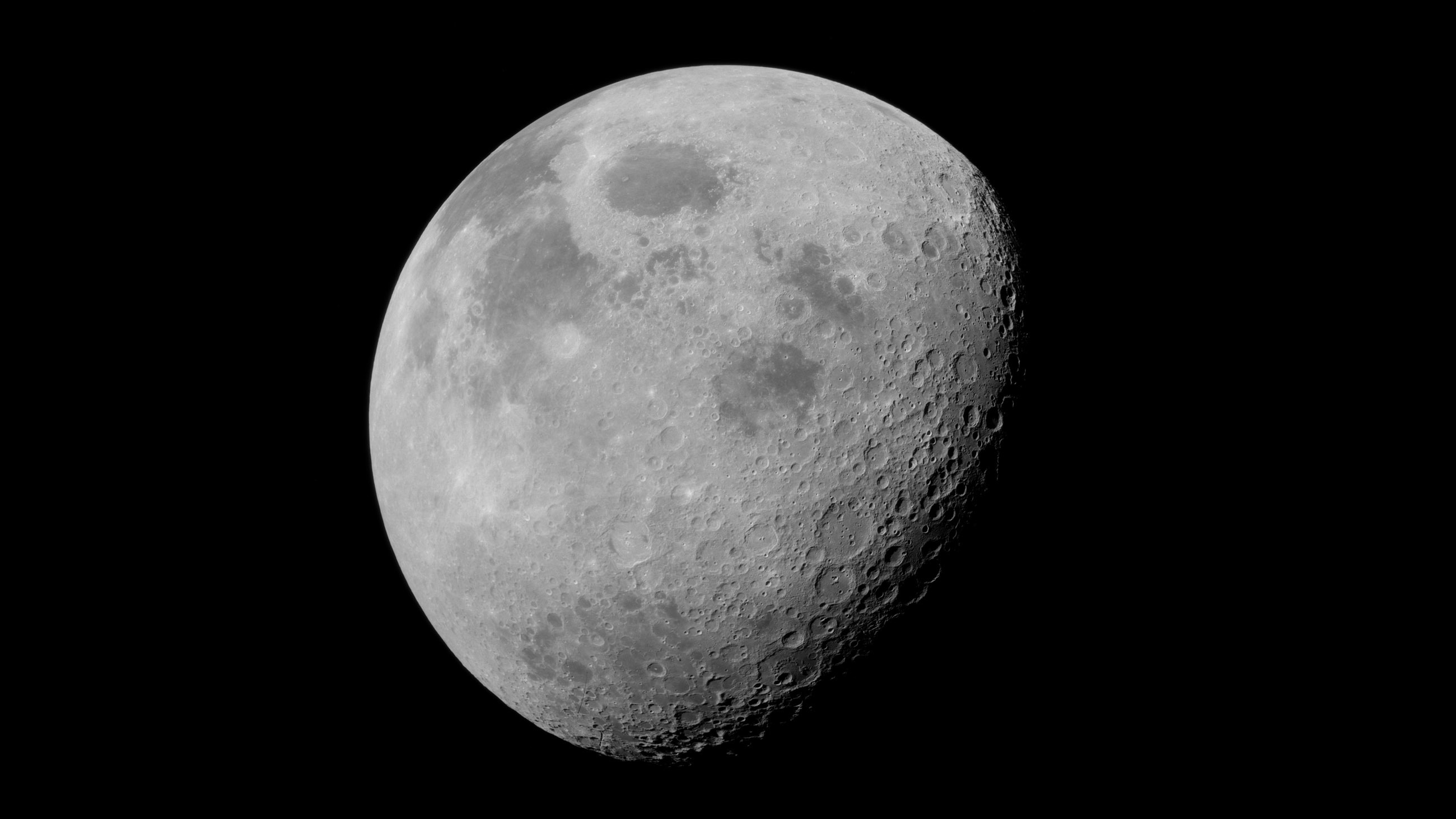
The stark landscape of the Moon as viewed by the Apollo 12 astronauts on their return to Earth. NASA/The Planetary Society

The first space race was about flags and footprints. Now, decades later, landing on the Moon is old news. The new race is to build there, and doing so hinges on power.

In April 2025, China reportedly unveiled plans to build a nuclear power plant on the Moon by 2035. This plant would support its planned international lunar research station.
The United States countered in August, when acting NASA Administrator Sean Duffy reportedly suggested a U.S. reactor would be operational on the Moon by 2030.

While it might feel like a sudden sprint, this isn’t exactly breaking news. NASA and the Department of Energy have spent years quietly developing small nuclear power systems to power lunar bases, mining operations and long-term habitats.

As a space lawyer focused on long-term human advancement into space, I see this not as an arms race but as a strategic infrastructure race. And in this case, infrastructure is influence.

A lunar nuclear reactor may sound dramatic, but its neither illegal nor unprecedented. If deployed responsibly, it could allow countries to peacefully explore the Moon, fuel their economic growth and test out technologies for deeper space missions. But building a reactor also raises critical questions about access and power.

The legal framework already exists

Nuclear power in space isn’t a new idea. Since the 1960s, the U.S. and the Soviet Union have relied on radioisotope generators that use small amounts of radioactive elements – a type of nuclear fuel – to power satellites, Mars rovers and the Voyager probes.

A circular metal container with a glowing cylinder inside.
Nuclear energy in space isn’t new – some spacecraft are nuclear-powered. This photo shows the nuclear heat source for the Mars Curiosity rover encased in a graphite shell. The fuel glows red hot because of the radioactive decay of plutonium-238.
Idaho National Laboratory, CC BY

The United Nations’ 1992 Principles Relevant to the Use of Nuclear Power Sources in Outer Space, a nonbinding resolution, recognizes that nuclear energy may be essential for missions where solar power is insufficient. This resolution sets guidelines for safety, transparency and international consultation.

Nothing in international law prohibits the peaceful use of nuclear power on the Moon. But what matters is how countries deploy it. And the first country to succeed could shape the norms for expectations, behaviors and legal interpretations related to lunar presence and influence.

Why being first matters

The 1967 Outer Space Treaty, ratified by all major spacefaring nations including the U.S., China and Russia, governs space activity. Its Article IX requires that states act with “due regard to the corresponding interests of all other States Parties.”

That statement means if one country places a nuclear reactor on the Moon, others must navigate around it, legally and physically. In effect, it draws a line on the lunar map. If the reactor anchors a larger, long-term facility, it could quietly shape what countries do and how their moves are interpreted legally, on the Moon and beyond.

Other articles in the Outer Space Treaty set similar boundaries on behavior, even as they encourage cooperation. They affirm that all countries have the right to freely explore and access the Moon and other celestial bodies, but they explicitly prohibit territorial claims or assertions of sovereignty.

At the same time, the treaty acknowledges that countries may establish installations such as bases — and with that, gain the power to limit access. While visits by other countries are encouraged as a transparency measure, they must be preceded by prior consultations. Effectively, this grants operators a degree of control over who can enter and when.

Building infrastructure is not staking a territorial claim. No one can own the Moon, but one country setting up a reactor could shape where and how others operate – functionally, if not legally.

Infrastructure is influence

Building a nuclear reactor establishes a country’s presence in a given area. This idea is especially important for resource-rich areas such as the lunar south pole, where ice found in perpetually shadowed craters could fuel rockets and sustain lunar bases.

These sought-after regions are scientifically vital and geopolitically sensitive, as multiple countries want to build bases or conduct research there. Building infrastructure in these areas would cement a country’s ability to access the resources there and potentially exclude others from doing the same.
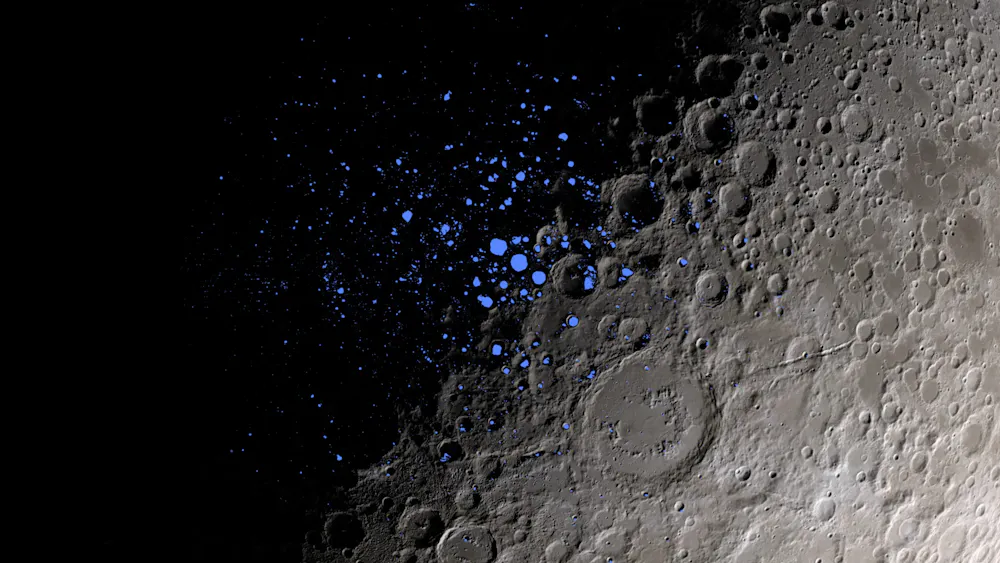
A close-up shot of the Moon's surface, with the left half covered in shadow, and the right half visible, with gray craters. Tiny blue dots in the center indicate PSRs.
Dark craters on the Moon, parts of which are indicated here in blue, never get sunlight. Scientists think some of these permanently shadowed regions could contain water ice.
NASA’s Goddard Space Flight Center

Critics may worry about radiation risks. Even if designed for peaceful use and contained properly, reactors introduce new environmental and operational hazards, particularly in a dangerous setting such as space. But the U.N. guidelines do outline rigorous safety protocols, and following them could potentially mitigate these concerns.

Why nuclear? Because solar has limits

The Moon has little atmosphere and experiences 14-day stretches of darkness. In some shadowed craters, where ice is likely to be found, sunlight never reaches the surface at all. These issues make solar energy unreliable, if not impossible, in some of the most critical regions.

A small lunar reactor could operate continuously for a decade or more, powering habitats, rovers, 3D printers and life-support systems. Nuclear power could be the linchpin for long-term human activity. And it’s not just about the Moon – developing this capability is essential for missions to Mars, where solar power is even more constrained.

A semicircle-shaped room full of people sitting at tables.
The U.N. Committee on the Peaceful Uses of Outer Space sets guidelines to govern how countries act in outer space.
United States Mission to International Organizations in Vienna, CC BY-NC-ND

A call for governance, not alarm

The United States has an opportunity to lead not just in technology but in governance. If it commits to sharing its plans publicly, following Article IX of the Outer Space Treaty and reaffirming a commitment to peaceful use and international participation, it will encourage other countries to do the same.

The future of the Moon won’t be determined by who plants the most flags. It will be determined by who builds what, and how. Nuclear power may be essential for that future. Building transparently and in line with international guidelines would allow countries to more safely realize that future.

A reactor on the Moon isn’t a territorial claim or a declaration of war. But it is infrastructure. And infrastructure will be how countries display power – of all kinds – in the next era of space exploration.

The Conversation

Michelle L.D. Hanlon is affiliated with For All Moonkind, Inc. a 501(c)(3) nonprofit focused on protecting cultural heritage in outer space.

– ref. NASA plans to build a nuclear reactor on the Moon – a space lawyer explains why, and what the law has to say – https://theconversation.com/nasa-plans-to-build-a-nuclear-reactor-on-the-moon-a-space-lawyer-explains-why-and-what-the-law-has-to-say-262773

Jane Austen at 250: Why we shouldn’t exaggerate her radicalism

Source: The Conversation – Canada – By Kerry Sinanan, Associate Professor of Global pre-1800 Literature, University of Winnipeg

The BBC’s recent docuseries, Jane Austen: Rise of a Genius, the PBS mini-series Miss Austen as well as cultural and tourism festivities are all marking the 250th anniversary of Austen’s birth for a global audience.

Scholars have long noted Austen’s significant innovations with the novel form and enduring popularity.

Jane Austen: Rise of a Genius follows the 2023 BBC series Shakespeare: Rise of a Genius. Through the show’s titling and packaging, and by combining scholarly with popular commentary, the series promotes Austen as an authorial standard of modern literature.

It also sometimes presents her as socially subversive and a breaker of barriers, amplifying arguments that she was a “radical.”

The meaning of the word radical is to uproot and dismantle fundamental structures. Austen’s novels, skilful and absorbing as they are, offer no social or political revolutions: rather, they reform and realign Regency Britain, using the romance plot and its Cinderella template.

From my perspective as a professor of global pre-1800 literature who has studied narratives around the Black Atlantic, Caribbean slavery and race, what the series perhaps overlooks is that, in today’s context of Brexit, the politics of canon and tradition affirm a nationalist and neoimperial culture.


This article is part of a series commemorating the 250th anniversary of Jane Austen’s birth. Despite having published only six books, she is one of the best-known authors in history. These articles explore the legacy and life of this incredible writer.


Framing of slavery and empire

The series presents the 18th century as “booming” from the wealth of trade. While slavery and empire are mentioned in the first episode, the narration states slavery was being challenged by “progress and equality.”

Characterizing the Regency as a time for emerging progressive politics repeats colonial discourse and racial hierarchies, ignoring the fact that the high point of racism and British global empire in the Victorian era followed its slave-trading years. Enlightenment “progress” and abolitionism led to imperial domination.

As literary and cultural critic Edward Said explained, we should read the formation of the European “canon as a polyphonic accompaniment to the expansion of Europe.”

Said argues “imperialist discourse” in works by Austen and other canonical writers goes hand in hand with colonialism on the ground. Caribbean slavery is the backdrop for Mansfield Park, which sees Sir Thomas Bertram visit his plantations in Antigua to boost his profits.

As the BBC series acknowledges, Austen’s family benefited from slavery, as did many of her contemporaries, in an age when Britain dominated the slave trade.

The 250th birthday celebrations of Austen’s birth need to be read in the context of recreating a white, nationalist culture for a reactionary Brexit Britain, proud of its military Redcoats and imperial past — reflected in celebratory romance, afternoon tea, naval officers, muslin-gown esthetics and cosplay.

Characterization of the British Navy

One contributor to the BBC series is retired Royal Navy admiral Lord Alan William John West, a Labour Peer. He describes the British Navy of the time as “charting the world” and “leading scientific discovery,” uncritically deploying the language of colonial “discovery” and Enlightenment values.

This erases the Asian, African and Indigenous cultures that Britain colonized via trade monopolies, slavery, the East India Company and settler colonialism.

These histories have lasting legacies: West caused a furor in 2020 when he stated that asylum seekers crossing the English Channel in small boats should be put in “a concentrated place, whether it’s a camp or whatever.”

How the British government deploys its navy in the 21st century cannot be separated from ongoing colonial and nationalist actions.

‘Genius’ discourse

Jane Austen: Rise of a Genius touches upon Austen’s narrative innovation and importance (something intimated by literature scholar Paddy Bullard, who states there was writing before Austen and after Austen). Through the “genius” title and some “genius” commentary, the series appears to twin this analysis with the suggestion that Austen was counter-cultural.

Well-known author Helen Fielding (Bridget Jones’s Diary) describes Austen as a “genius” and the term is used by other writers, too.

The label “genius” perpetuates racist 18th-century Chain of Being discourses that placed white people at the top of a racialized hierarchy of being and Black people at the bottom. In 1774’s An History of the Earth and Animated Nature, Oliver Goldsmith concluded “man is naturally white.”


Read more:
How whiteness was invented and fashioned in Britain’s colonial age of expansion


“Genius” is an ableist concept based in post-Darwinian eugenics and suggests a connection between supposed intelligence and evolution.

Austen and conservative social roles

One of the most prominent literary critics of Austen, British scholar Marilyn Butler, argued in Jane Austen and the War of Ideas that Austen’s novels confirm conservative roles for women in society, emphasizing “self-abnegation” and duty, and that she refused radical, Jacobin ideas of equality and political revolution.

Indeed, while a multiplicity of perspectives can be read in Austen, the structures of Austen’s plots ultimately affirm a conservative social and political order.

Far from being subversive, Austen, via alluring romance plots, massages her class-structured society into accepting the lower gentry and trading class, such as the Bennets and Gardiners in Pride and Prejudice.

Reading Austen and slavery

As I have argued, Darcy is not only an ideal romantic hero, but an ideal Briton at the heart of empire, ready to anchor the landed ancien régime of England as it moved into the burgeoning era of global domination, with a morality rooted in Protestant supremacy.

In the series, Bullard describes Austen as a “fan” of abolitionist Thomas Clarkson, and Austen biographer Paula Byrne reads Mansfield Park as a “serious” engagement with the “shadows” of slavery and “women’s suppression.”

Yet, while slavery is alluded to, the novel is not clearly anti-slavery. In Mansfield Park Austen offers a careful satire of an enslaving family, but one that positively secures the Bertrams’ place in society, merely amending their values.

Recent scholarship that uncovered how Austen’s brothers participated in the abolition movement after her death suggests Austen may have been on her way to becoming a public abolitionist.

However, this is speculative: while many women writers such as Hannah More and Anne Yearsley wrote explicitly anti-slavery pieces, Austen was not a public abolitionist.

Slavery suffused Romantic literature. At a time abounding with radical writers and anti-slavery pamphlets, poems and tracts, including those written by formerly enslaved people such as Olaudah Equiano and Ottobah Cugoano, the fact that Austen — like her contemporaries — became increasingly aware of the inhumanity of the Middle Passage is not saying much.


Read more:
My new history of romanticism shows how enslavement shaped European culture


Perpetuating myth

Suggesting Mansfield Park deeply treats aspects of slavery or women’s suppression glosses over the legal realities of chattel slavery. Under English colonial law, enslaved women’s children were transformed into legal property.

Women in 18th-century Britain had limited rights, but as Austen’s novels illustrate, they were not legal property. We follow her heroines taking their desired places, including Fanny Price, in securing a culture of white, male inheritance.

Austen was a compelling innovator of the novel form. Presenting her as radical and a genius misunderstands her art and misrepresents the imperial culture that she was part of, instead perpetuating new myths of a British literary canon.

The Conversation

Kerry Sinanan has received funding from the AHRC, the Beinecke Library, Yale, Yale Center for British Art, the James Ford Bell Library, and the Corning Museum of Glass.

– ref. Jane Austen at 250: Why we shouldn’t exaggerate her radicalism – https://theconversation.com/jane-austen-at-250-why-we-shouldnt-exaggerate-her-radicalism-259834

It’s challenging to predict extreme thunderstorms — improving this will help reduce their deadly and costly impacts

Source: The Conversation – Canada – By David Sills, Director, Northern Tornadoes Project, Western University

Our ability to predict extreme weather from thunderstorms, like the recent catastrophic flash floods in Texas, is unsettlingly poor, even in the hours leading up to the event. Improvements in understanding, detecting and predicting extreme thunderstorms — and increasing community resilience to them — are badly needed.


Read more:
The anatomy of a flash flood: Why the Texas flood was so deadly


Severe thunderstorms are a regular aspect of summer weather in Canada. A severe storm becomes extreme when the intensity of a thunderstorm hazard (tornado, downburst, damaging hail or flooding rains) escalates to a level rarely observed. Or, when the impacts of a storm are extreme due to enhanced exposure and vulnerability, resulting in significant casualties and economic losses. In some cases, both intensity and impacts are extreme.

Footage from The Weather Network of flooding in Calgary in July 2025.

At the new Canadian Severe Storms Laboratory at Western University, we’re exploring how to understand and reduce risks produced by extreme weather. Research projects include the Northern Tornadoes Project, the Northern Hail Project, the Northern Mesonet Project and an upcoming project focusing on thunderstorm flash flooding.

Extreme storms

We compiled a list of the top 10 worst natural disasters in Canada, ranked by insured losses over the last 20 years. While the 2016 fire that devastated Fort McMurray, Alta., tops the list, half of the events are associated with extreme thunderstorms.

This includes two Calgary-area hailstorms in 2020 and 2024, the Ontario-Québec derecho of 2022 and two Toronto-area flash floods (2024 and 2013). Each of these disasters cost close to $1 billion or more in insured losses.

One commonality among these events is that on the morning of the extreme event, there was little to no indication that an extreme thunderstorm would occur. In fact, in each case, it was not clear even during the storm that an extreme event was underway. Clearly, this affects the accuracy, timeliness and urgency of weather alerts meant to keep people safe.

Another commonality is that extreme thunderstorms can have a very short “fuse.” Unlike heat waves, droughts and other larger-scale phenomena, the threat due to thunderstorm-related extreme weather can increase suddenly.

Risk assessment and unreasonable data

A simple model of risk is “hazard” x “vulnerability”, which means that the risk to people and property can be determined based on both the type, intensity and coverage of a dangerous weather phenomenon and the ability of households and infrastructure to cope with and recover from the hazard’s harmful impacts.

Weather forecasters are trained to analyze and synthesize all available meteorological data to identify the most likely future state of the atmosphere and any related risks.

This often involves dismissing extreme outliers — if the numerical weather prediction (NWP) models are even able to predict them — and focusing on more plausible forecasts. Weather observation networks are also not optimized for extreme weather; sometimes, critical data are lost in power outages or are suppressed because they go beyond what is deemed reasonable.

With the 2013 Toronto flood, for example, even cutting-edge NWP models using a variety of different approaches were unable to reproduce the focused rainfall that resulted in the flash flooding. Future NWP models need to be optimized for handling such extreme events.

Extreme impacts

On the vulnerability side of the equation, it is rarely clear where exactly a storm — be it severe or extreme — will hit, even just hours before. If it affects a vulnerable area, like a tornado hitting tightly packed homes in a subdivision or heavy rain affecting a campground surrounded by steep terrain, then impacts are likely to be extreme.

So what actions are required to optimize detecting, forecasting and alerting for extreme thunderstorms? First, a more sophisticated model of risk might be:

risk = (hazard x vulnerability x exposure) / resilience

This helps to further refine the risk.

To enhance our ability to detect, predict and alert for extreme thunderstorm hazards, we need to develop techniques and tools to better identify situations where the outlier solution may be plausible or even realistic, given the conditions.

This is required both for NWP models that are increasingly used for forecasting, and for observation networks such as weather stations and radars that can indicate to a forecaster that a warning is needed immediately.

To know where hazards occur most frequently, we need to know the hazard’s climatology — the locations where it is strongest or occurs most frequently. This requires collecting vast quantities of data, assessing the intensity of hazards and ensuring the quality of the data. Improved data will allow decision-makers to minimize costs, ensuring that the benefits of the measures outstrip the costs.

Improved knowledge about community vulnerability is also important. Up-to-date flood maps are critical for understanding how heavy rain may turn into disastrous flash flooding, for example. However, preparing a community for an event having an intensity it has never experienced before is an additional challenge.

Resilient communities

As urbanization continues and cities grow outward, exposure to hazards is increased. What were once fields or flatlands become vulnerable residential or industrial developments.

Communities can improve their resilience to extreme thunderstorms through short-term coping tactics and longer-term adaptive strategies — particuarly as weather extremes in general increase due to climate change.

Overall, improving our ability to detect, predict and alert for extreme thunderstorms — and increase community resilience to them — is a massive undertaking. It is essentially a community endeavour that requires the efforts of academia, governments, industry, emergency managers and the public. The ultimate goals are to prevent casualties, and to keep people in their homes and keep schools and businesses open, following extreme thunderstorm events.

The Conversation

David Sills receives funding from the Natural Sciences and Engineering Research Council of Canada and ImpactWX.

Gregory Kopp receives funding from the Natural Sciences and Engineering Research Council of Canada, ImpactWX, the Institute for Catastrophic Loss Reduction, Insurance Institute for Business & Home Safety and the National Research Council.

– ref. It’s challenging to predict extreme thunderstorms — improving this will help reduce their deadly and costly impacts – https://theconversation.com/its-challenging-to-predict-extreme-thunderstorms-improving-this-will-help-reduce-their-deadly-and-costly-impacts-261071

‘Stop Killing Games’: Demands for game ownership must also include workers’ rights

Source: The Conversation – Canada – By Louis-Etienne Dubois, Associate Professor, School of Creative Industries, The Creative School, Toronto Metropolitan University

With live service games, players are learning that what they’ve really bought is not a game but access to it. And, evidently, that access is something that can be revoked. (Unsplash/Samsung Memory)

When French video-game publisher Ubisoft announced it was shutting down servers for The Crew, a popular online racing game released in 2014, it wasn’t just the end of a title. It marked the beginning of a broader reckoning about the nature of digital ownership, led by players angry at the company’s decision to deny them something they had paid for.

The Stop Killing Games (SKG) movement was born from that moment. As of July 2025, it has gathered more than 1.4 million signatures through the European Citizens’ Initiative. The European Commission is now obliged to respond.

At the heart of the issue is a deceptively simple question: when we buy a video game, what are we actually purchasing? For many gamers, the answer used to be obvious. A game was a product, something you owned, kept and could return to at will.

However, live service games have changed that dynamic. These are games usually played online with others and that typically require subscriptions or in-game payments to access features or content. They include popular titles such as Fortnite, League of Legends and World of Warcraft.

With live service games, players are learning that what they’ve really bought is something more tenuous: access.

And, evidently, access is something that can be revoked.

Erasing gaming communities

The issue goes well beyond The Crew. In the last couple of years alone, several games have been shut down, including Anthem, Concord, Knockout City, Overwatch 1, RedFall and Rumbleverse.

There are valid reasons why companies might choose to end support for a title. The game industry is saturated and brutally competitive. Margins are tight, player expectations are high and teams often face impossible deadlines. When an online game underperforms, a publisher will likely be inclined to cut their losses and shut it down.

Games tend to accumulate bugs in their code that are complex to clean and create player dissatisfaction. In our research, we have shown that when a game underperforms or becomes too costly to maintain, shutting it down can be a rational, even reparative, decision on many levels.

Yet, when companies decide to shut down a live service game’s servers, it’s not just content that vanishes. So do the communities built around it, the digital assets (costumes, weapons and so on) players have earned or paid for and the sometimes hundreds of hours invested in mastering it. In the blink of an eye, the game is gone, often without recourse or compensation.

That’s not just a customer service issue; it’s a cultural one.

Games are not just another type of software. They are creative works that can foster shared experiences and vibrant communities.

Players don’t just consume games, they inhabit them. They trade stories, build friendships and express themselves through digital spaces. Turning those spaces off can feel, to many, like erasing a part of their lives.

This profound disconnect between business logic and player experience, which we theorized in the past, is what gave rise to the SKG movement. Video game publishers failed to anticipate the cultural backlash triggered by these shutdowns.

What regulators can do

A row of EU flags on poles fly in front of a large office building
The European Commission’s response to the Stop Killing Games petition could help define the future of digital ownership, cultural preservation and ethical labour in gaming.
(Unsplash/Guillaume Périgois)

Players of shut-down games may believe they were misled and should be compensated. Unfortunately, the current system offers little transparency and even less protection for them.

That’s where regulation can help. The European Commission now has a chance to provide much-needed clarity on what consumers in the European Union are actually buying when they purchase live service games.

A good starting point would be requiring companies to disclose whether a purchase grants the buyer ownership or limited access, akin to recent legislation passed in California.

Minimum support periods, clearer content road maps (the projected updates) and making companies create mandatory offline versions for discontinued online games might also help prevent misunderstandings.

There’s room for creativity here, too. Rather than killing a game outright, companies could allow player communities to take over its maintenance and allow for the continued creation of new content, especially for titles with active fan bases.

This is known as “modding,” and in some cases, community-led revivals have even inspired publishers to re-release enhanced editions years later.

Developers need protections too

People in an office sit at desks working on computers
Instead of periodically ‘crunching,’ live service game developers are now constantly ‘grinding.’
(Unsplash/Sigmund)

There’s another part of this story that’s unfortunately overlooked: the people who make these games. Video game developers are regularly subjected to long hours, poor conditions and toxic workplace cultures in order to meet the demands of continuous live service updates.

In our research, we’ve found that this new model of endless content creation and perpetual support is unsustainable, not just financially or technologically, but humanly.

Instead of periodically “crunching,” live service game developers are now constantly “grinding.” Somehow, in an industry notoriously demanding for workers, this model has managed to make things even worse.


Read more:
The video game industry is booming. Why are there so many layoffs?


Policymakers need to protect both players and the workers creating games. That means, among other things, rethinking release schedules, enforcing rest periods for development teams and holding companies accountable for the well-being of their staff. The overall health of the industry depends on it.

Whether you support the SKG movement or not, the issues it raises are urgent. While the ownership question is a very legitimate one, video game developers deserve more care and protection.

The European Commission’s response could help define the future of digital ownership, cultural preservation and ethical labour in gaming.

The Conversation

Louis-Etienne Dubois received funding from SSHRC in 2019 to investigate the rise of live service games.

Miikka J. Lehtonen does not work for, consult, own shares in or receive funding from any company or organisation that would benefit from this article, and has disclosed no relevant affiliations beyond their academic appointment.

– ref. ‘Stop Killing Games’: Demands for game ownership must also include workers’ rights – https://theconversation.com/stop-killing-games-demands-for-game-ownership-must-also-include-workers-rights-262774

The great unknown romance of writer E.F. Benson’s life – Fred and George, a love story hidden in letters

Source: The Conversation – UK – By Sasha Garwood, Assistant Professor, University of Nottingham

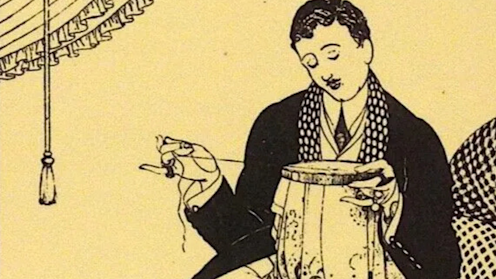
George Plank’s illustration of E.F. (Fred) Benson’s character Aunt Georgie, from The Freaks of Mayfair.

In 1915, Edward Frederic (E.F.) Benson – the future bestselling author of comic novel series Mapp and Lucia – was in his late 40s, popular and famously charming. Since adolescence he’d been drawn to men, and his diaries recount passionate romances at Marlborough College and King’s College Cambridge. But, perhaps unsurprisingly for the son of an Archbishop of Canterbury, he was discreet.

George Wolfe Plank was 15 years younger – a scrappy, self-taught American artist whose fantastical Vogue covers defined the look of the era. George had a studio around the corner from Fred in Chelsea and an eye for his handsome neighbour.

For five years they shared houses and holidays – a couple to those who saw clearly, simply “bosom friends” to those who chose not to. The pair inhabited the tensions of queer masculinity in a world where sex between men was illegal and policed.

I found their story while exploring Fred’s schoolboy romance, David Blaize. Until I came across their letters, I didn’t know how important George had been for Fred, or vice versa. Most biographers mention a friendship or, occasionally, unrequited feelings.

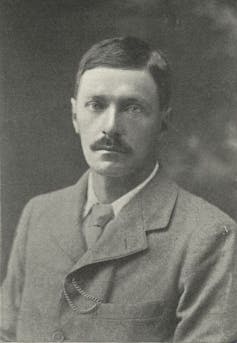
E.F. Benson
E.F. Benson is best-known for his Mapp and Lucia series.
Wikimedia

They met in 1915 after George wrote to Fred, calling him “unmarried, worldly and witty” – all coded queer signifiers at the time – and quoting the poet Walt Whitman, whose rhetoric about comrades and love was a touchstone for many men who desired men. It’s the most blatant approach I’ve found in the archives.

Fred invited him to tea and played him Tchaikovsky. Before long they were seeing each other every day, and George told his sister Amy that “I am … so happy I can scarcely realise it is I”.

Their contrasting backgrounds brought conflict and fascination, perhaps bridged by physical attraction. In one letter George declares:

Two people never came from such opposite poles and were better friends; He was born an aristocrat, lived at Lambeth Palace, educated … he goes in for all sorts of sport, which of course makes him a fine physical specimen – and yet, we seem to fit perfectly, which is a miracle!

Fred would drop into George’s studio after evening engagements. Were they sleeping together? Surviving scraps are suggestive, but the archive’s silence here is ambiguous. Letters tell us about love but, for safety, much less about sex.

Regardless, they were very close. When Fred bought 25 Brompton Square in London later that year, he insisted George move in too, and they decorated it together. “I grow fonder of him every day,” wrote George. For Fred, these were “a delight”, “halcyon days”.

They also rented Lamb House in Rye, East Sussex, together, with George saying that he wanted to “stay on here … for always”.

In 1916, they published The Freaks of Mayfair together, with George’s elegant Aubrey Beardsley-esque drawings illustrating Fred’s sharp social satires. This book put queerness at the heart of high society, particularly through the character of maiden-auntish character Aunt Georgie and his preference for “slightly effeminate young men”.

These years saw some notably queer works from Fred – David Blaize, Up and Down – and his first volume of autobiography. George produced Vogue covers, fashion illustrations and theatre scenery with dedication and flair.

Their surviving letters are loving and haunting. Fred burnt piles of correspondence before he died, fearing “mischief” – but his surviving writing to George is poignant.

The Freaks of Mayfair, written by E.F. Benson and illustrated by George Plank.

“This scrawl must go: it carries with it a great many wishes that you were not away, and when the telephone bell rings, I miss your voice,” one letter from Fred reads. “The point is, I wish you were here … I want you.” George is caring, reassuring: “bestest love” and “I thought of you with every step”. Longing drifts from the pages.

Nevertheless, there was sometimes trouble. Fred could be depressive and George wrote, wryly, during a bad patch: “Poor Fred is a mass of nerves … I must look after him as much as he will let me … But he is a queer fish at times and it is hard work.”

When Fred’s mother died in 1918, George rushed to be with him. But having been swept off his feet by this glamorous, successful older man, he now spent months supporting a grieving companion who seemed suddenly old, both needy and unable to say what he needed.

Fred was “huffy” when George’s friends Mildred and Jimmy took him to Paris, upset when George travelled alone, and wanted more of his time than George felt was compatible with his work. Throughout 1920 they were together regularly, indulging in the “perpetual privacy” of Rye.

And then, in 1921, Fred disappears from George’s letters almost entirely.

So often it’s the unknowns that haunt us. What happened? The archives can’t tell us for certain. They were both generous, gregarious, caring – but it seems that Fred’s demands came to strain George’s kindness, unlike the blissful early days when Fred was happy and George dazzled.

One 1922 letter from Fred survives, its yearning subsumed and sad. Something had changed – Fred’s health maybe (rheumatism brought constant pain) but something else too.

In 1923, George’s friend HD (also queer, like many of their friends) told him: “I know you have been through something, have had some sort of psychic wound.” Fred is silent until Final Edition, a reflective autobiography finished ten days before his death, in which “a very intimate friend of mine … an artist of whimsical and imaginative work” makes Lamb House home.

These men might have lived in a different age, but their story is so familiar: love and grief and money and class, the tension between masculinity and vulnerability. And there are many such stories: queer love and loss buried in the archives, hiding in plain sight. Finding them feels both heartbreaking and heartening. Perhaps, whatever happens, what survives of us is love.


Looking for something good? Cut through the noise with a carefully curated selection of the latest releases, live events and exhibitions, straight to your inbox every fortnight, on Fridays. Sign up here.


The Conversation

Sasha Garwood does not work for, consult, own shares in or receive funding from any company or organisation that would benefit from this article, and has disclosed no relevant affiliations beyond their academic appointment.

– ref. The great unknown romance of writer E.F. Benson’s life – Fred and George, a love story hidden in letters – https://theconversation.com/the-great-unknown-romance-of-writer-e-f-bensons-life-fred-and-george-a-love-story-hidden-in-letters-262745

Trump poised to meet Putin to discuss Ukraine – but Zelensky set to be left on the sidelines

Source: The Conversation – UK – By Jonathan Este, Senior International Affairs Editor, Associate Editor, The Conversation

This article was first published in The Conversation UK’s World Affairs Briefing email newsletter. Sign up to receive weekly analysis of the latest developments in international relations, direct to your inbox.


The latest news out of the Kremlin is that while Vladimir Putin is keen to tee up a face-to-face meeting with Donald Trump, he thinks it’s unlikely he’ll meet Volodymyr Zelensky. The Russian president was commenting on his three-hour meeting with Trump’s envoy, Steve Witkoff, on August 6, after which the US president reportedly told senior aides he would be meeting Putin next week, followed by a session with both Putin and Zelensky.

But Putin has reportedly poured cold water on this prospect, telling the Russian media: “I have nothing against it in general, it is possible, but certain conditions must be created for this. Unfortunately, we are still far from creating such conditions.”

Perhaps the Russian president feels he can achieve a more favourable result from a one-on-one with Trump than if the Ukrainian president is also in the room. This would be understandable. After all, when the pair met in Helsinki for a summit in 2018, the US president appeared to take Putin’s word over his own intelligence agencies when it came to Russian interference in the 2016 US presidential election.

What was actually discussed when Putin met Witkoff has not been divulged. Putin’s foreign policy advisor, Yuri Ushakov, said the Russian president had sent “signals” to Trump via Witkoff but declined to comment further – other than saying the meeting had been “highly productive” and “successful” and “great progress had been made”. We’ll find out more next week, if and when the two, perhaps three, leaders meet.

By then, the latest deadline set by a disgruntled US president for Putin to agree to a ceasefire in the conflict in Ukraine will have passed. So the question remains whether the Russian leader is simply buying time. Certainly, the tariffs levelled against India because it has continued to buy Russian oil suggest Trump means business if Putin won’t concede ground. After Witkoff’s meeting, the US president issued an executive order declaring: “The actions and policies of the Government of the Russian Federation continue to pose an unusual and extraordinary threat to the national security and foreign policy of the United States.”

Trump’s frustration with Putin has built up steadily since March, as Stefan Wolff observes. Wolff, a professor of international security at the University of Birmingham, believes the US president is finally coming to the conclusion that if he wants Putin to give ground on Ukraine, he must apply significant economic and even military pressure on the Russian leader. The tariffs are one sign that Trump is prepared, at least for now, to hit out at the Russian economy. And the US has also secured agreements from Nato’s European member states to buy US weapons for Ukraine’s war effort.

How this might play out in negotiations between the two leaders, if and when they meet next week, remains to be seen. But as Wolff points out: “If the US president wants a good deal, he needs more leverage over Putin. Weakening Russia’s war economy with further sanctions and blunting the effectiveness of its military campaign by arming Ukraine are steps that might get him there.”


Read more:
Trump has finally realised he needs economic and military muscle to force Putin to agree a peace deal


Trump may have told Zelensky in the infamous White House meeting in February that he “does not have the cards” to play against Putin. But that’s not altogether true. And if they do meet, Zelensky may be able to use Ukraine’s innovative and successful use of drone warfare as a bargaining chip.

Marcel Plichta, a PhD candidate at the University of St Andrews, has focused his research on the use of drones by minor powers and non-state actors, and believes that Kyiv’s use of one-way attack drones (OWA) have had a far greater impact on Russian air defences than expected.

Attacks on Moscow itself, as well as oil installations, have affected the Russian public’s morale and driven up fuel prices, providing Ukraine with a potential bargaining chip to use in any ceasefire negotiation, Plichta writes. And Zelensky’s offer to Trump of a drones “mega-deal” – combining advanced, battle-tested technology with tactical knowhow – could be a card Zelensky can play in his dealings with the US.


Read more:
Ukraine’s drone air war has given Zelensky additional bargaining power with Putin – new research


There’s been more nuclear sabre rattling this week, but this time from Trump. Stung by an insulting social media post from former Russian president Dmitry Medvedev, which seemed to compare the US president to “Sleepy Joe Biden”, Trump announced he had ordered two nuclear-armed submarines to deploy to “the appropriate regions” – in the same week the world marked 80 years since the first nuclear bomb was dropped on Hiroshima, on August 6 1945.

Nicholas Wheeler, whose work at the University of Birmingham focuses on the role of trust in foreign relations, believes that nuclear weapons were developed first in the US because of an abiding fear that its enemies might get there ahead of it.

In the years since, various combinations of Soviet and American leaders – through the Cuban missile crisis of 1962 to the treaties signed by Leonid Brezhnev and Gerald Ford and Ronald Reagan and Mikhail Gorbachev – developed enough trust to reach agreements which made nuclear weapons’ use far more unlikely.

Now, says Wheeler, it’s down to the current inhabitants of the Kremlin and White House to develop the same sense of cooperation and trust to ensure these weapons are never used again.


Read more:
Fear built the nuclear bomb – only trust can ensure it is never used again


The signs are not good, however. This week, Russia announced it would no longer abide by the the intermediate-range nuclear forces (INF) treaty signed by Gorbachev and Reagan in 1987. Another agreement, the New Start treaty which limits the size of stockpiles of strategic missiles, warheads and launchers, is due to expire next February.

Matthew Powell, an expert in strategic and air power studies at the University of Portsmouth, is worried that the recent downgrading of these vital agreements has made the world more dangerous.


Read more:
Russia’s decision to pull out of nuclear treaty makes the world more dangerous


Israel’s settlers eye Gaza

From Gaza, the daily headlines charting the scores of people killed and wounded, many as they try to get food and water for their families, continue to shock and distress. And the growing numbers of people, often small children, reported to be succumbing to starvation and malnutrition is ever more scandalous.

This week, it has been reported that the Israeli prime minister, Benjamin Netanyahu, is bidding to get cabinet support for a plan to occupy the Gaza Strip in its entirety.

There’s strong opposition to this – both from the military, which believes occupying Gaza would plunge Israel into a “black hole” with no defined exit plan, and among many ordinary Israelis, who argue such an operation would inevitably mean the death of any hostages who might still be alive.

But Netanyahu will no doubt be able to count on support from the more extreme elements in his coalition including Itamar Ben-Gvir and Bezalel Smotrich, for whom clearing Gaza of its Palestinian population to make way for resettlement by Israelis is a long-held dream.

As Leonie Fleischmann of City St George’s, University of London, points out, many in Israel’s settler movement see Gaza as a Jewish homeland – part of the biblical land of Judea, to which they believe they have a “God-given right” to return. Fleischmann tells the story of Gaza from 1967, when it was captured from Egypt by the Israel Defense Forces at the start of the six-day war, to 2005, when the then-prime minister, Ariel Sharon, ordered the settlers to leave.

Ever since then, she writes, reoccupation of Gaza has been a dream of the settler movement. Now the more extreme elements are making plans to realise that dream, calling for the settlement of areas of the northern Gaza Strip currently occupied by the IDF. Plans to establish new communities have been drawn up and 1,000 families have applied to move in.


Read more:
Israel’s plans for a full occupation of Gaza would pave the way for Israeli resettlement


Yaron Peleg from the University of Cambridge believes the rage with which Israel is pursuing its campaign against Gaza can be explained by a deep dive into the history of Zionism through the 20th century – both before and after the establishment of the state of Israel.

Peleg, a historian of Jewish and Israeli culture who was born on a kibbutz in western Galilee, recently published a book on the issue: New Hebrews: Making National Culture in Zion. He believes the “same vision that built a strong nation also hardwired the divisions and antagonisms now threatening its democracy, security and place in the world”.

Peleg traces the way a secular culture of strength and self-reliance in the first half of the 20th century, with a focus on agriculture and community, gradually became more militaristic – often through necessity as Arab resistance grew. After the second world war, the horrors of the Nazi Holocaust and Arab opposition to Israeli statehood became indelibly linked in the minds of many in Israel. He writes:

This may be one explanation for the country’s overreaction in Gaza. This is not an excuse, but an explanation that calls for the next evolutionary step in the history of Zionism – one in which Israel understands that it has achieved the goal for which it was established. Israel must realise it has power – that it is a power – and that with power comes responsibility.


Read more:
How Israel’s self-image changed from self-reliance to aggressive militarism


Sign up to receive our weekly World Affairs Briefing newsletter from The Conversation UK. Every Thursday we’ll bring you expert analysis of the big stories in international relations.


The Conversation

– ref. Trump poised to meet Putin to discuss Ukraine – but Zelensky set to be left on the sidelines – https://theconversation.com/trump-poised-to-meet-putin-to-discuss-ukraine-but-zelensky-set-to-be-left-on-the-sidelines-262836

A Bermuda stalagmite reveals how the Gulf Stream shifted – and what it might do as the climate changes further

Source: The Conversation – UK – By Edward Forman, PhD Candidate, Climate Tipping Points, University of Southampton

Beneath the subtropical paradise, Bermuda hosts a vast network of caves which contains records of Earth’s climate history. Inside are mineral deposits called speleothems – including stalagmites on the cave floors more than six-foot tall. These grow slowly as water drips down from the cave ceiling, gaining a millimetre every few years.

The stalagmites record the chemical signals of the dripwater that formed them. Cold weather tends to be windier, for example, leading to more sea spray and more seawater in the dripwater. Analysing the chemistry of one of these stalagmites has thus enabled us to indirectly reconstruct past sea surface temperatures.

Our latest research, published in the journal Communications Earth & Environment, harnesses this information to show a long-term picture of Atlantic Ocean temperatures, with a datapoint every ten days back to the year 1449. This record shows the Gulf Stream moved northward 300 years ago – a sign that a major system of ocean currents called the Atlantic Meridional Overturning Circulation (Amoc) started weakening then.

The Gulf Stream is a major ocean current that moves warm surface water from the Gulf of Mexico northward across the Atlantic, helping keep western Europe mild. As the water travels north it cools and sinks, flowing back south at depth. Together, these processes form part of the ocean conveyor belt known as Amoc.

If Amoc slows down too much, it could lead to dramatic regional climate change. Northern Europe would experience extreme cooling of up to 15°C, and rainfall and weather patterns across the tropics and subtropics would move and intensify.

Scientists agree that this system is crucial for regulating climate, but there is great uncertainty surrounding its stability. Although some studies suggest there has been no recent weakening, most agree the system has weakened in response to rising global temperatures. However, we don’t know for how long, and by how much, the Amoc has been slowing.

One fingerprint of Amoc change is the position of the Gulf Stream. When the Amoc weakens, the Gulf Stream moves northward, crossing the Atlantic at higher latitudes. This is what our Bermudan stalagmite has revealed: before the year 1720, ocean temperatures were unusually high. This period coincides with the little ice age, a cold interval in the northern hemisphere between approximately 1300 and 1850.

After 1720, Bermudan sea surface temperatures cooled substantially for more than a century. At the same time, records to the north (along the east coast of North America) show the opposite: warming where there had previously been cold temperatures.

This shift suggests the Amoc may have begun weakening a long time ago, starting around 1720 – before widescale industrialisation. This indicates that the system may be more sensitive than previously thought, because it responded to natural melting of ice sheets earlier than expected.

It could also mean the current Amoc is closer to a tipping point than expected. If a tipping point is crossed, the weakening would become self-perpetuating and lead to a near-complete shutdown of these vital ocean currents.

A warning signal

As global temperatures pass 1.5°C over the next few years, many climate models predict further weakening of the Amoc – and potentially even a collapse this century. The Intergovernmental Panel on Climate Change, the global committee assessing climate science, estimates there is up to a 10% chance of collapse before 2100 – but new research suggests this probability could be even higher.

Our study adds further historical context, showing that even small changes in ocean circulation can have large regional consequences. A sustained movement of the Gulf Stream would lead to changing regional temperatures, rainfall patterns and more extreme weather. This could have serious implications for wildlife and food security, as ecosystems struggle to adapt to the changing climate.

Even if the Amoc does not cross a tipping point soon, our research shows the weakening could still have a significant impact on regional climate patterns. The record does not just tell us about the past – it’s a warning that any amount of slowing down could have serious effects.


Don’t have time to read about climate change as much as you’d like?

Get a weekly roundup in your inbox instead. Every Wednesday, The Conversation’s environment editor writes Imagine, a short email that goes a little deeper into just one climate issue. Join the 45,000+ readers who’ve subscribed so far.


The Conversation

James Baldini received funding from the European Research Council (grant number 240167).

Edward Forman does not work for, consult, own shares in or receive funding from any company or organisation that would benefit from this article, and has disclosed no relevant affiliations beyond their academic appointment.

– ref. A Bermuda stalagmite reveals how the Gulf Stream shifted – and what it might do as the climate changes further – https://theconversation.com/a-bermuda-stalagmite-reveals-how-the-gulf-stream-shifted-and-what-it-might-do-as-the-climate-changes-further-261614

Technology has fuelled overtourism – now it could also help to stem the tide

Source: The Conversation – UK – By Adrian Palmer, Professor of Marketing, University of Reading

The queue for a view at Iguazu Falls in Brazil. Thiago B Trevisan/Shutterstock

Tourism is not always welcomed by the people who actually live in the places so many of us want to visit. Big crowds can bring economic benefits, but they can also price out the locals and cause environmental damage.

Some blame Airbnb. Others blame the cruise ship operators, the retired “boomers” or the growing middle classes across the world, with their disposable incomes and insatiable appetite for selfies.

But one element which often gets overlooked is the role of technology.

Historically, new transport technology has been a huge driver of the tourism industry. In the UK, for example, 19th-century railway expansion introduced mass tourism to coastal towns including Bournemouth and Blackpool.

In the 1960s, cheaper air travel did the same for destinations abroad, with places such as Majorca and the Spanish Costa del Sol becoming accessible to hoards of new visitors.

But new modes of transport are no longer the main driver of mass tourism. There are no imminent new ways of travelling by land, air or sea which will fuel change in the industry in the way that trains and planes once did.

Now the effects of technology are more subtle, as the online world transforms the way we travel across the real world.

The internet has blurred the distinction between residents and tourists. The surge in working from home, itself made possible by the internet, means that some people can live where they like to play, instead of prioritising proximity to the office or commuter trains.

Then there are the “digital nomads” who embrace the idea of remote working to the extent that they are able to live anywhere in the world with a decent internet connection.

The rise of social media has also had a big impact on tourism, spreading stories and images about previously little-known attractions. A few viral videos can quickly turn quiet backwaters into travel hotspots.

Just ask residents of the once-quiet Italian ski resort of Roccaraso, which was overwhelmed by a surge of visitors in January 2025 thanks to some Tiktok videos by the Italian social media influencer, Rita De Crescenzo.

The online world has also closed a gap which previously existed between tourism destinations and their distant customers. Pre-internet, the global tourism industry relied on travel agencies and printed media. Now, every hotel or resort is a click away, with platforms like Airbnb (which hosted 5 million rental properties in 2024) transforming the sector.

The effects of artificial intelligence on tourism are less certain. But perhaps it could be part of a solution.

Virtual vacations?

AI could be used to help create bespoke, personal tourism experiences in locations that really need tourists, thus reducing the harm caused to overcrowded locations or fragile eco-systems. The travel industry could also use it to make more accurate predictions about travel patterns, helping places like Barcelona and Venice to manage their number of visitors.

AI-enhanced virtual reality also has the potential to let people have experiences of tourism destinations from afar, with research suggesting “virtual holidays” could dramatically change the tourism sector.

After all, many of us have swapped other real-life experiences like shopping and work meetings to something we do via a screen. There is even evidence of an emerging preference for playing online sports over the real-life versions.

But could virtual tourism become so attractive that it significantly reduces the real thing? Will tourists really be content with seeing a virtual version of an artistic or natural wonder, instead of queuing for hours to experience it as part of a crowd?

Similar questions were asked when colour television developed in the 1960s. Would, for example, the vivid portrayal of wildlife in African game reserves reduce the need for tourists to travel there? Who would bother with the expense and effort of going to Kenya or Botswana, when they could be seen up close from the comfort of a sofa?

The outcome, though, was the exact opposite. There is evidence that wildlife programmes have actually stimulated demand to see the real thing. Similarly, popular films and TV shows set in beautiful locations make people want to visit them, with anticipation and expectation adding value to the final tourist experience.

Man standing on sofa in surfing pose wearing VR headset.
From couch to California.
Marcos Mesa Sam Wordley/Shutterstock

So, while we can be pretty sure AI will affect tourism – as it will every industry – we don’t yet know whether its overall impact will be to reduce pressure on the world’s most popular places, or further stimulate demand.

And it may not be technology that has the final say – concerns about climate change and economic pressures may influence global travel patterns first. But one thing is for sure: overtourism is not over yet.

The Conversation

Adrian Palmer has received funding from British Academy for a study of the role of social media in tourism visits

He is an unpaid member of the UK Government”s Department for Culture, Media and Sports College of Experts. This a non-political advisory research body.

– ref. Technology has fuelled overtourism – now it could also help to stem the tide – https://theconversation.com/technology-has-fuelled-overtourism-now-it-could-also-help-to-stem-the-tide-258435

COVID, the flu and other viral infections can re-awaken dormant breast cancer cells, new study in mice shows

Source: The Conversation – UK – By Justin Stebbing, Professor of Biomedical Sciences, Anglia Ruskin University

COVID was one of the common respiratory infections shown to re-awaken breast cancer cells. MIA Studio/ Shutterstock

The worry that breast cancer may someday return is a troubling source of anxiety for many survivors of the disease. It’s understandable why, since most relapses and metastatic cancers (cancers that have spread) aren’t started by new tumours.

Rather, they’re caused by sleeper cancer cells that suddenly awaken. These “dormant” cancer cells usually colonise places such as the lungs or bones, waiting for the optimal conditions to spring back to life.

For a long time, scientists have tried to work out exactly what shakes these cancer cells out of their slumber. There were hints that chronic inflammation – from factors such as smoking or ageing – could play a role, acting as a kind of unintentional alarm clock.

But new research now provides evidence that common respiratory infections, such as the flu or COVID, are capable of stirring dormant cancer cells into action.

The new study used mice which were engineered to have breast cancer cells. These cells were designed to mimic the behaviour of dormant human cancer cells hiding in the lungs. Researchers then infected the mice with either the influenza virus, which causes the flu, or the SARS-CoV-2 virus, which causes COVID.

What they discovered was both revealing and alarming. Within days of infection, the once-quiet cancer cells started to wake up, multiply rapidly and form new metastatic lesions in the lung.

But what was driving this process? Surprisingly, it wasn’t the viruses themselves. Rather, the researchers discovered that the process was being driven by the immune response that the body mounted to fight the infection.

The body’s immune response is largely driven by a secreted molecule called interleukin-6 (IL-6). Normally, IL-6 helps coordinate the body’s defences against invaders, such as viruses. But when viral infections strike, IL-6 levels can surge.

This temporary spike appears to create the perfect storm for dormant cancer cells to shift from a sleepy, inactive mode to a state that’s highly active where the cells begin to divide.

When the scientists disabled IL-6 in the mice, the dormant cancer cells did not multiply nearly as much when the viral infection was introduced. This suggests that IL-6 acts as a crucial switch for cancer cells between a harmless state and metastasis.

The researchers also found that the reawakening of cancer cells doesn’t last forever. Within about two weeks of infection, the burst of activity settled down and the cancer cells often returned to a dormant state. However, the danger hadn’t passed.

A digital drawing depicting two cancer cells in the process of dividing.
The cancer cells stopped multiplying and returned to their dormant state after two weeks.
Christoph Burgstedt/ Shutterstock

After each infection, there were now dramatically more awakened cancer cells in the lungs, primed to begin multiplying again once triggered. This creates a greater risk for future relapses, as each episode magnifies the threat.

But why doesn’t our immune system just wipe out these cancer cells if they’re no longer dormant? The study hints that another type of immune cell – called “helper T cells” – step in. But instead of destroying the cancer cells, the T cells shield them from other immune attacks. This shows how cancer can cleverly hijack the body’s defences, turning them from destroyers into guardians.


Read more:
Unlocking the body’s defences: understanding immunotherapy


Dormant cancer cells

While these experiments were performed on mice, the researchers also looked at data from thousands of cancer survivors in the UK and US during the COVID-19 pandemic. They found that cancer patients – especially those who’d recently had respiratory infections – faced nearly double the risk of dying from cancer compared to those who did not get infected. This pattern was clearest in the months after infection – matching exactly what was seen in the mouse studies.

The link between viral infection, inflammation, and cancer relapse could help explain why cancer death rates spiked early in the pandemic, especially among those with a history of breast or other cancers. This new understanding is sobering – but also something that we can take action against.

For breast cancer survivors, and potentially survivors of other cancers, the findings highlight the importance of protecting themselves from respiratory infections – not just to avoid the illness itself, but to lower the risk of setting off dormant cancer cells that could lead to life-threatening metastasis. Measures such as vaccination and rapid treatment of infections could become part of the standard toolkit for supporting long-term health after cancer.

There are also drugs that target IL-6 which are already being used for other conditions such as Castleman’s disease and COVID. This raises questions about whether these drugs might also shield vulnerable cancer survivors from relapse during or after severe viral infections.

This recent study reminds us just how interconnected our health truly is. While viral infections are often thought to only affect us temporarily, a growing body of research shows they may exert hidden, long-term effects.

Ultimately, these are early days for translating findings from this work into human therapies. But they offer new hope that by understanding and intercepting the “wake-up calls” for dormant cancer cells, it may one day be possible to prevent cancer relapses before they ever get started – dramatically improving outcomes for survivors everywhere.

The Conversation

Justin Stebbing does not work for, consult, own shares in or receive funding from any company or organisation that would benefit from this article, and has disclosed no relevant affiliations beyond their academic appointment.

– ref. COVID, the flu and other viral infections can re-awaken dormant breast cancer cells, new study in mice shows – https://theconversation.com/covid-the-flu-and-other-viral-infections-can-re-awaken-dormant-breast-cancer-cells-new-study-in-mice-shows-262464

Why do people riot?

Source: The Conversation – UK – By John Drury, Professor of Social Psychology, University of Sussex

Just over a year ago, riots swept across parts of the UK following the murder of three schoolgirls in Southport. In 2011, the police killing of Mark Duggan led to five nights of rioting that left five people dead. And in 1981, there were weeks of rioting in cities across the country in response to perceived police discrimination against black people.

In recent weeks, occasionally violent protests at asylum hotels around the country have seen a number of people arrested. Politicians have warned that further unrest is possible.

As a social psychologist specialising in the study of collective behaviour, I know the cliche that “any spark” can cause a riot is untrue. The significant incidents that lead to riots are not arbitrary. They are dramatic emblems of longstanding grievances for particular groups.

And rioting often only takes place days after such incidents, rather than being an immediate “trigger” for mass violence. Communities first discuss the incident and often try other means to achieve their goals.

There are a number of pre-conditions for riots to occur. Collective grievances, often linked with deprivation, are one of them. But not all deprived locations join in when there is a wave of riots.

In addition to grievance, another condition is the collective ability of people in the location to act upon the grievance. This relates to things like how organised people are in the location, what resources they have locally, and the number of people physically available to get involved.

As riots involve a large group of people acting as one, a shared social identity is another necessity. That is, participants must see themselves as an “us”. This sense of being part of an in-group (“us”) is defined in opposition to an out-group (“them”). The presence locally of out-groups seen by participants as linked to the grievance is an important factor in why riots happen where they do.

For example, in 1981 and 2011, poor community relations with police distinguished those locations that rioted from those that did not. In 2024, the out-group that defined the in-group was “asylum seekers and immigrants” in temporary accommodation.


Read more:
The hypocrisy at the heart of racist riots


Sometimes – albeit rarely – peaceful crowds turn into riots. My previous research with Stephen Reicher and Clifford Stott shows that how the police and the crowd interact with each other on the day is crucial in explaining this process.

This research – on student protests and anti-poll tax demonstrations as well as anti-roads direct activists and football supporters – identified a common pattern. In all cases, participants in the crowd saw themselves as acting legitimately, but felt that police were acting in illegitimate and even in dangerous ways towards them – for example threatening their right to protest. This therefore changed their views, legitimising action against police as self-defence or retribution.

At the same time, these participants also experienced the policing as indiscriminate, which enhanced a sense of shared identity in the crowd. This new sense of “we-ness” created the collective ability (support, empowerment) to act upon their new grievance against the police.

In a recent study of the 2024 anti-immigrant riots in three locations – Stoke-on-Trent, Bristol and Tamworth – my colleagues and I found a different pattern of crowd violence.

These were not, in the main, protests largely comprising people there simply to voice their concerns, who only became violent after policing interventions. Rather, there was clear evidence that many came to the events intending to physically attack asylum seekers and damage property associated with this out-group. Empowerment probably came from the rioters’ belief that enough other people felt the same way.

Social influence

One of the features of the wave of 2024, just like the waves of 1981 and 2011, is that riots influenced the likelihood of further riots in other towns. This process of social influence and spread can’t be explained by simple mechanisms like contagion.

Most people “exposed” do not join in. And for those who do, the actions they “join in” with in their local areas can be different from the actions of the rioting crowd in the source location.

Our research on multiple waves of riots suggests that rioting in one place prompts expectations and discussions among potential participants in other locations. These are about how their community, networks and peer groups might respond to the rioting in the source location.

Rather than simply mimicking those actions, potential participants are influenced by what they believe local groups relevant to them will do.

Why should people believe that others in their own area intend to riot locally in response to rioting elsewhere? One reason is they believe that enough other people, locally or in their networks and reference groups, have the same grievance as that in the source riot location.

They believe these views are widely shared locally, based on their area’s history, reputation, identity or local campaigns. For example, the presence of an active ongoing local campaign against the housing of asylum seekers in Tamworth contributed to local expectations that Tamworth would be part of the wave of riots in summer 2024.

Believing that “everyone” in one’s local network or neighbourhood will join in empowers people to take part even if there might be some personal risk – because they think they will not be alone.

The solution to events like those of summer 2024 is not only to correct misinformation about potential out-groups. It’s also necessary to challenge what they believe about other people’s beliefs. In an important way, the very large counter-demonstrations at the end of the 2024 wave may have achieved this.

If the anti-immigrant riots had continued unchallenged, observers (and supporters of the rioters) are likely to have drawn the conclusion that public opinion supports or is indifferent to violent attacks on minorities. The chilling effect on those who would otherwise be ready to speak out against racism should be obvious.

But by mobilising in large numbers, a counter-protest can demonstrate that it is anti-racism that is the mainstream, and that public opinion is closer to this view than those of the anti-immigrant rioters.


Want more politics coverage from academic experts? Every week, we bring you informed analysis of developments in government and fact check the claims being made.

Sign up for our weekly politics newsletter, delivered every Friday.


The Conversation

John Drury received funding from the Economic and Social Research Council (reference ES/N01068X/1). Some of the work described here was funded by the Behavioural Research UK Leadership Hub, which is supported by the Economic and Social Research Council (reference ES/Y001044/1).

– ref. Why do people riot? – https://theconversation.com/why-do-people-riot-261903