US and Israel push to end UN peacekeeping mandate in south Lebanon risks regional chaos

Source: The Conversation – UK – By Vanessa Newby, Senior Lecturer, Politics & International Relations, Monash University

The United Nations Interim Force in Lebanon (Unifil) is seen by many as an essential peacekeeping buffer between Israel, Lebanon and Hezbollah. But Israeli pressure, US doubts over Unifil’s cost-effectiveness and the fragile state of Lebanon’s politics means there is a risk that instead of being renewed on August 31 the mission could be ended. The stakes are high: an abrupt withdrawal could create a dangerous security vacuum along the Israeli-Lebanese border and this could have broader implications for stability in the Middle East.

The US is keen to reduce its financial commitments to UN peacekeeping, with Washington arguing that expensive and longstanding missions should be downsized or wound down to cut costs. This makes it more receptive to Israeli insistence that the mission has been ineffective in addressing the existential threat posed by Hezbollah.

But Unifil’s mandate has never been to directly disarm Hezbollah. Instead, the mission is tasked with creating and maintaining a space free of armed groups in southern Lebanon by supporting the Lebanese armed forces (LAF). Central to the Israeli narrative is the claim that Unifil failed to uncover Hezbollah’s tunnel network in south Lebanon. This criticism obscures the fact that Israeli intelligence also overlooked the same tunnels for more than a decade — despite the fact that they crossed into Israeli territory.

As part of the agreements it made after the war in 2024, Lebanon has made concrete attempts to confront the military dominance of Hezbollah in the region. The LAF has expanded its deployment in the south, dismantled Hezbollah fortifications, and begun consolidating weapons under state control.

In August 2025, the Lebanese cabinet instructed the LAF to devise a national plan aimed at ensuring a state monopoly on the use of armed force. This step has sparked fierce resistance from Hezbollah and its political allies, underscoring the risks involved in challenging the group’s armed status.

The process remains precarious. Deadly incidents, such as an explosion that killed six LAF troops removing weapons from a Hezbollah arms depot on August 9, highlight how volatile the disarmament effort is. Still, these steps mark the most serious attempt in years by Beirut to assert control over Hezbollah’s armed status. It’s a development that makes Unifil’s continued presence even more significant as a stabilising buffer while this process plays out.

Security Council wrangling

Despite these positive moves, wrangling continues at the UN headquarters in New York. The security council vote scheduled for Monday has been postponed, even though the mission’s mandate expires on August 31, adding urgency to the negotiations.

Fourteen of the 15 security council members are agreed on the need to renew Unifil’s mandate, with the US the only holdout. France, as the security council penholder for the Unifil mandate – the country which will write up the decision – has successively proposed a variety of options that might be palatable to the US, but divisions in Washington remain. Some officials, such as the US ambassador to Turkey and special envoy to Syria, Tom Barrack, acknowledge Unifil’s importance, but the US has yet to agree to vote for a mandate renewal that extends beyond a year.

A recent draft resolution proposed a strategic review by March 2026 to assess the conditions for Unifil’s withdrawal. This called for Unifil to pull out no later than August 31, 2026. But currently the US is unwilling to link any withdrawal timeline to conditions on the ground and is insisting on a firm endpoint.

Israel’s political manoeuvring

Israel’s posture toward Unifil reflects a longstanding strategy of delegitimising the mission. During the 2024 war, the Israel Defense Forces obstructed peacekeepers’ attempts to rescue civilians and even targeted Unifil positions. Despite the November 27 ceasefire, Israel continues to occupy five positions inside Lebanese territory and is reinforcing them in direct violation of the agreement.

Israeli prime minister, Benjamin Netanyahu, recently commended the Lebanese government’s steps to disarm Hezbollah. He also promised that Israel would reciprocate by gradually reducing its presence in south Lebanon. It’s a statement that appears conciliatory – yet, by praising Lebanese efforts, Netanyahu risks casting the Lebanese government and LAF as collaborators, which would inflame political tensions inside Lebanon.

At the same time, the gesture functions as a diplomatic sleight of hand, giving Washington cover in the security council debates. It gives an impression that Israel is open to conciliation and compromise, while in reality reinforcing Israel’s determination for Unifil’s mission to be curtailed.

Israel’s persistent efforts to weaken Unifil are part of its current doctrine of privileging military solutions over diplomacy and political negotiation in south Lebanon. By predominantly using force against Hezbollah, Israel has generated retaliation. These flare-ups are then used as evidence by Israel that it is under constant threat and must act in self-defence. In this way, military action produces the very instability that is then invoked to justify further escalation. It’s a cycle of chaos that sidelines diplomacy, privileges military action and perpetuates conflict.

Why Unifil still matters

Amid these political manoeuvres, one core issue remains: Unifil remains crucial to regional stability. Dismantling the peacekeeping force now would strip away one of the last stabilising buffers in an increasingly fragile region. The mission provides an international spotlight on south Lebanon. Its presence, while imperfect, has prevented numerous flare-ups from spiralling into war.

Lebanon’s army remains weak. So a sudden Unifil withdrawal would create multiple risks – including the possibility of a surge in Hezbollah activity in the south. This increases the prospect of another direct conflict between Hezbollah and Israel, and another Israeli invasion of southern Lebanon.

The Conversation

Chiara Ruffa receives funding from the Swedish Research Council, the Fulbright Commission and the European Commission

Vanessa Newby does not work for, consult, own shares in or receive funding from any company or organisation that would benefit from this article, and has disclosed no relevant affiliations beyond their academic appointment.

– ref. US and Israel push to end UN peacekeeping mandate in south Lebanon risks regional chaos – https://theconversation.com/us-and-israel-push-to-end-un-peacekeeping-mandate-in-south-lebanon-risks-regional-chaos-263927

Droughts don’t just dry up water — they drain livelihoods and weaken local economies

Source: The Conversation – Canada – By S. Mehmet Ozsoy, Assistant Professor of Finance, Concordia University

Unlike hurricanes and floods, which arrive suddenly and tend to dominate headlines with dramatic images of wrecked homes and submerged towns, droughts are often overlooked by media, governments and markets because they unfold more slowly.

Their gradual toll on fields, reservoirs and rural communities tends to be overshadowed by flashier disasters, but their consequences are no less severe.

A drought is a shortage of precipitation — typically lasting a season or longer — that results in insufficient water availability for ecosystems, agriculture and human use.

As climate change accelerates, droughts are projected to become more frequent and intense, especially in dry regions. This makes it increasingly urgent to understand their complex impact on agriculture, water supplies and regional economies.

Droughts don’t just hurt farmers

Droughts barely register in financial markets, despite their widespread consequences. Yet research shows that droughts can slash food industry profits by increasing farming costs, disrupting supply chains and tightening profit margins.

Droughts hit utilities and agriculture hardest. Shrinking water supplies wilt crops and strain water providers. But the impact extends far beyond them: low river levels can stall hydropower production, pushing up electricity costs and affecting water-heavy industries like textiles and chemicals.

Shallow waterways can also delay or block barges carrying goods, which hikes shipping costs. These disruptions ripple outward, affecting everyone from factory workers to shoppers.

Yet markets often ignore these risks until damage becomes impossible to overlook. With climate change poised to make droughts more frequent and severe, this blind spot could pose growing risks to investors and the stability of food supply chains.

Banks reveal the economic toll of droughts

Climate shocks like droughts hit local economies hardest — especially small, private businesses. While researchers can access financial data for public companies, the finances of private firms are far more opaque, making it difficult to understand the local impact of droughts.

To address this gap, we studied how prolonged droughts affect the financial stability and loan performance of regional banks across the United States. The stability, or fragility, of these banks can sway the economy, as seen in the 2008-09 crisis.


Read more:
The window of opportunity to address increasing drought and expanding drylands is vanishing


By examining bank balance sheets, we traced the broader economic ripples of droughts and found that a two-year drought can have the same economic impact on a region as a one-percentage point increase in the unemployment rate.

Communities suffer when banks do

Smaller banks are closely tied to their communities and often lend locally — often within just five miles — making them especially vulnerable when droughts strike. As small firms struggle to repay loans in the wake of such disasters, banks see an increase in missed payments.

Our data shows that droughts disrupt entire communities as job losses and tight budgets create a domino effect throughout local economies.

Banks in drought-hit areas see lower profits and rising risks. Unpaid loans, or “non-performing loans,” spike not just for farmers but for homeowners, businesses and commercial properties.

When farm workers lose income from unplanted or failed crops, they may fall behind on mortgage payments, even if farms themselves are insured.

Missed mortgage payments signal household distress, while defaulted business loans hit farms, food producers and service providers like caterers as customer demand dries up. Reduced wages also means less spending at local restaurants, equipment stores and other small businesses.

Unlike hurricanes or floods — which are designated disasters by the U.S. Federal Emergency Management Agency — droughts receive no such status.

Once a flood or hurricane is declared a federal disaster, U.S. federal agencies provide financial assistance to eligible households and businesses. FEMA offers several programs, including financial assistance for temporary housing, home repairs and the replacement of personal property.

FEMA also supports the Disaster Unemployment Assistance and the Dislocated Worker Grant program. In addition, the Small Business Administration provides long-term, low-interest loans to eligible businesses and some homeowners, while the IRS (Internal Revenue Service) offers administrative disaster-related tax relief.

Because droughts don’t have access to the same resources, banks and local economies are left to cope on their own instead of receiving emergency aid from FEMA. As a result, our research found that banks are more likely to close branches in drought-hit areas. These closures can make recovery even harder for local businesses left reeling from droughts as they lose vital loan access.

Diversification offers some protection

From banks reeling with unpaid loans to families struggling to make ends meet, the fallout from droughts is real and far-reaching. Droughts don’t just dry up water — they drain livelihoods and destabilize economies.

Larger banks and firms with operations across multiple states are better able to weather climate shocks. This diversification acts as a form of self-insurance, helping them absorb losses in one region while staying afloat in others.

This might explain why stock markets often ignore the risks posed by droughts. Large players are less exposed to local downturns. But smaller, more vulnerable businesses that are reliant on local stability don’t have the same buffer.

As these crises grow more common, markets, regulators and policymakers need to rethink how droughts are measured and mitigated before entire communities are left behind.

Regulators have begun to take some notice. Climate risks are now formally recognized as threats to financial stability by the Financial Stability Board, an international body that monitors the global financial system.

Still, recognition is only the first step. Without concrete action, droughts will continue to destabilize communities.

The Conversation

Erkan Yonder receives funding from Fonds de recherche du Québec (FRQ).

S. Mehmet Ozsoy does not work for, consult, own shares in or receive funding from any company or organisation that would benefit from this article, and has disclosed no relevant affiliations beyond their academic appointment.

– ref. Droughts don’t just dry up water — they drain livelihoods and weaken local economies – https://theconversation.com/droughts-dont-just-dry-up-water-they-drain-livelihoods-and-weaken-local-economies-261140

La Tierra se “hincha” y “deshincha” cada 20 minutos a consecuencia del terremoto de Kamchatka

Source: The Conversation – (in Spanish) – By Jordi Díaz Cusí, Investigador Científico. Sismologia experimental, Instituto de Geociencias de Barcelona (Geo3Bcn – CSIC)

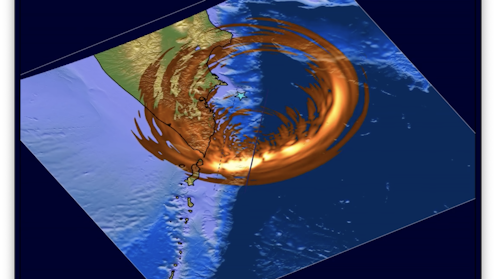
Animación de ondas sísmicas que emanan del terremoto de magnitud 8,8 en la península de Kamchatka (Rusia). Shakemovie/USGS

El terremoto de Kamchatka (Rusia), con una magnitud de 8.8, ha sido uno de los 10 mayores seísmos desde que tenemos estimaciones. Los primeros análisis indican una superficie de ruptura de unos 600 km en la falla –fractura rocosa– que produjo el seísmo, con desplazamientos de más de 10 m. Desde los sismógrafos instalados en San Pablo, Toledo, registramos que aún sigue haciendo vibrar la Tierra más de 20 días después, ocasionando la dilatación y contracción del radio del planeta cada 20,5 minutos.

Las ondas generadas por el terremoto y sus efectos

En caso de grandes terremotos, las ondas sísmicas que generan se registran por sismómetros instalados en todo el mundo, como los de la estación PAB, instalada en San Pablo, que forma parte de la red sísmica española y se integra en la red sísmica global GSN. La llegada de estas ondas puede identificarse durante varias horas.

El sismograma muestra cómo se mueve el suelo debido a la llegada de las ondas sísmicas. El eje horizontal es tiempo (hora UTC, días 29 y 30 de julio) y el vertical la amplitud del movimiento.
El autor, a partir de los datos del IGN

Las ondas de mayor amplitud son las que viajan cerca de la superficie del planeta. En el caso del terremoto de Kamchatka, estas ondas llegaron a Toledo casi una hora después de la primera fase.

Más de una tercera parte de la distancia de la Tierra a la Luna

Las ondas procedentes del terremoto que circunvalan la Tierra, al atenuarse lentamente, se pueden observar cada vez que pasan por cada estación sísmica, aproximadamente cada tres horas.

El panel superior muestra la señal sísmica filtrada entre 0.1 y 20 mHz en PAB, el sismógrafo instalado en Toledo. Las flechas indican cada uno de los pasos de las ondas de superficie. Abajo, con colores amarillos, las frecuencias que llevan más energía en cada instante. Las ondas que circunvalan la Tierra aparecen en la parte baja del gráfico.
Jordi Díaz Cusí

En la estación sísmica cercana a Toledo, se pueden identificar las llegadas correspondientes a cuatro vueltas en cada sentido. Dado que la circunferencia terrestre es de unos 40 000 km, esto significa que las ondas sísmicas generadas por el terremoto de Kamchatka se detectan después de recorrer 150 000 km, más de una tercera parte de la distancia entre la Tierra y la Luna.

Las llegadas impares se refieren a las ondas que llegan desde Kamchatka a España por el camino más corto, propagándose desde el epicentro hacia el norte y pasando cerca del polo norte. Las pares son las que se propagan en sentido contrario, partiendo de Kamchatka hacia el sur.

Estudiar el interior de nuestro planeta

Después de terremotos de gran magnitud, la Tierra vibra (resuena) en unos periodos determinados durante días o incluso semanas.

Cada uno de estos periodos corresponde a un modo de deformación de la Tierra, así que su análisis permite estudiar las propiedades físicas del interior del planeta.

Este fenómeno es similar a lo que sucede al tocar una campana de iglesia. Si estamos cerca de ella, notaremos que durante bastante tiempo después del toque aún podemos sentir una vibración a baja frecuencia. En el caso de la Tierra, el terremoto sería el equivalente al toque de la campana y los sismómetros serían la mano posada sobre la campana.

La respiración de la Tierra

Uno de estos modos de resonancia, conocido como el modo 0S0, corresponde a la dilatación y contracción del radio de la Tierra y tiene un periodo de 20,5 minutos. Podemos decir que el planeta se “hincha” y “deshincha” cada 20 minutos como resultado de la energía liberada por el terremoto de Kamchatka, un fenómeno que se conoce como la “respiración de la Tierra”.

Este modo de resonancia tiene la particularidad de sufrir muy poca atenuación, con lo que después de grandes terremotos puede observarse durante más de dos meses.

El panel superior de la imagen muestra los datos sísmicos filtrados entre 0.02 y 0.1 Hz de frecuencia. Cada uno de los picos que se observan corresponde a un terremoto, la mayor parte de ellos réplicas del terremoto principal. El panel central muestra los mismos datos, pero filtrando ahora la señal alrededor de la frecuencia del modo 0S0. El panel inferior muestra una ampliación de la misma señal, correspondiente al día 18 de agosto.
Jordi Díaz Cusí, CC BY-SA

Con estas observaciones, podemos afirmar que, como consecuencia del gran terremoto de Kamchatka, la Tierra continua aún hinchándose y deshinchándose, “respirando” de forma regular 20 días después del seísmo.

The Conversation

Jordi Díaz Cusí no recibe salario, ni ejerce labores de consultoría, ni posee acciones, ni recibe financiación de ninguna compañía u organización que pueda obtener beneficio de este artículo, y ha declarado carecer de vínculos relevantes más allá del cargo académico citado.

– ref. La Tierra se “hincha” y “deshincha” cada 20 minutos a consecuencia del terremoto de Kamchatka – https://theconversation.com/la-tierra-se-hincha-y-deshincha-cada-20-minutos-a-consecuencia-del-terremoto-de-kamchatka-263771

El planeta enano Ceres fue un mundo oceánico que pudo estar habitado, según desvela la sonda Dawn de NASA

Source: The Conversation – (in Spanish) – By Josep M. Trigo Rodríguez, Investigador Principal del Grupo de Meteoritos, Cuerpos Menores y Ciencias Planetarias, Instituto de Ciencias del Espacio (ICE – CSIC)

El planeta enano Ceres se muestra en estas representaciones con colores mejorados, basadas en imágenes de la misión Dawn de la NASA. NASA/JPL-Caltech/UCLA/MPS/DLR/IDA, CC BY

Es el mayor asteroide del sistema solar, el cuerpo menor nº 1 del cinturón de asteroides. Ceres posee un diámetro cercano al límite de lo que definimos como cuerpo planetario, pero se queda en planeta enano, como Plutón.

La misión Dawn de la NASA orbitó Ceres hace una década, cartografiándolo en todo detalle. Tras múltiples revoluciones de la sonda a su alrededor, con las que obtuvo información sobre su gravedad y topografía, concluyó que este cuerpo planetario está diferenciado internamente, lo que significa que posee capas con composiciones distintas a diferentes profundidades.

El interior del planeta enano Ceres, incluyendo la transferencia de agua y gases desde el núcleo rocoso a un depósito de agua salada. El dióxido de carbono y el metano se encuentran entre las moléculas que transportan energía química bajo la superficie de Ceres.
NASA/JPL-Caltech, CC BY

Un nuevo estudio realizado con los datos que obtuvo la sonda Dawn, publicado en Science Advances y liderado por Samuel W. Courville, de la Universidad Estatal de Arizona y del Jet Propulsion Laboratory desvela que Ceres albergó un océano, con interesantes implicaciones en astrobiología.

Ceres, habitable para la vida microbiana

El nuevo estudio apunta a que Ceres albergó un océano global debajo de la superficie en su historia temprana.

En ese entorno tuvo lugar la interacción entre rocas y agua, generando los minerales que detectó la misión Dawn, fruto de la alteración acuosa.

Considerando la mineralogía superficial de Ceres, combinada con su alta abundancia de carbono, el planeta enano pudo ser habitable para la vida microbiana.

Ceres podría haber sido poblado por organismos similares a los descubiertos en las profundidades de la corteza terrestre y en chimeneas hidrotermales submarinas. Se denominan quimiótrofos porque son capaces de emplear compuestos inorgánicos reducidos, que surgen del interior de un cuerpo planetario, como sustratos para obtener energía y utilizarla en el metabolismo respiratorio.

En los orígenes de Ceres

El nuevo trabajo presenta un detallado modelo de la evolución química y térmica en el ambiente acuático interno de Ceres en sus orígenes. Los autores llegan a la conclusión de que si el interior rocoso alcanzó una temperatura superior a unos 277 °C, los fluidos liberados por las transformaciones de la roca en profundidad habrían promovido condiciones favorables para la habitabilidad de Ceres.

La transformación de los minerales por el proceso de alteración acuosa generó reacciones redox, donde algunos compuestos se oxidan (ceden electrones) y otros se reducen (los aceptan). Si surgió vida en Ceres, los microorganismos podrían haber aprovechado ese desequilibrio redox en el océano como fuente de energía para su metabolismo.

Ese periodo favorable para la vida no es despreciable, dado que pudo extenderse entre ~0.5 y 2 000 millones de años después de la formación del planeta enano.

La hipótesis parece demostrable, particularmente ahora que llevamos décadas estudiando mejor las comunidades de microorganismos quimiótrofos que habitan las profundidades del océano y de la corteza de nuestro planeta.

Ceres como futuro objetivo astrobiológico

Así pues, el nuevo estudio sitúa a Ceres como un interesante objetivo astrobiológico para una misión de retorno de muestras, como propusimos hace unos años.

Ceres es un cuerpo planetario único, ideal para estudiar la evolución posible de mundos oceánicos de unos 1 000 km de radio. Desde hace más de veinte años se sospechaba que su helado interior esconde más agua de la que posee el planeta Tierra. De hecho, en los primeros tiempos estos cuerpos podrían haber representado el tipo más abundante de ambiente habitable en nuestro sistema solar.

A gran profundidad

Sin embargo, encontrar actualmente huellas de esa vida pasada no será tarea fácil. Los estudios realizados por la sonda Dawn revelaron las profundidades a las que esos procesos tuvieron lugar: debajo de la corteza, de unos 40 km de grosor. Allí existe un manto dominado por rocas hidratadas, como las arcillas.

La misma corteza helada ya nos da una idea de la enorme cantidad de agua almacenada en Ceres. Esa agua no sería fácil de reutilizar porque es una compleja mezcla de hielo, sales y minerales hidratados, en proporciones probablemente variables conforme profundizamos en su estructura.

Entre las dos capas todo apunta a que hay acumulado un líquido rico en sales, una especie de salmuera que se extiende hasta los 100 kilómetros de profundidad, reminiscencia del océano existente antaño.

Un posible objetivo astrobiológico podría ser recoger muestras cerca de un entorno cercano a alguno de los criovolcanes que posee Ceres. En lugar de roca fundida, los volcanes de barro salado, o “criovolcanes”, expulsan agua fría y salada a menudo mezclada con barro.

El criovolcán Ahuna Mons, de 20 km de diámetro y unos 4 km de altura sobre el nivel de la superficie de Ceres.
NASA/JPL/Dawn mission

Los autores del estudio publicado en Science Advances apuntan a que la distancia que recorrería el fluido desde el núcleo rocoso de Ceres sería mayor que la de los sistemas hidrotermales análogos terrestres, y esto podría afectar a la habitabilidad. Los fluidos en el fondo de los océanos terrestres solo necesitan circular hidrotermalmente a profundidades de pocos kilómetros bajo el fondo oceánico, mientras que en Ceres deberían originarse a profundidades de decenas de kilómetros.

Concepto artístico de la estructura sugerida para el interior del asteroide Ceres en base a una imagen topográfica real de la misión Dawn de la NASA.
NASA/JPL-Caltech/UCLA/MPS/DLR/IDA

Sólo la exploración espacial nos permite conocer la naturaleza y estructura de estos mundos helados. Futuras misiones nos permitirán comprender mejor su papel en el transporte de agua a los planetas rocosos como la Tierra, formados mayoritariamente de cuerpos deshidratados, muy diferentes a Ceres.

The Conversation

Josep M. Trigo Rodríguez recibe fondos del proyecto del Plan Nacional de Astronomía y Astrofísica PID2021-128062NB-I00 financiado por el MICINN y la Agencia Estatal de Investigación.

– ref. El planeta enano Ceres fue un mundo oceánico que pudo estar habitado, según desvela la sonda Dawn de NASA – https://theconversation.com/el-planeta-enano-ceres-fue-un-mundo-oceanico-que-pudo-estar-habitado-segun-desvela-la-sonda-dawn-de-nasa-263697

Our medieval murder maps reveal the surprising geography of violence in 14th-century English cities

Source: The Conversation – UK – By Stephanie Brown, Lecturer in Criminology, University of Hull

Bodyguard and queen kill King of Lydia. Illuminated manuscript of Cité de Dieu by Maître François (circa 1475). Author provided, CC BY-SA

A recent YouGov poll found that the word that Americans most associate with the middle ages is “violent”. Medieval towns may appear to be full of random violence, every alleyway a potential crime scene, every tavern brawl ending in bloodshed. But our recent research reveals a more complex, and in some ways familiar, reality.

In 14th-century London, York and Oxford, lethal violence clustered in a small number of hotspots, often no more than 200 or 300 metres long. Just as in modern cities, crime was not evenly spread but concentrated in certain streets and intersections where people, goods and status converged. The surprising difference is that in the middle ages, the busiest and wealthiest areas were often the most dangerous.

Stained glass showing Cain killing Abel
Cain Killing Abel, stained glass from York Minster’s great east window.
Author provided, CC BY-SA

Our Medieval Murder Map project uses coroners’ inquests (jury investigations into suspicious deaths) to pinpoint the locations of 355 homicides between 1296 and 1398. These records detail where the body was found, when the attack happened, the weapon used, and sometimes the quarrels, rivalries or insults that triggered it.

The cases from the coroners’ records were geocoded (turning a description of a place, like an address, into a pair of numbers, latitude and longitude, to show its exact position) using thematic maps provided by the scientific team of the Historic Towns Trust. What emerges is a vivid street-level picture of urban violence seven centuries ago.

The patterns are striking. Homicides clustered in markets, major thoroughfares, waterfronts and ceremonial spaces. These were areas of intense activity, where economic and social life intersected and where conflicts could be played out before a public audience.

Sundays were particularly deadly. After a morning of churchgoing, the afternoon often brought drinking, games and arguments. Violence peaked around curfew in the early evening.

A tale of three cities

The three cities we looked at differed sharply in their overall levels of violence. Oxford’s homicide rate was three to four times higher than that of London or York.

This was not random. The medieval university attracted young men aged between 14 and 21, many living far from home, armed and steeped in a culture of honour and group loyalty. Students organised themselves into “nations” based on their regional origins and quarrels between northerners and southerners regularly erupted into street battles.

Legal privileges for clerics, which included students, meant that they were often immune from prosecution under common law, creating a climate in which serious violence could flourish with little fear of punishment.

Each city’s hot-spots had their own character. In London, Westcheap, the commercial and ceremonial heart of the city, saw murders linked to guild rivalries, professional feuds and public revenge attacks. The bustling Thames Street waterfront, by contrast, was home to sudden quarrels among sailors and merchants, sometimes escalating from petty disputes into fatal encounters.

In York, one of the most dangerous spots was the main southern approach through Micklegate to Ouse Bridge. This was more than just a gateway into the town – it was a commercial and civic hub, lined with shops and inns, and the site of processions and public gatherings. Such a space naturally drew travellers, traders, and townspeople into close contact and into conflict.

Another York hot-spot was Stonegate, a prestigious street that formed part of the ceremonial route to York Minster. These patterns reflect York’s particular blend of commerce, ceremony and civic life, where spaces of wealth and display doubled as stages for rivalry, revenge and the public assertion of honour.

In Oxford, the concentration of killings in and around the university quarter reflected the constant tensions between students and townspeople and the factionalism within the student body itself. Clashes were often fuelled by drink, insults and a readiness to defend group honour with swords or knives.

The geography of medieval violence was shaped by visibility as much as opportunity. Busy streets and central markets offered the greatest number of potential rivals and bystanders and so were ideal stages for settling disputes in ways that preserved or enhanced reputation. Public killings could send a powerful message, whether to a rival guild, a hostile faction or the wider community.

In this sense, the urban logic of violence in the middle ages echoes patterns found in modern cities, where certain micro-locations consistently generate higher crime rates. The difference is that in medieval England, poverty was not the main driver. Poorer, peripheral neighbourhoods saw fewer homicide inquests, while affluent and prestigious districts often drew the most danger.

The Medieval Murder Map offers a rare opportunity to see the medieval city as its inhabitants experienced it: a landscape where the streets themselves shaped the rhythms of danger, and where wealth, power and proximity could be as deadly as poverty and neglect. Far from being random, medieval violence followed rules – and those rules were written in the geography of the city.


Looking for something good? Cut through the noise with a carefully curated selection of the latest releases, live events and exhibitions, straight to your inbox every fortnight, on Fridays. Sign up here.


The Conversation

Stephanie Brown has received funding from the Economic and Social Research Council (ESRC).

Manuel Eisner does not work for, consult, own shares in or receive funding from any company or organisation that would benefit from this article, and has disclosed no relevant affiliations beyond their academic appointment.

– ref. Our medieval murder maps reveal the surprising geography of violence in 14th-century English cities – https://theconversation.com/our-medieval-murder-maps-reveal-the-surprising-geography-of-violence-in-14th-century-english-cities-263380

Can you be aware of nothing? The rare sleep experience scientists are trying to understand

Source: The Conversation – UK – By Adriana Alcaraz-Sanchez, Postdoctoral Fellow in Philosophy of Mind and Cognitive Science, University of Edinburgh

fran_kie/Shutterstock

For some people, sleep brings a peculiar kind of wakefulness. Not a dream, but a quiet awareness with no content. This lesser-known state of consciousness may hold clues to one of science’s biggest mysteries: what it means to be conscious.

The state of conscious sleep has been widely described for centuries by different Eastern contemplative traditions. For instance, the Indian philosophical school of the Advaita Vedanta, grounded in the interpretation of the Vedas – one of the oldest texts in Hinduism – understands deep sleep or “sushupti” as a state of “just awareness” in which we merely remain conscious.

Similar interpretations of deep sleep are made by the Dzogchen lineage in Indo-Tibetan Buddhism. According to their teachings, different meditative practices can be followed during wakefulness and sleep to acknowledge the “essence” of consciousness. One of those meditative practices is that of dream yoga or luminosity yoga, which enables the practitioner to recognise the states of dream and sleep. This aims to bring them to a state of “pure awareness”, a state of being awake inside sleep without thoughts, images or even a sense of self.

For western science, this state poses a conundrum. How can you be aware without being aware of something? If these reports are accurate, they challenge mainstream theories that treat consciousness as always about an object. For example, my awareness of the laptop in front of me, or the blue sky rising above my window, or my own breathing. The existence of this state pushes us to reconsider what consciousness is.

Objectless sleep experiences

My colleagues and I set out to explore what a content-free state during sleep feels like in a series of studies. We first surveyed 573 people online about unusual forms of sleep experiences, including forms of sleep consciousness that might be simpler or more minimal. For example, an awareness following the dissolution of a dream, or a bare awareness of the fact that you are sound asleep.

We then conducted in-depth interviews with 18 participants, who reported they had experienced some form of objectless sleep experiences, using a protocol inspired by the micro-phenomenological interview. This is a research tool designed to help people recall and describe subtle aspects of their experience in fine detail.

In those studies, we found a spectrum of experiences we called “objectless sleep experiences” – conscious states that appear to lack an object of awareness. In all cases, participants who alluded to an objectless sleep experience reported having had an episode during sleep that lacked sensory content and that merely involved a feeling of knowing that they were aware.

Woman asleep half in yellow light half in blue
Some people report a kind of conscious but objectless state while asleep.
Yuri A/Shutterstock

Some of our participants’ experiences matched descriptions of conscious sleep as described in Eastern philosophical traditions; objectless and selfless, with no sense of “I” remaining. Participants reported that their selves seemed to have vanished or dissolved, a state reminiscent to that of “drug-induced ego-dissolution”, reported after the ingestion of psychedelic drug DMT, and in deep-meditative states.

Other reports from the participants in our study included a faint feeling of being “there” in an undefined state, or an awareness of “nothingness” or a “void”. A few people’s experiences involved traces of rudimentary forms of dreaming, the experience of being in a world, even if such a world appeared to be missing.

Although objectless sleep experiences like conscious sleep have mainly been linked to contemplative practices, such as dream yoga, our results indicate that people without knowledge of those practices also experienced this phenomenon. In fact, the results of our online survey did not indicate an association between engagement in meditative practices and objectless sleep experiences.

However the survey results did find that experience of lucid dreaming – which is when you realise you are dreaming but stay asleep – seemed to be correlated with objectless sleep experiences. It should be noted, though, that many participants who could lucid dream did not report objectless sleep experiences.


Read more:
I’m a lucid dream researcher – here’s how to train your brain to do it


Training for lucid sleep

The rarity of objectless sleep experiences make them difficult to study. We need training methods to induce these experiences so we can better understand them.

In our recent study, my colleagues and I tested a new induction protocol that combined meditation, visualisation and lucid dreaming techniques. Four participants learned to stay aware as they drifted into sleep and to signal that they were lucid with a pre-agreed eye movement. Portable EEG recordings, which measure the brain’s electrical activity, confirmed that some objectless states occurred during non-REM (slow-wave) sleep. Researchers believe non-REM sleep lacks the sort of complex conscious states we have while dreaming, although some other forms of sleep experiences, including simpler forms of dreaming, might occur.

Dreamless sleep and consciousness research

Currently, there is a lack of agreement among scientists about what the basis of consciousness is. Some popular views assert that consciousness arises when information is broadcast in the brain. Yet, there are still debates about which sort of information the brain needs for cognitive processing.

Objectless sleep experiences expand our picture of what it is like to be conscious during sleep. Sleep consciousness has traditionally been widely studied in relation to dreams and dream-like experiences, but recently there has been a shift in this trend.

Minimal forms of consciousness, like that displayed by objectless sleep experiences, can pave the way to refine our theories of consciousness. Their existence hints at a form of awareness stripped of content altogether. Moreover, studying these sort of experiences can help us understand altered conscious states, including deep meditation, sensory deprivation, or even mind blanking – episodes in which our mind seems to go blank or go “nowhere”.

The fact people can be aware of “nothing” while asleep might tell us more about the mind than any dream ever could.

The Conversation

Adriana Alcaraz-Sanchez has received research funding from the following organisations: Scottish Graduate School of Arts and Humanities (SGSAH), European Research Council (ERC), International Association for the Study of Dreams (IASD), Graduate School of the University of Glasgow, and the Institute for the Advanced Studies in Humanities (IASH) at the University of Edinburgh

– ref. Can you be aware of nothing? The rare sleep experience scientists are trying to understand – https://theconversation.com/can-you-be-aware-of-nothing-the-rare-sleep-experience-scientists-are-trying-to-understand-263142

Japan’s problem with women’s equality is getting worse, not better

Source: The Conversation – UK – By Ming Gao, Research Fellow of East Asia Studies, Lund University

In the 2025 global gender gap index (GGGI), Japan ranks 118th out of 148 countries – still the lowest among the G7 nations and among the poorest performers globally. This is largely because of limited political participation by women. The current cabinet of prime minister Ishiba Shigeru says it all. In October 2024, Japan’s new prime minister appointed only two women to a 20-member cabinet – down from five in the previous lineup.

The decision was widely criticised as a setback for advancing female political representation and a clear sign that gender-equality policies were not a priority.

But the country has continued to take backward steps on gender. In January, Japan announced it would halt funding for the UN’s Committee on the Elimination of Discrimination against Women (Cedaw). The decision followed Cedaw’s recommendation that Japan revise its male-only imperial succession law to ensure gender equality in the line to the throne.

The funding halt sparked a strong backlash from rights advocates, who viewed it as further evidence of Japan’s resistance to addressing structural discrimination against women.

The debate over Japan’s imperial succession has surfaced periodically for decades. Since 1947, the Imperial Household Law has stipulated that only men from the patrilineal line can ascend what is known as the Chrysanthemum throne. This rule has led to concerns over the future of the imperial family, given the shrinking number of male heirs.

Japan’s Emperor Naruhito turned 65 on February 23 and has only three male heirs. These are his uncle Prince Hitachi (aged 89), his younger brother Crown Prince Fumihito (59), and his nephew Prince Hisahito, who is 18.

A poll of around 2,000 people taken in April 2024 by Kyodo News found 90% of respondents support allowing female emperors. Yet successive governments have remained steadfast in resisting change, with some citing the so-called unbroken imperial lineage (bansei ikkei).

Ishiba is known to favour allowing a female succession. But his administration’s financial retaliation against Cedaw signals otherwise. The decision is not merely a reaction to a non-binding recommendation – it reflects deeper discomfort with external scrutiny over Japan’s gender policies, which the current government has deprioritised.

Cedaw’s recommendation to Japan that it might reconsider its imperial succession system was not an isolated critique. The UN committee has regularly called on Japan to improve gender equality in multiple areas. These include workplace discrimination, representation in politics and legal protections against gender-based violence.

Cedaw’s recommendation on inclusive succession is neither legally binding nor “within the purview of the Committee’s competence”, as the committee itself acknowledges. As a result the government’s response – cutting funding – is more than just a reaction to Cedaw’s recommendation. It raises concerns about Japan’s commitment to gender equality full stop.

The United Nations has clashed with successive Japanese governments over a range of gender-related issues. These have included the refusal of Japan to allow brides to retain their maiden names. Cedaw has recommended that Japan amend the Civil Code over the surname requirement in 2003, 2009 and 2016. The most recent occasion is marked the recommendation as having high importance.

But the most important issue is over Japan’s treatment of what it called “comfort women” – the system of military sexual slavery before and during the second world war. Cedaw and other UN bodies have repeatedly urged Japan to resolve the issue by firstly recognising the gravity of the crimes involved and dealing with reparations for survivors and strengthen education on the issue.

Japan has frequently been accused of downplaying this issue. While official apologies have been made, they have frequently been coupled with denials or diplomatic efforts to dilute past statements. In its last report in 2016, Cedaw called on Japan to ensure its leaders and public officials “desist from making disparaging statements regarding responsibility, which have the effect of retraumatising victims”.

Poor track record

Japan’s relationship with international organisations addressing gender issues has long been uneasy and its domestic policies frequently lag behind international expectations. Reports from the committee have criticised Japan’s inadequate legal definitions of discrimination against women, limited access to justice for women, and the persistence of deep-seated gender stereotypes and patriarchal attitudes.

This year holds special significance for the UN, marking two major anniversaries. It’s the 30th anniversary of the United Nations fourth world conference on women. This produced the Beijing declaration and platform for action – the most widely endorsed global agenda for women’s rights. And it’s the 25th anniversary of the UN’s adoption of Resolution 1325. This established the Women, Peace and Security (WPS) agenda. WPS is now recognised as a key pillar of international peace and security, regarded by the European Parliament’s committee on women’s rights and gender equality as “central to contemporary global peace and security challenges”.

Amid increasing global support for women-led initiatives, Japan’s decision to halt funding for Cedaw in 2025 risks damaging its status as a responsible and respected nation on the world stage. It also risks alienating allies that prioritise gender equality in diplomacy.

In distancing itself from global norms, Japan risks not just falling behind, but falling out of step with most of its G7 peers.

The Conversation

Ming Gao receives funding from the Swedish Research Council. This research was produced with support from the Swedish Research Council grant “Moved Apart” (nr. 2022-01864). Ming Gao is a member of Lund University Profile Area: Human Rights.

– ref. Japan’s problem with women’s equality is getting worse, not better – https://theconversation.com/japans-problem-with-womens-equality-is-getting-worse-not-better-249762

Lessons from the Incas: how llamas, terraces and trees could help the Andes survive climate change

Source: The Conversation – UK – By Alex Chepstow-Lusty, Research Associate, Geography, University of Sussex

The Inca lived more sustainable lives in the Andes than anyone since. David Ionut / shutterstock

Many tropical glaciers in the Andes are expected to disappear in the next few decades. Their meltwater sustains millions of people, feeding crops in the dry season, supplying Peru’s capital Lima and other big cities, and even boosting the Amazon river. As glaciers vanish, floods and droughts are becoming more extreme.

But my new research with colleagues suggests solutions may lie in environmental knowledge that the Incas and their predecessors developed centuries ago.

In January 2010, record rainfall caused massive flooding in the Cusco region of Peru. Bridges were washed away, 25,000 people were left homeless and 80% of harvests were destroyed. The railway to Machu Picchu was cut off. Losses were estimated at US$230 million (£170m).

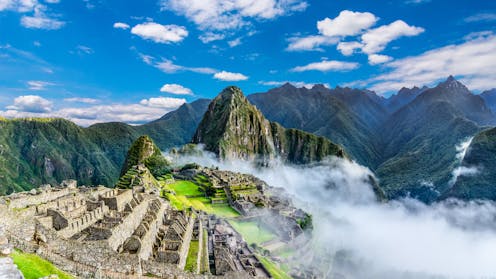
This disaster took place in the heart of what was the Inca Empire, which once spanned an area from what is today near the Colombian border down to central Chile. The Incas’ efficient storage systems, sophisticated road network and ecological management supported up to 14 million people before European conquest and colonisation.

So could some of this modern-day catastrophe have been avoided if the landscape still retained its natural tree cover – forests and high-altitude vegetation that slow water and reduce erosion?

A new paper in the journal Ambio offers a long-term perspective. I was part of a team of researchers from the University of Sussex, the International Potato Center in Lima and Cusco-based NGO Ecoan, who examined microfossils such as pollen in sediment cores from Lake Marcacocha, near Cusco. These act as an environmental archive, recording shifts in vegetation, farming and climate over centuries.

The evidence shows that from around the year 1100, during a period of global warming known as the Medieval Climatic Anomaly, Andean communities moved higher up into the mountains. They built terraces, irrigated slopes, and planted trees such as alder to make the soil more fertile and provide wood.

Alpaca
Alpaca evolved in the Andes and can live there sustainably.
Galyna Andrushko / shutterstock

Llamas and their cousins alpacas were vital as they were hardy, light-footed, and supplied wool, fuel and fertiliser. Their communal dung heaps even show up in the lake sediments, revealed by spikes in fossils of certain dung-eating mites that thrived when llama caravans were pastured nearby.

Together, these practices stabilised soils, reduced erosion, and allowed large populations to thrive in the Andes.

An ecological and social transformation

When the Spanish arrived in the 1530s, this balance was upended. New livestock – cattle, sheep and goats – trampled vegetation and eroded soils. Their free-ranging herds left waste across the landscape, unlike llamas and their easily-collectible dung.

At the same time, the Spaniards cut down forests for timber and charcoal, in contrast to the Inca who had imposed harsh penalties to protect their woodland resources. The 17th century Spanish pastor and chronicler, Bernabé Cobo, remarked that a Spanish household used as much fuel in one day as a native household would in an entire month.

The lake sediments record the ecological damage of the era: excess nutrients from dung, more erosion, and a collapse of the Inca’s sustainable land management.

This isn’t a simple story in which the Inca were perfect for the environment and the Spaniards entirely negative, but there are clear lessons to be learned. The indigenous people, normally pushed to poorer lands at high altitude, adapted to what pragmatically works.

In the Andes, many highland communities still support each other through deep-rooted traditions, involving collaboration and reciprocity. Some of the most promising climate solutions today build on this heritage.

Communities restoring Andean vegetation

One co-author of the paper, Cusco biologist Tino Aucca Chutas, founded the NGO Ecoan in 2000, to protect rare high-altitude Polylepis cloud forests. These gnarled, moss-covered trees capture water from clouds and release it slowly, making them vital for downstream water supply. Only small fragments of the original forests remain.

Gnarled, moss-covered trees.
Polylepis forest soak up moisture and release it slowly.
Ammit Jack / shutterstock

Through the regional movement Accion Andina, founded by Ecoan and non-profit organisation Global Forest Generation, 12 million Polylepis trees have been planted across the Andes. In 2023, Accion Andina was awarded the prestigious global Earthshot Prize. The ultimate goal is to fully restore the forests over the next century.

Another co-author, Graham Thiele of the International Potato Center in Lima, argues that native agroforestry – combining traditional crops, trees and llamas – should be part of a “second climate-smart agricultural revolution” in the Andes.

The Andes are at the sharp end of climate change. The glaciers are retreating, rainfall is becoming more erratic, and disasters like the Cusco floods will happen more often. But history shows societies have adapted before.

Inca-style terraces, cloud forests and llamas aren’t relics of the past – they are the tools required now, particularly vital with the glaciers soon gone. As South America faces a looming water crisis, the clock is ticking, and the lessons of the Inca may be more urgent than ever.

The Conversation

Alex Chepstow-Lusty has received funding from NERC, CNRS and the French Institute of Andean Studies.

– ref. Lessons from the Incas: how llamas, terraces and trees could help the Andes survive climate change – https://theconversation.com/lessons-from-the-incas-how-llamas-terraces-and-trees-could-help-the-andes-survive-climate-change-258148

Le cartable, miroir de l’histoire scolaire et de ses contradictions

Source: The Conversation – in French – By Sylvain Wagnon, Professeur des universités en sciences de l’éducation, Faculté d’éducation, Université de Montpellier

Dès son apparition, le cartable a endossé un rôle symbolique qui va bien au-delà de sa première fonction logistique. Participant à des stratégies de distinction sociale, il est régulièrement au cœur de débats sur le bien-être des élèves, reflétant les enjeux scolaires de l’époque.


Avec chaque rentrée scolaire revient le cortège des listes de fournitures, avec l’incontournable cartable. Cet objet familier accompagne les élèves depuis plus de deux siècles. Sa forme, son poids, son contenu et même son design racontent une histoire : celle de l’école, des liens entre les parents et l’institution scolaire, des évolutions sociales, culturelles et économiques.

De quelle manière le cartable, en tant qu’objet matériel et symbole pédagogique, reflète-t-il les transformations de l’école et les enjeux actuels de l’éducation ?

Objet historique et symbolique de la scolarisation

La fonction première du cartable est simple : transporter le matériel scolaire – manuels, cahiers, trousses – entre l’école et le domicile familial. Pourtant, dès ses origines, il dépasse cette utilité logistique. Il devient un emblème visuel de l’élève, un marqueur d’appartenance au monde scolaire.

Sa forme a évolué : confectionné artisanalement en toile ou en bois au XIXe siècle, il devient au XXe siècle un objet industrialisé. Dans les années 1960, le cuir cède la place à des matériaux plus légers et accessibles. Dès les années 1980, il devient support de consommation avec l’apparition de cartables à l’effigie de personnages de dessins animés, comme Goldorak, Barbie et plus tard Pokémon ou Diddl.

Le cartable participe à des stratégies de socialisation et de distinction sociale (« T’as ton tann’s » précise la publicité culte des années 1980) par des modèles haut de gamme ergonomiques ou des modèles genrés. Dans de nombreux cas, son choix devient un enjeu de surenchère et de conflit entre enfants et parents.

Dans certains pays, le cartable est élevé au rang de patrimoine : le randoseru japonais, offert à l’entrée à l’école primaire, est un exemple d’objet rituel, normé et transmis, souvent conservé toute une vie. À l’inverse, il peut aussi être un support de distinction générationnelle, de personnalisation (patchs, pins, porte-clés), de style instagrammable.

Avec les évolutions technologiques du XXIe siècle, il se double de cartables électroniques ou numériques et connectés intégrant une multitude de logiciels et documents, grâce à une tablette ou une clé USB.

Manuels, devoirs et transmission scolaires

Au-delà de sa forme, le contenu du cartable en dit long sur les choix éducatifs d’une époque. Il est le reflet matériel d’une pédagogie fondée sur la transmission, où les savoirs circulent via les manuels scolaires, les cahiers d’exercices et les devoirs à la maison. Support mobile d’un modèle éducatif, il est aussi le vecteur entre les parents et l’institution scolaire. Un cartable bien préparé, bien rangé, contenant l’ensemble des fournitures demandées ainsi que des manuels bien entretenus et protégés, notamment par des couvre-livres, est pour l’institution scolaire un signe de l’implication des parents.

1965 : Il y a quoi dans ton cartable ? (INA Officiel).

Depuis le milieu du XXe siècle, loin de s’alléger, le cartable n’a cessé de grossir en poids et en taille, avec l’arrivée de nouveaux cahiers au grand format, de livrets de suivi individualisé, de cahiers de correspondance et des supports numériques. Certains élèves y glissent une tablette fournie par les collectivités locales.

Mais malgré l’évolution des méthodes et des pratiques pédagogiques – désormais plus actives et centrées sur l’élève, mettant en valeur son travail personnel dans le processus d’apprentissage – le cartable demeure bel et bien présent. Ces approches, qui auraient pu conduire à un allègement du poids du cartable en limitant l’usage intensif des manuels scolaires et des devoirs, n’ont pas entraîné de réelle transformation. Le cartable reste le symbole matériel de l’école, du travail à faire à l’école comme à la maison.

En creux, le cartable révèle aussi des inégalités profondes. Certains enfants possèdent des sacs complets, ergonomiques, bien remplis ; d’autres, des sacs usés, incomplets ou parfois vides. Ces disparités traduisent des inégalités d’accès aux ressources éducatives. Les politiques de lutte contre la précarité – comme les distributions de fournitures scolaires à la rentrée par les collectivités ou par des associations – utilisent souvent le cartable comme indicateur de vulnérabilité scolaire.

Surcharge physique et fatigue cognitive

À partir des années 1990, la question du poids du cartable devient un enjeu de santé publique. Les alertes médicales se multiplient : maux de dos, fatigue musculaire, troubles posturaux. Depuis plus de vingt ans, plusieurs circulaires ministérielles recommandent de ne pas dépasser 10 % du poids de l’enfant, une norme rarement respectée encore aujourd’hui dans les écoles.

Face à ces alertes, des réponses matérielles sont mises en place : cartables à roulettes, sacs à dos ergonomiques, emploi du temps allégé, casiers dans les établissements. Des campagnes de sensibilisation, notamment des fédérations de parents d’élèves, sont lancées, mais les effets restent inégaux. Car si le contenant évolue, le contenu reste dense : manuels lourds, cahiers multiples, matériel artistique ou sportif, outils numériques.

« Le poids des cartables des collégiens » (France 3 Grand Est, 2021).

Le cartable devient alors le symptôme d’un système scolaire qui ne prend pas suffisamment en compte le bien-être des enfants. La surcharge de contenus et la pression constante des notations pèsent, au sens propre comme au figuré, sur les épaules des élèves.

Le cartable incarne alors une tension profonde entre, d’un côté, l’idéal d’une école capable de s’adapter aux mutations rapides de notre société, plus attentive aux besoins individuels et au développement global de l’enfant, et, de l’autre, l’inertie d’un modèle éducatif qui continue de reproduire les inégalités et d’imposer une vision traditionnelle de l’apprentissage.

Le cartable du futur

L’arrivée des technologies numériques reconfigure en profondeur la fonction du cartable. Celui-ci ne se limite plus au transport de cahiers et de manuels scolaires : il contient désormais des ordinateurs portables, tablettes, écouteurs, chargeurs, et autres outils numériques devenus indispensables.

L’usage généralisé des environnements numériques de travail (ENT) dans l’institution scolaire transforme la gestion des devoirs, le suivi des évaluations, ainsi que la communication entre les enseignants, les élèves et les familles.

Certaines expérimentations pédagogiques vont même jusqu’à envisager une école sans cartable physique, où l’ensemble des ressources serait dématérialisé et stocké dans le cloud. Cependant, ce modèle rencontre plusieurs limites : fracture numérique persistante, coût élevé des équipements, inégalités d’accès aux outils, mais aussi résistances culturelles, symboliques et pédagogiques face à une éducation entièrement virtuelle. Dans les faits, la matérialité du travail scolaire reste dominante, et le cartable, sous ses formes traditionnelles ou hybrides, demeure un élément central du quotidien scolaire.

Pour autant, le cartable évolue. Il tend à devenir plus écologique et éthique. Certains fabricants le conçoivent désormais à partir de matériaux recyclés et promeuvent des modèles eux-mêmes recyclables.

Le cartable reste donc un objet scolaire toujours essentiel, un témoin privilégié de l’école et de ses contradictions. Il nous invite à réfléchir à ce que signifie le fait d’apprendre, de transmettre, d’enseigner, d’éduquer. Considérer les évolutions de cet objet, ne serait-ce donc pas aussi une manière d’interroger le modèle scolaire que nous voulons construire pour demain ?

The Conversation

Sylvain Wagnon ne travaille pas, ne conseille pas, ne possède pas de parts, ne reçoit pas de fonds d’une organisation qui pourrait tirer profit de cet article, et n’a déclaré aucune autre affiliation que son organisme de recherche.

– ref. Le cartable, miroir de l’histoire scolaire et de ses contradictions – https://theconversation.com/le-cartable-miroir-de-lhistoire-scolaire-et-de-ses-contradictions-263383

La politique multiforme de la Russie en Afrique du Nord et au Moyen-Orient

Source: The Conversation – in French – By Adlene Mohammedi, Expert associé au CERI, Sciences Po

Dans ses conquêtes comme dans ses concessions, la Russie a fait le choix de la flexibilité. Le mythe d’une Russie fidèle à de supposés « alliés » s’est heurté à la prudence et à la retenue dont elle a fait preuve face à la chute de Bachar Al-Assad en Syrie. En Europe, Moscou a décidé de combattre l’ordre qui lui a été imposé au lendemain de la guerre froide, allant jusqu’à envahir son voisin ukrainien. Au Moyen-Orient, il n’est pas question de tordre le réel, mais simplement de s’adapter aux rapports de force existants.


Toute réflexion sur la politique étrangère russe en Afrique du Nord et au Moyen-Orient implique un recul critique face à un état de l’art abondant où il est souvent question d’« alliances » inexistantes, de ruptures parfois fictives ou encore de capacités surestimées. Ces lectures séduisantes car géopolitiquement digestes (et conformes à une certaine représentation de la Russie) doivent être confrontées à la réalité d’une politique relativement prudente.

Au-delà de la rhétorique anti-occidentale – qui se heurte aux incertitudes qui entourent la relation russo-américaine aujourd’hui, et plus précisément la pérennité de la convergence avec le président Donald Trump –, quelques caractéristiques de la politique russe dans la région sont identifiables.

D’abord, nous avons affaire à une politique agile et flexible, qui allie relations stato-centrées et dialogue avec les acteurs non étatiques, méthodes conventionnelles (armée, diplomatie) et outils clandestins (mercenaires).

À cette flexibilité, il faut ajouter la notion de compartimentation : d’importantes relations bilatérales et d’étroites coopérations sont soigneusement protégées de tensions qui peuvent émerger dans des zones ou sur des sujets spécifiques. En d’autres termes, pour la Russie, la multiplication des partenariats et des canaux de communication prime les divergences relatives à tel ou tel dossier.

Enfin, « l’économisation » de sa politique étrangère (le fait de considérer les relations économiques comme une priorité de celle-ci), revendiquée depuis la fin de la période soviétique et étendue à la région Afrique du Nord-Moyen-Orient depuis les années 2000, est un facteur majeur de la stratégie russe.

En somme, derrière les tournants récents – au premier rang desquels la chute de l’ancien régime syrien, dont Moscou était une sorte de puissance tutélaire –, certaines constantes doivent être identifiées.

Cette capacité d’adaptation permanente à la réalité moyen-orientale était déjà perceptible à l’époque soviétique (l’URSS n’ayant pas particulièrement encouragé l’arrivée au pouvoir de partis communistes dans le monde arabe, par exemple). Et, en dépit du souverainisme affiché par Moscou au début de la guerre en Syrie, un dialogue s’est vite installé avec plusieurs acteurs non étatiques (des groupes islamistes aux combattants kurdes des Unités de protection du peuple, YPG) – avec l’ambition de les intégrer au camp « loyaliste ».

Mais, quand Hayat Tahrir al-Cham (HTC) a pris Damas en décembre 2024, on a pu constater que les anciens protecteurs de Bachar Al-Assad étaient tout à fait enclins à discuter avec les anciens djihadistes.

Loin des logiques d’alliances

L’affaiblissement de « l’Axe de la résistance » (de l’Iran au réseau milicien pro-iranien, qui inclut le Hezbollah libanais, en passant par l’ancien pouvoir syrien) et le changement de régime en Syrie affectent assurément l’avenir de la Russie en Méditerranée.

D’ailleurs, les nouvelles autorités syriennes ont mis fin au contrat encadrant la gestion russe du port de Tartous. Le dialogue est néanmoins maintenu avec le nouveau pouvoir syrien du président Ahmad Al-Charaa (ancien chef de HTC) et l’avenir de la Russie en Syrie est loin d’être scellé.

Ce dialogue, qui peut paraître contre-intuitif, n’a rien d’étonnant. Dès la fin de l’année 2016, au lendemain de la capitulation des groupes rebelles à Alep, on a vu Moscou transformer en « modérés » des groupes islamistes en vue d’un accord (parmi ces groupes qui finiront par se rapprocher de HTC, nous retrouvons, par exemple, Ahrar al-Cham).

D’ailleurs, parmi les groupes qui atteindront Damas en décembre 2024 depuis le sud du pays, on retrouve celui d’un homme qui avait signé un accord de réconciliation avec la Russie en 2018 : Ahmad Al-Awda, chef de la 8e division du 5e corps d’armée, formé d’anciens rebelles ayant fait allégeance à Moscou, qui a fait défection avant de rejoindre HTC.

Outre cette souplesse à l’égard des groupes islamistes en Syrie, qui succède à une indéniable rigidité dans les attaques contre les différents groupes rebelles au début de l’intervention russe en 2015-2016, les transactions russo-turques sur le sort du nord du pays (notamment Idleb, où s’est cristallisée la rébellion islamiste dominée par HTC après les victoires « loyalistes » permises par la Russie) sont au cœur de l’évolution de la crise syrienne.

C’est, d’ailleurs, parce que la Turquie (craignant un nouvel afflux de réfugiés) en a fait une ligne rouge que la Russie a fait preuve de retenue devant la perspective d’une offensive « loyaliste » de grande ampleur contre HTC à Idleb.

Dans un contexte marqué par la guerre en Ukraine, les priorités de Moscou étaient claires : entre la consolidation de la relation avec la Turquie (en dépit des différends, en Syrie comme en Libye), qui inclut un volet économique et énergétique non négligeable (tourisme, fourniture de gaz, partenariat dans le secteur du nucléaire civil) et un soutien coûteux et stérile à un pouvoir syrien incapable de reconquérir l’ensemble du territoire et honni par une grande partie de la population, le choix devenait évident.

Les attaques – d’abord israéliennes, puis états-uniennes – subies par l’Iran au mois de juin dernier ont été l’occasion de rappeler cette prudence. Certes, la Russie a fermement condamné ces frappes, mais Moscou – qui avait soutenu « l’Axe de la résistance » en Syrie contre les rebelles, mais pas contre Israël – a préféré jouer la carte de la médiation.

En termes de compartimentation, deux autres exemples peuvent être signalés. La proximité avec l’Algérie (la Russie étant son principal fournisseur d’armements, même si ses exportations ont fortement baissé ces dernières années dans un contexte de guerre en Ukraine) n’a pas semblé incompatible avec le soutien apporté par les mercenaires de Wagner à des adversaires déclarés d’Alger en Libye et au Mali. Dans une moindre mesure, on a vu la Russie soutenir, au Soudan, le général Abdel Fattah al-Burhan, alors que les Émirats – partenaires privilégiés de la Russie dans d’autres dossiers – ont été régulièrement accusés par ce dernier d’actions subversives.


À lire aussi :
Soudan : deux ans de guerre et un pays dans l’abîme


Les partenaires de la Russie pratiquent cette même compartimentation : des pays aussi différents que le Maroc (gros importateur de blé russe), l’Algérie et les monarchies du Golfe ont refusé de tourner le dos à la Russie au lendemain de la guerre en Ukraine, sans pour autant renoncer au soutien de Washington.

La Russie joue un rôle central dans le premier projet nucléaire civil égyptien à Al Dabaa, en finançant 85 % de son coût total par un prêt.
Autorité égyptienne des centrales nucléaires

Israël, un atout symbolique pour la Russie ?

Les crimes commis par Israël à Gaza, dont la violence est telle que de nombreux experts et ONG internationales les qualifient de génocide, offrent à Moscou quelques victoires symboliques à peu de frais. Dans la bataille communicationnelle, l’action russe en Ukraine est atténuée par l’argument du « deux poids deux mesures ».

Toujours dans la sphère communicationnelle, on peut noter que de nombreux soutiens de Moscou affichent des positions anti-israéliennes, tandis que de nombreux sympathisants pro-ukrainiens manifestent leur solidarité avec Israël.

Bien sûr, il existe une gauche européenne qui affiche sa solidarité à la fois avec les Ukrainiens et avec les Palestiniens, mais deux tendances peuvent être constatées aussi bien parmi de nombreux élus européens que sur les réseaux sociaux : une solidarité avec l’Ukraine qui s’accompagne d’une solidarité avec Israël au nom d’un occidentalisme plus ou moins revendiqué ; des militants pro-russes jouant pleinement la carte du « deux poids deux mesures » susmentionnée, et d’une supposée connivence russe avec le « Sud global » (dont la version russe est la notion de « majorité mondiale »).

Par ailleurs, deux autres points émergent : le minimum fourni par la Russie (en termes de condamnations ou de déclarations critiquant Tel-Aviv) suffit à la distinguer de la posture des alliés « occidentaux » d’Israël qui ont longtemps offert à celui-ci « un soutien inconditionnel », ce qui permet de séduire sans trop d’efforts certaines opinions publiques, notamment dans le monde arabe. L’action israélienne est une validation du pari du rapport de force au détriment du droit et l’impunité israélienne est synonyme d’un discrédit quotidien pour les voix qui s’élèvent contre l’invasion russe tout en fermant les yeux sur les offensives israéliennes (en Palestine, mais aussi en Syrie, au Liban, en Iran…).

En définitive, la Russie s’adapte tant bien que mal à l’évolution de la situation proche-orientale en misant sur un équilibre entre fermeté sur les principes et posture de médiation ; alors que des puissances moyen-orientales, comme la Turquie et l’Arabie saoudite, tentent à leur tour d’apparaître comme des puissances médiatrices dans la guerre en Ukraine.

Des doutes subsistent sur la réalité de la relation russo-américaine : d’un côté, abandonner l’idée de faire contre-poids à l’influence de Washington contredirait la rhétorique russe de la « désoccidentalisation » ; de l’autre, une normalisation des relations avec les États-Unis peut être perçue comme un atout non négligeable en vue du dépeçage de l’Ukraine, dossier prioritaire pour Moscou.

Une chose est sûre : c’est l’ordre post-guerre froide que la Russie veut bousculer, pas l’ordre moyen-oriental.

The Conversation

Adlene Mohammedi ne travaille pas, ne conseille pas, ne possède pas de parts, ne reçoit pas de fonds d’une organisation qui pourrait tirer profit de cet article, et n’a déclaré aucune autre affiliation que son organisme de recherche.

– ref. La politique multiforme de la Russie en Afrique du Nord et au Moyen-Orient – https://theconversation.com/la-politique-multiforme-de-la-russie-en-afrique-du-nord-et-au-moyen-orient-262888