60 % des Africains ne croient pas que la démocratie serve leurs intérêts : comment les parlements peuvent remédier à cela

Source: The Conversation – in French – By Temitayo Isaac Odeyemi, Research fellow, International Development Department, University of Birmingham

Partout en Afrique, la démocratie est mise à l’épreuve par la montée de l’autoritarisme et des coups d’État militaires, ainsi que par un fossé grandissant entre les citoyens et les institutions censées les représenter.

Le dernier rapport phare d’Afrobarometer, un réseau de recherche panafricain, lance un avertissement solennel. Publié en juillet 2025, le rapport intitulé « Citizen Engagement, Citizen Power » (Engagement citoyen, pouvoir citoyen) révèle que plus de 60 % des Africains sont insatisfaits du fonctionnement de la démocratie dans leur pays. Le soutien à la démocratie reste élevé, mais la confiance en son efficacité s’estompe, en particulier lorsque les citoyens se sentent exclus d’une participation significative aux décisions qui les concernent.

En termes simples, la crise de la participation résulte de l’absence des citoyens dans la salle où sont prises les décisions qui les concernent. Cet article présente des moyens pratiques permettant aux parlements d’impliquer les citoyens.

Je suis politologue et mes travaux en politique comparée portent sur les institutions politiques et l’engagement démocratique en Afrique. Mes recherches plus générales s’appuient sur ma thèse de doctorat sur le développement institutionnel et l’engagement public législatif au Nigeria.

Ces recherches ont montré que la lassitude démocratique a de nombreuses causes, notamment l’insécurité et les besoins socio-économiques non satisfaits. Mais le problème plus profond est une crise de la participation, où les décisions qui affectent les citoyens sont prises sans consultation. Trop souvent, les Africains ont le sentiment que les décisions sont prises pour eux, et non avec eux. Le pouvoir reste concentré dans les cercles élitistes, tandis que l’engagement public est réduit à des gestes symboliques.

Dans cette optique, la démocratie est quelque chose qui se pratique dans les capitales plutôt que dans les communautés.

Pour que cela change, les parlements doivent prendre l’initiative. En tant qu’institutions les plus visibles liées à la représentation, ils peuvent reconnecter les citoyens au processus démocratique. Lorsque les parlements incitent les citoyens à participer, ils contribuent à restaurer la confiance du public. Lorsqu’ils n’y parviennent pas, c’est tout le projet démocratique qui s’en trouve affaibli.

Il est encourageant de constater que de nombreuses constitutions africaines, notamment celles du Kenya, de l’Afrique du Sud, Zambie et Zimbabwe exigent désormais la participation du public à l’élaboration des lois.

Les parlements font de plus en plus référence à l’engagement citoyen dans leurs plans stratégiques, et des modèles remarquables tels que la participation publique offrent des cadres pratiques.

Les efforts de l’Afrique du Sud ont contribué à une augmentation de 27 % à une meilleure compréhension par le public des mandats du parlement. Les données provenant de la société civile et de recherches indépendantes corroborent cette affirmation.

Mais dans de nombreux pays, la mise en œuvre reste inégale et la plupart des parlements ne parviennent pas à impliquer suffisamment les citoyens.

Selon les données, la confiance dans les parlements a baissé de 19 points depuis 2011. Seuls 37 % des Africains disent avoir confiance dans ces organes politiques et représentatifs super importants.

On a l’impression que la participation publique est souvent juste pour la forme et que les parlements ne s’engagent avec les citoyens que quand ça les arrange politiquement.

Deux exemples récents illustrent le coût de ce désengagement. Au Kenya, des manifestations de masse contre le projet de loi de finances 2024 ont éclaté après que le parlement a adopté des mesures fiscales controversées sans consultation publique adéquate. Les réactions violentes, notamment l’assaut du parlement, ont reflété la colère généralisée non seulement à l’égard du contenu du projet de loi, mais aussi à l’égard du manque de participation des citoyens à son élaboration.

Au Nigeria, les législateurs ont rétabli en une seule journée l’hymne national de l’époque coloniale, sans consulter la population.

L’une des raisons pour lesquelles la confiance dans les parlements est en baisse est qu’il existe des lacunes dans la manière dont cette institution écoute et agit.

Comme le montrent les données d’Afrobarometer, les citoyens ont toujours considéré que les parlements jouaient un rôle clé dans l’élaboration des lois et la responsabilisation des dirigeants. Le défi ne réside donc pas dans ce que fait ou devrait faire cette institution, mais dans la manière dont elle le fait. Ainsi, mener des actions visibles est un moyen pour le parlement de restaurer la confiance du public.

Ce que nous apprend Afrobarometer sur la participation

Le message de Citizen Engagement, Citizen Power est clair : les citoyens veulent plus que le simple droit de vote. Ils veulent influencer les décisions, demander des comptes aux dirigeants et co-créer des solutions aux défis auxquels ils sont confrontés. La participation n’est pas un luxe, elle est essentielle à la légitimité et à l’efficacité des institutions démocratiques.

Pour les parlements, cela commence par la communication. De nombreux citoyens ignorent tout simplement ce que fait leur parlement ou comment l’influencer. Les sites web des parlements sont souvent obsolètes, les réseaux sociaux sous-utilisés et les documents législatifs remplis de jargon inaccessible.

Les parlements doivent utiliser des résumés en langage clair, des infographies et des documents axés sur les citoyens pour expliquer les questions clés. Cela est urgent à une époque marquée par la désinformation et les deepfakes.

La radio reste l’un des outils les plus puissants et les plus accessibles pour sensibiliser la population à la démocratie. Les assemblées législatives qui utilisent déjà des émissions de radio pour expliquer les projets de loi et recueillir des commentaires devraient étendre ces initiatives, en particulier dans les langues locales. Les podcasts, les dialogues publics et les événements communautaires peuvent également susciter l’engagement.

Mais l’engagement ne concerne pas seulement l’information, il concerne aussi la présence. De nombreux parlements restent physiquement et culturellement éloignés des personnes qu’ils servent. Les membres du parlement sont de plus en plus issus des élites riches et orientées vers les affaires, ce qui renforce l’impression que le parlement sert ses propres intérêts.

Autrefois, les enseignants, les fonctionnaires et les dirigeants communautaires étaient plus nombreux dans les assemblées législatives.

Pour combler ce fossé, les parlements doivent investir dans un engagement décentralisé. Cela implique notamment d’organiser des audiences en dehors des capitales, de mener des actions de sensibilisation dans les zones rurales et de nouer des partenariats avec les écoles, les universités et les institutions confessionnelles.

Il est essentiel que la consultation soit authentique. Trop souvent, la participation se limite aux ONG d’élite des centres urbains. Celles-ci jouent un rôle important, mais ne peuvent se substituer à un engagement à grande échelle. Le Bureau de la démocratie parlementaire d’Afrique du Sud offre un modèle : une unité de sensibilisation dédiée qui s’efforce d’inclure les voix rurales et de traduire les contributions du public en politiques. Des efforts similaires à travers le continent devraient garantir que la participation devienne une pratique courante et que les citoyens puissent suivre l’impact de leurs contributions sur les résultats.

Les structures communautaires existantes peuvent accueillir des assemblées et des forums citoyens. La technologie peut également aider, mais elle doit être utilisée de manière inclusive. Avec près de la moitié de la population vivant dans des zones rurales et un tiers n’ayant pas reçu d’éducation formelle (https://databrowser.uis.unesco.org/ « »), l’engagement numérique risque d’exclure les groupes qui ont le plus besoin de faire entendre leur voix.

La participation, bouée de sauvetage de la démocratie

Le rapport Afrobarometer montre que les citoyens ne se détournent pas de la démocratie en soi. Ils se détournent des institutions démocratiques qui ne les incluent pas. La participation peut reconnecter les citoyens à la démocratie et restaurer la confiance dans la gouvernance. Mais seulement si elle est significative, durable et inclusive.

Les événements au Kenya et au Nigeria démontrent les risques de l’exclusion. Si les parlements légifèrent sans le peuple, les citoyens chercheront à se faire entendre ailleurs, par le biais de manifestations, de mouvements populistes ou d’alternatives autoritaires.

The Conversation

Temitayo Isaac Odeyemi does not work for, consult, own shares in or receive funding from any company or organisation that would benefit from this article, and has disclosed no relevant affiliations beyond their academic appointment.

– ref. 60 % des Africains ne croient pas que la démocratie serve leurs intérêts : comment les parlements peuvent remédier à cela – https://theconversation.com/60-des-africains-ne-croient-pas-que-la-democratie-serve-leurs-interets-comment-les-parlements-peuvent-remedier-a-cela-264555


Can Israel use self-defence to justify its strike on Qatar under the law?

Source: The Conversation – Global Perspectives – By Shannon Bosch, Associate Professor (Law), Edith Cowan University

Israel launched a targeted airstrike on the Hamas leadership in Doha, the capital of Qatar, on Tuesday. Six people were reported killed, including the son of a senior Hamas figure.

Global condemnation was swift. The Qatari government called the strike a “clear breach of the rules and principles of international law”, a sentiment echoed by Turkish President Recep Tayyip Erdogan, Malaysian Prime Minister Anwar Ibrahim, and others.

UN Secretary-General António Guterres called the attack “a flagrant violation of sovereignty and the territorial integrity of Qatar”. The prime ministers of both the UK and Australia also said the strike violated the sovereignty of Qatar.

Even US President Donald Trump, Israel’s strongest ally, distanced himself from the attack:

Unilaterally bombing inside Qatar, a Sovereign Nation and close Ally of the United States, that is working very hard and bravely taking risks with us to broker Peace, does not advance Israel or America’s goals.

So, what does the law say about this? Was Israel’s attack against Hamas on the territory of another country lawful?

Israel’s justification

Israeli Prime Minister Benjamin Netanyahu justified the strike by saying it targeted the political leadership of Hamas in retaliation for two attacks: a shooting in Jerusalem that killed six people and an attack on an army camp in Gaza that killed four soldiers. He said:

Hamas proudly took credit for both of these actions. […] These are the same terrorist chiefs who planned, launched and celebrated the horrific massacres of October 7th.

Netanyahu speaks after the Qatar strike.

What does international law say?

Article 2(4) of the UN Charter prohibits the use of force against the “territorial integrity or political independence” of another state.

Any use of force requires either the authorisation of the UN Security Council, or a justification that force is being used strictly in self-defence and in accordance with Article 51 of the UN Charter.

So, does this mean Israel could claim self-defence against Hamas’ leadership in Qatar, if the group did indeed direct the two attacks against its citizens in Jerusalem and Gaza?

The answer is complicated.

Self-defence against groups like Hamas

The International Court of Justice (ICJ) has repeatedly stressed the paramount importance of territorial sovereignty in international law.

As such, it has restricted the use of self-defence to armed attacks that can be attributable to a state, not merely to non-state actors operating from a state’s territory.

After the September 11 2001 terror attacks, the United States and other countries claimed they could use force in self-defence against non-state actors (such as terrorist groups) that are sheltering and operating from another state’s territory, even if that state was not directly involved.

In response to these developments, Sir Daniel Bethlehem, an expert in international law and foreign policy advisor to the UK government, proposed several principles aimed at curtailing this justification within the intent of Article 51.

The “Bethlehem principles”, which remain contested, argue that Article 51 can cover actual or imminent attacks by terrorist groups, but only if necessity (the use of force in self-defence is truly a last resort) and proportionality are satisfied.

Moreover, as a rule, force on another state’s soil requires the consent of that state. The only narrow exceptions are when there’s a reasonable, objective belief the host state is colluding with the group or is unable or unwilling to stop it – and no other reasonable option short of force exists.

Israel argues Hamas’ leadership based abroad in countries such as Qatar, Lebanon and Iran remains part of the command structure that orchestrates hostilities against its soldiers in Gaza and citizens in Israel.

That alone, however, is not enough to justify self-defence according to the Bethlehem principles.

By Netanyahu’s own admission, the objective of the Qatar strike was retaliatory, not to prevent an ongoing or imminent attack.

Questions could also be raised about whether proportionality was observed given the diplomatic context of striking a sovereign state and the potential for disproportionate civilian harm in this part of Doha, which houses many diplomatic residences.

Targeting political leaders meeting in a third state — especially one engaged in mediation — also raises questions about whether force was the only means available to address the threat posed by Hamas in this situation.

Moreover, under these principles, Israel would need to demonstrate that Qatar is either colluding with or is unable or unwilling to stop Hamas – and that there was no other effective or reasonable way to respond to the situation.

Qatar has hosted Hamas’ political offices since 2012 and has been one of the group’s main financial backers since it came to power in Gaza.

At the same time, Qatar has played an important mediation role since the October 7 attacks.

This makes it difficult to argue Qatar is unwilling or unable to neutralise Hamas’ operations from its territory. Its mediation would also suggest there is a reasonably effective alternative to force to counter Hamas’ actions.

Final verdict

Without UN Security Council authorisation, Israel’s strikes on Qatar do appear to be a violation of territorial sovereignty and possibly an act of aggression under the UN Charter.

This is further bolstered by the narrow approach the ICJ has taken on self-defence against non-state actors in third-party states, and its stringent requirements of proportionality and necessity – neither of which appear to have been met here.

The Conversation

Shannon Bosch does not work for, consult, own shares in or receive funding from any company or organisation that would benefit from this article, and has disclosed no relevant affiliations beyond their academic appointment.

– ref. Can Israel use self-defence to justify its strike on Qatar under the law? – https://theconversation.com/can-israel-use-self-defence-to-justify-its-strike-on-qatar-under-the-law-264975

10 years ago, gravitational waves changed astronomy. A new discovery shows there’s more to come

Source: The Conversation – Global Perspectives – By Simon Stevenson, ARC DECRA Fellow, Swinburne University of Technology

Carl Knox, OzGrav, Swinburne University of Technology

Ten years ago, scientists heard the universe rumble for the first time. That first discovery of gravitational waves proved a key prediction from Albert Einstein’s theory of general relativity and began a new era of astronomy.

Now, a new gravitational-wave discovery marks the anniversary of this major breakthrough. Published today in Physical Review Letters, it puts to the test a theory from another giant of science, Stephen Hawking.

What are gravitational waves?

Gravitational waves are “ripples” in the fabric of space-time that travel at the speed of light. They are caused by highly accelerated massive objects, such as colliding black holes or the mergers of massive star remains known as neutron stars.

These ripples propagating through the universe were first directly observed on September 14 2015 by the twin Laser Interferometer Gravitational-wave Observatory (LIGO) detectors in the United States.


Read more:
Gravitational waves discovered: how did the experiment at LIGO actually work?


That first signal, called GW150914, originated from the collision of two black holes, each more than 30 times the mass of the Sun and more than a billion light years away from Earth.

This was the first direct proof of gravitational waves, exactly as predicted by Einstein’s theory of relativity 100 years earlier. The discovery led to the award of the 2017 Nobel Prize in Physics to Rainer Weiss, Barry Barish and Kip Thorne for their pioneering work on the LIGO collaboration.

This simulation shows the gravitational waves produced by two orbiting black holes.

Hundreds of signals in less than a decade

Since 2015, more than 300 gravitational waves have been observed by LIGO, along with the Italian Virgo and Japanese KAGRA detectors.

Just a few weeks ago, the international LIGO/Virgo/KAGRA collaboration released the latest results from their fourth observing run, more than doubling the number of known gravitational waves.

Now, ten years after the first discovery, an international collaboration including Australian scientists from the Australian Research Council’s Centre of Excellence for Gravitational Wave Discovery (OzGrav), has announced a new gravitational-wave signal, GW250114.

The signal is almost a carbon copy of that very first gravitational wave signal, GW150914.

The observed gravitational wave GW250114 (LVK 2025). The observed data is shown in light grey. The smooth blue curve represents the best fit theoretical waveform models, showing excellent agreement with the observed signal.
LIGO, Virgo and KAGRA collaboration

The black hole collision responsible for GW250114 had very similar physical properties to GW150914. However, due to significant upgrades to the gravitational wave detectors over the past ten years, the new signal is seen much more clearly (almost four times as “loud” as GW150914).

Excitingly, it’s allowed us to put to the test the ideas of another groundbreaking physicist.

Hawking was right, too

More than 50 years ago, physicists Stephen Hawking and Jacob Bekenstein independently formulated a set of laws that describe black holes.

Hawking’s second law of black hole mechanics, also known as Hawking’s area theorem, states that the area of the event horizon of a black hole must always increase. In other words, black holes can’t shrink.

Meanwhile, Bekenstein showed that the area of a black hole is directly related to its entropy, a scientific measure of disorder. The second law of thermodynamics tells us that entropy must always increase: the universe is always getting messier. Since the entropy of a black hole must also increase with time, it tells us that its area must also increase.

How can we test these ideas? Colliding black holes, it turns out, are the perfect tool.

The precision of this recent measurement allowed scientists to perform the most precise test of Hawking’s area theorem to date.

Previous tests using the first detection, GW150914, showed that signal was in good agreement with Hawking’s law, but could not confirm it conclusively.

Black holes are surprisingly simple objects. The horizon area of a black hole depends on its mass and spin, the only parameters necessary to describe an astrophysical black hole. In turn, the masses and spins determine what the gravitational wave looks like.

By separately measuring the masses and spins of the incoming pair of black holes, and comparing these to the mass and spin of the final black hole left over after the collision, scientists were able to compare the areas of the two individual colliding black holes to the area of the final black hole.

The data show excellent agreement with the theoretical prediction that the area should increase, confirming Hawking’s law without a doubt.

Which giant of science will we put to the test next? Future gravitational wave observations will allow us to test more exotic scientific theories, and maybe even probe the nature of the missing components of the universe – dark matter and dark energy.

The Conversation

Simon Stevenson receives funding from the Australian Research Council. He works for Swinburne University of Technology. He is a member of OzGrav and the LIGO Scientific collaboration.

– ref. 10 years ago, gravitational waves changed astronomy. A new discovery shows there’s more to come – https://theconversation.com/10-years-ago-gravitational-waves-changed-astronomy-a-new-discovery-shows-theres-more-to-come-264131

Blue, green, brown, or something in between – the science of eye colour explained

Source: The Conversation – Global Perspectives – By Davinia Beaver, Postdoctoral research fellow, Clem Jones Centre for Regenerative Medicine, Bond University

Pouya Hajiebrahimi/Unsplash

You’re introduced to someone and your attention catches on their eyes. They might be a rich, earthy brown, a pale blue, or the rare green that shifts with every flicker of light. Eyes have a way of holding us, of sparking recognition or curiosity before a single word is spoken. They are often the first thing we notice about someone, and sometimes the feature we remember most.

Across the world, human eyes span a wide palette. Brown is by far the most common shade, especially in Africa and Asia, while blue is most often seen in northern and eastern Europe. Green is the rarest of all, found in only about 2% of the global population. Hazel eyes add even more diversity, often appearing to shift between green and brown depending on the light.

So, what lies behind these differences?

It’s all in the melanin

The answer rests in the iris, the coloured ring of tissue that surrounds the pupil. Here, a pigment called melanin does most of the work.

Brown eyes contain a high concentration of melanin, which absorbs light and creates their darker appearance. Blue eyes contain very little melanin. Their colour doesn’t come from pigment at all but from the scattering of light within the iris, a physical effect known as the Tyndall effect, a bit like the effect that makes the sky look blue.

In blue eyes, the shorter wavelengths of light (such as blue) are scattered more effectively than longer wavelengths like red or yellow. Due to the low concentration of melanin, less light is absorbed, allowing the scattered blue light to dominate what we perceive. This blue hue results not from pigment but from the way light interacts with the eye’s structure.

Green eyes result from a balance, a moderate amount of melanin layered with light scattering. Hazel eyes are more complex still. Uneven melanin distribution in the iris creates a mosaic of colour that can shift depending on the surrounding ambient light.

What have genes got to do with it?

The genetics of eye colour is just as fascinating.

For a long time, scientists believed a simple “brown beats blue” model, controlled by a single gene. Research now shows the reality is much more complex. Many genes contribute to determining eye colour. This explains why children in the same family can have dramatically different eye colours, and why two blue-eyed parents can sometimes have a child with green or even light brown eyes.

Eye colour also changes over time. Many babies of European ancestry are born with blue or grey eyes because their melanin levels are still low. As pigment gradually builds up over the first few years of life, those blue eyes may shift to green or brown.

In adulthood, eye colour tends to be more stable, though small changes in appearance are common depending on lighting, clothing, or pupil size. For example, blue-grey eyes can appear very blue, very grey or even a little green depending on ambient light. More permanent shifts are rarer but can occur as people age, or in response to certain medical conditions that affect melanin in the iris.

The real curiosities

Then there are the real curiosities.

Heterochromia, where one eye is a different colour from the other, or one iris contains two distinct colours, is rare but striking. It can be genetic, the result of injury, or linked to specific health conditions. Celebrities such as Kate Bosworth and Mila Kunis are well-known examples. Musician David Bowie’s eyes appeared as different colours because of a permanently dilated pupil after an accident, giving the illusion of heterochromia.

A collage of three people, each with different coloured eyes.
Celebrities such as David Bowie, Mila Kunis and Kate Bosworth (L to R) are well-known examples of people whose eyes are different colours.
Wikimedia Commons/The Conversation

In the end, eye colour is more than just a quirk of genetics and physics. It’s a reminder of how biology and beauty intertwine. Each iris is like a tiny universe, rings of pigment, flecks of gold, or pools of deep brown that catch the light differently every time you look.

Eyes don’t just let us see the world, they also connect us to one another. Whether blue, green, brown, or something in-between, every pair tells a story that’s utterly unique, one of heritage, individuality, and the quiet wonder of being human.

The Conversation

Davinia Beaver does not work for, consult, own shares in or receive funding from any company or organisation that would benefit from this article, and has disclosed no relevant affiliations beyond their academic appointment.

– ref. Blue, green, brown, or something in between – the science of eye colour explained – https://theconversation.com/blue-green-brown-or-something-in-between-the-science-of-eye-colour-explained-264681

Want more protein for less money? Don’t be fooled by the slick black packaging

Source: The Conversation – Global Perspectives – By Emma Beckett, Adjunct Senior Lecturer, Nutrition, Dietetics & Food Innovation – School of Health Sciences, UNSW Sydney

The Conversation, CC BY-SA

If you’ve been supermarket shopping lately, you might have noticed more foods with big, bold protein claims on black packaging – from powders and bars to yoghurt, bread and even coffee.

International surveys show people are shopping for more protein because they think it’ll help their fitness and health. But clever marketing can sway our judgement too.

Before your next shop, here’s what you should know about how protein is allowed to be sold to us. And as a food and nutrition scientist, I’ll offer some tips for choosing the best value meat or plant-based protein for every $1 you spend – and no, protein bars aren’t the winner.

‘Protein’ vs ‘increased protein’ claims

Let’s start with those “high protein” or “increased protein” claims we’re seeing more of on the shelves.

In Australia and New Zealand, there are actually rules and nuances about how and when companies can use those phrases.

Under those rules, labelling a product as a “protein” product implies it’s a “source” of protein. That means it has at least 5 grams of protein per serving.

“High protein” doesn’t have a specific meaning in the food regulations, but is taken to mean “good source”. Under the rules, a “good source” should have at least 10 grams of protein per serving.

Then there is the “increased protein” claim, which means it has at least 25% more protein than the standard version of the same food.

If you see a product labelled as a “protein” version, you might assume it has significantly more protein than the standard version. But this might not be the case.

Take, for example, a “protein”-branded, black-wrapped cheese: Mini Babybel Protein. It meets the Australian and New Zealand rules of being labelled as a “source” of protein, because it has 5 grams of protein per serving (in this case, in a 20 gram serve of cheese).

But what about the original red-wrapped Mini Babybel cheese? That has 4.6g of protein per 20 gram serving.

The difference between the original vs “protein” cheese is not even a 10% bump in protein content.

Black packaging by design

Food marketers use colours to give us signals about what’s in a package.

Green signals natural and environmentally friendly, reds and yellows are often linked to energy, and blue goes with coolness and hydration.

These days, black is often used as a visual shorthand for products containing protein.

But it’s more than that. Research also suggests black conveys high-quality or “premium” products. This makes it the perfect match for foods marketed as “functional” or “performance-boosting”.

The ‘health halo’ effect

When one attribute of a food is seen as positive, it can make us assume the whole product is health-promoting, even if that’s not the case. This is called a “health halo”.

For protein, the glow of the protein halo can make us blind to the other attributes of the food, such as added fats or sugars. We might be willing to pay more too.

It’s important to know protein deficiency is rare in countries like Australia. You can even have too much protein.

How to spend less to get more protein

If you do have good reason to think you need more protein, here’s how to get better value for your money.

Animal-based core foods are nutritionally dense and high-quality protein foods. Meats, fish, poultry, eggs, fish, and cheese will have between 11 to 32 grams of protein per 100 grams.

That could give you 60g in a chicken breast, 22g in a can of tuna, 17g in a 170g tub of Greek yoghurt, or 12g in 2 eggs.

In the animal foods, chicken is economical, delivering more than 30g of protein for each $1 spent.

But you don’t need to eat animal products to get enough protein.

In fact, once you factor in costs – and I made the following calculations based on recent supermarket prices – plant-based protein sources become even more attractive.

Legumes (such as beans, lentils and soybeans) have about 9g of protein per 100g, which is about half a cup. Legumes are in the range of 20g of protein per dollar spent, which is a similar cost ratio to a protein powder.

5 bowls of different nuts, including unshelled peanuts.
Nuts, seeds, legumes and oats are all good plant-based options.
Towfiqu Barbhuiya/Unsplash, CC BY

Nuts and seeds like sunflower seeds can have 7g in one 30g handful. Even one cup of simple frozen peas will provide about 7g of protein.

Peanuts at $6 per kilogram supply 42g of protein for each $1 spent.

Dry oats, at $3/kg have 13g of protein per 100g (or 5g in a half cup serve), that’s 33g of protein per dollar spent.

In contrast, processed protein bars are typically poor value, coming in at between 6-8g of protein per $1 spent, depending on if you buy them in a single serve, or in a box of five bars.

Fresh often beats processed on price and protein

Packaged products offer convenience and certainty. But if you rely on convenience, colours and keywords alone, you might not get the best deals or the most nutritious choices.

Choosing a variety of fresh and whole foods for your protein will provide a diversity of vitamins and minerals, while reducing risks associated with consuming too much of any one thing. And it can be done without breaking the bank.

The Conversation

Emma Beckett has received funding for research or consulting from Mars Foods, Nutrition Research Australia, NHMRC, ARC, AMP Foundation, Kellogg and the University of Newcastle. She works for FOODiQ Global and is the author of ‘You Are More Than What You Eat’. She is a member of committees/working groups related to nutrition and food, including the Australian Academy of Science, the National Health and Medical Research Council, and is a member of the Nutrition Society of Australia and the Australian Institute of Food Science and Technology.

– ref. Want more protein for less money? Don’t be fooled by the slick black packaging – https://theconversation.com/want-more-protein-for-less-money-dont-be-fooled-by-the-slick-black-packaging-264039

Deadly Nepal protests reflect a wider pattern of Gen Z political activism across Asia

Source: The Conversation – Global Perspectives – By DB Subedi, Lecturer, The University of Queensland

Earlier this week, thousands of mainly young people in Nepal took to the streets in mass protests triggered by the government’s decision to ban 26 social media platforms.

Some 22 people died and hundreds were injured within in a few hours in the clashes between protesters and police.

Prime Minister KP Sharma Oli and his cabinet ministers resigned in the face of growing public outrage and widespread criticism, both domestically and internationally, over the protesters’ deaths.

What happened?

Provoked by the deaths of the protesters on September 8, angry, young demonstrators burned down several government buildings across the country, including the parliament and supreme court.

Several politicians’ residences were also set on fire, while leaders of major political parties went into hiding.

The Nepal Army is currently mobilising troops on the streets to take control of the situation, but power has not yet been officially transferred to a new government.

Unrest leads to protests

Political protests and public uprisings are not new in Nepal. The country’s first mass uprising in 1990 (labelled “Jana Andolan I”) and the second in 2006 (“Jana Andolan II”) both called for major changes in the political system.

The governments that followed failed to meet the public’s hopes for real reforms.

For the first time in the country’s history, a protest of this size has been entirely led by young people from Generation Z (born roughly between 1997 and 2012). Out of nearly 30 million people in Nepal, about 40% belong to this generation.

Growing up in a digital culture shaped by internet and social media platforms, this generation has lived through Nepal’s worst years of political instability and frequent government changes. There have been 14 governments in the past 15 years.

In 2008, Nepal declared a shift from its constitutional monarchical system to a federal republic system, but the new federal constitution was only passed in 2015. But this massive change has delivered few improvements for everyday people. Despite some improvements in roads, electricity and the internet, inequality, political corruption, elitism and nepotism continue.

Making the situation even worse is an unemployment rate that exceeds 10% overall – and more than 20% for young people.

The social media ban that sparked action

In a country where more than 73% of households own a mobile phone and about 55% of the population uses the internet, social media platforms are not only a source of entertainment and networking, but also a way of amplifying political voices – especially when traditional media is perceived as being biased towards political interests.

Nepal’s Gen Z is using social media both as a social and political space. #Nepobaby is often trending on TikTok, while Instagram posts detail the lavish lifestyle that politicians and their children enjoy compared to the hard reality of many young people, who work low-wage jobs or have to leave the country just to survive.

On September 3, the government banned these social media platforms, citing a directive requiring companies to register in Nepal. The government justified the move as necessary to control fake news, misinformation and disinformation.

But Gen Z saw the ban as censorship. The frustration spreading on social media quickly turned into a nationwide uprising.

The government lifted the ban on September 8, but it could not save the coalition government.

Similarities in other countries

The protests in Nepal mirror similar movements led recently by young people elsewhere in Asia, especially Bangladesh, Sri Lanka and Indonesia.

Like Bangladesh in 2024, the young protesters in Nepal were frustrated with corruption and joblessness.

Similar to Sri Lanka’s “Aragalaya” movement in 2022, Nepal’s protesters fought against inequality and nepotism, resulting in the collapse of the government.

And like Indonesia’s student protests in recent weeks, the Nepali protesters relied on memes, hashtags and digital networks, rather than party machines to organise.

Where to from here?

What comes next for Nepal is unclear. The army chief is now coordinating with Gen Z activists to set up an interim civilian government that will prepare for fresh elections.

This is a remarkable shift: the youth who shook the streets are being asked to help shape the country’s political future.

Yet, challenges remain.

The young protesters are still a loose, leaderless network lacking the experience to run a state system. After an online meeting September 10, the protesters reportedly agreed to propose former Chief Justice Sushila Karki, now in her 70s, as a leader of the interim civilian government.

Nepal’s key institutions, such such as the courts, bureaucracy and security forces, are still largely dominated by older elites, as well. Any attempt to shift power may face resistance.

Perhaps Nepal can take a lesson from Bangladesh’s recent experience, where young protesters stepped in to help form an interim government, under the leadership of Nobel Peace Prize winner Muhammad Yunus.

Despite the challenges ahead, the uprising has provided a historic opportunity to fix Nepal’s broken government system. But real change depends on how power shifts from the old guard to new leaders, and whether they can address the structural and systemic issues that drove young people to the streets.

The Conversation

DB Subedi does not work for, consult, own shares in or receive funding from any company or organisation that would benefit from this article, and has disclosed no relevant affiliations beyond their academic appointment.

– ref. Deadly Nepal protests reflect a wider pattern of Gen Z political activism across Asia – https://theconversation.com/deadly-nepal-protests-reflect-a-wider-pattern-of-gen-z-political-activism-across-asia-264968

Uno de cada tres niños usa el móvil en los restaurantes de comida rápida: ¿qué consecuencias tiene?

Source: The Conversation – (in Spanish) – By Sonia de Paz Cantos, Salud Pública, Universitat Internacional de Catalunya

Anna Kraynova/Shutterstock

En un mundo donde la tecnología está en todas partes, ver a menores de corta edad usando móviles o tabletas se ha convertido en una imagen cotidiana.

Por ejemplo, cada vez es más habitual entrar en un restaurante y ver a niños y niñas absortos mirando la pantalla mientras comen, sin prestar atención a lo que pasa a su alrededor.

Esta imagen, especialmente recurrente en restaurantes de comida rápida, fue precisamente lo que nos llevó a investigar. El resultado principal de nuestro estudio, realizado con 1 616 menores de entre 4 y 10 años en establecimientos de Barcelona, es que casi uno de cada tres niños (el 28,1 %) usó el móvil antes, durante o después de la comida, pero también pudimos extraer otras interesantes conclusiones.

El móvil como “niñera” digital

En los restaurantes de comida rápida suele haber ruido, colas y un ambiente lleno de estímulos visuales y sonoros. En ese contexto, muchos padres o cuidadores recurren al móvil para calmar, entretener o simplemente tener a los niños ocupados.

Detectamos una mayor utilización del teléfono inteligente en niños mayores (de 7 a 10 años), en menores con comportamientos más inquietos y en familias con poca interacción entre adultos y niños. Uno de los hallazgos más preocupantes fue comprobar que cuando no había ningún tipo de interacción entre el cuidador y el menor, la probabilidad de uso del móvil aumentaba casi un 60 %.

Es decir, cuanto menos se hablaba, más se empleaba el dispositivo. Esto supone una pérdida de oportunidades para fortalecer el vínculo familiar durante la comida, un momento clave para la convivencia y la educación emocional.

El uso de los móviles entre los menores cada vez está más extendido.

¿Quién permite más el móvil en la mesa?

También detectamos que los niños a cargo de progenitores menores de 30 años hacían un mayor uso del móvil. Es posible que los adultos jóvenes normalicen más la utilización de pantallas en la vida cotidiana. Además, observamos que los cuidadores varones (padres u otros acompañantes masculinos) eran más permisivos que las mujeres.

También influyen los recursos disponibles en el local. Cuando el restaurante ofrecía juguetes, juegos o materiales para pintar, la utilización del dispositivo disminuía de forma clara. Esto indica que, ante la falta de estímulos no digitales, el teléfono se convierte en el entretenimiento por defecto.

Pantallas, comida y salud

Este comportamiento afecta a directamente a la alimentación y la salud.
En primer lugar, los niños que usan el móvil durante la comida prestan menos atención a lo que se llevan a la boca. Ingieren más calorías, por lo que aumenta el riesgo de sobrepeso u obesidad.

Además, la atención al dispositivo puede alterar la sensación de saciedad, fomentar una alimentación distraída y reducir el disfrute de los alimentos. También los expone a anuncios de comida poco saludable, lo que puede influir en sus preferencias.

Por eso, el uso de pantallas en la mesa no es solo una cuestión de modales. Es también una cuestión de salud pública.

¿Qué podemos hacer?

No se trata de prohibir la tecnología, sino de aprender a convivir con ella de manera equilibrada. Los dispositivos móviles forman parte de nuestra vida cotidiana y también de la de los niños. Negar su existencia o proscribir su uso no solo es poco realista, sino que puede resultar contraproducente.

Las comidas son una oportunidad para hablar en familia, enseñar hábitos saludables y transmitir valores. Algunas ideas sencillas pueden ayudar:

  1. Fomentar la conversación sobre temas cotidianos.

  2. Ofrecer alternativas no digitales: cuentos, juegos o materiales para colorear.

  3. Dar ejemplo: si los adultos guardan el móvil, los niños también lo harán.

  4. Establecer normas claras: sin pantallas durante las comidas, tanto en casa como fuera.

Además, las familias no están solas. Los restaurantes también pueden ayudar creando espacios más amigables para la infancia. Por ejemplo, ofreciendo materiales para jugar o pintar, o habilitando zonas que fomenten la interacción.

Aunque nuestra investigación se llevó a cabo en España, y concretamente en Barcelona, sus conclusiones son aplicables en muchos otros contextos. Según el Instituto Nacional de Estadística, en el año 2024, el 69,6 % de niños de entre 10 y 15 años usó un teléfono móvil.

Por ello, es urgente promover la concienciación sobre los riesgos del uso excesivo. Los autores del estudio hacemos un llamado a madres, padres y cuidadores para reflexionar sobre estos hallazgos y promover un desarrollo infantil más saludable, fomentando una mayor interacción cara a cara durante las comidas.

The Conversation

Sonia de Paz Cantos no recibe salario, ni ejerce labores de consultoría, ni posee acciones, ni recibe financiación de ninguna compañía u organización que pueda obtener beneficio de este artículo, y ha declarado carecer de vínculos relevantes más allá del cargo académico citado.

– ref. Uno de cada tres niños usa el móvil en los restaurantes de comida rápida: ¿qué consecuencias tiene? – https://theconversation.com/uno-de-cada-tres-ninos-usa-el-movil-en-los-restaurantes-de-comida-rapida-que-consecuencias-tiene-258875

La transición energética no debe hacerse a costa de las regiones menos desarrolladas del planeta

Source: The Conversation – (in Spanish) – By Andoni Maiza Larrarte, Professor. Economics. UPV/EHU, Universidad del País Vasco / Euskal Herriko Unibertsitatea

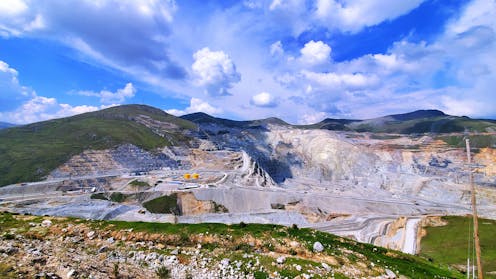
Mina de cobre Las Bambas, en Perú. Noel Reynaga Ccorahua/Shutterstock

El cobre presente en un coche eléctrico (se emplea en las baterías y el motor, entre otros usos) que circula en Europa puede provenir de una montaña en los Andes peruanos. Así, mientras en otras partes del mundo se lleva a cabo la transición verde, en regiones andinas como Apurímac, la extracción de minerales está provocando tensiones sociales y ambientales cada vez más profundas.

En zonas ricas en recursos ubicadas en países en desarrollo, se plantea un dilema entre la necesidad de obtener más ingresos económicos y los perjuicios generados por explotaciones mineras de dimensiones colosales.

Las Bambas: una megamina con un inicio controvertido

En un estudio reciente, hemos analizado el caso de la megamina de Las Bambas, una explotación de cobre ubicada en las provincias de Cotabambas y Grau, en el departamento de Apurímac, en Perú. Hemos concluido que presenta algunos beneficios y oportunidades, pero también grandes costes e importantes retos.

Los derechos para la explotación de Las Bambas, uno de los contratos mineros más grandes de la historia de Perú según el Ministerio de Energía y Minas, fueron adjudicados a la empresa suiza Xstrata en septiembre de 2004.

El inicio del proyecto estuvo marcado por el traslado de la comunidad local desde Fuerabamba a un nuevo poblado y la promesa de compensaciones. Después, cuando en 2014 la empresa china MMG adquirió la titularidad de la mina, las relaciones con las comunidades locales se complicaron, poniéndose de relieve la gran distancia cultural entre ambas partes.

Por si eso fuera poco, ese mismo año se aprobó una de las modificaciones más controvertidas respecto al proyecto original: la sustitución de una gran tubería para transportar el mineral por camiones pesados, lo que provocó un fuerte conflicto con la población debido al tráfico constante de camiones.

Grandes beneficios económicos

El proyecto mueve cifras colosales. Las inversiones superaron los 10 000 millones de dólares y la producción ha generado ingresos por más de 3 400 millones de dólares en 2023 para MMG. Con su actividad, la mina contribuye significativamente a las arcas del gobierno regional: en 2022, estas transferencias representaron el 16,6 % del gasto público de Apurímac.

Desde 2015 el PIB de la región se ha más que duplicado, aunque la fuerte dependencia de la minería expone el bienestar de la región a la volatilidad del precio del cobre. Esta variable está muy condicionada por la demanda de un único país: China.


Leer más:
Crisis mundial del cobre: ¿tenemos alternativas?


Además, la aportación ha sido mucho menor en términos de empleo, de forma que la megamina solo genera alrededor de un 2 %-3 % del empleo total en la región.

Grupo de personas con pancartas reunidas en una escalinata frente a una catedral
Indígenas protestan en Cuzco (Perú) el 21 de septiembre de 2015 contra la mina de cobre Las Bambas por su impacto ambiental y la falta de contratación local.
Helen’sWorld/Shutterstock

Desafíos sociales, medioambientales y de gestión

Tampoco los avances en salud y educación en la región han resultado tan importantes como cabría esperar. Por ejemplo, a pesar de su evolución favorable, las tasas de desnutrición y de anemia siguen siendo elevadas. Igualmente, el acceso a agua potable y saneamiento adecuado continúa constituyendo otro reto fundamental, ya que un 70 % de los hogares sigue sin disponer de un suministro de agua tratada para el consumo.

Además, los indicadores medioambientales reflejan un deterioro preocupante. A pesar de que la empresa MMG se encuentra adherida a los estándares internacionales, la mina genera grandes volúmenes de residuos, precisa elevados consumos de agua y emite gases de efecto invernadero.

Asimismo, la superficie de tierra degradada por las operaciones mineras es de unas 4 000 hectáreas y también se observa un importante número de denuncias medioambientales relacionadas con la actividad minera.

La gestión de megaproyectos mineros presenta grandes desafíos. La documentación técnica suele ser demasiado compleja para que las comunidades locales puedan comprenderla. Además, aunque existen leyes para ordenar estas actividades, la corrupción y la mala administración suelen ser problemas habituales, tal y como reconoce el propio Banco Mundial en el caso de Perú.

A todo ello hay que añadir que las metodologías para evaluar los daños ambientales son insuficientes, lo que dificulta determinar si las compensaciones percibidas por las comunidades son justas. En la actualidad hay bastante ambigüedad en el cálculo, por ejemplo, de los daños generados por excavaciones, contaminación de aguas, etc. Las administraciones contratan a consultoras para hacer los cálculos de estudio de impacto ambiental, pero a menudo esas propias consultoras reconocen que sus cálculos son aproximaciones.


Leer más:
Necesitamos metales: ¿qué minería queremos?


Recomendaciones para el futuro

El caso de Las Bambas se suma a otros estudios que han cuestionado las bondades de las megaminas en regiones poco desarrolladas del planeta. Por ello, planteamos la creación de un organismo asesor internacional cualificado que pueda asesorar a las comunidades afectadas por los proyectos mineros.

También consideramos necesario avanzar en la fijación de unos estándares internacionales para contabilizar los impactos socioambientales. De esa forma, habrá mayores garantías de que los posibles perjuicios se calculen de forma adecuada y las administraciones públicas estarán en disposición de exigir las medidas correctoras necesarias a las grandes mineras. Estas medidas podrían ser de muy diverso tipo, desde compensaciones económicas al rechazo de ciertas modificaciones u obras respecto a los proyectos planteados originalmente.

La transición energética debería ser justa para todos los habitantes del planeta, vivan donde vivan.

The Conversation

Las personas firmantes no son asalariadas, ni consultoras, ni poseen acciones, ni reciben financiación de ninguna compañía u organización que pueda obtener beneficio de este artículo, y han declarado carecer de vínculos relevantes más allá del cargo académico citado anteriormente.

– ref. La transición energética no debe hacerse a costa de las regiones menos desarrolladas del planeta – https://theconversation.com/la-transicion-energetica-no-debe-hacerse-a-costa-de-las-regiones-menos-desarrolladas-del-planeta-264540

Una ‘S’ extraterrestre: la primera pieza metálica impresa en el espacio

Source: The Conversation – (in Spanish) – By José Manuel Torralba, Catedrático de la Universidad Carlos III de Madrid, IMDEA MATERIALES

La primera “pieza” impresa en el espacio fue una varita de muy poco espesor y en forma de “S”. La S es una forma sencilla, pero entraña cierta dificultad, porque implica dos cambios de curvatura. Casi podríamos decir que fue una impresión en 2D.

Pero meses después, tuvo lugar a bordo de la Estación Espacial Internacional (ISS) un logro revolucionario. En el módulo del laboratorio Columbus de la ESA, se imprimieron probetas para ensayos de tracción que, ahora, eran piezas tridimensionales. Este avance concluye la fase de puesta en marcha de la primera impresora 3D de metales, en órbita de la Tierra.

Los astronautas ya pueden imprimir metales en el espacio, y esto cambiará muchas cosas en futuras misiones espaciales. Para empezar, ayuda a la idea de instalar una base en la Luna.

La impresión doméstica

En los últimos años, la impresión 3D se ha popularizado enormemente. Hoy es fácil hacerse con una impresora de plásticos, e incluso ya son muchos los chavales que piden a los Reyes Magos una para poder fabricarse en casa todo lo que su imaginación les proponga.

Con programas de diseño de software libre pueden dibujar cualquier tipo de pieza o figura y luego convertirla en realidad con una impresora casera. Esta democratización de la impresión 3D traslada la idea de que es una tecnología sencilla y que es muy fácil fabricar cualquier cosa.

La realidad es mucho más compleja cuando se pasa de plásticos a materiales compuestos, y aún más cuando hablamos de metales.

La dificultad de imprimir metales

La impresión 3D de metales requiere controlar decenas de variables adicionales: desde la potencia del láser hasta la densidad del material, pasando por la atmósfera de impresión y la velocidad de deposición, cada parámetro influye directamente en la calidad de la pieza final.

Además, los equipos necesarios son grandes y deben operar a temperaturas extremadamente altas, a veces por encima de los 1 600⁰ C, según la aleación. Adaptar esta tecnología al espacio, en dimensiones reducidas y condiciones de microgravedad, ha sido uno de los mayores desafíos a superar.

La ‘falta’ de espacio

Hay distintos métodos de impresión 3D de metales, la mayoría basados en polvos metálicos.

Sin embargo, para imprimir metales en el espacio se ha optado por la tecnología de deposición dirigida de energía (DED) y usando hilos metálicos en vez de polvos. Este método se desarrolla a partir de la técnica laser cladding, utilizada tradicionalmente para recubrimientos metálicos y reparación de defectos superficiales en piezas industriales.

Con DED, un hilo metálico se deposita capa por capa mientras un láser de alta energía funde de manera localizada el material, logrando una densificación completa de la pieza.

Los alambres metálicos utilizados con esta técnica son menos peligrosos de manipular en el espacio que los polvos, pero también requieren de grandes equipos, y de la necesidad de fundir, con un láser.

La aparición del diseño de piezas por ordenador y de los robots industriales hicieron que esta tecnología evolucionara desde el laser cladding al DED, permitiendo fabricar piezas en tres dimensiones de gran tamaño. Posiblemente “la pieza” más grande que se ha manufacturado sea un puente de acero inoxidable de 4,5 toneladas que ha estado colocado durante un tiempo, como demostrador, sobre uno de los canales de Ámsterdam.

Imprimir hilos metálicos fundiendo con un haz láser no es una cosa trivial, por culpa del elevado número de variables que hay que controlar (muchas vinculadas al material que se va a imprimir, otras al tipo y potencia del láser, otras a variables de impresión, etc.). Son tantas, que incluso en la Tierra es complicado el proceso. Hacerlo en condiciones de falta de gravedad, y con una impresora de reducido tamaño que quepa en una nave espacial, complica mucho más las cosas.

Del tamaño de un microondas

El primer problema fue desarrollar una impresora que pudiera instalarse en la Estación Espacial Internacional ocupando no más espacio que una lavadora. Al final, el consorcio detrás del proyecto consiguió que la impresora pesara “tan solo” 180 kg y ocupara 80 × 70 × 40 cm, casi lo que ocupa un microondas. No existe información de la potencia del láser, pero para fundir acero inoxidable se necesitan láseres de más de 500 W.

El proceso se realizó en una atmósfera de nitrógeno, con una evacuación exhaustiva del oxígeno de la cámara de impresión.

La impresora fue instalada durante una misión en enero de 2024, pero no fue hasta junio cuando se consiguió imprimir una línea curva en forma de “S”.. Con esa “S” se validó la posibilidad de imprimir, al menos, en dos dimensiones. ¡Ahora había que demostrar que se podía pasar del 2D al 3D! Y eso ocurrió en el mes de agosto, cuando se obtuvo la primera muestra en tres dimensiones. A finales del año 2024 se consiguieron las piezas definitivas.

La primera pieza metálica impresa en 3D fabricada en el espacio ha regresado a la Tierra y se encuentra ahora en las instalaciones ESTEC de la ESA en los Países Bajos.
ESA, CC BY

El objetivo era demostrar que es posible fabricar piezas metálicas en microgravedad. Ahora es el momento de caracterizar la microestructura que se ha formado y las propiedades mecánicas de las piezas impresas en órbita, y compararlas con lotes de referencia idénticos impresos en la Tierra. De este modo es posible estudiar efectos de la microgravedad en la porosidad, solidificación, anisotropías (características físicas o de otro tipo que varían según la dirección en la que se miden) y propiedades mecánicas.

Las piezas impresas ya han viajado hasta la Tierra para distintos ensayos. Hasta ahora no conocemos los resultados, pero esperemos pronto verlos publicados en alguna revista científica importante.

La astronauta Jeanette Epps recuperó la S, la primera muestra de la impresora 3D de metal en la ISS.
Airbus, CC BY

Fabricación metálica en órbita: clave para exploración espacial

Imprimir metales en el espacio representa un avance significativo hacia la autosuficiencia de las misiones espaciales, especialmente en exploraciones de larga duración como las que se proyectan hacia la Luna o Marte.

La capacidad de imprimir componentes in situ reduce la dependencia de costosos envíos desde la Tierra y facilita reparaciones inmediatas y adaptaciones rápidas a necesidades imprevistas durante misiones espaciales.

Hasta ahora, que se rompa un componente metálico en el espacio, es un problema muy grave: se calcula que el tiempo necesario para hacer llegar un componente, de forma urgente, a la estación espacial, es de 1 año.

Además, la fabricación de metales en microgravedad impulsa la innovación tecnológica y abre la puerta a misiones más largas y autónomas.

Ir más allá

La capacidad de producir piezas directamente en el espacio es esencial para la exploración profunda, ya que garantiza que los equipos críticos puedan mantenerse operativos sin esperar abastecimiento, haciendo el vuelo espacial humano más viable y sostenible.

Este avance también contribuye a crear una economía circular en el espacio, permite el reciclaje de materiales y la fabricación de nuevas herramientas a partir de recursos existentes.

Un pequeño paso para la tecnología, pero un gran salto para la exploración espacial.

The Conversation

José Manuel Torralba no recibe salario, ni ejerce labores de consultoría, ni posee acciones, ni recibe financiación de ninguna compañía u organización que pueda obtener beneficio de este artículo, y ha declarado carecer de vínculos relevantes más allá del cargo académico citado.

– ref. Una ‘S’ extraterrestre: la primera pieza metálica impresa en el espacio – https://theconversation.com/una-s-extraterrestre-la-primera-pieza-metalica-impresa-en-el-espacio-264068

Vesículas extracelulares: el ‘WhatsApp’ de las células

Source: The Conversation – (in Spanish) – By Lucía Garrido Miranda, Investigadora predoctoral en Cáncer, Centro Nacional de Investigaciones Oncológicas CNIO

Sección de una vesícula extracelular. Estas diminutas partículas esféricas albergan diversas moléculas bioquímicas, como proteínas, lípidos o ARN (en rojo). Juan Gaertner/Shutterstock

Aprendizajes, preocupaciones, pensamientos, consejos, ideas, planes, deseos, opiniones, conocimientos, emociones… Vivimos en un continuo intercambio de información. Pero no solo nosotros, también nuestras células. Al mismo tiempo que estás leyendo estas líneas, dentro de tu organismo están teniendo lugar miles de conversaciones celulares.

Nuestras células necesitan relacionarse y comunicarse entre ellas para llevar una vida equilibrada. O, dicho de otra manera, para mantener su homeostasis. Para ello cuentan con distintos sistemas de comunicación, entre los que destacan las vesículas extracelulares, que actúan como un “WhatsApp celular”.

Mensajeros celulares

Las vesículas extracelulares son una especie de burbujas que liberan las células. Nos las podemos imaginar como esas pompas de jabón que hacíamos cuando éramos pequeños o como los miles de lunares que ha plasmado la artista Yayoi Kusama a lo largo de toda su obra. Estas partículas se producen en el interior celular gracias a distintas maquinarias que trabajan en cadena y que finalmente las células liberan “soplando” hacia el medio extracelular. Es decir, lo que hay entre célula y célula.

Instalación de Yayoi Kusama en una retrospectiva de su obra que acogió el Museo Louisiana (Dinamarca) en 2015.
Susanne Nilsson/Flickr, CC BY

Además, estas burbujas llevan en su membrana y en su interior moléculas que encontramos principalmente dentro de las células, como el ADN y ARN (que actúan como libro de instrucciones), proteínas (construcciones formadas a partir del ADN), lípidos (con una función más estructural) y otras muchas. Precisamente, estas moléculas constituyen la información que se envían las células entre ellas.

En cuanto a su estructura, son tan pequeñas que resultan difíciles de detectar, como cuando las burbujas de jabón se pierden en la inmensidad. En el laboratorio necesitamos aparatos mucho más potentes que los microscopios convencionales con los que observamos normalmente las células para poder llegar a visualizarlas.

A diferencia de otros mecanismos de comunicación entre células que se encuentran muy juntas, las vesículas extracelulares son capaces de viajar a través de distintos fluidos de nuestro organismo como la sangre, y alcanzar otras células que están más alejadas. Pero no llegan a cualquier sitio: estas partículas tienen muy claro su destino, como cuando nosotros mandamos un mensaje por WhatsApp.

Las conversaciones del cáncer

Una neurona del cerebro es muy distinta a una célula de la piel, del mismo modo que una célula sana no es igual que otra enferma. Esto también ocurre con las vesículas extracelulares que secretan cada uno de estos tipos celulares. Además, hay células que son “más tímidas” y no secretan muchas vesículas (quizás prefieren comunicarse de otra manera), mientras que otras directamente prefieren vivir aisladas.

Un ejemplo de conversación molecular es la que tiene lugar entre las células de un tumor primario y las células del lugar que van a colonizar, generando metástasis.

Las células tumorales, las que generan cáncer, tienen un único propósito: sobrevivir y seguir reproduciéndose. Por ello, hacen todo lo posible para continuar dividiéndose. Y cuando no se dan las condiciones necesarias para ello, en ocasiones, deciden buscar otro lugar y “comenzar una vida nueva”.


Leer más:
Exosomas: más allá de los tratamientos de belleza


Para nosotros, esto no resulta fácil si en el sitio al que nos mudamos no conocemos a nadie o no tenemos una casa. Pues lo mismo les ocurre a las células tumorales, pero ellas lo tienen todo previsto.

Antes de comenzar su viaje, mandan mensajes (vesículas extracelulares) a las células cercanas diciendo que se van, que les dejen marchar, mientras que avisan a las lejanas de su próxima llegada. Además, también envían vesículas a las células del sistema inmunitario (ejército de nuestro organismo) evitando que los soldados (linfocitos) se activen. De este modo, evitan ser reconocidas, y, por lo tanto, atacadas y eliminadas.

Comprendiendo los mensajes celulares

¿Qué pasa si bloqueamos la liberación de vesículas extracelulares, si evitamos que se comuniquen las células? ¿Cómo se introduce la información en estas vesículas? ¿Qué le pasa a la célula que libera la información? ¿Y a la célula receptora? ¿Por qué las vesículas extracelulares tienen un destino determinado? ¿Cómo se pueden leer mejor estos mensajes? ¿Se pueden generar en el laboratorio ese tipo de partículas o algo parecido?

Son preguntas que quizás se hayan hecho al leer este artículo. Preguntas que muchas científicas y científicos estamos intentando contestar. Desde los laboratorios somos capaces de aislar y purificar estas burbujas celulares, así como de leer su contenido.

En la actualidad se está investigando la función que desempeñan estas vesículas en la salud y en la enfermedad y se están desarrollando formas de poder bloquear el envío de esos mensajes para poder desarrollar nuevos tratamientos y terapias. También se está intentando modificar esa información, e incluso, crearla, de forma que seamos capaces de imitar las conversaciones celulares.

Además, se está mejorando la técnica con la que se extraen y se leen las vesículas. El objetivo es poder utilizarlos para diagnosticar de forma precoz una enfermedad, determinar su grado de gravedad o poder seleccionar de forma más precisa y personalizada qué tratamiento va a funcionar mejor en un paciente.

Aristóteles afirmó que “El ser humano es un ser social por naturaleza”. Y es que, como hemos visto, esa necesidad de comunicarnos la llevamos ya grabada en nuestras células.

The Conversation

Este artículo fue finalista del Premio Luis Felipe Torrente de Divulgación sobre Medicina y Salud, organizado por la Fundación Lilly y The Conversation

– ref. Vesículas extracelulares: el ‘WhatsApp’ de las células – https://theconversation.com/vesiculas-extracelulares-el-whatsapp-de-las-celulas-264804