The UK government has launched NHS league tables for every trust in England, promising transparency and an incentive for improvement. The idea is simple: rank providers of health care and reward the best.
But national health care is not a simple thing. And trying to convert something so complex into a single ladder of winners and losers could end up distorting medical priorities and resources.
For example, the way waiting times are measured for elective (non-emergency) surgery is (and needs to be) different to how they are measured for cancer treatment and A&E. Mixing these into one overall “score” for waiting times could encourage NHS trusts to focus on the most rank-sensitive elements of healthcare, even when bottlenecks exist elsewhere (such as diagnostics or community care).
This can lead to a kind of tunnel vision, where what’s measured is considered to be what matters most. Previous research on rating shows how rankings can shift hospital managers’ attention from broad quality to narrow score keeping.
Another challenge is that different NHS trusts operate in very different contexts. Patient populations vary in age, and in levels of affluence and deprivation – factors which can directly influence demand on a hospital and its clinical outcomes.
A hospital serving an older and poorer population may find it much harder to meet targets than one that serves a younger and healthier area. And while league tables are supposed to be compiled in such a way that they account for these kinds of differences, the adjustment calculations are never perfect.
If league tables fail to account for these realities, they risk labelling overstretched hospitals as “poor performers” when they may in fact be delivering strongly against difficult odds.
Evidence also shows that when patients are given more choice about where they receive their healthcare, some do explore their options. But distance and the availability of transport make a huge difference.
If you can’t get to the hospital you want, the choice is not really there. And “competition” between different trusts falls sharply outside dense urban markets. In practice, many patients simply take their GP’s recommendation and use the nearest viable hospital.
So while league tables designed to encourage choice and stimulate competition may help to raise quality, they also carry risks – most notably amplifying regional inequalities. Such rankings could then become magnets, drawing both patients and staff toward “elite” hospitals.
If rankings trigger “patient outflows” (people choosing to go elsewhere for care) and health professionals being reluctant to work in lower-ranked hospitals, a vicious circle develops, making that low ranking even more difficult to shake off.
And moves towards greater transparency require greater support as well, with extra staffing and diagnostics capacity, as well as targeted recruitment and retention schemes in hard-pressed areas. Otherwise, the policy risks deepening geographical inequalities.
For emergency care, for rural areas, or for people with limited mobility, improvement will depend on better coordination and sufficient capacity, such as ensuring that ambulance services are well linked to hospitals with intensive care beds.
Scoring points
League tables can shine a light. But light without lenses can distort. (The NHS itself acknowledges the risk of crude comparisons that league tables can bring.)
To avoid perverse incentives and widening gaps, rankings should be used as a starting point for deeper analysis, not treated as a final verdict. They need to adjust for differences in patient populations so that hospitals treating sicker or more challenging patients are not penalised.
They need to be designed to minimise gaming the system (by preventing hospitals from prioritising easy cases just to hit targets for example). They need to give GPs the tools and authority to direct patients to the most appropriate services, and pair transparency with extra support for areas of highest need.
Done badly, rankings reward already-advantaged hospitals and shift efforts towards chasing the scoreboard. Done well (using risk-adjusted, specialised dashboards) they can help tackle the real causes of long waits and uneven care.
Performance data needs to be used with caution, linked to GP referral systems where patients actually make choices, and accompanied by targeted support for those areas serving the most complex populations. Without these safeguards, league tables risk distorting behaviour, encouraging tunnel vision and amplifying existing inequalities in the NHS, rather than solving them.
Catia Nicodemo is affiliated with University of Oxford
In the 18th and 19th centuries, Presbyterians from Ulster in Northern Ireland had a somewhat surprising reputation for being especially – if not excessively – concerned with sex.
As the Ordnance Survey Memoirs Observer for the parish of Rashee in County Antrim candidly put it in 1835, while the Presbyterians of the north of Ireland “unhesitatingly” claimed for themselves a general character of “extreme morality”, they were “not the pious race so generally imagined”.
The records of the Presbyterian church in this period certainly give the impression of a community with a vibrant sexual culture – though one that was also strictly policed. It is this tension between piety and promiscuity that I explore in my new book, Pious and Promiscuous: Life, Love and Family in Presbyterian Ulster – revealing for the first time personal stories that shaped the rhythms and rituals of Presbyterian family life in 18th- and 19th-century Ulster.
The Presbyterian church closely regulated the intimate lives of its members through a system of church court discipline. Misbehaving members could find themselves before the Kirk Session (the church’s local court) for a wide range of offences including bigamy, drunkenness, slander, fist fights and skipping Sabbath services. But it was sexual misbehaviour that sent most to these courts.
Of the 375 cases considered by First Dromara Kirk Session in County Down between 1780 and 1805, 230 concerned sexual misbehaviour. Similarly, more than half of all cases heard by Carnmoney Kirk Session in County Antrim between 1786 and 1821 were of a sexual nature.
Sexual offences was a broad category that included sex between unmarried and about-to-be-married persons (known as fornication or pre-marital fornication), sex with someone who was not your spouse (adultery), and “scandalous carriage” – intimate acts that stopped short of full sexual intercourse, such as kissing or heavy petting.
Conduct which raised suspicions that sex had taken place also fell under this heading. Couples who spent time together alone and unchaperoned could be cited, as well as those who were caught in compromising situations.
This is what happened to John Woodend, a married man and member of the Aghadowey Presbyterian congregation in County Londonderry. His bedsharing practices roused suspicions that he had been guilty of adultery. In October 1704, Woodend was told off by the Kirk Session after he was seen lying “in naked bed” with his servant maid, Margaret.
A man named John Boil reported seeing the pair in bed together, then watching as Woodend got up and began “pulling on his cloths”. Since Woodend’s wife was also in the room at the time – she was sitting on a chair next to the bed – the session ruled it was unlikely the bedsharing pair had committed adultery. But Woodend’s conduct was still considered “unseemly and offensive”, resulting in his censure for “unseemly carriage”.
Sex first, marriage second?
The sheer volume of sexual misbehaviour cases heard by the church courts appears to suggest that Presbyterians were relatively permissive in their attitudes to sex outside marriage.
Fornication and pre-marital fornication were, after all, the most numerous sexual offences. Indeed, historians used to believe that Presbyterians were different from other religious communities in Ireland because of their perceived tolerance of extra-marital sex. But that impression is misleading.
Records of the church courts show that Ulster Presbyterians were far from “promiscuous” in their attitude to sexual morality. Kirk Session minute books reveal how Presbyterian women and men engaged in sexual intercourse as part of the rituals of courtship and marriage.
In Ulster, many Presbyterian couples entered a form of marriage known as verba de futuro – a promise to marry in the future that was then sealed with sexual intercourse.
This is how the marriage of Benjamin Green and Elizabeth Bell, members of Cahans Presbyterian church in County Monaghan, came about. In March 1753, the couple told Cahans Kirk Session they had sworn secretly to each other that they would marry “some [time] before actual marriage” – and then confirmed their promises to marry in the future by having sex.
More than 20 years later, Margaret Cunningham shared a similar story about her marriage to Robert Jackson. According to Cunningham, she and Jackson exchanged marriage vows on the “last Friday of March”, then “bedded” together “the following Monday”. Like many other Presbyterians, these couples may not have considered their sexual behaviour as sinful because they had every intention of progressing to marriage.
The stories contained in the Presbyterian archive – a term I use to describe records produced by and about members of Ulster’s Presbyterian community – provide a tantalising glimpse into the intimate worlds of women and men in Ulster, centuries ago.
Their stories remind us how individual experiences could both conform to, and deviate from, societal expectations. Presbyterians did indeed have colourful sex lives – just as they also valued marriage.
Looking for something good? Cut through the noise with a carefully curated selection of the latest releases, live events and exhibitions, straight to your inbox every fortnight, on Fridays. Sign up here.
Research for my book has received funding from: Arts and Humanities Research Council Postgraduate funding, the R.J. Hunter Bursary from the Royal Irish Academy, the Anna-Parnell Travel Grant from the Women’s History Association of Ireland and internal funding from the University of Hertfordshire.
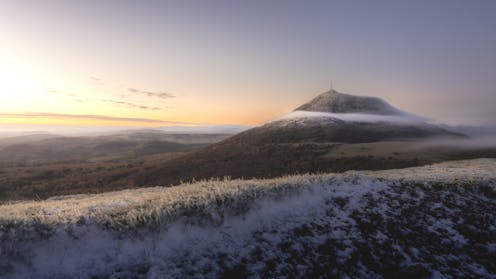
Le puy de Dôme (1 465 mètres), où des scientifiques tâchent de mettre des nuages en bouteille pour analyser leur composition. Wirestock Creators/Shutterstock
Une équipe franco-italienne a pu analyser six échantillons d’eau de nuage prélevés au sommet du massif auvergnat du puy de Dôme à différentes saisons, entre 2023 et 2024. Les chercheurs y ont décelé 32 pesticides différents, dont plusieurs interdits en Europe depuis plus d’une décennie. Un tiers des échantillons présentaient également une concentration totale de pesticides supérieure aux taux réglementaires pour l’eau potable.
Leur travail pionnier a aussi permis d’estimer, pour la première fois, la quantité de pesticides qui se trouveraient dans l’ensemble des nuages bas et moyens de France hexagonale, soit de 6 à 139 tonnes. Retour sur cette publication inédite, avec sa première autrice.
The Conversation : Quelle est la genèse de votre recherche ?
Angelica Bianco : Avec ma collègue chimiste Pascale Besse-Hoggan, experte de l’ICCF (UCA/CNRS) en (bio)dégradation des pesticides dans les sols, nous voulions, depuis quelques années, quantifier les pesticides dans les nuages, car les pesticides sont des contaminants d’intérêt dans toutes les matrices environnementales.
Une étude récente du chercheur Ludovic Mayer et de ses collègues avait déjà rapporté la présence de pesticides dans les aérosols atmosphériques prélevés sur 29 sites en Europe, dont plusieurs en troposphère libre, soit la première couche de l’atmosphère de la Terre qui débute de un à deux kilomètres d’altitude et qui n’est que peu ou pas affectée par les émissions locales.
De plus, la présence de pesticides dans les précipitations est connue depuis longtemps, avec des travaux notables à la fin des années 1990. Nous avons donc profité de l’Observatoire du puy de Dôme, géré par l’Observatoire de physique du globe (OPGC) de Clermont-Ferrand et par le Laboratoire de météorologie physique (LaMP) de l’Université de Clermont-Ferrand (UCA) et du CNRS, pour quantifier les pesticides dans une matrice encore inexplorée jusqu’à présent : les nuages.
Techniquement, ce n’est pas la première mesure dans les nuages. En 1991, l’équipe du chercheur allemand Franz Trautner avait déjà mesuré l’atrazine, un herbicide aujourd’hui interdit qui bloque la photosynthèse de végétaux et qui était fréquemment utilisé dans les champs de maïs, dans plusieurs échantillons collectés dans un même nuage au-dessus de cultures de maïs dans les Vosges avec des concentrations allant de 24 à 260 nanogrammes par litre (ng/l), soit bien plus que la limite autorisée pour l’eau potable.
L’originalité de notre dernière étude repose sur la quantification des pesticides :
dans plusieurs échantillons d’eau de nuage, collectés à deux saisons différentes ;
avec des masses d’air d’origines différentes (différentes saisons, différentes températures et différentes origines géographiques) …
avec une analyse de 446 pesticides (herbicides, fongicides, insecticides, biocides) et quelques produits de dégradation ;
avec des limites de détection très faibles en utilisant des méthodologies certifiées (Cofrac).
Nous savions déjà qu’un nombre important de pesticides étaient présents dans les cours d’eau. Il peut donc sembler logique d’en trouver également dans les nuages, cependant, de telles recherches n’ont pas tellement été menées auparavant. Comment expliquez-vous cela ?
A. B. : Les nuages représentent la matrice environnementale la plus difficile à attraper et à échantillonner : ce n’est pas de l’eau d’un lac ou d’une rivière que l’on peut prélever aisément avec un seau et en grande quantité. Ce ne sont pas non plus des poussières ou des gaz, qui sont toujours présents dans l’atmosphère et que l’on peut récolter de façon automatique sur des filtres ou dans des ballons.
Les nuages présentent un caractère évènementiel : ils ne sont pas toujours là ! Bien sûr, il est possible de les échantillonner en avion, comme le font certains de mes collègues. Mais cette méthode est techniquement complexe parce qu’il faut absolument éviter toute contamination de l’échantillon par les moteurs de l’appareil. De plus, les nuages sont constitués de fines gouttelettes (entre 10 et 50 micromètres de diamètre), qu’il faut collecter pour avoir un échantillon liquide suffisant pour faire toutes les analyses. Actuellement, en France, seule la station du puy de Dôme, qui présente une forte occurrence nuageuse (40 % du temps) permet l’étude des nuages.
Notre dispositif n’est pas automatisé, ce qui veut dire qu’un opérateur doit être sur place pour le montage du collecteur, la collecte, le démontage et le traitement de l’échantillon. Nous utilisons un collecteur de nuage baptisé « boogie » et des protocoles très stricts de nettoyage et de collecte de l’échantillon.
Trois boogies permettant d’analyser la composition des nuages. Angelica Bianco, Fourni par l’auteur
La quantité d’eau dans les nuages varie de 0,3 à 1 g/m3 d’air, ce qui signifie qu’il faut aspirer beaucoup de nuages pour avoir peu de millilitres. C’est un des points limitants de notre analyse : le volume de nuage collecté.
Nos collectes durent rarement plus de deux heures, parce que nous devons tenir compte de la dynamique atmosphérique. Il est bien plus facile d’étudier les caractéristiques d’un échantillon quand l’histoire de la masse d’air est simple, plutôt que quand il résulte de la combinaison de plusieurs masses d’air différentes. Or, plus le temps passe, plus la composition d’un nuage se complexifie, car les composés emportés dans les différentes masses d’air, influencés par des sources différentes (par exemple, marine et anthropique) se mélangent dans le même échantillon liquide. Pour éviter cela, nous limitons donc la durée de collecte à deux heures, par conséquent nos échantillons sont de faibles volumes et la quantité d’analyses que nous pouvons mener est limitée.
Mais, si je résume, le caractère novateur de notre étude, c’est que nous, chasseurs de nuages, avons la chance de travailler sur une matrice environnementale très peu explorée où tout reste à découvrir.
La doctorante Pauline Nibert explique comment il est possible de mettre « des nuages en bouteille » pour analyser leur composition.
Vous avez été, j’ai cru comprendre, les premiers surpris par les résultats constatés.
A. B. : Franchement, pour le bien de notre belle planète verte et bleue, nous espérions ne pas trouver de pesticides dans les nuages !
La première surprise a donc été la détection de ces composés dans tous les échantillons analysés, même les non suspectés, ceux qui ont une masse d’air qui a voyagé en altitude et sur l’océan Atlantique, donc a priori à une distance éloignée des terres où l’on épand des pesticides.
Nous avons donc fait plusieurs vérifications, notamment un croisement avec les mesures d’aérosols présentées par Ludovic Mayer de l’Université Masaryk (Tchéquie) et ses collègues, et nos concentrations se sont révélées plausibles. Les concentrations observées restent cependant faibles, de l’ordre du nano au microgramme par litre.
Après discussions, nous avons décidé de calculer la masse totale de pesticides potentiellement présents dans les nuages qui survolent la France hexagonale. Pour cela, nous avons pris le parti de formuler une hypothèse importante, à savoir que la concentration mesurée dans les nuages puydomois est représentative des nuages de basse altitude présents sur l’ensemble du territoire français. C’est discutable, certes, mais probablement pas si loin de la vérité : les relecteurs de notre publication n’ont d’ailleurs jamais remis en question cette hypothèse. Nous avons ainsi évalué qu’il pourrait y avoir entre 6,4 et 139 tonnes de pesticides présents dans les nuages au-dessus de la France.
Alors, il faut savoir que les nuages contiennent beaucoup d’eau, de l’ordre du milliard de tonnes, mais, personnellement et naïvement, je ne pensais pas trouver des tonnes de pesticides ! C’est cette estimation qui a déclenché le plus de réactions et qui a fait le plus parler, en bien comme en plus critique, mais j’estime que l’essentiel, au-delà des chiffres, est la prise de conscience collective de la pollution que nous apportons dans l’environnement.
En quoi vos travaux sont-ils utiles à notre compréhension de la circulation des pesticides dans l’environnement ?
A. B. : De mon point de vue, cet article montre que la boucle est bouclée : les pesticides sont retrouvés dans l’eau des rivières, des lacs, dans les nappes phréatiques, dans la pluie et… maintenant dans les nuages. L’atmosphère est extrêmement dynamique et transporte ces composés, même s’ils sont faiblement concentrés, dans les endroits les plus reculés de notre Terre et finalement, certains lieux isolés, comme les régions polaires, qui ne devraient pas être impactés directement par la pollution par des pesticides, sont finalement exposés par ces transports longue distance.
Mais l’atmosphère et les nuages en particulier sont aussi un réacteur chimique capable de transformer ces molécules : les rayons du soleil provoquent des réactions photochimiques qui peuvent dégrader ces composés. C’est pourquoi nous retrouvons parfois dans nos échantillons des produits de transformation et non le pesticide d’origine. Il est donc aussi important de comprendre comment ces molécules se dégradent dans l’environnement.
Dans quels sens allez-vous poursuivre vos recherches à la suite de cette publication ?
A. B. : Plusieurs collègues ont témoigné d’un vif intérêt pour les résultats présentés dans cet article. En tant que chimiste, je me dis que six échantillons collectés sur un seul site ne suffisent pas à représenter la variabilité environnementale. Je pense donc que cette étude doit être étendue à un plus grand nombre d’échantillons, et si possible, prélevés sur plusieurs sites ! Malgré tout, je garde espoir de trouver de nombreux échantillons sans pesticides dans les prochains nuages que nous collecterons…
Entretien relu par Pascale Besse-Hoggan, co-autrice de l’étude, et réalisé par Gabrielle Maréchaux, journaliste Environnement, The Conversation France.
Angelica Bianco a reçu des financements de l’Agence Nationale de la Recherche (ANR 23-CE01-0015), de la Fédération des Recherches en Environnement (projet PONCOS), de la China Scholarship Council (CSC).
Les origines du management par objectifs sont-elles à chercher du côté des héritiers du IIIe Reich, comme le prétend l’ouvrage récent de l’historien Johann Chapoutot. Rien n’est moins sûr pour les théoriciens du management : le management par objectifs est né dans l’industrie automobile nord-américaine dès les années 1920.
De quoi le management par objectifs est-il le nom ? Pour l’historien Johann Chapoutot, auteur de Libres d’obéir. Le management, du nazisme à aujourd’hui, l’affaire serait entendue : ce mode de management moderne trouverait sa source voire son inspiration dans l’idéologie du IIIe Reich en Allemagne. Le nazisme aurait inventé un type de management « par délégation », qui se serait ensuite diffusé dans les entreprises contemporaines, sous l’influence notamment du juriste et historien allemand Reinhard Höhn. D’après l’auteur, cet ancien nazi et officier SS a formé, après la Seconde Guerre mondiale, des milliers de cadres au sein de l’Académie de Bad Harzburg (Basse-Saxe).
Que certaines formes de management actuelles soient critiquables, nul ne le contestera. Cela explique vraisemblablement le succès de cet ouvrage d’historien écoulé à 20 000 exemplaires et désormais adapté en bande dessinée. Mais qu’en est-il vraiment de ce lien affirmé, qui a été critiqué par de nombreux connaisseurs de l’histoire des sciences de gestion et du management, tels Thibault Le Texier, Marcel Guenoun, Yves Cohen ou Franck Aggeri.
Implication active des salariés
Pour commencer, revenons sur ce qu’on appelle « management (ou, direction) par objectifs ». Le management par objectifs (MPO) repose sur l’idée que la performance d’une organisation s’améliore lorsque les objectifs sont clairement définis et partagés par la hiérarchie et les collaborateurs. Concrètement, il s’agit d’établir des buts précis, mesurables et limités dans le temps, alignés à la fois sur la stratégie globale de l’entreprise et sur les responsabilités individuelles. Ce processus suppose une implication active des salariés dans la définition de leurs objectifs, afin de favoriser l’adhésion, la motivation et le sens donné à leur travail.
Au-delà de l’établissement d’objectifs, le MPO intègre un suivi régulier des résultats et un dialogue continu entre managers et collaborateurs. Ce système encourage l’autonomie dans la mise en œuvre, tout en instaurant des mécanismes d’évaluation périodiques, qui permettent d’ajuster les actions, de reconnaître les réussites et d’identifier les axes de progrès.
L’enjeu est donc double : améliorer la performance collective de l’organisation et développer les compétences individuelles, dans une logique de responsabilisation et de coopération.
Dans son livre, Johann Chapoutot défend la thèse que ce type de management aurait été en quelque sorte « inventé » par les nazis. Pour cela, dans la première partie, l’historien s’attache à décrire le fonctionnement du nazisme. Spécialiste reconnu de cette période, il se montre particulièrement convaincant lorsqu’il analyse la pensée antiétatique développée par les juristes SS : rejet de l’État « judéo-romain », mise en place d’une polycratie fondée sur la concurrence entre institutions, et recours à l’arbitrage ultime du führer (dirigeant) dans une logique darwinienne. Ces analyses, denses et précises, se révèlent particulièrement stimulantes.
Mais J. Chapoutot franchit ensuite dans la suite du livre un pas risqué : il affirme que de cette conception serait née une vision du management par délégation, fondée sur la fameuse « liberté d’obéir » pour reprendre l’expression forgée par lui. Que recouvre cette idée ? Pour l’universitaire, le nazi n’est pas contraint : il est « libre » dans le choix des moyens pour atteindre des objectifs fixés d’en haut, mais il n’a aucun droit de discuter la finalité. On obéit, mais avec une marge d’initiative. Cette liberté encadrée serait, selon J. Chapoutot, l’ancêtre de notre management par objectifs.
Déjà chez General Motors
Le problème est que, comme le rappelle Yves Cohen, ce modèle n’a rien de nazi. La délégation par objectifs existait déjà depuis plusieurs années. Alfred P. Sloan l’avait mise en place chez General Motors (GM) aux États-Unis dans les années 1920, à un moment où GM devait gérer la complexité d’un conglomérat en pleine expansion. Contrairement à Ford, qui reposait alors sur une structure très centralisée, orientée autour d’un modèle unique (la Ford T) et d’un contrôle direct exercé depuis le sommet, GM fit le choix d’une organisation décentralisée. Chaque division bénéficiait d’une autonomie significative dans ses décisions, mais devait rendre compte de ses performances à travers des objectifs chiffrés, principalement financiers. Ce dispositif permettait de combiner la souplesse et l’adaptation locales avec un contrôle global exercé par le siège.
Dans les années 1940, Peter Drucker étudie les pratiques de GM. Après avoir mis en évidence la structure décentralisée de l’entreprise dans Concept of the Corporation (1946), il théorise le management par objectifs en 1954 dans un autre ouvrage qui aura une forte influence : The Practice of Management. Cet ouvrage qui deviendra un best-seller mondial, a été publié bien avant que l’Académie de Bad Harzburg ne voie le jour et que Reinhard Höhn publie ses ouvrages – ouvrages, dont la renommée ne dépassera jamais l’Allemagne puisque, comme le rappelle Thibault Le Texier, ils ne seront jamais traduits en français ou en anglais. Ainsi, ce que Chapoutot présente comme une invention nazie est en réalité une idée qui était déjà théorisée depuis quelques années à partir des pratiques américaines, et largement popularisée par Peter Drucker. Bref, le management par objectifs vient de Detroit, pas de Berlin.
Il est d’autant plus surprenant que Chapoutot se laisse aller à une telle thèse que depuis des décennies, et à la suite de l’historien Alfred Chandler et de son ouvrage sur la Main visible des managers (1977), de multiples travaux historiques ont été menés sur l’essor des entreprises et du management. Les faits présentés ici sont par conséquent très largement connus par une large communauté de chercheurs qui publient dans d’excellents journaux. Citons en France la revue Entreprise & Histoire, et, à l’international, Business History.
Bad Harzburg n’est pas Harvard
Deuxième pilier de la thèse de Johann Chapoutot : Reinhard Höhn, ancien SS devenu directeur de l’Académie de Bad Harzburg, aurait diffusé la « liberté d’obéir » auprès de centaines de milliers de cadres, influençant ainsi le management contemporain. Là encore, la démonstration ne convainc pas. Certes, 600 000 cadres allemands sont passés par Bad Harzburg en cinquante ans. Mais cette institution n’a jamais eu le poids intellectuel de l’École des hautes études commerciales (HEC) de Paris, ni celui de Harvard, ni celui des plus prestigieuses institutions allemandes que sont, par exemple, Mannheim Business School, ou WHU–Otto-Beisheim School of Management. Pas de recherche internationale ni de publications scientifiques reconnues qui en sont issues, encore moins de rayonnement mondial.
Bad Harzburg n’est ainsi aucunement un centre influent de la pensée managériale et, contrairement à la pensée de Peter Drucker dont l’ouvrage est, à la date, où j’écris ces lignes, cité selon Google scholar par 21 608 autres textes, les ouvrages de Höhn ne sont aucunement cités par les grands théoriciens du management. Comme l’a souligné Thibault Le Texier, J. Chapoutot ne montre pas, par ailleurs, combien d’entreprises ont appliqué ses méthodes ni si elles ont eu le moindre impact hors d’Allemagne. Bref, Höhn n’est clairement pas Drucker : c’est un ancien nazi recyclé, dont l’influence est restée locale, limitée à un cercle étroit d’entreprises de la République fédérale d’Allemagne d’alors.
France Culture, 2021.
Assimiler le management au nazisme est une reductio ad Hitlerum, en aucun cas une thèse démontrée. Certes, le management moderne mérite d’être critiqué : culte de la performance, absurdité des indicateurs, prolifération des « bullshit jobs ». Mais pour comprendre ces dérives, nul besoin de convoquer Hitler, mieux vaut lire les spécialistes du champ des critical management studies. Le management que nous connaissons n’est pas le produit du nazisme. Cette manière de diriger et d’organiser le travail est bien plus le produit du capitalisme industriel, de l’Amérique des années 1920 et des business schools d’après-guerre.
Aurélien Rouquet ne travaille pas, ne conseille pas, ne possède pas de parts, ne reçoit pas de fonds d’une organisation qui pourrait tirer profit de cet article, et n’a déclaré aucune autre affiliation que son organisme de recherche.
Source: The Conversation – in French – By Marie Charru, Maîtresse de conférence en sylviculture et aménagement forestier, Bordeaux Sciences Agro
Les forêts participent grandement à l’atténuation du changement climatique par leur capacité à capturer le CO2. Dès lors, quelles espèces d’arbres favoriser pour reconstituer des forêts rapidement ? Le bon sens nous soufflerait de privilégier les arbres à croissance rapide… mais la réalité des dynamiques forestières est plus complexe.
Pour gagner une course de vitesse, choisiriez-vous une Formule 1 ou une voiture de rallye ? D’emblée, on aurait plutôt le réflexe de tout miser sur la Formule 1. Puis on se demanderait, peut-être, quelle est la nature du circuit : on a du mal à imaginer une Formule 1 être performante sur une piste cabossée, et on préférera dans ce cas une voiture plus robuste.
Il en va de même pour la croissance des arbres : si certaines espèces, prises de façon isolée, sont théoriquement bien équipées pour maximiser leur vitesse de croissance, elles sont en fait rarement gagnantes dans les forêts, où les conditions sont plus contraignantes. Comme la vitesse de croissance va de pair avec la capacité des arbres à séquestrer du dioxyde de carbone (le CO2), cela a des implications importantes concernant les capacités des forêts à atténuer le changement climatique.
Il s’agit pourtant d’un des nombreux services écosystémiques que celles-ci fournissent. Outre la régulation microclimatique, la préservation de la biodiversité, la purification de l’air et de l’eau et la protection des sols, les forêts constituent, avec les océans, l’un des deux puits de carbone les plus importants, de par leur capacité à stocker du carbone dans les sols et dans la biomasse des arbres. Les gestionnaires forestiers se posent alors une question clé : quelles espèces d’arbres ont le plus grand potentiel d’atténuation ?
Un premier élément de réponse consiste à identifier les espèces d’arbres qui grandissent le plus rapidement : plus un arbre pousse vite, plus il séquestre de carbone à travers la photosynthèse. Promouvoir des arbres à croissance rapide semble un des leviers de l’atténuation du changement climatique.
Mais est-ce vraiment le cas ? Pour tester cette hypothèse, nous avons mené récemment une étude. Dans ce travail mené par Bordeaux Sciences Agro et l’Inrae, réunissant un consortium international de chercheurs, nous avons analysé la croissance de 233 espèces d’arbres dans 160 forêts expérimentales réparties dans le monde entier.
Deux grandes familles d’arbres
Nous avons étudié la relation entre la vitesse de croissance des espèces et certaines de leurs caractéristiques appelées « traits fonctionnels ».
Ceux-ci permettent de séparer les espèces en deux grandes catégories :
Les espèces dites « acquisitives », comme les érables ou les peupliers. Elles sont caractérisées par leur efficacité dans l’acquisition de ressources (lumière, eau, nutriments) et dans la transformation de ces ressources en biomasse (richesse des feuilles en enzymes et en nutriments pour faire la photosynthèse). Cela passe par l’optimisation des surfaces de prélèvement (feuilles larges et fines, racines longues et fines).
Chêne vert (Quercus ilex). Jean-Pol Grandmont/Wikicommons, CC BY-SA
Les espèces dites « conservatives », comme le sapin, le chêne pubescent ou le chêne vert. Elles sont plus efficaces dans la conservation des ressources internes (feuilles et racines moins étalées et plus épaisses pour limiter les pertes d’eau, renouvellement des organes moins fréquents pour limiter les besoins en ressources). Elles sont aussi plus tolérantes aux stress environnementaux.
Nous nous sommes alors demandé : quelles espèces poussent le plus vite, les acquisitives ou les conservatives ?
Les espèces « acquisitives », les Formule 1 du monde végétal
Des travaux antérieurs ont montré qu’en conditions contrôlées (souvent des expériences en serre) les espèces acquisitives poussent généralement très vite. En effet, leurs caractéristiques font d’elles de véritables voitures de Formule 1 végétales, où tout est optimisé pour gagner la course à la croissance.
À l’inverse, les espèces conservatives n’optimisent pas leur croissance, mais plutôt leur résistance aux contraintes de l’environnement, et grandissent souvent moins vite dans ces expériences.
Ces résultats ont conduit les écologues à bâtir une théorie selon laquelle les espèces acquisitives poussent plus vite que les espèces conservatives dans la plupart des conditions. Cependant, cette théorie a été questionnée par des chercheurs qui n’arrivaient pas à la vérifier en dehors des laboratoires, à savoir dans des forêts.
Et de fait, notre étude a montré que cette théorie n’est pas valable en conditions réelles.
Les espèces « conservatives », des championnes de rallye
En effet, dans les forêts boréales, tempérées et méditerranéennes, les espèces conservatives poussent généralement plus vite que les acquisitives.
Ce résultat s’explique par la localisation de ses forêts, le plus souvent dans des zones où les conditions de croissance sont défavorables (faible fertilité du sol, climat froid et/ou sec).
Pour filer la métaphore automobile, les forêts mondiales s’apparentent plus souvent à des chemins cabossés qu’à des circuits de course.
Ceci donne un avantage aux espèces conservatives, plus résistantes au stress et plus frugales dans la gestion de ressources limitées : telles des voitures de rallye, elles sont équipées pour s’accommoder des aléas de l’environnement.
À l’inverse, les Formule 1 acquisitives sont beaucoup moins performantes dans ces conditions défavorables, car elles ne peuvent exprimer leur potentiel que dans des conditions optimales : une sécheresse équivaut à une crevaison fatale, et un sol pauvre conduit rapidement à une panne de carburant.
D’où cet apparent paradoxe de forêts qui poussent plus vite si on privilégie des espèces supposées à croissance lente.
Dans les forêts tropicales humides, où le climat est potentiellement plus favorable à la croissance des végétaux, les deux types d’espèces d’arbres ne se départagent pas en moyenne. Pourtant, on aurait pu s’attendre à une vitesse de croissance plus élevée pour les espèces acquisitives dans ces bonnes conditions climatiques. Mais les limitations nutritives liées aux sols donnent sans doute l’avantage aux espèces conservatives dans certaines situations.
Des espèces à choisir selon les climats et selon les sols
Retenons de cette étude le rôle déterminant des conditions locales dans le choix des espèces d’arbres.
De la même façon que l’on s’est demandé sur quel type de piste la course aurait lieu avant de choisir entre la Formule 1 et la voiture de rallye, il faut analyser finement les conditions environnementales avant de choisir quel type d’espèce favoriser dans un endroit donné.
Ainsi, sous des climats favorables et des sols fertiles, les espèces acquisitives telles que les érables, les frênes ou les peupliers pousseront plus vite et donc fixeront plus de carbone que des espèces conservatives comme le chêne vert, le chêne pubescent ou de nombreux pins.
À l’inverse, sous des climats défavorables et sur des sols pauvres, ce sont les espèces conservatives qui auront le meilleur potentiel d’accumulation de carbone dans la biomasse.
Le carbone stocké par les sols, autre paramètre crucial
Notre étude ne s’est intéressée qu’à la vitesse de croissance en hauteur des arbres et au stockage de carbone dans le bois. Mais n’oublions pas que 50 % du carbone stocké en forêt l’est par les sols.
Une autre étude, réalisée dans le cadre du même projet de recherche, a mis en évidence l’effet du type d’espèce et du milieu sur le stockage de carbone dans le sol.
Quand les conditions environnementales sont défavorables, les espèces conservatives stockent davantage de carbone dans le sol, mais sous une forme peu stable. Ce carbone peut donc être relargué dans l’atmosphère si les conditions changent (exploitation forestière, incendie, réchauffement, etc.).
Quand les conditions environnementales sont favorables en revanche, les espèces acquisitives et conservatives stockent autant de carbone dans les sols. Mais le carbone issu des espèces acquisitives est plus stable et moins susceptible d’être relargué dans l’atmosphère.
Ces résultats confirment le fait qu’il faut privilégier les espèces conservatives dans les milieux défavorables, car elles y stockent le carbone de façon plus efficace, aussi bien dans la biomasse que dans le sol. À l’inverse, les espèces acquisitives doivent être préférées dans les milieux favorables, où elles peuvent pousser plus vite et stocker du carbone de manière plus durable dans le sol.
Il n’y a ainsi pas une espèce meilleure que l’autre pour stocker du carbone, mais seulement des espèces adaptées à différents types de conditions environnementales. N’oublions pas que, sur notre planète, les espèces sont déjà très bien réparties en fonction de leurs besoins. Cette étude permet donc de confirmer que la nature fait bien les choses : écoutons-la !
Le projet CARbone, Traits fonctionnels associés, et leur OptimisatioN est soutenu par l’Agence nationale de la recherche (ANR) qui finance en France la recherche sur projets. L’ANR a pour mission de soutenir et de promouvoir le développement de recherches fondamentales et finalisées dans toutes les disciplines, et de renforcer le dialogue entre science et société. Pour en savoir plus, consultez le site de l’ANR.
Marie Charru a reçu des financements de l’Agence Nationale de la Recherche
Laurent Augusto a reçu des financements de l’Agence nationale de la recherche (ANR).
Longtemps considérées comme de précieux « puits de carbone » absorbant une partie du CO2 en excès dans l’atmosphère, les forêts voient aujourd’hui ce rôle fragilisé. Certaines émettent désormais plus de CO2 qu’elles n’en captent. La cause de ce phénomène est multiple : elle tient au changement climatique, aux pressions anthropiques et à leurs conséquences.
Par le processus de photosynthèse, les plantes utilisent l’énergie lumineuse et le CO2 de l’atmosphère pour produire de la matière organique.
Les forêts contribuent donc, comme le reste du règne végétal, au piégeage de carbone dans leur biomasse : en grande partie les troncs, les branches et les feuilles – on parle alors de biomasse « aérienne », mais également les racines et les sols. Dans les forêts tropicales et tempérées, cette biomasse est principalement aérienne, tandis qu’elle est majoritairement stockée dans les sols en forêt boréale.
Avec une constante : sous tous les climats, les forêts sont les écosystèmes qui stockent le plus de carbone. Cependant, l’évolution de ce stock de carbone dépend de la dynamique des forêts.
En effet, même si du carbone est séquestré lors de sa croissance, une plante (et donc un arbre), comme tout organisme vivant, respire, et va à son tour émettre du CO2 dans l’atmosphère. Par ailleurs, les végétaux se décomposent après leur mort. À terme et dans la plupart des cas, le carbone stocké est donc restitué à l’atmosphère sous forme de carbone atmosphérique (excepté sous certains climats boréaux où la décomposition n’est pas totale et la biomasse s’accumule dans les sols, par exemple sous forme de tourbières).
Pour avoir un effet vertueux sur le climat, il faut donc que les forêts séquestrent davantage de carbone (dans les troncs, les branches, les racines et les sols) qu’elles n’en émettent (à travers la respiration et la mort des végétaux). On parle alors pour les décrire de « puits de carbone » naturels.
Mais sous certaines conditions, les forêts peuvent avoir un bilan carbone net émetteur : elles émettent davantage de CO2 qu’elles n’en captent. Comment cela est-il possible et pourquoi ? Une telle situation est-elle amenée à se généraliser sous l’effet du changement climatique ? Tour d’horizon.
Les forêts, des puits de carbone… à certaines conditions
Dans une forêt à l’équilibre, qui ne serait pas perturbée par des changements environnementaux, d’origine naturelle ou anthropique, les flux de carbone liés à la croissance et à la mortalité s’équilibrent. Dans le bilan global, il n’y a dans ce cas alors ni stockage ni émission de carbone.
Le puits de carbone forestier, bien documenté depuis la fin du XXe siècle, provient ainsi des dynamiques de reforestation, de récupération après des perturbations antérieures et de l’augmentation de la concentration en CO2 de l’atmosphère, qui conduisent les écosystèmes forestiers vers un nouveau point d’équilibre, non encore atteint précédemment.
Les feux de forêt ou la déforestation (conversion de forêts en zones agricoles ou urbaines), à l’inverse, déstockent le carbone forestier et génèrent d’importantes émissions de carbone atmosphérique.
Mais au-delà de la disparition des forêts, même lorsqu’un couvert forestier est maintenu, c’est bien le bilan net des flux de carbone qui va déterminer si une forêt stocke du carbone ou si elle en émet.
Des forêts qui stockent de moins en moins de carbone
Dans certaines conditions, en effet, des forêts peuvent avoir un bilan carbone émetteur : plutôt que de stocker le carbone, elles le déstockent. Pourquoi ?
Une première explication tient à la balance croissance-mortalité des arbres. En effet, tout facteur augmentant la mortalité – ou limitant la croissance des arbres (sécheresses, maladies, ravageurs) – va induire une réduction du stockage de carbone, voire un déstockage.
Or, depuis quelques années, on observe une diminution globale de la croissance des arbres et une augmentation de leur mortalité, en lien avec les sécheresses plus longues et plus intenses.
Ce déclin du rôle de puits de carbone des forêts a été observé notamment en Amazonie. Les forêts matures, à l’équilibre, stockent moins de carbone depuis les années 2000 : la quantité moyenne de carbone stockée par hectare a chuté d’environ 30 % entre 2000 et 2010.
Au contraire, en Afrique centrale, le stockage de carbone est resté constant entre 2000 et 2010. Cette différence s’expliquerait par le fait que les essences d’arbres qu’on retrouve dans les forêts tropicales africaines seraient davantage adaptées à des épisodes de sécheresse et de fortes températures.
Les forêts changent de composition sous l’effet du changement climatique
Les mélanges d’espèces végétales qui composent les forêts ont donc un rôle majeur. Tout changement dans cette composition, dans une logique d’adaptation au changement climatique ou aux pressions anthropiques, est donc susceptible de modifier le bilan carbone d’une forêt.
Lorsqu’un arbre meurt, il n’est pas toujours remplacé par un autre de la même espèce.
En effet, la quantité de carbone stockée par une forêt dépend aussi de la couverture forestière et de la densité du bois des arbres, qui diffèrent pour chaque espèce d’arbre.
De tels changements de composition peuvent subvenir sous toutes les latitudes. Ils existent également en forêts tempérées, mais sont particulièrement flagrants dans les forêts boréales et tropicales :
En forêt boréale, les arbres peuvent être remplacés par des espèces arbustives ou herbacées, plus résistantes à la sécheresse, mais plus petites et moins denses.
En forêt tropicale, les arbres de forêt mature, de grande taille et à bois dense, peuvent être remplacés par des espèces de forêt secondaire, plus petites et à bois moins dense.
Dans les deux cas, cela peut entraîner une baisse des quantités de carbone stocké.
Cependant, les effets combinés des sécheresses, tempêtes, maladies et ravageurs, ont augenté la mortalité des arbres et diminué leur croissance. De fait, la quantité de carbone stockée chaque année en forêt tempérée, en tenant compte des variations de croissance et de l’augmentation des surfaces forestières, a diminué au cours des dernières décennies : aux États-Unis, la baisse a été de 10 % entre 2000 et 2010. En Europe, elle avoisine 12 %.
En France, les dernières données de l’inventaire forestier indiquent que sur la période 2014-2022, les forêts métropolitaines ont absorbé 39 millions de tonnes de CO2 par an en moyenne, tandis qu’elles en absorbaient 63 millions de tonnes de CO2 par an au cours de la période 2005-2013.
Or, les feux de forêt sont des facteurs aggravants de la dégradation du puits de carbone forestier : non seulement ils entraînent des émissions massives de gaz à effet de serre, mais ils accélèrent aussi les changements de composition des forêts, qui peuvent alors mettre des décennies à retrouver leur état d’origine.
Dans certains cas, il s’agit même de transition vers des écosystèmes non forestiers : les forêts disparaissent purement et simplement.
Dans ces zones normalement froides, le changement climatique peut aussi entraîner le dégel et l’assèchement des sols, ce qui conduit à une dégradation accélérée du carbone organique qu’ils contiennent, et à un déstockage plus rapide de carbone. Les feux de forêt contribuent aussi à consumer la matière accumulée.
À l’échelle globale, l’absorption de carbone par les sols en forêt boréale a ainsi diminué de 30 % entre 2000 et 2010. Ces flux de carbone sont difficiles à évaluer et variables dans le temps et l’espace, mais quasiment toutes les études pointent vers une réduction du stockage de carbone organique dans ces sols.
Mais les feux de forêt ne dépendent pas que des conditions climatiques : en forêts tempérées, les activités humaines sont responsables de la quasi-totalité des départs de feux.
En 2022, à l’échelle de l’Europe, 785 000 hectares de forêts ont brûlé, ce qui représente plus du double de la moyenne entre 2006 et 2021. Cette année 2025, le Portugal, la Grèce et la Turquie ont enregistré de nouveaux records d’incendies. La France n’est pas épargnée : 17 000 hectares ont brûlé en quelques jours dans l’Aude.
Près de 30 % de carbone en moins entre 1990 et 2010
Que retenir de tout ceci ? Si les causes de réduction du stock de carbone forestier sont identifiées aux différentes latitudes, il est difficile de prédire finement l’évolution à venir des forêts et les conséquences qui en découleront.
Ainsi, aucune forêt n’est épargnée : toutes sont susceptibles de devenir émettrices de carbone suite aux effets combinés des activités anthropiques et du changement climatique.
Globalement, il est estimé que la quantité de carbone stockée chaque année par les forêts dans le monde a diminué d’environ 30 % entre 1990 et 2010. Cette tendance risque de se poursuivre.
La meilleure façon d’endiguer ce déclin reste de préserver les forêts existantes.
Dans les forêts gérées par l’humain, le maintien du stock de carbone forestier et/ou l’accompagnement des transitions des peuplements d’arbres vers des espèces adaptées aux nouvelles conditions climatiques est un nouvel enjeu de la gestion forestière à l’échelle planétaire.
Ariane Mirabel a reçu des financements de recherche publics.
Géraldine Derroire a reçu des financements de recherche publics.
Plinio Sist a reçu des financements de la recherche publique.
Stéphane Traissac a reçu des financements de la recherche publique française
More and more electronics are being sold in the EU, contributing to waste generation. According to Eurostat, the amount of electrical and electronic equipment on the market increased from 7.6 million tonnes in 2012 to 14.4 million tonnes in 2022. However, while the amount of total e-waste collected in the bloc also increased during this period, only a fraction of electric and electronic equipment – 4 million tonnes in 2022 – is recycled and prepared for reuse.
To help reduce waste, pollution and resource extraction, my colleagues and I at the European Commission’s Joint Research Centre (JRC) designed a tool to help consumers make sustainable purchasing decisions: repairability scores for smartphones and tablets. The scores, now included on the EU energy label for these products, could help build a more circular economy.
The path to a circular economy
One reason why product waste is on the rise is the way products are designed. A good example is mobile phone batteries. According to a report prepared for the Commission by the Fraunhofer Institute for Reliability and Microintegration, the Fraunhofer Institute for Systems and Innovation Research and the Flemish Institute for Technological Research (VITO), these batteries were typically replaceable by end-users until 2011. But design practices shifted rapidly, and as the report shows, user-replaceable batteries became a rarity by 2020.
The share of mobile phones with user-replaceable batteries, 2000-2020
In the face of supply challenges for raw materials critical to achieving EU climate and digital objectives, there is an increased focus on circularity in the bloc. This should not come as a surprise: material circularity has multiple potential benefits. In a linear economy, raw material is extracted and turned into manufactured products, which are disposed of as waste after use. By contrast, a circular economy is a closed-loop system whereby resources are kept in circulation via reuse or recycling. Extending the lifetime of products by repairing them is a typical strategy for circularity. It reduces demand for both extraction and production, slowing down those resource loops, and generates savings for consumers as purchases become less frequent.
We developed the scoring system for smartphones and tablets based on a more general repairability scoring system that the JRC developed in 2019. Falling on an A to E scale (highest to lowest repairability), the scores began appearing on the EU energy label for these two kinds of devices, alongside other product information such as battery endurance and resistance to dust and water penetration (the “IP” rating), on June 20, 2025.
EU energy labelling regulations are often paired with the bloc’s Ecodesign regulations, which set minimum requirements for the same or similar qualities. While the minimum requirements in the Ecodesign regulations aim at ridding the EU market of “the worst-performing products”, the energy labelling regulations reward the products that perform best with consumer-facing high scores.
Evaluating repairability
To develop a method to determine repairability scores for smartphones and tablets, we dived into product characteristics to understand what makes repair easy or difficult.
First, we identified key components (“priority parts”). This allowed us to focus on components that are critical for a product to function and are associated with frequent failures. It also ensured that the assessment addresses failures that consumers face in daily life. Product analyses and consumer surveys revealed that batteries and screens are most vulnerable to failure. As such, the ability to replace them weighs in accordingly in the assessment. Cameras, ports, microphones and speakers were some of the other key components that formed part of the overall score.
As a second step, we identified the parameters that determine the ability to repair. These fell into two groups. The first is comprised of those related to the physical design of the product, and the effort and time needed for repair. They include the kind of tools that are required to access the components needing replacement, the way components are fastened together, and the number of steps it takes to remove a faulty component (“disassembly depth”).
The second group of parameters is comprised of those related to services provided by product manufacturers. These include the availability of spare parts to replace faulty ones, the availability of repair instructions (such as diagrams and disassembly maps) for independent professionals and consumers, and the length of time software updates are available.
The evaluation of all the parameters in both groups results in the aggregated repairability score that is now on EU energy labels for smartphones and tablets.
Increasing the lifetime of smartphones and tablets could help save raw materials, meet EU climate goals and reduce costs for consumers. According to an estimate in the Ecodesign Impact Accounting Overview Report 2024, a report prepared by the VHK consultancy for the Commission, in 2030, the EU Ecodesign and energy labelling regulations for mobile phones (of which the repairability score is part) are expected to save 0.2 megatonnes of CO2-equivalent emissions and €20 billion for consumers per year.
But there is more: if the scores stimulate consumer demand for more repairable products, supply could follow, with manufacturers looking to gain a competitive advantage on that basis. And eventually, you might have fewer wasted hours trying to recover your contacts, photos and user accounts from your broken phone.
Beyond smartphones and tablets
The methodology behind the scores for smartphones and tablets is highly adaptable. Selecting the priority parts and repairability parameters that correspond to the technical characteristics and market conditions of a given product can be used for a variety of appliances and devices.
In April, the European Commission announced plans to propose repairability requirements (including repairability scores) for more consumer electronics and small household appliances, under the EU Ecodesign for Sustainable Products Regulation. As such, consumers may have more readily accessible information about repairability in the coming years.
A weekly e-mail in English featuring expertise from scholars and researchers. It provides an introduction to the diversity of research coming out of the continent and considers some of the key issues facing European countries. Get the newsletter!
Christoforos Spiliotopoulos ne travaille pas, ne conseille pas, ne possède pas de parts, ne reçoit pas de fonds d’une organisation qui pourrait tirer profit de cet article, et n’a déclaré aucune autre affiliation que son organisme de recherche.
Source: The Conversation – UK – By Jonathan Este, Senior International Affairs Editor, Associate Editor, The Conversation
This article was first published in The Conversation UK’s World Affairs Briefing email newsletter. Sign up to receive weekly analysis of the latest developments in international relations, direct to your inbox.
As the world waits for what remains of the Hamas leadership to respond to Donald Trump’s 20-point peace deal – which the US president says they had better accept or “pay in hell” – it’s important to remember that there’s no certainty that the deal, as published this week, will make it past Netanyahu’s cabinet either.
Trump announced on September 29 that the Israeli prime minister, Benjamin Netanyahu, had agreed to the terms of the deal, which includes what on the face of it appears to be a highly conditional reference to Palestinian self-determination. “While Gaza re-development advances and when the PA reform programme is faithfully carried out, the conditions may finally be in place [my italics] for a credible pathway to Palestinian self-determination and statehood, which we recognise as the aspiration of the Palestinian people.”
As they thrash out each clause of this, Hamas negotiators will be mindful of the fact that, on his return to Israel, Netanyahu said he had not agreed to a Palestinian state. He posted on social media saying that a promise of statehood was not written anywhere in the agreement and that Israel would “forcibly resist” such an outcome.
They will also note that according to the terms of the deal, their organisation is supposed to disband and disarm and they will be excluded, as representative of Hamas at least, from taking any further part in the governance of Gaza or indeed a Palestinian state.
Meanwhile, in the West Bank, Hamas’s counterpart Fatah, which runs the Palestinian Authority (PA), has lost the support of most Palestinians (a recent poll found just 6% would vote for Fatah leader Mahmoud Abbas, the PA president). Abbas is 89 years old and has surrounded himself with elderly supporters. The PA has been dogged by corruption scandals for years.
It’s clear that to have any chance of forming a coherent and credible government for a future Palestinian state, a new generation of leaders will be needed. The man who many think should lead that government is currently serving five life sentences in an Israeli jail.
Marwan Barghouti has been called “Palestine’s Mandela”. This is clearly partly for his lengthy spell of incarceration. But it’s also a reference to his preference for peaceful resistance – although, to be clear, he has not renounced violence as a means to political ends, either. Barghouti is respected by both Palestinian secularists and Islamist leaders, many of whom he has become friendly with in prison. Last year, the former head of the Israeli intelligence agency Shin Bet, Ami Ayalon, said releasing Barghouti would be a meaningful step towards constructive negotiations.
But as Leonie Fleischmann notes, powerful people want to keep him locked up. Fleischmann, an expert in Middle East conflict from City St Georges, University of London, says that the PA leadership has repeatedly opposed his release in prisoner swaps. And Netanyahu said, in response to an op-ed by Barghouti that was printed by the New York Times, that: “Calling imprisoned Fatah leader, Marwan Barghouti, a Palestinian leader and parliamentarian is like calling Syrian president, Bashar Assad, a paediatrician.”
It was interesting that, while the peace deal was largely pulled together in the fringes of the recent United Nations general assembly meeting in New York, representatives of the Palestinian authority were not there as the US had cancelled their US visas.
It’s not the first time that the US has undermined the ability of the PA to represent its people. And the irony, as Anne Irfan points out, is that the PA was actually set up as part of the Oslo Accords, the settlement famously signed at the White House by PLO chief Yasser Arafat and Israeli prime minister Yitzhak Rabin, with Bill Clinton presiding.
US president Bill Clinton with Israeli prime minister Yitzhak Rabin and Palestinian leader Yasser Arafat at the Oslo Accords signing ceremony on 13 September 1993. Vince Musi/The White House
As Irfan, a historian of the Middle East from UCL, observes that not only did the accords favour Israel, giving Palestinians limited scope for self-governance, the summit that followed at Camp David was stage-managed to ensure a failure to reach an agreement. Successive US administrations, says Irfan, have undermined the ability of the PA to exercise leadership.
Still, the deal as presented – flawed as it is – does offer Palestinians some significant concessions. The violence will stop and the flow of aid into Gaza will resume – significantly, overseen by the UN and the Red Crescent rather than the widely discredited Gaza Humanitarian Foundation (GHF). The GHF has been running the system of aid distribution, which has seen so many Palestinians killed as they wait to get food for their families.
Israel has pledged not to annex Gaza or the West Bank. Nobody will be forced to leave. And the deal offers amnesty to Hamas members who give up their weapons and renounce violence. Julie Norman believes Hamas would be well advised to accept the deal. First, if they don’t, Trump has given the green light to Israel to “finish the job” in Gaza.
Norman, an expert in the Middle East and National Security at UCL and the Royal United Services Institute, also believes this is the best offer Hamas is going to get. As she observes: “Gazans are desperate for the devastation to end.” They may not react well to Hamas prolonging the violence for its own ends.
A big factor in all this is what appears to be an enthusiastic buy-in from Israel’s Arab neighbours. As Scott Lucas says, they also want the killing to stop. There is a considerable economic upside in ending the conflict and pushing for further normalisation with Israel. There will also be money to be made in the reconstruction of post-war Gaza.
But at the same time, they will be aware of the need not to antagonise their own people, who are largely sympathetic to the Palestinian cause. Bringing an end to the violence in Gaza will ease those tensions while at the same time offering the chance to restore a measure of calm to a region that has been riddled with violence over the past two years.
Lucas, an expert in Middle East politics at University College Dublin, thinks that it will take time and the rebuilding of trust for normalisation to resume. But there is no chance of that at all while the killing continues in Gaza.
There were serious concerns ahead of last weekend’s election in Moldova that Russian interference might affect the result of the poll, which pitted pro-EU president, Maia Sandu, against the pro-Russian Patriotic Electoral Bloc led by Igor Dodon.
In the end, despite reports of widespread attempts to sway voters towards Russia (including recruiting Russian Orthodox clergy to try to persuade their flock to cast their votes for Dodon) it wasn’t even close. Sandu’s Party of Action (PAS) and Solidarity won with more than 50% of the votes cast, compared to the Patriotic Electoral Bloc’s 28.14%.
Stefan Wolff, an expert in international security at the University of Birmingham, pointed to the low turnout and the fact that the vast majority of votes cast by Moldova’s sizeable diaspora in Europe were for PAS is an indication of how deeply divided the country remains over its future direction.
There’s been a degree of hilarity over words uttered by the FBI boss, Kash Patel, at a press conference to announce that a suspect in the shooting of the rightwing influencer Charlie Kirk had been apprehended. Assuring Kirk that his work would continue, Patel signed off with the words: “I’ll see you in Valhalla.”
Some of those commenting thought it weird to eulogise a Christian nationalist with a reference to a pagan afterlife. Others pointed out that Viking mythology has long been an obsession with far-right movements and was an important part of Nazi iconography.
Tom Birkett, a professor of Old English and Old Norse at University College Cork, explains where the idea of Valhalla fits within Nordic myth systems and recounts the way it has subsequently been colonised by the far-right. He believes it’s far more likely that Patel was using the reference to elevate Kirk to hero warrior status than sending any kind of coded message to America’s far-right extremists.
Sign up to receive our weekly World Affairs Briefing newsletter from The Conversation UK. Every Thursday we’ll bring you expert analysis of the big stories in international relations.
La primatologue britannique Jane Goodall, figure mondiale de la protection de l’environnement et pionnière de l’étude des chimpanzés, est morte le 1er octobre à l’âge de 91 ans. Sa consœur Mireya Mayor lui rend hommage.
Toute personne qui voudrait proposer un cours magistral sur l’art de changer le monde en mieux, sans sombrer dans le négatif, le cynisme, la colère ou l’étroitesse d’esprit, pourrait s’inspirer de la vie et de l’œuvre de la pionnière de l’éthologie Jane Goodall.
Son parcours débute dans les années 1930, lorsqu’enfant, elle observe émerveillée, dans son jardin anglais, des créatures en apparence banales – même si elle ne les aurait jamais qualifiées ainsi. Il la conduit ensuite jusqu’aux forêts de Tanzanie, où ses recherches sur les chimpanzés ont remis en question la définition même de ce qui fait l’humain. De là, elle est devenue une icône mondiale et Messagère de la paix des Nations unies.
Jusqu’à sa mort le 1ᵉʳ octobre 2025 à l’âge de 91 ans, Jane Goodall a conservé ce charme, cette ouverture d’esprit, cet optimisme et cette capacité d’émerveillement qu’on attribue plutôt aux enfants. Je peux en témoigner, ayant eu la chance de passer du temps à ses côtés et de partager avec elle les enseignements de ma propre carrière scientifique.) Pour le grand public, elle était une chercheuse de renommée mondiale et une figure emblématique. Pour moi, elle était Jane – une mentor inspirante et une amie.
Malgré les bouleversements qu’elle a introduits dans la science en transformant l’étude du comportement animal, Jane Goodall est toujours restée souriante, encourageante et stimulante. Je la considère comme une douce perturbatrice. L’un de ses plus grands dons était sa capacité à faire sentir à chacun, quel que soit son âge, qu’il avait le pouvoir de changer le monde.
Jane Goodall a documenté le fait que les chimpanzés n’utilisent pas seulement des outils, mais les fabriquent – une découverte qui a bouleversé notre vision des animaux et des humains.
Découverte de l’usage d’outils chez les animaux
Dans ses recherches pionnières menées dans la luxuriante forêt du Gombe Stream Game Reserve en Tanzanie – aujourd’hui parc national –, Jane Goodall observa que les chefs chimpanzés les plus respectés étaient ceux qui se montraient doux, attentionnés et proches de leur groupe. Les mâles qui tentaient d’imposer leur autorité par la violence, la tyrannie ou la menace ne parvenaient pas à durer.
Également primatologue, j’ai moi-même étudié les observations fondatrices de Goodall à Gombe. Elle a notamment décrit comment des chimpanzés prenaient de longues brindilles d’herbe pour les introduire dans les termitières et « pêcher » les insectes pour s’en nourrir, une pratique que personne n’avait encore observée. C’était la première fois qu’un animal était vu utilisant un outil, une découverte qui allait bouleverser la frontière que les scientifiques traçaient entre l’humanité et le reste du règne animal.
Le célèbre anthropologue Louis Leakey avait choisi Goodall pour mener ce travail précisément parce qu’elle n’avait pas de formation académique formelle. Lorsqu’elle s’était présentée dans son bureau en Tanzanie en 1957, à l’âge de 23 ans, il l’avait d’abord embauchée comme secrétaire. Mais il avait rapidement perçu son potentiel et l’avait encouragée à étudier les chimpanzés. Leakey voulait une approche totalement neuve, libre de tout biais scientifique, persuadé que la plupart des chercheurs perdaient cette ouverture d’esprit au fil de leur formation.
Goodall parlait des animaux comme d’êtres dotés d’émotions et de cultures, et, dans le cas des chimpanzés, de véritables communautés presque tribales. Elle leur donnait des noms, une pratique alors inconcevable dans le monde scientifique, où l’on se contentait de numéroter les sujets d’étude. Elle essuya de vives critiques pour cette approche humanisante.
Parmi ses observations les plus marquantes figure ce qui est resté dans l’histoire comme la « guerre des chimpanzés de Gombe ». Ce conflit, qui dura quatre ans, vit huit mâles adultes d’une communauté exterminer les six mâles d’un autre groupe pour s’approprier leur territoire, avant de perdre eux-mêmes ce territoire au profit d’une troisième communauté, plus nombreuse et avec plus de mâles.
Confiance en son destin
Jane Goodall était persuasive, déterminée et dotée d’une grande force de conviction. Elle me conseillait souvent de ne pas céder face aux critiques. Ses découvertes révolutionnaires ne sont pas nées de la compétition ou du besoin d’évincer les autres, mais d’un émerveillement profond, d’un amour des animaux et d’une imagination débordante. Petite fille, elle était fascinée par l’histoire de Tarzan chez les singes, d’Edgar Rice Burroughs (1912), et aimait plaisanter en disant que Tarzan avait épousé la mauvaise Jane.
À 23 ans, ancienne pom-pom girl de la NFL sans aucune formation scientifique, j’ai découvert son travail et me suis dit que moi aussi, je pouvais suivre ses traces. C’est en grande partie grâce à elle que je suis devenue primatologue, que j’ai co-découvert une nouvelle espèce de lémurien à Madagascar et que j’ai eu une vie professionnelle et personnelle extraordinaire, à la fois dans les sciences et à la TV, comme exploratrice de National Geographic. Lorsque j’ai écrit mon propre récit, j’ai demandé à Jane Goodall d’en rédiger l’introduction. Elle a écrit :
« Mireya Mayor me rappelle un peu moi-même. Comme moi, elle aimait être au contact des animaux lorsqu’elle était enfant. Et comme moi, elle a poursuivi son rêve jusqu’à le réaliser. »
Lors d’une interview en 2023, Jane Goodall répond aux questions de l’animateur Jimmy Kimmel sur le comportement des chimpanzés.
Conteuse et pédagogue
Jane Goodall était une narratrice exceptionnelle, convaincue que raconter des histoires était le moyen le plus efficace pour faire comprendre aux gens la véritable nature des animaux. Avec des images saisissantes, elle partageait des récits extraordinaires sur l’intelligence des animaux, des singes et dauphins aux rats et aux oiseaux, sans oublier les pieuvres. Elle m’a inspirée à devenir correspondante animalière pour National Geographic afin de partager, à mon tour, les histoires et les menaces qui pèsent sur les espèces en danger à travers le monde.
Elle a inspiré et conseillé des dirigeants, des célébrités, des scientifiques et des défenseurs de l’environnement, tout en touchant la vie de millions d’enfants.
Jane Goodall et la primatologue Mireya Mayor avec le livre de Mayor, Just Wild Enough, un récit destiné aux jeunes lecteurs. Mireya Mayor, CC BY-ND
À travers le Jane Goodall Institute, qui s’efforce de mobiliser les populations du monde entier pour la conservation, elle a lancé Roots & Shoots, un programme international pour les jeunes présent dans plus de 60 pays. Ce programme enseigne aux enfants les liens entre les humains, les animaux et l’environnement, et leur montre comment agir localement pour protéger les trois.
Au-delà de sa chaleur humaine, de son amitié et de ses récits fascinants, je garde précieusement cette phrase de Jane Goodall : « Le plus grand danger pour notre avenir, c’est notre indifférence. Chacun de nous doit assumer la responsabilité de sa propre vie et, surtout, montrer respect et amour envers les êtres vivants qui nous entourent, en particulier envers les autres. »
Une idée radicale, portée par une scientifique hors du commun.
Mireya Mayor ne travaille pas, ne conseille pas, ne possède pas de parts, ne reçoit pas de fonds d’une organisation qui pourrait tirer profit de cet article, et n’a déclaré aucune autre affiliation que son organisme de recherche.
La Station spatiale internationale sera désorbitée en 2030.NASA via AP
La Station spatiale internationale vit ses dernières années : en 2030, elle sera désorbitée. Vingt-cinq ans d’occupation continue laisseront alors place à une nouvelle ère, celle des stations spatiales commerciales.
Depuis novembre 2000, la NASA et ses partenaires internationaux assurent sans interruption une présence humaine en orbite basse, avec toujours au moins un Américain à bord. Une continuité qui fêtera bientôt ses 25 ans.
Dans l’histoire de l’exploration spatiale, la Station spatiale internationale apparaît sans doute comme l’une des plus grandes réalisations de l’humanité, un exemple éclatant de coopération dans l’espace entre les États-Unis, l’Europe, le Canada, le Japon et la Russie. Mais même les plus belles aventures ont une fin.
L’emblème de la Station spatiale internationale arbore les drapeaux des États signataires d’origine. CSA/ESA/JAXA/NASA/ROSCOSMOS
En 2030, la Station spatiale internationale sera désorbitée : elle sera dirigée vers une zone isolée du Pacifique.
Je suis ingénieur en aérospatiale et j’ai contribué à la conception de nombreux équipements et expériences pour l’ISS. Membre de la communauté spatiale depuis plus de trente ans, dont dix-sept au sein de la NASA, il me sera difficile d’assister à la fin de cette aventure.
Depuis le lancement des premiers modules en 1998, la Station spatiale internationale a été le théâtre d’avancées scientifiques majeures dans des domaines tels que la science des matériaux, la biotechnologie, l’astronomie et l’astrophysique, les sciences de la Terre, la combustion et bien d’autres encore.
L’environnement en microgravité de l’ISS en fait un cadre idéal pour une grande variété de projets de recherche scientifique. NASA, CC BY
Au total, plus de 4 000 expériences ont été menées à bord de l’ISS, donnant lieu à plus de 4 400 publications scientifiques destinées à améliorer la vie sur Terre et à tracer la voie de futures activités d’exploration spatiale.
La station a démontré toute la valeur de la recherche conduite dans l’environnement unique des vols spatiaux – marqué par une très faible gravité, le vide, des cycles extrêmes de température et des radiations – pour faire progresser la compréhension d’une large gamme de processus physiques, chimiques et biologiques.
Maintenir une présence en orbite
Avec le retrait annoncé de la station, la NASA et ses partenaires internationaux n’abandonnent pas pour autant leur avant-poste en orbite terrestre basse. Ils cherchent au contraire des alternatives pour continuer à exploiter le potentiel de ce laboratoire de recherche unique et prolonger la présence humaine ininterrompue maintenue depuis 25 ans à quelque 402 kilomètres au-dessus de la Terre.
En décembre 2021, la NASA a annoncé trois contrats visant à soutenir le développement de stations spatiales privées et commerciales en orbite basse. Depuis plusieurs années, l’agence confie déjà le ravitaillement de l’ISS à des partenaires privés. Plus récemment, elle a adopté un dispositif similaire avec SpaceX et Boeing pour le transport d’astronautes à bord respectivement de la capsule Dragon et du vaisseau Starliner.
La capsule Dragon de SpaceX s’amarre à l’ISS. NASA TV via AP
Fort de ces succès, la NASA a investi plus de 400 millions de dollars pour stimuler le développement de stations spatiales commerciales, avec l’espoir de les voir opérationnelles avant la mise hors service de l’ISS.
L’aube des stations spatiales commerciales
En septembre 2025, la NASA a publié un projet d’appel à propositions pour la phase 2 des partenariats concernant les stations spatiales commerciales. Les entreprises retenues recevront des financements pour réaliser les revues critiques de conception et démontrer le bon fonctionnement de stations capables d’accueillir quatre personnes en orbite pendant au moins 30 jours.
La NASA procédera ensuite à une validation et une certification formelles afin de garantir que ces stations répondent à ses normes de sécurité les plus strictes. Cela permettra ensuite à l’agence d’acheter des missions et des services à bord de ces stations sur une base commerciale – de la même manière qu’elle le fait déjà pour le transport de fret et d’équipages vers l’ISS. Reste à savoir quelles entreprises réussiront ce pari, et selon quel calendrier.
Pendant que ces stations verront le jour, les astronautes chinois continueront à vivre et à travailler à bord de leur station Tiangong, un complexe orbital habité en permanence par trois personnes, évoluant à environ 400 kilomètres au-dessus de la Terre. Si la continuité habitée de l’ISS venait à s’interrompre, la Chine et Tiangong prendraient ainsi le relais comme station spatiale habitée sans discontinuité la plus ancienne en activité. Tiangong est occupée depuis environ quatre ans.
Photos et vidéos de l’ISS permettant d’observer la Terre depuis l’orbite.
En attendant, levons les yeux
Il faudra encore plusieurs années avant que les nouvelles stations spatiales commerciales n’encerclent la Terre à environ 28 000 kilomètres par heure et avant que l’ISS ne soit désorbitée en 2030.
D’ici là, il suffit de lever les yeux pour profiter du spectacle. Lors de ses passages, l’ISS apparaît la plupart des nuits comme un point bleu-blanc éclatant, souvent l’objet le plus brillant du ciel, traçant silencieusement une courbe gracieuse à travers la voûte étoilée. Nos ancêtres n’auraient sans doute jamais imaginé qu’un jour, l’un des objets les plus lumineux du ciel nocturne serait conçu par l’esprit humain et assemblé par la main de l’homme.
John M. Horack a reçu des financements de recherche externes de la NASA, de Voyager Technologies et d’autres organismes liés au domaine spatial, dans le cadre de son travail de professeur à l’Université d’État de l’Ohio.