The UK spends millions on services for homeless people. Housing them could make more economic sense

Source: The Conversation – UK – By Anton Roberts, Sociologist and Social Policy Researcher at the Policy Evaluation and Researcher Unit at Manchester Metropolitan University, Manchester Metropolitan University
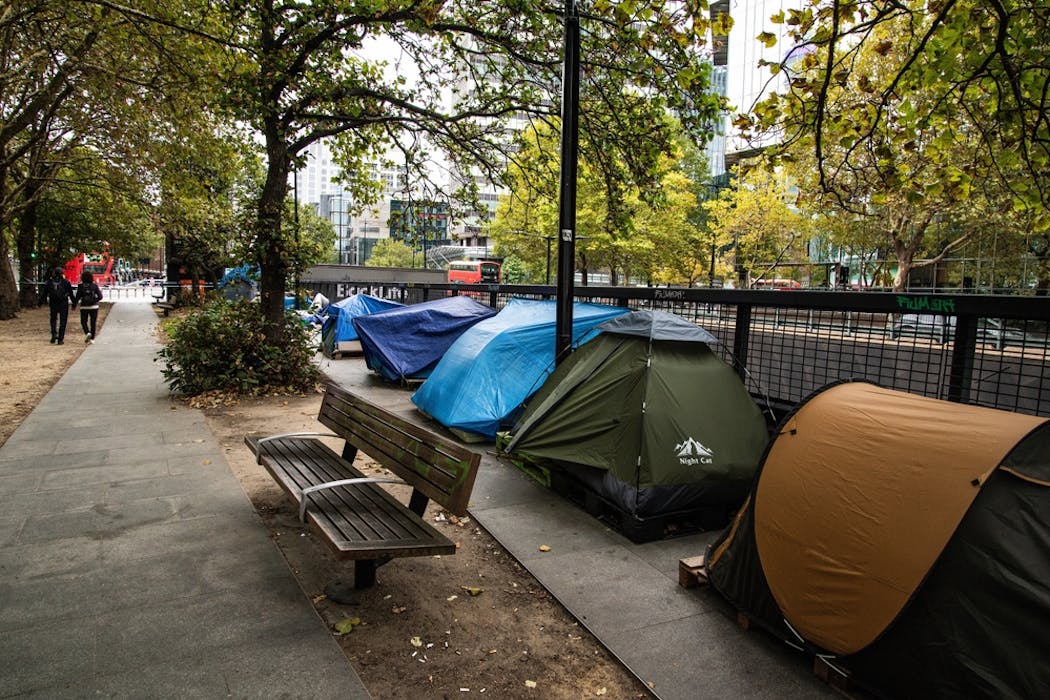
Jon C 303/Shutterstock

The government’s recently announced grand plan to end homelessness in England is the latest instalment in a long line of promises (and failures) by governments across the UK. This latest strategy, published in December, promises billions in investment in rough sleeping services, alongside a previous commitment to build 1.5 million new homes by the end of this parliament.

It’s an attempt to address the UK’s acute housing crisis. On the surface, there is plenty to praise in the plan, and these proposals are already receiving support from the wider sector.

For example, the scrapping of the two-child benefit limit will lift many vulnerable children out of poverty. And the strategy hints at more preventative approaches to the problem of homelessness.

But there’s a problem. Can the government achieve this objective within the narrow political window that this parliament offers? If not, perhaps it should consider whether this is the most effective use of public money.

One striking omission in the strategy is the absence of a commitment to the “housing first” model which, as the name suggests, would provide immediate access to housing for a homeless person. This omission is surprising, given the report’s repeated emphasis on housing as a solution.

Housing first combines an unconditional home with range of wraparound services for things like mental health problems or addiction. It’s distinct in being a genuinely long-term housing intervention, catering to those with multiple and complex needs. It is one of the most robustly evidenced homelessness interventions.

There are some isolated case studies of housing first mentioned in the report, but responsibility once again falls to the third sector. Charitable organisations are already forced to compete for insufficent funding pots, while also working alongside cash-strapped local authorities.

The average cost of housing first support per person is highly economical, according to the government’s own cost-and-benefit analysis data. The expected benefits to society have been calculated at £15,880 per person, which is more than double the £7,737 average cost.

According to a recent report from the charity Crisis evaluating housing first trials, a national roll out would cost £226 million per year. But this would be offset by reductions in provision burdens, equivalent to £280 million per year. This equates to total cost of £17,068 per individual per year, with a related saving surplus of £3,313.

The false economy of ‘business as usual’

Moral and human costs aside, homelessness is astoundingly expensive. Temporary accommodation alone costs billions each year. Although exact data on this is sparse, people experiencing rough sleeping are often referred to as “frequent flyers” through public services such as A&E departments, police and the courts.

The most recent calculation from Crisis, which goes back to 2015, estimated the annual cost of rough sleeping to be around £20,000 per person (or £27,872 when adjusted for inflation). This is due to things like use of NHS services, policing and the courts system. As seen with the government’s own rough sleeping snapshot, it continues to rise in the UK.

Arguably, business as usual isn’t working. There is little point in diverting funding to services that don’t work, or funding housing programmes for people with complex needs who may not be ready for a tenancy. If the aim is to reduce or end homelessness sustainably, the answer is not more short-term funding, but significant structural reform.

mobile phone screen showing universal credit login page alongside some pound coins and notes.
Benefit sanctions can hit people who are already at rock-bottom.
AndrewMcKenna/Shutterstock

In my research with my colleague, Joanne Massey, we explored some of these wider structural constraints facing people in poverty. We framed these constraints as forms of intentional and unintentional harms by the state. They include a welfare system where, despite annual rises, the range of benefits remains out of touch with living costs, alongside things like universal credit sanctions that make already difficult lives even more challenging.

Without confronting these, homelessness cannot be prevented or reduced. As such, the report falls short. For this to be a pragmatic and cost-effective strategy, the system must change from one of economically wasteful short-termism. There is no shortage of impactful and evidence-based examples – including housing first.

However, merely increasing funding will not achieve the necessary changes. The government must also commit to a public health approach. This means prioritising prevention through early intervention, as well as tackling the causes of homelessness at their structural root. Homelessness is a problem for all of society to address.

And merely listing poverty as a cause of homelessness does nothing to address it permanently, nor replace what has been lost from hundreds of billions of pounds of cuts to public services. A public health approach to homelessness would address challenges like these at the individual, community and societal levels simultaneously. It would also be a better use of taxpayer funds.

As an example, efforts in Wales to improve health with a prevention strategy produced a £14 return for every £1 invested using a public health approach. There was an annual saving of £9,266 per person when using preventative homelessness programmes. This approach combines the third sector, council services, education, health and the criminal justice system into one coherent strategy.

The government’s homelessness strategy is a positive start, but it will not replace what has been lost. Nor, as it stands, will it address the complex reasons why homelessness persists.

The Conversation

Anton Roberts does not work for, consult, own shares in or receive funding from any company or organisation that would benefit from this article, and has disclosed no relevant affiliations beyond their academic appointment.

ref. The UK spends millions on services for homeless people. Housing them could make more economic sense – https://theconversation.com/the-uk-spends-millions-on-services-for-homeless-people-housing-them-could-make-more-economic-sense-272569

Data suggests Labour would be making a mistake if it ousted Keir Starmer after May elections

Source: The Conversation – UK – By Paul Whiteley, Professor, Department of Government, University of Essex

The prime minister insisted he was staying in the job during an interview with Laura Kuenssberg at the start of the year. Number 10/Flickr, CC BY-NC-ND

British electoral politics in the 1980s were dominated by Margaret Thatcher, the prime minister for the whole of that decade. Similarly, Tony Blair dominated elections when he was in Downing Street from 1997 to 2007. In sharp contrast, the decade from 2015 to 2025 saw no fewer than six prime ministers come (and mostly go) – five Conservatives and Keir Starmer for Labour.

Traditionally, Labour has been reluctant to sack its leader, but if the May elections turn out to be as bad as the polls suggest, the party might well adopt the Conservative strategy of changing its leader as frequently as premier league football managers.

However, the data suggests that sacking Starmer after those elections would be a mistake. This is because voters focus much more on the performance of the government overall than the prime minister when it comes to casting a ballot.

If he were removed, it would also trigger a serious internal conflict in the party on the scale of the turmoil in the Conservative party over Brexit. This played a major role in explaining the Tories’ massive defeat in the 2024 general election.

Trends in voting intentions, satisfaction with governments and with prime ministers for governing parties, 2015 to 2025:

A chart showing how satisfaction with parties and with governments has fluctuated over the years, tracked against voting behaviour.
How satisfaction with parties and PMs relates to voting.
P Whiteley, CC BY-ND

To see why this is the case, we can examine polling data on perceptions of the performance of incumbent governments and prime ministers alongside data on voting intentions for their parties over the decade since 2015. The key comparison is between the effects of the performance of governments with that of prime ministers on the vote.

The relationship between these variables is very strong, with correlations all greater than 0.80. It is tricky to find out which of the satisfaction measures is most important for predicting the vote, but this can be done with the help of multiple regression. This is a statistical technique that can predict changes in vote intentions from the satisfaction measures together with some other variables which also influence voting for governing parties.

These other variables in the analysis relate to challenger parties affecting both Conservative and Labour governments. The three national challenger parties are Reform, the Liberal Democrats and the Greens.

In the case of Reform, I’ve included vote intentions for its ancestor parties, UKIP and the Brexit party, since it did not officially exist until 2021. The focus is on explaining voting intentions for the Conservative government from 2015 to 2024 and subsequently the Labour government up to 2025.

The effects of the satisfaction measures and the challenger parties on support for the governing parties appear in the chart below. The analysis identifies the impact of each variable on changes in vote intentions for the governing party.

To illustrate, a score of 1.0 would mean that a 1% increase in the satisfaction with government would produce a 1% increase in voting intentions for the governing party. In fact, the coefficient is 0.2, a lot less than 1.0 but nonetheless highly significant. An increase of 10% in government satisfaction increases government vote intentions by 2%.

Impact of variables on voting intentions for governing parties:

A chart showing How votes for smaller parties interact with government and PM satisfaction.
How votes for smaller parties interact with government and PM satisfaction.
P Whiteley, CC BY-ND

The same cannot be said about the effects of satisfaction with the prime minister. This had a negligible impact on voting for the government. It’s not surprising that polling on the popularity or unpopularity of the prime minister attracts a lot of media attention. After all, they are the main spokesperson for the party. But when it’s time to vote, this evidence shows people judge the government in general rather than the spokesperson.

A clear example of this is the fact that the rapid changes in the leadership of the Conservative party had little overall effect on the party’s support in the long run. They ended up losing terribly in 2024 despite the tendency to replace their leaders.

To be fair, there were exceptions to this, as can be seen in the first chart. After David Cameron resigned following the Brexit referendum his successor, Theresa May, was more popular than her party.

Satisfaction with her government rose, but satisfaction with her performance rose faster. However, she was subsequently brought down by her decision to break a promise and call an early election in 2017.

She nearly lost that election and as a result was unable to get a “soft” Brexit deal through Parliament and had to resign. Boris Johnson did win the 2019 general election, but his chaotic government prepared the ground for the electoral rout for the Conservatives in 2024

The challenger parties

Challenger parties all influence voting for the governing party. The strongest impact is seen in vote intentions for Reform and its ancestor parties. Reform took votes away from both Labour and the Conservatives when each was in government. An increase of 10% in the Reform vote reduces the support for the governing party by 2.5%.

The impact of the Liberal Democrats on the governing party has been negative when they are looked at without considering the complex interactions of voting in a five-party system in England and six-party systems in Scotland and Wales.

These complexities ensured that Liberal Democrat support increased with government support as some voters were drawn to Reform, or when Labour took over as the governing party. Finally, the impact of the Greens on government support was negligible.

These results suggest that a change of leadership in the Labour party will not have any significant effects on vote intentions for the party. The only way to improve things is for Labour to deliver on its manifesto promises, particularly on economic growth and so change the mood of the country.

The Conversation

Paul Whiteley has received funding from the British Academy and the ESRC.

ref. Data suggests Labour would be making a mistake if it ousted Keir Starmer after May elections – https://theconversation.com/data-suggests-labour-would-be-making-a-mistake-if-it-ousted-keir-starmer-after-may-elections-273048

Why restoring nature can work so much more effectively when led by local people

Source: The Conversation – UK – By Neil Dawson, Research Fellow in International Development, University of East Anglia

Tree planting in Vietnam. Michael Habana Coronel/Shutterstock

The success of restoration efforts hinges on involving local communities. That was the finding of our recent study which explored restoration programmes around the world.

From the English fens, where soils are degraded from decades of intensive farming, to the cattle rangelands of the Brazilian state of Rondônia where the Amazon rainforest clearance has been extensive, the best option for nature may not be conservation, but restoration.

Conservation involves preventing harm to existing nature, while restoration is the repair of ecosystems that have degraded over long periods or due to specific events like an oil spill.

Our research found that many restoration projects are run by governments or private organisations with a target-driven focus on planting trees, improving soils or reintroducing species, with limited local input. This often fails to achieve lasting results because of the mismatch with the lives and livelihoods of those most connected to the landscape.

Restoration can more effectively reverse degradation, address its causes and benefit local people if communities can shape and lead initiatives to align with their own needs, knowledge and aspirations.

Restoration programmes are being established around the world at a staggering rate. For example, 196 nations are signatories to a UN target to start restoring 30% of the world’s degraded land and sea by 2030. Worldwide, pledges have already been made to restore over a billion hectares – an area bigger than the US.

This level of ambition is welcome, but there are social and political challenges to be confronted.

Degraded lands and seas are nearly always occupied, most often by farming communities. Some are cherished, like the UK’s much-loved “sheep-wrecked” uplands where high numbers of livestock suppress the diversity of vegetation in many places.

Restoration may sound universally desirable. Who could be against planting lots of trees or restoring fisheries? But people actively resist restoration that’s imposed on them without their involvement. They might experience harms as well as benefits.

In Wales, plans to require farmers to have trees on 10% of their land were dropped after protests. The Scottish government also dropped plans to designate 10% of its seas as highly protected marine areas (areas of the sea where certain activities – usually fishing – are banned), due to a lack of community input and protests.

A promising alternative centres on local communities shaping the restoration process. We have identified four levels of involvement for Indigenous and local communities in ecological restoration: exclusionary (fully imposed), managerial (with limited consultation or incentives), collaborative (a more genuine partnership) and just and transformative (led by local ideas and values).

Four levels of community involvement

With a short-term focus on environmental results such as area of trees planted, exclusionary restoration projects may ignore local perspectives or even displace Indigenous people or local communities with rights to the land.

In Kenya, logging and charcoal production destroyed parts of the Mau forest affecting downstream water supplies. Since 2009, the government has tried to restore the area, but measures included evicting many Indigenous Ogiek who had sought to protect their forest home. Despite a 2017 ruling of the African Court on Human and Peoples’ Rights supporting their ancestral claim, the Ogiek’s struggle continues.

Sometimes locals are invited to consultations or to manage land for nature, but cannot influence decisions. One example of this managerial approach is Vietnam’s 30-year tree planting programme. While tree planting was performed by smallholders, these farmers had little input and many lacked land rights. The focus on growing commercial trees to fell and sell also meant forests were not native and did not mature, so benefits for nature were limited.

In collaborative approaches, a more balanced negotiation means locals may influence what is to be restored as well as where, how, by whom and how any benefits will be allocated. In northern India, forest planting projects have involved both the Himachal Pradesh Forest Department and communities. In some areas, local people selected which tree species would be most suitable for fuelwood and livestock fodder, or have planted trees and monitored their progress.

people planting mangrove saplings on foreshore by water
Mangrove restoration in Indonesia.
U.S. Department of State via Flickr

“Just and transformative” restoration approaches centre around local values, decisions and stewardship. This tends to be more successful for people and nature. The Miawpukek First Nation in Newfoundland, Canada, based restoration around species that are culturally significant to them, like the caribou, blueberries and Labrador tea.

Women in India’s Western Ghats are carefully nurturing the plants, creepers and mosses that hold the forest ecosystem together. And community networks lead mangrove restoration in Thailand’s Phang-Nga Bay.

Restoring the ability of local communities to be the custodians of nature is a promising approach to both ecological and social recovery – and ultimately environmental justice.


Don’t have time to read about climate change as much as you’d like?

Get a weekly roundup in your inbox instead. Every Wednesday, The Conversation’s environment editor writes Imagine, a short email that goes a little deeper into just one climate issue. Join the 47,000+ readers who’ve subscribed so far.


The Conversation

Neil Dawson is affiliated with the Commission on Environmental, Economic and Social Policy of the International Union for the Conservation of Nature.

Adrian Martin receives funding from the UK Natural Environment Research Council

Iokiñe Rodríguez works for the University of East Anglia (UEA). She receives funding from the UK Research Councils.

ref. Why restoring nature can work so much more effectively when led by local people – https://theconversation.com/why-restoring-nature-can-work-so-much-more-effectively-when-led-by-local-people-272289

El ‘Blue Monday’ no existe, pero la tristeza sí (y cumple una función clave en la infancia)

Source: The Conversation – (in Spanish) – By Paola Alexandria Pinto de Magalhães, Investigador – Facultad de Enfermería – Desarrollo Positivo de Niños y Adolescentes, Universidad de Navarra

PeopleImages

Enero suele llegar a España envuelto en una mezcla de ilusión y agotamiento. Tras la magia de la Navidad y los Reyes Magos –uno de los momentos más esperados por niños y niñas–, el regreso a la rutina se vive, a menudo, con un cierto bajón emocional. En este contexto surge una pregunta recurrente: ¿son realmente más tristes los días de enero?

La idea ganó fuerza en 2005, cuando el psicólogo británico Cliff Arnall anunció haber identificado, mediante una supuesta ecuación, el día más triste del año. En su fórmula incluía elementos como el clima invernal, las deudas después de las fiestas y la falta de motivación para cumplir los propósitos de Año Nuevo.

Sin embargo, la comunidad científica desestimó rápidamente aquella propuesta por no estar apoyado por evidencia científica. La ecuación, lejos de ser un hallazgo psicológico, se reveló como una herramienta promocional diseñada para una agencia de viajes que impulsaba el mensaje de que la mejor forma de combatir la tristeza era comprar unas vacaciones.

La tristeza no es un evento programado

El término Blue Monday continúa reapareciendo cada enero en los medios de comunicación y en campañas publicitarias, pese a que no existe evidencia que relacione un día concreto del calendario con un aumento generalizado del malestar emocional.

La tristeza es una respuesta humana compleja, no un evento programado. Y si bien las condiciones climáticas propias del invierno pueden influir en el estado de ánimo, el entramado comercial que se ha construido alrededor del concepto busca un impacto en la conducta, invitando a consumir objetos o experiencias.

Algunas marcas han convertido la tristeza en un recurso emocional rentable, presentando productos o experiencias como supuestas soluciones a este malestar que ellas mismas contribuyen a amplificar. Se aprovechan de que fomentar la vivencia del “día más triste del año” podría influir en el comportamientos de consumo.

Por si fuera poco, este tipo de publicidad puede influir en la dinámica emocional de muchos hogares: crea expectativas difíciles de sostener, fomenta el materialismo, genera tensiones entre adultos y niños y, en ocasiones, alimenta sentimientos de infelicidad.

Pero existe un riesgo añadido cuando estos mensajes llegan a la infancia. Si a los menores se les transmite la idea de que las emociones “negativas” deben combatirse con compras, distracciones o euforia artificial y digital, se debilita su capacidad para reconocer, comprender y gestionar lo que sienten. De ahí la importancia de reflexionar sobre el impacto de este discurso mediático en la educación emocional de los niños y niñas.

El papel de la tristeza en el desarrollo

La tristeza, lejos de ser un obstáculo, cumple un papel fundamental en el desarrollo del niño. Desde muy pequeños, los niños descubren que expresar tristeza puede facilitar el apoyo de padres, madres y cuidadores. Esta emoción, en muchos casos, es más eficaz que otras para recibir atención y consuelo.

Además, la tristeza ayuda a reajustar metas tras un fracaso, lo que les permite modificar sus estrategias y expectativas ante situaciones adversas.


Leer más:
Resiliencia en casa: cómo ayudar a los niños a crecer fuertes día a día


La tristeza impulsa procesos de introspección que permiten a los niños reflexionar sobre lo que sienten, sobre sus valores y sobre la forma en que se relacionan con los demás. Experimentar tristeza también contribuye al crecimiento moral.

A través de emociones ligadas a la pérdida, la decepción o la injusticia, los niños construyen su sentido de lo correcto, desarrollan sensibilidad hacia el sufrimiento ajeno y fortalecen su empatía. De hecho, estudios recientes han encontrado una relación positiva entre la experiencia de tristeza y la capacidad de ponerse en el lugar del otro.

La respuesta adulta a la tristeza

Sin embargo, la forma en que los adultos responden a esta emoción influye decisivamente en cómo los niños aprenden a manejarla. Un entorno familiar cálido, sensible y afectivo favorece el desarrollo emocional, mientras que interacciones tensas, frías o críticas pueden dificultarlo. Las dinámicas familiares –los modelos emocionales que observan la calidad de, las conversaciones y la disponibilidad de apoyo– dan forma a su manera de interpretar y expresar la tristeza.

El contexto escolar y social también juega un papel clave. Los niños que se sienten acompañados y respaldados no solo viven la tristeza con menor intensidad, sino que desarrollan mayor confianza para afrontarla.


Leer más:
Cómo ayudar a los niños a comprender y aceptar la muerte


Acompañar a los niños en el reconocimiento y manejo de la tristeza es una manera de ayudarlos a desarrollar resiliencia. Cuando aprenden estrategias para afrontar emociones difíciles –hablar, pedir ayuda, poner en palabras lo que sienten, identificar lo que necesitan– adquieren recursos internos que les permitirán afrontar retos futuros con mayor seguridad. Esa resiliencia se traduce en autoestima más sólida y en una percepción más realista y confiada de sus propias capacidades.

Diferencias culturales en la vivencia de la tristeza

Los valores y creencias de cada cultura, por su parte, determinan qué manifestaciones de tristeza son aceptadas, cuáles suelen reprimirse y cuáles se consideran “apropiadas”. Esto explica que la expresión y regulación de la tristeza varíen significativamente entre entornos culturales y sociales.

Entender estas diferencias permite acompañar mejor a los niños en sus procesos emocionales y evitar interpretaciones erróneas sobre su comportamiento.

Una mirada crítica hacia la felicidad publicitaria

Por ello, frente a los mensajes comerciales como el del Blue Monday, los adultos debemos reconocer que esta emoción forma parte natural del crecimiento (no solo un día del año) y ofrecer a los niños espacios de escucha, acompañamiento y comprensión.

The Conversation

Las personas firmantes no son asalariadas, ni consultoras, ni poseen acciones, ni reciben financiación de ninguna compañía u organización que pueda obtener beneficio de este artículo, y han declarado carecer de vínculos relevantes más allá del cargo académico citado anteriormente.

ref. El ‘Blue Monday’ no existe, pero la tristeza sí (y cumple una función clave en la infancia) – https://theconversation.com/el-blue-monday-no-existe-pero-la-tristeza-si-y-cumple-una-funcion-clave-en-la-infancia-272966

Iran: how the Islamic Republic uses internet shutdowns as a tool of repression

Source: The Conversation – UK – By Dr Konstantinos Mersinas, Senior Lecturer in Information Security, Royal Holloway, University of London

When a protest by angry traders about what they see as the Islamic Republic’s poor handling of the economy morphed into a national uprising across Iran, the authorities moved quickly to shut down the internet. It’s a tactic the regime has used before. Closing down communications makes it harder for resistance to organise. It also makes it hard for people protesting in Iran to communicate with and enlist support from the outside world.

Authoritarian regimes, such as the Islamic Republic in Iran, tend to rely on two distinct modes for managing information and collective action. The first is surveillance. Communications are monitored, platforms filtered, metadata analysed, and users channelled toward spaces that remain visible to the state. In such conditions, limited circumvention is often tolerated.

The regime allows the use of virtual private networks (VPNs) for example, since only a fraction of the population is technically savvy enough to use them. A VPN is a tool that routes a user’s internet traffic through an external server, masking its destination and bypassing local restrictions. In practice, VPNs can help users evade censorship and reduce visibility to domestic internet controls by making their connections appear to originate from outside the country – though they still depend on the underlying internet infrastructure to function.

The second mode is shutdown, deployed under exceptional conditions. When people start to mobilise and their protests start to exceed the ability of the authorities to control them with surveillance and become visible to the outside world, the authorities escalate from monitoring communications to disrupting them.

Shutdowns are indiscriminate and economically damaging. But they sever the connective infrastructure that allows protest movements to form, share information, coordinate and scale up. Iran’s repeated shutdowns in 2019, 2022, and 2026 illustrate this transition from surveillance as a norm to shutdown as an emergency instrument of rule.

In Iran, shutdowns are implemented in stages rather than a single intervention. Early stages typically involve bandwidth throttling, unstable connections or selective blocking of platforms.

As protests intensify, authorities escalate by disabling mobile data, restricting broadband access and withdrawing routing information that allows Iranian networks to be reached from the global internet. Government directives instruct providers to shut down services and block routes to the outside world. This effectively removes Iran’s digital address from the global network.

In Iran this week, internet traffic monitoring indicates near-total isolation. Connectivity is reported to have fallen to around 1% of normal levels.

Enforcement is neither uniform nor static. Restrictions are reported to be geographically targeted at those neighbourhoods most prone to protest. They tend to be synchronised with mobilisation and are adjusted in real time as required. Communications disruption now extends beyond the internet to include mobile and landline phones and basic digital services. At this point, the objective is to immobilise information flow across the whole of society.

Shutdowns as a political tool

Authorities have repeatedly justified shutdowns as necessary for national security or cybersecurity. Yet analyses indicate such measures as ineffective against state-level cyber operations. What shutdowns primarily restrict is societal access to information and communication, both internally and externally.

The fact that Iran persists with shutdowns despite the often severe economic and humanitarian costs, shows how effective they judge them to be. Each blackout disrupts banking, payments, logistics and everyday life. Yet authorities repeatedly accept these costs when legitimacy risks threaten regime survival. Shutdowns thus function as coercive signals as much as technical means, demonstrating a willingness to suspend digital society itself.

VPNs are widely used in Iran to bypass censorship and surveillance. Research shows that VPN use is often tolerated outside crisis periods, operating as a managed pressure valve while allowing the state to keep an eye on the sort of people who use them. At the same time, VPN traffic is detectable, providers are routinely blocked or throttled, and legal ambiguity enables selective enforcement.

Crucially, VPNs depend on underlying connectivity. Once authorities escalate to disruption on an infrastructure level, VPNs become ineffective because tunnels (encrypted connections that carry internet traffic) cannot be established. This explains why VPN use is significantly reduced when shutdowns are imposed. The same holds for the Tor network (a decentralised system that routes internet traffic through multiple relays to obscure users’ identities and locations). This has been used by Iranians in the past.

Satellite internet, particularly Starlink, enabled limited information flows during recent shutdowns. This allowed some reporting to the outside world. By bypassing domestic infrastructure, satellite connectivity undermines territorial control over data flows – but access remains uneven because connectivity depends on equipment which is scarce, expensive and difficult to distribute discreetly.

Possessing or operating such equipment carries personal risk, particularly during periods of heightened repression. Even when available, connectivity is not guaranteed – satellite links can be degraded andobstructed, and are vulnerable to disruption through signal interference. As a result, satellite internet provides limited, uneven connectivity rather than a reliable substitute.

Shutdown conditions also create fertile ground for social engineering attacks. Fake “Starlink apps” and misleading claims about other circumvention tools can exploit citizens by harvesting data or identifying users.

Shutdowns are rarely the first choice for a regime like the Islamic Republic. They are deployed when mobilisation becomes rapid, visible, and difficult to contain. A recurring feedback loop follows: protesters adapt through VPNs or alternative channels, authorities escalate to infrastructure-level disruption, and this escalation fragments coordination while intensifying perceived injustice.

This explains why shutdowns may suppress mobilisation in the short term yet worsen instability over time. It’s a pattern that was evident across Iran’s previous blackouts.

When they feel under threat, regimes move from monitoring private communication to restricting information flows at scale. This trajectory underscores a broader warning for democracies: the erosion of privacy initiates a shift in power toward the state by normalising control infrastructures that can be activated during crises. This is a dynamic the Iranian case illustrates, manifesting in the disruption of communication itself.

The Conversation

The authors do not work for, consult, own shares in or receive funding from any company or organisation that would benefit from this article, and have disclosed no relevant affiliations beyond their academic appointment.

ref. Iran: how the Islamic Republic uses internet shutdowns as a tool of repression – https://theconversation.com/iran-how-the-islamic-republic-uses-internet-shutdowns-as-a-tool-of-repression-273519

Comme au mondial junior ou aux JO de Milan-Cortina, les hockeyeurs québécois sont plus absents que jamais dans la LNH

Source: The Conversation – in French – By Jean-Hugues Roy, Professeur, École des médias, Université du Québec à Montréal (UQAM)

Ils fondent comme glace au soleil. Aux Jeux olympiques de Milan-Cortina, en février, aucun joueur québécois ne portera l’uniforme de l’équipe nationale canadienne. Un fait inédit, qui s’inscrit dans un déclin beaucoup plus large : jamais, en plus de cent ans d’histoire, les joueurs du Québec n’ont été aussi peu nombreux, et aussi peu dominants, dans la Ligue nationale de hockey (LNH) que ces dernières années.

C’est ce qui ressort d’une analyse de la totalité de la base de données de la LNH qui couvre ses 108 années d’histoire. Cette analyse fait écho aux inquiétudes, relayées récemment dans plusieurs médias, sur la raréfaction des joueurs québécois dans le hockey masculin. Le déclin est multi-factoriel : popularité d’autres sports chez les jeunes et coût de plus en plus important pour progresser font partie des causes probables rapportées.

Quatre « équipes »

Pour mesurer l’évolution de la place des joueurs québécois, je les ai regroupés selon leur lieu de naissance en quatre ensembles : Québec, reste du Canada, États-Unis et reste du monde.

Sur les 7826 patineurs ayant disputé au moins un match dans l’histoire de la LNH, moins d’un sur dix est né au Québec. Un simple décompte sous-estime toutefois leur contribution réelle : des légendes comme Ray Bourque, qui a joué 1612 matches en saison régulière pendant 23 saisons, ou Luc Robitaille, qui a participé à 1431 parties en 19 saisons, valent autant que George McNaughton, Stéphane Brochu ou les 26 autres n’ayant joué qu’une seule partie en carrière. Ce n’est pas juste.

C’est pour cela que j’ai compté le nombre de fois que chaque joueur apparaît dans l’alignement de chacune des parties de l’histoire de la ligue. Cela permet de pondérer les données en calculant presque le temps de glace de tout le monde.

Les Québécois jouent plus et « scorent » plus

En faisant ce calcul, on obtient un total de 2,2 millions de « présences par parties ». Plus de 223 000 l’ont été par des joueurs québécois, une proportion de 10 %. Cela signifie que les attaquants et défenseurs du Québec ont été mis sur la glace relativement souvent par rapport aux autres.

Autrement dit, chaque Québécois a joué plus souvent que la moyenne : près de 299 matches en carrière. Le joueur moyen de la LNH en a joué 15 de moins, comme le montre le tableau ci-dessous.

Non seulement les joueurs du Québec ont-ils davantage joué, mais ils ont aussi marqué un plus grand nombre de points chacun. Un peu plus d’un million de points ont été enregistrés dans l’histoire de la LNH (buts et assistances). Plus de 115 000 l’ont été par des attaquants ou des défenseurs du Québec. C’est 11,1 % de l’ensemble, ce qui signifie que les Québécois ont été les hockeyeurs les plus productifs de l’histoire de la ligue avec 154 points en carrière chacun, en moyenne, contre 132 pour le joueur lambda.

Un lent déclin

Mais ce portrait flatteur appartient de plus en plus au passé. Saison après saison, la proportion de joueurs québécois, leur temps de jeu et leur contribution offensive déclinent.

En un coup d’œil, que la nostalgie peut rendre humide, on voit que les saisons 1955-56 à 1975-76 ont été l’âge d’or du hockey québécois. Grâce aux Maurice Richard, Guy Lafleur et autres compatriotes, la Sainte-Flanelle a gagné 12 des 20 coupes Stanley en jeu dans cette période.

En 1957-58, des joueurs du Québec ont marqué près de 29 % de tous les points dans la Ligue nationale, alors qu’ils ne représentaient que 18 % des troupes.

Depuis cette glorieuse époque, cependant, la proportion québécoise pour le nombre de joueurs, de parties auxquelles ils participent, de points qu’ils marquent ou de temps qu’ils passent sur la glace diminue inexorablement.

La débandade depuis la pandémie

Examinons de plus près les 20 dernières années, après le lockout de 2004-05.

Si on se concentre sur la ligne rouge (nombre de points), on s’aperçoit que jusqu’en 2012, les hockeyeurs d’ici ont tout de même continué de s’inscrire souvent au pointage par rapport à leur nombre sur la patinoire. La proportion de points marqués par des Québécois (entre 7 % et 9 % de tous les points marqués dans la LNH) est supérieure à la proportion de joueurs québécois dans les alignements et sur la glace (autour de 6 %).

En d’autres mots, ils étaient peut-être peu présents, mais ils étaient bons !

À partir de la pandémie, par contre, c’est la débandade. Les joueurs du Québec ne marquent plus que 4 % à 5 % des points dans la ligue, un pourcentage inférieur à leur place dans les alignements et sur la glace.

Dans la première moitié de la saison actuelle, seulement 3,8 % des points marqués dans le circuit Bettman l’ont été par des hockeyeurs québécois. Jamais leur productivité n’a été aussi faible de toute l’histoire de la LNH.

Productivité anémique

À partir de la décennie 1980, la LNH a accueilli de plus en plus de joueurs européens. Il est donc normal que la place des joueurs du Québec ait diminué à partir de cette époque. Mais la productivité des hockeyeurs québécois a-t-elle baissé pour autant ?

Pour le mesurer, j’ai utilisé le nombre de points comptés par partie. L’ensemble des joueurs depuis 1917 a compté en moyenne 0,46 point à chaque partie. On trouve 75 joueurs qui ont même enregistré plus d’un point dans chacune des parties auxquelles ils ont participé. Wayne Gretzy est le champion, à ce chapitre, avec 2857 points en 1487 matches, ou 1,92 point par match en moyenne !

Le Québec (ligne en bleu) est souvent le groupe le plus productif. C’est le cas, et de loin, au cours des années 1950. Ce l’est également à quelques reprises dans les années 1970 et 1980.

Mais le graphique ci-dessous, qui se concentre sur les 20 dernières années, montre que les joueurs québécois dans la LNH ont été les plus productifs entre 2010-11 et 2012-13, ainsi qu’au cours des saisons 2015-16 et 2018-19.

Il montre aussi que la dernière saison et l’actuelle sont les moins productives de l’histoire de la LNH pour les hockeyeurs du Québec.

Et les gardiens ?

Le constat est similaire chez les gardiens. Bien que le Québec ait fourni une proportion élevée de gardiens à la LNH, leur efficacité moyenne est désormais inférieure à celle de leurs homologues américains et européens. Et ils sont passablement utilisés. Dans près d’une partie sur cinq, de toute l’histoire de la Ligue nationale de hockey, il y avait un Québécois dans les buts.

Chez un gardien, une mesure de l’efficacité est la proportion de tirs au buts qu’il parvient à arrêter. Feu Ken Dryden, n’a accordé que 1230 buts, ce qui signifie qu’il a arrêté plus de 92,2 % des lancers dirigés contre lui, un des meilleurs taux de l’histoire. La moyenne de tous les gardiens ayant joué dans la LNH est de 89,1 %.

Les gardiens québécois ont une efficacité à peine supérieure. Qui plus est, ils se font dépasser par les gardiens américains et par les gardiens du reste du monde.

Le pays qui a fourni les meilleurs gardiens ? Le Kazakhstan ! Ses cinq cerbères ont eu un taux d’efficacité de 91,2 % dans les 972 parties au cours lesquelles ils ont été placés devant les filets.

Conclusion : les joueurs québécois qui évoluent dans la LNH, qu’ils soient attaquants, défenseurs ou gardiens de but, n’ont jamais été aussi mauvais qu’en cette première moitié de la saison 2025-2026.

La Conversation Canada

Jean-Hugues Roy ne travaille pas, ne conseille pas, ne possède pas de parts, ne reçoit pas de fonds d’une organisation qui pourrait tirer profit de cet article, et n’a déclaré aucune autre affiliation que son organisme de recherche.

ref. Comme au mondial junior ou aux JO de Milan-Cortina, les hockeyeurs québécois sont plus absents que jamais dans la LNH – https://theconversation.com/comme-au-mondial-junior-ou-aux-jo-de-milan-cortina-les-hockeyeurs-quebecois-sont-plus-absents-que-jamais-dans-la-lnh-273063

‘Heated Rivalry’ scores for queer visibility — but also exposes the limits of representation

Source: The Conversation – Canada – By Adam Davies, Associate Professor, College of Arts, University of Guelph

Connor Storrie, left, and Hudson Williams in a scene from ‘Heated Rivalry.’ (Bell Media)

Heated Rivalry, the Bell Media-produced Canadian gay hockey romance based on the novel by Rachel Reid, has taken the world by storm.
The series stars Hudson Williams as Shane Hollander, a Japanese Canadian hockey player for the Montréal Metros, and Connor Storrie as Ilya Rozanov, a Russian hockey player for the Boston Raiders.

With much of the series was filmed in Guelph, Ontario and other Canadian locations, the series highlights both Canadian hockey and queer representation and desires.

Heated Rivalry explores the growing sexual tension and eventual romance between Hollander and Rozanov as they navigate the highly masculinized and heteronormative social pressures of playing in a professional hockey league.

While the series has become a huge audience success and received largely positive critical evaluations of its acting, production and characterization, it has gained widespread attention for its representation of queer romance, particularly gay sports romance.

The show has also received media commentary for its large following of women who are fans of the show and its actors. Many have been debating and discussing the show on social media.

Given the current climate of anti-LGBTQ legislation and increased political and social transphobia and homophobia, Heated Rivalry could signal crucial queer representation during a politically dangerous time.

Hockey’s culture of masculinity

Hockey is a very heteronormative and masculinized sport and continues to face serious issues related to sexual violence and racism — problems that have been widely reported on over the past several years.

In 2022, Hockey Canada faced numerous public controversies amid reports that it paid $8.9 million for sexual abuse settlements to 21 complainants since 1989.


Read more:
High-profile sex assault cases — and their verdicts — have consequences for survivors seeking help


Research has also documented persistent racial inequities within Canadian hockey that fuel the erasure of Black Canadians’ contributions to the establishment of ice hockey in Canada, as well as historical and ongoing experiences with taunting, harassment and exclusion of racialized hockey players in Canadian hockey leagues.

Against this backdrop, Heated Rivalry offers a rare interruption to hockey’s normative culture, even as it remains constrained by many of the sport’s dominant values.

Visibility versus structural change

Whether Heated Rivalry will meaningfully impact the willingness or safety of professional players to come out is an open question. Currently, there are no openly queer hockey players in the National Hockey League.

Former Canadian hockey player Brock McGillis, who is often noted as one of the first out gay professional hockey players, has expressed skepticism. He has argued the show is “more likely to have an adverse effect on a player coming out.”

McGillis said that he enjoys the show while also explaining: “I don’t believe that many hockey bros are going to watch it. And I don’t think, if they are watching it, they’re talking about it positively.”

Meanwhile, the NHL has previously banned rainbow Pride coloured hockey stick tape. Given the popularity of Heated Rivalry, the NHL released a statement articulating its hope that the series will act as a “unique driver for creating new fans.”

Whether such symbolic gestures will translate into structural changes that address the ingrained homophobia within hockey remains to be seen.

Representation and intersectionality

Within my research, I analyze issues related to gender and sexuality, often particularly as it pertains to the experiences of gay and queer men.

For many gay men, navigating masculinity is complicated in terms of both in-group and out-group discrimination. It is not uncommon for white, muscular and masculine-presenting gay men to receive the most media attention and be positioned as highly desirable within gay men’s communities.

Heated Rivalry provides valuable representation for gay male romance and sexualities, but it also raises important questions about both its potential and its limitations.

Shane Hollander’s character gestures toward the intersections of race and sexuality through his experiences as an Asian hockey player, although this storyline could have been explored further in the series. Ilya Rozanov’s narrative, meanwhile,
explores family-based and nationalistic homophobia through his background as a Russian-born queer man.

A close-up of the face of an Asian man in a hockey helmet and uniform
Hudson Williams as Shane Hollander in ‘Heated Rivalry.’
(Bell Media)

Although both characters benefit from financial and gender-based privileges that many LGBTQ people do not share, their experiences navigating identity and homophobia as it intersects with family, state-sanctioned homophobia and race and ethnicity, are meaningful for viewers.

However, much of the storyline still focuses on the experiences of two men who are traditionally attractive, fit and muscular, and masculine-presenting. This echoes much of the mainstream queer representation, which glorifies fit male bodies and gay gym cultures.

The limits of mainstream representation

Many mainstream representations of queer identities, such as the 2018 film Love Simon, fail to represent the nuances and complexities of multifaceted queer experiences and identities outside of white, masculine and upper-middle class norms.

Gay media platforms such as Grindr, the well-known gay hook-up app, are known for emphasizing fit bodies, muscular physiques and gym or beach selfies. These norms can lead to forms of discrimination or prejudice against app users who do not conform, as well as body dysmorphia and body image issues that disproportionately affect gay and queer men.

Gay men’s sexualities, dating and relationships are often shaped through shame and secrecy, fuelling tropes that gay men are unable to form healthy and meaningful long-term romantic relationships.

Much of Heated Rivalry emphasizes secrecy, shame and risk as the two main characters wrestle with their romantic feelings for each other.
While this might reflect the realities many queer men face, positioning such experiences as normative risks reinforcing longstanding negative stereotypes.

Queer joy — and what’s still missing

Heated Rivalry’s creator and writer, Jacob Tierney — himself a gay writer, actor and producer — has emphasized that the end of the first season is intended to be more celebratory than earlier episodes.

“For these last two episodes,” he told journalist Philiana Ng, “you’re going to finally get the joy that we wanted from the beginning – just queer joy, pure happiness and sweetness and love and all that other good stuff.”

A white man in a hockey uniform leans over while holding his stick against his thighs
Connor Storrie as Ilya Rozanov in ‘Heated Rivalry.’
(Bell Media)

However, there has been controversy about the show’s stars’ and creator’s resistance towards publicly identifying the lead actors’ sexual orientations. Given the common practice of having straight and cisgender actors play queer and trans characters in film and media, questions regarding authenticity in LGBTQ representation continue.

It’s worth noting, however, that Heated Rivalry does feature openly queer performers. François Arnaud, who plays Scott Hunter, is openly bisexual, and trans actor Harrison Browne — a former professional hockey player — stars in a minor role.

Tierney has pushed back at questions about the main actors’ sexual orientations, saying “I don’t think there’s any reason to get into that stuff.” He noted that what matters is an actor’s enthusiasm and willingness to do the work, and questions about actors’ sexuality are legally off-limits in casting.

Advocates for casting queer actors in queer roles acknowledge that while respecting actors’ privacy is essential, choices can be made through the casting and production process to create a more inclusive industry.

Queer romance on the ice

Beyond questions of representation, Tierney has been clear about the show’s thematic focus. Highlighting the love story between the two main characters, he has noted how “a gay love story set in the world of hockey … is an act of rebellion” and that audiences “deserve to have a gay show that is sexy and horny and fun.”

Still, audiences deserve to have gay shows that are sexy, horny, fun and representative of a variety of lived experiences and bodies.

With Heated Rivalry renewed for a second season, whether the show “scores” in terms of shifting conversations about masculinity, sexuality and sport is still up in the air.

The Conversation

Adam Davies receives funding from the Social Sciences and Humanities Research Council.

ref. ‘Heated Rivalry’ scores for queer visibility — but also exposes the limits of representation – https://theconversation.com/heated-rivalry-scores-for-queer-visibility-but-also-exposes-the-limits-of-representation-271253

Contra la ley de la selva: una alternativa cosmopolita a la geopolítica de las superpotencias

Source: The Conversation – (in Spanish) – By Juan Carlos Velasco, Profesor de Investigación. Grupo "Filosofía Social y Política" (FISOPOL). Jefe del Departamento de Filosofía Teórica y Práctica, Instituto de Filosofía (IFS-CSIC)

De izquierda a derecha, John Ratcliffe (director de la CIA), Donald Trump y Marco Rubio (secretario de Estado de Estados Unidos) siguen la operación militar en Venezuela en una imagen difundida por la Casa Blanca. Casa Blanca

Si la terminación de la Guerra Fría supuso el final de un mundo estructurado de manera bipolar –Estados Unidos vs. Unión Soviética–, el unipolarismo, que desde George W. Bush distintos presidentes de los Estados Unidos han ido queriendo imponer, se está desmoronando a ojos vista, si es que no se ha resquebrajado por completo.

En un contexto crecientemente multipolar, el cuestionamiento de determinadas fronteras internacionales y la multiplicación de conflictos bélicos apuntan hacia un revisionismo geopolítico que busca implementar una visión pluricéntrica para la que aún no se dispone de las herramientas adecuadas.

Las relaciones internacionales están cambiando y cada vez resulta más patente el tono involucionista, una cierta vuelta al pasado encarnada en el afloramiento de sombrías figuras autoritarias y el recurso a crueles guerras de anexión como forma de dirimir conflictos entre naciones.

El derecho internacional ha saltado por los aires

Al menos desde que Rusia procedió a invadir Ucrania, Israel la franja de Gaza y los Estados Unidos están interviniendo militarmente en Venezuela, vivimos en un mundo en el que la fuerza bruta pisotea sin escrúpulos el Estado de derecho y en el que los principios democráticos se ven extremadamente jibarizados.

Todas estas graves agresiones constituyen peligrosos precedentes que hacen saltar por los aires el derecho internacional. Eso es así en la medida en que muestran a las claras que cabe vulnerar sin penalización alguna los estándares mínimos que la humanidad se ha dado a sí misma para para impedir la supremacía abusiva del más fuerte y dirimir pacíficamente los diferendos que puedan surgir entre las naciones. La guerra ha quedado rehabilitada como instrumento lícito para solucionar conflictos.

Proliferan los intentos de descafeinar e incluso subvertir el orden internacional regido hasta ahora por un sistema de reglas iguales para todos y de instituciones multilaterales reconocidas. No solo el poder va ocupando el lugar de las reglas, sino que han menguado palpablemente tanto la creencia en los valores universales como la adhesión a la idea de una comunidad internacional. En lugar de la cooperación, prevalece la confrontación: menos colaboración interestatal y más competencia estratégica.

Vuelve así con brío el esquema geopolítico de la política de poder, esto es, el de un mundo hobbesiano en el que la expansión territorial se convierte en objetivo fundamental de las potencias hegemónicas. Es más, a veces parece vislumbrarse el retorno a un nuevo-viejo orden basado en la ley de la selva en el que un número limitado de grandes países actuarían sin cortapisas en el interior de sus respectivas esferas de influencia.

Immanuel Kant cede la batuta a Carl Schmitt, y su noción de los “grandes espacios” imperiales parece cobrar un nuevo e inquietante protagonismo.

El cosmopolitismo como alternativa

El renovado interés por el cosmopolitismo que se experimentó en la posguerra fría trataba de ser una trabada respuesta al desasosiego suscitado por el impacto de la globalización. Su visión del mundo como un todo, como un único horizonte compartido, y la subsiguiente ampliación del espacio de lo político resultaban más que pertinentes para comprender los grandes cambios sociales que se estaban produciendo en todo el planeta.

Aunque ha sido desechado por la gran mayoría de los actuales mandatarios mundiales, el ideal cosmopolita mantiene no sólo un amplio atractivo como marco de interpretación, sino que su subyacente componente normativo se presenta como una sugestiva manera de enfocar y responder a grandes retos que tenga en cuenta las perspectivas de los demás más allá del propio contexto inmediato.

Estamos asistiendo, sin embargo, a ciertos modos de gestionar las crecientes interdependencias y los procesos transnacionales asociados a la globalización que no sólo cercenan en la práctica la legítima autonomía de los Estados soberanos, sino que generan un progresivo vaciamiento democrático de las instituciones políticas.

La democracia más allá de las fronteras nacionales

A la urgencia de articular respuestas más democráticas e inclusivas a los desafíos que plantea la globalización responden una gran parte de las tesis desplegadas por autores tan destacadsos como Jürgen Habermas o Luigi Ferrajoli en las últimas décadas. Ambos están convencidos de la necesidad de construir y organizar democráticamente una sociedad cosmopolita, una sociedad en la que todos los seres humanos se sientan ciudadanos y ejerzan como tales para responder a los desafíos de un mundo efectivamente globalizado.

Son bien conscientes, no obstante, de que unas de las primeras trabas se encontrarían en la resistencia de los Estados nacionales a transmitir derechos de soberanía a organismos supranacionales.

A diferencia de las respuestas que nos brinda el realismo político, que confunde lo realmente existente con lo posible, estos autores nos presentan fórmulas rompedoras y exigentes. Su apuesta por el universalismo, los derechos humanos y las instituciones de gobernanza global que los amparen es, muy probablemente, una de las grandes causas no sólo de nuestro presente, sino también de los tiempos que se avecinan. El tamiz de la historia determinará si son también ideas cargadas de futuro.

Dadas las actuales circunstancias nada favorables al cultivo de la utopía, unas circunstancias en las que la atrofia de la imaginación política campa por sus respetos, es de agradecer que haya quien aún sea capaz de concebir una sociedad internacional razonablemente distinta a la realmente existente, una sociedad plural y abierta a la alteridad, gravitada en torno a la discusión y el consenso, sabedora de su finitud y contingencia, atravesada necesariamente por conflictos y contradicciones.

Es precisamente en estas circunstancias cuando urge reivindicar un sentido ampliado de los deberes de justicia que tenga en consideración los intereses de todas las personas que habitamos el planeta Tierra, una comprensión de la justicia que sobrepase el acotado terreno de cada sociedad encerrada en sus propias fronteras.


Juan Carlos Velasco es autor de Anatomía de la frontera (Madrid: Tecnos, 2025). Su próximo libro llevará por título Democracia sin fronteras (Madrid: Trotta, 2026).

The Conversation

Juan Carlos Velasco no recibe salario, ni ejerce labores de consultoría, ni posee acciones, ni recibe financiación de ninguna compañía u organización que pueda obtener beneficio de este artículo, y ha declarado carecer de vínculos relevantes más allá del cargo académico citado y de sus funciones como Investigador Principal del Proyecto “Desigualdades, privilegios y justicia global – PRIVILEGIA” (PID2022-136448OB-I00), financiado por el Plan Estatal de I+D del Ministerio de Ciencia, Innovación y Universidades.

ref. Contra la ley de la selva: una alternativa cosmopolita a la geopolítica de las superpotencias – https://theconversation.com/contra-la-ley-de-la-selva-una-alternativa-cosmopolita-a-la-geopolitica-de-las-superpotencias-272914

El impacto de la nueva Directiva Europea de Aguas Residuales en la industria española

Source: The Conversation – (in Spanish) – By Dr. Borja Garrido Arias, Profesor Dpto. Ingeniería Mecánica, Escuela ICAI, Universidad Pontificia Comillas

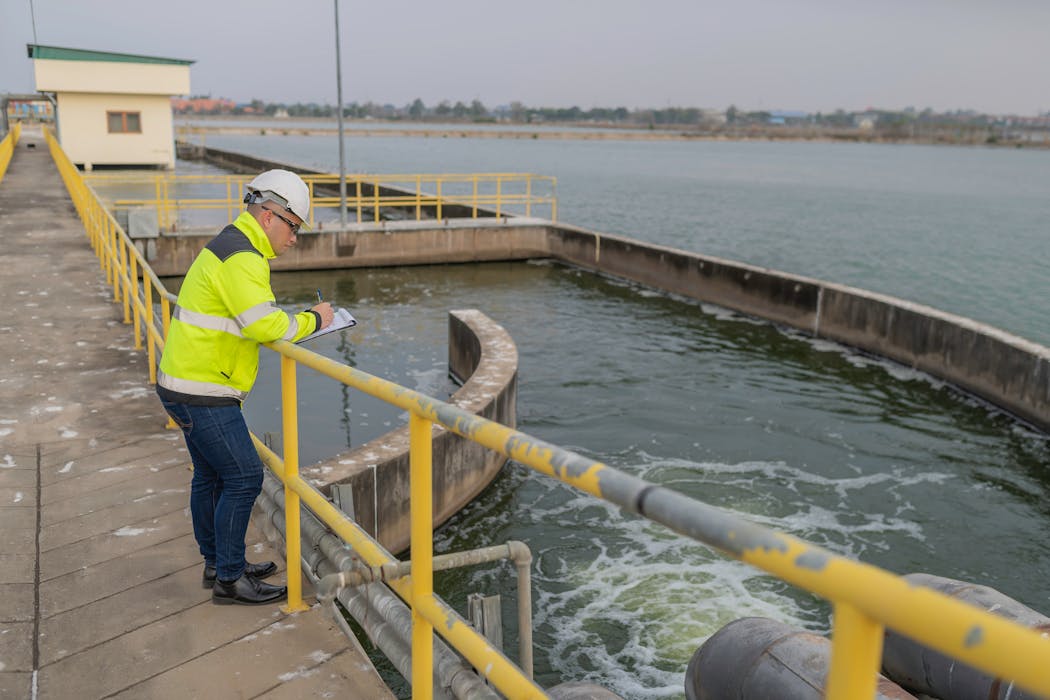
Planta de tratamiento de aguas residuales. kittirat roekburi/Shutterstock

El inicio del 2026 se traduce en una gran cantidad de objetivos personales y profesionales. Y entre ellos, conviene no olvidar los que afrontará la sociedad y la industria española con la implantación de la Directiva de Aguas residuales UE 2024/3019.

El texto de la nueva normativa, redactado en noviembre de 2024, obliga a los Estados miembros a su transposición nacional a principios de 2026. Todas las partes del sector deben estar preparadas, desde la administración hasta los ingenieros de instalaciones e industriales.

En España nos encontramos ante legislaciones anticuadas en materia de vertidos, tanto industriales como urbanos. Así como la sociedad cambia en todas sus facetas, sus efluentes y aguas residuales también lo hacen. La nueva directiva mejorará su uso y regulación.

Con el fin de que la norma se implante correctamente, los ingenieros y técnicos especializados en aguas debemos aportar formación e información a los industriales no sólo a nivel legal, sino también a nivel técnico y preventivo.


Leer más:
Heptacloro en aguas de lavado industriales: ¿existe en España un mercado negro de plaguicidas prohibidos?


¿Cuál es el alcance de la normativa?

El agua y sus vertidos industriales y domésticos constituyen retos tanto técnicos como ambientales y de salud pública. E involucran al tan estudiado y analizado ciclo del agua: los contaminantes producen efectos directos en los recursos hídricos potables de consumo humano y en nuestra salud.

Las industrias, sean del sector que sean, implementan constantes mejoras en sus regímenes productivos no sólo a nivel de proceso, sino de aditivos y sustancias que mejoran dicho proceso y el producto final. La ley europea fomentará este control a cada caso concreto, focalizando la atención en nuevos contaminantes y vertidos peligrosos.

Las empresas e industrias deberán justificar qué vierten, cómo y por qué. Y los ingenieros químicos deberemos ejercer un papel decisivo: analizar el proceso industrial, evaluarlo en el origen y plantear unas matrices de riesgos y medidas correctoras adaptadas a cada proceso.

La formación multidisciplinar será decisiva para el análisis de desviaciones y la implementación de mejoras correctivas formará parte del día a día y del aprendizaje entre todos.

Los contaminantes emergentes: de nuevo en el “punto de mira”

Hace años que conocemos la presencia de los microplásticos. Son contaminantes que no se ven, pero que generan un riesgo acumulativo a la sociedad, con daños aún poco evaluados. En la mayoría de las ocasiones, son los aditivos que se usan para mejorar sus propiedades los que causan esos efectos nocivos. Hablamos, por ejemplo, del bisfenol A, un disruptor endocrino que se encuentra en numerosos productos de consumo, incluidos envases de alimentos.

Por ello, entre otras directrices, la nueva normativa dicta que los fármacos, hormonas ( que salen libres al medio, por ejemplo, tras tratamientos sanitarios) y productos de higiene personal tienen que ser evaluados y analizados. Esto implicará mejoras en los análisis químicos y técnicas instrumentales e incrementará los costes de las empresas y laboratorios. Los contaminantes habituales, como DQO, nitrógeno, aceites y grasas también sufrirán un mayor control, volviéndose más restrictivos los niveles permitidos de todos ellos.


Leer más:
¿Qué hacemos con todo el aceite usado que producimos?


Mayor control implica mayor transparencia

Además, con la nueva norma aparecen los llamados “tratamientos cuaternarios”, una fase avanzada de depuración de aguas residuales diseñada para eliminar contaminantes emergentes.

Desde hace años las ciudades cuentan con tratamientos de efluentes procedentes de depuradoras que, tras pasar por una una red separativa, se distribuyen para distintos usos, principalmente para riego y baldeo. El Decreto 1085/2024 en materia de recuperación de aguas, que vio la luz en el 2024, supuso una actualización consolidada en España, contribuyendo a una mayor concienciación en cuanto a la evaluación y el control del riesgo. Aunque su uso se ha fomentado principalmente en el ámbito administrativo mediante redes de distribución de aguas regeneradas para riego y baldeo, la complejidad de ejecución y desarrollo está siendo un problema palpable a nivel empresarial.

La necesidad de erradicar contaminantes con alto carácter recalcitrante (difíciles de ser degradados), no eliminables con las depuradoras actuales, implica el uso de Tratamientos por Oxidación Avanzada, también denominados POAs. Entre este tipo de procesos destacan el Fenton y las tecnologías de membranas (electrodiálisis, pervaporación y las filtraciones finales con membranas porosas y/o compactas), los cuales supondrán nuevas líneas de investigación que darán continuidad a las actuales.

Instaurar este tipo de tratamientos ya no se reducirá a un estudio a escala de laboratorio, será una realidad que se pueda ejecutar a escala industrial.
La nueva directiva implica un reporte de datos desde las instalaciones a la administración. Este flujo de información no debe ser considerado una debilidad para las industrias, sino una fortaleza para todos y el avance de la ingeniería del agua y de sus tratamientos avanzados.

La monitorización, el análisis y el volcado de datos formarán parte de estudios que instaurarán soluciones preventivas ante futuras desviaciones. El machine learning puede ser una buena herramienta junto con el big data para la obtención de modelos predictivos. Y, con esta evidencia, el que contamina deberá pagar.

A pesar de todos los efectos que suponen para las empresas, no hay que ver estos cambios legales como inviables o punitivos al régimen habitual de funcionamiento de las depuradoras, sino más bien como una oportunidad para adaptar la ingeniería química y del agua como un reto para modernizar infraestructuras y legislaciones obsoletas, crear empleo verde y fomentar la salud pública y el desarrollo tecnológico.

En unos meses podremos tener ya un diagnóstico de cómo se encuentra nuestro país en materia de control de aguas residuales.

The Conversation

Dr. Borja Garrido Arias no recibe salario, ni ejerce labores de consultoría, ni posee acciones, ni recibe financiación de ninguna compañía u organización que pueda obtener beneficio de este artículo, y ha declarado carecer de vínculos relevantes más allá del cargo académico citado.

ref. El impacto de la nueva Directiva Europea de Aguas Residuales en la industria española – https://theconversation.com/el-impacto-de-la-nueva-directiva-europea-de-aguas-residuales-en-la-industria-espanola-272623

¿Por qué después de morir el pelo y las uñas siguen creciendo?

Source: The Conversation – (in Spanish) – By José Miguel Robles Romero, Profesor Doctor de la Facultad de Enfermería, Universidad de Huelva

Pixel-Shot/Shutterstock

Este artículo forma parte de la sección The Conversation Júnior, en la que especialistas de las principales universidades y centros de investigación contestan a las dudas de jóvenes curiosos de entre 12 y 16 años. Podéis enviar vuestras preguntas a tcesjunior@theconversation.com


Pregunta formulada por Joaquín, de 14 años, del IES Benalua, en Benalua (Granada)


Es una pregunta muy habitual que aparece en libros, películas o conversaciones, pero la respuesta corta es tajante: el pelo y las uñas no siguen creciendo después de la muerte. Se trata de un simple efecto visual. Vamos a explicarlo paso a paso, como haría un científico… sin perder claridad.

¿Qué necesita una célula para crecer?

Para que algo crezca en nuestro cuerpo se necesitan células vivas. Esto significa que deben cumplir una serie de requisitos: que reciban oxígeno, obtengan energía (en forma de glucosa), estén reguladas por hormonas y se dividan de forma controlada.

Todo eso depende de algo fundamental: la circulación sanguínea. La sangre en movimiento actúa como medio de transporte imprescindible para estas funciones.

Cuando una persona muere, el corazón deja de latir, la sangre deja de circular y las células ya no reciben oxígeno ni energía. Sin estas condiciones, ninguna célula puede seguir creciendo.

¿Cómo crecen el pelo y las uñas?

Aquí está la clave. Mientras que el pelo crece en el folículo piloso, debajo de la piel, las uñas lo hacen en la matriz ungueal, también situada bajo la piel, en la base de la uña. Eso sí, la parte visible tanto del pelo como de la uña está formada por células muertas, llenas de queratina.

En ambos casos, el crecimiento ocurre desde dentro, gracias a células que se dividen constantemente. Cuando estamos vivos, esas células nuevas empujan a las antiguas hacia fuera. Pero cuando morimos, ese proceso se detiene por completo.

¿Por qué parece que siguen creciendo después de morir?

La confusión viene de un fenómeno físico muy sencillo: la deshidratación del cuerpo tras la muerte.

Debemos tener en cuenta que cuando el cuerpo deja de estar vivo suceden una serie de procesos que hacen que la piel pierda agua, se vuelva más seca y se contraiga. Por la misma razón, las encías se retraen y la piel alrededor de uñas y pelo se encoge.

Debido a esto, el pelo parece más largo, las uñas parecen sobresalir más e incluso la barba puede parecer que está “más crecida”.

Pero, en realidad, no ha crecido nada: lo que ha cambiado es la piel que las rodea.

Es como si llevaras una camiseta mojada y, al secarse, se encogiera: lo que está debajo parece más grande, aunque no lo sea.

¿Puede crecer algo del cuerpo después de morir?

En condiciones normales, no. El crecimiento requiere un metabolismo activo y, tras la muerte, dicho metabolismo se detiene.

¿Y justo después de morir? ¿Hay un “último crecimiento”? Algunos estudios han sugerido que, durante minutos u horas, ciertas células pueden seguir funcionando brevemente. Sin embargo, nunca será suficiente para producir crecimiento visible. Además, tampoco es un proceso organizado.

Y, desde luego, no ocurre con el pelo ni con las uñas. La ciencia se basa en mediciones, fisiología celular y biología, y todas ellas apuntan a la misma conclusión: el crecimiento ambas cosas se detiene en el momento de la muerte.

¿Por qué este mito sigue tan extendido?

Seguramente, existan varias razones. Por ejemplo, es algo que hemos visto muchas veces en películas y series. Además, es visualmente convincente a causa del fenómeno de deshidratación de la piel que explicamos antes.

Por otro lado, se trata de un mito transmitido como “sabiduría popular” y que resulta difícil de desmontar, pues no solemos observar cuerpos en fases tempranas tras la muerte.

El camino del científico

Nuestra pregunta está respondida entonces: contra lo que solemos escuchar, el pelo y las uñas no crecen después de morir. Hemos visto que el crecimiento requiere células vivas y riego sanguíneo. Podría ser, en todo caso, un efecto visual, no biológico, debido a que la piel se deshidrata y se retrae tras la muerte.

Es un ejemplo, también, de cómo la ciencia, muchas veces, no desmonta ideas raras con respuestas complicadas, sino con explicaciones simples basadas en cómo funciona el cuerpo.

Preguntarse “¿qué necesita esto para ocurrir?” suele ser la mejor herramienta.

Y la pregunta que hemos contestado aquí es exactamente el tipo de interrogante que se hace un buen científico: una observación curiosa que parece lógica… hasta que se analiza con detalle.


El museo interactivo Parque de las Ciencias de Andalucía y su Unidad de Cultura Científica e Innovación colaboran en la sección The Conversation Júnior.


The Conversation

José Miguel Robles Romero no recibe salario, ni ejerce labores de consultoría, ni posee acciones, ni recibe financiación de ninguna compañía u organización que pueda obtener beneficio de este artículo, y ha declarado carecer de vínculos relevantes más allá del cargo académico citado.

ref. ¿Por qué después de morir el pelo y las uñas siguen creciendo? – https://theconversation.com/por-que-despues-de-morir-el-pelo-y-las-unas-siguen-creciendo-270821