Imaging technology has revolutionised palaeontology, allowing scientists to study fossils that are buried deep in the rock or too small to handle. Two recent studies I was involved with show some of the technology’s potential, including one that discovered a new dinosaur species that loomed over other carnivores it lived alongside hundreds of millions of years ago.
In the first study, my colleagues and I investigated an impression of a fossil jawbone that had been described in 1899 only as having come from a possible dinosaur. Because of its age (203 million years old), the specimen had added importance as, potentially, an unusually large early flesh-eating dinosaur.
Dinosaurs originated during the Triassic period, from 252–201 million years ago, but generally the flesh-eating forms remained under 3 metres in length and weighed no more than an alsatian dog. We knew the 1899 specimen, from the late Triassic near Cardiff in south Wales, showed portions of an ancient animal’s jaw and flesh-eating teeth, and could have come from an animal five metres or more in length.
The specimen had not been much studied since 1899 because it consisted only of impressions in the rock. At the time of discovery, the block had been split, revealing an impression of the inside and outside of the mandible, with 16 teeth and tooth sockets. But none of the original bone material remained.
Traditionally, palaeontologists would make a cast of the specimen using plaster or some flexible plastic, but such casting could damage the delicate fossil. So the specimen remained in storage in the museum for over a century.
We applied a new but simple method to acquire a 3D model called photogrammetry. This consists of taking numerous photographs of the two natural rock moulds and then stitching them together using 3D modelling software, a bit like the panorama function on many smartphones that can combine photographs of a wide vista.
The resulting 3D jaw can be viewed from all sides and rotated. That makes it much easier to study than the rock moulds.
The method caused no damage to the unique fossil specimen and can be shared with other scientists for further examination. In this case, the natural rock mould was highly detailed, retaining information on canals through the bone for blood vessels and nerves, and even the serrations on the cutting edges of the teeth.
We compared it with other dinosaur fossils and determined that it came from a dinosaur similar to Dilophosaurus from the early Jurassic period 201-174 million years ago, in the US. But it was 10 million years older and an entirely new genus and species.
We named it Newtonsaurus cambrensis after Edwin Tulley Newton who first studied it in 1899. The jaw suggests an animal originally 5-7 metres long, a large two-legged flesh-eater with grasping hands and powerful jaws.
In the second study, we scanned a tiny reptile skeleton, also from Triassic rocks. This one was found in Devon and was 40 million years older, at 243 million years old.
When it was found in 2015, Rob Coram, the collector, tried to clean up the tiny skeleton using traditional methods, removing grains of sand with a fine needle. However, the tiny size of the specimen, with a 1cm skull and three teeth per millimetre, made this impossible.
We first made a CT X-ray scan on a regular micro-CT scanner and made a detailed 3D reconstruction. The detail was not enough, though, so we then scanned it at the European synchrotron in Grenoble, France, so each tooth, and many other structures could be rendered in detail. A synchrotron makes an extremely intense beam of light that scientists use to study minute matter.
The scans and reconstruction tell us that this little reptile, which we named Agriodontosaurus, was an insect eater. It tussled with cockroach-like bugs as big as its head and crunched their cuticles with its broad, chisel-like teeth.
Virtual palaeontology
CT scanning has become ubiquitous in palaeontology, with hundreds of scanning machines installed in university and museum research departments.
In the case of the Agriodontosaurus, CT scans gave us clear views of the zones of compact and less compact bone as well as the attachments of the teeth.
Now 3D digital models let scientists look inside bones and shells, revealing hidden anatomical information. For example, several shelled organisms, such as ammonites and foraminifera, developed throughout their lives from a single shell chamber, coiling ever outward as they laid down new living chambers. The entire developmental history is there inside the adult shell and it can dissected out in the scans.
The digital models of fossils can also be used for functional experiments. For example, the mechanical properties of skulls can be analysed, modelling where an animal’s jaw and skull are hinged, reconstruct its muscles, and calculate its bite forces. This tells us that Tyrannosaurus rex could exert a bite force of as much as 50,000 Newtons, equivalent to a force of 5 tonnes.
Another approach, finite element analysis, allows palaeontologists to test the responses of a skeleton or skull to compression and tension. These bioengineering studies have shown, for instance, that predatory dinosaurs generally were not good at tussling with their prey by twisting and turning – they mainly concentrated on straight up-and-down bites.
This is the new world of virtual palaeontology. Let’s see where it takes us.
Michael J. Benton receives funding from ERC, NERC, Leverhulme Trust.
Most caper movies tend to focus on the elaborate logistics of a theft – typically of an outlandishly colossal haul or priceless artefact (think Ocean’s Eleven or The Italian Job). In contrast, their close cousin, the heist film, focuses less on the mechanics of the crime and more on its invariably destructive human consequences (such as in Heat or The Town).
While The Mastermind falls firmly into the latter camp, writer-director Kelly Reichardt dials down the genre’s hard-boiled violence and tension in favour of a downbeat, compassionately ironic character study.
It’s bleak early 1970 in the small Massachusetts city of Farmington. President Nixon has just invaded Cambodia and the US is being torn apart by the Vietnam war. But art school dropout James (Josh O’Connor) has only one, almost solipsistically close-to-hand “cause”. He plans to escape the hand-to-mouth tedium of his life as a jobbing interior decorator by lifting four abstract canvases from the local museum.
James recruits a couple of other local losers and they pull off his comically rudimentary plan, clumsily but effectively. But barely have the crew made their getaway than things fall apart. Faced with unwelcome attention from both law enforcement and the local mob, James has to go on the run.
The remainder of the film observes his meandering efforts to elude capture. We follow James’s attempts to husband his dwindling resources across a series of cheerless, wintry locales – diners, bus stations and cheap hotels that call to mind the bleak mid-century vignettes of American artist Edward Hopper.
A clip from The Mastermind.
The Mastermind makes for a fascinating companion piece to Paul Thomas Anderson’s smash hit One Battle After Another, another story of life underground in modern America which is relentlessly propulsive from start to finish – with life-and-death stakes, and political and personal fates inextricably intertwined.
In contrast, The Mastermind portrays the isolation of life on the run with nowhere and nothing to aim for. Unlike One Battle’s revolutionary vanguards “the French 75” (inspired by militants from the era when The Mastermind is set), James is no misguided militant idealist. He’s a would-be grifter who lacks the street smarts to carry off his pitifully low-grade felony. Nor does he have the emotional resilience to reckon with the consequences of his inevitable failure.
Of these, the saddest yet most predictable is the estrangement of his family – wife Terri (Alana Haim) and his two sons. Flattering himself to the bitter end that his sophomoric caper was “for the family … at least 75% of it”, James seems never to have properly considered the consequences of his actions on those closest to him.
He’s an observer of his own life, not a participant, with delusions of superiority wholly unmoored from reality. All around him, his peers march to stop the war. But not only does James lack any larger cause, he barely seems to care who he is or what he’s becoming.
The Mastermind could easily have played as a coldly satirical, loftily Kubrickian take on the futility of ambition and the endless human capacity for self-destructiveness. But Reichardt stays close to her protagonist throughout, neither condemning nor excusing his many failures, and never allowing the film’s pervasive irony to tip into contempt.
James isn’t a particularly bad guy, and nor is he a classic antihero. He is simply morally and ethically myopic – chronically ungrounded and always seeking the path of least resistance. Throughout the film, his manifold failings remain only too human, and Reichardt observes them with a consistently compassionate eye – with Christopher Blauvelt’s cinematography finding the poignancy and poetry in the dreary late-winter Northeastern landscape.
James is certainly no mastermind. But Reichardt invites us to understand and if not empathise, at least sympathise with him – and in so doing, recognise how close we all might be to making equally terrible mistakes.
Looking for something good? Cut through the noise with a carefully curated selection of the latest releases, live events and exhibitions, straight to your inbox every fortnight, on Fridays. Sign up here.
Barry Langford does not work for, consult, own shares in or receive funding from any company or organisation that would benefit from this article, and has disclosed no relevant affiliations beyond their academic appointment.
What will the world look like in 2100? This question is central to a new free online game called FutureGuessr. Launched in June 2025, this new form of climate communication combines gameplay with visual climate imagery and encourages players to explore future scenarios.
Players are shown an image from the future and asked to guess the location. Information is revealed about how close they are, what the climate change consequences would be, what will happen if no action is taken and how things could be different.
Available to play in English and French, the game takes inspiration from GeoGuessr, the online geography game that has enabled millions of people to travel virtually from their phone and guess where they are. FutureGuessr uses pictures to give users a visual representation of how familiar landscapes will look in 2100 as a result of climate change.
FutureGuessr is part of a broader trend in the use of games in climate communication. Creative board games and video games can reach diverse audiences and communicate climate change in serious, playful, thought-provoking and surprising ways.
Games played for pleasure, like Game Changers (an online story-based game produced by Megaverse) can generate conversations on climate actions by creating an innovative visual game world and integrating climate change into the plot. Collective decision making in the game allows players to learn and discuss climate change with others.
Our research suggests that this helps players critique corporate power, learn about greenwashing and enjoy an aesthetic experience. In the world of board games, Daybreak challenges players to cooperate and stop climate change by trying out different technical, social and economic projects.
Play with purpose
Serious games go beyond entertainment to connect with real-world problems. The most successful ones are fun while engaging with social, environmental and economic issues that players really care about.
Games can support players in thinking about becoming disaster ready and building disaster resilience. A game called The Flood Recovery Game is being used by researchers to identify disaster recovery gaps. It can also help policymakers create more comprehensive strategies to address flooding.
In terms of climate education, interactive in-person game-based workshops like the Climate Fresk already connects millions of people with science from the Intergovernmental Panel on Climate Change (IPCC), the UN body that assesses the science on climate change. These three-hour workshops also enable people to consider how they might act to create positive climate solutions.
FutureGuessr is a game for pleasure with a serious purpose: to make climate change data visible. Produced in partnership with Résau Action Climat, a network of non-governmental organisations, it shows the negative effects of climate change in familiar locations such as Antarctica and Easter Island.
Research on visual climate communication found that images showing climate impacts such as extreme weather and floods moved people, especially when it featured localised impacts. There is a balance to be struck between highlighting local relevance and linking to the bigger picture. Showing the future of recognisable places we care about might be powerful in building support for climate action.
But photographs from the future don’t exist. FutureGuessr uses images generated from a bespoke AI model which combines maps with photographs of locations and data from IPCC reports.
It is important to consider not just the message, but the medium, and the environmental effects of game production. The Playing for the Planet Alliance has produced a carbon calculator for the industry and offers awards and game jams to support the video game industry to take climate action.
Now that the images have been created, an effective use of FutureGuessr might be to generate conversations about the effects of climate change, and about how research, game design and communication can be carried out in the most environmentally sensitive way.
People won’t act just based on facts alone. The development of creative ways to communicate the climate emergency that connect people with why this matters is essential for people and communities. Already, some games are making an increasingly visible contribution to the conversation but we need greater transparency in the environmental impacts of game production, and consideration of how to minimise these impacts through visible commitments to sustainability as modelled by Daybreak.
FutureGuessr demonstrates value of bringing games and visual climate communication together to raise awareness of how climate change affects landscapes everywhere on the planet. We all need to play for the planet. Our research shows that whether played for purpose or pleasure, games can create space for serious conversations about how to tackle climate change.
Don’t have time to read about climate change as much as you’d like?
Lynda Dunlop has received funding from the Economic and Social Research Council, the Education Endowment Foundation, British Educational Research Association, the Engineering and Physical Sciences Research Council, the Templeton World Charity Foundation, Wellcome and UK Research and Innovation.
Steven Forrest works for the University of Hull. He has received funding from the Aviva Foundation and Ferens Education Trust to carry out serious gaming projects.
Source: The Conversation – UK – By Martin Plaut, Senior Research Fellow, Horn of Africa and Southern Africa, Institute of Commonwealth Studies, School of Advanced Study, University of London
According to data released by global market research firm Ipsos in September, 80% of South Africans say their country is on the wrong track. It is not hard to see why.
Even if they are not among the white Afrikaners who have sought refugee status in the US, courtesy of President Donald Trump’s controversial policy to protect them from the discrimination he alleges they are facing, there is a great deal for ordinary men and women in South Africa to complain about.
And with nearly 60% of the population born after apartheid ended in 1994, the government’s attempts to frame the hardships faced by its people as the result of past repression have decreasing relevance.
The most obvious problem is perhaps the failure for standards of living to improve. The ruling African National Congress (ANC) party has overseen flatlining or declining GDP per capita for more than 15 years, according to a two-year study published in 2023 by Harvard University.
Worse still, the study showed that unemployment has risen by 0.5% on average every year since the ANC came to power in 1994. This has left the majority of young men and women in South Africa without any prospect of earning a living. As the South African Department of Statistics reported in May 2025:
“Among the 4.8 million unemployed youth in the first quarter of 2025, 58.7% reported having no previous work experience. That means nearly six in ten unemployed young people are still waiting for their first opportunity to enter the job market.”
It continued: “Without experience, youth struggle to get hired – yet without being hired, they cannot gain experience. This cycle of exclusion continues to fuel long-term unemployment and stalls skills development at a critical stage of life.”
These are just two areas of decline. Johannesburg, the country’s commercial capital, has endured repeated electricity and water failures, while its streets have been so poorly maintained that some are close to being dysfunctional.
The military, once respected – and even feared – across the continent, is in shambles. According to DefenceWeb, an African defence and security news publication, only 15% to 20% of the South African National Defence Force’s aircraft are serviceable. It has one seaworthy frigate and just several inshore patrol vessels to guard nearly 3,000km of coastline.
South Africa’s police force is also severely infiltrated by criminal syndicates – so much so that Firoz Cachalia, the minister of police, has warned that the country is in danger of becoming “the next Colombia or Ecuador”. Both of these countries are plagued by criminal syndicates, with Ecuadorian crime groups particularly notorious for their links with the police.
This is all taking place against a backdrop of rampant corruption, which was exposed by the South African government’s own commission of inquiry in 2022. Hundreds of ANC politicians and officials were named or linked to corrupt activities after evidence was unearthed by the Zondo commission during its nearly four years of hearings.
Few of the accused are behind bars. And the author of the report, former Chief Justice Raymond Zondo, has expressed his disappointment at the slow progress.
Reasons for optimism
An air of gloom has settled over South Africa. Yet there is evidence that allows for a more optimistic analysis. First, the country remains genuinely democratic, holding elections that are regarded as free and fair nationally and internationally.
This remains true, even though the ANC lost its absolute majority in the 2024 election and has had to join forces with opposition parties to govern. This was very different from the response of many parties across Africa in recent years, which have rigged votes or refused to recognise elections they have lost.
More than 27 million citizens registered to vote for the 2024 election, and the results reflected a multiparty system with genuine voter choice. At the same time, over 11 million South Africans did not cast a ballot, even though they were registered voters. This indicates a feeling of apathy towards politics.
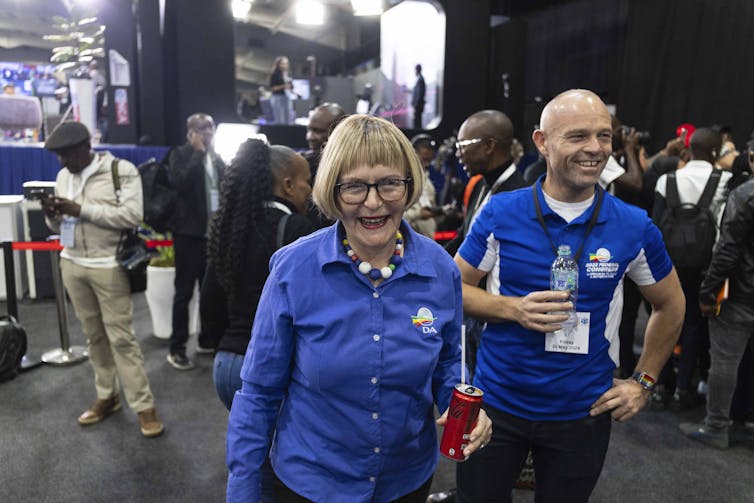
Second, the official opposition party, the Democratic Alliance, has provided proof that there are alternatives to ANC governance that can work. Helen Zille was elected as mayor of Cape Town in 2006 and the party has held it ever since.
Her party has administered South Africa’s Western Cape region since 2009. And their administrations have generally been effective and free from corruption, giving citizens an idea of what an alternative future might hold. She has now decided to stand for mayor of Johannesburg in 2026, a major challenge to the ANC.
Democratic Alliance leader Helen Zille has announced that she will be standing for mayor of Johannesburg in 2026. Kim Ludbrook / EPA
Third, most of the media and book publishing industries in South Africa are not controlled by the government. South Africa guarantees freedom of the press, and its media landscape is among the freest in Africa. It is ranked 27th globally on the 2025 World Press Freedom Index – the highest in Africa.
Fourth, the judiciary is independent and has a record of holding criminals to account. This includes some, such as former police commissioner Jackie Selebi, who were well connected. However, it is capable of being disrupted by powerful figures who find loopholes to delay justice. South Africa’s former president, Jacob Zuma, is a case in point.
He has faced 16 charges of corruption related to a 30 billion rand (roughly £1.3 billion) deal to modernise the country’s defence in the late 1990s. Zuma denies the charges and none have been heard in court. As his late lead counsel, Kemp J. Kemp, put it in 2007, he defended Zuma against corruption charges “like Stalingrad … burning house to burning house”.
Fifth, South Africa’s agricultural sector is first rate, exporting across the world, while tourism remains a major attraction and a foreign exchange earner. Mining is also still important, even though it is a declining industry.
And sixth, several of its universities are among the best in Africa and produce skilled men and women who can serve their communities. The universities of Cape Town, Stellenbosch and Witwatersrand rank first, second and third on the continent respectively. These factors together could provide a basis for reform and renewal.
Martin Plaut is affiliated with the Institute of Commonwealth Studies, University of London
Source: The Conversation – UK – By Ewan Archer-Brown, DPhil Candidate in Geography and the Environment, University of Oxford
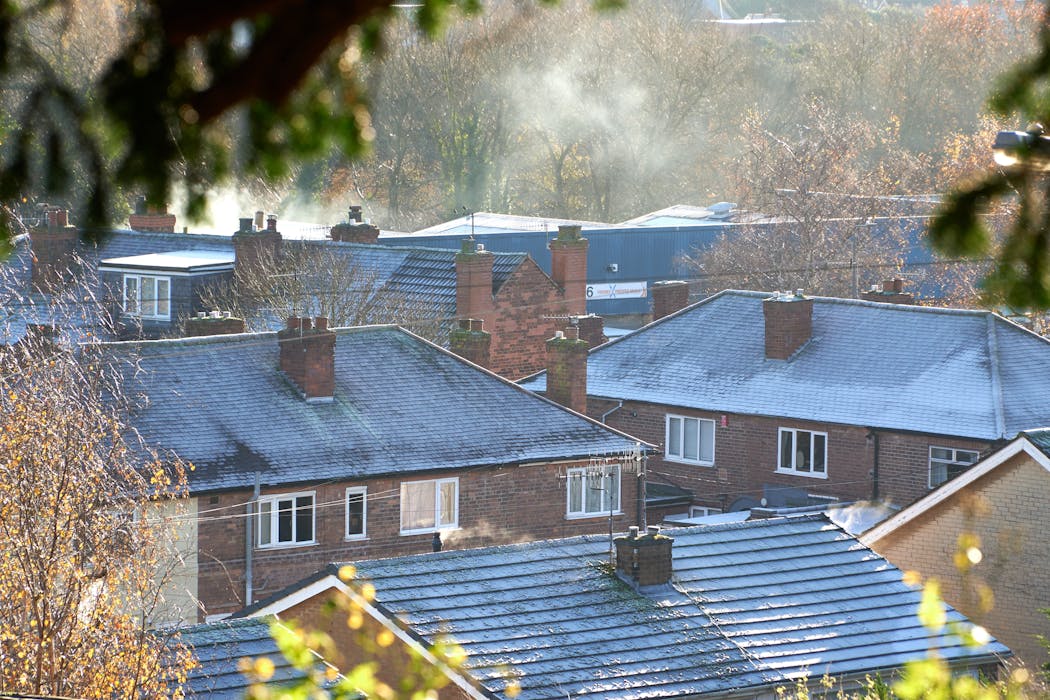
Multishooter / shutterstock
Britain’s flagship home insulation programme has received a damning verdict from the National Audit Office. Under the Energy Company Obligation (ECO) scheme, tens of thousands of households have been left with faulty or even dangerous installations. It’s a result, the auditors say, of weak oversight, poor skills and confused accountability.
This report is troubling not only because of the human cost but because it exposes a deeper failure of governance in how the UK tries to decarbonise home heating. It’s a complex task that demands long-term stewardship, but is instead being left to the market.
The ECO was designed to make energy suppliers help households cut emissions and bills. Suppliers are the companies that buy electricity or gas from generators and sell it to you – the company named on your bills is your supplier. In theory, the ECO means these suppliers meet government-set carbon or energy saving targets by funding insulation and heating upgrades for households, with regulators checking that installations qualify.
The ECO was preceded by two other schemes that operated on the same principle. For years, they worked reasonably well for simple and low cost measures like loft or cavity wall insulation. But in 2013, the ECO was launched and expanded to cover more complex and expensive retrofits like solid wall insulation – an unprecedented shift.
So what went wrong?
The National Audit Office’s latest findings confirm fears that this was an approach set up to fail. Many installations require major remediation, some pose immediate health risks. The problems are familiar: an under-skilled workforce, uncertified installers, weak regulation and oversight.
Individually, these problems could be fixed. The government could improve installer training, tighten audits and crack down on fraud. But together, they reveal a deeper problem: a misplaced belief that market-based tools can deliver foundational change.
Energy efficiency obligations such as ECO work well for standardised, low-risk actions, like swapping bulbs or improving boilers. But, as we warned back in 2012, they are less suited to complex, capital-intensive retrofits of millions of households that require lots of coordination and long-term financing.
The UK’s energy efficiency governance still sits at arm’s length from the realities in people’s homes. Responsibilities are split confusingly between suppliers, Whitehall departments, auditors and local authorities, and it can often seem like no one is really in charge.
That’s why the failings highlighted in the National Audit Office report are not just implementation glitches or down to some “bad apple” installers. They’re failings of a governance model designed for incremental change, not the transformation required for net zero.
German lessons
If the UK really wants to retrofit millions of homes, it should look to what’s worked in other countries. Germany’s long-running KfW loan programme is one example. For more than three decades it has supported high-performance refurbishments through low-interest loans and grants. Successive German governments have recognised that the returns – in jobs, tax revenues, economic stimulus – have consistently outweighed the upfront cost.
By contrast, ECO has been repeatedly restructured, with shifting targets and funding levels that make it hard to plan ahead. Treating home retrofit as a short-term obligation rather than a long-term national project has left the UK far behind its peers.
Retrofitting homes is inherently local (you can’t pick up your house and move it to a different area). Local authorities should therefore play a much stronger role in coordinating delivery, enforcing quality, and linking retrofit to other social goals such as tackling fuel poverty.
Getting councils involved would align retrofit with local priorities rather than distant central government targets. It could also rebuild trust among people who may understandably be wary of such schemes.
The UK’s forthcoming warm homes plan is a chance to reset. The government should take a hard look at the tools at our disposal and think about what is needed to foster the creative and courageous policy needed to decarbonise our homes.
Jan Rosenow regularly advises organisations such as governments and government agencies, organisations including the World Economic Forum, the United Nations, the World Bank, and the International Energy Agency. He also advises private sector clients from time to time as a consultant. In the past, Jan Rosenow has been funded through the UK Energy Research Council and the Centre on Innovation and Energy Demand to work on UK energy efficiency policy. There are no commercial interests to disclose.
Brenda Boardman and Ewan Archer-Brown do not work for, consult, own shares in or receive funding from any company or organisation that would benefit from this article, and have disclosed no relevant affiliations beyond their academic appointment.
Source: The Conversation – in French – By Sandra Breux, Démocratie municipale, élections municipales, Institut national de la recherche scientifique (INRS)
De façon générale, les médias traditionnels réussissent difficilement, faute de moyens, à couvrir l’ensemble des enjeux et à les documenter en profondeur.La Conversation Canada, CC BY
La campagne électorale du 2 novembre, qui déterminera la composition de plus de 1 000 conseils municipaux, est l’occasion de nous rappeler que la démocratie municipale québécoise souffre d’un double déficit : un manque criant de couverture médiatique et un traitement systématiquement négatif qui occulte les dynamiques constructives au profit des dysfonctionnements.
Cette vision déséquilibrée décourage la participation électorale et l’engagement citoyen.
La démocratie municipale, c’est près de 12 000 candidats qui postulent aux quelques 8 000 postes à pourvoir. C’est aussi des élus qui sont, dans leur grande majorité, rémunérés à temps partiel et qui tentent de satisfaire les besoins de la population, de répondre aux exigences auxquelles ils et elles doivent se conformer et d’inciter les citoyens à participer au développement de leur municipalité.
La démocratie municipale, c’est aussi des électeurs qui exercent leurs droits de vote, qui proposent des projets audacieux, se mobilisent, participent à des consultations publiques, cherchent à comprendre le bien-fondé d’une décision, demandent des comptes à leurs élus et font du bénévolat. C’est aussi un ensemble d’organismes variés qui soutiennent l’action des municipalités dans différents domaines pour essayer d’améliorer leur cadre de vie et le bien-être général de la population.
Parler de démocratie municipale, ce n’est pas que – certaines représentations sont tenaces – parler d’aqueducs, de déneigement et de collecte de poubelles. C’est discuter de la façon dont les ressources vont être allouées : faut-il vendre un terrain à un promoteur immobilier pour récupérer des fonds qui seront investis dans d’autres projets, ou le conserver pour créer un espace pour la population ?
Respectivement professeure à l’INRS en études urbaines, et professeure à l’Université d’Ottawa en sciences politiques, nous nous interrogeons sur le contexte médiatique et ses effets sur notre manière collective d’appréhender le palier de gouvernement municipal. Outre le déficit d’information qui le caractérise, le traitement médiatique dont il est l’objet pose certainement question à la veille du rendez-vous démocratique du 2 novembre prochain.
De façon générale, les médias traditionnels réussissent difficilement, faute de moyens, à couvrir l’ensemble des enjeux et à les documenter en profondeur. Cette situation n’est pas spécifique au Québec. Plusieurs travaux en Amérique du Nord font l’hypothèse qu’il existe à l’échelle municipale une circulation plus faible de l’information politique en comparaison avec les autres niveaux de gouvernement.
L’absence d’une circulation suffisante et adéquate de l’information politique a des conséquences sur l’électorat : il est plus difficile de savoir qui se présente, quel est le programme de chaque candidat, mais aussi de saisir la réelle portée des enjeux qui sont discutés. Plus encore, une enquête menée en 2017 sur 3 200 électeurs au Québec a montré que plus un électeur connaît les programmes et les projets des candidats, plus il est susceptible de voter.
Sur le traitement médiatique
Lorsqu’elle existe, la couverture municipale met davantage l’accent sur les dysfonctionnements (faible participation, augmentation du nombre d’élections par acclamation, démissions d’élus, harcèlement des élus, climat tendu au sein du conseil, mécontentement des citoyens), que sur les dynamiques constructives (solutions locales, innovations de services, mobilisations citoyennes).
Ces éléments s’ajoutent aux nouveaux enjeux auxquels sont confrontées les municipalités : logement, mobilité, itinérance, ou gestion de l’eau. La complexité de ces problèmes empêche souvent les municipalités de trouver des solutions à court ou à moyen terme. Ils nourrissent alors un flot de nouvelles négatives qui surpasse de loin les informations valorisant les actions des élus et des citoyens.
Le problème n’est pas que ces sujets soient couverts – ils doivent l’être –, mais que l’écart avec les informations valorisant les actions et les solutions soit tel qu’il produit une image déséquilibrée et décourageante de la démocratie municipale.
La faible présence médiatique du municipal favorise par ailleurs la domination d’une seule grille de lecture qui met sans cesse en évidence les défaillances de cette démocratie. Ce cadrage unique ne favorise ni la participation électorale, ni l’engagement citoyen, ni le renouvellement des élus. Et si on peut penser que de façon générale, la couverture médiatique des affaires provinciales et fédérales peut aussi être négative, la diversité des médias et le volume des informations relayées rendent possibles plusieurs lectures.
Lire que 65 % des élus en 2021 l’ont été par acclamation laisse entendre que c’est un problème. On sait pourtant que ce fait mérite une lecture plus nuancée et qu’il cache une réalité bien différente. Cette situation peut s’expliquer par la difficulté à recruter, parfois par un choix volontaire pour éviter des frais de tenue d’élection, et d’autres fois encore par la volonté de ne pas s’opposer à quelqu’un que l’on connaît. Il convient par ailleurs de rappeler que le fait d’avoir quelque 8 000 élus est déjà une réalisation de taille.
Déjà des milliers d’abonnés à l’infolettre de La Conversation. Et vous ? Abonnez-vous gratuitement à notre infolettre pour mieux comprendre les grands enjeux contemporains.
De même, mettre de l’avant que la population ne participe pas, notamment les jeunes, c’est occulter l’ensemble des actions que des bénévoles (Commission jeunesse etc.), des citoyens, des municipalités et des institutions mettent en place pour favoriser l’intérêt des citoyens. La moyenne provinciale de la participation électorale est par ailleurs plus élevée que celle que l’on rencontre dans d’autres provinces, notamment l’Ontario, même si elle demeure faible, à 38,7% de taux de participation.
Enfin, parler d’un climat politique tendu et des difficultés d’être élu, c’est oublier que certains élus se mobilisent et s’entraident pour parler d’une fonction qu’ils apprécient (que ce soit au sein de la FQM et de l’UMQ, ou dans de nouveaux lieux comme la nouvelle vague municipale, ou encore via une série de publications individuelles ou collectives.
Sandra Breux a reçu des financements du CRSH, du FRQSC et du programme des Chaires de recherche du Canada
Source: The Conversation – in French – By Melise Panetta, Lecturer of Marketing in the Lazaridis School of Business and Economics, Wilfrid Laurier University
Les jeunes adultes âgés de 20 à 39 ans sont confrontés à un paysage social modifié où les réalités financières influencent leurs relations.(Rene Ranisch/Unsplash)
Les jeunes dans la vingtaine et la trentaine évoluent dans un nouveau contexte social où les réalités financières influencent leurs relations.
Si vous avez l’impression que l’inflation transforme votre vie amoureuse ou vos amitiés, vous ne rêvez pas. Partout dans le monde les contraintes économiques ont un véritable impact sur les relations humaines.
25-35 ans : vos enjeux, est une série produite par La Conversation/The Conversation.
Chacun vit sa vingtaine et sa trentaine à sa façon. Certains économisent pour contracter un prêt hypothécaire quand d’autres se démènent pour payer leur loyer. Certains passent tout leur temps sur les applications de rencontres quand d’autres essaient de comprendre comment élever un enfant. Notre série sur les 25-35 ans aborde vos défis et enjeux de tous les jours.
Les adultes dans la vingtaine et la trentaine, en particulier, évoluent dans un nouveau contexte social, où même les aspects les plus fondamentaux des relations sont influencés par la réalité financière.
Au Canada, 77 % des couples déclarent rencontrer des contraintes financières et 62 % affirment se disputer à propos de l’argent. L’augmentation du coût du loyer, de l’alimentation et des dépenses quotidiennes a en effet poussé de nombreux couples à prendre des décisions financières difficiles, parfois au détriment de leur relation, toujours selon le sondage RBC.
Ces préoccupations ne concernent pas uniquement les ménages canadiens. Une étude menée au Royaume-Uni a révélé que 38 % des personnes en couple admettent avoir un compte secret ou « de l’argent caché » dont leur partenaire ignore l’existence. Aux États-Unis, les couples interrogés ont déclaré avoir 58 disputes liées à l’argent par an.
L’argent est depuis longtemps l’une des principales sources de conflit dans les relations amoureuses. (Shutterstock)
Plus inquiétant encore, l’instabilité financière a une incidence sur la durée des relations. Toujours selon le récent sondage de la RBC, 55 % des Canadiens estimaient devoir être en couple pour pouvoir se permettre leur style de vie.
Les obstacles économiques à l’indépendance sont particulièrement importants si l’on envisage une séparation ou un divorce. Traditionnellement, une rupture signifiait que l’un des partenaires quittait la maison, mais aujourd’hui, de plus en plus de couples divorcés ou séparés doivent cohabiter simplement parce qu’ils n’ont pas les moyens de vivre seuls.
Pour les couples, savoir entretenir une relation saine lorsqu’on rencontre des contraintes financières est essentiel pour traverser ces temps difficiles.
Ce problème ne repousse pas seulement le passage à l’indépendance, il provoque même des retours en arrière. Au Royaume-Uni, par exemple, un jeune adulte sur cinq ayant quitté le domicile familial a dû y revenir en raison de la crise actuelle.
L’accessibilité au logement joue un rôle majeur dans ce contexte. Avec la flambée des prix de l’immobilier au Canada, aux États-Unis, au Royaume-Uni et ailleurs, l’accession à la propriété semble hors de portée pour beaucoup. Ainsi, 55 % des jeunes Canadiens déclarent que la crise du logement les incite à reporter le projet de fonder une famille.
La crise du coût de la vie retarde les étapes importantes de la vie des jeunes adultes dans le monde entier. On peut voir ici des panneaux immobiliers à Calgary en mai 2023. (Shutterstock)
Les rencontres amoureuses à l’ère des budgets serrés
Une des conséquences de la hausse du coût de la vie est que les couples emménagent ensemble plus tôt qu’ils ne l’auraient fait autrement, afin de partager les dépenses courantes. D’autres adoptent une approche pragmatique de l’amour et abordent des sujets tels que la stabilité financière, la sécurité de l’emploi et le logement beaucoup plus tôt dans leur relation.
Une tendance dans le monde de la recherche amoureuse, connue sous le nom de « future-proofing » (préparer son avenir) se répand également. Selon le rapport annuel de Bumble sur les tendances, 95 % des célibataires interrogés déclarent que leurs inquiétudes quant à l’avenir influencent leurs choix en matière de rencontres et leur approche des relations. Parmi leurs principales préoccupations figurent les finances, la sécurité de l’emploi, le logement et les changements climatiques.
Parallèlement, les difficultés financières incitent les gens à opter pour des sorties simples et bon marché. Plus de la moitié des Canadiens affirment que la hausse du coût de la vie a une incidence sur leur façon de faire des rencontres. Les gens privilégient les activités abordables, comme les rendez-vous dans un café, les pique-niques ou les repas faits maison, plutôt que les restaurants chics ou les escapades d’une fin de semaine.
Au Royaume-Uni, le tiers des jeunes célibataires se disent moins enclins à faire des rencontres à cause de l’inflation et des dépenses quotidiennes. Environ un quart d’entre eux affirment que cela les a rendus moins enclins à rechercher une relation amoureuse.
Les difficultés financières incitent les gens à faire moins de sorties coûteuses et luxueuses. (Shutterstock)
Ces coûts obligent les célibataires américains à revoir leurs projets en matière de rencontres amoureuses. En effet, 44 % d’entre eux déclarent avoir modifié un rendez-vous pour des raisons financières et 27 % l’avoir carrément annulé. Il est clair que le coût de la vie transforme la façon dont les Américains font des rencontres.
De plus, 38 % des Canadiens qui cherchent l’amour affirment que les coûts liés aux rendez-vous ont un impact négatif sur leur capacité à atteindre leurs objectifs financiers, certains allant même jusqu’à renoncer complètement aux rencontres.
Le coût de l’amitié
Les amitiés en pâtissent également. L’époque où l’on pouvait aller au restaurant ou assister à un concert sans se poser de questions est révolue. Environ 40 % des Canadiens, 42 % des Britanniques et 37 % des Américains ont en effet réduit leurs sorties sociales pour des raisons financières.
Déjà des milliers d’abonnés à l’infolettre de La Conversation. Et vous ? Abonnez-vous gratuitement à notre infolettre pour mieux comprendre les grands enjeux contemporains.
Le sacrifice peut sembler anodin, mais le déclin des interactions sociales a de graves conséquences. Une vie sociale régulière est essentielle pour la santé mentale, la résilience et la réussite professionnelle. L’augmentation de la solitude et de l’isolement, deux facteurs pouvant avoir un impact significatif sur le bien-être émotionnel, est proportionnelle à la réduction des activités sociales.
De nos jours, beaucoup de gens choisissent des activités abordables pour socialiser. Cependant, même avec des solutions créatives, les contraintes financières rendent difficile le maintien de liens solides.
Les relations changent
Si vous êtes dans la vingtaine ou la trentaine, vous avez probablement remarqué à quel point la réalité économique actuelle transforme les relations. L’inflation influence beaucoup de choses, notamment les choix de cohabitation, de sorties amoureuses ou encore le moment où l’on franchit des étapes importantes de la vie.
Vous avez peut-être emménagé avec votre conjoint plus tôt que prévu pour partager les frais de loyer, remplacé les sorties nocturnes par des activités moins coûteuses ou reporté des étapes importantes, comme fonder une famille. Vous n’êtes pas seul. Les contraintes financières redéfinissent la façon dont nous vivons les uns avec les autres.
Il est essentiel de trouver des moyens de maintenir des relations solides dans un contexte économique difficile. Des études montrent que le soutien émotionnel, l’utilisation de techniques positives de résolution de problèmes et une communication ouverte sont fondamentaux pour entretenir des relations de qualité.
Melise Panetta ne travaille pas, ne conseille pas, ne possède pas de parts, ne reçoit pas de fonds d’une organisation qui pourrait tirer profit de cet article, et n’a déclaré aucune autre affiliation que son organisme de recherche.
Source: The Conversation – in French – By Marie-Michèle Lord, Professeure, département d’ergothérapie Université du Québec à Trois-Rivières; chercheuse régulière Centre de recherche et d’expertise en gérontologie sociale , Université du Québec à Trois-Rivières (UQTR)
Peindre un mur, déneiger, réparer… les menus travaux peuvent s’avérer difficiles à exécuter pour les personnes âgées. Il faut développer des services qui leur permettent de demeurer plus longtemps à domicile.(Unsplash), CC BY
La plupart des personnes âgées au Canada préfèrent vieillir chez elles et dans leur communauté.
Dans une enquête réalisée en 2020, 96 % des Canadiens âgés de 65 ans et plus ont déclaré qu’ils feraient tout ce qui est en leur pouvoir afin d’éviter d’entrer dans un établissement de soins de longue durée. De plus, une étude menée en 2024 révèle que la majorité des personnes aînées (61 %) souhaite rester à la maison jusqu’à leur fin de vie, mais, pas à n’importe quel prix.
Vivre dans un endroit sécuritaire et adéquat est essentiel dans la perspective d’un maintien à domicile. La qualité du milieu de vie d’une personne est un déterminant de sa santé.
Ainsi, plusieurs facteurs associés au logement ont une influence sur la santé et le bien-être, selon une étude publiée en 2024 par l’Institut national de santé publique du Québec en 2024. On compte des facteurs physiques et environnementaux, comme la qualité de l’air ou la température, des facteurs sociaux et psychologiques, tels que le sentiment de sécurité, ou encore des facteurs ergonomiques et fonctionnels, comme le fait d’avoir un espace suffisant, un aménagement adapté, et un accès facile à son lieu de vie.
Or, tout logement demande de l’entretien. Qu’arrive-t-il lorsqu’une personne n’arrive plus à prendre soin de son milieu de vie ? Quand déneiger l’entrée devient une tâche insurmontable ? Ou vider ses gouttières ? Avec l’avancée en âge, il peut devenir de plus en plus pénible d’entretenir sa maison seule. Certaines tâches peuvent être difficiles à accomplir en raison d’un manque d’énergie, ou de capacités diminuées.
Notre équipe de recherche réalise, en partenariat avec l’organisme Développement social Lanaudière, un projet de recherche pour mieux comprendre les besoins des personnes aînées en matière de menus travaux, ainsi que les facteurs qui entravent le déploiement de services à large échelle au Québec. Nous souhaitons développer un modèle de prestation de ce type de service qui tient compte des réalités territoriales diverses du Québec (régions rurales, semi-urbaines et urbaines).
Cet article fait partie de notre série La Révolution grise. La Conversation vous propose d’analyser sous toutes ses facettes l’impact du vieillissement de l’imposante cohorte des boomers sur notre société, qu’ils transforment depuis leur venue au monde. Manières de se loger, de travailler, de consommer la culture, de s’alimenter, de voyager, de se soigner, de vivre… découvrez avec nous les bouleversements en cours, et à venir.
Les services de menus travaux : l’angle mort du maintien à domicile
Les services de menus travaux sont l’ensemble du soutien et de l’aide pour les tâches d’entretien, de réparation, d’installation et de remisage qui demandent un peu de force ou une énergie soutenue.
Les menus travaux comprennent la réalisation de tâches qui sont en hauteur ou qui exigent de la souplesse ou de la force, qui nécessitent des connaissances particulières et des habiletés manuelles et qui ne sont pas visées par les métiers qui exigent des cartes de compétences. Des services pourraient permettre aux personnes qui en ont besoin, dont les aînées, de disposer d’aide pour entretenir leur domicile et en assurer la salubrité et la sécurité.
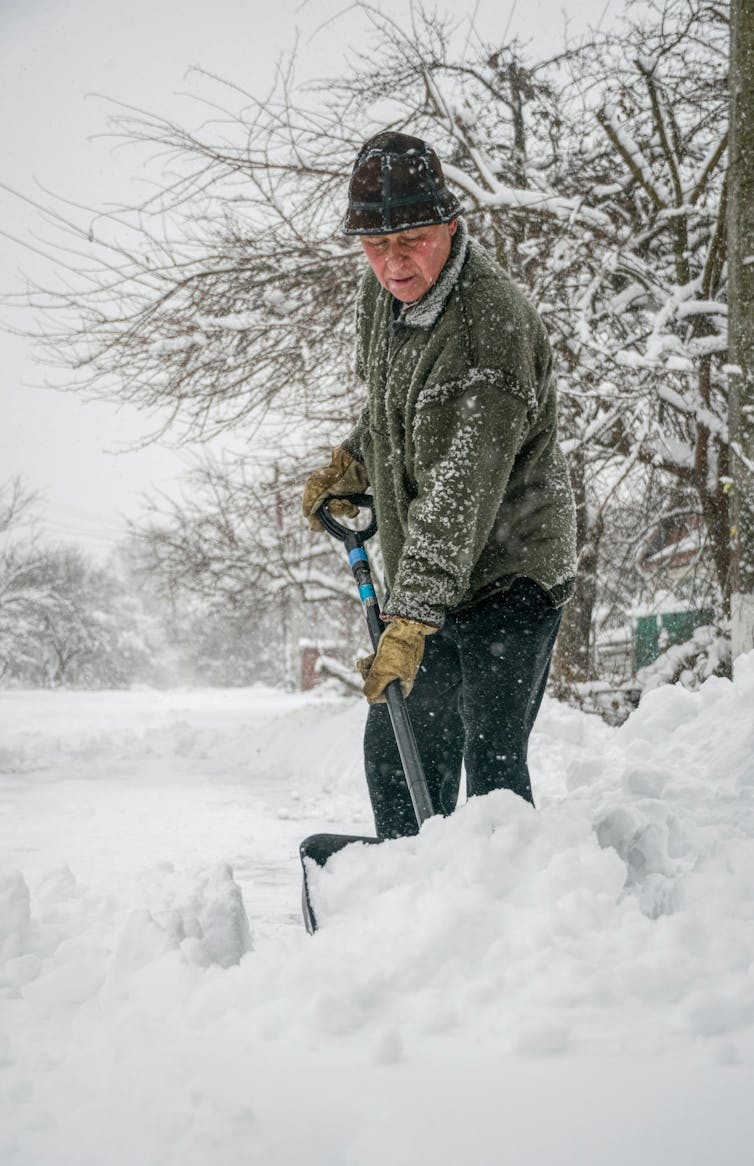
Pelleter son entrée l’hiver demande de la force et une bonne forme physique, qui manquent parfois aux personnes âgées. (Unsplash), CC BY
Malgré le fait que les besoins de services de menus travaux devraient croitre de manière corollaire à l’évolution du vieillissement de la population, il est étonnant de constater qu’au Québec ils n’ont pas fait l’objet d’une mise en place structurée et ne sont pas offerts dans toutes les régions.
Actuellement, les rares initiatives locales de menus travaux qui existent sont principalement mises sur pied par des acteurs du secteur communautaire ou du secteur privé (par exemple des coopératives ou des entreprises d’économie sociale en aide à domicile). Elles desservent un petit bassin de personnes aînées, sans déploiement à large échelle.
Déjà des milliers d’abonnés à l’infolettre de La Conversation. Et vous ? Abonnez-vous gratuitement à notre infolettre pour mieux comprendre les grands enjeux contemporains.
Les quelques initiatives existantes ne sont pas suffisantes pour répondre aux besoins de la population vieillissante d’aujourd’hui et encore moins dans les années à venir. Le gouvernement n’inclut toujours pas les menus travaux dans les services offerts au soutien à domicile.
Il n’a pas non plus bonifié le Programme d’exonération financière pour les services d’aide domestique (PEFSAD). Il pourrait pourtant offrir une réduction des coûts associés au recours à des services provenant du secteur privé pour les aînés selon leur niveau de revenus.
Quatre difficultés auxquelles se heurtent les aînés
Il devient prioritaire de se pencher sur les conditions gagnantes pour développer un modèle de services de menus travaux offert à grande échelle au Québec et favorable au maintien à domicile des personnes aînées.
Le projet de recherche que nous poursuivons a permis à ce jour de créer des espaces de parole pour que les personnes aînées elles-mêmes nomment leurs enjeux et besoins face aux services de menus travaux.
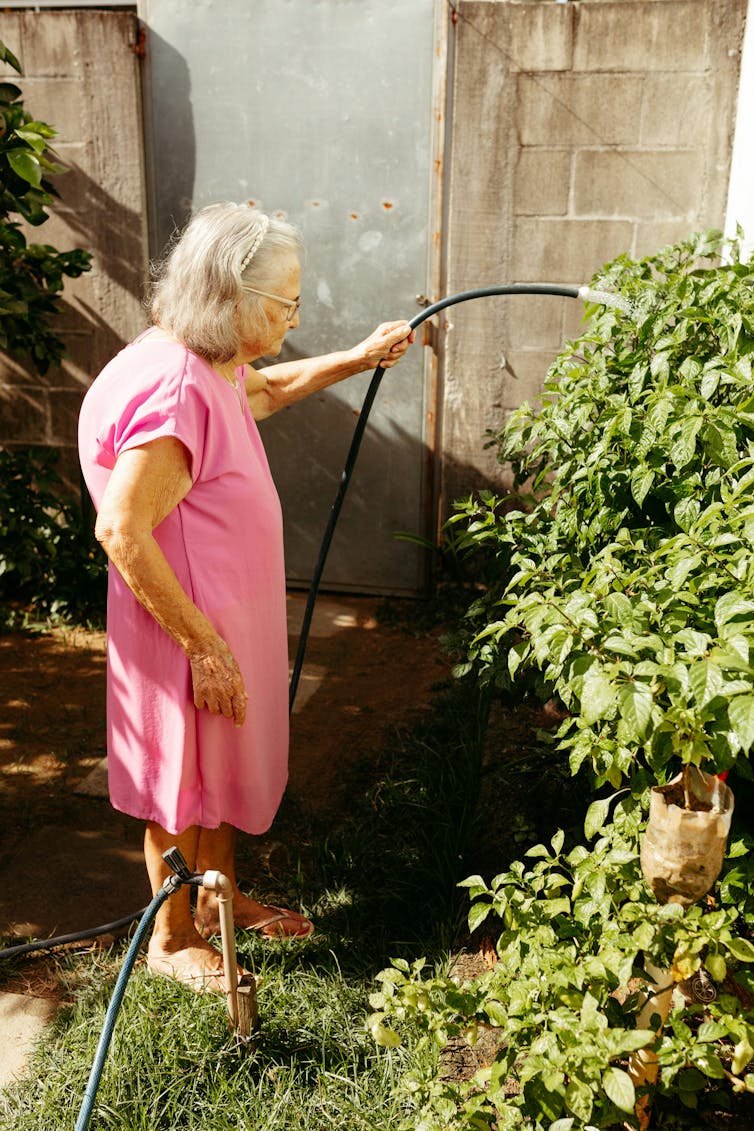
Les personnes âgées doivent s’engager dans de longues recherches pour obtenir de l’aide pour leurs tâches domestiques. (Unsplash), CC BY-SA
Ce qui en ressort, c’est qu’elles doivent s’engager dans des recherches interminables d’un prestataire de service lorsqu’elles désirent obtenir des services de réparation ou d’entretien de leur domicile — elles désirent donc un service facile à trouver.
Puis, elles ont de la difficulté à trouver des personnes en qui elles ont confiance pour réaliser les travaux et entrer dans leur « intimité », dans leur chez-soi — elles désirent donc un service qui est offert par une organisation de confiance (un CLSC ou une entreprise d’économie sociale de leur région), qui dispose de moyens financiers suffisants pour retenir une main-d’œuvre qualifiée, fiable et stable.
Finalement, il leur est difficile de comprendre les mécanismes de remboursement des services de menus travaux. En effet, il existe certains programmes gouvernementaux pour couvrir une partie des frais reliés aux services de menus travaux, mais ces programmes sont peu connus, ne remboursent qu’une portion des frais encourus et sont difficilement accessibles — elles aimeraient donc avoir accès à des processus de remboursement ou de couverture simple, accessible et suffisant.
Le soutien à domicile doit aller au-delà des soins de santé
Un service de menus travaux accessible, stable, de proximité et bien financé semble être une avenue à prioriser. Il n’est pas encore clair qui devrait être le « porteur de ballon » de ce service. Est-ce que ces services doivent être offerts par le secteur de la santé et des services sociaux ? Est-ce que le gouvernement devrait bonifier le Programme d’exonération financière pour y inclure une meilleure couverture des services afin que le déploiement à large échelle de ce service par les entreprises d’économie sociale en aide à domicile soit possible (c’est-à-dire rentable) ? Cela reste à déterminer.
Une chose est certaine, demeurer chez soi en vieillissant ne devrait pas être la seule responsabilité des personnes aînées, mais bien celle des gouvernements et des organisations qui pourraient et devraient mieux les soutenir. Pour ce faire, une vision globale des facteurs qui influencent la santé est nécessaire.
Nous ne pouvons retreindre le soutien à domicile au seul aspect médical et aux soins offerts. Nous devons mettre en place des services pour que le maintien à domicile soit fait dans des domiciles sécuritaires et satisfaisants pour ceux qui y demeurent.
Marie-Michèle Lord a reçu des financements des Fonds de recherche du Québec
A view from the island of San Servolo across to Venice.Rachael Jolley, CC BY
Over the weekend I was at an environment conference on the tiny island of San Servolo, just off the coast of Venice. You are surrounded by water on all sides, stretching for miles.
Given this visual reminder of how low-lying Venice is it’s hard not to think about the increasing threat of flooding and the long-term implications of climate change for this historic city and the surrounding region of wetlands as well as towns and villages along the coast.
Venice is, after all, famous for its aqua alta, (high waters) and floods. It sits on the Mediterranean’s biggest lagoon which has an average depth of less than one metre. With increasing numbers of extreme storms, it’s clear that rising waters here are likely to cause greater and greater damage to people’s homes and livelihoods.
So in many ways the view was an ideal geographical prompt for the fourth Dolomite Conference on Global Governance of Climate Change and Sustainability, organised by the Vision thinktank. The conference brought together speakers from around the world to discuss climatic challenges and ideas for what could mitigate those changes. Debates ranged widely. From the way flooding and wild fires may make it difficult, or even impossible, for people to access insurance for their homes to how the health of soil is not being valued and its ability to grow crops is steadily declining.
Discussions at the conference ranged from floods to insurance challenges and soil erosion. Laura Hood, CC BY
I spoke to some delegates to see what they thought was the biggest challenge that their home faced from climate change.
Los Angeles
Paulina Velasco is the deputy chief of staff for district six in Los Angeles. She sees the biggest challenge ahead as “making sure that we have all the people in the room who know what’s going on”.
“Not just the academics talking about the statistics, but also people in the community, the people who have asthma because the air quality is so bad and they live next to a freeway, ensuring that it’s not just one way [of] looking at things from a high level, but making sure that everyone has an understanding and we can act as a community.”
Looking ahead to the upcoming LA Olympics 2028, Velasco felt there was an opportunity to change behaviour that could help the city tackle climate change threats.
“The question is not just what’s going to happen in the Olympics or what’s going to happen in the world cup, but how are we going to recycle all the plastic or make sure we drive less.”
It was about what was going to happen so that people act differently, taking more public transport, for instance, in ways that can be sustained after the Olympics, she said.
Brazil
Julia Paletta, a PhD researcher at the Federal University of Rio de Janeiro, said the issue that concerned her most about Brazil was emissions coming from land use change. Brazil is an agricultural country and the pressing issue was extending agriculture into new areas, such as the Amazon, causing deforestation. By some estimates the Amazon rainforest could become a dry grassland if deforestation continues at pace.
“With Brazil hosting Cop30 [the UN climate conference] this year I think the big discussion is going to be around the Amazon,” she added. She felt it was going to be “a very important moment for the global community being there and seeing the Amazon”. Not only because this was a pristine area, but also a very important place to be preserved. “It’s very important not only to Brazil, but overall to the world.”
The front of the San Servolo centre where the conference was held. Rachael Jolley, CC BY
Belgium
Taube Van Melkebeke is head of policy at the Green European Foundation, a foundation aligned to the European Green party arranges debates and training around green issues.
She said: “The biggest hurdle for Belgium is a lack of systemic planning that really takes into account different dimensions, both the short and the long term, such as social and economic aspects, and energy security.”
“I think there is a lack of political long term-ism, which is, of course, partially embedded in our political systems. But I also do think that there is a lack of political will and political insights to really connect the dots.”
I often find that conferences can be gloomy places where people come together to discuss problems and can easily disappear into a rabbit-hole of depression, rather than proposing solutions. This conference’s organisers decided to do something different, by asking postgraduate students to put forward discussion points with suggestions of what could change, not just what was wrong.
There was an excellent session on soil erosion, which covered everything from the weight of tractors and farm vehicles, to how societies have focused on machinery and forgotten the importance of keeping the soil healthy. Students from Bocconi University came up with proposals and then experts from farming, policy and government were asked to respond.
It is this kind of approach that could make a long-term difference. Putting people from different walks of life into the same room, and asking them all what happens next and what could work has got to be a fruitful way of creating change, and that feels positive.
Source: The Conversation – in French – By Virginie Arantes, Postdoctoral Researcher – Projet Chine CoREF, CNRS/EHESS (CECMC), Université Libre de Bruxelles (ULB)
Le terme s’est imposé en librairie, en politique. Il est aussi de plus en plus repris par des institutions. Il apparaît souvent comme un synonyme de « nature ». Mais que signifie ce « vivant » dont on se réclame de plus en plus ? Les autrices et auteur de Rendre le vivant politique (éditions de l’Université de Bruxelles, 2025) sondent le succès nouveau de ce mot.
C’est un terme que l’on entend de plus en plus : « vivant ». Mais d’où vient-il ? que décrit-il ? et pourquoi est-il de plus en plus invoqué ?
Une rapide recherche du terme « vivant » dans Google Ngram Viewer, qui recense la fréquence des mots usités dans les livres numérisés sur Google Books, permet déjà de repérer deux moments où son usage explose : dans les années 1980 et aujourd’hui.
Mis en ligne par Google en décembre 2010, Ngram Viewer permet de visualiser la fréquence de suites de mots dans les livres numérisés sur Google Books. L’outil s’appuie sur plus de 5 millions d’ouvrages, soit environ 4 % des livres jamais publiés, et dont la très grande majorité est postérieure à 1800. L’interprétation des visualisations appelle à la précaution, mais cette courbe sert ici seulement à poser des questions au sujet de ce succès du « vivant » dans la production éditoriale. Capture d’écran Google Ngram Viewer
Le pic des années 1980 peut sans doute s’expliquer par la montée en puissance du discours sur la biodiversité qui n’est plus confinée au registre scientifique. Mais comment expliquer le regain actuel ? Serait-il la manifestation d’un moment politique qui voit le « vivant » devenir un nouvel imaginaire structurant et un horizon de lutte ? Dans les librairies, la tendance est en tout cas nette. Le succès d’ouvrages comme Manières d’être vivant (Baptiste Morizot, 2020), Exploiter les vivants (Paul Guillibert, 2023) ou le Moment du vivant (sous la direction d’Arnaud François et de Frédéric Worms, 2016) témoigne d’une quête de sens et d’un désir de rupture avec une vision instrumentale de la nature.
Mais le mot ne circule pas qu’en rayon : il s’invite de plus en plus dans les slogans militants et partisans. En Belgique, le parti Écolo s’interroge : « Qui va protéger le vivant, qui va protéger ma santé ? », tandis qu’en France, le parti antispéciste Révolution écologique pour le vivant (REV) a été créé en 2018. On retrouve aussi ce terme dans le vocabulaire des politiques publiques, dans les mouvements sociaux, dans les dictionnaires d’écologie politique et jusque dans le langage éducatif.
Dans cette perspective, les défenseurs du vivant appellent à « faire corps » avec les écosystèmes. Ils proposent de repartir des milieux partagés à toutes les échelles – de la mare à l’océan – et de tenir compte de leurs liens, de la goutte d’eau à l’atmosphère.
« Anthropocène », « zone critique » : d’autres termes qui émergent en même temps que celui de « vivant ».
Ce déplacement de regard trouve un écho dans l’histoire récente des sciences. Il n’est pas anodin que la notion controversée d’anthropocène, apparue au début des années 2000 dans un colloque de géologues, résonne aujourd’hui dans les luttes pour le vivant. De même, il n’est pas plus surprenant que l’Institut de physique du globe de Paris (IPGP), fondé en 1921 pour étudier les forces telluriques et les champs magnétiques, s’intéresse désormais à la zone critique – cette fine couche où se nouent les interactions entre vie, sol et atmosphère. Chez Bruno Latour, cette zone prend une dimension philosophique : elle devient le lieu d’où penser le « nouveau régime climatique ».
Dans un contexte où les sociétés peinent à répondre à la crise environnementale – et où une partie du débat public rejette même l’écologie –, le terme « vivant » propose de décentrer le regard. Il invite à le déplacer, à voir dans la nature et les êtres qui la peuplent non pas des ressources à dominer, mais des existences avec lesquelles apprendre à cohabiter.
Pourquoi ce retour du vivant ?
Le « vivant » permet ainsi de dire ce que la « nature » ne permet pas.
Contrairement à « nature », souvent pensée comme un décor extérieur ou une ressource à exploiter, le « vivant » inclut les humains dans une communauté élargie avec les animaux, les végétaux et les écosystèmes, et s’interroge sur l’ensemble plutôt que sur telle ou telle partie. Il insiste sur les relations, sur les interdépendances et sur la fragilité des milieux que nous habitons. Cette nuance explique son succès croissant : il offre un langage qui relie la crise écologique à nos existences concrètes, à nos corps, à nos manières d’habiter le monde sans nous en couper. Il comble les lacunes des analyses trop focalisées sur la partie et qui perdent de vue le tout. Et c’est précisément parce qu’il nous attache à notre être sensible qu’il ouvre un espace de luttes, d’appropriations et d’expérimentations politiques.
Sa signification varie selon les contextes. En français, il évoque des dynamiques d’interdépendance entre humains et non-humains. En anglais (life, living beings, vital), il est souvent ramené aux Life Sciences, c’est-à-dire l’ensemble des sciences de la vie (biologie, médecine, génétique, agronomie, écologie scientifique), à une approche plus fonctionnelle et technique. En Amérique latine, le « vivant » prend une tournure institutionnelle : la Constitution de l’Équateur reconnaît ainsi la Pachamama (la Terre-Mère) comme sujet de droit – une manière de traduire dans le langage juridique des visions du monde autochtones, fondées sur l’harmonie entre les êtres humains et la nature. Le préambule du texte évoque d’ailleurs la volonté de « construire une nouvelle forme de coexistence publique, dans la diversité et en harmonie avec la nature, afin de parvenir au buen vivir, le sumak kawsay », c’est-à-dire le bien vivre ou la vie en plénitude.
Dans d’autres contextes, notamment occidentaux, la gestion écologique reste trop souvent marquée par des logiques de contrôle, de « maîtrise » de la nature et de ses risques, voire d’exclusion, comme le souligne la chercheuse en sciences politiques Krystel Wanneau lorsqu’elle analyse les dispositifs de « solutions fondées sur la nature » promus par les Nations unies. Elle prend ici comme exemple les problèmes d’inondation dans le nord de la France et aux Pays-Bas pour illustrer l’attrait de ces solutions redonnant de la place à la nature en s’inspirant des services offerts par les écosystèmes.
Dès le XIIe siècle, les Flamands ont ainsi mis en place les wateringues, des dispositifs de canaux pour contenir les inondations et gagner des terres agricoles sur la mer. Aujourd’hui, ces approches conciliant activités humaines et préservation écologique se multiplient, mais elles restent marquées par des tensions entre logiques administratives, agricoles, urbaines et écologiques pouvant reconduire des rapports de pouvoir inégaux entre politiques nationales et initiatives locales, comme dans le Nord-Pas-de-Calais. Partout dans le monde, ces approches de gestion des risques « avec » le vivant séduisent sur le papier, mais leur concrétisation se heurte à des conflits dont la résolution appelle de véritables débats démocratiques.
« Dunkerque veut aller plus loin et met en place un partenariat avec les agriculteurs des sections de son territoire pour les amener à ne pas évacuer l’eau systématiquement, mais à refaire des zones humides moins drainées, en contrepartie du paiement de leurs rôles par la communauté urbaine », explique le chercheur Bernard Barraqué dans son article « Les wateringues hier et aujourd’hui, en France et aux Pays-Bas » (2025). CC BY
Pas étonnant donc qu’en parallèle, des alternatives démocratiques émergent. Le mouvement des villes en transition, lancé par l’enseignant britannique Rob Hopkins, promeut des modes de vie collectifs résilients, où « prendre soin du vivant » devient un mot d’ordre local. En France, les Soulèvements de la Terre, ou encore les mobilisations écologistes radicales étudiées par le politiste Luc Sémal, montrent que le vivant peut devenir un outil de mobilisation et de critique.
Parallèlement, certaines collectivités locales expérimentent des Parlements du vivant (dans l’agglomération Dracénie Provence Verdon [Var]) ou des micro-Parlements des vivants (à La Rochelle [Charente-Maritime], à Paris) pour faire participer les écosystèmes dans les décisions publiques afin de dépasser les oppositions modernes entre humain et non-humain, raison et émotion, corps et esprit. Ce changement reflète une tentative de réinventer notre rapport au monde, en mobilisant des savoirs sensibles longtemps marginalisés.
Mais cette prise de conscience ne suffit pas. Comme le montrent les historiens de l’environnement, l’anthropocène n’est pas qu’un moment de réveil écologique : c’est aussi le produit de trajectoires politiques et économiques anciennes, qui vont de l’industrialisation et de l’exploitation coloniale aux logiques extractives et financières contemporaines. Penser le vivant exige donc plus qu’un changement de regard. Il faut transformer les priorités, les institutions, les formes de pouvoir. Les chercheurs en théorie politique Marc-Antoine Sabaté et Emmanuel Charreau insistent : ce n’est pas parce qu’on parle du vivant qu’on agit en conséquence. Il ne suffit pas d’ouvrir les yeux, encore faut-il changer les cadres hérités de ces histoires longues. Avoir conscience du réchauffement climatique ne produit pas une action immédiate, mais plutôt l’inverse.
Ces tensions deviennent de plus en plus visibles en Europe. En Belgique, la Cour constitutionnelle a suspendu le report de l’interdiction des diesels Euro 5 à Bruxelles, mobilisant le droit à la santé et à un environnement sain. En France, le Conseil d’État a condamné l’État pour inaction climatique (affaire Grande-Synthe, dans le Nord), confirmant que seule la contrainte juridique oblige à agir.
Mais la crise des gilets jaunes rappelle que protéger le climat sans corriger les inégalités sociales peut générer de nouvelles fractures. Comme le note le chercheur en théorie politique Éric Fabri, reconnaître le vivant sans transformer les logiques propriétaires revient à reproduire les mêmes asymétries de pouvoir et, en fait, à reconduire le paradigme de la nature (ontologie naturaliste) dont la propriété est une expression juridique. L’histoire des idées est ici utile pour révéler à quel point la vision d’une nature dont l’humain est maître et possesseur est intimement liée à l’idéologie propriétaire. Ne pas la remettre en question, c’est ainsi accepter de continuer à porter les œillères modernes qui font de la nature un ensemble de ressources à s’approprier.
Le vivant bat en brèche cette représentation et invite à penser un rapport au monde qui ne soit pas hiérarchique, unilatéral ni fondé sur la domination.
Une révolution intellectuelle ou un discours récupéré ?
À mesure que le vivant devient un objet de débat, une question devient centrale : assiste-t-on à une transformation en profondeur de nos institutions, ou à une récupération d’un langage critique vidé de sa portée subversive ?
Comme le souligne le professeur en philosophie Philippe Caumières, parler du vivant n’a de sens que si cela s’accompagne d’un véritable renouveau de l’activité politique autonome. Or, aujourd’hui, deux dynamiques coexistent – et parfois s’opposent frontalement. D’un côté, on observe des tentatives sincères pour repenser notre rapport au vivant, à travers le droit, la politique, ou de nouvelles formes de gouvernance écologique. Mais en parallèle, le vivant devient aussi un outil de langage pour des logiques plus anciennes. États et entreprises invoquent la protection du vivant pour légitimer des politiques de contrôle, de marchandisation ou de surveillance.
C’est particulièrement visible en Chine : derrière la bannière de la « civilisation écologique », le Parti communiste chinois promet de réconcilier développement et environnement. Dans les faits, la conservation d’espèces emblématiques comme le panda ou la mise en place de parcs nationaux servent à renforcer le contrôle territorial, à limiter l’accès aux ressources ou à encadrer les populations locales, comme l’analyse la chercheuse en science politique Virginie Arantes, spécialiste de la Chine. Le vivant y devient un capital écologique et symbolique, mais aussi un instrument de gouvernement.
Ceci soulève une question centrale : le vivant remet-il en cause la distinction entre nature et culture, ou la redéfinit-il selon de nouvelles logiques ? Même lorsqu’on parle de vivant, les dynamiques d’exploitation et de pouvoir demeurent. Quel rôle peuvent jouer les humains dans ces conflits d’intérêts interespèces ? Peuvent-ils être arbitres sans imposer leurs propres normes comme seul étalon ? Cette tension traverse également les débats philosophiques. Bruno Latour appelait ainsi à reconstruire nos attachements au vivant et à reconnaître la pluralité des êtres avec lesquels nous cohabitons. Mais des penseurs, comme Frédéric Lordon ou Andreas Malm, rappellent que toute réflexion écologique qui oublie les rapports de classe et la dynamique du capitalisme risque de manquer sa cible. Penser le vivant, oui – mais sans perdre de vue les structures sociales et économiques qui façonnent les conditions de vie et le travail.
Le vivant n’est pas un mot magique. C’est un champ de lutte. Ce qui se joue, c’est la fabrication d’une frontière entre humain et nature, et la difficulté – voire l’impossibilité – d’entretenir avec celle-ci un rapport autre qu’extractiviste. Et la manière dont nous habitons le vivant, le nommons, le protégeons ou l’exploitons en dit long sur le monde que nous sommes en train de construire.
À mesure que le vivant devient un enjeu central, il peut ouvrir des voies nouvelles – ou servir à reconduire des logiques anciennes de domination.
Le défi est triple :
Transformer les prises de conscience en actions concrètes.
Mobiliser les savoirs permettant de réordonner les priorités politiques.
Questionner les formes d’appropriation du vivant, qu’elles soient économiques, juridiques ou politiques.
Plutôt qu’un consensus, le vivant est aujourd’hui une question. Il nous force à choisir : que préserver, pour quels mondes à venir, avec qui et pour qui ?
Cet article est inspiré de l’ouvrage Rendre le vivant politique, dirigé par Virginie Arantes, Éric Fabri et Krystel Wanneau, paru en 2025 aux éditions de l’Université de Bruxelles et consultable en ligne.
Virginie Arantes a bénéficié de financements du Fonds de la Recherche Scientifique – FNRS (Belgique) et du CNRS dans le cadre de son postdoctorat au sein du projet Chine CoREF. Ces soutiens n’ont exercé aucune influence sur les résultats ou les conclusions de sa recherche.
Eric Fabri a reçu des financements du Fonds National de la Recherche Scientifique FRS-FNRS pour financer ses recherches postdoctorales. Ces financements n’engendrent cependant aucun contrainte quant aux résultats des recherches menées.
Wanneau Krystel a reçu des financements de l’Agence nationale de recherche (ANR) dans le cadre de son postdoctorat au sein du projet ANR “SciOUTPOST”. Ces financements n’exercent aucune influence sur les résultats ou les conclusions de sa recherche.