Le « défilement anxiogène » décrit ce geste familier où l’on fait défiler, parfois pendant des heures, des flux de mauvaises nouvelles. Un « réflexe numérique » qui manifeste nos biais cognitifs et notre façon de gérer les incertitudes.
Apparu en 2018, le terme de « défilement anxiogène », ou « doomscrolling », en anglais, s’est imposé pendant la pandémie de Covid. Dans la littérature scientifique, il renvoie à une habitude numérique : consulter des fils d’actualité, souvent sur smartphone, de façon compulsive avec une focalisation sur les contenus inquiétants, déprimants ou négatifs.
Comment expliquer ce phénomène ? Tout d’abord, par le biais de négativité qui focalise notre attention d’humains sur les contenus néfastes et qui nous incite donc à faire défiler les informations anxiogènes sans percevoir le temps qui passe. Ensuite, sur le plan cognitif, par l’incertitude qui active un mécanisme émotionnel de recherche d’informations rassurantes parmi les contenus négatifs. Mais cette quête, loin de réduire l’anxiété, tend à la renforcer en entretenant la vigilance et le doute.
Cette pratique de défilement est renforcée, d’une part, par la technologie qui offre un flux d’actualités illimités et, d’autre part, par les recommandations des algorithmes qui augmentent notre exposition à des informations saillantes, souvent négatives.
Une transformation du rapport à l’information
À partir d’une échelle de mesure du défilement anxiogène, on a observé que cette habitude numérique est associée à une détresse psychologique, à une moindre satisfaction de vie et à des usages problématiques des réseaux – sans pour autant pouvoir conclure à un lien de causalité.
Les liens entre défilement anxiogène et émotions négatives pourraient s’expliquer en partie par l’intolérance à l’incertitude. Selon une étude, celle-ci prédit en effet une augmentation du défilement anxiogène et une baisse du bien-être. Par ailleurs, l’intolérance à l’incertitude expliquerait le lien entre l’anxiété-état (tendance stable à ressentir de l’anxiété plus fréquemment ou intensément que la moyenne) et le défilement anxiogène. Cette pratique serait donc une façon de faire face, de réguler ses émotions sans pour autant être une stratégie efficace puisqu’elle ne permettrait pas un apaisement.
Cependant, le défilement anxiogène n’est pas juste une pratique individuelle. Il serait aussi le reflet d’un rapport au monde, de la façon dont les technologies numériques et le design de captation de l’attention peuvent transformer notre relation à l’information, avec un accès en temps réel à des événements négatifs. À côté de ce défilement anxiogène passif, le doomsurfing (exploration active d’un sujet) et le doomchecking (retour à des sources fiables pour vérifier) peuvent avoir une valeur de connaissance, d’information, s’ils ne dépassent pas nos limites émotionnelles.
Cette distinction rappelle que notre but n’est pas seulement de « nous sentir mieux », mais aussi d’être correctement informés. Pourtant, du point de vue de la connaissance, le défilement anxiogène est le moins recommandable, car il expose à la désinformation.
Comprendre le terme de défilement anxiogène et les mécanismes individuels et algorithmiques associés, c’est déjà commencer à le déjouer, en transformant un défilement passif en une pratique d’information plus consciente, plus choisie et moins délétère pour le bien-être.
Marie Danet ne travaille pas, ne conseille pas, ne possède pas de parts, ne reçoit pas de fonds d’une organisation qui pourrait tirer profit de cet article, et n’a déclaré aucune autre affiliation que son organisme de recherche.
Ireland is set to have a new president in the form of Catherine Connolly, an independent leftwing TD for Galway, and former deputy speaker of the Dáil.
The presidential election campaign was a colourful and eccentric spectacle. Since the Irish president isn’t an executive office with power over policy, the campaign focused on obscure ethical scandals around the two candidates, Connolly and Fine Gael candidate Heather Humphreys.
At times, though, the debate strayed into various policy issues despite the president having no power over these. The candidates’ views on everything from housing, disability, military neutrality and even foxhunting came under scrutiny.
For many, the campaign will have seemed awkward and profoundly odd. Ireland went through the rigmarole of a national election but for something for which the political stakes are undeniably low. This, in turn, reflects certain anomalies of the Irish presidency as a political institution.
The president of Ireland, a role created by the 1937 constitution, is the only national office elected directly by the people. The president will, therefore, have a very significant democratic mandate, and will tend to be a popular figure.
But this mandate is not matched by very much power. A president must campaign for a mandate from the people, yet once in office, finds no real conduit, other than speech itself, through which to make good on that mandate.
Presidential powers
In a parliamentary democracy such as the UK or Ireland – where the executive government is formed from within the parliament – the head of state will tend to have quite modest constitutional functions. Even where the head of state is a president, they will tend to have powers quite similar to those of a hereditary monarch. They formally sign bills into law and perform certain other strictly ceremonial constitutional functions, while serving as a symbol of continuity, national unity and so on.
One of the advantages of having an elective head of state, however, is that it becomes politically feasible to grant them more extensive powers of the sort that would be difficult to envisage for a monarch.
What exactly these powers are varies across parliamentary republics such as Germany, Italy or Greece. While Ireland’s post-independence constitutions mirrored many basic features of the British parliamentary system, they had elements of novelty and innovation as well. The office of the president was one of these.
Indeed, if someone were to read the constitution with no context, it makes the president seem like a potentially key player in the political system.
In particular, the constitution seems to envisage the president being a sort of arbiter in the legislative process, particularly in the event of deadlock between the two houses – the Dáil and Seanad (senate). These powers arise, for example, in the event of disputes over what counts as a “money bill”, or reducing the time the senate has to consider bills during a public emergency. The president also has, in theory, a power to refer bills to referendum, where petitioned by a majority of the Senate and one-third of the Dáil.
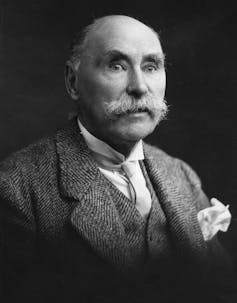
Douglas Hyde, Ireland’s first president. Wikipedia
However, this potentially important umpire role has never really materialised in practice, mostly because these powers seem to envisage situations of dispute between the two houses that have hardly ever arisen in practice. The senate has never really posed much of a barrier to government legislation coming from the Dáil, partly because the taoiseach gets to nominate almost one-fifth of its members. Governments therefore have an almost guaranteed majority in the upper as well as lower houses. Any notional role of umpire for the president becomes redundant in a legislative system so dominated by the government.
The president does also have the power to refer bills to the Supreme Court to test their constitutionality, a power that has been used 16 times. However, relatively few constitutional controversies have been resolved through this process. The more common route to resolving any doubts about potentially unconstitutional laws has been through via advice from the attorney general.
Beyond legislation, the president is theoretically a potential kingmaker in the process of government formation. Unlike the British monarch, the president cannot “invite” anybody to form a government. But they can refuse a taoiseach’s request to call a snap election, if the taoiseach has lost the confidence of the Dáil. But again, the role notionally envisaged for the president, as a kind of arbiter within the political system, never really materialised in practice, as an expectation emerged of presidents having a passive and ceremonial role.
With many of their formal powers becoming more or less redundant, a president who was campaigned for and received the people’s trust must fulfil that mandate by some other means. More recent presidents, especially Mary Robinson and the outgoing president, Michael D Higgins, have sought to express their democratic mandate more in the realm of symbolism than in the exercise of any hard power. Higgins controversially used the presidency to speak out in the range of topics, from housing and inequality, to the issues of neutrality and genocide on the international stage.
Michael D Higgins: an outspoken president. Shutterstock/D. Ribeiro
But the controversies of Higgins’ tenure neatly reflected the wider paradoxes of the Irish presidency. Many of the powers of the office – at least the discretionary powers where the president has some choice – are almost redundant. Its legitimacy and clout is expressed almost exclusively in the symbolic realm. Higgins gave voice to widely held concerns of injustice and inequality both in Ireland and globally – but it would be difficult to argue that this shifted the political needle leftwards in Ireland during his tenure. It is in that context that another relatively radical figure will assume office as president of Ireland.
Eoin Daly does not work for, consult, own shares in or receive funding from any company or organisation that would benefit from this article, and has disclosed no relevant affiliations beyond their academic appointment.
Late on an October Monday night, George Springer smashed a three-run homer to send nearly 45,000 fans in Toronto’s Rogers Centre — and a record national television audience — into a frenzy.
It had the feeling of a denouement. Yet, like other famed home runs in Blue Jays history, Springer’s blast was just one step in the long journey through baseball’s three playoff rounds.
A year earlier, Jose Bautista’s then-audacious bat flip followed a dramatic home run — also like Springer’s hit in the seventh inning — that moved the Blue Jays onto the same championship series round that they had not won since 1993. Until this year.
The enduring legacy of 1993
Invoking 1993 holds special resonance for Blue Jays fans. It’s the last time the team won, let alone reached, the World Series.
It is easy to tell the story of the Blue Jays through the lens of dramatic game-winning home runs. However, the context of the team’s championships —and near misses — offers a more nuanced tale.
Following a handful of dire losing seasons, Blue Jays management earned a reputation for talent development. The first crop of stars — Dave Stieb, George Bell and Tony Fernandez — won a division championship in the team’s ninth season. They fell one game short of qualifying for the World Series, losing the only seventh game in a post-season series in franchise history prior to this year.
Modernity came to Toronto in 1989 when the team moved into SkyDome, a then-state-of the-art domed stadium complete with retractable roof (and by then, beer vendors) that was funded and operated by a public-private partnership.
The Blue Jays 2025 success — realizing the promise of a new generation of star prospects headlined by Vladimir Guererro Jr. and Bo Bichette — has rekindled memories of these past glories: the first winning teams of the 1980s, the back-to-back champions in 1992-93 and the bravado of the Bautista-Encarnacion-Josh Donaldson teams from a decade ago.
Lost in this pantheon of star players and dramatic moments, however, is the two decades of mediocrity that followed the heights of the Carter home run.
A more dispassionate, bottom-line ownership led to teams that failed to reap the talents of Hall of Famers like Roy Halladay and major stars like Carlos Delgado and Shawn Green.
Rogers Communications purchased 80 per cent of the Blue Jays in 2000, with Interbrew retaining 20 per cent. The on-field performance changed little, but the business model evolved significantly.
Rogers acquired the remaining 20 per cent of the team in July 2004. Before the year was out, it had gained control of SkyDome for $25 million, a fraction of the $600 million that the stadium has cost to build only 15 years earlier. Now fully privately owned, it was renamed the Rogers Centre.
Today, the Blue Jays reflect the vertical integration of modern commercial sports. The team is the primary tenant in a stadium operated by their owners. Their games are broadcast on television channels, radio stations and streaming services owned and operated by Rogers Communications. These channels market other Rogers-owned content during Blue Jays games.
Meanwhile, fans consume this content on cable subscriptions and internet services that are Rogers’ core businesses. The newest extension of this revenue-generation model is the increasing prominence of sports betting, which is integrated fully into broadcasts by on-screen commentators providing odds as though delivering sports “news,” not paid advertising
Canada’s team
The production and circulation of dominant narratives is a consequence of such a structure, what sociologist David Whitson termed “circuits of promotion.”
One of the most powerful is that the support for the Blue Jays is nationwide. They are Canada’s team. There is an element of truth to this. The Blue Jays’ fan base is considerable, particularly when they are winning.
But this is also a marketing construct — one that benefits from the Blue Jays being the only remaining Canadian-based team in a U.S.-operated professional sports league. This would be a much harder narrative to sell if the Montreal Expos were not now the Washington Nationals, and it is not entirely novel.
Basketball’s Toronto Raptors, themselves the beneficiaries of the relocation of the Vancouver Grizzlies, capitalized on both the team’s appeal as well as its monopoly on Canadian markets with its wildly popular 2019 marketing campaign, “We The North.”
Come Friday night, when Trey Yesavage throws the first pitch of the 2025 World Series, the absence of other Canadian-based teams and the centralization of media outlets in Toronto will ensure there will be a ready (and passionate) audience across the country all ready to chant: “Let’s go, Blue Jays!”
Russell Field does not work for, consult, own shares in or receive funding from any company or organisation that would benefit from this article, and has disclosed no relevant affiliations beyond their academic appointment.
This means that how these charities write about autistic people may influence how society understands what it means to be autistic. The words and pictures that autism charities choose to use affect how autistic people are understood, perceived and cared for. This really matters, as autism is still often stigmatised.
Our recent study shows that the language and images large autism charities use mainly portray autistic people as a problem. In contrast, charities represent themselves as the solution to this problem.
In England and Wales, different kinds of charity organisation are crucial providers of public services. Charities are often seen by government as the best way to meet the needs of less-heard or underserved groups, including autistic people. Some receive specialist care and education services from autism charities.
These charities also influence policy discussions and decisions. Research conducted by autism charities is regularly mentioned in parliament. The NHS refers autistic people and their carers looking for support to both national and local charities.
Previous research has shown how certain types of charities (particularly large international development charities) describe the people they are seeking to support in developing country communities in negative and problematic ways. People are often portrayed as “passive”, “voiceless” and “(culturally) backward”.
Similarly, a small amount of research demonstrates that autism charity advertising and websites consistently convey negative portrayals of autistic people. For example, one previous study describes how an advert for a UK charity depicted autism as “a child-enveloping monster that had to be destroyed to allow a boy to live a normal life”.
How we conducted our research
For our study, we identified the largest autism charities in England and Wales. We used data held by the Charity Commission to identify charities with incomes of £10 million or more and that only provided support to autistic adults, children or both. There were 11 charities that met these criteria. Then, we downloaded the most recent annual reports and accounts for these charities.
We explored how autism charities described autistic people, themselves and the government. We used critical autism studies – which seeks to question stereotypes, and views autism as a difference rather than a disorder – as an approach to evaluate and explain the reports, and suggest how things could be improved.
We found that autistic people are largely portrayed as problems, as challenging and as a burden. Autistic people are frequently depicted as being needy and infantile. Every single charity depicts autistic people as needing to change. Autistic people, they say, should be more communicative or resilient.
We think that the use of this kind of language and imagery has negative consequences for wider societal attitudes towards autistic people. In contrast, in these documents, charities – who did not appear to be led by autistic people – represented themselves as experts, with the authority to act for and speak on behalf of autistic people.
This links to an overwhelming message in the reports that these charities need to be able to do more, to be bigger and often better-known, and that they need more funding to enable them to achieve this.
This seems to reflect the “non-disabled saviour” trope that has been found to be common in popular culture. This trope highlights the action, even heroism, of non-disabled people “saving” disabled people, rather than centring disabled people’s agency.
All these charities also describe themselves as being funded by government. Alongside this, however, government is primarily portrayed as a barrier to the effective provision of services for autistic people. Government funding and policy decisions are described as arbitrary and inconsistent. It suggests a government (at both local and national level) that is ineffective and unreliable.
What should change?
We hope our findings encourage autism charities to reflect on how they describe the people they exist to support. Words and imagery should convey the reality of autistic lives rather than leaning on outdated notions of pity or burden.
That starts with meaningful autistic representation at every level of charity leadership, including decision-making roles. Representation shouldn’t be tokenistic. It should shape how organisations operate and communicate.
Charities and governments also need to rethink the current system of service provision and funding, which often leaves charities overstretched and autistic people underserved.
Most of all, we hope our research helps to contribute to a society that recognises autistic people not as problems to be solved, but as people to be valued and understood on their own terms.
Helen Abnett has previously received funding from the Economic and Social Research Council.
Aimee Grant receives funding from the Wellcome Trust, MRC and ESRC.
Kathryn Williams receives funding from the Economic and Social Research Council. She is also the research director for Autistic UK CIC, a non-profit Autistic-led organisation seeking to improve the representation and wellbeing of Autistic adults across the UK.
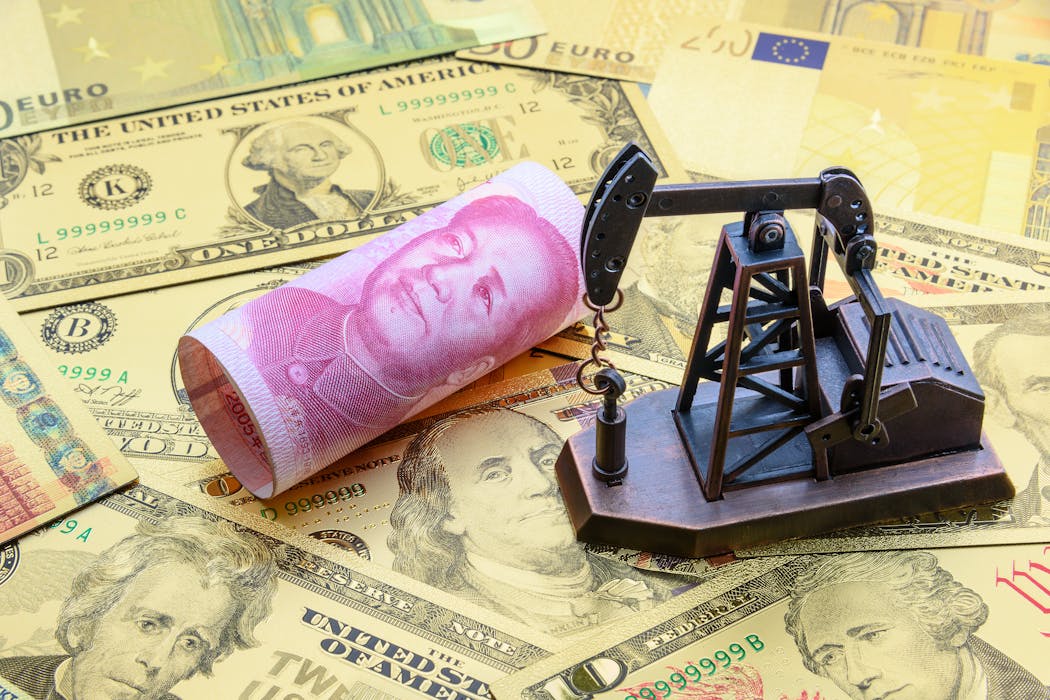
De 80 % à 85 % du pétrole de l’Union européenne étant encore facturé en dollar états-unien (USD), le paiement du pétrole russe en yuan par la Chine pourrait marquer un tournant monétaire historique.William Potter/Shutterstock
Le yuan (monnaie chinoise, officiellement appelée renminbi) s’impose dans le commerce du pétrole et du gaz entre la Russie et la Chine. Cette évolution présente des risques pour l’Union européenne, mais aussi une opportunité pour l’euro dans le contexte énergétique.
Lors du 25ᵉ Sommet de l’Organisation de coopération de Shanghai (OCS) tenu à Tianjin, en septembre 2025, les dirigeants chinois et russes ont ouvertement défendu un commerce de l’énergie en dehors du dollar états-unien. Cette poussée vers la dédollarisation, illustrée par l’augmentation des ventes de pétrole et de gaz de la Russie à la Chine en yuan (monnaie chinoise, officiellement renminbi), marque un bouleversement dans le commerce de l’énergie.
Le yuan, central dans les accords énergétiques Russie–Chine
En quelques années, le yuan s’est affirmé comme monnaie de réglage importante dans les échanges énergétiques russo-chinois. En 2022, les entreprises Gazprom et China National Petroleum Corporation (CNPC) commencent à réduire leurs paiements en dollar pour certains contrats, en favorisant l’usage du rouble et du yuan. En 2023, le commerce bilatéral a atteint un record de 240 milliards de dollars (+ 26 %), avec la moitié du pétrole russe exporté vers la Chine.
En 2024, le commerce bilatéral Chine-Russie atteint 244,81 milliards de dollars états-uniens, en hausse de 1,9 % par rapport à 2023, selon les douanes chinoises. Ce chiffre s’explique par la montée des échanges sur la paire CNY/RUB, c’est-à-dire le taux de change entre le yuan chinois et le rouble russe. Autrement dit, de plus en plus d’entreprises russes achètent ou vendent directement des yuans contre des roubles, alors qu’auparavant, elles passaient presque toujours par le USD/RUB, le taux entre dollar des États-Unis et rouble.
Ce glissement reflète un transfert progressif du commerce de l’énergie russe, autrefois dominé par le dollar, vers la monnaie chinoise.
Ce basculement s’est confirmé à Tianjin, où Xi Jinping, Vladimir Poutine et Narendra Modi ont soutenu l’usage accru des monnaies nationales. Le président de la République populaire de Chine a même proposé la création d’une banque de développement destinée à contourner le dollar et à limiter l’impact des sanctions.
Plus de 80 % du pétrole de l’UE facturé en dollar
L’OCS réunit dix membres : la Chine, la Russie, l’Inde, le Pakistan, l’Iran, le Kazakhstan, le Kirghizstan, le Tadjikistan, l’Ouzbékistan et le Bélarus. Ils représentent près de la moitié de la population mondiale et un quart du PIB. Le commerce de la Chine avec ses partenaires a atteint 3,65 trillions de yuans (500 milliards de dollars états-uniens) en 2024.
Le commerce de la Chine avec ses partenaires est de plus en plus souvent réglé en yuan, transformant progressivement la monnaie chinoise en instrument international de facturation et d’échange, au-delà de son usage domestique. Le dollar conserve toutefois son statut dominant, représentant encore 58 % des réserves mondiales en 2024.
L’Union européenne (UE) reste largement dépendante du dollar pour ses importations d’énergie. Entre 80 et 85 % du pétrole de l’Union européenne est facturé en dollar états-unien (USD), alors qu’une part infime provient des États-Unis. Ce choix s’explique par le rôle du dollar comme monnaie commune de transaction sur les marchés mondiaux. Il sert d’intermédiaire entre producteurs et acheteurs, quelle que soit leur nationalité. L’UE se rend de facto vulnérable aux variations du dollar et aux décisions de la Réserve fédérale des États-Unis.
Nouvelle complexité pour les entreprises européennes
Si le commerce mondial du pétrole et du gaz cessait d’être dominé par le dollar pour se répartir entre plusieurs monnaies comme le yuan ou la roupie, les entreprises européennes, surtout celles de la zone euro, devraient s’adapter à un environnement financier plus complexe.
Aujourd’hui, la plupart d’entre elles achètent leur énergie en dollars. Elles peuvent se protéger contre les variations du taux de change grâce à des « marchés de couverture » très développés. Ces marchés permettent de conclure des contrats financiers à l’avance pour bloquer un taux et éviter des pertes si la valeur du dollar change.
Avec le yuan, la situation serait plus difficile. Les outils financiers permettant de se couvrir sont encore limités, car la Chine contrôle les mouvements de capitaux et restreint la circulation de sa monnaie à l’étranger. Autrement dit, le yuan ne circule pas librement dans le monde. Cela réduit la liquidité, c’est-à-dire la capacité d’une entreprise à acheter ou vendre rapidement des yuans quand elle en a besoin. Moins la monnaie circule, moins il y a d’échanges possibles, et plus les transactions deviennent lentes et coûteuses. Pour les entreprises, cela signifie des paiements plus complexes et des coûts financiers plus élevés.
Des signes concrets montrent que ce scénario commence à se concrétiser. En mars 2023, la China National Offshore Oil Corporation et TotalEnergies ont conclu la première transaction de gaz naturel liquéfié (GNL) libellée en yuan via une bourse de Shanghai. Quelques mois après, l’entreprise pétrolière publique de la République populaire de Chine a réalisé une autre transaction en yuan avec Engie. Ces accords illustrent la montée en puissance du yuan dans les échanges énergétiques et annoncent un nouvel équilibre où les entreprises européennes devront composer avec une plus grande diversité de devises.
Rôle accru de l’euro dans la facturation énergétique
L’évolution du commerce mondial de l’énergie ouvre une opportunité stratégique pour l’Union européenne : renforcer le rôle de l’euro dans la tarification du pétrole et du gaz, et réduire sa dépendance vis-à-vis du dollar – ou, demain, du yuan.
Les progrès les plus visibles concernent le gaz. Selon la Banque centrale européenne, la réduction des approvisionnements russes a poussé l’Union européenne à s’intégrer davantage aux marchés mondiaux du gaz naturel liquéfié (GNL). Les prix européens sont désormais étroitement liés aux marchés asiatiques, ce qui rend l’UE plus sensible aux variations de la demande mondiale. Cette interdépendance renforce l’intérêt de développer des contrats de gaz libellés en euros.
Faire de l’euro une monnaie de référence dans les échanges énergétiques ne se décrète pas, mais cela pourrait devenir un levier essentiel de la politique monétaire et énergétique européenne.
L’euro dispose d’atouts : il est relativement stable, pleinement convertible, et soutenu par la Banque centrale européenne. Si des cargaisons de pétrole ou de gaz étaient facturées en euros, cela réduire la dépendance au dollar, simplifierait la couverture monétaire pour les entreprises européennes, et renforcerait l’indépendance financière de l’Union.
Ce virage monétaire implique des défis concrets. Le marché de l’énergie en euros reste peu développé, et certains pays ou entreprises pourraient craindre des sanctions états-uniennes s’ils s’éloignent du dollar. Surmonter ces freins nécessite de renforcer les marchés de capitaux européens, de créer des produits de couverture expressément en euros pour l’énergie, et d’assurer une politique économique stable à l’échelle de la zone euro.
Cette démarche ne vise pas à remplacer le yuan, mais à établir une alternative équilibrée, où l’euro pèse dans la facturation, dans les réserves stratégiques et dans le paysage monétaire mondial.
Suwan Long ne travaille pas, ne conseille pas, ne possède pas de parts, ne reçoit pas de fonds d’une organisation qui pourrait tirer profit de cet article, et n’a déclaré aucune autre affiliation que son organisme de recherche.
En juin 2023 à Xiamen (Chine), la chanteuse Cécilia Cara assure la promotion de la tournée de _Roméo et Juliette, de la haine à l’amour_, de Gérard Presgurvic, créée en 2001.
Youtube/capture d’écran.
« Molière », le spectacle musical de Dove Attia, vient d’entamer une tournée en Chine, emboîtant le pas à « Notre-Dame de Paris » et au « Roi Soleil » en Corée du Sud ou aux « Misérables » et à « Mozart, l’opéra rock » au Japon. Souvent boudées par la critique, les comédies musicales à la française s’exportent en Asie, où elles rencontrent un succès grandissant.
En 2023, 35 % des spectacles de comédie musicale en Chine étaient francophones, et les chiffres dépassent de loin les données de production françaises. Passage désormais obligé, la tournée asiatique consacre le spectacle francophone en reconnaissant ce que la France considère précisément comme des défauts mercantiles : le spectaculaire, le vedettariat et le kitsch.
La comédie musicale participe du paysage culturel asiatique : les shows de Broadway sont depuis longtemps importés. Mais l’hyperspectacle français attire pour ce qu’on lui reproche ici même : faisant la promotion des tubes au mépris de la diégèse, les productions s’accordent à surmédiatiser la chanson pop, à la véhiculer dans des théâtres traditionnels avec la même volonté politique d’occidentalisation qui présida à l’importation d’un art lyrique issu des opéras.
Il s’agit également de faire valoir la musicalité de la langue française et l’image de ses interprètes. C’est d’ailleurs ainsi que Nicolas Talar, producteur de Notre-Dame de Paris, pense le marché du spectacle vivant : il parle d’une langue commune.
À la frontière de la K-pop : « sweet power » et culture adolescente
Le spectacle de comédie musicale à la française contribue peut-être au « sweet power », tel que défini par Vincenzo Cicchelli et Sylvie Octobre : un attrait pour l’esthétique et une globalisation culturelle qui adoucissent les clichés impérialistes portés jadis par les spectacles plus traditionnels.
En donnant la part belle aux figures juvéniles tiraillées entre révolte, tourments et exaltation, la comédie musicale française se rapproche des idols (ces artistes des deux sexes sélectionnés adolescents, principalement pour leur physique) de la K-Pop dont l’esthétique « cute » séduit les adolescentes. Spécialiste des questions de l’émotion dans la littérature française, Siyang Wang a analysé l’attrait suscité par le spectacle le Rouge et le Noir en Chine et signale que « les spectatrices de moins de 25 ans représentent plus de 50 % du public, tandis qu’elles ne constituent qu’un pourcentage minoritaire (10 %-20 %) du public de la comédie musicale traditionnelle ».
En 2018, en Chine, la ferveur pour le personnage de Mozart, incarné par le créateur du rôle Mikelangelo Loconte, a pris de l’ampleur quand le jeune Yanis Richard a repris le rôle avec extravagance et sensibilité dans la tournée 2024, se faisant surnommer « Kid Mozart ». Côme, finaliste de The Voice en France en 2015, campe de son côté un Julien Sorel timide et mélancolique dans le Rouge et le Noir. En Chine, il est rebaptisé « Julien qui sort du roman » pendant la tournée de 2019.
Les chansons portées par ces figures juvéniles permettent à la communauté de fans – qui a « soif de chaleur humaine » – d’adopter des relations parasociales avec les personnages et leurs interprètes.
Vincent Cicchelli et Sylvie Octobre nous rappellent que le contenu des chansons de K-pop, « dans lesquelles les fans se reconnaissent, explorent ainsi les amours, les joies mais aussi les troubles, les angoisses et les diverses formes de vulnérabilités liées à l’adolescence ».
De Paris à Shanghai, il s’agit d’offrir une pop globale : les voix sirupeuses, la plastique du chanteur de charme ou la verve insolente de la star prépubère sont autant d’éléments humanisant le héros et ralliant le fan à son idole. Le personnage-star devient un ami imaginaire, voire un amour idéalisé.
Les interprètes sont à l’image des groupes préfabriqués de la K-pop qui permettent l’ascension de jeunes artistes. Depuis les années 2000, les performers français des comédies musicales sont globalement issus des télécrochets. Le casting permet à ces nouveaux venus promus par la télévision de se faire un nom dans un show détonnant et de parfaire leur image grâce au jeu médiatique. La projection et l’identification du public – français comme asiatique, d’ailleurs – à ces modèles de réussite spectaculaire contribuent à faire de la scène une fabrique du rêve.
Baroque, paillettes et guitares électriques
Si Roméo et Juliette et 1789, les amants de la Bastille ont été adaptés en langue japonaise, qu’est-ce qui pousse le public asiatique à plébisciter les shows français en langue originale ? La comédie musicale séduit, car elle convoque un sujet patrimonial, socle fondamental d’un livret dont le public n’a besoin que de connaître les grands axes. Seule compte la fable, symbole d’une culture européenne qui fait rêver. L’engouement pour le chant, la danse, les arrangements et les effets de machinerie renforce l’expressivité du mouvement dramatique et nourrit l’attrait populaire.
La spécialiste des contes de fée Rebecca-Anne C. Do Rozario a d’ailleurs montré en quoi l’emphase du sujet historique, mythique ou littéraire suscite l’emphase scénique, et amplifie les émotions du spectateur. La surenchère visuelle dans Molière ou dans 1789 convoque une imagerie affective renvoyant à la magie d’une cour de France imaginaire où dominent strass et dorures.
Le costume est d’une importance capitale pour mobiliser ces images affectives : les tons pastel avoisinent le gothique chic dans l’univers psychédélique de Mozart. Les tenues en cuir de Roméo et Juliette transportent l’intrigue dans le monde d’aujourd’hui, tandis que les formes et les couleurs tenant d’un baroque de convention offrent du pittoresque et de la lisibilité.
Les sujets classiques sont aussi redynamisés par les rythmes pop-rock et l’amplification de la musique électronique sur lesquels le public chante et danse comme dans un concert. Laurent Bàn, performer français ovationné dans les tournées asiatiques, a expérimenté l’aspect récréatif de ces spectacles cathartiques, selon lui plus important qu’en Europe :
« Le public sait que, pendant deux heures, il peut crier, applaudir, hurler, pleurer. »
L’imaginaire français : entre tradition et kitsch
Dans sa thèse, Tianchu Wu explique en quoi Victor Hugo est un des écrivains les plus plébiscités par le public asiatique. Symboles d’une culture française romantique et humaniste, les Misérables (1862, traduit dès 1903, ndlr) et Notre-Dame de Paris (1831, traduit dès 1923, ndlr) circulent largement et sont l’objet d’un transfert culturel qui assoit des valeurs affectives et traditionnelles. Cet imaginaire culturel français prime sur les enjeux réalistes comme le signale Zhu Qi, en affirmant que, dans la réception de ces œuvres, « le romantisme l’emporte sur le réalisme ».
Les tableaux successifs qui composent les spectacles musicaux français campent les lieux communs de la famille, de l’amitié et de l’amour inconditionnel, reçus en Asie comme l’expression de valeurs traditionnelles et appréhendées avec la facilité de lecture d’un livre d’images. Donnant volontiers dans l’imagerie kitsch, ces shows drapent les grandes figures du romantisme de glamour romanesque, sur fond de lyrisme édulcoré.
À la suite des musicals de Broadway adaptés en Asie, le spectacle français y rencontre désormais son public, peut-être plus qu’ailleurs, et devient un modèle de création à l’image des opéras européens, qui y sont importés depuis longtemps.
Bernard Jeannot-Guerin ne travaille pas, ne conseille pas, ne possède pas de parts, ne reçoit pas de fonds d’une organisation qui pourrait tirer profit de cet article, et n’a déclaré aucune autre affiliation que son organisme de recherche.
Les travaux de Joel Mokyr, Philippe Aghion et Peter Howitt portent sur les facteurs qui stimulent la croissance économique, et le rôle joué par l’innovation scientifique dans la naissance et la disparition d’entreprises.
La moitié du prix de 11 millions de couronnes suédoises (environ 1,01 million d’euros) a été attribuée à Joel Mokyr, un historien de l’économie d’origine néerlandaise de l’Université Northwestern (Illinois).
L’autre moitié a été attribuée conjointement à Philippe Aghion, économiste français au Collège de France et à l’Insead, et à Peter Howitt, économiste canadien à l’Université Brown (Rhode Island).
Collectivement, leurs travaux ont porté sur l’importance de l’innovation dans la stimulation d’une croissance économique durable. Ils mettent en évidence un principe : dans une économie florissante, les vieilles entreprises meurent au moment même où de nouvelles entreprises naissent.
L’innovation, moteur d’une croissance durable
Comme l’a noté l’Académie royale des sciences de Suède, la croissance économique a sorti des milliards de personnes de la pauvreté au cours des deux derniers siècles. Bien que nous considérions cela normal, c’est en fait très inhabituel dans l’histoire de l’humanité. La période qui s’est écoulée depuis 1800 est la première dotée d’une croissance économique durable. Attention à ne pas prendre cela pour acquis. Une mauvaise politique pourrait voir nos économies stagner de nouveau.
L’un des jurés du prix Nobel a donné les exemples de la Suède et du Royaume-Uni où il y eut peu d’amélioration du niveau de vie entre 1300 et 1700, soit durant quatre siècles.
Les travaux de Joel Mokyr ont montré qu’avant la révolution industrielle, les innovations sont davantage une question d’essais et d’erreurs qu’une réelle compréhension scientifique. L’historien de l’économie fait valoir qu’une croissance économique durable n’émergerait pas dans
« un monde d’ingénierie sans mécanique, de sidérurgie sans métallurgie, d’agriculture sans science du sol, d’exploitation minière sans géologie, d’énergie hydraulique sans hydraulique, de teinturerie sans chimie organique et de pratique médicale sans microbiologie et immunologie ».
Joel Mokyr donne l’exemple de la stérilisation des instruments chirurgicaux, préconisée dans les années 1840. Les chirurgiens furent offensés par la seule suggestion qu’ils pourraient transmettre des maladies. Ce n’est qu’après les travaux de Louis Pasteur et de Joseph Lister, dans les années 1860, que le rôle des germes a été compris et que la stérilisation est devenue courante.
Le chercheur américano-israélien montre l’importance pour la société d’être ouverte aux nouvelles idées. Comme l’a souligné le comité Nobel :
« Des praticiens prêts à s’engager dans la science ainsi qu’un climat sociétal propice au changement étaient, selon Mokyr, les principales raisons pour lesquelles la révolution industrielle a commencé en Grande-Bretagne. ».
Gagnants et perdants
Les deux autres lauréats de cette année, Philippe Aghion et Peter Howitt, mettent en évidence que les innovations créent à la fois des entreprises gagnantes et perdantes.
Aux États-Unis, environ 10 % des entreprises sont créées et 10 % mettent la clé sous la porte, chaque année. Pour promouvoir la croissance économique, il faut comprendre ces deux processus.
Leur article scientifique de 1992 s’appuyait sur des travaux antérieurs sur le concept de « croissance endogène » – l’idée que la croissance économique est générée par des facteurs à l’intérieur d’un système économique, et non par des forces qui empiètent de l’extérieur. Cela a valu un prix Nobel à Paul Romer en 2018.
Le modèle créé par Philippe Aghion et Peter Howitt implique que les gouvernements doivent faire attention à la façon dont ils conçoivent les subventions pour encourager l’innovation. Si les entreprises pensent que toute innovation dans laquelle elles investissent va simplement être dépassée (ce qui signifie qu’elles perdraient leur avantage), elles n’investiront pas autant dans l’innovation.
Leur travail appuie également l’idée que les gouvernements ont un rôle à jouer dans le soutien et la reconversion des travailleurs qui perdent leur emploi dans des entreprises qui sont évincées par des concurrents plus innovants. Cela permettra également de renforcer le soutien politique aux politiques qui encouragent la croissance économique.
« Nuages noirs » à l’horizon ?
Les trois lauréats sont tous en faveur de la croissance économique, contrairement aux inquiétudes grandissantes concernant l’impact d’une croissance sans fin sur la planète.
Dans un entretien accordé après l’annonce du prix, cependant, Philippe Aghion a appelé à ce que la tarification du carbone rende la croissance économique compatible avec la réduction des émissions de gaz à effet de serre.
Il met également en garde contre l’accumulation des « nuages sombres » de droits de douane qui s’amoncellent à l’horizon. La création d’obstacles au commerce pourrait réduire la croissance économique, selon le chercheur français, ajoutant que nous devons nous assurer que les innovateurs d’aujourd’hui n’étouffent pas les innovateurs de demain par des pratiques anticoncurrentielles.
Rachel Griffith oubliée
Le prix d’économie n’était pas l’un des cinq initialement prévus dans le testament du chimiste suédois Alfred Nobel en 1895. Il s’appelle officiellement le prix Sveriges Riksbank en sciences économiques en mémoire d’Alfred Nobel. Il a été décerné pour la première fois en 1969. Ce prix décerné à Joel Mokyr, Philippe Aghion et Peter Howitt s’inscrit dans la tendance qui voit l’attribution de ces récompenses dominée par des chercheurs travaillant dans des universités états-uniennes.
On aurait pu imaginer que la professeure d’économie Rachel Griffith, plutôt que Joel Mokyr, partagerait le prix avec Philippe Aghion et Peter Howitt cette année. Puisqu’en effet, Griffith a co-écrit l’ouvrage Competition and Growth avec Philippe Aghion et co-écrit un article sur la concurrence avec ses deux coreligionnaires.
John Hawkins ne travaille pas, ne conseille pas, ne possède pas de parts, ne reçoit pas de fonds d’une organisation qui pourrait tirer profit de cet article, et n’a déclaré aucune autre affiliation que son organisme de recherche.
Source: The Conversation – UK – By Aleh Cherp, Professor, Department of Environmental Sciences and Policy, Central European University
Just 1% of the world’s coastal waters could, in theory, generate enough offshore wind and solar power to provide a third of the world’s electricity by 2050. That’s the promise highlighted in a new study by a team of scientists in Singapore and China, who systematically mapped the global potential of renewables at sea.
But turning that potential into reality is another story. Scaling up offshore renewables fast enough to seriously dent global emissions faces formidable technical, economic and political hurdles.
To reach global climate targets, the world’s electricity systems must be fully decarbonised within a couple of decades if not sooner. Wind and solar power have grown at record-breaking rates, yet further expansion on land is increasingly constrained by a scarcity of good sites and conflicts over land use.
Moving renewables offshore is therefore tempting. The sea is vast, windy and sunny, with few residents around to object. The team behind the new study identified coastal areas with enough wind or sunlight, and water shallower than 200 metres, that are relatively ice-free and within 200 kilometres of population centres.
They estimate that using just 1% of these areas could generate over 6,000 terawatt hours (TWh) of offshore wind power and 14,000TWh of offshore solar power each year. Together that’s roughly one-third of the electricity the world is expected to use in 2050, while avoiding 9 billion tonnes of CO₂ annually.
That sounds impressive as 1% of suitable ocean seems small. Many European countries, such as Denmark, Germany, Belgium and the UK, already allocate between 7% and 16% of their coastal waters for offshore wind farms. Yet what matters for climate mitigation is not only how much low-carbon energy could eventually be produced, but how fast that could happen.
At present, offshore wind generates less than 200TWh per year, less than 1% of global electricity. By 2030, that might rise to around 900TWh. Hitting 6,000TWh by 2050 would require annual installations – each year, for two decades – to be about seven times larger than they were last year.
Offshore solar requires an even steeper climb. The technology is still experimental, producing only negligible amounts of electricity today.
Even if 15TWh a year (an equivalent of some 15GW capacity) can be generated by 2030, to reach the estimated potential of 14,000TWh by 2050 would require sustained annual growth of over 40% for two decades. Such a rate that has never been achieved for any energy technology, not even during the recent record-breaking growth of land solar.
Achieving techno-economic viability
Around 90% of existing offshore wind capacity is located in the shallow, sheltered waters of northwestern Europe and China, where most turbines are directly fixed to the seabed. Yet most of the untapped potential lies in deeper waters, where fixed foundations are impossible.
That means turning to floating turbines, a technology that currently accounts for just 0.3% of global offshore wind capacity. Floating wind power faces serious engineering challenges, from mooring and anchoring, to undersea cabling and maintenance in rougher seas.
It currently costs far more than fixed-bottom systems, and will need substantial subsidies for at least the next decade. Only if early projects prove successful and drive down costs could floating wind become commercially viable.
Floating solar on a reservoir in Indonesia. Algi Febri Sugita / shutterstock
Offshore solar is even further behind. The International Energy Agency rates its technology readiness at only level three to five on an 11-point scale — barely beyond prototype stage. The new study refers to research saying offshore solar could become commercially viable in the Netherlands only around 2040-2050, by which time the world’s power system should already be largely decarbonised.
Overcoming growth barriers
Even when low-carbon technologies become commercially competitive, their growth rarely continues exponentially. Our own research shows manufacturing bottlenecks, logistics and grid integration eventually slow expansion. And these challenges are likely to be even tougher for offshore projects.
Social opposition and the need for permits can also slow progress. Moving wind and solar offshore avoids some land-use conflicts, but it does not eliminate them. Coastal space close to populated areas is already crowded with shipping, fishing, leisure and military activities.
In Europe, approval and construction of offshore wind farms can a decade or more. Permits are not guaranteed: Sweden recently rejected 13 proposed wind farms in the Baltic Sea due to national security concerns.
What is realistic?
Offshore renewables will undoubtedly play an important role in the global energy transition. Offshore wind, in particular, could become a major contributor by mid-century if its growth follows the same trajectory as onshore wind has since the early 2000s.
However, that would require floating turbines to quickly become competitive, and for political commitment to be secured in the Americas, Australia, Russia and other areas with lots of growth potential.
Offshore wind (green) is tracking the growth rate of onshore wind (orange):
Timelines are shifted by 15 years, so that the year 2000 for onshore maps onto year 2015 for offshore. Aleh Cherp (Data: IEA, Wen et al)
Offshore solar, by contrast, would need to achieve viability and then grow at an unprecedented rate to reach the potential outlined in the new study. It may be promising for niche uses, but is unlikely to deliver large-scale climate benefits before 2050.
Its real contribution may come later in the century, when we will still need to expand low-carbon energy for industries, transport and heating once the initial decarbonisation of power generation is complete.
For now, the world’s best bet remains to accelerate onshore wind and solar power as well as proven offshore wind technologies, while preparing offshore solar and floating wind power options for the longer run.
Aleh Cherp receives funding from Swedish Foundation for Strategic Environmental Research (MISTRA) and Swedish Energy Agency.
Jessica Jewell receives funding from the European Union’s H2020 ERC Starting Grant programme under grant agreement no. 950408 project Mechanisms and Actors of Feasible Energy Transitions (MANIFEST), Mistra Environmental Research (MISTRA), and the Swedish Energy Agency.
Tsimafei Kazlou receives funding from the European Union’s H2020 ERC Starting Grant programme under grant agreement no. 950408 project Mechanisms and Actors of Feasible Energy Transitions (MANIFEST).
Think of ocean plastic and you may picture bottles and bags bobbing on the waves, slowly drifting out to sea. Yet the reality is more complex and far more persistent.
Even if we stopped all plastic pollution today, our new research shows that fragments of buoyant plastic would continue to pollute the ocean’s surface for more than a century. These fragments break down slowly, releasing microplastics that sink through the water column at a glacial pace. The result is a “natural conveyor belt” of pollution that links the surface to the deep sea.
Our new study set out to understand what happens to large pieces of floating plastic once they enter the ocean. We developed a computer model to simulate how these plastics degrade, fragment and interact with the sticky suspended particles known as “marine snow” which help transport matter to the seafloor.
Marine snow is the ocean’s natural snowfall: tiny, sticky flakes of dead plankton and other organic particles that clump together and slowly sink, carrying anything that sticks, like microplastics, down into the deep.
The fluorescence-labelled polyethene microplastic (about 0.1mm in size) is shown embedded in marine snow. Nan Wu, CC BY-NC-ND
The new model builds on our previous work understanding the long-term fate of microplastics smaller than 1mm, which showed that plastics would only interact with suspended fine organic particles once they had broken down and reached a critical size threshold. But that simple one-dimensional model didn’t consider other physical processes, such as ocean currents.
By linking plastic degradation to ocean processes including marine snow settling, we have now provided a more complete picture of how small plastic particles move through the ocean system, and why some floating plastic appears to vanish from the surface.
The ‘missing plastic’ problem
When large plastics such as food wrappers or fragments of fishing gear reach the ocean, they can remain afloat for years, slowly battered by sunlight and waves and colonised by marine biofilm – microbial communities that live on the plastic surface.
Over time, they break into smaller and smaller pieces, eventually becoming small enough to attach to marine snow and sink. But this is a slow transformation. After 100 years, around 10% of the original material can still be found at the ocean’s surface.
As for the rest, scientists have long noticed a puzzling mismatch between the amount of plastic entering the ocean and the much smaller quantities found floating at the surface. Floating plastics must be removed from the ocean’s surface layer through degradation and sinking, but so far the numbers have not quite added up. Our findings help explain this “missing plastic” problem.
We are not the first scientists to report the sinking of microplastics. But by combining experimental work on how microplastics associate with fine suspended sediments, with our modelling of plastic degradation and marine snow settling processes, we provide realistic estimates of how microplastics are removed from the ocean surface which account for the missing plastic.
The ocean’s natural biological pump, often described as a conveyor belt, moves carbon and nutrients from the surface to the deep sea. Our research suggests this same process also moves plastics.
However, there is a potential cost. As global plastic production continues to rise, the biological pump could become overloaded. If too many microplastics attach to marine snow, they may interfere with how efficiently the ocean stores carbon – an effect that could have consequences for marine ecosystems and even climate regulation.
A conveyor belt for pollution
Microplastic pollution is not a short-term problem. Even if we achieved zero plastic waste today, the ocean’s surface would remain contaminated for decades.
To tackle the problem effectively, we need long-term thinking, not just beach or ocean cleanups. Policies need to address plastic production, use and disposal at every stage. Understanding how plastic moves through the ocean system is a crucial step towards that goal.
Large, buoyant plastic items degrade over decades, shedding microplastics as they go. These tiny fragments may eventually sink to the ocean floor, but only after going through multiple cycles of attachment and release from marine snow, a process that can take generations.
This means plastics lost at sea decades ago are still breaking down today, creating a persistent source of new microplastics.
The ocean connects everything: what floats today will one day sink, fragment and reappear in new forms. Our task is to make sure that what we leave behind is less damaging than what we have already set adrift.
Don’t have time to read about climate change as much as you’d like?
Kate Spencer receives funding from NERC, Lloyd’s Register Foundation and EU Interreg IV programme Preventing Plastic Pollution
Nan Wu works for Queen Mary University of London and the British Antarctic Survey. Nan Wu receives funding from Lloyds Register Foundation, UK, Queen Mary University of London Principal Studentships, EU INTERREG France (Channel) England project ‘Preventing Plastic Pollution’ co-financed by the European Regional Development Fund’.
October in much of the U.S. brings cooler weather, vibrant fall colors and, of course, pumpkin-spiced everything. This is peak pumpkin season, with most of the American pumpkin crop harvested in October.
With the pumpkin spice craze fully underway, I find myself thinking more about pumpkins. As an extension specialist working at Oklahoma State University’s botanic garden, I educate the people pouring in to buy pumpkins at our annual sale about the plant’s storied history and its prominence today.
While people often picture pumpkins as bright orange, they actually come in a wide range of colors, including red, yellow, white, blue and even green. They vary in size and texture too: Some are smooth, others warty. They can even be miniature or giant.
The word “pumpkin” comes from the Greek word “peopon,” meaning “large melon.” Botanically, pumpkins are fruits because they contain seeds, and they belong to the squash family, Cucurbitaceae. This family also includes cucumbers, zucchini and gourds. Pumpkins are grown for many purposes: food, seasonal decorating, carving for Halloween and even giant pumpkin contests.
All 50 states produce some pumpkins, with Illinois harvesting the most. In 2023, Illinois grew 15,400 acres of pumpkins. The next largest amount was grown in Indiana, with about 6,500 acres.
Pumpkin yields vary each year, depending on the varieties grown and the growing conditions in each area. The top six pumpkin-producing states are California, Illinois, Indiana, Michigan, Pennsylvania and Washington.
Early pumpkin history
Pumpkins originated in Central and South America, ending up in North America as Native Americans migrated north and carried the seeds with them. The oldest pumpkin seeds discovered were found in Mexico and date back about 9,000 years.
Native Americans planted corn in the spring, and once the plants were a few inches tall, they planted beans. The beans vine around the corn as it grows, giving them a natural trellis. Beans also have the ability to take nitrogen from the atmosphere, and with the help of bacteria they convert it into forms that plants can use, such as ammonia, for fertilizer.
After the beans started growing, it was time to plant squash, such as pumpkin. Squash leaves covered the ground, shading the soil and helping keep it moist. The giant leaves also helped reduce the number of weeds that would compete with the corn, bean and squash growth.
Pumpkins were introduced to Europe from North America through the Columbian Exchange. Europeans found that the pumpkins grown in the New World were easier to grow and sweeter than the ones in 1600s England or France, likely due to the weather and soil conditions in the Americas.
People have been harvesting pumpkin for centuries. This historical illustration from around 1893 shows the pumpkin harvest in Hungary. bildagentur-online/uig via Getty Images
Baking American pumpkins
Native Americans introduced early settlers to pumpkins, and the colonists eagerly incorporated them into their diet, even making pies with them.
Early settlers’ pumpkin pies were hollowed-out pumpkins filled with milk, honey and spices, cooked over an open fire or in hot ashes. Others followed English traditions, combining pumpkin and apple with sugar and spices between two crusts.
The custard-style pumpkin pie we know today first appeared in 1796 as part of the first cookbook written and published in the United States, “American Cookery,” by Amelia Simmons. There were actually two pumpkin pie recipes: one used mace, nutmeg and ginger, the other just allspice and ginger.
The pumpkin spice craze
Pumpkin spice as one mixed ingredient was sold beginning in the early 1930s for convenience. The spice mix typically includes a blend of cinnamon, nutmeg, ginger, allspice and cloves.
Pumpkins and pumpkin spice are now synonymous with fall in America. Pumpkin spice flavoring is used in candles, marshmallows, coffees, lotions, yogurts, pretzels, cookies, milk and many other products.
Americans continue to wholeheartedly embrace pumpkins today. Pumpkins in production are typically hand-harvested as soon as they mature, when the skins are hard enough to not be dented when you press it with your thumb.
Children often take field trips to pumpkin patches to pick their own. With the growing popularity of agritourism, many farmers are letting the customers go into the field and pick their own, getting more dollars per pumpkin than farmers could get by selling through the markets. Customer harvesting also reduces labor costs, produces immediate profits and builds community relationships.
In addition, farmers often combine the you-pick experience with other sources of income: corn mazes, hay rides, petting zoos and more. The customers get fresher fruit, enjoy a fun and educational activity and support the local economy.
This year you could get pumpkin spice flavors across the United States by late August, and the industry started promoting pumpkin spice season in July. Because fall has the right conditions for pumpkin picking, the season will keep its hold on pumpkin spice flavor, and consumers will continue to eagerly await its return each year.
Shelley Mitchell does not work for, consult, own shares in or receive funding from any company or organization that would benefit from this article, and has disclosed no relevant affiliations beyond their academic appointment.