Source: The Conversation – UK – By Massimo D’Angelo, Research Associate in the Institute for Diplomacy and International Affairs, Loughborough University
Hakan Tosun, a 50 year-old Turkish journalist, died on October 13 three days after he was assaulted in a street attack in Istanbul. Two people have been arrested. The motive for the attack remains unclear, but several political groups have suggested that it may be linked to Tosun’s work. He reported on human rights and environmental protection.
Tosun’s case starkly illustrates the dangers faced by journalists in Turkey. Reporters Without Borders ranks Turkey 159th out of 180 countries worldwide for press freedom after roughly 170 journalists have been killed, detained or reported missing there since 2013.
And during the latest democratic crackdown, which followed the arrest of Istanbul’s mayor and leading Turkish opposition figure Ekrem İmamoğlu in March 2025, further arrests have targeted reporters.
Working as a journalist in Turkey has long been dangerous. Hrant Dink, the Turkish-Armenian editor of the Agos newspaper, was shot dead in Istanbul in 2007. Retrials led to the conviction of multiple officials and accomplices, with nine life sentences handed down in February 2025.
In February 2022, Güngör Arslan, the editor of a local news outlet called Ses Kocaeli, was also killed in an ambush outside his office in the city of İzmit. The gunman, Ramazan Özkan, and the instigator, a businessman called Burhan Polat, received life sentences from Turkish courts in 2023.
Beyond these killings, there have been high-profile cases of arrests and persecution. Laws have also been introduced to curb press freedom, including one in 2022 enabling Turkish courts to sentence people found guilty of intentionally publishing disinformation to three years in prison.
Turkish authorities have repeatedly relied on criminal statutes to target critical journalists. Ahmet Şık, an investigative reporter for the Cumhuriyet newspaper, was charged with terrorism-related offences in 2011 and then again in 2016. He was held in pre-trial detention for around a year on both occasions, which the European Court of Human Rights subsequently found violated convention rights.
Ahmet Altan, a prominent Turkish journalist, was also arrested in 2016 on terrorism-linked charges and spent more than four years in prison. Turkey’s Court of Cassation ordered his release in April 2021.
The former editor of Cumhuriyet, Can Dündar, lives in exile after being sentenced in absentia to over 27 years for his reporting on links between Turkey’s national intelligence organisation and the smuggling of weapons to rebel forces in Syria.
And in 2022, broadcaster Sedef Kabaş was jailed and then sentenced to two years and four months for “insulting the president”. She was subsequently released after her sentence was suspended by an appeals court.
Levers of media control
Over more than two decades in power, the government of Turkey’s president, Recep Tayyip Erdoğan, has honed three core strategies to tighten its control over the media industry.
First, there are forced takeovers and trusteeships. This is when courts remove a critical outlet’s managers and install state-approved “trustees” to run it. Editorial lines usually change overnight and, in some cases, the outlet is later shut down.
Bugün TV and Kanaltürk were raided in 2015 and taken over by the Turkish authorities. They had their media assets closed in 2016. Zaman, once Turkey’s biggest daily newspaper, was also seized in 2016 and had its editorial line flipped overnight. These measures sat alongside mass closures under emergency decrees after 2016.
Second, there is ownership concentration via government-friendly conglomerates. Here the tools are buyouts and mergers. Big, politically connected business groups acquire major newspapers and TV channels, bringing them into pro-government orbit.
In 2007, the Sabah-ATV media group was seized by Turkey’s state fund and then sold to the Çalık Group in 2008. Çalık was at the time headed by Erdoğan’s son-in-law, Berat Albayrak, with state bank financing. Sabah-ATV was subsequently passed to a company owned by the government-aligned Kalyon Group in 2013.
Several years later, in 2018, Doğan Media Group – which includes Hürriyet, CNN Türk and Kanal D – was sold to Demirören Holding. The Demirören family, who own the company, openly support Turkey’s ruling Justice and Development party and reportedly have close ties to Erdoğan.
And third, there is regulatory and economic pressure. Even where outlets remain independent, regulators and funding levers can keep them in line.
Turkey’s Radio and Television Supreme Council has repeatedly issued heavy fines and temporary bans against TV channels such as Tele1, Halk TV and Sözcü TV. The state advertising agency, BİK, has also suspended public-advertising eligibility for critical papers such as Evrensel. Extensive online blocking further chills independent reporting.
Alongside squeezing independent outlets, Ankara has poured resources into the state broadcaster TRT – especially its English-language arm, TRT World – to amplify the government’s message abroad.
TRT World has expanded studios and bureaus since launching in 2015, notably in London and Washington. It has also grown its correspondent network and has invested heavily in 24/7 TV, digital video and social platforms.
The aim is to shape global narratives on Turkey’s terms, whether on the Ukraine war, Middle East diplomacy or migration. This has created a striking asymmetry in the Turkish information environment, where domestic dissent is constrained while the government’s international voice is amplified.
Why outside pressure has faded
A convergence of tactics – criminal prosecutions, court-imposed trusteeships, politically connected takeovers, sustained regulatory and financial pressure, and investment in friendly networks – has produced a media sphere in Turkey in which critical voices survive only precariously.
Internationally, however, Ankara now appears closely aligned with the west. While the EU and US sharply criticised democratic backsliding after protests in 2013 and the purges of 2016 that followed an attempted coup, few western governments confront Ankara today.
This is largely because Turkey is pivotal to Nato’s posture in the war in Ukraine, a key guarantor of the Middle East peace agreement and is central to refugee management.
At the same time, Washington is unlikely to lead by example when it comes to supporting journalistic independence. The US president, Donald Trump, has repeatedly attacked media outlets he deems hostile, including public broadcasters, and has also sought to sideline outspoken critics. This is hardly a platform for consistent press-freedom advocacy.
These strategic dependencies blunt external willingness to challenge domestic crackdowns in Turkey. Unless Turkey’s allies make media freedom a genuine condition of engagement – and not an afterthought – this constrained information environment will persist.
Massimo D’Angelo does not work for, consult, own shares in or receive funding from any company or organisation that would benefit from this article, and has disclosed no relevant affiliations beyond their academic appointment.
As a teenager in the 1980s, I was shown a BBC drama in school called Threads that depicted the impact of a nuclear strike on a city in northern England. Threads is a brutal vision of a terrifying reality that I imagine haunted many people in the years before the end of the cold war.
For younger generations who have so far experienced a world with pandemic lockdowns, wars in Ukraine and Gaza, and international tensions that make a third world war no longer feel like a fictional scenario, geopolitical fear and anxiety is again hard to escape. And now we have a film showing us how a nuclear war could begin.
From three different perspectives, Kathryn Bigelow’s new Netflix thriller, A House of Dynamite, shows us how officials in the US might respond if it looked like a nuclear strike was imminent. Each perspective reveals a different element in the horror and complexity of the situation, as officials work to determine who is responsible and how to manage the attack.
Central to this complexity is the sense of what Prussian general and philosopher of warfare Carl von Clausewitz described as the “fog of war”. This term was devised to describe the uncertainty and chaos of the battlefield in 19th-century wars, but it is applicable to the traumatic situation policymakers find themselves thrown into in A House of Dynamite.
The fundamental problem for all of the officials in the film is that they lack certainty on the origin of the attack. Was the missile launched by Russia, China or North Korea – or could it be Russia manufacturing uncertainty so the US thinks it was North Korea? The question then moves on to whether North Korea even has the military or technical capability to launch such an attack.
With a strike on Chicago looking increasingly certain, officials soon begin to grapple with how the US should respond. The president is shown the “nuclear football”, which allows him to authorise a retaliatory nuclear strike. And his aide takes him through a menu of responses, with each labelled “rare”, “medium” or “well done”.
The president, played by Idris Elba, is shocked by the absurdity of the strategic language and concepts – as much of the audience will be too. The film shows the personal horror that is felt by people having to take decisions that make the scenarios and simulations they trained for real.
Some officials suggest waiting to see what happens before responding. As a security council staff member remarks, there’s always a chance the warhead could malfunction upon impact. Others say the strike might be a test to see how the US responds – and thus a precursor to something far worse. The dilemma facing US leadership, the security council staffer says, is “surrender or suicide”.
The official trailer for A House of Dynamite.
The film’s opening credits imply that a nuclear strike on the US is not a far-fetched scenario, telling us that the era when world leaders wanted a planet with less nuclear weapons “is now over”. But how far are we from this terrifying situation becoming a reality?
One of the most controversial issues in the film is why North Korea, Russia or China would take a course of action that would result in retaliation so severe that it could leave their territories as apocalyptic wastelands. China and Russia, in particular, appear far more comfortable in today’s complex world of overlapping alliances and economic entanglement than many western countries.
The North Korea expert in the film, Ana Park, explains that Pyongyang possibly could afford to risk launching a strike on the US because of its defensive systems. But the belief of a regime that it could survive retaliatory responses from the US and its allies is almost certainly wishful thinking – no matter how sophisticated those defences are.
It’s also not clear whether any leader, regardless of the type of regime, would actually be able to embark on this course of action. Military generals, for example, might intervene. And perhaps most importantly, current assessments suggest that North Korea does not have the capabilities to launch an attack resembling the one portrayed in the film anyway.
Command and control
Another element in the film is the focus on how an attack on the US would involve disrupting the “command and control” structures of the state. US officials raise concerns that its communication and surveillance systems may have been sabotaged by hackers and AI tools, leaving them in a situation where they lack crucial intelligence about the attack and are unable to trust the information they are receiving.
In this sense, A House of Dynamite gives a convincing insight into the mix of tactics that could be used in a complex global crisis in the 21st century. Sabotaging the tools used to make communication faster, and “situational awareness” more detailed and granular, is likely to be a major method for sowing uncertainty and confusion in the years ahead.
In this age of hybrid warfare – which involves methods to disrupt and sabotage an opponent’s activities without engaging in open hostilities – part of the problem is uncertainty about who is doing what. This has been evidenced in the drone disruption and cyber-attacks we have seen across Europe in 2025.
Another issue is unease over what might be possible in future, when the rapid pace of technological change is constantly introducing new forms of sabotage, disruption and destruction.
A House of Dynamite gives an insight into the uncertainty of security and defence in times of hybrid war. But the more immediate strategic dilemma policymakers face in the film – how to respond to a nuclear attack – is probably not an imminent geopolitical reality.
Mark Lacy does not work for, consult, own shares in or receive funding from any company or organisation that would benefit from this article, and has disclosed no relevant affiliations beyond their academic appointment.
Source: The Conversation – UK – By Glenn Fosbraey, Associate Dean of Humanities and Social Sciences, University of Winchester
In the summer of 1995, an exceptional heat wave swept the country. The Usual Suspects delighted cinema-goers, and the British press engineered the so-called “battle of Britpop”.
If there was a single turning point in Pulp’s history, it came in June 1995, courtesy of Stone Roses guitarist John Squire’s broken collarbone. Stone Roses had been booked to headline Glastonbury that year, but following the injury, Pulp grasped the invitation to replace them. Despite having only ten days to prepare, they went on to pull off one of the most memorable Glastonbury sets of all time.
Pulp were already riding high on the success of recent single Common People, which reached number two in the British charts. The Glastonbury success, along with next single Sorted for E’s and Wizz, also reaching the number two, completed Pulp’s transition from indie underdogs to commercial big-hitters. Nobody was surprised, then, when, in the first week of release, Different Class, their fifth studio album, went straight to the top of the UK album charts.
Pulp playing Common People at Glastonbury 1995.
Providing much needed relief from the boisterous machismo that was emanating from Britpop’s bro-tastic bands like Blur, Supergrass and Oasis, Different Class offered something utterly idiosyncratic and yet eminently accessible.
Above the catchy melodies and danceable rhythms was Cocker’s vocal, which ranged from the conspiratorial whisper of I Spy to the desperate high wail of Bar Italia. And his lyrics blurred the lines between gritty kitchen sink drama and flights of dreamy adolescent fancy.
In her book Revolution Rock (2011), writer Amy Britton observes that sex is probably the most frequently recurring lyrical theme of the album. But Cocker’s depiction of sex was miles away from the romantic gloss that music often gives this subject.
Indeed, in the world of Different Class, romance is swept to the side by infidelity, marital woe, boredom, frustration and seedy desperation. But then Cocker throws us a left turn with Something Changed, an ode to the spontaneity of love and romance so achingly beautiful, poignant and optimistic that many have chosen it as the song they walk down the aisle to at their weddings.
All the tracks have stood the test of time, but Common People still stands out. A masterclass of social commentary set to an infectiously catchy melody, the song tells the story of a female student from a wealthy background who decides to engage in “class tourism”. She uses Cocker as her guide to experience the novelty of living as a “common” person.
As the song’s tempo and intensity increase over the course of the song, Cocker’s vocal delivery also changes. It builds from amused incredulity in the first verse to a crescendo of anger and outrage in the last. By the time he tells his fellow student that she “will never understand / how it feels to live your life / with no meaning or control”, he’s raging against a system which has disempowered him for so long.
Something Changed by Pulp.
It’s a stunning, unforgettable piece of work which, like at Glastonbury 30 years ago, still elicits the most rapturous reaction from the audience.
Perhaps because of its intrinsically British lyrics, Different Class didn’t resonate the same way overseas. Despite going platinum four times in the UK, it barely troubled the charts in the US, Japan and much of Europe. And, if other countries weren’t sure how to take the lyrics, they certainly didn’t know what to make of Cocker, who, in his homeland had become the most unlikely sex symbol since Dudley Moore.
Whatever the rest of the world may think, to my mind Different Class is one of the greatest artistic statements ever to emerge from these shores, articulated by an eccentric national treasure and wrapped in the ear-pleasing sheen of a band at the very top of their game. A different class it truly is.
Looking for something good? Cut through the noise with a carefully curated selection of the latest releases, live events and exhibitions, straight to your inbox every fortnight, on Fridays. Sign up here.
Glenn Fosbraey does not work for, consult, own shares in or receive funding from any company or organisation that would benefit from this article, and has disclosed no relevant affiliations beyond their academic appointment.
Source: The Conversation – UK – By Sarah Godfrey, Associate Professor, School of Media, Language and Communication, University of East Anglia
Nobody Wants This is a romantic comedy following an agnostic white American woman, Joanne (Kristen Bell), and “hot rabbi” Noah Roklov (Adam Brody). Falling for Noah is easy but maintaining a relationship and forging a future with a leader of a religious community is much harder. Joanne must consider how far she is willing to go for love – will she convert?
Reviewing the first series, journalist Esther Zuckerman described how, despite having been hooked by the concept, she was frustrated by the representation of Jewish women in the show. Zuckerman found them to be a “horde of judgmental … needy, overbearing and nasty” characters.
The behaviour displayed towards Joanne by the women in Noah’s family – from whispered threats to open confrontation – makes it difficult to disagree with Zuckerman’s assessment. No matter how beautifully wrapped up the stereotypes are, the traces of what could be perceived as both antisemitism and misogyny remain.
Now back for a second series, the show has the opportunity for a more nuanced engagement with Jewish characters and ideas.
When the show’s creator, Erin Foster – whose romance with now-husband Simon Tikhman inspired the story – was asked about its depiction of Jewish women, she admitted: “It wasn’t really something I was thinking about too much.” It’s not surprising, then, that Nobody Wants This strayed into stereotypes.
A case in point is the character of Bina, Noah’s mother. Bina is a small but powerful and devout woman, limited in the first season to all the worst stereotypes of the Jewish mother. She is overbearing, hostile and determined to reunite Noah with his Jewish ex-girlfriend.
The long-suffering looks that are exchanged between Noah and his father during one of Bina’s reproachful rants reminds us of her role within this world. She is not just seen as an antagonist but a thoroughly unlikable and, as these glances communicate, ridiculous woman.
This was cemented in the first season in a scene where she chastises Joanne for bringing a highly non-kosher plate of pork to her home, only to be caught retrieving it from the bin in the ultimate act of hypocrisy.
The other Jewish mother of the series, Esther, is Noah’s sister-in-law. From the moment of her introduction in season one, she is presented as domineering and hostile.
She pulls up outside the bar where her husband, Sasha, has chaperoned Noah, demanding that her husband immediately comes home. She doesn’t embellish her feelings towards Joanne and her sister Morgan, quickly naming them “whores one and two”. She also deliberately ostracises Joanne at every opportunity.
Much like Bina, Esther begins the second season firmly against the relationship between Joanne and Noah. Unlike Bina, though, Esther is given a greater presence and more space to grow beyond the stereotype of overbearing wife and mother, becoming a more complex and nuanced character.
Over the course of the season her attitude towards Joanne clearly softens. Esther shows kindness to Joanne, losing some of her mean girl persona, by helping her compose an email to Bina. In Joanne’s search for her faith, Esther also becomes mobilised as the authoritative voice on Judaism. By the end of the season, the pair have shared moments of vulnerability and friendship.
Esther is also allowed to have fun, from getting bangs to turning up at the Jewish celebration of Purim in a sexy costume. By the end of season two, she is a character who, like her secular counterparts, is allowed to be caustic, loud, funny, cosy, fierce, loyal and more.
Key to the show’s narrative is the quiet but ever-present affluence of the world in which these women live. For Jews and gentiles alike, wealth insulates them from harsher realities, affording them comfort and space.
For Joanne and her sister Morgan, this wealth provides a cushion that renders their frequent faux pas funny and naive. However, when it comes to the Jewish female characters, wealth makes them appear entitled rather than wounded, and their privilege blurs into stereotype. Bina and Esther both acknowledge this double standard in rare moments of vulnerability in the second series.
Within a genre already seen as light and apolitical, Jewish femininity is rendered as lifestyle rather than lived experience. There are tastefully minimalist interiors, private schooling, therapy sessions. This vision of Jewish life reproduces a narrow understanding of Jewish identity as economically secure and culturally dominant.
Quest for faith
This idea is replicated in Joanne’s quest for faith. In the confines of a romantic comedy, what should be a search for deeper meaning inevitably ends up being reduced to easily condensed and recognisable items, events or practices. Here too, class, gender and genre inform the aesthetics.
Take its representation of a Shabbat dinner. This is a family meal shared on Friday night to mark the Jewish day of rest, the Sabbath. It is a rich and spiritually important part of a practising Jewish person’s week, which involves family gathering, blessings over candles and wine, and the eating of traditional foods.
Throughout this scene, the warm glow of the Roklovs’ carefully curated domestic space is emphasised – there is beautiful crockery and glinting lights. It’s clear Joanne is oblivious to the rules, but there is no focus on the significance of this weekly ritual for the family.
Despite partaking in a variety of Jewish occasions, rituals and other aspects of Noah’s family life, Joanne’s quest for an easy answer to whether she should become Jewish remains elusive.
That the decision to convert is not an easy one is one of the truest things about the show. Converting should not be taken lightly. Belonging and identity cannot be bought and readily curated. Contrary to the surface level of beauty displayed across the show, Judaism is a cultural identity that must be learned and understood.
Ultimately, if Nobody Wants This aspires to tell a story about belonging, it needs to grapple properly not only with faith and identity, but with the privileges that cushion those explorations and social experiences.
Looking for something good? Cut through the noise with a carefully curated selection of the latest releases, live events and exhibitions, straight to your inbox every fortnight, on Fridays. Sign up here.
Sarah Godfrey does not work for, consult, own shares in or receive funding from any company or organisation that would benefit from this article, and has disclosed no relevant affiliations beyond their academic appointment.
Source: The Conversation – UK – By Steve Schifferes, Honorary Research Fellow, City Political Economy Research Centre, City St George’s, University of London
This is the second in a two-part series. Read part one here.
Globalisation has always had its critics – but until recently, they have come mainly from the left rather than the right.
In the wake of the second world war, as the world economy grew rapidly under US dominance, many on the left argued that the gains of globalisation were unequally distributed, increasing inequality in rich countries while forcing poorer countries to implement free-market policies such as opening up their financial markets, privatising their state industries and rejecting expansionary fiscal policies in favour of debt repayment – all of which mainly benefited US corporations and banks.
This was not a new concern. Back in 1841, German economist Friedrich List had argued that free trade was designed to keep Britain’s global dominance from being challenged, suggesting:
When anyone has obtained the summit of greatness, he kicks away the ladder by which he climbs up, in order to deprive others of the means of climbing up after him.
By the 1990s, critics of the US vision of a global world order such as the Nobel-winning economist Joseph Stiglitz argued that globalisation in its current form benefited the US at the expense of developing countries and workers – while author and activist Naomi Klein focused on the negative environmental and cultural consequences of the global expansion of multinational companies.
Mass left-led demonstrations broke out, disrupting global economic meetings including, most famously, the World Trade Organization (WTO) in 1999. During this “battle of Seattle”, violent exchanges between protesters and police prevented the launch of a new world trade round that had been backed by then US president, Bill Clinton. For a while, the mass mobilisation of a coalition of trade unionists, environmentalists and anti-capitalist protesters seemed set to challenge the path towards further globalisation – with anti-capitalism “Occupy” protests spreading around the world in the wake of the 2008 financial crash.
A documentary about the 1999 ‘batte of Seattle’, directed by Jill Friedberg and Rick Rowley.
In the US, a further critique of globalisation centred on its domestic consequences for American workers – namely, job losses and lower pay – and led to calls for greater protectionism. Although initially led by trade unions and some Democratic politicians, this critique gradually gained purchase in radical right circles who opposed giving any role to international organisations like the WTO, on the grounds that they impinged on American sovereignty. According to this view, only by stopping foreign competition whose low wages undercut American workers could prosperity be restored. Immigration was another target.
Under Donald Trump’s second term as US president, these criticisms have been transformed into radical, deeply disruptive economic and social policies – with tariffs and protectionism at their heart. In so doing, Trump – despite all his grandstanding on the world stage – has confirmed what has long been clear to close observers of US politics and business: that the American century of global dominance, with the dollar as unrivalled no.1 currency, is drawing rapidly to a close.
Even before Trump first took office in 2017, the US had begun to withdraw from its leadership role in international economic institutions such as the WTO. Now, the strongest part of its economy, the hi-tech sector, is under intense pressure from China, whose economy is already bigger than the US’s by one key measure of GDP. Meanwhile, the majority of US citizens are facing stagnant incomes, higher prices and more insecure jobs.
In previous centuries, when first France and then Great Britain reached the end of their eras of world domination, these transitions had painful impacts beyond their borders. This time, with the global economy more closely integrated than ever before and no single dominant power waiting in the wings to take over, the impacts could be felt even more widely – with very damaging, if not catastrophic, results.
Why no one is ready to take the US’s place
When it comes to taking over from the US as the world’s leading hegemonic power, the only viable candidates with big enough economies are the European Union and China. But there are strong reasons to doubt that either could take on this role – notwithstanding the fact that in 2022, then US president Joe Biden’s National Security Strategy called China: “The only competitor with both the intent to reshape the international order and, increasingly, the economic, diplomatic, military and technological power to do so.”
At times Biden’s successor, President Trump, has sounded almost jealous of the control China’s leaders exert over their national economy, and the fact they do not face elections and limits on their terms in office. But a one-party, authoritarian political system which lacks legal checks and balances is a key reason China will find it hard to gain the cultural and political dominance among democratic nations that is part of achieving world no.1 status – despite the influence it already wields in large parts of Asia and Africa.
China still faces big economic challenges too. While it is already the global leader in manufactured goods (rapidly moving into hi-tech products) and the world’s largest exporter, its economy is still very unbalanced – with a much smaller consumer sector, a weak property market, many inefficient state industries that are highly indebted, and a relatively small financial sector restricted by state ownership. Nor does China possess a global currency, despite its (limited) attempts to make the renminbi a truly international currency.
The Insights section is committed to high-quality longform journalism. Our editors work with academics from many different backgrounds who are tackling a wide range of societal and scientific challenges.
As I found on a reporting trip to Shanghai in 2007 to investigate the effects of globalisation, there are also enormous differences between China’s prosperous coastal megacities – whose main thoroughfares rival New York and Paris – and the relative poverty in the interior, especially in rural areas. But nearly two decades on from that visit, with the country’s growth rate slowing, many university-educated young people are also finding it hard to find well-paid jobs now.
Meanwhile Europe – the only other contender to take the US’s place as global no.1 – is deeply politically divided, with smaller, weaker economies to the east and south far more sceptical about the benefits of globalisation, and increasingly divided on issues such as migration and the Ukraine war. The challenges of achieving broad policy agreement among all member states, and the problem of who can speak for Europe, make it unlikely that the EU as currently constituted could initiate and enforce a new global world order on its own.
The EU’s financial system also lacks the heft of the US’s. Although it has a common currency (the euro) managed by the European Central Bank, its financial system is far more fragmented. Banks are regulated nationally, and each country issues its own government bonds (although a few eurobonds now exist). This makes it hard for the euro to replace the dollar as a store of value, and reduces the incentive for foreigners to hold euros as an alternative reserve currency.
Meanwhile, any future prospects of a renewal of US global leadership look similarly unpromising. Trump’s policy of cutting taxes while increasing the size of the US government debt – which now stands at US$38 trillion, or 120% of GDP – threatens both the stability of the world economy and the ability of the US to finance this mind-boggling deficit.
US national debt hits record high. Video: The Economic Times.
Tellingly, the Trump administration shows no interest in reviving, or even engaging with, many of the international financial institutions which America once dominated, and which helped shape the world economic order – as US trade representative Jamieson Greer expressed disdainfully in the New York Times recently:
Our current, nameless global order, which is dominated by the WTO and is notionally designed to pursue economic efficiency and regulate the trade policies of its 166 member countries, is untenable and unsustainable. The US has paid for this system with the loss of industrial jobs and economic security, and the biggest winner has been China.
While the US is not, so far, withdrawing from the IMF, the Trump administration has urged it to call out China for running such a large trade surplus, while abandoning its concern about climate change. Greer concluded that the US has “subordinated our country’s economic and national security imperatives to a lowest common denominator of global consensus”.
World without a global no.1
To understand the potential dangers ahead, we must go back more than a century to the last time there was no global hegemon. By the time the first world war officially ended with the signing of the Treaty of Versailles on June 28 1919, the international economic order had collapsed. Britain, world leader over the previous century, no longer possessed the economic, political or military clout to enforce its version of globalisation.
The UK government, burdened by the huge debts it had taken out to finance the war effort, was forced to make major cuts in public spending. In 1931, it faced a sterling crisis: the pound had to be devalued as the UK exited from the gold standard for good, despite having yielded to the demands of international bankers to cut payments to the unemployed. This was a final sign that Britain had lost its dominant place in the world economic order.
The 1930s were a time of deep political unease and unrest in Britain and many other countries. In 1936, unemployed workers from Jarrow, a town in north-east England with 70% unemployment after its shipyards closed, organised a non-political “hunger march” to London which became known as the Jarrow crusade. More than 200 men, dressed in their Sunday best, marched peacefully in step for over 200 miles, gaining great support along the way. Yet when they reached London, prime minister Stanley Baldwin ignored their petition – and the men were informed their dole money would be docked because they had been unavailable for work over the past fortnight.
Europe was also facing a severe economic crisis. After Germany’s government refused to pay the reparations agreed in the 1919 Versailles treaty, saying they would bankrupt its economy, the French army occupied the German industrial heartland of the Ruhr and German workers went on strike, supported by their government. The ensuing struggle fuelled hyperinflation in Germany. By November 1923, it took 200,000 million marks to buy a loaf of bread, and the savings and pensions of the German middle class were wiped out. That month, Adolf Hitler made his first attempt to seize power in the failed “Beer hall putsch” in Munich.
In contrast, across the Atlantic, the US was enjoying a period of postwar prosperity, with a booming stock market and explosive growth of new industries such as car manufacturing. But despite emerging as the world’s strongest economic power, having financed much of the Allied war effort, it was unwilling to grasp the reins of global economic leadership.
The Republican US Congress, having blocked President Woodrow Wilson’s plan for a League of Nations, instead embraced isolationism and washed its hands of Europe’s problems. The US refused to cancel or even reduce the war debts owed it by the Allied nations, who eventually repudiated their debts. In retaliation, the US Congress banned all American banks from lending money to these so-called allies.
Then, in 1929, the affluent American “jazz age” came to an abrupt halt with a stock market crash that wiped off half its value. The country’s largest manufacturer, Ford, closed its doors for a year and laid off all its workers. With a quarter of the nation unemployed, long lines for soup kitchens were seen in every city, while those who had been evicted camped out wherever they could – including in New York’s Central Park, renamed “Hooverville” after the hapless US president of that time, Herbert Hoover.
In rural areas where the collapse in agricultural prices meant farmers could no longer make a living, armed farmers stopped food and milk trucks and destroyed their contents in a vain attempt to limit supply and raise prices. By March 1933, as President Franklin D. Roosevelt took office, the entire US banking system had ground to a standstill, with no one able to withdraw money from their bank account.
With its focus on this devastating Great Depression, the US refused to get involved in attempts at international economic cooperation. With no notice, Roosevelt withdrew from the 1933 London Conference which had been called to stabilise the world’s currencies – sending a message denouncing “the old fetishes of the so-called international bankers”.
With the US following the UK off the gold standard, the resulting currency wars exacerbated the crisis and further weakened European economies. As countries reverted to mercantilist policies of protectionism and trade wars, world trade shrank dramatically.
The situation became even worse in central Europe, where the collapse of the huge Credit-Anstalt bank in Austria in 1931 reverberated around the region. In Germany, as mass unemployment soared, centrist parties were squeezed and armed riots broke out between communist and fascist supporters. When the Nazis came to power, they introduced a policy of autarky, cutting economic ties with the west to build up their military machine.
The economic rivalries and antagonisms which weakened western economies paved the way for the rise of fascism in Germany. In some sense, Hitler – an admirer of the British empire – aspired to be the next hegemonic economic as well as military power, creating his own empire by conquering and ruthlessly exploiting the resources of the rest of Europe.
Troubled by rampant hyperinflation, Germans queue up with large bags to withdraw money from Berlin’s Reichsbank in 1923. Bundesarchiv/Wikimedia, CC BY-NC-SA
Nearly a century later, there are some disturbing parallels with that interwar period. Like America after the first world war, Trump insists that countries the US has supported militarily now owe it money for this protection. He wants to encourage currency wars by devaluing the dollar, and raise protectionist barriers to protect domestic industry. The 1920s was also a time when the US sharply limited immigration on eugenic grounds, only allowing it from northern European countries which (the eugenicists argued) would not “pollute the white race”.
Clearly, Trump does not view the lack of international cooperation that could amplify the damaging economic effects of a stock or bond market crash as a problem that should concern him. And in today’s unstable world, for all the US’s past failings as a global leader, that is a very worrying proposition.
How the US responded to the last financial crisis
Once again, the rules of the international order are breaking down. While it is possible that Trump’s approach will not be fully adopted by his successor in the White House, the direction of travel in the US will almost certainly remain sceptical about the benefits of globalisation, with limited support for any worldwide economic rules or initiatives.
We see similar scepticism about the benefits of globalisation emerging in other countries, amid the rise of rightwing populist parties in much of Europe and South America – many backed by Trump. Fuelling these parties’ support are growing concerns about income inequality, slow growth and immigration which are not being addressed by the current political system – and all of which would be exacerbated by the onset of a new global economic crisis.
With the global economy and financial system far bigger than ever before, a new crisis could be even more severe than the one that occurred in 2008, when the failure of the banking system left the world teetering on the brink of collapse.
The scale of this crisis was unprecedented, but key US and UK government officials moved boldly and swiftly. As a BBC reporter in Washington, I attended the House of Representatives’ Financial Services Committee hearing three days after Lehman Brothers went bankrupt, paralysing the global financial system, to find out the administration’s response. I remember the stunned look on the face of the committee’s chairman, Barney Frank, when he asked US Treasury secretary Hank Paulson and US Federal Reserve chairman Ben Bernanke how much money they might need to stabilise the situation:
“Let’s start with US$1 trillion,” Bernanke replied coolly. “But we have another US$2 trillion on our balance sheet if we need it.”
Documentary on the collapse of Lehman Brothers bank in September 2008.
Shortly afterwards, the US Congress approved a US$700 billion rescue package. While the global economy has still not fully recovered from this crisis, it could have been far worse – possibly as bad as the 1930s – without such intervention.
Around the world, governments ended up pledging US$11 trillion to guarantee the solvency of their banking systems, with the UK government putting up a sum equivalent to the country’s entire yearly GDP. But it was not just governments. At the G20 summit in London in April 2009, a new US$1.1 trillion fund was set up by the International Monetary Fund (IMF) to advance money to countries that were getting into financial difficulty.
The G20 also agreed to impose tougher regulatory standards for banks and other financial institutions that would apply globally, to replace the weak regulation of banks that had been one of the main causes of the crisis. As a reporter at this summit, I recall widespread excitement and optimism that the world was finally working together to tackle its global problems, with the host prime minister, Gordon Brown, briefly glowing in the limelight as organiser of that summit.
Behind the scenes, the US Federal Reserve had also been working to contain the crisis by quietly passing on to the world’s other leading central banks nearly US$600 billion in “currency swaps” to ensure they had the dollars they needed to bail out their own banking systems. The Bank of England secretly lent UK banks £100 billion to ensure they didn’t collapse, although two of the four major banks, Royal Bank of Scotland (now NatWest) and Lloyds, ultimately had to be nationalised (to different extents) to keep the financial system stable.
However, these rescue packages for banks, while much needed to stabilise the global economy, did not extend to many of the victims of the crash – such as the 12 million US households whose homes were now worth less than the mortgage they had taken out to pay for them, or the 40% of households who experienced financial distress during the 18 months after the crash. And the ramifications of the crisis were even greater for those living in developing countries.
A few months after the 2008 financial crisis began, I travelled to Zambia, an African country totally dependent on copper exports for its foreign exchange. I visited the Luanshya copper mine near Ndola in the country’s copper belt. With demand for copper (used mainly in construction and car manufacturing) collapsing, all the copper mines had closed. Their workers, in one of the few well-paid jobs in Zambia, were forced to leave their comfortable company homes and return to sharing with their relatives in Lusaka without pay.
Zambia’s government was forced to shut down its planned poverty reduction plan, which was to be funded by mining profits. The collapse in exports also damaged the Zambian currency, which dropped sharply. This hit the country’s poorest people hard as it raised the price of food, most of which was imported.
The ripple effects of the 2008 global financial crisis soon hit Luanshya copper mine in Zambia. Nerin Engineering Co., CC BY-SA
I also visited a flower farm near Lusaka, where Dutch expats Angelique and Watze Elsinga had been growing roses for export for over a decade – employing more than 200 workers who were given housing and education. As the market for Valentine’s Day roses collapsed, their bankers, Barclays South Africa, suddenly ordered them to immediately repay all their loans, forcing them to sell their farm and dismiss their workers. Ultimately, it took a US$3.9 billion loan from the IMF and World Bank to stabilise Zambia’s economy.
Should another global financial crisis hit, it is hard to see the Trump administration (and others that follow) being as sympathetic to the plight of developing countries, or allowing the Federal Reserve to lend major sums to foreign central banks – unless it is a country politically aligned with Trump, such as Argentina. Least likely of all is the idea of Trump working with other countries to develop a global trillion-dollar rescue package to help save the world economy.
Rather, there is a real worry that reckless actions by the Trump administration – and weak global regulation of financial markets – could trigger the next global financial crisis.
What happens if the US bond market collapses?
Economic historians agree that financial crises are endemic in the history of global capitalism, and they have been increasing in frequency since the “hyper-globalisation” of the 1970s. From Latin America’s debt crisis in the 1980s to the Asia currency crisis in the late 1990s and the US dotcom stock market collapse in the early 2000s, crises have regularly devastated economies and regions around the world.
Today, the greatest risk is the collapse of the US Treasury bond market, which underpins the global financial system and is involved in 70% of global financial transactions by banks and other financial institutions. Around the world, these institutions have long regarded the US bond market, worth over $30 trillion, as a safe haven, because these “debt securities” are backed by the US central bank, the Federal Reserve.
Increasingly, the unregulated “shadow banking system” – a sector now larger than regulated global banks – is deeply involved in the bond market. Non-bank financial institutions such as private equity, hedge funds, venture capital and pension funds are largely unregulated and, unlike banks, are not required to hold reserves.
Bond market jitters are already unnerving global financial markets, which fear its unravelling could precipitate a banking crisis on the scale of 2008 – with highly leveraged transactions by these non-bank financial institutions leaving them exposed.
US bonds play a key role in maintaining the stability of the global economy. Video: Wall Street Journal.
Buyers of US bonds are also troubled by the Trump administration’s plan to raise the US deficit even higher to pay for tax cuts – with the national debt now forecast to rise to 134% of US GDP by 2035, up from 120% in 2025. Should this lead to a widespread refusal to buy more US bonds among jittery investors, their value would collapse and interest rates – both in the US and globally – would soar.
The governor of the Bank of England, Andrew Bailey, recently warned that the situation has “worrying echoes of the 2008 financial crisis”, while the head of the IMF, Kristalina Georgieva, said her worries about the collapse of private credit markets sometimes keep her awake at night.
A bad situation would grow even worse if problems in the bond market precipitate a sharp decline in the value of the dollar. The world’s “anchor currency” would no longer be seen as a safe store of value – leading to more withdrawals of funds from the US Treasury bond market, where many foreign governments hold their reserves.
A weaker dollar would also hit US exporters and multinational companies by making their goods more expensive. Yet extraordinarily, this is precisely the course advocated by Stephen Miran, chair of the US president’s Council of Economic Advisors – who Trump appears to want to be the next head of the Federal Reserve.
One example of what could happen if bond markets become destabilised occurred when the shortest-lived prime minister in UK history, Liz Truss, announced huge unfunded tax cuts in her 2022 budget, causing the value of UK gilts (the equivalent of US Treasury bonds) to plummet as interest rates spiked. Within days, the Bank of England was forced to put up an emergency £60 billion rescue fund to avoid major UK pension funds collapsing.
In the case of a US bond market crash, however, there are growing fears that the US government would be unable – and unwilling – to step in to mitigate such damage.
A new era of financial chaos
Just as worrying would be a crash of the US stock market – which, by historic standards, is currently vastly overvalued.
Huge recent increases in the US stock market’s overall value have been driven almost entirely by the “magnificent seven” hi-tech companies, which alone make up a third of its total value. If their big bet on artificial intelligence is not as lucrative as they claim, or is overshadowed by the success of China’s AI systems, a sharp downturn, similar to the dotcom crash of 2000-02, could well occur.
Jamie Dimon, head of the US’s biggest bank JPMorgan Chase, has said he is “far more worried than other [experts]” about a serious market correction, which he warned could come in the next six months to two years.
Big tech executives have been overoptimistic before. Reporting from Silicon Valley in 2001 as the dotcom bubble was bursting, I was struck by the unshakeable belief of internet startup CEOs that their share prices could only go up.
Furthermore, their companies’ high stock valuations had allowed them to take over their competitors, thus limiting competition – just as companies such as Google and Meta (Facebook) have since used their highly valued shares to purchase key assets and potential rivals including YouTube, WhatsApp, Instagram and DeepMind. History suggests this is always bad for the economy in the long run.
With the business and financial worlds now ever more closely linked, not only has the frequency of financial crises increased in the last half-century, each crisis has become more interconnected. The 2008 global financial crisis showed how dangerous this can be: a global banking crisis triggered stock market falls, collapses in the value of weak currencies, a debt crisis in developing countries – and ultimately, a global recession that has taken years to recover from.
The IMF’s latest financial stability report summarised the situation in worrying terms, highlighting “elevated” stability risks as a result of “stretched asset valuations, growing pressure in sovereign bond markets, and the increasing role of non-bank financial institutions. Despite its deep liquidity, the global foreign exchange market remains vulnerable to macrofinancial uncertainty.”
The IMF has warned about instability in the global financial system. Video: CGTN America.
I believe we may be entering a new era of sustained financial chaos during which the seeds sown by the death of globalisation – and Trump’s response to it – finally shatter the world economic and political order established after the second world war.
Trump’s high and erratically applied tariffs – aimed most strongly at China – have already made it difficult to reconfigure global supply chains. Even more worrying could be the struggle over the control of key strategic raw materials like the rare earth minerals needed for hi-tech industries, with China banning their export and the US threatening 100% tariffs in return (as well as hoping to take over Greenland, with its as-yet-untapped supply of some of these minerals).
This conflict over rare earths, vital for the computer chips needed for AI, could also threaten the market value of high-flying tech stocks such as Nvidia, the first company to exceed US$4 trillion in value.
The battle for control of critical raw materials could escalate. There is a danger that in some cases, trade wars might become real wars – just as they did in the former era of mercantilism. Many recent and current regional conflicts, from the first Iraq war aimed at the conquest of the oilfields of Kuwait, to the civil war in Sudan over control of the country’s goldmines, are rooted in economic conflicts.
The history of globalisation over the past four centuries suggests that the presence of a global superpower – for all its negative sides – has brought a degree of economic stability in an uncertain world.
In contrast, a key lesson of history is that a return to policies of mercantilism – with countries struggling to seize key natural resources for themselves and deny them to their rivals – is most likely a recipe for perpetual conflict. But this time around, in a world full of 10,000 nuclear weapons, miscalculations could be fatal if trust and certainty are undermined.
The challenges ahead are immense – and the weakness of international institutions, the limited visions of most governments and the alienation of many of their citizens are not optimistic signs.
This is the second in a two-part series. In case you missed it, read part one here.
To hear about new Insights articles, join the hundreds of thousands of people who value The Conversation’s evidence-based news. Subscribe to our newsletter.
Steve Schifferes does not work for, consult, own shares in or receive funding from any company or organisation that would benefit from this article, and has disclosed no relevant affiliations beyond their academic appointment.
Source: The Conversation – UK – By Alexander Baker, Research Scientist, National Centre for Atmospheric Science, University of Reading
Hurricane Melissa is tearing through the Caribbean, bringing record-breaking wind and torrential rain to Jamaica – the island’s first ever category 5 landfall. What makes Melissa so alarming isn’t just its size and strength, but the speed with which it became so powerful. In a single day, it exploded from a moderate storm into a major hurricane with 170mph winds.
Scientists call this “rapid intensification”. As the planet warms, this violent strengthening is becoming more common. These storms are especially dangerous as they often catch people off guard. That’s because forecasting rapid intensification, although improving, remains a huge challenge.
Better forecasting will depend on more detailed monitoring of a hurricane’s inner core – especially close to the eyewall, where the strongest winds occur – and on higher-resolution computer models that can better capture a storm’s complex structure. New machine learning (AI) techniques may help but are largely untested.
As things stand, rapidly intensifying storms mean that communities are often provided little warning to evacuate, and government agencies may have little time to make preparations, such as opening evacuation shelters or preparing critical infrastructure.
That’s what happened with Hurricane Otis in Mexico in 2023 and Typhoon Rai in the Philippines in 2021. Both rapidly intensified shortly before landfall, and hundreds of people died because they were unable to reach safety.
Fortunately, the chance of Melissa reaching a category 5 hurricane was forecast sometime before it made landfall, helped by the storm moving very slowly towards Jamaica.
A particular set of conditions are required to fuel rapid intensification: high humidity in the atmosphere, low wind shear (the change in wind speed with height), and warm sea-surface temperatures. Recent research suggests that since the early 1980s, warmer seas and a more moist atmosphere means these conditions are becoming more common. These trends can’t be explained by natural variability. It seems human-caused climate change is significantly increasing the probability of rapid intensification.
In the case of Melissa, the fingerprints of climate change are visible on many of the factors that made it such a devastating storm. Sea-surface temperatures in the region are currently more than a degree above normal – conditions that may be 500 to 800 times more likely due to climate change. Warmer seas provide extra energy for a storm’s intensification. Rising sea levels also mean storm surges and coastal flooding are more severe.
Scientists are confident that rainfall is increasing as a result of climate change, because a warmer atmosphere holds more moisture, a trend evident in the North Atlantic. Melissa is travelling slowly, which leads to higher rainfall totals over land. Forecasts predicted mountainous regions of Jamaica could receive up to a metre of rainfall, raising the risk of severe flooding and landslides.
Some studies even suggest climate change is slowing down the speed of cyclones themselves (the rate at which the whole storm moves). This would mean they linger over land and dump more rain. Simulations by a colleague of ours at the University of Reading confirmed that past hurricanes striking Jamaica would produce more rainfall in today’s warmer climate.
The growing tendency for storms to rapidly intensify is helping more of them to reach the strongest categories, and that can be deadly when this surge in strength is not well forecasted. As the planet warms, this risk will only grow. That makes it crucial for scientists to improve hurricane monitoring and forecast models, as well as for emergency responders to prepare for the scenario of an intense hurricane arriving with little time to prepare.
Hurricane Melissa has brought the risks into sharp focus: storms are intensifying faster, hitting harder and giving people less time to escape.
Don’t have time to read about climate change as much as you’d like?
Alexander Baker receives funding from the Natural Environment Research Council.
Liz Stephens also works for the Red Cross Red Crescent Climate Centre as the Science Lead. She receives funding from the Foreign, Commonwealth & Development Office (FCDO) and the International Development Research Centre in Canada, as part of the CLARE (CLimate Adaptation and REsilience) research programme.
Source: The Conversation – UK – By Dan Baumgardt, Senior Lecturer, School of Psychology and Neuroscience, University of Bristol
The latest absurdist offering from Yorgos Lanthimos, director of The Favourite and Poor Things, hits cinemas this week, and Bugonia promises to be another strange and rollicking masterpiece of complete, unmissable chaos.
Lanthimos’s muse Emma Stone and Jesse Plemons reunite in this darkly comic tale about a pharmaceutical CEO (Stone) kidnapped by conspiracy theorists. Believing she is an extraterrestrial intent on destroying Earth, they imprison her in an effort to save humanity.
The film is a remake of Save the Green Planet!, the 2003 South Korean cult classic. Beneath its surreal surface lies a fascinating question: why do some people genuinely believe in aliens – not as fiction, but as fact?
In psychiatry, a delusion is defined as a fixed, false belief. It is false because it is factually incorrect, and fixed because it is unshakeable and resists all evidence to the contrary. However irrational it appears to others, it feels entirely true to the person experiencing it.
Delusions often coexist with hallucinations, in which people see figures, hear voices or sense a presence that is not really there.
In the modern era, alien delusions take many forms. Some believe their bodies are controlled by extraterrestrials or that aliens are manipulating their thoughts. Others develop persecutory beliefs, convinced that aliens are trying to harm them or have implanted tracking devices in their bodies.
Some even experience identity delusions, believing they are aliens themselves or have been chosen for a special mission. Grandiose delusions involve exaggerated beliefs in one’s status, importance or power.
Such symptoms are most often seen in psychotic disorders including schizophrenia, though they can also occur in bipolar disorder or as a result of substance misuse, particularly stimulants or hallucinogens such as cocaine, amphetamines or LSD.
A brief history of alien beliefs
Today, alien delusions draw on decades of popular culture, from The X-Files and Prometheus to District 9 and ET. But what about the times before flying saucers and abduction stories filled our screens?
As far back as the middle ages, people described experiences that might now be considered delusional. Religious belief dominated, so visions of angels and devils provided the language of control and persecution. During the witchcraft panics, people claimed to be tormented or possessed by witches and demons.
As science and technology advanced, so did the content of delusions. In the early 20th century, writers such as HG Wells helped popularise the idea of intelligent life beyond Earth through works like The War of the Worlds, a story about a Martian invasion that captured both public imagination and anxiety about the unknown.
With the rise of radio, psychiatrists began recording delusions involving radio waves, in which patients believed their thoughts were being transmitted or received through the air. As technology evolved, so did the fears: people began reporting delusions of technical or alien control, convinced that X-rays, lasers or even the internet were influencing their minds.
In July 1947, debris recovered from a ranch near Roswell, New Mexico, was initially claimed to be from a “flying disc” before being reidentified by the US military as a weather balloon. The contradictory reports ignited decades of speculation about government cover-ups and alien visitation, embedding UFO imagery deep in the popular imagination. After this post-war Roswell incident, UFOs became a cultural fixture – and soon, a clinical one.
Psychiatrists soon encountered patients whose delusions mirrored these stories of flying saucers and alien abductions. Over time, such beliefs evolved alongside new technologies and social anxieties, from government surveillance to nanotechnology and artificial intelligence. The motifs, however, remain strikingly consistent: possession, control, abduction. The vocabulary changes, but the psychology endures.
Part of the “normal” brain?
While delusions are fixed and distressing, other alien experiences are not necessarily pathological. Many people report seeing unexplained lights, shapes or figures, often during the hazy transitions between wakefulness and sleep. Others interpret these sensations within cultural, religious or recreational contexts as forms of cosmic contact. Such fleeting experiences are surprisingly common and usually harmless.
So why does the mind reach for alien imagery when constructing delusions? The brain may simply use the symbols at hand – stories, myths, films – to make sense of fear or confusion. In that way, delusion is not so much nonsense as meaning-making gone astray.
This brings us back to Bugonia.
The film’s title comes from the Greek word bougonia, meaning “ox birth”. It refers to an ancient Mediterranean myth in which dead animals were believed to give rise to swarms of bees – a metaphor for how life, or meaning, can emerge from decay.
Lanthimos takes that idea both literally and symbolically. In Bugonia, delusion and revelation, horror and comedy, all blur into one. Stone and Plemons deliver outstanding performances, with Stone in particular chasing a deserved third Oscar.
Beyond its absurdity, Bugonia leaves a quietly unsettling thought: that the distance between imagination and “madness” is far thinner than we’d like to believe – and that perhaps every delusion begins as the mind’s attempt to create order from chaos.
Dan Baumgardt does not work for, consult, own shares in or receive funding from any company or organisation that would benefit from this article, and has disclosed no relevant affiliations beyond their academic appointment.
China recently announced that it was putting new controls on the export of rare earth elements, sparking a new round in the country’s ongoing trade war with the US.
Donald Trump responded by threatening to ramp up tariffs on Chinese goods by a further 100%. This will all be under discussion when China’s president Xi Jinping and Trump meet on October 30 at the Asia Pacific Economic Conference in South Korea.
China mines 70% and refines 92% of these increasingly important metals, and manufactures 98% of the world’s rare earth magnets used in EVs, electronics, medical devices and other clean tech. In recent years, these essential minerals have become a crucial part of China’s economic agenda as it tries to focus on “high quality development” in advanced and green technology
The recent announcement from Beijing has raised concerns about global access to these essential minerals. If the supply of rare earths available to the outside world diminishes, the cost of manufacturing green tech would rise and drive up prices worldwide. If there is anything that would stall the development of the green economy, this could be it.
In response to the announcement, Trump initially suggested he might cancel an upcoming meeting with Chinese president Xi. However, the meeting now looks set to go ahead, and access to rare earths is likely to be high on the agenda.
The battle to gain access to rare earth minerals is important to developing more green tech.
Trump had also announced that he was considering a ban on exports to China of all products made with US software such as laptops and jet engines, and industrial equipment. This might reduce Beijing’s ability to design essential components for AI chips, hampering its bid for dominance in clean tech.
Prior to Trump’s latest threats, electric vehicles coming from China had already been hit by a 100% US tariff, while import duties for solar cells and lithium batteries stood at 50% and 25% respectively.
But the result might have surprised Trump. As US-made goods are exempt from tariffs from paying tariffs, Chinese firms have set up production sites in the US to circumvent Trump’s tariffs. Instead of helping domestic US companies, Trump’s policies have done the opposite.
For instance, the solar manufacturing capacity of Chinese firms based in the US has grown so large that it now accounts for 39% of all solar panel energy output in the country versus only 24% from US firms.
But even if Chinese clean tech sales in US were severely affected by the tariffs, most of China’s green tech is heading elsewhere.
Based on my estimations using data from the energy thinktank Ember, Chinese green tech exports globally in 2024 were valued at US$184.06 billion (£139 billion), while total exports to the US stood at US$20.66 billion. The US market accounted for only 11.2% of the total proportion of total Chinese green tech exports, while that number from January to September 2025 has dipped to 7.8%.
Compared to the EU (29.95%) and Asian market (27.97%) in 2024, the US market appears relatively small. So higher tariffs would harm China’s economy, but the damage may not be as substantial as Trump might imagine. However, the EU’s plans to meet climate targets is massively dependent on these Chinese exports.
Problems for Beijing?
The US has already put restrictions on which technologies China can buy from the US. China can still manufacture electric vehicles, solar panels and wind turbines without US software. But without the most advanced technologies from the US, Chinese firms will have fewer options.
While there are indications that the tech gap between Washington and Beijing may be shrinking, the US still possesses some of the most advanced technologies that are crucial for green tech development. These include advanced semiconductors, which are needed to make AI chips.
Such components and machinery are essential to China’s claim to green leadership since they allow users to automate EVs, solar panels and wind turbines, while ensuring their efficiency and optimising energy use. Simply put, without the best semiconductors and the AI chips, China won’t be able to create world-leading clean tech.
China may have metals but without US chips and software, it’s green economic momentum might stall – at least until China’s semiconductor and AI tech catches up with the US. Chinese economic progress and its green leadership may be dependent on gaining better trade deals, even if it does still have a massive advantage.
Don’t have time to read about climate change as much as you’d like?
Chee Meng Tan does not work for, consult, own shares in or receive funding from any company or organisation that would benefit from this article, and has disclosed no relevant affiliations beyond their academic appointment.
Plaid Cymru’s overwhelming victory in the recent Caerphilly Senedd byelection shattered over a century of political tradition. Lindsay Whittle took the seat with 15,691 votes. Labour, which had held the seat since it was created, came away with just 3,713 votes.
Reform came second to Plaid, with 12,113 votes. And while this was an impressive performance, the fact that it failed to win Caerphilly even after vast amounts of time and money spent on the campaign has led to speculation that tactical voting played a part in this byelection.
A big clue that tactical voting was at work in Caerphilly was the recorded turnout. Typically, byelections in Wales have been low-key affairs. Turnouts are low and incumbents generally win. The national average for a Senedd vote in a constituency has never tipped over 50%. In Caerphilly, turnout climbed from 44% in the 2021 election to 50.4% in this byelection.
And while local voters clearly backed Plaid Cymru for plenty of reasons, the extremely low vote count for other parties does suggest at least some lent their vote to Plaid to keep out Reform. The Conservative vote collapsed to fewer than 700 votes and the Lib Dems and Greens, so often the recipients of tactical votes themselves, each took just 1.5% of the votes in Caerphilly.
Anecdotes from the vote count support this. The BBC recounted “extraordinary stories” of habitual supporters of the Conservatives, a pro-union party, voting Plaid to block Reform.
The increased turnout and Plaid’s 27.4% swing both suggest a mobilisation, triggered by polling and a wider national narrative which persuasively contends that Reform is ahead of other parties. Does the result therefore imply that Reform can be beaten elsewhere if voters take the right approach to tactical voting?
Reform entered the Caerphilly race with no prior foothold in the constituency. The party mobilised heavily and, it had seemed, effectively. Nigel Farage and other senior Reform figures made multiple visits to the area to campaign for their candidate, Llŷr Powell. Pre-election polls, including one by Survation which had Reform leading Plaid by 42% to 38%, raised expectations of a breakthrough.
And it is true that Reform’s ultimate 36% vote share reflects its growing appeal among disaffected working-class voters. It did capitalise on the same anti-establishment sentiment that has seen the party top UK-wide polls for much of the past year.
Yet, the result also exposes Reform’s vulnerabilities. As with the Hamilton, Larkhall and Stonehouse byelection for the Scottish parliament earlier in the summer, Reform failed to convert intensive campaigning into victory.
The role and reach of tactical voting
Underneath the hype, Farage is unpopular. Polls suggest as many as 60% of voters are opposed to him being prime minister. That presents an opportunity for opponents to unite behind a more broadly acceptable candidate.
In this volatile political era, where voters show little loyalty to tradition, smaller parties like Plaid Cymru, the SNP, Greens and even Pro-Gaza independents could frame themselves as the “real alternative” to Reform. Depending on local dynamics, they could attempt to draw tactical support.
It should be noted, however, that tactical voting cuts both ways. While it denied Reform a victory in Caerphilly, the party could attract tactical support from Conservative voters eager to oust Labour governments.
In England, without equivalents to Plaid or the SNP to siphon anti-establishment sentiment, Reform may consolidate its grip on working-class disillusionment. This trend was evident in Labour’s collapse in the Runcorn and Helsby Westminster byelection in May 2025, which enabled Reform to take the seat.
In Caerphilly, Labour’s vote fell amid grievances including the slow pace of change to improve living standards, policy u-turns and a fatigue with Welsh Labour, which has been in power in the Senedd since its creation in 1999.
Such grievances can be felt across the UK more broadly – with winter-fuel policy u-turns, and a general dissatisfaction with how long it is taking Labour to deliver on promises to improve living standards. Concern about immigration is also used to punish Labour in both the regular voting intention polls and at the ballot box in council byelections.
An anti-Reform majority does exist – and it has shown up in several contests, including in races Reform has ultimately won but on less than 50% of the vote. Harnessing this anti-Reform majority, however, requires a level of co-ordination rarely seen in the UK’s electoral history.
Unlike the 1997 anti-Conservative wave, there is no single opposition brand. Instead, the anti-Reform vote is split across Labour, Liberal Democrats, Greens, nationalists and independents – and, arguably, the Conservatives too.
In Caerphilly, we saw this fragmentation briefly turn into coalescence. This implies that a clear polling trigger, showing Reform ahead in a seat, can focus the minds of voters and drive tactical thinking. It also helped that these voters were offered a Plaid candidate with deep community roots and a strong, progressive message.
What is potentially harder in a general election is the presentation of a local contest as extremely high stakes in the media. Caerphilly drew unprecedented attention precisely because it was being framed as a test case for Reform in Wales, which may explain the level of anti-Reform vote.
In a multi-polar UK, the anti-Reform majority is real – but not pro-any one party by default. Importantly, it is anti-populist, anti-incumbent and regionally variable. Nearly all of the mainstream parties on the centre ground and left wing of politics are claiming to be the real alternative to Reform.
Reform’s path to power lies in building a lead that is too large for tactical voting to overcome, or in electoral systems which reward vote share over seat efficiency. This is why it remains hopeful of success in May 2026 in Wales, where the election is being held under a proportional voting system.
As the UK heads towards the 2026 devolved elections and a likely 2029-30 general election, Caerphilly offers a blueprint for resistance to Reform’s national surge. It also offers a warning for the other parties: stopping Reform is not the same as winning.
Thomas Lockwood does not work for, consult, own shares in or receive funding from any company or organisation that would benefit from this article, and has disclosed no relevant affiliations beyond their academic appointment.
Seasonal affective disorder (SAD) is a condition that heightens depressive symptoms during the fall and winter months, while the “winter blues” refers to a milder, temporary dip in mood.
Lower light levels affect brain chemistry by reducing serotonin — a neurotransmitter that regulates mood, sleep and appetite — while keeping melatonin elevated during daylight hours, leading to sleepiness and fatigue.
The good news is that with intention and evidence-based practices, winter can become a season of meaning, connection and even joy. As a clinical social worker and mental health therapist, here are four approaches that research and my clinical practice suggest can make the winter months more liveable.
Research in behavioural psychology shows that structured activities, even simple ones, can boost motivation. Try scheduling weekly rituals like coffee with a friend, a library visit or a favourite TV show to function as anchors when energy dips.
Treat your own time with the same care you give others, and plan moments of quality time with yourself.
Another useful tool is “body doubling” — doing tasks in parallel or synchrony with someone else, either in person or virtually. This might mean watching the same movie from different locations, chatting on the phone while folding laundry or working together in a cafe. Shared routines foster accountability and connection.
When the temperature drops, it’s tempting to stay indoors. But even brief time outside in the cold offers real benefits.
Exposure to natural light, even on overcast days, helps regulate circadian rhythms, improves sleep and stabilizes mood. Aim to go outside for at least 10 minutes a day: a brisk walk, skating or simply standing outside can lift heaviness.
Try to reframe snow as an invitation rather than an obstacle. Activities can range from winter picnics, pine cone scavenger hunts or snow painting to more contemplative pursuits like birdwatching, photography or snow-shoeing. For adrenaline seekers, winter sports like snowboarding can also provide a thrill.
One way to cultivate joy is by finding activities that invite “flow” — a term researchers use to describe moments when we become fully immersed in an activity and everything else fades away.
Flow happens when challenge and skill are in perfect balance; when an activity is engaging but not so difficult that it overwhelms us. It trains the brain’s positive emotion circuits, strengthening pathways linked to attention, motivation and creativity. Activities that invite flow differ from person to person, and can range from puzzling or video games to cooking, crocheting, painting or poetry.
Joy is also collective. Shared laughter, body doubling or acts of hospitality remind us that joy grows stronger when practised in community. Even a potluck dinner, movie night or phone call can counter isolation, making joy a renewable resource generated with others.
Meditation is a technique for cultivating calm, such as deep breathing, while mindfulness is the broader act of staying present — for example, savouring the taste of your morning coffee. Both are proven to enhance focus, regulate emotions and reduce repetitive negative thoughts.
Anchoring these moments in familiar routines can help, such as by taking five deep breaths the moment your feet touch the floor in the morning, pausing after a workout or sitting quietly in your car before entering the house. Apps offering short meditation exercises, sleep stories and reminders can help build this habit as well.
For those living with others, brief daily check-ins, such as asking, “What were your highs and lows today?” encourage reflection and gratitude. Over time, these small rituals of breathing and reflection can help protect against emotional fatigue during the winter.
Winter as a season of practice
Rather than simply surviving winter, we can approach it as a season to learn, adapt and deepen resilience. Making time your ally, seeking wonder outdoors, cultivating joy as a skill and practising meditation and mindfulness in ways that feel personal are all ways to engage meaningfully with the season.
These strategies won’t erase the challenges of shorter days or colder weather, but research suggests they can help mitigate their impact on mood and well-being. By intentionally framing winter as a period of growth, we can change our mindsets to see winter as an opportunity for renewal.
The winter solstice offers a symbolic reminder of this potential: that darkness gives way to light. Celebrating the solstice by lighting candles, gathering in community or setting intentions for the months ahead can transform the darkest day of the year into one of connection, renewal and love for the season itself.
Gio Dolcecore does not work for, consult, own shares in or receive funding from any company or organisation that would benefit from this article, and has disclosed no relevant affiliations beyond their academic appointment.





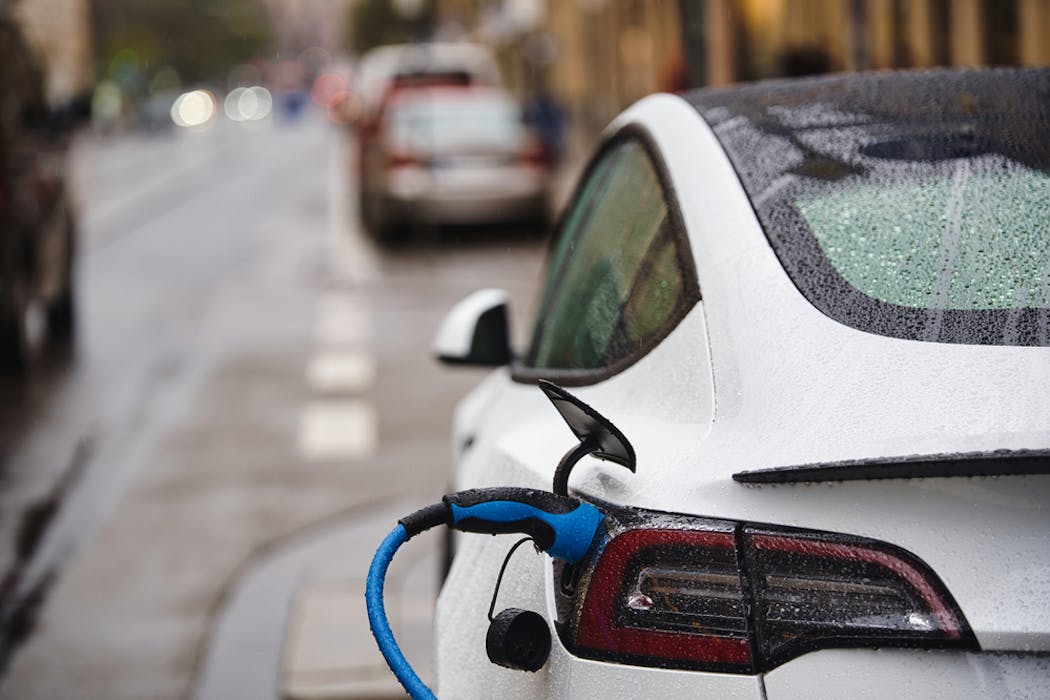


.jpg)

