Even a day off alcohol makes a difference – our timeline maps the health benefits when you stop drinking

Source: The Conversation – Global Perspectives – By Nicole Lee, Adjunct Professor at the National Drug Research Institute (Melbourne based), Curtin University

d3sign/Getty

Alcohol has many negative effects on our health, some of which may surprise you. These include short-term impacts such as waking up with a pounding head or anxiety, to long-term effects including cancer.

If you are thinking about taking some time off alcohol, you’ll find many quick wins and long-term gains for your health.

How long will you have to wait to feel the benefits?

We’ve made a timeline – based on scientific research – that shows what you might feel in the first days, weeks, months and years after taking a break from alcohol.

Some benefits start immediately, so every day without alcohol is a win for your health.

After one day

Alcohol takes around 24 hours to completely leave your body, so you may start noticing improvements after just one day.

Alcohol makes you need to urinate more often, causing dehydration. But your body can absorb a glass of water almost immediately, so once alcohol is out of your system alcohol dehydration is reduced, improving digestion, brain function and energy levels.

Alcohol also reduces the liver’s ability to regulate blood sugar. Once alcohol leaves the system, blood sugar begins to normalise.

If you are a daily drinker you may feel a bit worse to start with while your body adjusts to not having alcohol in its system all the time. You may initially notice disrupted sleep, mood changes, sweating or tremors. Most symptoms usually resolve in about a week without alcohol.

After one week

Even though alcohol can make you feel sleepy at first, it disrupts your sleep cycle. By the end of an alcohol-free week, you may notice you are more energetic in the mornings as a result of getting better quality sleep.

As the body’s filter, the liver does much of the heavy lifting in processing alcohol and can be easily damaged even with moderate drinking.

The liver is important for cleaning blood, processing nutrients and producing bile that helps with digestion.

But it can also regenerate quickly. If you have only mild damage in the liver, seven days may be enough to reduce liver fat and heal mild scarring and tissue damage.

Even small amounts of alcohol can impair brain functioning. So quitting can help improve brain health within a few days in light to moderate drinkers and within a month even for very heavy dependent drinkers.

Bodies of man and woman sitting on a couch with tv remote and glasses of wine.
Alcohol damages your liver, but it’s very good at regenerating and healing itself.
skynesher/Getty

After one month

Alcohol can make managing mood harder and worsen symptoms of anxiety and depression. After a few weeks, most people start to feel better. Even very heavy drinkers report better mood after one to two months.

As your sleep and mood improve you may also notice more energy and greater wellbeing.

After a month of abstinence regular drinkers also report feeling more confident about making changes to how they drink.

You may lose weight and body fat. Alcohol contains a lot of kilojules and can trigger hunger reward systems, making us overeat or choose less healthy foods when drinking.

Even your skin will thank you. Alcohol can make you look older through dehydration and inflammation, which can be reversed when you quit.

Alcohol irritates the gut and disrupts normal stomach functioning, causing bloating, indigestion, heartburn and diarrhoea. These symptoms usually start to resolve within four weeks.

One month of abstinence, insulin resistance – which can lead to high blood sugar – significantly reduces by 25%. Blood pressure also reduces (by 6%) and cancer-related growth factors declines, lowering your risk of cancer.

After six months

The liver starts to repair within weeks. For moderate drinkers, damage to your liver could be fully reversed by six months.

At this point, even heavy drinkers may notice they’re better at fighting infections and feel healthier overall.

Man looks out the window drinking a beer.
Just a month without alcohol can you make more confident about sticking to changes.
Yue_/Getty

After one year or more

Alcohol contributes to or causes a large number of chronic diseases, including heart disease, stroke, type 2 diabetes, and seven different types of cancer, as well as mental health issues. All of these risks can be reduced by quitting or cutting back on alcohol.

Alcohol increases blood pressure. High blood pressure (hypertension) is the top risk factor for death in the world. A small 2mmHg increase in blood pressure above the normal range (120mmHG) increases death from stroke by 10% and from coronary artery disease by 7%.

Cutting back on alcohol to less than two drinks a day can reduce blood pressure significantly, reducing risk of stroke and heart disease. Reducing blood pressure also reduces risk of kidney disease, eye problems and even erectile dysfunction.

With sustained abstinence, your risk of getting any type of cancer drops. One study looked at cancer risk for more than 4 million adults over three to seven years and found the risk of alcohol-related cancer dropped by 4%, even for light drinkers who quit. Reducing from heavy to moderate drinking reduced alcohol-related cancer risk by 9%.

Making a change

Any reduction in drinking will have some noticeable and immediate benefits to your brain and general health. The less you drink and the longer you go between drinks, the healthier you will be.

Whether you aim to cut back or quit entirely, there are some simple things you can do to help you stick with it:

If you are still wondering about whether to make changes or not you can check your drinking risk here.

If you have tried to cut back and found it difficult you may need professional help. Call the National Alcohol and other Drug Hotline on 1800 250 015 and they will put you in touch with services in your area that can help. You can also talk to your GP.

We would like to thank Dr Hannah MacRae for assistance in identifying the research used in this article.

The Conversation

Nicole Lee works as a paid evaluation and training consultant in alcohol and other drugs. She has previously been awarded grants by state and federal governments, NHMRC and other public funding bodies for alcohol and other drug research. She is CEO of Hello Sunday Morning.

Dr Katinka van de Ven is the Research Manager of Hello Sunday Morning. She also works as a paid evaluation and training consultant in alcohol and other drugs. Katinka has previously been awarded grants by state governments and public funding bodies for alcohol and other drug research.

ref. Even a day off alcohol makes a difference – our timeline maps the health benefits when you stop drinking – https://theconversation.com/even-a-day-off-alcohol-makes-a-difference-our-timeline-maps-the-health-benefits-when-you-stop-drinking-249272
Why Texas Hill Country, where a devastating flood killed more than 130 people, is one of the deadliest places in the US for flash flooding

Source: The Conversation – USA (2) – By Hatim Sharif, Professor of Civil and Environmental Engineering, The University of Texas at San Antonio

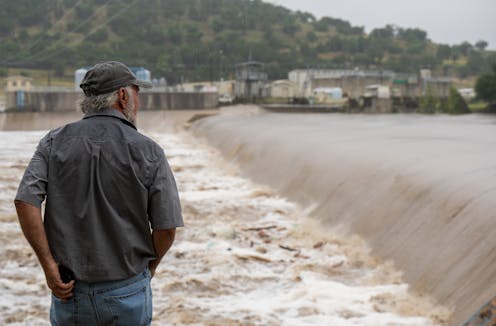
A Kerrville, Texas, resident watches the flooded Guadalupe River on July 4, 2025. Eric Vryn/Getty Images

Texas Hill Country is known for its landscapes, where shallow rivers wind among hills and through rugged valleys. That geography also makes it one of the deadliest places in the U.S. for flash flooding.

In the early hours of July 4, 2025, a flash flood swept through an area of Hill Country dotted with summer camps and small towns about 70 miles northwest of San Antonio. More than 130 people died in the flooding. The majority of them were in Kerr County, including more than two dozen girls and counselors at one summer camp, Camp Mystic. Dozens more people were still unaccounted for a week later.

The flooding began with a heavy downpour, with more than 10 inches of rain in some areas, that sent water sheeting off the hillsides and into creeks. The creeks poured into the Guadalupe River.

A river gauge at Hunt, Texas, near Camp Mystic, showed how quickly the river flooded: Around 3 a.m. on July 4, the Guadalupe River was rising about 1 foot every 5 minutes at the gauge, National Weather Service data shows. By 4:30 a.m., it had risen more than 20 feet. As the water moved downstream, it reached Kerrville, where the river rose even faster.

Flood expert Hatim Sharif, a hydrologist and civil engineer at the University of Texas at San Antonio, explains what makes this part of the country, known as Flash Flood Alley, so dangerous.

What makes Hill Country so prone to flooding?

Texas as a whole leads the nation in flood deaths, and by a wide margin. A colleague and I analyzed data from 1959 to 2019 and found 1,069 people had died in flooding in Texas over those six decades. The next highest total was in Louisiana, with 693.

Many of those flood deaths have been in Hill County. It’s part of an area known as Flash Flood Alley, a crescent of land that curves from near Dallas down to San Antonio and then westward.

The hills are steep, and the water moves quickly when it floods. This is a semi-arid area with soils that don’t soak up much water, so the water sheets off quickly and the shallow creeks can rise fast.

When those creeks converge on a river, they can create a surge of water that wipes out homes and washes away cars and, unfortunately, anyone in its path.

Hill Country has seen some devastating flash floods. In 1987, heavy rain in western Kerr County quickly flooded the Guadalupe River, triggering a flash flood similar to the one in 2025. Ten teenagers being evacuated from a camp died in the rushing water.

San Antonio, at the eastern edge of Hill Country, was hit with a flash flood on June 12, 2025, that killed 13 people whose cars were swept away by high water from a fast-flooding creek near an interstate ramp in the early morning.

Why does the region get such strong downpours?

One reason Hill Country gets powerful downpours is the Balcones Escarpment.

The escarpment is a line of cliffs and steep hills created by a geologic fault. When warm air from the Gulf rushes up the escarpment, it condenses and can dump a lot of moisture. That water flows down the hills quickly, from many different directions, filling streams and rivers below.

As temperature rise, the warmer atmosphere can hold more moisture, increasing the downpour and flood risk.

A tour of the Guadalupe River and its flood risk.

The same effect can contribute to flash flooding in San Antonio, where the large amount of paved land and lack of updated drainage to control runoff adds to the risk.

What can be done to improve flash flood safety?

First, it’s important for people to understand why flash flooding happens and just how fast the water can rise and flow. In many arid areas, dry or shallow creeks can quickly fill up with fast-moving water and become deadly. So people should be aware of the risks and pay attention to the weather.

Improving flood forecasting, with more detailed models of the physics and water velocity at different locations, can also help.

Probabilistic forecasting, for example, can provide a range of rainfall scenarios, enabling authorities to prepare for worst-case scenarios. A scientific framework linking rainfall forecasts to the local impacts, such as streamflow, flood depth and water velocity, could also help decision-makers implement timely evacuations or road closures.

Education is particularly essential for drivers. One to two feet of moving water can wash away a car. People may think their trucks and SUVs can go through anything, but fast-moving water can flip a truck and carry it away.

Officials can also do more to barricade roads when the flood risk is high to prevent people from driving into harm’s way. We found that 58% of the flood deaths in Texas over the past six decades involved vehicles. The storm on June 12 in San Antonio was an example. It was early morning, and drivers had poor visibility. The cars were hit by fast-rising floodwater from an adjacent creek.

This article, originally published July 5, 2025, has been updated with the death toll rising.

The Conversation

Hatim Sharif does not work for, consult, own shares in or receive funding from any company or organization that would benefit from this article, and has disclosed no relevant affiliations beyond their academic appointment.

ref. Why Texas Hill Country, where a devastating flood killed more than 130 people, is one of the deadliest places in the US for flash flooding – https://theconversation.com/why-texas-hill-country-where-a-devastating-flood-killed-more-than-130-people-is-one-of-the-deadliest-places-in-the-us-for-flash-flooding-260555

When disasters fall out of the public eye, survivors continue to suffer – a rehabilitation professional explains how sustained mental health support is critical to recovery

Source: The Conversation – USA (3) – By Lee Ann Rawlins Williams, Clinical Assistant Professor of Education, Health and Behavior Studies, University of North Dakota

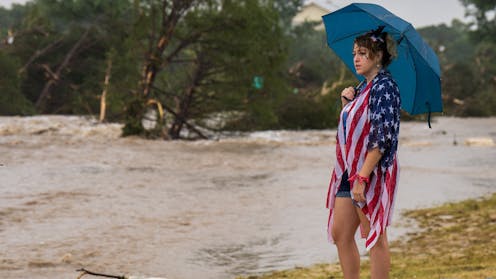
In Kerrville, Texas, Leighton Sterling watches the rushing floodwaters along the Guadalupe River on July 4, 2025. Eric Vryn via Getty Images News

The devastating losses from the historic flooding in Texas Hill Country on July 4, 2025, are still coming into grim focus, with 121 deaths confirmed and more than 100 still missing as of July 10.

As emergency responders focus on clearing debris and searching for victims, a less visible and slower disaster has been unfolding: the need for ongoing mental health support long after headlines fade.

This phase is no less critical than restoring power or rebuilding bridges. Disasters destabilize emotional well-being, leaving distress, prolonged recovery and long-term impacts in their wake long after the event is over.

Without sustained emotional support, people and communities face heightened risks of prolonged trauma and stalled recovery.

As an educator and practitioner focused on disability and rehabilitation, I explore the intersection of disaster recovery and the impact of disasters on mental health. Both my research and that of others underscore the vital importance of support systems that not only help people cope in the immediate aftermath of a disaster but also facilitate long-term healing over the months and years that follow – especially for vulnerable populations like children, older adults and people with disabilities.

The emotional toll of disasters

Natural disasters disrupt routines, displace families and challenge people’s sense of control and security. In the immediate aftermath, survivors often experience shock, grief, anxiety and sleep disturbances. Often these symptoms may evolve into chronic stress, depression, post-traumatic stress disorder or a combination of these conditions.

A 2022 study found that Texans who experienced two or more disasters within a five-year span had significantly poorer mental health, as reflected by lower scores on standardized psychological assessments, which highlights the cumulative toll repeated disasters can have on mental well-being.

After Hurricane Katrina ravaged New Orleans in 2005, nearly a third of survivors continued to experience poor mental health years later.

And reports following Hurricane Maria in Puerto Rico in 2017 revealed surging rates of anxiety, depression and suicidal thoughts, especially in areas where services remained unavailable for extended periods of time.

There are actionable ways to make a difference in the recovery process.

Strained recovery systems

Disaster response understandably focuses on immediate needs like rescue operations, providing post-disaster housing and repairing damaged infrastructure. In addition, short-term mental health supports such as mobile health clinics are often provided in the immediate aftermath of a disaster.

However, although emergency services are deployed quickly after a disaster, long-term mental health support is often delayed or under-resourced, leaving many people without continued care during the recovery period, especially in remote or rural communities, exposing deep structural gaps in how recovery systems are designed.

One year after Hurricane Harvey devastated parts of Texas in 2017, more than 90% of Gulf Coast residents reported ongoing stress related to housing instability, financial hardship or displacement. Yet less than 10% of people stated that they or someone in their household had used mental health services following the disaster.

Hurricane Helene in 2024 similarly tested the resilience of rural mental health networks in western North Carolina. The storm damaged roads and bridges, schools and even local clinics.

This prompted a news organization, North Carolina Health News, to warn of rising “trauma, stress and isolation” among residents as providers scrambled to offer free counseling despite legal barriers stemming from licensing requirements to provide counseling across state borders. State health officials activated community crisis centers and helplines, while mobile mental health teams were dispatched from Tennessee to help those impacted by the disaster. However, state representatives stressed that without long-term investment, these critical supports risk being one-off responses.

These events serve as a powerful reminder that while roads and buildings can often be restored quickly, emotional recovery is a slower, more complex process. Truly rebuilding requires treating mental health with the same urgency as physical infrastructure. This requires investing in strong mental health recovery systems, supporting local clinics, sustaining provider networks and integrating emotional care into recovery plans from the start.

Surrounded by community members and volunteers, an emotionally distraught woman speaks to the governor of Texas.
In Hunt, Texas, Gov. Greg Abbott speaks to volunteers and community members during a news conference on July 8, 2025.
Brandon Bell via Getty Images News

Finding mental health support following a disaster

Lessons learned from previous disasters and an abundance of research show how sustained mental health supports can help people recover and build resilience.

These six lessons are particularly helpful for finding needed mental health support following a disaster:

  • If you’re feeling overwhelmed after a disaster, you’re not alone, and help is available. Free and confidential support is offered through resources like the Disaster Distress Helpline (1-800-985-5990 or text TalkWithUs to 66746), which connects you to trained counselors 24/7.

  • Many communities offer local mental health crisis lines or walk-in centers that remain active well after the disaster passes. Check your county or state health department’s website for updated listings and information.

  • Even if physical offices are closed, many clinics now offer virtual counseling or can connect you with therapists and medication refills remotely. If you’ve seen someone before, ask if they’re still available by phone or video.

  • After major disasters, states often deploy mobile health clinics that include mental health services to shelters, churches or schools. These temporary services are free and open to the public.

  • If someone you care about is struggling, help them connect with resources in the community. Share hotline numbers, offer to help make an appointment or just let them know it’s OK to ask for support. Many people don’t realize that help is available, or they think it’s only for more “serious” problems. It’s not.

  • Mental health support doesn’t always arrive right away. Keep an eye on local news, school updates or health department alerts for new services that may become available in the weeks or months after a disaster.

Disasters don’t just damage buildings; they disrupt lives in lasting ways.

While emotional recovery takes time, support is available. Staying informed and sharing resources with others can help ensure that the road to recovery isn’t traveled alone.

The Conversation

Lee Ann Rawlins Williams does not work for, consult, own shares in or receive funding from any company or organization that would benefit from this article, and has disclosed no relevant affiliations beyond their academic appointment.

ref. When disasters fall out of the public eye, survivors continue to suffer – a rehabilitation professional explains how sustained mental health support is critical to recovery – https://theconversation.com/when-disasters-fall-out-of-the-public-eye-survivors-continue-to-suffer-a-rehabilitation-professional-explains-how-sustained-mental-health-support-is-critical-to-recovery-260781

Disasters don’t disappear when the storm ends – cascading hazards, from landslides to floods, are upending risk models

Source: The Conversation – USA (2) – By Brian J. Yanites, Associate Professor of Earth and Atmospheric Science. Robert Shrock Professor of Surficial and Sedimentary Geology, Indiana University

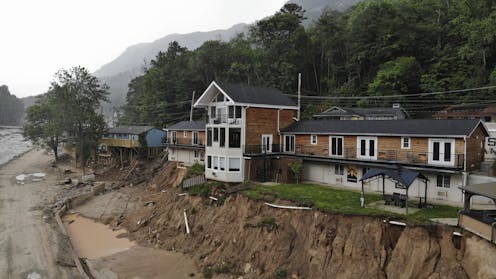
The Carter Lodge hangs precariously over the flood-scoured bank of the Broad River in Chimney Rock Village, N.C., on May 13, 2025, eight months after Hurricane Helene. AP Photo/Allen G. Breed

Hurricane Helene lasted only a few days in September 2024, but it altered the landscape of the Southeastern U.S. in profound ways that will affect the hazards local residents face far into the future.

Mudslides buried roads and reshaped river channels. Uprooted trees left soil on hillslopes exposed to the elements. Sediment that washed into rivers changed how water flows through the landscape, leaving some areas more prone to flooding and erosion.

Helene was a powerful reminder that natural hazards don’t disappear when the skies clear – they evolve.

These transformations are part of what scientists call cascading hazards. They occur when one natural event alters the landscape in ways that lead to future hazards. A landslide triggered by a storm might clog a river, leading to downstream flooding months or years later. A wildfire can alter the soil and vegetation, setting the stage for debris flows with the next rainstorm.

Two satellite maps of the same location. One shows changes to the river, loss of trees and landslides.
Satellite images before (top) and after Hurricane Helene (bottom) show how the storm altered landscape near Pensacola, N.C., in the Blue Ridge Mountains.
Google Earth, CC BY

I study these disasters as a geomorphologist. In a new paper in the journal Science, I and a team of scientists from 18 universities and the U.S. Geological Survey explain why hazard models – used to help communities prepare for disasters – can’t just rely on the past. Instead, they need to be nimble enough to forecast how hazards evolve in real time.

The science behind cascading hazards

Cascading hazards aren’t random. They emerge from physical processes that operate continuously across the landscape – sediment movement, weathering, erosion. Together, the atmosphere, biosphere and the earth are constantly reshaping the conditions that cause natural disasters.

For instance, earthquakes fracture rock and shake loose soil. Even if landslides don’t occur during the quake itself, the ground may be weakened, leaving it primed for failure during later rainstorms.

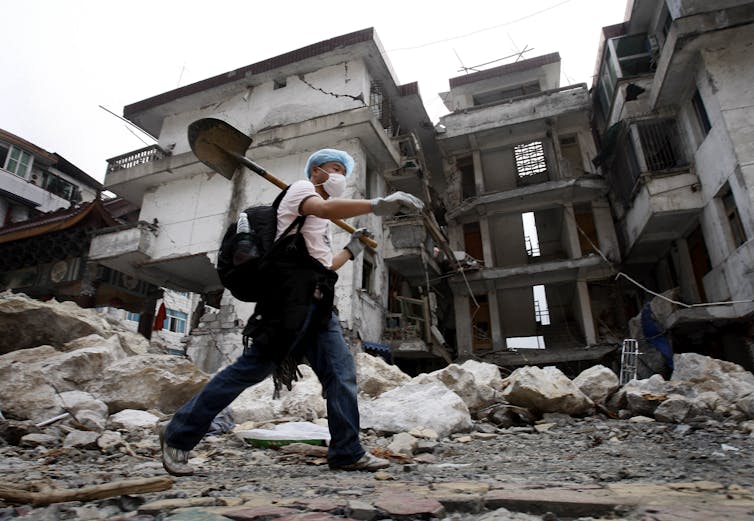
That’s exactly what happened after the 2008 earthquake in Sichuan Province, China, which led to a surge in debris flows long after the initial seismic event.

A volunteer carrying a shovel over his shoulder walks past boulders and a severely damaged building.
A strong aftershock after a 7.8 magnitude earthquake in Sichuan province, China, in May 2008 triggered more landslides in central China.
AP Photo/Andy Wong

Earth’s surface retains a “memory” of these events. Sediment disturbed in an earthquake, wildfire or severe storm will move downslope over years or even decades, reshaping the landscape as it goes.

The 1950 Assam earthquake in India is a striking example: It triggered thousands of landslides. The sediment from these landslides gradually moved through the river system, eventually causing flooding and changing river channels in Bangladesh some 20 years later.

An intensifying threat in a changing world

These risks present challenges for everything from emergency planning to home insurance. After repeated wildfire-mudslide combinations in California, some insurers pulled out of the state entirely, citing mounting risks and rising costs among the reasons.

Cascading hazards are not new, but their impact is intensifying.

Climate change is increasing the frequency and severity of wildfires, storms and extreme rainfall. At the same time, urban development continues to expand into steep, hazard-prone terrain, exposing more people and infrastructure to evolving risks.

The rising risk of interconnected climate disasters like these is overwhelming systems built for isolated events.

Yet climate change is only part of the equation. Earth processes – such as earthquakes and volcanic eruptions – also trigger cascading hazards, often with long-lasting effects.

Mount St. Helens is a powerful example: More than four decades after its eruption in 1980, the U.S. Army Corps of Engineers continues to manage ash and sediment from the eruption to keep it from filling river channels in ways that could increase the flood risk in downstream communities.

Rethinking risk and building resilience

Traditionally, insurance companies and disaster managers have estimated hazard risk by looking at past events.

But when the landscape has changed, the past may no longer be a reliable guide to the future. To address this, computer models based on the physics of how these events work are needed to help forecast hazard evolution in real time, much like weather models update with new atmospheric data.

An aerial view of a river with evidence of a landslide. Broken trees look like toothpicks scattered about, and the river flow is partially blocked.
A March 2024 landslide in the Oregon Coast Range wiped out trees in its path.
Brian Yanites, June 2025
An aerial view of a river with evidence of a landslide. Broken trees look like toothpicks scattered about, and the river flow is partially blocked.
A drone image of the same March 2024 landslide in the Oregon Coast Range shows where it temporarily dammed the river below.
Brian Yanites, June 2025

Thanks to advances in Earth observation technology, such as satellite imagery, drone and lidar, which is similar to radar but uses light, scientists can now track how hillslopes, rivers and vegetation change after disasters. These observations can feed into geomorphic models that simulate how loosened sediment moves and where hazards are likely to emerge next.

Researchers are already coupling weather forecasts with post-wildfire debris flow models. Other models simulate how sediment pulses travel through river networks.

Cascading hazards reveal that Earth’s surface is not a passive backdrop, but an active, evolving system. Each event reshapes the stage for the next.

Understanding these connections is critical for building resilience so communities can withstand future storms, earthquakes and the problems created by debris flows. Better forecasts can inform building codes, guide infrastructure design and improve how risk is priced and managed. They can help communities anticipate long-term threats and adapt before the next disaster strikes.

Most importantly, they challenge everyone to think beyond the immediate aftermath of a disaster – and to recognize the slow, quiet transformations that build toward the next.

The Conversation

Brian J. Yanites receives funding from the National Science Foundation.

ref. Disasters don’t disappear when the storm ends – cascading hazards, from landslides to floods, are upending risk models – https://theconversation.com/disasters-dont-disappear-when-the-storm-ends-cascading-hazards-from-landslides-to-floods-are-upending-risk-models-259502

Lemurs can help save Madagascan forests, but first we need to protect them

Source: The Conversation – Canada – By Colombe Nirina Sehenomalala, PhD candidate, Anthropology, Université de Montréal

Most people’s encounters with lemurs have occurred through their representations in popular children’s media, like Zoboomafoo or Madagascar. However, most people don’t know that lemurs play an important role in forest renewal and that they’re currently in grave danger from climate change.

In my home country of Madagascar, there is an amazing array of creatures that are not found anywhere else in the world. Madagascar is a biodiversity hotspot, and approximately 90 per cent of plant and animal species on this island are endemic.

Among them are lemurs, a group of primates that are not only the flagship symbols of the island’s fauna, but also one of the key players in the health and stability of Madagascar’s ecosystems because they do the very important work of dispersing seeds.

I am a primatologist who researches the interactions between infant-and-mother lemur dyads in wild. Their bond is a reminder of what we stand to lose, as it shows care, learning and viability. When forests disappear, so does this fragile bond, and a whole way of life we can never replace.

Lemurs’ habitats and survival are increasingly being threatened by human activities such as deforestation, forest resource exploitation and hunting. There is an urgent need for conservation projects that involve local communities in preserving Madagascar’s unique biodiversity.

a bent over branch in a rainforest
A lemur trap encountered in the field during our research.
(C.N. Sehenomalala), CC BY

Charismatic animals

Due to their charisma, media attention and their biological significance, lemurs attract tourists and researchers to Madagascar. The viability of lemurs is essential to the island’s future, both economically but especially in terms of protecting biodiversity. As they eat fruits from trees like ebony, mammea and wild coffee and then scatter seeds through their droppings, they help new plants grow.

Among the 105 lemur species of Madagascar, Propithecus candidus, commonly known as the silky sifaka, is one of the most endangered species. Only around 250 of them are currently living in the wild.

As their name implies, silky sifakas have visually striking long white hair, and they can only be found in the misty, mountainous rainforests of northeastern Madagascar.

Silky sifakas are primarily active during the daytime, and can travel very quickly through the trees by vertically clinging to them and leaping from tree to tree using their powerful legs. They have highly specialized diets consisting of leaves, flowers and fruits like Diospyros pervilleana, a native ebony species from Madagascar.

A BBC Nature documentary clip on silky sifakas.

Observing mothers and infants

I have spent 10 years studying and following lemurs daily. During my fieldwork in northeastern Madagascar, I closely observed how deforestation and habitat fragmentation affect silky sifaka females and their young.

I studied these females during their lactation season in three different forest contexts: Marojejy National Park (a mostly untouched primary rainforest), Makira Natural Park (a mix of old-growth and re-generating forest) and Anjanaharibe-Sud Special Reserve (known as COMATSA-Sud, a primary forest with heavily degraded areas).

At each forest, the forest canopy, which provides both shelter and food for the lemurs, measured above 10 metres at all sites, but was semi-open, which is a sign of habitat degradation. A semi-open canopy allows more light to permeate the forest canopy, but it also exposes animals to predators and decreases the quantity of high-quality food.

Mothers’ movements and behaviours

One clear difference between the three sites is how mother–infant pairs move and use space. In Marojejy, where the forest is more continuous even if the canopy is partly open, mothers and babies stay within fairly fixed areas, following the same paths and resting spots.

But in places like Makira and COMATSA-Sud, where the forest is broken up into separate patches, mothers have to travel farther and more unpredictably, moving between these isolated patches. This extra travelling causes them to burn more energy and face higher risks from predators and hunters.

These differences show that fragmentation doesn’t just affect food availability, but also changes how these lemurs move and survive.

Forest fragmentation affects lemurs’ social behaviour and grouping patterns to deal with low food availability. It also impacts their health and development; a poor diet causes malnourishment in the lemurs.

a white lemur feeds another one
Lemurs are social animals, but scarce resources can cause competitive behaviours to emerge.
(Simponafotsy/Wikimedia Commons), CC BY

Poor nutritional quality

While the food availability for silky sifakas in northeastern Madagascar during the lactation season is relatively abundant, it is of low nutritional quality.

This leads to increased stress and competition as dominant lactating females, desperate to feed their infants, attack subordinates to accumulate more nutrients to produce higher quality milk.

As offspring start to feed on non-milk foods, the poor nutritional quality of available plants after weaning can lead to poor health and stunted growth.

Engaging the community

The decline of lemur populations, particularly silky sifakas, shows the need for urgent conservation action. Continued monitoring — as well as sustained support and funding for Malagasy scientists — is crucial for long-term lemur and biodiversity conservation.

When it comes to the effects of human activity, this decline — habitat fragmentation, global climate change and deforestation — is the result of large-scale activites such as extraction, tourism and state infrastructural development.

Education and awareness campaigns are crucial, both in Madagascar and internationally, to inform people about lemurs’ habitat needs and what can be done to prevent their extinction.

Conservation will never be successful without building an appreciation of the environmental, cultural and economic value of lemurs and the forests they inhabit.

The Conversation

The authors do not work for, consult, own shares in or receive funding from any company or organisation that would benefit from this article, and have disclosed no relevant affiliations beyond their academic appointment.

ref. Lemurs can help save Madagascan forests, but first we need to protect them – https://theconversation.com/lemurs-can-help-save-madagascan-forests-but-first-we-need-to-protect-them-256300

Canada’s proposed east-west energy corridors should prioritize clean energy

Source: The Conversation – Canada – By Andy Hira, Professor of Political Science, Simon Fraser University

Canadian Prime Minister Mark Carney has made establishing east-west energy corridors a priority for Canada. He suggested that such corridors would include new oil and natural gas pipelines, designed to reduce dependence on the United States.

Energy and Natural Resources Minister Tim Hodgson has gone even further in pushing for subsidization of carbon capture and storage projects that would effectively underwrite the long-term continuation of the fossil fuel industry at taxpayer expense.

While there might be short-term political reasons for backing fossil fuels, such an approach goes against Canada’s long-term interests. Prioritizing fossil fuels undermines the country’s commitments to reduce emissions and takes away the investment needed for it to realize its potential to become a green energy superpower.

Creating energy corridors is in the national interest, and would allow Canada to take full advantage of its abundant and diverse energy and mineral resources. The government also needs to be involved, as the corridors are interprovincial and will require substantial investment. However, the government has limited resources and so Canada must think strategically about its priorities for such corridors.

Canadian taxpayers should not be subsidizing an already lucrative oil and gas industry. Instead, the federal government should prioritize funding clean energy supply solutions.

Oil and gas subsidies

Canadian governments have long faced opposition to building new pipelines. The provinces of Québec and British Columbia and many First Nations have strongly opposed new pipeline proposals. More recently, there is some signs of softening under the duress of U.S. tariffs.

Even if such shifts are lasting, it’s for the private sector to step up and invest into these projects. Previous federal investments, such as the Trans Mountain pipeline (TMX), were reflections of the private market’s unwillingness to invest in pipelines because they are bad investments. The 2024 Parliamentary Budget Office report estimated that selling the TMX would result in a loss.

There are reasons to question the soundness of fossil fuels on a purely financial basis. A 2022 Parliamentary budget office report found that climate change reduced GDP by 0.8 per cent in 2021, or around $20 billion. This number is expected to rise to 5.8 per cent per year by 2100 (or $145 billion in 2021 dollars).

By contrast, from 2017 to 2021, federal, provincial and territorial governments received an average of $12 billion annually in revenues from the the oil and gas industry.

The gap between the costs and benefits is only going to increase over time. The costs cut across all aspects of life, including food security, health care, global instability and threats to coastal cities due to sea level rise.

On the other hand, every dollar invested in adaptation today has an estimated return of $13-$15.

Furthermore, a recent study indicates a likely glut in global natural gas markets, and the future prospects for oil are equally questionable. For example, one of Canada’s target markets, Japan, has been reselling its liquefied natural gas imports to other countries, suggesting the glut of oil and gas is likely to continue as cheaper producers, including those in the Middle East and Southeast Asia, who are cheaper and closer to consumers, flood the market.

Cheaper and closer oil producers are also flooding markets in anticipation of declining prices.

There are important opportunity costs of investing money in fossil fuels that could otherwise be invested in the clean energy economy. When new technologies arise, there is a limited window of opportunity for global competitors to enter into an emerging industry.

In light of the shift to electric vehicles, heat pumps and artificial intelligence, it’s clear that energy demand is bound to increase significantly in Canada in the coming years. Canada can become a global competitor, but only if it enters the race now, while the window is open.

An East-West clean energy system

Solar and wind prices have declined by 83 per cent and 65 per cent respectively since 2009. However, they suffer from the fundamental issue of intermittency; the sun is not always shining and the wind isn’t always blowing.

While battery prices are declining, they remain an expensive solution. An easier solution is at hand: Canada’s hydroelectric resources. Québec, B.C. and Manitoba have abundant hydro resources that can reduce energy costs throughout the rest of the country.

Alberta and Saskatchewan have potential for significant geothermal power generation. Ontario and the Atlantic provinces could contribute wind and solar. Trading electricity through an integrated national grid increases the investment capital and reduces the need for batteries while diversifying the energy mix.

But we need an east-west electricity market to make this happen.

An east-west grid would reduce the need for every province to run its own power generation system. Creating a pooled market would allow provinces to trade electricity, giving consumers more choice and investors a larger market and potential return on their investment.

More valuable still is the fact that electricity capacity has to be built for the few peak hours and seasons. But most of the time demand is well below full capacity, such as the middle of the night or early summer, when neither heat nor air conditioning is needed in many areas. As peak times and seasons vary across the country, Canada can reduce overall costs by trading the electricity in the lowest cost producing province at a given time to where it’s needed in the other.

By locating some of the new clean energy in First Nations, Canada can also move reconciliation forward. There is potential for a win-win situation whereby Canada increases renewable energy generation while creating new jobs and income for First Nations wherever feasible.

The first step is for regulatory reform across the provinces to support a Canada-wide electricity market, and to provide the funding for the massive infrastructure investment required to connect provincial grids. This would be a federal investment with incredible long-term payoffs for employment, taxpayers and future generations.

Following this plan could truly make Canada an energy superpower on the right side of the energy transition, create thousands of jobs and give the country a global competitive edge — all while helping to save the planet in the process.

This article was co-authored by energy consultant Sheldon Fernandes.

The Conversation

The authors do not work for, consult, own shares in or receive funding from any company or organisation that would benefit from this article, and have disclosed no relevant affiliations beyond their academic appointment.

ref. Canada’s proposed east-west energy corridors should prioritize clean energy – https://theconversation.com/canadas-proposed-east-west-energy-corridors-should-prioritize-clean-energy-259530

Want more orgasms? Choose a woman partner

Source: The Conversation – Canada – By Caroline Pukall, Professor, Department of Psychology, Queen’s University, Ontario

Being partnered with a woman is associated with an orgasm advantage. (Pexels/Cottonbro)

The orgasm gap — the consistent finding that men who have sex with women have more frequent orgasms than women who have sex with men — has been shown in study after study of cisgender, heterosexual participants.

The gap is a big one: Based on a recent Canadian study, approximately 60 per cent of women and 90 per cent of men reported reaching orgasm in their most recent sexual encounter.

In sexually diverse samples (samples that also include women who have sex with women and men who have sex with men), the pattern becomes more nuanced but still supports a gendered orgasm gap.

Two women, one with her arms around the other and kissing her forehead
Research has shown that women who have sex with women have a more equal frequency of orgasms within their partnership.
(Pexels/Ketut Subiyanto)

Research has shown that the gap in orgasm frequency is reduced (in other words, there is more equal orgasm frequency) in women who have sex with women (about 75 per cent), and this rate is significantly higher than in women who have sex with men (about 62 per cent). However, men as a group — regardless of who they were having sex with — still had significantly higher orgasm frequency (85 per cent) than women overall (63 per cent). Women are orgasm-disadvantaged overall and especially when they have sex with men.

Mind the gap

How far-reaching is the orgasm gap and what factors might be standing in the way of orgasms for all? We — a team of researchers and science journalists from the podcast Science Vsexamined orgasm frequency in a large diverse sample that included sexual (such as lesbian) and gender (such as trans) minorities and majorities, as well as racialized participants (there were no significant results with analyses focused on sexual orientation or race).

The good news? We found that many people overall were having lots of orgasms — about two-thirds reported having orgasms almost or every time they engaged sexually.

The not-so-great news? The orgasm gap persisted: cis men overall reported the highest orgasm frequency compared to women and gender minorities (who did not differ significantly from each other). In addition, we found that participants of all genders who engaged sexually with women reported significantly more frequent orgasms than those who engaged sexually with men. So being partnered with a woman is associated with an orgasm advantage.

More not-so-great news was that about 17 per cent of participants reported almost never or never having orgasms during sex and that there were many factors preventing orgasms in participants. For cis women, psychological barriers — such as insecurities, mental health struggles and distractions — were prominent, as were sexual obstacles (like not receiving adequate stimulation), difficulties inherent in having orgasms (for example, they take too long and require too much effort) and not knowing why orgasms are difficult for them to have.

Closing the gap

So why does the orgasm gap exist and persist? One main reason is that broad sociocultural norms prioritize men’s sexual pleasure over women’s. Indeed, these norms develop from the traditional (heterosexual, western) sexual script that defines the end of sexual activity as male orgasm; importantly, women’s adherence to this script has been associated with lower sexual satisfaction.

A woman in a yellow dress and a man in a dark shirt and khaki shorts sitting on a bed
Women’s own degree of familiarity with their partner has also been shown to be critical in narrowing the gap.
(Unsplash/Jonathan Borba)

Another is that mainstream media feeds into narratives of sexual expectations based on gender, such that portrayals of women who do not have orgasms are much more — even readily — acceptable than portrayals of orgasmless men. This inequality is played out in sexual encounters, perpetuating the gap and contributing to complacency in addressing it.

But there is hope: Heterosexual men’s motivation to bring their partner to orgasm and their intentional incorporation of sexual activities that increase the chance of orgasm for their partner — such as clitoral stimulation and oral sex — can help narrow (and even eradicate!) the gap. Women’s own degree of familiarity with their partner has also been shown to be help narrow the gap. Higher familiarity (think of a long-term situationship as opposed to a casual hookup) was associated with higher orgasm frequency.

The simple act of prioritizing women’s orgasm — captured with an easy-to-remember phrase of “she comes first” — may be all that is needed to substantially narrow the orgasm gap.

The Conversation

Caroline Pukall receives funding from the Canadian Institutes of Health Research, the International Society for the Study of Women’s Sexual Health, and Queen’s University.

ref. Want more orgasms? Choose a woman partner – https://theconversation.com/want-more-orgasms-choose-a-woman-partner-259655

Not just a few bad apples: The Canadian Armed Forces has a nagging far-right problem

Source: The Conversation – Canada – By Stéphane Leman-Langlois, Professor, School of Social Work and Criminology, Université Laval

The Canadian Armed Forces (CAF) is making headlines. But not, as they probably hoped, for the renewed recruiting efforts they’re about to launch. Instead, they are once again confounded by a far-right scandal.

The latest episode is the arrest of four CAF members and ex-members. Three of them have been charged with taking concrete steps to facilitate terrorist activity and possessing prohibited firearms. A fourth man was charged with possession and storage of prohibited firearms and devices.

The crew had allegedly been under surveillance by the federal government’s Integrated National Security Enforcement Team since 2021, most likely when equipment, weapons and ammunition began to go missing from military installations. The weapons were finally seized in January 2024, some in the personal vehicle of one of the suspects, but the group remained free for another 18 months.


Read more:
Charges against Canadian Army members in anti-government terror plot raise alarms about right-wing extremism


As is usual with these types of efforts, a certain degree of amateurism was present at multiple stages of the alleged scheme, which may have developed on the fly. The idea that a micro-militia might successfully seize and hold territory in Canada is far-fetched at best.

Recruitment efforts for the suspected mission, complete with propaganda and self-aggrandizing pictures of military training, took place on, you guessed it: Instagram. (We won’t publish the name of the account.)

It might be pointed out that any large organization like the CAF inevitably represents a microcosm of society, meaning that it can’t be expected to be free of various forms of undesirable behaviour, including political extremism. But this “rotten apple” theory of far-right extremism in the CAF falls somewhat short of explaining the situation.

Not just a ‘few rotten apples’

First, the rotten apples seem too numerous. Just days before the recent arrests, the CAF announced on July 3 it was investigating the participation of other soldiers in a private Facebook page named the “Blue Hackle Mafia.” The page disseminated openly racist, homophobic, misogynist and antisemitic content.

These events point to a phenomenon difficult to measure within western countries, even though it’s very real. The penetration of ideas associated with the far right within the military and law enforcement agencies is currently happening. Whether more or less structured, the emergence of underground small groups are more or less ready to “take action.”

Second, previous reports have identified a general laissez-faire approach within the CAF regarding far-right activities. In a 2022 independent report commissioned by the CAF, the presence of white supremacist and other far-right ideologies was identified not only as a growing problem for the Army, but also one that was not being addressed.

Similar conclusions were reached in the 1997 report on the behaviour of Canadian soldiers in Somalia, which had explicitly recommended that “the Canadian Forces establish regular liaison with anti-racist groups to obtain assistance in the conduct of appropriate cultural sensitivity training and to assist supervisors and commanders in identifying signs of racism and involvement with hate groups.” In other words, neither the concern nor the awareness is news.

Affinity between far right and military

At the root of the problem is a peculiar affinity between most forms of far-right ideologies and military or paramilitary/policing organizations.

It’s absurd to simply paint such organizations as inherently far right in their nature, of course. But strict authority structures and notions of defence, fellowship, honour — as well as the projection of power through physical strength and training and the accompanying symbolism of weapons, fatigues, uniforms and campaign-like deployments — are all very appealing to far-right extremists.

This nexus has been amply documented and leads to multiple practical implications: extremist groups trying to recruit active or retired soldiers; soldiers joining existing groups or setting up their own; veterans joining existing groups or creating their own, like the founders of Québec’s La Meute; professionally trained lone wolves, like Correy Hurren, who attempted to “arrest” Prime minister Justin Trudeau at Rideau Hall in 2020)

Members of extremist groups also routinely try to join the military to benefit from training, which elevates their standing within the group.

Military, former and active, and law enforcement members are to be found in multiple “militia” groups like the Three Percenters, the Proud Boys, the Oath Keepers, Diagolon and the Boogaloo movement, for instance. Some are overtly anti-government and/or anti-system, like the Veterans 4 Freedom or The Base.

Far-right demons

It may sound strange to think of military personnel or veterans getting involved or creating an anti-government movement when they’ve served under the flag sometimes for decades. The apparent paradox quickly disappears once we understand the manifold individual motivations that underpin their actions.

They range from the feeling of having served a timourous government that failed to make proper use of the Armed Forces at its disposal. The absence of deployments to theatres of conflict also generates frustration among some in search of military adventure.

A lot of young men are quickly bored with exercises that never satisfy their expeditionary spirit. The role of camaraderie, of group dynamics based on mutual aid, honour and the presence of danger, as well as mental health issues, must not be overlooked. Not to mention the idea, strong in some units, of defending a singular idea of a “fatherland” endangered by government contempt and inaction.

What is striking in the light of the recent charges in Québec is not so much the racist and anti-semitic ideological ideas allegedly held by the accused group members. It’s the primacy given to a patriarchal ideology that explicitly targets women and gender. Fascination with Russia and the war in Ukraine waged by Vladimir Putin is also palpable.

In short, the CAF is still wrestling with far-right demons, though in a new context of social media acceleration and global loss of confidence in democratic institutions. The situation has a high potential to undermine confidence in Canada’s Armed Forces at a time when geopolitical tensions are calling for a strengthening of its military arsenal, and first and foremost, our military human capital.

The Conversation

Stéphane Leman-Langlois receives funding from the Social Sciences and Humanities Research Council of Canada.

Samuel Tanner receives funding from Social Sciences and Humanities Research Council of Canada.

Aurélie Campana does not work for, consult, own shares in or receive funding from any company or organisation that would benefit from this article, and has disclosed no relevant affiliations beyond their academic appointment.

ref. Not just a few bad apples: The Canadian Armed Forces has a nagging far-right problem – https://theconversation.com/not-just-a-few-bad-apples-the-canadian-armed-forces-has-a-nagging-far-right-problem-260896

Guineafowl can outsmart extreme temperatures: we spent a year finding out how

Source: The Conversation – Africa (2) – By Johann van Niekerk, Doctor, Department of Environmental Sciences, University of South Africa

Have you ever wondered how wild birds cope with baking hot afternoons and freezing cold mornings? Our new study has taken a close look at one of Africa’s most familiar birds – the helmeted guineafowl – and uncovered surprising answers about how they deal with extreme temperatures.

The helmeted guineafowl (Numida meleagris) is a common sight across sub-Saharan Africa’s savannas and semi-arid regions. They are instantly recognisable with their spotted plumage, bony helmet, bare blue head, and loud cackling calls. These birds are famously social, often seen roaming in noisy flocks.

Helmeted guineafowl can endure air temperatures from -4°C up to 40°C in South Africa.

The idea that animals huddle to stay warm – known as social thermoregulation – is well documented in mammals and birds like penguins. This theory proposes that animals huddle together to conserve heat in cold conditions, but is this what guineafowl are doing?

Together with colleagues in Spain, we set out to find the answer because understanding whether birds group to keep warm or for other reasons helps ecologists uncover the true drivers of social behaviour. This can also inform how species will respond to changing climates and help guide conservation strategies.

We studied a wild population of guineafowl in South Africa’s Madikwe Game Reserve, a protected area near the Botswana border. It’s known for its sharp daily temperature fluctuations during winter, with cold, frosty mornings dropping to 0°C and sweltering afternoons reaching up to 40°C.

To spy on the birds without disturbing them, we set up a live-streaming webcam at a busy waterhole, recording their behaviour over an entire year. We watched how group size, body posture and daily routines shifted with the seasons and weather.

What we found was striking.

Our study challenges some common assumptions about how animals survive in extreme climates. Guineafowl don’t rely on cuddling for warmth like some penguins and some species of monkeys. Rather, they use behaviour – adjusting posture, timing their activity and changing group sizes according to food and safety needs – to navigate life’s temperature extremes.

This strategy may help them cope with the growing unpredictability of climate.

When they get together, it’s to exploit a food patch and nurture their offspring within close-knit social groups while foraging, or to fend off predators during coordinated mobbing behaviour.

What we found

The evidence we gathered shows that the guineafowl did not form bigger groups when temperatures dropped. There was no evidence they huddled together to stay warm. Even at night, when they roosted in trees, they perched in small family units – just two or three birds per branch.

Our findings suggest that the reason guineafowl form groups has more to do with food and safety.

During the dry winter months, when seeds and vegetation are scarce, the birds form large foraging flocks to help find food and stay safe from predators. More eyes mean better chances of spotting danger. This supports the widely recognised “many eyes” hypothesis, which shows that individuals in larger groups benefit from improved predator detection. But once the rains return and food becomes more plentiful and spread out, the guineafowl split into pairs or small groups to focus on breeding.

While group size wasn’t tied to temperature, the birds used clever body postures to handle both heat and cold. On chilly mornings below 17°C, they puffed out their collar feathers and tucked their bare necks deep into their bodies, creating a rounded, fluffy ball that trapped heat.

On warmer days, they stood tall with their necks fully extended, legs exposed, and feathers sleek to release excess heat. When temperatures soared above 30°C, they opened their beaks to pant, spread their wings slightly away from their bodies, and exposed bare skin to cool off, much as a dog pants on a hot day.

One of the most delightful behaviours observed was “sunning”. On frosty winter mornings, guineafowl would fly down from their roosts and stand facing the rising sun, fluffing their feathers and soaking up warmth before starting their day. It’s a simple, effective way to heat up after a cold night.

Another surprise was how rarely the birds drank water. Despite living in a dry environment, only about 2% of observed guineafowl visits were to the waterhole. In wet seasons, they likely get most of their moisture from eating green plants and insects. In the cold, dry season, when food is drier, drinking increased slightly, but still far less than expected.

They drank even less when it was both hot and windy, possibly because the noise of the wind makes it harder to detect predators when standing out in the open. Avoiding water during hot periods is usual among helmeted guineafowl, which typically avoid exposing themselves during peak heat due to increased predation risk and the physiological stress of extreme temperatures. Most galliforms (gamebirds) and terrestrial species favour early morning or late afternoon activity patterns, limiting mid-day exposure.

Every evening, the flock gathered at the same familiar “launching pad” near the waterhole and flew into nearby trees to roost. But once again, warmth wasn’t the reason for this behaviour. They roosted to avoid ground predators, not to share body heat. I have seen them for many years going into trees when predators or dogs chase them, unlike spurfowl and francolin just flying further on.

Why insights are useful

This research carries important lessons for understanding animal adaptation. Rather than relying on group warmth, guineafowl show how behavioural flexibility, adjusting posture, timing and habitat use, can buffer them against harsh conditions. It highlights how survival depends not just on temperature or water availability, but on having access to diverse habitat types: open grasslands for foraging and trees or dense bush for roosting and safety.

As climates shift and ecosystems change, understanding how animals like guineafowl cope with extremes will be crucial for conservation planning.

The Conversation

Johann van Niekerk does not work for, consult, own shares in or receive funding from any company or organisation that would benefit from this article, and has disclosed no relevant affiliations beyond their academic appointment.

ref. Guineafowl can outsmart extreme temperatures: we spent a year finding out how – https://theconversation.com/guineafowl-can-outsmart-extreme-temperatures-we-spent-a-year-finding-out-how-260439

Indonesia plans to rewrite its national history: A return to an incomplete narrative?

Source: The Conversation – Indonesia – By Adrian Perkasa, Peneliti Pascadoktoral, Royal Netherlands Institute of Southeast Asian and Caribbean Studies

Indonesia’s plan to rewrite its official national history was initially met with positive responses, particularly for its goal of better serving the younger generation. But the project to reshape the country’s mainstream historical narrative soon ignited widespread controversy for overlooking underrepresented groups and reinforcing authoritarian tendencies.

By incorporating the latest data and expanding the coverage of historical events and figures, the initiative — launched by the Indonesian Historian Association (MSI) and backed by the Culture Ministry on May 2025 — raised hopes for a more inclusive, accurate, and relevant national history.

However, backlash soon followed, with criticism intensifying after Culture Minister Fadli Zon’s controversial statement) dismissing the 1998 mass rapes as mere rumours.

Various groups argue that the rewriting of national history is a calculated move to bolster an increasingly authoritarian government, as it relies solely on scholars and historians with ties to those in power.

Many groups remain underrepresented

A nation’s relationship with its history is deeply tied to how contemporary narratives are constructed or shaped. For national historiography to carry legitimacy, it must meaningfully include the voices of diverse groups, classes, communities, and entities.

However, the project’s terms of reference fail to give due attention to space for women’s roles in the Indonesian independence movement].

Its treatment of historical narratives from regions beyond Java also remains insufficient — let alone its neglect of non-political and non-economic themes, such as the arts or sports.

Silent affirmation?

In response to the controversy, few formal statements have been made from either MSI or the historians involved in the project, apart from the minister and the project’s principal editor.

One notable exception came from a historian via his social media page, where he reflected on the dilemma of being both an intellectual and a public servant involved in the project.

He argued that speaking from within, rather than criticising from the outside, demands greater courage and careful calculation – a stance he fears is likely to be overlooked.

As a history-and-culture researcher, his remarks reinforce the perception that many of the historians involved in the revision project are civil servants at state universities or individuals closely aligned with those in power.

Lessons from the past

History itself tells us that the writing of national history is deeply intertwined with the interests of ruling authorities and their affiliated groups.

From its inception, the genre of national history that emerged in 19th-century Europe and the United States was closely tied to efforts to legitimise territorial expansion and colonial rule.

In the context of Indonesia’s current national history revision project, it is worth revisiting comparisons between how national histories were written under Ferdinand Marcos in the Philippines and Suharto in Indonesia.

Historians in both countries should be recognised as active agents with their own interests and authority — not as passive participants or easily influenced figures.

During Suharto’s regime, one historian even withdrew from the state-led national history writing project due to disagreements, particularly over methodological approaches.

The project’s director marginalised historian Sartono Kartodirdjo — who championed a multidimensional approach — in favour of a more linear, state-centric narrative. Sartono’s more holistic perspective made space for a broader range of historical actors, including farmers and other often-overlooked communities.

A similar precedent can be traced back to the early years of Indonesian independence, when the government initiated efforts to document the country’s national history in the 1950s. At the time, the National History Writing Committee — comprising prominent scholars — organised Indonesia’s first National History Seminar.

Yet the initiative failed to produce an official national history, partly due to the same kind of unresolved methodological debates that resurfaced during Suharto’s rule.

A project for whom?

Marcus Tullius Cicero, the Roman philosopher-turned-statesman, once said, historia magistra vitae est – history is the teacher of life.

Given the failures and controversies surrounding Indonesia’s earlier attempt to produce an official national history, the current revision project demands critical re-evaluation — and, if necessary, a complete halt.

Merely involving more historians to boost representation is not an adequate solution either.

The core issue lies not in revising history, but in advancing Indonesian historiography. Rather than pushing ahead with an extensive national history rewrite, the government should prioritise fostering diverse local history initiatives — through programmes such as the Cultural Endowment Fund or the Indonesiana Fund.

This approach would enable a more comprehensive and representative account of Indonesian history — one that integrates local perspectives while remaining connected to national and global narratives.

The Conversation

Saya pernah dan masih berkolaborasi untuk riset dengan beberapa lembaga di lingkungan Kementerian Kebudayaan seperti Museum dan Cagar Budaya Nasional, Balai Pelestarian Kebudayaan, dan lainnya.

ref. Indonesia plans to rewrite its national history: A return to an incomplete narrative? – https://theconversation.com/indonesia-plans-to-rewrite-its-national-history-a-return-to-an-incomplete-narrative-260298