Is today’s political climate making dating harder for young people?

Source: The Conversation – UK – By Katherine Twamley, Professor of Sociology, UCL

Drazen Zigic/Shutterstock

The last year has highlighted a political divide between young men and women. Data from elections in several countries shows that women aged 18-29 are becoming significantly more liberal, while young men are leaning more conservative. And a recent 30-country study found generation Z more divided than other generations on key questions around gender equality.

At the same time, there is growing evidence that this cohort is turning away from traditional dating and long-term romantic relationships. According to the National Survey of Family Growth, in the US between 2022 and 2023, 24% of men and 13% of women aged 22-34 reported no sexual activity in the past year.

This is a significant increase on previous years. And American teens are less likely to have romantic relationships than teenagers of previous generations.

In the UK, surveys over the past decades reveal a trend in reduced sexual activity, in terms of both frequency and number of partners, among young people. Dating apps are also losing their lustre, with the top platforms seeing significant user declines among heterosexual gen Z users in the last year.

Is the gendered political divide making dating harder? As sociologists of intimacy, our work has shown how relationships are affected by larger social, economic and political trends.

Our research on enduring gender inequality has shown that it can affect the perceived quality of intimate relationships and relationship stability. For example, heterosexual relationships are often underpinned by unequal divisions of emotional and domestic labour, even among partners with similar incomes.


Dating today can feel like a mix of endless swipes, red flags and shifting expectations. From decoding mixed signals to balancing independence with intimacy, relationships in your 20s and 30s come with unique challenges. Love IRL is the latest series from Quarter Life that explores it all.

These research-backed articles break down the complexities of modern love to help you build meaningful connections, no matter your relationship status.


Some commentators and researchers have identified a trend of “heteropessimism” — a disillusionment with heterosexual relationships, often marked by irony, detachment or frustration. Anecdotally, women have widely expressed weariness with the gender inequality that can emerge in relationships with men.

But heteropessimism has been identified among men too, and research has found that women are, on average, happier being single than men.

Take domestic labour. Despite progress towards gender equality in many areas, data shows that women in mixed sex relationships still shoulder the majority of housework and care. In the UK, women carry out an average of 60% more unpaid work than men. This gap persists even among couples who both work full-time.


Read more:
What is ‘heteropessimism’, and why do men and women suffer from it?


In Korea, persistent gender inequality is thought to be behind the 4B movement. Young Korean women, fed up with sexist stereotypes which tie women to traditional roles, have declared their rejection of marriage, childbirth, dating and sex with men.

Beyond Korea, young women have declared themselves “boy sober”. Harassment, abuse and “toxic behaviour” on dating apps has reportedly driven young women away from wanting to date at all.

Others have embraced voluntary celibacy. One reason is that, for some women, the erosion of reproductive rights, such as the overturning of Roe v Wade in the US, sharpens the political stakes of intimacy. Political disagreements that may once have been surmountable in a relationship are now deeply personal, affecting womens’ bodily autonomy and experiences of misogyny.

Of course, gender inequality does not just negatively affect women. In education, evidence suggests boys are falling behind girls at every level in the UK, though recent research shows this has reversed in maths and science. Men report feeling locked out of opportunities to care for their children through old-fashioned parental leave norms, which offer minimal opportunities for fathers to spend time with their children.

Some influencers capitalise on real and perceived losses for men, pushing regressive and sexist views of women and relationships into the social media feeds of millions of boys and young men.

Given all of the above, it is not entirely surprising that young men are more likely than young women to report that feminism has done more harm than good.

Anxiety and uncertainty

But there are wider political and economic issues that affect both young men and women, and how (or whether) they date each other. Gen Z are coming of age in a time of economic depression. Research shows that those experiencing financial stress have difficulties in establishing and maintaining intimate relationships.

This may partly be because early stages of romance are strongly associated with consumerism – dinner out, gifts and so on. But there is also a lack of mental space for dating when people are under pressure to make ends meet. Insecure finances also affect young people’s ability to afford their own homes and have access to private spaces with a partner.

There are, additionally, growing rates of mental ill health reported by young people worldwide. Anxieties abound around the pandemic, economic recession, the climate and international conflict.

These anxieties play out in the dating scene, with some feeling that entering into a romantic relationship is another risk to be avoided. Research with UK-based heterosexual dating app users aged 18-25 found that they often saw dating as a psychological stand-off – where expressing care too soon could result in humiliation or rejection.

Cartoonish illustration of a man holding a mobile phone, which shows a woman running away through an open door
Be vulnerable and risk rejection, or jump ship?
Dedraw Studio/Shutterstock

The result was that neither young men nor women felt safe expressing genuine interest. This left people stuck in the much-lamented “talking stage”, where relationships fail to progress.

As sociologist Lisa Wade and others have shown, even when casual sex is part of the picture, emotional attachment is often actively resisted. The proliferation of “hook-up culture” – characterised by casual sexual encounters that prioritise physical pleasure over emotional intimacy – may partly be a response to a cultural discomfort with vulnerability.

Gen Z’s turn away from dating doesn’t necessarily reflect a lack of desire for connection, but perhaps a heightened sense of vulnerability related to larger trends in mental ill-health and social, economic and political insecurity.

It may not be that young people are rejecting relationships. Rather, they may be struggling to find emotionally safe (and affordable) spaces where intimacy can develop.

The Conversation

The authors do not work for, consult, own shares in or receive funding from any company or organisation that would benefit from this article, and have disclosed no relevant affiliations beyond their academic appointment.

ref. Is today’s political climate making dating harder for young people? – https://theconversation.com/is-todays-political-climate-making-dating-harder-for-young-people-257844

Floating babies, cosmic radiation and zero-gravity birth: what space pregnancy might actually involve

Source: The Conversation – UK – By Arun Vivian Holden, Emeritus Professor of Computational Biology, University of Leeds

Lidiia/Shutterstock

As plans for missions to Mars accelerate, so do questions about how the human body might cope. A return trip to the red planet would give more than enough time for someone to become pregnant and even give birth. But could a pregnancy be conceived and carried safely in space? And what would happen to a baby born far from Earth?

Most of us rarely consider the risks we survived before birth. For instance, about two thirds of human embryos do not live long enough to be born, with most losses happening in the first few weeks after fertilisation; often before a person even knows they’re pregnant. These early, unnoticed losses usually happen when an embryo either fails to develop properly or to implant successfully in the wall of the womb.

Pregnancy can be understood as a chain of biological milestones. Each one must happen in the right order and each has a certain chance of success. On Earth, these odds can be estimated using clinical research and biological models. My latest research explores how these same stages might be affected by the extreme conditions of interplanetary space.


Get your news from actual experts, straight to your inbox. Sign up to our daily newsletter to receive all The Conversation UK’s latest coverage of news and research, from politics and business to the arts and sciences.


Microgravity, the near-weightlessness experienced during spaceflight, would make conception more physically awkward but probably wouldn’t interfere much with staying pregnant once the embryo has implanted.

However, giving birth, and looking after a newborn, would be far more difficult in zero gravity. After all, in space, nothing stays still. Fluids float. So do people. That makes delivering a baby and caring for one a much messier and more complicated process than on Earth, where gravity helps with everything from positioning to feeding.

At the same time, the developing foetus already grows in something like microgravity. It floats in neutrally buoyant amniotic fluid inside the womb, cushioned and suspended. In fact, astronauts train for spacewalks in water tanks designed to mimic weightlessness. In that sense, the womb is already a microgravity simulator.

But gravity is only part of the picture.

Radiation

Outside Earth’s protective layers, there’s a more dangerous threat: cosmic rays. These are high-energy particles – “stripped-down” or “bare” atomic nuclei – that race through space at nearly the speed of light. They’re atoms that have lost all their electrons, leaving just the dense core of protons and neutrons. When these bare nuclei collide with the human body, they can cause serious cellular damage.

Here on Earth, we’re protected from most cosmic radiation by the planet’s thick atmosphere and, depending on the time of day, tens of thousands to millions of miles of coverage from the Earth’s magnetic field. In space, that shielding disappears.

When a cosmic ray passes through the human body, it may strike an atom, strip its electrons, and smash into its nucleus, knocking out protons and neutrons and leaving behind a different element or isotope. This can cause extremely localised damage – meaning that individual cells, or parts of cells, are destroyed while the rest of the body might remain unaffected. Sometimes the ray passes right through without hitting anything. But if it hits DNA, it can cause mutations that increase the risk of cancer.

Even when cells survive, radiation can trigger inflammatory responses. That means the immune system overreacts, releasing chemicals that can damage healthy tissue and disrupt organ function.

In the first few weeks of pregnancy, embryonic cells are rapidly dividing, moving, and forming early tissues and structures. For development to continue, the embryo must stay viable throughout this delicate process. The first month after fertilisation is the most vulnerable time.

A single hit from a high-energy cosmic ray at this stage could be lethal to the embryo. However, the embryo is very small – and cosmic rays, while dangerous, are relatively rare. So a direct hit is unlikely. If it did happen, it would probably result in an unnoticed miscarriage.

Pregnancy risks

As pregnancy progresses, the risks shift. Once the placental circulation – the blood flow system that connects mother and foetus – is fully formed by the end of the first trimester, the foetus and uterus grow rapidly.

That growth presents a larger target. A cosmic ray is now more likely to hit the uterine muscle, which could trigger contractions and potentially cause premature labour. And although neonatal intensive care has improved dramatically, the earlier a baby is born, the higher the risk of complications, particularly in space.

On Earth, pregnancy and childbirth already carry risks. In space, those risks are magnified – but not necessarily prohibitive.

But development doesn’t stop at birth. A baby born in space would continue growing in microgravity, which could interfere with postural reflexes and coordination. These are the instincts that help a baby learn to lift its head, sit up, crawl, and eventually walk: all movements that rely on gravity. Without that sense of “up” and “down,” these abilities might develop in very different ways.

And the radiation risk doesn’t go away. A baby’s brain continues to grow after birth, and prolonged exposure to cosmic rays could cause permanent damage – potentially affecting cognition, memory, behaviour and long-term health.

So, could a baby be born in space?

In theory, yes. But until we can protect embryos from radiation, prevent premature birth, and ensure babies can grow safely in microgravity, space pregnancy remains a high-risk experiment – one we’re not yet ready to try.

The Conversation

Arun Vivian Holden does not work for, consult, own shares in or receive funding from any company or organisation that would benefit from this article, and has disclosed no relevant affiliations beyond their academic appointment.

ref. Floating babies, cosmic radiation and zero-gravity birth: what space pregnancy might actually involve – https://theconversation.com/floating-babies-cosmic-radiation-and-zero-gravity-birth-what-space-pregnancy-might-actually-involve-261142

A Philosopher Looks at Clothes by Kate Moran is engaging and unpretentious – we need more philosophy books like this

Source: The Conversation – UK – By Sarah Richmond, Honorary Associate Professor of Philosophy, UCL

With a few exceptions, philosophers have had little to say about clothes. Maybe this is because the topic seems frivolous, or feminine, unworthy of the attention of a predominantly male collection of thinkers.

Perhaps, too, the transience of fashion, and the fact that clothes belong – quite literally – to the domain of mere appearance, also has something to do with it. In A Philosopher Looks at Clothes, an engaging and informative book, Kate Moran, philosophy professor at Brandeis University in the US, urges us to think again.

As Moran points out, clothing looms large in life. Every day we dress, deciding how many layers to wear and whether we need a coat – or might a cardigan suffice? We gaze critically at other people’s choices (“OMG, those shoes!”). We wonder how to rise to the challenge of an imminent Eurovision-themed party.

From a historical point of view, also, our species-specific recourse to clothes stretches back to the earliest human society. In mythical time, it begins with Adam’s and Eve’s discovery, in shame, that they were naked. If fashion is transient, clothes, per se, are not.


Looking for something good? Cut through the noise with a carefully curated selection of the latest releases, live events and exhibitions, straight to your inbox every fortnight, on Fridays. Sign up here.


Clothes, Moran tells us, serve three basic purposes: protection, modesty and decoration. At once, these introduce questions of deep philosophical interest. Are the purposes equally important? Why, throughout human history, have we refused to settle merely for protection, desiring for example that a hat should be of some favoured colour or shape? To what extent do our decorative choices express our personal identity? Do clothes ever qualify as works of art? Why is modesty an abiding concern, given that we all know the contours of the unclothed body?

In many contexts, and especially today, clothes invite ethical and political assessment. Clothes communicate a great deal of information about us, including our social position and the causes we espouse.


Read more:
A brief history of the slogan T-shirt


We may knowingly exploit this, choosing to flaunt an obviously expensive garment or to wear our football team’s scarf. In other cases the meanings are imposed. The uniforms forced on prisoners, for example, emphasise subordination and erase their individuality.

Poignantly, research into textile history has uncovered a streak of resistance in even the most ill-treated captives. In concentration camps during the second world war some prisoners altered their uniforms, or mended them, or added pockets. As Moran remarks, these actions were not just practical; their aim, too, was to “recover some sense of identity and dignity”.

Portrait of Friedrich Nietzsche by Edvard Munch
Portrait of Friedrich Nietzsche by Edvard Munch (1906).
Thiel Gallery, Stockholm

In the brilliantly conceived series by Cambridge University Press to which this title belongs, each author discusses some general topic from a perspective that is philosophically informed and at the same time personal.

We need more books like these, to counteract the entrenched pretence of disinterestedness in philosophy. (Nietzsche, exceptionally, saw through it, denouncing philosophers as “advocates who do not want to be seen as such … sly spokesmen for prejudices that they christen as ‘truths’”.)

Knowledge of the significance, in an author’s life, of her subject-matter enriches the reader’s imaginative experience of a book. Describing herself as an “ardent hobbyist” who sews her own clothes, Moran provides an additional facet to her account of today’s fashion industry and its scandalous environmental costs.

The reader knows that Moran herself has found an alternative. This lends a certain authority to her judgement that, however futile it may seem for any one person to step off the fast-fashion bus: “There is an important moral difference between being inefficacious and being innocent.”

Moran shows how many areas of philosophy can illuminate the phenomenon of clothes: not only ethics and political thought, but also aesthetics, theories of communication, of personal identity, of gender and cultural appropriation.

For readers unfamiliar with academic philosophy, these forays offer a path into a rich conceptual landscape. Along the way, we are offered a multitude of riveting facts. Who would have guessed that pink has not always been for girls, and blue for boys? And there are pictures, too. My highlight was the “revenge dress” that Princess Diana wore to a gala dinner in the midst of hostilities with Charles, in a successful bid to divert press attention from his appearance on TV.

This article features references to books that have been included for editorial reasons, and may contain links to bookshop.org. If you click on one of the links and go on to buy something from bookshop.org The Conversation UK may earn a commission.

The Conversation

Sarah Richmond does not work for, consult, own shares in or receive funding from any company or organisation that would benefit from this article, and has disclosed no relevant affiliations beyond their academic appointment.

ref. A Philosopher Looks at Clothes by Kate Moran is engaging and unpretentious – we need more philosophy books like this – https://theconversation.com/a-philosopher-looks-at-clothes-by-kate-moran-is-engaging-and-unpretentious-we-need-more-philosophy-books-like-this-260473

Hosepipe ban survival guide: which garden plants to save and which to sacrifice

Source: The Conversation – UK – By Alastair Culham, Associate Professor of Botany, University of Reading

Studio 37/Shutterstock

With hosepipe bans in force across several English regions and more restrictions likely to follow, gardeners face some tough choices. When every drop counts, which plants deserve your precious water from the water butt, and which should you leave to fend for themselves?

As someone who has researched how British gardeners need to adapt to respond to our changing climate, I can tell you that not all garden plants are created equal when it comes to water needs. Some plants will bounce back from a summer scorching, while others may never recover.

Top plants to prioritise for watering

1. New woody plants

Any woody plant installed in the last 12-18 months should be your absolute priority. These haven’t yet developed the deep root systems needed to find moisture reserves and going without enough water the first year or so after planting could kill them.

Water thoroughly and add a deep mulch of wood chips to help the soil hold water. For young trees you can install a watering bag around the trunk but you still need to top it up.

2. Hydrangeas

Hydrangeas adopt a conservative strategy when it comes to drought. They shut their stomata (leaf pores) rapidly when they sense dry soil, and keep them closed until consistent moisture returns. They often drop their leaves too.

This can mean many weeks without growth, after even a relatively short drought period. So if you want to keep them looking at their best, they need consistent watering. You can cut growth back to reduce water loss, and save the the plant at the cost of flowers.

Close up of blue hydrangea
Hydrangeas need help during a drought.
savitskaya iryna/Shutterstock

3. Moisture loving trees

Japanese maples (Acer palmatum), along with other moisture-loving trees like birch and beech, are prone to serious die-back during summer droughts. Their shallow root systems and large leaves make them particularly vulnerable to water stress. Water and mulch them.

4. Soft herbaceous plants

Astilbe, dicentra, filipendula, heuchera, primula, trollius and many other soft herbaceous plants require good moisture levels and may not survive prolonged drought.

5. Shallow-rooted shrubs

Rhododendrons and azaleas are shallow-rooted shrubs particularly susceptible to drought stress, especially the large-leaved evergreen species which are also prone to wind damage when stressed.

6. Clematis

Many clematis varieties struggle with drought. Since they’re often grown for their spectacular flowering displays, maintaining adequate moisture around the roots is crucial, especially for autumn-flowering varieties, or spring-flowering varieties which flower on the previous year’s growth.

A gravel mulch can help keep the roots cool and damp. However, clematis orientalis, terniflora, and evergreens such as C. cirrhosa can be surprisingly tolerant of a hot dry period.

7. Ripening vegetables

If you’re growing vegetables, prioritise crops approaching harvest and those that split when moisture returns after drought, such as carrots. Runner beans and courgettes need moist soil to keep cropping and potato yields are heavily influenced by water levels.

8. All the pots

Anything in pots has limited access to soil moisture reserves and will need regular attention. Move containers to shadier spots if possible. Always use a pot saucer to hold water and prevent it draining away.

Plants that can survive without extra water

Research into plant water-stress shows that many common garden plants are surprisingly resilient.

Forsythia adopts a risk-taking strategy. It keeps growing and photosynthesising even when soil moisture becomes limited, gambling that it can regrow after damage. This makes it remarkably drought-tolerant. It is also tolerant of heavy pruning which can save it in severe conditions.

Mediterranean shrubs like lavender, rosemary, sage and thyme are naturally adapted to dry conditions. Their grey, hairy or waxy leaves are evolved to conserve moisture. Soil conditions are crucial though. If the plants are deep rooted they will draw water up, but if your soil is shallow or compacted they might well be less drought tolerant.

Sedums, sempervivums and other succulents store water in their fleshy leaves and can survive extended dry periods. RHS research identifies Sedum spectabile as particularly reliable under stress.
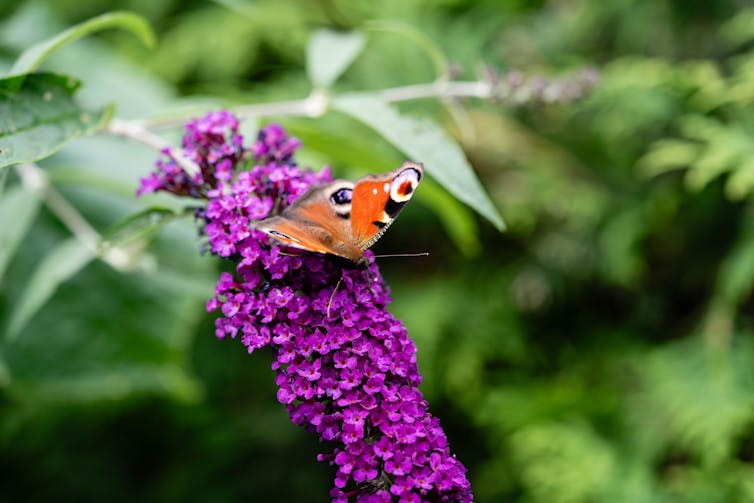
Peacock butterfly on purple buddleja.
Buddleja can cope better than you might think in dry spells.
Steidi/Shutterstock

Ornamental grasses generally have efficient root systems and many species actually prefer drier conditions once established.

Established shrubs including cistus, phlomis, buddleja, cotoneaster, berberis and viburnum have deep roots and proven track records for drought survival. The RHS report identifies these as garden stalwarts, with high stress resilience.

Some trees, including eucalyptus, bay (Laurus nobilis) and holm oak are remarkably drought tolerant.

Those to sacrifice

Grass lawns are thirsty and can be left to go dormant. If you have a newly seeded or turfed lawn from this year, some limited watering may be justified. But in general, embrace the golden colour of water-stressed lawns. As long as you don’t create too many bare patches from over-use, the green colour and growth will come back when it rains.

Annual bedding plants like busy lizzies and begonias have shallow root systems and high water demands. However, they are only there for one season and are easily replaceable, so prioritise them for watering only if they’re particularly important to your garden’s summer display and you can spare the water. You could save some by potting them up and enjoying a display that needs less water.

When you do water, research shows that technique is crucial. Water thoroughly but less frequently to encourage deep root growth. Focus water at the base of plants rather than on leaves, and water in early morning or evening to reduce evaporation.

Consider “split-root” watering for established shrubs – water one side of the plant thoroughly, then switch to the other side two to three weeks later. This keeps plants hydrated while chemical signals from the dry side’s roots prevent excessive new growth that would increase water demands.

This drought is a taste of Britain’s gardening future. The plants struggling most in this year’s drought are likely to become increasingly unsuitable for British gardens without intensive irrigation.

Be willing to swap out plants that suffer in drought for new plants that are more tolerant. Refresh plantings to adapt to the new climate.


This article features references to books that have been included for editorial reasons, and may contain links to bookshop.org. If you click on one of the links and go on to buy something from bookshop.org The Conversation UK may earn a commission.

The Conversation

Alastair Culham is affiliated with the Royal Horticultural Society through the RHS Science & Collections Group as a voluntary member. Opinions expressed here are his and do not represent the RHS.

ref. Hosepipe ban survival guide: which garden plants to save and which to sacrifice – https://theconversation.com/hosepipe-ban-survival-guide-which-garden-plants-to-save-and-which-to-sacrifice-261603


As Sri Lanka’s economy pivots from tourism, it’s well placed to benefit from global trade and geopolitical jostling – new research

Source: The Conversation – UK – By Hemamali Tennakoon, Senior Lecturer in Strategy and Management, Brunel University of London

Dmytro Buianskyi/Shutterstock

With its natural beauty, wildlife and culture, Sri Lanka is known as the “pearl of the Indian Ocean”, and attracts millions of tourists every year.

But my research suggests that the country might not be so reliant on tourism in the future, as it looks to become a major player in global maritime trade. The island’s numerous harbours and enviable location along international sea routes have led to major investment from China and the US, as they seek to extend their strategic influence in the region.

That investment is being welcomed after years of economic and political turmoil in Sri Lanka.

The Easter bombings of 2019 targeted Catholic churches and hotels, killing 269 people and devastating tourism. The same year, significant tax cuts slashed government revenue before COVID did serious damage to the economy.

In 2021, a ban on chemical fertilisers led to nationwide agricultural failure, while excessive borrowing and money printing triggered soaring inflation, which peaked at 70% in August 2022. The country ended up failing to pay its foreign debts.

Following huge protests in 2022 and the resignation of the president, Sri Lanka began a major political and economic shift. It secured a bailout from the International Monetary Fund and implemented reforms aimed at stabilising the economy.

So far, some of the effects have been positive. Inflation has eased, investor confidence has improved and more tea, clothing and rubber products are being exported up.

Key to this has been improved logistics and port infrastructure. Business at the port of Colombo, the country’s largest, is booming, aided in part by global shipping disruptions, including the Red Sea crisis, which rerouted vessels through the Indian Ocean.

But international maritime ambitions can be a complex affair, and Sri Lanka needs to be wary of becoming just a well-positioned commodity for the world’s economic superpowers.

China for example, has secured a controversial 99-year lease of Hambantota port. India, wary of Chinese encroachment, has ramped up its own investments, including the development of a container terminal in Colombo.

In 2023, the US announced a US$500 million (£372 million) plan to develop a deep-water shipping container terminal at the port of Colombo. And the potential US tariffs of 30% on imports from Sri Lanka have been interpreted by some as a pressure tactic to get greater access to its waters.

Balancing these interests is a delicate act. While foreign investment is crucial for infrastructure development, Sri Lanka needs to protect its sovereignty and ensure that port operations serve national, not just international, interests.

My research suggests that one way of building a resilient and diverse Sri Lankan economy would be to focus on its surrounding waters. Sri Lanka’s vast “exclusive economic zone”, an area of sea where it controls marine resources, holds massive untapped potential.

Blue economy

This potential lies in traditional sectors like fisheries and tourism, but also emerging industries such as marine biotechnology.

This growing field offers opportunities in things like bioengineering and marine-based pharmaceuticals. With other countries rapidly advancing in these sectors, Sri Lanka is well-positioned to follow suit and become a regional leader in the blue economy (economic activities associated with the sustainable use of ocean resources).

Port and harbour scene.
Business is booming in the port of Colombo.
shutterlk/Shutterstock

But there is still a complex web of geopolitical interests and economic pressures to navigate, as well as environmental challenges.

At the moment for example, the Sri Lankan government is making plans for the deep natural port at Trincomalee to become a major marine repair and refuelling centre between Dubai and Singapore. Other proposed projects include offshore wind farms and oil rig facilities.

The country also needs to compete with the likes of Malaysia, which is investing heavily in AI-driven port operations. To stay competitive, Sri Lanka must modernise infrastructure and streamline processes.

And despite the progress, challenges persist. Poverty in Sri Lanka has doubled since 2021, while youth unemployment remains high.

Sri Lanka faces rising maritime threats like piracy and illegal fishing, requiring stronger maritime surveillance. Simultaneously, port expansion risks damaging marine ecosystems. Green technologies and stricter environmental regulations are essential for long-term security and sustainability.

Sri Lanka’s strategic location and maritime heritage offer a foundation for economic renewal. With wise governance, sustainability, and balanced geopolitics, its ports could once again become vital gateways to regional prosperity and global trade.

The Conversation

Hemamali Tennakoon does not work for, consult, own shares in or receive funding from any company or organisation that would benefit from this article, and has disclosed no relevant affiliations beyond their academic appointment.

ref. As Sri Lanka’s economy pivots from tourism, it’s well placed to benefit from global trade and geopolitical jostling – new research – https://theconversation.com/as-sri-lankas-economy-pivots-from-tourism-its-well-placed-to-benefit-from-global-trade-and-geopolitical-jostling-new-research-261231

A global treaty to limit plastic pollution is within reach – will countries seize the moment?

Source: The Conversation – UK – By Winnie Courtene-Jones, Lecturer in Marine Pollution, Bangor University

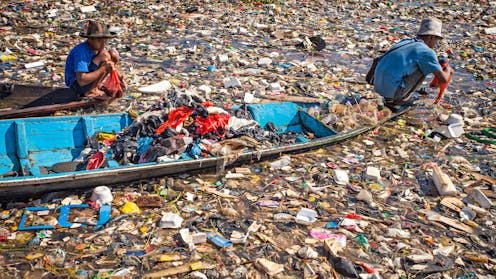
Bandung, Indonesia. Sony Herdiana/Shutterstock

Representatives from 175 countries will gather in Geneva, Switzerland, in August for the final round of negotiations on a legally binding UN treaty to end plastic pollution. Non-governmental organisations, academics and industry lobbyists will also be in the room. They will all be hoping to influence what could be the world’s first truly global agreement on plastics.

The summit, known as “INC-5.2”, follows a failed attempt to reach agreement in Busan, South Korea, late last year. That meeting ended without resolving important issues, despite hopes that it would conclude the treaty process. Now, it’s crunch time in Geneva.

Either countries bridge their political divides, or risk the whole process falling apart.

I’ve been researching the effects of plastic for more than a decade and have been involved in the UN treaty process since 2022. I’ve attended several of the negotiations and will be in Geneva next month. The science is clear: we need ambitious action which tackles every stage of the plastics lifecycle, from production through to disposal. But the question is, will countries deliver?


Get your news from actual experts, straight to your inbox. Sign up to our daily newsletter to receive all The Conversation UK’s latest coverage of news and research, from politics and business to the arts and sciences.


In 2022, the UN Environment Assembly agreed to develop a legally binding treaty to end plastic pollution. Since then, progress has been slow. Negotiations have repeatedly stalled over issues such as whether the treaty should limit plastic production or regulate chemicals, how to define terms, and how to fund implementation.

Industry lobbying has also played a powerful role throughout. At the last round of talks, lobbyists for the petrochemical and plastics industries made up the single largest delegation. They outnumbered representatives from the EU, all of Latin America, the Pacific islands, independent scientists and Indigenous communities. This imbalance threatens to weaken the science-based action that is urgently needed.

Although countries failed to reach agreement in Busan, a foundation was laid. They agreed to continue negotiations using the “chair’s text”, which is a draft treaty with multiple options still on the table. That document forms the starting point in Geneva. But it remains uncertain whether enough common ground can be found to finalise the text.

What’s at stake?

This treaty is a once-in-a-generation chance to tackle one of the world’s most urgent environmental crises. More than 450 million tonnes of plastic are produced every year. That figure is expected to double by 2045 if current trends continue.

Only around 9% of plastic is ever recycled. The rest is landfilled, incinerated or ends up polluting the environment.

An estimated 139 million tonnes of plastics pollute marine and fresh water. But that could be significantly higher when considering leakages of plastics to land, and from microplastics, which are plastics smaller than 5mm in diameter.

Plastic is found in the deepest oceans, the remotest mountains and inside the human body. While scientists are only beginning to understand the long-term implications for human health, biodiversity and climate, studies show harmful effects of plastics and their chemicals on animals and ecosystems.

Plastic pollution doesn’t respect national borders. It moves through rivers, oceans and air, and gets carried across continents. Global supply chains and waste exports have made this a problem no country can solve alone. That’s why a global treaty is essential.

Crossroads

Despite this growing urgency, a disparity in positions has hindered progress and continues to divide delegations.

Some, such as members of the High Ambition Coalition, a group of countries committed to progressive climate action, want strong rules to cap plastic production, phase out toxic chemicals and hold polluters accountable. Others, often with prominent petrochemical industries, argue for a weaker, voluntary approach focused mainly on recycling and waste management.


Read more:
A global plastic treaty will only work if it caps production, modelling shows


If these divisions aren’t resolved, there’s a real risk the treaty will end up being too watered down to make a difference. A patchy, fragmented agreement would fail to curb rising plastic production and could undermine the integrity of global action.

Between December’s meeting in Busan and next month’s talks, countries have been holding smaller meetings to try to find compromise. That momentum must now be carried into the final negotiations.

Important articles in the draft treaty, including those on chemicals and products, plastic production and finance, remain contested. Whether those provisions are strengthened or diluted will shape the treaty’s effects for decades to come.

Flexibility will be needed. But leadership is also crucial. Countries that support an ambitious outcome must stand firm and bring others with them.

As we approach what may be the final negotiating round, we’re at a critical crossroads. The world has the chance to take meaningful action on plastic pollution. Let’s not waste it.


Don’t have time to read about climate change as much as you’d like?

Get a weekly roundup in your inbox instead. Every Wednesday, The Conversation’s environment editor writes Imagine, a short email that goes a little deeper into just one climate issue. Join the 45,000+ readers who’ve subscribed so far.


The Conversation

Winnie Courtene-Jones is an unpaid member and working-group lead of the Scientists’ Coalition for an Effective Treaty; an International network of independent scientific and technical experts contributing robust scientific evidence to the Treaty process.

ref. A global treaty to limit plastic pollution is within reach – will countries seize the moment? – https://theconversation.com/a-global-treaty-to-limit-plastic-pollution-is-within-reach-will-countries-seize-the-moment-261331

Learning statistics through story: students get creative with numbers

Source: The Conversation – Africa – By Johan Ferreira, Professor, University of the Witwatersrand

Photo by Markus Krisetya via Unsplash

Statistics professor Johan Ferreira was feeling overwhelmed by the amount of “screen time” involved in online learning in 2021. He imagined students must be feeling the same way, and wondered what he could do to inspire them and make his subject matter more appealing.

One of the topics in statistics is time series analysis: statistical methods to understand trend behaviour in data which is measured over time. There are lots of examples in daily life, from rainfall records to changes in commodity prices, import or exports, or temperature.

Ferreira asked his students to write a short, fictional “bedtime” story using “characters” from time series analysis. The results were collected into a book that is freely available. He tells us more about it.


Why use storytelling to learn about statistics?

I’m fortunate to be something of a creative myself, being a professional oboe player with the Johannesburg Philharmonic Orchestra. It’s a valuable outlet for self-expression. I reflected on what other activity could inspire creativity without compromising the essence of statistical thinking that was required in this particular course I was teaching.

I invited my third-year science and commerce students at the University of Pretoria to take part in a voluntary storytelling exercise, using key concepts in time series analysis as characters. Students got some guidelines but were free to be creative. My colleague and co-editor, Dr Seite Makgai, and I then read, commented on and edited the stories and put them together into an anthology.

Students gave their consent that their stories could be used for research purposes and might be published. Out of a class of over 200 students, over 30 contributions were received; 23 students permitted their work to be included in this volume.

We curated submissions into two sections (Part I: Fables and Fairy Tales and Part II: Fantasy and Sci-Fi) based on the general style and gist of the work.

The project aimed to develop a new teaching resource, inspire students to take ownership of their learning in a creative way, and support them through informal, project-based peer learning.

This collection is written by students, for students. They used personal and cultural contexts relevant to their background and environment to create content that has a solid background in their direct academic interests. And the stories are available without a paywall!

What are some of the characters and stories?

Student Lebogang Malebati wrote Stationaryville and the Two Brothers, a tale about AR(1) and AR(2). In statistics, AR refers to processes in which numerical values are based on past values. The brothers “were both born with special powers, powers that could make them stationary…” and could trick an evil wizard.

David Dodkins wrote Zt and the Shadow-spawn. In this story, Zt (common notation in time series analysis) has a magic amulet that reveals his character growth through a sequence of models and shows the hero’s victory in the face of adversity. He is a function of those that came before him (through an AR process).

Then there’s Nelis Daniels’ story about a shepherd plagued by a wolf called Arma (autoregressive moving average) which kept making sheep disappear.

And Dikelede Rose Motseleng’s modern fable about the love-hate relationship between AR(1) (“more of a linear guy” with a bad habit of predicting the future based on the past) and MA(1), “the type of girl who would always provide you with stationarity (stability).”

What was the impact of the project?

It was a deeply enriching experience for us to see how students see statistics in a context beyond that of the classroom, especially in cases where students reformulated their stories within their own cultural identities or niche interests.

Three particular main impacts stand out for us:

  • students have a new additional reference and learning resource for the course content

  • new students can refer to the experiences and contextualisation of this content of former students, leading to informal peer learning

  • students engage in a cognitive skill (higher-order and creative thinking) that is not frequently considered and included in this field and at this level.

In 2024, shortly after the book was published, we asked students in the time series analysis course of that year to read any one of four stories (related to concepts that were already covered in the course material at that point in time). We asked them to complete a short and informal survey to gauge their experience and insights regarding the potential of this book as a learning resource for them.

The 53 responses we got indicated that most students saw the book as a useful contribution to their learning experience in time series analysis.

One positive comment from a student was:

I will always remember that the Random Walk is indeed not stationary but White Noise is. I already knew it, but now I won’t forget it.

Will you build on this in future?

It is definitely valuable to consider similar projects in other branches of statistics, but also, in other disciplines entirely, to develop content by students, for students.

At this stage, we’re having the stories and book translated into languages beyond English. In large classes that are essential to data science (such as statistics and mathematics), many different home languages may be spoken. Students often have to learn in their second, third, or even fourth language. So, this project is proving valuable in making advanced statistical concepts tactile and “at home” via translations.

Our publisher recently let us know that the Setswana translation is complete, with the Sepedi and Afrikaans translations following soon. To our knowledge, it’ll be the first such project not only in the discipline of statistics, but in four of the official languages in South Africa.

The Conversation

Johan Ferreira receives funding from the Centre of Excellence in Mathematical and Statistical Sciences, based at the University of the Witwatersrand, towards this Scholarship of Learning and Teaching project.

ref. Learning statistics through story: students get creative with numbers – https://theconversation.com/learning-statistics-through-story-students-get-creative-with-numbers-261198

Livestock and lions make uneasy neighbours: how a fence upgrade helped protect domestic and wild animals in Tanzania

Source: The Conversation – Africa (2) – By Jonathan Salerno, Associate Professor, Colorado State University, Colorado State University

Protecting livestock in areas where large carnivores (like lions) live is increasingly important as human land use expands, wildlife habitat shrinks, and climatic changes reshape the ways in which humans and wildlife interact. Protecting the carnivores from livestock owners is important too. Intact carnivore populations support more resilient food webs and the ecosystem services they provide.

It’s not easy for people, livestock, and carnivores to live together without conflict, though. One of the best ways to reduce conflict is to protect livestock like cattle and sheep from being attacked by predators.

There are various methods to do this, like guarding livestock or erecting fences. That’s all very well for the livestock inside the fences, but do predators simply turn to the nearest unprotected livestock for their meal instead? Are the neighbours’ cattle, sheep, and goats at greater risk? This question hasn’t been explored much by researchers.

We’re a group of conservation practitioners and scientists who have studied the interactions of carnivores, livestock, and people in Tanzania and elsewhere for decades to try and find solutions to conflict problems.

Our study area is next to a national park which protects important populations of lion, leopard, hyena, African wild dog, and cheetah. The people who live here have traditionally kept their livestock overnight in enclosures made of acacia-thorn branches. More recently, some of them have built pens, or corrals, from tall chain link fencing. We knew from years working with communities and from previous research that these fortified corrals were effective at keeping livestock safe from predators.

Our next step was to find out whether this made other nearby livestock less safe.


Read more:
What’s behind the conflict between people and animals in Tanzania


The results were intriguing. We found that the new enclosures made predation less likely in the nearby traditional enclosures too.

This type of beneficial spillover effect had yet to be documented in other systems where interventions aim to protect livestock from large carnivores.

Our results show that in conservation, it’s important to look closely at complex local dynamics. The findings may help explain why there’s so much uncertainty about the effectiveness of various human–wildlife conflict mitigation strategies.

Beneficial spillover effects

People who keep livestock in east Africa have long had strategies to keep their animals safe from large carnivores. Sometimes acacia-thorn night enclosures (known locally as bomas), intensive herding practices, and guarding dogs work well.

Other times, and especially in communities within and adjacent to large, protected carnivore populations, traditional strategies fall short.

This is the case in Tanzania’s Ruaha-Rungwa Landscape. In our study area adjacent to Ruaha National Park, any pastoralist or agropastoralist (herding and crop farming) household has about a 30% chance of losing one or more animals to predation each year. This is a serious economic loss on top of important cultural and emotional costs.


Read more:
Losing a calf to wolves in Sweden hurts. But if lions take one in Uganda, a farming family’s income is gone


Lion Landscapes, an organisation that some of us have been running for over a decade, works to support human-carnivore coexistence. Adjacent to Ruaha, we have been partnering with households to build 1.8-metre chain-link corrals. We subsidise them. Households contribute 25% of the cost and some of the labour for construction.

We analysed about 25,000 monthly reports of livestock predation in fenced and traditional enclosures, using statistical models. There were 846 predation events over nearly four years. Unexpectedly, while we did detect spillover effects, these appeared to be beneficial. Rather than displacing conflicts, fortified enclosures actually conferred protective effects on their traditional-enclosure neighbours.

For example, households within 50 metres (the minimum observed distance) of a fortified enclosure were half as likely to experience predation compared with distant households 2 kilometres away. And these beneficial effects increased with the number of fortified enclosures in a neighbourhood. Finally, the effects appeared to be durable over time.

The fortified enclosures were extremely effective. We showed that households could break even after paying for the fence in just a few years through avoided livestock losses. And we know that when domestic animals aren’t being killed, their owners are more tolerant of predators. We didn’t record carnivore killings in this study but it has happened fairly frequently in the area in the past.

In a few of the world’s human-wildlife conflict systems, where data exist to assess spillover effects, there is evidence that detrimental spillovers do occur. For instance, beehive deterrents may redirect elephants to nearby crop fields, or lethal removal of individual wolves may redirect the surviving pack to prey on adjacent ranches. Nevertheless, these are very under-studied interactions.

Livestock management and carnivore coexistence

In systems where humans, livestock, and wildlife overlap and sometimes come into conflict, management strategies too often focus on wildlife. Another option is to reduce whatever attracts wildlife. In the case of large carnivores, this means managing livestock.


Read more:
Livestock are threatened by predators – but old-fashioned shepherding may be an effective solution


Our results support this approach by demonstrating that management and protection of livestock is fundamental for reducing conflict, and can benefit not only livestock owners but landscape-level coexistence.

Conservationists and policy-makers need to encourage these practices that benefit people, carnivores, and livestock in shared landscapes.

The Conversation

Amy Dickman works for Lion Landscapes as the Joint CEO

Jonathan Salerno, Kevin Crooks, Rekha Warrier, and Stewart Breck do not work for, consult, own shares in or receive funding from any company or organisation that would benefit from this article, and have disclosed no relevant affiliations beyond their academic appointment.

ref. Livestock and lions make uneasy neighbours: how a fence upgrade helped protect domestic and wild animals in Tanzania – https://theconversation.com/livestock-and-lions-make-uneasy-neighbours-how-a-fence-upgrade-helped-protect-domestic-and-wild-animals-in-tanzania-258113

Ghana’s security strategy has kept terror attacks at bay: what other countries can learn from its approach

Source: The Conversation – Africa (2) – By Paa Kwesi Wolseley Prah, Postdoctoral Fellow, Dublin City University

Ghana stands out in west Africa as a nation that has not experienced terrorist attacks, even though it’s geographically close to countries that have. In Burkina Faso, Mali and Nigeria, extremist groups such as Boko Haram and Islamic State in West Africa (ISWAP) have wreaked havoc.

This resilience is not accidental. It is the result of deliberate counter-terrorism strategies employed by Ghana’s security institutions.

Ghana’s counter-terrorism framework was set out in 2020. It has four pillars: prevent, pre-empt, protect, and respond. The idea is to coordinate multiple agencies, including the Ghana Police Service, Ghana Immigration Service, Ghana Armed Forces and the National Intelligence Bureau.

These pillars guide strategies to address both immediate threats and underlying vulnerabilities. Poverty, religious radicalism and porous borders are common drivers of terrorism in west Africa.

I am an international security and global governance researcher. My co-author is a government and international studies scholar.

Four years ago we wrote a paper examining Ghana’s resilience against terrorist attacks. Our findings are still relevant given the increasing activities of terror groups in the west African region.


Read more:
West Africa terror: why attacks on military bases are rising – and four ways to respond


We wanted to identify what works as a potential model for other countries.

Using a qualitative methodology, we interviewed stakeholders — including police officers, members of the armed forces, Muslim community leaders, and immigration officials. We also analysed the national framework for preventing and countering violent extremism and terrorism.

Our findings showed that Ghana’s success is traceable to an approach that integrates community engagement with advanced border technology, inter-agency training, media collaboration and intelligence operations. And it addresses both immediate and underlying threats.

We argue that Ghana’s ability to balance prevention with security offers solutions for stability in a geopolitically volatile region.


Read more:
Ghana’s new president faces tough regional security problems: why he’s well-placed to tackle them


Community engagement

One of the standout strategies is community engagement. This serves multiple purposes, from guiding people away from extremism to gathering intelligence.

The Ghana Police Service, for instance, engages Muslim-dominated communities, known as “Zongos”, to counter radical Islamic ideologies that could be exploited by terrorist groups.

By collaborating with local religious leaders, police make communities aware of the dangers of radicalisation. They foster trust and encourage residents to report suspicious activities. This approach also works in tackling illegal arms circulation.

Ghana has an estimated 2.3 million small arms in circulation – 1.1 million of them illegally possessed. The availability of so many weapons fuels terrorist activities across west Africa.

Community based de-radicalisation aligns with global best practices. In Norway, for instance, it was used to disengage youth from extremist groups.

Technology at borders

Ghana’s border control management is another part of its counter-terrorism strategy. Ghana Immigration Service uses advanced security software and integrated systems like the “Immigration 360” system, designed to fully automate passenger processing and data management.

The system manages records of fingerprints and other data to improve reporting and intelligence sharing between Ghana Immigration and other security agencies.

The technology makes it possible to quickly identity individuals on terrorist watchlists and detects concealed goods. This helps prevent illegal cross-border movements.

There are gaps in Ghana’s defences, however. The influx of migrants fleeing extremist violence in Burkina Faso, Mali and Niger in 2024 highlights the urgency of scaling up investments in the technology.


Read more:
West Africa could soon have a jihadist state – here’s why


Training for preparedness

Ghana combats new and varying forms of terrorism by uncovering trends and training personnel to deal with them.

A notable example was the six-day joint training in 2022 involving the Ghana Immigration Service, Police Service, Customs, Economic and Organised Crime Office, and the National Intelligence Bureau.

The country also works with regional neighbours like Burkina Faso, Togo and Benin, and partners such as the United States, through initiatives like “Operation Epic Guardian”.

Media as a strategic partner

Terrorists rely on media to amplify fear and publicise their causes. Ghana’s security agencies counter this tactic by actively engaging media houses to report accurately.

The Ghana Armed Forces, for instance, works with media to debunk false reports, which can cause public panic and inadvertently aid terrorists.

The Ghana Police Service emphasises regular dialogue with media to ensure sensitive information is verified before publication, reducing the risk of tipping off suspects. However, media competition for viewers poses a challenge.

Surveillance and intelligence gathering

Surveillance and intelligence gathering is critical. Plainclothes armed forces and immigration personnel blend into communities to monitor potential threats. The approach has worked but is constrained by resources.

It can also risk human rights violations, such as wrongful profiling, and is less effective against multiple targets compared to technological solutions like facial recognition or CCTV.


Read more:
Funding terror: how west Africa’s deadly jihadists get the money they need to survive


Challenges and regional implications

Despite its successes, Ghana’s counter-terrorism framework faces challenges that could undermine its long-term efficacy:

  • logistical and financial constraints

  • the influx of migrants fleeing regional violence

  • a lack of harmonised security cultures within the regional body, Ecowas.

In all, Ghana’s strategies offer lessons for west Africa, where terrorism is a growing threat.

Its community engagement model could be followed in Nigeria, Burkina Faso, Mali and Niger to counter radicalisation and arms proliferation, provided it avoids religious stereotyping.

The Conversation

The authors do not work for, consult, own shares in or receive funding from any company or organisation that would benefit from this article, and have disclosed no relevant affiliations beyond their academic appointment.

ref. Ghana’s security strategy has kept terror attacks at bay: what other countries can learn from its approach – https://theconversation.com/ghanas-security-strategy-has-kept-terror-attacks-at-bay-what-other-countries-can-learn-from-its-approach-260333

I research rip currents where ‘Cosby Show’ star Malcolm-Jamal Warner drowned. Here’s why they’re so deadly

Source: The Conversation – Canada – By Chris Houser, Professor in Department of Earth and Environmental Science, and Dean of Science, University of Waterloo

Malcolm-Jamal Warner, the actor who played Theo Huxtable on The Cosby Show, has drowned on Costa Rica’s Caribbean coast.

It is reported that he was swimming at Playa Cocles in Limon province when a current pulled him offshore. This is a beach popular among surfers and one that’s known to have large waves and strong currents.

It’s also a beach that I have taken students to in order to study the formation of rip currents and to better understand what beach users know about the hazard.

What exactly are rip currents?

Rip currents — commonly referred to as rips or colloquially as rip tides — are found on ocean beaches and some large lakes around the world.


Read more:
The Great Lakes are powerful. Learning about ‘rip currents’ can help prevent drowning


The rips at Playa Cocles and along a large part of the Costa Rican Caribbean coast are known as channel or bathymetric rips that form as the nearshore sand bar moves toward the land through the summer. The water thrown towards the land by the breaking waves returns offshore as a concentrated and fast flowing current at gaps in the nearshore sand bar.

During storm conditions, we have measured the rip currents at Playa Cocles at over two metres per second. These rips are known to increase rapidly (or pulse) in strength due to changes in wave breaking, leading to unsuspecting swimmers being taken far offshore and exiting beyond the zone of breaking waves.

Rip current at Playa Cocles showing change in size and strength with surfers for scale. (Chris Houser)

While it can be difficult to spot a rip from shore, they can be identified by an area of relatively calm water between breaking waves, a patch of darker water or the offshore flow of water, sediment and debris.

Caught in a rip current

A person caught in a rip is transported away from shore into deeper waters, but they aren’t pulled under the water. If they are a weak swimmer or try to fight the current, they may panic and fail to find a way out of the rip and back to shore. Survivor stories highlight panic, anxiety, distress and fear, a tendency to fight the current and an inability to make a decision on how to escape the rip.

While it is possible to “break the grip of the rip” by swimming parallel to the beach or toward breaking waves at an angle to the beach, there is no single escape strategy due to the unique rip circulation pattern.

It’s possible to escape a rip by flipping onto your back, floating to keep your head above the water and following the current until you’re returned to the shore by the current or able to swim safely toward the shore. If you are taken beyond where the waves break, or you’re unable to swim back to shore, continue to float and signal for help.

Rip currents account for more than 50 deaths a year in Costa Rica; approximately 19 drownings a year involve foreign tourists from the United States, Nicaragua, Canada and Germany. While most drownings in the country occur on Pacific coast beaches that are a short distance to the city of San José, more than five drownings occur each year along the Caribbean coast.

Playa Cocles was the site of five drownings that occurred over eight days in 2004, an event that prompted tourism-dependent business owners to establish a lifeguard station on the beach.

Costa Rican drownings

On average, each drowning in Costa Rica costs more than US$2 million (USD). This includes the direct costs of search and rescue, the costs of repatriation and the long-term economic burden of a lost life. This is in addition to the great personal loss experienced by family and friends.

A survey at Playa Cocles and other beaches in Costa Rica revealed that a majority of beach users did not observe warning signs and that many were unable to interpret the warning and did not change their behaviour.

The majority of foreign drowning victims in Costa Rica had limited knowledge of rips and were unable to avoid the times and locations that were most hazardous.

In general, visitors to a beach often use simple visual cues when deciding to take risks. Recent studies suggest that tourists think beach access points and resorts are located adjacent to safe swimming areas, particularly when visual cues such as manicured paths and promotional posters that promote swimming at those locations.

Visitors are a high-risk group for drownings. They’re generally unfamiliar with the beach and its safety measures and often have poor knowledge of beach hazards, such as rip currents and breaking waves. This lack of knowledge can be exacerbated by language barriers, an overconfidence in swimming ability and peer pressure.

Rip current and beach users at Playa Cocles. The red flag was placed by lifeguards to mark the location of the rip for beach users. (Chris Houser)

Playa Cocles is a beautiful beach, but it’s known to have dangerous rips depending on the size of the breaking waves and the position of the sand bar.

When visiting any beach — from the Caribbean to the Great Lakes — it’s important to remember that there may be rip currents and to take serious precautions.

The Conversation

Chris Houser receives funding from NSERC.

ref. I research rip currents where ‘Cosby Show’ star Malcolm-Jamal Warner drowned. Here’s why they’re so deadly – https://theconversation.com/i-research-rip-currents-where-cosby-show-star-malcolm-jamal-warner-drowned-heres-why-theyre-so-deadly-261653