Gradual v sudden collapse: what magnets teach us about climate tipping points

Source: The Conversation – UK – By John Dearing, Emeritus Professor of Physical Geography, University of Southampton

Andrey VP / shutterstock

Some of Earth’s largest climate systems may collapse not with a bang, but with a whimper. Surprisingly, experiments with magnets are helping us understand how.

We now widely accept that greenhouse gases and the way we use natural resources are putting enormous stress on the world’s climate and ecosystems. It’s also well known that even small increases in stress can push Earth systems, like rainforests, ice sheets or ocean currents, past tipping points, leading to major and often irreversible changes.

But there’s a lot we still don’t know about tipping points. When might they happen? What will they look like? And what should we do about them?

Some local tipping points have already been reached. For example, many lakes have abruptly shifted in the past few decades from clear water to slimy, algae-choked pools, usually in response to fertilisers running off nearby farmland.

pond in forest covered in algae
Smaller systems, like this pond, can very suddenly shift from one state to another.
Janet J / shutterstock

For larger systems, like the entire Amazon forest or the West Antarctic ice sheet, the longer timescales involved mean direct observation – and certainly experiments – are impossible.

But we can look for clues elsewhere. In fact, we can now learn about tipping points from something much smaller and far more controllable: magnets.

Magnets have tipping points too

In our recent research, we used magnetic materials to mimic the behaviour of an ecosystem stressed by global warming. Just like Earth’s climate systems, magnets can tip from one stable state to another – flipping from positive to negative – when pushed hard enough.

We found that magnets don’t all flip the same way. Some shift abruptly – a characteristic of many hard materials. Others shift smoothly and more easily – as commonly found with soft magnets.

Whether a magnet collapses abruptly or smoothly is determined by its structure. As a general rule, hard materials are simple structures that absorb stress up to a point and then suddenly flip – much like a small, well-mixed lake that stays clear until one day, when enough fertiliser has leaked in, it turns green and slimy almost overnight.

Soft magnets, on the other hand, are more complex inside. Different parts respond to stress at different rates. This is similar to a large forest, where some species can handle rising temperatures but others are less resilient.

The result is a reorganisation. Some species die out, others take over, and the whole system gradually transitions into a different type of forest – or even into a new ecosystem like a grassland.

Iceberg calving causes splash
Some Earth systems are more prone to abrupt collapse.
Steve Allen / shutterstock

The same principles may apply beyond biology. Ocean currents and ice sheets with their many varied and moving parts might also behave like soft magnets, reorganising gradually rather than collapsing in one sudden movement.

Softer systems are easier to flip back

Our experiments with magnets uncovered something else with implications for Earth’s climate systems and their tipping points.

The softer a system is, the easier it is to reverse the change – but only if you act before the stress builds up. If the pressure has built up too much, even soft systems start behaving like hard ones, flipping suddenly and dramatically.

We also found that what may look like a soft and complex system – a whole rainforest or ice sheet, for instance – can be made up of lots of smaller hard elements. Each of these elements has its own sensitivity to a specific level of stress. Zoom in far enough, and you’ll see many more abrupt tipping points at the level of a single lake or patch of trees.

This matters because the speed of change is just as important as the amount. In magnets, the faster we applied stress, the more likely they were to tip suddenly. Climate systems seem to behave the same way: the faster we heat the world, the greater the risk of sudden collapse.

If we see these big complex systems slowly shifting and think there’s still time to act – we may be wrong. Like the proverbial frogs in boiling water, we may not notice we have passed the point of no return until it is too late.

This is why we must watch closely, especially at the local level, for any warning signs. A patch of wetland drying out or a small tract of forest dying back. These might seem like small changes, but they may signal a much larger decline is already underway.


Don’t have time to read about climate change as much as you’d like?

Get a weekly roundup in your inbox instead. Every Wednesday, The Conversation’s environment editor writes Imagine, a short email that goes a little deeper into just one climate issue. Join the 45,000+ readers who’ve subscribed so far.


The Conversation

John Dearing is a member of the Green Party of England and Wales.

Roy Thompson and Simon Willcock do not work for, consult, own shares in or receive funding from any company or organisation that would benefit from this article, and have disclosed no relevant affiliations beyond their academic appointment.

ref. Gradual v sudden collapse: what magnets teach us about climate tipping points – https://theconversation.com/gradual-v-sudden-collapse-what-magnets-teach-us-about-climate-tipping-points-258606

People smugglers adapt to attempts to shut them down – financial sanctions won’t stop the boats

Source: The Conversation – UK – By David Suber, Departmental Lecturer in Criminology, University of Oxford

In the latest attempt to crack down on irregular migration, the UK government has announced a raft of international sanctions against people smugglers. The sanctions will use asset freezes, travel bans and other financial restrictions to go after businesses and individuals thought to be facilitating smuggling operations.

The government has committed to treating irregular migration as a national security threat, to be tackled with tools drawn from the counter-terrorism playbook. But, given the supply and demand forces that drive the smuggling industry, sanctions may not be effective.

Smuggling is, essentially, a service industry. Opportunistic entrepreneurs charge migrants a fee to enable them to cross borders they wouldn’t otherwise be able to.

These operations rely on wide networks: suppliers of dinghies and vehicles, informal money transfer brokers, local guides skilled at avoiding detection. While the routes and logistics vary across regions, empirical research consistently shows that smuggling is usually low-skill and fragmented. It’s rarely the domain of organised, mafia-style cartels.

This regime of sanctions and asset freezes adds a new tactic to a familiar policy toolbox. Previous Conservative governments and EU countries have treated smuggling as a form of organised crime that can only be defeated through security responses. They’ve invested in surveillance, border walls and policing at home and internationally. Evidence suggests this approach is not only ineffective – it can backfire.

Why sanctions may miss the target

Smugglers and migrants alike operate in highly hostile environments. Evading detection and minimising risk is essential. This has made migrant smuggling particularly adaptable to criminal justice responses.

Take money transfers between migrants and smugglers. Smuggling fees are often handled through the informal “hawala” money transfer system. A migrant deposits funds with a broker in the departure country, who holds the money and issues a code. Only once the migrant has safely arrived at their destination is the code released to a second broker, who then pays the smuggler. Debts between hawala brokers are settled when future operations move money in the opposite direction.

Hawala money transfers are legal in most countries. But as no funds cross borders directly, this type of informal banking lends itself well to transactions that are anonymous and untraceable. The UK’s new sanctions target hawala brokers involved in handling payments between smugglers and their clients. But, in the same way that the structures of smuggling groups have evolved and adapted in response to police or border enforcement, so will their systems to move money safely.

A pair of hands flipping through British notes
Follow the money: the new sanctions take aim at the business of smuggling.
Andrzej Rostek/Shutterstock

On heavily policed borders such as those in the Balkans, small-scale smugglers, often migrants themselves, have formed more coordinated groups bonded by ethnicity or language. Many of the groups listed in the UK sanctions, such as the Kazawi and Tatwani groups, have been on Interpol’s radar for years.

Even when key figures are arrested, these groups have demonstrated the ability to disband and regroup on a different border. Sometimes they go quiet while developing new strategies, only to resurface in the same areas, driven by unchanged demand in smuggling services. Hawala brokers hit by the new sanction regime are likely to close and restart operations under different names.

How effective can UK sanctions be if the targets and their assets are not in the UK, and if their operations can quickly shift across borders and names? Unless other countries follow suit and enforce similar measures, these sanctions may amount to little more than politically symbolic.

Supply and demand

So long as migration policy focuses almost exclusively on “smashing the gangs” and targeting the supply side of irregular migration, smugglers and other entrepreneurs involved in facilitating it are likely to reinvent themselves and find new, more precarious ways to circumvent border restrictions.

Unless implemented internationally, UK sanctions will do little to change this. But international counter-smuggling responses are highly dependant on the specific circumstances faced by the states involved.

In Italy, right and left-leaning governments have pursued an anti-mafia approach to smuggling for years, with limited results. Earlier this year, Italian authorities arrested suspected trafficker Osama Elmasry Njeem, following a warrant by the International Criminal Court on charges of murder, rape and torture.

They then released him and repatriated him to Libya, sparking a row with the ICC. Although Italy has made deals with with the Libyan government in Tripoli to stop irregular migrant boats, it appears there were concerns that his arrest could strain relations with Libyan counterparts and trigger a surge in boat arrivals from North Africa. This situation highlights the challenges that can arise with such tactics.

The idea that cracking down on smugglers, through sanctions or criminal justice responses, will deter people from seeking their services is not supported by evidence. If anything, it increases the risks migrants must take, making journeys more dangerous but no less likely. Migration flows to Europe rise and fall in patterns driven far more by global instability and lack of legal alternatives than by changes in law enforcement.

Including smugglers in a sanctions regime may create headlines, but it misses the bigger point: people smuggling exists because people need to move. It is a demand-led phenomenon, and it is the demand side – why people turn to smugglers in the first place – that remains largely unaddressed.

To reduce the power and appeal of smugglers, governments need to open safe, legal pathways for migration. This would reduce reliance on illicit networks, protect vulnerable people and restore order to a system that is politically defined by routine crises.


Get your news from actual experts, straight to your inbox. Sign up to our daily newsletter to receive all The Conversation UK’s latest coverage of news and research, from politics and business to the arts and sciences.

The Conversation

David Suber received funding from the UK’s Economic and Social Research Council for his PhD in 2020-2024.

ref. People smugglers adapt to attempts to shut them down – financial sanctions won’t stop the boats – https://theconversation.com/people-smugglers-adapt-to-attempts-to-shut-them-down-financial-sanctions-wont-stop-the-boats-261864

The dirty truth about what’s in your socks: bacteria, fungi and whatever lives between your toes

Source: The Conversation – UK – By Primrose Freestone, Senior Lecturer in Clinical Microbiology, University of Leicester

Marko Aliaksandr/Shutterstock

Your feet are microbial hotspots. The area between your toes is packed with sweat glands, and when we wrap our feet in socks and shoes, we trap that moisture in a warm, humid cocoon that’s ideal for microbial growth. In fact, your feet may be home to a miniature rainforest of bacteria and fungi, with anywhere from 100 to 10 million microbial cells per square centimetre of skin surface.

Not only do feet host a huge variety of microorganisms – up to 1,000 different species per person – but they also have a wider range of fungal species than any other part of the body. That means your feet aren’t just sweaty or smelly – they’re genuinely biodiverse.

Because your feet are microbe-rich, your socks become prime real estate for these same bacteria and fungi. Studies show that socks harbour both harmless skin residents, like coagulase-negative staphylococci, and potentially dangerous pathogens, including Aspergillus, Staphylococcus, Candida, Histoplasma and Cryptococcus. These microbes thrive in the warm, moist spaces between your toes, feeding on sweat and dead skin cells.

Their byproducts, such as volatile fatty acids and sulphur compounds, are what give sweaty feet, socks and shoes that notorious odour. It’s not the sweat itself that smells, but the microbial metabolism of that sweat. Perhaps unsurprisingly, smelly feet are so common the NHS has dedicated pages of advice on the issue.

The sock microbiome isn’t just influenced by your feet – it also reflects your environment. Socks pick up microbes from every surface you walk on, including household floors, gym mats, locker rooms and even your garden. They act as microbial sponges, collecting bacteria and fungi from soil, water, pet hair and dander, and the general dust of everyday life. In one study, socks worn for just 12 hours had the highest bacterial and fungal counts of any clothing item tested.

And those microbes don’t stay put. Anything living in your socks can transfer to your shoes, your floors, your bedding – and even your skin. In a hospital study, slipper socks worn by patients were found to carry floor microbes, including antibiotic-resistant pathogens, into hospital beds. It’s a reminder that foot hygiene isn’t just a personal issue – it can have broader implications for infection control and public health.

Super-spreaders

Socks can also play a key role in spreading fungal infections like Tinea pedis (better known as athlete’s foot), a highly contagious condition that primarily affects the toes but can spread to the heels, hands, or even the groin. The infection is caused by dermatophyte fungi, which love warm, damp environments – exactly the kind you find in sweaty socks and tight shoes.

To prevent this, experts recommend avoiding walking barefoot in shared spaces like gyms and pools, not sharing socks, towels, or shoes, and practising good foot hygiene, which includes washing and drying thoroughly between the toes. Topical antifungal treatments are usually effective, but prevention is key.

It’s also important to note that socks can retain fungal spores even after washing. So if you’ve had athlete’s foot, wearing the same pair again – even if it looks clean – could trigger reinfection.

The safest approach is to wear fresh socks daily and allow your shoes to dry out completely between wears. Choose breathable fabrics and avoid footwear that traps heat or causes excessive sweating.

How to wash your socks properly

Most laundry advice focuses on preserving fabric, colour and shape – but when it comes to socks, hygiene matters more. Studies show that washing at typical domestic temperatures (30–40°C) may not be sufficient to kill bacteria and fungi. In fact, under-cleaned socks can act as infection vectors, especially in households with vulnerable people.

To properly sanitise your socks:

  • turn them inside out before washing to expose the inner surface where most microbes accumulate

  • use an enzyme-based detergent, which helps break down sweat and skin debris

  • wash at 60°C when possible, as the higher temperature helps detach and kill microbes

  • steam iron your socks if you need to wash at lower temperatures – heat from ironing can destroy residual spores.

Cotton socks tend to tolerate higher temperatures better than synthetic blends, making them a better option for those prone to fungal infections. Drying socks in direct sunlight can also help: UV light has known antimicrobial effects.

The forensic power of sock microbiomes

Your socks might say more about you than you realise. In a US murder investigation, forensic scientists used soil bacteria found on a suspect’s socks to link them to the burial site of a victim.

The microbial profile of the socks closely matched that of the crime scene – suggesting the socks had picked up and preserved location-specific soil microbes. This emerging field of forensic microbiology shows how microbial signatures can offer valuable clues in legal contexts.

It’s a reminder that the ecosystems we carry on our bodies – and in our clothing – are not only complex and revealing but also surprisingly durable. Whether it’s helping to solve crimes or fuelling a fungal outbreak, your socks are far more biologically active than they appear.

So next time you peel off a sweaty pair at the end of the day, spare a thought for the microscopic universe you’ve been walking around in. And maybe, just maybe, opt for that 60-degree wash.

The Conversation

Primrose Freestone does not work for, consult, own shares in or receive funding from any company or organisation that would benefit from this article, and has disclosed no relevant affiliations beyond their academic appointment.

ref. The dirty truth about what’s in your socks: bacteria, fungi and whatever lives between your toes – https://theconversation.com/the-dirty-truth-about-whats-in-your-socks-bacteria-fungi-and-whatever-lives-between-your-toes-261580

Windrush scandal: those left to apply for compensation without legal help missed out on tens of thousands of pounds

Source: The Conversation – UK – By Jo Wilding, Lecturer in law, University of Sussex

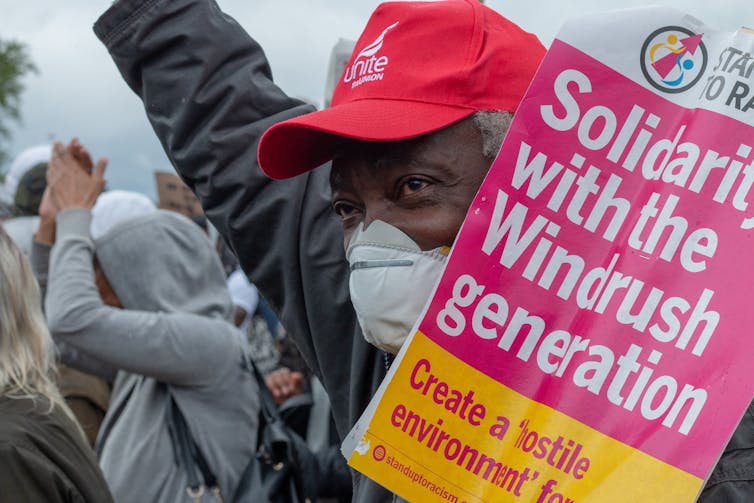
The Windrush scandal has been one of the biggest miscarriages of justice in Britain, affecting tens of thousands of people. The government set up a scheme in 2019 to award compensation to those who had been wronged by racist immigration legislation over decades, left unable to prove their immigration status.

But in a new report, I have found that how much victims receive through the scheme has little to do with how they were wronged, and more to do with whether they can access a lawyer. Those who applied without legal support were offered tens of thousands of pounds less than when they appealed with legal representation.

The research, produced with law reform charity Justice and Dechert LLP’s pro bono team, provides empirical evidence of precisely what lawyers do that makes a difference.

Our research participants, who were claiming compensation over the Windrush scandal were offered, on average, £11,000 when applying to the scheme without a lawyer. But when applying for review with legal representation, the award was more than £83,000. One of our participants was refused any compensation when he applied alone, but eventually received £295,000 with the help of a lawyer.

Why lawyers are needed

We conducted an in-depth review of ten files where a claimant first applied for compensation without a lawyer, received a refusal or a low offer of compensation, and then applied with a lawyer for review of that decision.

We reviewed another seven files from people who could never have claimed alone, because of street homelessness, dementia or serious health conditions.

The team interviewed each lawyer and (where possible) the claimant, to identify exactly what a lawyer does that makes a difference.

The Home Office insists lawyers are unnecessary because the scheme’s own caseworkers will help find evidence. But our findings suggest serious failings in those efforts. One of the main contributions of lawyers was expertise in finding decades-old evidence and demonstrating how it meets the standard of proof for the Windrush compensation scheme.

One of our claimants applied for compensation for having been refused housing assistance (leaving her homeless) based on a misunderstanding of her immigration status. The Home Office caseworkers emailed her local council and asked whether there was a record of her being refused housing assistance 20 years earlier. The council replied that there was not. The caseworker treated that as evidence that she had never made an application.

When a lawyer got involved, he asked the council to confirm how long they kept housing application records. The answer was 12 years, so there was never any prospect of evidence existing from 20 years ago. The lawyer then managed to track down her housing file with the housing solicitors who represented her.

Lawyers knew how to request files from public bodies, understood the references to statutes in those files and, most importantly, were able to spot when key documents were missing.

The lawyers in the cases we reviewed took detailed witness statements from claimants. Those made by claimants alone averaged 1.5 pages, whereas those made by lawyers were at least 15 pages, containing far more relevant detail showing how the claimant met the scheme criteria.

Lawyers acted as a “buffer” between claimant and Home Office. Claimants told our research team that they felt the Home Office spoke to them with more respect once they had a lawyer. Often, claimants were ready to give up and accept the refusal because they were exhausted and frustrated with fighting the Home Office.

A man at a protest holding a sign that reads 'solidarity with the Windrush generation'
The Windrush scandal has affected tens of thousands of people.
James Ivor Wadlow/Shutterstock

The findings are consistent with other peer-reviewed research exploring what lawyers or representatives add to cases in the family courts and the tribunals: a 15%-18% “representation premium” in chances of success. In some cases, this can be achieved through pre-hearing advice.

All of our participants had a lawyer either through Law Centres funded by a charity, a university law clinic, or private law firms doing the work pro bono. Some firms also do the work on a no-win-no-fee basis, typically taking 25%-30% of the claimant’s damages but on occasion up to 67%. Given that it takes 32-103 hours to prepare the case, the lawyer’s fee may still underrepresent the work they did.

Compensation schemes and legal support

Recent reports have revealed serious problems with the compensation schemes for both the Post Office and the infected blood scandals. The chairs of the respective public inquiries, Sir Wyn Williams and Sir Brian Langstaff, criticised gaps in the provision of access to legal advice and recommended funded legal advice for all claimants.

The Post Office Horizon IT scandal has four compensation schemes for different categories of victim. In each, claimants can choose between a fixed payment (£75,000) or an individual assessment of loss. In three of those schemes, funded legal advice is available to help claimants choose between those options. In the Horizon Shortfall Scheme, though, it is not available unless and until they reject the fixed payment and opt for individual assessment.

The infected blood compensation scheme includes funded legal representation for “core” route claimants – those directly affected. But the inquiry report says it should also be available for claims by affected family members.

Only the Windrush scheme has no provision at all for funded legal representation at any stage. All representation is either a matter of charity, or paid for from the damages, which may leave very little for the claimant.

Yet the Windrush scheme is arguably the most complicated, with a 44-page claim form compared with just eight for the Horizon Shortfall Scheme. The infected blood claim form is largely completed by medical personnel. The Windrush scheme has complex eligibility requirements compared with the other schemes, and often demands an immigration lawyer’s expertise.

As our research found, lawyers were able to advise Windrush claimants on whether the offer of compensation was fair or whether they should apply for review. Our empirical evidence, along with the reports, suggest all compensation schemes involving state harm to citizens should include free legal representation for claimants.

In response to the report, a Home Office spokesperson told the Guardian: “Earlier this year, we launched a £1.5m advocacy support fund to provide dedicated help from trusted community organisations when victims are applying for compensation. However, we recognise there is more to be done, which is why ministers are continuing to engage with community groups on improvements to the compensation scheme, and will ask the new Windrush commissioner to recommend any further changes they believe are required.”


Get your news from actual experts, straight to your inbox. Sign up to our daily newsletter to receive all The Conversation UK’s latest coverage of news and research, from politics and business to the arts and sciences.

The Conversation

Jo Wilding does not work for, consult, own shares in or receive funding from any company or organisation that would benefit from this article, and has disclosed no relevant affiliations beyond their academic appointment.

ref. Windrush scandal: those left to apply for compensation without legal help missed out on tens of thousands of pounds – https://theconversation.com/windrush-scandal-those-left-to-apply-for-compensation-without-legal-help-missed-out-on-tens-of-thousands-of-pounds-261046

Ancient India, Living Traditions: an earnest effort to show how the art of Hinduism, Buddhism and Jainism is sacred and personal

Source: The Conversation – UK – By Ram Prasad, Fellow of the British Academy and Distinguished Professor in the Department Politics, Philosophy and Religion, University of Leicester

The British Museum’s Ancient India, Living Traditions exhibition brings together exhibits on the sacred art of Hinduism, Buddhism and Jainism. It also encompasses the spread of the devotional art of these traditions to other parts of Asia.

The exhibition speaks to religious identity and relationships. Buddhism and Jainism distinguish themselves from the vast surrounding traditions that together we call Hinduism; but they have close kinship with it in practices, beliefs and iconography. Museums that have presented sculptures in isolation have usually not attempted to narrate this complex history.

Not all the items displayed, some going back 2,000 years, are of purely historical interest. There are representations of traditions that are continuously living in a way the gods of ancient Egypt or classical Europe are not.

The most instantly recognisable example for visitors of such living ancient tradition is likely to be statues of the elephant-headed deity Ganesha. Visitors can see a rare and valuable 4th century sandstone Ganesha on show. They can also see a small bronze version of that ancient Ganesha that is like the kind you would find in people’s home and to which a quick prayer would be addressed every morning.

The question of how to respect that sense of the sacred while still mounting an exhibition is a moral and aesthetic challenge that few museums (including in India) have started to address. It’s not uncommon to see such pieces wrenched from the reality of their continued practice and presented in secular art displays. Here, however, the curators have tried to make connections between “statues” on display and “icons” in temples and homes.


Looking for something good? Cut through the noise with a carefully curated selection of the latest releases, live events and exhibitions, straight to your inbox every fortnight, on Fridays. Sign up here.


Finally, there’s the problematic history of the imperial museum and its need to reckon with its past. Most objects on display in this exhibition, and The British Museum more widely, have been presented with scarcely any acknowledgement of how they came to be acquired.

The exhibition makes an earnest effort to tackle most of these issues.

Ancient but not dead

The spaces of the exhibition are structured to be respectful of the historical and contemporary sensitivities of Buddhism and Jainism. This is signalled through subtle changes of colour and the placement of translucent drapery, allowing for transitions between distinct Jain, Buddhist and Hindu displays.

At the same time, conceptual and sensory commonalities are powerfully conveyed. The first space focuses on nature spirits and demi-deities that are shared across all the ancient traditions. The air is filled with the sound of south Asian birds and musical instruments. The explanatory labels draw attention to the percolation of iconographic features between traditions, for instance, those between the Buddha and the Jaina teachers, or the direct inclusion of the deity of learning (Sarasvati) in both Hindu and Jain worship.

Also well presented is a final space on the spread of south Asian iconography to central, east and southeast Asia. This is a long story that needs its own telling, but can only be hinted at through some beautifully chosen figures.

It’s the curators’ use of a community advisory panel of people who practice such traditions today that gives the information its sensitivity. Their inclusion in the exhibition’s production can be seen in a marked mindfulness that the content and symbols of these inert objects are alive and sacred to hundreds of millions.

For example, one Ganesha from Java in Indonesia draws attention to different elements of his iconography. There is the trans-continentally stable depiction of his having a broken tusk (which, as Hindus will know, he is said to have broken off to write down the epic Mahabharata). But this Ganesha also holds a skull, which is unique to the Javanese version. The label gently points out that “various communities understood and worshipped him differently”.

The combination of community engagement and creative presentation not only conveys a sense of respect for the traditions, but also elicits a respectful response from visitors. Those from within the tradition will note with satisfaction the description of a symbol or icon. Those from outside the traditions are invited to look at the exhibits with attention and care as they might in a cathedral.

I saw a pair of young Indian Americans looking at a fossilised ammonite from Nepal that is taken as a symbolic representation of god for worshippers of Vishnu. They animatedly compared it to the one in their own diasporic home.

Elsewhere in the exhibition, I caught an elderly English couple stood in wondering silence in front of a drum slab from the famous 1st century BC Amaravathi Buddhist site in south India. This slab was carved just before figural representations of the Buddha rapidly gained in popularity. Here, there are symbols associated with him, but the Buddha himself is represented by the empty seat from whence he has gone.

How did it all get here?

One potential interpretive danger lies in the emphasis on continuity between past objects and present realities. Hindus today from social backgrounds that did not have the privilege of reaching back to high sacred art might ask where they sit in the smoothed out historical narrative. More broadly, there is no acknowledgement of the complexity of Hindu identity and its formation across centuries, regions, social strata, languages and theologies.

The weakest part of this exhibition’s generally innovative retelling is the faint-hearted way in which it obliquely acknowledges the dubious acquisition process of the British Museum. To say something was “collected” by a major general “while serving in the East India Company army” is hardly facing up to the question with which the exhibition boldly begins: “How did it get here?”

This exhibition offers a powerful visual narrative of the multi-spiritual traditions of ancient India, mounted with sensitivity to their living communities today. Its immersive presentation is appealing, and the story it tells is respectful and innovative.

The task of honest self-representation and difficult conversations on reparation remain. Within that larger imperative, Ancient India, Living Traditions is a step in the right direction. It is a direction towards addressing context, responsiveness and engagement that museums can no longer ignore.

Ancient India, Living Traditions in on at The British Museum, London until October 19 2025


Get your news from actual experts, straight to your inbox. Sign up to our daily newsletter to receive all The Conversation UK’s latest coverage of news and research, from politics and business to the arts and sciences.

The Conversation

Ram Prasad does not work for, consult, own shares in or receive funding from any company or organisation that would benefit from this article, and has disclosed no relevant affiliations beyond their academic appointment.

ref. Ancient India, Living Traditions: an earnest effort to show how the art of Hinduism, Buddhism and Jainism is sacred and personal – https://theconversation.com/ancient-india-living-traditions-an-earnest-effort-to-show-how-the-art-of-hinduism-buddhism-and-jainism-is-sacred-and-personal-262163

As climate change hits, what might the British garden of the future look like?

Source: The Conversation – UK – By Adele Julier, Senior Lecturer in Ecology, University of Portsmouth

Maria Evseyeva/Shutterstock

Hosepipe bans in summer 2025 will mean many gardeners having to choose which of their plants to keep going with the watering can, and which to abandon. Are these temporary restrictions actually a sign we need to rethink British gardens altogether?

Climate change will bring the United Kingdom warmer, wetter winters and hotter, drier summers. Britain has seen warm periods before, such as in the last interglacial period 130,000 years ago, but the current speed of change is unprecedented. This will have many effects, but it will also change one of the core parts of British life: our gardens.

Rather than fighting the inevitable and trying to keep growing the same plants we have always grown, how might we adapt what we grow and how we grow it?

The first to go, tragically for some, may be the classic British lawn. Already this year across the country, large areas of grass are looking parched and brown in the face of a long drought. The traditional lawn has just a few species of grass and is unlikely to be very drought-resistant. You can maintain a grass lawn that is more tolerant of dry weather by using drought-resistant fescue species of grass, and keeping the lawn well aerated (that means putting small holes in it to allow air, water and nutrients to reach the grass roots). But it may still suffer periods in which it looks unhealthy.

Swapping a lawn for a meadow can increase drought tolerance and decrease maintenance such as regular mowing and watering, because meadows only need to be cut once a year and don’t need as much water. Perhaps instead of lawns we can embrace No Mow May all year round, creating a greater diversity of plant and animal life in gardens.

Wildflowers such as yarrow and common knapweed can be great for pollinators and the birds that feed on them. These plants are drought-tolerant too.

As well as challenges in the face of a changing climate, there will be opportunities. Grape vines were grown in Britain in Roman times, and British wine production is once again a growing industry. Regular British gardeners could also grow a wider variety of grape vines, and even make their own wine. Warmer, drier summers could make plants such as citrus and olive trees easier to grow, with fruits more likely to ripen and less likely to be lost to frost in winter. Sunflowers, while they already grow here, could also thrive in the new conditions.

There will be a shift in the best types of decorative plants for gardens, with those needing lots of water, such as hydrangeas, delphiniums and gentians, becoming difficult to grow. We could look to the Mediterranean for inspiration, and choose shrubs such as thyme and lavender, or climbers like passion flowers, that need less water. It is also possible to grow a drought-tolerant garden with plants that are native to Britain, such as species of Geranium and Sedum. Coastal plants such as sea kale and sea holly that grow in harsh, rocky conditions can also make great garden plants in a drier climate.

Blue thistles on long stems
Sea holly doesn’t mind our changing climate as much as other garden plants.
olko1975/Shutterstock

Finally, the way we garden will need to change. Setting up water storage systems, from simple water butts to larger, more complex systems that could include grey water harvesting (used but clean water from baths and washing up) or underground water storage, will help gardeners to make the most of storms by storing the rainwater for use during droughts. You can set up a dispersion system to recycle lightly used household water, such as from a dishwasher or shower.

Soil health is important too, as soils with more organic matter are better at holding water. Composting food waste to add to soil would be a great way of helping to increase the organic content and make watering more efficient. This has the added value of avoiding peat composts. Peat comes from wetlands and it will eventually run out. Peat harvesting also releases carbon dioxide into the atmosphere, contributing to climate change.

The next few decades will be challenging for gardeners. Britain will probably experience an increase in prolonged droughts and other extreme weather, as well as overall warming caused by climate change. Our gardens may cover a small proportion of land in the UK. But we can use them to experiment and develop sustainable ways of existing, growing not just new plants but also hope in the face of adversity.


Get your news from actual experts, straight to your inbox. Sign up to our daily newsletter to receive all The Conversation UK’s latest coverage of news and research, from politics and business to the arts and sciences.

The Conversation

Adele Julier does not work for, consult, own shares in or receive funding from any company or organisation that would benefit from this article, and has disclosed no relevant affiliations beyond their academic appointment.

ref. As climate change hits, what might the British garden of the future look like? – https://theconversation.com/as-climate-change-hits-what-might-the-british-garden-of-the-future-look-like-261608

Why the Pacific tsunami was smaller than expected – a geologist explains

Source: The Conversation – UK – By Alan Dykes, Associate Professor in Engineering Geology, Kingston University

The earthquake near the east coast of the Kamchatka peninsula in Russia on July 30 2025 generated tsunami waves that have reached Hawaii and coastal areas of the US mainland. The earthquake’s magnitude of 8.8 is significant, potentially making it one of the largest quakes ever recorded.

Countries around much of the Pacific, including in east Asia, North and South America, issued alerts and in some cases evacuation orders in anticipation of potentially devastating waves. Waves of up to four metres hit coastal towns in Kamchatka near where the earthquake struck, apparently causing severe damage in some areas.

But in other places waves have been smaller than expected, including in Japan, which is much closer to Kamchatka than most of the Pacific rim. Many warnings have now been downgraded or lifted with relatively little damage. It seems that for the size of the earthquake, the tsunami has been rather smaller than might have been the case. To understand why, we can look to geology.

The earthquake was associated with the Pacific tectonic plate, one of several major pieces of the Earth’s crust. This pushes north-west against the part of the North American plate that extends west into Russia, and is forced downwards beneath the Kamchatka peninsula in a process called subduction.

The United States Geological Survey (USGS) says the average rate of convergence – a measure of plate movement – is around 80mm per year. This is one of the highest rates of relative movement at a plate boundary.

But this movement tends to take place as an occasional sudden movement of several metres. In any earthquake of this type and size, the displacement may occur over a contact area between the two tectonic plates of slightly less than 400km by 150km, according to the USGS.

The Earth’s crust is made of rock that is very hard and brittle at the small scale and near the surface. But over very large areas and depths, it can deform with slightly elastic behaviour. As the subducting slab – the Pacific plate – pushes forward and descends, the depth of the ocean floor may suddenly change.

Nearer to the coastline, the crust of the overlying plate may be pushed upward as the other pushed underneath, or – as was the case off Sumatra in 2004 – the outer edge of the overlying plate may be dragged down somewhat before springing back a few metres.

It is these near-instantaneous movements of the seabed that generate tsunami waves by displacing huge volumes of ocean water. For example, if the seabed rose just one metre across an area of 200 by 100km where the water is 1km deep, then the volume of water displaced would fill Wembley stadium to the roof 17.5 million times.

A one-metre rise like this will then propagate away from the area of the uplift in all directions, interacting with normal wind-generated ocean waves, tides and the shape of the sea floor to produce a series of tsunami waves. In the open ocean, the tsunami wave would not be noticed by boats and ships, which is why a cruise ship in Hawaii was quickly moved out to sea.

Waves sculpted by the seabed

The tsunami waves travel across the deep ocean at up to 440 miles per hour, so they may be expected to reach any Pacific Ocean coastline within 24 hours. However, some of their energy will dissipate as they cross the ocean, so they will usually be less hazardous at the furthest coastlines away from the earthquake.

The hazard arises from how the waves are modified as the seabed rises towards a shoreline. They will slow and, as a result, grow in height, creating a surge of water towards and then beyond the normal coastline.

The Kamchatka earthquake was slightly deeper in the Earth’s crust (20.7km) than the Sumatran earthquake of 2004 and the Japanese earthquake of 2011. This will have resulted in somewhat less vertical displacement of the seabed, with the movement of that seabed being slightly less instantaneous. This is why we’ve seen tsunami warnings lifted some time before any tsunami waves would have arrived there.


Get your news from actual experts, straight to your inbox. Sign up to our daily newsletter to receive all The Conversation UK’s latest coverage of news and research, from politics and business to the arts and sciences.

The Conversation

Alan Dykes does not work for, consult, own shares in or receive funding from any company or organisation that would benefit from this article, and has disclosed no relevant affiliations beyond their academic appointment.

ref. Why the Pacific tsunami was smaller than expected – a geologist explains – https://theconversation.com/why-the-pacific-tsunami-was-smaller-than-expected-a-geologist-explains-262273

Starmer’s move on Palestinian statehood is clever politics

Source: The Conversation – UK – By Brian Brivati, Visiting Professor of Contemporary History and Human Rights, Kingston University

Keir Starmer has announced that the UK will recognise Palestinian statehood by September 2025 unless Israel meets certain conditions, marking a significant shift in UK policy.

For decades, successive UK governments withheld recognition, insisting it could only come as part of a negotiated settlement between Israel and Palestine. This position, rooted in the Oslo accords of the 1990s and aligned with US policy, effectively gave Israel a veto over Palestinian statehood. As long as Israel refused to engage seriously in peace talks, the UK refrained from acting.

Starmer has now broken with this precedent, potentially aligning the UK with 147 other countries. But the Israeli government must take what the UK calls “substantive steps” toward peace. These include agreeing to a ceasefire in Gaza, allowing full humanitarian access, explicitly rejecting any plans to annex West Bank territory, and returning to a credible peace process aimed at establishing a two-state solution.


Read more:
UK to recognise Palestinian statehood unless Israel agrees to ceasefire – here’s what that would mean


If Israel meets these conditions, the UK would presumably withhold recognition until the “peace process” has been completed. Starmer made clear that Britain will assess Israeli compliance in September and reserves the right to proceed with recognition regardless of Israel’s response. The message was unambiguous: no one side will have a veto.

This is more than just clever internal politics and party management. Anything that puts any pressure on Israel to move towards peace should be welcomed. But will it amount to much more than that?

Starmer has faced criticism over the last few years for resisting recognising Palestine as a state. While Labour’s frontbench held the line for much of the past year, rank-and-file discontent has grown – and with it, the political risks.

At the heart of Labour’s internal tensions lie two irreconcilable blocs. On one side are MPs and activists – both inside the party and expelled from it – who are vocally pro-Palestinian and have been outraged by the government’s failure to act. On the other side are members of the Labour right who continue to back Israel, oppose unilateral recognition of statehood and focus on the terrible crimes of Hamas but not the IDF campaign in Gaza.

Between them sits a soft-centre majority, for whom foreign policy is not a defining issue. They are not ideologically committed to either side but have become increasingly uneasy with the escalating violence and the UK’s diplomatic inertia.

As the humanitarian catastrophe in Gaza deepens, public outrage in the UK has grown. Mass protests have put mounting pressure on the government to act. Within parliament, over 200 MPs, including many from Labour, signed a letter demanding immediate recognition of Palestine. Senior cabinet ministers reportedly pushed hard for the shift on electoral grounds, as well as principle.

International dynamics have also played a crucial role. France’s announcement that it would recognise Palestine by September, becoming the first major western power to do so, created additional pressure. Spain, Ireland, Norway and several other European states have already taken the step. Britain chose to align itself with this emerging consensus.

These pressures combined created a sense of urgency and political opportunity. Starmer’s government appears to be using the threat of recognition as leverage –pressuring Israel to return to negotiations and halt annexation plans.

The calculation seems to be that Israel will either meet the UK’s conditions or face diplomatic consequences, including recognition of Palestine without its consent. There is also the possibility that Israel will simply ignore the UK and press on with its campaign for “Greater Israel”.

Challenges ahead

That is why, while this is a meaningful departure from the past, it is not without problems. Chief among them is the principle of conditionality itself. By making recognition contingent on Israeli behaviour, the UK risks reinforcing the very logic it claims to be rejecting – that Palestinian rights can be granted or withheld based on the actions of the occupying power.

Recognition of statehood should not be used as a diplomatic carrot or stick. It is a matter of justice, not reward. Palestinians are entitled to self-determination under international law.

There is also concern that the September deadline could become another missed opportunity. If Israel makes vague or symbolic gestures – such as issuing carefully worded statements or temporarily suspending one settlement expansion – will the UK delay recognition further, claiming that “progress” is being made?

Palestinians have seen such tactics before. Recognition has been delayed for decades in the name of preserving leverage. But leverage for what?

The Israeli government, dominated by ultra-nationalists and pro-annexation hardliners, is unlikely to satisfy the UK’s conditions in good faith. The risk is that the deadline becomes a mirage – always imminent, never reached.

Recognition also comes as part of a proposed new peace plan. This will be supported by the UK, France and Germany, and it allows the government to say it is being consist with its policy that recognition is part of a peace plan.

If, by some miracle, pressure works and Israel meets all the conditions, then the UK can claim that recognition has played a role in bringing Israel back to the negotiating table.

But if recognition is then withheld, there will not be two equal actors at that table. The State of Palestine will not have been recognised by key international players, and a new round of western-run peace processes will begin. These do not have a good track record.

If Israel fails to agree to a ceasefire and let aid into Gaza, then Starmer will be forced to go through with recognition.

For now, he has defused the internal division in his party. It is clever politics, good party management – it remains to be seen if it is also statesmanship.


Get your news from actual experts, straight to your inbox. Sign up to our daily newsletter to receive all The Conversation UK’s latest coverage of news and research, from politics and business to the arts and sciences.

The Conversation

Brian Brivati is affiliated with Britain Palestine Project, a Scottish Charity that campaigns for equal rights, justice and security for Israelis and Palestiniains

ref. Starmer’s move on Palestinian statehood is clever politics – https://theconversation.com/starmers-move-on-palestinian-statehood-is-clever-politics-262239

Canada could use thermal infrastructure to turn wasted heat emissions into energy

Source: The Conversation – Canada – By James (Jim) S. Cotton, Professor, Department of Mechanical Engineering, McMaster University

Buildings are the third-largest source of greenhouse gas emissions in Canada. In many cities, including Vancouver, Toronto and Calgary, buildings are the single highest source of emissions.

The recently launched Infrastructure for Good barometer, released by consulting firm Deloitte, suggests that Canada’s infrastructure investments already top the global list in terms of positive societal, economic and environmental benefits.

In fact, over the past 150 years, Canada has built railways, roads, clean water systems, electrical grids, pipelines and communication networks to connect and serve people across the country.

Now, there’s an opportunity to build on Canada’s impressive tradition by creating a new form of infrastructure: capturing, storing and sharing the massive amounts of heat lost from industry, electricity generation and communities, even in summer.

Natural gas precedent

Indoor heating often comes from burning fossil fuels — three-quarters of Ontario homes, for example, are heated by natural gas. Until about 1966, homes across Canada were primarily heated by wood stoves, coal boilers, oil furnaces or heaters using electricity from coal-fired power plants.

After the oil crisis of the 1970s, many of those fuels were replaced by natural gas, delivered directly to individual homes. The cost of the natural gas infrastructure, including a national network of pipelines, was amortized over more than 50 years to make the cost more practical.

two pie charts showing the source of Ontario's greenhouse gas emissions
Sources of greenhouse gas emissions in Ontario.
(J. Cotton), CC BY

This reliable, low-cost energy source quickly proved to be popular. The change cut heating emissions across Ontario by roughly half throughout the 1970s and 1980s, long before climate change was the concern it is today.

Now, as the need to decarbonize becomes more pressing, recent studies not only emphasize the often-overstated emissions reductions benefits from using natural gas; they also indicate that burning this fuel source is still far from net-zero.

However, there’s no reason why Canadian governments can’t invest in new infrastructure-based alternative heating solutions. This time, they could replace natural gas with an alternative, net-zero source: the wasted heat already emitted by other energy uses.

Heat capture and storage

Depending on the source temperature, technology used and system design, heat can be captured throughout the year, stored and distributed as needed. A type of infrastructure called thermal networks could capture leftover heat from factories and nuclear and gas-fired power plants.

In essence, thermal networks take excess thermal energy from industrial processes (though thermal energy can theoretically be captured from a variety of different sources), and use it as a centralized heating source for a series of insulated underground pipelines connected to multiple other buildings. These pipelines, in turn, are used to heat or cool these connected buildings.

A substantial potential to capture heat similarly exists in every neighbourhood. Heat is produced by data centres, grocery stores, laundromats, restaurants, sewage systems and even hockey arenas.

In Ontario, the amount of energy we dump in the form of heat is greater than all the natural gas we use to heat our homes.

A restaurant, for example, can produce enough heat for seven family homes. To take advantage of the wasted heat, Canada needs to build thermal networks, corridors and storage to capture and distribute heat directly to consumers.

The effort demands substantial leadership from all levels of government. Creating these systems would be expensive, but the technology does exist, and the one-time cost would pay for itself many times over.

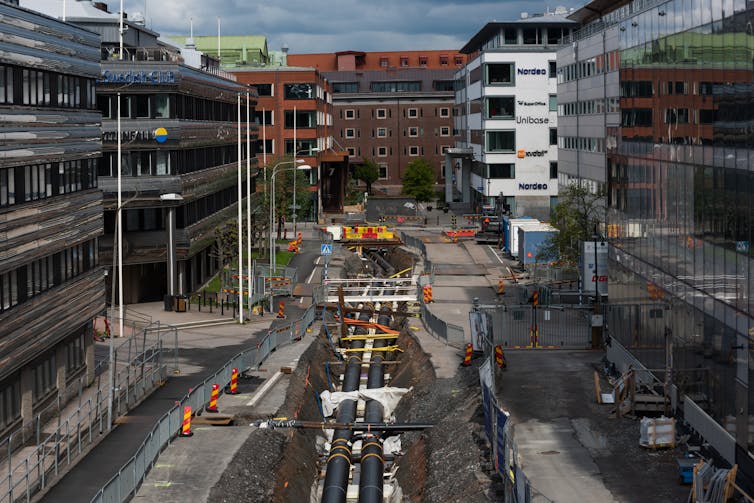
Such systems are already working in other cold countries. Thermal networks heat half the homes in Sweden and two-thirds of homes in Denmark.

pipes being laid under a city street
District heating pipes being laid at Gullbergs Strandgata in Gothenburg, Sweden in May 2021.
(Shutterstock)

The oil crisis of the 1970s motivated both countries to find new domestic heating sources. They financed their new infrastructure over 50 years and reduced their investment risks through low-interest bonds (loaned by public banks) and generous subsidies.

These were offered to utility companies looking to expand district energy operations, and to consumers by incentivizing connections to such systems. Additionally, in Denmark, controlled consumer prices served a similar function.

At least seven American states have established thermal energy networks, with New York being the first. The state’s Utility Thermal Energy Network and Jobs Act allows public utilities to own, operate and manage thermal networks.

They can supply thermal energy, but so can private producers such as data centres, all with public oversight. Such a strategy avoids monopolies and allows gas and electric utilities to deliver services through central networks.

An opportunity for Canada

Canada has a real opportunity to learn from the experiences of Sweden, Denmark and New York. In doing so, Canada can create a beneficial and truly national heating system in the process. Beginning with federal government leadership, thermal networks could be built across Canada, tailored to the unique and individual needs, strengths and opportunities of municipalities and provinces.

Such a shift would reduce emissions and generate greater energy sovereignty for Canada. It could drive a just energy strategy that could provide employment opportunities for those displaced by the transition away from fossil fuels, while simultaneously increasing Canada’s economic independence in the process.

Thermal networks could be built using pipelines made from Canadian steel. Oil-well drillers from Alberta could dig borehole heat-storage systems. A new market for heat-recovery pumps would create good advanced-manufacturing jobs in Canada.


Read more:
How heat storage technologies could keep Canada’s roads and bridges ice-free all winter long


Funding for the infrastructure could come through public-private partnerships, with major investments from public banks and pension funds, earning a solid and secure rate of return. A regulated approach and process could permit this infrastructure cost to be amortized over decades, similar to the way past governments have financed gas, electrical and water networks.

As researchers studying the engineering and policy potential of such an opportunity, we view such actions as essential if net-zero is to be achieved in the Canadian building sector. They are also a win-win solution for incumbent industry, various levels of government and citizens across Canada alike.

Yet efforts to install robust thermal networks remain stalled by institutional inertia, the strong influence of the oil industry, limited citizen awareness of the technology’s potential and a tendency for government to view the electrification of heating as the primary solution to building decarbonization.

In this time of environmental crisis and international uncertainty, pushing past these barriers, drawing on Canada’s lengthy history of constructing infrastructure and creating this new form thermal energy infrastructure would be a safe, beneficial and conscientious way to move Canada into a more climate-friendly future.

The Conversation

James (Jim) S. Cotton receives funding from the Natural Sciences and Engineering Research Council of Canada.

Caleb Duffield does not work for, consult, own shares in or receive funding from any company or organisation that would benefit from this article, and has disclosed no relevant affiliations beyond their academic appointment.

ref. Canada could use thermal infrastructure to turn wasted heat emissions into energy – https://theconversation.com/canada-could-use-thermal-infrastructure-to-turn-wasted-heat-emissions-into-energy-254972

US government may be abandoning the global climate fight, but new leaders are filling the void – including China

Source: The Conversation – USA (2) – By Shannon Gibson, Professor of Environmental Studies, Political Science and International Relations, USC Dornsife College of Letters, Arts and Sciences

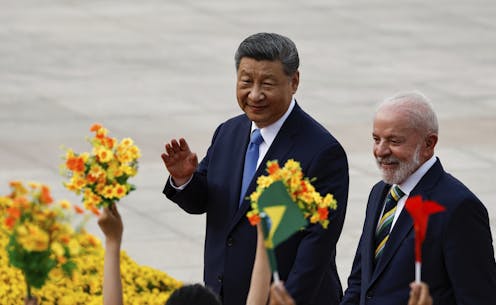
Chinese President Xi Jinping and Brazilian President Luiz Inácio Lula da Silva meet in Beijing in May 2025. Tingshu Wang/Pool Photo via AP

When President Donald Trump announced in early 2025 that he was withdrawing the U.S. from the Paris climate agreement for the second time, it triggered fears that the move would undermine global efforts to slow climate change and diminish America’s global influence.

A big question hung in the air: Who would step into the leadership vacuum?

I study the dynamics of global environmental politics, including through the United Nations climate negotiations. While it’s still too early to fully assess the long-term impact of the United States’ political shift when it comes to global cooperation on climate change, there are signs that a new set of leaders is rising to the occasion.

World responds to another US withdrawal

The U.S. first committed to the Paris Agreement in a joint announcement by President Barack Obama and China’s Xi Jinping in 2015. At the time, the U.S. agreed to reduce its greenhouse gas emissions 26% to 28% below 2005 levels by 2025 and pledged financial support to help developing countries adapt to climate risks and embrace renewable energy.

Some people praised the U.S. engagement, while others criticized the original commitment as too weak. Since then, the U.S. has cut emissions by 17.2% below 2005 levels – missing the goal, in part because its efforts have been stymied along the way.

Just two years after the landmark Paris Agreement, Trump stood in the Rose Garden in 2017 and announced he was withdrawing the U.S. from the treaty, citing concerns that jobs would be lost, that meeting the goals would be an economic burden, and that it wouldn’t be fair because China, the world’s largest emitter today, wasn’t projected to start reducing its emissions for several years.

Scientists and some politicians and business leaders were quick to criticize the decision, calling it “shortsighted” and “reckless.” Some feared that the Paris Agreement, signed by almost every country, would fall apart.

But it did not.

In the United States, businesses such as Apple, Google, Microsoft and Tesla made their own pledges to meet the Paris Agreement goals.

Hawaii passed legislation to become the first state to align with the agreement. A coalition of U.S. cities and states banded together to form the United States Climate Alliance to keep working to slow climate change.

Globally, leaders from Italy, Germany and France rebutted Trump’s assertion that the Paris Agreement could be renegotiated. Others from Japan, Canada, Australia and New Zealand doubled down on their own support of the global climate accord. In 2020, President Joe Biden brought the U.S. back into the agreement.

A solar farm in a field.
Amazon partnered with Dominion Energy to build solar farms, like this one, in Virginia. They power the company’s cloud-computing and other services.
Drew Angerer/Getty Images

Now, with Trump pulling the U.S. out again – and taking steps to eliminate U.S. climate policies, boost fossil fuels and slow the growth of clean energy at home – other countries are stepping up.

On July 24, 2025, China and the European Union issued a joint statement vowing to strengthen their climate targets and meet them. They alluded to the U.S., referring to “the fluid and turbulent international situation today” in saying that “the major economies … must step up efforts to address climate change.”

In some respects, this is a strength of the Paris Agreement – it is a legally nonbinding agreement based on what each country decides to commit to. Its flexibility keeps it alive, as the withdrawal of a single member does not trigger immediate sanctions, nor does it render the actions of others obsolete.

The agreement survived the first U.S. withdrawal, and so far, all signs point to it surviving the second one.

Who’s filling the leadership vacuum

From what I’ve seen in international climate meetings and my team’s research, it appears that most countries are moving forward.

One bloc emerging as a powerful voice in negotiations is the Like-Minded Group of Developing Countries – a group of low- and middle-income countries that includes China, India, Bolivia and Venezuela. Driven by economic development concerns, these countries are pressuring the developed world to meet its commitments to both cut emissions and provide financial aid to poorer countries.

A man with his arms crossed leans on a desk with a 'Bolivia' label in front of it.
Diego Pacheco, a negotiator from Bolivia, spoke on behalf of the Like-Minded Developing Countries group during a climate meeting in Bonn, Germany, in June 2025.
IISD/ENB | Kiara Worth

China, motivated by economic and political factors, seems to be happily filling the climate power vacuum created by the U.S. exit.

In 2017, China voiced disappointment over the first U.S. withdrawal. It maintained its climate commitments and pledged to contribute more in climate finance to other developing countries than the U.S. had committed to – US$3.1 billion compared with $3 billion.

This time around, China is using leadership on climate change in ways that fit its broader strategy of gaining influence and economic power by supporting economic growth and cooperation in developing countries. Through its Belt and Road Initiative, China has scaled up renewable energy exports and development in other countries, such as investing in solar power in Egypt and wind energy development in Ethiopia.

While China is still the world’s largest coal consumer, it has aggressively pursued investments in renewable energy at home, including solar, wind and electrification. In 2024, about half the renewable energy capacity built worldwide was in China.

Three people talk under the shade of solar panels.
China’s interest in South America’s energy resources has been growing for years. In 2019, China’s special representative for climate change, Xie Zhenhua, met with Chile’s then-ministers of energy and environment, Juan Carlos Jobet and Carolina Schmidt, in Chile.
Martin Bernetti/AFP via Getty Images

While it missed the deadline to submit its climate pledge due this year, China has a goal of peaking its emissions before 2030 and then dropping to net-zero emissions by 2060. It is continuing major investments in renewable energy, both for its own use and for export. The U.S. government, in contrast, is cutting its support for wind and solar power. China also just expanded its carbon market to encourage emissions cuts in the cement, steel and aluminum sectors.

The British government has also ratcheted up its climate commitments as it seeks to become a clean energy superpower. In 2025, it pledged to cut emissions 77% by 2035 compared with 1990 levels. Its new pledge is also more transparent and specific than in the past, with details on how specific sectors, such as power, transportation, construction and agriculture, will cut emissions. And it contains stronger commitments to provide funding to help developing countries grow more sustainably.

In terms of corporate leadership, while many American businesses are being quieter about their efforts, in order to avoid sparking the ire of the Trump administration, most appear to be continuing on a green path – despite the lack of federal support and diminished rules.

USA Today and Statista’s “America’s Climate Leader List” includes about 500 large companies that have reduced their carbon intensity – carbon emissions divided by revenue – by 3% from the previous year. The data shows that the list is growing, up from about 400 in 2023.

What to watch at the 2025 climate talks

The Paris Agreement isn’t going anywhere. Given the agreement’s design, with each country voluntarily setting its own goals, the U.S. never had the power to drive it into obsolescence.

The question is if developed and developing country leaders alike can navigate two pressing needs – economic growth and ecological sustainability – without compromising their leadership on climate change.

This year’s U.N. climate conference in Brazil, COP30, will show how countries intend to move forward and, importantly, who will lead the way.

Research assistant Emerson Damiano, a recent graduate in environmental studies at USC, contributed to this article.

The Conversation

Shannon Gibson does not work for, consult, own shares in or receive funding from any company or organization that would benefit from this article, and has disclosed no relevant affiliations beyond their academic appointment.

ref. US government may be abandoning the global climate fight, but new leaders are filling the void – including China – https://theconversation.com/us-government-may-be-abandoning-the-global-climate-fight-but-new-leaders-are-filling-the-void-including-china-251786