South Africa’s earliest newspapers made money from slavery: book offers new evidence

Source: The Conversation – Africa – By Gawie Botma, Associate Professor of Journalism, Stellenbosch University

In a recently published book, Reconsidering the History of South African Journalism: The Ghost of the Slave Press (2025 Routledge), author and journalism professor Gawie Botma explores the gap in the country’s understanding about the complicity of South African journalism in slavery. He spoke to The Conversation about what he found.

Slavery and journalism: what’s the connection?

In the US and Britain a few newspapers have issued apologies for their complicity in the slave trade. These include the Hartford Courant in Connecticut, considered to be the oldest continuously published publication in the US. In 2000 it apologised for its complicity in the slave trade nearly two centuries earlier. In 2023 The Guardian in the UK apologised for the fact that its founders had had links to the transatlantic slave trade.

The South African media have remained silent about their historical role in Cape slavery. Slavery in the country lasted for more than 170 years between 1652 and 1838. Precise numbers are difficult to calculate. But according to the historian Robert Shell, approximately 63,000 enslaved people were imported to the Cape from four main areas: the rest of Africa (26.4%), India (25.9%), Indonesia (22.7%) and Madagascar (25.1%). In 1838 around 37,000 were emancipated.

The first newspaper in the Cape colony – including parts of what are now the Western and Eastern Cape provinces – appeared in Cape Town four decades before slavery was abolished in 1838. No other publishing activities existed in what is now South Africa. The Cape, then a colony of the British Empire, was the only formal European settlement and only a few printing presses operated at scattered mission stations in the interior of southern Africa.

What I found during my research was the sobering fact that several of the owners, editors, publishers and printers of around 16 early newspapers and magazines between 1800 and 1838 were slave owners themselves. In addition, the publications they were involved with regularly published advertisements and notices to enable the slave trade as well as to recapture enslaved people who absconded.

These facts are omitted or under-emphasised in academic and popular accounts of how South African journalism was founded. Instead, the focus is often on the establishment of press freedom through the heroic efforts of a few white (British) men.

Who were the early players in the newspaper space?

British slave traders Alexander Walker and John Robertson founded the first newspaper, The Cape Town Gazette and African Advertiser / Kaapsche Stads Courant en Afrikaansche Berigter (CTG/KSC), in 1800. Acccording to historian A.C.G. Lloyd in his book The Birth of Printing in South Africa, Walker and Robertson were

men of many interests, who in addition to being wholesale merchants on a large scale, were slave-dealers dealing in as many as six hundred slaves in a single consignment.

The public received their first copies on Saturday 16 August 1800. Separate, identical editions in English and Dutch were produced. Even the advertisements were translated. The format, which became a template for future newspapers, was a mixture of official government news, commercial advertising and public announcements, with snippets of international and local news. Enslaved persons worked as assistants of the press.

Twenty-four years later the second paper, The South African Commercial Advertiser, was founded under the editorship of immigrants George Greig, Thomas Pringle and John Fairbairn. Pringle and Fairbairn displayed entrepreneurship as well as idealism about the role of the press. As part of this they rather gradually positioned themselves against slavery.

Opposition to “liberal” ideas inspired the founding of De Zuid-Afrikaan in 1830. The newspaper reported in detail about slavery from the perspective of slave owners. Several prominent individuals involved with this newspaper were the owners of multiple enslaved people. These included the editor (after emancipation) Christoffel J. Brand. After he retired from the editorship in 1845, he became the first speaker of the Cape parliament in 1854 and was later awarded a British knighthood.

The printed press’s relationship with slavery

South African media historiography often cites The South African Commercial Advertiser as the first journalistic enterprise in the country. It also positions the paper as being a “liberal champion” of its time.

But on close inspection this newspaper’s positioning towards slavery is much more complex.

My research shows that the paper actively contributed to the slave trade by allowing the publication of slave advertisements from the start. It continued to do so until slavery was abolished in 1838. The founding owner and editor/printer Greig owned at least one enslaved person.

In the telling of the history of the time, comparisons are made between the first two endeavours. On the one hand CTG/KSC is more generally described as being an outlier as “a slave press” founded by a few “bad apples”. The South African Commercial Advertiser is positioned as being a liberal champion of the “free press” and founder of South African journalism.

Media historian Wessel de Kock in his book on the origins of the South African press makes this comment:

What manner of free press would have emerged from the grubby commercialism of Walker and Robertson instead of the fiery idealism of Pringle and Fairbairn remains an intriguing question.

But should the “grubby commercialism” of CTG/KSC be regarded as an outlier in the history of the early colonial press? Or did it set a trend which was followed by contemporaries and influenced the development of South African newspapers for decades and perhaps even centuries to come?

The old dictum that the press promotes the views of those who own and support it was as true during slavery and apartheid as it is now.

Past evaluations of De Zuid-Afrikaan as one-sidedly reactionary should probably also be revisited.

For one, slave ownership also existed among other English newspaper pioneers like William Bridekirk, printer and editor of several publications, including The South African Chronicle and Mercantile Advertiser, and Louis Henri Meurant, founder of The Graham’s Town Journal, the first newspaper outside Cape Town.

This too has been largely ignored in established journalism history as the focus for involvement in slavery often remained on the “conservative” Cape Dutch.

The result is that a simple dualistic view of South African newspaper history has been passed down. The two poles are then seen as representative of respectively Afrikaans and English journalism as it developed in the 19th and 20th centuries.

What’s the legacy?

Some elements in the developing press in the Cape colony certainly played a role in the demise of slavery by frequently publishing government announcements, news, editorial and readers’ comments about slavery. They enabled a public debate and the development of a measure of consensus that slavery should be abolished.

Nevertheless, all the papers made compromises as they juggled interests, including political and economic factors. These decisions often worked against liberation. In that case the press was often following and not leading the momentum towards greater civic freedoms.

This was generated elsewhere, such as in the British parliament where the campaign to abolish slavery finally succeeded after decades of struggle.

The Conversation

Gawie Botma does not work for, consult, own shares in or receive funding from any company or organisation that would benefit from this article, and has disclosed no relevant affiliations beyond their academic appointment.

ref. South Africa’s earliest newspapers made money from slavery: book offers new evidence – https://theconversation.com/south-africas-earliest-newspapers-made-money-from-slavery-book-offers-new-evidence-262376
3 reasons Republicans’ redistricting power grab might backfire

Source: The Conversation – USA – By Charlie Hunt, Associate Professor of Political Science, Boise State University

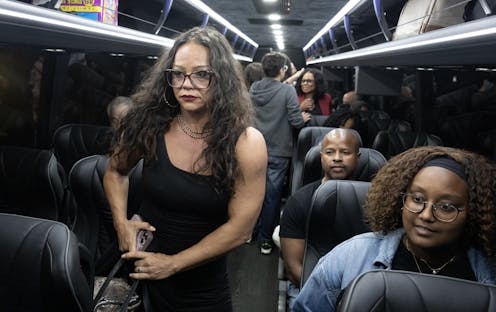
Texas state lawmakers board a bus following a press conference at the DuPage County Democratic Party headquarters in Carol Stream, Ill., on Aug. 3, 2025. Scott Olson/Getty Images

The gerrymandering drama in Texas – and beyond – has continued to unfold after Democratic state legislators fled the state. The Democrats want to prevent the Republican-controlled government from enacting a mid-decade gerrymander aimed at giving Republicans several more seats in Congress.

The Texas GOP move was pushed by President Donald Trump, who’s aiming to ensure he has a GOP-controlled Congress to work with after the 2026 midterm elections.

Other Republican states such as Missouri and Ohio may also follow the Texas playbook; and Democratic states such as California and Illinois seem open to responding in kind.

But there are a few factors that make this process more complicated than just grabbing a few House seats. They may even make Republicans regret their hardball gerrymandering tactics, if the party ends up with districts that political scientists like me call “dummymandered.”

President Trump asserts that his party is ‘entitled’ to five more congressional districts in Texas.

Democrats can finally fight back

Unlike at the federal level, where Democrats are almost completely shut out of power, Republicans are already facing potentially consequential retaliation for their gerrymandering attempts from Democratic leaders in other states.

Democrats in California, led by Gov. Gavin Newsom, are pushing for a special election later this year, in which the voters could vote on new congressional maps in that state, aiming to balance out Democrats’ losses in Texas. If successful, these changes would take effect prior to next year’s midterm elections.

Other large Democratic-controlled states, such as Illinois and New York – led by Gov. J.B. Pritzker and Gov. Kathy Hochul, respectively – have also indicated openness to enacting their own new gerrymanders to pick up seats on the Democratic side.

New York and California both currently use nonpartisan redistricting commissions to draw their boundaries. But Hochul recently said she is “sick and tired of being pushed around” while other states refuse to adopt redistricting reforms and gerrymander to their full advantage. Hochul said she’d even be open to amending the state constitution to eliminate the nonpartisan redistricting commission.

It’s unclear whether these blue states will be successful in their efforts to fight fire with fire; but in the meantime, governors like Hochul and Pritzker have welcomed the protesting Democratic legislators from Texas, in many cases arranging for their housing during their self-imposed exile.

Dummymandering

Another possible problem for either party looking to gain some seats in this process stems from greediness.

In responding to Democrats’ continued absence from Texas, Gov. Greg Abbott threatened even more drastic gerrymanders. “If they don’t start showing up, I may start expanding,” Abbott said. “We may make it six or seven or eight new seats we’re going to be adding on the Republican side.”

But Abbott might think twice about this strategy.

Parties that gerrymander their states’ districts are drawing lines to maximize their own advantage, either in state legislatures or, in this case, congressional delegations.

When parties gerrymander districts, they don’t usually try to make them all as lopsided as possible for their own side. Instead, they try to make as many districts as possible that they are likely to win. They do this by spreading groups of supportive voters across several districts so they can help the party win more of these districts.

But sometimes the effort backfires: In trying to maximize their seats, a party spreads its voters too thin and fails to make some districts safe enough. These vulnerable districts can then flip to the other party in future elections, and the opposing party ends up winning more seats than expected.

This phenomenon, commonly referred to as “dummymandering,” has happened before. It even happened in Texas, where Republicans lost a large handful of poorly drawn state legislative districts in the Dallas suburbs in 2018, a strong year for Democrats nationwide.

With Democrats poised for a strong 2026 midterm election against an unpopular president, this is a lesson Republicans might need to pay attention to.

There’s not much left to gerrymander

One of the main reasons dummymandering happens is that there has been so much gerrymandering that there are few remaining districts competitive enough for a controlling party to pick off for themselves. This important development has unfolded for two big reasons.

First, in terms of gerrymandering, the low-hanging fruit is already picked over. States controlled by either Democrats or Republicans have already undertaken pretty egregious gerrymanders during previous regular redistricting processes, particularly following the 2010 and 2020 censuses.

Republicans have generally been more adept at the process, particularly in maximizing their seat shares in relatively competitive states such as Wisconsin and North Carolina that they happen to control.

But Democrats have also been successful in states such as Maryland, where only one Republican serves out of nine seats, despite the party winning 35% of the presidential vote in 2024. In Massachusetts, where Democrats hold all eight seats, Republicans won 37% of the presidential vote in 2024.

There’s also the fact that over the past half-century, “gerrymanderable” territory has become more difficult to find regardless of how you draw the boundaries. That’s because the voting electorate is more geographically sorted between the parties.

This means that Democratic and Republican voters are segregated from each other geographically, with Democrats tending toward big cities and suburbs, and Republicans occupying rural areas.

As a result, it’s become less geographically possible than ever to draw reasonable-looking districts that split up the other party’s voters in order to diminish the opponents’ ability to elect one of their own.

Regardless of how far either party is willing to go, today’s clash over Texas redistricting represents largely uncharted territory. Mid-decade redistricting does sometimes happen, either at the hands of legislatures or the courts, but not usually in such a brazen fashion.

And this time, the Texas attempt could spark chaos and a race to the bottom, where every state picks up the challenge and tries to rewrite their electoral maps – not in the usual once-a-decade manner, but whenever they’re unsatisfied with the odds in the next election.

The Conversation

Charlie Hunt does not work for, consult, own shares in or receive funding from any company or organization that would benefit from this article, and has disclosed no relevant affiliations beyond their academic appointment.

ref. 3 reasons Republicans’ redistricting power grab might backfire – https://theconversation.com/3-reasons-republicans-redistricting-power-grab-might-backfire-262553

Trump’s tariffs have finally kicked in, so what happens next?

Source: The Conversation – UK – By Maha Rafi Atal, Adam Smith Senior Lecturer in Political Economy, School of Social and Political Sciences, University of Glasgow

Donald Trump’s new international trade tariffs have landed. Some are lower than others, some deals have been done, but overall they are the highest they have been in 100 years.

They are also unprecedented in the era of the rules-based trade system that has been in place since 1945.

So what happens next? That’s a tricky question to answer given that the US president has already pressed the pause button on this economic policy before.

But assuming that doesn’t happen again straight away, we can make some confident predictions about the consequences.

First off, the immediate economic effect will be felt by American consumers. JP Morgan, the biggest bank in the US, estimates that 60% of the cost of Trump’s tariffs will be passed directly on to his fellow citizens.

And that’s just the start. Most goods bought in the US, whether they’re electrical items, cars, medical devices, processed foods or makeup sets, are made up of dozens of components, sourced from multiple countries. A finished product may therefore be “tariffed” several times before it reaches the shelf, adding to the final price rise.

Medium-sized businesses are likely to feel the most pain. They have neither the global reach to reorganise their supply chains quickly nor the deep margins to absorb new costs. That means higher prices for the goods they produce.

As a result of all of this, things will get more expensive and consumer spending will fall. It’s too early to quantify the drop, but survey data shows that households are already cutting back.

Businesses will also cut or delay investment in new plants, staff and product lines, as more of their revenue goes on covering higher import taxes.

These effects will be inflationary, pushing prices up. They will also be “recessionary” – in other words, they could cause a recession by cooling demand and investment.

Trump card

The political irony here is striking. Trump’s election victory was fuelled in part by voter frustration over high inflation early in Joe Biden’s presidency.

By the time of the election in November 2024, inflation had eased – but the perception that Biden was linked to higher prices (often discussed with reference to the price of eggs in the grocery store) lingered.

Now Trump’s policy choices look set to drive up prices again, while also risking a significant economic downturn.

A US recession would have global consequences. Mexico, China, Canada, Germany and Japan – the countries which export the most goods to the US – are particularly exposed. Together with the US, these economies account for roughly half of global GDP. If US economic activity slows, and its key suppliers follow, that would be enough to trigger a global contraction.

Eggs in an egg box.
The price of eggs can rise and fall.
ArturTona/Shutterstock

There’s also the risk of renewed supply chain delays. Faced with uncertainty about demand, companies will slow or stop new orders.

Then, when consumers start buying again, the components needed may not be in stock, delaying production and pushing up costs further. These disruptions tend to cascade through multiple sectors, meaning the impact will be widely felt around the globe.

So how long can this tariff regime hold? In April, Trump’s so-called “liberation day” tariffs were rolled back within days under pressure from American businesses that were suddenly paying more for vital imports.

Since then, very few countries have signed deals with the US, and the ones that have secured broad agreements rather than binding treaties. That means the political backlash from businesses and consumers could once again force the administration to retreat.

For now, the US is testing how far it can push this experiment in protectionism. But the risks are clear: higher prices at home, slower global growth, and a political gamble that may prove costly.

The Conversation

Maha Rafi Atal does not work for, consult, own shares in or receive funding from any company or organisation that would benefit from this article, and has disclosed no relevant affiliations beyond their academic appointment.

ref. Trump’s tariffs have finally kicked in, so what happens next? – https://theconversation.com/trumps-tariffs-have-finally-kicked-in-so-what-happens-next-262843

Donald Trump to chair new Olympic taskforce in bid to allay international visitor concerns ahead of 2028 Los Angeles Games

Source: The Conversation – UK – By Richard Hargy, Visiting Research Fellow in International Studies, Queen’s University Belfast

The US president, Donald Trump, signed an executive order on August 5 to set up a government taskforce to manage the 2028 Summer Olympics in Los Angeles. During the White House announcement, Trump said: “We’ll do anything necessary to keep the Olympics safe, including using our National Guard or military.”

This move may go some way to addressing international concern over the Trump administration’s tough immigration polices, which include a travel ban on 12 countries. There were fears that this could make it difficult for some international supporters to attend the games (although athletes and coaches are exempt).

A report earlier this year by the US Travel Association also flagged concerns over the US’s ability to logistically manage an event on this scale.

The upcoming Fifa World Cup in 2026 will be seen as a dry run for the Olympics in terms of handling large numbers of international visitors. Thousands of supporters are likely to travel between co-hosts, the US, Canada and Mexico, to attend different matches.

Victor Matheson, a professor at College of Holy Cross in Massachusetts, who specialises in sports economics, has said: “You could have significant immigration problems with fans and players going across borders.”


Read more:
Masked and armed agents are arresting people on US streets as aggressive immigration enforcement ramps up


There are, however, a number of political factors at play in Trump’s decision to create a special task force. Its formation comes in the wake of Trump’s contentious decision in June 2025 to order the deployment of National Guard troops and US Marines onto the streets of Los Angeles. This was in response to protests against immigration raids launched by US Immigration and Customs Enforcement (Ice) across the city.

Since then, relations between the Trump administration and Los Angeles municipal officials, including the mayor Karen Bass, have been fairly frosty. After arrests by federal authorities in LA, Bass accused Trump of “ratcheting up chaos”, and perpetuating a “political agenda of provoking fear and terror”. Trump referred to Bass as “not very competent” during the recent White House event.

At a separate event, administration spokesperson Tammy Bruce said the task force would “coordinate across federal, state and local agencies to ensure streamlined visa processes, robust security and efficient transportation”.

It is not unprecedented for a US administration to assume this type of role over a major event. The military and National Guard have previously provided support to state and municipal agencies when US cities have hosted major sporting fixtures.

This will partly be about the memory of what happened at the Altanta games in 1996, when a bomb attack killed two people and injured 111. The 2028 Summer Olympic and Paralympic Games had already been designated a “national security event”.

The scale of security planning for the Los Angeles Olympics will be huge. And Trump’s One Big Beautiful Bill Act has already set aside US$1 billion (£745,190,000) in federal government funding for security at the 2028 games.

Trump announces the task force for the Olympics.

Jules Boykoff, a professor of politics and government at Pacific University, has said that designating Los Angeles 2028 a national security special event gives the federal government broader latitude to have control over the organisation of the games, and that he expects to see “President Trump flexing like that more and more, the closer that we get to the Olympic Games”.

Boykoff also warned that the national special security event status now given to the LA Olympics may provide an opportunity for further crackdowns in the city.

There are also political risks for the Trump administration if immigration policies throw up issues for people attending the games, or it is not seen as successful. The president has made reducing immigration a priority policy, but his way of doing this and sending in masked Ice agents is losing support.

William A. Galston, a senior fellow at the Brookings Institution, pointed out recently that the way it is being carried out is not necessarily popular. Galston pointed to a YouGov poll taken in July which found that 52% of Americans said Trump’s immigration policy was “too harsh”, while 54% said Ice agents have gone “too far” in enforcing immigration laws.

In dealing with international apprehension about who can attend and travel restrictions, the White House has said that the new task force will “streamline visa processing and credentialing” for participants and media. Despite this assurance, there are concerns from some Los Angeles officials that the administration’s immigration policies could deter tourists and complicate the issuing of visas for Olympic teams.

Earlier this year, the man in charge of the Los Angeles Olympics, Casey Wasserman, sought to allay these worries. In an address to the International Olympic Committee in Pylos, Greece, Wasserman said that he had received assurances from Trump and the US secretary of state, Marco Rubio, and that he did not “anticipate any problems from any country to come and participate and have their delegations in full force.”

Trump clearly wants to host a triumphant Los Angeles 2028, and hopes that a successful games will boost his popularity. He will expect his new task force to smooth the way for that to happen.

The Conversation

Richard Hargy does not work for, consult, own shares in or receive funding from any company or organisation that would benefit from this article, and has disclosed no relevant affiliations beyond their academic appointment.

ref. Donald Trump to chair new Olympic taskforce in bid to allay international visitor concerns ahead of 2028 Los Angeles Games – https://theconversation.com/donald-trump-to-chair-new-olympic-taskforce-in-bid-to-allay-international-visitor-concerns-ahead-of-2028-los-angeles-games-262831

A new global ruling shows states are legally responsible for tackling climate change

Source: The Conversation – UK – By Amelia Hadfield, Founding Director, Centre for Britain and Europe, Department of Politics and International Relations, University of Surrey

mentalmind/Shutterstock

Sovereign states are not only responsible for tackling fossil fuel damage, they have to make redress, according to a recent ground-breaking ruling by the International Court of Justice (ICJ). The ruling makes clear that the court believes states must actively prevent harm to the world’s climate system. States that fail to act accordingly may have to pay compensation, restore damaged ecosystems, rebuild infrastructure or face further legal challenges.

The ruling came in the form of an advisory opinion, which is a legal interpretation provided by a high-level court or tribunal with a special mandate, in response to a specific question of law. Simply put, an advisory opinion is not legally binding in the way a court judgment between two nations would be.

However, as an expert in international relations, I believe the consequences of this ruling are significant, both legally and politically.

Politically, states are now in the firing line as the main agents of harm. States and the public and private sector energy companies that states contract, licence or subsidise are now more visible in terms of the kind of climate harm they permit.

As stated by the ICJ president, Yūji Iwasawa, the advisory opinion emphasises the “urgent existential threat” affecting nature and people, alongside the disproportionately intense effect upon vulnerable countries, including small island states, that brought the claim on the basis of years of campaigning.

For climate campaigners the ruling that “states do have legal obligations to act on climate change” is a definitive win. It’s also only the first step in a much larger challenge to prompt real change around fossil fuel usage and damage.


Read more:
Three secrets to successful climate litigation


The possibility of big emitters being successfully sued is certainly the most tangible takeaway from the ruling.

But from an international relations standpoint, the question is the degree to which the ruling works with similar judgments to shift international behaviour overall. States can choose to make immediate changes in upcoming climate negotiations, but also within the fabric of global environmental governance overall.

Legally, the ruling itself is potentially seismic. First, for those regarding international rules on climate change as unimportant in law, the ICJ’s advisory opinion will be a wake-up call. This ruling may be advisory but it indicates the rules on climate change are legal, enforceable and substantive in the eyes of the court.

Second, states failing to abide by international rules on climate change can now be held to account. For national governments, this means that countries should no longer treat climate change rules as aspirational or discretionary. Instead, the ruling pushes each state to treat the 1.5°C target for limiting global warming as fixed, however challenging.

While advisory opinions are not legally binding, they represent a unanimous opinion on the key issues from the ICJ, and effectively gather together all previous rulings and law. In doing so, such rulings arguably drive forward climate change law – and litigation – now a growth industry in its own right.

Even for states that are not signatories to various climate treaties or party to various international courts, the ICJ ruling makes for tough reading. States do have legal obligations to act on climate change, regardless of the treaties that have been signed.

The ICJ’s ruling is vital in this respect, because it outlines how countries that are not part of climate change treaties still have to show that their climate policies and practices are consistent with other parts of international law.

In doing so, the ICJ makes clear that a whole range of treaties now applies to states (from the UN convention on the law of the sea to the Vienna convention for the protection of the ozone layer) and that principles such as intergenerational equity must be upheld.

The political implications for states arising from this advisory opinion are twofold: states can be sued as fossil fuel emitters, and countries can sue harm-inducing emitters for failure to comply.

A turning point

I argue the ICJ ruling represents a turning point. It illustrates a growing difference between international judicial attitudes to climate change, and the attitudes of individual states.

The ruling also aligns with similar judgments emerging from other international courts, including the International Tribunal for the Law of the Sea and the Inter-American Court of Human Rights. They show a consistent approach and clarity on the question.

Last year, the European Court of Human Rights declared that Switzerland had “failed to comply with its duties” and violated the right to respect for private and family life by failing to combat climate change.

Some state governments remain largely defiant. The US has withdrawn from the Paris agreement and global plastics treaty negotiations. Brazil is progressing a devastation bill that allows projects classified as having “medium” polluting potential to obtain an environmental licence through a self-declared online form and could lead to lead to vast deforestation.


Read more:
Older Swiss women just set a global legal precedent for challenging their nation’s climate change policy


The ICJ ruling pushes states to sensibly redesign their systems of energy, trade and investment with justice and equity at the forefront, helping move towards a just transition to greener energy. The opinion opens legal space for vulnerable nations and displaced communities to seek remedy and restitution.

It could also affect international laws on everything from human rights and ocean health to the ozone layer and desertification. And have a knock-on effect on treaties currently under negotiation such as the global plastics treaty.

Can the ICJ ruling become a practical framework for accountability, and truly support UN Secretary General António Guterres’ vision of “energy security and people’s security”? The jury on that is still out.


Don’t have time to read about climate change as much as you’d like?

Get a weekly roundup in your inbox instead. Every Wednesday, The Conversation’s environment editor writes Imagine, a short email that goes a little deeper into just one climate issue. Join the 45,000+ readers who’ve subscribed so far.


The Conversation

Amelia Hadfield is working with environmental law researchers Rosalind Malcolm and Feja Lesniewska to explore both the political and legal implications of the ICJ’s recent ruling on state behaviour at national and global levels.

ref. A new global ruling shows states are legally responsible for tackling climate change – https://theconversation.com/a-new-global-ruling-shows-states-are-legally-responsible-for-tackling-climate-change-261896

Today’s humanoid robots look remarkable, but there’s a design flaw holding them back

Source: The Conversation – UK – By Hamed Rajabi, Director of Mechanical Intelligence (MI) Research Group, London South Bank University

Time for a rethink? Wikimedia, CC BY-SA

Watch Boston Dynamics’ Atlas robot doing training routines, or the latest humanoids from Figure loading a washing machine, and it’s easy to believe the robot revolution is here. From the outside, it seems the only remaining challenge is perfecting the AI (artificial intelligence) software to enable these machines to handle real-life environments.

But the industry’s biggest players know there is a deeper problem. In a recent call for research partnerships, Sony’s robotics division highlighted a core issue holding back its own machines.

It noted that today’s humanoid and animal-mimicking robots have a “limited number of joints”, which creates a “disparity between their movements and those of the subjects they imitate, significantly diminishing their … value”. Sony is calling for new “flexible structural mechanisms” – in essence, smarter physical bodies – to create the dynamic motion that is currently missing.

The core issue is that humanoid robots tend to be designed around software that controls everything centrally. This “brain-first” approach results in physically unnatural machines. An athlete moves with grace and efficiency because their body is a symphony of compliant joints, flexible spines and spring-like tendons. A humanoid robot, by contrast, is a rigid assembly of metal and motors, connected by joints with limited degrees of freedom.

To fight their body’s weight and inertia, robots have to make millions of tiny, power-hungry corrections every second just to avoid toppling over. As a result, even the most advanced humanoids can only work for a few hours before their batteries are exhausted.

To put this in perspective, Tesla’s Optimus robot consumes around 500 watts of power per second for a simple walk. A human accomplishes a more demanding brisk walk using only around 310 watts per second. The robot is therefore burning nearly 45% more energy to accomplish a simpler task, which is a considerable inefficiency.

Diminishing returns

So, does this mean the entire industry is on the wrong path? When it comes to their core approach, yes. Unnatural bodies demand a supercomputer brain and an army of powerful actuators, which in turn make robots heavier and thirstier for energy, deepening the very problem they aim to solve. The progress in AI might be breathtaking, but it leads to diminishing returns.

Tesla’s Optimus, for instance, is smart enough to fold a t-shirt. Yet the demonstration actually reveals its physical weakness. A human can fold a t-shirt without really looking, using their sense of touch to feel the fabric and guide their movements.

Optimus, with its relatively rigid, sensor-poor hands, relies on its powerful vision and AI brain to meticulously plan every tiny motion. It would likely be defeated by a crumpled shirt on a messy bed, because its body lacks the physical intelligence to adapt to the unpredictable state of the real world.

Boston Dynamics’ new, all-electric Atlas is even more impressive, with a range of motion that seems almost alien. But what the viral acrobatics videos don’t show is what it can’t do. It could not walk confidently across a mossy rock, for instance, because its feet cannot feel the surface to conform to it. It could not push its way through a dense thicket of branches, because its body cannot yield and then spring back.

This is why, despite years of development, these robots mostly remain research platforms, not commercial products.

Why aren’t the industry’s leaders already pursuing this different philosophy? One likely reason is that today’s top robotics firms are fundamentally software and AI companies, whose expertise lies in solving problems with computation. Their global supply chain is optimised to support this with high-precision motors, sensors and processors.

Building physically intelligent robot bodies requires a different manufacturing ecosystem, rooted in advanced materials and biomechanics, which is not yet mature enough to operate at scale. When a robot’s hardware already looks so impressive, it’s tempting to believe the next software update will solve any remaining issues, rather than undertaking the costly and difficult task of redesigning the body and the supply chain required to build it.

Autonomous bodies

This challenge is the focus of mechanical intelligence (MI), which is being researched by numerous teams of academics around the world, including mine at London South Bank University. It derives from the observation that nature perfected intelligent bodies millions of years ago. These were based on a principle known as morphological computation, meaning bodies can perform complex calculations automatically.

A pine cone’s scales open in dry conditions to release seeds, then close when it’s damp to protect them. This is a purely mechanical response to humidity with no brain or motor involved.

The tendons in the leg of a running hare act like intelligent springs. They passively absorb shock when the foot hits the ground, only to release the energy to make its gait stable and efficient, without requiring so much effort from the muscles.

Hare running
Hare today …
Colin Edwards Wildside

Think about the human hand. Its soft flesh has the passive intelligence to automatically conform to any object it holds. Our fingertips act like a smart lubricator, adjusting moisture to achieve the perfect level of friction for any given surface.

If these two features were incorporated into an Optimus hand, it would be able to hold objects with a fraction of the force and energy currently required. The skin itself would become the computer.

MI is all about designing a machine’s physical structure to achieve passive automatic adaptation – the ability to respond to the environment without needing active sensors or processors or extra energy.

The solution to the humanoid trap is not to abandon today’s ambitious forms, but to build them according to this different philosophy. When a robot’s body is physically intelligent, its AI brain can focus on what it does best: high-level strategy, learning and interacting with the world in a more meaningful way.

Researchers are already proving the value of this approach. For instance, robots designed with spring-like legs that mimic the energy-storing tendons of a cheetah can run with remarkable efficiency.

My own research group is developing hybrid hinges, among other things. These combine the pinpoint precision and strength of a rigid joint with the adaptive, shock-absorbing properties of a compliant one. For a humanoid robot, this could mean creating a shoulder or knee that moves more like a human’s, unlocking multiple degrees of freedom to achieve complex, life-like motion.

The future of robotics lies not in a battle between hardware and software, but in their synthesis. By embracing MI, we can create a new generation of machines that can finally step confidently out of the lab and into our world.

The Conversation

Hamed Rajabi does not work for, consult, own shares in or receive funding from any company or organisation that would benefit from this article, and has disclosed no relevant affiliations beyond their academic appointment.

ref. Today’s humanoid robots look remarkable, but there’s a design flaw holding them back – https://theconversation.com/todays-humanoid-robots-look-remarkable-but-theres-a-design-flaw-holding-them-back-262720

Can air conditioning really make you sick? A microbiologist explains

Source: The Conversation – UK – By Primrose Freestone, Senior Lecturer in Clinical Microbiology, University of Leicester

Symptoms of ‘sick building syndrome’ can develop in anyone who spends extended periods of time in air-conditioned environments. LightField Studios/ Shutterstock

Air conditioning can feel heaven-sent on hot summer days. It keeps temperatures comfortable and controls humidity, making indoor environments tolerable even on the most brutally warm days.

But some people avoid using air conditioning (AC) no matter how hot it gets outside, out of fear that it will make them sick. While this may sound far-fetched to some, as a microbiologist I can say this fear isn’t altogether unfounded.

If an air conditioning system malfunctions or isn’t properly maintained, it can become contaminated with infectious microbes. This can turn your AC unit into a potential source of numerous airborne infections – ranging from the common cold to pneumonia.

Sick buildings

“Sick building syndrome” is the general name for symptoms that can develop after spending extended periods of time in air-conditioned environments. Symptoms can include headaches, dizziness, congested or runny nose, persistent cough or wheeze, skin irritation or rashes, trouble focusing on work and tiredness.

The condition tends to occur in people who work in office settings, but can happen to anyone who spends extended periods of time in air-conditioned buildings such as hospitals. The symptoms of sick building syndrome tend to get worse the longer you’re in a particular building, and are alleviated after you leave.

A 2023 study from India compared 200 healthy adults who worked at least six-to-eight hours per day in an air-conditioned office with 200 healthy adults who didn’t work in AC. The AC group experienced more symptoms consistent with sick building syndrome over the two-year study period – particularly a higher prevalence of allergies. Importantly, clinical tests showed those who were exposed to AC had poorer lung function and were absent from work more often, compared with the non-AC group.

Other studies have confirmed that AC office workers have a higher prevalence of sick building syndrome than those who do not work in an air-conditioned environment.

It’s suspected that one cause of sick building syndrome is malfunctioning air conditioners. When an AC unit isn’t working properly, it can release allergens, chemicals and airborne microorganisms into the air that it would normally have trapped.

Malfunctioning air conditioners can also release chemical vapours from AC cleaning products or refrigerants into the building’s air. Chemicals such as benzene, formaldehyde and toluene are toxic and can irritate the respiratory system.

Poorly maintained air conditioning systems can also harbour bacterial pathogens which can cause serious infections.

Legionella pneumophila is the bacteria that causes Legionnaires’ disease – a lung infection contracted from inhaling droplets of water containing these bacteria. They tend to grow in water-rich environments such as hot tubs or air conditioning systems.

A man standing on a ladder repairs an air conditioning unit that's mounted to the wall.
AC units need to be properly sanitised and maintained to prevent the spread of infections.
Studio Romantic/ Shutterstock

A Legionella infection is most often caught in communal places such as hotels, hospitals or offices, where the bacteria have contaminated the water supply. Symptoms of Legionnaires’ disease are similar to pneumonia, causing coughing, shortness of breath, chest discomfort, fever and general flu-like symptoms. Symptoms usually begin to show between two and 14 days after being exposed to Legionella.

Legionella infections can be life-threatening and often require hospitalisation. Recovery can take several weeks.

Fungal and viral infections

The accumulation of dust and moisture inside air conditioning systems can also create the right conditions for other infectious microbes to grow.

For instance, research on hospital AC systems has found that fungi such as Aspergillus, Penicillium, Cladosporium and Rhizopusspecies commonly accumulate within the water-rich areas of hospital ventilation systems.

These fungal infections can be serious in vulnerable patients such as those who are immunocompromised, have had an organ transplant or are on dialysis – as well as babies who were born premature. For example, Aspergillus causes pneumonia, abscesses of the lungs, brain, liver, spleen, kidneys and skin, and can also infect burns and wounds.

Symptoms of fungal infections are mostly respiratory and include persistent wheeze or cough, fever, shortness of breath, tiredness and unexplained loss of weight.

Viral infections can also be caught from air conditioning. One case study revealed that children in a Chinese kindergarten class were infected with the norovirus pathogen from their AC system. This caused 20 students to experience the stomach flu.

While norovirus is usually transmitted through close contact with an infected person or after touching a contaminated surface, in this instance it was confirmed, unusually, that the virus was spread through the air – originating from the air conditioning unit in a class restroom. Several other cases of norovirus being spread this way have been reported.

However, air conditioners can also help stop the spread of airborne viruses. Research shows AC units that are regularly maintained and sanitised can reduce circulating levels of common viruses, including COVID.

Another reason AC may increase your risk of catching an infection is due to the way air conditioners control humidity levels. This makes inside air drier than outside air.

Spending extended periods of time in low-humidity environments can dry out the mucus membranes in your nose and throat. This can affect how well they prevent bacteria and fungi from getting in your body – and can leave you more vulnerable to developing a deep-tissue infection of the sinuses.

Air conditioners are designed to filter air contaminants, fungal spores, bacteria and viruses, preventing them from entering the air we breathe indoors. But this protective shield can be compromised if a system’s filter is old or dirty, or if the system isn’t cleaned. Ensuring good AC maintenance is essential in preventing air-conditioner-acquired infections.

The Conversation

Primrose Freestone does not work for, consult, own shares in or receive funding from any company or organisation that would benefit from this article, and has disclosed no relevant affiliations beyond their academic appointment.

ref. Can air conditioning really make you sick? A microbiologist explains – https://theconversation.com/can-air-conditioning-really-make-you-sick-a-microbiologist-explains-260648

Horror, beauty and reframing colonial histories – what to watch, see and read this week

Source: The Conversation – UK – By Jane Wright, Commissioning Editor, Arts & Culture, The Conversation

I do love a good, proper horror film that puts a bony, creepy hand of unease on your shoulder. With a strange mystery and growing sense of distrust at its heart, Weapons appears to be just that – and going by the trailer, it will scare the bejasus out of us too.

Critics are claiming director Zach Creggers is paying homage to Stephen King with his latest horror. It certainly feels very Stephen King-y. An ordinary teacher (the brilliant Julia Garner) comes to school one day to find her classroom completely empty and her pupils vanished. The distressed parents and assorted angry townsfolk immediately get all suspicious – why just her class? But the truth is altogether more strange and terrifying as we find out what happened to these children.

Psychology researcher Edward White describes the film as a psychological nightmare that serves a twisted exploration of human behaviour. White points to the concept of Social Identity Theory that posits the human brain is wired to divide the world into “us” (good people) and “them” (threats), and things tend to escalate when humans are afraid.

Perhaps real horror lies in the way ordinary people can turn to cruelty when fear is weaponised – while believing they are solidly in the right. But to say more would be to give things away, and we want you to enjoy Weapons without prejudice. The trailer alone will let you know how high you will jump.

Weapons is in cinemas now

Virtual Beauty, the big summer show at Somerset House features a fascinating collection of visual work by artists examining the connection between technology and beauty. The works focus on the way access to digital technology has literally reshaped the human face and form.

Who can forget the first smartphones that allowed us to flip the camera’s focus to ourselves, or the apps that followed, enabling us to reimagine ourselves as fairies, pets or even just drop-dead gorgeous. To me, it feels like a collective experience that has increasingly warped the way we look at each other and configure who we are, caught up in the whims of viral trends. If you’re in London, take this chance to see these thought-provoking show.

Virtual Beauty is on at Somerset House, London, until September 28 2025

Decolonising perspective, telling different stories

Reaching back more than two millennia, the British Museum’s Ancient India Living Traditions exhibition unites the sacred art of Hinduism, Buddhism and Jainism, exploring how the devotional art of these traditions spread to other parts of the Asian subcontinent. Revealing a rippling out along the Silk Road to east Asia and across the Indian ocean to south-east Asia, the exhibition showcases 180 objects (from its own collection and international loans) including sculptures, paintings, drawings and manuscripts – but crucially seeks to highlight their provenance.

Religious philosophy expert Ram Prasad explains that the complex history of India’s ancient multi-spiritual traditions requires skilled narration, and finds the museum is at least starting to acknowledge and respond to the post-colonial cultural reckoning that institutions can no longer ignore.

Ancient India Living Traditions is on at the British Museum, London, until October 19, 2025_

Y Wladfa in Patagonia is home to the famous Welsh community created almost two centuries ago in an effort to preserve Welsh language and culture. But in doing so, a small country that had been itself colonised became a coloniser, and the local Indigenous people that helped the incoming population adjust and adapt have since been marginalised and forgotten.

Now, a new digital exhibition commemorating 160 years since the first settlers arrived restores some balance in perspective. Problematising History: Indigenous perspectives on Welsh settlement in Patagonia presents the experience of the Indigenous Tehuelche people, challenging notions that the largely peaceful co-existence of the two populations was down to the benevolence of the Welsh.

Problematising History can be found on the National Library of Wales website here

By the mid 19th-century, as slavery was being abolished, romanticism had spread across Europe. Affecting every aspect of culture from art and literature and music to philosophy, science and politics, an idealised notion of human freedom lay at its centre. But rarely is this romantic freedom considered in the context of the slavery question.

Now The Trembling Hand, a new book by comparative literature expert Mathelinda Nabugodi is addressing that omission. Nabugodi explores how the proceeds of slavery underpinned literary works, and how received ideas about slavery permeated European culture in the late 18th and early 19th centuries, shaping public understanding.

But chiefly her book seeks to make the presence and contribution of black people visible in this history. Responding to calls to decolonise and diversify the curriculum, a new canon of black romantic writing is beginning to be taught. But, says Nabugodi, it is crucial that we examine the ideas of race and slavery that were baked into the traditional literary canon.

The Trembling Hand is out now

The Conversation

ref. Horror, beauty and reframing colonial histories – what to watch, see and read this week – https://theconversation.com/horror-beauty-and-reframing-colonial-histories-what-to-watch-see-and-read-this-week-262672

Why Jane Austen’s leading men are such enduringly popular heartthrobs

Source: The Conversation – UK – By Louise Curran, Lecturer in Eighteenth-Century and Romantic Literature, University of Birmingham

In Ang Lee’s adaptation of Sense and Sensibility (1995), the handsome cad Willoughby (played by Greg Wise) rescues Marianne (Kate Winslet) on horseback in the middle of a raging storm. Pathetic fallacy has rarely looked so good.

Marianne locks eyes with him and falls passionately in love. In Austen’s version, though, it is Marianne’s mother and sister who first register his attractions. “The eyes of both were fixed on him with an evident wonder and a secret admiration … his person, which was uncommonly handsome, received additional charms from his voice and expression.”

Willoughby has “exterior attractions” that the two women quickly notice. Once Marianne can master her own confusion, she rapidly constructs him in her mind as the ideal romantic protagonist.

“His person and air were equal to what her fancy had ever drawn for the hero of a favourite story … Her imagination was busy, her reflections were pleasant, and the pain of a sprained ankle was disregarded.”

Yet despite such auspicious beginnings, by the end of the novel Willoughby has proved to be feckless, shallow and passively cruel. The actual leading man turns out to be the respectable, yet taciturn, Colonel Brandon (played in the film by Alan Rickman).


This article is part of a series commemorating the 250th anniversary of Jane Austen’s birth. Despite having published only six books, she is one of the best-known authors in history. These articles explore the legacy and life of this incredible writer.


In his introduction to the 1895 edition of Sense and Sensibility, the poet and essayist Henry Austin Dobson remarked upon the shrewd realism at work in Austen’s ending: “Every one does not get a Bingley, or a Darcy (with a park); but a good many sensible girls like Elinor pair off contentedly with poor creatures like Edward Ferrars, while not a few enthusiasts like Marianne decline at last upon middle-aged colonels with flannel waistcoats.”

For many modern readers, Brandon remains a disappointing compromise when compared with Willoughby’s flagrant virility.

Austen’s heartthrobs

All of Austen’s leading men are rich, which certainly helps to intensify their charms. Fitzwilliam Darcy of Pride and Prejudice is the wealthiest man of Austen’s fiction.

Initially he draws local attention for his “fine, tall person, handsome features, noble mien, and the report, which was in general circulation within five minutes after his entrance, of his having ten thousand a year”, until he is quickly “discovered to be proud”.

One of the key debates of Pride and Prejudice (1813) concerns marriage for love versus convenience and financial security. Elizabeth Bennet’s pragmatic best friend Charlotte Lucas argues that the phrase “violently in love” is “so hackneyed, so doubtful, so indefinite” and “often applied to feelings which arise only from a half hour’s acquaintance”.

She eloquently expresses the problematic nature of infatuation and the fictional construction of the heroic ideal so prevalent in Regency culture.

Colin Firth’s infamous Pride and Prejudice wet shirt scene.

The phrase recurs right at the end of the novel, at the moment Elizabeth discloses her feelings for Darcy, producing a happiness in him that he “had probably never felt before; and he expressed himself on the occasion as sensibly and as warmly as a man violently in love can be supposed to do”.

The repeated phrase is a lovely touch, hesitating as it does between endorsing Darcy as a swoon-worthy leading man, burning with passion, and holding back from such excesses through the suggestion of a faint ridiculousness.

The 1995 BBC adaptation of Pride and Prejudice gave visual language to this conjunction of intrepid yet hesitant masculinity. Darcy (played memorably by Colin Firth) emerged from water like an Adonis in a wet shirt, only to face an embarrassed encounter with Elizabeth (Jennifer Ehle). Though usually handsome and always relatively rich, Austen’s leading men are also unconventional in that they can be awkward, mistaken, tongue-tied – even a bit dull.

When Darcy’s housekeeper at Pemberley describes him as “handsome”, this adjective, as Austen expert Janet Todd has noted, “extends over physical, social and moral qualities”. This conjunction of qualities shapes the leading men of Austen’s fiction not so much as suitors as familiar figures who come to be transformed by love.

Uncomfortable matches

Some aspects of this heroism might strike modern readers as odd, and they alert us to changing perceptions of the romantic hero since Austen’s time.

The age difference in Emma between Emma Woodhouse (21) and George Knightley (37) was not uncommon in the Regency era, when marriage was often predicated on women’s reproductive value and men’s financial security.

It can be uncomfortable for some readers when Knightley emphasises the fact that he was 16 years old when Emma was born (as he is cradling his baby niece). And when he jokes about having been in love with her since she was “13 at least”. Rather than suggesting anything dubious, this was intended to draw attention to the incremental steps the couple make from brother and sister-in-law to friends and then lovers.

Johnny Flynn’s Knightley has more youthful energy.

Recent adaptations of Emma seem uncomfortable with this age gap. Despite the fact that both Jeremy Northam and Johnny Flynn were in their mid-30s, and of similar age to Knightley in their respective versions (1996 and 2020), Flynn gives off a younger, more virile energy. He punches the air in joy when he realises Emma will marry him, in contrast to Northam’s emotional restraint.

Maria Edgeworth, a contemporary novelist and important influence on Austen, was struck by the way Austen’s leading men were supportive in private as much as in public.

In a letter, Edgeworth referenced the moment in Persuasion (1817) where Captain Wentworth shows his feelings for Anne by submitting to domestic chores: “The love and lover [are] admirably well drawn: don’t you see Captain Wentworth, or rather don’t you in her place feel him taking the boisterous child off her back as she kneels by the sick boy on the sofa?”

In figures such as Emma’s Mr Knightley, who represents the landed English class, and Persuasion’s Frederick Wentworth, a naval hero of the Napoleonic wars, Austen put emphasis on a new kind of domestic masculinity as a source of female desire and national pride.

Like Austen’s heroines, her leading men are not superlatively good. Their enduring appeal lies more in their capacity for self development and their acceptance of change and adaptation. Austen depicts love as the awakening of mutual esteem. It’s something to be worked on rather than something that magically arrives.


This article features references to books that have been included for editorial reasons, and may contain links to bookshop.org. If you click on one of the links and go on to buy something from bookshop.org The Conversation UK may earn a commission.

The Conversation

Louise Curran does not work for, consult, own shares in or receive funding from any company or organisation that would benefit from this article, and has disclosed no relevant affiliations beyond their academic appointment.

ref. Why Jane Austen’s leading men are such enduringly popular heartthrobs – https://theconversation.com/why-jane-austens-leading-men-are-such-enduringly-popular-heartthrobs-253578

The key to a centenarian’s long life may be their superhuman ability to avoid disease – new research

Source: The Conversation – UK – By Karin Modig, Associate Professor, Epidemiology, Karolinska Institutet

Cenntenarians had lower rates of disease throughout their life overall. Lysenko Andrii/ Shutterstock

Humans may be living longer on average these days, but, even so, only a fraction of us will live to see our 100th birthday. Yet the reasons why only a select few will become centenarians still remains a mystery to scientists.

But the latest work published by myself and my colleagues has just uncovered one factor that may be key to the long lives that centenarians experience. My research team has found that people that live to 100 seem to possess the superhuman ability to avoid disease.

Centenarians are of such great interest to scientists because they may hold the key to understanding how we can live longer — and live longer in better health. Some questions researchers have long pondered is whether one of the keys to a centenarian’s resilience mainly lies in their ability to postpone major diseases, or whether they’re simply better at surviving them. Or, could it be that they avoid certain diseases altogether?

Understanding the answer to these questions would bring us at least one step closer to figuring out what specific factors contribute to longevity. So my colleagues and I set out to see if we could find the answers. In two recent studies, we analysed and compared long and shorter-lived people born in the same year.

The results from the two studies showed that centenarians not only suffer from fewer diseases overall throughout their lives, they also develop them more slowly. They’re also less likely to experience deadly conditions, such as major cardiovascular disease, compared to their shorter-lived peers.

The first study included 170,787 people born in Stockholm County, Sweden between 1912 and 1922. Using historical health data, residents were followed for 40 years – either from age 60 until their death, or up to age 100.

We calculated each participant’s risks of stroke, heart attack, hip fracture and various cancers, and compared those who survived to the age of 100 with their shorter-lived counterparts.

We found that centenarians not only had lower rates of disease in late-midlife, but they continued to have lower rates of disease throughout their life overall.

For example, at the age of 85, only 4% of those who lived to be centenarians had experienced a stroke. In comparison, around 10% of those who almost became centenarians – living to ages 90–99 – had experienced a stroke by age 85.

Moreover, despite living longer, their lifetime risk for most diseases never reached those of their shorter-lived peers. At the age of 100, 12.5% of centenarians had experienced a heart attack, compared to just over 24% among people who lived between the ages of 80 and 89. This suggests that centenarians delay – and in many cases even avoid – major age-related diseases, rather than simply surviving them more effectively.

One limitation of this study is that it only focused on analysing more serious diagnoses of major diseases. But what if the real key to longevity isn’t that centenarians avoid disease entirely – rather, it’s that they’re able to avoid developing serious diseases?

To explore this, we conducted a second study that included 40 different medical conditions. These conditions ranged from mild to severe – such as hypertension, heart failure, diabetes and heart attacks.

We looked at 274,108 participants who were born between 1920 and 1922 and who lived in Sweden. We followed participants for around 30 years – either from the age of 70 until their death or until they turned 100. A total of 4,330 people became centenarians – just 1.5% of the participants we looked at for the study.

An elderly woman has her heart checked by a female doctor who is using a stethoscope.
Centenarians were less likely to be diagnosed with cardiovascular disease.
Akkalak Aiempradit/ Shutterstock

Even after including a wider range of diseases and allowing participants to have more than one health condition in the analysis, our team came to the same conclusions as we did in the first study: centenarians developed fewer diseases – and their rate of disease accumulation was slower across their lifetime.

We also found that centenarians were more likely to have conditions limited to a single organ system. This is a sign of this group’s health and resilience, since diseases that affect one organ system are much easier to treat and manage in the long term.

For instance, while cardiovascular conditions were the most common diagnoses across all age groups, centenarians were less likely overall to be diagnosed compared to their short-lived companions. At the age of 80, around 8% of centenarians were diagnosed with cardiovascular disease. In comparison, more than 15% of people who died at the age of 85 had been diagnosed with cardiovascular disease by 80 years of age. The lower rates of cardiovascular disease appear to be central to the centenarians’ extended survival.

Centenarians also demonstrated greater resilience to neuropsychiatric conditions – such as depression and dementia – throughout life.

Although most centenarians eventually developed multiple health conditions, they did so much later in life than non-centenarians – usually around the age of 89. This was thanks to having fewer diseases and a slower rate of disease accumulation.

Notably, non-centenarians typically experienced a sharp increase in the number of health conditions they suffered with in the final years of their lives. But centenarians did not experience this same sharp decline in health – even from their 90s onward.

The secret to a long life?

The finding that centenarians manage to delay, and in some cases avoid, disease despite living longer is both intriguing and encouraging. It shows it’s possible to age more slowly than is typical – and challenges the common belief that a longer life inevitably comes with more disease.

Our findings suggest that exceptional longevity isn’t just about postponing illness but reflects a distinct pattern of ageing. But whether this is mainly due to genetics, lifestyle, environment or a combination of these factors remains unknown. The next step in our research will be to explore what factors predict living to 100 – and how such predictors operate during a person’s life.

Understanding the mechanisms behind healthy ageing in centenarians may offer valuable insights for promoting longer, healthier lives for all.

The Conversation

Karin Modig receives funding from Karolinska Institutet and Swedish Research Council for Health, Working Life and Welfare.

ref. The key to a centenarian’s long life may be their superhuman ability to avoid disease – new research – https://theconversation.com/the-key-to-a-centenarians-long-life-may-be-their-superhuman-ability-to-avoid-disease-new-research-262645