Love is Blind returns – but is there truth to the show’s ‘social experiment’? Here’s what the research says

Source: The Conversation – UK – By Martin Graff, Senior Lecturer in Psychology of Relationships, University of South Wales

Love is Blind UK returns to Netflix on August 13. For those who haven’t seen it, the show describes itself as a “social experiment” in which single men and women look for love and some get engaged – all before meeting each other in person.

Participants spend the first ten days of the experiment entering various “pods” – small individual rooms containing a sofa and a shared wall with another pod, through which they talk to – but cannot see – their potential matches. If they feel after a series of dates that they have fallen in love with another participant, they can propose marriage.

If accepted, they can then meet their partner in the flesh. Engaged couples are all sent to a resort for a week in order to become more familiar, before moving in together and deciding whether to get married in the show’s final episode.

Some of the couples who met and married on the show have had success. Bobby and Jasmine, and Benaiah and Nicole from the last season of Love is Blind UK are still happily married. Lauren and Cameron from season one of Love is Blind US are currently expecting their first child. But, for many more couples, the show does not lead to lasting love.

The show’s ultimate test is whether people are able to establish an emotional connection strong enough to propose marriage before they have actually met in person. But is talking alone enough for people to really fall in love? Here’s what the research says.

The trailer for Love is Blind UK season two.

A major component of romantic relationship development is what researchers call “reciprocal self-disclosure”. This basically means gradually revealing information about yourself to your partner, while listening to your partner reveal information about themselves.

Such disclosure initially involves the sharing of superficial information (what’s your favourite colour? Do you have any pets?) and progresses to disclosure of intimate and very intimate information. However, in interactions where we are unable to visually monitor the other person’s nonverbal feedback, we are unaware of subtle cues of approval or disapproval on disclosing information, which can cause misunderstanding.

One of the consequences of this is that an interaction may become more uninhibited. In the security of the Love is Blind pods, people may begin to reveal more intimate information about themselves at a faster rate than normal. Sharing intimate experiences early on in an interaction can actually expedite a degree of intimacy by creating a connection with the other person. But is this really love?


Dating today can feel like a mix of endless swipes, red flags and shifting expectations. From decoding mixed signals to balancing independence with intimacy, relationships in your 20s and 30s come with unique challenges. Love IRL is the latest series from Quarter Life that explores it all.

These research-backed articles break down the complexities of modern love to help you build meaningful connections, no matter your relationship status.


Whether or not Love is Blind’s cast become engaged or not may depend on their attachment styles. “Attachment style” refers to the way in which we became attached to our primary caregivers in infancy and continue that pattern on to later life, affecting the way we become attached to romantic partners.

The three principal styles of attachment are secure, avoidant or anxious. Participants on Love is Blind who have an anxious attachment style may feel increased pressure to settle for a partner than those more securely attached. When this is coupled with the time limit allowed for finding a partner it may result in some imprudent partner choices.

Furthermore, the lack of visual information afforded to Love is Blind participants means that they have to “fill in the gaps” regarding their date, which leads to a degree of imagining or fantasising.

One parallel to the love experienced by the show’s participants is the love victims report feeling for dating site scammers. Many victims say that they feel a sense of love for the scammer, which is why they part with money – although in reality they are merely experiencing a type of love illusion.

A person’s physical appearance, personality and habits, are never totally apparent until a first meeting. This leads to the possibility that people feel less satisfied than they expect on a first face-to-face encounter. This devaluing effect is caused by daters projecting their idea of their ideal partner on to the person with whom they have been talking. Sometimes they may not live up to expectations on first meeting.


Read more:
Looking for meaningful romantic relationships? Start by diversifying your friendships and forgetting your wishlist


We know from research that men rely mainly on physical appearance when evaluating a potential date more than women. Women are more likely to assess additional factors such as ambition and financial resources and also a willingness to invest in children – information which could potentially be ascertained through talking with dating partners.

Furthermore, women generally take longer to decide whether or not they are attracted to a potential date which is related to what has been termed “error management theory”. In essence it means that making an error in choosing the wrong person can be more costly to women. This is maybe why, in heterosexual couples, men are more likely than women to declare love first.

The modality switch

“Modality switching” is the research term for the moment the Love is Blind participants move from chatting in the pods to meeting face-to-face and it is important to understand what predicts success here.

Research from 2017 found that there are three key elements when moving from online dating to face-to-face dating. First, perceiving that a potential partner is similar, second overtly expressing this similarity to them and third the amount of information sought from a potential partner, which serves to reduce uncertainty about them on meeting face-to-face. The situation in Love is Blind is similar to an online date in as much as contestants have not yet met in person.

Love has been the subject of literature, poetry and music as well as the focus of psychological and biological research, and yet a conclusive definition and proper understanding of romantic love remains elusive. Some insight offered by psychologist Robert Sternberg’s “Triangular Theory of Love” suggests that true love comprises of intimacy, passion and commitment – all of which develop over time, not ten days in a pod.

Overall, the evidence suggests that though encouraging disclosure and fantasy combined with prompting a sense of urgency in finding a partner the show appears to facilitate romantic love, in most cases real love takes time together to develop.


Looking for something good? Cut through the noise with a carefully curated selection of the latest releases, live events and exhibitions, straight to your inbox every fortnight, on Fridays. Sign up here.


The Conversation

Martin Graff does not work for, consult, own shares in or receive funding from any company or organisation that would benefit from this article, and has disclosed no relevant affiliations beyond their academic appointment.

ref. Love is Blind returns – but is there truth to the show’s ‘social experiment’? Here’s what the research says – https://theconversation.com/love-is-blind-returns-but-is-there-truth-to-the-shows-social-experiment-heres-what-the-research-says-262557


How microbes could help solve the world’s plastic pollution crisis

Source: The Conversation – UK – By Julianne Megaw, Lecturer in Microbiology, Queen’s University Belfast

With conventional waste management systems falling short, many scientists are turning to nature for innovative solutions to the issue of plastic waste. One promising avenue is microbial degradation: harnessing the natural abilities of certain bacteria and fungi to break down plastics in ways that current technologies cannot.

These microbes produce specialised enzymes (proteins that carry out chemical reactions) capable of breaking the long, carbon-rich chains of molecules that form the backbones of many plastic polymers. They effectively use plastic as a food source.

Historically, scientists looking for plastic-degrading microbes have focused on plastic-polluted environments such as landfills and contaminated soils. These are logical starting points, as prolonged exposure to synthetic polymers may encourage the growth of organisms that are capable of using these materials as a food source. This trend has also been observed with other environmental pollutants including oil and pesticides.

This approach has led to the discovery of several promising candidate microbes that can degrade plastic. Among the most famous examples is Ideonella sakaiensis, a bacterium identified near a plastic bottle recycling facility in Japan.

It can completely degrade polyethylene terephthalate (PET), the plastic most commonly used in bottles and food packaging. It breaks PET into its (environmentally benign) building blocks. These can then be used as food by I. sakaiensis and other organisms.

But plastic-degrading microbes haven’t evolved this capability in response to plastic pollution. Instead, scientists are discovering and repurposing metabolic functions that already exist in nature. The potential for microbes to break down plastic long predates the invention of plastics themselves.

Many microbes already have the ability to decompose natural polymers such as cellulose (plant fibres), chitin (found in fungi and insects) and cutin (found on the surfaces of leaves). These naturally occurring materials share structural and chemical similarities with synthetic plastics. This overlap allows microbes to repurpose existing enzymes to tackle synthetic substances.

My team’s recent research, published in the journal Polymer Degradation and Stability, supports this idea. From unpolluted environments rich in natural polymers (a peat bog and domestic compost), we identified two bacterial strains, Gordonia and Arthrobacter, that degraded polypropylene and polystyrene by nearly 23% and 19.5%, respectively, in just 28 days. Crucially, this occurred without any pretreatment, which is often required to make plastics more susceptible to microbial attack.

While these numbers may seem modest, they are among the highest biodegradation rates ever recorded for these plastics. This suggests that we don’t have to stick to polluted sites. It’s possible that we could find microbes with excellent plastic-degrading potential anywhere.

This aligns with another fascinating study showing that waxworms (Galleria mellonella) can eat plastic bags, thanks to specific gut microbes. Waxworms do not naturally consume plastic, they are common pests in beehives where they feed on honeycomb. But, structurally, honeycomb is similar to polyethylene, the main component of plastic bags.

Drowning in plastic?

These advances are exciting because they show how nature can offer us tools to deal with the plastic problem we’ve created.

Plastic is one of the most pervasive materials on Earth. Lightweight, durable, cheap to produce and infinitely versatile, it permeates nearly every aspect of modern life. In critical applications such as medical devices and equipment, its presence is not just convenient but essential. Lives often depend on it.

But in the wrong context, the qualities that make plastics so useful and durable become their greatest flaw. Most plastics do not readily biodegrade, instead accumulating in natural environments, gradually fragmenting into microplastics that can persist for centuries. This poses a long-term threat to nature and human health.

Global plastic production now exceeds 460 million tonnes annually. Up to half of this is estimated to be single-use items, often used for only a few moments before being discarded.

While diligent users of recycling facilities might assume that most of our plastic is indeed recycled, the reality is sobering: the global recycling rate for plastics is only 9%.

Around half ends up in landfills, while around one-fifth is incinerated, and another fifth is mismanaged so it’s not recycled, incinerated or securely contained. That means it can end up in rivers, lakes and oceans. The result: a planet drowning in synthetic waste.

As plastic production and disposal continue to outpace our ability to manage it, the need for innovative, sustainable solutions is urgent. Recognising this, the UN’s ongoing negotiations for a global plastics treaty aims to build a more circular economy for plastics and end plastic pollution by 2040.

While challenges remain in enhancing the biodegradation capabilities of microorganisms to make them a viable solution for large-scale waste management and environmental remediation, progress is steadily being made.

Advances in microbial engineering, enzyme discovery and environmental microbiology are paving the way towards more efficient and scalable plastic biodegradation systems. With continued research and investment, what was once a distant possibility is now a realistic and promising component of a broader strategy to combat plastic pollution.


Don’t have time to read about climate change as much as you’d like?

Get a weekly roundup in your inbox instead. Every Wednesday, The Conversation’s environment editor writes Imagine, a short email that goes a little deeper into just one climate issue. Join the 45,000+ readers who’ve subscribed so far.


The Conversation

Julianne Megaw does not work for, consult, own shares in or receive funding from any company or organisation that would benefit from this article, and has disclosed no relevant affiliations beyond their academic appointment.

ref. How microbes could help solve the world’s plastic pollution crisis – https://theconversation.com/how-microbes-could-help-solve-the-worlds-plastic-pollution-crisis-262583

Gene therapy can be less effective in women – and my research in mice brings us one step closer to understanding why

Source: The Conversation – UK – By Alison Clare, Senior Research Associate, Translational Health Sciences and Ophthalmology, University of Bristol

Some gene therapies may be less effective in women. crystal light/ Shutterstock

Gene therapies hold immense promise for treating sight loss. These therapies use a modified, harmless virus to deliver therapeutic genes directly to diseased cells, helping them to function normally again.

But numerous clinical trials have found that gene therapy causes serious side-effects in some patients because their immune system recognises the virus and attacks it.

So to improve safety and efficacy of gene therapy in the eye, my colleagues and I wanted to understand more about this immune response so we can someday prevent it from happening.

We discovered that old female mice were more vulnerable to experiencing a damaging side-effect from gene therapy, compared to both male mice and young female mice. This reaction was directly related to differences in the way the immune systems of old female mice functioned.

To conduct our study, we gave both male and female mice the gene therapy, which was delivered into the eye. The therapy was tested on young, middle-aged and old mice.

We found that in young mice, females had increased immune activation – even from a lower dose of gene therapy. A similar finding was also recently observed in human blood samples – with women’s immune cells exhibiting greater amounts of inflammation, a sign these immune cells were mounting an attack against the therapy.

Our research went on to show that age was also associated with a stronger inflammatory response to the gene therapy. This was true for both old male and female mice. The inflammatory response lasted longer in the older mice, too.

When we looked more closely at a specific type of immune cell that’s found in the brain and eye, we saw that in older female mice these cells showed signs of both an earlier stress response and stronger inflammatory reaction compared to younger mice and male mice. This reaction was also linked to signs of tissue degeneration.

Together, these findings suggest that women, particularly older women, could be at greater risk of harmful reactions to gene therapy – especially at the doses needed for these therapies to work.

Although our study was conducted in mice, it’s not the first research to show that immune response differences can affect the way men and women react to certain treatments.

Another research group also showed that female mice mounted a stronger response against a gene therapy – recognising it as foreign and removing it. This reduced the amount of therapy delivered successfully to females compared to males.

Treatments for conditions such as arthritis are another example of the way women’s immune response can affect how they respond to treatment. These immunotherapies work better in men compared to women. Some scientists believe this is because women’s immune systems are more likely to recognise the drug as foreign and remove it.

Sex differences and immune function

There’s one key reason men’s and women’s immune systems may respond differently to the same treatment. Women’s immune systems are generally more reactive than men’s to anything unfamiliar.

A digital drawing depicting a strand of DNA, alongside the X chromosome.
The X chromosome plays a role in immune response.
Anusorn Nakdee/ Shutterstock

The types of immune cells that respond the strongest and fastest to a foreign substance are different for men and women. This is because sex hormones – primarily oestrogen for females and testosterone for males – directly affect the way these cells behave.

The X chromosome also plays a role in immune response, as it contains a greater number of immune-related genes compared to the Y chromosome. Females have two X chromosomes, while males have one X and one Y chromosome. These differences will affect how well men and women respond to treatments.


Read more:
How biological differences between men and women alter immune responses – and affect women’s health


Age further affects how the immune system acts – and how the body responds to different treatments.

As we get older, our immune cells lose their ability to recognise and remove foreign pathogens – though these cells still continue to stimulate inflammation. This leads to a persistent inflammatory state, which is thought to be involved in many age-related conditions – including cardiovascular disease and neurodegeneration.

Differences in immune cell function also become more evident for men and women after the age of 65.

In older men, their inflammatory immune cells are more active after the age of 65, while their adaptive immune cells (which coordinate the recognition and removal of foreign pathogens) are less active.

But as women age, their adaptive immune cell activity can stay the same. Having a stronger adaptive immune response increases the risk of autoimmune conditions – a condition that has been linked to certain neurodegenerative diseases.

These differences help explain why vaccines are less effective for older men because they have fewer functioning adaptive immune cells. They may also help to explain why the older female mice in our study had adverse reactions to the gene therapy, as their immune cells are more primed to attack.

Women have historically been underrepresented in biomedical research. Modelling everything on males has created a data gap in clinical translation, causing harm. For instance, women have nearly twice as many adverse reactions to a drug compared to men.

But studies like ours are helping to provide important insight into why certain medications are less effective in women – and how the immune system is implicated. Crucially, these findings can also help us identify new targets to explore for future treatments.

The Conversation

Alison Clare has received funding from the Wellcome Trust and the Medical Research Council. Her position is currently funded by National Institute for Health and Care Research (NIHR) Biomedical Research Center based at Moorfields Eye Hospital NHS Foundation Trust and UCL Institute of Ophthalmology.

ref. Gene therapy can be less effective in women – and my research in mice brings us one step closer to understanding why – https://theconversation.com/gene-therapy-can-be-less-effective-in-women-and-my-research-in-mice-brings-us-one-step-closer-to-understanding-why-258135

Will Trump’s deal between Armenia and Azerbaijan lead to lasting peace?

Source: The Conversation – UK – By Brian Brivati, Visiting Professor of Contemporary History and Human Rights, Kingston University

Armenia and Azerbaijan signed a peace framework in Washington on August 8 after nearly four decades of conflict. The two nations, long divided over territorial disputes, committed to end hostilities, normalise relations and respect each other’s territorial integrity.

Brokered by the US president, Donald Trump, it had all the glitzy appearance of a comprehensive peace agreement. But in reality, it is merely a move in that direction. There are still many ways it could break down.

The decision of Armenia’s prime minister, Nikol Pashinyan, to pursue peace is politically risky. Armenian military defeats to Azerbaijan in 2020 and 2023, and the loss of the disputed Nagorno-Karabakh region, left deep scars.

Many Armenians feared concessions would legitimise Azerbaijan’s military gains or erode national sovereignty. Diaspora voices warned of “rewarding aggression” and ignoring the rights of displaced Karabakh Armenians. Yet Pashinyan pressed ahead, arguing a diplomatic settlement was the only route to security and prosperity.

His pivot away from relying on Russia – a former security guarantor whose credibility in Armenia has crumbled after failing to stop Azerbaijan from seizing Nagorno-Karabakh – signals a profound geopolitical shift. The US is now the guarantor of security, ending the Minsk process that has been working to resolve the conflict since 1994.

Sovereignty secured

One of the thorniest issues was Azerbaijan’s demand for a land route across southern Armenia to connect with its Nakhchivan exclave. Armenians feared this could mean ceding control of national territory. The US-brokered agreement resolves the dispute.

Armenia retains full sovereignty and jurisdiction over any new route. All transport links will operate under Armenian law, with Armenian customs and security in place. This is a marked improvement on the vague “unimpeded” transit clause in the 2020 ceasefire, which left room for dispute.

By enshrining sovereignty in the text, Armenia can reassure its public that the corridor is not an extraterritorial carve-out, but a transport link it is hosting. However, the corridor runs close to the Iranian border. And the Iranians, also pushed out of their influential role in Armenia by this deal, have already rejected it.

Following its recent war with Israel, Iran is perhaps too weak to stop the project from starting. But it could represent a threat to the security of companies involved in the route’s construction.

A map of the South Caucasus.
The peace deal creates a US-overseen transit area that will allow ‘unimpeded connectivity’ between Azerbaijan and its Nakhchivan exclave.
Peter Hermes Furian / Shutterstock

The transit corridor, which connects Azerbaijan to Turkey as well as to Nakhchivan, will be named the Trump Route for International Peace and Prosperity. The US has secured a 99-year development lease for the route. Planned infrastructure includes highways, railways, pipelines and fibre-optic cables.

Armenia keeps legal control, but gains investment and transit revenue from these endeavours without bearing construction costs. Azerbaijan will gain faster, cheaper export routes for oil, gas and manufactured goods to Turkish and European markets. Armenia also stands to benefit from access to Turkey if the border reopens – the Turks closed it in 1993 in support of Azerbaijan.

Armenia and Azerbaijan have signed separate bilateral agreements with the US on energy, technology and infrastructure, signalling a parallel push to modernise their economies as they normalise relations. Georgia, traditionally the most pro-western and strategically vital state in the South Caucuses, has been sidelined by this arrangement. This is a consequence of its more pro-Russia stance.


Read more:
Georgia: how democracy is being eroded fast as government shifts towards Russia


The Washington summit has capped years of intermittent mediation attempts. What set this round apart was sustained, high-level US engagement. The Trump administration sent envoys repeatedly, kept negotiations focused on solvable issues, and re-framed the transit corridor as a shared commercial venture.

US involvement is also a built-in guarantee. By taking a long-term stake in the corridor’s development, Washington has an interest in ensuring the agreement is implemented and respected. For Armenia, US backing offers reassurance against renewed coercion from Azerbaijan backed by Turkey. And it opens the door for Azerbaijan to forge deeper ties with the west during a period of bad relations with Russia.

Hurdles ahead

Despite the celebratory signing, the peace deal faces significant hurdles. The agreement sidesteps the plight of Armenian prisoners of war and detainees still held in Azerbaijan. It also ignores the right of return for over 110,000 Armenian civilians who were forcefully expelled from Nagorno-Karabakh. Armenian opposition and diaspora groups have criticised the accord for “sidelining justice”.

Political challenges inside Armenia further cloud the deal’s future. Azerbaijan’s president, Ilham Aliyev, has demanded that Armenia amend its constitution to renounce any territorial claims – specifically removing the 1990 declaration of independence that implied Nagorno-Karabakh is part of Armenia. Baku insists this change is a prerequisite for a “final” peace treaty.

Such external pressure is deeply sensitive. Pashinyan has agreed in principle that Armenia needs a new constitution by 2027 to reflect post-war realities. But if the alterations are perceived as capitulation to Azerbaijani diktat, the domestic backlash could be intense.

The Armenian opposition – already angered by the loss of Karabakh – will likely seize on any constitutional concessions as evidence of national humiliation. With parliamentary elections on the horizon in 2026, Pashinyan’s rivals are positioning to campaign against the peace deal.

They argue that his western-leaning “peace agenda” endangers Armenia’s sovereignty and security. Some have hinted they would reject or renegotiate the agreement if they come to power. Pashinyan’s party was polling poorly earlier in 2025, and recent local elections saw gains for pro-Russian figures, suggesting a volatile electorate.

Armenia’s security services have warned of possible foreign interference and destabilisation efforts as the elections approach. Moscow, in particular, could covertly back Pashinyan’s hardline opponents or spread disinformation to sway the vote, hoping to install a more Russia-aligned leadership that might undermine the deal.

The Washington framework has opened a path to peace. But the coming months and years will determine whether pragmatic interests can triumph over entrenched mistrust.

To succeed, Armenia and Azerbaijan must navigate a minefield of unresolved disputes and political minefields at home, all under the gaze of regional powers uneasy about their changing environment. Washington and Brussels will need to remain engaged, to guarantee compliance and help deliver early economic gains that reinforce peace.

If either side reneges – be it through renewed demands, slow-rolling implementation or back-channel interference – hard-won progress could quickly unravel. This historic breakthrough thus marks not an endpoint but the start of a delicate balancing act.

The Conversation

Brian Brivati does not work for, consult, own shares in or receive funding from any company or organisation that would benefit from this article, and has disclosed no relevant affiliations beyond their academic appointment.

ref. Will Trump’s deal between Armenia and Azerbaijan lead to lasting peace? – https://theconversation.com/will-trumps-deal-between-armenia-and-azerbaijan-lead-to-lasting-peace-262889

Synthetic drugs are having devastating effects around the world, from Sierra Leone to the UK

Source: The Conversation – UK – By Joseph Janes, Senior Lecturer in Criminology, Swansea University

In the blistering heat of Freetown, Sierra Leone, young men gather on street corners, their limbs swollen, eyes glazed. They are the victims of kush, a cheap and deadly synthetic drug sweeping the country.

But kush is not an isolated tragedy. From the townships of apartheid South Africa to the 21st-century streets of the UK, synthetic drugs have a long history of flourishing in places where society has abandoned its most vulnerable.

Kush first appeared in Sierra Leone around 2016, but its spread in recent years has been nothing short of catastrophic. Between 2020 and 2023, psychiatric admissions linked to the drug skyrocketed to a reported 1,865 cases at the country’s only psychiatric hospital.

The drug claims mostly young men between the ages of 18 and 25, whose bodies are ravaged by kush’s toxic effects. Doctors in Freetown estimate that hundreds of users have died from organ failure caused by the drug in recent months.

Sierra Leone’s president, Julius Maada Bio, branded kush a “death trap” and declared a national emergency. The drug, he says, represents an “existential crisis” for the nation.

Kush is both cheap and easily accessible, sold openly on the streets for as little as 20 pence per joint. But for those hooked on it, the cost can climb to £8 a day. This is a staggering sum in a country where the average income barely exceeds £4,000 a year.

The drug’s ingredients are equally chilling. A mix of cannabis, synthetic opioids like fentanyl, formalin (used in embalming) and, according to some reports, ground human bone, it’s a concoction that speaks to the bleakness of life for those who turn to it.

Channel 4 News report on kush in Sierra Leone.

Kush’s grip on Sierra Leone is not a random phenomenon but a symptom of a much deeper problem. The drug has become a chemical escape for people who see no viable future for themselves.

For those living in poverty and experiencing hunger, kush offers something that life in Sierra Leone often cannot: temporary relief from trauma and despair. It’s not a recreational indulgence but survival in a country where many face daily battles just to get by.

The drug’s rise follows a pattern seen in other parts of the world, where synthetic substances fill the void left by broken systems.

Apartheid South Africa

The situation in Sierra Leone echoes a chilling chapter from South Africa’s apartheid era. In the 1980s, methaqualone, a synthetic sedative-hypnotic drug – sold as quaalude or mandrax – became widely used in the townships, particularly among Black communities.

Often smoked alongside cannabis in a mix known as the “white pipe”, it became a cheap, sedative drug much like kush in Freetown today.

Vice documentary on methaqualone.

The apartheid government didn’t just turn a blind eye to its widespread use but deliberately encouraged it. Under the secretive Project Coast, the government’s chemical and biological warfare programme, scientists developed large quantities of methaqualone, ostensibly for crowd control and incapacitation.

Methaqualone was not officially declared a weapon. But evidence compiled by the UN suggests it was developed and stockpiled in prototype delivery systems that were intended to incapacitate without killing, then deployed quietly among the dissenting population.


Read more:
Addicted: how the world got hooked on illicit drugs – and why we need to view this as a global threat like climate change


The parallels with kush are undeniable. Both are chemically produced, highly addictive depressants offering cheap and easily accessible sedation to marginalised populations. These types of drug do not just affect individuals but serve to suppress entire communities under the weight of structural violence.

In South Africa, methaqualone was weaponised by the state as a means of control, while in Sierra Leone, kush has emerged in areas abandoned by the government. In both cases, the effect is the same: a drug-fuelled stasis that deepens despair and maintains a status quo of social neglect.

It’s a pattern where a synthetic depressant materialises in places where no other social or economic medicine exists, sedating not only bodies but resistance and possibility.

Spice in the UK

This pattern of synthetic drugs as a response to social decay is not confined to Africa. In the UK, synthetic drugs such as spice have become more common over the past decade, especially among homeless people and prisoners. Described as a “zombie drug” for its paralysing effects, spice is often used not for pleasure but to escape hunger, cold and trauma.

A 2023 study among the UK’s homeless population found that nearly 70% of participants, aged 18-64, used synthetic drugs such as spice to escape the harsh realities of homelessness. Many reported adverse effects that led to hospitalisation.

In many British towns and cities, it has become common to see users slumped on pavements or convulsing in parks, echoing the scenes from Sierra Leone’s kush hotspots.

This serves as a stark reminder that synthetic drugs are not an isolated issue. They are a global crisis playing out in different forms but with the same underlying causes.

Synthetic drugs like kush, methaqualone and spice are symptoms of deeper systemic failures. They thrive where housing is unstable, unemployment is rampant and healthcare is out of reach. Addressing the crisis requires more than just cracking down on drug use. It demands a radical shift in how we treat the most vulnerable in our society.


Read more:
‘There has never been a more dangerous time to take drugs’: the rising global threat of nitazenes and synthetic opioids


In Sierra Leone, this means investing in youth employment, improving nutrition and strengthening mental health services. In the UK, it calls for restoring funding to housing and substance use services, and recognising that stable shelter and social support are fundamental to recovery, not rewards for abstinence.

If we are serious about tackling this problem, we need to move beyond punishment and focus on addressing the root causes of addiction. Only by investing in social care and harm reduction can we hope to break the cycle of sedation and despair.

The Conversation

Joseph Janes does not work for, consult, own shares in or receive funding from any company or organisation that would benefit from this article, and has disclosed no relevant affiliations beyond their academic appointment.

ref. Synthetic drugs are having devastating effects around the world, from Sierra Leone to the UK – https://theconversation.com/synthetic-drugs-are-having-devastating-effects-around-the-world-from-sierra-leone-to-the-uk-262746

From clear skin to detoxing, chlorophyll and collagen supplements promise a lot, but what does the science say?

Source: The Conversation – UK – By Dan Baumgardt, Senior Lecturer, School of Physiology, Pharmacology and Neuroscience, University of Bristol

Tatevosian Yana/Shutterstock

Walk into any health store, scroll through TikTok, or browse the shelves of your favourite beauty retailer, and you’ll be met with a familiar promise: that a pill, powder or potion could be the secret to glowing skin, boosted energy, or even inner “detoxification.” Among the most hyped are chlorophyll – the green pigment in plants now found in trendy waters and tinctures – and collagen, the protein hailed as the holy grail for youthful skin and strong joints.

But how much of the buzz is backed by science? And how much is just clever marketing dressed up in green juice and glossy packaging?

Let’s take a closer look to explore what they actually do, what the evidence says, and whether your money (and hopes) might be better spent elsewhere.

Chlorophyll

Dark leafy greens like kale and cavolo nero are well known for boosting levels of essential nutrients such as iron, folate and beta-carotene. They’re also rich in chlorophyll – the pigment that plays a key role in photosynthesis, the process by which plants use sunlight to produce glucose and oxygen.

Some wellness influencers, including Gwyneth Paltrow and Kourtney Kardashian-Barker, have popularised chlorophyll water as part of their daily health routines. Both promote it through their respective wellness brands – Goop and Poosh – touting a range of supposed benefits, from reducing body odour to supporting detoxification. One of the more persistent claims is that chlorophyll – in water or supplement form – can “oxygenate” the blood.

But as Ben Goldacre – physician, academic and prominent critic of pseudoscience – has pointed out, that claim doesn’t quite hold up. The human body, unlike a plant leaf, isn’t flooded with sunlight. And without light, chlorophyll simply can’t perform photosynthesis in the gut or bloodstream. It can’t generate oxygen internally – no matter how green your smoothie.

So what does chlorophyll actually do? Aside from turning plants (and your poo) a vivid shade of green, its core function is to trap sunlight and convert water and carbon dioxide into glucose and oxygen. Cast your mind back to GCSE biology and the familiar photosynthesis equation scribbled across the whiteboard.

Through this process, plants generate food for themselves and for animals – while releasing oxygen into the atmosphere. It’s a pathway fundamental to life on Earth. But since we breathe in oxygen and eat carbohydrates, we’ve managed to thrive without chlorophyll. And for it to work in humans the way it does in plants, it would surely need to be present in our skin – effectively turning us into the Wicked Witch of the West.

So what about those wider health claims? Supplement packaging for chlorophyllin – a semi-synthetic, water-soluble form of chlorophyll thought to be more active – often promises detoxification, glowing skin, improved wound healing and even better body odour.

The suggested mechanisms? Chlorophyll may inhibit bacterial growth or neutralise foul-smelling compounds in the gut. It’s also been proposed as a free radical scavenger – mopping up the unstable molecules generated by toxins or metabolism that can damage tissues.

The evidence is mixed. A few (much older) studies suggest chlorophyllin can reduce the odour of faeces and flatulence, although it might also turn them green. There’s weaker evidence when it comes to halitosis or body odour. Research supporting its role as an antioxidant is limited, and the buzz around weight loss is largely anecdotal. Realistically, any benefit in that department likely comes from a diet rich in greens – low in fat and high in fibre – rather than chlorophyll alone.

Where things get more promising is in wound care. Chlorophyll-based dressings have been investigated for their ability to accelerate healing and reduce odours from infected wounds.


Read more:
How to treat a wound – without using superglue, grout or vodka, like some people


Collagen

But chlorophyll isn’t the only so-called “miracle” substance being sold to the wellness crowd. Take collagen – arguably even more popular than any green powder or superfood pill.

Collagen is a protein and a natural component of connective tissue found throughout the body. It gives strength and structure to the skin, bones, ligaments, blood vessels – even the heart and lungs. Without enough collagen – or in conditions where collagen production is impaired, such as Ehlers-Danlos syndrome – tissues can become fragile, prone to damage or slow to heal.

All the more reason, then, to make sure our bodies can produce it. Collagen is made from amino acids – the building blocks of protein – so eating enough protein is essential. Vitamin C also plays a vital role, helping the body synthesise collagen from those amino acids.

But do we really need to supplement it? What does the evidence say? Some studies suggest oral collagen supplements may help improve skin appearance, support joint health, increase bone strength, and enhance muscle mass. But there’s no convincing evidence that they promote weight loss or treat cardiovascular or autoimmune conditions – despite the lofty promises made by some brands.

Topical collagen products are even more widespread, but their scientific backing is thinner. Collagen molecules are generally too large to be absorbed through the skin, meaning they’re unlikely to have any meaningful impact on wrinkles. At best, they may hydrate the surface and offer a temporary plumping effect.

In short, the research is patchy – encouraging in some areas, inconclusive in others. And when it comes to supporting your body’s natural collagen production, there may be more effective (and less expensive) options. Foods such as chicken, fish, eggs and bone broth ensure a good protein intake. So too are collagen-supporting micronutrients, including vitamin C, copper and zinc.


Read more:
Bone broth is hyped by celebrities and hailed as a wellness superfood – here’s what the science says


So unless you’re Poison Ivy from Batman (who, to be fair, looks fantastic), you probably don’t need to load up on chlorophyll. And unless your diet is lacking, you don’t need to shell out for collagen powders or creams either.

Love the skin you’re in. It’s better than turning green like Elphaba from Wicked.

The Conversation

Dan Baumgardt does not work for, consult, own shares in or receive funding from any company or organisation that would benefit from this article, and has disclosed no relevant affiliations beyond their academic appointment.

ref. From clear skin to detoxing, chlorophyll and collagen supplements promise a lot, but what does the science say? – https://theconversation.com/from-clear-skin-to-detoxing-chlorophyll-and-collagen-supplements-promise-a-lot-but-what-does-the-science-say-261210

How hot is your home? Nigerian study explores comfort levels in buildings

Source: The Conversation – Africa (2) – By Mak Okay-Ikenegbu, Researcher, University of Portsmouth

Global standards for heating comfort are largely based on cooler, northern hemisphere climates. How relevant are these benchmarks in low-cost housing in warmer African regions?

Mak Okay-Ikenegbu did his doctoral research on thermal comfort in low-cost housing for warm and humid climates in Nigeria. His research showed that people in tropical environments can withstand higher temperatures than current global standards assume. The findings open the door to affordable housing designs that are climate-appropriate, without relying on energy-intensive solutions like air conditioning. He told us about his research.

How do you define comfortable housing for people in tropical Africa?

Comfortable housing in the tropics is housing that allows people to live, work and rest without experiencing excessive heat or discomfort. This can be without air conditioning as well. It supports well-being by allowing natural ventilation, reducing heat build-up and adapting to local climate conditions.

It is housing that keeps people thermally comfortable using passive design techniques such as cross-ventilation, shading and use of breathable materials. These materials can be adobe, earth blocks, or bamboo, which reduce indoor heat.

What did you find out about people’s housing needs?

My research found that people in low-income, tropical settings like informal settlements in Nigeria adapt to higher indoor temperatures than international standards suggest.

I developed a local thermal comfort model based on real-life experiences of people living in naturally ventilated earth and makeshift homes in Nigeria. My data came from low-income residents in low-cost homes.

This model is unique to the study context, as it directly reflects the comfort responses of people living in this environment. Adaptive thermal comfort models have been developed before, for example, the American ASHRAE 55 model and the European EN 16798 model. These are based primarily on data from temperate climates and mechanically cooled buildings.

Models like this are scarce for sub-Saharan Africa, particularly in the context of low-income or informal housing. This model has potential application for design and policy. It can inform architects, urban planners and housing authorities on how to design buildings that align with how people actually experience and adapt to heat.

This is crucial for creating affordable, climate-responsive housing that doesn’t depend on expensive mechanical cooling systems. It shows that people in tropical climates are comfortable at higher indoor temperatures than the international comfort standards suggest.

What does better housing look like in these conditions?

Affordable, climate-responsive housing solutions use local and thermally appropriate materials.

In my research, earth-based construction materials like mud or adobe walls were found to be more comfortable than materials such as scrap metal, timber planks and plastics. In earth-based housing such as those built with adobe or compressed earth blocks, indoor temperatures typically ranged from 20°C to 43°C. In contrast, in makeshift housing, often constructed from materials like corrugated metal sheets and tarpaulin, the temperatures were even higher, ranging from 25°C to 47°C.

This shows that makeshift structures tend to trap more heat and expose occupants to more extreme indoor conditions. The findings highlight the importance of building material choice and passive design in helping to reduce indoor heat and improve comfort, especially in settings without access to mechanical cooling.

I didn’t test the thermal performance of specific materials, but based on previous studies, materials like adobe or compressed earth blocks are known to offer natural insulation and reduce heat gain.

Corrugated metal roofs, which are common in low-income tropical informal settlements, often trap heat. So, incorporating insulation and ventilation beneath roofing can make a significant difference at very low cost.

Combining passive design strategies like shaded outdoor spaces, high ceilings, wide eaves, and cross-ventilation with materials that are affordable and climate-appropriate would help achieve better comfort.

What is significant or new about your findings?

My findings highlight the limitations of applying international comfort standards like ASHRAE 55 and EN 16798 in tropical climates. These standards were developed by organisations in the United States and Europe.

ASHRAE 55 is from the American Society of Heating, Refrigerating and Air-Conditioning Engineers, and EN 16798 is from the European Committee for Standardisation. They set out detailed guidelines for what indoor temperature are considered comfortable based on studies mostly from cooler climates and mechanically cooled buildings.

I found that many of the indoor temperatures that international standards would label as “too hot” were actually considered fine by residents. This was done by creating a comfort guide based on how people in the local area experience heat in their homes.

Based on the European standard, depending on outdoor conditions, comfortable indoor temperatures are expected to fall between 22°C and 32°C in the buildings surveyed in this study. The American standard shows a narrower range of approximately 23°C to 29°C. But the model or guideline developed in this study, based on actual feedback from residents in low-income homes in Nigeria, showed that people were comfortable at higher temperatures than those predicted by the international standards.

In this local context, comfort temperatures ranged from 24°C to 40°C, reflecting a greater tolerance for heat. This higher threshold suggests that people living in tropical climates, particularly in naturally ventilated and informally built homes, have adapted to their environment in ways that global models do not fully account for.

This matters because it affects how we design, build and improve low-cost housing in hot climates. If we rely only on international standards, we risk pushing for expensive cooling systems like air conditioning in order to meet recommended indoor conditions. Simpler, low-cost solutions based on how people actually adapt to heat could work just as well, or even better.

What policies or interventions can make this feasible?

Local adaptive comfort standards do not exist for sub-Saharan African contexts like Nigeria. Housing policies should therefore recognise the value of local comfort models and not impose global standards. Governments and other local stakeholders should allow and promote context-specific benchmarks when designing or delivering affordable housing schemes.

Building codes, urban development policies and political interventions should encourage residents and builders to adopt passive design techniques. These can be shading and ventilation, for example. Interventions must support the use of local, sustainable materials that perform well in hot, humid climates.

Investment is needed in community-led housing upgrades, especially in informal settlements. Even small improvements to insulation or adding windows for cross-ventilation can greatly improve comfort without incurring major costs.

The Conversation

Mak Okay-Ikenegbu does not work for, consult, own shares in or receive funding from any company or organisation that would benefit from this article, and has disclosed no relevant affiliations beyond their academic appointment.

ref. How hot is your home? Nigerian study explores comfort levels in buildings – https://theconversation.com/how-hot-is-your-home-nigerian-study-explores-comfort-levels-in-buildings-262060

Moose have lived in Colorado for centuries – unpacking the evidence from history, archaeology and oral traditions

Source: The Conversation – USA – By William Taylor, Assistant Professor and Curator of Archaeology, University of Colorado Boulder

Moose may have been in Colorado longer than previously thought. Illustration courtesy of Ettore Mazza, CC BY-ND

Moose are on the loose in the southern Rockies.

In July 2025, a young wandering bull was captured roaming a city park in Greeley, Colorado. A spate of similar urban sightings alongside some aggressive moose encounters has elevated moose management and conservation into a matter of public debate, especially across metro Denver and the Colorado Front Range.

In Rocky Mountain National Park, a recent study found that moose and elk might be to blame for far-reaching changes to valley ecosystems, as their browsing reduces important plants like willows, depriving beavers of habitat and materials for their wetland engineering. Park wildlife are generally not managed through hunting, but the park has tried techniques like fencing moose away from wetland zones. Publicly, discussion has swirled around further mitigation measures to slow or eliminate moose populations.

At the heart of this debate is a basic question – do moose belong in the southern Rockies at all?

During much of the last century, moose were apparently rare in Colorado. The animals are absent from some early 20th century official wildlife tallies. Then, in 1978, the Colorado Division of Wildlife – now Colorado Parks and Wildlife – released a group of moose into North Park in north-central Colorado. At the time, biologists understood their efforts to be a reintroduction, but in the years since, wildlife managers have shifted their thinking about the place of moose in local ecosystems.

In the decades that followed, the moose expanded their range and numbers. Today, informal estimates by Colorado Parks and Wildlife put the moose population at around 3,500 animals. Under increased moose browsing pressure and a shifting climate, some mountain wetland environments are changing.

A large brown moose with giant antlers stands in front of tan fences. The moose is surrounded by aspen leaves changing colors into their yellow fall hues.
A young bull moose munches on aspen leaves as he passes homes along Newlin Gulch Trail in Parker, Colo., in 2013.
Helen H. Richardson/The Denver Post via Getty Images

Should these changes be thought of as human-made ecological wounds caused by releasing moose? The National Park Service seems to think so.

Statements from 2025 on the park service website, and other public messaging from wildlife officials, assert that Colorado has never supported a breeding population of moose – only the occasional transient visitor. The factual basis for this idea seems to hinge heavily on an unpublished internal report from 2015, which identified only a few archaeological or historical records of moose near the park.

We are a team of archaeologists, paleoecologists and conservation paleobiologists studying the ancient animals of the Rockies.

Understanding moose and their interactions with people centuries ago means carefully analyzing different traces that survive the passage of time. These can range from the bones of animals themselves to indirect clues preserved in everything from lake sediments to historical records.

Are moose actually native to Colorado?

As scientists studying the past, we know that reconstructing the ancient geographic ranges of animals is difficult. Archaeological sites with animal bones can be a great tool to understand the past, especially for tracing the food choices of ancient humans. But such sites can be rare, and even when they are well preserved and well studied, it can take lots of care and scientific research to identify the species of each bone.

Harder still is determining the intimate details of ancient animals’ lives, including how and where they lived, died or reproduced. Such key details can be especially opaque for moose, who are solitary and elusive. Because of this, moose may not end up in human diets, even where both species have established populations. A comprehensive review of archaeological sites from across Alaska and some areas of the Canadian Yukon, where moose are common today and have likely been present since the end of the last Ice Age, found that moose were nearly absent until the past few centuries. In fact, moose often comprised less than 0.1% of the total number of bones in very large collections, if they appeared at all. In some areas, cultural reasons like taboos against moose hunting can also prevent them from ending up in archaeological bone tallies.

In new research published as a preprint in advance of peer review, we took a closer look at the idea that moose were absent from Colorado before 1978. We combed through newspaper records, photo archives and early travel diaries and identified dozens of references to moose sightings in Colorado spanning the first records in 1860 through the decade of moose reintroduction in the 1970s.

Moose sightings appear in the very earliest written records of the area that would become Rocky Mountain National Park. In his 1863 diary, Milton Estes described happening upon a large moose alongside a band of elk while on a hunting trip.

“Since elk were common I picked out Mr. Moose for my game,” he wrote.

Milton thought he had bagged “the first and only moose that had ever been killed so far south.” He was wrong.

Our archival research turned up even earlier sightings of moose in the area, along with many more across the region in the decades that followed. Diaries, newspapers and photo records from the past two centuries show the presence of not only young bulls, which at times can range widely, but also cows and calves, a sign that local breeding was taking place in Colorado before reintroduction.

These sightings recorded in diaries and newspapers don’t have to stand on their own. Moose appear in older placenames around the state, like the area once known as Moose Park along the road from Lyons to Estes Park. Written accounts from the late 19th and early 20th centuries among Ute, Shoshone and Arapaho peoples describe moose stories, hunts and songs. And though historical records don’t go too much further back than the mid-19th century in Colorado, archaeological records do.

Our survey of Colorado sites turned up ancient moose at Jurgens, near Greeley, dated to more than 9,000 years ago, and even moose bone tools among the ruins of Mesa Verde, only a few centuries ago.

This question of whether moose are native to the southern Rockies is not just a philosophical one – its answer will shape management decisions by the National Park Service and others.

Official narrative minimizes moose presence

The contemporary idea of moose as non-native animals reflects a different understanding than was common only a few decades ago. In the 1940s, some biologists described moose as a native species that had been “extirpated except for stragglers.” As recently as the early 1970s, Rocky Mountain National Park officials understood their moose work as a reintroduction of “wild animals once native to the park.” Our findings suggest that the valid knowledge of earlier scientists has since faded or been replaced, repositioning moose as ecological outsiders.

As moose-human conflicts and shifting wetland ecologies prompt hard conversations over how to manage moose, a range of options have been discussed in public discourse. These include courses of action such as the reintroduction of carnivores like wolves, or targeted hunting access for tribes or the public.

If moose are ‘invasive,’ they can be removed

For federal agencies, labels like “invasive” or “non-native” carry legal connotations and can be used to enable other measures, like eradication.

In Olympic National Park, where mountain goats were deemed invasive and ecologically impactful, biologists undertook an extermination campaign that involved shooting the animals from helicopters, despite warnings from archaeologists as long ago as the late 1990s that the data behind their argument was flawed.

As the animal and plant communities of our Rockies change rapidly in a warming world, this kind of policy would not only be unsupported by scientific evidence, but also likely to impede the ability of our animal communities to survive, adapt and thrive.

The historical evidence indicates that moose are not foreign intruders. Archival, archaeological and anthropological data shows that moose have been in the southern Rockies for centuries, if not millennia. Rather than treat moose as a threat, we urge Rocky Mountain National Park and other agencies to work in partnership with tribes, paleoecologists and the public to carefully develop historically grounded management plans for this Colorado native.

The Conversation

John Wendt previously worked for Rocky Mountain National Park as a seasonal employee in 2012.

Joshua Miller and William Taylor do not work for, consult, own shares in or receive funding from any company or organization that would benefit from this article, and have disclosed no relevant affiliations beyond their academic appointment.

ref. Moose have lived in Colorado for centuries – unpacking the evidence from history, archaeology and oral traditions – https://theconversation.com/moose-have-lived-in-colorado-for-centuries-unpacking-the-evidence-from-history-archaeology-and-oral-traditions-261060

What is rust? A materials scientist explains metal’s crusty enemy

Source: The Conversation – USA – By Guangwen Zhou, Professor of Mechanical Engineering, Binghamton University, State University of New York

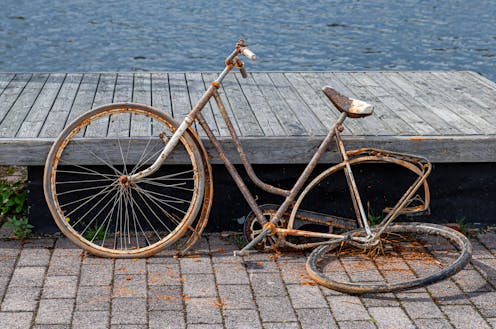
Rust can attack the surfaces of old metal objects, such as bicycles. Sami Auvinen/iStock via Getty Images Plus

Curious Kids is a series for children of all ages. If you have a question you’d like an expert to answer, send it to CuriousKidsUS@theconversation.com.


What is rust? – Henry E., age 13, Boston, Massachusetts


Imagine leaving your shiny metal bicycle outside in the rain. As water pools on its surfaces, oxygen from the air lingers nearby, and together they begin to quietly attack the metal.

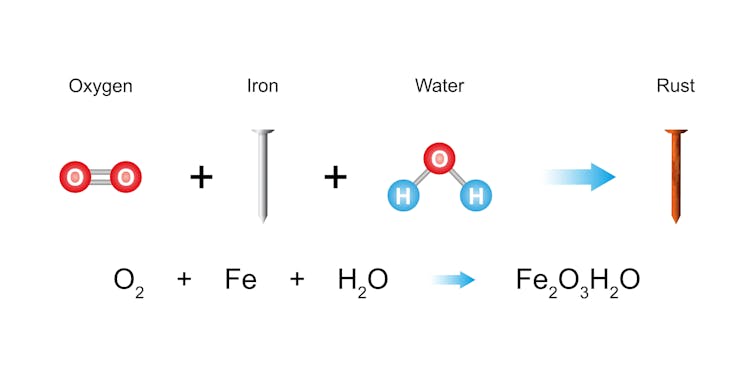
The iron in the bike and the oxygen and water in the environment together undergo a chemical reaction. It forms iron oxide – better known as rust – which accumulates over time. This reddish-brown, flaky substance is more than just ugly; it’s a sign that the metal is breaking down.

Illustration showing the chemical reaction occurring during rusting of iron
Iron reacts with oxygen and water to form rust, an oxidized form of iron.
Ali Damouh/Science Photo Library via Getty Images

Chemists call this process oxidation. You can think of iron as like a superhero — tough, durable and shiny — until it meets its kryptonite: moisture and air. Water helps iron atoms more easily shed their electrons, which are negatively charged particles. Oxygen acts like a tiny electron thief, stealing those electrons and leaving the metal weak and crumbly.

The shiny, metallic iron used in homes and industry is a refined form of what is found in nature — iron ore. Rust is a natural process — the refined iron is essentially trying to return to its original oxidized, stable state: iron ore.

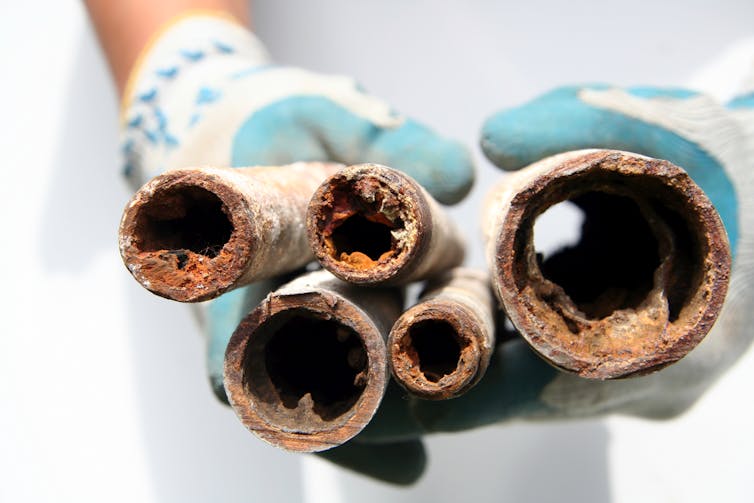
Five old pipes held together, showing their corroded and clogged insides
Old water pipes can clog with accumulated rust.
chimmy/E+ via Getty Images

From bikes and cars to bridges and ships

From household fixtures to monumental machines, rust moves in wherever metal meets moisture and time.

On bikes and cars, the combination of rain and exposed metal often triggers a full-blown rust party, eating away at frames and undercarriages. Old water pipes are another hot spot — over time, they corrode from the inside, often leaking brown, rusty water into sinks and tubs. In the kitchen, standing water left around sinks or faucets can lead to yellow-orange rust stains that are as stubborn to remove as they are unsightly.

On a much larger scale, rust can wreak havoc on ships and bridges. Corroded hulls can lead to oil leaks or even catastrophic sinking, costing the maritime industry billions of dollars each year in repairs and environmental damage.

And here’s a twist – salt speeds up the rusting process. In snowy regions, road salt doesn’t just melt ice; it also turbocharges oxidation, accelerating the corrosion process. That’s why cars in snowy places might rust faster.

The Statue of Liberty in New York against a bright blue sky
The copper Statue of Liberty is greenish due to oxidization, which forms the colorful patina, the copper version of rust.
ErickN/iStock via Getty Images Plus

Rust is the term for the specific type of corrosion that occurs in iron or steel. But any metal can chemically degrade due to reactions with environmental factors like oxygen and moisture.

Even old statues aren’t immune. Those greenish-blue figures you see in parks and plazas? That’s not paint; it’s patina, the copper version of rust. Though more visually appealing, patina is still a form of corrosion.

How can you stop rust?

By understanding the chemistry behind rust, people have found smart ways to slow it down or even stop it altogether, protecting everything from bridges to bicycles.

One of the simplest methods is to paint the metal surface. Paint acts like a waterproof jacket, sealing the metal off from air and moisture – the two key ingredients for rust.

Keeping metal dry is another practical defense. Tools are often stored in dry spaces or alongside dehumidifiers to minimize moisture.

Another technique, called galvanization, coats one metal with a more reactive one, like zinc. Zinc corrodes more easily than iron, forming a stable layer of zinc oxide when exposed to air and moisture. The zinc oxide is a protective barrier to further corrosion – until it gradually wears away, leaving the underlying iron vulnerable to rust once again.

And then there’s stainless steel: a corrosion-resistant mixture, called an alloy, of iron with other metals, such as chromium. When exposed to air, chromium undergoes its own version of rusting, forming a stable layer of chromium oxide.

This layer is extremely thin, 100,000 times thinner than a single strand of human hair. It is invisible to the naked eye, sticks tightly to the metal surface and prevents further oxidation. The chromium oxide layer is also self-healing — if scratched, the exposed chromium quickly reforms the protective barrier. That’s why stainless steel is used in everything from kitchen sinks to surgical tools.

Watching rust on the atomic level

I’m a materials scientist who uses advanced imaging tools, like transmission electron microscopes, to study how metals oxidize at the atomic scale. We can actually watch as tiny metal atoms lose electrons and oxygen atoms gain them, undergoing corrosion in real time.

Transmission electron microscopy video shows the real-time surface oxidation of aluminum. In the beginning, the small dots are individual aluminum atoms, neatly lined up in a regular pattern. Oxygen from the water vapor sticks to the surface and mixes with the aluminum. A new layer of aluminum oxide forms, with the atoms arranged in a messy random way. This new surface layer protects the aluminum underneath, which stays the same.

For instance, in one study, we observed the way a thin layer of aluminum oxide forms instantly when aluminum is exposed to oxygen or water vapor. This oxide layer doesn’t flake off like rust on iron; instead, it forms a uniform, tightly bonded protective coating that blocks any more oxygen and water from reaching the underlying metal. That’s why aluminum resists continued corrosion – unlike iron, whose rust layer is porous, allowing the reaction to keep going.

Oxidation can be harmful, causing rusting, or beneficial when harnessed to protect metals instead. By observing these processes in real time, my colleagues and I aim to create materials that last longer and work better in everyday life — for example, to construct stronger bridges, more efficient batteries and safer airplanes.


Hello, curious kids! Do you have a question you’d like an expert to answer? Ask an adult to send your question to CuriousKidsUS@theconversation.com. Please tell us your name, age and the city where you live.

And since curiosity has no age limit – adults, let us know what you’re wondering, too. We won’t be able to answer every question, but we will do our best.

The Conversation

Guangwen Zhou receives funding from the National Science Foundation, and the Office of Basic Energy Science, Department of Energy

ref. What is rust? A materials scientist explains metal’s crusty enemy – https://theconversation.com/what-is-rust-a-materials-scientist-explains-metals-crusty-enemy-255276

Inside an urban heat island, one street can be much hotter than its neighbor – new tech makes it easier to target cooling projects

Source: The Conversation – USA (2) – By Dan O’Brien, Professor of Public Policy and Urban Affairs and Director of the Boston Area Research Initiative, Northeastern University

A tree canopy can make a big difference in temperature for people on the street below. The challenge is getting trees where they’re needed most. Andrey Denisyuk/Moment via Getty Images

It’s summer, and it’s been hot, even in northern cities such as Boston. But not everyone is hit with the heat in the same way, even within the same neighborhood.

Take two streets in Boston at 4:30 p.m. on a recent day, as an example. Standing in the sun on Lewis Place, the temperature was 94 degrees Fahrenheit (34.6 degrees Celsius). On Dudley Common, it was 103 F (39.2 C). Both streets were hot, but the temperature on one was much more dangerous for people’s health and well-being.

The kicker is that those two streets are only a few blocks apart. The difference epitomizes the urban heat island effect, created as pavement and buildings absorb and trap heat, making some parts of the city hotter.

A clement-and-brick open space with a few trees to one side, but mostly open to the sun and surrounded by dark, paved streets.
The shade of a few nearby trees doesn’t keep Dudley Common from heating up several degrees more than neighboring streets.
Dan O’Brien

A closer look at the two streets shows some key differences:

  • Dudley Common is public open space sandwiched between two thoroughfares that create a wide expanse of pavement lined with storefronts. There aren’t many trees to be found.

  • Lewis Place is a residential cul-de-sac with two-story homes accompanied by lots of trees.

This comparison of two places within a few minutes’ walk of each other puts the urban heat island effect under a microscope. It also shows the limits of today’s strategies for managing and responding to heat and its effects on public health, which are generally attuned to neighborhood or citywide conditions.

A map showing part of Roxbury, Mass., with circles around two blocks
The top circle is Dudley Common. The bottom is Lewis Place, where trees keep the cul-de-sac several degrees cooler.
Imagery ©2025 Airbus Maxar Technologies, map data Google ©2025

Even within the same neighborhood, some places are much hotter than others owing to their design and infrastructure. You could think of these as urban heat islets in the broader landscape of a community.

Sensing urban heat islets

Emerging technologies are making it easier to find urban heat islets, opening the door to new strategies for improving health in our communities.

While the idea of reducing heat across an entire city or neighborhood is daunting, targeting specific blocks that need assistance the most can be faster and a much more efficient use of resources.

Doing that starts with making urban heat islets visible.

In Boston, I’m part of a team that has installed more than three dozen sensors across the Roxbury neighborhood to measure temperature every minute for a better picture of the community’s heat risks, and we’re in the process of installing 25 more. The Common SENSES project is a collaboration of community-based organizations, including the Dudley Street Neighborhood Initiative and Project Right Inc.; university researchers like me who are affiliated with Northeastern University’s Boston Area Research Initiative; and Boston city officials. It was created to pursue data-driven, community-led solutions for improving the local environment.

Data from those sensors generate a real-time map of the conditions in the neighborhood, from urban heat islets like Dudley Common to cooler urban oases, such as Lewis Place.

A map showing temperatures in different neighborhoods
Temperature varied substantially in Boston’s Roxbury neighborhood at 4:30 p.m. on July 25, 2025. These are some of the readings captured by the Common SENSES heat sensors.
Common SENSES

These technologies are becoming increasingly affordable and are being deployed in communities around the world to pinpoint heat risks, including Miami, Baltimore, Singapore and Barcelona. There are also alternatives when long-term installations prove too expensive, such as the U.S.’s National Oceanic and Atmospheric Administration volunteer science campaign, which has used mobile sensors to generate one-time heat maps for more than 50 cities.

Making cooler communities, block by block

Although detailed knowledge of urban heat islets is becoming more available, we have barely scratched the surface of how they can be used to enhance people’s health and well-being.

The sources of urban heat islets are rooted in development – more buildings, more pavement and fewer trees result in hotter spaces. Many projects using community-based sensors aspire to use the data to counteract these effects by identifying places where it would be most helpful to plant trees for shade or install cool roofs or cool pavement that reflect the heat.

Two men in reflective construction vests paint a stretch of road a light color. The difference between the dark and light is evident.
Workers in Los Angeles apply a cool pavement coating to reflect heat rather than absorbing it.
John McCoy/MediaNews Group/Los Angeles Daily News via Getty Image

However, these current efforts do not fully capitalize on the precision of sensors. For example, Los Angeles’ massive investment in cool pavement has focused on the city broadly rather than overheated neighborhoods. New York City’s tree planting efforts in some areas failed to anticipate where trees could be successfully planted.

Most other efforts compare neighborhood to neighborhood, as if every street within a neighborhood experiences the same temperature. London, for example, uses satellite data to locate heat islands, but the resolution isn’t precise enough to see differences block by block.

In contrast, data pinpointing the highest-risk areas enables urban planners to strategically place small pocket parks, cool roofs and street trees to help cool the hottest spaces. Cities could incentivize or require developers to incorporate greenery into their plans to mitigate existing urban heat islets or prevent new ones. These targeted interventions are cost-effective and have the greatest potential to help the most people.

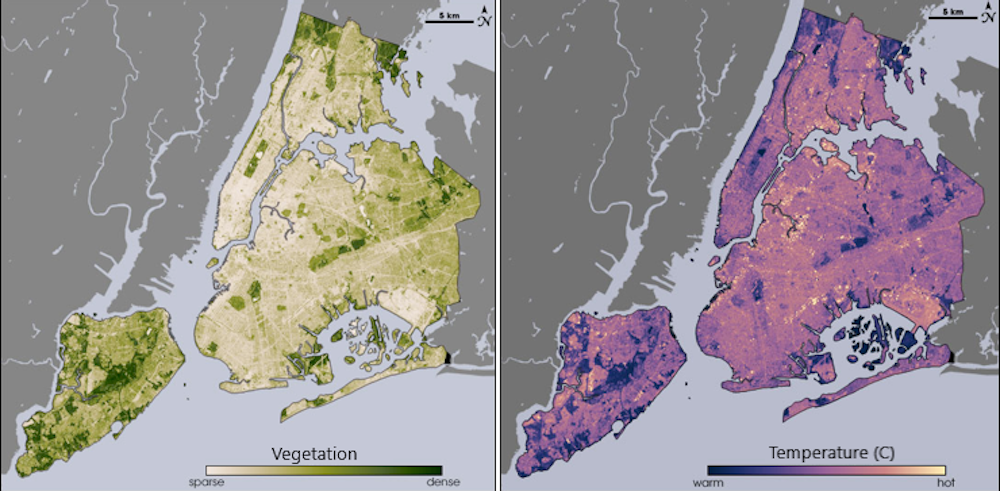
Two maps of New York City show how vegetation matches cooler areas by temperature.
Comparing maps of New York’s vegetation and temperature shows the cooling effect of parks and neighborhoods with more trees. In the map on the left, lighter colors are areas with fewer trees. Light areas in the map on the right are hotter.
NASA/USGS Landsat

But this could go further by using the data to create more sophisticated alert systems. For example, the National Weather Service’s Boston office released a heat advisory for July 25, the day I measured the heat in Dudley Common and Lewis Place, but the advisory showed nearly the entirety of the state of Massachusetts at the same warning level.

What if warnings were more locally precise?

On certain days, some streets cross a crucial threshold – say, 90 F (32.2 C) – whereas others do not. Sensor data capturing these hyperlocal variations could be communicated directly to residents or through local organizations. Advisories could share maps of the hottest streets or suggest cool paths through neighborhoods.

A street with trees.
Trees in the yards of homes on Lewis Place in Roxbury help keep the street several degrees cooler than nearby paved open spaces such as Dudley Common.
Dan O’Brien

There is increasing evidence of urban heat islets in many urban communities and even suburban ones. With data showing these hyperlocal risks, policymakers and project coordinators can collaborate with communities to help address areas that many community members know from experience tend to be much hotter than surrounding areas in summer.

As one of my colleagues, Nicole Flynt of Project Right Inc., likes to say, “Data + Stories = Truth.” If communities act upon both the temperature data and the stories their residents share, they can help their residents keep cool — because it’s hot out there.

The Conversation

Dan O’Brien has received funding from the National Science Foundation’s Smart & Connected Communities program for work associated with this article (award #2230036).

ref. Inside an urban heat island, one street can be much hotter than its neighbor – new tech makes it easier to target cooling projects – https://theconversation.com/inside-an-urban-heat-island-one-street-can-be-much-hotter-than-its-neighbor-new-tech-makes-it-easier-to-target-cooling-projects-261917