4 laws that could stymie the Trump EPA’s plan to rescind the endangerment finding that underpins US climate policies

Source: The Conversation – USA (2) – By H. Christopher Frey, Glenn E. Futrell Distinguished University Professor of Environmental Engineering, North Carolina State University

U.S. Interior Secretary Doug Burgum, left, takes a selfie with Energy Secretary Chris Wright, center, and EPA Administrator Lee Zeldin in front of the Trans-Alaska oil pipeline. AP Photo/Jenny Kane

The Trump administration’s plan to unravel many of the nation’s climate policies hinges on rescinding what’s known as the endangerment finding. But its strategy for doing that appears to run afoul of several federal laws.

The endangerment finding is a 2009 determination by the Environmental Protection Agency that six greenhouse gases, including carbon dioxide, contribute to climate change and therefore pose a threat to public health and welfare.

The scientific evidence of these threats has gotten stronger in the years since the endangerment finding was made. That evidence is laid out in multiple national and international reports written by hundreds of scientists who reviewed the data and research.

In contrast, the EPA’s proposal to now rescind the endangerment finding is based in part on a new Department of Energy report written by five people, named as the “Climate Working Group.” All five have been outspoken critics of mainstream climate science. Energy Secretary Chris Wright said he handpicked the group to write the report.

The group’s report cherry-picks information and misrepresents uncertainties. Some scientists whose studies it cites have complained that the authors misrepresented their research. Others are speaking out about factual problems with the report.

I have served in the federal government and on numerous scientific federal advisory committees, and I’ve seen firsthand the rigorous requirements that federal agencies are supposed to meet so that scientific information they disseminate can be trusted by the public.

The Energy Department and the EPA seem to have run afoul of four laws in particular that may be tricky for the administration to get around.

1. Has the Energy Department produced a credible report?

A casual reader might think the Energy Department climate report is credible.

Its inside cover affirms that it “is being disseminated … in compliance with” the Information Quality Act. The word “disseminated” means that this is a final report and not just a draft.

The Information Quality Act, passed by Congress in 2000, requires “ensuring and maximizing the quality, objectivity, utility, and integrity of information (including statistical information) disseminated by Federal agencies.”

An image of the title page pointing out important problems.
The author annotates the title page of the Energy Department’s report.
Christopher Frey

This law is the basis for federal guidance on scientific peer review for all agencies. It also requires agencies to provide the public with an opportunity to request corrections in final reports if they were not properly developed or lack balance, accuracy and objectivity. The agency decides whether to grant the request, but there is an appeals process.

Government scientific products considered final also must have previously undergone independent external peer review conducted in an “open and rigorous manner,” according to the White House Office of Management and Budget.

One author of the Energy Department’s report stated that the report was reviewed by “eight scientists/administrators employed by the DOE.” However, this does not meet the government’s standards for implementing the law, which requires a public record of review by scientific experts not affiliated with the department that issued the report.

2. Agencies cannot cherry-pick groups to give answers they want

The Federal Advisory Committee Act of 1972, or FACA, addressed concerns that “special interest groups” could “exercise undue influence” in promoting “their private concerns” on “matters in which they have vested interests.”

The law requires a public process for creating and appointing groups to advise the government and requires that the properly appointed group operates in public view and takes public comments along the way.

According to the DOE’s own guidance, “FACA applies when a group is asked to render advice or recommendations as a group and not a collection of individuals.”

Thus, the group chosen to write the department’s report falls within the scope of FACA. The law requires that a committee representing a fair balance of viewpoints be chartered under FACA and that members be appointed only after a public nomination process with public opportunity to comment on the list of candidates.

Once appointed, a balanced group is also required to deliberate in public and receive public comments in formulating their report. That didn’t happen.

3. Federal agencies cannot be arbitrary or inconsistent in rulemaking

The Administrative Procedure Act of 1946 requires federal agencies to allow public participation in rulemaking processes and to follow consistent procedures and practices when developing regulations.

The law prohibits actions that are “arbitrary and capricious” – meaning decisions made without justification or regard for facts – or an “abuse of discretion.”

Agencies are expected to examine relevant data. They must not only follow applicable laws, such as FACA, but also must follow procedures established to implement those laws, such as balanced membership of the committee and opportunity for public comment when formulating the report.

A schematic of different laws and their impact
Four federal laws that apply to the EPA’s effort.
Christopher Frey

4. Science Advisory Board review is also required

The EPA is also subject to the Environmental Research, Development and Demonstration Authorization Act of 1978. The act mandated that the EPA must establish a Science Advisory Board. It also requires that agency make available to its Science Advisory Board relevant scientific and technical information on any “proposed criteria document, standard, limitation, or regulation.”

The board must be given time to review the scientific and technical basis of the proposed action – in this case, the disseminated Energy Department report – now that the EPA is using this report to inform its regulatory action.

Under the Information Quality Act, the EPA may not develop a regulation based on a draft report.

The EPA’s Science Advisory Board website lists zero members as of mid-August 2025. On Jan. 28, 2025, the EPA dismissed all of the board’s previous members. Nominations for new board members were due on June 2. At best, it will be months before the EPA can seat a new Science Advisory Board because of time needed to complete the selection, appointment and ethics review processes.

An annotated screenshot of the EPA’s Science Advisory Board website shows no members as of Aug. 11, 2025.
EPA

Either the EPA could follow the law and suspend any proposed actions until the Science Advisory Board is available, or accept legal risk for not following the Environmental Research, Development and Demonstration Authorization Act.

What’s next?

These laws exist to protect the public by preventing the federal government from being unduly influenced by narrow interests when disseminating evidence that informs policy decisions. Science-based agencies such as the Energy Department and the EPA have a legal requirement to follow the science.

The public has a chance to comment on the EPA’s proposal to rescind the 2009 endangerment finding and greenhouse gas vehicle standards until Sept. 15, 2025. And although the Energy Department disseminated its report as a final version, the department is accepting public comments on the report through Sept. 2.

For both, the most effective comments are evidence-based and not merely opinion.

The National Academies of Sciences, Engineering and Medicine, independent nonprofit institutions that advise the government, announced in early August that they will conduct a fast-track review of the science on whether greenhouse gas emissions endanger public health and welfare to submit as a public comment.

Because the Energy Department report is presented as final, it is also subject to the “request for correction” process under the Information Quality Act within 60 days of its initial release.

Given the Energy Department report’s legal vulnerabilities, the Trump administration could consider withdrawing the report and starting over with a legally and scientifically valid approach. If these vulnerabilities are not corrected and the EPA rescinds the endangerment finding based on the Energy Department report, years of litigation are likely to slow the administration’s efforts.

The Conversation

Dr. H. Christopher Frey is currently a professor of environmental engineering at North Carolina State University. He has served on numerous scientific advisory committees, including the U.S. Environmental Protection Agency FIFRA Scientific Advisory Panel (2004-2006), Science Advisory Board (2012-2018), and Clean Air Scientific Advisory Committee (2008-2015). He was chair of CASAC from 2012 to 2015. He has served on study committees of the National Academies of Science, Engineering, and Medicine. He served at EPA from 2021 to 2022 as Deputy Assistant Administrator for Science Policy and from 2022 to 2024 as Assistant Administrator for Research and Development and Science Advisor. While in federal service he co-chaired the National Science and Technology Council Committee on Environment.

ref. 4 laws that could stymie the Trump EPA’s plan to rescind the endangerment finding that underpins US climate policies – https://theconversation.com/4-laws-that-could-stymie-the-trump-epas-plan-to-rescind-the-endangerment-finding-that-underpins-us-climate-policies-262952
US has slashed global vaccine funding – if philanthropy fills the gap, there could be some trade-offs

Source: The Conversation – USA (3) – By Amy E. Stambach, Professor of Cultural Anthropology and International Studies, University of Wisconsin-Madison

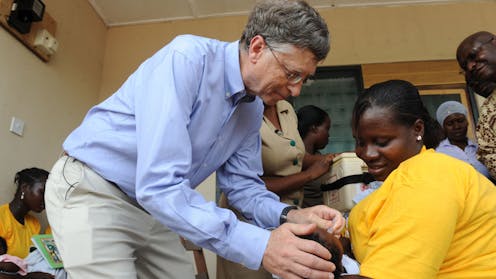
Bill Gates gives a baby in a woman’s arms a rotavirus vaccine in Ghana in 2013. Pius Utomi Ekpei/AFP via Getty Images

The U.S. government is relaxing federal vaccine requirements and cutting vaccine research and development funding here at home. Elsewhere, it’s going even further.

The Trump administration has stopped funding Gavi, a global initiative that helps millions of children in low-income and medium-income countries get vaccinated against measles, cholera and other preventable diseases. Gavi, the Vaccine Alliance, is an international organization that collects money from government and private donors. It spends around US$1.7 billion annually to buy and deliver vaccines.

Gavi has helped vaccinate over 1.1 billion children in 78 countries since 2000. Those vaccinations, according to the alliance, have prevented more than 18 million deaths from meningitis, diphtheria, tetanus, polio and other deadly diseases – saving more than $250 billion in health and economic costs.

In 2024, the U.S. was its third-biggest funder – after the U.K. and the Gates Foundation. It contributed $3.7 billion between 2000 and early 2025.

The Biden administration had promised to kick in $1.6 billion over five years beginning in 2026, plus another $300 million for the rest of 2025.

But Health and Human Services Secretary Robert F. Kennedy Jr. announced on June 26, 2025, that the Trump administration would not honor those commitments, ripping a gaping hole in Gavi’s budget.

A woman holding an infant stands in a hallway with papers affixed to the walls.
A Nicaraguan woman carries her infant after the child received a pneumococcal vaccine at a Gavi-funded clinic in 2011.
Elmer Martinez/AFP via Getty Images

Becoming more reliant on philanthropy

Kennedy criticized what he alleged was Gavi’s weak track record on vaccine safety.

Many scientists and pediatricians have disputed his rationale for cutting funding, partly because Kennedy referred to a single, contested study in his remarks that was based on 40-year-old data.

So far, Gavi’s other donors – a mix of nations, foundations, drugmakers and other corporations, including Cisco, Mastercard and Shell – haven’t said they’ll step up their support enough to plug the $3 billion hole in Gavi’s five-year plan. But several of the initiative’s biggest donors, particularly the U.K. and the Gates Foundation, have reiterated their commitments of $1.7 and $1.6 billion, respectively, to be disbursed from 2026 to 2030.

In the meantime, Gavi is trying to cut costs and is seeking new funders. Unless other governments decide to make up for the loss of U.S. funding, which so far they have not, Gavi will likely become more dependent on philanthropy than ever before.

In 2024, more than 20% of its funding came from companies and foundations. Now, the vaccine alliance wants to grow that percentage, in part by slowly gaining new donors.

In my research with collaborators on vaccine hesitancy, and through fieldwork in clinics in South Africa and Tanzania, I have seen both the strengths and weaknesses of Gavi’s reliance on the Gates Foundation and corporate donors. These donors either provide funding for vaccines or donate vaccines directly for Gavi to distribute.

While most of the media coverage of the U.S. halting its funding focuses on the fact that U.S. pullout is likely to mean that more children around the world will die, I’m also concerned about another issue.

An illustration of a medical syringe emblazoned with the Gavi vaccine alliance logo and branding.
The U.S. has ceased funding for Gavi, ripping a hole in the global initiative’s budget for the next five years.
Pavlo Gonchar/SOPA Images/LightRocket via Getty Images

Encountering some complications

When philanthropy helps fill funding gaps in the public sphere, challenges can arise.

Gavi’s vaccine programs have undoubtedly increased childhood vaccination rates. But they would be even more helpful if they could more consistently help countries build the strong and lasting vaccination systems that low-income and medium-income countries need to make sure vaccines can eventually be delivered without foreign aid.

One problem is that corporate donors and foundations don’t have to answer to voters or taxpayers in the countries they give money to. This can make it harder for countries where Gavi operates to understand philanthropic decisions.

Gavi has received more funding from the Gates Foundation than from any other private contributor. The foundation says it has disbursed or pledged, since Gavi’s launch in 2000, a total of $30.6 billion to “advance vaccines – investing in their discovery, development, and distribution.” And $7.7 billion of that sum has been “directed to Gavi” to vaccinate kids.

In so doing, the Gates Foundation, which announced on Aug. 4, 2024, that it intended to devote $2.5 billion toward improving women’s health care around the world by 2030, has helped Gavi vaccinate more children against preventable diseases than government money alone could have accomplished.

But when one donor wields that much influence, I’ve observed, tensions can follow .

I heard about such tensions at African vaccine clinics where I conducted research between 2021 and 2023.

Bill Gates in a suit and tie stands against a purple background.
Bill Gates, in 2023, speaks in Belgium about another initiative besides Gavi that the Gates Foundation is supporting, which aims to give the polio vaccine to hundreds of millions of children.
Thierry Monasse/Getty Images

Concerns about influence

At clinics across South Africa, Tanzania and other parts of sub-Saharan Africa, I spoke with doctors, nurses and public health officials working directly with Gavi-supported programs. Many of the people I interviewed acknowledged the vital role the Gates Foundation has played in expanding access to vaccines.

I am not naming the people who I interviewed to protect their confidentiality, in keeping with social science research norms.

But many expressed concern about the outsized influence that can follow when one donor gives so much money. For example, several people I interviewed said they believed they had no control over which brand of vaccines to use or which age group to vaccinate first.

“That’s all decided by donor offices – not by our own (health) ministry,” said a doctor in Dar es Salaam, Tanzania. She pointed to the walls of her clinic, plastered with promotional posters for the Gates Foundation and Gavi.

Gavi, however, says on its website that its board chooses the vaccines it invests in after extensive research.

And many of the people I interviewed said they believed that some donors push for vaccines made by companies they have invested in through their endowments and other assets.

Health workers also told me that Gates Foundation-funded reporting requirements added pressure and extra work without improving care. A district health official in rural Tanzania said his clinic had to meet strict targets set by a Gates Foundation–backed program. This meant quickly submitting forms with detailed information about numbers vaccinated and each patient’s health history – sometimes taking a toll on the quality of care.

“We’re spending more time filling out reports for the donor than talking to patients,” he said. Because the clinic had no computers and lacked a stable flow of electricity, keeping up with the paperwork was tedious.

Across interviews and locations, a common pattern emerged. I frequently heard that the Gates Foundation had helped clinics operate and pay staff with its grant money, but its programs followed a business model focused on meeting targets and showing results.

“It’s all about hitting numbers, not building systems,” one official in Cape Town, South Africa, told me. Many health care workers said this model shifted public health priorities toward the Gates Foundation’s goals at the expense of developing sustainability.

A white man in a suit and tie beholds a baby held by a Black woman in a clinic.
David Cameron tours a Gavi vaccination clinic in 2011, in Lagos, Nigeria, while serving as U.K. prime minister.
AP Photo/ Christopher Furlong

The limits of philanthropy

Funding from foreign governments can also shift local priorities, though possibly to a lesser degree than philanthropy. That’s because governments often work through bilateral agreements and are subject to diplomatic protocols and political accountability, which can temper their influence. In contrast, large foundations like the Gates Foundation may operate with more autonomyallowing them to shape programs more directly around their goals.

Ultimately, without democratic oversight or deep roots where they donate, foreign philanthropy can be seen as overriding local priorities. Donations from foundations and corporations can be perceived as exerting influence over public health goals, stirring resentment.

The Gates Foundation agrees that philanthropy cannot replace U.S. government assistance.

“There is no foundation – or group of foundations – that can provide the funding, workforce capacity, expertise, or leadership that the United States has historically provided to combat deadly diseases and address hunger and poverty,” Rob Nabors, director of the North America Program at the Gates Foundation, wrote in response to a query from me.

Nabors’ statement underscores why the end of U.S. government funding for, and involvement in, Gavi matters.

The U.S. government has historically engaged in diplomacy and forged long-term partnerships with health ministries in other countries. It has also traditionally spent billions of dollars on infrastructure, like research labs and refrigerated systems to store and transport vaccines.

Foundations typically don’t operate on the scale of government aid operations.

The Gates Foundation provided some information upon request that pointed to efforts it has made in this regard. For example, it had spent $1 billion by 2018 to support vaccine manufacturers located in developing countries and “related grantees,” working with 19 of those manufacturers in “11 countries to bring 17 vaccines to market.” It also pointed to the $15 million it announced in 2022 for a “South African specialty pharmaceutical company to support its capabilities to manufacture lifesaving routine and outbreak vaccines for Africa.”

Regardless of where its funding comes from, Gavi is essential for everyone, including Americans, because diseases like measles don’t respect borders. Because global air travel shuffles millions of people around the world daily, an outbreak of a very contagious disease anywhere can become a threat everywhere. That makes U.S. funding for Gavi not just an act of generosity toward people in other countries, but one of protecting the U.S. as well.

The Gates Foundation has provided funding for The Conversation U.S. and provides funding for The Conversation internationally.

The Conversation

Amy E. Stambach has received funding from the Council on Foreign Relations (CFR), the U.S. National Science Foundation, the Wenner-Gren Foundation for Anthropological Research and the U.S. Fulbright Scholars program. She has served as a CFR fellow with USAID.

ref. US has slashed global vaccine funding – if philanthropy fills the gap, there could be some trade-offs – https://theconversation.com/us-has-slashed-global-vaccine-funding-if-philanthropy-fills-the-gap-there-could-be-some-trade-offs-260383

The dark history of forced starvation as a weapon of war against Indigenous peoples

Source: The Conversation – USA (3) – By Rosalyn R. LaPier, Professor of History, University of Illinois at Urbana-Champaign

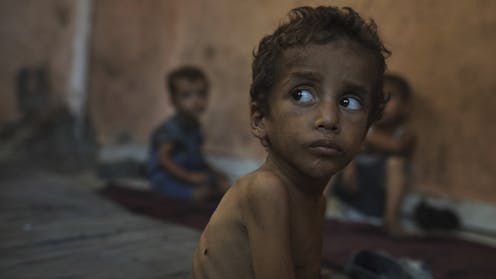
Yazan Abu Ful, a 2-year-old malnourished child, sitting in the Shati refugee camp in Gaza City on July 23, 2025.
AP Photo/Jehad Alshrafi

There is increasing evidence that “widespread starvation, malnutrition and disease” are driving a rise in hunger-related deaths“ in Gaza, a group of United Nations and aid organizations have repeatedly warned.

A July 29, 2025, alert by the Integrated Food Security Phase Classification, a global initiative for improving food security and nutrition, reported that the “worst-case scenario of famine is currently playing out in the Gaza Strip,” as access to food and other essential items is dropping to an “unprecedented level.”

More than 500,000 Palestinians, one-fourth of Gaza’s population, are experiencing famine, the U.N. stated. And all 320,000 children under age 5 are “at risk of acute malnutrition, with serious lifelong physical and mental health consequences.”

U.N. experts have accused Israel of using starvation “as a savage weapon of war and constitutes crime under international law.”

They are calling on Israel to urgently “restore the UN humanitarian system in Gaza.”

Israel is not the only government in history to cut off access to food and water as a tool of war. As an Indigenous scholar who studies Indigenous history, I know that countries – including the United States and Canada – have used starvation to conquer Indigenous peoples and acquire their land. As a descendant of ancestors who endured forced starvation by the U.S. government, I also know of its enduring consequences.

Dismantling Indigenous food systems

From the founding of the U.S. and Canada through the 20th century, settler colonizers often tried to destroy Indigenous communities’ access to food, whether it was their farms and livestock or their ability to access land with wild animals – with the ultimate aim of forcing them off the land.

In 1791, President George Washington ordered Secretary of War Henry Knox to destroy farms and livestock of the Wea Tribe that lived along the Ohio River valley – a fertile area with a long history of growing corn, beans, squash and other fruits and vegetables.

Knox burned down their “corn fields, uprooted vegetable gardens, chopped down apple orchards, reduced every house to ash, [and] killed the Indians who attempted to escape,” historian Susan Sleeper-Smith noted in her 2018 book, “Indigenous Prosperity and American Conquest.” Women and children were taken hostage. The goal was to destroy villages and farms so that Indigenous people would leave and not return.

Seventy-two years later, General Kit Carson conducted a scorched-earth campaign to remove the Navajo from what is now Arizona and New Mexico. Similar to Knox, he destroyed their villages, crops and water supply, killed their livestock and chopped down over 4,000 peach trees. The U.S. military forced over 10,000 Navajo to leave their homeland.

Indigenous famine

By the late 19th century, numerous famines struck Indigenous communities in both the U.S. and Canada due to the “targeted, swift, wholesale destruction” of bison by settlers, according to historian Dan Flores; this, too, was done in an effort to acquire more Indigenous land. One U.S. military colonel stated at the time: “Kill every buffalo you can! Every buffalo dead is an Indian gone.”

There were an estimated 60 million bison before U.S. and Canadian settlement; by the 1890s, there were fewer than 1,000. Indigenous communities on the northern Great Plains in both the U.S. and Canada, who believed bison were a sacred animal and who relied on them for food, clothing and other daily needs, now had nothing to eat.

Historian James Daschuk revealed in his 2013 book, “Clearing the Plains: Disease, Politics of Starvation, and the Loss of Aboriginal Life,” that between 1878 to 1880, Canadian Prime Minister Sir John A. Macdonald did little to stop a multiyear famine on the Canadian Plains, in what is now Manitoba, Saskatchewan and Alberta. Macdonald did not hide his intentions. He and his government, he said, were “doing all we can, by refusing food until the Indians are on the verge of starvation.”

Indigenous peoples on the Canadian Plains were forced to eat their dogs, horses, the carcasses of poisoned wolves and even their own moccasins. All the Indigenous peoples in the region – an estimated 26,500 people – suffered from the famine. Hundreds died from starvation and disease.

Malcolm C. Cameron, a House of Commons member at the time, accused his government of using “a policy of submission shaped by a policy of starvation” against Indigenous peoples. His denunciation did little to change their policy.

What my great-grandparents experienced

Many Indigenous peoples’ families in the U.S. and Canada have stories of surviving forced starvation by the government. Mine does, too.

In the winter of 1883-1884, my grandmother and grandfather’s parents experienced what is remembered as the “starvation winter” on the Blackfeet reservation in what is now Montana.

Similar to what happened in Canada, the near extinction of bison by American settlers led to a famine on the Blackfeet reservation. In an effort to slow the famine, Blackfeet leaders purchased food with their own money, but the U.S. government supply system delayed its arrival, creating a dire situation. Blackfeet leaders documented 600 deaths by starvation that one winter, while the U.S. government documented half that amount.

As historian John Ewers noted, the nearby “well-fed settlers” did nothing and did not offer “any effective aid to the Blackfeet.”

My family survived because a few men and women within our family were able to travel far off the reservation by horseback to hunt and harvest Native foods. I was told the story of the “starvation winter” my entire life, as were most Blackfeet. And I now share these stories with my own children.

Weapon of war

Thousands of children in Gaza are malnourished and dying of hunger-related causes.

Due to mounting international pressure, Israel is pausing its attacks in some parts of Gaza for a few hours each day to allow for some aid, but experts have noted it is not enough.

“We’re talking about 2 million people. It’s not 100 trucks or a pausing or a few hours of calm that is going to meet the needs of a population that has been starved for months,” Oxfam official Bushra Khalidi told The New York Times.

“This is no longer a looming hunger crisis – this is starvation, pure and simple,” Ramesh Rajasingham, director of the U.N.’s Office for the Coordination of Humanitarian Affairs, said on Aug. 10, 2025.

Many might assume that the use of starvation as a weapon of war happened only in the past. Yet, in places like Gaza, it is happening now.

The Conversation

Rosalyn R. LaPier does not work for, consult, own shares in or receive funding from any company or organization that would benefit from this article, and has disclosed no relevant affiliations beyond their academic appointment.

ref. The dark history of forced starvation as a weapon of war against Indigenous peoples – https://theconversation.com/the-dark-history-of-forced-starvation-as-a-weapon-of-war-against-indigenous-peoples-262564

Getting beyond answers like ‘fine’ and ‘nothing’: 5 simple ways to spark real talk with kids

Source: The Conversation – USA (2) – By Shelbie Witte, Dean, College of Education and Human Development, University of North Dakota

Most kids want to know whether the adults in their lives are genuinely interested in their day – and aren’t just going through the motions. FG Trade/E+ via Getty Images

Each afternoon, a familiar conversation unfolds in many households.

“How was school today?”

“Fine.”

“What did you learn?”

“Nothing.”

In the classroom, teachers also struggle with stonewalling students. They’ll pose a question, only to be met with blank stares. They might incorporate “wait time” to give students a moment to gather their thoughts. But even then, their students offer brief or vague responses. Students, meanwhile, often get nervous about asking for clarification or diving deeper into a topic in front of their peers.

This can have consequences: Children who hesitate to ask or answer questions risk becoming adults with the same habits. Adults who avoid asking questions or avoid admitting what they don’t know can become willfully ignorant: They skirt the consequences of their lack of knowledge and the impact it can have on themselves and others.

With the start of school just around the corner, it’s an important time to create opportunities for children to stretch their conversational and curiosity muscles.

I’m an educator, researcher and parent who studies adolescent education and teacher preparation.

Here are five strategies parents and caregivers can use with children to make them better conversationalists and cultivate curiosity. The suggestions might appear straightforward. But they outline an easy way to avoid being iced out with “yes” or “no” answers.

1. Be creative with your questions

Part of the issue arises from asking questions that can be batted away with a one-word response.

Children want to know whether the adults in their lives are genuinely interested in their day. Asking the same, rote questions each day says otherwise.

Try shaking things up and ask more specific, open-ended questions instead: “What was the most interesting thing you did today?”

“If you could turn back time and change how you handled something at school today, what would it be?”

“If you were in charge of your class tomorrow, what would you teach?”

2. Engage with their curiosity

As important as it is for adults to ask questions that convey genuine interest, it’s just as valuable to engage with questions kids ask.

Young children ask “why” so often that adults can find themselves falling back on a classic retort: “Because I said so!”

When a “why” gets shut down, a child’s curiosity and wonder are also snuffed out. Instead, try acknowledging and engaging with this curiosity: “Good question. Here’s my thinking …” or “Let’s talk about why this is important …”

At the same time, you can also model other ways to ask questions: “I’ve wondered that too. Do you think it’s because …?”

3. Think out loud

When adults verbalize their thinking out loud, they’re showing children how their brains work and how problems get solved.

“Do you ever wonder why cats purr?”

“Do you think I can mix the dry and wet ingredients for the cake at the same time?”

“I noticed the flags were at half-staff today in front of your school. Could you ask someone to find out why?”

Doing so encourages children to listen to their inner voice – and to trust the questions that emerge, no matter how silly they might seem.

4. Be a seeker

Admitting you don’t know the answer to something can be uncomfortable, especially because children often expect their parents to know everything. But simply responding “I don’t know” to a question isn’t enough. It’s important to show children how to find answers, whether it’s through assembly manuals, recipes or a nutrition label.

If you come across a confusing passage in a book, you can show kids how to use the tools contained within the book: a glossary, table of contents or index.

Then there are the questions that don’t have a single, simple answer. You can explain how more than one internet search might be necessary and it’s probably not a great idea to simply accept the first answer that pops up.

By showing children that it’s OK to not know all the answers, you give them the confidence to ask more questions.

5. What I heard you say was …

Children can have a hard time articulating what they’re curious or confused about.

For this reason, active listening is a critical behavior to model. If you’re confused about what you’re hearing, rather than saying something like, “I don’t get what you’re saying,” you could repeat what you heard, and then ask, “Is that what you’re saying?”

If they give a meandering answer to your question – even if they go off topic – you can highlight what stood out to you to show that you were really listening: “What I really appreciated about your answer to my question was …”

Avoid the temptation to multitask when children approach you with questions. If you put your phone away, make eye contact and ask follow-up questions, kids will be more willing to keep asking questions in the future.

Children are born with a natural wonder and enthusiasm for learning. As Carl Sagan said, “The complex and subtle problems we face can only have complex and subtle solutions and we need people able to think complex and subtle thoughts. I believe a great many children have that capability if only they are encouraged.”

Prodding children to tap into their own curiosity while respecting their needs, limitations and fears can have a powerful impact on their ability to ask and answer questions about the world, big and small – or, at the very least, give them the confidence to try.

The Conversation

Shelbie Witte does not work for, consult, own shares in or receive funding from any company or organization that would benefit from this article, and has disclosed no relevant affiliations beyond their academic appointment.

ref. Getting beyond answers like ‘fine’ and ‘nothing’: 5 simple ways to spark real talk with kids – https://theconversation.com/getting-beyond-answers-like-fine-and-nothing-5-simple-ways-to-spark-real-talk-with-kids-261823

Weight loss support before IVF could boost pregnancy chances – and reduce the need for treatment

Source: The Conversation – UK – By Nerys M. Astbury, Associate Professor, Health Behaviours, University of Oxford

Close-up of in vitro fertilisation in a petri dish Rohane Hamilton/Shutterstock

Around one in five women of childbearing age are living with [obesity], defined by the World Health Organization as having a body mass index (BMI) over 30 kg/m². Compared with women in the healthy BMI range (18.5–24.9 kg/m²), those living with obesity are three times more likely to experience fertility problems and nearly twice as likely to have a miscarriage. Many turn to in vitro fertilisation (IVF) in the hope of having a baby.

Women with obesity who are planning a pregnancy are already advised that losing weight can improve their chances of conceiving. Our research suggests that structured weight loss support may also improve outcomes for those seeking IVF.

Our study analysed data from 12 international trials involving 1,921 women living with obesity, all planning IVF. It compared those offered a weight loss programme before IVF with those receiving standard care, which typically does not include such support.

Women who took part in a weight loss programme had a 21% higher chance of becoming pregnant overall – whether naturally or through IVF. The biggest difference was in natural conceptions: the likelihood of getting pregnant without IVF rose by 47%, meaning some women avoided fertility treatment altogether.

However, despite these higher pregnancy rates and no increase in miscarriage risk, there was no clear evidence of an effect on live birth rates. This may be because many of the included studies didn’t track live birth outcomes – even though this is the result that matters most to patients.

IVF access paradox

In the UK, publicly funded IVF is restricted to women with a BMI under 30. Similar weight-based eligibility rules exist in many other countries. These policies disproportionately affect women from more deprived backgrounds and some ethnic groups, who are more likely to be living with obesity.

The paradox is clear: women with obesity are more likely to need IVF, but less likely to be eligible for it.

Some can afford private weight loss programmes to meet the BMI requirement. Others resort to unproven or unsafe methods to lose weight quickly, risking their health in order to access fertility care.

Our research findings suggest that offering structured weight loss programmes to women with obesity who are otherwise ineligible for IVF could help more women become pregnant – and in some cases avoid IVF altogether.

This approach could also make fertility treatment more equitable. Since the cost of weight loss support is relatively low compared with IVF, including it in the treatment pathway might offer better value for healthcare providers.

Weight loss options before IVF

The most effective non-surgical option for significant weight loss is a class of medications called GLP-1 receptor agonists – such as Wegovy or Mounjaro – which have been shown to lead to substantial weight reduction.

However, these drugs should not be used during pregnancy, while trying to conceive, or while breastfeeding, as there’s little safety data in humans – and animal studies suggest potential harm to foetal development. Anyone who becomes pregnant while taking GLP-1 drugs should stop immediately and consult a healthcare professional.

For women planning to conceive soon, there are other safe and effective options, including structured support groups and low-energy diet programmes. The problem is that such services are not offered as part of standard IVF care.

While some NHS weight management programmes exist, access is limited, waiting lists can be long, and most are aimed at people with obesity-related health conditions rather than those seeking fertility treatment. In many other countries, insurance coverage for weight loss support is similarly patchy, meaning these services must often be funded privately – a cost that can put them out of reach for those who could benefit most.

The message from this research is clear: targeted, supportive weight loss programmes before IVF don’t just improve pregnancy chances – they could also reduce the need for IVF, promote fairer access to fertility treatment, and save healthcare resources. The challenge now is making sure they’re available to everyone who needs them, not just those who can afford to pay.

The Conversation

The authors do not work for, consult, own shares in or receive funding from any company or organisation that would benefit from this article, and have disclosed no relevant affiliations beyond their academic appointment.

ref. Weight loss support before IVF could boost pregnancy chances – and reduce the need for treatment – https://theconversation.com/weight-loss-support-before-ivf-could-boost-pregnancy-chances-and-reduce-the-need-for-treatment-260544

Australia to recognise Palestine state next month at the United Nations

Source: The Conversation – Global Perspectives – By Michelle Grattan, Professorial Fellow, University of Canberra

Prime Minister Anthony Albanese has announced Australia will recognise Palestine as a state at the United Nations leaders’ week in late September.

Unlike some other countries, the government has put no conditions on the recognition, relying on assurances received from the Palestinian Authority, the current Palestinian governing body in the West Bank.

Announcing the decision on Monday, Albanese said he had spoken to Israeli Prime Minister Benjamin Netanyahu last Thursday. In what Albanese said was a long call, Netanyahu argued the case against the proposed Australian action.

“I put the argument to him that we need a political solution, not a military one, because a military response alone has seen the devastation in Gaza, and that has contributed to the massive concern that we see from the international community,” Albanese said.

Albanese told a joint news conference with Foreign Minister Penny Wong “a two-state solution is humanity’s best hope to break the cycle of violence in the Middle East and to bring an end to the conflict, suffering and starvation in Gaza”.

Asked whether this was a symbolic gesture, Albanese said, “This is a practical contribution towards building momentum. This is not Australia acting alone. What we are seeing is a range of countries engaging in detailed dialogue.”

Albanese said that over the past fortnight, he had discussed the issue with UK Prime Minister Keir Starmer, French President Emmanuel Macron, New Zealand Prime Minister Chris Luxon and Japanese Prime Minister Shigeru Ishiba.

He also had a call last week with the Palestinian Authority President Mahmoud Abbas.

Albanese said the Palestinian Authority had committed to there being no role for Hamas in a Palestinian state and reaffirmed it recognised Israel’s right to exist, as well as making other pledges.

Shadow Defence Minister Angus Taylor said there is a risk the decision would be rewarding Hamas for its attacks on Israel on October 7 2023.

When asked earlier about such criticism, Albanese said “Hamas don’t support two states”.

“This is an opportunity to isolate Hamas, that has been forged by the very clear statements of the Palestinian Authority on June 10, and the very clear statements of the Arab League,” he said.

Before the announcement, Netanyahu strongly condemned the move.

He said it was “shameful” and “disappointing” that European countries and Australia would “march into that rabbit hole” and buy “this canard”. He made it clear Israel would not be deterred.

Asked about Australia and other countries moving to recognition, he said, “Well, first of all, those who say that Israel has a right to defend itself are also saying, ‘but don’t exercise that right’.”

He said Israel was applying force judiciously and “they know it”.

“They know what they would do if right next to Melbourne or right next to Sydney you had this horrific attack. I think you would do, at least what we’re doing – probably maybe not as efficiently and as precisely as we’re doing it.”

The Albanese government’s decision, which was reported to a cabinet meeting early Monday, followed years of pressure within the Labor party which has ramped up dramatically in recent months.

Wong spoke at the weekend to US Secretary of State Marco Rubio about Australia’s proposed course.

The Executive Council of Australian Jewry said in a statement about the announcement: “Israel will feel wronged and abandoned by a longstanding ally. The Palestinian Authority will feel that a huge diplomatic prize has been dropped in its lap, despite its consistent failures to reform, democratise and agree to peaceful coexistence alongside a Jewish state. Hamas and other Islamist groups will see that barbarity on a grand scale can lead to desired political transformation”.

The Conversation

Michelle Grattan does not work for, consult, own shares in or receive funding from any company or organisation that would benefit from this article, and has disclosed no relevant affiliations beyond their academic appointment.

ref. Australia to recognise Palestine state next month at the United Nations – https://theconversation.com/australia-to-recognise-palestine-state-next-month-at-the-united-nations-262602

What should I eat (and avoid) while breastfeeding? How does my diet affect baby’s milk?

Source: The Conversation – Global Perspectives – By Therese O’Sullivan, Associate Professor in Nutrition and Dietetics, Edith Cowan University

Natalia Lebedinskaia/Getty Images

Many people are familiar with the saying that a woman is “eating for two” during pregnancy. Although this is an exaggeration, nutritional needs do certainly increase during pregnancy to support the growing baby.

But what’s perhaps less known is that energy needs are actually even slightly higher during breastfeeding than during pregnancy.

Human breastmilk is a dynamic liquid and its composition (including carbohydrates, fats, proteins, vitamins and minerals) varies over the entire breastfeeding period, and even between feeds.

It can change depending on what mum is eating, environmental factors, and what the baby needs, through a biofeedback system (sometimes called “baby backwash”). For example, if a baby is starting to get sick, breastmilk will adjust to include more leukocytes, immune cells that fight infection.

So what should breastfeeding women be eating? And how does a mother’s diet influence the nutritional makeup of her milk?

Nutritional needs increase during breastfeeding

Fully breastfeeding mums can produce around 800 millilitres of milk a day in the first six months after birth, which has an energy content of roughly 3 kilojoules per gram.

Even factoring in using up excess fat stored during pregnancy, mums still need on average an extra 2,000 kilojoules to support milk production. This is roughly equivalent to adding a cheese sandwich, a handful of nuts and a banana on top of normal dietary intake.

Interestingly, requirements don’t drop off after the baby starts solids. In the second six months, milk production is thought to drop to an average of 600ml per day, as babies start to eat solid foods. But because maternal fat stores deplete by this stage, additional energy requirements remain similar.

Some nutrients are particularly important during breastfeeding, including protein, calcium, iron, iodine and vitamins.

For example, compared with a non-pregnant, non-breastfeeding woman, protein requirements increase by almost half when breastfeeding (from 0.75 grams to 1.1 grams per kg of body weight per day).

Meanwhile, iodine requirements almost double (from 150 micrograms per day to 270 micrograms per day). Iodine is important for thyroid function, and can impact baby’s growth and brain development.

It’s important women who are breastfeeding eat a variety of foods, including:

  • high-protein foods (meat, fish, eggs, nuts, seeds, soy-based protein such as tofu and tempeh, legumes such as chickpeas, baked beans and lentils)
  • dairy foods or alternatives (for dairy alternatives, check calcium is included)
  • whole grains
  • fruits and vegetables.

While making all that milk, drinking more water also becomes extremely important. Thirst is a good guide, but around 2.5 litres per day is generally recommended, or more if it’s hot or with exercise.

Is there anything I shouldn’t be eating?

What a mum consumes can pass into her breastmilk. For example, in one study, babies whose mothers drank small amounts of carrot juice while breastfeeding were more accepting of cereal flavoured with carrot juice compared with a control group of babies whose mothers drank water.

It’s therefore important to limit alcohol and caffeine, which can also pass though to the baby. No alcohol is the safest choice, but if you’re planning to have a drink, tools such as the Feed Safe app can be used to estimate when your breastmilk should be free of alcohol.

Up to 200mg of caffeine per day (equivalent to roughly a cup of brewed coffee, an energy or cola drink, or four cups of tea) is considered safe for breastfeeding.

Breastfeeding mums don’t need to take any particular foods out of their diet to prevent allergies in their baby. In fact, experts believe babies exposed to common allergens via breast milk could be less likely to develop allergies to these foods, however we need more research into this question.

Although relatively uncommon, babies can be allergic or intolerant to certain aspects of their mothers’ diet when breastfeeding. They may react in the form of colic or wind, reflux, mucus or blood in their poo, eczema or rash, or appear to be in pain.

In these cases, mum’s diet may need adjustment. The most common culprits include cows’ milk (the protein, not the lactose component), soy and egg.

It’s recommended to remove suspected foods from the diet for a minimum of three weeks. This should ideally be done with supervision from an Accredited Practising Dietitian who specialises in allergy, to ensure the mother’s nutritional needs continue to be met.

4 tips for breastfeeding mums

  1. it’s a good idea to get a blood test to check your vitamin D and iron levels – these can be depleted over pregnancy and are important for breastfeeding. If your levels are low, you can discuss options with your doctor

  2. iodine requirements are so much higher in breastfeeding that an iodine supplement of 150 micrograms a day is recommended to support infant growth and neurodevelopment

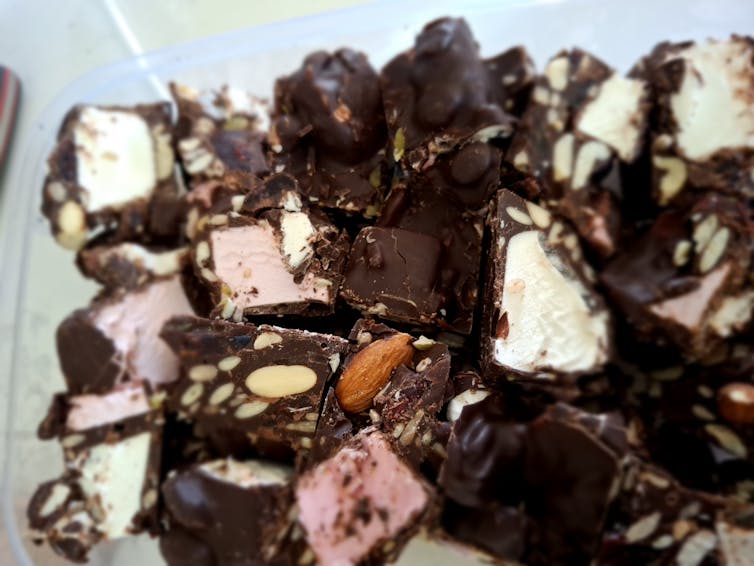
  3. have a variety of nutritious snacks that can be eaten with one hand for those late-night feeds, such as peeled boiled eggs, a peanut butter sandwich on wholegrain bread, or avocado and cheese on a rice cake. My personal favourite is homemade rocky road with dark chocolate, nuts, seeds and dried fruit

  4. keep a drink bottle with water nearby when breastfeeding.

Rocky road.
The author’s home-made rocky road, which she gives as a gift to friends with new babies.
Therese O’Sullivan/Author provided

If you’re considering a gift for a family with a new baby, remember new parents’ personal needs often take a back seat when bub arrives, including eating well. Consider a hearty frozen meal, muffins with oats and nuts, a nice stainless steel water bottle, gourmet trail mix or even some homemade rocky road.

The Conversation

Therese O’Sullivan has previously received funding from the Stan Perron Charitable Foundation and the Department of Health Western Australia for a project on antenatal colostrum expressing.

ref. What should I eat (and avoid) while breastfeeding? How does my diet affect baby’s milk? – https://theconversation.com/what-should-i-eat-and-avoid-while-breastfeeding-how-does-my-diet-affect-babys-milk-260423

Ozempic and other weight-loss drugs linked to rare but serious eye conditions

Source: The Conversation – Global Perspectives – By Flora Hui, Research Fellow, Centre for Eye Research Australia and Honorary Fellow, Department of Surgery (Ophthalmology), The University of Melbourne

Drugs such as Ozempic, Wegovy and Mounjaro (known as semaglutide and tirzepatide) have changed the way clinicians manage diabetes and obesity around the world.

Collectively known as GLP-1 agonists, these drugs mimic the hormone GLP-1. This limits both hunger and interest in food, helping users lose weight, and helps control blood sugar levels.

But two new studies published today show that people taking these drugs may have a small increased risk of serious eye conditions and vision loss.

Here’s what you need to know if you’re taking or considering these medications.

What damage can occur?

Non-arteritic anterior ischaemic optic neuropathy, or NAION, is a rare but devastating eye condition that occurs when blood flow to the optic nerve is suddenly reduced or blocked. It’s also called an “eye stroke”.

The exact cause of NAION remains unclear and there are no current treatments available. People with diabetes are at increased risk of developing NAION.

Unlike other eye conditions that develop gradually, NAION causes a sudden, painless loss of vision. Patients typically notice the condition when they wake up and discover they’ve lost vision in one eye.

Vision tends to worsen over a couple of weeks and slowly stabilises. Recovery of vision is variable, but around 70% of people do not experience improvement in their vision.

What has previous research shown?

A previous study from 2024 found participants prescribed semaglutide for diabetes were four times more likely to develop NAION. For those taking it for weight loss, the risk was almost eight times higher.

In June, the European Medicines Agency concluded NAION represented a “very rare” side effect of semaglutide medications: a one in 10,000 chance. In a first for medicines regulators, the agency now requires product labels to include NAION as a documented risk.

However the recent studies suggest the risks may be lower than we first thought.

In addition to NAION, there is also evidence to suggest GLP-1 drugs can worsen diabetic eye disease, also known as diabetic retinopathy. This occurs when high blood sugar levels damage the small blood vessels in the retina, which can lead to vision loss.

It may sound counter-intuitive, but rapid blood sugar reductions can also destabilise the fragile blood vessels in the retina and lead to bleeding.

What do the new studies say?

Two newly published studies investigated people with type 2 diabetes living in the United States over two years. The studies looked at the medical records of 159,000 to 185,000 people.

One study found semaglutide or tirzepatide was associated with a more modest risk of developing NAION than previously thought. Of 159,000 people with type 2 diabetes who were taking these drugs, 35 people (0.04%) developed NAION, compared with 19 patients (0.02%) in the comparison group.

The researchers also found an increased risk of developing “other optic nerve disorders”. However, it’s unclear what kind of optic nerve disorders this includes, as the medical record codes used didn’t specify.

Counter to this, the second study did not find an increased risk of NAION among those taking GLP-1 drugs.

However, the researchers found a small increase in the number of people developing diabetic retinopathy in those prescribed GLP-1 drugs.

But overall, participants on GLP-1 drugs experienced fewer sight-threatening complications related to their diabetic retinopathy and required less invasive eye treatments compared to the group taking other diabetes medications.

Further studies are still needed to understand how GLP-1 drugs can lead to eye complications. A current, five-year clinical trial is studying the long-term effects of semaglutides and diabetic eye disease in 1,500 people, which should tell us more about the ocular risks in the future.

What does this mean for people taking GLP-1 drugs?

NAION is a serious condition. But we need to strike a balance between these (and other) risks and the benefits of GLP-1 medications in diabetes care, obesity treatment, reducing heart attack risks and extending lives.

The key lies in informed decision-making and identifying different levels of risk.

People with multiple NAION risk factors – such as sleep apnoea, high blood pressure and diabetes – should undergo careful consideration with their treating doctor before starting these medications.

“Crowded” optic nerve heads are also a risk factor for NAION. This is an anatomical feature where blood vessels at the optic nerve head are tightly packed together. People with crowded optic nerve heads should also undergo careful consideration before starting GLP-1 medications.

Although NAION can strike without warning, regular comprehensive eye examinations with your optometrist or ophthalmologist still serve important purposes. They can detect other drug-related eye problems, including worsening diabetic retinopathy, and can identify patients with crowded optic nerve heads. It’s also important to tell them if you are taking GLP-1 medications so they can keep a close watch on your eye health.

Emerging research also suggests that improving your heart health might help reduce risks of developing NAION. This includes proper management of high blood pressure, diabetes and cholesterol – all conditions that compromise the small blood vessels feeding the optic nerve.

Studies also show patients with heart conditions who better adhere to their medication prescriptions have lower risks of NAION than those who don’t.

Doctors should discuss NAION risks during prescribing decisions and work with eye care providers to monitor regularly for diabetic eye disease. Patients need clear instructions to seek immediate medical attention for sudden vision loss and the need for regular eye examinations.

Aggressive treatment of sleep apnoea and other heart conditions may also help reduce NAION risks. But for now, there remains an ongoing need for more research to understand how GLP-1 medications can affect the eye.

The Conversation

Pete A Williams has received past funding from Novo Nordisk Fonden (Foundation) for glaucoma neuroprotection research and is involved in, but does not directly receive funds from, a Novo Nordisk Fonden-funded clinical trial for glaucoma neuroprotection. Novo Nordisk Fonden has no role in the planning, execution, or data analysis of these studies. Novo Nordisk Fonden owns Novo Holdings A/S, which owns and controls Novo Nordisk A/S, the pharmaceutical company that makes Ozempic and Wegovy.

Flora Hui does not work for, consult, own shares in or receive funding from any company or organisation that would benefit from this article, and has disclosed no relevant affiliations beyond their academic appointment.

ref. Ozempic and other weight-loss drugs linked to rare but serious eye conditions – https://theconversation.com/ozempic-and-other-weight-loss-drugs-linked-to-rare-but-serious-eye-conditions-262874

How can you be sure your clothing has been produced ethically?

Source: The Conversation – Global Perspectives – By Aayushi Badhwar, Lecturer in Enterprise and Technology, RMIT University

Naomi Rahim/Getty Images/Canva

Today’s consumers are swimming in a sea of information. Products are marketed with big, bold words such as “sustainable”, “ethical” and “organic”. They sound good, they catch our attention, and they make us feel better about what we buy.

The reality is, in today’s market, figuring out which claims are true is no easy task.

One big reason is greenwashing, when brands use these buzzwords to sell products without living up to what the words actually mean. In fashion especially, these terms are thrown around so often that their meaning has been watered down. Instead of being about genuine change, they are often just a sales tool.

So, how can you know what to look out for?

Who should take responsibility for green claims?

Greenwashing takes many forms. Sometimes brands know they are misleading; this is direct greenwashing. Other times, it’s indirect, when brands simply do not know the full story of their own supply chains. A T-shirt, for example, might start as raw cotton in one country, get processed into fabric in another, sewn into a garment, and then shipped overseas for sale.

At each stage, there are different suppliers, factories and workers. The brand has limited visibility over what happens in these tiers. When a brand claims it produces ethically, but does not, that is greenwashing. If it involves exploitation or forced labour, it then becomes modern slavery, turning greenwashing into something more dangerous.

This raises a big question: who is responsible? The obvious answer is the brands. They design, order, and sell the products, and they profit from them. Consumers are paying for these goods, so they should have access to credible information, not just vague claims or nice-sounding labels.

The fashion industry is constantly in the spotlight for problems in its supply chains. Stories about poor working conditions, environmental damage, and lack of transparency pop up all the time. But just like a viral trend on social media, the attention often fades quickly, and people move on to the next story.

Certifications aren’t perfect

There are many certifications in the fashion industry trying to help, but they are not foolproof. A label might promise ethical sourcing, but that does not guarantee transparency or prove that every step was ethical.

A large portion of China’s cotton comes from the Xinjiang region, which has long been linked to forced labour; concerns were highlighted in a United Nations report in 2022. Another example is deforestation in Brazil, where cotton from affected areas was certified under the “Better Cotton” scheme. Many major brands – like ASICS producing the Australian Olympic uniforms – have faced scrutiny for sourcing cotton from controversial regions.

Tracing global supply chains is hard. But the responsibility does not disappear just because it’s complicated.

In Australia, the Modern Slavery Act took effect in January 2019 to tackle issues such as forced labour and exploitation. Penalties include heavy fines or jail time.

However, there is a major loophole, as only companies with an annual revenue over A$100 million are required to report under the act. For big corporations, even if they are caught, the penalty can be tiny compared to the profits they have made.

This is not just an Australian problem, it’s global. For example, luxury brand Dior was placed under judicial administration after being found negligent for failing to act against worker exploitation in its subcontracted supply chain in Italy. The pattern is often the same; a company gets accused, sometimes even fined, but the cost is minimal compared to their annual revenue, so it’s barely a setback.

Is there a role for government?

So, should the responsibility rest only with brands? Not entirely. Governments also benefit from these companies through taxes and trade. They profit indirectly when the companies profit, and they benefit from the jobs these companies provide.

A stronger approach would involve government bodies and brands working with supply chain mapping companies, such as Textile Genesis, TrusTrace or FibreTrace. These platforms, often powered by blockchain and artificial intelligence, track a product through every stage of production.

Blockchain – which uses a decentralised database – can be a game changer.

Unlike websites or paper trails, blockchain data cannot be altered without leaving trace. Once recorded, the information is permanent, and it can be shared across manufacturers, brands and government bodies to maintain real-time disclosure.

When products enter a country, the ethical claims behind them could be verified in real time, instead of relying on brands to respond after an allegation is made.

The upfront cost is high and adoption might be slow. But in the long run it could save money on compliance, audits and damage control, while also building consumer trust.

Brands would still make profits, but consumers would have the confidence the products they are buying live up to the claims. Instead of government agencies being passive players, they would actively enforce that products meet the standards consumers expect.

In short, brands need to be held accountable, but so do governments. Greenwashing, modern slavery, and unethical sourcing will keep slipping through the cracks, unless they both work together.

The tools to make the fashion industry more transparent and honest already exist; it’s just a matter of using them.

The Conversation

Aayushi Badhwar does not work for, consult, own shares in or receive funding from any company or organisation that would benefit from this article, and has disclosed no relevant affiliations beyond their academic appointment.

ref. How can you be sure your clothing has been produced ethically? – https://theconversation.com/how-can-you-be-sure-your-clothing-has-been-produced-ethically-262800

70 years of data show extreme heat is already wiping out tropical bird populations

Source: The Conversation – Global Perspectives – By James Watson, Professor in Conservation Science, School of the Environment, The University of Queensland

DeAgostini/Getty Images

Human-driven climate change threatens many species, including birds. Most studies on this topic focus on long-term climate trends, such as gradual rises in average temperatures or shifts in rainfall patterns. But extreme weather events are becoming more common and intense, so they warrant further attention.

Our new research shows extreme heat is having a particularly severe effect on tropical birds. We found increased exposure to extreme heat has reduced bird populations in tropical regions by 25–38% since 1950.

This is not just a temporary dip – it’s a long-term, cumulative effect that continues to build as the planet warms.

Our research helps explain why bird numbers are falling even in wild places relatively untouched by humans, such as some very remote protected tropical forests. It underscores the urgent need to reduce greenhouse gas emissions, to conserve the remaining biodiversity.

Digging into huge global datasets

We analysed data from long-term monitoring of more than 3,000 bird populations worldwide between 1950 and 2020. This dataset captures more than 90,000 scientific observations.

Although there are some gaps, the dataset offers an unmatched view of how bird populations have changed over time. Some parts of the world such as western Europe and North America were better represented than others, but all continents were covered.

We matched this bird data with detailed daily weather records from a global climate database that stretches back to 1940. This allowed us to track how bird populations responded to specific changes in daily temperatures and rainfall, including extreme heat.

We also looked at average yearly temperatures, total annual rainfall, and episodes of unusually heavy rainfall.

Using another dataset that reflects human industrial activity over time, we accounted for human pressures such as land development and human population density.

By combining all these sources of data, we created computer models to evaluate how climate factors and human impacts influence bird population growth.

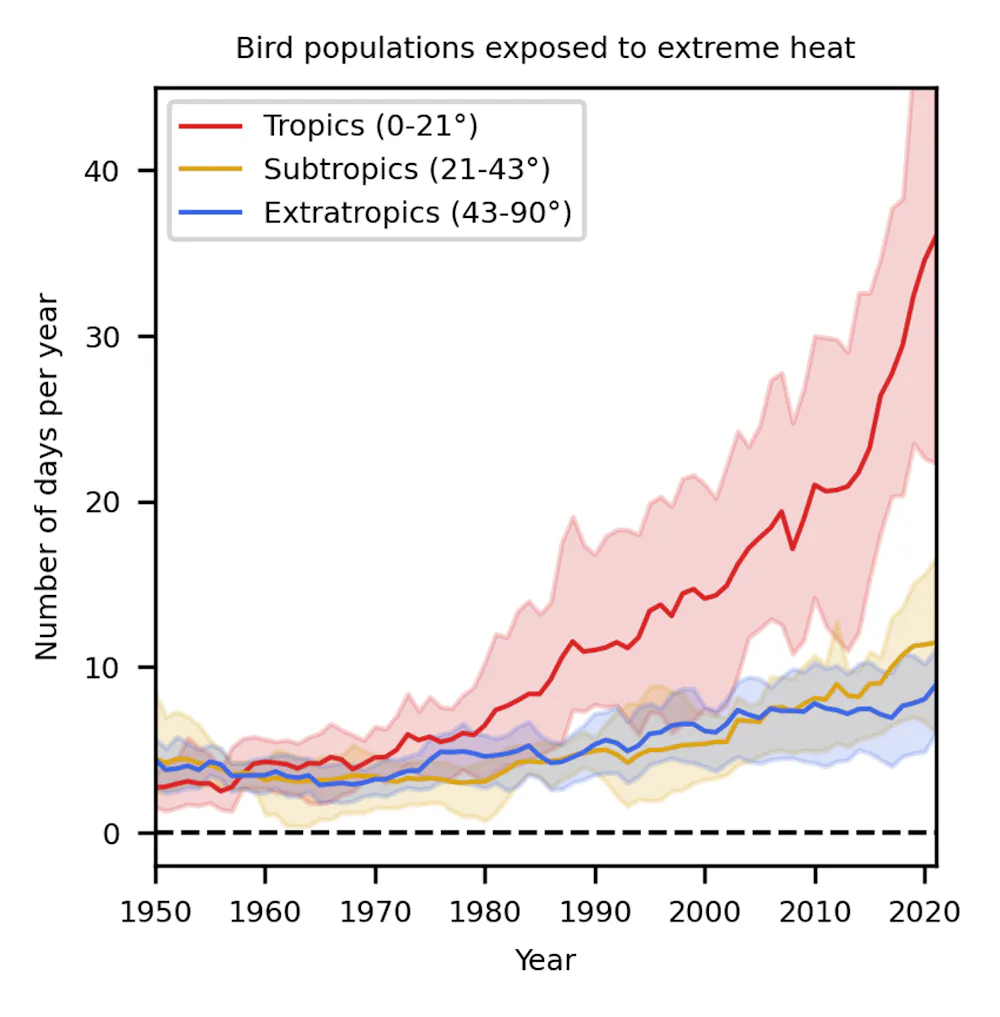
Our research confirmed the work of other climate scientists showing extreme heat events have increased dramatically over the past 70 years, especially near the equator.

Birds in tropical regions are now experiencing dangerously hot days about ten times more often than they did in the past.

A chart showing the number of very hot days per year over time for the tropics (steep increase), subtropics and extratropics
Tropical birds have experienced a 10-fold increase in exposure to extreme heat over the past 60 years.
Kotz, M. et al. (2025) Nature Ecology & Evolution

What we found: extreme heat is the biggest climate threat to birds

While changes in average temperature and rainfall do affect birds, we found the increasing number of dangerously hot days had the greatest effect – especially in tropical regions.

This is a major concern because tropical birds often have small home ranges and are highly specialised in terms of the habitats and climates they persist in. In many cases tropical birds exist within a small range of heat tolerance.

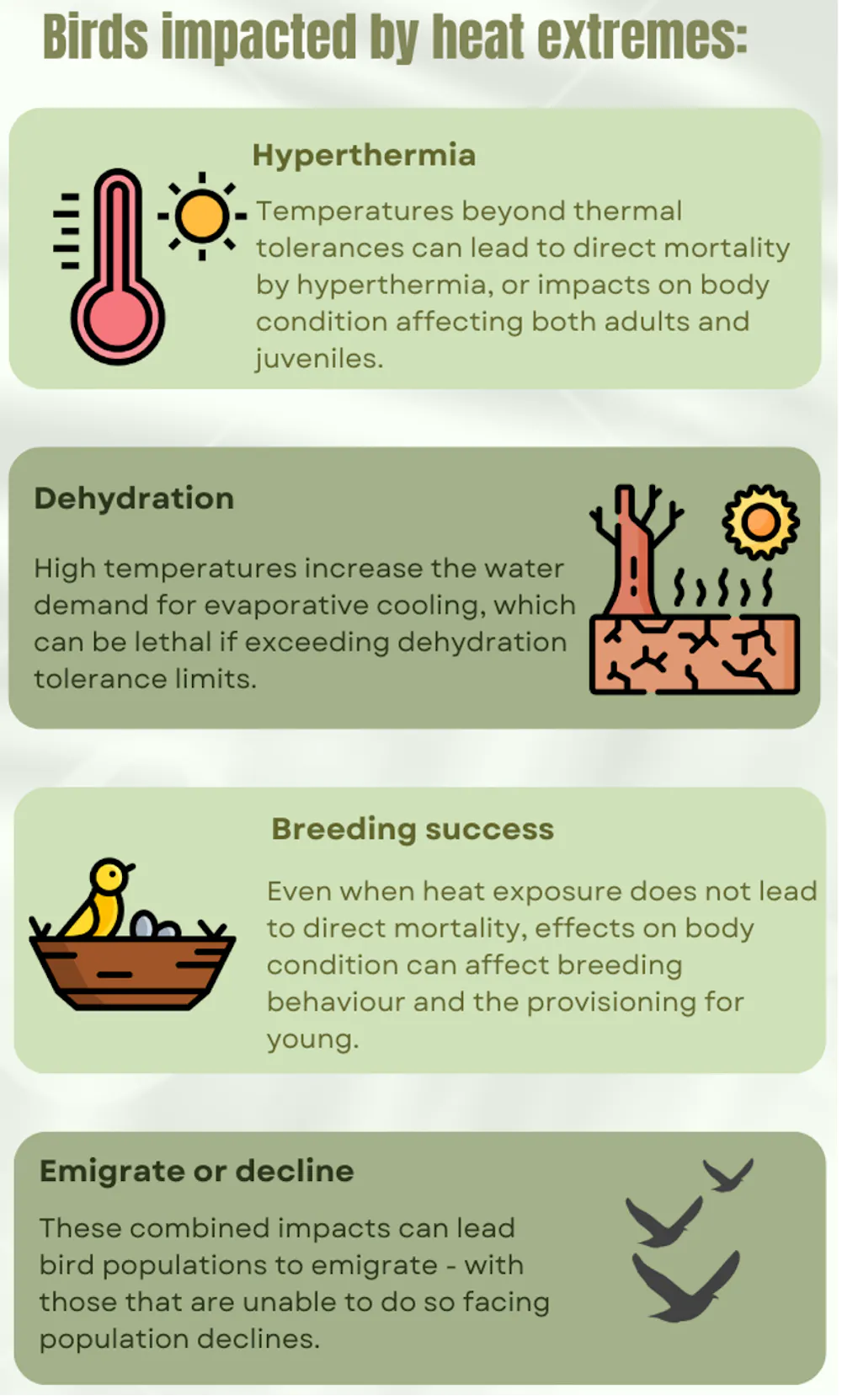
At temperatures beyond a bird’s limit of endurance, they go into hyperthermia, where their body temperature rises uncontrollably. In this state, birds may adopt a drooped-wing posture to expose more skin for heat loss, hold their beaks open and pant rapidly, spread their feathers, and become lethargic or disoriented. In severe cases, they lose coordination, fall from perches, or even collapse unconscious.

Side profile of a black-collared barbet (_Lybius torquatus_) resting on a branch, The Panhandle, Okavango Delta, Botswana.
A black-collared barbet (Lybius torquatus) from Botswana.
Sergey Dereliev

If they survive the experience, they can suffer long-term damage such as heat-induced organ failure and reduced reproductive capacity. Heat exposure reduces breeding success by lowering adult body condition and reducing time spent foraging – because the birds must rest or seek shade during the hottest hours.

It also causes heat stress in eggs and nestlings. In extreme events, nestlings may die from hyperthermia, or parents may abandon nests to save themselves.

Heat also increases a bird’s demand for water — not because they sweat (birds lack sweat glands) but because they lose water rapidly through evaporative cooling. This happens mainly via panting (respiratory evaporation) and, in some species, gular fluttering (rapid vibration of throat skin to increase airflow), as well as evaporation through the skin. As temperatures climb, these processes accelerate, causing significant dehydration unless birds can drink more frequently or access moister food.

Our study found that across tropical areas, the impact of climate change on birds is perhaps even greater now than the impact of direct human activities such as logging, mining or farming. This is not to say habitat destruction due to these activities is not a serious issue – it clearly is a major concern to tropical biodiversity. But our study highlights the challenges climate change is already bringing to birds in tropical regions.

Infographic describing how birds are impacted by heat extremes
Extreme heat is bad for birds in more than one way.
James Watson, Maximilian Kotz and Tatsuya Amano with icons from Flaticon, design by Canva.

A clear warning

Our research highlights the importance of focusing not just on average climate trends, but also on extreme events. Heatwaves are no longer rare, isolated incidents – they are becoming a regular part of life in many parts of the world.

If climate change continues unchecked, tropical birds – and likely many other animals and plants – will face increasing threats to their survival. Change may be too fast and too extreme for many species to adapt.

And as tropical regions host a huge share of the world’s biodiversity, including nearly half of all bird species, the ripple effects could be far-reaching.

Conservation strategies must take this into account. Protecting habitats from human industrial development remains important, but it’s no longer enough on its own. Proactive action to help species adapt to climate change needs to be part of wildlife protection plans – especially in the tropics.

Ultimately if we are to preserve global biodiversity, slowing down and eventually reversing climate change is essential. That means cutting greenhouse gas emissions, investing in ways to draw down existing carbon dioxide levels, and supporting policies that reduce our impact on the planet. The fate of tropical birds – and countless other species – depends on it.

Tropical bird population declined by one-third since 1980 due to climate change, featuring the study’s lead author Maximilian Kotz (Potsdam Institute for Climate Impact Research)

The Conversation

James Watson has received funding from the Australian Research Council, National Environmental Science Program, South Australia’s Department of Environment and Water, Queensland’s Department of Environment, Science and Innovation as well as from Bush Heritage Australia, Queensland Conservation Council, Australian Conservation Foundation, The Wilderness Society and Birdlife Australia. He serves on the scientific committee of BirdLife Australia and has a long-term scientific relationship with Bush Heritage Australia and Wildlife Conservation Society. He serves on the Queensland government’s Land Restoration Fund’s Investment Panel as the Deputy Chair.

Maximilian Kotz receives funding from European Union’s Horizon 2020 research and innovation programme under a Marie Sklodowska-Curie grant.

Tatsuya Amano receives funding from the Australian Research Council Future Fellowship and Discovery Project.

ref. 70 years of data show extreme heat is already wiping out tropical bird populations – https://theconversation.com/70-years-of-data-show-extreme-heat-is-already-wiping-out-tropical-bird-populations-259892