Wealth taxes don’t always work the way governments hope they will. Here are some alternatives

Source: The Conversation – UK – By Miriam Marra, Associate Professor of Finance and co-Director of Equity, Diversity, and Inclusion at Henley Business School, University of Reading

RYO Alexandre/Shutterstock

With the UK government facing a multibillion pound gap between revenue and spending, calls for a wealth tax are becoming louder.

More than 30 top economists recently wrote to the chancellor of the exchequer, Rachel Reeves, saying the measure could raise billions of pounds. A recent poll of more than 4,000 UK adults found that 75% would back a 2% tax on wealth above £10 million.

Economic insecurity, rising living costs and the rapid pace of de-industrialisation have been identified as causes of unrest and a fraying society. Targeting taxes at the ultra-rich could have the power to redistribute wealth and raise revenue on a substantial scale.

But the reality of implementing it is far from simple. While the concept may be compelling, a wealth tax might not be easy to put into action – and may not even create the expected revenue.

This is reflected in figures from the Organisation for Economic Co-operation and Development (OECD) that show wealth taxes are less common than they used to be. Of the 12 OECD countries that had a net wealth tax in 1990, just three have one now (Norway, Spain and Switzerland).

Taxing assets including savings, investments and property is harder than taxing income. It relies on very wealthy individuals self-declaring asset values and for all assets to be held under the same name. When it comes to properties, this is not always the case.

A lack of transparency and reliable data can then create a huge administrative burden and costs for the government imposing the tax.

After all, predicting the political and economic impact these taxes can have is difficult. A clear example is the UK government’s proposed change to inheritance tax rules for farmers.

This may be a well-intentioned policy aimed at a small number of ultra-wealthy individuals using farmland to avoid inheritance tax. But claims that it affects farming families who may not have high incomes but have cultivated their land for generations have sparked heated debate around the actual figure of farms affected.

Despite the potential difficulties in implementation, there are countries that have made a wealth tax work. In Norway, residents pay 1% tax on their global net worth above 1.76 million kroner (£130,000). But the calculations are far from simple – with caveats, exemptions and differentiated local rules.

For net wealth in excess of 20.7 million krone in 2023, the maximum wealth tax rate was increased to 1.1%. This led to some of Norway’s wealthiest people moving to countries with more favourable tax regulations.

Fortune reported that 82 Norwegians with a combined net wealth of about 46 billion kroner (£3.4 billion) left the country in 2022-2023, according to data from the country’s finance ministry.

What else might work?

Any solution must be focused on the ultra-rich “giving back”, reinvesting in the economy for the good of society, and shifting their mindset.

With the reality of a wealth tax proving difficult, here are some viable alternatives to raise revenues and social contributions from very wealthy individuals.

1. Revised tax on capital gains

An increase of capital gains taxation (tax levied on the profits made when someone sells an asset) may be needed. But while revisions are overdue – perhaps differentiating between wealth sources such as entrepreneurial effort, passive investment and speculative trading – this tax would rely on the ultra-rich selling their assets. Many buy by borrowing against them and avoid cashing them out, so wealth accumulates without being taxed.

A higher and more progressive tax on capital gains could be an initial solution to raise revenues. But if poorly designed, it may not be a long-term answer and could discourage some much-needed productive capital investments in the UK.

2. A fresh look at inheritance tax

Loopholes and exemptions allow some very wealthy families to slash their inheritance tax bills, in some cases allowing vast properties and assets to be passed on untouched.

exterior shot of a gated mansion in the uk countryside
Inheritance is the reason for a lot of the UK’s inequality.
Ovaiz/Shutterstock

Academic research shows how higher wealth inequality stems from inherited wealth. Unlike financial capital, inherited wealth does not often translate into investments and, as such, citizens generally favour taxing it. In 2024, the Institute for Fiscal Studies published suggestions on how to revise inheritance tax in the UK. Now is the time for wider consultation on this.

3. Incentivised philanthropy

The underlying premise of a wealth tax is to tackle social and economic inequality. Incentivised philanthropy could also provide a way to give a direct and impactful boost to those areas of society that need it most.

Rather than going straight into a government pot, investing wealth into specific initiatives that effect real change and give measurable outcomes could be an alternative solution. This could be, for instance, supporting education among deprived communities with scholarships, or paying for upgrades to local infrastructure.

Philanthropic initiatives can also be valuable to the wealthy individuals behind them in terms of reputational gains and publicity for their business.

The benefits and pitfalls of a wealth tax will continue being discussed in the run up to the budget in autumn. But it’s important not to lose sight of the end goal – reducing inequality.

It is time for the wealthiest to recognise that their fortunes sit in a country where poverty is real and increasing. They could drive a rebalancing that does not feel punitive, but ethical.

The Conversation

Miriam Marra does not work for, consult, own shares in or receive funding from any company or organisation that would benefit from this article, and has disclosed no relevant affiliations beyond their academic appointment.

– ref. Wealth taxes don’t always work the way governments hope they will. Here are some alternatives – https://theconversation.com/wealth-taxes-dont-always-work-the-way-governments-hope-they-will-here-are-some-alternatives-262387

How a Japanese museum project is passing on the testimony of the last atomic bomb survivors

Source: The Conversation – UK – By Lauren Anne Constance, PhD Candidate, School of Modern Languages, Cardiff University

Known as hibakusha in Japan, the survivors of the 1945 atomic bombings of Hiroshima and Nagasaki are the only people in the world with firsthand experience of the horrors of nuclear warfare. Now, 80 years later, they are passing their memories to the next generation through a project designed to carry on their legacy of anti-nuclear activism.

In 2024, Nihon Hidankyo, the Japan Confederation of A- and H-Bomb Sufferers Organisations, was awarded the Nobel Peace Prize “for demonstrating through witness testimony that nuclear weapons must never be used again”.

This official recognition of the power of hibakusha testimony to generate opposition to nuclear weapons shows how important the survivors and their testimonies are in fostering a culture of remembrance and peace.

This year, the number of registered atomic bomb survivors fell below 100,000 for the first time. The Hiroshima city government, aware that soon there would be no more survivors, started the A-bomb Legacy Successor Programme in 2012 to train volunteers to inherit and pass on the testimonies of survivors.

Volunteers undergo two years of training at the Hiroshima Peace Memorial Museum. They study the historical realities of the bombing and develop public speaking skills, and each works closely with a survivor to create a presentation based on their personal testimony.

To graduate, successors must have their script fact-checked by the museum. They must also present it to the survivor to earn permission to speak on their behalf. Once certified, successors are commissioned by the Hiroshima Peace Culture Foundation to give lectures at the museum, and are invited to speak in schools and communities across Japan.

But the programme raises an important question: can such deeply personal, traumatic memories truly be passed on to someone who did not live through them?

A different kind of testimony

As someone who researches memorialisation in Japanese museums, this question became clear to me during fieldwork in Hiroshima, where I observed how successor stories are told.

While typical survivor testimonies are deeply personal and often last for an hour, “successor lectures” are more distant in tone. They are told in the third person, with only 15-20 minutes devoted to the specific story of the survivor whose testimony the successor has inherited.

Successor lectures must begin with an explanation of historical context surrounding the Hiroshima bombing, including background on the Pacific war, the development of nuclear weapons, and the short- and long-term impact of the bomb. The museum emphasises the importance of teaching visitors the reality of the bombing through scientifically grounded, objective knowledge.


Read more:
‘They died with stones in their mouths’: Hiroshima’s last survivors tell their stories


To that end, the museum instructs successors to avoid metaphorical descriptions that may mislead audiences. As successor Yumie Hirano explained in an interview with the Hiroshima Inheritance Exhibition Project, certain powerful phrases that survivors use must be carefully considered when retold:

If a survivor says ‘I saw a woman melting by heat rays just in front of me’, that is correct as his/her memory. However, it is scientifically impossible for a human body to melt by heat rays in a few seconds. [So] an A-bomb legacy successor … has to avoid the expressions like ‘melting’.

This highlights a core tension at the heart of the programme: the need to honour survivors’ memories while maintaining historical and scientific accuracy. It is a delicate balance between emotional truth and objective fact.

The presence and power of survivors

Traditionally, bearing witness has been seen as the role of the survivor, whose authority comes from their own personal experience. The Legacy Successor Programme challenges that idea, entrusting the responsibility of testimony to those without direct connection to the event.

But part of what makes survivor testimony so powerful is the presence of the survivor. The emotional impact of seeing and hearing from someone who lived through the bombing may be difficult to replicate in successor talks – and this may explain the difference in audience engagement.

In 2023, survivors delivered 1,578 lectures to more than 110,000 people. In the same year, successors gave 1,379 lectures – but to a total audience of 14,575. Only eight people were present at the successor lecture I attended, in a room with capacity for 45.


Read more:
‘Then the city started to burn, the fires were chasing me’ – 80 years on, Hiroshima survivors describe how the atomic blast echoed down generations


Interestingly, these lectures appear to be more popular with international audiences. The museum also offers successor talks in English, and these make up 35% of its total successor lecture attendance.

As the number of survivors declines, new questions arise about the future of the Legacy Successor Programme. Who will approve lecture content once no survivors remain? Will descendants of the hibakusha take over this role? Or will the Hiroshima Peace Memorial Museum assume that responsibility? How these decisions are made will shape how Hiroshima’s story is remembered and shared with the world.

What is clear is that as living memory of the atomic bombing fades, efforts to preserve and communicate that memory are more important than ever – as nuclear weapons, and the associated global tensions, proliferate. In the absence of survivors, the question is not just what we remember, but who gets to do the remembering, and how.


Looking for something good? Cut through the noise with a carefully curated selection of the latest releases, live events and exhibitions, straight to your inbox every fortnight, on Fridays. Sign up here.


The Conversation

Lauren Anne Constance receives funding from The Great Britain Sasakawa Foundation, the Japan Society for the Promotion of Science and the Japan Foundation Endowment Committee.

– ref. How a Japanese museum project is passing on the testimony of the last atomic bomb survivors – https://theconversation.com/how-a-japanese-museum-project-is-passing-on-the-testimony-of-the-last-atomic-bomb-survivors-262883

Condoms, PrEP and vaccines: how the UK is expanding STI prevention

Source: The Conversation – UK – By Kevin O’Malley, Clinical Tutor, School of Medicine, University of Limerick

New Africa/Shutterstock

The UK has just introduced the world’s first national programme offering a vaccine to help protect against gonorrhoea. This coincides with increasing rates of sexually transmitted infections (STIs) including antibiotic-resistant strains of Neisseria gonorrhoeae, particularly among gay, bisexual and other men who have sex with men.

The vaccine being offered was not originally designed for gonorrhoea. It is the meningococcal B (MenB) vaccine, developed to protect against Neisseria meningitidis – the bacteria which cause meningitis.

These two bacteria are closely related and share several similar surface proteins. As a result, the immune response generated by the MenB vaccine also offers provides partial protection against gonorrhoea.

While the vaccine is not 100% effective, studies suggest it can reduce the risk of infection by a third. Given the emergence of antibiotic-resistant “super gonorrhoea” this is a valuable addition to our sexual health toolkit.

Condoms are the mainstay of STI prevention, and have been for decades. They are inexpensive, easy to use and remain the only single method that protects against both HIV and most other STIs.

Despite their effectiveness, many people do not use condoms every time they have sex. Some find they reduce sensation or pleasure; others see condomless sex as a sign of trust in a relationship. Condoms might not be on hand when sex is spontaneous, while alcohol and drug use may lower inhibitions and increase impulsivity.

Since the introduction of HIV pre-exposure prophylaxis (PrEP) attitudes have also shifted. Some people now perceive other STIs as inconvenient but easily treated, particularly younger generations whose school-based sex education may have focused more on pregnancy prevention than on STI transmission.

But “condomless sex” need not mean “entirely unprotected” sex. In addition to condoms, biomedical advances are giving us more ways to prevent infection – many of which rely on acting before particular bacteria or viruses take hold. In public health, two of the most effective examples of this are vaccination and prophylaxis (treatment given or action taken to prevent disease).

Vaccination

Vaccines work by training the immune system to recognise and fight specific infections. They do this by introducing harmless fragments of a virus or bacterium, which prompt the body to produce antibodies and memory cells. If the body later encounters the real pathogen, the immune system can react rapidly and in a much more targeted way, preventing illness entirely or at least reducing its severity.

Vaccination already plays an important role in sexual health. Alongside the newly introduced gonorrhoea vaccine, the HPV (human papillomavirus) vaccine protects against genital warts and reduces the risk of several cancers, including cervical and anal cancer. Hepatitis A and B vaccines defend against viruses that can cause serious, and sometimes life-threatening, liver disease. The mpox vaccine is also available for people considered at higher risk.

These vaccines represent a useful preventative tool in the modern sexual health toolkit – complementing condoms, antiviral prophylaxis and other preventive strategies to give people another layer of protection.

Prophylaxis

In sexual health, one of the clearest examples of prevention in action is HIV prophylaxis. Pre-Exposure Prophylaxis (PrEP) involves taking antiviral medication so that, if exposure to the HIV virus occurs, it cannot establish an infection. Some people take PrEP daily, while others use an “on demand” regimen around the time they have sex. Under the guidance of a sexual health professional, PrEP is a safe and highly effective option for preventing HIV infection.

Post-Exposure Porphylaxis (PEP) works in a similar way but is taken after a possible exposure. It’s an emergency option: a month-long course of antiviral medication that should be started as soon as possible (and no later than 72 hours after sex) to be effective.

Researchers are now exploring similar approaches for bacterial STIs. One promising example is DoxyPEP, where a single dose of the antibiotic doxycycline is taken after condomless sex. Early evidence shows it can significantly reduce the risk of syphilis and chlamydia, and to a lesser extent, gonorrhoea.

Why condoms still matter

These biomedical tools are changing the sexual health landscape. While there is no substitute for the comprehensive protection that condoms offer, more options mean greater control.

As threats continue to evolve, so too must our strategies to address them. The introduction of the gonorrhoea vaccination programme – the first of its kind – is a powerful example of innovation in practice. It demonstrates how progress can be achieved not only through new discoveries, but in finding new uses for existing tools.

The Conversation

Kevin O’Malley does not work for, consult, own shares in or receive funding from any company or organisation that would benefit from this article, and has disclosed no relevant affiliations beyond their academic appointment.

– ref. Condoms, PrEP and vaccines: how the UK is expanding STI prevention – https://theconversation.com/condoms-prep-and-vaccines-how-the-uk-is-expanding-sti-prevention-262770

Antarctic leopard seal ‘songs’ are surprisingly similar to nursery rhymes

Source: The Conversation – UK – By Rüdiger Riesch, Senior Lecturer in Evolutionary Biology, Royal Holloway University of London

Antarctic leopard seals make calls that share structures with nursery rhymes. Yaroslav Nikitin/Shutterstock

Animals may not have musical instruments, but the way that some species form complex patterns of vocal sequences is remarkable. A recent study has found that Antarctic leopard seal. mating call sequences seem to be similar in predictability to human nursery rhymes.

In some cases, the vocal sequences an animal makes has all the elements of song. A song is made up of repeating sounds that follow a set pattern. These sounds can be combined into notes or syllables, which are then grouped into phrases or motifs.

The most prominent example of animal song is found in songbirds, which include some of our common garden birds, like the robin, the blackbird, or the wren. However, songs can also be found in other animals, ranging from small animals like fruit flies, to mice and various bats, to gibbons and even to humpback whales.

Human music and song appear to primarily facilitate group cohesion and coordination. They can also function in our courtship, as exemplified by the serenade, which in its original form was a night-time song used to honour and court a potential partner.

In animals, song serves multiple purposes and is often tied to mate attraction (male fruit flies “sing” with wing vibrations to court females) and mate stimulation (male ultrasonic song in mice has been linked to ovary development in females). Is is also linked to competition, because male songbirds also use song to proclaim and defend their territories against potential rival males.

Although some of the characteristics of animal songs have a lot in common with human songs, they are not made of series of words that each have a specific meaning. Research on vocal sequences and song in animals is therefore mostly focused on identifying patterns in animal vocal communication and studying what function a song or vocal sequence might serve.

Within this context, the new study on Antarctic leopard seals made some interesting discoveries. The study, which was published in the journal Scientific Reports, analysed underwater recordings of 26 male leopard seals from eastern Antarctica.

The researchers used a single hydrophone (a microphone that allows sound recordings in aquatic environments) in the Davis Sea, Antarctica, to record leopard seal vocalisations over the span of six years. Leopard seals are the second-most important predator in Antarctica, almost at the top of the food chain. The orca is the only predator that is known to hunt these seals.

Antarctic leopard seals are usually solitary, except during the breeding season, and each need extensive hunting grounds. However, this means that communication between seals needs to carry over long distances.

Male leopard seals emit loud underwater sounds during the breeding season from November to January. This type of call is called a stereotyped sound, because they can be put into distinct categories.

Scientists believe these calls serve multiple purposes. First, they are thought to be used to attract the attention of females and second, they are thought to be a deterrent for other males. Females seem to also make broadcast calls but only during a short time window when they are sexually receptive.

The males recorded in this study used five different stereotyped calls and strung them together into elaborate series. Although they shared the same repertoire of stereotyped calls, the order in which they strung them together into sequences varied between seals.

The researchers also explored whether these leopard seal vocal sequences follow a predictable sequence pattern and if so, how this compared to sequence structure in other mammals (including humans). Even though the authors labelled the sequences “songs”, they did not mention whether or not they meet all the criteria needed to qualify for song (as described above). I will therefore refer to them here as vocal sequences.

Using several different statistical approaches that aim to assess entropy (randomness) in these sequences, they found that these seal vocal sequences appear to follow predictable patterns. Nonetheless, predictability for leopard seal sequences was lower than for songs of humpback whales and whistle sequences of bottlenose dolphins.

When compared to humans, the authors found that leopard seal sequences were less random than music by classical and romantic composers or the Beatles, and that they were similar to the randomness found in nursery rhymes.

The authors further found that particular sequences were used by the same males
over several consecutive days and speculate that these sequences might
be used as a kind of acoustic signature. This has been found for series of clicks, called codas, in sperm whales, and has been suggested for the songs of some songbirds, like the chiffchaff.

However, in most other species, identity seems to more commonly be encoded in single vocalisations, such as the signature whistles of bottlenose dolphins or the vocal signature calls of parrots.

The study on leopard seals provides some fascinating insights into commonalities and differences between human music and the sequential vocalisation patterns of certain animals.

But it also demonstrates the difficulties scientists face in trying to identify the rules that govern animal vocal sequences and to decipher the messages encoded within them. For example, we usually require a huge number of recordings from a species. Obtaining these recordings can be relatively easy for species that are common where lots of people live. But it can be difficult for animals that live in remote areas.

This study used mathematical equations to analyse the recordings that seals made. However, many animal researchers are beginning to use AI to help find patterns in large databases. I can only imagine what new and exciting discoveries in research on animal communication patterns might be just over the horizon.

The Conversation

Rüdiger Riesch does not work for, consult, own shares in or receive funding from any company or organisation that would benefit from this article, and has disclosed no relevant affiliations beyond their academic appointment.

– ref. Antarctic leopard seal ‘songs’ are surprisingly similar to nursery rhymes – https://theconversation.com/antarctic-leopard-seal-songs-are-surprisingly-similar-to-nursery-rhymes-262822

World’s ‘oldest baby’: what a 30-year-old embryo tells us about the future of fertility

Source: The Conversation – UK – By Nicky Hudson, Professor of Medical Sociology, De Montfort University

Svitlana Hulko/Shutterstock

A baby born in the US has made headlines for a surprising reason: they came from an embryo that had been frozen for more than 30 years — setting a new world record.

The embryo was created and stored in 1994, back when Bill Clinton was US president and the internet, email and mobile phones were still in their infancy. Now, decades later, that embryo has become a living child. But how is this possible – and what does it mean for the future of fertility treatment?

Freezing embryos is a common and effective part of in vitro fertilisation (IVF). During IVF, multiple eggs are fertilised, and any unused embryos can be frozen and stored for future use. Globally, thousands of embryos are placed in long-term storage each year – and as the demand for fertility treatment grows, so too does the number of embryos in storage.

But once a person or couple finishes treatment, the question of what to do with unused embryos can become complicated. As this case in the US illustrates, families and circumstances change.

Relationships may end. People may change their minds. And yet, many feel conflicted about allowing embryos to “perish” (the term used when frozen embryos are removed from storage, thawed and not used), especially after investing significant emotional, physical and financial resources in their creation. As a result, many continue to pay storage fees for years – sometimes decades – after their treatment has ended.

Embryo donation

One option for those with unused embryos is to donate them. Typically, this is coordinated through the fertility clinic. But in this record-breaking case, the embryos were donated through a US Christian organisation called Snowflakes, which allows donors to choose the recipients.

The donor – now a woman in her 60s – wanted a say in where the embryos went because any resulting children would be full genetic siblings to her 30-year-old daughter. In many countries, donor-conceived people are now entitled to information about their donors.

But rarely does this involve embryos frozen for decades – raising the possibility of a future connection between the child, their parents and the donor family, including a half-sibling born 30 years earlier.

In the US, there’s no legal limit on how long embryos (or sperm and eggs) can be stored. In the UK, the maximum storage limit was recently extended to 55 years, enabling a similar situation: someone could be conceived from an embryo stored for decades, and the donor may be elderly – or even deceased – by the time contact is made.


Read more:
Eggs and sperm can now be stored for up to 55 years – here’s what that means for donors and people seeking fertility treatment


What remains unclear is how these wide age gaps between donor and child – or between donor-conceived siblings – might affect how people relate to one another. It’s an area that remains largely unexplored.

Finding genetic relatives

As direct-to-consumer DNA testing becomes increasingly common, more donor-conceived people are turning to services like 23andMe and Ancestry.com to find genetic relatives outside of regulated routes. These commercial tests allow users to upload a sample and receive a list of people they may be related to, including potential donors or donor siblings.

With longer embryo storage periods possible, it’s likely that people will use these platforms to make contact with genetic relatives across many years, bypassing formal donor registries and regulated systems.

In this US case, the embryo donation took place within the same country. But that’s not always the case. With the globalisation of fertility treatment, including international travel and the cross-border shipment of frozen sperm, eggs and embryos, it’s increasingly common for people who are genetically related to live in different countries.

A 2024 Netflix documentary about sperm donation highlighted this issue, showing how a single donor fathered children in multiple countries, prompting calls for better regulation of international donor limits.

One of the most intriguing – and underexplored – questions is how people born from decades-old embryos will come to understand their origins. While research on donor-conceived families suggests that they typically function well, the idea of being “frozen in time” for 30 years is unique. It introduces a temporal disconnect between conception and birth that may feel uncanny or dislocating.

Donor-conceived people are often curious about their genetic background – but being born from an embryo created before the internet or mobile phones adds another layer to this. It could influence how people make sense of their identity, family connections, and even their place in history, especially if their genetic siblings or donors are decades older, or deceased. The long gap between fertilisation and birth raises profound questions not just about biology, but about belonging, narrative, and what it means to be from a particular time.

With rapid advances in reproductive technology, it’s likely this won’t be the last record-breaking case. As techniques improve and cultural boundaries around family and parenthood continue to evolve, we’ll see more questions arise: about identity, genetics and what it really means to be part of a family.

The Conversation

Nicky Hudson receives funding from the UK Economic and Social Research Council. She is a member of the UK NICE Guideline Committee on fertility treatment, a working group member for the Nuffield Council on Bioethics’ project on Reviewing the 14-day rule, a member of the British Fertility Society’s Law, Policy and Ethics group and an advisory board member for the Fertility Alliance.

– ref. World’s ‘oldest baby’: what a 30-year-old embryo tells us about the future of fertility – https://theconversation.com/worlds-oldest-baby-what-a-30-year-old-embryo-tells-us-about-the-future-of-fertility-262754

Why people reclaim words meant to insult them – and how this has become a powerful tool for protest

Source: The Conversation – UK – By Mete Sefa Uysal, Lecturer in Social & Political Psychology, University of Exeter

Christopher Penler/Shutterstock

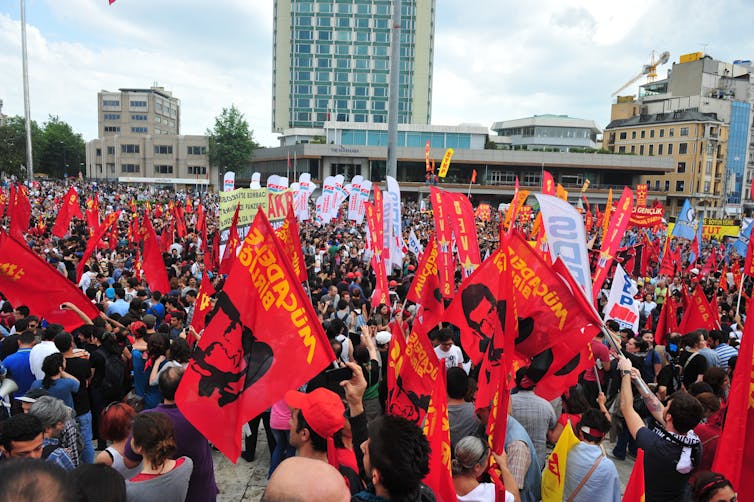
In 2013, a wave of protests began in Turkey in opposition to the planned demolition of Gezi Park in Istanbul. The protests soon evolved into mass anti-government demonstrations, and a landmark moment in the country’s history of resistance.

At the time, the country’s prime minister publicly insulted demonstrators, calling them çapulcu – a derogatory Turkish word meaning “looters” or “vandals”. Instead of retreating in shame, protesters quickly embraced the label. They wore it proudly on t-shirts, painted it on banners and sang it in chants. “Every day I’m çapuling” became a rallying cry, a meme and a slogan for a movement.

People took a slur meant to discredit them and turned it into a source of unity, defiance and pride. In social psychology, this practice is known as reappropriation, and it can transform how people see themselves and one another. Our research shows that when members of marginalised groups reclaim stigmatising labels, it not only fosters self-worth but can also spark political activism.

In other words, saying “yes, I’m a çapulcu” – or “yes, I’m fat” or “yes, I’m queer” – isn’t just resistance, it can be the start of a political identity.

In our study, published in Political Psychology, we explored how reappropriation works as a psychological and political process. We wanted to know: how does taking ownership of a stigmatised identity shift the way people see themselves and their groups? And how does that influence their willingness to take political action?

To answer this, we looked at two powerful case studies: the 2013 Gezi Park protests in Turkey, where protesters embraced the term çapulcu, and the fat liberation movement, where activists have worked to reclaim the word fat as a neutral descriptor.

In both cases, the labels have long been used to stigmatise, devalue or silence. But reappropriating these words allowed people to reframe their identities, from being seen as a “problem” to becoming part of a proud and politicised group.

The psychology behind reappropriation

We combined in-depth interviews and survey research to understand what drives people to reclaim a stigmatising label, and how this shapes their identity. We interviewed 20 activists in Turkey who participated in the Gezi Park protests, and surveyed 479 fat liberation activists in North America.

Our findings suggest that reappropriation helps reduce the personal sting of the insult. When someone proudly adopts a term meant to shame them, they feel it disarms the insult. It flips the power dynamic: what was meant to hurt now becomes a badge of pride. If you wear the word like armour, it can’t be used to hurt you.

A large crowd of protesters waving red flags in Istanbul
The 2013 Gezi Park protests evolved into nationwide protests in Turkey.
Thomas Koch/Shutterstock

It also builds a sense of collective identity. When people publicly embrace a reclaimed label, they signal solidarity with others who share that identity and opposition to the forces that marginalise them. This shift helps move people from private acceptance to public action.

Crucially, we found that this process isn’t about denying the pain of marginalisation – it’s about transforming that pain into purpose. Participants in both movements reported that reclaiming stigmatised labels made them more likely to engage in activism – whether that meant attending protests, speaking out on social media, or supporting campaigns for political change.

Why this matters

Today, reappropriation is happening all around us. We’ve seen it in the embrace of terms like “queer”, “crip”, “fat” and “autistic” – all once used pejoratively, now often reclaimed as proud markers of identity. But despite its visibility, the process remains misunderstood.

Critics sometimes dismiss reappropriation as mere provocation or political correctness. But our research shows it is a deeply meaningful psychological strategy – one that enables people to reclaim power, resist stigma and build collective strength.

And it’s not just about words. Reappropriation can shape the course of social movements. In the case of Gezi, the reclamation of çapulcu helped unify a diverse and fractured protest movement.

In the case of fat liberation, reclaiming “fat” has challenged not only individual shame but the broader societal norms that stigmatise larger bodies. Although it is difficult to claim that fatphobia is declining overall, fat people continue to find spaces and ways to feel empowered, challenging prejudices and, in some social circles, dismantling societal norms about larger bodies.

Of course, not everyone in a marginalised group will agree on whether a label should be reclaimed. For some, the term may carry too much pain. Others may worry that embracing the label reinforces stereotypes. But that tension is part of what makes reappropriation so powerful and so political. It forces a public reckoning with language, power and identity.

In the end, our research offers a simple but profound insight: reclaiming a slur can change more than just language. It can change how people see themselves, how they relate to others, and how they take part in changing the world.

The Conversation

The authors do not work for, consult, own shares in or receive funding from any company or organisation that would benefit from this article, and have disclosed no relevant affiliations beyond their academic appointment.

– ref. Why people reclaim words meant to insult them – and how this has become a powerful tool for protest – https://theconversation.com/why-people-reclaim-words-meant-to-insult-them-and-how-this-has-become-a-powerful-tool-for-protest-258368

Troy’s fall was partly due to environmental strain – and it holds lessons for today

Source: The Conversation – UK – By Stephan Blum, Research associate, Institute for Prehistory and Early History and Medieval Archaeology, University of Tübingen

Sometimes the seeds of collapse are sown in the very soil of prosperity. Beneath the ancient city of Troy’s shining walls, the earth quietly cracked under the weight of its ambition.

When we think of environmental destruction today, images of oil rigs, coal plants or plastic islands come to mind. But long before industry, ancient societies were already pushing their ecosystems to the brink.

One striking example comes from early bronze age Troy – a story of economic brilliance shadowed by lasting ecological cost. It is not merely a tale of innovation and success, but a cautionary one about overreach, exhaustion and the hidden costs of unchecked growth.

Between 2500 and 2300BC, Troy emerged as a centre of power and experimentation in north-western Anatolia (the Asian part of what is now Turkey), centuries before Homer’s Iliad made it legendary. At its peak, the city is estimated to have had a population of 10,000.

Through years of excavation with the University of Tübingen’s Troy Project, I have come to understand how deliberate choices in production, planning and organisation gradually transformed a modest bronze age village into a vibrant community with early urban traits. Troy’s monumental stone buildings, orderly streets and distinct residential quarters reflected a society in transition.

At the heart of this transformation was the rise of mass production. Drawing on Mesopotamian models, the potter’s wheel revolutionised Troy’s ceramics, enabling faster, more uniform and large-scale output. Wheel-thrown pottery soon dominated, marked by deep grooves and simplified finishes that prioritised efficiency over artistry.

pile of brown plates
Examples of wheel-thrown plates, mass-produced in Troy between 2500 and 2000BC.
Institute of Classical Archaeology at the University of Tübingen/Valentin Marquardt, CC BY-SA

As production ramped up, so too did the need for a more structured and specialised workforce. Craftsmanship shifted from homes into workshops and labour became increasingly specialised and segmented. Trade flourished, reaching far beyond the Troad (the broader landscape around Troy) and surpassing the settlement’s local reach.

To manage this growing complexity, people introduced standardised weights and administrative seals – tools of coordination and control in an increasingly commercialised world.

But progress, then as now, came at a cost. The very innovations that fuelled Troy’s ascent unleashed forces that proved increasingly difficult to contain.

Prosperity through extraction

Troy’s wealth was built on relentless extraction. Monumental buildings demanded tons of limestone from nearby quarries. Clay was dredged from once-fertile riverbanks to feed kilns and brick-making. Forests were stripped bare for timber and firewood – the lifeblood of a booming ceramic industry that burned day and night.

Agriculture, too, underwent radical intensification. Earlier generations had rotated crops and rested their fields. Troy’s farmers, by contrast, pursued maximum yields through continuous cultivation. Emmer and einkorn (ancient wheat varieties well-suited to poor soils but low in yield and protein) dominated. They were hardy and easy to store, but nutritionally depleting.

As farmland expanded onto steep, fragile slopes, erosion took hold. Hills once covered in forest became barren, as archaeobotanical evidence confirms.

Livestock added further pressure. Herds of sheep and goats grazed intensively on upland pastures, tearing up vegetation and compacting the soil. The result was reduced water retention, collapsing topsoil and declining biodiversity. Gradually, the ecological equilibrium that had underpinned Troy’s prosperity began to unravel.

By around 2300BC, the system began to fracture. A massive fire ravaged the settlement – perhaps triggered by revolt or conflict. Monumental structures were abandoned, replaced by smaller dwellings and modest farmsteads. The centre of power faltered.

This collapse is likely to have been driven by a combination of factors: political tensions, external threats and social unrest. But the environmental strain is impossible to ignore. Soil exhaustion, deforestation and erosion would have led to water scarcity, resource scarcity and possibly even famine. Each factor eroded the foundations of Troy’s stability.

In the aftermath, adaptation took precedence over ambition. Farmers diversified their crops, moving away from high-yield monoculture towards more varied and resilient strategies. Risk was spread, soil partially recovered and communities began to stabilise.

Troy did not vanish – it adjusted and found a new balance for another millennia. But it did so in the shadow of a crisis it had helped create.

Lessons from a worn landscape

Troy’s story is more than archaeological curiosity – it is a mirror. Like many societies past and present, its economic ambitions outpaced ecological limits. The warning signs were there: falling yields, thinning forests, eroding hillsides. But the illusion of endless growth proved too tempting to resist.

The parallels with today are stark. Resource depletion, short-term gain and environmental neglect remain central features of our global economy. Technologies may have evolved – the mindset, however, has not. We consume, discard, expand and repeat.

But Troy also offers a glimmer of hope: the possibility of adaptation after excess, resilience after rupture. It reminds us that sustainability is not a modern ideal – it is a timeless necessity.

Troy is proof that no society, however ingenious, is immune to the consequences of ecological overreach. The warning signs of imbalance are never absent – they are merely easy to ignore. Whether we choose to heed them is up to us.

This article features references to books that have been included for editorial reasons, and may contain links to bookshop.org. If you click on one of the links and go on to buy something from bookshop.org The Conversation UK may earn a commission.


Looking for something good? Cut through the noise with a carefully curated selection of the latest releases, live events and exhibitions, straight to your inbox every fortnight, on Fridays. Sign up here.


The Conversation

Stephan Blum does not work for, consult, own shares in or receive funding from any company or organisation that would benefit from this article, and has disclosed no relevant affiliations beyond their academic appointment.

– ref. Troy’s fall was partly due to environmental strain – and it holds lessons for today – https://theconversation.com/troys-fall-was-partly-due-to-environmental-strain-and-it-holds-lessons-for-today-262465

US force has been used against drug traffickers before – but Trump’s plan is a dangerous escalation

Source: The Conversation – UK – By Luca Trenta, Associate Professor in International Relations, Swansea University

The US president, Donald Trump, signed a secret directive on August 8 authorising the Pentagon to use military force against some Latin American drug cartels. To longtime observers of US foreign policy in the region, his directive only came as a partial surprise.

During his most recent presidential election campaign, Trump proposed bombing Mexico – although, amid the flurry of claims and promises, this extreme posture almost went unnoticed. And Mexican national security analysts have been warning for the past few years that use of US military force against Mexico is becoming increasingly likely.

On his first day back in office, Trump signed an executive order designating cartels and some other criminal groups “foreign terrorist organisations”. For past US administrations, such a designation has often acted as a prelude to – and partial justification for – violence.

Trump’s executive order defined cartels as a “national security threat beyond that posed by traditional organised crime”. This, it added, is due to the cartels’ work with international networks, their complexity and engagement in insurgency and asymmetric warfare, and their “infiltration” of governments in the western hemisphere.

In its report on Trump’s secret directive, the New York Times highlighted how the unilateral use of military force in Latin America would represent a dangerous escalation in the region.

In the past, the US has often presented its use of military force against the cartels as support for law enforcement there. It has also relied on collaboration with local governments and militaries to conduct joint operations.

Brian Finucane, a former legal adviser at the US State Department, noted in the same New York Times article that any use of force would encounter domestic constraints in Washington. It would need congressional authorisations, and the US government is formally banned from attempting assassinations. This ban could only be circumvented, Finucane argued, in cases of self-defence.

However, at least since the 1980s, the ban on assassination has rarely constrained US foreign policy. The so-called “war on drugs” of successive administrations has often blended overt and covert uses of force, culminating in the killing of prominent drug traffickers.

Justifying assassination

The use of force and assassination featured in the first war on drugs, declared by then-US president Richard Nixon in 1971. Journalists working on the Watergate scandal, an investigation into the administration’s involvement in a break-in at the Democratic National Committee headquarters in Washington, revealed that Nixon and his assistants had considered using hit squads and the assassination of 150 leading drug traffickers.

But the self-defence exception first emerged under the administration of Ronald Reagan (1981–1989). The CIA’s then-director, William Casey, and its legal counsel, Stanley Sporkin, both argued that the ban on assassinations did not apply in cases of self-defence. Their argument found support in an administration that was developing a rhetoric and policies to pre-empt terrorism, similar to those established in the aftermath of 9/11.

In 1989, early in the George H.W. Bush administration, this precedent was enshrined in a memorandum of law: the Parks Memorandum. This stated that overt or covert uses of force ordered by the president in self-defence would not constitute assassination if they targeted “combatant forces of another nation, a guerrilla force or a terrorist, or other organisations whose actions pose a threat to the security of the US”.

By this time, drug trafficking had replaced terrorism as a key security concern in the US, and Medellín Cartel leader Pablo Escobar was enemy number one. In April 1989, the CIA established a counter-narcotics centre, and the National Security Council soon started working on a policy review on how to deal with drug traffickers.

Assassination and the use of force emerged as clear policy options. William J. Bennett, then chief of the Drug Enforcement Administration (DEA), was a strong advocate of going after narcotraffickers. Bennett seemed to support the use of hit squads when he stated that same year: “We should do to the drug barons what our forces in the Persian Gulf did to Iran’s navy [during the Iran-Iraq war in the 1980s].”

Bush Sr also went back to another precedent set under Reagan. Starting in the mid-1980s, the Reagan administration had argued that a “marriage of convenience” had emerged between terrorists and drug traffickers. “Narcoterrorism”, then-secretary of state George Shultz suggested in 1987, should be considered a “shadow war”.

In this shadow war, assassination was seen as an available option – with some in the Bush Sr government proposing that if the ban on assassination did not apply to terrorists, it should not apply to drug traffickers either. Increasing violence by the Medellín Cartel at the time, alongside the Parks Memorandum and the administration’s declarations that cartels posed a national security threat, meant overt or covert use of force could be legitimised against the drug gangs too.

This became the legal rationale behind the so-called “kingpin strategy”, which involved the DEA, CIA, US armed forces and their local allies targeting and often killing drug lords and narcotraffickers. This included the leaders of the Medellín and Cali cartels. Escobar, for example, was killed by Colombian special forces in 1993, with extensive training and intelligence support from the US.

Covert and overt uses of force against “narcoterrorists” in the region continued under the following US administrations. This extended to leaders of rebel groups such as the Colombian Revolutionary Armed Forces (Farc), who were involved in drug trafficking and thus considered a threat by the US and its allies. The US role here was largely providing the technology that facilitated cross-border assassinations.

So, the use of US force against drug traffickers is not without precedent. But the measures threatened by Trump would in my view represent a dangerous escalation at a time of unprecedented international crisis. They are certainly a challenge to the Mexican government, whose president, Claudia Sheinbaum, has unequivocally stated: “The US is not going to come to Mexico with the military.”

Several studies into the use of force in the many wars on drugs have shown that military force is not an effective tool to counter the activities of cartels. Militarisation has already contributed to more violence in Mexico, and the decapitation of cartel leadership has often only increased the degree and brutality of such violence.

The Conversation

Luca Trenta does not work for, consult, own shares in or receive funding from any company or organisation that would benefit from this article, and has disclosed no relevant affiliations beyond their academic appointment.

– ref. US force has been used against drug traffickers before – but Trump’s plan is a dangerous escalation – https://theconversation.com/us-force-has-been-used-against-drug-traffickers-before-but-trumps-plan-is-a-dangerous-escalation-262921

Five ways the UK can prepare for a hotter, riskier future

Source: The Conversation – UK – By Sara Mehryar, Research Fellow in climate change adaptation and resilience, London School of Economics and Political Science

Water fountains offer welcome relief to Londoners. Nicolas Economou/Shutterstock

Extreme heat in the UK is no longer a distant or seasonal issue. It’s a growing national risk.

When the UK hit over 40°C in 2022, nearly 3,000 excess deaths (deaths surplus to what’s normally expected for that time of year) were recorded in England alone. Train lines buckled, hospitals overheated and fire services were overwhelmed.

Globally, extreme heat is one of the deadliest climate hazards, causing an estimated 489,000 deaths annually. But these death are preventable.

Our recent study in the journal Earth’s Future and other reports on the subject say the same thing: that the UK is not ready for a future of extreme heat. The UK’s efforts still focus largely on immediate health consequences, rather than the risks that unfold more widely on education, supply chain, infrastructure and the economy.

Our analysis of the 2022 heatwave reveals a web of cascading effects: wildfires, power failures, water shortages, overwhelmed emergency services and serious disruption to transport. For example, Network Rail, the state-owned company responsible for Britain’s railway tracks and stations, spent £51 million on compensation due to heat-related disruptions between 2016 and 2021.

Consequences extend globally. The humanitarian aid charity Unicef reported that in 2024, 242 million students were affected by heat-related school closures, and US$863 billion (£643 billion) in workforce income losses were recorded in 2022 due to reduced productivity.

Here are five key actions the UK should prioritise:

1. Retrofit buildings to handle heat

UK homes are built to retain heat, a dangerous liability during hotter summers. Right now, more than half of homes in the UK can get uncomfortably hot during heatwaves. If the planet warms by about 2°C on average (a level many scientists warn could be reached this century), that number could jump to nine out of every ten homes.

Existing buildings, many of which are among the oldest in Europe, are not covered by current overheating regulations. A national retrofit strategy urgently needs to include passive cooling, such as ventilation, shading and reflective materials that improve buildings in energy-efficient ways as standard.

Other countries are already taking proactive steps. In Barcelona, for example, public schools are being converted into “climate shelters” with fans, shade, and water access so they can protect people during extreme heat. The UK could adopt similar measures – turning schools, libraries and community centres into safe, cool spaces to help residents cope with increasingly severe heatwaves.


Read more:
Three ingenious ways architects are designing buildings to stay cool in a heatwave without air conditioning


2. Make public communication more effective

Heat warnings alone won’t change behaviour. Many people remain unaware that heat can be fatal, especially for the most vulnerable, such as children, older people and people with chronic illnesses. Public messaging must be practical and timely, with advice tailored to specific contexts (such as care homes, schools or outdoor workplaces). Advice also needs to encourage people to make healthier choices, while ensuring that better options are affordable and accessible to everyone.

One example comes from Ahmedabad, India, where heat-related deaths have dropped sharply since its Heat Action Plan began. The programme works because it targets vulnerable groups, trains health workers, provides shade and water for outdoor labourers and schoolchildren, and warns residents before dangerous heat hits. A simple “heat rating” in forecasts, backed by text alerts and local media, helps people take timely action.

Our work with Shade the UK, an NGO dedicated to adapting the UK’s built environment and public spaces to climate change, and Love Design Studio, a sustainability consultancy, shows that implementing a simple heat metric (similar to existing energy performance certificates) could empower residents and property owners to act. The metric would show the level of heat risk in a property and outline practical measures to make it cooler.

3. Focus on the most vulnerable

Heat effects are uneven. In 2022, central London boroughs such as Hackney, Tower Hamlets and Islington faced notably higher heat exposure (consistent with urban heat island effects that can elevate temperatures by 5–6°C compared to less dense areas) driven by their high building density and limited green space. Vulnerable populations, including older adults and low-income residents, face a higher risk but have fewer resources to cope.

By mapping vulnerability hotspots (creating maps that show where heat risk and social vulnerability overlap), authorities and volunteer groups can more easily deliver targeted local responses, such as providing access to cool spaces and carrying out welfare checks for vulnerable people during heatwaves.

London has already begun producing such heat risk and vulnerability maps. Some boroughs (such as Tower Hamlets) have acted on them, for example, by identifying schools and homes at greatest risk, but these maps need to become consistent, regularly updated and directly tied to local response plans.

trees along streets, cars parked, red post box, empty road
Tree-lined streets in London’s West Hampstead.
I Wei Huang/Shutterstock


Read more:
Five ways to keep towns cool in a heatwave


4. Improve coordination

One of the clearest findings from our latest research is that no single agency had a full view of the risks during the 2022 heatwave. Emergency responders focused on immediate incidents, while local authorities and national agencies operated in parallel, not in partnership.

Insights from our policy roundtable, held in London on February 11 with senior representatives from government, public health, climate and environment bodies, academia and non-governmental organisations, highlight the urgent need for a cross-sectoral national heat risk commission. This can ensure planning takes all aspects of heat risk into account and goes beyond typical priorities for health, transport and buildings.

London’s Operation Helios, a multi-agency heatwave simulation exercise held in June 2024, brought together 80 participants across multiple sectors, including emergency services, local authorities and health agencies, to test their preparedness for a severe heat episode. This one-off coordinated event must be repeated regularly.


Read more:
Five things the UK must do to prepare for the next heatwave


5. Take a low-carbon approach

Addressing heat risk must include reducing greenhouse gas emissions. Relying on energy-intensive solutions like mechanical air conditioning can worsen the problem by increasing emissions and contributing to local warming.

Taking early, proactive action opens up a wider range of low-emission measures, from raising awareness of simple behaviours to designing cooler, greener cities with low-carbon infrastructure. This includes more trees, shaded areas, cooling centres and water features such as fountains.

Resilience is possible. But it demands planning ahead, protecting the most vulnerable, and turning policy into action – before the next heatwave hits.


Don’t have time to read about climate change as much as you’d like?

Get a weekly roundup in your inbox instead. Every Wednesday, The Conversation’s environment editor writes Imagine, a short email that goes a little deeper into just one climate issue. Join the 45,000+ readers who’ve subscribed so far.


The Conversation

Sara Mehryar receives funding from Z Zurich Foundation, Switzerland.

Anna Beswick receives funding from the Z Zurich Foundation, Switzerland.

Candice Howarth receives funding from the Economics and Social Research Council, British Academy, Natural Environment Research Council, EU Horizon 2020.

– ref. Five ways the UK can prepare for a hotter, riskier future – https://theconversation.com/five-ways-the-uk-can-prepare-for-a-hotter-riskier-future-261957

How Britain can beat the heat without becoming addicted to air conditioning

Source: The Conversation – UK – By Mehri Khosravi, Energy and Carbon Senior Research Fellow, University of East London

With heatwaves becoming hotter and more frequent, demand for air conditioning is expected to rise significantly. However, if the UK and similar countries respond to hotter summers simply by installing more AC, they risk creating a costly, energy-hungry and more unequal future. But there’s a cooler, smarter way forward.

Colleagues and I have surveyed more than 1,600 households across the UK and found that two-thirds used fans in the summer of 2022, and one in five used air conditioning. The vast majority of those AC units were bought during or after that year’s 40°C heatwave – showing how quickly habits can shift.

In our our survey, 80% of UK homes reported overheating in summer 2022, four times more than a decade ago. By the end of this century, the temperature in the UK is predicted to exceed 40°C every few years. It’s no wonder that same survey found a sevenfold increase in air conditioning in the decade prior to 2022.

Relying heavily on AC might seem like a natural adaptation, but it comes with hidden costs. Cooling requires huge amounts of energy at the exact moments when demand is already high. In 2022 and 2023, the UK had to briefly restart a coal power plant to keep the lights – and the air conditioners – on.

AC also deepens inequalities. For wealthier households, it’s a quick fix. But for others, especially lower socioeconomic groups, it’s a dangerous gap in protection.

Passive cooling first

We already have a template for tackling winter energy demand – “insulation first”. That’s because it’s a lot harder to warm a house than it is to stop heat escaping in the first place.

A similar principle applies in summer – “reduce cooling demand first”.

Hot climate countries like those in southern Europe have had lots of practice and we can learn from them. That means starting with passive cooling measures that reduce the need for mechanical cooling in the first place. These measures include:

  • shading and shutters to block sunlight before it enters a building

  • natural ventilation to let heat escape in cooler hours

  • reflective and light-coloured surfaces to deflect solar radiation

  • buildings orientated to minimise heat gain

  • trees and green infrastructure to cool neighbourhoods.

white houses in spain
White buildings reflect the sun’s heat to keep cool.
Noradoa / shutterstock

Many of these are low-cost, quick to install and long-lasting. In Rome, for example, window shutters are so common you barely notice them, yet they dramatically reduce the need for mechanical cooling.

Once demand is lowered, remaining needs can be met by ACs or reversible heat pumps.

Public behaviour matters too

Adapting our building design is not enough. We must adapt our behaviour too.

In Spain, the hottest hours are for siestas. Outdoor activities are paused, and people are more active in the mornings and evenings. Culturally, they understand that keeping curtains closed during the day and opening windows at night can prevent homes from overheating.

In the UK, heat is still culturally framed as “good weather”. Sunny weekends trigger beach trips, barbecues and more outdoor activity, even when it’s dangerously hot. This mismatch between perception and risk is a major public health challenge.

Busy beach
Good weather, or dangerous weather? Southend-on-Sea in the 2022 heatwave.
Paan Lily / shutterstock

Even as the climate warms, UK energy policy is still designed for winter, not summer. Energy efficiency programmes often overlook the risk of trapping summer heat inside well-insulated homes. The UK needs to embed overheating risk into housing policy, and needs a clear plan to decarbonise cooling alongside heating.

Public risk communication must also catch up. Early warning systems such as red, amber and yellow warnings are great start, but they’re not enough in a country where many people still see 30°C as perfect picnic weather. We need targeted campaigns to shift mindsets and encourage proactive action before the heat arrives.

The 40°C day in 2022 was a wake-up call. We can answer it with more AC – and more bills, emissions and inequality – or we can redesign our buildings, streets and routines to work with the climate not against it.

AC will still have a role during extreme heat, but it should be the last resort, not the first instinct. Reduce cooling demand first, meet the rest efficiently – and Britain can stay cool without overheating the planet.

The Conversation

Mehri Khosravi Mehri Khosravi works at the University of East London. She received funding from the British Academy. She is affiliated with the University of East London’s Sustainability Research Institute.

– ref. How Britain can beat the heat without becoming addicted to air conditioning – https://theconversation.com/how-britain-can-beat-the-heat-without-becoming-addicted-to-air-conditioning-263017