When surgical tools don’t fit: how gender bias in design puts women surgeons at risk

Source: The Conversation – UK – By Gráinne Tyrrell, Doctoral Researcher in Biomedical Device Design, School of Architecture and Product Design, University of Limerick

S Eirich/Shutterstock

“If you can’t handle this, you’ll never keep up with your peers.”

That’s what a young vascular surgeon in training reported hearing from a senior colleague during interviews for our study, after she needed two hands to hold a medical device her male peers could operate with one.

Another cardiologist, more than ten years into her career, must regularly hand over part of a procedure because she doesn’t have the grip strength for a particular surgical task. The problem isn’t her skill, focus, or stamina – it’s that the tools were never built for her hands.

Stories like these are sometimes misused to reinforce outdated stereotypes: that women aren’t physically capable of performing certain high-skill roles like heart surgery.

In reality, women surgeons are often working harder – and sometimes risking their own health – to achieve the same results as their male colleagues. The barrier isn’t ability. It’s the long shadow of gender bias in both medicine and design.

Our research team is working to change that. We’ve developed a test rig equipped with sensors and 3D scanning technology to capture precise measurements of grip strength and hand size across a variety of simulated surgical scenarios. So far, we’ve gathered data from 42 cardiologists and vascular surgeons worldwide.

The study involved 24 women vascular surgeons from across the globe, the response was overwhelmingly positive. Many participants shared personal accounts of the strain they endure, describing aching wrists and fear of long-term joint issues – all exacerbated by tools that demand more strength than their bodies can comfortably deliver. For some, the motivation to take part was personal: they want the next generation of surgeons to face fewer barriers.

This data is already being used to inform the design of new cardiovascular devices. Handles are being resized to fit a wider range of hand shapes, and the grip strength required to operate them is being lowered. The aim is simple but critical: reduce injury risk, improve surgeon wellbeing and extend careers.

Built for men, used by everyone

The operating theatre is full of devices designed to fit the “average” surgeon and, for decades, that average has been male. Handle diameters tend to be optimised for larger hands, while buttons and sliders are calibrated to force ranges comfortable for male grip strength.

In vascular and cardiac surgery, precision and power go hand in hand. These procedures require surgeons to maintain awkward positions for extended periods, often in high-pressure situations. Even without design flaws, the risk of muscle and joint strain is significant. But when a handle is too big to grip securely, or a control requires more force than a surgeon can comfortably exert, that risk increases sharply and disproportionately for women.

The impact isn’t only on the surgeon. Fatigue, strain and discomfort can affect concentration and precision, which in turn can influence patient outcomes. In a profession where the margin for error is vanishingly small, ergonomics aren’t a luxury — they’re a safety requirement.

When engineers develop new biomedical devices, they rely on design guidance: technical data on ideal handle sizes, optimal button placement and the comfortable grip force a surgeon should be able to apply.

But these guidelines are built on incomplete data. Historically, women were excluded from research studies, meaning their measurements never made it into the datasets that shape design.

Even when designers look for female-specific data, there either are no data or the sample sizes in studies are very small. One common shortcut is to scale down men’s measurements by 30-40% to “estimate” women’s — a crude approach that doesn’t reflect real-world variation in hand anatomy or grip strength.

The problem isn’t just gender. Ethnicity and age matter too. People of colour have long been underrepresented in health research, compounding the challenges faced by women of colour. The differences can be striking: the average grip strength of a European man is about 49kg, while for an Asian woman it’s around 24kg — yet both may be expected to perform identical surgical tasks with identical tools.

A changing profession needs changing tools

In 2025, women made up the majority of doctors in the UK for the first time — a milestone that signals a profession in transition. But the tools they will use are still rooted in outdated assumptions. The lack of inclusive design isn’t just an equity problem. It’s a practical one, affecting career longevity, workplace safety and ultimately patient care.

Calls to improve ergonomics for women in surgery have been growing louder. Professional organisations, research groups and individual surgeons have all pushed for better-fitting, more adaptable tools. Yet progress has been slow, partly because gathering detailed ergonomic data has traditionally been time-consuming and expensive.

New technologies are changing that. With 3D scanning, advanced sensors, and more sophisticated modelling, it’s now possible to collect accurate, relevant data far more efficiently. This opens the door to design that accounts for the diversity of the surgical workforce — not just in gender and ethnicity, but in body size, strength and working style.

By integrating grip strength and hand size data from a truly representative group of surgeons, designers can move away from the “one-size-fits-all” mindset that has dominated for decades. Lowering the physical demands of surgical tools won’t just help women – it will improve comfort for all surgeons, from smaller men to older practitioners whose grip strength changes over time.

Heart surgery techniques have advanced rapidly in recent years, driving remarkable innovation and design. However, while technological progress has surged ahead, the data guiding these designs remains outdated and exclusionary, oftentimes leaving women in surgery an afterthought.

As today’s operating rooms evolve in diversity, we’re advocating for surgical instrument design to evolve with it – ensuring inclusivity is built into every medical device.

The Conversation

Gráinne Tyrrell’s PhD research is funded by Research Ireland and Medtronic under the Enterprise Partnership Scheme. The authors acknowledge Donna Curley for her contributions to the research as an industry mentor.

Eoin White and Leonard O Sullivan do not work for, consult, own shares in or receive funding from any company or organisation that would benefit from this article, and have disclosed no relevant affiliations beyond their academic appointment.

ref. When surgical tools don’t fit: how gender bias in design puts women surgeons at risk – https://theconversation.com/when-surgical-tools-dont-fit-how-gender-bias-in-design-puts-women-surgeons-at-risk-262743

‘Phubbing’: why ignoring your partner for your phone infuriates certain people – and causes them to retaliate

Source: The Conversation – UK – By Claire Hart, Associate Professor of Psychology, University of Southampton

Picture this: you’re out for dinner with your partner. The food arrives, the conversation flows – and then their phone buzzes. They glance down, smile faintly and start typing. You sit there, fork in hand, suddenly invisible.

That moment has a name: phubbing, a mash-up of “phone” and “snubbing.” It’s become an almost inevitable feature of modern relationships, as smartphones claim a place at the table – sometimes literally.

You might think of phubbing as a minor irritation, but our research shows it can erode relationship quality, dent self-esteem, stir up resentment and even trigger retaliation. And some people are far more sensitive to it than others.

Using a daily diary study, we tracked 196 people over multiple days, asking them to report how much they felt phubbed by their partner, how they reacted and how they felt afterwards.

The pattern was remarkably consistent. On days when people felt more phubbed, they reported lower relationship satisfaction, worse mood and more anger or frustration.

Phubbing can make the “phubbee” feel excluded, less important and less connected. This fits with equity theory in psychology – relationships feel better when both partners invest equally. If your partner is focused on their phone instead of you, it can signal unequal investment.

Individual differences

Not everyone experiences phubbing the same way. In our 2025 study, published in the Journal of Personality, we found that attachment style – the habitual way people think and feel about relationships – played a big role.

People higher in attachment anxiety – who fear abandonment and crave reassurance – reacted more strongly when phubbed. They reported more depressed mood, lower self-esteem and greater resentment. They were also more likely to retaliate.

Those higher in attachment avoidance – who are uncomfortable with closeness – didn’t report their relationship satisfaction drop as sharply due to phubbing, but they still sometimes retaliated, often by picking up their own phone to seek approval and validation from others when their partner wasn’t meeting these needs.

Narcissism can also play a role. People with high levels of narcissism generally like being the centre of attention, but they may go about it in different ways. In another 2025 study, we examined two sub-types of narcissism: narcissistic rivalry (being antagonistic, insecure and status-defending) and narcissistic admiration (being self-promoting and charm-driven).

We found that people higher in narcissistic rivalry reported lower self-esteem, higher anger and more conflict – whether phubbed or not. When phubbed, they were more curious about what their partner was doing, but also more likely to retaliate out of revenge or to gain approval from others.

People higher in narcissistic admiration tended to have higher relationship satisfaction and wellbeing overall. When phubbed, they were more likely to engage in conflict with their partner than retaliation.

Phubbing as a tit-for-tat game

In our earlier 2022 study, we looked more closely at the type of behaviour phubbed partners engaged in. Common responses included ignoring the phubbing, feeling resentful, asking about the phone use or directly confronting the partner. But one of the most frequent, and telling, responses was retaliation – picking up their own phone and doing the same.

When we asked why people retaliated, three main motives emerged. One was revenge, to “teach the partner a lesson”. The other was seeking support, turning to others for connection when the partner seemed unavailable. And a third was seeking approval – posting on social media or messaging to get validation from others. Boredom was also sometimes mentioned, but it was far less common.

Phubbing might seem trivial – after all, we all check our phones. But in relationships, it can act as a micro-rupture in connection. These small moments can accumulate, creating a sense that your partner’s attention is elsewhere and that you’re less valued.

You couple with smartphones sitting in bed with phones and looking at each other with suspicion.
Phubbing can become a game of revenge.
Prostock-studio/Shutterstock

For people who are already sensitive to signs of rejection – like those high in attachment anxiety or narcissistic rivalry – the impact can be magnified. They may interpret phubbing as a deliberate slight, rather than a mindless habit. This can set off cycles of conflict or withdrawal.

How to break the phubbing cycle

If you’ve ever been accused of phubbing, it doesn’t mean you’re a bad partner, but it might mean your habits need attention.

Simple steps can help protect relationship quality can include creating “phone-free” zones during meals or before bed. It could also be useful to acknowledge the interruption if you must check your phone – explaining why and returning your attention quickly.

Ideally, couples should discuss phone boundaries openly so both partners feel respected. If you’re the phubbee, recognising your own triggers can help. If phubbing hits a deep nerve, it may reflect earlier experiences of feeling ignored or undervalued. Perhaps your partner checking their phone isn’t about your inadequacy but rather about having a bad habit that’s hard to break.
Knowing this can help you respond in ways that repair connection rather than escalate conflict.

Ultimately, smartphones aren’t going away and neither is phubbing. But our findings suggest that the small, everyday choice to be present with your partner matters more than you might think. Put simply, when you put down your phone, you pick up your relationship.

The Conversation

The authors do not work for, consult, own shares in or receive funding from any company or organisation that would benefit from this article, and have disclosed no relevant affiliations beyond their academic appointment.

ref. ‘Phubbing’: why ignoring your partner for your phone infuriates certain people – and causes them to retaliate – https://theconversation.com/phubbing-why-ignoring-your-partner-for-your-phone-infuriates-certain-people-and-causes-them-to-retaliate-263963

New finds shed light on Canopus – the ancient Egyptian port city lost to the sea

Source: The Conversation – UK – By Claire Isabella Gilmour, PhD Candidate, Anthropology and Archaeology, University of Bristol

This year has seen a number of artefacts recovered from the Mediterranean Sea off the coast of Egypt. The area has attracted interest for some time due to ongoing searches for the tomb of Cleopatra VII and Alexander the Great. But the new finds add to our knowledge of the ancient city of Canopus, one of several settlements that have largely been lost to the sea.

The discovery of buildings and an ancient dock is particularly crucial for our understanding of this principal port – one of the most important for the economy of Egypt before the foundation of Alexandria in the 4th century BC.

The Nile Delta is where the river flows into the Mediterranean Sea, and the twin cities of Canopus and Thonis-Heracleion were situated on opposite banks. Canopus was on the western side, at the mouth of the westernmost branch of the Nile. Recovering artefacts from the mouth of the Nile is difficult because much of the material not only lies on the seabed, but is submerged under clay and silt.

The preservation of archaeological material underwater is variable. Metal objects do not fare well, but stone is more durable. Organic materials such as wood can last surprisingly well due to the lack of oxygen in waterlogged places, although they become very vulnerable when removed, so rapid protection is essential.

The recent discoveries include the remnants of an ancient harbour and a merchant ship, shedding light on shipbuilding techniques and economic activity.

Statues continue to emerge, building on what we already know of sculptural practices, religion and politics. They offer clues as to the physical appearance of the ancient city.

One of these statues is a huge quartz sphinx holding the cartouches of Pharaoh Ramesses II (carved oval tablets bearing his name). While it is not yet determined how or when that sphinx was brought to Canopus, it emphasises the antiquity of the site. A white marble statue of a Roman nobleman further confirms the city’s status as multicultural and extremely wealthy.

Where Greece and Egypt meet

The foundation date of Canopus is unknown, but the site had been settled for centuries before the Greeks. It was first mentioned in writing in the 6th century BC, in a poem by Solon.

Expanded over time, in a location perfect for trade and military activity in the Mediterranean, Canopus became a key part of the success of the Greek rulers of Egypt. It served the Ptolemaic dynasty well for several centuries before eventually becoming part of the Roman empire around 30BC. However, the coastal position meant that settlements in that area were vulnerable to environmental stresses and earthquakes and rising sea levels eventually submerged them by the 8th century AD.

Excavators discuss their finds.

A large proportion of the western suburbs of Canopus are today underneath the modern Egyptian coastal town of Abu Qir, while the eastern suburbs are underwater.

For ancient people, Canopus was a place of pilgrimage. Countless people travelled to the sanctuaries of the Egyptian gods Osiris and Serapis there to take part in the Mysteries of Osiris. The annual religious festival reenacting the god’s murder, dismemberment and resurrection dated back to the earliest days of ancient Egypt.

The modern site of Abu Qir was also a place of importance to early Christianity, as religious changes took hold across the world.

A sunken city and its treasures

Underwater excavation in the Alexandria area has continued for decades, most notably by French archaeologist Franck Goddio and his team. They work under the auspices of the European Institute for Underwater in collaboration with the Egyptian Ministry of Tourism and Antiquities.

Many initial finds were made during the team’s work in the 1990s-2010s. The British Museum showcased some 200 of its artefacts in their Sunken Cities: Egypt’s Lost Worlds exhibition in 2016. Highlights included a 5.4 metre tall granite statue of Hapy, the personification of the Nile (on loan from the Maritime Museum, Alexandria) and a massive statue of the Apis bull (from the Graeco-Roman Museum, Alexandria). It showed that Greek rule did not mean the end of Egypt; rather, it was refashioned with a new image.

A sculpted figure of the posthumously deified Arsinoë II, daughter of Ptolemy I, as the Egyptian goddess Isis was also found. It is an intriguing combination of the timelessness of ancient Egyptian statuary, overlaid with the Greek aesthetic, wearing garments rendered in stone so fine they seem transparent.

There is much more to be found beneath the waves, but the strict criteria applied to these underwater excavations mean that most objects will remain there, at least for now, with plans being developed for the world’s first underwater museum.

The targeted nature of the excavations is part of a quest to highlight and celebrate the work being done around underwater heritage. As climate change pushes sea levels ever higher, the need for protection for archaeological sites like Canopus only becomes more pressing.


Looking for something good? Cut through the noise with a carefully curated selection of the latest releases, live events and exhibitions, straight to your inbox every fortnight, on Fridays. Sign up here.


The Conversation

Claire Isabella Gilmour does not work for, consult, own shares in or receive funding from any company or organisation that would benefit from this article, and has disclosed no relevant affiliations beyond their academic appointment.

ref. New finds shed light on Canopus – the ancient Egyptian port city lost to the sea – https://theconversation.com/new-finds-shed-light-on-canopus-the-ancient-egyptian-port-city-lost-to-the-sea-263953

Defendants in sexual assault cases are just as likely to misremember the event as alleged victims – new study

Source: The Conversation – UK – By Ciara Greene, Associate Professor of Psychology, University College Dublin

StunningArt/Shutterstock

Psychologists have intensively studied the factors that make both eyewitnesses and victims more or less susceptible to memory distortion. But to date there has been no experimental evidence comparing memory suggestibility between the complainants and accused in sexual assault cases.

My recent study was the first to compare memory errors between complainants and the accused. The findings of this study, which examined the memories of people embroiled in a fictional sexual assault case, suggest that both parties are equally likely to misremember the details of what happened.

Imagine that you have been called to serve on a jury, evaluating a case of alleged sexual assault. In this case, David and Rebecca are university classmates and went to a party one Saturday evening. Towards the end of the night, they went to an upstairs bedroom, where sexual activity took place. The next day, Rebecca went to police to lodge a complaint of sexual assault, stating that she did not consent to sex with David.

In this trial, as is often the case in real court cases, the accused, David, contends that the sexual activity was entirely consensual. As a juror, this puts you in a difficult position. Both parties agree that sexual activity took place, so any physical evidence is probably going to be of limited use. To make your decision, you must rely on the testimony of David and Rebecca, based on their recollections of the evening. This means that you must evaluate the credibility of David and Rebecca’s memories.

When a court case hinges on the memories of victims or eyewitnesses, expert witnesses are sometimes called to explain the science of memory to the jury. The issue is understudied, but evidence suggests that in sexual assault cases, these experts are almost always called by the defence rather than the prosecution.

In the case I described above, this means that the expert testimony would be used to argue that Rebecca’s – but not David’s – memory might be distorted.

Research into eyewitness memory literature is largely motivated by a desire to reduce eyewitness errors and avoid miscarriages of justice. As a direct result, the majority of evidence that the expert can rely upon in giving their testimony will have focused on memory distortion among witnesses and victims of crimes. This can give the impression that witnesses and complainants are particularly prone to memory errors, while the memory of the complainant is infallible.

People who are accused of crimes are human too, and their memories are subject to the same reconstructive processes as anyone else. In response to this issue, my colleagues and I conducted a series of experiments – recently published in Scientific Reports – which showed that both parties in a “he said, she said” case are equally likely to suffer from memory distortion.

In our study, participants were invited to imagine that they were going on a date with either a man or a woman. They then watched a video of scenes from the date, filmed from a first person perspective. After the video, participants were told that an accusation of sexual assault had been made, and were randomly assigned to the role of the complainant or the accused.

Next, they were shown witness statements from a security guard, bartender and taxi driver that included some misleading descriptions of the date. For example, the statement suggested that the accused was plying the complainant with drinks, or that the complainant was sexually aggressive. Over three experiments, we found that the “accused” and the “complainant” were equally likely to incorporate these misleading details into their memory of the date.

A lot of people tend to think of remembering as a simple act of accessing information, like pulling up a computer file. But research has shown we reconstruct each memory from the ground up every time we recall it, as though we are building a Lego tower out of individual bricks, rather than recalling the event as a whole. This reconstruction can be error prone, and we sometimes incorporate misinformation into our memories, like adding a brick to our tower where it shouldn’t be.

The problem arises when we expect human beings to have machine-like recollection for the details of an event, and judge them harshly when they don’t.

Female witness giving evidence to a court
In court, the scrutiny is often focused on the alleged sexual assault victim.
Gorodenkoff/Shutterstock

These errors can have devastating consequences in judicial settings. The US-based independent non-profit the Innocence Project reported in 2014 that 72% of mistaken convictions that were later overturned when DNA evidence emerged had originally relied upon faulty eyewitness testimony.

But psychologists have developed techniques that interrogators can use to obtain uncontaminated eyewitness testimony. For example, interviewers can be trained to extract eyewitness reports using techniques from the cognitive interview, a technique developed by psychologists to avoid introducing post-event misinformation and distorting witnesses’ memories. In this technique, the interviewer can help witnesses recall details by asking them to form an image of the original scene (such as the location of objects in a room), to comment on their emotional reactions at the time and to describe any sounds, smells and other physical conditions.

When people ask why we didn’t evolve perfect memories, the answer is the same as when we ask why we didn’t evolve to be four metres tall or have hearts that beat 300 times per second: we didn’t need to. Evolutionary pressures pushed us to stand upright and reach a height that supported our ability to feed and defend ourselves, but once that need was met, natural selection no longer favoured ever-increasing height.

In the same way, our memories evolved to support our daily lives – to help us make decisions and take action – not to be an infallible recording device.

When it comes to eyewitness memory, we should treat it just like any other form of evidence, recognising its value but also understanding that it can be contaminated. In the case of sexual assault, it is important to understand that the factors that might undermine a victim’s account – including the passage of time since the event, alcohol consumption and exposure to post-event misinformation are just as likely to apply to the defendant too.

The Conversation

Ciara Greene receives funding from Research Ireland, Science Foundation Ireland, the Health Research Board of Ireland, and AXA Insurance.

ref. Defendants in sexual assault cases are just as likely to misremember the event as alleged victims – new study – https://theconversation.com/defendants-in-sexual-assault-cases-are-just-as-likely-to-misremember-the-event-as-alleged-victims-new-study-262841

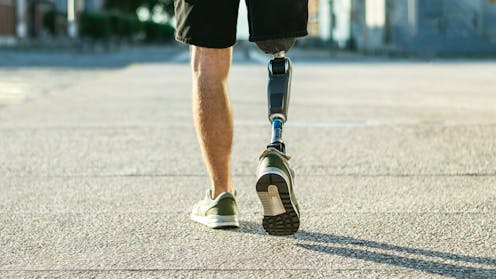
Scientists have been wrong about phantom limbs for decades – new study

Source: The Conversation – UK – By Malgorzata Szymanska, PhD Candidate, Cognition and Brain Science, University of Cambridge

22ImagesStudio/Shutterstock.com

Inside every human brain lies a detailed map of the body, with different regions dedicated to different body parts – the hands, lips, feet and more. But what happens to this map when a body part is removed?

For decades, scientists believed that when a body part is amputated, the brain’s body map dramatically reorganises itself, with neighbouring body parts taking over the area once represented by the missing limb.

This idea of large-scale brain reorganisation became a central pillar of what neuroscientists call adult brain plasticity: the ability of the brain to change its structure and function in response to injuries, new experiences or training.

Our new study, published in Nature Neuroscience, shows the opposite is true: the brain’s body map remains strikingly stable, even years after amputation.
To test what happens in the brain after a person loses a body part, we took a unique approach.

Working with NHS surgeons, we followed three adult patients who were preparing to undergo lifesaving arm amputations for medical reasons, such as cancer or severe problems with blood supply. We scanned their brains with functional magnetic resonance imaging (MRI) before the amputation and repeatedly afterwards – in some cases for as long as five years.

During the MRI scans, we asked patients to move different body parts: tapping their individual fingers, curling their toes or pursing their lips. This allowed us to map brain activity and to construct the brain’s body map.

After the surgery, we repeated the scans, this time asking them to move their missing (phantom) fingers. Phantom movements are not imaginary: most amputees continue to feel vivid sensations of their missing limbs, even though they are physically no longer there. Doing so gave us a rare opportunity to directly compare the brain’s hand map before and after amputation in the same person.

We discovered that, across all three patients, the map of the hand in the brain remained remarkably unchanged and did not get overwritten by other body parts, such as the face. This neural stability helps explain why so many amputees continue to feel their missing limbs so vividly.

For most amputees, however, phantom sensations are not neutral sensations; they are painful and described as burning, stabbing or itching. For years, the dominant explanation for these painful sensations came from the idea that the brain’s body map has reorganised itself. In turn, this theory inspired therapies such as mirror box therapy, virtual reality training, or sensory-discrimination exercises, all aimed at fixing supposedly broken maps.

Mirror-box therapy explained.

Our findings show the brain’s body map is not broken. This helps explain why these therapies consistently fail to outperform placebo treatments in clinical trials. If the map remains intact, trying to fix it is a dead end.

The real culprit

Instead, our results suggest we should look elsewhere, for example, in the nerves that are cut during surgery. Severed nerves can form tangled clusters that misfire signals back to the brain. New amputation surgical techniques are being developed to preserve nerve signalling and maintain stable connections to the brain.

Our findings have important implications for developing prosthetic limbs and brain-computer interfaces. Invasive next-generation brain-computer interfaces can tap directly into the preserved map of the amputated body part to decode what movements are being attempted or even deliver electrical stimulation to the map to enable amputees to feel their missing limb.

These technologies are in development and could, one day, restore natural and intuitive control and sensations of a prosthetic limb, by using the preserved body map.

Our results show that our brains have a resilient model of the body that maintains the representations, even when the sensory input is lost. For amputees, this means that the missing limb lives on in the brain, sometimes as a source of discomfort, but also as a resource for future technologies to use.

The Conversation

Malgorzata Szymanska is receiving funding from the Medical Research Council for her PhD. She was also funded by the Wellcome Trust while working on the study.

The study was supported by a Wellcome Trust Senior Research Fellowship, awarded to Tamar R. Makin. Hunter Schone was supported by the Intramural Research Program of the National Institute of Mental Health and a research fellowship from the National Institute of Mental Health of the National Institutes of Health.

ref. Scientists have been wrong about phantom limbs for decades – new study – https://theconversation.com/scientists-have-been-wrong-about-phantom-limbs-for-decades-new-study-263547

Africa’s city planners must look to the global south for solutions: Johannesburg and São Paulo offer useful insights

Source: The Conversation – Africa – By Astrid R.N. Haas, Research associate at African Centre for Cities, University of Cape Town

For decades, the dominant theories and models in urban studies have been built from the experience of a small set of mostly western cities. Other urban contexts, particularly those in Africa, Latin America and Asia, have too often been treated as peripheral, as if they simply copy or lag behind “northern” norms.

Urban geographer Jennifer Robinson has called this out, arguing that urban theory needs to take seriously the diverse realities of all cities. This means starting from places like Johannesburg, South Africa’s commercial capital, and São Paulo, Brazil’s financial capital, not just as isolated case studies, but rather as central sites for understanding dynamic urban processes. The majority of urbanisation in the coming decade will take place in contexts just like these.

I came to Urban Power, a book written by professor of sociology and international affairs at Princeton University Benjamin Bradlow last year, with this framing in mind.

Bradlow’s focus is on three essential urban public goods in São Paulo, population 22 million people, and Johannesburg, population 6.5 million people: housing, transport and sanitation.

His central question is: why are some cities more effective than others at reducing inequalities in the built environment?

The answer lies in what Bradlow calls urban power.

What is ‘urban power’?

Bradlow defines urban power as the way formal and informal relationships come together in a city that influences how that city is governed and ultimately how the public services and infrastructures are distributed across the urban space. Two elements determine how well this functions in any given city context.

First, embeddedness – the ties between city government and social movements in civil society. Second is cohesion. This is the abiltiy of city governments to coordinate across their own departments and agencies.

Bradlow argues that effective urban power is built when both embeddedness and cohesion are strong, as these determine how well policy is informed by and accountable to those most affected.

Thus struggles to build and exercise such power form a core foundation of urban governance. This ultimately shapes both the distribution of urban public goods and how effectively they reach the most marginalised.

Basically, it’s about how those in power are willing and able to coordinate with society and within government to meet everybody’s needs fairly.

Housing: different paths

As São Paulo (1980s) and Johannesburg (1990s) entered their democratic eras, both were led by mayors who explicitly committed to redistributing wealth by extending adequate housing to the most excluded neighbourhoods.

Yet, housing is also the sector in which Bradlow finds some of the starkest contrasts in outcomes between the two cities.

During South Africa’s democratic transition, the rallying cry of “one city, one tax base” brought together neighbourhood associations, social movements and local branches of trade unions. To overcome the fiscal fragmentation left by apartheid, wealthy and largely white areas of the city were to contribute property taxes to a central fiscal administration. This central body would then cross-subsidise precisely the new capital investments in poor black townships.

But in the years that followed, the governing African National Congress (ANC) party demobilised social movements in favour of a centralised one-party system.

The effects of this were evident in Johannesburg. Weakened ties between the city government and civil society (embeddedness) led to the municipal bureaucracy becoming increasingly detached from housing movements. As a result, it was poorly positioned to challenge the dominance of private real-estate interests.

In São Paulo, the municipal bureaucracy maintained close ties with housing movements. It used this embeddedness to build cohesion within its own ranks. This enabled the city to make use of national mandates to challenge the power of real-estate interests and introduce innovations that expanded social housing.

Central to this effort was the 2001 City Statute. This piece of legislation enshrined the “social function of property,” a constitutional right, at the city level. The legal framework unlocked tools such as the Special Zones of Social Interest (ZEIS), which reserved well-located land for social housing.

Crucially, São Paulo became one of the first major Brazilian cities to adopt a master plan that explicitly advanced the redistributive goals of housing movements.

São Paulo’s housing story is far from perfect. And the city still struggles to meet the demand for affordable housing. Nevertheless, it has made important strides.

Transport: institutions or technology first?

Bradlow illustrates how São Paulo pursued an “institutions first” approach towards transport. For years, social movements had pressed for lower fares and better services to the city’s peripheries. Responding to these demands, the Erundina administration (1989-1992) restructured the relationship between private bus operators and the municipal concessioning authority. Fare revenue was collected by the authority itself. It then paid operators based on the quality and quantity of service provided.

This shift allowed the city to introduce reforms like the bilhete único, a single ticket valid across the entire network. It meant that shorter trips subsidised longer ones. This made access more equitable regardless of where one lived. In addition, large and small operators were integrated into a single system, revenue became more predictable, and planning could prioritise network-wide benefits.

Johannesburg, by contrast, led with a “technology first” approach. The Bus Rapid Transit (BRT) system, Rea Vaya, emerged in the early 2000s. However, the minibus taxi operators, who were the backbone of existing transport, were largely excluded from the planning process.

The BRT’s economics were challenging from the outset, given Johannesburg’s spatial fragmentation. Operators were offered shares in newly created bus companies if they withdrew their taxis. But this arrangement relied on an untested profit model.

Institutional complexity (lack of cohesison) compounded the problem. Operational licences and recapitalisation were controlled at the provincial rather than the municipal level. Most importantly, the lack of embeddedness meant that resistance from the local operators was almost inevitable.

The comparison of the transport sector highlights a recurring theme. São Paulo’s slower, messier process fostered embeddedness. It treated redistribution through collective transport as a political project rather than a technocratic exercise. Johannesburg pursued a faster, technology-driven route that bypassed the negotiations which might have made the system more sustainable.

Sanitation: building accountability

If housing is a residential public good and transport a networked one, sanitation sits in between. It’s delivered to individual homes, but reliant on city-wide infrastructure.

Bradlow highlights how in São Paulo, the municipal government succeeded in creating downward accountability from the state-level sanitation company (cohesion). By doing so, it shifted decision-making power closer to the local level. This ensured that service priorities better reflected the city’s everyday realities rather than distant state-level agendas.

The new alignment made it possible to extend services into informal settlements without requiring formal tenure, a critical flexibility that had long been a barrier to inclusion. At the same time, it strengthened municipal planning and coordination capacity. Service delivery became more firmly embedded within the city’s own governance structures.

In Johannesburg, by contrast, weak cohesion, reflected in the lack of planning integration, meant housing projects were often implemented without corresponding sanitation infrastructure. Reforms had separated sanitation from broader spatial planning, fostering fragmented governance.

The city also adopted a model shaped by private-sector principles. Examples include self-financing, performance-based contracting, and competition. In practice, these led to service cuts in poorer areas where cost recovery was impossible.

The comparison illustrates how the same broad national reform agenda can play out very differently depending on municipal capacity and institutional alignment (cohesion).

Why the comparison matters

Cross-context comparisons reveal patterns and possibilities that single-city studies might miss. Bradlow’s book illuminates how rapid urbanisation, entrenched inequality and fiscal constraints intersect. These insights have significance far beyond these cases.

His book is a call for urban theory to start from the global south not as an afterthought, but as a foundation. As urban studies specialist Jane Jacobs observed:

Cities have the capability of providing something for everybody only because, and only when, they are created by everybody.

Bradlow’s book shows, with precision, what it takes, politically and institutionally, to make that vision real.

For anyone interested in the politics of making cities fairer, it is essential reading.

The Conversation

Astrid R.N. Haas does not work for, consult, own shares in or receive funding from any company or organisation that would benefit from this article, and has disclosed no relevant affiliations beyond their academic appointment.

ref. Africa’s city planners must look to the global south for solutions: Johannesburg and São Paulo offer useful insights – https://theconversation.com/africas-city-planners-must-look-to-the-global-south-for-solutions-johannesburg-and-sao-paulo-offer-useful-insights-263285

African debt and climate change: how the ICJ’s Vanuatu ruling could be used for broader justice

Source: The Conversation – Africa – By Danny Bradlow, Professor/Senior Research Fellow, Centre for Advancement of Scholarship, University of Pretoria

African sovereign debtors in distress face terrible choices. They are often forced to choose between fully paying their creditors and financing the needs of their populations – health, education, renewable energy, water. Discussions with their creditors focus on financial, economic and contractual issues. The environmental and social impacts of their situation are largely excluded from negotiations.

Thanks to the initiative of some Vanuatan law students, this may be about to change.

Vanuatu is a country consisting of small islands in the south Pacific. It has been ranked as one of the countries most affected by climate change, facing threats of rising sea levels and storm surges.

In 2019, a law professor in Vanuatu, Justin Rose, asked his students to propose ways to deal with the climate threat confronting their country.

They suggested that Vanuatu ask the United Nations general assembly to request an advisory opinion from the International Court of Justice on the international legal obligations of states regarding climate change. They convinced their government to adopt their proposal. They also mobilised international support, saying they wanted to take the world’s biggest problem to the world’s highest court.

In 2023, the UN general assembly agreed to seek the International Court of Justice’s advice on the following two issues:

  • the obligations of states under international law to protect the environment from the impact of human-caused greenhouse gas emissions

  • the legal consequences for states if they fail to meet these obligations and thereby cause significant environmental harm for present and future generations.

The case attracted unprecedented attention. The court received over 150 written submissions. Over 100 states and international organisations made oral presentations in nine days of public hearings. On 23 July 2025, the International Court of Justice issued a unanimous advisory opinion. It was only the fifth time in its nearly 80-year history to do so.

The court’s opinion was that the obligations of states extend beyond the treaties they have signed and ratified. They also include obligations arising from customary international law. This is the law that states practise out of a sense of legal obligation. It is binding on all states and international organisations, regardless of whether they have signed any applicable treaty.

The rules that matter

The court declared that there are two relevant customary international legal obligations.

The first is a duty to prevent significant harm to the environment. This requires states to exercise due diligence before acting in ways that could cause environmental damage. They must assess both the probability of causing serious harm and the likely extent of any expected impacts.

In making these assessments, states must take into account current binding and non-binding international standards. It also requires states to ensure that companies and individuals subject to their jurisdiction comply with these duties.

The second is a duty to cooperate with other states to protect the environment and to help solve international problems of an economic, social, cultural or humanitarian nature. Here, the court opined that a healthy environment is a pre-condition for the enjoyment of human rights. It affects the rights to life, health and livelihoods, and the rights of children, women and indigenous people.

The court, in discussing the second issue, advised that states can be held legally responsible if they do not take all measures within their power to prevent significant environmental harm. It noted that while all states have this duty, its precise contents will vary depending on their capabilities. The critical factor is the effort the states make and not the results they produce.

The debt angle

Although the court’s opinion is only advisory, it is likely to be highly influential. It was informed by a wide range of submissions. It was a unanimous decision of 15 judges who come from 15 countries.

The fact that the court grounded its decision, in part, on customary international environmental and human rights grounds means that it has implications for any state actions that can have significant adverse impacts on climate, the environment and customary human rights.

My work as an international lawyer working on sovereign debt and development finance convinces me that this includes the renegotiation or restructuring of African debt.

Whatever action African sovereign debtors take to deal with their debt crisis will affect their ability to manage their greenhouse gas emissions. It will also affect their ability to deliver on their obligations to their citizens’ rights. These include the rights to life, health and livelihoods.

This suggests that African sovereign debtors and their creditors need to understand the environmental and climate impacts of their transactions.

They must also work together to resolve their transactions’ negative environmental, social, economic and cultural impacts. Their respective responsibilities will differ depending on their capabilities.

The International Court of Justice opinion may therefore offer new opportunities to make debtor and creditor states, and creditor institutions, accept responsibility for the environmental and social impacts of their actions.

Three possible avenues for relief

There could be at least three ways to relate the climate opinion to debt.

First, the debtor and its stakeholders can use the decision to bolster their arguments for including the environmental and social impacts of debt in their negotiations. They can point out that the debtor state cannot avoid international legal responsibility for the effects of the transaction on its greenhouse gas emissions and on the human rights of its citizens.

They can also point out that its creditors and their home states also have a legal obligation to assess these impacts and cooperate in managing them.

Second, the stakeholders can remind both the sovereign debtor and its creditors about the content of their international legal responsibilities. There are international norms and standards that can help establish that content.

Some of them are:

In addition, there are many private financial institutions that have human rights and environmental and social policies that often specifically refer to these international standards.

Third, drawing inspiration from the Vanuatu law students, activists around the world can use the judgment to strengthen their arguments. They can say that creditor and debtor states have an international legal duty to prevent significant harm to the environment and to cooperate to protect the environment. This duty extends to ensuring that companies and individuals subject to their jurisdiction act in conformity with these duties. They can be held legally responsible for failing to comply with these duties.

Finally, there are international mechanisms that non-state actors can use to hold debtors and creditors accountable for failing to perform their duties. These include the National Contact Points. These exist in each state that has signed on to the OECD Principles of Responsible Conduct for Multinational Enterprises. Another possibility is the independent accountability mechanisms in the multilateral development banks.

There are also the courts in the growing number of states in which governments, central banks and private actors have been sued for violating their obligations to climate change.

States and financial institutions, of course, can avoid these consequences by respecting the court’s opinion and developing ways of managing African sovereign debt that comply with its international legal advice.

The Conversation

Danny Bradlow, in addition to his position at the University of Pretoria is Senior G20 Advisor to the South African Institute of International Affairs, a Compliance Officer in the Social and Environmental Compliance Unit of UNDP and a Senior Non-Resident Fellow in the Global Development Policy Center, Boston University.

ref. African debt and climate change: how the ICJ’s Vanuatu ruling could be used for broader justice – https://theconversation.com/african-debt-and-climate-change-how-the-icjs-vanuatu-ruling-could-be-used-for-broader-justice-263859

What was Jane Austen’s best novel? These experts think they know

Source: The Conversation – UK – By Lucy Thompson, Lecturer in Nineteenth-Century Literature and Creative Writing, Aberystwyth University

To mark the 250th anniversary of her birth, we’re pitting Jane Austen’s much-loved novels against each other in a battle of wit, charm and romance. Six leading Austen experts have made their case for her ultimate novel, but the winner is down to you. Cast your vote in the poll at the end of the article, and let us know the reason for your choice in the comments. This is Jane Austen Fight Club – it’s bonnets at dawn…

Sense and Sensibility (1811)

Championed by Lucy Thompson, lecturer in 19th-century literature and creative writing, Aberystwyth University

Sense and Sensibility is Austen’s most quietly radical novel. As her first published work, it may be less polished than her later fiction, but it is no less incisive.

It lays bare the emotional cost of living in a world governed by reputation, family obligation and gendered expectation. Excluded from inheritance and displaced from their home, the Dashwood sisters must navigate constant scrutiny. Through Elinor and Marianne, Austen dramatises two strategies for survival in a society obsessed with appearances.

Born from an earlier epistolary draft, the novel retains a sharp interest in how information circulates and misleads. Gossip doesn’t just constrain; it distorts. Letters are spied upon, conversations overheard. Assumptions take on the weight of fact.

In this world, everyone watches – but not everyone truly sees. Sense and Sensibility may wear a quieter face than Emma or Pride and Prejudice, but it is Austen’s sharpest early critique of how appearances govern lives.


This article is part of a series commemorating the 250th anniversary of Jane Austen’s birth. Despite having published only six books, she is one of the best-known authors in history. These articles explore the legacy and life of this incredible writer.


Pride and Prejudice (1813)

Championed by Andrew McInnes, reader in English literature, Edge Hill University

Everyone already knows the best Austen novel: Pride and Prejudice. Why? Elizabeth Bennet. Lizzy is so charismatic that you might mistake the novel’s title for an abstract problem, and not Darcy’s pride versus her prejudice.

We share her prejudices because Austen makes them so delicious. We roll our eyes at Mrs Bennet because Lizzy finds her exasperating. Wickham is seductive because he satisfies our inner bitch. And we fall in love with Darcy alongside Lizzy.

Pride and Prejudice is the funniest and sexiest of Austen’s novels. In it, she allows herself a swoon-worthy romance without a hitch. Unlike Northanger Abbey’s Henry Tilney, Darcy doesn’t fall in love because Lizzy adores him, but falls first. Darcy is a complex man – shy, domineering, funny – and not a drip like Eds Ferrars (Sense and Sensibility) or Bertram (Mansfield Park). And unlike Emma, Lizzy builds healthy relationships with other women.

Austen called Pride and Prejudice “too light and bright and sparkling” and joked that it could do with an essay on Walter Scott or Napoleon. But we know that would be a crime. It is just light and bright and sparkling enough to outshine the others.

Mansfield Park (1814)

Championed by Amanda Vickery, professor in early modern history, Queen Mary University of London

Pride and Prejudice is often the first grown-up novel young girls read, but Mansfield Park is the only Austen novel about a little girl growing up.

All Austen’s fictions are versions of the female-centred courtship novel, usually covering a single year, with the heroine safely married to a deserving gentleman by the last page. Yet her heroines are mostly formed young women. Only in Mansfield Park do we meet our heroine as a little girl – and a puny and cowering little girl at that.

Mansfield Park is Austen’s bildungsroman (the novel of becoming) on a par with that other girls’ classic, Charlotte Bronte’s Jane Eyre (1847). Like poor, plain Jane, Fanny Price is a girl of no consequence – a Cinderella figure in a mansion of the rich and selfish.

Fanny is shy, frail and physically timid, but she is not a moral coward. She learns to bear her lot with dignity, and to hold fast to what she believes. By volume three, Fanny is at last the centre of her own story. Mansfield Park is not just a love story, it is a life story.

Emma (1815)

Championed by Ruvani Ranasinha, professor of global literature, King’s College London

Emma Woodhouse is Jane Austen’s most vividly realised, proto-feminist heroine. Witty, clever and attractive, Emma is supremely self-confident and flawed. She challenges every expectation of female propriety and is full of contradictions: self-centred yet deeply attached to her hypochondriac, indulgent father; snobbish but kind.

Emma revels in meddling in the romantic lives of others, especially her protégée, Harriet Smith. When her carefully laid plans unravel, the busybody makes mortifying mistakes and learns self-knowledge: “It darted through her with the speed of an arrow, that Mr Knightley must marry no-one but herself!”

All Austen’s novels are shot through with the awareness of the role of wealth and class in marriage. But Emma – “an heiress of thirty thousand pounds” – is free from the intense competition among the women for young men with positions and prospects. At the same time, she attracts men like Mr Elton seeking women with landed connections and dowries. This is why the novel both responds to Austen’s historical moment and speaks to our own.

Northanger Abbey (1817)

Championed by Octavia Cox, departmental lecturer in English literature, University of Oxford

Northanger Abbey is a riot of jokes. Nobody and nothing is spared: not the heroine, convention, society – even readers. There’s everything marvellous you’d expect from an Austen novel (sharp satire of patriarchy and socioeconomic weaponisation, laughter at human absurdity and pompousness, beautifully wrought witty expression, a rollicking good yarn, irony), but with extra sass.

Its bombastic intrusive authorial narrative voice (perhaps the closest we get to Austen’s own), constantly makes in-jokes with readers about the action. It’s Austen’s most meta-fictional text, playing with readers’ expectations about novels (for example, joking that her novel, ironically, “is a new circumstance in romance” despite depicting nothing “new in common life”).

Its “defence of the novel” passage is a proto-feminist rallying call-to-arms for female authors to celebrate each other’s work. Northanger Abbey’s meta-fictionality reveals much about Austen’s aim and style as an author, making it a must-read for all Austen-lovers. Oh, and it’s funny. Damned funny.

Persuasion (1817)

Championed by Richard de Ritter, lecturer in English literature, University of Leeds

Persuasion contains the greatest love letter in all English literature. It is the culmination of a slow-burning romance between the heroine, Anne Elliot, and Captain Frederick Wentworth, the man she has loved for eight long years. “You pierce my soul,” Wentworth writes to Anne with striking vulnerability: “I am half agony, half hope. Tell me not that I am too late.” (Spoiler: he is not too late.)

The brilliance of Persuasion lies in the depiction of its complex heroine. At 27, Anne Elliot is older and wiser than Austen’s earlier protagonists. Disregarded by her comically narcissistic family, the depth of Anne’s personality is revealed by Austen’s prose style, which is at its most luminous and expressive. Readers are plunged into the mind of the novel’s heroine. We witness her innermost thoughts and feelings as she negotiates the awkwardness, excitement and, finally, the sheer joy of embracing a future with Wentworth.

Persuasion is the final novel that Austen completed before her death in 1817: she was at the peak of her powers. It is her most moving and her greatest work.

Now the experts have made their case, it’s your turn to decide which of Austen’s six completed novels is her best work. Vote in the poll below to and see if our other readers agree with you.

This article features references to books that have been included for editorial reasons, and may contain links to bookshop.org. If you click on one of the links and go on to buy something from bookshop.org The Conversation UK may earn a commission.

The Conversation

The authors do not work for, consult, own shares in or receive funding from any company or organisation that would benefit from this article, and have disclosed no relevant affiliations beyond their academic appointment.

ref. What was Jane Austen’s best novel? These experts think they know – https://theconversation.com/what-was-jane-austens-best-novel-these-experts-think-they-know-252669

Why grow plants in space? They can improve how we produce food and medicine on Earth

Source: The Conversation – Global Perspectives – By Troy Miller, Post-Doctoral Research Associate, Australian Research Council Centre of Excellence in Plants for Space, The University of Western Australia

ARC Centre of Excellence in Plants for Space, CC BY-ND

Sometime in the 2040s, humans may well reach a new frontier – Mars. To get there, we’ll need sustainable sources of food, medicines and materials.

As researchers who work on engineering plants to produce such resources in space, we sometimes get asked: “why?”. With issues such as climate change, inequality, global pandemics and environmental degradation, shouldn’t we be focused on Earth, not Mars?

But science can do both. And space research has a long history of not only satisfying the human instinct of exploration, but delivering transformational new inventions as we make discoveries along the way.

Plants not just for space

When the results of scientific research flow into the real world in practical ways, this is known as “research translation”.

These translations are often unexpected and unpredictable. For example, NASA’s need for compact, lightweight imaging technology in space led to the invention of the compact camera sensors we now have in smartphones, webcams, medical devices and more.

That shiny, reflective material used to deflect heat from buildings, appliances or even your car windshield? It’s an insulation technology perfected by NASA to protect spacecraft and astronauts from temperature fluctuations in space.

Within the next decade, we could see “space plants” directly and indirectly improving life on Earth. So what might space-ready plants look like and how could they benefit those of us who never leave Earth?

Flavour and nutrition

Plants nourish us and support our mental wellbeing, but this alone won’t sustain long-term space travel.

The modern space food menu largely consists of processed, long-life foods shipped along for the ride or delivered as cargo to the International Space Station. Anything fresh needs to be produced on the spot and farming animals isn’t an option.

To create a balanced space diet without the need to take dietary supplements, researchers have been developing nutritionally complete plant-based foods that have large quantities of high-quality protein. These will be pick-and-eat plants that can be grown and processed in space, and will provide an optimal balance of essential amino acids. They also include non-essential amino acids normally found in animals, such as taurine and creatine.

Improving plants in this way could help reshape agriculture on Earth, as plant-based diets are more sustainable for a planet facing a climate crisis and reduce global nutrient inequity.

Scientists are also researching plant-based food flavours and textures to address the common complaint from astronauts about “menu fatigue”. For decades, astronauts have reported their sense of taste is dulled in space, making spicy foods a station favourite.

A white box with lots of technical instruments around it and a few small plants with red chile peppers in them.
When astronauts grew chili peppers as part of the Plant-Habitat 04 experiment on the ISS, they were excited to eat some of the harvest while the rest was sent to Earth for analysis.
NASA

Environmental resistance

Space plants must also thrive in an unfamiliar environment. On Earth, plants rely on gravity to know which way to grow their roots and which way to grow their shoots. This is a process called gravitropism.

In space, gravitropism is confused, causing roots to grow in random directions because of the effects of microgravity on hormone signalling. Research efforts are ongoing to determine the effects of microgravity on plant growth.

Two charts showing plants in space with random roots while plants grown on the ground have roots that go straight down.
Plants grown on the ISS and at Kennedy Space Center during NASA expedition 39 in 2014 show the effects of microgravity on plant root growth.
Paul et al. (2017), PLOS One, CC BY

For example, water is “sticky” – it clumps together because molecules in water are attracted to each other, rather than pulled downwards into a puddle. In the absence of gravity, this results in sticky blobs of water that cling to surfaces such as plant roots and don’t flow anywhere because they’re held together by surface tension.

Furthermore, a lack of gravity also disrupts convection – it prevents gases from naturally mixing in water. This would limit oxygen availability to the roots of plants and result in low oxygen, also known as hypoxia stress.

Plant hypoxia also happens due to flooding during high rainfall and soil waterlogging. Engineering plants to tolerate microgravity-induced hypoxia will generate data for improving flood resistance in crops on Earth, reducing agricultural losses.

Water on the ISS clumps into blobs: in microgravity, the surface tension of water becomes the dominant force, causing the spherical structure.
NASA

More than food

On a Moon or Mars base, colonists wouldn’t be able to wait for months or years to resupply essential resources such as medicines or construction materials. So, space plants are being designed to provide more than just food.

Plants have been engineered to produce proteins that elicit immune responses and act as edible vaccines.

On Earth, many pharmaceuticals are produced and extracted from microbes. Plants can be engineered to produce medicinal compounds or building material precursors in similar ways, but these compounds are likely to negatively impact plant growth.

The ability to engineer plants to produce different chemicals in response to environmental cues would allow astronauts to switch plants from making food to making medicine – perhaps with the literal flick of a switch.

Genetic “circuits” responding to light and chemical signals are being developed, too. These have the potential to make crops more readily able to adapt to the stresses of a changing climate.

When innovations need to overcome extreme limitations – such as the environment of space – they can speed up and lead to solutions we wouldn’t otherwise come up with.

The race to land on the Moon led to the development of many everyday items. Now, we’re on the verge of a new biotechnological revolution, getting ready to boldly grow where no plant has grown before.

The Conversation

Troy Miller receives funding from the Australian Research Council.

Farley Kwok van der Giezen receives funding from the Australian Research Council.

Ryan Coates receives funding from the Australian Research Council.

ref. Why grow plants in space? They can improve how we produce food and medicine on Earth – https://theconversation.com/why-grow-plants-in-space-they-can-improve-how-we-produce-food-and-medicine-on-earth-263539

Taylor Swift is engaged. She’s been getting her fans ready for this moment for 20 years

Source: The Conversation – Global Perspectives – By Sarah Scales, PhD Candidate, School of Social Sciences, Media, Film and Education, Swinburne University of Technology

taylorswift/Instagram

Taylor Swift and Travis Kelce have announced their engagement, posting on Instagram images of the proposal with the caption “Your English teacher and your gym teacher are getting married”.

America’s sweethearts”, the pair have been dating for two years. Now fans are saying this will be America’s version of the royal wedding.

Swift and Kelce’s post has already received over 24 million likes from the pair’s fans.

Swift’s love life has long been in the spotlight – both in her songs and in the news. So fans were perfectly primed for their outpouring of support and love.

But what is it about Swift – and her fans – that encourages such emotional reactions?

Understanding parasocial relationships

To understand the deep affection Swift’s fans have for her, it’s important to understand parasocial relationships.

A parasocial relationship is a one-sided relationship we develop with someone, typically a media figure, where there is no reciprocity. Through the media and artistic output, we develop knowledge and feelings, and begin to encounter the relationship the same way as we would a “real world” or interpersonal relationship – but there is no mutual development.

Every time we see them in the news or on social media, or listen to their songs, that’s a parasocial interaction we have with them. Then those interactions build until we feel as though we know them like a friend, or perhaps they fill a role as a mentor, or a crush.

Parasocial relationships mimic our real world relationships.

Swift’s fans are very passionate and she expertly harnesses this fanbase.

Swift builds on these relationships

Swift’s first album was released in 2006, and over the ensuing 20 years, she has had many iterations, or eras. This has given fans many entry points into her life, and the opportunity to grow up with her and experience their different life stages with her and her music.

Many other musicians may have long periods of stepping away from the spotlight between albums, so their fans aren’t receiving necessary parasocial interactions to maintain their relationship and closeness.

But Swift has released 11 studio albums and four re-rerecorded albums since 2006, with her 12th to be released this October. She is also a common figure in the news because of her high-status relationships and friendships. This has allowed fans to constantly build and flourish their relationship and closeness with her.

Her marketing savvy, the easter eggs she drops leaving fans always speculating, and the interest and buzz she generates, creates a sense of community and belonging among fans which is global, universal and easily accessible online.

She has a strong perceived authenticity, where fans feel as though they truly know her, and they feel as though she cares about them individually. For non-fans, this may not make sense: she is an untouchable billionaire who has broken records for her crowd sizes. But this is one of the ways parasociality works: you feel as though the celebrity is your close friend and that they care for you.

Swift generates and feeds into these emotions. In hosting listening parties at her house or picking fans from the crowd to join her onstage, she creates the sense she is a genuine person – and keeps the illusion that, maybe one day, that could be you.

Crafting the celebrity image

Swift’s romantic relationships and close personal friendships are a key part of her celebrity image. Throughout her whole career these relationships have been reported on, drawing attention and interest.

Her fans see her relationships playing out in the news through various paparazzi images and articles. Then they hear about these relationships in her songs, as a major theme of her music is love and heartbreak. Because her music is so centred around love and heartbreak, it makes sense love has become a core part of her celebrity image.

Her relationship with Kelce is probably one of the most reported-on relationships she has had. She was with the actor Joe Alwyn for six years, but that was a much more private relationship.

For the past two years, Swift and Kelce have been in the limelight, and fans have felt a joy in seeing her in this relationship and getting to witness it.

Your English teacher is getting married

Swift clearly has an understanding of her fans and their parasocial relationships with her.

Fans have long called Swift their “English teacher” because her songwriting is so revered. Her fans see a lot of poetry in her music, and feel they have learnt a lot through this poetry.

In calling themselves “your English teacher and your gym teacher”, Swift and Kelce are placing themselves in the roles their fans have cast them as.

The pair know their fans have a closeness with the couple – and even though that isn’t reciprocated by Swift and Kelce, the pair are placing themselves in the position of role models.

Language like this closes the gap between celebrities and ordinary people. If you imagine your teachers getting married – someone you saw every day and you personally knew – that would be exciting. To word it in that way brings them down to a more personable level, drawing them, once again, closer to their fans.

The Conversation

Sarah Scales does not work for, consult, own shares in or receive funding from any company or organisation that would benefit from this article, and has disclosed no relevant affiliations beyond their academic appointment.

ref. Taylor Swift is engaged. She’s been getting her fans ready for this moment for 20 years – https://theconversation.com/taylor-swift-is-engaged-shes-been-getting-her-fans-ready-for-this-moment-for-20-years-264027