Islamic State massacres in eastern DRC: who are the insurgents and why are they killing civilians?

Source: The Conversation – Africa (2) – By Stig Jarle Hansen, Professor of International Relations, Norwegian University of Life Sciences

More than 100 civilians have perished in a spate of attacks by Islamic State-backed rebels in eastern Democratic Republic of Congo in mid-2025. The Islamic State’s Central African Province – known locally as Allied Democratic Forces – claimed an attack on Christian worshippers in late July which killed at least 49. Other attacks in August killed 52 villagers. By mid-2025 the group had been more active than during any previous year. Stig Jarle Hansen, a researcher and author of several books on jihadism in Africa, answers questions on what’s behind the cycle of attacks.

What is the Islamic State’s Central African Province today?

I have written before on the evolution of the Islamic State’s Central African Province from its beginnings as the Allied Democratic Forces on the border between Uganda and eastern Democratic Republic of Congo. It was at the time sponsored by both Zaire (now DRC) and Sudan and even contained Christian members. However, this changed over time, and the organisation increasingly used Islamic rules and symbols in its indoctrination and propaganda.

In 2017, a video emerged showing a small group of its fighters declaring loyalty to the Islamic State, the Sunni jihadist terrorist organisation that, at its peak, controlled vast territory in Iraq and Syria and claimed to be a worldwide Islamic caliphate. In April 2019, the only remaining Islamic State periodical, Al-Naba, published its first pictures from Congo. Allied Democratic Forces allegiance to the Islamic State was declared later the same year.

The declaration was not embraced by all. Several of the old guard of leaders of the Allied Democratic Forces, such as Benjamin Kisokeranio, refused an oath of allegiance to the Islamic State and were severely punished by the organisation for that (page 57).

As a result, the group bears little resemblance to the original rebel group. There is a new and younger generation in the top leadership of Islamic State Central African Province. A prominent example is camp leader Ahmed Mahmood Hassan “Abwakasi”, a Tanzanian foreign fighter born three years before the original Allied Democratic Forces was created.

The group also frequently features in the Islamic State’s global media network. This makes the interchangeable references to Allied Democratic Forces and Islamic State Central African Province problematic in the present context.

Yet, there are some similarities between the old and new. First is that the organisation remains organised into “camps”. These can evacuate quickly in the face of strong enemy attacks and re-establish themselves in new areas. However, they also are more than mere military units; they are mobile villages, where the wives and children follow the fighters in their movement.

A second similarity is the propensity to attack civilians. In this respect they are not unique in a region known for targeting civilians. However, the group has changed in the sense that Christians have become explicitly a stated target.

The third similarity is its continued emphasis on forced recruitment.


Read more:
Tracking the DRC’s Allied Democratic Forces and its links to ISIS


What explains the resurgence in attacks?

Islamic State’s Central African Province’s most recent attacks on civilians may seem to suggest that it’s on an upswing, but this is not necessarily the case. Instead, the embattled group appears to be rebounding from several military defeats over the last years. The current situation fits in within an established pattern observed in the DRC over the last three decades. There has been a cyclical pattern of military offensives against Islamic State’s Central African Province. The group withdraws until the offensive ends, then reemerges. It is still in its withdrawal phase.

The current offensive against Islamic State Central African Province – Operation Shujaa – was launched jointly in 2021 by Uganda and DR Congo. The offensive seeks to defeat the Islamic State in North Kivu. By November 2023, the fourth phase of the offensive started. This operation was expanded further into areas west of the RN4 road, covering critical areas near the border of North Kivu and Ituri provinces. The last offensive was strained by Congo’s need to fight the M23 offensive further south, and Congolese distrust of Uganda’s intentions inside Congo, but proceeded. Uganda, which had stayed out of the M23/Congo conflict, launched 6,000 soldiers and used air assets in the following campaign. Local militias also fought against the Islamic State. The operations did force Islamic State Central African Province to withdraw camps, and to centralise its forces.

Why target Christians?

First, it gives the group media attention in the global press and in Islamic State outlets. African affiliates have grown in their importance for the Islamic State; they are seen as examples of “success” and the “new fields of jihad”. Islamic State Central African Province shows they are active, despite the beating it has received from Uganda. Such attention might also lead to both new foreign fighter recruits and more financial support from outside Congo.

Tanzanian-born commander “Abwakasi” leads the unit behind most of the attacks against civilians. His closeness to the Islamic State centrally might contribute to such a modus operandi. Abwakasi seem to have a stronger ideological leaning, and this might influence his actions against civilians.

Moreover, the need to plunder new villages to sustain the organisation inevitably causes civilian casualties. Violence becomes a strategy to create fear among the locals to smooth forced recruitment, and ease the plundering of villages in new areas that the larger camps are fleeing to.

For Islamic State Central African Province, violence against Christians serves both an instrumental and an ideological purpose.

Where does this leave the Islamic State’s Central African province?

The group has been known for targeting Christians in the past, and is one of the few Islamic State provinces that operates in regions with a majority of Christians. By presenting these attacks as victories, without the need to confront military enemies, it serves as a distraction from the losses the organisation has faced, and a way to plunder and recruit new recruits. It should not be misunderstood as a sign that the organisation is winning on the battlefield. It’s rather a part of a cyclical pattern of withdrawal and advance that we have seen for the last three decades.

The Conversation

Stig Jarle Hansen does not work for, consult, own shares in or receive funding from any company or organisation that would benefit from this article, and has disclosed no relevant affiliations beyond their academic appointment.

ref. Islamic State massacres in eastern DRC: who are the insurgents and why are they killing civilians? – https://theconversation.com/islamic-state-massacres-in-eastern-drc-who-are-the-insurgents-and-why-are-they-killing-civilians-263462

Cameroon’s election risks instability, no matter who wins

Source: The Conversation – Africa (2) – By Manu Lekunze, Lecturer, University of Aberdeen

Cameroonians will vote in presidential elections on 12 October 2025. The incumbent, Paul Biya, who has been in office for nearly 43 years, will be a candidate.

In 2025, as in the last election in 2018, and in all presidential elections since 1992, it is reasonable to expect that the ruling party will win. And opposition parties will want to protest.

If Biya wins, by the end of the new term in 2032, he will have been in power for half a century. It will be a feat no other executive head of state has ever achieved in modern history.

Moreover, in 1968, Biya concurrently occupied the roles of director of the civil cabinet of the president and secretary general of the presidency (the most important government position after the president). In 1979, he became the prime minister, and in November 1982, he succeeded Ahmadou Ahidjo to become president.

Therefore, considering Ahidjo’s limited education and health problems in the later stages of his time in office, in effect, Biya has been in charge of Cameroon since 1968 – about 57 years.

As an international security scholar, for over a decade, I have researched security in Cameroon, including the separatist insurgency in the North West and South West regions, Boko Haram in the Far North region, and the security implications of Biya’s stay in power.

In my view, regardless of the many criticisms of Biya’s rule, he has provided regulatory and political stability. In the past 42 years, foreign investors and external security partners didn’t have to worry about radical policy changes in Cameroon.

This election – whether it brings a new term or a transition – risks the stability Cameroon’s external partners have become accustomed to. It could increase ethnic or regional tensions arising from prolonged marginalisation. It could also begin a transition process that could take time to consolidate, allowing space for instability, including more armed conflict.

Threats of insurgency

Among the most cited grievances of separatists are the abolition of the federal system and the change of Cameroon’s official name in 1984 from the United Republic of Cameroon to the Republic of Cameroon (the name adopted by the former French colony of Cameroun in 1960).

The separatists argue that the word “united” made it clear that present day Cameroon was formed of two equal parts. Removing the word means one has subsumed the other.

They are also aggrieved about the under-representation of English-speakers in senior government positions.

As the secretary general of the presidency, Biya was no bystander in the 1972 referendum that ended the country’s federal system of government. He has also been in charge of appointing senior government officials since 1982.

Some separatists think that if his government had addressed the protests in 2016, it would not have escalated to an insurgency.

Protests by English-speaking lawyers and teachers in 2016 against perceived francophone dominance sparked a violent crackdown by security forces. This led to the formation of armed separatist groups who declared an independent state called “Ambazonia” and initiated an armed conflict with the government.

Similarly, it could be said that Biya’s approach to foreign policy contributed to the growth and strength of Boko Haram, a regional terror group, in Cameroon. The group exploited lapses in Cameroon’s security architecture and Biya’s strategy of keeping a low profile in international politics.

The International Crisis Group and several analysts believe that had Cameroon’s government cracked down on the activities of Boko Haram, the insurgency would have struggled to gain the momentum it did in 2014 and 2015.

In my view, Biya’s reluctance to draw international attention to Cameroon made him hesitant to act against Boko Haram.

To sum up: more of the same is unlikely to address the threat of persistent insurgency.

The election can deepen fractures

Maurice Kamto was the leading opposition candidate in the last presidential election. His protest against the results caused a degree of post-election crisis. His candidacy in the 2025 election was rejected.

Kamto is of the Bamiléké ethnic group, with its homeland in the West region, where a feeling of political exclusion already exists.

Issa Tchiroma, an opposition figure who has served as government minister for extended periods since 1992, resigned in 2025 to become a candidate for the elections in October. Tchiroma is from the north (Adamawa, North and Far North regions). There is a degree of expectation that the presidency should rotate between the north and the south. It is the turn of the north because Biya, the second president, is a southerner, while the first president, Ahidjo, was from the north.

Tchiroma is likely to claim unfair treatment if he does not win. He has already protested publicly against being prevented from travelling out of the country.

Violence in Kamto’s Bamiléké homeland or Tchiroma’s north could expand sections of Cameroon’s territory affected by insurgency. There are parts of the North West (where separatists operate) and West regions that connect to Adamawa, then to the North and Far North regions (where Boko Haram operates). A coalition between the Bamiléké and the north against the core south (Biya’s support base) could seriously challenge Cameroon’s security. The divide could create more than a peripheral insurgency.

If Cameroon is destabilised because of Biya overstaying in power or a botched transition, it threatens security in the central Africa region.

Way forward

My research on the separatist insurgency clearly shows that Cameroonian officials and their international backers must address feelings of marginalisation or political exclusion.

Biya’s age and longevity in office, and the prospect of another seven year term, raise questions about eventual transition, and which ethnic group the next president should come from.

Careful consensus building would be necessary to ensure that a politically significant group like the Fulani, Bamiléké or anglophones do not feel seriously marginalised or excluded from politics.

The Conversation

Manu Lekunze receives funding from UK Research Councils.

ref. Cameroon’s election risks instability, no matter who wins – https://theconversation.com/cameroons-election-risks-instability-no-matter-who-wins-262582

The banality of state violence: Why the Indonesian police have become a public enemy

Source: The Conversation – Indonesia – By Aniello Iannone, Indonesianists | Research Fellow at the research centre Geopolitica.info | Lecturer, Universitas Diponegoro

Hashtag #PolisiMusuhBersama (Police are the common enemy) has gone viral among Indonesian social media users, as the Indonesian Police have, once again, sparked public anger due to a series of violent acts against civilians.

It is more than a viral phenomenon. It reflects a widespread perception that in Indonesia, the police no longer appear as guarantors of public safety, but as an apparatus that shields privilege and power.

The death of a 21-year-old Affan Kurniawan, an online motorcycle taxi driver crushed by a Mobile Brigade vehicle while simply delivering food, has triggered a wave of indignation.

The protests that erupted in Jakarta twice in just one week were responding to the arrogance of the members of parliament, who receive monthly benefits more than US$6,000 every month — while the average income of Indonesian workers is around $200 per month before tax.

But the riots were also a denunciation of the unbearable gulf between elites and working-class citizens.

Thus, the police are not neutral arbiters. They are the shield that protects oligarchic privilege, transforming social protest into public disorder and dissent into threat.

Yet, as also seen in past protests, the Indonesian police used excessive force to disperse and arrest peaceful demonstrators.

The situation is worsened by alleged abuses of power, including the arbitrary arrests of citizens who criticise the police and widespread corruption within the institution.

The police’s brutality on that night was not an isolated incident, but one that reveals a deeper reality that the violence by the police has apparently become a part of everyday life.

It is precisely this normalisation that makes violence no longer appear as a scandal but as routine. And when brutality becomes ordinary, what is eroded is not only public trust in institutions but the very foundations of democratic life.

The banality of repression

The police killing of the online driver has added to the long list of violent and arbitrary actions by law enforcement in Indonesia.

Large-scale demonstrations occur in Indonesia, both on the streets and social media. The public condemns the parliament over housing allowances and the police for using excessive force, which causes fatalities.
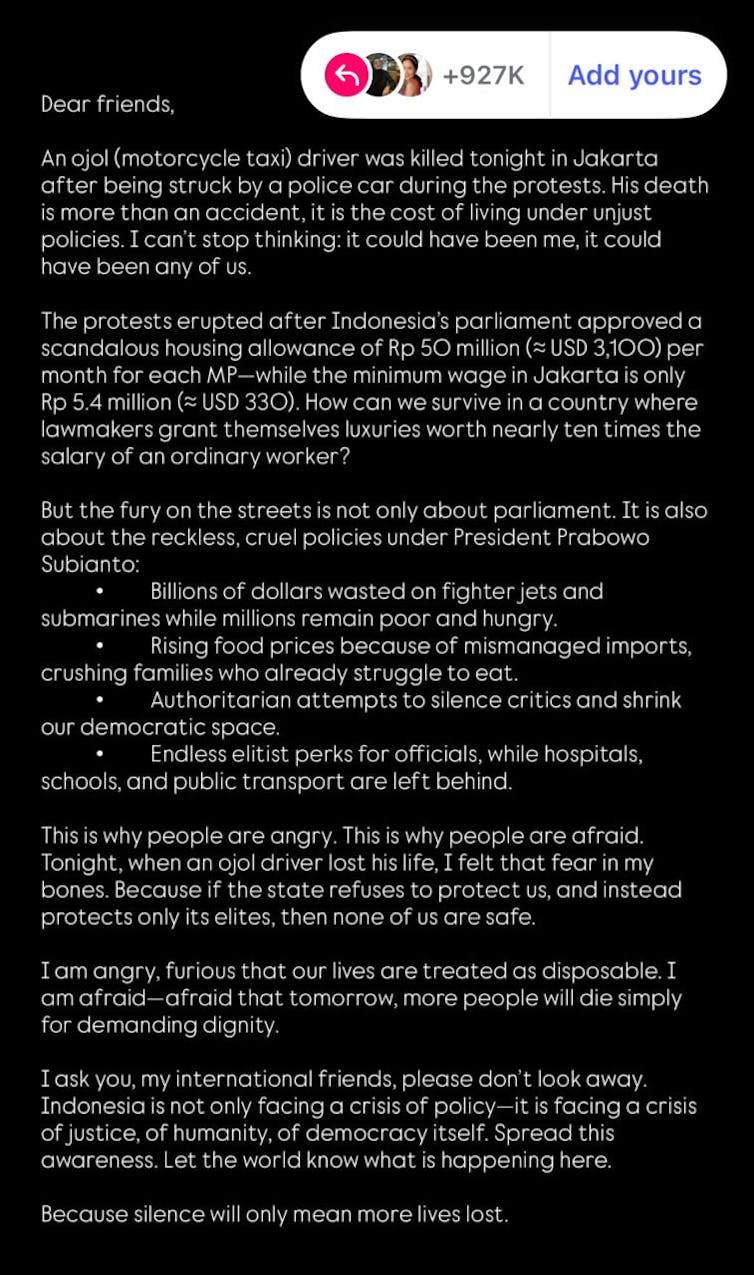
An Add Yours feature on Instagram that has been reported by many Indonesian social media users who try to expose the national issues currently happening in the country.
CC BY

From July 2024 to June 2025, there were at least 602 incidents of violence committed by the police — most of them (411 cases) were shootings, according to data from the Commission for Missing Persons and Victims of Violence (KontraS). At least 10 people were killed and 76 others were injured, ranging from minor to serious injuries.

The report also reveals that the police have committed 37 extrajudicial killings, resulting in 40 victims.

This latest act of violence in a demonstration where around 600 people were arrested, according to civil society organisation Lokataru Foundation, may go down as one of the most remembered police brutalities in the country’s history.

What makes it more troubling is the banality of police violence. The most unsettling form of evil is not its spectacular excess but its routine, bureaucratic repetition.

In Indonesia, police brutality rarely appears as an extraordinary rupture. It is instead embedded in the ordinary functioning of the institution.

Officers act not as moral agents but as cogs in a machine, translating dissent into “disorder,” protest into “threat”. This is the banality, where violence becomes administrative, predictable, and therefore normalised.

Each act of repression is presented as a procedure, each death as collateral, and each arrest as a necessity. In this way, the institution transforms what should scandalise into what is socially tolerated, ensuring that the reproduction of inequality is maintained without disruption.

That tragedy now stands alongside the Kanjuruhan tragedy in 2022, a deadly soccer match in Malang, East Java, that killed 131 people and injured 300 others. The police excessively fired tear gas to disperse the violent crowd in the stadium, leading to a stampede.

The structure of Indonesia’s law enforcement institutions now appears very fragile, particularly in the absence of adequate mechanisms to deal with state-civilian conflicts.

A corrupt institution

In February, police arrested members of the viral band Punk Rock Sukatani for releasing the anthem “Bayar, bayar, bayar” (Pay, pay, pay) — addressing the “fee-for-service” practices.

The song calls out the string corruption “culture” in the country’s law enforcement, with people encountering police extortion every day. A poll shows how 30,6% of respondents reporting to have paid bribes to the police, including for traffic fines.

According to Transparency International Indonesia, the police is one of the most corrupt institutions in the country.

Despite the corrupt culture, the institution will likely earn budget at Rp145.6 trillion next year, higher than Rp126.6 trillion this year. This will make the police the third state institution with the highest budget after the National Nutrition Agency and the Defence Ministry.

The police response to the punk band reflects what sociologist Pierre Bourdieu described as symbolic violence — the power to impose societal norms by framing dominance as natural and unquestionable.

By branding criticism as “defamation,” they seek to reinforce their authority while deterring future challenges.

More power to come

Instead of reforming the police force, the government — along with the parliament — is revising the Criminal Code in a way that risks turning the police into a superpower institution within the criminal justice system.

Under the drafted revision, the police investigators can supervise other investigators, such as Civil Servant Investigators and other Specific Investigators. It opens doors for interference and challenges other enforcement bodies.

The draft also grants the police authority to carry out various coercive measures, threatening the rights of every citizen.

Urgent reform needed

In Indonesia, the mandate to maintain public order is often used as a justification for violence in the name of “security”. Orders to “secure” a situation routinely translate into repression, with control and stability placed above democratic accountability.

In a system designed to shield elites from scrutiny, even the smallest acts of resistance are treated as threats to the status quo. The combination of coercive power and oligarchic ties makes any substantive reform a daunting task.

Yet as brutality persists and police authority continues to expand, comprehensive reform of the institution can no longer be postponed.

The Conversation

Aniello Iannone tidak bekerja, menjadi konsultan, memiliki saham, atau menerima dana dari perusahaan atau organisasi mana pun yang akan mengambil untung dari artikel ini, dan telah mengungkapkan bahwa ia tidak memiliki afiliasi selain yang telah disebut di atas.

ref. The banality of state violence: Why the Indonesian police have become a public enemy – https://theconversation.com/the-banality-of-state-violence-why-the-indonesian-police-have-become-a-public-enemy-251268

Sex, Stalin and Shostakovich: the story of the 1934 opera the Soviet leader walked out of

Source: The Conversation – UK – By Pauline Fairclough, Professor of Music, University of Bristol

At the BBC Proms in September, the Albert Hall will stage a concert performance of Dmitri Shostakovich’s controversial 1934 opera, Lady Macbeth of the Mtsensk District.

Based on Nikolai Leskov’s 1865 novella, it tells the story of the lonely Katerina Izmailova, who falls in love with one of her husband’s workers, Sergei, and is driven to murder. In his opera adaptation, Shostakovich inserted two shocking scenes: the first, an attack on the housekeeper Aksinya; the second, a violent sex scene between Katerina and Sergei.

Opening in Leningrad and Moscow in 1934, Lady Macbeth was a hit with Soviet audiences, and Stalin himself attended a performance in 1936. Deeply unimpressed by the music’s modern style, he walked out halfway through, allegedly saying: “This is a muddle, not music” – a phrase repeated in the headline of a ferocious editorial in the Pravda newspaper two days later.

All further performances were withdrawn and it was never heard again in Russia during Shostakovich’s lifetime. That we would again be listening to it today would have astonished Shostakovich.

After Stalin’s death in 1953, Shostakovich dusted down the score and revised it, renaming it Katerina Izmailova. Most of the revisions were minor, except one: he removed the sex scene involving Katerina completely.

The updated version was well received in the Soviet Union – but when Katerina Izmailova toured Europe in the 1960s, critics were lukewarm. In the depths of the cold war, there was little appetite for acclaiming Shostakovich as a genius.

Lady Macbeth recast

But in 1979, exiled Russian cellist Mstislav Rostropovich located a score of the original Lady Macbeth in Europe and recorded it with EMI. Opera houses quickly expressed a desire to stage it, bypassing the Katerina Izmailova version.

In the same year, the book claimed as Shostakovich’s memoir, Testimony, was published, eliciting more interest in the composer. However, its authenticity was immediately queried, and subsequent research has further discredited its claim to be genuine.

But few would dispute Testimony’s overall message: Shostakovich hated the Soviet regime and suffered deep psychological trauma during the Stalin years. From this point on, the way in which people listened to Shostakovich’s music changed. His political disaffection, some claimed, was audible in the notes themselves.

Where critics had yawned at Katerina Izmailova, they were electrified by this new-old, sexy Lady Macbeth. With Testimony’s revelations in mind, the act of staging sex in Soviet Russia of the 1930s – the decade of Stalin’s purges – seemed excitingly radical. Critics even assumed this was why Stalin had been so offended by the opera. Consequently, directors began to stage both the scene of assault on the housekeeper Aksinya and the sex scene between Katerina and Sergei in as shocking a way as possible.

Stage directions for Leningrad and Moscow in 1934 had Sergei rolling Aksinya in a barrel, but in modern productions she is often gang-raped, stripped partially naked and horribly humiliated. Katerina – originally chased around the Leningrad stage, then at the last moment whisked behind a curtain – is now frequently shown simulating rough sex with Sergei. Although in this scene both music and libretto (vocals) suggest rape, directors normally stage the sex as violent but consensual, shielding us from what I believe the composer had intended.

The original Leningrad and Moscow directors, however, understood Shostakovich’s original concept perfectly. In an early (unperformed) draft, the first words Katerina sang to Sergei after sex were “Don’t you dare touch me”. We cannot avoid the conclusion that Shostakovich originally imagined a rape that led swiftly to Katerina’s adoring words: “Now you are my husband.” It was immature, offensive and didn’t make dramatic sense.

The Leningrad director Nikolai Smolich did the best he could with it, cutting the problematic post-coital dialogue completely and hiding the actual sex from view.

The real reason Stalin walked out

Staging Lady Macbeth with shocking levels of sexual violence has become subtly conflated with Stalin’s banishment of the opera – as though the more outrageous the staging, the more anti-Stalinist it becomes.

Yet Stalin’s reaction to the opera wasn’t caused by the sex. As I discuss in my forthcoming book Shostakovich’s Lady Macbeth of the Mtsensk District, the performance he saw had extra directions written on the brass parts: to play with raised bells and increase the fortissimo to quadruple fortissimo – as loud as physically possible.

There was also an on-stage brass band playing which was placed right under Stalin’s box by the side of the stage. He would have been completely deafened. Lady Macbeth was not too sexy for Stalin – it was too noisy.

We don’t make Lady Macbeth of Mtsensk more authentic or more dissident by staging ever-grimmer levels of sexual violence against women, nor do we bring it closer to Shostakovich’s own vision of the opera. The “original” version is not a perfect masterpiece: Lady Macbeth’s first directors knew that, and so did the older Shostakovich. It’s time to listen to them.


Looking for something good? Cut through the noise with a carefully curated selection of the latest releases, live events and exhibitions, straight to your inbox every fortnight, on Fridays. Sign up here.


The Conversation

Pauline Fairclough receives funding from The Leverhulme Trust

ref. Sex, Stalin and Shostakovich: the story of the 1934 opera the Soviet leader walked out of – https://theconversation.com/sex-stalin-and-shostakovich-the-story-of-the-1934-opera-the-soviet-leader-walked-out-of-263457

How tariff wars are reshaping migration and raising the risk of human rights abuses in supply chains

Source: The Conversation – UK – By Milda Žilinskaitė, Senior Scientist, Competence Center for Sustainability Transformation and Responsibility, Vienna University of Economics and Business, and Founding Co-Director of Migration, Business & Society, Vienna University of Economics and Business

Arturo Almanza K/Shutterstock

The tariff wars between the US and its trade partners have rarely been out of the news since the US president, Donald Trump, revealed his plans for sweeping “liberation day” levies back in April. The uncertainty that followed for businesses worldwide has now morphed into a battle over global supply chains, as the US and China seek dominance over resources and manufacturing.

At the same time, the subject of migration has been high on many countries’ news agendas. In the US especially, there has been growing anger over federal immigration raids and controversial deportations to “third countries”.

Yet it appears that many policymakers and economists aren’t joining the dots. Tariffs are reshaping migration patterns and, as a result, raising the risk of human rights abuses to workers across global supply chains. This is captured by risk-management platform EiQ, which gathers supply chain intelligence to help businesses reach their environmental, social and governance (ESG) goals.

Its data is drawn from 30,000 onsite audits annually across more than 100 geographies (countries and provinces). When taken alongside our research on migrant labour, it raises serious welfare concerns.

The US is playing a key role in the shift of global supply chains through “Made in America”, one of its initiatives to bolster the US manufacturing sector. While some American companies are responding by reshoring certain functions to the US, most are taking a different approach. Rather than bringing production to US soil, they are reconfiguring their supply chains in a bid to avoid the highest tariffs or to open up new markets.

One strategy is “China +1” – in which companies maintain some manufacturing presence in China but expand this to alternative locations such as Vietnam, Indonesia and Mexico.

As a result, new global supply chain corridors are forming rapidly. While south-east Asia continues to rise as a manufacturing hub, Latin America is experiencing a surge in global supply chain investments as companies look to minimise their tariffs. For example, Mexico’s proximity to the US, low labour costs and lower tariffs than those imposed on goods made in China will appeal to many businesses.

Not only American but also Chinese firms are accelerating their foreign direct investment (FDI) across the region – most notably in Mexico. Yet these shifts in supply chains are not without consequences.

The surge in investment in Mexico is fuelling demand for labour, but Mexico’s domestic workforce is not unlimited. As a result, the tariff wars are accelerating Mexico’s demographic transition from a country of emigration to one where immigration is on the rise.

This is part of a broader phenomenon known as “replacement migration”, in which labour migration follows a cascade pattern. Workers from middle-income countries migrate to high-income economies, while companies in these middle-income countries fill labour shortages by recruiting migrants from poorer nations. This means much of today’s migration flows from lower to middle-income economies – “one level up” on the development ladder.

The human cost

One of the consequences of this growing global mobility of labour is the rise of “human supply chains”: the systems and practices that multinationals use to manage migrant workers within global supply chains. The implications are profound.

Labour migration relies on complex transnational recruitment networks. In most migrant-receiving countries, visa programmes require companies to hire workers while they are still in their country of origin (Nepali workers recruited to Malaysian factories, for example). Yet few multinationals manage recruitment in-house. Instead, up to 80% of legal, international lower-skilled hires are arranged by labour agencies.

This growing reliance on agencies is increasing workers’ exposure to risk. Migrant recruitment agencies often operate by charging workers for job placements – essentially selling jobs to those seeking employment abroad. Beyond the high upfront fees, many intermediaries have been linked to corruption, including passport confiscation and replacing promised contracts with poorer terms and lower wages upon arrival.

EiQ has uncovered more than 850 major or critical violations, including unlawful salary deductions and recruitment fees that were not reimbursed. According to its CEO, Kevin Franklin: “There are no longer any ‘safe’ or ‘easy’, cost-effective options for supply chain sourcing. We have entered an era of intense and nuanced trade-offs.”

Moving operations from China to India, for instance, increases exposure to the risk of forced and child labour. Likewise, shifting production to Bangladesh raises serious health and safety concerns. And migrant workers in Mexico face heightened risks relating to labour rights, workplace safety and wages – all of which have worsened over the past year.

Even the US has moved from a medium to a high-risk category for all workers, according to EiQ. The Trump government’s Made in America push has driven up demand for labour, but the US workforce is both insufficient and costly, and mass deportations of migrants are only worsening the shortages.

black-clad Customs and Border Protection officers guard a federal building during protests over deportations in Los Angeles.
Customs and Border Protection officers guard a Los Angeles federal building in June amid tensions over deportations.
Matt Gush/Shutterstock

Tighter immigration policies contribute to an atmosphere of fear, discouraging migrant workers from reporting abuse or seeking legal support. And with fewer workers available, those who stay face greater vulnerability. EiQ audits have uncovered forced overtime, serious injuries, hospitalisations and even amputations after people have been injured at work.

Around the world in 2025, more than 45% of geographies slipped down the humane treatment index which EiQ compiles.

As global trade evolves rapidly, businesses must rely on evidence-based insights to navigate this complex landscape. They should map risk, use AI to help them assess trade-offs when they move into new regions, and engage with and train their suppliers. And when they find out things have gone wrong, there must be action plans – including compensation for affected migrant workers.

The Conversation

The authors do not work for, consult, own shares in or receive funding from any company or organisation that would benefit from this article, and have disclosed no relevant affiliations beyond their academic appointment.

ref. How tariff wars are reshaping migration and raising the risk of human rights abuses in supply chains – https://theconversation.com/how-tariff-wars-are-reshaping-migration-and-raising-the-risk-of-human-rights-abuses-in-supply-chains-262984

The Roses: what this romcom about a warring couple can teach us about relationship breakdown and divorce

Source: The Conversation – UK – By Veronica Lamarche, Senior Lecturer of Psychology, University of Essex

As I left the screening of the new film The Roses, I became aware of a young couple walking ahead of me. The woman was in tears, and it quickly became clear the themes of the film, and the struggles of Ivy and Theo Rose, had held a mirror to several issues this couple had been going through too.

The Roses is a re-imagining of the 1989 film and book of the same name, The War of the Roses, which follows a wealthy couple as their individual professional failures and successes trigger a chaotic spiral – and ultimately, the destruction of their marriage.

I empathised with the situation this young couple who had just seen the remake found themselves in – how a movie such as The Roses could turn a special evening out into something more bitter tasting.

There’s a reason why watching a group of couples at a dinner party say the nastiest, most degrading and hurtful things to their other halves can be billed as a “comedy”. We can experience a type of schadenfreude (glee at other’s discomfort) when other couples feud.

A natural reaction to interacting with others is to engage in social comparisons, even when the people we’re comparing ourselves to are fictional characters. Upward social comparisons – for example, watching a seemingly “perfect” couple who appear effortlessly in love – can trigger self-doubt in ourselves.

By contrast, the downward social comparison of watching a couple who should have it all seemingly wither in each other’s presence can make us feel better about ourselves and our own relationships.

But for downward social comparisons to be effective, people need to feel as though the flaws they’re seeing in others aren’t representative of what they are experiencing at home. This is where the series of events that propel Ivy and Theo towards destruction may feel all too familiar for some audience members.

For those who do see themselves in this film, it might leave them wondering whether it is better to cut their loses and end their relationship before it is too late.

Trapped on the battlefield of love

Unlike many romantic comedies, one thing I really liked about The Roses is that I genuinely felt Ivy and Theo loved and respected each other at the beginning of the film. They had a mutual admiration, and genuinely wanted each other to thrive and excel in their own ambitions.

These sentiments lie at the core of many successful relationships. Not only can partners help shape us into our best versions of ourselves, but the closer we feel to someone, the more we get to ““bask in the reflected glory” of their successes.

Before everything goes off the rails, Theo and Ivy want each other to succeed, and they feel proud of each other (and for their family) when they do. In many ways, they start as a masterclass in showing how important partners can be in helping us achieve our personal goals.

But then life begins to throw some curveballs, and we see this couple are missing some of the essential tools in their marital toolkit, because they failed to build the arsenal when times were good.

First, Theo suffers a profound setback in his career which shatters his own sense of who he is. When we doubt ourselves, we find it harder to focus on our partner’s positive qualities, and feel more threatened by their successes.

Ivy and Theo are both reluctant to express their concerns or worries to each another. Initially, this is out of fear of burdening the other person. But later, they hold back out of an assumption that their partner is unwilling or unable to give them what they need. Their marriage is no longer a safe haven, where they can safely lick their wounds and rebuild.

When people hold such negative views of their partner, they are more likely to internalise low points and transgressions as meaning something about who they are as well. Clear and vulnerable conversations with a partner are fundamental for restoring trust, cohesion and satisfaction.

So, the more Theo and Ivy avoid confronting what they need to see change in their relationship, the more they lock themselves into a cycle of resentment and abandonment.

Surviving stormy weather

One thing most media portrayals of romantic life seem to often get wrong is the assumption that real, genuine, uplifting love means never feeling hurt, angry, cross or frustrated. This is simply not true.

In fact, conflict can be a really healthy part of a relationship. It shines a spotlight on something that needs improving, and creates an opportunity for action through reconciliation.

But when we doubt our partner has our best intentions at heart, and when we feel badly about ourselves, we tend to pull away from them in a bid to protect our heart from future hurts, rather than risk the potential rewards of reconnecting.

Rewarding, long-lasting relationships require us to be vulnerable and responsive partners. On the red carpet, the podcasters and hosts of the evening, husband and wife team Jamie Laing and Sophie Habboo, were asking the star-studded cast what they thought the secret was to a happy marriage. While there were plenty of positive sentiments and tips, actress Belinda Bromilow suggested that we need to remember to “turn towards your partner, not away”.

I couldn’t agree more. We must resist the temptation to pull away, and instead find the courage to ask our partner for a reassuring cuddle. When life gives us lemons, we must embrace the bitterness and use those notes to make a more well-rounded concoction.


Looking for something good? Cut through the noise with a carefully curated selection of the latest releases, live events and exhibitions, straight to your inbox every fortnight, on Fridays. Sign up here.


The Conversation

Veronica Lamarche’s research has received funding from the Economic and Social Research Council, the British Academy, and the Royal Society.

ref. The Roses: what this romcom about a warring couple can teach us about relationship breakdown and divorce – https://theconversation.com/the-roses-what-this-romcom-about-a-warring-couple-can-teach-us-about-relationship-breakdown-and-divorce-264220

How the Trump administration changed the rules of international diplomacy – by a former British ambassador

Source: The Conversation – UK – By Nicholas Westcott, Professor of Practice in Diplomacy, Dept of Politics and International Studies, SOAS, University of London

The Trump administration’s policies are making life more complicated for US diplomats abroad.

In the past few days, senior US diplomats in two friendly countries – France and Denmark – have been summoned to receive diplomatic protests from the host government. This is unusual.

Denmark has called in the US charge d’affaires (as the ambassador has not yet been confirmed) after intelligence reports suggested there were covert efforts by the US in Greenland to stir up opposition to Danish rule.

And in Paris, the new US ambassador, Charles Kushner, was summoned after publicly criticising the Macron government for not doing more to curb anti-semitism – but sent one of his staff instead.

Trump’s approach to diplomatic relations dispenses with the usual niceties, the traditional courtesies, and cuts to the chase: who’s bigger than who? The suggestion is that if it is Trump, then he expects you to do what he wants. Where a foreign government continues to disagree with his policy, he seems willing to support efforts, as in Greenland, to change the government or publicly pressure them to change.

US president Theodore Roosevelt (1901-1909) advised his successors to speak softly and carry a big stick. Trump clearly prefers to speak loudly and use the stick liberally, especially on the country’s allies. This is a new US diplomatic game.

All of this prompts the questions: what is the proper role for an ambassador abroad, and how should diplomatic relations be conducted? As I have set out in my recent book How to be a Diplomat – drawing on 35 years as a British diplomat working in Africa, the Middle East, the US and the EU – there are rules, customs and practices, but these are not always observed.

The Vienna Convention of 1961, which sought to codify this practice, made clear that ambassadors should be respected as representatives of another sovereign state through the granting of appropriate diplomatic privileges and immunities. But that in turn, they should respect the host government by not criticising it in public or seeking to interfere directly in its internal affairs.

The role of the ambassador

Ambassadors act as a mouthpiece for their government, and it is common for governments not to agree with each other. Ambassadors are there to represent, but also to explain, persuade and negotiate on points of difference.

For that, you need to be able to talk to the host government. Insulting them in public, as Kushner did through his op-ed in a US newspaper, does not encourage dialogue or lead to fruitful outcomes.

There are well-established ways to manage such differences. Formal protests from one government to another are usually communicated through a diplomatic communication known as a note verbale using a formal course of action called a démarche – delivered either by an ambassador to the host government, or by summoning the ambassador of the country concerned to the foreign ministry to meet the foreign minister or most senior official.

Ambassadors can be summoned too over the misbehaviour of their staff or citizens in the country concerned, or to expel some of their staff for undertaking activities incompatible with their status – the customary circumlocution for spying.

If relations deteriorate further, an ambassador can be declared persona non grata, effectively expelled, or formally “withdrawn for consultations”, though a charge d’affaires will often remain to ensure a means of communication between the governments continues.

While British ambassador to the Ivory Coast, I was PNG’d by President Laurent Gbagbo after I had, together with the rest of the diplomatic corps in Abidjan, asked him to respect the result of the 2010 election and stand down. (In the end, he went before I did.)

The ultimate diplomatic sanction – usually the last step before war is declared – is to break off diplomatic relations entirely, withdraw all staff, and close the embassy.

When US vice-president J.D. Vance visited Greenland in March 2025, he criticised Denmark’s governance of the territory.

In Trump’s first administration, his ambassador to Germany, Richard Grenell, ruffled feathers with implied support for the far-right in Europe, including the AfD, and criticism of Angela Merkel’s chancellorship.

An infuriated German government had as little contact with him as possible after that, though he was never actually expelled. The same fate is likely to befall Kushner in France: he may become politically popular in Washington and Tel Aviv, but could become operationally useless in France.

Trump, however, has not hesitated to dish it out to foreign ambassadors at home as well as governments abroad. In 2019, he effectively forced out the British ambassador to Washington, Kim Darroch, by refusing to meet him after some mildly critical comments in a classified internal report were leaked to the British press. When then-foreign secretary Boris Johnson refused to back Darroch up, he had no option but to resign.

Foreign affairs

During the cold war, both the US and Soviet governments were, on occasion, actively involved in trying to install more sympathetic governments in third countries – most memorably in Iran in 1953, Czechoslovakia 1968 and Chile in 1973. But ambassadors were usually left out of the action, which was undertaken by other agencies.

The question is whether this US administration’s approach constitutes a re-writing of the diplomatic rules, or just a return to the status quo before 1945. At that point, the world decided through the UN to try to bring more order and rules to international relations, rather than allowing the great power free-for-all which had led to two world wars.

In reality, the balance of power has always underpinned diplomacy. But even great powers (the biggest nations) came to realise that some rules were useful, which is why the UN still exists.

Diplomacy will continue come what may. And the jury is still out on whether Trumpian realpolitik will actually deliver better outcomes for American people than the previous way of working he is trying to ditch.

The Conversation

Nicholas Westcott does not work for, consult, own shares in or receive funding from any company or organisation that would benefit from this article, and has disclosed no relevant affiliations beyond their academic appointment.

ref. How the Trump administration changed the rules of international diplomacy – by a former British ambassador – https://theconversation.com/how-the-trump-administration-changed-the-rules-of-international-diplomacy-by-a-former-british-ambassador-264053

What exactly are you eating? The nutritional ‘dark matter’ in your food

Source: The Conversation – UK – By David Benton, Professor Emeritus (Human & Health Sciences), Medicine Health and Life Science, Swansea University

When scientists cracked the human genome in 2003 – sequencing the entire genetic code of a human being – many expected it would unlock the secrets of disease. But genetics explained only about 10% of the risk. The other 90% lies in the environment – and diet plays a huge part.

Worldwide, poor diet is linked to around one in five deaths among adults aged 25 years or older. In Europe, it accounts for nearly half of all cardiovascular deaths.

But despite decades of advice about cutting fat, salt or sugar, obesity and diet-related illness have continued to rise. Clearly, something is missing from the way we think about food.

For years, nutrition has often been framed in fairly simple terms: food as fuel and nutrients as the body’s building blocks. Proteins, carbohydrates, fats and vitamins – about 150 known chemicals in total – have dominated the picture. But scientists now estimate our diet actually delivers more than 26,000 compounds, with most of them still uncharted.

Here is where astronomy provides a useful comparison. Astronomers know that dark matter makes up about 27% of the universe. It doesn’t emit or reflect light, and so it cannot be seen directly but its gravitational effects reveal that it must exist.

Nutrition science faces something similar. The vast majority of chemicals in food are invisible to us in terms of research. We consume them every day, but we have little idea what they do.

Some experts refer to these unknown molecules as “nutritional dark matter”. It’s a reminder that just as the cosmos is filled with hidden forces, our diet is packed with hidden chemistry.

When researchers analyse disease, they look at a vast array of foods, although any association often cannot be matched to known molecules. This is the dark matter of nutrition – the compounds we ingest daily but haven’t been mapped or studied. Some may encourage health, but others may increase the risk of disease. The challenge is finding out which do what.

Foodomics

The field of foodomics aims to do exactly that. It brings together genomics (the role of genes), proteomics (proteins), metabolomics (cell activity) and nutrigenomics (the interaction of genes and diet).

These approaches are starting to reveal how diet interacts with the body in ways far beyond calories and vitamins.

Take the Mediterranean diet (filled with fruits, vegetables, whole grains, legumes, nuts, olive oil and fish, with limited red meat and sweets), for example, which is known to reduce the risk of heart disease.

But why does it work? One clue lies in a molecule called TMAO (trimethylamine N-oxide), produced when gut bacteria metabolise compounds in red meat and eggs. High levels of TMAO increase the risk of heart disease. But garlic, for example, contains substances that block its production. This is one example of how diet can tip the balance between health and harm.

A selection of different types of food laid out against a grey surface
Beyond the food on your plate lies a universe of different molecules.
Danijela Maksimovic/Shutterstock

Gut bacteria also play a major role. When compounds reach the colon, microbes transform them into new chemicals that can affect inflammation, immunity and metabolism.

For example, ellagic acid – found in various fruits and nuts – is converted by gut bacteria into urolithins. These are a group of natural compounds that help keep our mitochondria (the body’s energy factories) healthy.

This shows how food is a complex web of interacting chemicals. One compound can influence many biological mechanisms, which in turn can affect many others. Diet can even switch genes on or off through epigenetics – changes in gene activity that don’t alter DNA itself.

History has provided stark examples of this. For example, children born to mothers who endured famine in the Netherlands during the second world war were more likely to develop heart disease, type 2 diabetes and schizophrenia later in life. Decades on, scientists found their gene activity had been altered by what their mothers ate – or didn’t eat – while pregnant.

Mapping the food universe

Projects such as the Foodome Project are now attempting to catalogue this hidden chemical universe. More than 130,000 molecules have already been listed, linking food compounds to human proteins, gut microbes and disease processes. The aim is to build an atlas of how diet interacts with the body, and to pinpoint which molecules really matter for health.


Read more:
Do food additives cause symptoms of ADHD? It’s more complicated than you think


The hope is that by understanding nutritional dark matter, we can answer questions that have long frustrated nutrition science. Why do certain diets work for some people but not others? Why do foods sometimes prevent, and sometimes promote, disease? Which food molecules could be harnessed to develop new drugs, or new foods?

We are still at the beginning. But the message is clear – the food on our plate is not just calories and nutrients, but a vast chemical landscape we are only starting to chart. Just as mapping cosmic dark matter is transforming our view of the universe, uncovering nutritional dark matter could transform how we eat, how we treat disease and how we understand health itself.

The Conversation

David Benton does not work for, consult, own shares in or receive funding from any company or organisation that would benefit from this article, and has disclosed no relevant affiliations beyond their academic appointment.

ref. What exactly are you eating? The nutritional ‘dark matter’ in your food – https://theconversation.com/what-exactly-are-you-eating-the-nutritional-dark-matter-in-your-food-262290

The tyranny of front gardens: we cut and trim them out of social pressure, not pleasure

Source: The Conversation – UK – By Rachel Lauwerijssen, Researcher in Green Infrastructure, University of Manchester

FahC2025

Look at the front gardens in a typical suburban street and you’re unlikely to be surprised by much. Tidy little lawns and hedges, a few prim flowers, perhaps a well-kept wooden fence. You probably barely notice unless it’s in a poor state – or there’s something eccentric like a stone fountain. “Why would anyone have that eyesore?” people probably tut as they walk by.

The other thing you’re very likely to see is the owners out doing the gardening. Many will surely be out as I write, doing some final manicuring before autumn sets in.

This is fun for gardening enthusiasts, but most of us with front gardens make them boring more out of social pressure than personal choice. They may say our homes are supposed to be our castles, but we treat our front gardens more like they belong to someone else.

Mother doing gardening while child plays on grass
Crazy slaving.
Phil and Maria, CC BY-SA

This applies across cultures. In recent years, it has been demonstrated by several studies in the UK and US, as well as in my research in the Netherlands.

I interviewed 20 older adults for my 2024 study about their relationship with their gardens. They all lived in the small cities of Breda and Tilburg, about halfway between Rotterdam and Antwerp. When I talked to Josje and Kees, a couple living in the suburbs of Breda who had the luxury of a front and back garden, Josje told me:

Our garden was green, but maintaining it was an obligatory thing … What you did is mowing the lawn and other amenities to keep it tidy, but not because you had green fingers.

This image of the “perfect” suburban front garden forces people into gardening even if they dislike it. As many as 70% of Dutch people have access to a front garden, and on average they spend 45 minutes per week looking after it. For many, these 45 minutes are clearly just a weekly necessity.

I also talked to Gerda and Willem, who lived on the same street, and Gerda’s comments gave an insight into the social pressure that gets attached to front gardens:

The street has become more beautiful now that everyone is paying more attention to the garden and trying to keep it tidy – except for one.

Clearly you wouldn’t want to be that person. And this isn’t all about the middle classes. In a study in an economically deprived area in the north of England in 2021, one respondent said:

You don’t want visitors to think you live in a dump, you don’t want them to pity you … It gives you pride, not just in your house but in the whole area. It makes it look like your area has not just been left to rot.

The sense of community and social control is reinforced when neighbours greet one another in apparently throwaway comments. “Morning – nice weather for gardening, isn’t it?” one of my interviewees said when he saw another outside. It’s friendly on one level, but there’s a subtext about moral duty as well.

The state of someone’s front garden influences how others perceive you and your house. Tidy and manicured garden? You must be middle class and have a nice, tidy house. A garden full of weeds and dirt? You must be working class, antisocial or renting.

There is even stigma around relaxing in your front garden. A 2023 UK study, which did focus-group interviews with people from different social classes and parts of England, had a contributor who said:

I think sitting out the front, people would say either this person’s got too much time or he’s looking at the neighbourhood gossip.

What happens round the back

Back gardens are a whole different can of worms. These are spaces of privacy and self-expression, where homeowners are more likely to go rogue with their designs. If you’re going to see cacti or palm trees, or statues or Japanese rock gardens, this is the place to look.

Among those who take biodiversity more seriously, you’ll maybe see microhabitats like ponds, nests and insect boxes. Those who prioritise self-sufficiency are increasingly setting up greenhouses and allotment-style plots to grow and harvest seasonal vegetables.

Back gardens are where people kick back, talk to family and friends, and let the children play. It’s where we’re less likely to worry if the grass is a bit longer than usual, since there’s probably tall enough fencing or hedging that the neighbours can’t see what’s going on.

Back gardens were particularly vital for restoring people and improving their wellbeing during the COVID-19 pandemic – for those lucky enough to have them.

So, if you want to know what a person is really like, check out their back garden. Although I should add, it is a little different in the Netherlands – where the culture is to usually have all curtains open, sending out a message that there’s nothing to hide in this house. That may or may not impose a little more conformity than in other countries, but that’s a research question for another day.

The Conversation

Rachel Lauwerijssen does not work for, consult, own shares in or receive funding from any company or organisation that would benefit from this article, and has disclosed no relevant affiliations beyond their academic appointment.

ref. The tyranny of front gardens: we cut and trim them out of social pressure, not pleasure – https://theconversation.com/the-tyranny-of-front-gardens-we-cut-and-trim-them-out-of-social-pressure-not-pleasure-264136

How to poop outdoors in a way that won’t harm the environment and other hikers

Source: The Conversation – USA (2) – By Shari Edelson, Ph.D. Candidate in Recreation, Park and Tourism Management, Penn State

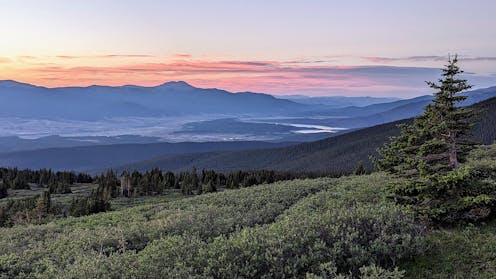
A pilot program to distribute waste bags to hikers on Mount Elbert in Colorado successfully cut down the amount of human waste on the massive mountain. Shari Edelson, CC BY-ND

If you’re one of the 63 million Americans who went hiking last year, chances are you’ve found yourself needing to go, with no toilet in sight.

Aside from personal inconvenience, why is this such a big deal?

Human fecal contamination is a public health concern in natural areas. Pathogens in human poop can remain active for a long time – over a year in outdoor environments – meaning that waste left behind today can cause severe gastrointestinal disease and other sicknesses for future visitors. Fecal waste can enter waterways after storms or snowmelt, harming water quality. Finally, it can be upsetting – or at the least, unpleasant – to encounter someone else’s poop and used toilet paper in nature.

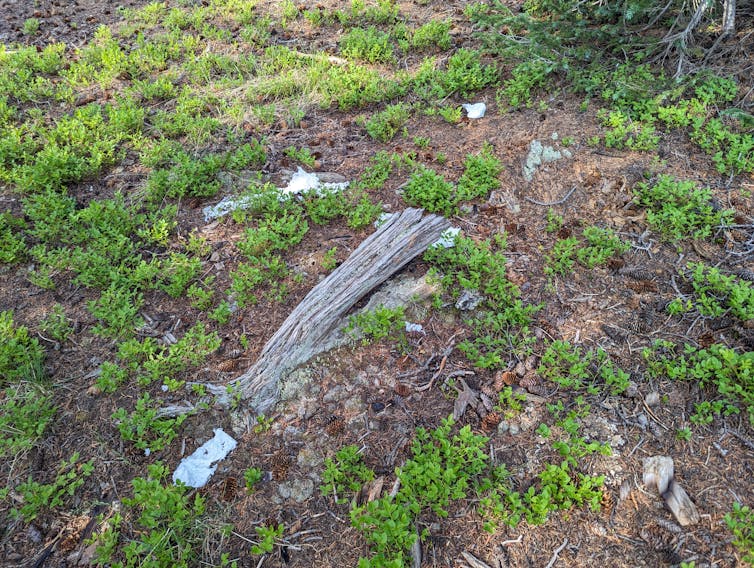
Used and tattered toilet paper is scattered throughout the forest floor near grasses, logs and sticks.
Toilet paper waste on Mount Elbert in the San Isabel National Forest in Colorado.
Shari Edelson, CC BY-ND

As a researcher and a Ph.D. candidate who study human impacts on parks and protected areas, we have been thinking quite a lot about poop and ways people can tread more lightly on the landscape. Our focus is on Leave No Trace, an environmental education framework – created by an organization with the same name – that helps people implement minimal-impact practices in the outdoors.

Poop is causing problems in parks and protected areas

From the Appalachian Trail and Mount Everest – known as Sagarmatha in Nepali – to national parks in Norway and Aotearoa – known as New Zealand to English speakers, researchers have documented the negative impacts our bodily wastes are causing in the sensitive environments where we seek recreation and restoration.

In Colorado, the problem has gotten so bad that land managers have decided to take action. In the Eagle-Holy Cross District of the White River National Forest, for example, the U.S. Forest Service now requires visitors to take their human waste out with them.

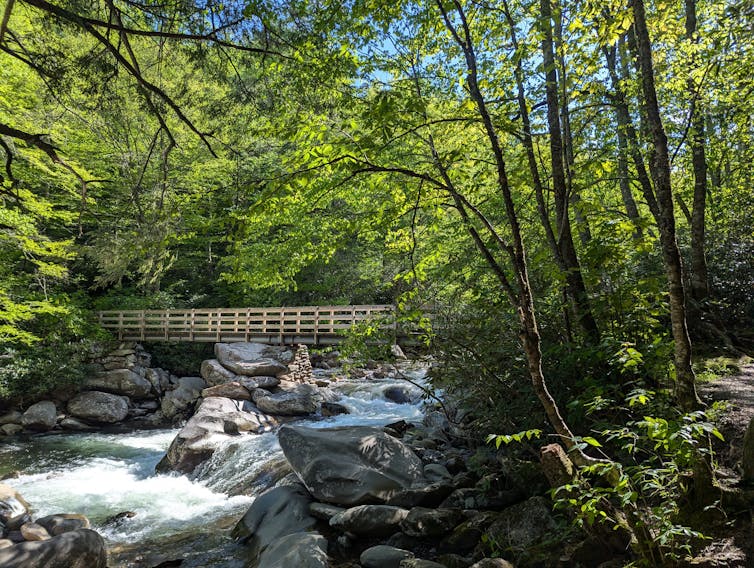
A raging river courses alongside a rocky shoreline within a verdant forest. A wooden bridge crosses over the water.
A footbridge on the Chimney Tops Trail in the Great Smoky Mountains near the Appalachian Trail.
Shari Edelson, CC BY-ND

Best practices for dealing with your poo in the great outdoors

One of us – Derrick Taff – works as a science adviser to Leave No Trace, an organization that has educated outdoor recreationists on this issue for more than 30 years and has provided concrete guidance based on scientific research.

The first rule of thumb is to avoid the possibility of contamination entirely by not leaving waste in natural areas to begin with. Toilet facilities are regarded as the most effective method to reduce human waste in the backcountry. If there’s a toilet at the trailhead, use it before you head out.

Current research we’re doing in Grand Teton National Park in Wyoming and San Isabel National Forest in Colorado confirms that hikers prefer to use trailhead toilets when they’re available.

But as anyone who’s been out in the woods is aware, remote wilderness areas do not necessarily offer such infrastructure. Access for maintenance and waste removal costs are major barriers for land management agencies considering installing backcountry toilets.

And then there’s the very real likelihood that even when trailhead facilities do exist, you may be far away when nature calls. In our own research, pending publication, we surveyed hikers on Colorado’s Mount Elbert. Up to 70% of those needing to poop ended up doing so in the backcountry despite the presence of a trailhead toilet.

Issues develop because hikers aren’t prepared

This issue may persist because people aren’t aware of the current rules. In our soon-to-be-published study of Grand Teton hikers, 66% of backcountry trail visitors reported that they had not received any information on how to dispose of human waste in the park.

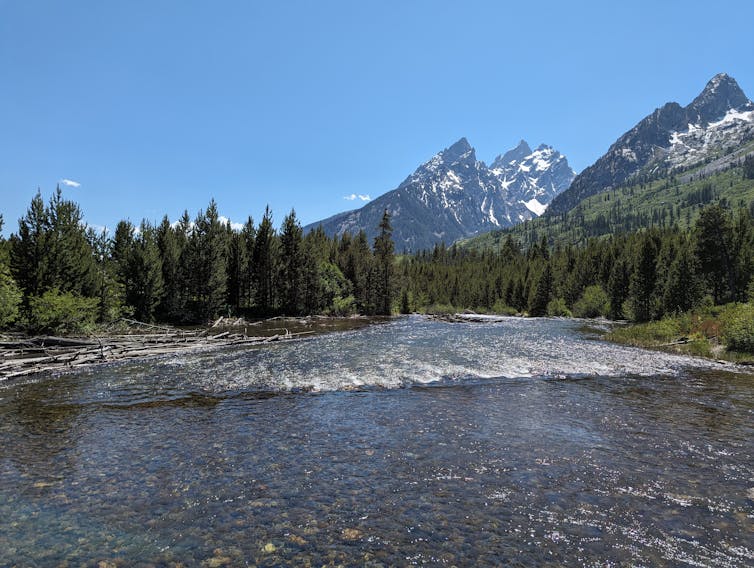
A wide, peaceful river flows into a thick forest. Imposing jagged peaks pierce the sky. Snow is visible within the mountain's crevices.
The view from String Lake in Grand Teton National Park.
Shari Edelson, CC BY-ND

Other reasons why people may not follow the rules are because they may consider them onerous or unimportant.

Research shows that clear, actionable messaging including relevant environmental and moral appeals does make a difference in shifting people’s behaviors in the outdoors. Although individual choices may seem inconsequential, they add up to big impacts in the aggregate.

How to poop in the backcountry

So what to do when there really is no potty? Leave No Trace advises us of two main options.

The first is to dig a little pit, commonly called a cat hole, and deposit your poop in there. Can’t aim? No worries – Just poop next to the hole and scoop it in afterward.

The use of cat holes is recommended in areas where it’s possible to dig roughly the length of your hand deep in the soil, where moist ground indicates that material buried there will decompose, and where digging is not likely to disturb fragile environments. Make sure you’re about 70 steps away from any water source, trail or campsite to avoid water contamination and reduce the likelihood that someone else will accidentally come upon your waste.

You can typically leave toilet paper in a cat hole, but check local regulations and carry it out in a sealed bag if not. Never leave wet wipes behind. They don’t biodegrade.

Outdoor companies are now making lightweight trowels designed for digging cat holes in the backcountry. But there are also places where it’s difficult if not impossible to dig a cat hole because of snow, frozen ground, shallow soil or exposed bedrock, or where leaving human waste in the outdoors is not recommended due to environmental conditions. These typically include high-mountain zones above tree line, alpine environments inhabited by delicate and slow-growing flora, and deserts and other arid places characterized by low soil moisture.

In places like this, it’s best to remove all poop and toilet paper and dispose of it in a proper location such as a trash can at the trailhead or even back at your home. Before you recoil in horror, remember that dog owners do this with their pets’ waste when on a walk.

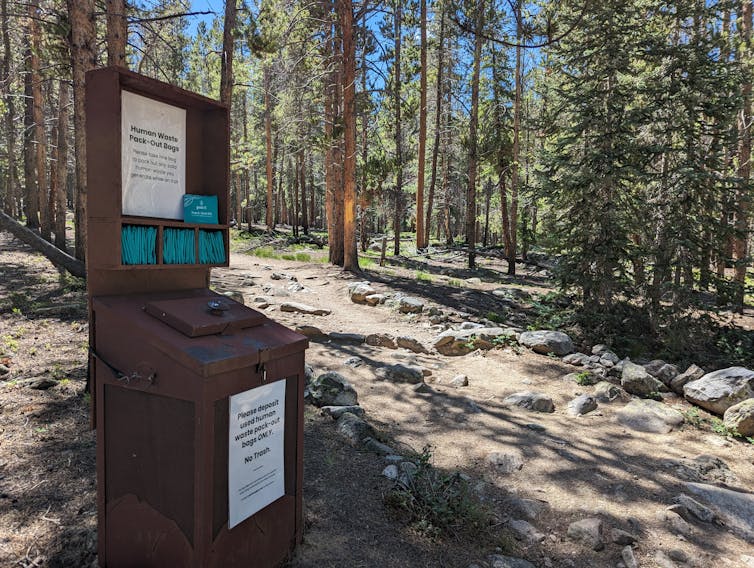
Wag bags – short for waste aggregation and gelling – are used to pack out poop. Wag bag kits typically include an inner and an outer bag as well as a drying agent to prevent odor and leakage. Our current research, as well as a recent study of Norwegian park users, has demonstrated that people are willing to use them.

A brown box stands near a trail in the forest. Numerous turquoise bags are folded and placed on shelves. A sign, with black lettering on white laminated paper, is attached to the kiosk. One reads:
A kiosk offers free wag bags at the beginning of the Mount Elbert summit trail near Leadville, Colo. Wag bags are commonly used by hikers as self-contained receptacles for feces.
Shari Edelson, CC BY-ND

Our study found that among people who defecated while on a hike to the summit of Mount Elbert, 30% used a wag bag to carry their waste off the mountain, and 87% expressed willingness to use one on future trips.

These results suggest that people are willing to do the right thing when given the proper tools and information, and that it’s possible to effectively teach people how to care for our wild spaces.

The Conversation

Shari Edelson has received research funding from the National Park Service, the National Science Foundation and PACT Outdoors.

B. Derrick Taff is an Assistant Dean of Research and Graduate Education in the College of Health and Human Development, and an Associate Professor in the Department of Recreation, Park and Tourism Management at Penn State University; he also serves as the Leave No Trace organization’s science advisor. Derrick is the Suzie and Allen Martin Professor through Penn State University.

ref. How to poop outdoors in a way that won’t harm the environment and other hikers – https://theconversation.com/how-to-poop-outdoors-in-a-way-that-wont-harm-the-environment-and-other-hikers-262426