5 forecasts early climate models got right – the evidence is all around you

Source: The Conversation – USA (2) – By Nadir Jeevanjee, Research Physical Scientist, National Oceanic and Atmospheric Administration

The island nation of Tuvalu is losing land to sea-level rise, and its farms and water supplies are under threat from salt water. Mario Tama/Getty Images

Climate models are complex, just like the world they mirror. They simultaneously simulate the interacting, chaotic flow of Earth’s atmosphere and oceans, and they run on the world’s largest supercomputers.

Critiques of climate science, such as the report written for the Department of Energy by a panel in 2025, often point to this complexity to argue that these models are too uncertain to help us understand present-day warming or tell us anything useful about the future.

But the history of climate science tells a different story.

The earliest climate models made specific forecasts about global warming decades before those forecasts could be proved or disproved. And when the observations came in, the models were right. The forecasts weren’t just predictions of global average warming – they also predicted geographical patterns of warming that we see today.

An older man smiles at the camera with an impish grin.
Syukuro Manabe was awarded the Nobel Prize in physics in 2021.
Johan Nilsson/TT News Agency/AFP

These early predictions starting in the 1960s emanated largely out of a single, somewhat obscure government laboratory outside Princeton, New Jersey: the Geophysical Fluid Dynamics Laboratory. And many of the discoveries bear the fingerprints of one particularly prescient and persistent climate modeler, Syukuro Manabe, who was awarded the 2021 Nobel Prize in physics for his work.

Manabe’s models, based in the physics of the atmosphere and ocean, forecast the world we now see while also drawing a blueprint for today’s climate models and their ability to simulate our large-scale climate. While models have limitations, it is this track record of success that gives us confidence in interpreting the changes we’re seeing now, as well as predicting changes to come.

Forecast No. 1: Global warming from CO2

Manabe’s first assignment in the 1960s at the U.S. Weather Bureau, in a lab that would become the Geophysical Fluid Dynamics Laboratory, was to accurately model the greenhouse effect – to show how greenhouse gases trap radiant heat in Earth’s atmosphere. Since the oceans would freeze over without the greenhouse effect, this was a key first step in building any kind of credible climate model.

To test his calculations, Manabe created a very simple climate model. It represented the global atmosphere as a single column of air and included key components of climate, such as incoming sunlight, convection from thunderstorms, and his greenhouse effect model.

Chart showing temperatures warming at ground level and in the atmosphere as carbon dioxide concentrations rises.
Results from Manabe’s 1967 single-column global warming simulations show that as carbon dioxide (CO2) increases, the surface and lower atmosphere warm, while the stratosphere cools.
Syukuro Manabe and Richard Wetherald, 1967

Despite its simplicity, the model reproduced Earth’s overall climate quite well. Moreover, it showed that doubling carbon dioxide concentrations in the atmosphere would cause the planet to warm by about 5.4 degrees Fahrenheit (3 degrees Celsius).

This estimate of Earth’s climate sensitivity, published in 1967, has remained essentially unchanged in the many decades since and captures the overall magnitude of observed global warming. Right now the world is about halfway to doubling atmospheric carbon dioxide, and the global temperature has warmed by about 2.2 F (1.2 C) – right in the ballpark of what Manabe predicted.

Other greenhouses gases such as methane, as well as the ocean’s delayed response to global warming, also affect temperature rise, but the overall conclusion is unchanged: Manabe got Earth’s climate sensitivity about right.

Forecast No. 2: Stratospheric cooling

The surface and lower atmosphere in Manabe’s single-column model warmed as carbon dioxide concentrations rose, but in what was a surprise at the time, the model’s stratosphere actually cooled.

Temperatures in this upper region of the atmosphere, between roughly 7.5 and 31 miles (12 and 50 km) in altitude, are governed by a delicate balance between the absorption of ultraviolet sunlight by ozone and release of radiant heat by carbon dioxide. Increase the carbon dioxide, and the atmosphere traps more radiant heat near the surface but actually releases more radiant heat from the stratosphere, causing it to cool.

Heat map shows cooling in the stratosphere. The stratosphere, starting at 10-15 kilometers above the surface and extending up to an altitude of 50 kilometers, has been cooling over the past 20 years at all latitudes while the atmosphere beneath it has warmed.

IPCC 6th Assessment Report

This cooling of the stratosphere has been detected over decades of satellite measurements and is a distinctive fingerprint of carbon dioxide-driven warming, as warming from other causes such as changes in sunlight or El Niño cycles do not yield stratospheric cooling.

Forecast No. 3: Arctic amplification

Manabe used his single-column model as the basis for a prototype quasi-global model, which simulated only a fraction of the globe. It also simulated only the upper 100 meters or so of the ocean and neglected the effects of ocean currents.

In 1975, Manabe published global warming simulations with this quasi-global model and again found stratospheric cooling. But he also made a new discovery – that the Arctic warms significantly more than the rest of the globe, by a factor of two to three times.

Map shows the Arctic warming much faster than the rest of the planet.

Map from IPCC 6th Assessment Report

This “Arctic amplification” turns out to be a robust feature of global warming, occurring in present-day observations and subsequent simulations. A warming Arctic furthermore means a decline in Arctic sea ice, which has become one of the most visible and dramatic indicators of a changing climate.

Forecast No. 4: Land-ocean contrast

In the early 1970s, Manabe was also working to couple his atmospheric model to a first-of-its-kind dynamical model of the full world ocean built by oceanographer Kirk Bryan.

Around 1990, Manabe and Bryan used this coupled atmosphere-ocean model to simulate global warming over realistic continental geography, including the effects of the full ocean circulation. This led to a slew of insights, including the observation that land generally warms more than ocean, by a factor of about 1.5.

As with Arctic amplification, this land-ocean contrast can be seen in observed warming. It can also be explained from basic scientific principles and is roughly analogous to the way a dry surface, such as pavement, warms more than a moist surface, such as soil, on a hot, sunny day.

The contrast has consequences for land-dwellers like ourselves, as every degree of global warming will be amplified over land.

Forecast No. 5: Delayed Southern Ocean warming

Perhaps the biggest surprise from Manabe’s models came from a region most of us rarely think about: the Southern Ocean.

This vast, remote body of water encircles Antarctica and has strong eastward winds whipping across it unimpeded, due to the absence of land masses in the southern midlatitudes. These winds continually draw up deep ocean waters to the surface.

An illustration shows how ocean upwelling works
Winds around Antarctica contribute to upwelling of cold deep water that keeps the Southern Ocean cool while also raising nutrients to the surface waters.
NOAA

Manabe and colleagues found that the Southern Ocean warmed very slowly when atmospheric carbon dioxide concentrations increased because the surface waters were continually being replenished by these upwelling abyssal waters, which hadn’t yet warmed.

This delayed Southern Ocean warming is also visible in the temperature observations.

What does all this add up to?

Looking back on Manabe’s work more than half a century later, it’s clear that even early climate models captured the broad strokes of global warming.

Manabe’s models simulated these patterns decades before they were observed: Arctic Amplification was simulated in 1975 but only observed with confidence in 2009, while stratospheric cooling was simulated in 1967 but definitively observed only recently.

Climate models have their limitations, of course. For instance, they cannot predict regional climate change as well as people would like. But the fact that climate science, like any field, has significant unknowns should not blind us to what we do know.

The Conversation

Nadir Jeevanjee works for NOAA’s Geophysical Fluid Dynamics Laboratory, which is discussed in this article. The views expressed herein are in no sense official positions of the Geophysical Fluid Dynamics Laboratory, the National Oceanic and Atmospheric Administration, or the Department of Commerce.

ref. 5 forecasts early climate models got right – the evidence is all around you – https://theconversation.com/5-forecasts-early-climate-models-got-right-the-evidence-is-all-around-you-263248


Green gruel? Pea soup? What Westerners thought of matcha when they tried it for the first time

Source: The Conversation – USA (2) – By Rebecca Corbett, Japanese Studies Librarian and Senior Lecturer in History, University of Southern California

Matcha lattes are prepared at a cafe in the Los Feliz neighborhood of Los Angeles in May 2025. Frederic J. Brown/AFP via Getty Images

Matcha mania” shows no signs of slowing, with global demand pushing “supply chains to the brink,” as Australia’s ABC News reported in July 2025.

The powdered drink retains a massive following in Tokyo, where long lines of customers snake out of The Matcha Tokyo on any given Saturday. At the trendy, minimalist cafe, the staff uses a cast-iron kettle and a bamboo ladle. Both are a nod to the traditional Japanese way of preparing matcha, called “chanoyu,” which literally means “hot water for tea” but in English has been translated as “tea ceremony.”

Beyond Tokyo, matcha cafes and bars have also become a familiar sight in Western cities, from Stockholm to Melbourne to Los Angeles. Matcha has been a permanent fixture on the menu at Starbucks since 2019 and at Dunkin’ since 2020.

It’s been quite the rise for a drink long met with skepticism in the West.

World’s fairs serve as a stage

I spent part of 2024 as a Japan Foundation Fellow at Waseda University, where I researched how Westerners experienced matcha and chanoyu during the Meiji period, an era of rapid modernization and Westernization that lasted from 1868 to 1912.

Matcha is a form of green tea in which young tea leaves have been ground to a powder using a stone mill. Unlike other teas, which involve steeping leaves and removing them before drinking, matcha powder is then whisked into hot water.

Spoon holding a pile of green powder.
Matcha is made using tea leaves ground into a powder.
Sina Schuldt/Picture Alliance via Getty Images

Matcha actually originated in China. It was introduced to Japan around 1250 C.E., where it assumed a key role in chanoyu from the 1500s on. Portuguese Jesuit missionaries in Japan in the 1500s wrote about both matcha and chanoyu. But only in the 19th century did interest in matcha really take off outside Japan.

Beginning in the late 19th century, world’s fairs and expositions started being held in European and American cities. These events allowed countries from around the world to showcase their art, inventions and culture before huge audiences.

For emerging Japan, world’s fairs and expositions presented a tremendous opportunity. In its exhibits, Japanese representatives often gave chanoyu demonstrations, while both the Japanese government and tea industry heavily marketed all varieties of Japanese green tea, including matcha.

Initial skepticism

Though steeped Japanese green tea became popular in 19th-century America, where it was usually sipped with milk and sugar, matcha didn’t initially jibe with Western palates.

Eliza Ruhamah Scidmore, an American journalist and travel writer who spent decades living in Japan, described matcha as “a bowl of green gruel more bitter than quinine” in her 1891 book “Jinrikisha Days in Japan.” Wealthy Canadian tourist Katharine Schuyler Baxter detailed her experience at a matcha tea gathering in her 1895 book “In Beautiful Japan: A Story of Bamboo Lands.”

“The beverage is made of powdered leaves, is greenish in color, thick like pea-soup, fragrant, and not very palatable,” she wrote. In my research, I encountered “pea soup” being the most common descriptor of matcha at this time.

Descriptions of matcha and chanoyu also abound in newspaper articles from the era.

Canadian journalist Helen E. Gregory-Flesher described the Japanese tea ceremony for readers in San Francisco.

“Very few Europeans can drink it without feeling very unhappy,” she wrote of a thick preparation of matcha called “koicha.” “For in the first place the taste is not agreeable, and then it is so intensely strong that it is sure to disagree with them if they do manage to swallow it.”

For the St. Louis Globe Democrat, the Countess Anna de Montaigu reported on a tea gathering she attended at the St. Louis World’s Fair in 1904. She described matcha’s flavor as “exquisite,” but left her American readers with a warning: “Drunk without sugar or cream, this expensive tea … is not pleasant to the palate of the uninitiated.”

Embracing the ceremony

There are also records of a few Westerners studying chanoyu while living in Japan. While those records don’t include their thoughts on matcha, I have to assume they enjoyed drinking it – at least enough to continue their practice, since in all cases they studied chanoyu for several years.

Chanoyu isn’t a simple serving ceremony. It’s a practice that involves learning the range of ways to serve and receive matcha, as well as food, and it’s taught by various “lineages,” or schools.

Lessons involve students learning how to be a host and a guest through observation and practice. All of this learning is put into practice by hosting or being a guest at a formal tea gathering, called a “chaji.” This can last three to four hours and include a multicourse meal – the “kaiseki” – several rounds of sake, and the laying and replenishing of charcoal.

There are two servings of matcha; one is prepared as thick tea – koicha – the other as thinner tea known as “usucha.” Each is accompanied by sweets.

A Swedish woman named Ida Trotzig lived in Japan from 1888 to 1921, during which she took lessons in chanoyu. Upon returning to Sweden she published a book about chanoyu in 1911, “Cha-no-yu Japanernas teceremoni.” American Mary Averil also studied both chanoyu and ikebana, the art of Japanese flower arrangement.

Newspaper clipping featuring images of flowers and a seated white woman dressed in Japanese garb performing a tea ceremony.
Mary Averil performs chanoyu in a 1911 issue of The San Francisco Call.
Library of Congress

In 1905, the Urasenke School of Tea in Kyoto welcomed three American sisters, Helen, Grace and Florence Scottfield, as students. There, they studied under the head of the school, and a photograph of all three girls wearing kimonos with their hair styled in a Japanese manner appeared in an issue of the school’s monthly magazine in 1908.

Matcha minus chanoyu

Scholars haven’t pinpointed the reasons for the recent global matcha boom. But I think it’s worth considering a few factors.

First, it’s clear that social media, particularly Instagram and TikTok, have played a big role. The bright green beverage is aesthetically pleasing. Its many purported health benefits have also allowed it to join the ranks of other viral superfoods, such as acai berries and kombucha.

Then there’s the way Westerners often mythologize Japan as a source of “ancient wisdom.” Accompanying that is a particular infatuation with traditional Japanese practices, lifestyles and foods – matcha included.

Finally, people seem drawn to the minimalist aesthetics associated with chanoyu, which have echoes in other Japanese practices such as dry rock gardening and calligraphy.

Green, frothy drink in a craft ceramic cup, next to a dish of green powder, a ceramic teapot and a bamboo whisk.
Many cafes use tools involved in chanoyu such as bamboo scoops and whisks.
Natasha Breen/REDA/Universal Images Group via Getty Images

Interestingly, the vast majority of matcha drinkers today don’t experience chanoyu, even as matcha purveyors borrow from the practice’s aesthetics. In the late 19th century, you couldn’t drink matcha without first experiencing chanoyu. And the drink was always served “straight” – no milks, flavorings or sweeteners.

Sometimes I wonder what the Countess de Montaigu would order if she visited Pipers Tea and Coffee, which is rated the best matcha in St. Louis on Yelp. Would she prefer it straight? Or would she be won over by its In Bloom Latte – a vanilla matcha latte topped with cherry blossom-sakura cold foam?

The Conversation

Rebecca Corbett receives funding from The Japan Foundation. She is affiliated with the Urasenke School of Tea through membership in the Urasenke Tankokai Los Angeles Association.

ref. Green gruel? Pea soup? What Westerners thought of matcha when they tried it for the first time – https://theconversation.com/green-gruel-pea-soup-what-westerners-thought-of-matcha-when-they-tried-it-for-the-first-time-263014

65,000 Pennsylvania kids have a parent in prison or jail − here’s what research says about the value of in-person visits

Source: The Conversation – USA – By Julie Poehlmann, Professor of Human Development & Family Studies, University of Wisconsin-Madison

Studies show that in-person visits between children and a parent in jail or prison can strengthen family bonds and reduce recidivism. Joe Amon/The Denver Post via Getty Images

Across Pennsylvania, an estimated 65,459 children have a parent in jail or prison. That’s according to a recent email inquiry to the Pennsylvania Department of Corrections. Nationwide, nearly half of adults have experienced a close family member being in jail or prison, and 1 in 14 children have lost a parent who was living with them to incarceration.

In May 2025, state Rep. Andre Carroll, whose district covers parts of northwest Philadelphia, and whose own father was incarcerated when Carroll was a child, introduced PA House Bill 1506. The proposed law “focuses on improving communication between incarcerated individuals and their families” by making phone calls and other communication with incarcerated individuals free. It would also prohibit the replacement of in-person visits with other forms of communication such as video calls.

I’m a psychologist and professor of human development and family studies who has studied children with incarcerated parents for more than 25 years.

In 2020, when in-person visits were stopped at jails and prisons due to the COVID-19 pandemic, my colleagues and I interviewed 71 jailed parents in Wisconsin to understand the strengths and challenges of remote video visits with their children.

The parents we spoke with strongly preferred in-person visits, where they are allowed to touch and hug, over virtual ones.

“Contact means a lot,” one parent told us. “This type of stuff breaks families apart, not being able to see a person face to face or touch a person.”

Another parent said, “Video visits are good as it fits into their schedule, but they are not the same. … Giving your child a hug is worth a hundred video visits.”

These findings are still relevant today because many local jails across the country are using video visits as a replacement for in-person visits. For example, an analysis of 40 county jails in Michigan found that 33 of them banned in-person visits.

State and federal prisons generally have in-person visits, with video visits sometimes offered as a supplement.

Dozens of stalls which each contain a video monitor and plastic chair
The video visit room of a newly constructed county jail in Irvine, Calif.
Paul Bersebach/MediaNews Group/Orange County Register via Getty Images

Benefits for kids

Kids whose parents are in jail or prison are more likely to experience problems in health and well-being compared to their peers, though a growing body of research shows that many children with incarcerated parents are resilient. Resilience refers to the development of competence despite experiencing significant hardship or stress.

In-person visits in particular have been shown to strengthen parent-child relationships, which are a key resilience factor.

In addition, research has shown that children benefit from visiting with their incarcerated parents when such visits are part of an intervention program that includes, for example, mentoring programs or child-friendly visits.

During child-friendly visits, children see their incarcerated parents face to face and can hug them, hold hands, be carried, or sit on their lap. They engage in meaningful activities together – such as playing games, reading together, doing art projects, or taking photos of themselves – that are designed to strengthen their relationship. They can also eat together, are free to move around the space, and are supported by trained staff.

In-person contact visits that allow touch are more developmentally appropriate for children than noncontact visits. For young children who are not part of an intervention, visits with incarcerated parents behind plexiglass can be confusing. The kids can see but not touch their parent, and they can only hear and speak to them through a device that looks like an old-fashioned telephone.

Benefits for parents

Incarcerated parents say that separation from their children is the most difficult part about being in prison or jail. They frequently report symptoms of distress and depression, especially when they have little contact with their children.

More frequent parent-child contact during parental incarceration – and visiting in particular – is associated with better mental health, fewer behavioral infractions, better relationships with the child’s at-home caregiver and more parent-child contact and better adjustment after release.

Other studies have found links between more visits with children and less recidivism, which also benefits society as a whole.

Furthermore, a study of 507 adults incarcerated because of felony charges in a county jail in Virginia found that more frequent contact with family members during incarceration related to more family connectedness, which in turn predicted better mental health during the first year after release.

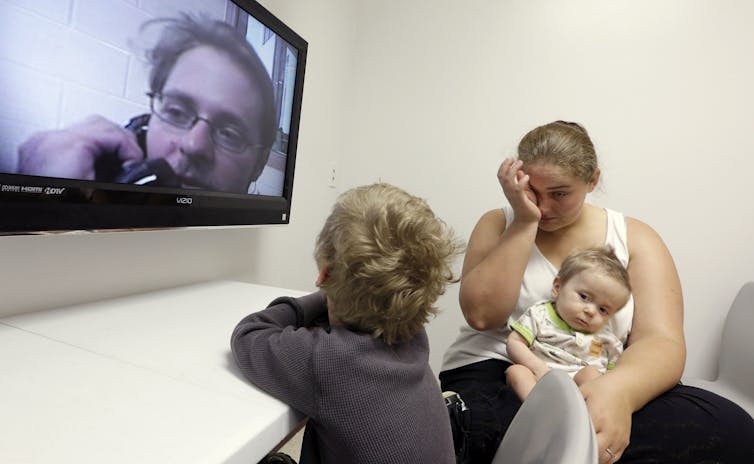
Woman holding baby rubs face and young child speaks to man on TV screen
File photo of a video visit at a county jail in Texas.
AP Photo/David J. Phillip

Barriers to contact

Despite the benefits of visiting and other forms of contact, barriers can prevent communication from occurring regularly or at all.

Some of these barriers are economic. Supporting a loved one in prison or jail can be a major financial strain on family members, and children in families experiencing more economic hardship are less likely to visit their incarcerated parents.

Some prisons charge exorbitant fees for video and phone calls. The Prison Policy Initiative tracks the prices of phone calls from prisons in each state. In 2021, the average cost of a 15-minute in-state phone call from a Pennsylvania prison was more than $3.

The racial disparities in who is incarcerated mean that Black and Latino families disproportionately carry the financial load of incarceration-related expenses.

Other barriers involve distance that families live from the prison or jail, time and scheduling conflicts, and strict mail policies that allow incarcerated people to receive only postcards or scanned copies of their mail. Strained relationships between incarcerated parents and family members can further limit contact.

Keeping families connected

Transportation programs offered by the Pennsylvania Prison Society, an advocacy organization for people who are incarcerated and their families, and other groups can help when family finances are tight. PPS currently provides rides from Philadelphia to four state correctional institutions. A round-trip bus ticket, which is usually $20, is free for children under 18.

In addition, some jails and prisons offer a limited number of free video visits or phone calls. The Pennsylvania Department of Corrections’ website indicates that incarcerated individuals can receive up to four in-person visits per month in addition to six no-cost video visits.

Other organizations are trying to make sure that children and other family members have a chance to stay connected to their incarcerated loved ones in positive ways. Earlier this year, nonprofit legal advocacy organizations helped children in two Michigan counties file landmark civil rights lawsuits that asserted a constitutional right to visit their parents in jail.

As an expert witness in these cases, I hope that they help more children get the “right to hug” their incarcerated parents and raise awareness of the positive impacts that visits play in the current and future well-being of incarcerated individuals and their families.

The Conversation

Julie Poehlmann receives funding from the National Institutes of Health; the content of this article is solely the responsibility of the author and does not necessarily represent the official views of the National Institutes of Health. Dr. Poehlmann is also currently serving as an expert witness in several legal cases that involve incarcerated parents and their children.

ref. 65,000 Pennsylvania kids have a parent in prison or jail − here’s what research says about the value of in-person visits – https://theconversation.com/65-000-pennsylvania-kids-have-a-parent-in-prison-or-jail-heres-what-research-says-about-the-value-of-in-person-visits-262185

From intention to impact: 3 ways men in leadership can build equitable workplaces that work for everyone

Source: The Conversation – USA (2) – By Lisa Kaplowitz, Associate Professor & Executive Director, Center for Women in Business, Rutgers University

Many top-performing companies say they are committed to supporting women in the workplace, and there’s reason to believe most men want to be better allies to women as well. They just don’t know how.

We are business professors who recently surveyed more than 400 managers about gender equity. We found that while men and women agree on what gender equity means in principle, they often disagree on what it takes to achieve it. Bridging that gap matters – without it, well-meaning leaders may take actions that do nothing or even backfire.

For our analysis, we interviewed 227 male managers and 209 female managers. When we asked them to name three words they associated with gender equity, they responded with remarkably similar answers.

Word clouds show that both men and women associate the word 'fair' with gender equity.
The top three words men and women associate with gender equity, in green and purple, respectively.
Source: Rutgers Center for Women in Business (CWIB)

But when it came to naming specific actions, clear differences emerged. Male managers were more than twice as likely as their female counterparts to think gender equity requires “extreme” sacrifice. What’s more, men were less likely than women to connect everyday workplace behaviors – such as challenging misogynistic behavior, taking paternity leave and offering a flexible work environment – with advancing equity.

This suggests a problem: If men and women envision the path to equity differently, progress will stall. That’s why it’s important to remember that gender equity isn’t a zero-sum game. Great leadership means building equity into daily practices to create a workplace that works for everyone. Research points to three practical moves leaders can make right now.

Speak up without speaking over

One of the biggest perception gaps has to do with challenging misogynistic behavior at work. Research shows that when men call out bad behavior, it benefits women’s well-being and reduces the likelihood of future incidents.

However, men often weigh the potential social costs before speaking up, which can lead them to not engage or to reinforce gender stereotypes. For example, they may worry about alienating other men or being seen as “too judgmental.”

Clear, shared workplace standards can help. Setting explicit expectations about respectful communication can reduce uncertainty and encourage collaboration. It can also relieve the hidden cognitive burden men may feel about saying the wrong thing. It’s important to avoid creating a “gotcha” mentality and instead use mistakes as growth opportunities.

Establishing team norms that include speaking from one’s own experience and beginning with inquiry instead of scrutiny can help encourage fruitful dialogue. Reminding employees of shared values and encouraging everyone to seek to understand before jumping to conclusions is helpful. When managers hear out employee hesitations and verbally reward inclusive behavior, norms are reinforced.

This is especially important in a climate where high-profile CEOs are promoting narrow, stereotypical visions of leadership – for example, by calling for more “masculine energy” in corporate settings. Even male allies who disagree might be reluctant to challenge such views. But confronting those norms is crucial – not only for women’s benefit, but also men’s.

That’s because rhetoric that reinforces a single idea of masculinity sets unattainable standards for how men should act in the workplace. It also discourages them from expressing stereotypically “feminine” qualities such as empathy, collaboration and emotional intelligence that are also critical for leaders to succeed. When men speak up, it can broaden the definition of leadership for everyone.

Take paternity leave

Another gap we found had to do with how managers viewed men taking paternity leave. The majority of female managers we surveyed considered it vital to gender equity, but many male managers didn’t see the connection.

The evidence, however, is clear: Ample research suggests that paternity leave creates more gender-inclusive environments. Paternity leave normalizes the role of men in sharing the caregiving responsibilities from the start, which not only enables increased female participation in the workforce but has also been shown to reduce sexist attitudes, result in a more equitable division of labor at home, and may even help to increase women’s wages.

One reason men avoid taking paternity leave is fear of social judgment. Research shows that most Americans support paid leave for both mothers and fathers, but that value doesn’t translate to practice – 76% of fathers return to work one week after the birth of their child. It’s not uncommon for men to approve of paternity leave and want to take it themselves, but to hold back because of what they think other men think. This phenomenon – where you base your actions on what you think others think, not what you actually think – is known as pluralistic ignorance.

Facing pressure to be the breadwinner, fear of career setbacks, and stereotypes that say men aren’t as good at caregiving, lead many men to worry that taking paternity leave may not be seen as “manly.” If men were more open about their desire to take paternity leave, it could create a domino effect, reducing the stigma associated with leave for all parents.

Advocate for flexibility

The same principle applies to flexible work environments, which reduce fatigue and burnout for caregivers and noncaregivers alike. Men and women say that flexible work, which includes both flexible hours and flexible work locations, is a top-three employee benefit and critical to a company’s success.

However, men may be concerned about asking for a more flexible schedule, especially for caregiving, because it violates norms about masculinity and the ideal worker. For instance, men may be hesitant to admit they prefer a 7 a.m. to 3 p.m. schedule to handle school pickups, because they may consider that “a woman’s job” or because they think it will make them seem less committed to their job.

The more everyone uses flexible work practices, the less stigmatized they become for all employees, regardless of gender or caregiving status. Encouraging their use can be as simple as providing models to men of high-status workers who incorporate flexible work practices.

For example, the financial services firm Moody’s has been implementing a “PurposeFirst” approach to flexible work, in which teams decide when in-person collaboration is essential and when remote work is more efficient. If one team needs time for more “heads-up” or collaborative work, then they have set times and office space to make sure that happens. Teams that spend more hours on “heads-down work” may not need the office space but might need more virtual check-ins.

This is crucial, since research has shown that the biggest downside of hybrid or remote work is lost opportunities to connect with colleagues. However, hybrid work was not associated with lower performance or increased work-family conflict. This shows that you can achieve the overarching goals of flexibility without also increasing isolation.

Our findings suggest that men and women often share the same values around gender equity but differ in which actions they prioritize. This gap can leave even well-intended leaders unsure of how to act. That’s why it’s important they know that benefits for women don’t come at men’s expense – they create healthier, more sustainable workforces for everyone.

The Conversation

The authors do not work for, consult, own shares in or receive funding from any company or organization that would benefit from this article, and have disclosed no relevant affiliations beyond their academic appointment.

ref. From intention to impact: 3 ways men in leadership can build equitable workplaces that work for everyone – https://theconversation.com/from-intention-to-impact-3-ways-men-in-leadership-can-build-equitable-workplaces-that-work-for-everyone-263403

No credit history? No problem − new research suggests shopping data works as a proxy for creditworthiness

Source: The Conversation – USA (2) – By Joonhyuk Yang, Assistant Professor of Marketing, Mendoza College of Business, University of Notre Dame

No credit history? That need not be a problem for first-time borrowing. AP Photo/Mark Humphrey

If you didn’t know much about someone, would you lend them a whole lot of money? Probably not – and banks are the same way. That’s why people with no credit history often have trouble getting loans. Banks and credit bureaus look at people’s past borrowing to predict how likely they are to repay. And when there’s no history, they tend to assume the worst.

That invisibility leaves many people in limbo. A young worker applying for her first credit card, a shopkeeper who has always relied on cash, or a recent migrant without local records may all be responsible borrowers. But without a file, lenders typically can’t tell the difference between them and someone at truly high risk of defaulting.

As marketing professors studying consumer finance, we wanted to know: Are there alternative sources of information that can help identify safe borrowers? And in our new study in Peru, we found a potential answer in everyday shopping habits.

By linking loyalty-card data from a large retailer with Peru’s national credit registry, we tested whether retail information – what people buy, when they shop, how they pay – could improve lenders’ ability to distinguish safe first-time applicants from risky ones.

The results were striking. Applicants with no credit history saw approval rates of only 16% when lenders judged them solely by traditional indicators such as income. But adding shopping data almost doubled approvals to 31%, and in some cases tripled them to 48% – with only a modest increase in defaults.

Without this retail data, newcomers look almost identical. But with it, safe borrowers emerge from the crowd. We found that people who bought items on sale, shopped at regular times and used noncash payment methods consistently had lower default risk than those who did not.

Why it matters

The World Bank estimates that about 1.4 billion adults remain unbanked, and billions more struggle to access formal credit because they lack sufficient history. In Peru, for example, less than a quarter of adults reported borrowing from a financial institution in the past year.

That gap matters. Access to credit lets households invest in education, launch businesses, buy homes and weather financial shocks. People who can’t borrow from established lenders may turn to informal lenders who charge punishingly high interest rates. Others simply go without, unable to smooth income swings or seize opportunities to improve their lives.

Our findings point to a practical way forward. Retailers and banks could work together to expand access by using shopping data – with consumer consent – as a second look for applicants who would otherwise be rejected. This extra layer of information doesn’t penalize those who already qualify. Instead, it helps identify safe borrowers among the invisible.

In a previous article, we showed that even a grocery basket could help predict repayment. This new research goes further by drawing on a much broader retail footprint that includes clothing, household goods and more. It also tracks what happens to people after rejection, following them into the national credit registry to see whether they eventually borrowed elsewhere and repaid. (Both studies were done with consumers’ consent and used anonymized data.)

What’s next

Our study relied on simulations of scenarios in which lenders incorporated retail data into their scoring models – so the next step is to test these models in practice. A field experiment could compare retail-based scoring with traditional methods head-to-head, tracking not just approvals and defaults but also the longer-term effects on borrowers. Do first-time borrowers who gain access go on to build healthy credit histories? Do they invest in education, businesses or housing, improving their financial well-being over time?

For lenders, too, there are open questions. How should banks adapt their customer service for people brand-new to credit – for example, by starting with lower limits and raising them gradually? For policymakers, the challenge is to ensure that these new tools expand access without compromising privacy or fairness. Strong guardrails and consumer protections will be critical so that broader credit access leads not just to more loans but to fair and sustainable financial inclusion.

The Research Brief is a short take on interesting academic work.

The Conversation

The authors do not work for, consult, own shares in or receive funding from any company or organization that would benefit from this article, and have disclosed no relevant affiliations beyond their academic appointment.

ref. No credit history? No problem − new research suggests shopping data works as a proxy for creditworthiness – https://theconversation.com/no-credit-history-no-problem-new-research-suggests-shopping-data-works-as-a-proxy-for-creditworthiness-263103

So-called ‘clutch’ athletes might be more hype than nerveless match-winners

Source: The Conversation – Global Perspectives – By Ger Post, Lecturer Neuroscience, PhD student collaborative reasoning, The University of Melbourne

With the AFL finals approaching, discussions about the league’s clutch players – those who excel under pressure – will soon appear in the media and be debated among fans.

Last year, Gold Coast captain Noah Anderson was ranked highest in a list of AFL clutch players, followed by more established names including the Western Bulldogs’ Tom Liberatore and Geelong’s Patrick Dangerfield.

But what does clutch really mean and is it possible for athletes to be “clutch”?

Noah Anderson enhanced his reputation as a so-called clutch player with a match-winning effort against Collingwood.

The power of labels and narratives

While most people struggle when the pressure rises – they may even “choke”, where they lose the ability to perform a skill in front of an audience – clutch players seem to excel in these circumstances.

They thrive when the heat is on and seem to save something special for these moments.

The label of being a clutch player is often shaped by stereotypical narratives of, as some media commentary has put it, “hardened, stubborn men” who will “take themselves to the next level through sheer guts and an iron will”.

In 2018, former Port Adelaide great and outspoken media pundit Kane Cornes earmarked Bulldogs champion Marcus Bontempelli as a clutch player:

The one player who I want with the ball in their hands, when the game is on the line is “The Bont”. For me, Marcus Bontempelli, is right now the best clutch performer in the competition.

More recently, Carlton’s Blake Acres was described as “intense, desperate and completely unwilling to give an inch” in the finals:

Acres was the big moment player, full of desperation, intensity and a relentless attack on the ball.

But are these players really clutch?

Blindspots and biases

These character sketches and rankings of clutch players mask many blind spots and biases in how the data are compiled and interpreted.

For example, the data tend to favour players who generate impact with eye-catching and easily measurable actions (such as Bontempelli, who often brilliantly takes marks and kicks goals) while undervaluing those who do the less glamorous grunt work that helps the rest of the team (such as Liberatore, who plays a more selfless role).

More importantly, the data don’t reflect whether a player actually improves under pressure (the definition of clutch).

In the case of Anderson, is he indeed performing better than others in the final quarters of tight games? Or is he just more talented than others and ranks higher in all quarters of games?

Or maybe he is better in the first three quarters of the game and then declines in the fourth quarter – yet he is he still better than the rest?

We don’t know solely from assessing his performances in final quarters.

Studies from other team sports including basketball, soccer and baseball cannot definitely prove players excel under pressure.

No one saves something special for when it’s needed most.

It seems more likely that clutch performances simply stick in our memories: game-deciding moments are more memorable than efforts that fail to seal victory.

There could be other reasons, too.

The power of opportunity

Statistics from many sports show even if athletes are involved in more goals or baskets when the game is on the line, it doesn’t necessarily mean they excel in these moments.

When late-game performances by basketball legends including LeBron James and Kobe Bryant were analysed, another option surfaced: clutch performers seem to be doing more instead of better in the last minutes of tight games.

Their scoring accuracy doesn’t improve in these moments (they miss, on average, just as much as most players) but they do get more scoring opportunities.

These opportunities are created by many involved, not in the least the teammates who pass the ball to the clutch player.

These teammates often follow the instructions from their coaches to get the clutch player in scoring position in the dying seconds.

Opponents can, unintentionally, assist by making more fouls on clutch players when the heat is on, giving them more free throws to seal the victory.

Finally, there are fans and pundits who label these players as the ones who should decide the game.

So to get more opportunities to decide a match, an athlete needs to build a reputation that they will take themselves “to the next level” when it matters most. Tattooing “CHOSEN1” on your back might help build these reputations, as LeBron James did.

Even better is when others talk about your confidence, hunger for victories, or hardened, stubborn competitiveness. This signals to fans, teammates and coaches that you are the one who should be getting the ball to decide the game.

More opportunities means more game-winning shots, which reinforces the idea you are a clutch player.

Being listed as one of the most clutch players of the competition might be the best assist an athlete can get to decide a final.

The Conversation

Ger Post does not work for, consult, own shares in or receive funding from any company or organisation that would benefit from this article, and has disclosed no relevant affiliations beyond their academic appointment.

ref. So-called ‘clutch’ athletes might be more hype than nerveless match-winners – https://theconversation.com/so-called-clutch-athletes-might-be-more-hype-than-nerveless-match-winners-263111

Not all processed foods are bad for you. Here’s what you can tell from reading the label

Source: The Conversation – Global Perspectives – By Clare Collins, Laureate Professor in Nutrition and Dietetics, University of Newcastle

If you follow wellness content on social media or in the news, you’ve probably heard that processed food is not just unhealthy, but can cause serious harm.

Eating a diet dominated by highly processed foods means you’re likely to consume more kilojoules than you need, and greater amounts of salt, sugar – as well as food additives.

But not all processed foods are equal, nor bad for you. Here’s what to look out for on food labels if you want to buy processed, but convenient, foods.

What do the processing categories mean?

Researchers use the Nova processed food classification system to group foods into four processing levels.

Group 1: Unprocessed or minimally processed foods are either in their natural state or have minimal processing. They’re basic foods you could eat straight away, such as vegetables and fruit, or foods that only need minimal processing to make them safe and palatable, such as eggs, meat, poultry, fish, oats, other grains, plain pasta, legumes, milk, plain yoghurt, ground herbs and spices, or nuts with shells.

Group 2: Processed culinary ingredients are derived from group 1. These are used in cooking to enhance flavour and texture, and include oils, sugar and honey.

Group 3: Processed foods are treated using traditional processing methods such as canning, bottling, fermenting, or salting to extend shelf life. These include canned fruits, tomato paste, cheese, salted fish, and breads with minimal ingredients. You could make these foods in a home kitchen.

Group 4: Ultra-processed foods are industrially produced with ingredients and additives not normally found in home kitchens, and have little, if any, group 1 items left intact. These foods are engineered to be hyper-palatable, meaning you can’t stop eating them, and have long shelf lives. Products include factory-made biscuits, snack foods, instant meals, frozen desserts, preserved meats, instant noodles, margarine, some breakfast cereals and sugar-sweetened drinks.

However, group 4 products vary greatly in their nutritional quality and the number and type of food additives used to manufacture them.

What’s the concern about eating lots of ultra-processed foods?

About 42% of Australians’ total energy intake comes from ultra-processed foods. These are relatively cheap and are energy-dense, but nutrient-poor. This means they can contain a lot of kilojules, salt and added sugars but are poor sources of nutrients the body needs such as vitamins, minerals and dietary fibre.

Studies have linked higher intakes of ultra-processed foods with poorer diet quality and worse health outcomes. A review of 122 observational studies found people with the highest intakes (compared with the lowest) were about 25% more likely to have had a decline in kidney function. They were 20% more likely to be overweight, or have obesity or diabetes, and were 40% more likely to have common mental health conditions such as depression.

However, a recent review highlighted that the health impact of these foods and drinks varies depending on their category. Products such as sugar-sweetened drinks can negatively affect health, while others – such as cereals with added vitamins and minerals and some dairy products – can be neutral or even protective.

Some level of food processing can improve food safety, extend shelf life and reduce food waste. This is likely to include the use of additives, such as emulsifiers, flavour enhancers, preservatives, food acids, colours and raising agents. Additives need to be approved by Food Standards Australia and New Zealand (FSANZ) after a safety assessment, with the lowest amount added to achieve the specific purpose in the food product.

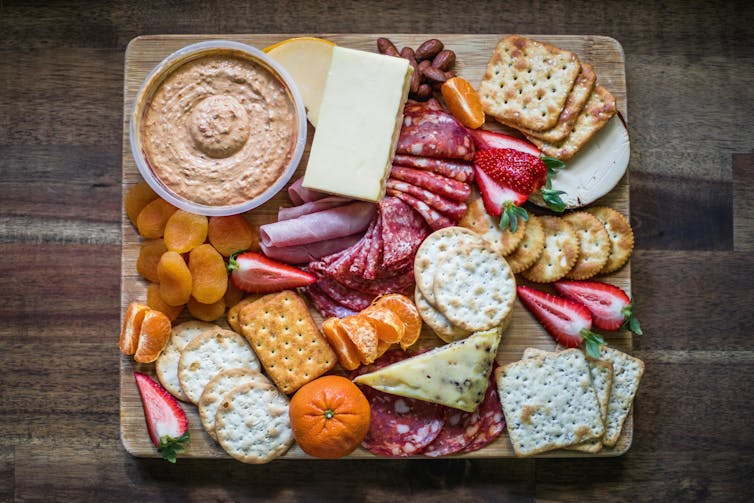
A cheese board
Processed foods have different health risks and benefits.
Kyle Roxas/Getty Images

However, some adults and children eat a lot of ultra-processed foods. This means they have high intakes of food additives, in terms of total amount and different types.

Researchers have raised concerns about a potential link between high intakes and increased risks of some health conditions, ranging from mental health disorders to heart disease and metabolic disorders such as diabetes. The researchers called for transparent use of evidence to ensure public health messaging is kept up to date.

An observational study in more than 100,000 French adults also raised concerns about potential “cocktail” effects of food additive combinations. Although more research is needed, they found some additive combinations were associated with a higher risk for developing type 2 diabetes.

Finally, a recent review highlighted the potential for additives, particularly emulsifiers, to damage the gut lining and alter the balance of healthy versus unhealthy gut microbes. This could potentially increase the risk of developing inflammatory bowel conditions.

What processed foods should you choose?

It depends on how they’re made, the additives used, how often you eat them, and how much you have.

When choosing processed foods:

  1. Read the ingredient list on the food label. It tells you a lot about the level of processing and additives used. Look for products that contain minimal to no additives, and ingredients that could be found in a home kitchen. Note that additives could be listed by name or number.

  2. If there are a number of products in the same category, choose the one with more Health Stars as it will contain less salt, saturated fat and added sugars, compared to products with fewer Health Stars.

  3. Think about how often you eat the product. If you do eat it weekly or more often, spend more time comparing products before making a final choice.

While you might expect all Nova 3 processed foods to be healthier than Nova group 4 (ultra-processed), this isn’t always the case. Nova group 3 items don’t necessarily meet the nutrient criteria that deems them “healthy”. They could still contain excessive amounts of added salt, saturated fat or sugars.

For help to review the level of processing alongside the nutrient criteria, consider using an app such as Open Food Facts. This assigns food products a Nova group score, a nutrition score, and another to rate its impact on the environment.


Read more:
Ultra-processed foods might not be the real villain in our diets – here’s what our research found


The Conversation

Clare Collins AO is a Laureate Professor in Nutrition and Dietetics at the University of Newcastle, NSW and a Hunter Medical Research Institute (HMRI) affiliated researcher. She is a National Health and Medical Research Council (NHMRC) Leadership Fellow and has received research grants from NHMRC, ARC, MRFF, HMRI, Diabetes Australia, Heart Foundation, Bill and Melinda Gates Foundation, nib foundation, Rijk Zwaan Australia, WA Dept. Health, Meat and Livestock Australia, and Greater Charitable Foundation. She has consulted to SHINE Australia, Novo Nordisk, Quality Bakers, the Sax Institute, Dietitians Australia and the ABC. She was a team member conducting systematic reviews to inform the 2013 Australian Dietary Guidelines update, the Heart Foundation evidence reviews on meat and dietary patterns and was Co-Chair of the Guidelines Development Advisory Committee for Clinical Practice Guidelines for Treatment of Obesity 2025.

ref. Not all processed foods are bad for you. Here’s what you can tell from reading the label – https://theconversation.com/not-all-processed-foods-are-bad-for-you-heres-what-you-can-tell-from-reading-the-label-260818

What are ShinyHunters, the hackers that attacked Google? Should we all be worried?

Source: The Conversation – Global Perspectives – By Jennifer Medbury, Lecturer in Intelligence and Security, Edith Cowan University

Cyber crime group ShinyHunters has received global attention after Google urged 2.5 billion users to tighten their security following a data breach via Salesforce, a customer management platform.

Unlike data breaches where hackers directly break into databases holding valuable information, ShinyHunters – and several other groups – have recently targeted major companies through voice-based social engineering (also known as “vishing”, short for voice phishing).

Social engineering is when a person is tricked or manipulated into providing information or performing actions that they wouldn’t normally do.

In this case, to get access to protected systems, a criminal would pose as a member of the target company’s IT helpdesk and convince an employee to share passwords and/or multi-factor authentication codes. Although vishing is not a new tactic, the use of deepfakes and generative artificial intelligence to clone voices is making this type of social engineering harder to detect.

Just this year, companies such as Qantas, Pandora, Adidas, Chanel, Tiffany & Co. and Cisco have all been targeted using similar tactics, with millions of users affected.

Who, or what, are ShinyHunters?

ShinyHunters first emerged in 2020 and claims to have successfully attacked 91 victims so far. The group is primarily after money, but has also been willing to cause reputational damage to their victims. In 2021, ShinyHunters announced they were selling data stolen from 73 million AT&T customers.

ShinyHunters has previously targeted companies through vulnerabilities within cloud applications and website databases. By targeting customer management providers such as Salesforce, cyber criminals can gain access to rich data sets from multiple clients in one attack.

The use of social engineering techniques is considered a relatively new tactic for ShinyHunters. This change in approach has been attributed to their links with other similar groups.

In mid-August, ShinyHunters posted on Telegram they have been working with known threat actors Scattered Spider and Lapsus$ to target companies such as Salesforce and Allianz Life. The channel was taken down by Telegram within days of being launched. The group publicly released Allianz Life’s Salesforce data, which included 2.8 million data records relating to individual customers and corporate partners.

Scattered Lapsus$ Hunters, the newly rebranded group, recently advertised they had started providing ransomware as a service. This means they will launch ransomware attacks on behalf of other groups willing to pay them.

They claim their service is better than what’s being offered by other cyber crime groups such as LockBit and Dragonforce. Rather than negotiating directly with victims, the group often publishes public extortion messages.

Who are all these cyber criminals? There’s likely a significant overlap of membership between ShinyHunters, Scattered Spider and Lapsus$. All these groups are international, with members operating on the dark web from various parts of the world.

Adding to the confusion, each group is known by multiple names. For example, Scattered Spider has been known as UNC3944, Scatter Swine, Oktapus, Octo Tempest, Storm-0875 and Muddled Libra.

How can we protect ourselves from vishing?

As everyday users and customers of large tech companies, there’s little we can do in the face of organised cyber crime groups. Keeping yourself personally safe from scams means staying constantly vigilant.

Social engineering tactics can be highly effective because they prey on human emotions and the desire to trust and to be helpful.

But companies can also be proactive about reducing the risk of being targeted by vishing tactics.

Organisations can build awareness of these tactics and build scenario-based training into employee education programs. They can also use additional verification methods, such as on-camera checks where an employee shows a corporate badge or government-issued ID, or by asking questions that cannot easily be answered with information found online.

Finally, organisations can strengthen security by using authenticator apps that require phishing-resistant multi-factor authentication such as number matching or geo-verification. Number matching requires a person to enter numbers from the identity platform into the authenticator app to
approve the authentication request. Geo-verification uses a person’s physical location as an additional authentication factor.

The Conversation

Jennifer Medbury does not work for, consult, own shares in or receive funding from any company or organisation that would benefit from this article, and has disclosed no relevant affiliations beyond their academic appointment.

ref. What are ShinyHunters, the hackers that attacked Google? Should we all be worried? – https://theconversation.com/what-are-shinyhunters-the-hackers-that-attacked-google-should-we-all-be-worried-264271

What happens if I eat too much protein?

Source: The Conversation – Global Perspectives – By Margaret Murray, Senior Lecturer, Nutrition, Swinburne University of Technology

lakshmiprasad S/Getty Images

The hype around protein intake doesn’t seem to be going away.

Social media is full of people urging you to eat more protein, including via supplements such as protein shakes. Food companies have also started highlighting protein content on food packages to promote sales.

But is all the extra protein giving us any benefit – and can you have too much protein?

Protein’s important – but many eat more than they need

Eating enough protein is important. It helps form muscle tissue, enzymes and hormones and it plays a role in immune function. It can also give you energy.

Australia’s healthy eating guidelines, penned by experts and backed by government, recommend we get 15–25% of our daily energy needs from protein.

The recommended daily intake of protein for adults is 0.84 grams per kilogram of body weight for men and 0.75 grams per kilogram of body weight for women

This is about 76 grams per day for a 90 kilogram man or 53 grams per day for a 70 kilogram woman. (It’s a bit more if you’re over 70 or a child, though).

Most Australian adults are already eating plenty of protein.

Even so, many people still go out of their way to add even more protein to their diet.

For people working to increase muscle mass through resistance training, such as lifting weights, a protein intake up to 1.6 grams per kilogram of body weight per day (that’s 144 grams a day for a 90 kilogram person) can help with increasing muscle strength and size.

But research shows there is no additional muscle gain benefit from eating any more than that.

For most of us, there’s no benefit in consuming protein above the recommended level.

In fact, having too much protein can cause problems.

A family eats prawns and poultry at dinner.
For most of us, there’s no benefit in consuming protein above the recommended level.
Photo by Angela Roma/Pexels

What happens when I eat too much protein?

Excess protein is not all simply excreted from the body in urine or faeces. It stays in the body and has various effects.

Protein is a source of energy, so eating more protein means taking in more energy.

When we consume more energy than we need, our body converts any excess into fatty tissue for storage.

There are some health conditions where excess protein intake should be avoided. For example, people with chronic kidney disease should closely monitor their protein intake, under the supervision of a dietitian, to avoid damage to the kidneys.

There is also a condition called protein poisoning, which is where you eat too many proteins without getting enough fats, carbohydrates and other nutrients.

It’s also known as “rabbit starvation”, a term often linked to early 20th century explorer Vilhjalmur Stefansson, in reference to the fact that those who subsisted on a diet of mainly rabbits (which are famously lean) quickly fell dangerously ill.

Where you get your protein from matters

We can get protein in our diets from plant sources (such as beans, lentils, wholegrains) and animal sources (such as eggs, dairy, meat or fish).

A high intake of protein from animal sources has been associated with an increased risk of premature death among older Australians (especially death from cancer).

High animal protein intake is also associated with increased risk of type 2 diabetes.

On the other hand, consuming more plant sources of protein is associated with:

Many animal sources of protein are also relatively high in fat, particularly saturated fat.

A high intake of saturated fat contributes to increased risk of chronic diseases such as heart disease. Many Australians already eat more saturated fat than we need.

Many plant sources of protein, however, are also sources of dietary fibre, which most Australians don’t get enough of.

Having more dietary fibre helps reduce the risk of chronic diseases (such as heart disease) and supports gut health.

Striking a balance

Overall, where you get protein from – and having a balance between animal and plant sources – is more important than simply just trying to add ever more protein to your diet.

Protein, fats and carbohydrates all work together to keep your body healthy and the engine running smoothly.

We need all of these macro nutrients, along with vitamins and minerals, in the right proportions to support our health.

The Conversation

Margaret Murray does not work for, consult, own shares in or receive funding from any company or organisation that would benefit from this article, and has disclosed no relevant affiliations beyond their academic appointment.

ref. What happens if I eat too much protein? – https://theconversation.com/what-happens-if-i-eat-too-much-protein-261849

Russia’s GPS interference: do I need to worry when flying?

Source: The Conversation – Global Perspectives – By Lucia McCallum, Senior Scientist in Geodesy, University of Tasmania

Gints Ivuskans / AFP via Getty Images

On Sunday, a plane carrying European Union chief Ursula von der Leyen was reportedly forced to land in Bulgaria using paper maps after its GPS navigation systems were jammed. Bulgarian authorities claim the jamming was deliberate Russian interference, though a Kremlin spokesperson told the Financial Times this was “incorrect”.

GPS interference is on the rise, so you might be wondering how it works. And can anything be done about it? And – perhaps most importantly – do you need to worry?

How does GPS jamming work?

The Global Positioning System (GPS) and other satellite navigation systems use radio signals from satellites to calculate position. To determine position, a GPS needs a direct line of sight to at least four satellites.

There are two ways to disrupt satellite navigation.

The first is jamming. This works by simply broadcasting high-intensity radio noise in the same frequency band used by the navigation satellites.

Jamming drowns out the satellite signal, like a person shouting loudly in your ear stops you hearing what someone is saying on the other side of the room. This appears to be what happened in Bulgaria.

The second way to interfere with satellite navigation is called spoofing, and it’s a little more elegant. Spoofing involves sending radio signals that pretend to be coming from the navigation satellites.

Where jamming stops the satellite navigation system from producing any location, spoofing tricks it into giving a false location – with potentially catastrophic results.

Are jamming and spoofing becoming more common?

Jamming and spoofing do appear to be growing more common, especially in conflict zones in the Middle East and Eastern Europe.

A clandestine Russian base near the Polish border is reportedly responsible for satnav interference in the Baltic region.

Ships in the Red Sea report frequent interference, likely from Houthi rebels in Yemen.

These increasingly common incidents highlight how vulnerable our reliance on satellite navigation makes us.

What can be done about interference?

The best response to interference is to have backup navigation options in place. The US-run GPS is the best known and most commonly used satellite navigation system, but there are others.

The EU runs a parallel system called Galileo, while Russia has one called GLONASS and China operates its own BeiDou satellites.

Each of these systems operates using slightly different radio frequencies. Some navigation systems can tune in to more than one set of satellites – so even if one is jammed, others may be available.

Galileo also has a “safety of life” feature, which allows users to detect spoofing. Australia’s in-development SouthPAN system will also offer a similar feature.

Another common feature of navigation systems is inertial sensing. This relies on sensors such as gyroscopes and barometers to directly detect movement and calculate position.

Most car navigation systems use inertial sensors to track location in cities or tunnels where there is no direct line of sight to satellites. Inertial sensing works well for short periods of time, but quickly becomes inaccurate and needs to be recalibrated by checking in with satellite systems.

Many researchers around the world are trying to develop new alternatives to satellite navigation using extremely precise sensors. One recent development uses tiny fluctuations in Earth’s magnetic field to detect position, for example.


Read more:
Quantum navigation could transform how we travel. So what is it, and how does it work?


Should you be worried about flying?

Everyday air passengers have no need to worry about jamming or spoofing. For one thing, it’s very rare – especially outside conflict zones.

For another, the aviation industry is highly regulated and extremely safe. Even where satellite navigation doesn’t work, there are backup options.

What all of us can take away from this latest incident is how dependent we have become on satellite navigation. What matters is that we have a diverse range of systems so we are not dependent on just one.

The Conversation

Lucia McCallum does not work for, consult, own shares in or receive funding from any company or organisation that would benefit from this article, and has disclosed no relevant affiliations beyond their academic appointment.

ref. Russia’s GPS interference: do I need to worry when flying? – https://theconversation.com/russias-gps-interference-do-i-need-to-worry-when-flying-264334