Sustainable fuels could reduce the climate impact of military aircraft

Source: The Conversation – UK – By Elna Heimdal Nilsson, Professor of Aeronautical Sciences, Department of Aviation and Aeronautical Sciences, Lund University

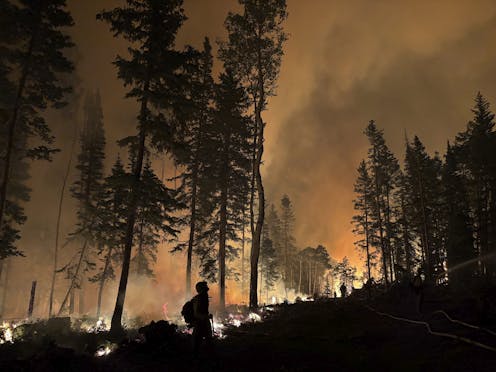
Staff Sgt. Madelyn Brown

Military aircraft – from fighter jets to transport planes – are playing a significant role in today’s unstable world. Cumulatively, the operations carried out by these fleets, from combat missions to training flights, consume large amounts of fossil fuel.

Nevertheless, military aviation is rarely included in national climate inventories. In addition to greenhouse gases, aviation also emits other pollutants such as soot and particles, which affect both climate and air quality, and have detrimental effects on human health and ecosystems.

Recently, the UK government announced that it would purchase 12 F-35A fighter aircraft, some of which will be used to reduce a backlog in pilot training. The F-35A is the standard variant of the F-35 fighter jet.

While the decision is primarily motivated by defence and alliance commitments, it also has environmental implications. Expanding training activities will increase the number of flight hours, and consequently, fuel use and emissions. Fighter jets consume large quantities of fuel per flight hour.

The combustion process in aircraft engines releases carbon dioxide (CO₂), but the impact on the climate and environment extends further: emissions of soot particles, nitrogen oxide compounds, water vapour and sulphuric compounds influence atmospheric chemistry and cloud formation.

The persistent contrails and the cirrus clouds they generate are estimated to cause an impact on the climate comparable in magnitude to the warming effect of CO₂ from commercial aviation.

Any assessment of mitigation options must therefore consider both CO₂ and non-CO₂ effects arising from aircraft engine combustion. To mitigate aviation-related climate effects, the civil aviation sector has been promoting the development of sustainable aviation fuels (SAF).

When produced from waste oils or residues, hydroprocessed esters and fatty acids (Hefa) fuels – which are forms of sustainable aviation fuel – typically achieve 50–70% lower life-cycle CO₂ emissions compared with fossil-based jet fuel. Synthetic aviation fuels known as advanced power-to-liquid (PtL) e-fuels, produced using renewable electricity, could reduce emissions by more than 80%, though they are not yet available at scale.

Wars and climate change are inextricably linked. Climate change can increase the likelihood of violent conflict by intensifying resource scarcity and displacement, while conflict itself accelerates environmental damage. This article is part of a series, War on climate, which explores the relationship between climate issues and global conflicts.

In addition to a lower carbon footprint compared to fossil fuels, SAFs have
also been shown to produce fewer soot particles during combustion, reducing the likelihood and severity of contrails and cirrus clouds.

For technical reasons, down to the specific molecular composition SAF compared to fossil based jet fuel, commercial SAFs are currently not certified as standalone fuels. However, they are available for blends of up to 50% along with fossil-based jet fuels.

The quality of the sustainable fuels is very high and there is no technical barrier to their use in military aviation. The question is: to what extent can the climate and environmental impact of military aviation operations be reduced if sustainable aviation fuels are introduced?

Sustainable fuel and the F-35

Let’s take the example of the F-35, which was the aircraft purchased recently by the UK government. Under certain conditions, the F-35 can burn five tonnes of jet fuel in a single sortie lasting an hour. For comparison, a diesel car like the Volvo V70 would, in its whole lifespan, burn an amount of fuel corresponding to just four hours of combat manoeuvring with the F-35.

Technically, the F-35 is already approved to operate on blends of conventional kerosene and certified synthetic fuels. Similar to civil aviation standards, military standards allow for blending ratios of up to 50%, depending on the production pathway.

No modifications to engines or fuel systems are required. F-35 flights that used commercially available fuel with 40% SAF were carried out by the Norwegian Air Force in early 2025.

There are no significant technical barriers to the new F-35A aircraft entering UK service to operate on commercially available SAF blends with up to 50% renewable fuel. Compatibility is not the limiting factor, but, unfortunately, the availability and cost of fuel are.

For military training flights, which may involve large numbers of sorties, SAF can therefore provide significant reductions in life-cycle greenhouse gas emissions. A 50% blend of Hefa, for instance, could cut average CO₂ emissions per flight by around one third.

Since contrails can account for a large fraction of aviation’s total climate impact, this effect is potentially important. The strategic allocation of SAF to flights that are most likely to generate persistent contrails, like training missions at high altitude in humid conditions, could amplify the climate benefit of limited SAF supplies.

The UK’s acquisition of additional F-35A aircraft will help address a backlog in pilot training, but it will also increase emissions. From both a climate and national security perspective, SAFs represent the most practical near-term mitigation option.

The F-35 is technically compatible with sustainable aviation fuels – and substantial life-cycle emission reductions are achievable this way. Additional benefits may come from reduced contrail formation. However, limitations in global SAF production and their higher costs restrict the extent to which these fuels can currently be deployed.

SAFs will not make military aviation climate neutral, but they could substantially reduce its environmental footprint at a time when both security and sustainability are pressing concerns.

The Conversation

Elna Heimdal Nilsson does not work for, consult, own shares in or receive funding from any company or organisation that would benefit from this article, and has disclosed no relevant affiliations beyond their academic appointment.

ref. Sustainable fuels could reduce the climate impact of military aircraft – https://theconversation.com/sustainable-fuels-could-reduce-the-climate-impact-of-military-aircraft-264792


What we’ve learned about narcissism over the past 30 years

Source: The Conversation – UK – By Sarah A. Walker, Assistant Professor of Educational Psychology, Durham University

Nicoleta Ionescu/Shutterstock

You’ve probably seen the word “narcissist” thrown around online in headlines, on dating apps or in therapy-themed TikToks. But the label that people often unthinkingly slap on toxic bosses or reality TV villains hides a much more complicated psychological picture.

Psychologists have studied narcissism for many years, but over time, our understanding has evolved. One of the biggest changes is that today, narcissism is no longer seen as just grandiosity, arrogance or egotism.

Early scientific descriptions of narcissism focused on dominance, ambition and self-importance, all of which are traits associated with traditional masculine stereotypes. That meant narcissistic tendencies in women were often misread or overlooked. When those traits show up as emotional sensitivity, insecurity or relational manipulation, they sometimes still are misdiagnosed as anxiety, mood disorders or borderline personality disorder traits.

The most extreme and persistent forms of narcissism can sometimes be diagnosed as narcissistic personality disorder. This condition was added to the Diagnostic and Statistical Manual of Mental Disorders, the American Psychiatric Association’s diagnostic manual, in 1980. But most people with narcissistic tendencies won’t meet the threshold for a diagnosis.

So what does the research actually say?

Narcissism in general is now understood as a complex set of personality characteristics that can show up in different ways.

Psychologists had long suspected that there might be different kinds of narcissism, but it wasn’t until 1991 – when researcher Paul Wink and his colleagues presented a model including grandiose and vulnerable subtypes – that they were more formally recognised. Although there are other models, this remains one of the more popular approaches to understanding narcissistic tendencies in the wider population.

A 2021 review by US psychologist Joshua Miller and his colleagues pulled together decades of research to offer one of the most authoritative summaries of how psychologists now understand narcissism. It explains that narcissism has a common foundation, which includes things such as self-importance and entitlement. It then branches into different forms of narcissism, such as grandiosity, antagonism and vulnerability.

Researchers now often use the terms grandiose and vulnerable to describe two major forms of narcissism. One person with narcissistic traits may be bold with high levels of grandiose traits, confidence and emotional resilience. Another might be defensive, anxious and hypersensitive to criticism. Both show signs of narcissistic self-focus, but they end up looking quite different in how they experience and express emotion.

In a 2022 research paper I wrote with colleagues, we carried out the first meta-analysis examining how narcissistic traits relate to the ability to control one’s emotions. The results showed that vulnerable narcissism is consistently associated with greater emotional difficulty, which means these people might find it harder to keep their emotions in check.

In particular, people with high scores on vulnerable narcissism scales are more likely to rely on suppression. Suppression is a strategy that people use to hide or inhibit their emotional expressions, and has been linked to poorer wellbeing. On the surface, suppression might sound like self-control.

In some situations, it can be. For example, keeping a lid on your emotions when your boss is yelling at you. But trying to mute emotional expression without addressing the underlying emotions increases stress when it becomes our default strategy. It can worsen mental and physical health over time.

Montage of man against purple background with celebratory symbols.
Narcissism isn’t always this overt.
Roman Samborskyi/Shutterstock

In contrast, grandiose narcissism wasn’t linked with emotion regulation difficulties. In fact, several of the studies included in our analysis suggest that people with higher levels of grandiose traits may not experience as much emotional distress in the first place. This challenges the popular idea among researchers that people who exhibit narcissistic tendencies are also experiencing emotional instability.

Emotional intelligence and self-perception

The differences between forms of narcissism show up in emotional intelligence research as well. In a 2021 systematic review on narcissism and emotional intelligence, my colleagues and I found that people with grandiose traits often said they were good at understanding and managing emotions. For instance, how well they think they can handle anger or recognise other’s emotions.

But when their skills were tested using emotion tasks (such as recognising facial expressions or identifying the best way to respond to an emotional situation), their performance didn’t always match up with how skilled they said they were. This is consistent with a 2018 study which also found that people with grandiose tendencies rated themselves as emotionally skilled but performed worse on skill-based emotional intelligence tasks compared to other participants.

In contrast, people with vulnerable narcissistic traits tend to rate themselves lower in emotional intelligence, and seem to genuinely struggle more with managing emotions in everyday life.

So what should we make of all this?

It’s time to move beyond the pop-psych trend of labelling difficult people as narcissists. Narcissism isn’t about taking too many selfies. And no, the partner who ghosted you or the colleague who dominates meetings isn’t necessarily high in narcissistic traits either – no matter how much we might like to complain about them over coffee.

These kinds of casual diagnoses aren’t just unhelpful, they’re often wrong.

Narcissism is a complex psychological pattern that can show up in different ways and can reflect a deeper struggle with things such as self-esteem, emotion regulation and social connection. Understanding this doesn’t excuse people’s bad behaviour – not at all. But it does help us look past the stereotypes to get a clearer picture of what narcissistic traits look like in everyday life.

The Conversation

Sarah A. Walker does not work for, consult, own shares in or receive funding from any company or organisation that would benefit from this article, and has disclosed no relevant affiliations beyond their academic appointment.

ref. What we’ve learned about narcissism over the past 30 years – https://theconversation.com/what-weve-learned-about-narcissism-over-the-past-30-years-258505

What we learned about North Korea at the summit in Beijing

Source: The Conversation – UK – By Jim Hoare, Honorary Research Associate in the Centre of Korean Studies, SOAS, University of London

China invited world leaders to its capital, Beijing, recently to celebrate the 85th anniversary of Japan’s surrender in the second world war. Western leaders were notably absent. But despite the presence of many other leaders, such as Russian president Vladimir Putin, it was the arrival of North Korea’s Kim Jong-un that seemed to attract most international media attention.

This was Kim’s fifth visit to China since he assumed power in 2011 – the last was in 2019 before the COVID pandemic. And it was the first time he had attended a multilateral international meeting.

Kim travelled to Beijing by train – an armoured train at that. Although he does not seem to have the fear of flying his father had, it is not the first time Kim has used a train to travel overseas. In 2019, he went to Hanoi in Vietnam – a much longer journey – to meet US president Donald Trump the same way.

The train allows for a large entourage and provides an opportunity to prepare for meetings. It may also be more secure than the country’s aircraft after some years of no or little use due to the pandemic and the effective sealing off of North Korea from most of the rest of the world.

Aside from the travel preferences of its leadership, here are three things we learned about North Korea from the summit in Beijing.

1. There is no obvious succession plan

Kim was accompanied not by his wife, Ri Sol-ju, who was with him on at least one previous visit to China. Nor did he travel with his sister, Kim Yo Jong, who has been seen by many as a power in her own right. He arrived in Beijing with his daughter, Kim Ju Ae, who is believed to be about 13.

She first appeared in public in 2022, joining the North Korean leader at an inspection of a major intercontinental ballistic missile launch. Kim Ju Ae has been seen with her father, and occasionally her mother, on several subsequent occasions. This has led to speculation that she is being groomed to be Kim’s successor.

However, she made no appearances with her father after arriving in Beijing. This may have been a learning trip rather than an indication that she has been selected to succeed her father.

Before 2022, there was similar speculation about Kim Yo Jong, who was noted for hostile statements on relations with South Korea. While she has not disappeared from the scene, Kim Yo Jong is not shown the same level of deference as her niece.

If Kim is preparing a successor, he is departing from the approach of his grandfather and first North Korean supreme leader, Kim Il-sung, as well as his father, Kim Jong-il. Kim Jong-il did not make public appearances until he was in his 30s. He was not identified as the successor until later.

Only after he suffered a stroke in 2008 did Kim Jong-il select Kim Jong-un, aged 24, as his successor. To select a child – and a female at that – seems fraught with difficulties. Korean society, north and south, still tends to attach a high value to age and experience. And despite formal equality in both countries, there is a strong belief in male superiority.

2. It can rely on strong regional support

More significant than the presence of his daughter was the reception given to Kim Jong-un in Beijing. He was beside the Chinese president, Xi Jinping, and Russia’s Putin in front of the other leaders on the viewing platform for the ceremonial parade. This was the first time that leaders of the three countries had met together since Kim Il-sung, Mao Zedong and Nikita Khrushev met in China in 1959.

Kim Jong-un also held summit meetings with Putin and Xi, both of whom had signed up to sanctions on North Korea just a few years ago because of its nuclear programme. All of that now seems forgotten. The meeting with Putin reinforced the rapidly developing relations between the two countries, especially over the war in Ukraine.

Following Putin’s acknowledgement of the role North Korean troops have played in Ukraine, Kim said: “If there is any way we can assist Russia, we will certainly do it as a fraternal duty.” This may open the door for North Korea to send more troops to Ukraine and provide Russia with arms and ammunition.

In return for North Korea’s assistance, Kim has had economic support and, probably, some help in updating his country’s military capacity. Troops sent to support Russia will also have learned lessons about the nature of modern warfare.

The meeting with Xi produced pledges of further economic cooperation. Despite signing up for sanctions over the nuclear issue, China has not stopped providing food and oil to North Korea. This support now seems likely to increase.

Xi said the two countries were “friends with a common destiny”, while the Korean Central News Agency reported that North Korea would invariably support China’s interests.

3. It has been recognised as a nuclear state

Absent from both meetings was any reference to the denuclearisation of the Korean peninsula. This seems to indicate that both Russia and China accept that North Korea is a nuclear state.

According to a 2025 assessment by the US Office of the Director of National Intelligence, Kim views nuclear weapons as a “guarantor of regime security”. Some experts estimate that North Korea has produced enough fissile material to build up to 90 nuclear warheads.

Russia, China and North Korea can all show benefits from the summit in Beijing. Russia has a promise of continued North Korean support in the Ukraine conflict.

China, meanwhile, has reinforced its traditionally close relationship with North Korea. And Kim has not only been treated as a major world leader, but has gained additional practical support from his two big neighbours.

In such circumstances, it seems unlikely that he will be very receptive to overtures from Trump or to make any concessions over the nuclear issue.

The Conversation

Jim Hoare does not work for, consult, own shares in or receive funding from any company or organisation that would benefit from this article, and has disclosed no relevant affiliations beyond their academic appointment.

ref. What we learned about North Korea at the summit in Beijing – https://theconversation.com/what-we-learned-about-north-korea-at-the-summit-in-beijing-264718

Baby turtles vanish into the Indian Ocean for years: now a model shows where they might go

Source: The Conversation – Africa (2) – By Diane Le Gouvello, Postdoctoral fellow, Nelson Mandela University

All sea turtle species are threatened worldwide. They migrate long distances in the oceans – often thousands of kilometres – and so fall under multiple countries’ laws and conservation targets. They also have a complex life cycle with changes in habitats and diet at different life stages. These things make it difficult to protect them from threats like illegal harvesting, fisheries bycatch, coastal development, diseases and pollution.

Although they predictably return to the same nesting grounds on beaches where they were born, and the movements of adults have been well studied (mostly using satellite tracking), very little is known about their early life. Once newly hatched turtles enter the sea and disperse, they are gone for several years, also known as the “lost years”.

It’s hard to track hatchlings because they are small (just a few centimetres long), many die, and the survivors grow fast (so tracking devices don’t stay on). But knowing more about where they go during these “lost years” would help conservation scientists to improve their chances of survival and thus ensure recruitment and population viability.

Computer models are valuable tools for predicting the distribution of organisms in the oceans. The Sea Turtle Active Movement Model, for example, has been used to suggest how young turtles might disperse in the North Pacific and North Atlantic oceans – not only drifting in currents but actively swimming to their preferred habitats. The two most important factors are water temperature and food availability.


Read more:
Seychelles: floating baby corals can help save damaged reefs – new study


I was part of a team of scientists in South Africa who worked with the creators of that model to set up a similar one for the western Indian Ocean turtles. These are the species that nest on the eastern coast of the African continent and offshore islands.

We knew something about the surface currents in the Indian Ocean, the sea temperatures, the tiny hatchlings’ swimming speed, their starting points, what food they might need to find, and their growth rate. All this could be combined in the model to calculate where they might be at different points in time. The model produced maps predicting the distribution of dispersal for each species of sea turtle in the western Indian Ocean.

We found that ocean currents were the most important driver of dispersal, as hatchlings’ swimming abilities are limited during the first year. Swimming becomes more important as the young turtles grow.

This was similar to the findings of other studies.

Young turtles don’t stay inside marine protected areas all the time. The maps we created can be used to show where and when they might be most vulnerable and which areas of the ocean are most important to protect.

Indian Ocean turtles

We chose to model the sea turtles of the western Indian Ocean for a few reasons. There are five species that nest here; all the countries on this coastline and offshore islands have turtle conservation and monitoring programmes; and the ocean currents are complex.

The five species are green turtles (Chelonia mydas); hawksbills (Eretmochelys imbricata); loggerheads (Caretta caretta); leatherbacks (Dermochelys coriacea); and olive ridleys (Lepidochelys olivacea, which nest in smaller numbers and have not been included in our model). We had already studied their hatchling fitness, including their different swimming speeds, which was information the model would need.

The protected areas include South Africa’s iSimangaliso Wetland Park, a Unesco World Heritage Site. The turtle rookery there is about 200km long and has been monitored since 1963.

Our model also incorporated a high resolution ocean model of the Mozambique Channel, a very turbulent and dynamic oceanic region. It mostly flows southward, but eddies also send surface water in all directions. At the western end of the channel’s Agulhas Current, the Agulhas Rings also transport water into the South Atlantic Ocean, connecting the two ocean basins and a potential route for young turtles.

Water temperature matters too. Sea turtles do not regulate their own body temperature and the newly hatched turtles are less tolerant of temperature changes than adults are, but vary depending on the species. Temperature is more important for their survival than food is (their food requirements are easily met during the first year, as they are so small).

The model uses data on surface ocean currents and primary productivity (as a proxy for food availability). For each nesting site and species, we “released” 5,000 “virtual hatchlings” over a one-month period of peak hatching. The daily location of each virtual hatchling was recorded over one year. The model simulated young turtle dispersal and thereby estimated their potential distribution at an individual level. We then analysed this to predict their dispersal corridors at the population level.

Where young turtles go

The study revealed that the young turtles mostly go from their hatching site to a particular developmental area (the place where they develop for the first years) even though these are sometimes very far apart. Dispersal is mostly driven by ocean currents (during the first year) but differs among species. When they are older, currents are less important in their dispersal, and they start to actively swim towards favourable ocean areas.

There were three distinct dispersal corridors: among equatorial Indian Ocean islands (hawksbills); along east Africa (green turtles); and around southern Africa (loggerheads and leatherbacks).

The study allowed us to predict and map where critical dispersal habitats might be for four species nesting in this ocean region. It’s the first study to provide a regional-scale estimate of the dispersal pathways and corridors used by young turtles (individually and as populations), which are usually lacking in conservation assessments.

The results can also assist to develop more targeted management measures for conservation managers and policy makers, which will enhance the protection afforded to each of these threatened migratory species. The UN’s new high seas treaty will be instrumental in extending these actions into areas beyond national jurisdiction.

The Conversation

Diane Le Gouvello does not work for, consult, own shares in or receive funding from any company or organisation that would benefit from this article, and has disclosed no relevant affiliations beyond their academic appointment.

ref. Baby turtles vanish into the Indian Ocean for years: now a model shows where they might go – https://theconversation.com/baby-turtles-vanish-into-the-indian-ocean-for-years-now-a-model-shows-where-they-might-go-261576

Ethiopia’s mega dam has taken 14 years to build: what it means for the Nile’s 11 river states and why it’s so controversial

Source: The Conversation – Africa (2) – By John Mukum Mbaku, Professor, Weber State University

In April 2011, Ethiopia began construction of Africa’s largest hydroelectric dam, the Grand Ethiopian Renaissance Dam (GERD), on the Blue Nile river. The dam is expected to generate more than 6,000 megawatts of electricity, effectively transforming Ethiopia into the continent’s largest power exporter.

The dam affects 11 countries, two downstream and nine upstream.

Addis Ababa completed construction of the US$4 billion-plus project in July 2025, mainly with funds sourced from Ethiopians at home and in the diaspora, with an official launch on 9 September 2025. John Mukum Mbaku, who has researched the governance of the Nile’s waters, explains the dam’s potential for Ethiopia – and the controversies that have dogged it.

What are the simmering tensions around the official launch of the dam?

The dispute over the allocation and use of the Nile waters has been going on for many years. This has been exacerbated by climate change, and increased demand for food and water from growing populations.

The 11 countries that share the waters of the Nile have competing development priorities too. These states include Ethiopia, Egypt, Sudan, Rwanda, Tanzania and Kenya.

Egypt and Sudan lie downstream. They receive the river’s waters only after it has passed through the nine upstream states.

Initially, the downstream states, particularly Egypt, opposed the construction of the dam, arguing that it was a threat to their water rights.

However, Ethiopia powered ahead with construction. Egypt and Sudan then shifted negotiations to securing an agreement for filling and operating the dam.

The two downstream states had suggested that filling the dam should take about 12 to 21 years in order to protect their water supply. For domestic and political reasons, Addis Ababa prefered a shorter filling period. In addition, Egypt and Sudan argued that filling the reservoir without a legally binding agreement would disregard their interests and rights.

But with the dam now fully filled and due to be officially inaugurated on 9 September 2025, the issue of a binding agreement for filling the dam’s reservoir is moot.

Egypt and Sudan’s political and diplomatic efforts highlight what they say is the illegality of unilaterally operating the dam without a binding agreement. Despite the intervention of the African Union and the US government, as well as appeals by Egypt to the UN Security Council, the three countries haven’t been able to secure a deal.

Part of the reason is that Egypt has insisted that any negotiations on water allocation begin with the rights granted to it under its 1959 Nile Waters Treaty with Sudan.

Under this agreement, Egypt was granted 66% of the Nile’s estimated average annual water flow of 84 billion cubic metres. Sudan got 22%. The treaty ignores upstream countries’ legal claims to Nile waters, since 10 billion cubic metres were reserved for seepage and evaporation. Ethiopia’s highlands, for instance, supply more than 86% of the water that flows into the Nile River.

Egypt continues to argue that Ethiopia’s dam is a threat to its water security and that, if necessary, it will take measures to protect what it refers to as its “historical rights” to Nile waters.

Egypt relies on the Nile for more than 90% of its fresh water supplies. The country’s water needs have risen as its population has grown and its economy has expanded significantly.

However, Egypt and Sudan’s insistence on keeping their historical water shares cannot be considered equitable and reasonable. Additionally, Cairo doesn’t appear to be prioritising a water-use approach that acknowledges the legal claims of upstream states to the Nile’s waters.

Instead of improving and updating its water infrastructure, minimising wasteful irrigation practices and generally improving water use, Egypt has focused on grandiose mega projects that are putting significant stress on the region’s scarce water resources.

Sudan, which has been battling a devastating civil war since 2023, has raised concerns about Ethiopia’s dam affecting the operations of its own dams. This would make it more difficult to manage Khartoum’s development plans.

What makes agreement on the Nile so elusive?

The legal framework regulating the allocation of the Nile’s waters has been dominated by colonial-era agreements. These have been embraced by the two downstream states, Sudan and Egypt, but contested by the nine upstream ones.

Two of the most important of these agreements are the 1929 Anglo-Egyptian Treaty and the 1959 Egypt-Sudan treaty.

The 1959 treaty augmented the water allocations granted to Egypt and Sudan by the 1929 Anglo-Egyptian Treaty. These treaties also granted Egypt veto power over any construction projects on the Nile or its tributaries.

The terms of these treaties, however, are only possible if the nine upstream riparian states don’t access or utilise any water from the Nile and its tributaries.

Most importantly, they make the water rights of the other Nile countries dependent on Egypt and Sudan’s goodwill.

Ethiopia and other upstream states have long argued that they were not parties to the colonial-era treaties and are, therefore, not bound by them.

What international principles guide water use across borders?

The pillars of international transboundary water law are:

(i) equitable and reasonable use

(ii) the obligation not to cause significant harm

(iii) the duty to cooperate.

International legal scholars have noted that the 1959 Nile Treaty stands in sharp contrast to these principles. It disregards the sovereign rights of other riparian countries to their fair share of the Nile, and interferes with their development.

What does the dam promise for Ethiopians?

The Grand Ethiopian Renaissance Dam is a symbol of national unity and pride. It is significant that construction was undertaken without reliance on financing from external actors, such as international financial institutions or major industrial countries.

The dam’s electricity output could potentially transform Ethiopia’s development.

First, the electricity would provide a reliable source of energy for rural industrialisation, reducing deforestation by eliminating the need for households to cut down trees for firewood.

Second, it would reduce the pollution associated with burning wood, dung and other forms of biomass for cooking and other activities.

Third, it would improve access to education, effectively providing light that enhances the ability of pupils to complete homework assignments and study at night. During hot seasons, the electricity generated could be used to cool classrooms, improving learning outcomes.

Finally, higher electricity output would boost internet connectivity in rural areas in Ethiopia, effectively boosting access to the outside world.

The dam could also help with flood control in Sudan and drought protection in Egypt – but only if the three countries work together.

The Conversation

John Mukum Mbaku does not work for, consult, own shares in or receive funding from any company or organisation that would benefit from this article, and has disclosed no relevant affiliations beyond their academic appointment.

ref. Ethiopia’s mega dam has taken 14 years to build: what it means for the Nile’s 11 river states and why it’s so controversial – https://theconversation.com/ethiopias-mega-dam-has-taken-14-years-to-build-what-it-means-for-the-niles-11-river-states-and-why-its-so-controversial-264665

Philly’s Puerto Rican Day Parade embodies strength of the mainland’s second-largest Boricua community

Source: The Conversation – USA (2) – By Héctor M. Varela Rios, Assistant Professor of Theology, Villanova University

The annual parade is an expression of love for both Puerto Rico and Philadelphia. Photo courtesy of VISIT PHILADELPHIA®

Picture this: Puerto Rican flags, referred to as “la monoestrellada” – the “one-starred” – everywhere you look. The smell of alcapurrias – if you can find them! – and other savory fritters wafting through the air. The rhythms of salsa or Bad Bunny’s trap reggaetón blasting out of speakers. Almost everybody speaking some version of “españinglés,” or Spanglish.

Philadelphia’s annual Puerto Rican Day Parade is chaotic, loud and hard not to love.

On Sunday, Sept. 28, 2025, Boricuas from across the city will converge on the Benjamin Franklin Parkway to celebrate their heritage and traditions with music, dance, floats, food and general revelry. Boricuas is how Puerto Ricans often refer to themselves, as the island was called Borikén by the Indigenous Taínos before the Spaniards arrived in 1493.

I am Puerto Rican, island-born and raised. I currently live in Philadelphia and teach theology and Latin American studies at Villanova University. I call myself a “diasporican” in contrast to what I would call “islandricans,” or Puerto Ricans who live on the island.

For me and many other diasporicans, being Puerto Rican embodies mixed feelings, or ambivalence, about identity and history. For example, I am both Boricua and Latino, de allá y de aquí. I grew up colonized yet now live in the colonizing country. I think in two languages. I eat arroz, habichuelas y carne guisada and also hamburgers. I like Guns N’ Roses and Calle 13. I perform my Puerto-Ricanness in myriad ways.

Puerto Rican identity is complicated

Parades are public demonstrations of community identity.

In the Puerto Rican Day Parade, symbols and traditions are used to communicate what being Puerto Rican is and means, be it islander or diasporic, historical or contemporary, and traditional or alternative. But these symbols and traditions are open to interpretation.

Waving la monoestrellada can mean pride in Puerto Rican culture and history. Or value and respect for the island as a U.S. territory. Or even a call for independence from the U.S. Meanwhile, parade dancers perform Indigenous, Spanish and Afro Caribbean dances for what is ostensibly a singular ethnicity.

Being Puerto Rican means different things to different people while being strictly policed by those same people.

For example, Boricuas are often bilingual, yet their proficiency in Spanish and English can be used to measure just how Puerto Rican they are. On the one hand, Spanish is the most common language spoken at home for islandricans, yet English is more prevalent among diasporicans. On the other hand, speaking Spanish with a gringo accent could mark you as an outsider on the island, while not speaking English at all could be seen as backward in the diaspora.

It’s complicated.

The power of ‘arraigo’

Cultural anthropologist Yarimar Bonilla captured this ambivalence in her July 20, 2025, op-ed in the Puerto Rican newspaper El Nuevo Día.

Bonilla discusses Bad Bunny’s 30-date concert residency in Puerto Rico. Bad Bunny chose the island for his shows, adjusted dates and pricing to favor islandricans, and art-directed the concert to highlight Puerto Rican history and culture.

“[The concert] is not simply an unprecedented artistic achievement; it is also a political statement,” Bonilla writes. “Arraigo (rootedness) is not what binds [Puerto Ricans], but what empowers us.” Another version of the op-ed was published in English in The New York Times on Aug. 3, 2025.

According to Bonilla, Bad Bunny’s concert series can be interpreted as “a gesture of love” – love for Puerto Rico, no matter where you are, and for all Puerto Ricans, no matter how they are.

Man in beige clothes and hunting cap sings while surrounded by circle of men wearing straw hats and some playing drums
Bad Bunny performs during the opening night of his No Me Quiero Ir De Aqui (I Don’t Want to Leave Here) residency in San Juan.
Kevin Mazur via Getty Images

Empowerment in spite of mixed feelings

Puerto Ricans have been a vibrant presence in Philadelphia for more than a century.

According to U.S. Census Bureau data, a little over half of all Latinos in the city are Puerto Rican. Indeed, Philly is home to the second-largest Puerto Rican community outside Puerto Rico, after New York City. Philly diasporicans certainly are a proud local bastion of Latin identity, and the parade is an outpouring of civic love via flags, music, dance and food.

And yet, diasporican arraigo also demonstrates precarity. Just look at poverty, violence and health and housing inequities that have long afflicted Fairhill and West Kensington, two adjacent and heavily Puerto Rican neighborhoods in North Philadelphia.

In a world marked by migration and disparate allegiances to empire, identity must also embrace uncertainty. Islandrican becomes diasporican, vice versa and back again. Cultural traditions shift, and the relationship to political power doesn’t stay still.

Historically, the U.S.’s treatment of Puerto Ricans both on the island and in the diaspora has fluctuated. On the one hand, it has been significantly helpful, as when island economic conditions improved through U.S. intervention after World War II, although those improvements came at a significant cost to local farming. On the other hand, it has been outright abusive, as when researchers unethically tested birth control pills on the island in the 1950s, or when the federal government undertook a slow and mismanaged response after Hurricane Maria devastated Puerto Rico in 2017.

The parade, then, demonstrates a rootedness that is complex and plural, entangled with shifting identities and complicated histories. It is a gesture of a love that straddles comfort and grief. Is not love like that always, with mixed feelings?

As a recent diasporican, I am still working through how to best express my love for my community and the city. I am a proud Boricua, arraigado (rooted) in the island and in Philly. And you will find me among the throngs attending the 2025 parade, wearing my one-starred beret, eating an alcapurria and dancing salsa quite awfully.

Read more of our stories about Philadelphia.

The Conversation

Héctor M. Varela Rios does not work for, consult, own shares in or receive funding from any company or organization that would benefit from this article, and has disclosed no relevant affiliations beyond their academic appointment.

ref. Philly’s Puerto Rican Day Parade embodies strength of the mainland’s second-largest Boricua community – https://theconversation.com/phillys-puerto-rican-day-parade-embodies-strength-of-the-mainlands-second-largest-boricua-community-261993

How cancer misinformation exploits the way we think

Source: The Conversation – UK – By Andy Levy, Reader in Psychology, Edge Hill University

Lenar Nigmatullin/Shutterstock.com

When TV personality Danielle Lloyd was diagnosed with melanoma earlier this year, she faced not only the anxiety of cancer treatment but also a disturbing reality: influencers spreading dangerous misinformation about sun protection.

After having a suspicious mole removed and awaiting results from a second biopsy, the 41-year-old has become an outspoken critic of social media personalities who lie to their followers about sunscreen products.

Cancer misinformation can have serious consequences, such as leading people to delay or even avoid life-saving treatments, and eroding trust in medical professionals.

Misinformation spreads easily because it taps into people’s emotions and reasoning about health. When faced with a cancer diagnosis, fear, confusion and a desire for control can drive people to seek remedies that offer hope – even if that hope comes from sources that don’t use credible evidence.

Misinformation often offers simple, comforting answers, while real medicine is complex, uncertain and sometimes difficult to accept. Fake cancer claims can feel convincing because they seem to eliminate the uncertainty about whether treatment will work, or if the cancer will return.

Social media platforms can amplify false cancer messages, making them appear more credible or popular than they actually are. This is compounded by the role of influencers and unqualified practitioners, who often profit from promoting pseudoscience.

Message framing plays a significant role in the spread of cancer misinformation. Studies show that we respond more to messages focused on what we might lose rather than what we could gain. This happens because of loss aversion – our psychological tendency to fear losses more than we value equivalent gains.

Cancer messages that highlight potential losses – such as health, comfort or life itself – feel more urgent, personal and motivating than those focusing on potential gains, like improved survival or better quality of life.

Cancer misinformation that emphasises scary losses can be especially persuasive because it taps directly into people’s fears. False claims warning about dangerous side-effects of treatments, hidden risks or conspiracies suggesting doctors want to harm patients strike a deep emotional chord. This makes people more likely to believe and share these messages, even when untrue.

For instance, misinformation claiming that chemotherapy doesn’t cure cancer – and instead causes it to spread and shortens your life – can trigger fear and resistance to treatment.

In contrast, truthful messages stating that chemotherapy can have side-effects, but it greatly increases your chance of survival, may seem less frightening and, sometimes, less compelling because they focus on potential gains rather than losses.

Cancer is an emotionally charged and high-stakes diagnosis. Loss-framed misinformation spreads quickly and can influence decisions that can put people at risk. Even when presented with correct medical information, the emotional weight of loss-informed cancer misinformation can override rational thought.

The psychological principle that bad is stronger than good (also called “negativity bias”) explains why cancer misinformation that triggers fear or anxiety often sticks more than hopeful, fact-based messages. Negative information simply has a bigger impact on how we think and feel in times of uncertainty.

Prebunking

One effective way to help people avoid falling victim to cancer misinformation is through prebunking. This approach involves teaching people how to spot and resist false or misleading messages before they take hold.

In particular, it focuses on exposing the tactics people use to deceive or scare others, so they’re easier to recognise and dismiss when encountered.

The tactics people can learn to look out for – and prebunk – include fear-mongering, where messages exaggerate risks to induce anxiety, or promises of miraculous cures lacking scientific evidence and misleading statistics that distort facts to support false claims.


Read more:
Can a game stop vaccine misinformation? This one just might


By being aware of these common techniques, people with cancer can become more vigilant and sceptical when they encounter suspicious information online, on social media, or through word of mouth.

Research suggests that when people understand the strategies behind misinformation, they are less likely to accept false claims at face value. This increased awareness empowers them to pause, question and seek reliable advice before making important decisions about their health.

Prebunking explained.

In the end, prebunking can help people with cancer stay protected against misinformation. It allows them to navigate through the emotionally charged cancer claims out there and make smarter, safer choices.

Scientist Carl Sagan said it best: “Extraordinary claims require extraordinary evidence.” It’s a straightforward idea, but a powerful one — especially when it comes to pushing back against cancer misinformation.

Sagan’s quote is a reminder to slow down, think critically and ask for solid evidence — especially when cancer information sounds unbelievable, too perfect, or just plain alarming.

The Conversation

Andy Levy does not work for, consult, own shares in or receive funding from any company or organisation that would benefit from this article, and has disclosed no relevant affiliations beyond their academic appointment.

ref. How cancer misinformation exploits the way we think – https://theconversation.com/how-cancer-misinformation-exploits-the-way-we-think-260236

George Washington’s worries are coming true

Source: The Conversation – USA – By Robert A. Strong, Emeritus Professor of Politics, Washington and Lee University; Senior Fellow, Miller Center, University of Virginia

President George Washington warned in his farewell address about partisanship, sectionalism, excessive public debt, ambitious leaders and a poorly informed public. Mike Rosiana/iStock via Getty Images Plus

The United States will celebrate the 250th anniversary of the Declaration of Independence, the country’s founding document, in 2026. Twenty years later, America will celebrate the 250th anniversary of President George Washington’s Farewell Address, which was published on Sept. 19, 1796.

The two documents are the bookends of the American Revolution. That revolution began with the inspirational language of Thomas Jefferson, who wrote much of the Declaration of Independence; it ended with somber warnings from Washington, the nation’s first president.

After chairing the Constitutional Convention in Philadelphia and serving eight years as president, Washington announced in a newspaper essay that he would not seek another term and would return to his home in Mount Vernon. The essay was later known as the “Farewell Address.”

Washington began his essay by observing that “choice and prudence invite me to quit the political scene” while “patriotism does not forbid it.” The new nation would be fine without his continued service.

But Washington’s confidence in the general health of the union was tempered by his worries about dangers that lay ahead – worries that seem startlingly contemporary and relevant 229 years later.

A yellowed newspaper page from 1796 that contains George Washington's Farewell Address.
George Washington’s Farewell Address printed in the Virginia Herald with this introduction: ‘The importance of the following Address has induced us to lay it before our Readers; as early as possible, for their gratification.’
Courtesy of The Mount Vernon Ladies’ Association, CC BY

Focus on the domestic

Washington’s Farewell Address is famous for the admonitions “to steer clear of permanent alliances” and to resist the temptation to “entangle our peace and prosperity in the toils of European ambition.”

Important as those warnings are, they are not the main topic of Washington’s message.

During the four decades that I have taught the Farewell Address in classes on American government, I have urged my students to set aside the familiar issues of foreign policy and isolationism and to read the address for what it says about the domestic challenges confronting America.

Those challenges included partisanship, parochialism, excessive public debt, ambitious leaders who could come to power playing off our differences, and a poorly informed public who might sacrifice their own liberties to find relief from divisive politics.

Washington’s address lacks Jefferson’s idealism about equality and inalienable rights. Instead, it offers the realistic assessment that Americans are sometimes foolish and make costly political mistakes.

Rule by ‘ambitious, and unprincipled men’

Partisanship is the primary problem for the American republic, according to Washington.

“It serves always to distract the public councils and enfeeble the public administration,” he wrote. Partisanship “agitates the community with ill founded jealousies and false alarms, kindles the animosity of one part against another, foments occasionally riot and insurrection” and can open “the door to foreign influence and corruption.”

Though political parties, Washington observes, “may now and then answer popular ends,” they can also become “potent engines by which cunning, ambitious, and unprincipled men will be enabled to subvert the power of the people and to usurp for themselves the reins of government, destroying afterwards the very engines which have lifted them to unjust dominion.”

Washington’s fear that partisanship could lead to destruction of the Constitution and to the rule of “ambitious, and unprincipled men” was so important to him that he felt compelled to repeat the warning more than once in the Farewell Address.

A man in old-fashioned clothing, standing on a pedestal surrounded by elegant sculptures and images.
Portrait of George Washington standing on a pedestal holding his Farewell Address in his right hand, 1798.
From the New York Public Library, photo by Smith Collection/Gado/Getty Images

Politicians’ ‘elevation on the ruins of public liberty’

The second time Washington takes it up, he says that “the disorders and miseries” of partisanship may “gradually incline the minds of men to seek security and repose in the absolute power of an individual.”

Sooner or later, he writes, “the chief of some prevailing faction, more able or more fortunate than his competitors, turns this disposition to the purposes of his own elevation on the ruins of public liberty.”

So why not outlaw parties and rein in the dangers of partisanship?

Washington observes that this is not possible. The spirit of party “is inseparable from our nature, having its root in the strongest passions of the human mind.”

Americans naturally collect themselves into groups, factions, interests and parties because that’s what human beings do. It’s easier to be connected to local communities, states or regions of the country than to a large and diverse nation; even though that large and diverse nation is, by Washington’s assessment, essential to the security and success of all.

The central problem in American politics is not a matter of devious leaders, foreign intrigue or sectional rivalries — things that will always exist.

The problem, Washington warned, lies with the people.

Excesses of partisanship

By their nature, people divide themselves into groups and then, if not careful, find those divisions used and abused by individual leaders, foreign interests and “artful and enterprising” minorities.

Political parties are dangerous, but can’t be eliminated. According to some people, Washington observes, the competition between parties might serve as a check on the powers of government.

“Within certain limits,” Washington acknowledges, “this is probably true.” But even if the battles between political parties sometimes have a useful purpose, Washington worried about the excesses of partisanship.

Partisanship is like “a fire not to be quenched, it demands a uniform vigilance to prevent its bursting into a flame, lest instead of warming it should consume.”

Where is America today? Warmed by the fires of partisanship or consumed by the bursting of flames? George Washington suggested that provocative question more than two centuries ago on Sept. 19, 1796. It’s still worth asking.

The Conversation

Robert A. Strong does not work for, consult, own shares in or receive funding from any company or organization that would benefit from this article, and has disclosed no relevant affiliations beyond their academic appointment.

ref. George Washington’s worries are coming true – https://theconversation.com/george-washingtons-worries-are-coming-true-263240

Boosting timber harvesting in national forests while cutting public oversight won’t solve America’s wildfire problem

Source: The Conversation – USA (2) – By Courtney Schultz, Professor of Forest and Natural Resource Policy, Colorado State University

Firefighters work to get a forest fire near Monroe, Utah, under control on July 24, 2025. Hurricane Valley Fire District via AP

The western United States is facing another destructive wildfire season, with more acres burned in Colorado alone in 2025 than in the past four years combined. If global warming continues on its current trajectory, the amount of forest area burned each year could double or even triple by midcentury.

In other words, more fire is coming, more often.

As U.S. forests burn, Congress and federal agencies are asking an important question: What role should federal land management play in reducing fire risk?

About two-thirds of forest land in the western U.S. is publicly owned, with the majority of it managed by federal agencies such as the U.S. Forest Service and Bureau of Land Management. These public lands are treasured for recreation, wildlife habitat, timber production and open space. They are also where many of today’s largest fires burn.

A map showing forests and other lands shows much of the western U.S. forest land is public, while most of that in the East is privately owned.
Forest ownership in the United States.
Mark D. Nelson, Greg C. Liknes, and Brett J. Butler/U.S. Forest Service

Historically, lightning- and human-ignited fires kept forests less dense and reduced forest litter and undergrowth that can easily burn. While some controlled burning continues today, the violent displacement of Native people, criminalization of Indigenous fire stewardship and more than a century of federal fire suppression have largely removed fire as a critical ecological process in fire-prone forests, leaving fuel to accumulate.

When those forests burn today, the result is often hotter and more severe fires that elude any attempt at control. And rising global temperatures are raising the risk.

Several of the current federal proposals for managing fire risk focus on increasing timber harvesting on federal lands as a solution. They also propose speeding up approvals for those projects by limiting environmental reviews and public oversight.

As experts in fire science and policy, we see some useful ideas in the proposed solutions, but also reasons for concern.

While cutting trees can help reduce the severity of future fires, it has to include thinning in the right places to make a difference. Without oversight and public involvement, increasing logging could skip areas with low-value trees that need thinning and miss opportunities for more effective fire risk-reduction work.

Harvesting timber to reduce fire risk

President Donald Trump cited wildfire risk in his March 2025 executive order calling for “an immediate expansion of American timber production.” And the U.S. Forest Service followed with a commitment to increase timber sales on federal land by 25% over the next four years.

Trump, federal officials and members of Congress who are advancing legislation such as the Fix Our Forests Act have also called for speeding up approval of timber-harvesting projects by reducing public comment periods on proposals, limiting environmental analyses of the plans and curtailing the ability of groups to sue to block or change the projects in court.

Tall stacks of logs left beside a road after a forest thinning project in the Arizona mountains.
Stacks of logs from a forest-thinning project in the Coconino National Forest of northern Arizona in 2020 wait to be processed for firewood.
AP Photo/Paul Davenport

These proposals are often framed as pragmatic solutions to clear the way for action to reduce fire risk faster. The urgency is real, and this argument can seem intuitive. No one wants burdensome processes to stand in the way of reducing wildfire damage. But it’s important to take a hard look at the problem and real solutions.

Environmental reviews aren’t the problem

Research shows that environmental reviews are rarely the main barrier to forest projects aimed at reducing fire risk.

The bigger obstacles are the shrinking of the federal forest workforce over the past two decades, the low commercial value of the small trees and brush that need to be removed, and the lack of contractors, processing facilities and markets for low-value wood.

Data from the U.S. Forest Service supports these conclusions.

Between 2005 and 2018, over 82% of the U.S. Forest Service’s land management projects were approved using categorical exclusions. Categorical exclusions allow agencies to skip environmental assessments and are the fastest and least burdensome form of National Environmental Policy Act, or NEPA, review, with limited analysis or opportunity for public involvement.

Less than 1% of the projects were challenged in court, and most of those challenges targeted the largest and most complex projects, where public oversight and analysis are critical to getting it right on the ground, such as large mining operations or forest management projects that would cover hundreds of thousands of acres.

An analysis of the bulk of U.S. Forest Service land management projects between 2009 and 2021 found that complying with NEPA took between 7% and 21% of the projects’ timelines, often shorter than the timelines for issuing contracts.

Some degree of planning, intergovernmental coordination and public involvement must happen before starting a fuel-reduction project to know where the work is appropriate and necessary.

Why reviews and public oversight matter

What would be lost if environmental-analysis and public-involvement requirements were curtailed?

Oversight helps ensure that projects happen where they are needed to reduce fire risk. Without that, political and economic pressures can lead to more forest thinning in locations where there are mills and valuable timber – rather than in the areas where wildfire risk is higher but the trees aren’t as valuable.

Firefighters in gear and helmets feed brush into a portable woodchipper in the woods.
U.S. Forest Service crew members put branches into a wood chipper in the Tahoe National Forest near Downieville, Calif., in June 2023. Forest thinning can help reduce the risks of destructive fires.
AP Photo/Godofredo A. Vásquez

Environmental review and public comment are among the few tools communities have to shape fire-mitigation projects.

These processes also ensure that the work doesn’t stop at federal boundaries. And they help partners, such as community organizations, state agencies and local fire departments, plan and work together.

Oversight doesn’t just protect the environment — it enables funding and partnerships, safeguards communities and builds shared ownership of adapting to fire.

Solutions that work

So, what can Congress and the federal government do to reduce fire risk to communities? The answer starts with investing in forest management and projects that can reduce fire risk.

Joint projects involving communities and state, tribal and local agencies, like those under the Collaborative Forest Landscape Restoration Program, build partnerships to reduce fire risk across large landscapes and lower the risk of fire spreading to homes and federal wildlands. The Good Neighbor Authority, created in 2001, enables federal agencies to contract with states, counties and tribes to provide forest management work on federal lands.

Yet federal funding for state, tribal and private forest management is on the chopping block. Wildfire risk and the capacity to address the challenge are going in opposite directions.

A firefighter carries a long tree branch. The air is smoky behind the crew.
Firefighters of the Inyo Hotshots team clear brush as the Garnet Fire burns on Aug. 26, 2025, in Fresno County, Calif. When brush and dead wood build up, fires have more fuel to burn hotter and be more destructive and harder to control.
AP Photo/Ethan Swope

The Wildland Fire Mitigation and Management Commission, a bipartisan group of fire professionals, scientists, tribes, land managers and local officials, recently released recommendations for improving fire management that call for greater funding and collaboration at all levels to reduce the fire risk. The report emphasizes the importance of proactive solutions driven by local communities, shared decision-making and better use of prescribed fire. Achieving these goals will require sustained collaboration across jurisdictions and sectors, with communities engaged as full partners in the process.

Forest and fire management are complex jobs. It is reasonable to yearn for quick solutions to the wildfire crisis, but it’s important that any fixes lead to lasting progress. Deregulation and disinvestment may ultimately exacerbate wildfire risk.

The Conversation

Courtney Schultz received funding from the US Forest Service, Joint Fire Science Program, and National Science Foundation for her research on US forest policy

Forrest Fleischman received funding from the US National Science Foundation and the US Forest Service for his research on national forest policy.

Tony Cheng receives funding appropriated through the Southwest Forest Health and Wildfire Prevention Act administered by the from the US Forest Service and the National Science Foundation for applied research on forest and wildfire resiliency. In addition to his university faculty appointment, he is a senior fellow with the Pinchot Institute for Conservation.

ref. Boosting timber harvesting in national forests while cutting public oversight won’t solve America’s wildfire problem – https://theconversation.com/boosting-timber-harvesting-in-national-forests-while-cutting-public-oversight-wont-solve-americas-wildfire-problem-264097

Complying with Trump administration’s attack on DEI could get employers into legal trouble

Source: The Conversation – USA (2) – By Deborah Widiss, Professor of Law and John F. Kimberling Chair, Indiana University

Discrimination is illegal in the U.S. Afif Ahsan/Stock via Getty Images Plus

Since returning to office, President Donald Trump and his administration have waged a war on diversity, equity and inclusion efforts, including those of private businesses across the country.

Trump fired the first shot on Jan. 21, 2025 – his first full day back in office – when he signed an executive order that denounced DEI as “immoral” and “illegal discrimination.” The order claimed that, under such policies, “hardworking Americans” were being “shut out of opportunities because of their race or sex.”

A week later, Trump dismissed two Democratic commissioners of the Equal Employment Opportunity Commission, the federal agency that helps enforce workplace antidiscrimination laws. Because these officials were forced out years before their terms expired, their firing was arguably illegal. But it allowed Trump to dramatically shift the commission’s focus.

Andrea Lucas, named by Trump to be the agency’s acting chair, quickly announced a commitment to what she described as “rooting out unlawful DEI-motivated race and sex discrimination.”

Since then, there’s been a steady drumbeat of anti-DEI statements from the administration and its supporters. But these proclamations fail to explain what is illegal about so-called “illegal DEI.” As professors and workplace law experts, we recognize that companies may have trouble distinguishing political rhetoric from legal obligations. That’s why we recently co-founded The Legal DEI Project, a free resource providing clear information on DEI policies and practices and the law.

Chilling effect

The Trump administration’s statements about DEI are generally broad in scope and short on details, leading to an overall chilling effect on private businesses.

For example, one of Trump’s executive orders suggests, without evidence, that corporations and other large employers have replaced a commitment to “hard work” with an “unlawful, corrosive, and pernicious identity-based spoils system.” It then instructs federal agencies to compile lists of the businesses and other institutions they believe are the “most egregious and discriminatory DEI practitioners” and pursue compliance investigations against them.

Some employers have responded to this threat by aggressively slashing their programs and personnel dedicated to ensuring fairness at work. That reaction is understandable. But it is also deeply mistaken, as many tried-and-true practices that effectively reduce workplace discrimination are getting caught in a dragnet of anti-DEI fever.

Employers who act rashly by simply abandoning all efforts related to diversity and inclusion may actually increase rather than decrease their risk of being sued by workers who believe they have experienced discrimination – the overwhelming majority of whom are members of racial minority groups rather than white workers.

Employers could also miss out on the benefits that can flow from diverse workforces, such as higher profits, innovation and creativity.

DEI isn’t illegal, but discrimination is

DEI is a generic, umbrella term used to describe organizational efforts to treat all people fairly. While such initiatives have been around for decades, the DEI label became common only in the past decade as the Black Lives Matter and #MeToo movements highlighted pervasive discrimination and inequality in U.S. society.

The term, however, has no legal meaning. DEI is instead a collection of aspirational objectives used as corporate or institutional branding, which Trump has turned into a straw man by repeatedly condemning what he alleges is “illegal DEI.”

Workplaces are governed by antidiscrimination laws. Those laws prohibit employers from making hiring or other personnel decisions based on workers’ protected characteristics such as race, sex or religion, just as they did before DEI programs became popular.

This means that employers generally cannot implement preferences for, or limit opportunities to, employees based on these traits. If DEI programs include improper preferences, those preferences were illegal before Trump took office. They should be discontinued.

Importantly, U.S. employment law requires employers to do more than just punish individual employees who make biased decisions or harass co-workers. Employers must also, at a minimum, take proactive steps to prevent harassment and reasonably accommodate workers with qualifying disabilities, pregnancy-related limitations and religious needs.

Employers must also make sure that workplace policies, such as how duties are assigned and how pay is set, are fair and unbiased.

A black and white photo of President Lyndon B. Johnson signing a document surrounded by many men.
President Lyndon B. Johnson signs the Civil Rights Act into law on July 2, 1964, while many people, including the Rev. Martin Luther King Jr., stand behind him and observe.
LBJ Library photo by Cecil Stoughton

Congress, not the president, creates laws

Multiple laws enacted by Congress, from the 1964 Civil Rights Act to the 2022 Pregnant Workers Fairness Act, and decades of court decisions interpreting those laws, have established the rules that govern the workplace today. The Trump administration has no authority to single-handedly change these laws – or the regulations implementing them – just by issuing executive orders.

What those orders primarily do is set presidential agendas. Presidents use them to direct some actions of the federal government and its contractors, but executive orders do not directly apply to most private companies, nonprofits or other nongovernmental employers.

Although the EEOC may follow Trump’s directives, it cannot change or ignore federal laws. In fact, recent EEOC actions – such as spontaneously demanding information from law firms about their diversity initiatives – that arguably exceed its authority are being challenged in court.

Employees, not the government, file most complaints

When employers attempt to conform to the Trump administration’s political goals by removing any guardrails they’ve put in place to prevent discrimination, they put themselves at greater legal risk. That is because most discrimination lawsuits are brought by employees, not the federal government.

On average, individual employees file 60,000 to 90,000 EEOC charges annually and tens of thousands of lawsuits arising from those charges in federal and state court. By comparison, the EEOC has brought fewer than 150 cases annually in recent years.

While the EEOC’s attack on DEI programs may encourage more white workers to file discrimination claims, the data shows that most actionable discrimination continues to be experienced by women and members of racial minority groups, not by white people.

And that problem is likely to be exacerbated by employers dismantling their DEI programs.

Not a zero-sum game

Just as employing a diverse workforce is perfectly legal, so too is taking action to value diverse perspectives and leadership.

Adopting inclusive recruitment strategies, structuring decision-making practices to be more objective, and assessing job descriptions to focus on tasks and qualifications can all help reduce the influence of racial, gender, religious or other biases in hiring and promotion. Offering training and mentoring, providing support to meet the needs of all workers, and creating environments that promote excellence and belonging can ensure equal access to opportunities for all employees.

Adopting such human resource practices also makes good business sense. When properly executed, they reduce the risk of workplace discrimination lawsuits and liability by flagging any potential discrimination and allowing employers to proactively address it.

Antidiscrimination law has always required employers to judge all workers fairly and on the basis of their merit. Making changes that aim to reduce bias against some employees is not an act of discrimination against white men or others who do not belong to a group that has historically experienced discrimination.

Those changes instead help employers comply with antidiscrimination laws – the same laws that have governed U.S. workplaces for over 60 years and continue to do so today.

The Conversation

Deborah Widiss serves on advisory boards for the Indiana Community Action Poverty Institute.

Rachel Arnow Richman receives funding from the University of Florida for academic research purposes.

Stephanie Bornstein and Tristin Green do not work for, consult, own shares in or receive funding from any company or organization that would benefit from this article, and have disclosed no relevant affiliations beyond their academic appointment.

ref. Complying with Trump administration’s attack on DEI could get employers into legal trouble – https://theconversation.com/complying-with-trump-administrations-attack-on-dei-could-get-employers-into-legal-trouble-262915