Why your basmati rice might not be what you think it is

Source: The Conversation – UK – By Katherine Steele, Senior Lecturer in Sustainable Crop Production, Bangor University

Many Britons enjoy a curry served with a heap of fluffy white basmati rice, its delicate aroma balancing the heat of the dish. But few stop to think about the grain’s long journey. From the paddy fields of India and Pakistan, through regional markets and rice mills, then matured for a year in silos before being shipped in bulk to the UK.

It then passes through one of the country’s 16 processing sites before reaching supermarket shelves. The UK imports around 250,000 tonnes of basmati rice every year – making it one of the world’s biggest markets.

This summer, consumers got a glimpse of what could potentially happen when that supply chain goes wrong. Four people were arrested in late July after investigators found different types of rice in bags being passed off as a well-known basmati brand.

The National Food Crime Unit uncovered the alleged fraud when tests showed the wrong type of rice inside premium-brand packets. The operation began in Leicester, where police arrested a man suspected of repackaging ordinary rice into counterfeit basmati bags. Three more arrests followed in London. The Food Standards Agency (FSA) says the investigation is ongoing and no charges have been brought.

Basmati is a prestigious grain, prized for its nutty flavour and popcorn-like aroma. Alongside jasmine from Thailand and Italy’s arborio, it sits at the top of the speciality rice market. When shoppers buy a packet of basmati, they expect quality. If it falls short, they may feel cheated and think twice about buying that brand again.

To prevent this, the UK operates strict rules under the basmati code of practice. The code sets out which varieties can legally be called basmati, how they may be blended and what level of non-basmati grain is tolerated.

There must not be more than 7% of another rice variety in a packet. It’s a figure reduced from 20% two decades ago, but which cannot be lowered further because of the realities of handling multiple varieties in large mills.

This code was agreed by the Rice Association and the British Retail Association, and it applies across Europe. When exporters in India and Pakistan develop new basmati varieties, samples are sent to the Rice Association in London for approval.

An important tool in enforcing these rules is DNA testing. Every grain carries a genetic fingerprint that can confirm whether it belongs to one of the approved basmati varieties.

Public analyst laboratories regularly test shipments entering the UK and EU. The FSA also runs an annual survey of basmati products bought at random from retailers.

The current DNA test for basmati authentication was developed through collaboration between my colleagues and me at Bangor University, the FSA and public analysts.
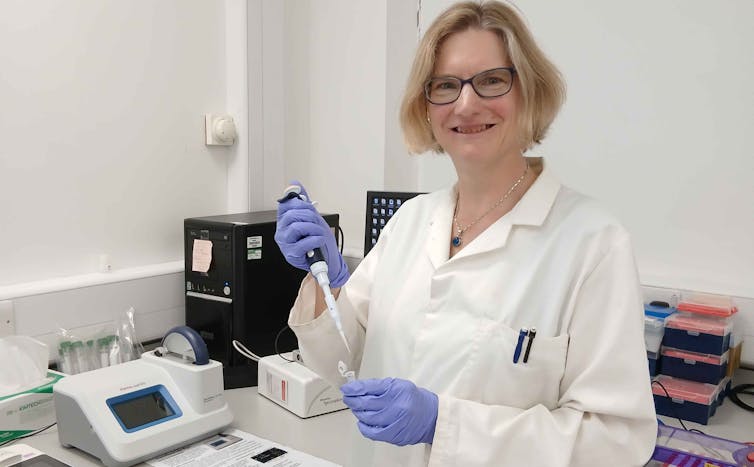
Katherine Steele wearing a white lab coat in a laboratory with scientific instruments.
Katherine Steele in the laboratory.
Bangor University, CC BY

We profiled hundreds of rice varieties and continue to refine the markers used to identify basmati. Before the method was approved, our team ran blind tests of results from known spiked mixtures of grains across different laboratories to ensure reliable results.

An age-old problem with modern costs

Food fraud is nothing new. For centuries, unscrupulous traders have substituted cheaper goods or mislabelled products.

While swapping rice is less harmful than adulterating food with toxic substances, it still matters. Consumers resent being duped, brands suffer reputational damage and companies that play by the rules lose out. The stakes are high because the UK rice industry is worth close to £1 billion a year.

There are points of vulnerability every time the grains get passed from one trader to the next. It is not known whether it mainly takes place overseas. Economic pressures may be making the problem worse. As the UK experiences sluggish economic growth, opportunities for food crime may be increasing.

Counterfeiting is easier to identify using DNA testing than when known mixtures of varieties are introduced further up the food chain. It is probable that some of the less well-known brands of rice sold in the UK may contain varieties that are not listed in the basmati code of practice. These could easily slip through the DNA test because complex mixtures can be made to contain all the right molecular signatures.

Even so, food sold in the UK is among the most closely regulated in the world because of the work done by the FSA. Their National Food Crime unit leads the fight against food crime as exemplified by the recent case of the counterfeit basmati, but consumers must be vigilant because there are still fraudsters about. This can include being wary of poorly printed packaging labels, misspellings, broken seals and unusual pricing. Because if the price seems too good to be true, it probably is.

The Conversation

Katherine Steele receives funding from UKRI, DEFRA and Food Standards Agency.

ref. Why your basmati rice might not be what you think it is – https://theconversation.com/why-your-basmati-rice-might-not-be-what-you-think-it-is-264146


How I tracked the biggest hidden sources of forever chemical pollution in UK rivers – new study

Source: The Conversation – UK – By Patrick Byrne, Professor of Water Science, Liverpool John Moores University

Patrick Byrne samples the water in the Mersey catchment. Patrick Byrne, CC BY-NC-ND

The amount of toxic “forever chemicals” flowing into the River Mersey in north-west England has reached some of the highest levels recorded anywhere in the world.

My team’s research links much of this contamination to old landfills, waste facilities and past industrial activity. Even if these chemicals were banned tomorrow, they would continue polluting our rivers for decades, possibly centuries.

But there is a path forward. We’ve developed a new method
to track and prioritise the largest sources for clean-up, giving regulators a clearer picture of where to act first.

Per- and polyfluoroalkyl substances (PFAS), more commonly known as “forever chemicals”, are a large family of human-made chemicals found in everyday products like food packaging, water-repellent clothes and fire-fighting foams. They are valued for their ability to resist very high temperatures and to repel water and oil, but these same properties make them extremely persistent.

Once released, some PFAS could take thousands of years to break down. They accumulate in the environment, build up – with different compounds accumulating at different rates – inside the bodies of wildlife and people, and have been associated with harms to health. The most studied types have been linked to cancers, hormone disruption and immune system problems.

Patrick Byrne has been measuring PFAS ‘loads’ in rivers over a period of time, not just the concentration at one moment.
CC BY-NC-ND

Last year, my research team discovered that the amount of two potentially cancer-causing PFAS chemicals washing off the land and into the Mersey was among the highest in the world. In our follow-on research, we travelled upstream to try and locate where these PFAS are coming from. But with hundreds of potential PFAS sources, how do we isolate the largest ones?

The secret is measuring something called the PFAS load – the total amount of PFAS flowing through the river at a given point, rather than just the concentration in the water.

Here’s why that matters: a small stream can have high concentrations but carry only a small total amount, while a large river with lower concentrations can be transporting far more PFAS overall. If we only look at concentration, we risk missing the really heavy polluters.

By measuring PFAS loads at multiple points along the Mersey system, we could see exactly where the largest increases occurred. That told us both the location and the scale of PFAS inputs.

We detected PFAS chemicals at 97% of our sample sites, even in supposedly pristine streams draining from the Peak District national park. But the big breakthroughs came when we matched the largest PFAS load increases to specific areas.

PFBS (a type of PFAS) was coming in huge amounts from land draining old landfills in the Glaze Brook watershed near Leigh, west of Manchester. PFOA, a globally banned and cancer-causing PFAS, appeared to originate from a waste management facility on the River Roch, north of Manchester. PFOS, another banned PFAS, was entering the River Bollin, with strong evidence pointing to historic firefighting foam use at Manchester Airport.

What’s most striking to me is that all these sources are rooted in the past – old landfills, waste sites or historic industrial use. These chemicals are no longer in production, but they are still escaping into the environment, decades later.

alt text
This unmanned survey vessel is packed with sensors that measure PFAS loads in large rivers.
credit, CC BY-NC-ND

This is where PFAS load measurements make a real difference. Instead of chasing the highest concentrations – which might lead to cleaning up small streams that contribute little overall – we can target the sites releasing the largest total amounts of PFAS into our rivers.

It’s a simple idea with major implications. In a world where environmental regulators face tight budgets and limited monitoring capacity, knowing exactly which sites are the biggest sources is vital.

The Mersey is just one example. Around the world, PFAS contamination follows a similar pattern: numerous potential sources scattered across the landscape, many of them historical. The chemicals’ extreme persistence means they will continue cycling through rivers, soils and wildlife for generations unless active steps are taken to remove or contain them.

Our latest study shows that measuring PFAS load can help solve one of the toughest challenges in managing chemical pollution: working out where to start. By identifying and prioritising the biggest sources, regulators have a realistic chance of reducing the flow of forever chemicals into our rivers – and perhaps one day, making that nickname a little less true.

The Conversation

Patrick Byrne receives funding from the Natural Environment Research Council.

ref. How I tracked the biggest hidden sources of forever chemical pollution in UK rivers – new study – https://theconversation.com/how-i-tracked-the-biggest-hidden-sources-of-forever-chemical-pollution-in-uk-rivers-new-study-261967

Trump, Charles and Starmer: a successful state visit steadies an uncertain premiership

Source: The Conversation – UK – By Martin Farr, Senior Lecturer in Contemporary British History, Newcastle University

Donald Trump’s first state visit to the UK, in June 2019, was an attempt by the British government to try to forestall the threat of Trumpism, a set of ideas and style of leadership that were not, in the end, embedded. The unprecedented second state visit of September 2025 has been an attempt to accommodate the second Trump administration – one already much more purposeful and consequential.

In one respect, the two visits are complementary: they feature an imperturbable president entreated by beleaguered prime ministers. Theresa May was humiliated publicly by Trump, and was gone the following month. Starmer has almost nothing in common with Trump except a quite unexpected, and largely inexplicable, personal chemistry.

Briefings on Air Force One, as it headed to the UK, would have been brief – the president is easily bored – and aimed at preparing him for what awaited: thousands of people in uniform choreographed to the inch to impress a mere dozen or so Americans, and one in particular.

There were issues of substance, some of which are very substantial indeed. A civil “nuclear partnership” almost complementing the 70-year-old military nuclear partnership. As they already do in the older partnership, the two sides will now recognise the other’s standards and safety assessments in civil nuclear projects. More was made of the vaunted “tech prosperity deal”.

These agreements are meaningful and had Lord Mandelson at their core, before his sacking. He would be justified in viewing – as he doubtless does – that the state visit was in part a posthumous monument to his ambassadorship.

State visits are a key part of national diplomacy, and particularly when royalty may be deployed. As ever, Trump tests norms to breaking point. In a constitutional monarchy such as Britain’s, the monarch acts on the advice of the government. But Trump is potentially so damaging by association for the government (and Starmer in particular) that the monarch was more central than ever.

Trump and his supporters will not admit publicly that so dominating a political actor makes people bend to their will. Faced with the most imperious president in the history of the imperial presidency, they seek to accommodate, pre-empt, cajole, appease. One exception is a king.

This state visit – and the likely return trip of Charles to the US for the 250th anniversary of US independence next year – is a card the British were suitably shameless in playing. There is a clear rapport between the two; indeed, a rapport that would have been unlikely – given their different personalities – with Elizabeth II. Charles III has proven to be an essential, rather than merely complementary, element of the special relationship.

For once, there’s a precedent for so singular a president. In November 2003 – after a million marched in London in opposition to the US-UK invasion of of Iraq – President George W. Bush scarcely left a barricaded Buckingham Palace.

Where a state visit ordinarily occasions – demands – an open-topped carriage ride along the Mall with the monarch, it is a unique irony that the leader of Britain’s closest ally had to travel by drone-shielded helicopter. No members of the public – who effectively paid for the visit – saw the president.

This time, Windsor suited much more than Buckingham Palace as the venue because, as one might hope from a castle, it is secure and can repel the unwanted.

Wednesday’s procession professing “Trump not welcome” was a relatively modest affair. The Stop Trump Coalition – an umbrella association of over 60 organisations including CND, Extinction Rebellion, Fossil Free London, Keep our NHS Public, and the National Education Union – may need to reconsider its founding imperative.

That the demonstration was significantly smaller than the one that greeted Trump in 2019 – notwithstanding the even more fevered and febrile public square – is testament to a sense of resignation occasioned by this repeat of history.

Opposites attract

Inasmuch as it’s possible with Trump, nothing was left to chance, apart from the press conference, where disagreement was minimal, though unusually clearly stated – a sign of confidence. Starmer and Trump were clearly reading from different hymn sheets on recognising Palestine and net zero. Trump’s suggestion that the UK follow his lead by sending the military out to deal with illegal immigration is more a disagreement of degree.

They were, however, news lines which were catnip to Starmer’s critics on the right, and in the weeks to come will receive repeated airings. As expected, the Mandelson/Jeffrey Epstein affair had receded in the press – if not the public mind. That Trump denied knowing Mandelson, despite their private meeting the week before, said much more about the president than it did the former ambassador.

Without any public presence whatsoever, the ceremonies and parades were for one person only. The risk of looking slightly desperate, however, proved one worth taking. US media coverage was minimal, meaning wider exposure was limited, and the president was clearly impressed.

The visit also demonstrated, more than ever, the value of royal diplomacy: that it can lubricate, augment, constitute a historical-cultural thread that impresses those a UK government may wish to impress. The extent to which that translates into material benefits is harder to test.

The state visit of President Trump to the UK mattered to both, but it mattered much more to one. Contrary to expectations, opposites so far have attracted. The special relationship has survived and even prospered in the face of uncertainty.

Its smooth passing may provide a locus for a natural – rather than yet another staged – reset. May’s fluffing of the 2017 general election was enough in Trump’s eyes, to condemn her, but so far Trump’s affection for Starmer has withstood the growing talk of the defenestration of a prime minister with a 22% approval rating. There remain three years to see how long that persists.

The Conversation

Martin Farr does not work for, consult, own shares in or receive funding from any company or organisation that would benefit from this article, and has disclosed no relevant affiliations beyond their academic appointment.

ref. Trump, Charles and Starmer: a successful state visit steadies an uncertain premiership – https://theconversation.com/trump-charles-and-starmer-a-successful-state-visit-steadies-an-uncertain-premiership-265597

The president as partisan warrior: Trump’s rejection of traditional presidential statesmanship

Source: The Conversation – USA – By Julia R. Azari, Assistant Professor of Political Science, Marquette University

After taking control of the board earlier in the year, President Donald Trump announced on Aug. 13, 2025, the nominees of the annual Kennedy Center Honors. Kevin Dietsch/Getty Images

In a classic work on the modern presidency originally published in 1960, political scientist Richard Neustadt wrote that the American public “expects the man in the White House to do something about everything.”

These expectations, Neustadt argued, far exceeded the president’s ability to actually control outcomes.

More recently, political journalist John Dickerson, author of “The Hardest Job in the World,” noted that presidents typically have people demanding that they pay attention to about 250 problems at one time. But, quoting a productivity expert, Dickerson points out that priorities are like arms: “If you have more than two, you’re either crazy or lying.” The implication: Presidents have to shed 248 of those pressing concerns.

I study the American presidency. The research in the field, including my own, suggests that typically the politics of presidential attention is driven by two considerations.

The first comes down to delegation: As Barack Obama was fond of saying, no easy problem gets to the president’s desk. Presidents typically focus on the problems that no one else – not state or local governments, the bureaucracy or Cabinet secretaries – can deal with.

The other consideration is whether the issue is a winning one. Neustadt emphasizes this in his study of presidential power: Presidents enhance their reputations by winning conflicts, not losing them.

There are also plenty of examples of presidents wading into highly conflicted areas and alienating supporters or suffering policy defeats, including George W. Bush’s unsuccessful attempts to tackle the “third rail” of Social Security reform, and Bill Clinton’s failed efforts to enact health care reform.

As a result, presidents are typically expected to be focused on national security, economic management and other key issues that have to be handled at the national level. They are expected to only sparingly wage battles of will with leaders outside government – in the arts, business or education – and with state-level politicians who lie outside the president’s direct control.

Amid the many other ways he’s departed from American political tradition, President Donald Trump has turned these assumptions upside down. That has important implications for how Americans understand the scope and reach of presidential power.

Like most aspects of American politics, the presidency has become more defined by partisan politics over time. Trump has taken this evolution to a new level, rejecting the traditional role of statesman or a spokesperson for the whole nation.

Instead, he has adopted the role of partisan political warrior – and that means he is using the power of his office in areas and in ways previously considered off-limits to the president.

A man in a suit walking on an outside path next to a white building bathed in orange light.
President Barack Obama often said that no easy problem gets to the president’s desk.
Tim Sloan/AFP-Getty Images

Hosting, decorating and critiquing clothing ads

Recently, President Trump reported that he might host the Kennedy Center Honors in December. He also reportedly had a strong hand in choosing the center’s honorees, a task normally undertaken over months and with public input.

He’s also been heavily involved in the redecoration of the White House, waged war on wind turbines and posted online about the controversy over actress Sydney Sweeney’s ad for American Eagle jeans.

His administration has issued detailed demands of numerous universities, wading directly into curriculum, personnel policies and the frequent target of diversity, equity and inclusion programs. While much of this effort has gone through the Department of Education, the president himself has issued executive orders and posted online about specific universities.

A social media post from President Trump about Brown University ending programs the administration doesn't approve of.
A social media post in July 2025 about Brown University from President Donald Trump.
Truth Social/@realDonaldTrump

Traditionally, presidents have been especially hesitant to dive into areas where education intersected with difficult cultural conflicts. One of the most significant examples is the way that presidents reacted, from the 1950s through the 1970s, to Supreme Court orders mandating school desegregation.

To put it bluntly, presidents did not want to face the political dilemmas associated with enforcing the court’s 1954 Brown v. Board of Education decision.

As I note in my book “Backlash Presidents,” presidents are rarely eager to upend the racial status quo, even when they recognize its injustice.

Dwight Eisenhower, who was president when the Supreme Court issued the Brown decision, felt the decision placed new strain on the federal government to get involved in social relations and local issues. The feeling was bipartisan; Eisenhower’s presidential successor, Democrat John F. Kennedy, didn’t want to take a lead role in enforcing desegregation either.

Both, at different times, did eventually use federal force and power to uphold the law. Eisenhower mobilized the National Guard to protect Black students integrating a Little Rock, Arkansas, high school in 1957, and Kennedy in 1963 took similar action to protect Black students integrating schools in Alabama.

But federalism, which divides powers between national and state government, provided presidents with a strategically useful barrier to any further presidential action, allowing the two presidents to say that they were treading carefully because education was up to the states.

Obviously, this was a different time and context – the Department of Education didn’t exist yet, so there was not a clearly defined federal role in public education. But it represents an example of how presidents have typically looked to use structures such as federalism to leave tough issues to others and avoid political fallout.

It’s personal with Trump

Focusing attention on foreign policy and national security is less likely to stoke opposition. Those are areas where presidents have more latitude and can expand their power even more.

Presidents have traditionally not engaged in direct conflict with individual governors, industry leaders or university presidents if they can help it. They’ve engaged in policy battles, but generally not personal ones.

Trump’s approach has been very different.

With Department of Justice investigations and public criticism, his administration has targeted specific law firms and individuals whom Trump dislikes. The president has issued executive orders about the “forced use” of paper straws.

Is Trump’s attention on the personal a problem for the nation?

Presidents have been challenged for being too focused on minor issues and details, including Jimmy Carter, whose attention to things such as the schedule of the White House tennis courts drew scorn from critics.

Some presidents have been criticized as too quick to delegate to others, as was Ronald Reagan, who was seen as inattentive to important details. George W. Bush likewise was knocked for delegating too much, especially in crucial areas of foreign policy and intelligence.

Diving deeply into partisan politics

But Trump’s shifting of presidential priorities signals a much deeper political change.

First, some of these actions have also been directly related to cultural conflict – the fights with universities over DEI polices, commenting on the Sydney Sweeney ad.

Trump is hardly the first president to elevate a hot-button cultural issue for political gain – George W. Bush famously promoted a constitutional amendment banning same-sex marriage leading into his 2004 reelection campaign.

But presidents have traditionally seen more costs than benefits associated with campus speech issues or race questions that could be handled elsewhere.

A February 2025 article in The Root, whose motto is “Black News and Black Views with a Whole Lotta Attitude,” points to “five ridiculously petty actions” from the administration. All are related to race or LGBTQ symbols or visuals, such as the removal of references to LGBTQ Americans from government websites and the removal of a Spanish-language version of the White House website.

Another related aspect of the logic behind this shift in presidential attention is that the political constraints that limited past administrations, such as fear of alienating voters or stirring controversy, do not seem to concern this one. It suggests that the president and his team are not worried about the opinions of people who might disagree with their cultural stances.

This change also represents a departure from the more traditional statesmanship version of the presidency. The Trump administration and the president who heads it have chosen to dive deeply into, rather than rise above, politics.

The Conversation

Julia R. Azari has received (in the past) funding from the Truman Library Institute, the Kluge Center at the Library of Congress and the William and Flora Hewlett Foundation.

ref. The president as partisan warrior: Trump’s rejection of traditional presidential statesmanship – https://theconversation.com/the-president-as-partisan-warrior-trumps-rejection-of-traditional-presidential-statesmanship-262867

Antisemitism on campus is a real problem − but headlines and government-proposed solutions don’t match the experience of most Jewish students

Source: The Conversation – USA – By Graham Wright, Associate Research Scientist, Maurice & Marilyn Cohen Center for Modern Jewish Studies, Brandeis University

While most students and faculty in the U.S. don’t experience widespread antisemitism, it remains a major problem for those who do. Nikita Payusov/Middle East Images/AFP via Getty Images

It’s been nearly two years since Hamas’ Oct. 7, 2023, attack on Israel and the subsequent start of the Israel-Hamas war – and still, antisemitism shows no sign of abating as one of the thorniest issues at American colleges and universities.

University administrators have responded in various ways to Jewish students’ reports of harassment and discrimination during and after pro-Palestinian protests in 2024 and 2025.

Some schools, such as Columbia and the University of Pennsylvania, have banned student organizations associated with the protests, expelled student protesters and instituted anti-bias training programs on antisemitism.

The Trump administration, meanwhile, launched a task force to combat antisemitism at 10 universities, including Harvard and Columbia. It has also withheld federal funding from a range of universities on the grounds of their alleged inaction over antisemitism.

These efforts have often been as controversial as the problem they’re trying to solve.

Critics have accused university administrators of violating academic freedom and penalizing legitimate political protests.

And federal judges have pushed back against – and in some cases blocked – the Trump administration from withholding federal funding to schools, echoing calls from commentators and many American Jews that concerns about antisemitism are merely a pretext for punishing political opponents.

Since the Oct. 7 attack occurred, my team at the Cohen Center for Modern Jewish Studies at Brandeis University has been trying to understand how antisemitism looks and is changing on campuses.

Our findings show antisemitic ideas are not necessarily widespread among university students or faculty in the U.S. But that doesn’t mean antisemitism is not a serious problem, since just a few students or faculty members with extreme views can shape an entire campus’s climate.

Three white men wearing suits sit at a desk in front of a group of people dressed formally and sitting on benches behind them.
Robert Groves, the interim president of Georgetown University, testifies along with other heads of universities during a House Committee on Education and the Workforce hearing in Washington, D.C., on July 15, 2025.
Win McNamee/Getty Images

Studying antisemitism on campus

We first surveyed about 2,000 Jewish college students in December 2023 at about 50 schools with large Jewish populations.

We surveyed those same Jewish students again in the spring of 2024, while also conducting in-depth interviews with students and Jewish campus professionals about their experiences with antisemitism on campus.

During this same time period, we also conducted a survey of over 4,000 mostly non-Jewish students at these same schools.

In the spring of 2025, we conducted a survey of over 2,000 faculty members at 146 research-intensive universities, often called R1.

Here are some of our most important findings.

1. Antisemitism isn’t just about harassment

Our December 2023 survey found that the majority of Jewish students said there was a hostile environment toward Jews on their campus. This hostility was much more prevalent at some schools than others.

Students reported personal experiences of antisemitic harassment – especially on social media. But they also said they feel shunned or excluded from campus life. Jewish students at schools with higher reported levels of hostility were also less likely to say that they fully “belong” on their campus.

In our 2024 interviews, Jewish students reported being told by peers that they could no longer be friends due to their – real or perceived – support for Israel. They also said that their non-Jewish peers were actively avoiding them.

As one Jewish student put it, “No one wants to have a conversation with Jews right now.”

The majority of Jewish students who identify as politically liberal were especially likely to feel alienated and isolated. They were also especially likely to feel estranged from other liberals on campus.

Jewish students we interviewed also reported being shunned by friends who were critical of Israel, regardless of their own views on the actions of the Israeli government.

Multiple other studies have found that non-Jewish students reported they would not want to be friends with anyone who supports Israel’s existence as a Jewish state.

2. Some Israel comments cross the line

Our research also shows that when it comes to debates about what is or is not antisemitic, Jewish students see a clear distinction between criticizing the actions of Israel’s government and denying Israel’s right to exist.

When we spoke to Jewish students in 2023 and 2024, we found the vast majority felt that denying Israel’s right to exist was antisemitic. But there was no similar consensus around other statements, such as accusing Israel of committing genocide.

3. Small groups drive antisemitism on campus

Our research also found that about 34% of non-Jewish undergraduates, and about 10% of non-Jewish faculty held views about Jews or Israel that most Jewish students find antisemitic.

About half the people in these groups expressed hostile views about Israel, such as denying that it has a right to exist and refusing to be friends with anyone who thinks differently.

The other half were less likely to express these extreme views on Israel but tended to agree with explicitly anti-Jewish statements such as “Jews in America have too much power.”

In contrast, two-thirds of non-Jewish students and about 90% of non-Jewish faculty did not hold views that Jewish students tend to see as antisemitic, even if they expressed deep criticism of Israel’s government.

4. Israel debates are relatively rare in class

Despite frequent news headlines about classroom discussions or protests related to the Israeli-Hamas war, 76% of faculty said that in the 2024-25 academic year the issue simply never came up in their class.

Other contentious topics such as climate change or racism in America were much more likely to be taught about or discussed in the classroom.

Two men wearing kippahs stand together in front of a crowd of people who are holding signs.
Two Jewish men are seen in front of a pro-Palestinian student protest at the University of Nevada Reno in May 2024.
Kia Rastar/Middle East Images/AFP via Getty Images

Responding to antisemitism

In our interviews, many Jewish undergraduates said they wanted their campus administrators to do more to address antisemitism. But some said that heavy-handed actions such as banning pro-Palestinian groups sometimes made things worse by further inflaming campus tensions and prompting criticism that Jewish students were receiving special treatment.

Similar concerns have been raised about the federal government’s approach, which, in the name of fighting antisemitism, has been focused on punishing entire schools and researchers in a wide variety of disciplines that have nothing to do with Jews or Israel, by withholding billions in federal funding.

The government has also initiated civil rights investigations and revoked visas for international students at some schools.

This approach, in my opinion, has the potential to alienate potential allies on and off campus, including faculty and students who oppose antisemitism in all its forms but are being harmed all the same by federal actions. Penalizing people in the name of helping Jewish students could also reinforce antisemitic stereotypes about oppressive Jewish power.

I think that healing Jewish students’ feelings of isolation and ostracism requires building, or rebuilding, social connections across ideological and religious lines. If university administrators, or the federal government, really want to help Jewish students, they should focus on bringing students together rather than driving them apart.

The Conversation

Graham Wright works for the Cohen Center for Modern Jewish Studies at Brandeis University

ref. Antisemitism on campus is a real problem − but headlines and government-proposed solutions don’t match the experience of most Jewish students – https://theconversation.com/antisemitism-on-campus-is-a-real-problem-but-headlines-and-government-proposed-solutions-dont-match-the-experience-of-most-jewish-students-265041

Sourdough and submission in the name of God: How tradwife content fuses femininity with anti-feminist ideas

Source: The Conversation – USA (3) – By Arie Perliger, Director of Security Studies and Professor of Criminology and Justice Studies, UMass Lowell

Tradwives’ content, from recipes to makeup tips, often appeals to a wider audience than their views on religion, politics and gender. shironosov/iStock via Getty Images Plus

When people think about online misogyny, they probably envision forums and video game chat rooms filled with young men using lewd language, promoting sexist stereotypes and longing for the good old days when women “knew” their place. Arguably the most popular anti-feminist content today, though, is produced by women: tradwives.

The term “tradwife” is an abbreviation of “traditional wife” – often portrayed on these platforms as a white, married, stay-at-home mother. Since the mid-2000s, tradwives have developed a substantial online presence and following, introducing their lifestyle and views to masses of women.

Many viewers are introduced to tradwife content through videos on cooking or decorating – posts that could appeal to a wide audience. But at the core of the tradwives movement are more divisive beliefs: that women are meant to “submit” to their husband’s leadership, for example, or are not meant to work outside the home.

We define misogyny as hatred, prejudice or hostility directed toward women as a group. Many tradwives argue that their lifestyle empowers women to fulfill their true role. Yet some content in the tradwife landscape is indeed rooted in misogynistic beliefs that women are, in some ways, less capable than men. And much more “trad” content is directly opposed to feminist ideas, such the importance of women’s economic independence and sexual freedom.

A growing number of academics and news reports have highlighted tradwives’ growing cultural influence. There’s been less attention, however, on one of the most prominent features distinguishing them from other misogynist online movements: the role of religious beliefs.

As researchers of extremism, we have been working on a new book about the contemporary landscape of misogyny, examining movements such as “incels” and “men’s rights” activists, as well as chauvinist far-right groups such as the Proud Boys.

As part of our research, we analyzed hundreds of tradwife social media posts, videos and blogs. We assert that tradwife culture is not just aiming to restore “traditional” gender roles. It is also an important force in formulating a new model of womanhood: one that incorporates strong religious identity, a specific feminine aesthetic, and far-right ideas.

Filtered femininity

Tradwives create content that fuses what they call “traditional” and “feminine” lifestyles. Specifically, they tend to emphasize the importance of a wife’s submissiveness to her husband, immersion in conservative Christian values, and support for causes such as anti-abortion advocacy. Yet “tradwife’ content spans a broad spectrum: Some influencers focus on relatively apolitical topics like baking and parenting, while others combine those with more ideologically charged content.

In addition, tradwives stress self-sufficient homemaking skills, such as eating homemade and unprocessed food. At times, that emphasis on “wholesomeness” or living “naturally” includes skepticism about mainstream health care, as well as touting “naturopathic” or alternative medicine.

One of the main reasons so many viewers are attracted to the tradlife content is their nostalgic and calming aesthetic, including a focus on cottage-core content: quaint scenes that evoke life on the prairie, capitalizing on viewers’ nostalgia and desire for escapism.

A woman in a pink dress holds her phone in a kitchen as she films a young child sitting on a countertop besides a carton of eggs.
Influencers’ cozy aesthetic masks the hours of work behind posts and clips.
Galina Zhigalova/Moment via Getty Images

This type of soft-living content is inviting and relaxing. Loose wavy hair, fresh homemade cooking and a farmhouse aesthetic bring to mind “Little House on the Prairie” and help viewers forget the crises of the world outside. We can’t help but feel like we are in the influencer’s kitchen, smelling freshly baked bread and hearing the laughter of children frolicking about.

Yet nothing about tradlife content is effortless. The filters and glamour of Instagram never reflect the hours influencers spend setting up their homes, testing recipes, buying filming equipment and fixing up their appearance for these videos, as shown in countless “get ready with me” videos.

Nevertheless, tradwives often glorify the idea of women’s helplessness,. Some encourage women to focus on what tradwives call “pink jobs,” such as homemaking or child-rearing tasks, not physically demanding “blue jobs,” such as house repairs or extensive landscaping.

In tradwives’ narrative, women aren’t “wired” or “made” to be in the workforce or to be the breadwinner. It is not only too demanding, some of these influencers argue, but actually against nature and God’s intentions to try to “have it all.”

Faith and submission

Most tradwife influencers who talk about faith are Christians of one denomination or another, including Catholics and members of the Church of Jesus Christ of Latter-Day Saints. During analysis for our forthcoming book, we analyzed language in a sample of 23 videos from the seven most popular influencers and found that “God” was the fourth-most popular term – following “women,” “life” and “husband.”

For many influencers, religious piety is a crucial component of their views on gender and convincing viewers to embrace them – particularly their belief that a wife’s fundamental role is to let God and her husband lead the way. Thus, while they don’t necessarily see men and women as unequal, they believe men and women have different roles and different abilities.

Insisting that God is on their side also enhances influencers’ sense of community with their followers, making some platforms almost seem like a parish. They will emphasize specific biblical verses supporting the norms they advocate – such as Titus 2:5, which they interpret as advising women to stay at home; and Genesis 1:28, in which God commands humans to “be fruitful, and multiply.”

“Womanhood is not a man-made idea constructed from ancient traditions and cultural trends,” the sisters behind the YouTube channel “Girl Definedwrite in their book, “Made to be She: Reclaiming God’s Plan for Fearless Femininity.” “It’s a God-designed reality that He established from the beginning of time.”

Political voice

Some tradwife influencers focus on household management and religious content, while others are bolder in their political commentary – from simple TikToks to hours of live-streamed podcasts with guest speakers discussing hot-button issues. One frequent theme is opposition to abortion, especially since the overturning of Roe v. Wade in 2022.

The LGBTQ+ rights debate and related questions about how to define a woman have also become a focus for many tradwives, who argue only God can assign gender, and that it is synonymous with biological sex.

A close-up shot of a blonde woman in a blue shirt holding a Bible as she sits in front of an open laptop.
Conservative Christian teachings are often key in how tradwife influencers explain their view of gender roles.
SDI Productions/E+ via Getty Images

In some cases, tradwives’ advocacy extends to white nationalism and nativism. For example, some tradwives will justify the virtue of a large family by alluding to the importance of maintaining a white, Christian majority in the United States.

Modern anxiety

Much of tradwives’ messaging revolves around cultural flash points, problems that underscore anxiety about modern womanhood: challenges in forming stable relationships, providing nutritious meals, and building a career while trying to raise a family. One popular video on the Girls Defined channel, less than a minute long, warns viewers about birth control, Planned Parenthood, feminism and mood stabilizers. “Women, through all the years of feminism, through all the years of freedom, women are more depressed, more anxious, hurting more than ever,” one of the sisters says, “and what we are being told to do is not working.”

These challenges are presented as inevitable consequences of abandoning divinely ordained feminine roles – positioning religious tradwives’ messages as not merely personal opinions, but sacred truths. Any effort to counter misogynist messaging on these platforms, we argue, cannot just rely on facts, but exposing followers to other visions of what it means to be a religious woman.

The Conversation

The authors do not work for, consult, own shares in or receive funding from any company or organization that would benefit from this article, and have disclosed no relevant affiliations beyond their academic appointment.

ref. Sourdough and submission in the name of God: How tradwife content fuses femininity with anti-feminist ideas – https://theconversation.com/sourdough-and-submission-in-the-name-of-god-how-tradwife-content-fuses-femininity-with-anti-feminist-ideas-263096

Suicide-by-chatbot puts Big Tech in the product liability hot seat

Source: The Conversation – USA – By Brian Downing, Assistant Professor of Law, University of Mississippi

AI companies are finding that chatbots don’t have the same liability shield that internet platforms do. Westend61 via Getty Images

It is a sad fact of online life that users search for information about suicide. In the earliest days of the internet, bulletin boards featured suicide discussion groups. To this day, Google hosts archives of these groups, as do other services.

Google and others can host and display this content under the protective cloak of U.S. immunity from liability for the dangerous advice third parties might give about suicide. That’s because the speech is the third party’s, not Google’s.

But what if ChatGPT, informed by the very same online suicide materials, gives you suicide advice in a chatbot conversation? I’m a technology law scholar and a former lawyer and engineering director at Google, and I see AI chatbots shifting Big Tech’s position in the legal landscape. Families of suicide victims are testing out chatbot liability arguments in court right now, with some early successes.

Who is responsible when a chatbot speaks?

When people search for information online, whether about suicide, music or recipes, search engines show results from websites, and websites host information from authors of content. This chain, search to web host to user speech, continued as the dominant way people got their questions answered until very recently.

This pipeline was roughly the model of internet activity when Congress passed the Communications Decency Act in 1996. Section 230 of the act created immunity for the first two links in the chain, search and web hosts, from the user speech they show. Only the last link in the chain, the user, faced liability for their speech.

Chatbots collapse these old distinctions. Now, ChatGPT and similar bots can search, collect website information and speak out the results – literally, in the case of humanlike voice bots. In some instances, the bot will show its work like a search engine would, noting the website that is the source of its great recipe for miso chicken.

When chatbots appear to be just a friendlier form of good old search engines, their companies can make plausible arguments that the old immunity regime applies. Chatbots can be the old search-web-speaker model in a new wrapper.

a computer screen showing a small amount of text
AI chatbots engage users in open-ended dialog, and in many cases don’t provide sources for the information they provide.
AP Photo/Kiichiro Sato

But in other instances, it acts like a trusted friend, asking you about your day and offering help with your emotional needs. Search engines under the old model did not act as life guides. Chatbots are often used this way. Users often do not even want the bot to show its hand with web links. Throwing in citations while ChatGPT tells you to have a great day would be, well, awkward.

The more that modern chatbots depart from the old structures of the web, the further away they move from the immunity the old web players have long enjoyed. When a chatbot acts as your personal confidant, pulling from its virtual brain ideas on how it might help you achieve your stated goals, it is not a stretch to treat it as the responsible speaker for the information it provides.

Courts are responding in kind, particularly when the bot’s vast, helpful brain is directed toward aiding your desire to learn about suicide.

Chatbot suicide cases

Current lawsuits involving chatbots and suicide victims show that the door of liability is opening for ChatGPT and other bots. A case involving Google’s Character.AI bots is a prime example.

Character.AI allows users to chat with characters created by users, from anime figures to a prototypical grandmother. Users could even have virtual phone calls with some characters, talking to a supportive virtual nanna as if it were their own. In one case in Florida, a character in the “Game of Thrones” Daenerys Targaryen persona allegedly asked the young victim to “come home” to the bot in heaven before the teen shot himself. The family of the victim sued Google.

Parents of a 16-year-old allege that ChatGPT contributed to their son’s suicide.

The family of the victim did not frame Google’s role in traditional technology terms. Rather than describing Google’s liability in the context of websites or search functions, the plaintiff framed Google’s liability in terms of products and manufacturing akin to a defective parts maker. The district court gave this framing credence despite Google’s vehement argument that it is merely an internet service, and thus the old internet rules should apply.

The court also rejected arguments that the bot’s statements were protected First Amendment speech that users have a right to hear.

Though the case is ongoing, Google failed to get the quick dismissal that tech platforms have long counted on under the old rules. Now, there is a follow-on suit for a different Character.AI bot in Colorado, and ChatGPT faces a case in San Francisco, all with product and manufacture framings like the Florida case.

Hurdles for plaintiffs to overcome

Though the door to liability for chatbot providers is now open, other issues could keep families of victims from recovering any damages from the bot providers. Even if ChatGPT and its competitors are not immune from lawsuits and courts buy into the product liability system for chatbots, lack of immunity does not equal victory for plaintiffs.

Product liability cases require the plaintiff to show that the defendant caused the harm at issue. This is particularly difficult in suicide cases, as courts tend to find that, regardless of what came before, the only person responsible for suicide is the victim. Whether it’s an angry argument with a significant other leading to a cry of “why don’t you just kill yourself,” or a gun design making self-harm easier, courts tend to find that only the victim is to blame for their own death, not the people and devices the victim interacted with along the way.

But without the protection of immunity that digital platforms have enjoyed for decades, tech defendants face much higher costs to get the same victory they used to receive automatically. In the end, the story of the chatbot suicide cases may be more settlements on secret, but lucrative, terms to the victims’ families.

Meanwhile, bot providers are likely to place more content warnings and trigger bot shutdowns more readily when users enter territory that the bot is set to consider dangerous. The result could be a safer, but less dynamic and useful, world of bot “products.”

The Conversation

I worked for Google for 16 years, and thus received compensation from them to protect against external liability.

ref. Suicide-by-chatbot puts Big Tech in the product liability hot seat – https://theconversation.com/suicide-by-chatbot-puts-big-tech-in-the-product-liability-hot-seat-265550

Nuclear in your backyard? Tiny reactors could one day power towns and campuses – but community input will be key

Source: The Conversation – USA – By Aditi Verma, Assistant Professor of Nuclear Engineering and Radiological Sciences, University of Michigan

Factories could one day produce and ship small nuclear reactors across the country. U.S. Department of Energy Office of Nuclear Energy

You might imagine nuclear power plants as behemoth facilities spanning hundreds of acres. Nuclear microreactors, by contrast, could sit on land the size of a football field and power a whole town.

However, after decades of fraught relationships between the nuclear industry and communities in many parts of the U.S., building these tiny reactors requires reckoning with the complex history of nuclear technology and rebuilding public trust.

Microreactor technology for use in towns or cities hasn’t been developed yet, but many researchers have been building the case for its use.

For example, this technology could benefit college campuses, remote communities in Alaska primarily powered by oil and diesel, tech companies looking for reliable electricity for AI data centers, companies in need of high-temperature heat for manufacturing and industrial processes, mining operations that need a clean energy source and even military bases in search of a secure source of energy.

I’m a nuclear engineer who has been exploring nuclear microreactors’ potential. My research and teaching focuses on some of the questions that would come with placing miniature nuclear reactors close to where people live.

Microreactors: A history

Nuclear microreactors as a technology are both new and old. In the 1940s and ’50s, the American military and government began developing small reactors and nuclear batteries to power submarines and spacecraft.

After developing these small-scale reactors and batteries for various missions, the nuclear industry’s focus shifted to power reactors. They began to rapidly scale up their designs from producing tens of megawatts to the gigawatt-scale systems common around the world today.

These historical reactors were small because scientists were still learning about the physics and engineering underlying these systems. Today, engineers are deliberately designing microreactors to be small.

Microreactors aren’t to be confused with small modular reactors – these are often scaled-down, modularized versions of large reactors. Small, modular reactors can be built as single units or in clusters to achieve the same capacity as a full-size reactor. Microreactors would be smaller than these, with a power capacity under 20 megawatts.

A diagram showing three types of reactors – large, conventional reactors, labeled '700+MW(e)', small modular reactors, labeled 300+MW(e) and microreactors, labeled 'up to 10 MW(e)'
Microreactors are the smallest type of reactor.
A. Vargas/IAEA

Manufacturing and cost

Because they’re small, microreactors wouldn’t require a massive, multiyear construction project like large nuclear power reactors. Several units could be assembled in a factory each year and shipped off to their final destinations in a truck or on a barge.

A diagram of a semi truck. Its trailer is translucent, showing a microreactor inside.
Microreactors could be small enough to fit in the trailer of a truck.
Idaho National Laboratory

Large reactors are not inherently flawed – in many ways, they remain the more economic nuclear energy option. However, electric utility companies have recently hesitated to invest in large reactors because of the multibillion-dollar nature of these projects.

Microreactors require a different but equally significant kind of investment. Though individual units will have a significantly lower price tag, building a factory to produce these microreactors is a massive undertaking. Reactor companies are waiting for their order books to fill up before investing in factories.

It’s a catch-22. Without orders, technology developers are unlikely to build microreactor factories. And future users of these new reactors are unlikely to place orders until this new style of production has been tested and the initial units built.

An infographic reading 'Microreactors: Small reactors BIG potential' listing features and benefits of microreactors, and showing trucks driving microreactors from a factory to a plane and boat.
Microreactors could be built in a factory and shipped to their site.
U.S. Energy Information Association, U.S. Department of Energy Office of Nuclear Energy

Future users are also waiting to see what the microreactors will actually cost. Reactor developers have put forward many cost estimates, but in the past, estimates for nuclear reactors haven’t always been reliable. Developers likely won’t know the true numbers until the reactors are actually built.

Initial “first of a kind” units will undoubtedly cost significantly more than later units. As manufacturers learn the best production processes, they’ll be able to make more reactors for less.

In this paradoxical situation in which developers are waiting for orders and users are waiting to see the economics of initial reactors, government funding for building demonstration projects could help usher microreactor technology from early designs to the market.

First movers such as national laboratories, universities, data centers and military bases that are willing to buy these initial reactors also have a role to play in validating the economic feasibility of these new reactors.

Today’s microreactors

In a nuclear reactor, the combination of nuclear fuel and coolant – which is the substance used to both cool the fuel and transport the heat generated by it – used in its design determines what situations it will work best in. Many nonwater coolants can allow reactors to operate at lower pressures, which is a little more safe.

The microreactors being developed today are based on a wide range of reactor technologies and make use of many different combinations of nuclear fuels and coolants.

Some reactors, such as the submarine propulsion reactors, are small, pressurized water reactors – the same basic technology used in most large-scale nuclear power plants. Others use configurations that resemble the small reactors in spacecraft. Still others make use of nuclear fuel and coolant combinations previously attempted in much larger reactors, such as high-temperature gas reactors, sodium fast reactors and even molten salt reactors.

Though encompassing a range of technologies, microreactors are all significantly simpler than the large reactors in use today. In many cases, they have few to no moving parts.

Microreactor technology holds potential but isn’t ready for commerical use yet.

Microreactors, by virtue of being significantly simpler, are going to be more knowable. Because they’re easier to study and understand, simpler reactor systems have fewer points of failure and safety concerns.

Complex systems, such as the large nuclear power reactors, can be fundamentally unknowable, with unexpected entanglements of “unknown unknowns” creating instabilities, safety concerns and potential for failure. Large reactors operate safely today because we have learned about these unknown unknowns over decades of operation. Microreactors, because of their simplicity, will fundamentally be safer and more predictable than the large reactors were when they were first built.

Siting microreactors

Although the Department of Energy oversees microreactor demonstration projects, commercial deployment of microreactors requires approval from the U.S. Nuclear Regulatory Commission, which could take several years and may ultimately determine how soon commercial reactors can be built. Several designs are now approaching or in the early stages of review.

To keep people safe, large reactors have designated emergency planning zones – usually 10 and 50 miles around – which require different degrees of planning and protection to enter. The 10-mile zone has specific shelters and evacuation plans in place, while people in the 50-mile zone may need to take precautions about what they eat and drink in the event of a catastrophic accident but will not need to evacuate.

A diagram showing a nuclear plant, with three rings around it. One has a 2 mile radius, one a 10 mile radius and one a 50 mile radius.
Nuclear plants designate emergency planning zones around the facility. These may demarcate where evacuation plans are in place, where people might be exposed and where researchers will take samples to make sure the surrounding environment and potential food sources are not contaminated.
U.S. Nuclear Regulatory Commission

Because microreactors are smaller and simpler, developers and regulators may significantly reduce their emergency planning zones. The zones could extend only to the facility’s site boundary, or perhaps a few hundred meters beyond it.

A reduced emergency planning zone could mean that microreactors could be built in towns and cities, or embedded in remote communities. They might one day become as ubiquitous as the solar panels and windmills you see when driving through the countryside. And like the submarine reactors that can power a small underwater community of 100, one microreactor could power a rural town.

But even if siting a nuclear microreactor near a town is technically feasible, would the community accept it?

Public engagement

My lab’s ongoing research suggests that the answer to this question is contingent on how technology developers engage with the communities that may host a microreactor. If they attempt to unilaterally decide, announce and defend their decision to build a microreactor without input, communities will likely push back.

However, if developers work with communities to understand their hopes, concerns and priorities, they will likely find that many people are receptive to hyperlocal nuclear energy facilities.

My team’s initial findings suggest that there isn’t a one-size-fits-all approach for designing these facilities. Each community will have its own set of preferences that developers will need to navigate alongside the engineering questions.

In our discussions with community members in southeast Michigan, my research team has seen interest in designing these small energy facilities as a feature of the community that’s easily accessible to local residents. Community members designing hypothetical microreactor facilities with us have proposed shared spaces, recreational facilities, onsite visitor centers or science museums, and public art projects. Instead of hiding these facilities out of sight, they want these places to be inviting and beautiful.

The Conversation

Aditi Verma receives research funding from the U.S. Department of Energy.
She is a board member for the Good Energy Collective and serves on various expert working groups of the OECD Nuclear Energy Agency.

ref. Nuclear in your backyard? Tiny reactors could one day power towns and campuses – but community input will be key – https://theconversation.com/nuclear-in-your-backyard-tiny-reactors-could-one-day-power-towns-and-campuses-but-community-input-will-be-key-261225

Naming and categorizing objects is part of how young kids develop executive function skills – new research

Source: The Conversation – USA – By Aaron Buss, Associate Professor of Psychology, University of Tennessee

Understanding how young kids develop executive function could be key to teaching children these skills in the future. University of Tennessee, Knoxville

Parents of young children probably recognize the hectic mornings filled with reminding the kids to eat breakfast, brush their teeth and put on their shoes – and hurry up, you’re gonna be late!

Most little kids can’t manage these morning routines on their own because they lack the necessary executive function: the set of skills that affect how people make purposeful decisions that align with their goals. It’s these skills that allow you to set and pursue short-term goals, such as making breakfast, and long-term goals, such as pursuing a successful career.

Early childhood marks a period of significant development in executive function ability. Research shows that children with better executive function tend to grow up to be financially stable, healthy and productive adults. For this reason, many psychologists and educators are seeking ways to help kids develop these skills in early childhood, potentially setting them up for later success.

As important as these skills are, though, attempts to understand where they come from and how to train them have been mostly unsuccessful – until now.

We are psychologists at the University of Tennessee in the Attention, Brain and Cognition Lab, and our recent study provides new insights into how executive function develops.

Where previous attempts failed

There have been many attempts to teach children executive function, in hopes that improvements will translate to other cognitive skills. But these have largely been unsuccessful for two reasons.

First, while children in these experiments learned specific tasks, they didn’t learn skills that would translate to the real world. It’s like how studying for your ACT may make you better at taking the ACT but not necessarily better at the skills you need for your future job.

Second, on the more technical side, measuring brain activity in young children is notoriously difficult. MRIs are too restrictive – not to mention scary – to be used on children while they perform tasks.

Child wearing hat with sensors on it next to cards with shapes of different colors
We fitted children in our lab with lightweight caps with near-infrared sensors in them to measure which parts of the brain were active during the sorting tasks.
University of Tennessee, Knoxville

New tools offer new insights

Many researchers now use a more child-friendly neuroimaging machine called functional near-infrared spectroscopy, which involves placing sensors on a child’s head – typically in the form of a lightweight cap – to track their brain function. This laser system monitors blood flow in the outer layer of the brain, known as the cortical surface. Blood flow indicates neural activity and reveals areas of the brain that are most busy.

This technology is a step in the right direction, but it’s still difficult to ensure that the sensors are placed in exactly the same way from one session to the next, and from one kid to the next. This challenge is particularly pronounced in longitudinal studies, because children’s heads grow over time.

To solve this problem, our team developed 3D-image reconstruction techniques that allow us to keep track of where brain activation is happening. With the 3D model, we are able to map and measure each child’s individual brain regions.

Our advanced analysis tools allowed us to collect multiple recordings from the same children over several years, confident the sensors were in the correct, consistent spots on their heads for each study phase.

By administering a wide range of tasks that tap into different aspects of neurocognitive function, we were able to pinpoint which regions of a child’s brain are active as they develop executive function skills.

Understanding the nature of executive function

One important aspect of executive function is the ability to filter what information is relevant for completing your goals. Based on previous executive function studies and our mathematical model of the brain’s connections, our team believes that the key is the process of what we call learning labels – that is, learning to name and sort the objects in your environment based on various categories they fit into.

Label learning allows you to move through your world finding tools you need to accomplish your goals and flexible uses for the objects around you. For instance, understanding the labels “smooth” and “concave” would help you identify a spoon. Knowing how the features of a spoon relate to other objects or processes such as “mixing,” “shoveling” or “slinging” can encourage flexible uses of the spoon, so that you recognize you can use the spoon to stir your chocolate milk, eat your cereal or even catapult a bit of breakfast onto your sibling.

So all that learning in a child’s early years of fundamentals such as color, shape and basic sounds and words is preparing them for a life where they can identify what they need to set and meet their goals, small and large.

Further, understanding how to identify and label items in your environment can help you be flexible and notice different aspects of an object when your goals change. For example, if there’s no cow’s milk available, but you know almond milk falls into the same category, you can use it as a substitute. In this way, learning labels for categories of objects lets you identify and act on goal-relevant information around you.

What we found

Using our near-infrared spectroscopy tools, we examined the brain function of 20 children during a series of tasks. We first assessed their label understanding at age 2½ by asking them simple questions about objects, such as, “Which one is red?” or “What color is this one?”

Two years later, when the children were 4½, we brought them back to the lab for an executive function task. First, they would play a few rounds of a shape-sorting game. Then the research assistant would ask them to switch to sorting the same objects by color. This task requires thinking flexibly about the objects and making different decisions about them when the rules change.

We found that brain activity differed before versus after children learned to categorize objects by shape and color. In addition, we found that children who showed stronger activation in their brain’s frontal cortex region during the simpler color and shape labeling tasks at age 2½ performed better on the complex task at 4½. We think this indicates that those children at 2½ were further along in the developmental trajectory of learning categories for objects around them, and thus had richer neurocognitive resources available at 4½ when performing the complex executive function task.

Our findings suggest that label learning extends beyond language and affects how kids can control and regulate their behavior. That is, by having ways of labeling different aspects of objects or the environment, children have ways to cognitively focus on that information in order to guide their behavior.

What’s next?

Our results open the door to finding ways to teach children executive function skills. Scientists can now try to create interventions focused on label learning and grouping objects based on their physical characteristics. Training would likely build on the sort of learning that naturally occurs during play time with caregivers, as well as via children’s books and edutainment videos.

Our team has already begun the next step in this work, examining how to facilitate these learning processes. Our goal is to develop interventions aimed at improving executive function skills in early childhood that will improve broad development outcomes as kids get older.

The Conversation

Aaron Buss received funding from the Eunice Kennedy Shriver National Institute of Child Health and Human Development.

Alexis McCraw does not work for, consult, own shares in or receive funding from any company or organization that would benefit from this article, and has disclosed no relevant affiliations beyond their academic appointment.

ref. Naming and categorizing objects is part of how young kids develop executive function skills – new research – https://theconversation.com/naming-and-categorizing-objects-is-part-of-how-young-kids-develop-executive-function-skills-new-research-255943

How diamonds, gold and platinum became medical gamechangers

Source: The Conversation – UK – By Adam Taylor, Professor of Anatomy, Lancaster University

Imagine a world where dangerous conditions in unborn babies can be treated with diamonds smaller than a virus, where gold can find and destroy cancer cells with laser-like precision, and where platinum can change the genetic code of tumours. This isn’t science fiction – it’s happening in modern medicine.

For example, scientists are developing a way to treat a rare but often fatal condition in babies called congenital diaphragmatic hernia using nanodiamonds. At just five nanometres wide – about 10,000 times narrower than a human hair – the diamonds can slip through cell walls to deliver hormones to help babies’ lungs grow while they are still in the womb – giving them a better chance at survival.

So far, the treatment has only been tested on lab-grown mini-lungs.

Nanodiamonds are just the latest example of how gemstones, precious metals and rare elements are being harnessed to save lives. They are a potential answer to the problem of finding materials that the body can handle safely – ones that don’t cause immune reactions or toxicity, or break down in the body.

Gold

Gold has been used in medicine for centuries. Archaeologists have found evidence of gold treatments dating back to AD300. Today, gold is still used in surprising ways.

You might even encounter gold at your doctor’s office without realising it. Rapid tests for COVID, flu, malaria and HIV rely on tiny amounts of gold to produce the lines that show test results.

Gold nanoparticles can also help detect cancer early, when treatments work best. They can even act as tiny heat weapons for tumours. Exposed to near-infrared light, they heat up and destroy cancer cells while leaving healthy cells unharmed.

Gold is still used in dentistry, though less often as patients prefer tooth-coloured fillings. And, until a few years ago, gold-based drugs were prescribed to treat rheumatoid arthritis, though newer drugs with fewer side-effects have replaced them.

Gold in its pure form is inert in the body, meaning it doesn’t interfere with bodily processes. In fact, the average human body contains about 0.2mg of gold, mainly found in the liver, blood, brain and joints. It enters the body through the water we drink and the air we breathe.

Platinum

Platinum, which is 20 times rarer than gold, is key in cancer drugs like carboplatin, cisplatin and oxaliplatin.

These drugs enter cancer cells, and the platinum molecule attaches to the cancer cells’ DNA, stopping the cells from multiplying. In effect, the drugs rewrite the tumour’s genetic instructions. They work against cancers of the blood, breast, head and neck, stomach, testicles, ovaries and more.

The downside is that platinum can’t always tell cancer cells from healthy ones, which can cause serious side-effects. Still, for many patients, the benefits outweigh the risks.

It isn’t just cancer cells that platinum is killing; it is being used in alloys as an antimicrobial coating for prosthetics that go into the body, such as knees and hips, where it has been shown to kill germs such as Staphylococcus and E coli.

Platinum also helps the heart. The electrodes in implantable cardioverter defibrillators – devices that shock the heart back into rhythm if it falters – use platinum-iridium alloys to deliver lifesaving pulses.

A prosthetic hip joint on a table, with bones in the background showing a worn-out hip socket.
Hip prostheses are sometimes coated with a platinum alloy to kill germs.
joel bubble ben/Shutterstock.com

Rare metals

Other rare elements are transforming medicine, too. Gadolinium is used in over a third of all MRI scans. As a contrast agent, it highlights inflammation, cancers, blood vessels and certain organs, making them stand out more clearly against surrounding tissue.

A cutting-edge approach called “theranostics” combines therapy and diagnostics. It uses the same target to both find and treat diseases, often cancer. For example, thyroid cancer can be located with technetium-99 and treated with radioactive iodine. Other metals like scandium and yttrium are being tested to detect and destroy cancer using different versions of the same element.

The future treasure hunt

As medicine becomes more precise and personalised, the demand for these rare materials will grow. This raises questions about mining, sustainability and how far we’ll go to get elements that save lives.

From ancient gold remedies to tomorrow’s designer elements, some of Earth’s rarest treasures are most valuable not in jewellery or investment, but in healing people.

Next time you see a diamond ring or gold necklace, remember: similar materials might be quietly working inside someone’s body, fighting cancer, imaging organs or saving an unborn child’s life. In medicine, real value isn’t measured in carats or cash, but in lives saved and improved.

The Conversation

Adam Taylor does not work for, consult, own shares in or receive funding from any company or organisation that would benefit from this article, and has disclosed no relevant affiliations beyond their academic appointment.

ref. How diamonds, gold and platinum became medical gamechangers – https://theconversation.com/how-diamonds-gold-and-platinum-became-medical-gamechangers-264075