From ‘refrigerator mothers’ to paracetamol: why harmful autism myths are so common

Source: The Conversation – UK – By Lindsay O’Dell, Professor of critical developmental psychology, The Open University

Nicoleta Ionescu/Shutterstock

US president Donald Trump’s claim that pregnant women should avoid paracetamol – a statement that is both harmful and not backed by the science – fits into a long and damaging tradition of blaming parents, especially mothers, for autism.

Despite decades of research and a far richer understanding of autistic lives, two myths persist: that parents’ behaviour can somehow cause autism, and that autism is a temporary condition that can be “cured” or simply “outgrown.” Large, long-term studies – and the experiences of autistic people – have repeatedly debunked both claims, yet they continue to surface in public debate.


Read more:
We need to stop perpetuating the myth that children grow out of autism


From the earliest theories of autism, researchers looked for someone or something to blame. In the 1950s and 1960s, psychiatrists such as Leo Kanner – an Austrian-American physician who first described autism as a distinct condition in 1943 – and Bruno Bettelheim – a Viennese-born American psychologist known for his controversial theories on child development – promoted the now-discredited notion of the “refrigerator mother”.

This is the idea that autism was the result of emotionally cold parenting. This theory led to guilt, shame and even the forced separation of children from their families, causing immense harm.

That pattern of blaming mothers set the stage for later false claims. In the 1990s Andrew Wakefield, a British gastroenterologist, alleged that the measles, mumps and rubella (MMR) vaccine caused autism. His work was later exposed as fraudulent; the paper was retracted and his medical licence revoked.

Extensive international research has since shown conclusively that there is no link between MMR and autism. Yet the damage continues. Vaccination rates dropped, outbreaks of preventable disease followed, and some children died or suffered serious complications.

Since then, other supposed causes – ranging from gluten and cow’s milk to caesarean sections and even ultrasound scans – have been proposed and later disproved. All these theories share the same misplaced blame: they pin autism on something a parent, most often the mother, is alleged to have done or failed to do.

Recycling harmful false claims

When people in positions of power claim, without evidence, that an everyday substance is linked to autism, it inevitably sows doubt. History shows how damaging that doubt can be.

The US president’s recent comment about paracetamol resurrects earlier myths that were thoroughly discredited, yet remain surprisingly influential. Like the false claims about vaccines or cow’s milk, it risks causing real harm to children and parents alike.

When such statements come from prominent political figures rather than scientific experts, they spread quickly across social media, where algorithms amplify sensational content and make it harder to correct.

In reality, the evidence does not support Trump’s claim. A large international body of research shows no link between taking paracetamol during pregnancy and autism. The few studies that raised concerns were small, often based on animal experiments or limited observational data. Their findings have never been replicated in large-scale human research.


Read more:
Paracetamol, pregnancy and autism: what the science really shows


This pattern is familiar from other autism “scares”. Early studies that suggested a link between ultrasound scans or prenatal stress and autism also relied on animal models and were not confirmed by large population studies.

Myths that outlive the evidence

Even when false claims are debunked, their impact can persist for years. Research shows that many people still believe vaccines cause autism: in 2021, almost one-quarter of respondents were unsure whether the MMR vaccine was safe. Parents of autistic children were more likely to believe in a vaccine link, suggesting that some have internalised the idea of parental “blame”.

This kind of messaging frames autism as something “gone wrong” in the womb – something that could and should have been prevented. It deepens stigma and discrimination against autistic people and their families. It also positions all forms of autism as a defect rather than natural human neurodiversity.

Rising autism diagnoses do not reflect a sudden surge in cases but a better understanding and recognition of autistic people. Instead of asking “What causes autism?”, the more useful question is how to create a world that supports autistic children and adults.

The Conversation

The authors do not work for, consult, own shares in or receive funding from any company or organisation that would benefit from this article, and have disclosed no relevant affiliations beyond their academic appointment.

ref. From ‘refrigerator mothers’ to paracetamol: why harmful autism myths are so common – https://theconversation.com/from-refrigerator-mothers-to-paracetamol-why-harmful-autism-myths-are-so-common-266075


Prediabetes remission possible without dropping pounds, our new study finds

Source: The Conversation – UK – By Andreas L. Birkenfeld, Professor, Diabetology, Endocrinology and Nephrology, University of Tübingen

New Africa/Shutterstock.com

There’s a long-held belief in diabetes prevention that weight loss is the main way to lower disease risk. Our new study challenges this.

For decades, people diagnosed with prediabetes – a condition affecting up to one in three adults depending on age – have been told the same thing by their doctors: eat healthily and lose weight to avoid developing diabetes.

This approach hasn’t been working for all. Despite unchanged medical recommendations for more than 20 years, diabetes prevalence continues rising globally. Most people with prediabetes find weight-loss goals hard to reach, leaving them discouraged and still at high risk of diabetes.

Our latest research, published in Nature Medicine, reveals a different approach entirely. We found that prediabetes can go into remission – with blood sugar returning to normal – even without weight loss.

About one in four people in lifestyle intervention programmes bring their blood sugar back to normal without losing any weight. Remarkably, this weight-stable remission protects against future diabetes just as effectively as remission achieved through weight loss.

This represents a significant shift in how doctors might treat overweight or obese patients at high risk for diabetes. But how is it possible to reduce blood glucose levels without losing weight, or even while gaining weight?

The answer lies in how fat is distributed throughout the body. Not all body fat behaves the same way.

The visceral fat deep in our abdomen, surrounding our internal organs, acts as a metabolic troublemaker. This belly fat drives chronic inflammation that interferes with insulin – the hormone responsible for controlling blood sugar levels. When insulin can’t function properly, blood glucose rises.

In contrast, subcutaneous fat – the fat directly under our skin – can be beneficial. This type of fat tissue produces hormones that help insulin work more effectively. Our study shows that people who reverse prediabetes without weight loss shift fat from deep within their abdomen to beneath their skin, even if their total weight stays the same.

A woman pinching her belly, showing a roll of subcutaneous fat.
Subcutaneous fat can be beneficial.
polkadot_photo/Shutterstock.com

We’ve also uncovered another piece of the puzzle. Natural hormones that are mimicked by new weight-loss medications like Wegovy and Mounjaro appear to play a crucial role in this process. These hormones, particularly GLP-1, help pancreatic beta cells secrete insulin when blood sugar levels rise.

People who reverse their prediabetes without losing weight seem to naturally enhance this hormone system, while simultaneously suppressing other hormones that typically drive glucose levels higher.

Targeting fat redistribution, not just weight loss

The practical implications are encouraging. Instead of focusing only on the scales, people with prediabetes can aim to shift body fat with diet and exercise.

Research shows that polyunsaturated fatty acids, abundant in Mediterranean diets rich in fish oil, olives and nuts, may help reduce visceral belly fat. Similarly, endurance training can decrease abdominal fat even without overall weight loss.

This doesn’t mean weight loss should be abandoned as a goal – it remains beneficial for overall health and diabetes prevention. However, our findings suggest that achieving normal blood glucose levels, regardless of weight changes, should become a primary target for prediabetes treatment.

This approach could help millions of people who have struggled with traditional weight-loss programmes but might still achieve meaningful health improvements through metabolic changes.

For healthcare providers, this research suggests a need to broaden treatment approaches beyond weight-focused interventions. Monitoring blood glucose improvements and encouraging fat redistribution through targeted nutrition and exercise could provide alternative pathways to diabetes prevention for patients who find weight loss particularly difficult.

The implications extend globally, where diabetes represents one of the fastest-growing health problems. By recognising that prediabetes can improve without weight loss, we open new possibilities for preventing a disease that affects hundreds of millions worldwide and continues rapidly expanding.

This research fundamentally reframes diabetes prevention, suggesting that metabolic health improvements – not just weight reduction – should be central to clinical practice. For the many people living with prediabetes who have felt discouraged by unsuccessful weight-loss attempts, this offers renewed hope and practical alternative strategies for reducing their diabetes risk.

The Conversation

Federal Ministry of Research, Technology and Space via the German Center for Diabetes Research (DZD e.V.). Deutsche Forschungsgemeinschaft (DFG; GRK2816). Innovative Health Initiative (IHI) of the European Union: CAREPATH

Reiner Jumpertz-von Schwartzenberg receives funding from the Federal Ministry of Research, Technology and Space via the German Center for Diabetes Research (DZD e.V.), the Helmholtz Association and Helmholtz Munich and the DFG-funded Cluster of Excellence “Controlling Microbes fo Fight Infections” (CMFI).

ref. Prediabetes remission possible without dropping pounds, our new study finds – https://theconversation.com/prediabetes-remission-possible-without-dropping-pounds-our-new-study-finds-265996

A billion-dollar drug was found in Easter Island soil – what scientists and companies owe the Indigenous people they studied

Source: The Conversation – USA – By Ted Powers, Professor of Molecular and Cellular Biology, University of California, Davis

The Rapa Nui people are mostly invisible in the origin story of rapamycin. Posnov/Moment via Getty Images

An antibiotic discovered on Easter Island in 1964 sparked a billion-dollar pharmaceutical success story. Yet the history told about this “miracle drug” has completely left out the people and politics that made its discovery possible.

Named after the island’s Indigenous name, Rapa Nui, the drug rapamycin was initially developed as an immunosuppressant to prevent organ transplant rejection and to improve the efficacy of stents to treat coronary artery disease. Its use has since expanded to treat various types of cancer, and researchers are currently exploring its potential to
treat diabetes,
neurodegenerative diseases and
even aging. Indeed, studies raising rapamycin’s promise to extend lifespan or combat age-related diseases seem to be published almost daily. A PubMed search reveals over 59,000 journal articles that mention rapamycin, making it one of the most talked-about drugs in medicine.

Connected hexagonal structures
Chemical structure of rapamycin.
Fvasconcellos/Wikimedia Commons

At the heart of rapamycin’s power lies its ability to inhibit a protein called the target of rapamycin kinase, or TOR. This protein acts as a master regulator of cell growth and metabolism. Together with other partner proteins, TOR controls how cells respond to nutrients, stress and environmental signals, thereby influencing major processes such as protein synthesis and immune function. Given its central role in these fundamental cellular activities, it is not surprising that cancer, metabolic disorders and age-related diseases are linked to the malfunction of TOR.

Despite being so ubiquitous in science and medicine, how rapamycin was discovered has remained largely unknown to the public. Many in the field are aware that scientists from the pharmaceutical company Ayerst Research Laboratories isolated the molecule from a soil sample containing the bacterium Streptomyces hydroscopicus in the mid-1970s. What is less well known is that this soil sample was collected as part of a Canadian-led mission to Rapa Nui in 1964, called the Medical Expedition to Easter Island, or METEI.

As a scientist who built my career around the effects of rapamycin on cells, I felt compelled to understand and share the human story underlying its origin. Learning about historian Jacalyn Duffin’s work on METEI completely changed how I and many of my colleagues view our own field.

Unearthing rapamycin’s complex legacy raises important questions about systemic bias in biomedical research and what pharmaceutical companies owe to the Indigenous lands from which they mine their blockbuster discoveries.

History of METEI

The Medical Expedition to Easter Island was the brainchild of a Canadian team comprised of surgeon Stanley Skoryna and bacteriologist Georges Nogrady. Their goal was to study how an isolated population adapted to environmental stress, and they believed the planned construction of an international airport on Easter Island offered a unique opportunity. They presumed that the airport would result in increased outside contact with the island’s population, resulting in changes in their health and wellness.

With funding from the World Health Organization and logistical support from the Royal Canadian Navy, METEI arrived in Rapa Nui in December 1964. Over the course of three months, the team conducted medical examinations on nearly all 1,000 island inhabitants, collecting biological samples and systematically surveying the island’s flora and fauna.

It was as part of these efforts that Nogrady gathered over 200 soil samples, one of which ended up containing the rapamycin-producing Streptomyces strain of bacteria.

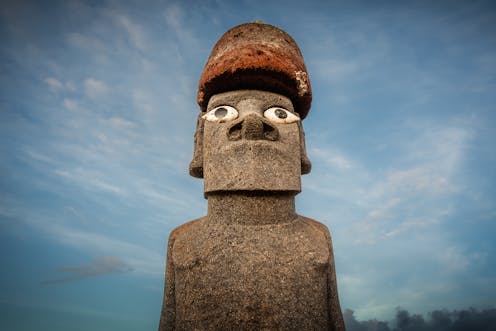
Poster of the word METEI written vertically between the back of two moai heads, with the inscription '1964-1965 RAPA NUI INA KA HOA (Don't give up the ship)'
METEI logo.
Georges Nogrady, CC BY-NC-ND

It’s important to realize that the expedition’s primary objective was to study the Rapa Nui people as a sort of living laboratory. They encouraged participation through bribery by offering gifts, food and supplies, and through coercion by enlisting a long-serving Franciscan priest on the island to aid in recruitment. While the researchers’ intentions may have been honorable, it is nevertheless an example of scientific colonialism, where a team of white investigators choose to study a group of predominantly nonwhite subjects without their input, resulting in a power imbalance.

There was an inherent bias in the inception of METEI. For one, the researchers assumed the Rapa Nui had been relatively isolated from the rest of the world when there was in fact a long history of interactions with countries outside the island, beginning with reports from the early 1700s through the late 1800s.

METEI also assumed that the Rapa Nui were genetically homogeneous, ignoring the island’s complex history of migration, slavery and disease. For example, the modern population of Rapa Nui are mixed race, from both Polynesian and South American ancestors. The population also included survivors of the African slave trade who were returned to the island and brought with them diseases, including smallpox.

This miscalculation undermined one of METEI’s key research goals: to assess how genetics affect disease risk. While the team published a number of studies describing the different fauna associated with the Rapa Nui, their inability to develop a baseline is likely one reason why there was no follow-up study following the completion of the airport on Easter Island in 1967.

Giving credit where it is due

Omissions in the origin stories of rapamycin reflect common ethical blind spots in how scientific discoveries are remembered.

Georges Nogrady carried soil samples back from Rapa Nui, one of which eventually reached Ayerst Research Laboratories. There, Surendra Sehgal and his team isolated what was named rapamycin, ultimately bringing it to market in the late 1990s as the immunosuppressant Rapamune. While Sehgal’s persistence was key in keeping the project alive through corporate upheavals – going as far as to stash a culture at home – neither Nogrady nor the METEI was ever credited in his landmark publications.

Although rapamycin has generated billions of dollars in revenue, the Rapa Nui people have received no financial benefit to date. This raises questions about Indigenous rights and biopiracy, which is the commercialization of Indigenous knowledge.

Agreements like the United Nations’s 1992 Convention on Biological Diversity and the 2007 Declaration on the Rights of Indigenous Peoples aim to protect Indigenous claims to biological resources by encouraging countries to obtain consent and input from Indigenous people and provide redress for potential harms before starting projects. However, these principles were not in place during METEI’s time.

Close-up headshots of row of people wearing floral headdresses in a dim room
The Rapa Nui have received little to no acknowledgment for their role in the discovery of rapamycin.
Esteban Felix/AP Photo

Some argue that because the bacteria that produces rapamycin has since been found in other locations, Easter Island’s soil was not uniquely essential to the drug’s discovery. Moreover, because the islanders did not use rapamycin or even know about its presence on the island, some have countered that it is not a resource that can be “stolen.”

However, the discovery of rapamycin on Rapa Nui set the foundation for all subsequent research and commercialization around the molecule, and this only happened because the people were the subjects of study. Formally recognizing and educating the public about the essential role the Rapa Nui played in the eventual discovery of rapamycin is key to compensating them for their contributions.

In recent years, the broader pharmaceutical industry has begun to recognize the importance of fair compensation for Indigenous contributions. Some companies have pledged to reinvest in communities where valuable natural products are sourced. However, for the Rapa Nui, pharmaceutical companies that have directly profited from rapamycin have not yet made such an acknowledgment.

Ultimately, METEI is a story of both scientific triumph and social ambiguities. While the discovery of rapamycin has transformed medicine, the expedition’s impact on the Rapa Nui people is more complicated. I believe issues of biomedical consent, scientific colonialism and overlooked contributions highlight the need for a more critical examination and awareness of the legacy of breakthrough scientific discoveries.

The Conversation

Ted Powers does not work for, consult, own shares in or receive funding from any company or organization that would benefit from this article, and has disclosed no relevant affiliations beyond their academic appointment.

ref. A billion-dollar drug was found in Easter Island soil – what scientists and companies owe the Indigenous people they studied – https://theconversation.com/a-billion-dollar-drug-was-found-in-easter-island-soil-what-scientists-and-companies-owe-the-indigenous-people-they-studied-250586

Who invented the light bulb?

Source: The Conversation – USA – By Ernest Freeberg, Professor of History, University of Tennessee

Eureka, what an idea! TU IS/iStock/Getty Images Plus

Curious Kids is a series for children of all ages. If you have a question you’d like an expert to answer, send it to CuriousKidsUS@theconversation.com.


Who invented the light bulb? – Preben, age 5, New York City


When people name the most important inventions in history, light bulbs are usually on the list. They were much safer than earlier light sources, and they made more activities, for both work and play, possible after the Sun went down.

More than a century after its invention, illustrators still use a lit bulb to symbolize a great idea. Credit typically goes to inventor and entrepreneur Thomas Edison, who created the first commercial light and power system in the United States.

But as a historian and author of a book about how electric lighting changed the U.S., I know that the actual story is more complicated and interesting. It shows that complex inventions are not created by a single genius, no matter how talented he or she may be, but by many creative minds and hands working on the same problem.

Thomas Edison didn’t invent the basic design of the incandescent light bulb, but he made it reliable and commercially viable.

Making light − and delivering it

In the 1870s, Edison raced against other inventors to find a way of producing light from electric current. Americans were keen to give up their gas and kerosene lamps for something that promised to be cleaner and safer. Candles offered little light and posed a fire hazard. Some customers in cities had brighter gas lamps, but they were expensive, hard to operate and polluted the air.

When Edison began working on the challenge, he learned from many other inventors’ ideas and failed experiments. They all were trying to figure out how to send a current through a thin carbon thread encased in glass, making it hot enough to glow without burning out.

In England, for example, chemist Joseph Swan patented an incandescent bulb and lit his own house in 1878. Then in 1881, at a great exhibition on electricity in Paris, Edison and several other inventors demonstrated their light bulbs.

Edison’s version proved to be the brightest and longest-lasting. In 1882 he connected it to a full working system that lit up dozens of homes and offices in downtown Manhattan.

But Edison’s bulb was just one piece of a much more complicated system that included an efficient dynamo – the powerful machine that generated electricity – plus a network of underground wires and new types of lamps. Edison also created the meter, a device that measured how much electricity each household used, so that he could tell how much to charge his customers.

Edison’s invention wasn’t just a science experiment – it was a commercial product that many people proved eager to buy.

Inventing an invention factory

As I show in my book, Edison did not solve these many technical challenges on his own.

At his farmhouse laboratory in Menlo Park, New Jersey, Edison hired a team of skilled technicians and trained scientists, and he filled his lab with every possible tool and material. He liked to boast that he had only a fourth grade education, but he knew enough to recruit men who had the skills he lacked. Edison also convinced banker J.P. Morgan and other investors to provide financial backing to pay for his experiments and bring them to market.

Historians often say that Edison’s greatest invention was this collaborative workshop, which he called an “invention factory.” It was capable of launching amazing new machines on a regular basis. Edison set the agenda for its work – a role that earned him the nickname “the wizard of Menlo Park.”

Here was the beginning of what we now call “research and development” – the network of universities and laboratories that produce technological breakthroughs today, ranging from lifesaving vaccines to the internet, as well as many improvements in the electric lights we use now.

Sparking an electric revolution

Many people found creative ways to use Edison’s light bulb. Factory owners and office managers installed electric light to extend the workday past sunset. Others used it for fun purposes, such as movie marquees, amusement parks, store windows, Christmas trees and evening baseball games.

Theater directors and photographers adapted the light to their arts. Doctors used small bulbs to peer inside the body during surgery. Architects and city planners, sign-makers and deep-sea explorers adapted the new light for all kinds of specialized uses. Through their actions, humanity’s relationship to day and night was reinvented – often in ways that Edison never could have anticipated.

Today people take for granted that they can have all the light they need at the flick of a switch. But that luxury requires a network of power stations, transmission lines and utility poles, managed by teams of trained engineers and electricians. To deliver it, electric power companies grew into an industry monitored by insurance companies and public utility regulators.

Edison’s first fragile light bulbs were just one early step in the electric revolution that has helped create today’s richly illuminated world.


Hello, curious kids! Do you have a question you’d like an expert to answer? Ask an adult to send your question to CuriousKidsUS@theconversation.com. Please tell us your name, age and the city where you live.

And since curiosity has no age limit – adults, let us know what you’re wondering, too. We won’t be able to answer every question, but we will do our best.

The Conversation

Ernest Freeberg does not work for, consult, own shares in or receive funding from any company or organization that would benefit from this article, and has disclosed no relevant affiliations beyond their academic appointment.

ref. Who invented the light bulb? – https://theconversation.com/who-invented-the-light-bulb-255822

Ending taxes on home sales would benefit the wealthiest households most – part of a larger pattern in Trump tax plans

Source: The Conversation – USA (2) – By Beverly Moran, Professor Emerita of Law, Vanderbilt University

Not long after U.S. housing prices reached a record high this summer – the median existing home went for US$435,000 in June – President Donald Trump said that he was considering a plan to make home sales tax-free.

Supporters of the idea, introduced by U.S. Rep. Marjorie Taylor Greene as the No Tax on Home Sales Act in July, say it would benefit working families by eliminating all taxes on the sales of family homes.

But most Americans who sell their homes already do so tax-free. And the households that would gain most under Trump’s proposals are those with the most valuable real estate.

As a legal scholar who studies how taxes affect racial and economic inequality, I see this proposal as part of a familiar pattern: measures advertised as relief for ordinary families that mostly benefit the well-off.

Most families already sell their homes tax-free

Right now, according to the Internal Revenue Code, a single person pays no tax on the first $250,000 in gain from a home sale, while married people can exclude $500,000. All told, about 90% of home sales generate less than $500,000 in gains, so the overwhelming majority of sellers already owe no tax.

The minority who would see new benefits from the proposed tax change are those with more than $500,000 in appreciation – typically owners of high-priced homes in hot real estate markets. Yale’s Budget Lab estimated the average benefit for these tax-free sales was $100,000 per qualifying seller.

Homeownership itself isn’t equally distributed across the U.S. population. About 44% of Black Americans are homeowners, compared with 74% of white Americans. That racial gap has only widened over the past 10 years. Similarly, single women – particularly but not exclusively women of color – face additional barriers.

A broader trend of upward wealth transference

Though still just a proposal, the tax-free home sales bill is part of a broader set of Republican tax plans that would have regressive effects – that is, where the vast majority of benefits go to high-income people and very few to low-income people – under a pro-worker banner.

Trump floated the tax-free home sales idea less than three weeks after he signed a large package of tax and spending measures in July 2025. That bill generated strong public criticism because of its emphasis on tax savings for the rich at the expense of almost a trillion dollars in cuts for federally funded health care for the poor and disabled.

The home sales idea follows the same script – and echoes the distributional pattern established by his 2017 Tax Cuts and Jobs Act. That tax reform increased racial wealth and income disparities and provided 80% of its benefits to corporations and high-income individuals. In fact, my research shows that white households received more than twice as many tax cuts as Black households from that law.

The same dynamic plays out in this new tax-fueled housing policy. Eliminating capital gains taxes on home sales would primarily benefit the 29 million homeowners who already have substantial equity – a group that skews heavily white, male and upper middle class. Meanwhile, America’s millions of renters, disproportionately people of color and women, would receive no benefit while potentially losing access to social programs Congress must cut to fund these tax breaks.

The Conversation

Beverly Moran is a senior fellow at the Roosevelt Institute, and Paulus Endowment senior tax fellow at Boston College.

ref. Ending taxes on home sales would benefit the wealthiest households most – part of a larger pattern in Trump tax plans – https://theconversation.com/ending-taxes-on-home-sales-would-benefit-the-wealthiest-households-most-part-of-a-larger-pattern-in-trump-tax-plans-264959

A staircase in a small, decorative arts museum tells a harrowing story of terror, abuse and enslavement

Source: The Conversation – USA (2) – By Susanna Ashton, Professor of English, Clemson University

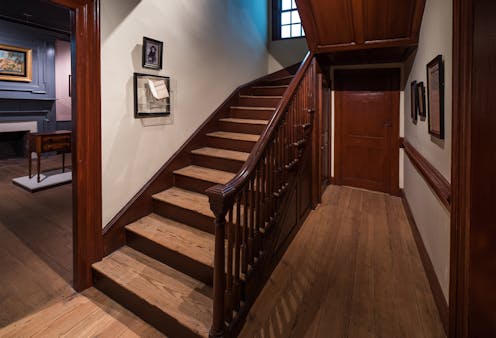
A monument to survival and perseverance has survived, by happenstance, to share its stories today. Courtesy of the Museum of Early Southern Decorative Arts (MESDA) at Old Salem

From the ages of 12 to about 22, Harriet Jacobs lived under the watch of her enslaver, a wealthy physician named James Norcom Sr. During that decade, as Jacobs grew from a child to a young woman, Norcom psychologically and physically terrorized her.

Once, when she was a teenager, he threw her down the stairs of his Edenton, North Carolina house. He swore it would never happen again. But as Jacobs later wrote, “I knew that he would forget his promise.”

Jacobs’ injuries took weeks to heal. Even after they did, she made sure nobody would forget what happened by including this harrowing moment in her 1861 autobiographical novel, “Incidents in the Life of a Slave Girl, Written by Herself,” one of the most important testimonies of captivity and survival ever written.

In July 2025, we stumbled across the staircase during a visit to the Museum of Early Southern Decorative Arts in Winston-Salem, North Carolina, an institution known for its preeminent collections of paintings, pottery, furniture and fine exhibits on Southern artisans and early American craft.

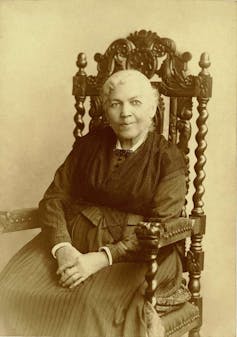
Elderly mulatto woman sitting in a large wooden chair with exquisite carvings.
A portrait of Harriet Jacobs taken in 1894, three years before her death.
Journal of the Civil War Era

We’d gone there to see a table that belonged to a formerly enslaved writer named Samuel “Aleckson” Williams. But our attention was ultimately drawn several rooms away from the table, where we encountered woodwork – including the staircase Jacobs had written about – from the house where Norcom had enslaved her.

As scholars of 19th-century U.S. literature who regularly teach Jacobs’ “Incidents,” we were stunned to realize that the staircase had survived.

It caught us even more off guard because Jacobs’ life has been receiving a lot of attention from scholars. For decades, Jacobs’ book was read as a work of fiction, if it was even remembered at all. But in recent years, historians have recovered her papers and confirmed a number of biographical details. In 2024, a narrative written by her brother, John Jacobs, was republished.

For us, the experience highlighted the importance of these small, regional museums. The staircase hadn’t originally been salvaged due to its connection to Jacobs. But it had nonetheless been conserved and cared for, which allowed new meanings to slowly emerge.

A daring escape

In 1964, the Jacobs staircase – along with a door, a mantle and paneling – were taken from Norcom’s house in Edenton not because of their connection to Jacobs or her enslaver, but because of their significance to Revolutionary-era craftsmanship.

We weren’t the first to realize the staircase’s connection to Jacobs. Roughly 15 years ago, curator Robert Leath brought it to the attention of Anthony Parent, a history professor at Wake Forest University. Parent publicized the story of these material objects through local outreach and some scholarship.

But like many histories that emerge from unexpected places, the story of the staircase hasn’t gained much traction in broader conversations among Jacobs scholars, much less in popular memory and national history.

Across “Incidents,” Jacobs chronicles many moments of physical and psychological abuse. But the assault on the stairs stands out among the many acts of terror she endured.

“He had pitched me down stairs in a fit of passion,” she writes, “and the injury I received was so serious that I was unable to turn myself in bed for many days.”

Jacobs eventually fled her bondage and exchanged her life in captivity under Norcom for a life of quasi-freedom: She spent seven years hiding in a nearby attic. Eventually she made her way to the North, where she claimed her freedom and published her book.

Rediscovered in the 1970s, Jacobs’ story was so astonishing that some readers doubted its autobiographical accuracy. But historian Jean Yellin was able to verify many aspects of her narrative, including the fact that she had hidden in an attic for seven years.

Yellin’s revelations of Jacobs’ life and work – in addition to the harrowing experiences of other women held in captivity – helped change the way Americans have been able to learn about how women, both enslaved and free, survive coercion and sexual violence.

Hidden in plain sight

At the Museum of Early Southern Decorative Arts, the staircase appears in between two separate galleries. On the wall along the steps to the first landing, a framed photograph of Harriet Jacobs and a framed copy of the first edition of “Incidents” hang. Though visitors are allowed to ascend the stairs, they don’t lead anywhere. In the next room are the mantel and wood paneling from the Norcom house.

The museum’s website doesn’t include a write-up of the Jacobs staircase, nor does it showcase an image of the impressive installation, although it’s cataloged with care – and, thanks in part to Parent’s advocacy, generations of students have visited the museum to see what survives of Jacobs’ house.

The museum staff recounted the story of the staircase to us in the course of a conversation about Williams. They, too, believe that the stories behind objects have a way of enduring, even as the importance and meaning of artifacts change over time.

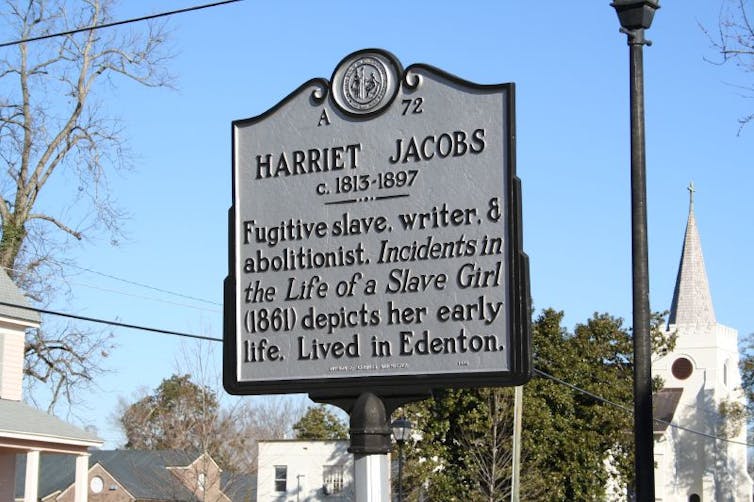
A sign reading 'Harriet Jacobs: fugitive slave, writer, and abolitionist. 'Incidents in the Life of a Slave Girl' depicts her early life. Lived in Edenton.'
Harriet Jacobs was enslaved in Edenton, N.C., as an adolescent.
Jed Record/flickr, CC BY

Stories that unfold in surprising ways

The installation at the Museum of Early Southern Decorative Arts demonstrates the power of regional museums to preserve artifacts whose stories unfold over generations – whose meaning may not rest on the reasons they are salvaged, purchased or preserved, and whose significance might seem to be an accident in hindsight. These stories matter, even – and especially – when they played a role in the most violent chapters in U.S. history.

Jacobs’ staircase was valuable when it was acquired; it was understood then as an example of fine 18th-century craftsmanship, and that’s a story worth preserving and learning. And yet its story now has more chapters that enrich the narrative.

As the Trump administration is reassessing “troubling” ideological content at the Smithsonian and elsewhere – slashing grants and budgets and even advocating for the removal or reconstruction of exhibits that tell difficult stories – we think it’s important to look anew at how museums preserve objects and the acts of survival they carry forward.

This isn’t a story of discovery and recovery. Instead, our experience simply demonstrates why museums, archives and libraries matter. These institutions require space to play the long game, in ways no one can anticipate, so they can continue doing what they do best: collect, preserve, document and curate.

In doing so, they allow stories like Jacobs’ to unfold in remarkable and utterly unforeseeable ways.

The Conversation

The authors do not work for, consult, own shares in or receive funding from any company or organization that would benefit from this article, and have disclosed no relevant affiliations beyond their academic appointment.

ref. A staircase in a small, decorative arts museum tells a harrowing story of terror, abuse and enslavement – https://theconversation.com/a-staircase-in-a-small-decorative-arts-museum-tells-a-harrowing-story-of-terror-abuse-and-enslavement-263976

How Dorothea Tanning’s ‘Birthday’ painting challenged male-dominated surrealism

Source: The Conversation – USA (2) – By Sally Jane Brown, Curator, West Virginia University

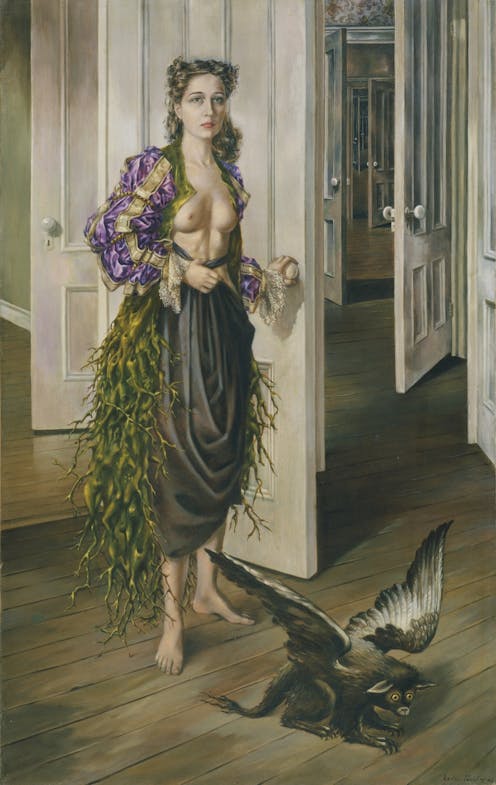
Do the seemingly endless doorways represent a woman trapped in domesticity or infinite ways out? Philadelphia Museum of Art

When American artist Dorothea Tanning painted “Birthday” in 1942, she announced her arrival – an artistic birth, as she later described it – into the surrealist movement.

Surrealism is an avant-garde art and literary movement that began in Paris in the 1920s and sought to unleash the unconscious mind. Women artists within the movement often drew on its dreamlike language to counter male surrealists’ idealized and objectifying portrayals of women, reclaiming their own agency and identity.

The movement’s centennial will be celebrated during the Philadelphia Museum of Art’s “Dreamworld: Surrealism at 100” exhibition, which opens Nov. 8, 2025, and runs through Feb. 16, 2026.

As an artist, writer and curator who focuses on feminism in art history, I’m excited to see Tanning’s “Birthday” displayed in Philadelphia alongside works by canonical male surrealists such as Salvador Dalí and Joan Miró. This juxtaposition invites viewers to reexamine surrealism through the contributions of women like Tanning, as well as Leonora Carrington and perhaps Remedios Varo.

These women brought radical innovations to the movement. Their depictions of female experiences of sexual awakening, domestic entrapment and psychic resistance added new depth to the dreamscapes envisioned by their male contemporaries.

A steady, unseductive gaze

Vertical oil painting of woman with fantastical creature at her feet in the foreground and a series of open doors in the background
‘Birthday,’ painted by American surrealist Dorothea Tanning in 1942.
Philadelphia Museum of Art

In “Birthday,” the artist paints herself bare-chested and wearing an elaborate skirt composed of flowing, vinelike forms that intertwine with female figures, evoking an organic world somewhere between vegetation and the sea. She stands tall in a corridor lined with doors that seem to recede endlessly. Is she trapped in domesticity, or do the doors represent infinite ways out? She stares off, seemingly at the painter, not the viewer. At her feet is a fantastical winged feline creature, its presence both companionable and uncanny.

The composition has many hallmarks of surrealism, including dream logic – the strange, flowing and often illogical progression of images reflecting the unpredictable nature of dreams – metamorphosis and psychic ambiguity. Psychic ambiguity refers to an open-ended emotional or psychological meaning. It invites multiple interpretations and exudes the complexity of the subconscious.

But what distinguishes “Birthday,” in my view, is its insistence on agency.

Many surrealist artists cast women as muses or dream figures conjured for the male gaze. Tanning, however, places herself at the center. Her steady, unseductive gaze confronts the viewer and demands recognition of her authorship.

French writer and poet André Breton’s 1924 “Manifesto of Surrealism” urged artists to liberate thought from rational constraint. Breton aimed to access the unconscious through dream and automatism, a surrealist technique of creating art without conscious control, allowing spontaneous expression from the subconscious mind, free from rational thought or aesthetic rules.

A fascinating array of doors

Beyond her self-portrait, “Birthday” depicts a seemingly unending series of doorways. Tanning wrote about taking inspiration from her New York apartment:

“I had been struck, one day, by a fascinating array of doors – hall, kitchen, bathroom, studio – crowded together, soliciting my attention with their antic planes, light, shadows, imminent openings and shuttings. From there it was an easy leap to a dream of countless doors.”

The “dream of countless doors” could represent the perpetual potential for change and renewal, or the ability to leave doors open for the imagination, or opportunities beyond domesticity for women.

Tanning refused to be confined by the label of “woman artist,” even as her work bore feminist depth. Nonetheless, her paintings modeled a form of self-determination that continues to resonate in the work of contemporary artists such as South African photographer Zanele Muholi and American mixed-media artist Mickalene Thomas.

Ultimately, “Birthday” is not just a surrealist self-portrait; it is a threshold work. It situates the artist between known and unknown, rational and subconscious, constraint and liberation. For Tanning, it marked her own artistic birth. For viewers today, it marks a reminder that self-representation is not static but always in motion, transforming.

Read more of our stories about Philadelphia and Pennsylvania, or sign up for our Philadelphia newsletter.

The Conversation

Sally Jane Brown does not work for, consult, own shares in or receive funding from any company or organization that would benefit from this article, and has disclosed no relevant affiliations beyond their academic appointment.

ref. How Dorothea Tanning’s ‘Birthday’ painting challenged male-dominated surrealism – https://theconversation.com/how-dorothea-tannings-birthday-painting-challenged-male-dominated-surrealism-264958

New hope for Huntington’s families as gene therapy shows remarkable results

Source: The Conversation – UK – By Åsa Petersén, Professor of Neuroscience, Lund University

kazoka/Shutterstock.com

A company called uniQure has announced promising results from a trial of a new gene therapy for Huntington’s disease. The news has spread quickly through families affected by this condition, who have been desperately waiting for a treatment that can stop or slow down this devastating illness.

Huntington’s disease is a fatal brain disorder that runs in families, caused by a faulty gene that produces a protein called huntingtin. The disease typically begins to cause symptoms in people between 30 and 50 years old.

People with the condition experience problems with movement, thinking abilities and mental health. The disease gets worse over time and typically leads to death about 20 years after symptoms first appear.

In this study, neurosurgeons delivered the treatment called AMT-130 directly into the brain using precise surgery guided by MRI scans. They targeted the striatum – the brain region most damaged by Huntington’s disease.

The treatment requires a single injection delivered during a complex 12- to 20-hour brain operation, which means it will probably be expensive.

AMT-130 uses a modified virus to carry genetic material that can reduce the amount of harmful huntingtin protein in brain cells. Scientists believe this faulty protein plays a key role in causing the disease.

The results showed that patients who received the high dose of AMT-130 (12 people) experienced significant benefits. The treatment appeared to slow disease progression by 75% over 36 months, compared with a carefully matched group of patients who didn’t receive the therapy and were from another study that investigates how the disease develops over time.

Disease progression was measured using a standard scale that tracks movement problems and thinking abilities in Huntington’s disease patients.

The high-dose treatment also showed benefits on another scale that measures how well people can carry out daily activities. Additionally, levels of neurofilament – a substance that indicates brain cell damage – decreased in patients’ spinal fluid after 36 months.

Crucially, the treatment appeared to be safe, and patients tolerated it well. UniQure plans to apply for approval from US regulators in early 2026.

There is an urgent need for treatments that can change the course of Huntington’s disease. Several clinical trials are currently testing ways to target huntingtin and other factors involved in the disease.

Some previous trials have had to be stopped early because of dangerous side-effects, so it’s particularly encouraging that AMT-130 appears safe.

Huntington’s disease explained.

Results need careful interpretation

However, these positive results need to be viewed with some caution. Only 12 patients received the high dose, which is a small number.

Comparing results to an external control group doesn’t account for the placebo effect – the improvement some patients experience simply from believing they’re receiving treatment. There might also be differences in how symptoms are rated between observational studies and treatment trials.

The company hasn’t yet presented results from more objective measures like brain scans or precise movement tests, and the findings have not been independently reviewed by other scientists.

The results show that this method of delivering gene therapy to the brain appears safe, which strengthens the potential for similar treatments – not only for Huntington’s disease but for other brain conditions.

The positive AMT-130 results have certainly created optimism and raised hope among many families living with Huntington’s disease.

Hope is vital for coping with the daily challenges this condition brings. This study, alongside other research happening worldwide, demonstrates the dedication and hard work of the Huntington’s disease community in their fight for new and effective treatments.

The Conversation

Åsa Petersén is affiliated with European Huntington Disease Network as deputy-chair of the executive committee.

ref. New hope for Huntington’s families as gene therapy shows remarkable results – https://theconversation.com/new-hope-for-huntingtons-families-as-gene-therapy-shows-remarkable-results-266158

Consent issues in the Twilight saga extend far beyond Bella and Edward’s age gap

Source: The Conversation – UK – By Emily Hammer, PhD Candidate in Theological Ethics, University of St Andrews

Most debates about the depiction of consent in Stephenie Meyer’s Twilight saga, which turns 20 this month, focus on the age gap between Bella Swan and Edward Cullen. For the uninitiated, Edward is an undead vampire who has been frozen at age 17 for 87 years, and falls in love with 17-year-old human schoolgirl Bella.

However, I want to discuss another question – whether Bella can consent to becoming a vampire (a transformation she begs Edward for throughout the series, and is finally granted in the final novel) at all. Philosopher L.A. Paul calls such decisions “transformative experiences” – choices you can’t fully evaluate beforehand because they will permanently change who you are.

The challenge of the choice to become a vampire or not, an example Paul uses in her book, Transformative Experience (2014), is two-part, according to her transformative experience framework. First, you can’t give the experience of becoming a vampire a personal value because you have no comparable experience (such as changing species). This makes it impossible for you to choose rationally as you would in other choices, by, for example, visualising what it might be like or making a pros and cons list.

Unlike being in a love triangle (albeit with a vampire and a werewolf, the plot of the second Twilight novel, New Moon), becoming a vampire is an irreversible event you can’t test or gather data on.


This article is part of a mini series marking 20 years since the publication of Stephenie Meyer’s first Twilight novel.


Second, given that your preferences will change in ways unknown upon becoming a vampire, you can’t choose which choice – vampire or human – you would prefer. For instance, human Bella enjoys sitting in the sun reading, while her vampire lover looks on from the trees. Vampire Bella might not miss this, however, as she now is consumed by blood-lust.

Consent, or informed consent, a term often associated with sex or medical interventions, considers whether someone is able to agree to something happening to them. A valid consent is one that is informed, voluntary, and capacitous – given by someone who is capable of giving consent.

In Bella’s choice to become a vampire, and in fact most transformative experience choices, capacity and voluntariness are easily established. At 18, Bella has reached the age of majority in Washington state, where she lives, meaning she can make her own autonomous decisions. She does not suffer from any current mental health conditions – her months-long depressive episode in New Moon, from which she has recovered by the time she becomes a vampire, notwithstanding. Her choice is also voluntary. In fact, throughout most of the saga, she is the main person pushing for her vampirism, with Edward and his adopted sister Rosalie being thoroughly opposed.

The issue with consent in transformative experience decisions is with the information. By their very nature, we do not have enough facts to make a rational choice. According to at least one major informed consent framework, this does not satisfy the condition of substantial understanding of “the foreseeable consequences and possible outcomes that might follow as a result of [(not)] performing the action”. The question of whether Bella can consent to becoming a vampire is misleading then.

In fact, all transformative experiences that require a consent transaction are not doing what they purport to be doing, as there is no way to understand what the consequences and possible outcomes will be. The more everyday transactions Paul discusses in her book are: getting a cochlear implant as person who is Deaf from birth, or choosing to have a child. There is a moment of consent, of no return, involved in both of these choices, and as both are transformative experiences, there is a lack of information for you personally making the choice.

The moment Bella turns into a vampire in the film adaptation of Breaking Dawn.

Paul’s solution to this is to reframe the question from choosing, say, vampirism or not vampirism, to choosing “revelation” – or not. “If you choose to undergo a transformative experience and its outcomes,” she writes, “you choose the experience for the sake of discovery itself, even if this entails a future that involves stress, suffering, or pain.”

This is exactly what Bella does. She chooses to become a vampire because she wants to be with Edward forever, something she reveals to him at her prom in the epilogue of the first book.

As comes to light at the end of New Moon, she also wants to protect Edward’s family from the Volturi (the vampire government). She accepts that this means leaving her own loved ones behind. She says: “This was always the hardest part […] The people I would lose, the people I would hurt [by becoming a vampire].”

However, as is the nature of transformative experiences, she ends up being wrong about her assessment of losing people. She gains her daughter Renesmee, her werewolf love interest Jacob sticks around and her dad Charlie is still in her life. In short, the outcomes were not as she feared, in part because she had no data to truly make a rational judgment about them.

So, can Bella consent to becoming a vampire? She can’t consent to vampirism in the usual informed consent sense, and as Paul argues, neither can people making other significant choices. But she can consent to revelation, which reframes what a meaningful transformative choice looks like.


Looking for something good? Cut through the noise with a carefully curated selection of the latest releases, live events and exhibitions, straight to your inbox every fortnight, on Fridays. Sign up here.


The Conversation

Emily Hammer does not work for, consult, own shares in or receive funding from any company or organisation that would benefit from this article, and has disclosed no relevant affiliations beyond their academic appointment.

ref. Consent issues in the Twilight saga extend far beyond Bella and Edward’s age gap – https://theconversation.com/consent-issues-in-the-twilight-saga-extend-far-beyond-bella-and-edwards-age-gap-263760

Peru’s gastronomic boom risks excluding the Indigenous people whose food it celebrates

Source: The Conversation – UK – By Belinda Zakrzewska, Assistant Professor of Marketing, University of Birmingham

Peruvians are rightly passionate about food. Their pride in Peruvian cuisine has been fuelled in the past two decades or so by a wave of international culinary awards that has forged sense of belonging and visibility on the world stage. Yet, behind this “gastronationalism” lies a more complex story about inequality and exclusion.

The rise to international prominence of Peruvian cuisine, often referred to as the “gastronomic boom”, started to gather pace in the late 20th century. It was spearheaded by Peruvian chefs who studied or trained abroad and returned to Lima, the capital of Peru, with new culinary ideas.

There is a clear consensus among Peruvians that the pioneer of this movement was Gastón Acurio. He created upscale Peruvian restaurants at a time when Lima’s elite favoured French and Italian restaurants. His efforts extended beyond the kitchen. He published books, was a key figure in organising Mistura (Lima’s first major culinary festival) and co-founded Apega (the society of Peruvian gastronomy). Throughout his endeavours, his message was clear: “Cuisine unites Peruvians in a shared sense of pride and faith in ourselves.”

Acurio’s success inspired a new generation of celebrity chefs, among them chef Virgilio Martínez, owner of Central, and chef Mitsuharu “Micha” Tsumura, owner of Maido. Both restaurants have secured the top spot in the list compiled by industry bible, The World’s 50 Best Restaurants: Central in 2023 and Maido in 2025. This has reinforced Peru’s place on the global culinary map. The South American country has earned the title of the World’s Best Culinary Destination 12 times since 2012 (only missing out in 2020).

Antony Bourdain visits Peru.

Peru’s gastronomic boom offered a powerful unifying narrative in a country whose national identity has been fragmented by class, racial, and ethnic inequalities due to the Spanish colonisation in 1532. Peru’s sense of itself was further shattered by two devastating decades of internal terrorism and economic crisis in the 1980s and 1990s. A recent Ipsos survey has confirmed this, revealing that Peruvian cuisine is the number one reason for national pride, with 48% of Peruvians citing it.

Hard-to-swallow truths

Gastronationalism can easily morph into chauvinism. Last month, Spanish influencer Ibai Llanos organised the “World Breakfast Cup” on his social media platforms, an online voting contest featuring breakfasts from 16 countries including the UK, Japan, Peru and other countries in Latin America. Peru’s pan con chicharrón (fried pork belly and sweet potato sandwich) won the tournament, defeating dishes from Mexico, Ecuador, Chile and Venezuela.

Peru's pan con chicharron -- a pork and sweet potato sandwich..
Peru’s champion breakfast: pan con chicharron – a pork and sweet potato sandwich..
Carolina_Ugarte_Photo/Shutterstock

The victory sparked a national celebration and boosted delivery orders of pan con chicharrón. But it also revealed a less savoury side of the competition. Some Peruvians took to the internet to mock rival cuisines, even going as far as to compare Ecuador’s bolón de verde to faeces.

It’s important to note that this gastronationalism – and the high-end cooking which has pushed Peru to the top of the world cuisine charts – occurs in a country where 17.6 million Peruvians (51% of the population) suffer from moderate or severe food insecurity and are unable to access a healthy diet because food costs have risen faster than wages. In a country that is rightly celebrated for its cuisine, which is attracting growing numbers of visitors specifically for its food, 43.7% of children under three suffer from anaemia and 12.1% of children under five suffer from chronic malnutrition.

Many people depend on community soup kitchens. In 2020 it was estimated there were more than 15,000 community kitchens providing for nearly 800,000 people. But there are concerns that all-too-often these community kitchens are unable to cater for the cultural and nutritional needs of Peru’s diverse population, particularly its Indigenous groups.

Peru’s gastronationalism also risks reproducing colonial hierarchies that promoted some people to elite status while, at the same time, marginalising Andean and Amazonian communities. In the food landscape, celebrity chefs from Lima often profit from Indigenous ingredients and techniques without providing fair compensation to the Indigenous communities that have safeguarded them for centuries.

A prime example is the guinea pig, (in Spanish: cuy). This has been a staple protein served and eaten whole in Andean communities for millennia. In the hands of elite restaurateurs, this has been transformed into delicacies such as cuy pekinés (a guinea pig prepared in the style of Peking duck) or as filling for ravioli.

Due to the sort of exorbitant prices charged for these dishes, these communities are excluded from tasting the reinterpreted versions of their own cultural expressions. Thus, celebrity chefs’ endeavours are built on an intricate dynamic of cultural appropriation and cultural appreciation – where a “borrowed” recipe or idea becomes more valuable the further it is taken from its Indigenous origins.

The paradox of Peru’s gastronationalism is that while it promotes a narrative of unity it simultaneously reinforces the divisions it claims to overcome. Celebrating food is not the issue. The issue is allowing that celebration to become an excuse for inaction over food poverty and inequality.

True culinary success will be measured not by more awards. It should be judged on whether the prosperity of the “gastronomic boom” can be extended beyond Lima’s elite restaurants to tackle the foundational inequalities upon which the current system is built.

The Conversation

Belinda Zakrzewska does not work for, consult, own shares in or receive funding from any company or organisation that would benefit from this article, and has disclosed no relevant affiliations beyond their academic appointment.

ref. Peru’s gastronomic boom risks excluding the Indigenous people whose food it celebrates – https://theconversation.com/perus-gastronomic-boom-risks-excluding-the-indigenous-people-whose-food-it-celebrates-265896