Science costs money – research is guided by who funds it and why

Source: The Conversation – USA – By Ryan Summers, Associate Professor of Science Education, University of North Dakota
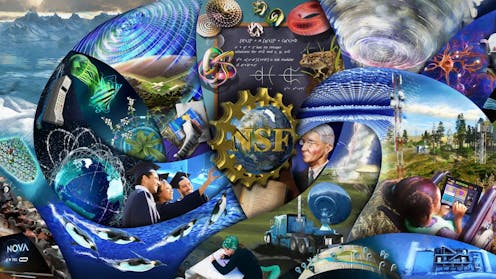
NSF is one federal agency that funds a wide range of basic science research. Nicole Fuller/National Science Foundation, CC BY

Scientists have always needed someone to help foot the bill for their work.

In the 19th century, for example, Charles Darwin made an expensive voyage to the southernmost tip of the Americas, visiting many other places en route, including his famous trek through the Galapagos Islands. The fossil evidence Darwin collected over his five-year journey eventually helped him to think about an infinite variety of species, both past and present.

The HMS Beagle and its crew traversed these places while testing clocks and drawing maps for the Royal Navy, and the voyage was funded by the British government. Darwin’s position as a naturalist aboard the ship was unpaid, but, fortunately, his family’s private assets were enough to cover his living expenses while he focused on his scientific work.

Today, government and private funding both remain important for scientific discoveries and translating knowledge into practical applications.

As a professor of science education, one of my goals while preparing future teachers is to introduce them to the characteristics of scientific knowledge and how it is developed. For decades, there has been a strong consensus in my field that educated citizens also need to know about the nature of the scientific enterprise. This includes understanding who pays for science, which can differ depending on the type of research, and why it matters.

Funding for science is more than just the amount of money. To a large extent, the organizations that fund research set the agenda, and different funders have different priorities. It can also be hard to see the downstream benefits of scientific research, but they typically outweigh the upfront costs.

Basic research leads to new knowledge

Basic research, also called fundamental research, involves systematic study aimed at acquiring new knowledge. Scientists often pursue research that falls into this category without specific applications or commercial objectives in mind.

Of course, it costs money to follow where curiosity leads; scientists need funding to pursue questions about the natural and material world.

About 40% of basic research in the U.S. has been federally funded in recent years. The government makes this investment because basic research is the foundation of long-term innovation, economic growth and societal well-being.

Funding for basic research is distributed by the federal government through several agencies and institutes. For more than a century, the U.S. National Institutes of Health have sponsored a breadth of scientific and health research and education programs. Since 1950, the National Science Foundation has advanced basic research and education programs, including the training of the next generation of scientists.

Other federal agencies have complementary missions, such as the Defense Advanced Research Projects Agency, created in response to the Soviet Union’s launch of Sputnik in 1957. DARPA focuses on technological innovations for national security, many of which have become fixtures of civilian life.

Through a competitive review process at these agencies, subject experts vet research proposals and make funding recommendations. The amount of funding available from the NIH, NSF and DARPA varies annually, depending on congressional appropriations. Most of the awarded funds go to universities, research institutions and other health and science organizations that conduct research. The sum of research dollars awarded differs among states.

Applying research

Scientists undertake basic research to generate new knowledge with no specific end goal in mind. Applied research is different in that it aims to find solutions to real-world problems.

Research that investigates specific, practical objectives or improvements with commercial potential is more likely to attract private investors. Companies directly invest in research and development to gain a competitive edge and turn a profit. Private industry is more likely to sink dollars into applied rather than basic research because the potential payoff in the form of a new product or advance is more visible.

From discovery to real-world implementation

As applied research addresses problems, promising findings are moved toward clinical application or mainstream use. This research and development process can lead to tangible benefits for individuals and society.

Federal agencies such as the NIH make substantial investments in the basic and applied science underlying new drugs. Pharmaceutical and biotechnology companies heavily invest in the development of drug candidates. Recent reports have shown that industry has been responsible for 50% or more of the dollars invested in health and biomedical research in recent years. This expenditure includes significant spending to advance clinical trials – the studies that test new medical treatments before they get approved for use.

The NIH funded basic research that contributed to every single drug approved by the U.S. Food and Drug Administration between 2010 and 2016. This includes key work that led to COVID-19 vaccines. The COVID-19 vaccination campaign likely saved the U.S. more than $1 trillion in health care expenses that would have otherwise been incurred and also saved lives.

Initial NSF investments in research was instrumental in capturing images of black holes and exploring deep oceans. Basic research funded by NSF paved the way for everyday conveniences such as smartphones, the Google search engine and artificial intelligence. Other funded projects led to quality of life improvements such as American Sign Language and kidney matching for transplants. Educational programming, such as “Bill Nye the Science Guy” and “The Magic School Bus,” were NSF-backed projects, too.

It matters who pays: Funding shapes science

Funders and financial systems shape the trajectory of research across fields. Institutions advertise funding opportunities based on their current priorities. Changes in the amount of funding available ultimately direct the attention of researchers. Any interruptions to basic research, such as changes to financial supports or institutions, may threaten future discoveries and potential payoffs for years to come.

According to numbers reported by a coalition of research institutions, every dollar that NIH spends on research leads to $2.56 of new economic activity. For the 2024 fiscal year, this means, of the $47.35 billion Congress appropriated for NIH, the $36.94 billion awarded to U.S. researchers fueled $94 billion in activity through employment and the purchase of research-related goods and services.

Economist Pierre Azoulay and colleagues recently imagined an alternative history where NIH was 40% smaller and dispersed less money – a budget akin to current federal proposals. They argued that more than half of the drugs FDA approved since 2000 are tied to NIH-funded research that would have been cut under this scenario. This thought experiment underscores how valuable those basic research dollars are.

‘Last Week Tonight with John Oliver’ points out some seemingly outlandish basic research that has yielded surprising real-world applications.

Even seemingly out-of-touch or abstract studies may precede discoveries with major impact. Basic research into bee nectar foraging and movement around the colony, recently mentioned on “Last Week Tonight with John Oliver,” led to the development of an algorithm that distributes internet traffic between computer servers, which now powers the multibillion-dollar web-hosting industry. Learning about applications of research with visible societal impacts can help people understand and appreciate the role of funding in the scientific enterprise.

The Conversation

Ryan Summers receives funding from the National Science Foundation (NSF) and the National Institutes of Health (NIH). He is affiliated with the Association for Science Teacher Education (ASTE), NARST, which is a global organization for improving science education through research, and the National Science Teaching Association (NSTA).

ref. Science costs money – research is guided by who funds it and why – https://theconversation.com/science-costs-money-research-is-guided-by-who-funds-it-and-why-262587

Children can be systematic problem-solvers at younger ages than psychologists had thought – new research

Source: The Conversation – USA – By Celeste Kidd, Professor of Psychology, University of California, Berkeley

How do kids figure out how to sort things by order? Celeste Kidd

I’m in a coffee shop when a young child dumps out his mother’s bag in search of fruit snacks. The contents spill onto the table, bench and floor. It’s a chaotic – but functional – solution to the problem.

Children have a penchant for unconventional thinking that, at first glance, can look disordered. This kind of apparently chaotic behavior served as the inspiration for developmental psychologist Jean Piaget’s best-known theory: that children construct their knowledge through experience and must pass through four sequential stages, the first two of which lack the ability to use structured logic.

Piaget remains the GOAT of developmental psychology. He fundamentally and forever changed the world’s view of children by showing that kids do not enter the world with the same conceptual building blocks as adults, but must construct them through experience. No one before or since has amassed such a catalog of quirky child behaviors that researchers even today can replicate within individual children.

While Piaget was certainly correct in observing that children engage in a host of unusual behaviors, my lab recently uncovered evidence that upends some long-standing assumptions about the limits of children’s logical capabilities that originated with his work. Our new paper in the journal Nature Human Behaviour describes how young children are capable of finding systematic solutions to complex problems without any instruction.

Jean Piaget describes how children of different ages tackle a sorting task, with varying success.

Putting things in order

Throughout the 1960s, Piaget observed that young children rely on clunky trial-and-error methods rather than systematic strategies when attempting to order objects according to some continuous quantitative dimension, like length. For instance, a 4-year-old child asked to organize sticks from shortest to longest will move them around randomly and usually not achieve the desired final order.

Psychologists have interpreted young children’s inefficient behavior in this kind of ordering task – what we call a seriation task – as an indicator that kids can’t use systematic strategies in problem-solving until at least age 7.

Somewhat counterintuitively, my colleagues and I found that increasing the difficulty and cognitive demands of the seriation task actually prompted young children to discover and use algorithmic solutions to solve it.

Piaget’s classic study asked children to put some visible items like wooden sticks in order by height. Huiwen Alex Yang, a psychology Ph.D. candidate who works on computational models of learning in my lab, cranked up the difficulty for our version of the task. With advice from our collaborator Bill Thompson, Yang designed a computer game that required children to use feedback clues to infer the height order of items hidden behind a wall, .

The game asked children to order bunnylike creatures from shortest to tallest by clicking on their sneakers to swap their places. The creatures only changed places if they were in the wrong order; otherwise they stayed put. Because they could only see the bunnies’ shoes and not their heights, children had to rely on logical inference rather than direct observation to solve the task. Yang tested 123 children between the ages of 4 and 10.

Researcher Huiwen Alex Yang tests 8-year-old Miro on the bunny sorting task. The bunnies are hidden behind a wall with only their sneakers visible. Miro’s selections exemplify use of selection sort, a classic efficient sorting algorithm from computer science. Kidd Lab at UC Berkeley.

Figuring out a strategy

We found that children independently discovered and applied at least two well-known sorting algorithms. These strategies – called selection sort and shaker sort – are typically studied in computer science.

More than half the children we tested demonstrated evidence of structured algorithmic thinking, and at ages as young as 4 years old. While older kids were more likely to use algorithmic strategies, our finding contrasts with Piaget’s belief that children were incapable of this kind of systematic strategizing before 7 years of age. He thought kids needed to reach what he called the concrete operational stage of development first.

Our results suggest that children are actually capable of spontaneous logical strategy discovery much earlier when circumstances require it. In our task, a trial-and-error strategy could not work because the objects to be ordered were not directly observable; children could not rely on perceptual feedback.

Explaining our results requires a more nuanced interpretation of Piaget’s original data. While children may still favor apparently less logical solutions to problems during the first two Piagetian stages, it’s not because they are incapable of doing otherwise if the situation requires it.

A systematic approach to life

Algorithmic thinking is crucial not only in high-level math classes, but also in everyday life. Imagine that you need to bake two dozen cookies, but your go-to recipe yields only one. You could go through all the steps of making the recipe twice, washing the bowl in between, but you’d never do that because you know that would be inefficient. Instead, you’d double the ingredients and perform each step only once. Algorithmic thinking allows you to identify a systematic way of approaching the need for twice as many cookies that improves the efficiency of your baking.

Algorithmic thinking is an important capacity that’s useful to children as they learn to move and operate in the world – and we now know they have access to these abilities far earlier than psychologists had believed.

That children can engage with algorithmic thinking before formal instruction has important implications for STEM – science, technology, engineering and math –education. Caregivers and educators now need to reconsider when and how they give children the opportunity to tackle more abstract problems and concepts. Knowing that children’s minds are ready for structured problems as early as preschool means we can nurture these abilities earlier in support of stronger math and computational skills.

And have some patience next time you encounter children interacting with the world in ways that are perhaps not super convenient. As you pick up your belongings from a café floor, remember that it’s all part of how children construct their knowledge. Those seemingly chaotic kids are on their way to more obviously logical behavior soon.

The Conversation

Celeste Kidd receives funding from the National Science Foundation, the John Templeton Foundation, the Jacobs Foundation, and the Advanced Research and Invention Agency.

ref. Children can be systematic problem-solvers at younger ages than psychologists had thought – new research – https://theconversation.com/children-can-be-systematic-problem-solvers-at-younger-ages-than-psychologists-had-thought-new-research-266438

Virtual particles: How physicists’ clever bookkeeping trick could underlie reality

Source: The Conversation – USA – By Dipangkar Dutta, Professor of Nuclear Physics, Mississippi State University

Scientists imagine virtual particles popping in and out of existence to explain how forces transfer between particles. koto_feja/iStock via Getty Images

A clever mathematical tool known as virtual particles unlocks the strange and mysterious inner workings of subatomic particles. What happens to these particles within atoms would stay unexplained without this tool. The calculations using virtual particles predict the bizarre behavior of subatomic particles with such uncanny accuracy that some scientists think “they must really exist.”

Virtual particles are not real – it says so right in their name – but if you want to understand how real particles interact with each other, they are unavoidable. They are essential tools to describe three of the forces found in nature: electromagnetism, and the strong and weak nuclear forces.

Real particles are lumps of energy that can be “seen” or detected by appropriate instruments; this feature is what makes them observable, or real. Virtual particles, on the other hand, are a sophisticated mathematical tool and cannot be seen. Physicist Richard Feynman invented them to describe the interactions between real particles.

But many physicists are not convinced by this cut-and-dried distinction.
Although researchers can’t detect these virtual particles, as tools of calculation they predict many subtle effects that ultrasensitive experiments have confirmed to a mind-boggling 12 decimal places. That precision is like measuring the distance between the North and South poles to better than the width of a single hair.

This level of agreement between measurements and calculations makes virtual particles the most thoroughly vetted idea in science. It forces some physicists to ask: Can a mathematical tool become real?

Virtual particles help scientists follow the interactions between particles.

A bookkeeping tool

Virtual particles are the tool that physicists use to calculate how forces work in the microscopic subatomic world. The forces are real because they can be measured.

But instead of trying to calculate the forces directly, physicists use a bookkeeping system where short-lived virtual particles carry the force. Not only do virtual particles make the calculations more manageable, they also resolve a long-standing problem in physics: How does a force act across empty space?

Virtual particles exploit the natural fuzziness of the subatomic world, where if these ephemeral particles live briefly enough, they can also briefly borrow their energy from empty space. The haziness of the energy balance hides this brief imbalance, which allows the virtual particles to influence the real world.

One big advantage of this tool is that the mathematical operations describing the forces between particles can be visualized as diagrams. They tend to look like stick-figure cartoons of particle pingpong played with virtual particles. The diagrams – dubbed Feynman diagrams – offer an excellent intuitive framework, but they also give virtual particles an aura of reality that is deceiving.

Feynman diagrams help physicists calculate particle interactions.

Amazingly, this virtual particle-based method for calculation produces some of the most precise predictions in all of science.

Reality check

All matter is made of basic building blocks called atoms. Atoms, in turn, are made of small positively charged particles called protons found at their core, surrounded by even smaller negatively charged particles called electrons.

As a professor of physics and astronomy at Mississippi State University, I perform experiments that often rely on the idea that the electrons and protons seen in our instruments interact by swapping virtual particles. My colleagues and I have recently measured the size of the proton very precisely, by bombarding hydrogen atoms with a beam of electrons. This measurement assumes that the electrons can “feel” the proton at the center of the hydrogen atom by exchanging virtual photons: particles of electromagnetic energy.

Physicists use virtual particles to calculate how two electrons repel each other, with exquisite precision. The forces involved are represented as the accumulated effect of the two electrons trading virtual photons.

When two metal plates are placed extremely close together in a vacuum, they attract each other: This is known as the Casimir effect. Physicists can accurately calculate the force that pulls the plates together using virtual particle mathematics. Whether the virtual particles are really there or not, the math predicts exactly what researchers observe in the real world.

An illustration of two black circles merging in space
Virtual particles can help explain how black holes act.
SXS, CC BY-ND

Yet another mysterious prediction made using the virtual particle tool kit is so-called Hawking radiation. When virtual particle pairs pop into existence at the edge of black holes, sometimes the black hole’s gravity grabs one partner while the other escapes. This rift causes the black hole to slowly evaporate. Although Hawking radiation has not yet been directly observed, researchers have recently observed it indirectly.

Useful fiction

Let’s circle back to the question: Can a mathematical tool become real? If you can perfectly predict everything about a force by imagining it is carried by virtual particles, do these particles qualify as real? Does their fictional status matter?

Physicists remain divided on these questions. Some prefer to “just shut up and calculate” – one of Feynman’s famous quips. For now, virtual particles are our best way to describe how particles behave. But researchers are developing alternative methods that do not need them at all.

If successful, these approaches could make virtual particles vanish for good. Successful or not, the fact that alternatives exist at all suggests virtual particles might be useful fiction rather than physical truth. It also fits the pattern of previous revolutions in science – the example of ether comes to mind. Physicists invented ether as a medium through which light waves traveled. Experiments matched well with calculations using this tool, yet they could not actually detect it. Eventually, Einstein’s theory of relativity showed it was unnecessary.

Virtual particles are a striking paradox of modern physics. They shouldn’t exist, yet they are indispensable for calculating everything from the strength of magnets to the behavior of black holes. They represent a profound dilemma: Sometimes the best insights into reality come through carefully constructed illusion. In the end, confusion around virtual particles may be just the price of understanding fundamental forces.

The Conversation

Dipangkar Dutta receives funding from US Dept. of Energy and NSF.

ref. Virtual particles: How physicists’ clever bookkeeping trick could underlie reality – https://theconversation.com/virtual-particles-how-physicists-clever-bookkeeping-trick-could-underlie-reality-264739

‘AI actor’ Tilly Norwood is dividing Hollywood – but real acting requires humanity

Source: The Conversation – UK – By Nicholas Scrivens, Programme Leader – MA Musical Theatre, University of Surrey

Tilly Norwood is the hottest actor in Hollywood right now.

Her career has been covered by Variety, the BBC and Forbes, to name just a few publications. All of this is publicity that a young actor at the start of their career can only dream of. But Tilly doesn’t dream. Nor is she actually acting in the strictest sense of the word, because Tilly is an AI actor, created by Particle6 Studios, a UK-based AI-focused film production company.

There have, of course, been AI actors before. Carrie Fisher was famously resurrected for The Rise of Skywalker in 2019. James Cameron used background “actors” to populate Titanic in 1997, but until now no AI creation has achieved the media cut-through that Tilly has. This is partly due to her creator – Eline Van Der Velden – and her team. They have launched Tilly into the marketplace as a persona: something designed to act and emote.

As Van Der Velden told entertainment news site Screen Daily: “[Tilly is] an act of imagination and craftsmanship, not unlike drawing a character, writing a role or shaping a performance.” There is technological craft in her creation, certainly. But there is also a grey area, where that creation draws on the work, voices, physiognomy and artistry of others – blended into code, shaped for modern media and packaged in a soft-focus comedy video just meta enough to deflect criticism.

Tilly Norwood appears in an AI sitcom sketch.

My work with actors has always been deeply rewarding. At the Guilford School of Acting, where I teach, the approach is grounded in the belief that acting is born from a combination of craft, empathy, collaboration and above all a genuine exploration of what it means to be human. The story of “Tilly’s” creation has stirred a powerful response among the students I have been working with: a mix of horror, fear and, perhaps most chillingly of all, resignation. Resignation that this may indeed be the direction in which the creative industries are heading.

The outcry from established actors was immediate and heartfelt. On hearing that agents were already contacting the production company in hopes of representing it, A-lister Emily Blunt told interviewers: “Good lord, we’re screwed. That is really, really scary. Come on, agencies, don’t do that. Please stop. Please stop taking away our human connection.”

The human connection is the point. The Russian theatre practitioner, Konstantin Stanislavski, whose work consistently urged actors to seek inner truth and humanity, summed it up well. Writing in his book An Actor Prepares (1936), he explained: “To break that rule of using your own feelings is the equivalent of killing the person you are portraying, because you deprive him of a palpitating, living, human soul, which is the real source of life for a part.”

In a recent podcast interview with Jay Shetty, actor Emma Watson reflected on how the “movie star” version of herself had become something of an avatar in her mind. She spoke candidly about her journey from the Harry Potter films, the hypersexualisation she endured in the media and the scrutiny now placed on her every word and stance.

For producers, directors, and studios, a compliant, commodified figure like Norwood is an attractive prospect: an actor who doesn’t need an intimacy coordinator, won’t go off-message on social media or perhaps more disturbingly, might. As impressive as the technological achievement is, the choice of an elfin-thin, 20-something female “actor” is also highly questionable.

In a world where power dynamics and abuses are finally being called out through the #MeToo movement, it’s perhaps no surprise that the coded, painted and constructed Tilly Norwood has arrived. The “actor” is programmable and usable. It looks human but is, at its core, deficient. And will always remain so. Because what makes an actor is that ineffable thing: humanity.


Looking for something good? Cut through the noise with a carefully curated selection of the latest releases, live events and exhibitions, straight to your inbox every fortnight, on Fridays. Sign up here.


The Conversation

Nicholas Scrivens does not work for, consult, own shares in or receive funding from any company or organisation that would benefit from this article, and has disclosed no relevant affiliations beyond their academic appointment.

ref. ‘AI actor’ Tilly Norwood is dividing Hollywood – but real acting requires humanity – https://theconversation.com/ai-actor-tilly-norwood-is-dividing-hollywood-but-real-acting-requires-humanity-266525

From art form to asset: our study found popular songs are becoming more generic

Source: The Conversation – UK – By Johannes Petry, CSGR Research Fellow, University of Warwick

GaudiLab/Shutterstock

Does all music sound the same these days? Many listeners – and artists – think so. There’s a concern that today’s hits are increasingly generic, predictable and indistinguishable. And it might all come down to money.

Streaming platforms like Spotify have transformed music production, distribution and consumption. In place of nurturing individual expression, there’s long been a belief that streaming platforms have shifted the focus to financial goals.

Our new research examined these perceptions and found that over a 20-year period there was a move towards standardisation, repetition and conformity in popular tracks.

In the 1940s, philosophers like Theodor Adorno and Max Horkheimer argued that, much like Henry Ford’s production lines, music had become a mass-produced commodity designed for passive consumption. By the early 2000s, physical record sales still drove revenues, major labels controlled most of the market, and promotional power was concentrated in radio stations, music television and charts.

Despite this commodified structure, however, music – especially in genres like hip-hop – remained stylistically diverse and regionally distinct.

Yet, over the last decade, a transformation has occurred. The rise of streaming platforms and the growing role of finance have restructured the culture industry. This is not only changing how music is distributed, but fundamentally altering how it is valued and produced.

In our study, we found that today’s industry is no longer primarily about selling commodities like albums, tickets or CDs. Rather, it is about generating financial assets in the form of rising numbers of plays and subscriptions that promise to create future income streams.

This shift is driven by two major forces that we call “platformisation” and “finacialisation”. Platformisation refers to the dominance of streaming services that shape how music is produced and consumed. Financialisation is about prioritising future income streams over immediate profitability.

In this new landscape, value is created not by sales but by ownership over future income. This is turning songs, playlists and platforms into financial assets. It has transformed music into an investment product and playlists into highly curated tools for extracting value.

Spotify, for instance, rarely turns a profit. Instead, its business model revolves around an expectation about future increases in revenue. This lies in increasing plays from both paid and unpaid subscriptions, either by increasing advertising revenue or monthly subscription fees.

Investors value Spotify not for its current earnings but for its capacity to grow. To do this, it must maximise plays and subscriptions and “minimise friction” (that is, making the listening experience smooth and uninterrupted). This is where the playlist comes in.


Read more:
Spotify just made a record profit. What can the platform do now to maintain momentum?


Radio once played a central role in shaping musical tastes. But today, playlists have taken over. With nearly 16 million followers, the highly influential hip-hop playlist RapCaviar does not just reflect listener tastes – it shapes them.

Getting a song on important playlists can generate hundreds of thousands of dollars in revenue, and failing to be listed can mean obscurity. This pressure has changed how music is made.

To be playlisted, songs must conform to a set of unwritten rules: short durations, instant hooks, predictable beats and familiar sonic textures. Songs that deviate too much from the standard risk being skipped and therefore not generating royalties. The result is playlists that are optimised for bingeability and selected for seamless consumption.

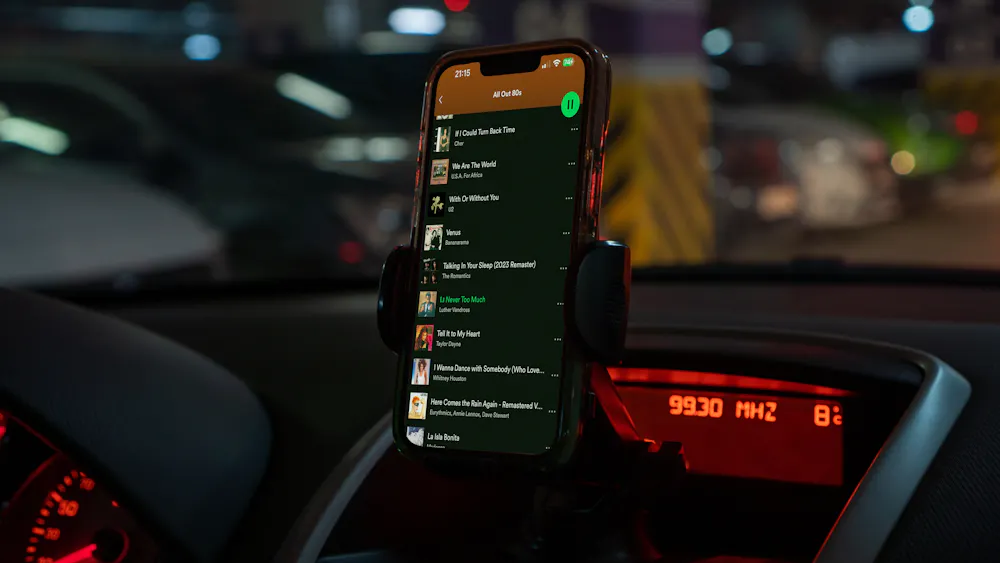
mobile phone screen mounted on a car dashboard and showing a spotify playlist
There’s more power in the playlist than you might imagine.
Taner Muhlis Karaguzel/Shutterstock

To test whether these pressures are leading to the homogenisation of music, we conducted a comparative content analysis of hip-hop music from two eras.

For the pre-streaming period, we examined Apple Music’s retrospective chart playlist of the biggest hip-hop and R&B hits from 2002. For the streaming era, we analysed Spotify’s RapCaviar playlist from 2022.

Both contained a sample of 50 songs that we analysed across five categories. We investigated form and structure, sampling, rhythm, vocal style and lyrics – and the findings were striking.

  • Song length: the average track duration fell from four minutes and 19 seconds (2002) to three minutes and three seconds (2022), reflecting the pressure to engage listeners quickly

  • Tempo and key: songs in 2022 clustered much more around similar tempos and harmonic keys, reducing the variety of sound

  • Samples: where early-2000s tracks drew inspiration from diverse genres and local cultures, most 2022 hits favoured similar moods – generic piano and guitar loops – often sourced from pre-packaged production platforms like LANDR

  • Rhythm: while earlier hip-hip songs often used distinct rhythms, 90% of 2022 songs used nearly identical 808s (a synthetic drum machine) and rhythms

  • Vocals: auto-tune effects were nearly ubiquitous in 2022, giving voices a uniform, digital texture

  • Lyrics: using natural language processing (an AI tool), we found that lyrics in 2022 were 60% more similar to each other than in 2002 – even though they used a larger collection of words.

Taken together, these trends suggest that the sonic and stylistic diversity once praised in hip-hop has been replaced by algorithmic compatibility. While in 2002 a diverse group of songs including Busta Rhymes’ Make It Clap, Eminem’s Lose Yourself or Missy Elliott’s Work It were at the top of hip-hop charts, today’s songs on RapCaviar are much more homogeneous.

Once an art form defined by regionality, resistance and individual expression, hip-hop is increasingly shaped by the incentives of platform capitalism.

Why this matters

This speaks to a broader transformation in how cultural products are made, valued and circulated. Music and other art forms are increasingly produced within platforms designed for scalability. As such, often the asset logic replaces artistic freedom, and predictability trumps originality.

Streaming platforms might claim to democratise the music industry, but in reality they often reinforce the dominance of major labels and pre-existing trends.

Even artists who have benefited from these systems are beginning to speak out about their constraints. This is even more important with the rise of generative AI and the possibility of a future of individualised, on-demand music generation.

If music is to reclaim its critical, creative and expressive power, it needs to be disentangled from the financial logic that now governs it. The first step is understanding how this logic works – and whose interests it serves.

The Conversation

The authors do not work for, consult, own shares in or receive funding from any company or organisation that would benefit from this article, and have disclosed no relevant affiliations beyond their academic appointment.

ref. From art form to asset: our study found popular songs are becoming more generic – https://theconversation.com/from-art-form-to-asset-our-study-found-popular-songs-are-becoming-more-generic-266097

Why the green transition must be just and inclusive for neurodivergent people

Source: The Conversation – UK – By Martina Angela Caretta, Associate Professor in Human Geography, Lund University

FAMILY STOCK/Shutterstock

Since 2024 I have been researching the social dynamics surrounding the establishment of one of the most prominent European battery manufacturers in Skellefteå, Sweden. I have interviewed almost 40 people, from civil servants, former Northvolt employees and their family members, to workers at non-profit organisations supporting marginalised groups.

Between 2022 and 2024 the job market in Skellefteå was booming and the unemployment rate was at a record low. Yet, according to my interviewees, people with disabilities and those experiencing neurodivergence were not being employed by Northvolt. This reality is in stark contrast with the EU´s declaration that the green transition should be just and inclusive.

Last March, Northvolt declared bankruptcy. This came as a huge blow to the EU, as it meant that one of the few potential rivals to China’s EV battery production had gone under.

This flagship gigafactory in the north of Sweden, had employed 4,000 people. Its establishment had required the municipality to step up housing construction, infrastructural development and improve its schooling and healthcare offerings.

But the factory didn’t build the Swedish-made batteries it had promised to its customers and shareholders. Although demand for EVs decreased, supply chains were disrupted because of changing geopolitical conditions and the company faced major financial difficulties.

Before Northvolt started to build the factory in 2018, Skellefteå was a rather sleepy town with a falling population and an economy that had slumped since its pre-1990s economic prosperity when mining was the main income for most locals. The establishment of a gigafactory was welcomed by politicians and the community. The sole focus was on improving the local economy through job creation.

My research shows that Northvolt jobs were taken up by locals who left jobs in school and healthcare because of the higher pay. This left those other sectors short of skilled labour. Northvolt also relied heavily on employing immigrants who moved from all over the world to Skellefteå to work in EV batteries production.

Despite this shortage of skilled labour, neurodivergent people living in Skellefteå – those experiencing attention-deficit hyperactivity disorder (ADHD) and dyslexia or on the autism spectrum disorder – and people with disabilities did not get jobs.

What makes the green transition ‘just’? Climate justice expert Alix Dietzel explains.

Northvolt did hire neurodivergent people for a period, according to one interviewee from a charity that supports neurodivergent people in accessing the job market:

“To be neurodivergent was seen as something positive. They would get a salary and become independent. Northvolt did tests and neurodivergent candidates would perform very well. But then they stopped. They probably wanted to recruit and hire people faster. Basically, everyone else applying, even without any relevant experience, was getting jobs”.

rear view person sat at computer in office, next to empty desk, graphics on screens
The green transition needs to involve creating employment for everyone.
fizkes/Shutterstock

Another employee of a non-profit organisation told me: “At a time when everyone has a job, with low unemployment rate, what does it say on me that I am still without a job?! How do I motivate my existence? How can it be that I am left behind when everyone is getting included in this positive societal change?”

Many people I interviewed told me they felt a lack of self-worth. Being disabled was already challenging, but feeling rejected by a flourishing job market was another major blow.

Disregarded skills, missed opportunities

People with ADHD, dyslexia and on the autism spectrum disorder can be creative, innovative and often experience periods of deep focus and attention to detail that are highly beneficial when working on intricate tasks, such as building a lithium battery or checking its quality.

Companies that have hired neurodivergent people tended to experience a boost in productivity and an improvement in workplace culture. Inclusive hiring practices would promote sustainable economic growth through decent work for all and reduce the risk of poverty and unemployment for people with disabilities, compared to workers without disabilities.

Jobs created through the green transition include roles such as technicians and consultants – employment opportunities that can be a fit for people with disabilities without making major accommodations. Companies claiming to be sustainable need to double down on their commitments to achieving inclusivity.

Lyten, a Californian start-up whose business is focused on lithium-sulphur batteries, acquired all Northvolt’s assets in Sweden in August 2025. While it is still too early to know how many people will be employed by Lyten in Skellefteå, this transition of ownership presents a opportunity to realise the goals of the European and Swedish green transition. My research shows that fair, just and inclusive employment conditions are not yet a reality.

In practice, fair and inclusive employment conditions could involve offering more part-time employment, so that more people with disabilities can access formal employment. By embracing an open attitude, adapted hiring practices and flexible working conditions, Lyten can be a catalyst for a more inclusive green transition in Sweden.

The Conversation approached Lyten for comment but received no response.


Don’t have time to read about climate change as much as you’d like?

Get a weekly roundup in your inbox instead. Every Wednesday, The Conversation’s environment editor writes Imagine, a short email that goes a little deeper into just one climate issue. Join the 45,000+ readers who’ve subscribed so far.


The Conversation

Martina Angela Caretta receives funding from the Swedish Research Council Formas grant AC2023/0033.

ref. Why the green transition must be just and inclusive for neurodivergent people – https://theconversation.com/why-the-green-transition-must-be-just-and-inclusive-for-neurodivergent-people-263299

What is lupus, the condition Selena Gomez is diagnosed with?

Source: The Conversation – UK – By Elizabeth Rosser, Associate Professor of Aging, Rheumatology and Regenerative Medicine, UCL

Gomez first shared her diagnosis in 2015. Fred Duval/ Shutterstock

Actress, singer and makeup mogul Selena Gomez has been candid about her experience of living with lupus. Since 2015, Gomez has documented on social media and in interviews the effect the condition has had on her health.

In 2017, the actress shared that she’d undergone a kidney transplant due to lupus-related organ damage. Then, earlier this month, Gomez said on a podcast that she’s developed arthritis related to her lupus symptoms.

Selena Gomez’s story has raised important awareness of the wide-ranging health impacts associated with lupus. But even still, many people may not know exactly what lupus is – nor how it can have such widespread affects on the body.

What is lupus?

Lupus is an autoimmune condition. This means the immune cells malfunction and attack parts of the body instead of potential pathogens – causing inflammation and damage.

There are two common forms of lupus. Discoid lupus affects the skin, causing painful rashes. Systemic lupus erythematosus (SLE) is more severe and can affect multiple organs. It’s estimated around 3.4 million people worldwide are living with SLE.

In SLE, the immune cells target our DNA, as well as the proteins that help to package our DNA within a cell’s nucleus (information hub). This improper immune response allows the disease to affect nearly every major organ system in the body. This includes the skin (causing a butterfly-shaped rash over the nose and cheeks), kidneys, brain, heart, lungs and the joints.

Up to 95% of people living with systemic lupus will experience arthritis or joint pain. Fatigue and pain can also have a significant affect quality of life for people living with lupus.

Other lesser-known complications from SLE include an increased risk of developing cardiovascular disease and cancers – most commonly lymphoma.

Who is most at risk?

What causes lupus and why the immune system malfunctions remains unknown. However, we do know that women are much more likely to develop systemic lupus. It’s estimated that 90% of those diagnosed with lupus are women. It’s also more common in women of reproductive age.

According to research my colleagues and I have recently published, these gender differences may partly be due to the influence of different sex hormones on immune cell function.

People who are Hispanic, Asian, Black or Indigenous are also more likely to develop SLE than white people. Black people have a five- to nine-fold greater risk of SLE compared to white people.

It has also been shown that Black people living with SLE are more likely to die early compared to white people living with SLE. This is probably due to the complex interplay between socioeconomic factors (such as access to healthcare) and differences in how the immune system functions.

How is lupus treated?

Lupus remains an incurable disease, but can be managed through treatment.

Lupus is characterised by periods where the disease flares up and periods where it’s in remission (where there are few symptoms). The aim with treatment is to keep the disease in remission. However, this can be a complex journey – and may take time to find the right drug that works for a patient.

During flare-ups, symptoms are typically managed with steroids. These quickly dampen immune system function to prevent damage to the body. But long-term steroid use can have multiple side-effects – including changes to bone health and eye health (leading to cataracts and glaucoma). As such, doctors try to limit steroid usage as much as possible.

A young woman holds her hand in pain.
Joint pain is a common symptom of lupus.
PeopleImages/ Shutterstock

Alongside steroids, disease-modifying anti-rheumatic drugs are used to stop flare-ups and keep lupus-triggered inflammation at bay. These drugs modulate the immune system and suppress it.

Biologics, which are a type of anti-rheumatic drug, selectively target the parts of the immune system that cause lupus inflammation. But while these drugs are effective at dampening inflammation, many patients report that they do not always help with fatigue and pain.

Crucially, certain lupus treatments (and especially one called cyclophosphamide) can also cause fertility problems, such as menstrual irregularities and a reduced number of eggs in the ovaries. They do this by affecting the health of the ovarian follicles (structures which house eggs in the ovary).

Although new therapies introduced over the last 20 years have drastically reduced mortality associated with systemic lupus, current research estimates that it can still take up to five years to be correctly diagnosed. This can lead to more organ damage – and eventually worse disease outcomes.

It’s clear we still desperately need more research into the causes of the condition so we can improve treatments and quality of life for people living with the condition.

What’s next for lupus treatments?

Despite these challenges, there are some exciting innovations happening in the field of lupus research.

This includes repurposing a form of cancer therapy that uses a patient’s own immune cells (T cells) and engineers them to destroy cancer cells. These cells, called CAR-T cells, are now being engineered to recognise malfunctioning parts of the immune system to help some people living with lupus achieve long-term disease remission.

Researchers are also looking to identify predictive lupus “biomarkers” (signs of the disease that can be detected in a blood sample). This will help identify how different people will respond to certain lupus treatments, which would be an important first step in being able to personalise treatments to each patient.

Our understanding of the biological processes causing lupus continues to grow each year. With continued awareness of the disease and the many ways it can affect daily life, we’re getting closer to identifying treatment targets that may someday help cure the condition.

The Conversation

Elizabeth Rosser receives funding from the Medical Research Foundation, the Lister Institute for Preventive Medicine and the Kennedy Trust for Rheumatology Research.

ref. What is lupus, the condition Selena Gomez is diagnosed with? – https://theconversation.com/what-is-lupus-the-condition-selena-gomez-is-diagnosed-with-266273

History is repeating itself at the FBI as agents resist a director’s political agenda

Source: The Conversation – USA – By Douglas M. Charles, Professor of History, Penn State

FBI Director Kash Patel is sworn in to testify before the Senate Judiciary Committee on Sept. 16, 2025, in Washington, D.C. Chip Somodevilla/Getty Images

Three converging events in the 1970s – the Watergate scandal, the chaotic U.S. withdrawal from the Vietnam War and revelations that FBI Director J. Edgar Hoover had abused his power to persecute people and organizations he viewed as political enemies – destroyed what formerly had been near-automatic trust in the presidency and the FBI.

In response, Congress enacted reforms designed to ensure that legal actions by the Department of Justice and the FBI, the department’s main investigative arm, would be insulated from politics. These included stronger congressional oversight, a 10-year term limit for FBI directors and investigative guidelines issued by the attorney general.

Some of these measures, however, were tenuous. For example, Justice Department leaders could alter FBI investigative guidelines at any time.

Donald Trump’s first presidential term seriously tested DOJ and FBI independence – notably, when Trump fired FBI Director James Comey in May 2017. Trump claimed Comey mishandled a 2016 probe into Democratic presidential nominee Hillary Clinton’s private email server, but Comey also refused to pledge loyalty to the president.

Now, in Trump’s second term, prior guardrails have vanished. The president has installed loyalists at the DOJ and FBI who are dedicated to implementing his political interests.

A lawsuit filed by three former FBI officials fired by the Trump administration asserts that the bureau is being politicized and is supporting Trump’s agenda.

As a historian of the FBI, I recognize the FBI has had only one other overtly political director in the past 50 years: L. Patrick Gray, who served for a year under President Richard Nixon. Gray was held accountable after he tried to help Nixon end the FBI’s Watergate investigation. Whether Trump’s current director, Kash Patel, has more staying power is unclear.

After Hoover

Ever since Hoover’s death in 1972, presidents have typically nominated independent candidates with bipartisan support and law enforcement roots
to run the FBI. Most nominees have been judges, senior prosecutors or former FBI or Justice Department officials.

While Hoover publicly proclaimed his FBI independent of politics, he sometimes did the bidding of presidents, including Nixon. Still, Nixon felt that Hoover had not been compliant enough, so in 1972 he selected Gray, a longtime friend and assistant attorney general, to be Hoover’s successor.

Gray took steps to move the bureau out of Hoover’s shadow. He relaxed strict dress codes for agents, recruited female agents and pointedly hired people from outside the agency – who were not indoctrinated in the Hoover culture – for administrative posts.

Gray asserted his authority with blunt force. FBI agents at field offices and at headquarters who resisted Gray’s power were censured, fired or transferred. Other senior officials opted to leave, including the bureau’s top fraud expert, cryptanalyst and skyjacking expert, and the head of its Crime Information Center.

Agents regarded these moves as a purge, and press reports claimed that bureau morale was at an all-time low, charges that Gray denied. According to FBI Associate Director Mark Felt, who became Gray’s second in command, 10 of 16 top FBI officials chose to retire, most of them notable Hoover men.

Gray surrounded himself with what journalist Jack Anderson called “sharp, but inexperienced, modish, young aides.” FBI insiders called these new hires the “Mod Squad,” a reference to the counterculture TV police series.

A man in a suit answers questions at a microphone.
Attorney L. Patrick Gray meets with reporters at the White House after his selection by President Richard Nixon as FBI acting director on May 3, 1972.
Bettman via Getty Images

Gray helps Nixon

In contrast to Hoover, who had rarely left FBI headquarters and publicly avoided politics, Gray openly stumped for Nixon in the 1972 campaign. He was so rarely spotted at FBI headquarters that bureau insiders dubbed him “Two-Day Gray.” At the request of Nixon aide John Ehrlichman, Gray told field offices to help Nixon campaign surrogates by providing local crime information.

Gray cooperated with Nixon to stymie the FBI’s investigation of the 1972 Watergate break-in and the ensuing cover-up. He provided raw FBI investigative documents to the White House and burned documents from Watergate conspirator E. Howard Hunt’s White House safe.

When Nixon had CIA Deputy Director Vernon Walters ask Gray, in the name of national security, to halt the FBI’s investigation, Felt and other agency insiders demanded that Gray get this order in writing. The White House backed down, but Nixon’s directive had been recorded. That tape became the so-called “smoking gun” evidence of a Watergate cover-up.

Felt, in classic Hoover fashion, then leaked information to discredit Gray, hoping to replace him. Gray resigned in disgrace.

While Felt never got the top job, he is now remembered as the prized anonymous source “Deep Throat,” who helped Washington Post reporters Bob Woodward and Carl Bernstein in their Pulitzer Prize-winning Watergate investigation. But it was internal FBI resistance, from Felt and agents at lower levels, that led to Gray’s departure.

After Democratic National Committee headquarters at Washington, D.C.’s Watergate Hotel was burgled in June 1972, the FBI was charged with investigating the break-in – as Director L. Patrick Gray tried to subvert his own agency’s investigation.

Political from the start

Campaigning in 2024, Donald Trump vowed to “root out” his political opponents from government. Realizing he was a target because of his investigation of the attack on the U.S. Capitol on Jan. 6, 2021, FBI director Christopher Wray, whom Trump had nominated in 2017, resigned in December 2024 before Trump could fire him.

In Wray’s place Trump nominated loyalist Kash Patel, a lawyer who worked as a low-level federal prosecutor from 2013 to 2016 and then as a deputy national security appointee during Trump’s first term.

Patel publicly supported Trump’s vow to purge enemies and claimed the FBI was part of a “deep state” that was resistant to Trump. Patel promised to help dismantle this disloyal core and to “rebuild public trust” in the FBI.

Even before Patel was confirmed on Feb. 20, 2025, in an historically close 51-49 vote, the Justice Department began transferring thousands of agents away from national security matters to immigration duty, which was not a traditional FBI focus.

Hours after taking office, Patel shifted 1,500 agents and staff from FBI headquarters to field offices, claiming that he was streamlining operations.

Patel installed outsider Dan Bongino as deputy director. Bongino, another Trump loyalist, was a former New York City policeman and Secret Service agent who had become a full-time political commentator. He embraced a conspiracy theory positing the FBI was “irredeemably corrupt” and advocated “an absolute housecleaning.”

In February, New York City Special Agent in Charge James Dennehy told FBI staff “to dig in” and oppose expected and unprecedented political intrusions. He was forced out by March.

Patel then used lie-detector tests and carried out a string of high-profile firings of agents who had investigated either Trump or the Jan. 6, 2021, insurrection. Some agents who were fired had been photographed kneeling during a 2020 racial justice protest in Washington, D.C. – an action they said they took to defuse tensions with protesters.

In response, three fired agents are suing Patel for what they call a political retribution campaign. Ex-NFL football player Charles Tillman, who became an FBI agent in 2017, resigned in September 2025 in protest of Trump policies. Once again, there are assertions of a purge.

Will Patel be held accountable?

Patel’s actions as director so far illustrate that he is willing to use his position to implement the president’s political designs. When Gray tried to do this in the 1970s, accountability still held force, and Gray left office in disgrace. Gray participated in a cover-up of illegal behavior that became the subject of an impeachment proceeding. What Patel has done to date, at least what we know about, is not the equivalent – so far.

Today, Patel’s tenure rests solely upon pleasing the president. If formal accountability – a key element of a democracy – is to survive, it will have to come from Congress, whose Republican majority has so far not exercised its power to hold Trump or his administration accountable. Short of that, perhaps internal resistance within the administration or pressure from the public and the media might serve the oversight function that Congress, over the past eight months, has abrogated.

The Conversation

Douglas M. Charles does not work for, consult, own shares in or receive funding from any company or organization that would benefit from this article, and has disclosed no relevant affiliations beyond their academic appointment.

ref. History is repeating itself at the FBI as agents resist a director’s political agenda – https://theconversation.com/history-is-repeating-itself-at-the-fbi-as-agents-resist-a-directors-political-agenda-265637

Florida’s 1,100 natural springs are under threat – a geographer explains how to restore them

Source: The Conversation – USA (2) – By Christopher F. Meindl, Associate Professor of Geography, University of South Florida

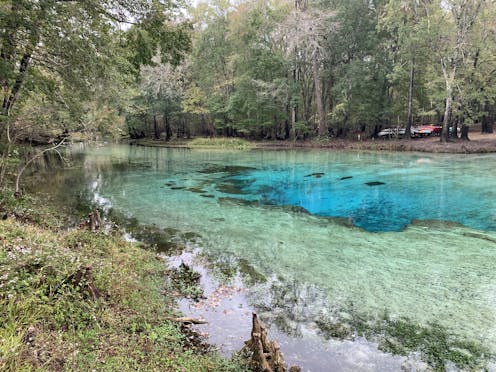
Gilchrist Blue Springs, located about 20 miles northwest of Gainesville, Fla., is a popular recreation site known for the clarity of its water. Christopher Meindl, CC BY

“Behold … a vast circular expanse before you, the waters of which are so extremely clear as to be absolutely diaphanous or transparent as the ether.”

Naturalist William Bartram wrote these words in the 18th century as he gazed in wonder at Salt Springs, located in Ocala National Forest in what is now Marion County, Florida.

Springs are points where groundwater emerges at the earth’s surface, and Florida boasts more than 1,100 of them. North and central Florida comprise one of the largest concentrations of freshwater springs in the world.

Many of these springs provide a home to a variety of wild animals and plants. But they are also canaries in the coal mine for Florida’s groundwater system, because they draw upon the same groundwater that many Floridians depend on for drinking water, farm irrigation and industrial use.

Right now, many Florida springs suffer from reduced flow and habitat loss, as well as excessive algae and heavy pressure from human use. Because most of the state’s springs are not monitored by any research institution or government agency, the full scope of the problem remains unclear.

The state Legislature has designated 30 Outstanding Florida Springs whose health must be protected under the Florida Springs and Aquifer Protection Act of 2016. But 24 of the 30 were impaired by pollution – primarily nitrogen – at the time of this designation, and today, their condition has not improved.

In 2025, 26 of the 30 – the same 24 springs, plus two more – have been found to be impaired.

According to multiple reports and my own observation, many other popular springs are impaired by pollution as well. Since 2011, the state of Florida has spent roughly US$357 million on springs restoration.

As a geography professor, I study springs in the context of people and their use of water. My research has taught me that Florida’s springs vary based on location and local circumstances. Because of this, I believe reviving their health will require several multidimensional solutions.

Recalling healthy springs

What should a healthy spring look like? The answer to this can be harder to articulate than you might think. Many springs feature a visible boil at the water surface above the spring vent, crystal clear water, submerged grasses waving in the current, and a range of fish, turtles, snails and other aquatic animals hiding in the grasses.

Yet because many springs are changing slowly, changes in flow and water clarity can go unnoticed. Some scientists call this the shifting baseline syndrome: Each generation perceives springs in a slightly more degraded state, but absent prior observations, we assume that what we see is “normal.”

Fortunately, in the case of Florida springs, historical observations from naturalists and area residents give scientists clues going back centuries.

When Bartram visited Manatee Springs near Chiefland and the Suwannee River in the Big Bend in 1774, he wrote that the spring’s flow was “astonishing” and that “it is impossible to keep the boat or any other floating vessel over the fountain.”

Similarly, senior citizens who grew up in north central Florida in the early 20th century told writer P.C. Zick that spring flow at Ichetucknee Springs was once so strong that they could hear the spring boil before getting close enough to see it.

Both springs’ boils are noticeable today, but they are clearly not what they used to be.

When naturalist John James Audubon visited Volusia County’s De Leon Springs in 1832, he found that “The water was quite transparent, although of dark color.” And Bartram wrote of Salt Springs that the water was so clear, he thought he could reach out and touch fish that were 20 to 30 feet below the surface.

Water clarity in thriving springs fosters plenty of submerged grasses soaking up sunshine, along with a wide variety and large number of fish and other aquatic animals that depend on this vegetation. Bartram wrote that he spotted gar, trout, bream, “the barbed catfish, dreaded sting-ray, skate and flounder, spotted bass, sheeps head and ominous drum” at Salt Springs.

Black-and-white photo of a springs pool with lots of swimmers in and around it.
This 1925 photograph shows Sulphur Springs, a vibrant recreation attraction in the heart of Tampa.
State Archives of Florida/Burgert Brothers, CC BY
standing water in a pool
Sadly, Sulphur Springs is a cautionary tale. Area sinkholes began feeding contaminated urban runoff to the spring in the mid-20th century, leading Tampa authorities to close the spring to swimming in 1986. This photo was taken in May 2025.
Christopher Meindl, CC BY

A multifaceted problem

Many Florida springs and their runs now suffer reduced flow, wear and tear from hundreds of thousands of well-meaning visitors, and excess algae.

And while some Florida springs, such as Polk County’s Kissingen Springs, have completely dried up, many more produce less flow than they used to.

It is easy to assume that bottled water companies are the reason for seriously reduced spring flows, and in at least one case, bottling spring water has raised concerns of overuse.

Yet a state report published in 2021 that examined water-bottling operations associated with springs found that bottlers were permitted to extract just over 5 million gallons per day from Florida’s springs – a tiny fraction of the 2.3 billion gallons of groundwater pumped each day from the Floridan Aquifer, which provides drinking water for more than 10 million people in the southeastern United States.

The most problematic reductions in spring flow are from significant groundwater pumping for agricultural irrigation, heavy urban, mining or industrial water use, or in some cases a long-term rainfall deficit. Various springs suffer from one or more of these problems.

In addition, as Florida’s population and tourism have grown, so have the number of visitors to the state’s most popular springs. In 2019, Florida springs attracted more than 4 million visitors. During the summer, especially on weekends, some springs are so crowded that staff members have to turn away visitors. And in winter, springs that attract manatees can be equally crowded.

In shallow portions of springs and spring runs, this means thousands of happy feet trample and destroy vegetation. And when submerged grasses disappear, so do the aquatic animals that rely on them for food.

clear, fresh water with green trees on either side
Wacissa Springs is the head of the Wacissa River, which flows from just outside Tallahassee into the Gulf of Mexico.
Matthew Zorn, CC BY

Unwanted algae

Finally, there is the mystery of excess algae. Algae naturally occurs in most springs, but today, many springs have so much that it clouds the water, or they have stringy filamentous algae that blankets the soil and rocks around a spring and along its run. Still others have algae that sticks to submerged aquatic plants, blocking vital sunlight.

The predominant narrative among many springs scientists, advocates and government officials is that rising nitrate levels in springs over the past few decades fuels the growth of excess algae. Nitrate, a form of nitrogen, is a plant nutrient.

Yet other scientists have suggested that reduced spring discharge creates slower-moving water, which loses its ability to push excess algae away.

Another hypothesis is that if dissolved oxygen levels temporarily fall below a certain threshold, it can kill off the snails and other animals that graze on the algae and keep it in check.

A balanced restoration plan

More than two-thirds of state-funded springs restoration projects over the past decade have been for some form of enhanced sewage treatment. This is because excess nitrogen is assumed to be the cause of excess algae in Florida springs, and Florida farmers are presumed to be in compliance with water quality regulations if they implement best management practices.

Enhanced sewage treatment is a good thing, especially in cases where human waste is clearly a pressing problem. In some cases, investing in advanced sewage treatment, shifting landowners from septic systems to sewage treatment plants or even enhanced treatment of storm water before it sinks into the ground clearly benefits springs.

However, shifting people from septic tanks to central sewage treatment is expensive. Based on the evidence and my own observations of various springs within Florida’s landscape, I believe that many springs need more than this single solution.

Some need shoreline stabilization to prevent erosion or rules that reduce human pressure on spring vegetation. Others need algae or sediment removed and native vegetation reintroduced.

In still other cases, it would help to purchase property to prevent harmful development or to retire farmland. And in nearly every case, the springs would benefit from Florida residents and businesses reducing water and fertilizer use.

And, restoring and maintaining the health of Florida’s 1,100 springs will require further study to tailor appropriate interventions to each one.

The Conversation

Christopher F. Meindl does not work for, consult, own shares in or receive funding from any company or organization that would benefit from this article, and has disclosed no relevant affiliations beyond their academic appointment.

ref. Florida’s 1,100 natural springs are under threat – a geographer explains how to restore them – https://theconversation.com/floridas-1-100-natural-springs-are-under-threat-a-geographer-explains-how-to-restore-them-263704

What past education technology failures can teach us about the future of AI in schools

Source: The Conversation – USA (2) – By Justin Reich, Professor of Digital Media, Massachusetts Institute of Technology (MIT)

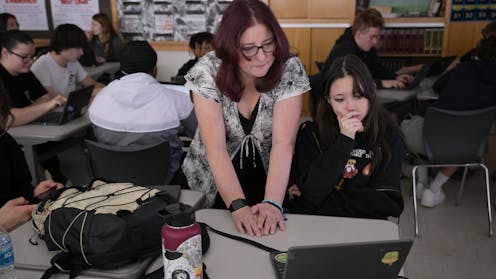
Teachers need to be scientists themselves, experimenting and measuring the impact of powerful AI products on education. Hyoung Chang via Getty Images

American technologists have been telling educators to rapidly adopt their new inventions for over a century. In 1922, Thomas Edison declared that in the near future, all school textbooks would be replaced by film strips, because text was 2% efficient, but film was 100% efficient. Those bogus statistics are a good reminder that people can be brilliant technologists, while also being inept education reformers.

I think of Edison whenever I hear technologists insisting that educators have to adopt artificial intelligence as rapidly as possible to get ahead of the transformation that’s about to wash over schools and society.

At MIT, I study the history and future of education technology, and I have never encountered an example of a school system – a country, state or municipality – that rapidly adopted a new digital technology and saw durable benefits for their students. The first districts to encourage students to bring mobile phones to class did not better prepare youth for the future than schools that took a more cautious approach. There is no evidence that the first countries to connect their classrooms to the internet stand apart in economic growth, educational attainment or citizen well-being.

New education technologies are only as powerful as the communities that guide their use. Opening a new browser tab is easy; creating the conditions for good learning is hard.

It takes years for educators to develop new practices and norms, for students to adopt new routines, and for families to identify new support mechanisms in order for a novel invention to reliably improve learning. But as AI spreads through schools, both historical analysis and new research conducted with K-12 teachers and students offer some guidance on navigating uncertainties and minimizing harm.

We’ve been wrong and overconfident before

I started teaching high school history students to search the web in 2003. At the time, experts in library and information science developed a pedagogy for web evaluation that encouraged students to closely read websites looking for markers of credibility: citations, proper formatting, and an “about” page. We gave students checklists like the CRAAP test – currency, reliability, authority, accuracy and purpose – to guide their evaluation. We taught students to avoid Wikipedia and to trust websites with .org or .edu domains over .com domains. It all seemed reasonable and evidence-informed at the time.

The first peer-reviewed article demonstrating effective methods for teaching students how to search the web was published in 2019. It showed that novices who used these commonly taught techniques performed miserably in tests evaluating their ability to sort truth from fiction on the web. It also showed that experts in online information evaluation used a completely different approach: quickly leaving a page to see how other sources characterize it. That method, now called lateral reading, resulted in faster, more accurate searching. The work was a gut punch for an old teacher like me. We’d spent nearly two decades teaching millions of students demonstrably ineffective ways of searching.

Today, there is a cottage industry of consultants, keynoters and “thought leaders” traveling the country purporting to train educators on how to use AI in schools. National and international organizations publish AI literacy frameworks claiming to know what skills students need for their future. Technologists invent apps that encourage teachers and students to use generative AI as tutors, as lesson planners, as writing editors, or as conversation partners. These approaches have about as much evidential support today as the CRAAP test did when it was invented.

There is a better approach than making overconfident guesses: rigorously testing new practices and strategies and only widely advocating for the ones that have robust evidence of effectiveness. As with web literacy, that evidence will take a decade or more to emerge.

But there’s a difference this time. AI is what I have called an “arrival technology.” AI is not invited into schools through a process of adoption, like buying a desktop computer or smartboard – it crashes the party and then starts rearranging the furniture. That means schools have to do something. Teachers feel this urgently. Yet they also need support: Over the past two years, my team has interviewed nearly 100 educators from across the U.S., and one widespread refrain is “don’t make us go it alone.”

3 strategies for prudent path forward

While waiting for better answers from the education science community, which will take years, teachers will have to be scientists themselves. I recommend three guideposts for moving forward with AI under conditions of uncertainty: humility, experimentation and assessment.

First, regularly remind students and teachers that anything schools try – literacy frameworks, teaching practices, new assessments – is a best guess. In four years, students might hear that what they were first taught about using AI has since proved to be quite wrong. We all need to be ready to revise our thinking.

Second, schools need to examine their students and curriculum, and decide what kinds of experiments they’d like to conduct with AI. Some parts of your curriculum might invite playfulness and bold new efforts, while others deserve more caution.

In our podcast “The Homework Machine,” we interviewed Eric Timmons, a teacher in Santa Ana, California, who teaches elective filmmaking courses. His students’ final assessments are complex movies that require multiple technical and artistic skills to produce. An AI enthusiast, Timmons uses AI to develop his curriculum, and he encourages students to use AI tools to solve filmmaking problems, from scripting to technical design. He’s not worried about AI doing everything for students: As he says, “My students love to make movies. … So why would they replace that with AI?”

It’s among the best, most thoughtful examples of an “all in” approach that I’ve encountered. I also can’t imagine recommending a similar approach for a course like ninth grade English, where the pivotal introduction to secondary school writing probably should be treated with more cautious approaches.

Third, when teachers do launch new experiments, they should recognize that local assessment will happen much faster than rigorous science. Every time schools launch a new AI policy or teaching practice, educators should collect a pile of related student work that was developed before AI was used during teaching. If you let students use AI tools for formative feedback on science labs, grab a pile of circa-2022 lab reports. Then, collect the new lab reports. Review whether the post-AI lab reports show an improvement on the outcomes you care about, and revise practices accordingly.

Between local educators and the international community of education scientists, people will learn a lot by 2035 about AI in schools. We might find that AI is like the web, a place with some risks but ultimately so full of important, useful resources that we continue to invite it into schools. Or we might find that AI is like cellphones, and the negative effects on well-being and learning ultimately outweigh the potential gains, and thus are best treated with more aggressive restrictions.

Everyone in education feels an urgency to resolve the uncertainty around generative AI. But we don’t need a race to generate answers first – we need a race to be right.

The Conversation

Justin Reich has received funding from Google, Microsoft, Apple, the Bill and Melinda Gates Foundation, the Chan/Zuckerberg Initiative, the Hewlett Foundation, education publishers, and other organizations that are involved in technology and schools.

ref. What past education technology failures can teach us about the future of AI in schools – https://theconversation.com/what-past-education-technology-failures-can-teach-us-about-the-future-of-ai-in-schools-265172