Our recent study published in Autism Research uncovers why so many autistic students are denied their right to a full education and highlights what must change to make schools truly inclusive.
What exclusion looks like
Exclusion takes many forms. Sometimes, it’s overt, with students being told they cannot attend school for a period of time.
In our online survey of 412 primary caregivers of autistic children in Ontario, primarily recruited through Autism Ontario, 42.3 per cent reported that their autistic children had experienced some form of school exclusion.
These exclusions have cascading effects on families, forcing parents to miss work and jeopardize their employment. They also drive some households closer to poverty.
Previous research from our team has indicated that many parents of autistic children, particularly mothers, struggle to maintain full-time employment as they need to be available to care for their children during school hours.
Powerful predictors of exclusion
Our survey also identified several important factors related to school exclusion.
Something that predicted lower rates of school exclusion was greater parental satisfaction with the child’s Individual Education Plan (IEP) — a legally mandated document meant to outline supports and accommodations for students with disabilities.
Analysis of parent responses to the open-ended survey questions revealed two critical factors contributing to exclusion:
Bullying, where autistic children are victimized by peers, leaving them isolated, afraid for their safety and more likely to avoid school;
A lack of specialized training and resources for school staff. This lack of training and resources leaves autistic students without the support they need to participate and engage fully in school life.
These findings echo international patterns. Autistic students face increased risk of exclusion because of sensory overload, lack of staff training and the absence of genuinely supportive environments.
The illusion of inclusion
The assumption that simply integrating autistic students into mainstream settings guarantees inclusion is not only misleading, but harmful. As many advocates warn, true inclusion demands a fundamental shift in attitudes, environments and policies.
Parents’ responses also indicated concerns about IEPs that are written but not followed, and lack of effectiveness or practical application of existing anti-bullying policies that leave students vulnerable.
What must change?
If we are serious about inclusion, several steps are critical.
While previous research has examined the effectiveness of school bullying policies more broadly, research is needed to assess their impact within Ontario schools, particularly in relation to neurodivergent students.
Staff training must be comprehensive, mandatory and ongoing, centred on understanding the needs and strengths of autistic and neurodivergent students. Indeed, previous research has shown that targeted professional development can strengthen teachers’ confidence and preparedness to support autistic students.
Greater collaboration is needed, with families and autistic youth being real partners in IEP planning and schools held accountable for following through. Classrooms must be tailored to be sensory-friendly and flexible, providing predictable routines and spaces for self-regulation.
Importantly, increased funding is also necessary. School staff, such as education assistants, are often required to support far too many students, with a lack of replacements when they are absent.
These issues ripple out to affect the entire classroom. A stable workforce of skilled staff with specialized training who are compensated competitively is essential if inclusion is to be a reality and not just a slogan.
In other words, just about every classroom will likely have at least one autistic student, among other neurodivergences.
Integrating these students fully and meaningfully is important not just for their education, but also for the betterment of the broader classroom culture, as well as families’ employment security and economic well-being.
In addition to exclusions, our previous research found that many families elect to keep their autistic children home, or enrol them in alternative programming, because they are unable to find an appropriate placement within a public school.
The current system is not working for too many; systematic improvements are needed to ensure that all children and their families are supported to reach their full potential.
We must start by listening to educators, parents and autistic students to understand these students’ diverse needs, and then put the resources in place to make these accommodations a reality. Until then, many children and youth will remain either partially or fully excluded from a safe, meaningful and reliable education.
Vanessa Fong receives funding as a Postdoctoral Fellow from the Canadian Institutes of Health Research and Michael Smith Health Research BC, and from the Social Sciences and Humanities Research Council through her Research Associate position at Wilfrid Laurier University.
Janet McLaughlin receives funding from the Social Sciences and Humanities Research Council of Canada.
Margaret Schneider receives funding from the Social Sciences and Humanities Research Council.
Even before launching his 2016 presidential bid, for example, Donald Trump used Twitter to share messages attacking immigrants and ethnic minorities with millions of people, giving him the power to dominate news cycles and shape public policy.
Studies on major American newspapers and news stations show that traditional media coverage has encouraged prejudice toward Latin American immigrants and Muslims.
Does social media follow this trend? Social scientists are beginning to disagree.
Based on my recent research on Canadian X users, I found similar results. I analyzed roughly 13,000 English-language posts discussing immigration and Canada’s housing crisis in 2023. Unsurprisingly, I discovered that many users blamed immigrants for a lack of affordable housing, including influencers with tens of thousands of followers.
In August 2023, discussions about housing on X peaked, with 3,638 posts mentioning both immigration and housing. This significant increase in online conversation coincided with federal government’s public comments linking international students to the housing crisis. The data supports the idea that Canadians were actively discussing the housing crisis in relation to immigration during this time.
Does this mean that Canadian X users are now seething with hatred for immigrants? While some are, a closer look reveals the partisan nature of these posts.
When I examined users’ identities and networks, it became clear that their anti-immigration messages were often a means of criticizing Justin Trudeau and his Liberal government. In other words, right-wing users (with large and small followings) were chiefly responsible for creating and sharing these posts, including People’s Party of Canada leader Maxime Bernier.
For instance, Fringe Albertan (about 2,500 followers in August 2023) posted in response to a post by Rebel News:
“@RebelNewsOnline Its a lie! Typical Liberal. Hes lying bc Canada is a UN member, and as a member, has signed onto an immigration pact to flood Canada with migrants, destroying our economy, social network, housing, and culture. #EndUNMembership @UCPCaucus @CPC_HQ @Buffalo_AB @BuffaloPartySK”_
Similarly, lloyd (about 50 followers at the time) posted in response to a post by CTV News:
“@CTVNews Thanks CTV News it’s no wonder why they are leaving as Canada is so poorly governed ! Housing shortage when Immigration brings millions of Migrants and never checked to see how many homes they had and shortage worst ever for Canada! Worst blunder in Canadian History! HELP.”
Right-wing social media users significantly contributed to public discourse blaming immigrants for Canada’s problems.
Some might argue polarizing content is simply a reflection of free speech.
While figures like Trump show that social media can be used to spread prejudice to mass audiences, it also matters that users often self-select into networks they like.
To see less polarizing social media content, we need to both consciously choose what platforms we wish to join (and why), and we need to cultivate better ways to handle online conflict.
Nicholas A. R. Fraser does not work for, consult, own shares in or receive funding from any company or organisation that would benefit from this article, and has disclosed no relevant affiliations beyond their academic appointment.
There is a widely held misconception that young people are politically disengaged. This is based on narrow measures like voter turnout. But this overlooks the fact that many young people are deeply curious, especially when politics is understood more broadly: as a way to make sense of society, power and everyday life.
In my research with youth in the Greater Toronto Area, I explored how their views on inequality, identity and government form over time.
My findings build on my earlier research, conducted with second-generation Chinese and South Asian Canadians, where I found that many of them turned to conservative ideas to access feelings of dignity and belonging. For them, embracing meritocracy wasn’t about denying racism — it was a way to prove they’d succeeded by Canada’s rules.
In this new study, I wanted to understand what shapes that gap — what makes some students more likely to see power as structural, and others more likely to see it as personal or cultural.
I found that young people now form political beliefs through two competing knowledge systems: a hollowed-out university, and YouTube’s attention economy. In the university classroom, students learn to connect experience to systems like racism or class inequality. On YouTube, other students encounter simplified stories or common-sense clichés.
The result is a generation pulled between critique and clarity, where YouTube offers answers that feel true.
Changes to postsecondary education
Post-secondary institutions in Canada have historically played a central role in public life. They offered young people a place to explore political ideas, learn history and develop critical thinking skills. That mission has since eroded.
At the same time, disciplines like sociology and history began to lose institutional standing as universities became increasingly reliant on tuition fees, corporate partnerships and research tied to economic outcomes. Funding shifted toward programs seen to deliver market returns — like business and technology — while fields focused on critique or public interest were sidelined.
Universities are now judged by job outcomes for graduates, with less support for courses that analyze, critique or challenge inequality or power.
YouTube steps in
As universities retreat, platforms like YouTube have increasingly stepped in as a political educator. This is accelerating a shift that may have happened anyway, but has now taken on a new urgency in this hollowed-out educational landscape.
These messages land because progressive ideas remain concentrated in universities, out of reach for many working-class youth. This dynamic has also expanded across platforms like TikTok and Instagram, where short-form content delivers similar emotionally charged explanations.
When critical education is confined to elite spaces, structural thinking becomes a privilege and not a public tool. This matters because it shapes who feels entitled to analyze power and imagine alternatives — and who is left to make sense of inequality through personal experience and YouTube algorithms.
But these efforts remain small compared to the reach and resources of right-wing media. Without broader infrastructure — from education funding to algorithmic transparency — even the most compelling content struggles to shift how people understand the world.
Civic initiatives like Company of Young Canadians, supported youth in under-served communities with political engagement and collective action. These institutions helped working people identify shared interests and organize for change.
That world has largely disappeared, especially with the decline of unions in Canada, driven by decades of neoliberal restructuring that weakened collective bargaining and eroded political education.
Their abstract language feels out of step with people navigating material problems like rent hikes and job precarity.
In contrast, the political right speaks plainly. And, its messages may be simple, but they are easy to find.
Cultivating critical thought
When universities retreat and progressive organizations lose influence, new forces shape how people come to understand the world.
My research found that the way Canadian youth explained inequality differed depending on their access to education. Students with post-secondary social science education connected personal experience to systemic inequality. Those outside these spaces — especially those relying on YouTube — were more likely to see inequality as natural, rooted in individual effort or cultural values.
This divergence reflects a deeper shift: the pipeline for developing structural literacy has broken down. Where critical thinking was once nurtured through unions, political parties and public education systems, those institutions have thinned out.
With unions weakened and parties consumed with electoral success, the university remains one of the few institutions still cultivating critical thought — and conservative leaders know it.
Ahead of the 2025 election, the Conservative Party pledged to end the “imposition of woke ideology” in university research funding and steer university hiring “away from ideology.”
For from neutral, these efforts turn universities into places where challenging ideas are no longer welcome. In their place, young people are left to navigate politics through platforms shaped by algorithms, where nuance is rare.
A different future
If we want a different future, where more people feel equipped to understand and change the world, we need institutions that foster imagination, inclusion and collective purpose. That means rebuilding unions, community-based groups and civic networks.
It also means rethinking what political parties and universities are for.
Political parties must organize, not just campaign. Universities must educate for democratic participation, not just employability. These institutions must do the slow, relational work of building solidarity: helping people understand the systems they live in and feel part of something larger than themselves.
Without that kind of infrastructure, progressive ideas stay abstract: visible to some, but disconnected from the everyday lives of most.
Emine Fidan Elcioglu does not work for, consult, own shares in or receive funding from any company or organisation that would benefit from this article, and has disclosed no relevant affiliations beyond their academic appointment.
Students must learn not just how to use AI, but how to question it.Oscar Omondi via Unsplash
Across universities worldwide, a quiet revolution is underway. Generative artificial intelligence (AI) tools such as ChatGPT, Copilot, DeepSeek and Gemini are being used to produce essays, summarise readings, and even conduct complex assignments.
Generative artificial intelligence is a kind of AI that can handle a variety of creative tasks in diverse domains, such as arts, music and education.
But focusing only on policing misses a bigger issue: whether students are really learning. As an education researcher, I’m interested in the topic of how students learn. My colleagues and I recently explored the role AI could play in learning – if universities tried a new way of assessing students.
We found that many traditional forms of assessment in universities remain focused on memorisation and rote learning. These are exactly the tasks that AI performs best.
We argue that it’s time to reconsider what students should be learning. This should include the ability to evaluate and analyse AI-created text. That’s a skill which is essential for critical thinking.
If that ability is what universities teach and look for in a student, AI will be an opportunity and not a threat.
We’ve suggested some ways that universities can use AI to teach and assess what students really need to know.
Reviewing studies of AI
Universities are under pressure to prepare graduates who are more than just knowledgeable. They need to be self-directed, lifelong learners who are independent, critical thinkers and can solve complex problems. Employers and societies demand graduates who can evaluate information and make sound judgements in a rapidly changing world.
Yet assessment (testing what students know and can do) tends to focus on more basic thinking skills.
Our research took the form of a conceptual literature review, analysing peer-reviewed studies published since the release of the AI tool ChatGPT in late 2022. We examined how generative AI is already being used in higher education, its impact on assessment, and how these practices align (or fail to align) with Bloom’s taxonomy.
Bloom’s taxonomy is a framework widely used in education. It organises cognitive (thinking) skills into levels, from basic (remembering and understanding), to advanced (creating and evaluating).
Several key patterns emerged from our analysis:
Firstly, AI excels at lower-level tasks. Studies show that AI is strong in remembering and understanding. It can generate multiple-choice questions, definitions, or surface explanations quickly and often with high accuracy.
Secondly, AI struggles with higher-order thinking. At the levels of evaluating and creating, its effectiveness drops. For instance, while AI can draft a business plan or a healthcare policy outline, it often lacks contextual nuance, critical judgement and originality.
Thirdly, the role of university teachers is changing. Instead of spending hours designing and grading lower-level assessments, they can now focus on scaffolding tasks that AI cannot master alone, thus promoting analysis, creativity and self-directed learning skills. Self-directed learning is defined as “a process where individuals take initiative to diagnose their learning needs, set learning goals, find resources, choose and implement strategies, and evaluate their outcomes, with or without assistance from others.”
Lastly, the opportunities AI presents seem to outweigh the threats. While concerns about cheating remain real, many studies highlight AI’s potential to become a learning partner. Used well, it can help generate practice questions, provide feedback, and stimulate dialogue (if students are guided to critically engage with its outputs).
All these challenges prompt universities to move beyond “knowledge checks” and invest in assessments that not only measure deeper learning, but promote it as well.
How to promote critical thinking
So how can universities move forward? Our study points to several clear actions:
Redesign assessments for higher-order thinking skills: Instead of relying on tasks that AI can complete, university teachers should design authentic, context-rich assessments. For example, using case studies, portfolios, debates, and projects grounded in local realities.
Use AI as a partner, not a threat: Students can be asked to critique AI-generated responses, identify gaps, or adapt them for real-world use. This transforms AI into a tool for practising the ability to analyse and evaluate.
Build assessment literacy among university teachers: University teachers need support and training to create AI-integrated assessments.
Promote AI fluency and ethical use: Students must learn not just how to use AI, but how to question it. They must understand its limitations, biases and potential pitfalls. Students should be made aware that transparency in disclosing AI use can support academic integrity.
Encourage the development of self-directed learning skills: AI should not replace the student’s effort, but rather support their learning journey. Hence, designing assessment tasks that foster goal-setting, reflection and peer dialogue is crucial for developing lifelong learning habits.
By fostering critical thinking and embracing AI as a tool, universities can turn disruption into opportunity. The goal is not to produce graduates who compete with machines, but to cultivate independent thinkers who can do what machines cannot: reflect, judge, and create meaning. Assessment in the age of AI could become a powerful force for cultivating the kind of graduates our world needs.
Anitia Lubbe is affiliated with the Research Unit Self-Directed Learning.
Rock hyraxes, known in southern Africa more often as “dassies”, are furry, thickset creatures with short legs and no discernible tails. They spend much of their time sunning themselves on rocky outcrops.
Another thing they sometimes do is drag their butts along the ground. Dog owners know that this behaviour can be a sign of parasitic infections; in hyraxes the reason seems to be less clear, but this action leaves distinctive traces in sandy areas.
Traces and tracks – ancient, fossilised ones – are what we study at the African Centre for Coastal Palaeoscience through the Cape south coast ichnology project. Over the past few decades, we have found almost 400 vertebrate tracksites on this coast, some as old as 400,000 years, in cemented dunes known as aeolianites from the Pleistocene epoch. This epoch lasted from about 2.58 million years ago to about 11,700 years ago.
We’re building up a picture of the environment during that period and how the animals and plants of that time lived.
Among our latest finds are two fossilised traces that appear to have been made by rock hyraxes long ago. One is a tracksite and the other is a butt-drag impression with what may be a fossilised dropping in it.
The probable tracksite was brought to our attention from a site near Walker Bay on the Cape south coast by an ardent tracker, Mike Fabricius. It is around 76,000 years old. We found the probable butt-drag impression east of Still Bay on the same coast, and it is most likely around 126,000 years old.
The butt-drag impression is the first fossil of its kind to be described from anywhere in the world. In addition, these are the only possible fossilised hyrax tracks ever to be identified. In the world of palaeontology, anything this unusual is important and we feel privileged to be able to interpret them.
Interpreting the drag mark
Dating on our sites has been done through a technique known as optically stimulated luminescence, which works by analysing when materials like sand were last exposed to light.
The butt-drag impression is 95cm long and 13cm wide. It contains five parallel striations. Its outer margins are slightly raised, and within it there is a 2cm-high raised feature, 10cm by 9cm. Clearly something was dragged across the surface when it consisted of loose sand.
We considered possible causes other than hyrax buttocks. These included a leopard or an ancestral human dragging prey, or perhaps an elephant dragging its trunk. Firstly, however, these would be expected to leave tracks, and secondly in such interpretations the raised feature could not be explained.
But if it was a hyrax, it would make sense, because the buttock trace would have come after the tracks and wiped them out. And the raised feature might be a coprolite: a fused fossilised mass of hyrax droppings.
Rock hyrax dragging its buttocks. Video courtesy Mathilde Stuart.
Old dung and urine
Rock hyraxes leave much more than just tracks and butt-drag traces. Because they prefer rocky areas, their tracks are not often found, but they polish rock surfaces to a shiny finish. This is similar to what buffalo on the North American prairie do, creating “buffalo rubbing stones”.
Hyraxes also leave deposits of urine and dung. Urea and electrolytes are concentrated in their urine, and they excrete large amounts of calcium carbonate. This becomes cemented and forms extensive whitish deposits on rock surfaces. Due to their communal habits, hyraxes often urinate in the same preferred localities over multiple generations.
Their urine and dung often mix to form a substance known as hyraceum – a rock-like mass that can accumulate into extensive, dark, tarry deposits. Hyraceum has been used as a traditional medication to treat a variety of ailments, including epilepsy, and for gynaecological purposes.
Hyraceum may be tens of thousands of years old, and can be regarded as a threatened, non-renewable resource. The middens, being sensitive to environmental changes and containing fossil pollen and other evidence of ancient life, form valuable natural archives for interpreting past climates, vegetation and ecology.
Thinking of hyraceum as a trace fossil, something which apparently has not been done before, can help in the protection of this underappreciated resource.
Although fossilised urine is globally uncommon, there is a word to describe it: “urolite”, to distinguish it from “coprolite” (fossilised poop). It seems that hyraxes contribute the lion’s share of the world’s urolite. At palaeontology conferences, students can be seen sporting T-shirts that brazenly state: “coprolite happens”. In southern Africa, a more appropriate term might be “urolite happens”.
Through appreciating the importance of butt-drag impressions, urolites, coprolites and hyraceum, and learning about the environment of rock hyraxes and other animals during the Pleistocene, we will never view these endearing creatures in the same light again.
Lynne Quick receives funding from the National Research Foundation of South Africa African Origins Platform (grant no: 136507)
Charles Helm does not work for, consult, own shares in or receive funding from any company or organisation that would benefit from this article, and has disclosed no relevant affiliations beyond their academic appointment.
On Oct. 3, 2025, Hamas said that it accepted some aspects of the 20-point proposal, including handing over administration of the Gaza Strip to a body of independent Palestinian technocrats and releasing all remaining Israeli hostages.
Those hostage are the last of the 252 taken during the Oct. 7, 2023, attack – an event that two years on looks to represent a high point, so to speak, of Hamas’ power. As an expert on Palestinian political attitudes, I believe the group now has few options to survive.
Like former resistance groups in past peace processes, it could renounce arms and transform itself into a purely political party. But to do so, it needs to overcome a series of hurdles: confronting other parts of Trump’s plan, its unpopularity at home and its rigid ideology being the three most prominent.
Campaign of assassination
It is worth taking stock of just how degraded Hamas has become as the result of two years of onslaught by Israel’s vastly superior military.
According to many intelligence reports, Hamas has lost most of its senior command in the Al-Qassam Brigades, its military wing. Izz al-Din al-Haddad, its current commander, survives, having presumably taken over from Mohammed Sinwar – the brother of Yahya Sinwar, mastermind of Oct. 7 attack – who was killed in May 2025. But he presides over a dwindling army.
President Trump may not have been exaggerating when he indicated on Truth Social on Oct. 3 that Hamas had lost 25,000 fighters. Estimates regarding the group’s losses vary, but it could represent more than half of the fighting force it had at the beginning of the war.
Hamas has succeeded in recruiting new fighters during that time. But many of these new recruits lack the competence and the experience of the dead ones. And the only motivations the new recruits have are hate and anger toward Israel.
And it could have been worse. Had the Israeli attack on Hamas’ political leadership in Doha, Qatar, succeeded in September 2025, it could have been a devastating loss for the movement. But the operation missed its primary targets there.
Falling support in Gaza
Palestinian public pressure on Hamas has risen as the miseries of war have mounted.
According to local heath officials, more than 67,000 have been killed, and more than 169,000 have been injured. Most of the Gaza Strip has been reduced to rubble, and more than 90% of the population has been displaced multiple times – with most Gazans now living in tents. International organizations have reported famine and starvation in some parts of the Gaza Strip.
Hamas has lost its power and influence over many areas now under Israeli control. Israeli military and intelligence have encouraged some members of the local Palestinian clans and militia to offer services in militia-controlled areas.
Hamas’ execution and torture of Palestinians suspected of collaboration with Israel has only worsened the situation, leading to chaos and lawlessness in many parts of Gaza.
It is little wonder, then, that half of Gazans in the latest poll of attitudes – taken in May 2025 – say they supported anti-Hamas demonstrations. Indeed support for the group in both Gaza and the West Bank have continued to decline as the war has progressed.
The push for peace
The ongoing war and the inhumane daily conditions that local Palestinians in Gaza are dealing with have led to exhaustion and fatigue among the public.
In deciding whether to accept all of the plan’s 20-points, Hamas will, from its perspective, have to weigh whether agreeing to a very bad outcome is better than the alternative. Trump has warned that a failure to get on board will cause Hamas to face “all hell.”
Hamas has already agreed to release all of the remaining Israeli hostages and to relinquish power in Gaza to a technocratic Palestinian committee. If endorsed in full, this would put an end to the war and see the gradual Israeli withdrawal from Gaza, and no expulsion of the Palestinians out of Gaza.
Egypt, Qatar and Turkey have been facilitating Hamas’ response to the plan. And there is huge regional and international pressure to get the deal over the line.
However it would force Hamas to disarm itself and allow the entry of an international and regional force into Gaza to oversee the destruction of military infrastructure, including tunnels, weapon manufacturing and the remaining rockets – points of the latest plan that Hamas appears more unwilling to accept.
What happens to the remaining Hamas fighters is a sticking point that might lead to the collapse of the whole plan.
And any rejection of the plan that can be blamed on Hamas will no doubt be welcomed by members of the Israeli extreme right. Hardline factions of Israeli Prime Minister Benjamin Netanyahu’s coalition have an alternative plan: to fully occupy Gaza, expel the Palestinians and reestablish Israeli settlements in Gaza.
President Donald Trump and Israeli Prime Minister Benjamin Netanyahu unveiled peace plan at the White House on Sept. 29, 2025. Win McNamee/Getty Images
Where next for Hamas?
Perhaps the most viable option for Hamas is to transform itself into a political party. But to do so, the group will need to reform not only its structures but also its ideology.
Political momentum is swinging back to a two-state solution. France and Saudi Arabia recently spearheaded a fresh push to that end at the United Nations, and a host of Western nations recognized Palestinian statehood for the first time. Hamas may feel the pressure to finally accept a two-state solution, something it has long resisted. For its part, Trump’s plan only makes vague assertions noting the Palestinian “aspiration” for a state.
If transforming into a purely political party is to be the fate of Hamas, it will need to play its cards shrewdly and swiftly. The Palestine Liberation Organization went through this process after their departure from Beirut in 1982, eventually putting politics and diplomacy over armed resistance. And Qatar, Turkey and Egypt can help Hamas moderate its stances, too.
The rigid ideology of Hamas remains a hurdle. Since it was formed in 1987, Hamas has tethered itself to a hardline Islamist ideology that does not allow fundamental compromises on issues such as recognition of Israel and the development of Palestine as a secular state.
But there is the recent example of Syria, where following the ouster of long-term dictator Bashar al-Assad, the main Islamist fighting group pivoted to politics, and was lauded in the international community for doing so.
Whether Hamas can succeed in such a transformation – should it attempt to – remains to be seen. And there is one final snag: Even if Hamas does accept the latest peace proposal, other Palestinian militant groups in Gaza might not – and could attempt to sabotage the whole process.
Mkhaimar Abusada is affiliated with, Member of the Board of Commissioners of the Independent Commission for Human Rights, Palestine
This is not the first time political arguments over health care policy have instigated a government shutdown. In 2013, for example, the government shut down due to disputes over the Affordable Care Act.
This time around, the ACA continues to play a central role, with Democrats demanding, among other things, an extension of subsidies for ACA plan insurance premiums that are set to expire at the end of 2025. Democrats are also holding out to roll back cuts to the Medicaid program that President Donald Trump signed into law on July 4, as part of what he called his “One Big Beautiful Bill.”
Even as Democrats stage their battle over access to health care, the shutdown itself could also make it harder for Americans to get the care they need. Meanwhile, Trump has threatened to use the crisis to permanently cut federal jobs on a mass scale, including ones in the health care sector, which could substantially reshape federal health agencies and their ability to protect Americans’ health.
ACA subsidies are a major bone of contention in the standoff between Democrats and Republicans.
Most contentiously, these rollbacks to Medicaid cuts would reverse restrictions that made immigrants who are generally present in the country legally, such as refugees and asylum-seekers, ineligible for Medicaid and ACA coverage. These restrictions, which were included in the budget bill, could lead to the loss of insurance for about 1.4 million lawfully present immigrants, the Congressional Budget Office has estimated.
Most obviously, large-scale staff reductions would interfere with a wide range of health-related services not considered essential during the shutdown. This includes everything from surveying and certifying nursing homes to assisting Medicaid and Medicare beneficiaries and overseeing contracts or extra payments to rural ambulance providers.
The Centers for Medicare and Medicaid Services has indicated that there is enough funding for Medicaid, the government program that primarily provides health services to low-income Americans, to support the program through the end of the calendar year. If the shutdown lasts beyond that, states may have to decide whether to temporarily fund the program on their own or whether to reduce or delay provider payments. However, no previous shutdown has ever lasted more than 34 days.
Whether this threat is simply a bargaining tactic remains to be seen, and it’s unclear whether health-related workers and agencies are in the crosshairs. But given that previous layoffs specifically targeted health programs, more permanent reductions in programs that affect health care may be on the way.
Simon F. Haeder does not work for, consult, own shares in or receive funding from any company or organization that would benefit from this article, and has disclosed no relevant affiliations beyond their academic appointment.
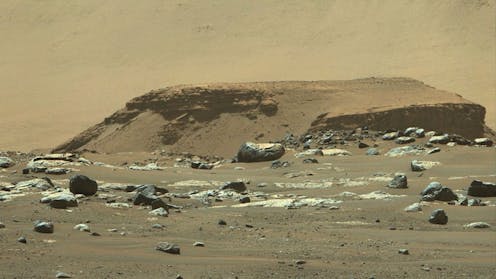
Part of the ancient lake delta in Jezero Crater on Mars.JPL-Caltech
Recently, Nasa revealed exciting details of new findings from Mars. Scientists have
discovered tiny patterns of unusual minerals in the clay-rich rocks on the edge of
Jezero Crater – an ancient lake once fed by Martian river systems, and the
exploration site of the Nasa Perseverance Rover.
The jury is still out on whether these are actually signs of life, but this discovery has reignited the discussion about the previous existence of life on Mars, and the possibility that it could still survive there today.
We’ll need many different lines of evidence to answer this question, but there is precedence for considering certain Martian environments as currently habitable.
Early Earth and early Mars were relatively similar, but this similarity didn’t last long. Both had atmospheres and magnetic fields that offered some protection from harmful radiation originating from the Sun, along with bodies of liquid water on their surface. We know that these conditions led to the origin of life on Earth, so it is possible that the same could have happened on Mars.
While life on Earth was beginning to thrive, Mars lost its magnetic field as its core cooled. This exposed the planet to harmful solar rays which began to erode the
atmosphere. As the atmosphere disappeared, the Martian surface became colder
and drier, eventually becoming the freezing desert we know today.
This is why many scientists don’t expect to find living organisms on the surface of
Mars – it is simply too inhospitable for life as we know it. Instead, the hope lies in uncovering microbial life hidden in protected underground or icy regions.
Where could life survive on Mars?
Possible locations for Martian microbial life include caves, inside or underneath ice sheets at the poles, or deep underground. All of these environments have analogues (environments with certain similarities) on Earth that host microorganisms. So it is not much of a stretch to consider that if life began on Mars, it could still be holding on in these extreme niches.
Perhaps the most plausible of these is underground – the Martian subsurface. Extending from a few metres to several kilometres deep, it is thought to be the planet’s most stable and long-lived potential habitat.
While the surface has been cold, dry, and generally inhospitable for much of Martian history, the deep subsurface may have offered more favourable conditions. On Earth, the deep biosphere – the life that survives beneath the surface – provides a useful comparison.
A substantial amount of Earth’s microbial life exists underground, surviving in cracks within rocks. These ecosystems are dominated by lithoautotrophs – microbes that get energy by feeding on those rocks. Methane, a potential byproduct of some
lithoautroph feeding habits, has even been detected on Mars. But there are many
ways to generate methane underground without life, so right now this doesn’t tell us much.
The potential for a deep biosphere hinges on factors including the availability of
liquid water, a source of energy, space to live in, and tolerable temperatures. There is possible evidence for the existence of liquid water below the surface of Mars, but this is still under debate.
This would facilitate chemical reactions known as water-rock reactions which generate energy for microbes to live on. Because of its weaker gravity, rocks on Mars may be less compressed than those on Earth and remain more porous at depth, providing space for microbes to live in.
At the same time, Mars produces less heat from its interior, which means temperatures suitable for life could extend nearly twice as deep underground as they do on Earth.
Scientists spend a lot of time analysing places on Earth – Mars analogues – to try to understand the possibilities for past and present life on Mars. These environments are not identical to Mars, but they share at least one important feature such as extreme dryness, high salt levels, or high UV exposure.
Earth’s deep subsurface is one example, and others include the Atacama Desert in South America, sediments at Lake Salda in Turkey, and salts found in Utah’s Pilot Valley. Researchers around the world are investigating these sites on Earth to better understand how Martian conditions might affect life and its preservation. As no one location on Earth could possibly match all Martian conditions, scientists also run controlled laboratory experiments.
An example of this is the use of specialised “Mars chambers” to reproduce Martian environmental conditions such as its atmosphere, radiation exposure, and temperature. All of these investigations combined help us to better understand the potential for life to exist on Mars.
The Mars chamber at Nasa’s Goddard Space Flight Center.
Signs of life today?
Right now there is no conclusive evidence of life on Mars past or present. Nasa’s
“leopard spots” are the most promising signs we have, but these are still
inconclusive. If life exists on Mars today, it is almost certainly not widespread like on Earth – our probes and rovers would have seen it.
However, important opportunities lie ahead. The upcoming European Space Agency (Esa) ExoMars Rosalind Franklin rover will be able to drill up to two metres below the Martian surface. This will give us a chance to study the shallow subsurface of Mars which may contain living microorganisms. But this is only the start—most scientists agree that we will need to go deeper.
Drilling deep on Earth is still a huge challenge and there is so much we don’t know about our own subsurface life. Probing the deep subsurface of Mars will be a major scientific and engineering challenge, but one that may hold the key to finding existing Martian life.
Seán Jordan receives funding from the European Research Council (ERC) under the European Union’s Horizon Europe research and innovation programme (grant agreement No 1101114969) and from Research Ireland (Pathway award 22/PATH-S/10692). He is affiliated with the Research Ireland Centre for Applied Geosciences (iCRAG).
Devyani Jambhule receives funding from the Research Ireland Pathway Award ((22/PATH-S/10692). She is affiliated with the Origin of Life Early-career Network (OoLEN).
Research by charity End Sexism in Schools has found that over half of history lessons delivered to children aged 11 to 14 in England feature no women at all. With the government set to allocate funding to boost the provision of school libraries, here are some books – for a range of ages – to open young eyes to women’s lives, experiences and marginalisation in our past.
Books that strike a balance between being age appropriate, featuring rich, well-researched context and capturing the attention are top of my list. If they focus on lesser-known women in history, all the better.
For primary school children, biographical collections dominate the field. Take Kate Pankhurst’s Fantastically Great Women Who Changed the World. This book introduces young historians to a host of inspiring women from different ethnicities and backgrounds, while carefully setting out the circumstances and barriers that each woman faced in her time and place. The cartoon illustrations and accessible format of the text are a sure-fire classroom pleaser.
Kay Woodward’s What Would She Do? Advice from Iconic Women in History does a similar job for children aged around nine upwards, but with an added participatory element. It presents readers with the real-life dilemmas that the iconic women faced and encourages empathetic problem solving – what would she do? It also underscores the importance of resilience.
Vashti Harrison’s Little Leaders. Bold Women in Black History is an excellent choice. Meanwhile Rachel Ignotofsky’s Women in Science introduces young readers to women of diverse backgrounds, from antiquity to the 20th century, who have made their mark in maths, science and technology.
Biography anthologies introduce children to a wide range of historical figures. Twinsterphoto/Shutterstock
Along with the books compiling sketches of notable women’s lives, there are growing numbers of detailed biographies for primary school children that illuminate women’s place in the past. In the mainstream, there’s the Little People, Big Dreams series. My favourites feature architect Zaha Hadid, singer Aretha Franklin and artist Louise Bourgeois.
Particularly engaging historical biographies for children include Counting on Katherine, the story of Katherine Johnson, an African-American mathematician whose orbital calculations were instrumental in early US space missions. Kathleen Krull’s inspirational story of American lawyer and Supreme Court justice Ruth Bader Ginsburg also deserves a mention, along with Haydn Kaye’s book on the British suffragist pioneer Emmeline Pankhurst.
Women’s rights
My own research includes a focus on early 20th-century feminist activism. I’ve read Kay Barnham’s Women’s Rights and Suffrage with my six year old. It examines women’s historical legal status and political resistance from a global perspective. Then there’s David Roberts’ beautifully illustrated Suffragette: The Battle for Equality and Susan Campbell Bartoletti’s How Women Won the Vote. These books document the key ideologies and objectives of Edwardian British suffragism.
But what about the ordinary women of history, those of us who did not crusade or trailblaze – or at least not in public? Sadly, few books aimed at primary school children address this question head on. However, there is hope on the horizon for teens.
My 13-year-old daughter’s current favourite book is the teen edition of Philippa Gregory’s Normal Women. Making History for 900 Years. Gregory gives a detailed account of the lives of a diverse array of women over this broad time period in English history, highlighting the role of patriarchy and women’s subjugation in everyday life. With accessible language, relatable stories and illustrations, Normal Women is a surefire hit with older children trying to make sense of their place in the world.
Kate Mosse’s Feminist History for Every Day of the Year is also a captivating read, supplementing the multi-biography of notable women format with relative unknowns, for an older audience.
This kind of work, which goes beyond celebrating the famous few and sets out to write women back into the past, represents real progress in historical works for the next generation.
Rachael Attwood does not work for, consult, own shares in or receive funding from any company or organisation that would benefit from this article, and has disclosed no relevant affiliations beyond their academic appointment.
Source: The Conversation – UK – By Christopher Watson, Professor, Astrophysics Research Centre, School of Mathematics and Physics, Queen’s University Belfast
On October 6 1995, at a scientific meeting in Florence, Italy, two Swiss astronomers made an announcement that would transform our understanding of the universe beyond our solar system. Michel Mayor and his PhD student Didier Queloz, working at the University of Geneva, announced they had detected a planet orbiting a star other than the Sun.
The star in question, 51 Pegasi, lies about 50 light years away in the constellation Pegasus. Its companion – christened 51 Pegasi b – was unlike anything written in textbooks about how we thought planets might look. This was a gas giant with a mass of at least half that of Jupiter, circling its star in just over four days. It was so close to the star (1/20th of Earth’s distance from the Sun, well inside Mercury’s orbit) that the planet’s atmosphere would be like a furnace, with temperatures topping 1,000°C.
The instrument behind the discovery was Elodie, a spectrograph that had been installed two years earlier at the Haute-Provence observatory in southern France. Designed by a Franco-Swiss team, Elodie split starlight into a spectrum of different colours, revealing a rainbow etched with fine dark lines. These lines can be thought of as a “stellar barcode”, providing details on the chemistry of other stars.
What Mayor and Queloz spotted was 51 Pegasi’s barcode sliding rhythmically back-and-forth in this spectrum every 4.23 days – a telltale signal that the star was being wobbled back and forth by the gravitational tug of an otherwise unseen companion amid the glare of the star.
After painstakingly ruling out other explanations, the astronomers finally decided that the variations were due to a gas giant in a close-in orbit around this Sun-like star. The front page of the Nature journal in which their paper was published carried the headline: “A planet in Pegasus?”
The discovery baffled scientists, and the question-mark on Nature’s front cover reflected initial skepticism. Here was a purported giant planet next to its star, with no known mechanism for forming a world like this in such a fiery environment.
While the signal was confirmed by other teams within weeks, reservations about the cause of the signal remained for almost three years before being finally ruled out. Not only did 51 Pegasi b become the first planet discovered orbiting a Sun-like star outside our Solar System, but it also represented an entirely new type of planet. The term “hot Jupiter” was later coined to describe such planets.
This discovery opened the floodgates. In the 30 years since, more than 6,000 exoplanets (the term for planets outside our Solar System) and exoplanet candidates have been catalogued.
Their variety is staggering. Not only hot but ultra-hot Jupiters with a dayside temperature exceeding 2,000 °C and orbits of less than a day. Worlds that orbit not one but two stars, like Tatooine from Star Wars. Strange “super-puff” gas giants larger than Jupiter but with a fraction of the mass. Chains of small rocky planets all piled up in tight orbits.
The discovery of 51 Pegasi b triggered a revolution and, in 2019, landed Mayor and Queloz a Nobel prize. We can now infer that most stars have planetary systems. And yet, of the thousands of exoplanets found, we have yet to find a planetary system that resembles our own.
The quest to find an Earth twin – a planet that truly resembles Earth in size, mass and temperature – continues to drive modern-day explorers like us to search for more undiscovered exoplanets. Our expeditions may not take us on death-defying voyages and treks like the past legendary explorers of Earth, but we do get to visit beautiful, mountain-top observatories often located in remote areas around the world.
We are members of an international consortium of planet hunters that built, operate and maintain the Harps-N spectrograph, mounted on the Telescopio Nazionale de Galileo on the beautiful Canary island of La Palma. This sophisticated instrument allows us to rudely interrupt the journey of starlight which may have been travelling unimpeded at speeds of 670 million miles per hour for decades or even millennia.
Each new signal has the potential to bring us closer to understanding how common planetary systems like our own may (or may not) be. In the background lies the possibility that one day, we may finally detect another planet like Earth.
The origins of exoplanet study
Up until the mid-1990s, our Solar System was the only set of planets humanity ever knew. Every theory about how planets formed and evolved stemmed from these nine, incredibly closely spaced data-points (which went down to eight when Pluto was demoted in 2006, after the International Astronomical Union agreed a new definition of a planet).
All of these planets revolve around just one star out of the estimated 10¹¹ (roughly 100 billion) in our galaxy, the Milky Way – which is in turn one of some 10¹¹ galaxies throughout the universe. So, trying to draw conclusions from the planets in our Solar System alone was a bit like aliens trying to understand human nature by studying students living together in one house. But that didn’t stop some of the greatest minds in history speculating on what lay beyond.
The ancient Greek philosopher Epicurus (341-270BC) wrote: “There is an infinite number of worlds – some like this world, others unlike it.” This view was not based on astronomical observation but his atomist theory of philosophy. If the universe was made up of an infinite number of atoms then, he concluded, it was impossible not to have other planets.
Epicurus clearly understood what this meant in terms of the potential for life developing elsewhere: “We must not suppose that the worlds have necessarily one and the same shape. Nobody can prove that in one sort of world there might not be contained – whereas in another sort of world there could not possibly be – the seeds out of which animals and plants arise and all the rest of the things we see.”
In contrast, at roughly the same time, fellow Greek philosopher Aristotle (384-322 BC) was proposing his geocentric model of the universe, which had the Earth immobile at its centre with the Moon, Sun and known planets orbiting around us. In essence, the Solar System as Aristotle conceived it was the entire universe. In On the Heavens (350BC), he argued: “It follows that there cannot be more worlds than one.”
Such thinking that planets were rare in the universe persisted for 2,000 years. Sir James Jeans, one of the world’s top mathematicians and an influential physicist and astronomer at the time, advanced his tidal hypothesis of planet formation in 1916. According to this theory, planets were formed when two stars pass so closely that the encounter pulls streams of gas off the stars into space, which later condense into planets. The rareness of such close cosmic encounters in the vast emptiness of space led Jeans to believe that planets must be rare, or – as was reported in his obituary – “that the solar system might even be unique in the universe”.
The Insights section is committed to high-quality longform journalism. Our editors work with academics from many different backgrounds who are tackling a wide range of societal and scientific challenges.
But by then, understanding of the scale of the universe was slowly changing. In the “Great Debate” of 1920, held at the Smithsonian Museum of Natural History in Washington DC, American astronomers Harlow Shapley and Heber Curtis clashed over whether the Milky Way was the entire universe, or just one of many galaxies. The evidence began to point to the latter, as Curtis had argued for. This realisation – that the universe contained not just billions of stars, but billions of galaxies each containing billions of stars – began to affect even the most pessimistic predictors of planetary prevalence.
In the 1940s, two things caused the scientific consensus to pivot dramatically. First, Jeans’ tidal hypothesis did not stand up to scientific scrutiny. The leading theories now had planet formation as a natural byproduct of star formation itself, opening up the potential for all stars to host planets.
Then in 1943, claims emerged of planets orbiting the stars 70 Ophiuchus and 61 Cygni c – two relatively nearby star systems visible to the naked eye. Both were later shown to be false positives, most likely due to uncertainties in the telescopic observations that were possible at the time – but nonetheless, it greatly influenced planetary thinking. Suddenly, billions of planets in the Milky Way was considered a genuine scientific possibility.
For us, nothing highlights this change in mindset more than an article written for the Scientific American in July 1943 by the influential American astronomer Henry Norris Russell. Whereas two decades earlier, Russell had predicted that planets “should be infrequent among the stars”, now the title of his article was: “Anthropocentrism’s Demise. New Discoveries Lead to the Probability that There Are Thousands of Inhabited Planets in our Galaxy”.
Strikingly, Russell was not merely making a prediction about any old planets, but inhabited ones. The burning question was: where were they? It would take another half-century to begin finding out.
The Harps-N spectrograph is mounted on the Telescopio Nazionale de Galileo (left) in La Palma, Canary Islands. lunamarina/Shutterstock
How to detect an exoplanet
When we observe myriad stars through La Palma’s Italian-built Galileo telescope using our Harps-N spectrograph, it is amazing to consider how far we have come since Mayor and Queloz announced their discovery of 51 Pegasi b in 1995. These days, we can effectively measure the masses of not just Jupiter-like planets, but even small planets thousands of light years away. As part of the Harps-N collaboration, we have had a front-row seat since 2012 in the science of small exoplanets.
Another milestone in this story came four years after the 51 Pegasi b discovery, when a Canadian PhD student at Harvard University, David Charbonneau, detected the transit of a known exoplanet. This was another hot Jupiter, known as HD209458b, also located in the Pegasus constellation, about 150 light years from Earth.
Transit refers to a planet passing in front of its star, from the perspective of the observer, momentarily making the star appear dimmer. As well as detecting exoplanets, the transit technique enables us to measure the radius of the planet by taking many brightness measurements of a star, then waiting for it to dim due to the passing planet. The extent of blocked starlight depends on the radius of the planet. For example, Jupiter would make the Sun 1% dimmer to alien observers, while for Earth, the effect would be a hundred times weaker.
In all, four times more exoplanets have now been discovered using this transit technique compared with the “barcode” technique, known as radial velocity, that the Swiss astronomers used to spot the first exoplanet 30 years ago. It is a technique that is still widely used today, including by us, as it can not only find a planet but also measure its mass.
A planet orbiting a star exerts a gravitational pull which causes that star to wobble back and forth – meaning it will periodically change its velocity with respect to observers on Earth. With the radial velocity technique, we take repeated measurements of the velocity of a star, looking to find a stable periodic wobble that indicates the presence of a planet.
These velocity changes are, however, extremely small. To put it in perspective, the Earth makes the Sun change its velocity by a mere 9cm per second – slower than a tortoise. In order to find planets with the radial velocity technique, we thus need to measure these small velocity changes for stars that are many many trillions of miles away from us.
The state-of-the-art instruments we use are truly an engineering feat. The latest spectrographs, such as Harps-N and also Espresso, can accurately measure velocity shifts of the order of tenths of centimetres per second – although still not sensitive enough to detect a true Earth twin.
But whereas this radial velocity technique is, for now, limited to ground-based observatories and can only observe one star at the time, the transit technique can be employed in space telescopes such as the French Corot (2006-14) and Nasa’s Kepler (2009-18) and Tess (2018-) missions. Between them, space telescopes have detected thousands of exoplanets in all their diversity, taking advantage of the fact we can measure stellar brightness more easily from space, and for many stars at the same time.
Despite the differences in detection success rate, both techniques continue to be developed. Applying both can give the radius and mass of a planet, opening up many more avenues for studying its composition.
To estimate possible compositions of our discovered exoplanets, we start by making the simplified assumption that small planets are, like Earth, made up of a heavy iron-rich core, a lighter rocky mantle, some surface water and a small atmosphere. Using our measurements of mass and radius, we can now model the different possible compositional layers and their respective thickness.
This is still very much a work in progress, but the universe is spoiling us with a wide variety of different planets. We’ve seen evidence of rocky worlds being torn apart and strange planetary arrangements that hint at past collisions. Planets have been found across our galaxy, from Sweeps-11b in its central regions (at nearly 28,000 light years away, one of the most distant ever discovered) to those orbiting our nearest stellar neighbour, Proxima Centauri, which is “only” 4.2 light years away.
Illustration of Proxima b, one of the exoplanets orbiting the nearest star to our Sun, Proxima Centauri. Catmando/Shutterstock
Searching for ‘another Earth’
In early July 2013, one of us (Christopher) was flying out to La Palma for my first “go” with the recently commissioned Harps-N spectrograph. Keen not to mess up, my laptop was awash with spreadsheets, charts, manuals, slides and other notes. Also included was a three-page document I had just been sent, entitled: Special Instructions for ToO (Target of Opportunity).
The first paragraph stated: “The Executive Board has decided that we should give highest priority to this object.” The object in question was a planetary candidate thought to be orbiting Kepler-78, a star a little cooler and smaller than our Sun, located about 125 light years away in the direction of the constellation Cygnus.
A few lines further down read: “July 4-8 run … Chris Watson” with a list of ten times to observe Kepler-78 – twice per night, each separated by a very specific four hours and 15 minutes. The name above mine was Didier Queloz’s (he hadn’t been awarded his Nobel prize yet, though).
This planetary candidate had been identified by the Kepler space telescope, which was tasked with searching a portion of the Milky Way to look for exoplanets as small as the Earth. In this case, it had identified a transiting planet candidate with an estimated radius of 1.16 (± 0.19) Earth radii – an exoplanet not that much larger than Earth had potentially been spotted.
I was in La Palma to attempt to measure its mass which, combined with the radius from Kepler, would allow the density and possible composition to be constrained. I wrote at the time: “Want 10% error on mass, to get a good enough bulk density to distinguish between Earth-like, iron-concentrated (Mercury), or water.”
In all, I took ten out of our team’s total of 81 exposures of Kepler-78 in an observing campaign lasting 97 days. During that time, we became aware of a US-led team who were also looking for this potential planet. In true scientific spirit, we agreed to submit our independent findings at the same time. On the specified date. Like a prisoner swap, the two teams exchanged results – which agreed. We had, within the uncertainties of our data, reached the same conclusion about the planet’s mass.
Its most likely mass came out as 1.86 Earth masses. At the time, this made Kepler-78b the smallest extrasolar planet with an accurately measured mass. The density was almost identical to that of Earth’s.
But that is where the similarities to our planet ended. Kepler-78b has a “year” that lasts only 8.5 hours, which is why I had been instructed to observe it every 4hr 15min – when the planet was at opposite sides of its orbit, and the induced “wobble” of the star would be at its greatest. We measured the star wobbling back and forth at about two metres per second – no more than a slow jog.
Kepler-78b’s short orbit meant its extreme temperature would cause all rock on the planet to melt. It may have been the most Earth-like planet found at the time in terms of its size and density, but otherwise, this hellish lava world was at the very extremes of our known planetary population.
Illustration of the Kepler-78b ‘lava world’ – similar in size and density to Earth. simoleonh/Shutterstock
In 2016, the Kepler space telescope made another landmark discovery: a system with at least five transiting planets around a Sun-like star, HIP 41378, in the Cancer constellation. What made it particularly exciting was the location of these planets. Where most transiting planets we have spotted are closer to their star than Mercury is to the Sun (due to our detection capabilities), this system has at least three planets beyond the orbital radius of Venus.
Having decided to use our Harps-N spectrograph to measure the masses of all five transiting planets, it became clear after more than a year of observing that one instrument would not be enough to analyse this challenging mix of signals. Other international teams came to the same conclusion and, rather than compete, we decided to come together in a global collaboration that holds strong to this day, with hundreds of radial velocities gathered over many years.
We now have firm masses and radii for most of the planets in the system. But studying them is a game of patience. With planets much further away from their host star, it takes much longer before there is a new transit event or the periodic wobble can be fully observed. We thus need to wait multiple years and gather lots of data to gain insight in this system.
The rewards are obvious, though. This is the first system that starts resembling our Solar System. While the planets are a bit larger and more massive than our rocky planets, their distances are very similar – helping us to understand how planetary systems form in the universe.
The holy grail for exoplanet explorers
After three decades of observing, a wealth of different planets have emerged. We started with the hot Jupiters, large gas giants close to their star that are among the easiest planets to find due to both deeper transits and larger radial velocity signals. But while the first tens of discovered exoplanets were all hot Jupiters, we now know these planets are actually very rare.
With instrumentation getting better and observations piling up, we have since found a whole new class of planets with sizes and masses between those of Earth and Neptune. But despite our knowledge of thousands of exoplanets, we still have not found systems truly resembling our solar system, nor planets truly resembling Earth.
It is tempting to conclude this means we are a unique planet in a unique system. While this still could be true, it is unlikely. The more reasonable explanation is that, for all our stellar technology, our capabilities of detecting such Earth-like planets are still fairly limited in a universe so mind-bogglingly vast.
The holy grail for many exoplanet explorers, including us, remains to find this true Earth twin – a planet with a similar mass and radius as Earth’s, orbiting a star similar to the Sun at a distance similar to how far we are from the Sun.
While the universe is rich in diversity and holds many planets unlike our own, discovering a true Earth twin would be the best place to start looking for life as we know it. Currently, the radial velocity method – as used to find the very first exoplanet – remains by far the best-placed method to find it.
Thirty years on from that Nobel-winning discovery, pioneering planetary explorer Didier Queloz is taking charge of the very first dedicated radial velocity campaign to go in search of an Earth-like planet.
A major international collaboration is building a dedicated instrument, Harps3, to be installed later this year at the Isaac Newton Telescope on La Palma. Given its capabilities, we believe a decade of data should be enough to finally discover our first Earth twin.
To hear about new Insights articles, join the hundreds of thousands of people who value The Conversation’s evidence-based news. Subscribe to our newsletter.
Christopher Watson receives funding from the Science and Technology Facilities Council (STFC).
Annelies Mortier receives funding from the Science and Technology Facilities council (STFC) and UK Research and Innovation (UKRI).