India’s monsoon is becoming more extreme – even though overall rainfall has hardly increased

Source: The Conversation – UK – By Ligin Joseph, PhD Candidate, Oceanography, University of Southampton

Across India, torrential rains over the past few months have swallowed an entire village in the Himalayas, flooded Punjab’s farmlands and brought Kolkata to a standstill. This all happened in a monsoon season in which total rainfall was technically only 8% above normal.

Climate change is not simply making India’s monsoon wetter. It’s making it wilder – with longer dry spells and more extreme downpours.

The Indian summer monsoon, which delivers about 80% of the country’s annual rainfall, usually sweeps in from the Arabian Sea in early June and retreats at the end of September. Growing up in India, I remember the joy of watching the rains arrive each year, the scent of wet earth and the relief they brought after a scorching April and May. Those memories still live in me. But today, the same monsoon that once filled our rivers and hearts with hope now brings fear and uncertainty.

This year, the monsoon arrived a week early, the fastest onset in 16 years. However, an early start does not necessarily translate to higher rainfall totals for the season. The modest 8% above average hides the real story: many regions experienced unusually intense and frequent downpours.

In the Himalayan village of Dharali, for instance, a cloudburst in early August triggered flash floods that left the local market buried under sediment as high as a four-storey building. Most parts of the village were completely washed away. Scientists suspect melting glaciers and cloudbursts – both linked to a warmer climate – were to blame.

In Punjab, a state of 30 million people often called India’s “food bowl”, heavy rains drowned crops across an area roughly the size of Greater Manchester. All 23 districts of the state were affected.

Scientists say the deluge was driven by an unusual interaction between regular monsoon weather systems and “western disturbances” – storm systems that originate in the Mediterranean and typically influence India’s weather in the winter. Their overlap this year amplified rainfall across northern India.

On the other side of the country, the huge city of Kolkata was not spared either. Some areas received 332mm of rain in just a few hours, more than half of what London gets in a whole year. The rains fell just before the major Hindu festival of Durga Puja, paralysing the city. The culprit was another low-pressure system that formed over the Bay of Bengal and carried vast amounts of moisture inland.

While the south escaped the worst flooding, cities such as Mumbai and Vijayawada also saw intense cloudbursts, demonstrating the spread of extreme rainfall.

Why the monsoon is becoming more extreme

Each disaster was driven by the same underlying trend: a warmer atmosphere that can hold more moisture. For every degree of warming, the air can store about 7% more water vapour – and when that moisture is released, it falls in heavier downpours over shorter periods. This trend is now clearly visible in India’s monsoon data.

Map of India
How the number of extreme rainfall days during the summer monsoon has changed since 1951. Green areas are having more extremes; brown areas less. Extremes are increasing across southern and western India, and decreasing in parts of central and northeastern India. (Boundaries and names shown on the map do not imply official endorsement or acceptance).
Ligin Joseph (data: Indian Meteorological Department)

The number of extreme rainfall days, when daily totals exceed the top 10% of the long-term average, has risen sharply across southern and western India since the 1950s. Some regions, meanwhile, are receiving less overall rain but in stronger and more erratic bursts, meaning both droughts and floods can be a threat in the same season.

Scientists have also noticed shifts in the monsoon’s circulation and in the low-pressure systems that drive it. Climate change is pushing the whole monsoon system westward, increasing rainfall over typically arid northwestern India, while decreasing rainfall over the traditionally wetter northeast.

All this extreme rainfall is turning the monsoon from a friend into a foe. Unless we act responsibly to limit greenhouse gas emissions and become more resilient to the consequences of a changing climate, the season that sustains life across India may increasingly threaten it.


Don’t have time to read about climate change as much as you’d like?

Get a weekly roundup in your inbox instead. Every Wednesday, The Conversation’s environment editor writes Imagine, a short email that goes a little deeper into just one climate issue. Join the 45,000+ readers who’ve subscribed so far.


The Conversation

Ligin Joseph receives funding from the UK’s Natural Environment Research Council (Nerc).

ref. India’s monsoon is becoming more extreme – even though overall rainfall has hardly increased – https://theconversation.com/indias-monsoon-is-becoming-more-extreme-even-though-overall-rainfall-has-hardly-increased-267159

What the Caerphilly byelection could reveal about Reform, Labour and Wales’ political future

Source: The Conversation – UK – By Marc Collinson, Lecturer in Political History, Bangor University

Caerphilly castle is the second largest castle in the UK Ceri Breeze/Shutterstock

When voters in Caerphilly in south Wales go to the polls later this month, it will be about far more than one seat in the Senedd, Wales’s devolved parliament.

Caerphilly, a postindustrial town just north of Cardiff, has long been considered safe Labour territory. But in recent years, economic upheaval and social change have made once rock-solid seats like these far less predictable.

The contest is therefore not just about who wins a single seat, but what kind of Wales will emerge from a period of upheaval. Will it be one clinging to the certainties of its industrial past? Or one looking toward Plaid Cymru and the prospect of Welsh independence as the political voice for such unease? Or, alternatively, will it turn to the populist right?

What happens here could indicate whether Labour’s hold on the Welsh valleys is starting to loosen, and whether new political forces are taking root. It’s a local contest with national stakes.

Labour remains Wales’s dominant political force, but the past 18 months have been turbulent. Mark Drakeford’s retirement as first minister was followed by Vaughan Gething’s brief and troubled leadership.

Meanwhile, the current first minister Eluned Morgan faces her own challenges. Fourteen members of the Labour group will step down before the 2026 Senedd election.

The Caerphilly byelection, triggered by the death of sitting Labour member Hefin David, comes at a difficult time for Labour across both the UK and in Wales.

Labour’s UK leadership remains focused on Westminster, while in Wales, divisions over candidate selection and policy have occasionally exposed cracks in the party’s valleys strongholds. History offers warnings.

For example, in 2005, Labour suffered a shock defeat in nearby Blaenau Gwent when former Labour member Peter Law stood as an independent after rebelling against the party’s candidate selection. His victory – and the byelection wins that followed his death – showed how local discontent can upend even the safest seats.

Whatever happens in Caerphilly, the real test for Labour will be what follows, as the result may affect its majority to govern and pass a budget. It could remain in office as the largest party, but without power.

The rise of Reform

Among the most striking developments in Welsh politics is the growing profile of Reform UK, now rebranding its Welsh operation as “Reform UK Wales”.

Analyses point to similarities with the Brexit Party and UKIP. Like these parties before, Reform taps into the undercurrent of discontent that runs through many post-industrial communities.

While some research suggests Reform may be perceived as even more racially divisive than its predecessors.

In Caerphilly, Reform has an active local campaign and a simple message: bring back money and decision-making to local communities. The party is positioning itself against both the Welsh government’s record in the Senedd while channelling resentment toward Westminster.

For some voters, Reform’s appeal is less about specific policies than about mood – frustration with established politics and a desire for something new.

Under changes due next year, the Senedd will grow in size and adopt a more proportional voting system. That could make it easier for smaller parties like Reform to win representation, giving this byelection added importance as a test of their strength.

A strong showing could signal a profound realignment in the political geography of Wales, and a measure of how far populist politics has embedded itself in areas once considered the bedrock of Labour Wales.

Stepping stone to a Plaid government?

Plaid Cymru, meanwhile, is keen to show it can turn rising national support into real gains.

The party has come close to winning Caerphilly before. In 1968, its candidate Phil Williams cut Labour’s majority from more than 20,000 to fewer than 2,000 votes.

More recently, former Plaid leader Leanne Wood’s surprise victory in nearby Rhondda in 2016 showed Plaid could break through in Labour heartlands. But her loss five years later underlined how hard it is to sustain momentum.

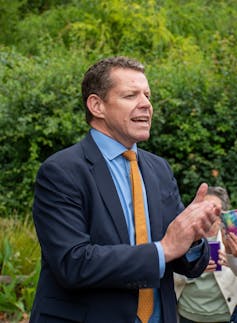
Rhun ap Iorwerth clapping his hands.
Could Plaid Cymru leader Rhun ap Iorwerth form the next Welsh government?
van Blerk/Shutterstock

Polling suggests Plaid could form a government in 2026 if current trends continue, but that depends on building a consistent base in areas like Caerphilly. A victory here would not just be symbolic; it would demonstrate that Plaid’s message resonates beyond its rural and Welsh-speaking heartlands.

The upcoming electoral reforms could further boost Plaid’s chances, if it can show voters that it offers a credible alternative to Labour.


Read more:
Is backing Welsh independence the same as being a nationalist? Not necessarily


For other parties, expectations are modest. The Conservatives are struggling to make headway in Wales, while the Liberal Democrats remain on the margins. But the Caerphilly byelection will still send a message far beyond this one constituency.

Whatever the result, Caerphilly will offer a snapshot of a nation in transition. A comfortable Labour win would suggest its dominance in the valleys remains intact. A strong showing for Plaid or Reform, however, would point to deeper realignments. It’s evidence that Wales’s political future may look very different from its past.

The Conversation

Marc Collinson received funding from the Y Werin Legacy Fund.

Robin Mann receives funding from Economic and Social Research Council.

ref. What the Caerphilly byelection could reveal about Reform, Labour and Wales’ political future – https://theconversation.com/what-the-caerphilly-byelection-could-reveal-about-reform-labour-and-wales-political-future-266545

Four-year-olds don’t need to sit still to be ‘school ready’

Source: The Conversation – UK – By Lucy Sors, Senior Lecturer, York St John University

Rawpixel.com/Shutterstock

The UK government’s strategy for early years education in England aims to get children in reception “school-ready”. But what school readiness means is debatable.

Education secretary Bridget Phillipson has pointed out that half of reception-aged children “can’t sit still”. And recent writing guidance outlines handwriting and spelling lessons for reception-aged children.

As experts in primary education, we take the view that children aged four and five should not be sitting still at tables. Expecting children to sit still and formally learn how to write at this early age conflicts with widely accepted theories around cognitive and physical development.

Research by theorists in child development emphasises the importance of active play and exploration. Children can develop their interests through free choice activities that support their language, communication and thought.

Researchers argue that young children should be encouraged to understand their world in a range of indoor and outdoor settings that can be explored through the power of play.

Not all children can or should sit still. Children need physical play to develop their strength, coordination, and motor skills before being given a pencil to write. They need role play to learn how to communicate, question, and hold conversations before following instructions.

They should be encouraged to move and explore through free play instead of sitting still. At an early age, children’s enjoyment of learning should be the priority. For every child this will be different, and practice should respond to children’s preferences and interests.

The government’s Plan for Change sets milestones for strategic national developments. In its mission to “break down barriers to opportunity”, the plan aims for 75% of children to achieve a “good level of development” (GLD) by 2028.

This means that children must meet 12 of the 17 prescribed early learning goals. These measure a level of development across areas like language, personal, social and emotional development, mathematics and literacy when children reach the end of their reception year at school, at age five.

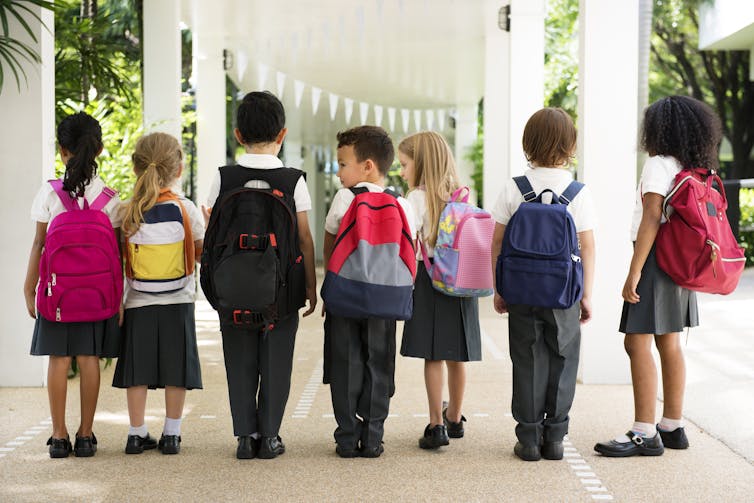
Group of children in uniform with backpacks
There’s a lot of difference between children at age four.
Rawpixel.com/Shutterstock

But what does this value? Three of the early learning goals focus on literacy. Children cannot meet the “good level of development” if they have not met the early learning goal for writing.

As well as this, a child may excel in many of the learning goals, but still not meet the criteria. There are other considerations, such as a potential age difference of up to 11 months among children finishing reception.

This creates an uneven playing field, with some children needing more time to develop language and communication, physical, personal, social and emotional skills before a formal move into literacy and mathematics.

The government recommends that reception teachers should plan regular explicit handwriting and spelling lessons that directly target children who may choose not to write in their play. This directive approach might not suit every child and takes away their choice over opportunities to play.

Learning through play

In Finland, children start primary school at age seven. The Finnish educational model sees learning through play as “essential”.

New Zealand’s Te Whāriki is specifically a “play-based” curriculum. It understands that each child learns at their own pace. It explains the power of storytelling and play to build foundations in reading, writing, and maths.

Within the UK, Wales and Scotland focus on play as essential to improving outcomes. Play pedagogy in the Scottish curriculum emphasises responding to the unique needs of each child. Wales views “playwork” as vital for children’s health, wellbeing and overall development.

England’s Early Years Foundation Stage Framework sets the standards that school and childcare providers in England must meet for the learning, development and care of children from birth to five.

In this document the importance of play and following children’s interests is also highlighted. But this is overshadowed by government messaging and guidance on the importance of formalised academic skills such as phonics and writing.

Our research highlights the importance of connections between child development, culture, and responding to children and their environments.

Playful creativity, problem-solving, and experimentation help build strong foundations for learning. Valuing children’s experiences instead of focusing on prescribed milestones helps them learn to connect with the world around them as well as develop academically.

The English Early Years curriculum needs to return to basics. This keeps foundational learning through play at its heart, including all children and responding to their stage of development.

When we play, listen, read and talk with children, we give them a great start in life. This begins with looking at them as individuals. Learning in the early years should foster a love of learning, promote positive relationships and help children to understand the world.

Nurture, care, play and exploration should be prioritised to develop confident, resilient, and adaptable learners who can navigate a fast-changing world.

The Conversation

The authors do not work for, consult, own shares in or receive funding from any company or organisation that would benefit from this article, and have disclosed no relevant affiliations beyond their academic appointment.

ref. Four-year-olds don’t need to sit still to be ‘school ready’ – https://theconversation.com/four-year-olds-dont-need-to-sit-still-to-be-school-ready-261812

Why climate summits fail – and three ways to save them

Source: The Conversation – UK – By Francesco Grillo, Academic Fellow, Department of Social and Political Sciences, Bocconi University

Nearly three decades after the first UN climate conference, emissions are still rising. The global system for tackling climate change is broken – it’s slow, cumbersome and undemocratic.

Even Donald Trump may not be totally wrong when he blames the UN for producing “empty words and then never [following] those words up”. If we assess the progress since the first UN Cop climate summit in 1995, the numbers on emissions confirm that not very much did, indeed, follow years of words.

We urgently need not just to redesign climate policies but also a new method for drafting those polices. Climate change could even be the right issue in which to experiment with an approach that might inspire a wider reform of multinational institutions.

A conference I have helped organise beginning October 16 in Venice on the global governance of climate change will discuss three ideas.

First, we need to gradually redesign the decision-making process to solve a deficit of both efficiency and democracy. Decisions today are slow and weak because they de facto seek unanimity.

The Paris agreement, for instance, only required 55 countries producing at least 55% of global emissions to enter into force. And yet diplomats worked so that it could be agreed by all 195 UN member states – including those that later dropped out – by adopting words that tend to be “empty” to avoid displeasing anybody.

At the same time, the process does not even include all the parties that really matter: technically, the microstate of San Marino is one of the signatories of the agreements; the megacity of Los Angeles is not. Current mechanisms also miss the opportunity to experiment with direct representation of groups for whom climate change matters more, such as young people, indigenous people or farmers.

One idea would be to leverage the relative concentration of the world economy. China, the US and India represent almost half of the world population (and much of the population living below the global poverty line), more than half of the GDP and emissions; and most of the private investment in artificial intelligence that may enable some of the most interesting solutions.

Reforms that go beyond current blanket consensus are necessary. For instance, some experts have proposed a qualified majority voting system, in which changes might require a supermajority of countries or perhaps a majority of both developed and developing countries.

But we must be even more ambitious than this: voting rights should instead reflect size.

This would create incentives for states to move towards pooling their votes into regional representations. Trade-based regional agreements, like South American Mercosur, the African Continental Free Trade area or the Association of South East Asian Nations could evolve into climate-related alliances.

This would be a gigantic opportunity for leadership by the EU, which has accumulated more hard-earned experience than any other multilateral organisation in how to pool national wills. It could set an example by merging its 27 seats into one, showing how its carbon border adjustments and other collective instruments can translate ambition into action.

Drastically reducing the number of parties could allow for the introduction of a high qualified majority (75% of the parties) to avoid a situation like the UN’s security council where vetoes of just five parties is enough for paralysis.

This would also open space for a more direct representation of vital interests. The existing alliance of climate-vulnerable small island states could get a vote that outweighs their modest populations and GDPs. The C40 group of major cities could get an institutionalised role.

Young citizens assemblies have long been experimented with and it is time to give them a formal vote. This would also force, in turn, their internal decision-making processes to be more transparent. Such a reform would be limited to the UN climate change conferences and if successful be scaled up to other UN decision-making process.

Simplify climate finance

Second, it is necessary to streamline the chaotic array of climate-related financial instruments. Colleagues and I recently counted about 30 facilities bridging developing and developed countries and meant to finance climate projects, with much overlap and confusion.

One possibility would be to merge many small funds into three to five bigger instruments. Only Germany and UK, for instance, fund ten of such facilities (and four of them are a joint effort). Each of the instruments resulting from the consolidation would be dedicated to a big-picture goal that every citizen, investor and asset manager can immediately understand.

There could be one fund for adaptation (including the problematic “loss and damage”); one for mitigation (and energy transition); one for financing research and development, and technology sharing; and one for encouraging, assessing and scaling up experiments.

Reinvent the Cop format

Third, we absolutely need to change the format of Cop itself. The cost of flying and accommodating 100,000 delegates at Cop28 in Dubai was probably higher than the total amount promised at that same Cop to compensate poorer countries for climate-related losses. This results-to-cost ratio is one reason why the climate agenda has lost some popular support.

One possibility is to transform Cop from a gigantic exhibition that changes location every year, into five permanent forums (one for each main continent) focused on generating and managing knowledge on five problems that we need to solve.

They are: climate adaptation; climate mitigation; governance of places that are beyond national boundaries (oceans, Arctic, Antarctic); AI and climate; geoengineering (a last resort technology in need of strong global control).

Distributing Cops around the world would focus the debate, make participation easier, cut costs and emissions, and could sustain a year-round dialogue rather than a single big moment.

Governance of the climate is not working. Yet the climate may be the best problem against which to apply a radically new method of global governance. It may become a blueprint for the much wider question of how we reinvent institutions that were conceived for a different, much more stable era.

And if we can fix how the world decides on climate, we might learn to fix how it decides on everything else, too.


Don’t have time to read about climate change as much as you’d like?

Get a weekly roundup in your inbox instead. Every Wednesday, The Conversation’s environment editor writes Imagine, a short email that goes a little deeper into just one climate issue. Join the 45,000+ readers who’ve subscribed so far.


The Conversation

Francesco Grillo is affiliated with Vision, the think tank.

ref. Why climate summits fail – and three ways to save them – https://theconversation.com/why-climate-summits-fail-and-three-ways-to-save-them-267470

Quadrobics: is the trend for walking on all fours like an animal good for your fitness?

Source: The Conversation – UK – By Dan Gordon, Professor of Exercise Physiology, Anglia Ruskin University

Quadrobics puts all four limbs to work. Okrasiuk/ Shutterstock

Instead of wasting hours squatting weights in the gym or pounding miles of pavement in your running shoes, you could instead get all the benefits of a workout just by moving a little bit more like other animals.

“Quadrobics” is the internet’s latest fitness trend. This unconventional training method involves using all four of your limbs during a workout. Proponents claim it’s a highly beneficial form of exercise because of the large number of muscle groups that it uses. By running on all fours, muscles in the shoulders, upper and lower arms, as well as the legs, back and core are used.

Sounds good in theory but is it any more effective than your normal workout?

Although there’s limited research on quadrobics, research does show that the greater the amount of muscle used in a workout, the more benefits your cardiovascular fitness and health will see.

For instance, research which has compared cycling and running has shown that running leads to greater cardiorespiratory fitness gains than cycling does. This is probably due to the different amounts of muscles each activity uses.

Cycling focuses mainly on the legs and lower body, while running is more of a whole-body exercise. Since running places demand on a greater number of muscles, this may explain why it leads to greater fitness gains.

Quadrobics, which apparently uses almost all of the major muscle groups, should therefore lead to greater gains than either running or cycling.

However, when one study compared quadrobics to a standard walking programme, quadrobics oddly did not seem to use more energy – despite spiking heart rate to a greater degree. This finding probably comes down to the fact that both activities use the same muscle groups, but just to varying degrees.

But while quadrobics does not necessarily appear to be better than walking, it may have other fitness benefits.

During a quadrobics workout, you might end up using different muscles than you would during a more conventional type of workout. For instance, compared to running, quadrobics would place a greater emphasis on the shoulder muscles, but would require less work from the calves.

This suggests that quadrobics may have potential benefits for flexibility and balance. One study looked at the effect of an eight-week quadrobics training plan in young people.

It found that compared to the control group (who did two 60-minute sessions of typical physical activity), the quadrobics group saw greater improvements in shoulder flexibility and balance.

Meanwhile, although quadrobics does work many of the body’s muscles, there is currently no evidence to suggest it’s more beneficial than weight training in improving strength.

A man crawls on all fours across a turf field.
Quadrobics movements replicate those of animals.
Just dance/ Shutterstock

But something that cannot be discounted is the novelty of this exercise. One of the appeals of quadrobics is the playfulness of the exercise. This could have positive effects on mood and help relieve stress.

A number of groups describe quadrobics as “animal flow training” as it encourages us to adopt animal poses and attitudes. Since many find going to the gym can become uninspiring and boring over time, quadrobics could offer a solution to this.

If you’re looking to give quadrobics a try, two popular exercises are trotting and cantering.

In a trot lift your right hand and left leg at the same time, then your left hand and right leg. You will create a diagonal type of movement. While in a canter drive from the legs together and then land on your hands. This exercise can be done continuously or as repeated bouts of high intensity efforts, interspersed with periods of recovery.

For those new to the practice, it’s best to start slow when walking on all fours before advancing to these exercises. This is because there may be a risk of injury with these types of movement as they place much of the impact force on the elbows and wrists.

The potential risk of fracture or sprain is even higher in older adults, who experience more fragile bones and joint immobility, and those taking certain prescription drugs – such as corticosteroids.

The fitness benefits of walking like an animal might not be any greater than those seen with more conventional exercises, but the novelty of quadrobics may provide an entrance point to health and fitness – especially for those who may find conventional workouts boring.

The Conversation

Dan Gordon does not work for, consult, own shares in or receive funding from any company or organisation that would benefit from this article, and has disclosed no relevant affiliations beyond their academic appointment.

ref. Quadrobics: is the trend for walking on all fours like an animal good for your fitness? – https://theconversation.com/quadrobics-is-the-trend-for-walking-on-all-fours-like-an-animal-good-for-your-fitness-266524

Van Gogh and the Roulins: a family reunion of the artist’s greatest portraits

Source: The Conversation – UK – By Frances Fowle, Personal Chair of Nineteenth-Century Art, History of Art, University of Edinburgh

The Van Gogh Museum’s new exhibition, Van Gogh and the Roulins – Together Again at Last, celebrates an important family reunion. It brings together 14 portraits of the wife and three children of the postman Joseph Roulin – Vincent van Gogh’s closest friend and supporter while he was based in the southern French town of Arles.

The exhibition is a work of art in itself: tightly focused, beautifully designed and accompanied by an excellent catalogue. Additional works and props (such as Roulin’s chair) contextualise the show, but it is the portraits of the Roulins – Joseph, Augustine, 17-year-old Armand, 11-year-old Camille and baby Marcelle – that take centre stage.

Hung in three rooms on contrasting deep blue and orange walls they demonstrate the new direction that Van Gogh’s work was taking during a crucial period of his artistic development.

As a group they represent, on one level, the artist’s personal longing for the stability of a wife and family and, on another, his radical rethinking of portraiture as a genre. They were painted at a time when, in correspondence with his two friends, Paul Gauguin and Emile Bernard, he was struggling with the idea of art as “abstraction”. That is, as a fusion of the real and the imaginary.

Van Gogh wanted to paint ordinary people as he “felt” them and to raise them to the level of the universal. He was interested in creating symbolic “types”, of portraiture such as “the poet” or “the soldier”, and also sought to evoke the character and soul of the sitter.

As the exhibition cleverly demonstrates – through the careful placement of comparative works and “glimpses” via various sight-lines – he was inspired by artists such as Rembrandt, Frans Hals and even Honoré Daumier, all of whom devoted themselves to what Van Gogh termed “the painting of humanity”.

Two paintings of bearded men sat in chairs
Postman Joseph Roulin by Van Gogh (1888) and The Merry Drinker by Frans Hals (1628-1630).
Museum of Fine Arts Boston/Rijksmuseum

In July and August 1888 Van Gogh painted two expressive and colourful portraits of the bearded Roulin, whom he viewed as the modern equivalent of Frans Hals’s painting, The Merry Drinker (1628-1630). The first portrait shows this jolly barfly in his smart blue cap and uniform leaning awkwardly on a table in the Café de la Gare.

It recalls the artist’s description of the postman in a letter to Bernard as “something of an alcoholic, and with a high colour as a result”. He was also a “raging republican” and the two spent long hours conversing about politics.

In October Van Gogh moved to the “little yellow house” in Arles, where he rented two rooms and a studio for only 21 francs 50 centimes a month. A reconstruction of the house is installed on the first floor of the exhibition, which is devoted entirely to wider interpretation and family activities.

It was close to the station, where Roulin often worked, and also had a pleasant aspect, opposite the leafy Place Lamartine. Gauguin soon joined him there and for the next two months they enjoyed a fruitful relationship.

In November 1888, Van Gogh decided to paint all five members of the Roulin family, including baby Marcelle in her mother’s arms. Gauguin, too, produced his own somewhat austere portrait of Augustine, and it is interesting to compare his more abstracted approach with Van Gogh’s more personal interpretation.

Colourful painting of a woman in a chair
Gauguin’s portrait of Augustine, Madame Roulin (1888).
Saint Louis Art Museum

Rather than pay the family to sit for him on numerous occasions, Van Gogh then embarked on several “repetitions” or variations of his own paintings. The exhibition devotes a whole section to these repeated portraits of the family, inviting the visitor to compare the first version with its copy. Although dating them is a challenge, the repetitions appear more systematic, producing a calmer, more contemplative image, in emulation of Rembrandt.

Particularly curious are two portraits of Marcelle who, with her intense blue eyes and chubby features, takes on an almost grotesque appearance. She is dressed in a white christening robe, with a gold bracelet and pinkie ring, which were common christening gifts.

Painting of a chubby baby
Portrait of Marcelle Roulin by Van Gogh (1888).
Van Gogh Museum

At the end of December 1888, Van Gogh’s mental state deteriorated dramatically, culminating in him severing most of his left ear with a razor. He was admitted to hospital in Arles, where both Joseph and Augustine paid him regular visits. As a selection of touching letters in the exhibition testify, Roulin also kept in touch with Vincent’s brother Theo.

Once back at the yellow house, Van Gogh continued to work almost obsessively on his repetitions, producing five extraordinary portraits of Madame Roulin, portraying her as the universal symbol of the comforting mother.

Dressed in green, she is seated in a red chair and set against a background of swirling daisies. She holds the rope of a baby’s cradle, evoking the idea of the comforter. Van Gogh even imagined the perfect location for the portrait as the cabin of a ship, where it would rock with the waves, reminding the sailors of their own mother.

This is a wonderful, absorbing exhibition, but with a salutary message. For, before he left Arles, Van Gogh gave the five original Roulin portraits to the postman as a token of their friendship. In 1900, in desperate need of money, Joseph sold all five, together with three other paintings, to the art dealer Ambroise Vollard for a pittance. If only he could have held on to them – today the portraits are recognised as among Van Gogh’s greatest achievements.

Van Gogh and the Roulins – Together Again at Last is at the Van Gogh Museum in Amsterdam until January 11 2026.


Looking for something good? Cut through the noise with a carefully curated selection of the latest releases, live events and exhibitions, straight to your inbox every fortnight, on Fridays. Sign up here.


The Conversation

Frances Fowle does not work for, consult, own shares in or receive funding from any company or organisation that would benefit from this article, and has disclosed no relevant affiliations beyond their academic appointment.

ref. Van Gogh and the Roulins: a family reunion of the artist’s greatest portraits – https://theconversation.com/van-gogh-and-the-roulins-a-family-reunion-of-the-artists-greatest-portraits-267349

Warmer weather is leading to vanishing winters in North America’s Great Lakes

Source: The Conversation – Canada – By Marguerite Xenopoulos, Professor and Canada Research Chair in Global Change of Freshwater Ecosystems, Trent University

Fifty years ago, winter didn’t just visit the Great Lakes — it took up residence. If you blinked too slowly, your eyelashes froze together. Standing on the ice at the edge of Lake Superior, just after an early January snowstorm, everything was white and still, except for the lake. The wind had swept across it revealing ice cracked along thunderous fractures.

Usually by Christmas, Lake Huron’s Saginaw Bay would be locked in — thick enough for trucks, ice shanties dotting the horizon like little wooden cities. People hauled augers and bait out before dawn, thermoses of black coffee steaming in the cold.

But in 2019-20, the ice never came.

The air, wet and gray, hovered above freezing. The ground was muddy. Kids tried sledding on dead grass. Businesses that rented shanties stayed shuttered and people wondered if this is how winters would be going forward.

The environmental and social consequences of warming winters are impacting lakes globally. Despite these clear signs, most Great Lakes monitoring occurs during warmer, calmer weather.

As professors researching winter and members of the International Joint Commission Great Lakes Science Advisory Board, we’ve developed evidence-based advice for policymakers in Canada and the United States on water quality priorities and co-ordination. To strengthen international monitoring co-operation, we recommend adding winter monitoring to fully understand what ails the lakes.

Warming winter syndrome

Diagnosed with “warming winter syndrome,” the Great Lakes’ surface water temperatures are increasing, especially during the cold season.

Winters in the Great Lakes region are trending warmer and wetter, and annual maximum ice cover is significantly declining. Winter conditions are getting much shorter — by about two weeks fewer each decade since 1995.

In the Great Lakes region, businesses, visitors and more than 35 million residents see winter warming symptoms year-round. Shifting seasons increase nutrient runoff, fuelling algal blooms that foul summer beach days.

Changing food webs affect commercially and culturally important species like lake whitefish. Shrinking ice cover makes recreation and transportation less safe, altering the region’s identity and culture.

Winter is changing the most, but studied the least

We are losing winter on the Great Lakes before fully understanding how the season affects the ecosystem and communities. Our review of recent literature shows winter is understudied.

Researchers have limited understanding of the physical, biological and biogeochemical processes at play. Changes to these processes can affect water quality, ecosystem and human health, and the region’s social, cultural and economic well-being, yet understanding them is difficult without the necessary background.

Under the Great Lakes Water Quality Agreement, Canadian and American agencies monitor and report water quality and health indicators. The agreement establishes objectives for Great Lakes water quality, including keeping them safe for drinking, recreation and consumption of fish and wildlife. However, current efforts focus on warm months.

Expanding to winter would address key data gaps. Ad-hoc studies already show winter warrants systematic monitoring. In 2022, a dozen Canadian and U.S. universities and agencies collected under-ice samples across the basin in the Great Lakes Winter Grab.

Teams travelled by foot or snowmobiles and drilled through the ice to collaboratively gather a snapshot of lake life and water quality conditions across all five Great Lakes.

What followed was a grassroots Great Lakes Winter Network of academics and government researchers to better understand how rapidly winter conditions are changing, with the aim to improve data sharing, resource co-ordination and knowledge exchange.

A series of images showing the extent of winter ice cover in the Great Lakes.
Annual maximum ice coverage on the Great Lakes from 1973 to 2025. Despite significant variance year to year, ice coverage on the lakes has declined by roughly 0.5 per cent annually since 1973.
(NOAA Great Lakes Environmental Research Laboratory)

Impacts on communities

Warmer winters are linked to increased drownings from unstable ice. Greater nutrient runoff fuels harmful algal blooms and complicates drinking water treatment.

Reduced ice cover may extend the shipping season but can harm the US$5.1 billion fishery sector by altering habitats, increasing invasive species pressures and degrading water quality.

Winter also shapes cultural identity and recreation. From snowshoeing to skating on frozen lake waters, residents and visitors to the Great Lakes region can share happy memories of wintertime activities. Its loss can erode community ties, traditions and livelihoods.

Changing winter conditions also present threats to the traditions and cultural practices of Indigenous Peoples in the region. Many Indigenous Peoples express their cultural relationships to their ancestral lands through hunting, fishing, gathering and farming.

For example, lower total snowfall and more frequent freeze-thaw events remove nutrients from soil and may result in changes in the seasonal timing and availability of culturally important plant species. Unstable ice limits fishing and reduces opportunities to pass on skills, language and cultural practices to future generations.

a man in winter clothing standing on a frozen lake with instruments for taking samples.
Collecting samples on Lake Erie to study wintertime conditions in the lake. This research was conducted as part of the 2022 Great Lakes Winter Grab.
(Paul Glyshaw/NOAA)

Strengthening Great Lakes winter science

Data collection in cold-weather conditions poses logistical challenges. Researchers need specialized equipment, trained personnel and co-ordinated approaches for safe, efficient observations. Expanding Great Lakes winter science requires more resources.

Our new report highlights knowledge gaps in winter processes, socioeconomic and cultural impacts of changing conditions, and how to strengthen Great Lakes winter science.

The report also cites infrastructure limits, calling for more training so scientists can work safely in cold conditions, such as the 2024 Winter Limnology Network training workshop. Better data management and sharing are also needed to maximize the value of collected information.

Great Lakes winter science is growing, but improved capacity and co-ordination are essential to keep pace with changing conditions. These changes affect not only ecosystems but also communities. Strengthening winter science will help safeguard the health and well-being of those who live, work and play across the Great Lakes basin.

The Conversation

Marguerite Xenopoulos receives funding from Canada Research Chairs and the Natural Sciences and Engineering Research Council.

Michael R. Twiss is affiliated with the International Association for Great Lakes Research.

ref. Warmer weather is leading to vanishing winters in North America’s Great Lakes – https://theconversation.com/warmer-weather-is-leading-to-vanishing-winters-in-north-americas-great-lakes-263108

FEMA buyouts vs. risky real estate: New maps reveal post-flood migration patterns across the US

Source: The Conversation – USA (2) – By James R. Elliott, Professor of Sociology, Rice University

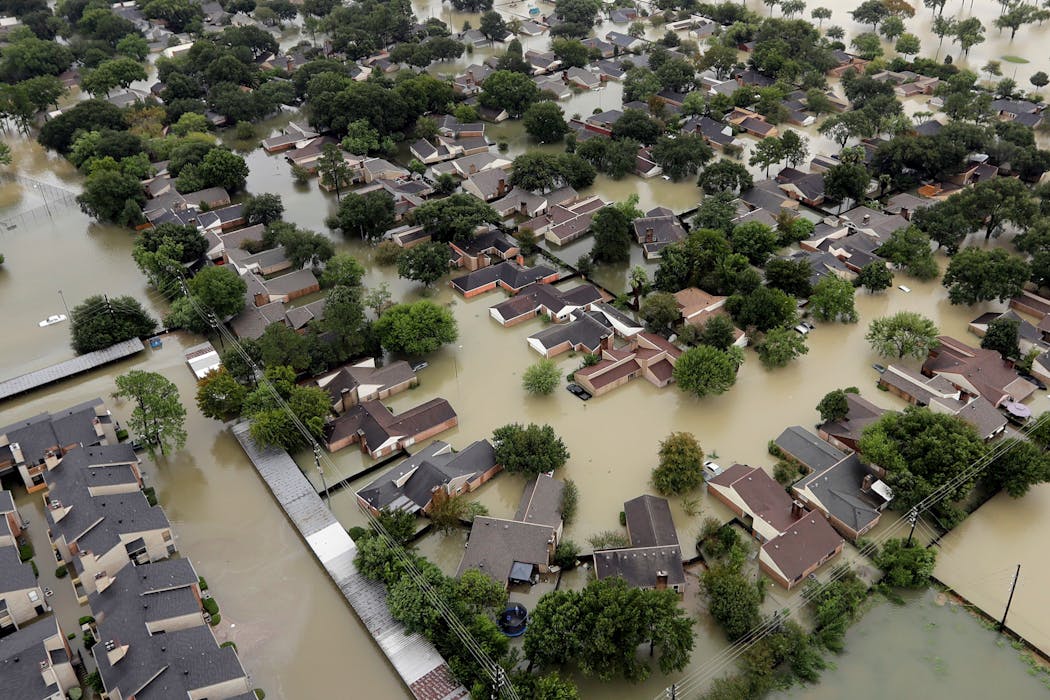
FEMA’s buyout program helped homeowners in Houston after Hurricane Harvey’s widespread flooding in 2017. AP Photo/David J. Phillip

Dangerous flooding has damaged neighborhoods in almost every state in 2025, leaving homes a muddy mess. In several hard-hit areas, it wasn’t the first time homeowners found themselves tearing out wet wallboard and piling waterlogged carpet by the curb.

Wanting to rebuild after flooding is a common response. But for some people, the best way to stay in their community, adapt to the changing climate and recover from disasters is to do what humans have done for millennia: move.

Researchers expect millions of Americans to relocate from properties facing increasing risks of flood, fire and other kinds of disasters in the years ahead.

What people do with those high-risk properties can make their community more resilient or leave it vulnerable to more damage in future storms.

A home with series of signs reading: 'Houses below this sign subject to flooding at any time. 9 times in 6 years.'
Signs warn potential homebuyers about flooding problems in a neighborhood of Myrtle Beach, S.C., in 2022.
Madeline Gray/The Washington Post via Getty Images

We study flood resilience and have been mapping the results of government buyout programs across the U.S. that purchase damaged homes after disasters to turn them into open space.

Our new national maps of who relocates and where they go after a flood shows that most Americans who move from buyout areas stay local. However, we also found that the majority of them give up their home to someone else, either selling it or leaving a rental home, rather than taking a government buyout offer. That transfers the risk to a new resident, leaving the community still facing future costly risks.

FEMA’s buyout program at risk

Government buyout programs can help communities recover after disasters by purchasing high-risk homes and demolishing them. The parcel is then converted to a natural flood plain, park or site for new infrastructure to mitigate future flood damage for nearby areas.

FEMA has been funding such efforts for decades through its property buyout program. It has invested nearly US$4 billion to purchase and raze approximately 45,000 flood-prone homes nationwide, most of them since 2001.

Those investments pay off: Research shows the program avoids an estimated $4 to $6 in future disaster recovery spending for every $1 invested. In return, homeowners receive a predisaster price for their home, minus any money they might receive from a related flood insurance payout on the property.

Flooding surrounds homes across a large area
Young trees along Briar Creek in Charlotte, N.C., are part of a successful local flood plain buyout program to purchase property in flood-prone areas and return it to nature.
Eamon Queeney/The Washington Post via Getty Images

But this assistance is now in jeopardy as the Trump administration cuts FEMA staff and funding and the president talks about dismantling the agency. From March to September, governors submitted 42 applications for funding from FEMA’s Hazard Mitigation Grant Program, which includes buyouts – all were denied or left pending as of mid-September.

Our recommendation after studying this program is to mend it, not end it. If done right, buyouts can help maintain local ties and help communities build more sustainable futures together.

Buyouts vs. selling homes in damaged areas

Our team at Rice University’s Center for Coastal Futures and Adaptive Resilience developed an interactive mapping tool to show where buyout participants and neighbors living within a half-mile of them moved after FEMA initiates a buyout program in their area.

The maps were created using individual data, down to the address level, from 2007 to 2017, across more than 550 counties where FEMA’s buyout program operated nationally.

Zoomed out, they show just how many places the program has helped across the U.S., from coastal cities to inland towns. And, when zoomed in, they reveal the buyout locations and destinations of more than 70,000 residents who moved following FEMA-funded buyouts in their area.

A map shows buyouts in cities scattered across the country.
FEMA’s buyout programs have helped homeowners and communities across the U.S., in almost every state.
James R. Elliott, CC BY

The maps also show which people relocated by accepting a federal buyout and which ones relocated on their own. Nationwide, we see the vast majority of movers, about 14 out of every 15, are not participants in the federal buyout program. They are neighbors who relocated through conventional real estate transactions.

This distinction matters, because it implies that most Americans are retreating from climate-stressed areas by transferring their home’s risk to someone else, not by accepting buyouts that would take the property out of circulation.

Selling may be good for homeowners who can find buyers, but it doesn’t make the community more resilient.

A map show lines from red dots to locations where people moved.
A map of buyouts in Sayreville, N.J., shows most people didn’t move far away.
James R. Elliott, CC BY

Lessons for future buyout programs

Our interactive map offers some good news and insights for buyout programs going forward.

Regardless of how they occur, we find that moves from buyout areas average just 5 to 10 miles from old to new home. This means most people are maintaining local ties, even as they relocate to adapt to rising climate risks.

Nearly all of the moves also end in safer homes with minimal to minor risk of future flooding. We checked using address-level flood factors from the First Street Foundation, a nonprofit source of flood risk ratings that are now integrated into some online real estate websites.

But many homes in risky areas are still being resold or rented to new residents, leaving communities facing a game of climate roulette.

How long that can continue will vary by neighborhood. Rising insurance costs, intensifying storms and growing awareness of flood risks are already dampening home sales in some communities − and thus opportunities to simply hand over one’s risk to someone else and move on.

The U.S. can create safer communities by expanding federal, state and local voluntary buyout programs. These programs allow communities to reduce future flood damage and collectively plan for safer uses of the vacated lands that emerge.

Giving residents longer periods of time to participate after the damage could also help make the programs more attractive. This would provide property owners more flexibility in deciding when to sell and demolish their property, while still taking risky property off the market rather than handing the risk to new residents.

The Conversation

James R. Elliott has received funding from the National Science Foundation.

Debolina Banerjee does not work for, consult, own shares in or receive funding from any company or organization that would benefit from this article, and has disclosed no relevant affiliations beyond their academic appointment.

ref. FEMA buyouts vs. risky real estate: New maps reveal post-flood migration patterns across the US – https://theconversation.com/fema-buyouts-vs-risky-real-estate-new-maps-reveal-post-flood-migration-patterns-across-the-us-262211

Zombies, jiangshi, draugrs, revenants − monster lore is filled with metaphors for public health

Source: The Conversation – USA (2) – By Tom Duszynski, Clinical Assistant Professor of Epidemiology, Indiana University

Key elements of a zombie apocalypse echo the stages of an infectious disease outbreak. GoToVan via Wikimedia Commons, CC BY

Imagine a city street at dusk, silent save for the rising sound of a collective guttural moan. Suddenly, a horde of ragged, bloodied creatures appear, their feet shuffling along the pavement, their hollow eyes locked on fleeing figures ahead.

A classic movie monster, the zombie surged in popularity in the 21st century during a time of global anxiety – the Great Recession, the specter of climate change, the lingering trauma of the 9/11 terrorist attacks and the COVID-19 pandemic.

The zombie apocalypse became a way for people to explore the terrifying concept of societal collapse, a step removed from real threats such as nuclear war or global financial disaster.

As a public health epidemiologist and an amateur zombie historian, I couldn’t help but notice the striking parallels between what epidemiologists do to stop infectious disease outbreaks and what horror movie heroes do to stop zombies. The key questions posed in any zombie narrative – how did this start, how many are infected, how to contain it – are the identical questions that epidemiologists ask during a real infectious disease outbreak or pandemic.

In 2011, in fact, the Centers for Disease Control and Prevention published a zombie apocalypse preparedness guide that explained how readying oneself for a zombie apocalypse can prepare people for any large-scale disaster. The zombie is more than just a monster; it is a powerful, public health teaching tool.

Zombies in ancient history

The idea of the reanimated dead has been part of human history for millennia, showing up across cultures and long before modern germ theory or epidemiology existed. These creatures were often a way for societies to understand and explain the natural world and disease transmission in the absence of scientific knowledge.

The oldest written reference to creatures similar to modern zombies is found in “The Epic of Gilgamesh,” which was etched on stone tablets sometime between 2000 and 1100 B.C.E. Enraged after Gilgamesh rejects her marriage proposal, the goddess Ishtar tells him, “I shall bring up the dead to consume the living, I shall the make the dead outnumber the living.” This ancient terror – the dead overwhelming the living – has a direct parallel to the concept of an out-of-control epidemic in which the sick quickly overwhelm the healthy. Hollywood has readily adopted this concept in many zombie movies.

A screenshot for the trailer of Night of the Living Dead
The creatures in George Romero’s 1968 classic ‘The Night of the Living Dead’ were the first flesh-eating zombies in Hollywood.
Wikimedia Commons

The origins of the flesh-eating corpse on screen date back to George Romero’s 1968 classic “The Night of the Living Dead.” You won’t hear the word “zombie” in Romero’s film, however – in the script, he called the creatures “flesh eaters.” Similarly, in Danny Boyle’s 2002 film “28 Days Later,” the terrifying creatures were called the “infected.” Both these terms, “flesh eaters” and “infected,” directly echo public health concerns – specifically, the spread of disease via a bacteria or virus and the need for quarantine to contain the afflicted.

The roots of the word zombie arefor the Haitian variety. thought to stretch back to West Africa and to words such as “nzambi,” which means “creator” in African Kongo, or “ndzumbi,” which means “corpse” in the Mitsogo language of Gabon. However, it was in Haitian Vodou, a religion that draws from the West African spiritual traditions among people who were enslaved on Haiti’s plantations, that the concept took its most terrifying form.

According to Vodou, when a person experiences an unnatural, early death, priests can capture and co-opt their soul. Slave owners capitalized on this belief to prevent suicide among the enslaved. To become a zombie – dead yet still a slave – was the ultimate nightmare. This cultural concept speaks not just to disease but to societal trauma and the public health crisis of forced labor.

Zombie-like creatures around the world

Across the globe, other reanimated corpses crop up in local folklore, often reflecting fears of improper burial, violent death or moral wickedness. Many tales about these eerie creatures don’t just convey how to avoid becoming one of them, but also detail how to stop or prevent them from taking over. This focus on prevention and control is at the heart of public health.

A white-faced big-toothed monster wearing a long black robe and holding up its hands
Jiangshi, or hopping zombies, were corpses reanimated when a soul couldn’t leave after a violent death.
Ed5005000 via Sleeping Dogs Wiki, CC BY-SA

During the expansion of China’s Qing dynasty, which took place between 1644 and 1911, a creature known as the jiangshi, or “hopping zombie,” emerged amid widespread unrest and integration of non-Chinese minorities. The jiangshi were corpses suffering from rigor mortis and decomposition, reanimated when a soul couldn’t leave after a violent death. Instead of staggering, these mythological creatures would hop, and their method of attack was to steal a person’s lifeforce, or qi.

Fear of a lonely, restless afterlife led families who lost a loved one far from home to hire a Taoist priest to retrieve the body for proper burial with ancestors.

In Scandinavia, the draugr – meaning “again walker” or “ghost” – was a creature bent on revenge. According to lore, draugrs typically emerged from mean-spirited people or improperly buried corpses. Like zombies, they could turn regular people into draugrs by infecting them. They would attack their victims by devouring flesh, drinking blood or driving victims insane. Draugrs’ contagious nature is a model for disease transmission. What’s more, their seasonal activity – they most often appear at night in winter months – is similar to seasonal trends in infectious disease transmission.

A black and white drawing of a giant monster hovering over a house at night
The draugr’s ability to ‘infect’ people can be seen as an example of disease transmission.
Kim Diaz Holm, CC BY-SA

In medieval times, meanwhile, legend had it that creatures called revenants – corpses that came out of their graves – stalked northern and western Europe. According to 12th-century English historian William of Newburgh, these creatures emerged from the lingering life force of people who had committed evil deeds during their lives or who experienced a sudden death. Clerics fueled people’s fears of becoming a revenant by claiming these creatures were created by Satan. The recommended but gruesome prevention method for this fate was to capture and dismember these creatures and to burn the body parts, especially the head.

Archaeological evidence from a medieval village in England suggests that communities heeded this advice. Archaeologists excavated the village’s burial grounds, and among human remains from the 11th to 13th centuries they found broken and burned bones with knife marks. They show how a community may have taken extreme measures to control a perceived contagion or threat to public safety, mirroring a modern-day quarantine or eradication protocols.

Perhaps the most striking similarity between these historical monsters and Hollywood zombies is that so many of them are created by an infectious agent of some kind. After an outbreak occurs, control is difficult to regain, underscoring the necessity of a rapid public health response.

The Conversation

Tom Duszynski does not work for, consult, own shares in or receive funding from any company or organization that would benefit from this article, and has disclosed no relevant affiliations beyond their academic appointment.

ref. Zombies, jiangshi, draugrs, revenants − monster lore is filled with metaphors for public health – https://theconversation.com/zombies-jiangshi-draugrs-revenants-monster-lore-is-filled-with-metaphors-for-public-health-261448

High food prices in east and southern Africa: four steps to boost production and make markets work better

Source: The Conversation – Africa – By Grace Nsomba, Researcher at Centre for Competition, Regulation and Economic Development, University of Johannesburg

Countries in east and southern Africa have continued to experience high and volatile food prices despite good harvests in 2025. This is especially alarming as climate-related weather shocks will be deeper and more frequent.

Yet the region does not lack the potential to expand agriculture. Parts of the region have abundant arable land and water resources.

The G20 Food Security Task Force convened by South Africa as part of its G20 presidency has recognised the wide and persistent extent of hunger and malnutrition in most sub-regions of Africa. The task force highlighted excessive price volatility and food inflation despite sufficient global food production.

It affirmed:

the commitment to facilitate open, fair, predictable, and rules-based agriculture, food and fertiliser trade and reduce market distortions.

Evidence from the African Market Observatory, however, points to action – not words – being required. The prices for food products such as maize meal, rice and vegetable oil are very high across the region. So are those of inputs such as fertilizer.

The African Market Observatory provides market information, including prices, for key food products at the wholesale and producer levels in east and southern Africa. This data is essential in evaluating whether prices are fair and markets are working well for smaller producers and other market participants.

Countries in east and southern Africa have a combined population of over 600 million. As a whole the region is a substantial net importer of staples such as wheat, rice and vegetable oil. This despite the potential for the region to expand production.

But to expand production, countries would need to develop sustainable agro-industrial strategies. Such strategies include initiatives to improve yields, value-adding and the creation of fair regional markets. Improved water management and farming methods are essential along with investing in storage, logistics and processing.

Countries would also need to address the issue of agricultural commodity markets in the region. The variance in commodity prices across the region are evidence that markets are working very badly.

Prices vary across countries

Maize prices vary tremendously across the region, with extremely high prices in Kenya and Malawi. This should not be the case. When production from other parts of the region is taken into account, the region has more than enough maize to meet demand. There have been good rains this year after El Nino affected countries like Malawi and Zambia in 2024.

Prices in Kenya have been above US$450/tonne while prices in Zambia from April to June 2025 after the harvest were around US$200/tonne. Tanzania and Uganda have also had good harvests with prices under US$300/tonne in producing areas. Transport costs can account for around US$80/tonne of the difference, at most (less from Uganda and Tanzania).

Zambia maintained export restrictions until August, which meant farmers received low prices and the traders who bought up the harvest made windfall profits when the restrictions were lifted.

There have been similar differences in soybeans between what farmers receive and prices paid by customers. Soymeal from beans is essential for animal feed to expand poultry and fish farming to improve nutrition of low-income households.

An inquiry in 2024 by the Competition Authority of Kenya into animal feed identified obstacles in cross-border markets. The government opened up to soymeal imports from India to provide an alternative source and prices fell 20% in early 2025. Kenya is surrounded by countries that could and should be ramping up their own soybean production for expanded regional trade.

Solutions

It bears repeating, east and southern Africa is the best area in the world to expand production of crops such as maize and soybean. The expansion would mean some of the lowest instead of the highest prices internationally and lay the foundation for downstream food processing.

The G20 ministers adopted the African philosophy of ubuntu, “I am because you are”, to envision food systems which recognise interdependence across communities, borders and generations.

It means a complete change from the current situation where countries practise “beggar thy neighbour” policies such as restricting trade when a neighbour is facing drought.

Market monitoring is a crucial part of rebuilding cooperation instead of division. The G20 points to the Agricultural Market Information System, an inter-agency platform to enhance food market transparency and policy response for food security launched in 2011 by G20 Ministers of Agriculture. The platform provides data on global food supply and prices. But the platform has no data on markets in sub-Saharan African countries except South Africa and Nigeria.

Without data, countries can’t address hunger and food insecurity. As shocks become more frequent and severe, this work needs to massively accelerate.

Our analysis of market outcomes and factors influencing prices points to a straightforward set of measures.

First, regional monitoring of food markets is essential to guard against market manipulation. Monitoring needs to cover pricing, trade flows and associated barriers, and changes in market structure for a more robust understanding of markets. It is especially important in light of climate-related shocks.

Second, improved governance of food value chains to address food security and supply needs to be accompanied by enforcement of clear rules against abuse of company power that transcends national borders. Competition authorities need to be effective referees.

Third, investments in infrastructure such as storage facilities and appropriate irrigation are essential to adapt to the effects of climate change, improve resilience and yields, and safeguard against volatile markets.

Fourth, financing should be mobilised for small and medium scale producers who form the backbone of agricultural production across the region.

A critical question, of course, is about the political will to take these measures forward.

The Conversation

Grace Nsomba acknowledges funding from the Shamba Centre for Food and Climate, Open Society Foundation, COMESA Competition Commission and Competition Commission South Africa for research on food and agriculture markets.

Simon Roberts acknowedges funding from the Shamba Centre for Food and Climate, Open Society Foundation, COMESA Competition Commission and Competition Commission South Africa for research on food and agriculture markets.

ref. High food prices in east and southern Africa: four steps to boost production and make markets work better – https://theconversation.com/high-food-prices-in-east-and-southern-africa-four-steps-to-boost-production-and-make-markets-work-better-266498