Films can change the world – why universities and film schools should teach impact strategies

Source: The Conversation – Africa – By Liani Maasdorp, Senior lecturer in Screen Production and Film and Television Studies, University of Cape Town

When was the last time a film changed the way you saw the world? Or the way you behaved?

Miners Shot Down (2014) countered mainstream media narratives to reveal how striking mine workers were gunned down by police at Marikana in South Africa. Black Fish (2013) made US theme park SeaWorld’s stock prices plummet. And Virunga (2014) stopped the British oil company Soco International from mining in the Congolese national park from which the film takes its name.

These films were all at the centre of impact campaigns designed to move people to act. In filmmaking, “impact” may involve bringing people together around important issues. It could also lead to people changing their minds or behaviour. It might change lives or policies.

Impact is achieved not just by a film’s own power to make people aware of and care about an issue. It requires thinking strategically about how to channel that emotion into meaningful and measurable change.

Although it is a growing field, for which there are numerous funding opportunities, impact producing is seldom taught at film schools or in university film programmes. Teaching tends to be ad hoc or superficial.

As scholars who study and teach film, we wanted to know more about where and how people are learning about impact producing; the benefits of learning – and teaching – impact production; and the barriers that prevent emerging filmmakers and film students in Africa and the rest of the majority world from learning this discipline. (Also called the “global south” or the “developing world”, majority world is a term used to challenge the idea that the west is the centre of the world.)

So, for a recent article in Film Education Journal, we conducted desk research, a survey shared with the members of the Global Impact Producers Alliance and interviews with a sample of stakeholders, selected based on their knowledge of teaching impact or experience of learning about it.

We found that there are university and college courses that focus on social issue filmmaking, but hardly any that prioritise social impact distribution. Access to free in-person training is highly competitive, generally requiring a film in production. We also found that free online resources – though numerous – can be overwhelming to those new to the field. And the majority of the courses, labs and resources available have been created in the west.

We believe it is important for film students and emerging filmmakers to know at least the basics of impact producing, for a range of reasons. Film is a powerful tool that can be used to influence audience beliefs and behaviour. Students need to know how they are being influenced by the media – and also how they can use it to advance causes that make the world more just and sustainable. The skills are transferable to other story forms, which empowers students to work in different contexts, in both the commercial and independent film sectors. It can benefit a student’s career progression and future job prospects.

Existing opportunities

We found that current impact learning opportunities range in depth and accessibility.

Many webinars, masterclasses and short one-off training opportunities are freely available online. But some are not recorded: you have to be there in person. Many form part of film festivals and film market programmes, which charge registration fees.

Impact “labs” are on offer around the world. They usually run for less than a week and are offered by different organisations, often in collaboration with Doc Society (the leading proponent of impact production worldwide). Although they are almost all free of charge, the barrier to entry is high: they are aimed at filmmakers with social impact films already in the making.

We found that the postgraduate programmes (MA and PhD) most aligned with this field are offered by a health sciences university in the US, Saybrook Univerity, and are very expensive.

African content, global reach

In our journal article we presented two impact learning opportunities from the majority world as case studies. One, the Aflamuna Fellowship, is an eight-month in-person programme based in Beirut, Lebanon. It combines theoretical learning, “job shadowing” on existing impact campaigns, and in-service learning through designing and running impact campaigns for new films. This programme has proven very helpful to filmmakers approaching topics that are particularly sensitive within the Middle East and north Africa regions, such as LGBTQ+ rights.

The other, the UCT/Sunshine Cinema Film Screening Impact Facilitator short course, is based in South Africa but is hosted entirely online. It was developed by the University of Cape Town Centre for Film and Media Studies and the mobile cinema distribution NGO Sunshine Cinema and launched in 2021. We are both connected to it – one as course convenor (Maasdorp) and the other (Loader) as one of the 2023 alumni.

Self-directed learning (including learning videos, prescribed films, readings and case studies) is followed by discussions with peers in small groups and live online classes with filmmakers, movement builders and impact strategists. The final course assignment is to plan, market, host and report on a film screening and facilitate an issue-centred discussion with the audience. Topics addressed by students in these impact screenings are diverse, ranging from voter rights, to addiction, to climate change, to gender-based violence.

Both case studies offer powerful good practice models in impact education. Projects developed as part of these programmes go on to be successful examples of impact productions within the industry. The documentary Lobola, A Bride’s True Price? (2022, directed by Sihle Hlophe), for instance, got wide reaching festival acclaim, walking away with several prizes across Africa. Both programmes combine theoretical learning; discussion of case studies relevant to the local context; engagements with experienced impact workers; and application of the learning in practice.

It is clear from this study that there is a hunger for more structured impact learning opportunities globally, and for local, context specific case studies from around the world.

The Conversation

Liani Maasdorp is the convenor of the UCT/Sunshine Cinema Impact Facilitator short course. She has in the past received funding from Doc Society and their affiliate projects.

Reina-Marie Loader does not work for, consult, own shares in or receive funding from any company or organisation that would benefit from this article, and has disclosed no relevant affiliations beyond their academic appointment.

ref. Films can change the world – why universities and film schools should teach impact strategies – https://theconversation.com/films-can-change-the-world-why-universities-and-film-schools-should-teach-impact-strategies-242043

AI in education: what those buzzwords mean

Source: The Conversation – Africa – By Herkulaas MvE Combrink, Senior lecturer/ Co-Director, University of the Free State

style-photography/Getty Images

You’ll be hearing a great deal about artificial intelligence (AI) and education in 2025.

The UK government unveiled its “AI opportunities action plan” in mid-January. As part of the plan it has awarded funding of £1 million (about US$1.2 million) to 16 educational technology companies to “build teacher AI tools for feedback and marking, driving high and rising education standards”. Schools in some US states are testing AI tools in their classrooms. A Moroccan university has become the first in Africa to introduce an AI-powered learning system across the institution.

And the theme for this year’s United Nations International Day of Education, observed annually on 24 January, is “AI and education: Preserving human agency in a world of automation”.

But what does AI mean in this context? It’s often used as a catch-all term in education, frequently mixed with digital skills, online learning platforms, software development, or even basic digital automation.

This mischaracterisation can warp perceptions and obscure the true potential and meaning of AI-driven technologies. These technologies were developed by scientists and experts in the field, and brought to scale through big tech companies. For many people, the term AI reminds them of systems like OpenAI’s ChatGPT, which is capable of writing essays or answering complex queries. However, AI’s capabilities extend far beyond these applications – and each has unique implications for education.


Read more:
ChatGPT is the push higher education needs to rethink assessment


I am an expert in AI, machine learning, infodemiology – where I study large amounts of information using AI to combat misinformation – knowledge mapping (discovering and visualising the contents of different areas of knowledge), and Human Language Technology (building) models that use AI to advance human language, such as live translation tools. I do all of this as the head of the Knowledge Mapping Lab, a research group within the Faculty of Economics and Management Sciences, and co-director of the Interdisciplinary Centre for Digital Futures at the University of the Free State.

In this article I explain the technologies and science behind the buzzwords to shed light on what terms like machine learning and deep learning mean in education, how such technologies can be – or are already being – used in education, and their benefits and pitfalls.

Machine learning: personalisation in action

Machine learning is a subset of AI involving algorithms that learn from data to make predictions or decisions. In education, this can be used to adapt content to individual learners – what’s known as adaptive learning platforms. These can, for example, assess students’ strengths and weaknesses, tailoring lessons to their pace and style.

Imagine a mathematics app that asks questions based on the curriculum, then uses a learner’s answers to identify where they struggle and adjusts its curriculum to focus on foundational skills before advancing. Although the science is still being explored, that level of personalisation could improve educational outcomes.

Deep learning: assessment and accessibility

Deep learning is a branch of machine learning. It mimics the human brain through neural networks, enabling more complex tasks such as image and speech recognition. In education, this technology has opened new avenues for assessment and accessibility.

When it comes to assessment, AI-driven tools can assist in marking, analyse handwritten assignments, evaluate speech patterns in language learning, or translate content into multiple languages in real time. Such technologies can both help teachers to lessen their administrative loads and contribute to the learning journey.

Then there’s inclusivity. Speech-to-text and text-to-speech applications allow students with disabilities to engage with material in ways that were previously impossible.

Natural language processing: beyond ChatGPT

Natural language processing is a branch of AI that allows computers to aid in the understanding, interpretation and generation of human language. ChatGPT is the most familiar example but it is just one of many such applications.

The field’s potential for education is huge.

Natural language processing can be used to:

  • analyse student writing for sentiment and style to provide real time feedback into the thinking, tone and quality of writing. This extends beyond syntax and semantics

  • identify plagiarism

  • provide pre-class feedback to learners, which will deepen classroom discussions

  • summarise papers

  • translate complex texts into more digestible formats.

Reinforcement learning: simulating and gamifying education

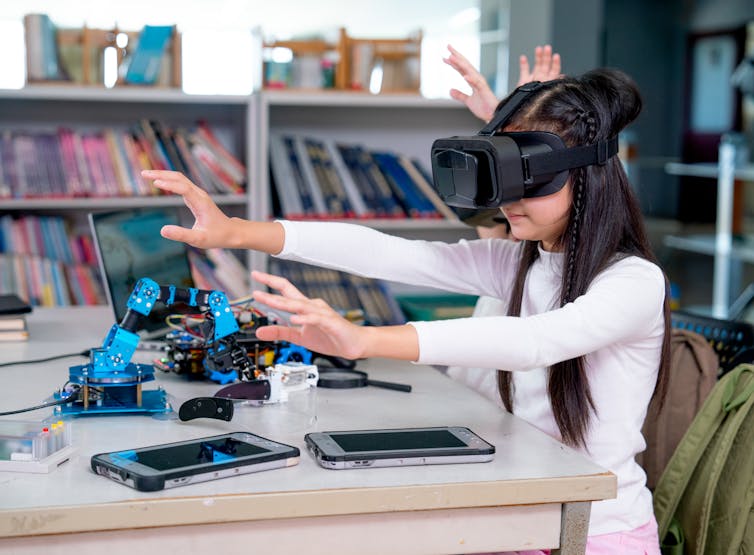
Two young students with VR glasses in a room full of books, various types of tools and robotic arms.
Gamifying education is a way to keep kids engaged while they learn in a virtual space.
sritanan/Getty Images

In reinforcement learning, computer systems learn through trial and error.

This is particularly promising in gamified educational environments. These are platforms where the principles of gamification and education are applied in a virtual world that students “play” through. They learn through playing. Over time, the system learns how to adapt itself to make the content more challenging based on what the student has already learned.

Challenges

Of course, these technologies aren’t without their flaws and ethical issues. They raise questions about equity, for instance: what happens when students without access to such tools fall further behind? How can algorithms be prevented from reinforcing biases already present in educational data? In the earlier mathematical example this might not be as much of an issue – but imagine the unintended consequences of reinforcing bias in subjects like history.

Accuracy and fairness are key concerns, too. A poorly designed model could misinterpret accents or dialects, disadvantaging specific groups of learners.

An over-reliance on such tools could also lead to an erosion of critical thinking skills among both students and educators. How do we strike the right balance between assistance and autonomy?

And, from an ethical point of view, what if AI is allowed to track and adapt to a student’s emotional state? How do we ensure that the data collected in such systems is used responsibly and securely?

Experimentation

AI’s potential needs to be explored through experimentation. But this works best if managed under controlled environments. One way to do this is through regulatory AI “sandboxes” – spaces in which educators and designers can experiment with new tools and explore applications.

This approach has been used at the University of the Free State since 2023. As part of the Interdisciplinary Centre for Digital Futures, the sandboxes serve as open educational resources, offering videos, guides and tools to help educators and institutional leaders understand and responsibly implement AI technologies. The resource is open to both students and educators at the university, but our primary focus is on improving educators’ skills.

AI in education is here to stay. If its components are properly understood, and its implementation is driven by good research and experimentation, it has the potential to augment learning while education remains human-centred, inclusive and empowering.

The Conversation

This work is part of the Interdisciplinary Centre for Digital Futures (ICDF) research in the AI4ED focus area as well as a research focus of Herkulaas Combrink who is employed at the University of the Free State as a Senior Lecturer and Co Director. Inputs on this work come from a variety of different collaborators, including the Digital Scholarship Centre within the UFS Sasol Library. Additionally, some of the AI4ED principles were part of a PhD and ongoing investigations into the application of AI in Education, Infodemic, and other societal domains. The ICDF does receive funding for different research projects.

ref. AI in education: what those buzzwords mean – https://theconversation.com/ai-in-education-what-those-buzzwords-mean-247587

9 million Ethiopian children have been forced out of school: what the government must do

Source: The Conversation – Africa – By Tebeje Molla, Senior Lecturer, School of Education, Deakin University

More than nine million Ethiopian children are currently out of school. They are caught in the crossfire of armed conflicts, natural disasters, tribal tensions and economic hardships.

In 2023, Ethiopia had a total school-aged population of 35,444,482 children, about 52% of them primary school-aged. In the same year, only 22,949,597 children were enrolled in schools, leaving over 35% of school-aged children out of school. In the past year, the ongoing humanitarian crisis has worsened the situation, forcing even more children out of school.

Armed conflict erupted in 2020 between the federal government and Tigray regional government. The crisis was compounded by armed resistance to the government in the two largest regional states, Amhara and Oromia. There are also ongoing conflicts between the pastoralist communities of the Afar and Somali regions.

The Tigray war drained the nation’s economic resources. The destruction of infrastructure, particularly schools, in this conflict forced over a million children out of school. Since then conflict in the nine regions has also undermined government control, causing widespread disruptions to essential services, including education and healthcare.

Most recently, natural disasters, including earthquakes in the eastern parts of the country, have displaced tens of thousands of civilians, including children.

Scale of the crisis

The numbers tell the story. As of November 2024, around 10,000 schools were damaged and over 6,000 schools were closed due to conflict, violence and natural disasters. The worst hit regions are Amhara, Oromia, Tigray, Somali and Afar.

In three of these – Amhara, Oromia and Tigray – a total of 8,910,000 children are out of school. Amhara is particularly hard hit with only 2.3 million students enrolling for the current academic year out of 7 million.

I am a scholar of education policy with close to 15 years of research on Ethiopia’s education sector. It’s my view that children have borne the heaviest burden from the challenges that have overwhelmed the country’s capacity to provide essential services.

Leaving millions of children out of school has devastating consequences. There is a well documented increased risk of child labour, early marriage, and other forms of exploitation. Children who miss out on early education also face lifelong disadvantages, including limited employment opportunities and greater vulnerability to poverty and social exclusion.

When children are not in school and miss out on learning, the consequences are far-reaching. At a personal level, disrupted education hinders their cognitive, social and emotional development. It limits their ability to acquire skills needed for personal growth and future employment. At the societal level, a lack of education drives cycles of poverty, reduces economic productivity and weakens social cohesion. Under-educated citizens are less equipped to take an active part in civic life. It also stifles innovation, worsens inequalities and holds back national progress and stability.

Despair and hopelessness have driven countless young people from Ethiopia to risk their lives on dangerous migration routes to the Middle East. The loss of educational opportunities for millions of children also undermines the nation’s capacity to develop the human capital needed for its growth. An uneducated population is more susceptible to being drawn into ongoing conflict.

What can be done?

Prime Minister Abiy Ahmed came to power in April 2018 with a pledge of change for Ethiopia. But Abiy’s government often sidesteps critical challenges, choosing to amplify positive narratives over confronting pressing issues.

Instead of tackling the crisis directly, Abiy has left regional state governments to find resources. For example, in November 2024, it was left to an advocacy group formed by Amhara’s ten public universities to appeal to donors for aid for education.

In early January 2025, the Amhara regional state government also asked stakeholders to help reopen closed schools. In Ethiopia’s federal structure, the education ministry sets national policies and standards, and manages higher education. Regional governments carry out these policies, oversee primary and secondary education, and adapt curricula to local contexts. Budgets are shared based mainly on the population size of each regional state.

Denying the reality of the crisis only deepens the wounds of the nation and delays the necessary actions for peace and recovery. It’s now time for Abiy’s government to take action. It must:

  • confront the crisis

  • engage in dialogue to resolve conflicts

  • appeal for international support.

The scale of the disruption demands a coordinated and comprehensive humanitarian response. Global development aid partners need to recognise that the education crisis in Ethiopia deserves immediate and sustained attention. Another round of global funds dedicated to education in emergencies is urgently needed.

The collective duty should extend beyond providing immediate relief. It should also encourage the Ethiopian government to resolve its various internal conflicts through peaceful dialogue. Diplomacy, negotiation and reconciliation should take precedence over war and violence.

The Conversation

Tebeje Molla does not work for, consult, own shares in or receive funding from any company or organisation that would benefit from this article, and has disclosed no relevant affiliations beyond their academic appointment.

ref. 9 million Ethiopian children have been forced out of school: what the government must do – https://theconversation.com/9-million-ethiopian-children-have-been-forced-out-of-school-what-the-government-must-do-247697

Young men on South Africa’s urban margins: new book follows their lives over 10 years

Source: The Conversation – Africa – By Hannah J. Dawson, Senior Lecturer, Anthropology and Development Studies, University of Johannesburg

South Africa’s young people, aged 15 to 34, who make up more than 50% of the country’s working age population, bear a disproportionate burden of unemployment. They have done so for more than a decade. Of this group, those aged 15-24 face the highest barriers to the job market, according to data from Statistics South Africa. The majority of these young people live in the townships and informal settlements.

A new book, Making a Life: Young Men on Johannesburg’s Urban Margins, examines how young people in Zandspruit, an informal settlement on the outskirts of Johannesburg, make a life. Anthropologist Hannah Dawson explains why she chose Zandspruit for her research and shares her findings about the sociopolitical landscape of urban settlements.

Why the choice of Zandspruit for your research?

It started with my arrival there in 2011 to study a wave of political protests during local elections. This sparked a much longer research journey spanning more than a decade, which this book traces.

The settlement was established in the early 1990s and has grown into a densely populated area of around 50,000 people, across 14 pieces of land.

The expansion of Zandspruit reflects broader trends in post-apartheid South Africa: rapid urbanisation, inadequate urban housing, rising unemployment and underemployment — including a shift from permanent to casual work, and from formal to informal employment.

What sets Zandspruit apart is its location. It is near post-apartheid economic hubs such as Kya Sands, with its light industries and business parks, and Lanseria Airport, a growing freight and logistics hub earmarked for expansion under the Greater Lanseria Masterplan. It also borders affluent suburbs and golf estates. This makes it distinct from older, more isolated settlements in Johannesburg’s south. Its proximity to shopping malls, townhouse complexes, warehouses and commercial zones makes it a destination of choice for migrants. They include people seeking a foothold in the urban market from rural areas of South Africa as well as people from other parts of the African continent.

This proximity makes Zandspruit a case study for understanding how residents access urban job markets, and the connections between wage and non-wage economic activities.

What do your findings tell us about the lives of young people?

The book draws on research primarily with young men, whose work and lives I followed over ten years. It shows how young men on the urban margins navigate structural unemployment and inequality by forging social ties, asserting belonging, and pursuing alternative livelihoods within what I call Zandspruit’s “redistributive economy”. I use the phrase “making a life” to move beyond survival or income generation. A life is not only about securing food and shelter. It involves the pursuit of social connection, identity, place and dignity.

For many of the young men I came to know, this often involved turning down demeaning jobs in favour of self-initiated income strategies that offered greater autonomy. These included renting out shacks, running internet cafes or car washes, or operating as mashonisas (unregistered loan sharks). Such efforts reflect more than personal resilience – they reveal how men’s social position and connections within the settlement shape access to the more lucrative niches of the local economy.

These dynamics point to a broader condition facing young people in South Africa: deep and persistent material insecurity. Yet, they also show the ways in which young people, especially young men, are actively building lives in the face of profound uncertainty. They are crafting meaning and striving for something more in a context marked by chronic unemployment and inequality.

What did you learn about urban inequality and living on the urban margins?

The residents of Zandspruit are not equally poor or marginalised. A focus of the book is the division between “insiders” – long-term residents with access to property who earn rental income – and “outsiders” – new arrivals and immigrants who, as tenants, are more dependent on low-paid jobs. These distinctions shape access to land, housing, livelihoods and local recognition.

Most immigrants form a precarious tenant class, while landlords tend to be established residents with long-standing ties to the settlement. Zandspruit is a deeply stratified space where social connections, property access and local citizenship determine who belongs and who benefits. By tracing men’s positions as insiders or outsiders, the book shows how these inequalities shape their economic strategies and capacity to build a life on the urban margins.

What do you recommend in terms of public policy?

The book doesn’t make policy recommendations. However, it speaks to key public and policy debates. Media and policy narratives often portray unemployed youth as idle and disconnected from society, ignoring the complex, often invisible, economic activities and arrangements that structure their lives. While informal and unstable, these pursuits reflect resourcefulness, local knowledge, and a conscious rejection of degrading labour.

It challenges the idea that informal entrepreneurship can solve youth unemployment. Most enterprises are too precarious to lift young people out of poverty. It also questions the notion that informal settlements are simply ghettos of exclusion and poverty. Instead, it highlights the inequalities within the settlement and calls for greater attention to be paid to the local economies and social orders being forged within these spaces. Understanding these dynamics is crucial to rethinking how we respond to unemployment, the urban housing crisis and inequality in South Africa.

The Conversation

Hannah J. Dawson received funding from the Commonwealth Scholarship Commission and the National Research Foundation.

ref. Young men on South Africa’s urban margins: new book follows their lives over 10 years – https://theconversation.com/young-men-on-south-africas-urban-margins-new-book-follows-their-lives-over-10-years-257026

Jobless young South Africans often lose hope: new study proves the power of mentorship

Source: The Conversation – Africa – By Lauren Graham, Professor at the Centre for Social Development in Africa, University of Johannesburg, University of Johannesburg

More than a third of young South Africans are not in employment, education or training. This cohort of 3.4 million (37.1% of those aged 15–24) risks long-term joblessness. Discouragement – giving up looking for work – is also a risk, as the latest data show.

This has serious social and economic implications. Social and economic exclusion can lead to declining mental health, social drift, long-term dependence on grants and lost economic potential.

To help break this cycle, a research team we were part of piloted a Basic Package of Support programme that offered personalised coaching and referrals to services to tackle the barriers young people face. Between 2022 and 2024 we worked with 1,700 young people in three of South Africa’s nine provinces – Gauteng, KwaZulu-Natal and the Western Cape. The team worked in peri-urban areas where there were high rates of young people not in education, employment or training.

The initiative aimed to help young people clarify their goals and find pathways into relevant learning and earning an income.

The results of the programme showed improved mental health, reduced distress and a stronger sense of belonging. The findings show the power of targeted and multifaceted support to prevent social drift.

The programme and its participants

The pilot took place in three peri-urban communities with limited job and learning opportunities, and high rates of poverty and unemployment. We chose these areas for their high rates of young people who are not in education, employment or training.

Over half of the participants (51%) were aged 18-20, 43% were 21-24 and just under 6% were aged 25-27. While 51% had completed high school, 30% had grade 9-11, and under 2% had less than grade 9. A further 17% held a university degree. Most (77%) had been actively seeking work, or opportunities in training or volunteering (73%), when they started the programme.

Data were collected at intake and after three sessions. A monitoring survey after each coaching session was used to determine whether the participant was in any earning or learning opportunity.

The qualitative component included in-depth interviews with young people who had completed multiple coaching sessions. Interviews were conducted six to eight months after pilot sites were opened to explore participants’ situations, experiences of coaching, and any shifts in perspective.

The primary objective of this pilot phase was to assess the programme’s capability to:

  • engage and support disconnected young people

  • achieve anticipated outcomes, including improved sense of belonging, wellbeing and connection to learning or earning opportunities.

In general, feelings of being supported and having access to resources in their community were low among the participants: 18.33% reported having had low levels of support in general, from adults and from peers. Young men reported considerably higher access to peer support than women (9% of men rated peer support as low relative to 24% of women).

One-third of young people reported a lack of access to, or availability of, resources in their community. These resources included health, psychosocial, or training resources.

Changes in well-being and mental health

Emotional wellbeing and psychosocial factors are critical precursors to engagement in the labour market. Having a sense of control, positive sense of self-esteem, and future orientation promote resilience, which is critical to searching for and taking up opportunities.

Research has also shown that spending a long time without learning or earning creates disillusionment and poor mental health, creating a cycle of chronic unemployment and social drift.

For these reasons we felt it was important to examine how the young people’s well-being had changed as they progressed through the programme. The programme involved:

  • reaching out to young people

  • conducting an assessment to understand where they wanted to go and the barriers they faced

  • coaching sessions

  • referrals to relevant services to overcome barriers

  • opportunites to take steps towards their planned objectives.

The research team saw positive changes in all emotional well-being indicators, including quality of life, anxiety, emotional distress, and sense of belonging. Participants also showed an interest in taking up available training and work opportunities. They showed improvements in the three key outcomes we examined for this pilot phase.

Firstly, participants felt supported, were more resilient, and had better mental health outcomes than before they completed three coaching sessions.

Secondly, they showed increased capacity, knowledge and resources to navigate and access the systems and services needed to realise their aspirations.

Thirdly, 40% of them took up available opportunities to learn and earn income after just three coaching sessions. Larger numbers of these young people connected to training or education opportunities than to job opportunities. This is hardly surprising in the context of low job growth.

Taken together, these findings showed that the young people felt more positive about their lives after completing three coaching sessions. They indicated that, prior to starting the programme, they had been feeling unhappy about life and lost about how to move forward in their lives.

Part of their frustration was not having anyone to talk to about how they were feeling.

A 21-year-old female participant said after completing round two:

I didn’t know where I was going in life, what I was going to do, I didn’t know where to start. It was a whole blank page for me.

A young man said after round one:

Before I got here, the way I was feeling I didn’t think I can do anything progressive about my life. I had finished high school, but I didn’t know what step to take from there and … I did try but nothing worked … Coaching helped me cope and feel more optimistic.

Next steps

The programme is based on the idea that some young people need more time and support to find their way back into work or education. This might mean connecting them to counselling, childcare, nutrition or social grants.

The pilot revealed high levels of emotional distress, echoing recent labour force data that shows growing discouragement in the working age population. It’s clear that skills training alone isn’t enough; many young people need broader, deeper support to reconnect and thrive.

Efforts to help young people become employable need to offer more support than simply skills training. People involved in the youth employability/youth employment policy and programming sector have to understand young people from a holistic point of view and take into account the significant barriers that poverty and deprivation continue to create. This is the only way to achieve employability programmes that make an impact.

The Conversation

Lauren Graham receives funding from the DSTI/NRF as the Interim Research Chair in Welfare and Social Development. The Basic Package of Support programme is funded by the Standard Bank Tutuwa Community Foundation, UNICEF, and the National Pathway Manager (Harambee Youth Employment Accelerator). Lauren Graham, in her capacity as co-project lead on the BPS, is a member of the National Pathway Management Network.

Ariane De Lannoy is affiliated with the University of Cape Town. Her research portfolio has a strong focus on youth unemployment and youth well-being. She is one of the principal investigators on the Basic Package of Support for youth who are NEET programme.

ref. Jobless young South Africans often lose hope: new study proves the power of mentorship – https://theconversation.com/jobless-young-south-africans-often-lose-hope-new-study-proves-the-power-of-mentorship-259168

Most South African farmers are black: why Trump got it so wrong

Source: The Conversation – Africa – By Johann Kirsten, Director of the Bureau for Economic Research, Stellenbosch University

When world leaders engage, the assumption is always that they engage on issues based on verified facts, which their administrative staff are supposed to prepare. Under this assumption, we thought the meeting at the White House on 21 May between South Africa’s president, Cyril Ramaphosa, and US president Donald Trump would follow this pattern.

Disappointingly, the televised meeting was horrifying to watch as it was based on misrepresenting the reality of life in South Africa.

Issues of agriculture, farming and land (and rural crime) were central to the discussions. What is clear to us as agricultural economists is that the skewed views expressed by Trump about these issues originate in South Africa. This includes Trump’s statement: “But Blacks are not farmers.”

In our work as agricultural economists, we have, in many pieces and books (our latest titled The Uncomfortable Truth about South Africa’s Agriculture), tried to present South Africans with the real facts about the political economy policy reforms and structural dimensions of South African agriculture.

Writing on these matters was necessary given that official data – agricultural census 2017, as well as the official land audit of 2017 – all provide an incomplete picture of the real state and structure of South African agriculture. The reason is that the agricultural census, which is supposed to provide a comprehensive and inclusive assessment of the size and structure of the primary agricultural sector, and the land audit, which was supposed to record the ownership of all land in South Africa, are incomplete in their coverage.

The incomplete and inaccurate official data provides fertile ground for radical statements by the left and the right – and novices on social media. This is why South Africa has to deal with falsehoods coming from the US. These include Trump’s statement that black people are not farmers in South Africa.

South Africa is to blame for providing inaccurate data to feed these false narratives.

The facts presented here should allow a more nuanced interpretation of South Africa’s farm structure. Firstly, there are more black farmers in South Africa than white farmers. And not all white commercial farm operations are “large-scale”, and not all black farmers are “small-scale”, “subsistence” or “emerging”. Most farm operations can be classified as micro, or small in scale.

This is important so that one doesn’t view South Africa’s agriculture as mainly white farmers. Indeed, we are a country of two agricultures with black farmers mainly at small scale and accounting for roughly 10% of the commercial agricultural output. Still, this doesn’t mean they are not active in the sector. They mainly still require support to expand and increase output, but they are active.

The facts

In the wake of the circus in the Oval Office, we were amazed by the total silence of the many farmers’ organisations in South Africa. We have not seen one coming out to reject all of Trump’s claims. The only thing we can deduce from this is that these falsehoods suit the political position of some farmer organisations. But at what cost? Will many of their members be harmed by trade sanctions or tariffs against South Africa? The US is an important market for South Africa’s agriculture, accounting for 4% of the US$13.7 billion exports in 2024.

When Ramaphosa highlighted the fact that crime, and rural crime in particular, has an impact on all South Africans and that more black people than white people are being killed, Trump’s response was disturbing, to say the least: “But Blacks are not farmers”. This requires an immediate fact check.

We returned to the text from our chapter in the Handbook on the South African Economy we jointly prepared in 2021. In the extract below, we discuss the real numbers of farmers in South Africa and try to provide a sensible racial classification of farmers to denounce Trump’s silly statement.

As highlighted earlier, the two latest agricultural censuses (2007 and 2017) are incomplete as they restricted the sample frame to farm businesses registered to pay value added tax. Only firms with a turnover of one million rands (US$55,500) qualify for VAT registration.

We were able to expand the findings from the censuses with numbers from the 2011 population census and the 2016 community survey to better understand the total number of commercial farming units in South Africa. The Community Survey 2016 is a large-scale survey that happened between Censuses 2011 and 2021. The main objective was to provide population and household statistics at municipal level to government and the private sector, to support planning and decision-making.

Data from the 2011 population census (extracted from three agricultural questions included in the census) shows that 2,879,638 households out of South Africa’s total population, or 19.9% of all households, were active in agriculture for subsistence or commercial purposes.

Only 2% of these active households reported an annual income derived from agriculture above R307,000 (US$17,000). This translates into 57,592 households that can be considered commercial farmers, with agriculture as the main or only source of household income. This corresponds in some way with the 40,122 farming businesses that are registered for VAT as noted in the 2017 agricultural census report.

If we use the numbers from the agricultural census it is evident almost 90% of all VAT-registered commercial farming businesses could be classified as micro or small-scale enterprises. If the farm businesses excluded from the census are accounted for under the assumption that they are too small for VAT registration, then the fact still stands that the vast majority of all farm enterprises in South Africa are small family farms.

There are, however, 2,610 large farms (with turnover exceeding R22.5 million (US$1.2 million per annum) which are responsible for 67% of farm income and employed more than half the agricultural labour force of 757,000 farm workers in 2017.

Another way to get to farm numbers is to use the 2016 Community Survey. Using the shares as shown in Table 2, we estimate there are 242,221 commercial farming households in South Africa, of which only 43,891 (18%) are white commercial farmers. (This is very much in line with the VAT registered farmers but also acknowledging the fact that many white farm businesses are not necessarily registered for VAT.)

Let’s consider only the agricultural households with agriculture as their main source of income, surveyed in the 2016 community survey. We end up with a total of 132,700 households, of whom 93,000 (70%) are black farmers. This reality is something that policy makers and farm organisations find very difficult to deal with and it seems that Trump also found this too good to be true.

We have tried here in a long winded way to deal with farm numbers and how to get to a race classification of farmers in South Africa. In the end we trust that we have managed to show that there are more black farmers in South Africa than white farmers. Their share in total output is smaller than that of their white counterparts. The National Agricultural Marketing Council puts black farmers’ share of agricultural production as roughly 10%. But these numbers are also incomplete and largely an undercount.

It will always be challenging to get to the real number of black farmers’ share of agricultural output as nobody would ever know whether the potato or the cabbage on the shelf came from a farm owned by a black farmer or a white person but operated by a black farmer, for example. As South Africans know, the labour on farms, in pack houses, distribution systems and retail are all black. So, the sweat and hard work of black South African workers are integral to the food supply chain in South Africa.

Let’s get these facts straight and promote them honestly.

The Conversation

Wandile Sihlobo is the Chief Economist of the Agricultural Business Chamber of South Africa (Agbiz) and a member of the Presidential Economic Advisory Council (PEAC).

Johann Kirsten does not work for, consult, own shares in or receive funding from any company or organisation that would benefit from this article, and has disclosed no relevant affiliations beyond their academic appointment.

ref. Most South African farmers are black: why Trump got it so wrong – https://theconversation.com/most-south-african-farmers-are-black-why-trump-got-it-so-wrong-257668

7 queer African works of art: new directions in books, films and fashion

Source: The Conversation – Africa – By Gibson Ncube, Senior Lecturer, Stellenbosch University

Queer African creatives have been making their mark around the world through a range of forms – books, films, fashion, art, music. Their work wins awards, sets trends and is studied by scholars. Most research on African queerness, however, comes from outside the continent.

So, we put together a special journal issue to celebrate some of these works that have appeared over the past decade or so. And also to create a space for African and Africa-based scholars to reflect on what’s happening on the continent.

The contributors don’t only examine what these creative works reveal. They also consider how these artists are experimenting with style, voice, genre and imagery to express queer lived experiences.

Here we highlight seven works of art discussed in papers in the special issue – from stories of childhood sexual experiences to bold fashion shows, musical films to maverick lesbian novels. They show the complex ways queer people shape their identities and express desire in very different African settings.

1. Tell Me Your Politik by Nakhane

Nakhane is a South African singer, writer, and actor whose work examines the meeting place of queerness and blackness. The song Tell Me Your Politik (from the 2023 album Bastard Jargon), presents Black men in a hypermasculine, military-style training environment. But two of them are quietly and tenderly beginning to express desire for each other. This moment of intimacy is interrupted by aggressive military drills led by a white commanding officer. The song’s lyrics insist on the need for ideological alignment (“tell me your politik”) before intimacy. This raises questions about love, politics, and consent.

In his article, Gibson Ncube argues that the music video for the song uses touch to explore queerness as a form of resistance. Gentle and intimate gestures between Black men challenge dominant ideas of Black masculinity. The contrast between caring and violent touch reveals how queerness disrupts systems of domination. Touch becomes political, offering new ways of being and imagining queer futures.

2. Under the Udala Trees by Chinelo Okparanta

Under the Udala Trees is a 2015 novel by Nigerian writer Chinelo Okparanta. It follows Ijeoma, a Nigerian girl discovering her same-sex attraction during the time of the Biafran War.

A young African woman with dreadlocks speaks into a microphone.
Chinelo Okparanta.
FrimousseRoche/ Wikimedia Commons, CC BY-SA

Forced into Bible lessons by her mother to “cure” her queerness, Ijeoma grapples with shame, rejection, and a coerced heterosexual marriage. The novel critiques religious and political oppression. It imagines resilience and queer love in a hostile environment.

In his article, Wisani Mushwana shows that Under the Udala Trees exposes how Nigerian religious and political leaders weaponise biblical shame to enforce a heteronormative society, inflicting religious trauma in the process.

Ijeoma’s bold questioning of the Bible challenges traditional Christian teachings and the use of scripture to shame or judge others. The novel highlights the lack of spaces where queer identity can be affirmed. At the same time, it uses the power of storytelling to reclaim agency and reimagine queer liberation.

3. The Quiet Violence of Dreams by K. Sello Duiker

The Quiet Violence of Dreams by the late South African novelist K. Sello Duiker was published in 2001. Tshepo is a queer Black man in post-apartheid South Africa. He navigates trauma, identity, and survival. After being raped and robbed, Tshepo finds temporary refuge in a Cape Town male brothel where he explores same-sex intimacy and community.

Ntokozo Wandile Mbokazi and Lucy Valerie Graham think about the novel alongside the controversial South African film Inxeba/The Wound. They argue that the book and film challenge traditional ideas of Africanness. Tshepo’s story is a postcolonial coming-of-age tale which is shaped by disillusionment as the protagonist tries to fit into society.

Racial and class tensions weaken the solidarity of queer people. This shows the limits of freedom in post-apartheid South Africa and how enforcing traditional masculinity often involves violence.

4. Lagos Space Programme by Adeju Thompson

Lagos Space Programme is a Nigerian fashion label created by designer Adeju Thompson. The brand combines west African fabrics and non-binary gender expression to challenge traditional ideas of masculinity. Through fashion, it connects Yoruba beliefs, queer politics, and bold design to celebrate the fluidity of gender.

Khaya Mchunu and Isaiah Negedu show how the label uses clothing to question to imagine freer, more inclusive futures. Rather than looking for acceptance by fitting in, Lagos Space Programme insists on visibility and creative self-expression. It reclaims African traditions while disrupting fixed social norms.

5. Nine Pieces of Desire by Idza Luhumyo

The past decade has seen the publication of several important anthologies of queer African short stories.

Two stories in particular are given attention in the special issue. Kenyan writer Idza Luhumyo’s 2017 story Nine Pieces of Desire is about 10-year-old Mariam, who lives in a Kenyan Muslim community. It explores her silent rebellion against patriarchal and religious norms after a fleeting same-sex encounter with her friend Grace.


Read more:
Being queer in Africa: the state of LGBTIQ+ rights across the continent


6. Plums by Kharys Laue

South African writer and editor Kharys Laue’s 2018 short story Plums recounts Chris’s childhood memory of a tender moment with her friend Gloria on a South African farm. This is contrasted with her adult struggles in a heteronormative and racist society.

Leila Hall argues that these two stories disrupt the harmful binary of “innocent children/perverse homosexuals” by portraying childhood same-sex desire as natural and consensual, outside of adult coercion. They push back against the false idea that being queer means being dangerous. The young narrators help us see how systems of oppression work in everyday life.

7. Kanarie by Christiaan Olwagen

Kanarie is a 2018 South African film by Christiaan Olwagen. It follows Johan Niemand, a young gay man conscripted into the apartheid-era army in the 1980s. Under the racist system, white men were conscripted to help maintain the government’s power. Selected for a military choir, “the Canaries”, Johan deals with his sexual identity within a hypermasculine space. The film blends musical elements and melodrama to explore his inner conflict, his love for pop culture, and a tentative romance with another recruit. All in the face of conservative Christian nationalism.

Andy Carolin argues Kanarie is more than a coming out story. It uses melodrama to imagine a queer way of being. By merging fantasy with realism, it shatters ideas of good versus evil or right versus wrong.

The Conversation

The authors do not work for, consult, own shares in or receive funding from any company or organisation that would benefit from this article, and have disclosed no relevant affiliations beyond their academic appointment.

ref. 7 queer African works of art: new directions in books, films and fashion – https://theconversation.com/7-queer-african-works-of-art-new-directions-in-books-films-and-fashion-256252

Eldest daughters often carry the heaviest burdens – insights from Madagascar

Source: The Conversation – Africa – By Claire Ricard, Research Fellow at CERDI, Université Clermont Auvergne (UCA)

In recent years, the term “eldest daughter syndrome” has gained traction on social media, as many firstborn daughters share how they had to grow up faster. They often took on caregiving and supportive roles in their families.

In high-income countries, research shows that these responsibilities often bring long-term benefits. Firstborn daughters – and sons – tend to have higher educational attainment and stronger cognitive skills. They also enjoy better job prospects and salaries.

Some studies in low- and middle-income countries have found similar positive effects of being the eldest. But others have found the opposite.

In low-income contexts, economic constraints, cultural practices – such as the involvement of extended families in child-rearing – and inheritance norms may produce very different effects.

Our research brings new insights by examining these dynamics in Madagascar. It is one of the world’s poorest countries. Birth order there strongly shapes the transition to adulthood, especially for firstborn children.

Progress in understanding birth order effects in low-income countries is held back by the lack of detailed, sibling-level data. Our study used a dataset that followed individuals from the ages of 10 to 22, capturing their transition from adolescence to adulthood. It collected detailed information on education, work, health, marriage, and migration. The dataset also captured key demographic and educational details for all living full siblings of each respondent.

We found that firstborns in Madagascar transition into adulthood earlier than their younger siblings. They are more likely to leave school early. They enter the workforce sooner and marry at younger ages. For example, fourth-born children are 1.5 percentage points less likely than firstborns to have never attended school, and 1.1 percentage points more likely to complete post-secondary education.
Or, third-borns are 23% less likely to marry at age 19 than firstborns.

Our findings suggest that later-born children benefit from greater parental investment in education. This leads to better schooling outcomes and delayed entry into the labour market.

Birth order and the transition to adulthood

In Madagascar, early marriage can be a way for families to ease financial pressure. This is especially true since daughters typically join their husband’s household.

When it comes to marriage, we find that later-born children are less likely to marry early than their firstborn siblings – especially after age 17. This trend holds for both boys and girls. The difference appears earlier for girls, which aligns with their younger average age at marriage.

Interestingly, second-born girls are not significantly less likely to marry than their older sisters. This suggests that the eldest daughter does not always bear the full brunt of early marriage risk.
Firstborn daughters often take on caregiving and household roles. These responsibilities may delay their marriage slightly, as families rely on them for day-to-day support.

What explains these birth order effects?

We did not observe significant differences in cognitive skills (like reasoning) or non-cognitive traits (like personality) between firstborns and their younger siblings. Cognitive abilities were assessed through oral and written math and French tests administered at home. These findings contrast with evidence from wealthier countries, where firstborns often outperform their siblings in both cognitive and non-cognitive domains. This may result from greater early parental investment.

In Madagascar, child development may rely less on direct parental input and more on interactions within the extended family. This is consistent with the concept of fihavanana, a cultural principle that emphasises solidarity and mutual support within the extended family.
Rather than benefiting mostly from parental quality time, children – especially later-borns – may develop their cognitive and non-cognitive skills through broader social networks. These include relatives and older siblings.

We also explored whether gender preferences might help explain the differences in outcomes. For instance, if later-born children were disproportionately boys, it could suggest that parents continued having children in hopes of having a son. This could lead to more resources being allocated to that later-born boy. However, our data show an even distribution of boys and girls among later-born children. This suggests that gender-based stopping rules are unlikely to explain the patterns we observe.

Instead, our findings point to economic constraints as the main driver for firstborns transitioning into adulthood earlier than their younger siblings.

In poorer households, particularly in rural areas, firstborn children are often asked to help out financially. This often comes at the cost of their own education. Later-born children, by contrast, receive more investment in their schooling. This may compensate for their limited access to other resources, such as land.

We find no birth order advantage in wealthier households or among families where parents have some education. This again highlights poverty as a key factor shaping these patterns.

The double burden of being firstborn

To sum up, our research shows that, in Madagascar, both male and female firstborns face an earlier transition into adulthood. They leave school and enter the labour market sooner. They marry earlier, although firstborn girls may be at slightly lower risk of early marriage than their younger sisters.

This suggests that, in poor countries, the eldest daughter syndrome is not just about emotional and care-giving responsibilities. It may also come with fewer educational opportunities, greater economic pressure, and an earlier end to childhood. A true double burden for disadvantaged girls. Economic constraints within households largely explain this pattern.

But the story is not only one of constraint. The absence of differences in cognitive and non-cognitive skills suggests that broader community ties, rooted in fihavanana and extended kinship networks, help cushion the impact of early responsibility. These collective structures may not erase inequality, but they offer a vital source of resilience.

As policymakers and practitioners look for ways to promote educational equity, it’s worth remembering that some of the most overlooked trade-offs happen within households. Reducing the weight of those trade-offs – through financial support, community-based programmes, or school retention efforts – could help ensure that the future of one child doesn’t come at the expense of another.

The Conversation

Claire’s work was supported by the Agence Nationale de la Recherche of the French government through the program “France 2030” ANR-16-IDEX-0001

Francesca’s work was supported by the Agence Nationale de la Recherche of the French government through the program “France 2030” ANR-16-IDEX-0001.

ref. Eldest daughters often carry the heaviest burdens – insights from Madagascar – https://theconversation.com/eldest-daughters-often-carry-the-heaviest-burdens-insights-from-madagascar-255785

African footballers in China: what’s behind the sport migration trend

Source: The Conversation – Africa – By Wycliffe W. Njororai Simiyu, Professor and Chair of Kinesiology and Health Science, Stephen F. Austin State University

Relations between China and Africa are increasingly important in understanding the dynamics that shape our world. But until now, the role of sport was overlooked.

A new book, Global China and the Global Game in Africa, explores the role of football in relations between China and Africa – culturally, politically and economically.

Wycliffe W. Njororai Simiyu chatted to us about his chapter in the book. It’s a study of African football migration, how players fare in the popular China Super League, and what their experiences of the country are.


What’s the history of African players working in China?

A growing number of African male football players moved abroad to play professionally after the Bosman ruling in 1995. This European Court of Justice decision related to freedom of movement for workers. It triggered sports migration around the globe, and African players were major beneficiaries.


Read more:
The fighting spirit of young African footballers who migrate overseas


Historically, aspiring African professional footballers mostly looked for opportunities in Europe. Leagues in France, England, Belgium, Germany, Spain and Portugal were popular because of their colonial ties to Africa. They offered established footballing structures and higher wages. The Middle East, the US and south-east Asia also became options.

However, China’s sustained economic growth over the last three decades has contributed to an intense and multifaceted global engagement that includes the game of football. The Chinese Super League (CSL) began to invest heavily in attracting international talent. It became a viable and often lucrative alternative for African players. This coincided with China’s growing economic influence in Africa.

African players are sought after for their athleticism and speed. And often they make lower transfer fee and wage demands than players from Europe or South America.

How have the African players performed?

Between 2006 and 2023, over 141 African players played in the Chinese Super League. They came from west Africa (59.57%), central Africa (19.5 %), southern Africa (10.64%), north Africa (8.51%) and east Africa (2.13%). Research shows that these players have generally performed well, often making significant contributions to their teams. Match statistics indicate that many African strikers and attacking midfielders have been key playmakers. Many have emerged as top scorers in the league.

Their physical attributes often give African footballers an edge, and many have quickly adapted to the playing style in China. Chinese players, often lacking international exposure, and constrained athletically, tend to rely on technical finesse. Migrant players bring athleticism, cosmopolitan technical-tactical awareness, and levels of intensity that make the league more exciting.

African players are enriching the Chinese game significantly, just as they have done to the European game. They’ve increased the number of tactical choices and game plans for Chinese teams and, in the process, upped the quality of the league.

Of course, performance can vary greatly depending on individual players, team tactics, and the overall level of competition in the league at different periods.

What are players’ common experiences of China?

Players’ experiences in the CSL vary. Many report positive experiences when it comes to the financial rewards and the opportunity to play professional football at a high level. But cultural and linguistic barriers can present challenges. African players must adapt to Chinese food and social customs. Language and communication within the team can take time and effort.


Read more:
How African diaspora footballers juggle the identity question


Some players have also reported issues of racism or feeling isolated because of these cultural differences and the transient nature of their contracts. Some feel lonely. Research on African football migration generally highlights that the social and cultural integration process is crucial for the overall well-being and success of African players abroad.

How does football fit into labour migration trends?

Sport, particularly football with its global appeal and professional structures, is a significant avenue for transnational movement. Fifa, as the global governing body of football, facilitates this movement through regulations and transfer systems.

It’s the mission of Fifa to establish and grow the game of football into a truly global sport. This, however, continues to be undermined by the enduring global inequalities and disparities that shape the world.

For many African men, professional football represents a pathway to economic advancement and social mobility. These opportunities are often limited in their home countries due to economic constraints or lack of well-developed professional leagues. So, migration to leagues like the Chinese Super League is driven by both push factors (limited opportunities at home) and pull factors (better financial rewards and professional experiences abroad).

What does all this do for China’s image in Africa?

The presence and performance of African players in the Chinese Super League can contribute to China’s soft power and image in Africa. Seeing African athletes succeed in China can foster a sense of connection and goodwill between the two regions.

It showcases China as a global player in the world of football and can be interpreted as a sign of growing ties and mutual engagement beyond economic and political spheres. Apart from being players, African footballers act as cultural ambassadors for their respective countries and the African continent.

At the level of people-to-people exchange, African players interact with their Chinese teammates, fans and communities. This enhances and sustains cultural exchange and understanding.


Read more:
China-Africa relations: new priorities have driven major shifts over the last 24 years – 5 essential reads


However, it’s my considered opinion that, unlike the western countries where many former players settle and raise families, many Africans in China seem not to see it as being a friendly place to settle down.

Even so, the presence of African players in China is helping to develop a greater familiarity and affinity between the people of China and Africa, with the promise of lasting influence socially, economically and culturally.

The Conversation

Wycliffe W. Njororai Simiyu does not work for, consult, own shares in or receive funding from any company or organisation that would benefit from this article, and has disclosed no relevant affiliations beyond their academic appointment.

ref. African footballers in China: what’s behind the sport migration trend – https://theconversation.com/african-footballers-in-china-whats-behind-the-sport-migration-trend-256520

Lagos fashion: how designers make global trends uniquely Nigerian

Source: The Conversation – Africa – By Adwoa Owusuaa Bobie, Research Fellow, Center for Cultural and African Studies, Kwame Nkrumah University of Science and Technology (KNUST)

African fashion has flourished in terms of creativity and innovation in recent years, and is attracting global attention.

Designers and labels are churning out garments that reflect African cities and how they interact with global trends. Think Nigeria’s Ejiro Amos Tafiri and Mai Atafo, Ghana’s Christie Brown and Larry Jay, Kenya’s Ikojn or South Africa’s Boyde.

Cities like Lagos, Accra, Marrakesh, Nairobi and Johannesburg have become global fashion capitals. They’re fashion production hubs that are creating styles that mirror their cosmopolitanism; their vibrant mix of nationalities.


Read more:
West Africa’s fashion designers are world leaders when it comes to producing sustainable clothes


In a recent study I focus on how fashion in Lagos mirrors the bustling Nigerian city’s cosmopolitanism. It reflects a meeting point between global and local influences.

Drawing on interviews with designers, I discuss how cosmopolitanism is produced through clothing – and the gender dynamics that underpin it. African fashion production is drawing from local roots but also responding to global social and cultural developments.

Cosmopolitan Africa

Cosmopolitanism is a global community that transcends national borders. Many cultures inform a big city’s fashions, like they do its cuisines.

But while the conversation on cosmopolitanism has centred mostly on western countries, Africa also has a long history of connection to other parts of the world through trade, migration and the exchange of ideas.

African American philosopher Kwame Anthony Appiah argues that the western idea of cosmopolitanism often assumes a complete embrace of foreign cultures and ideals. But among Africans, cosmopolitanism integrates the local with the global. He calls this rooted cosmopolitanism. It’s seen in various forms in African societies, such as urbanisation or fashion in this case.

Lagos

Lagos is Africa’s most populous city and is home to many migrants. It’s a mix of foreigners and indigenous people with different cultural backgrounds who find meaning in living as Lagosians.

Aerial view of a vast urban development along water, skyscrapers mixing with more informal buildings, set against a cloudy grey sky.
Lagos is an African megacity.
Ben Iwara/Pexels, CC BY

I chose Lagos for my study because of its vibrant creative industries. Even a decade ago, Lagos was judged by one magazine as the world’s fourth-largest fashion city. I interviewed 18 fashion designers living and working there.

Local fabric, western designs for women

I found that fashion in Lagos can be separated into two major trends: fabric and design – the materials clothes are made with and the styles in vogue.

Local fabrics and appropriated fabrics (foreign-produced cloths that have been assimilated into Nigerian cultures) are in vogue today for female fashion.

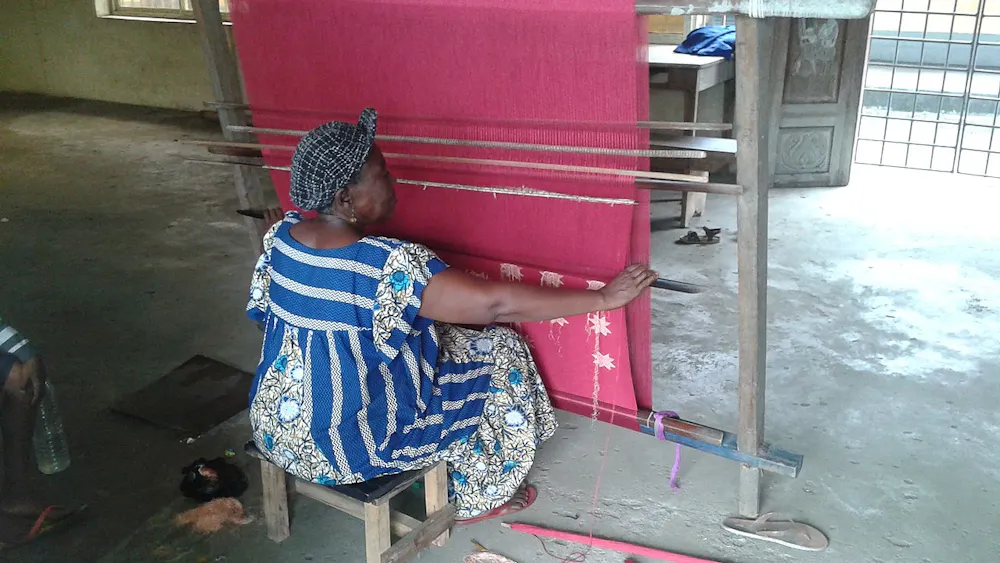
Local fabrics are hand-woven or dyed cloths and stem from various ethnic groups, like Aso oke or Akwete.

A woman in a bright blue dress in traditional fabrics sits at a weave working on a vast drop of bright pink threads.
A woman handweaving Akwete cloth.
Ekekeh Ubadire Obioma/Wikimedia Commons, CC BY-SA

Popular appropriated fabrics are Ankara (wax prints, originally from Indonesia), lace (a delicate, openwork fabric popular on traditional Nigerian attire) and George (a type of Madras cloth popular among Nigeria’s Igbos).

Before the 2000s, the use of these fabrics was at two ends of a spectrum. Indigenous cloth, lace and George were for social and cultural events. Ankara was for everyday functional clothes, iro (a wrap skirt) and buba (a three-piece traditional design for women, mostly the married or elderly), especially among low-income people.

The popularity of local fabrics in today’s fashion didn’t emerge from a vacuum. It was a choice by designers, a social process of acceptance, and government initiative.

Today’s designers are consciously using local fabrics as a way of endorsing their roots and normalising their use. Many faced rejection at first. Zena, a participant in my study, sold only two pieces of her clothing during her first year of business. She spent time convincing people “this is good”:

And, funny enough, they are easy to wear and not expensive. But it took a while for them to appreciate it.

Since the early 1990s the Nigerian government has been committed to promoting local fabrics and locally produced clothes. In 2017, it approved a Monday and Wednesday “Made-in-Nigeria Dress Days” policy.

While local fabrics are today the fabric trend in women’s clothing, the design trend is western. Designers use local fabrics in styles that have global appeal.

Still, they are conscious of maintaining authenticity through either the fabric, a silhouette or a design concept that resonates with their culture.

According to Eji, her western designs still have the African woman in mind:

The African woman is not only situated in Africa, but they are also all over the world. I believe the world is more cosmopolitan now, we have interracial marriages, we can borrow culture from everywhere, we can inter-weave stuff.

Women’s fashion mirrors Lagos society’s complexity and its openness to global trends, as it seeks to globalise its local elements.

It’s the opposite for men

Cosmopolitan men’s fashion in Lagos is the opposite of women’s. The fabric trend is western; the design trend is local.

In Lagos, most men wear the two or three-piece “native”. The buba and sokoto, for example, is for regular wear. (A traditional two-piece top and trouser, normally from the same fabric.) The agbada is for special events. (Trousers, a top and a loose-fitting, wide-sleeved robe over.)

Participants in my study explained that the ethnic background of the president, at any point in time, influences men’s fashion trends. Former president Muhammadu Buhari, for example, hails from the northern part of the country and popularised the wearing of the baba riga (a top, trousers and a big, embroidered over-cover) of the Hausa people.

Current president Bola Ahmed Tinubu extends the dominance of agbada fashion as he is Yoruba. Men’s fashion portrays a unified cultural front, emanating from the ruling president’s ethnic culture and adopted by most men irrespective of their ethnicity. This can allow for the inclusion of groups excluded from dominant national cultures.


Read more:
Kofi Ansah left Ghana to become a world famous fashion designer – how his return home boosted the industry


This study shows Nigerian fashion’s openness to modernity, consciously implementing styles from different parts of the world. But this isn’t detached from the local. As forms of culture disappear (through cultural exchange) new forms are created, and they are created locally. This is ultimately a celebration of the cosmopolitan in Lagos fashion and society.

The Conversation

Adwoa Owusuaa Bobie receives funding from Oumou Dilly Foundation, Basel, Switzerland.

ref. Lagos fashion: how designers make global trends uniquely Nigerian – https://theconversation.com/lagos-fashion-how-designers-make-global-trends-uniquely-nigerian-254227