What would it take for a new British leftwing party to succeed?

Source: The Conversation – UK – By Colm Murphy, Lecturer in British Politics, Queen Mary University of London

Last week, the MP for Coventry South, Zarah Sultana, made an audacious decision. Having already lost the Labour party whip for opposing the two-child benefit cap, Sultana announced she would co-lead a new leftwing party with Jeremy Corbyn, who was expelled from Labour in 2024.

From one angle, her decision may seem simple. Discontent with Keir Starmer’s Labour government, on everything from welfare cuts to Gaza, has never been higher, and Sultana is a vocal critic. Yet, launching a (still unnamed) new party is bold. It tackles head-on an old and vexing question for socialist critics of capitalism in the UK.

In 1976, the socialist theorist Ralph Miliband (yes, Ed and David’s dad) described the faith in Labour’s capacity to become a socialist vehicle as “the most crippling of all illusions”. But socialists who agree with Miliband senior then have an almighty problem.

Writing months after the 2019 defeat of Corbyn’s Labour party, the veteran “New Left” academics Colin Leys and Leo Panitch echoed Miliband in their book Searching for Socialism. But they also saw few immediate alternatives with “any prospect of electoral success”. This, they wrote, is the “central dilemma” for British democratic socialists.


Get your news from actual experts, straight to your inbox. Sign up to our daily newsletter to receive all The Conversation UK’s latest coverage of news and research, from politics and business to the arts and sciences.


The reaction to Sultana’s announcement from the British left has been accordingly mixed. Leaks revealed that Corbyn’s team was caught off guard. Responses from prominent potential supporters were reserved. Momentum, the leftwing grassroots organisation, hastily distributed the pamphlet Why Socialists Should Be in the Labour Party.

It’s too early to know whether these issues are teething problems or portents. But the barriers to Sultana’s venture are formidable. What would it take for a new leftwing party to succeed? What would “success” even look like?

A careful reading of political history can help us answer these questions. This is not the first time that new parties have emerged from Labour factionalism. Many readers will be aware of the 1981 departure of the “gang of four” Labour figures, who founded the Social Democratic party (SDP) that later merged with the Liberal party to form the Liberal Democrats.

Nor is it the first time that smaller parties have appeared on Labour’s left. Between 1920 and 1991, the Communist party of Great Britain was a potent force in the trade union movement. From the 1990s to the 2010s, several vehicles contested local and national elections against Labour, from the Socialist Alliance to Left Unity.

Challenges for a new party

Each of these iterations had its historical peculiarities. But stepping back, we can identify three recurring challenges that any leftwing insurgent party must confront.

First, they must agree on an electoral strategy and purpose, given the institutional brutality of British democracy. The UK has some proportional elections, including in Scotland and Wales (expected to be next contested in 2026). Councils are also possible avenues of influence.

But there is no avoiding the fact that legislative and executive power is hoarded in the House of Commons, elected by first past the post. Labour will discourage possible defectors by warning that a split in the left vote will let in the right. Neil Kinnock, Labour’s former leader who found himself fighting off the SDP while trying to evict Thatcher in the 1980s, dubbed Sultana and Corbyn’s venture the “Farage assistance party”.

Left of Labour parties are often aware of the risk. Indeed, far left activists have in the past advocated voting Labour, with “varying degrees of (un)enthusiasm”.

Advocates of a new party will note that Labour is only polling in the low 20s, suggesting a pool of ex-Labour voters potentially interested in shopping around. However, there are others it could torpedo too.

One recent poll on support for a hypothetical Corbyn-led party – which we should take with some salt – found that its 10% support comes partly from eating into the Green vote. An electoral arrangement with the Greens, on the other hand, may require shared policy platforms, raising the question of why a separate party is needed.

A poll from More in Common conducted specifically about a Sultana-Corbyn party found 9% of Labour voters and 26% of current Green voters saying that would vote for such a party.

The Socialist Labour party (SLP) – founded in 1996 by the prominent trade unionist Arthur Scargill in reaction to Tony Blair’s New Labour – is the obvious cautionary tale. Scargill wanted a purer, better Labour party. Yet, Labour looked set to kick out an 18-year-long Conservative government.

Scargill could not convince many sympathetic activists to join. As historian Alfie Steer argues, the SLP instead became dominated by socialists hostile to the Labour party. The party could not overcome the resultant contradictions in its purpose and collapsed into acrimony.

The SLP also illustrates the second key consideration: timing. The SLP struggled partly because it launched just as Labour was sweeping triumphantly into power. Sultana’s timing is arguably more astute. She has waited for Starmer’s bubble to burst and for disillusionment to fester.

However, the broad left within Labour has also just found its voice by rebelling against government policy. The temptation for a risk-averse Labour activist may be to leap onto this critical bandwagon without taking the more dangerous step of defecting.


Read more:
The mistakes Keir Starmer made over disability cuts – and how he can avoid future embarrassment


Starmer and Corbyn side by side
Keir Starmer, then shadow Brexit secretary, accompanies then-Labour leader Corbyn to Brussels in 2019.
Alexandros Michailidis/Shutterstock

The final challenge is securing institutional durability without debilitating splits. It is telling that Sultana felt compelled to include Corbyn’s name despite his reported reservations.

Sultana herself has an impressive political profile, especially on TikTok. Any new party will rely heavily on prominent spokespeople to force it into the national conversation. Yet, such vehicles can become trapped by their dependence on individuals. The Respect party of the 2000s, for example, was reliant on the charismatic but polarising figure of George Galloway.

The fledgling party will also need a lasting structure that determines how candidates are selected and policy is formed. This risks dragging it into dreaded constitutional debates. It is already reportedly divided over the existence of co-leaders.

Intra-party democracy is off-putting to outsiders. But as constitutional scholar Meg Russell argues, it speaks to fundamental questions about the extent, and limits, of democracy. Such disputes have frequently wracked the left (and the radical right, as Reform’s recent constitutional changes show).

To what extent should policy be “democratically” decided? Should a new party limit who can join, and if so, on what criteria? How will leaders be selected? From the CPGB to the SLP, these questions have proven divisive in the past. They could easily prove so again.

The new party faces severe challenges, but it would be unwise to write it off completely. In a volatile context, it has a chance to make its mark if it is clear in its strategic electoral purpose, cultivates an institutional and activist base and times its interventions astutely. But the obstacles to success are enormous – and with Reform currently polling top, the risks are high.

The Conversation

Colm Murphy is currently a member of the Labour Party, but he is writing purely in an academic capacity.

ref. What would it take for a new British leftwing party to succeed? – https://theconversation.com/what-would-it-take-for-a-new-british-leftwing-party-to-succeed-260599
Why it can be hard to warn people about dangers like floods – communication researchers explain the role of human behavior

Source: The Conversation – USA – By Keri K. Stephens, Professor & Co-Director, Technology & Information Policy Institute, The University of Texas at Austin

How emergency alerts convey risks matters. AP Photo/Eric Gay

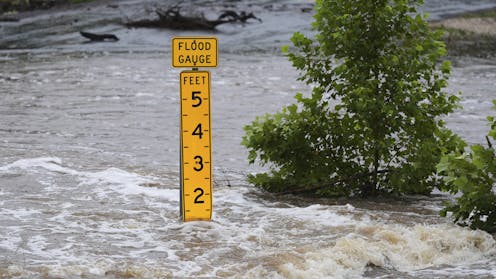
Flash floods like the one that swept down the Guadalupe River in Texas on July 4, 2025, can be highly unpredictable. While there are sophisticated flood prediction models and different types of warning systems in some places, effective flood protection requires extensive preparedness and awareness.

It also requires an understanding of how people receive, interpret and act on risk information and warnings. Technology can be part of the solution, but ultimately people are the critical element in any response.

As researchers who study emergency communications, we have found that simply providing people with technical information and data is often not enough to effectively communicate the danger and prompt them to act.

The human element

One of us, Keri Stephens, has led teams studying flood risk communication. They found that people who have experienced a flood are more aware of the risks. Conversely, groups that have not lived through floods typically don’t understanding various flood risks such as storm surges and flash floods. And while first responders often engage in table-top exercises and drills – very important for their readiness to respond – there are only a few examples of entire communities actively participating in warning drills.

Messages used to communicate flood risk also matter, but people need to receive them. To that end, Keri’s teams have worked with the Texas Water Development Board to develop resources that help local flood officials sort through and prioritize information about a flood hazard so they can share what is most valuable with their local communities.

The commonly used “Turn Around Don’t Drown” message, while valuable, may not resonate equally with all groups. Newly developed and tested messages such as “Keep Your Car High and Dry” appeal specifically to young adults who typically feel invincible but don’t want their prized vehicles damaged. While more research is needed, this is an example of progress in understanding an important aspect of flood communication: how recipients of the information make decisions.

Interviews conducted by researchers often include responses along these lines: “Another flash flood warning. We get these all the time. It’s never about flooding where I am.” This common refrain reveals a fundamental challenge in flood communication. When people hear “flood warning,” they often think of different things, and interpretations can vary depending on a person’s proximity to the flooding event.

Some people equate flood warnings with streamflow gauges and sensors that monitor water levels – the technical infrastructure that triggers alerts when rivers exceed certain thresholds. Others think of mobile phone alerts, county- or geographic-specific notification systems, or even sirens.

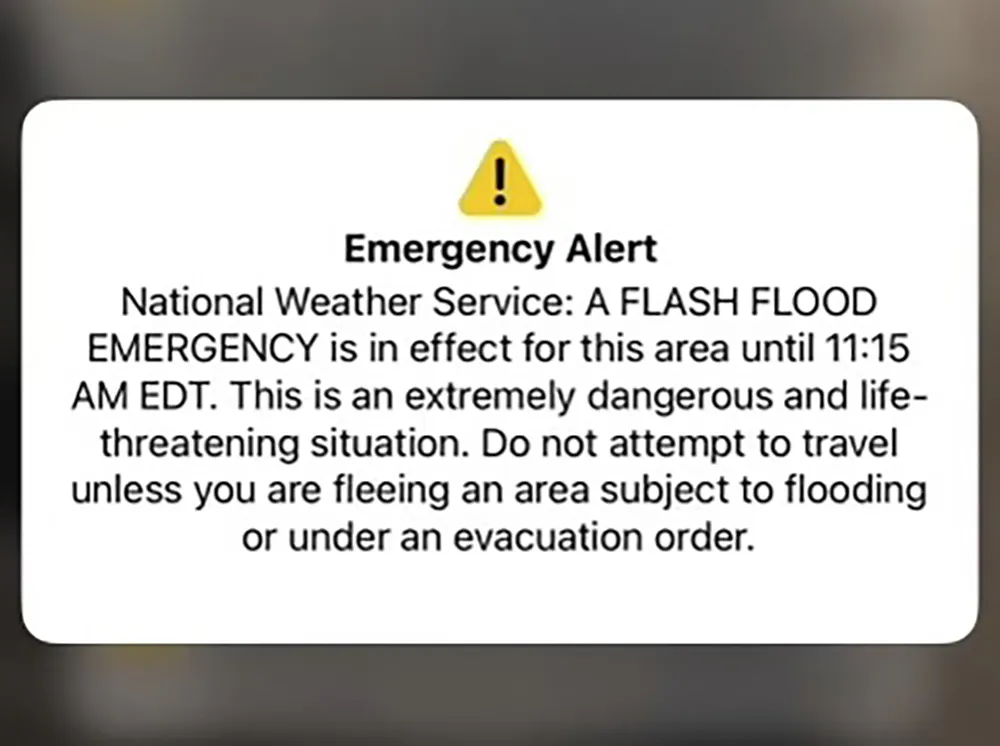
a small yellow triangle enclosing a black exclamation point sits above a block of text
A typical alert from the National Weather Service.
AP Photo/Lisa Rathke

Beyond technologies and digital communication, warnings still come through informal networks in many communities. Emergency managers directly coordinate with and share information with major businesses and organizations, saying, “Hey, John, be sure you have somebody up tonight watching the National Weather Service alerts and rivers.”

This human-centered approach, similar to neighborhood-level systems we have studied in Japan, can provide direct confirmation that warnings have been received. This is something mass media and mobile systems cannot guarantee, especially during infrastructure failures such as power and cell tower outages.

Effective messages

Research shows that effective warning messages need to include five critical components: a clear hazard description, location-specific information, actionable guidance, timing cues and a credible source. The Federal Emergency Management Agency’s integrated public alert and warning system message design dashboard assists authorities in rapidly drafting effective messages.

This warning system, known as IPAWS, provides nationwide infrastructure for wireless emergency alerts and Emergency Alert System messages. While powerful, IPAWS has limitations − not all emergency managers are trained to use it, and messages may extend beyond intended geographic areas. Also, many older mobile devices lack the latest capabilities, so they may not receive the most complete messages when they are sent.

Hyperlocal community opt-in systems can complement IPAWS by allowing residents to register for targeted notifications. These systems, which can be run by communities or local agencies, face their own challenges. People must know they exist, be willing to share phone numbers, and remember to update their information. Social media platforms add another communication channel, with emergency managers increasingly using social media to share updates, though these primarily reach only certain demographics, and not everyone checks social media regularly.

The key is redundancy through multiple communication channels. Research has found that multiple warnings are needed for people to develop a sense of urgency, and the most effective strategy is simple: Tell another person what’s going on. Interpersonal networks help ensure the message is delivered and can prompt actions. As former Natural Hazards Center Director Dennis Mileti observed: The wireless emergency alerts system “is fast. Mama is faster.”

A Colorado news report explains why emergency alerts have to be tailored for local needs and conditions and use multiple communication channels.

Warning fatigue

Professionals from the National Weather Service, FEMA and the Federal Communications Commission, along with researchers, are increasingly concerned about warning fatigue – when people tune out warnings because they receive too many of them.

However, there is limited empirical data about how and when people experience warning fatigue – or about its impact.

This creates a double bind: Officials have an obligation to warn people at risk, yet frequent warnings can desensitize recipients. More research is needed to determine the behavioral implications of and differences between warnings that people perceive as irrelevant to their immediate geographic area versus those that genuinely don’t apply to them. This distinction becomes especially critical when people might drive into flooded areas outside their immediate vicinity.

The key to effective emergency communication is to develop messages that resonate with specific audiences and build community networks that complement technological systems. We are now studying how to do this effectively in the United States and internationally. It’s also important to apply behavioral insights to the design of every level of communication warning systems. And it’s important to remember to test not just the technology but the entire end-to-end system, from threat identification to community response.

Finally, maintaining true redundancy across multiple communication channels is an important strategy when trying to reach as many people as possible. Technology supports human decision-making, but it doesn’t replace it.

The Conversation

Keri K. Stephens’ research reported here has been externally funded by the Texas Water Development Board, Texas General Land Office, and the National Science Foundation. Results published are peer-reviewed, and opinions reflect those of the author, not the funder.

Hamilton Bean has earned research funding from U.S. Department of Homeland Security and the National Oceanic and Atmospheric Administration. Results published are peer-reviewed, and opinions reflect those of the author, not the funder.

ref. Why it can be hard to warn people about dangers like floods – communication researchers explain the role of human behavior – https://theconversation.com/why-it-can-be-hard-to-warn-people-about-dangers-like-floods-communication-researchers-explain-the-role-of-human-behavior-260780

Berg winds in South Africa: the winter weather pattern that increases wildfire risks

Source: The Conversation – Africa – By Sheldon Strydom, Senior Lecturer & Head of Department, Department of Geography, Rhodes University

After a fire. Hendrik van den Berg, via Wikimedia Commons., CC BY

Winter in some parts of South Africa is a time of low (or no) rainfall and high fire danger. Sheldon Strydom studies the relationship between weather and fire, in particular how Berg winds, also known as mountain flow events, are linked to periods of enhanced fire danger. Mid-July is typically a high risk period. He shares what he has learnt during his research in the midlands of KwaZulu-Natal province in South Africa, close to the country’s largest mountain range, the Drakensberg.

What are Berg winds and how do they form?

It’s long been known that mountain winds (“foëhn winds”, “chinook winds” and the like) increase fire danger. There’s case study evidence from around the globe.

In South Africa, these mountain winds are known as Berg winds. They are generally experienced as warm and dry.

A mountain wind starts when a mass of air is forced to rise along a windward slope (the side of the mountain that wind is blowing towards). As the mass of air rises it cools. When it reaches the peak of the slope or mountain it descends on the leeward (sheltered) side. As it gets lower, the air gets warmer.

Berg winds commonly occur in South African winters when high atmospheric pressure systems are situated over the interior of the country and low pressure systems are situated off the coast. (Atmospheric pressure is the pressure of air over the land, and affects the movement of air.)

Usually, a coastal low pressure system happens a day or two before a cold front. The pressure gradient (difference in pressure that drives wind) between the interior high pressure cell and coastal low pressure cell results in air flowing towards the coast from the interior of the country, down the mountain escarpment. The air reaches coastal areas as a warm, dry wind.

Why study the relationship between Berg winds and fires?

Winds can spread fires in the landscape.

Our study, using data from four sites in the midlands of KwaZulu-Natal, quantified the effect of Berg winds on the microclimate (local weather conditions) and emphasised how these changes influence fire danger.

The sources of fires in South Africa, as elsewhere, vary. For example, wildfires can be started when prescribed burning, or the planned use of fire, becomes uncontrolled due to changes in weather conditions. Accidental fires and arson are the most common causes of wildfires. Research shows that wildfires and fire disasters are common in areas where prescribed burning is used.

Prescribed burning, or the planned use of fire, is an important aspect of agricultural management. It promotes the dispersal and germination of seeds from a number of species and also removes ground litter. Prescribed burning is used to manage grasslands and has been linked to decreasing the number of disease-borne vectors such as ticks.

But if they get out of control, fires pose a threat to farmland and plantations.

It’s therefore vital to have weather forecasts and monitoring systems that warn of conditions conducive to the development and spread of fires.

Internationally, fire danger indices or meters are used to monitor conditions. In South Africa, the South African Weather Service and other interested and affected parties currently use the Lowveld fire danger index. The index is calculated using records of air temperature, relative humidity and wind speed and rainfall. These are measured once a day. Daily forecasts are available from the Weather Service and disseminated to local fire protection associations.

Much research in South Africa has focused on pyrogeography (understanding when and where fires occur) and fire ecology. Little research has been done to quantify the effects of Berg winds on fire danger using available historical hourly meteorological data.

The midlands of KwaZulu-Natal province serve as a perfect environment to study the effects of Berg winds on the microclimate and fire danger. The area is close to the Drakensberg mountains and experiences frequent fires. It’s also a largely agricultural area.


Read more:
Southern Africa’s rangelands do many jobs, from feeding cattle to storing carbon: a review of 60 years of research


What did you discover?

The study developed a fuzzy logic system (a mathematical method for handling uncertainty) to identify periods of Berg wind conditions using historical hourly meteorological data in four sites.

We analysed variables like the air temperature, relative humidity, wind speed, and fire danger at different times of the day and night, before and during Berg winds.

The analysis revealed the significance of change experienced in the local weather conditions (within 2km) during periods of Berg winds, and how these changes influence fire danger.

It found that:

  • Berg winds were more common during daytime hours and affected the microclimate most during the day

  • during daytime Berg wind events, air temperatures rose by an average of 5.5°C; humidity fell by an average of 16%; and wind speed increased by an average of 5.2 metres per second

  • daytime Berg wind events significantly elevated fire danger

  • night-time Berg winds, while less common, did still result in significant change in the microclimate

  • at night, fire danger increases when a combination of variables change significantly.

The fuzzy logic system can be useful in two ways: to quantify the effects of Berg winds on the microclimate and to complement any fire danger monitoring system. It can measure conditions at a higher temporal resolution, such as every 10 minutes, or hour – making it more useful for monitoring near real-time changes in fire danger.

The system could be valuable for operational use by agencies like the KwaZulu-Natal Provincial Disaster Management Centre, and could be applied in other regions vulnerable to fire risk.

The Conversation

Sheldon Strydom receives funding from Rhodes University, and the National Research Foundation.

Michael John Savage has received funding from the NRF.

ref. Berg winds in South Africa: the winter weather pattern that increases wildfire risks – https://theconversation.com/berg-winds-in-south-africa-the-winter-weather-pattern-that-increases-wildfire-risks-260612

AI in health care could save lives and money − but change won’t happen overnight

Source: The Conversation – USA (3) – By Turgay Ayer, Professor of Industrial and Systems Engineering, Georgia Institute of Technology

AI will help human physicians by analyzing patient data prior to surgery. Boy_Anupong/Moment via Getty Images

Imagine walking into your doctor’s office feeling sick – and rather than flipping through pages of your medical history or running tests that take days, your doctor instantly pulls together data from your health records, genetic profile and wearable devices to help decipher what’s wrong.

This kind of rapid diagnosis is one of the big promises of artificial intelligence for use in health care. Proponents of the technology say that over the coming decades, AI has the potential to save hundreds of thousands, even millions of lives.

What’s more, a 2023 study found that if the health care industry significantly increased its use of AI, up to US$360 billion annually could be saved.

But though artificial intelligence has become nearly ubiquitous, from smartphones to chatbots to self-driving cars, its impact on health care so far has been relatively low.

A 2024 American Medical Association survey found that 66% of U.S. physicians had used AI tools in some capacity, up from 38% in 2023. But most of it was for administrative or low-risk support. And although 43% of U.S. health care organizations had added or expanded AI use in 2024, many implementations are still exploratory, particularly when it comes to medical decisions and diagnoses.

I’m a professor and researcher who studies AI and health care analytics. I’ll try to explain why AI’s growth will be gradual, and how technical limitations and ethical concerns stand in the way of AI’s widespread adoption by the medical industry.

Inaccurate diagnoses, racial bias

Artificial intelligence excels at finding patterns in large sets of data. In medicine, these patterns could signal early signs of disease that a human physician might overlook – or indicate the best treatment option, based on how other patients with similar symptoms and backgrounds responded. Ultimately, this will lead to faster, more accurate diagnoses and more personalized care.

AI can also help hospitals run more efficiently by analyzing workflows, predicting staffing needs and scheduling surgeries so that precious resources, such as operating rooms, are used most effectively. By streamlining tasks that take hours of human effort, AI can let health care professionals focus more on direct patient care.

But for all its power, AI can make mistakes. Although these systems are trained on data from real patients, they can struggle when encountering something unusual, or when data doesn’t perfectly match the patient in front of them.

As a result, AI doesn’t always give an accurate diagnosis. This problem is called algorithmic drift – when AI systems perform well in controlled settings but lose accuracy in real-world situations.

Racial and ethnic bias is another issue. If data includes bias because it doesn’t include enough patients of certain racial or ethnic groups, then AI might give inaccurate recommendations for them, leading to misdiagnoses. Some evidence suggests this has already happened.

Humans and AI are beginning to work together at this Florida hospital.

Data-sharing concerns, unrealistic expectations

Health care systems are labyrinthian in their complexity. The prospect of integrating artificial intelligence into existing workflows is daunting; introducing a new technology like AI disrupts daily routines. Staff will need extra training to use AI tools effectively. Many hospitals, clinics and doctor’s offices simply don’t have the time, personnel, money or will to implement AI.

Also, many cutting-edge AI systems operate as opaque “black boxes.” They churn out recommendations, but even its developers might struggle to fully explain how. This opacity clashes with the needs of medicine, where decisions demand justification.

But developers are often reluctant to disclose their proprietary algorithms or data sources, both to protect intellectual property and because the complexity can be hard to distill. The lack of transparency feeds skepticism among practitioners, which then slows regulatory approval and erodes trust in AI outputs. Many experts argue that transparency is not just an ethical nicety but a practical necessity for adoption in health care settings.

There are also privacy concerns; data sharing could threaten patient confidentiality. To train algorithms or make predictions, medical AI systems often require huge amounts of patient data. If not handled properly, AI could expose sensitive health information, whether through data breaches or unintended use of patient records.

For instance, a clinician using a cloud-based AI assistant to draft a note must ensure no unauthorized party can access that patient’s data. U.S. regulations such as the HIPAA law impose strict rules on health data sharing, which means AI developers need robust safeguards.

Privacy concerns also extend to patients’ trust: If people fear their medical data might be misused by an algorithm, they may be less forthcoming or even refuse AI-guided care.

The grand promise of AI is a formidable barrier in itself. Expectations are tremendous. AI is often portrayed as a magical solution that can diagnose any disease and revolutionize the health care industry overnight. Unrealistic assumptions like that often lead to disappointment. AI may not immediately deliver on its promises.

Finally, developing an AI system that works well involves a lot of trial and error. AI systems must go through rigorous testing to make certain they’re safe and effective. This takes years, and even after a system is approved, adjustments may be needed as it encounters new types of data and real-world situations.

AI could rapidly accelerate the discovery of new medications.

Incremental change

Today, hospitals are rapidly adopting AI scribes that listen during patient visits and automatically draft clinical notes, reducing paperwork and letting physicians spend more time with patients. Surveys show over 20% of physicians now use AI for writing progress notes or discharge summaries. AI is also becoming a quiet force in administrative work. Hospitals deploy AI chatbots to handle appointment scheduling, triage common patient questions and translate languages in real time.

Clinical uses of AI exist but are more limited. At some hospitals, AI is a second eye for radiologists looking for early signs of disease. But physicians are still reluctant to hand decisions over to machines; only about 12% of them currently rely on AI for diagnostic help.

Suffice to say that health care’s transition to AI will be incremental. Emerging technologies need time to mature, and the short-term needs of health care still outweigh long-term gains. In the meantime, AI’s potential to treat millions and save trillions awaits.

The Conversation

Turgay Ayer owns shares in Value Analytics Labs, a healthcare technology company. He received funding from government agencies, including NSF, NIH, and CDC.

ref. AI in health care could save lives and money − but change won’t happen overnight – https://theconversation.com/ai-in-health-care-could-save-lives-and-money-but-change-wont-happen-overnight-241551

Muscle weakness in cancer survivors may be caused by treatable weakness in blood vessels – new research

Source: The Conversation – USA (3) – By Jalees Rehman, Department Chair and Professor of Biochemistry and Molecular Genetics, University of Illinois Chicago

Poorly functioning blood vessels lead to the characteristic muscle weakness that so many cancer patients experience. Artur Plawgo/Science Photo Library via Getty Images

Tumors can destroy the blood vessels of muscles even when the muscles are nowhere close to the tumor. That is the key finding of a new study that my colleagues and I recently published in the journal Nature Cancer.

Muscle loss in cancer patients is a major health problem, but the exact causes of how precisely tumors affect muscles remain an active area of research.

Scientists in my lab were curious whether one explanation for the muscle loss in cancer patients could be that the cancer impairs the blood vessels that are necessary to supply nutrients and oxygen to muscles. Healthy blood vessels ensure that blood containing oxygen and nutrients is transported from the heart to all tissues and organs in the body, and then circulates back to the heart. Unhealthy blood vessels lose the ability to circulate sufficient blood and develop leaks, with nutrients seeping into the tissue prematurely and thereby cutting off the supply of nutrients to tissues that are further downstream.

To tackle this question, my colleagues and I worked with several other scientific research teams with expertise in advanced microscopy, cancer research and metabolism. We used animal models to study several kinds of tumors – lung cancer, skin cancer, colon cancer and pancreatic cancer. We consistently observed that the blood vessels in the muscles became fewer and leakier even before the muscle weakness set in.

We also found that tumors release a protein called Activin-A, which acts on blood vessels to cause the leakiness and, ultimately, loss of blood vessels in the muscle. When we used a gene therapy to restore blood vessel health by counteracting the effects of Activin-A, we were able to prevent the muscle loss.

So we examined the muscles of patients who had passed away because of cancer and found that the muscles of cancer patients contained fewer blood vessels than expected.

Why Activin-A matters

Millions of cancer survivors struggle with muscle weakness, which can be so profound that they may have difficulties walking up a couple of flights of stairs or going shopping for groceries on their own.

Severe muscle weakness and muscle loss during cancer is called cancer cachexia, which occurs in up to 80% of patients with advanced cancer.

Recent research indicates that cachexia is far more common among cancer patients than previously suspected, with approximately half the patients who see their cancer doctor for the first time already showing signs of muscle weakness.

Importantly, cachexia can persist even after the cancer is successfully treated and cured. This can have a devastating impact on the quality of life for cancer survivors.

Our discovery that the loss of blood vessel function in the muscles occurs early on during the progression of the cancer suggests that fixing blood vessels in cancer patients and cancer survivors could be a new way to prevent or reverse cachexia.

The reasons for the muscle loss in cancer are complicated and involve poor nutrition due to loss of appetite and inflammation, which are initially caused by the tumor but persist even when the tumor is removed.

Older man leaning forward over his kitchen sink, suggesting he is not feeling well.
New research shows that lack of sufficient blood vessels could explain why many cancer survivors still experience muscle weakness even after the tumor is removed.
FG Trade/E+ via Getty Images

What other research is being done

There are currently no treatments approved by the Food and Drug Administration for cachexia, but new therapies are on the horizon.

One such therapy is an antibody drug that targets the molecule GDF-15, a protein that is thought to suppress appetite.

Other studies are using a combination of targeted nutrition and exercise programs to help patients with cancer cachexia regain muscle mass and muscle strength.

All these studies suggest that we will need a combination of approaches to enhance exercise, nutrition, appetite, muscle regeneration and – as we propose – blood vessel health.

What’s next

We are now evaluating drugs and exercise programs that are known to improve blood vessel health. Repurposing these treatments that are traditionally designed for cardiovascular patients could be a rapid way to help cancer patients regain muscle strength.

We hope that our work highlights how important it is for cancer patients to receive comprehensive medical care, which includes improving cardiovascular health and overall quality of life.

The Research Brief is a short take on interesting academic work.

The Conversation

Jalees Rehman receives funding from the National Institutes of Health.

ref. Muscle weakness in cancer survivors may be caused by treatable weakness in blood vessels – new research – https://theconversation.com/muscle-weakness-in-cancer-survivors-may-be-caused-by-treatable-weakness-in-blood-vessels-new-research-259765

IRS says churches may endorse political candidates despite a decades-old federal statute barring them from doing that

Source: The Conversation – USA (3) – By Lloyd Hitoshi Mayer, Professor of Law, University of Notre Dame

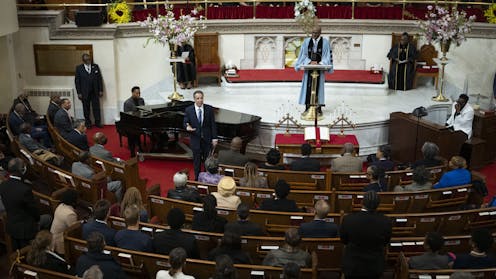
Former New York Gov. Andrew Cuomo speaks at a church in Harlem during his failed campaign to become the Democratic nominee in the 2025 New York City mayoral race. Mostafa Bassim/Anadolu via Getty Images

Churches and other houses of worship can endorse political candidates without risking the loss of their tax-exempt status, the Internal Revenue Service said in a legal document the tax-collection agency filed on July 7, 2025. This guidance is at odds with a law Congress passed more than 70 years ago that’s known as the Johnson Amendment and applies to all charitable nonprofits, whether they are secular or religious.

The Conversation U.S. asked Lloyd Hitoshi Mayer, a law professor who has studied the regulation of churches’ political activities, to explain what this statute is, how the IRS seeks to change its purview and why this matters.

What’s the Johnson Amendment?

The Johnson Amendment is a provision that Lyndon B. Johnson added to a tax bill passed by Congress in 1954, when he was a senator. It says that any charity that wants to be tax-exempt under section 501(c)(3) of the Internal Revenue Code cannot “participate in, or intervene in … any political campaign on behalf of … any candidate for public office.” In the U.S., all houses of worship are designated as charities by the IRS.

The IRS has interpreted the Johnson Amendment for more than 70 years to mean that charities cannot speak in favor of political candidates or take any other action that supports or opposes them.

The IRS is prohibited from publicly disclosing audits of specific tax-exempt nonprofits under taxpayer privacy laws, so there’s no way to know the extent to which the law has been enforced. The public only learns about audits tied to possible Johnson Amendment violations if the nonprofit discloses that information or the IRS revoked their tax-exempt status.

However, the IRS did conduct a broad enforcement campaign in the 2000s known as the Political Activity Compliance Initiative. The reports it issued for 2004 and 2006 stated that it had audited hundreds of charities, including churches, for possible Johnson Amendment violations. The IRS generally found that most violations were minor and often inadvertent – warranting no more than a warning letter.

It’s unknown whether any nonprofits lost their tax-exempt status as a result of this initiative, which the IRS appears to have ended in 2008.

There’s only one known instance of a church losing its tax-exempt status because it violated the Johnson Amendment. In that case, a church in Binghamton, New York, published full-page newspaper ads criticizing Bill Clinton during his 1992 presidential campaign.

Why does the Trump administration want to change its enforcement?

The National Religious Broadcasters, two churches and another religious nonprofit sued the IRS in 2024, challenging the constitutionality of the Johnson Amendment on First Amendment free speech and free exercise of religion grounds and on Fifth Amendment due process grounds. The plaintiffs also argued that applying the Johnson Amendment to religious nonprofits violated the federal Religious Freedom Restoration Act.

The plaintiffs and the IRS filed a joint motion on July 7 to settle the case. They asked the U.S. District Court for the Eastern District of Texas to order the IRS not to enforce the Johnson Amendment against the two church plaintiffs. They also asked the court to incorporate in its order a statement that the Johnson Amendment does not apply to “speech by a house of worship to its congregation, in connection with religious services through its customary channels of communication on matters of faith, concerning electoral politics viewed through the lens of religious faith.”

This represents the first time the IRS has said there’s an exception to the Johnson Amendment for houses of worship. While lawmakers have periodically sought to repeal or modify the statute, neither chamber of Congress has ever passed such legislation.

President Donald Trump asserted during his first term that he had “gotten rid of” the Johnson Amendment. But that referred to his 2017 executive order that directed the Treasury Department – to which the IRS belongs – to respect freedom of religion with respect to religious organizations speaking about political issues as “consistent with law.”

Under the IRS interpretation of the Johnson Amendment at the time, it would not have been consistent with law for churches or other religious nonprofits to support or oppose candidates for elected public office.

How might the IRS treat religious political activity differently?

If the court approves this new joint motion, that order will only apply to the two churches that are plaintiffs in the case – not other religious nonprofits or the National Religious Broadcasters that joined them in suing the IRS. But the filing tells other houses of worship that the IRS will not enforce the Johnson Amendment against them for speech to their congregations, at least not during the Trump administration.

I think that the government may have a hard time applying this exception for several reasons.

The IRS will have to determine when a charity is a “church,” the term the IRS uses for a house of worship of any faith. That has become increasingly difficult in recent years, as some organizations that stretch the conventional definition of a church have won IRS recognition as such.

The IRS will also have to clarify what constitutes speech made “in connection with religious services” and what are “customary channels of communication.” For example, it’s unclear whether inviting a political candidate to address the congregation about how their religious faith relates to their candidacy falls within the exception.

Donald Trump shakes a woman's hand in a sanctuary with a large cross and several American flags.
Donald Trump participates in a community roundtable at a church in Detroit during his successful 2024 presidential campaign.
Jim Watson/AFP via Getty Images

Will only conservative politicians benefit?

Establishing this exception does not necessarily give conservative politicians any advantages.

It is true that recent attempts to repeal or modify the Johnson Amendment are associated with conservative Christian groups such as the Alliance Defending Freedom, which represented the plaintiffs in this lawsuit.

But historically, many progressive houses of worship have also pushed against the Johnson Amendment, including Black churches that often serve as political as well as religious centers for their communities.

A Texas Tribune and ProPublica investigation documented apparent violations of the Johnson Amendment in the 2022 midterm elections by almost 20 churches in Texas from across the political spectrum. Interestingly, most of the church leaders involved were aware of the amendment.

Many said they were not violating it because they avoided explicitly endorsing candidates, while at the same time clearly expressing their support for specific candidates by, for example, praying for an individual who was identified to the congregation as a candidate.

How could this new guidance change political campaigning?

Americans generally don’t want to see churches get involved in politics, including majorities in most denominations. Nonetheless, church leaders of all stripes who were already inclined to support particular candidates will probably feel emboldened to explicitly endorse candidates when preaching to their congregations.

There are two ways that this new exception could do more than that.

First, it isn’t limited to sermons by pastors, priests, rabbis, imams and other religious leaders. It extends to any speech to a house of worship’s congregation “in connection with religious services through its customary channels of communication on matters of faith.” It therefore almost certainly includes church bulletins and other written materials distributed as part of a religious service.

What’s less clear is whether “customary channels of communication” includes people who watch religious services streamed over the internet or on TV, rather than just those who attend services in person.

Second, the change will increase pressure on church leaders to support candidates.

For example, George W. Bush’s 2004 campaign reportedly sought to recruit thousands of congregations to distribute campaign information. It’s natural to expect such efforts to multiply and become more direct for both Democratic and Republican candidates from now on.

And church leaders will also likely face pressure from politically active congregants to endorse candidates, and have a harder time resisting it.

The Conversation

Lloyd Hitoshi Mayer previously worked at the law firm of Caplin & Drysdale, Chartered, including when the firm represented All Saints Episcopal Church of Pasadena, California with respect to an IRS audit of the church for allegedly violating the Johnson Amendment. He was not personally involved in this representation.

ref. IRS says churches may endorse political candidates despite a decades-old federal statute barring them from doing that – https://theconversation.com/irs-says-churches-may-endorse-political-candidates-despite-a-decades-old-federal-statute-barring-them-from-doing-that-260854

How UK-France ‘one in, one out’ migration deal will work – and what the challenges could be

Source: The Conversation – UK – By Matilde Rosina, Assistant Professor in Global Challenges, Brunel University of London

After weeks of rising Channel crossing figures, the UK government has agreed on a long-awaited migration deal with France. Keir Starmer and Emmanuel Macron announced a “one in, one out” pilot – and the UK prime minister said the “groundbreaking” scheme could start returning migrants to France within weeks. The deal was announced alongside a separate agreement to coordinate the use of French and British nuclear weapons.

The migration agreement will allow the UK to return selected numbers of small boat arrivals to France. In exchange, the UK will admit an equal number of asylum seekers with legitimate ties to the UK (such as family), who have not previously attempted to enter the country illegally.

The plan will start as a pilot, with initial reports suggesting the UK could return up to 50 people per week (2,600 per year). That is roughly 6% of small boat arrivals in 2024. The remaining arrivals will continue to be processed under the UK’s existing system.

The “one in, one out” system appears similar to an agreement in 2016 between the EU and Turkey. Under that scheme, for every irregular migrant returned from the Greek islands to Turkey, one Syrian refugee who had stayed in Turkey could be legally resettled in the EU. Under the EU–Turkey deal, only 2,140 migrants were returned to Turkey by 2022, compared with over 32,000 who were resettled in the EU.

The British government’s hope is that this pilot will lay the groundwork for a broader EU-UK return framework that would allow it to return more people. Before Brexit, the UK was part of the EU’s asylum framework, the Dublin regulation. This allowed any EU country, including the UK, to return asylum seekers to the first EU country they entered or passed through.

From 2008 to 2016, the UK was a net sender of asylum seekers: it returned more people to EU states than it accepted, receiving fewer than 500 people annually. The trend reversed after 2016, with the UK accepting more migrants than it returned.

But southern EU countries could complicate any expansion or permanent implementation of the pilot. Italy, Spain, Greece, Malta and Cyprus have opposed a UK–France agreement, fearing it would lead to more people being sent back to them – southern European states are where migrants typically arrive in the EU first.

Challenges ahead

The deal is a significant step for a UK government that has struggled to control the narrative on migration. Losing ground to Reform, the government has recently proposed tightening legal immigration rules, including by making it harder and longer to acquire British citizenship, and by cutting legal migration routes.

It also marks a notable shift in the UK’s post-Brexit migration strategy. But questions remain about the details and implementation.

The French president hailed it as a “major deterrent” to Channel crossing, as migrants would not remain in the UK but be returned to France. Macron said that one-third of arrivals in France are heading towards the UK. So it follows that any deterrent from Channel crossings would also lead to a reduction in people coming to France.

Yet, as I have shown in my research, deterrence is rarely effective. This is because information about deterrence factors does not necessarily reach the asylum seekers or stop smugglers. It also does not address the underlying drivers of migration, such as poverty, conflict and corruption.

Moreover, returns are notoriously difficult to enforce. Many asylum seekers lack documentation, and complex legal processes raise administrative and financial costs.

Scalability also poses a challenge, given EU countries’ divided stances on an EU-wide deal.

It is, however, promising that the UN refugee agency has given the agreement its backing, stating: “If appropriately implemented, it could help achieve a more managed and shared approach, offering alternatives to dangerous journeys while upholding access to asylum.”

The last UK government’s attempts to deter Channel crossings, such as the Rwanda scheme, had led to the agency raising serious concerns.

How many asylum seekers does the UK take?

This deal comes amid an increase in asylum applications in the UK. Annual applications rose from 38,483 in 2018 to over 108,000 in 2024.

In just the first half of 2025, small boat arrivals increased 48% compared with the same period in 2024, exceeding 20,000. By contrast, irregular arrivals to the EU decreased by 20% in the first half of 2025, mainly driven by a drop in arrivals to Greece and to Spain’s Canary Islands.

When accounting for population, the UK receives fewer asylum applications – 16 for every 10,000 people living in the UK – than the EU average (22 per 10,000).

Data shows that between 2018 and 2024, 68% of small boat asylum applications processed in the UK were approved, indicating that most were made by people in genuine need.

UK–France migration cooperation dates back to the 1990s, but since 2019, the focus has been on addressing the rise in Channel crossings.

A significant step was the UK-France joint declaration of March 2023, under which the UK committed €541 million (approximately £476 million) between 2023 and 2026. Funds were allocated for assets including drones, helicopters and aircraft, and for the creation of a migration centre in France. Importantly, the agreement sought to increase surveillance along the French border, rather than return migrants.

This cooperation deepened in February 2025, when both countries agreed to extend their partnership to 2027 and reallocate €8 million for new enforcement measures.

Joint maritime activities have played a role too: since October 2024, UK Border Force vessels have entered French waters on three occasions to assist boats in distress and return people to the French coast.

Overall, this new agreement represents a milestone in UK–France migration cooperation, and the UK’s first significant post-Brexit returns scheme with an EU country. While questions remain over its scalability – given the modest return numbers, legal and logistical hurdles, and European political divides – it is a crucial step in cross-Channel cooperation on migration and asylum, making progress on what has been an intractable problem for UK governments.

The Conversation

Matilde Rosina does not work for, consult, own shares in or receive funding from any company or organisation that would benefit from this article, and has disclosed no relevant affiliations beyond their academic appointment.

ref. How UK-France ‘one in, one out’ migration deal will work – and what the challenges could be – https://theconversation.com/how-uk-france-one-in-one-out-migration-deal-will-work-and-what-the-challenges-could-be-260864

Spacecraft equipped with a solar sail could deliver earlier warnings of space weather threats to Earth’s technologies

Source: The Conversation – USA – By Mojtaba Akhavan-Tafti, Associate Research Scientist, University of Michigan

The SWIFT constellation, shown not to scale in this illustration, will fly farther than its predecessors to improve space weather warning time. Steve Alvey

The burgeoning space industry and the technologies society increasingly relies on – electric grids, aviation and telecommunications – are all vulnerable to the same threat: space weather.

Space weather encompasses any variations in the space environment between the Sun and Earth. One common type of space weather event is called an interplanetary coronal mass ejection.

These ejections are bundles of magnetic fields and particles that originate from the Sun. They can travel at speeds up to 1,242 miles per second (2,000 kilometers per second) and may cause geomagnetic storms.

They create beautiful aurora displays – like the northern lights you can sometimes see in the skies – but can also disrupt satellite operations, shut down the electric grid and expose astronauts aboard future crewed missions to the Moon and Mars to lethal doses of radiation.

An animation shows coronal mass ejection erupting from the Sun.

I’m a heliophysicist and space weather expert, and my team is leading the development of a next-generation satellite constellation called SWIFT, which is designed to predict potentially dangerous space weather events in advance. Our goal is to forecast extreme space weather more accurately and earlier.

The dangers of space weather

Commercial interests now make up a big part of space exploration, focusing on space tourism, building satellite networks, and working toward extracting resources from the Moon and nearby asteroids.

Space is also a critical domain for military operations. Satellites provide essential capabilities for military communication, surveillance, navigation and intelligence.

As countries such as the U.S. grow to depend on infrastructure in space, extreme space weather events pose a greater threat. Today, space weather threatens up to US$2.7 trillion in assets globally.

In September 1859, the most powerful recorded space weather event, known as the Carrington event, caused fires in North America and Europe by supercharging telegraph lines. In August 1972, another Carrington-like event nearly struck the astronauts orbiting the Moon. The radiation dose could have been fatal. More recently, in February 2022, SpaceX lost 39 of its 49 newly launched Starlink satellites because of a moderate space weather event.

Today’s space weather monitors

Space weather services heavily rely on satellites that monitor the solar wind, which is made up of magnetic field lines and particles coming from the Sun, and communicate their observations back to Earth. Scientists can then compare those observations with historical records to predict space weather and explore how the Earth may respond to the observed changes in the solar wind.

A drawing showing the Earth surrounded by a magnetic field with solar energy compressing one side.
The Earth’s magnetic field acts as a shield that deflects most solar wind.
NASA via Wikimedia Commons

Earth’s magnetic field naturally protects living things and Earth-orbiting satellites from most adverse effects of space weather. However, extreme space weather events may compress – or in some cases, peel back – the Earth’s magnetic shield.

This process allows solar wind particles to make it into our protected environment – the magnetosphere – exposing satellites and astronauts onboard space stations to harsh conditions.

Most satellites that continuously monitor Earth-bound space weather orbit relatively close to the planet. Some satellites are positioned in low Earth orbit, about 100 miles (161 kilometers) above Earth’s surface, while others are in geosynchronous orbit, approximately 25,000 miles (40,000 km) away.

At these distances, the satellites remain within Earth’s protective magnetic shield and can reliably measure the planet’s response to space weather conditions. However, to more directly study incoming solar wind, researchers use additional satellites located farther upstream – hundreds of thousands of miles from Earth.

The U.S., the European Space Agency and India all operate space weather monitoring satellites positioned around the L1 Lagrange point – nearly 900,000 miles (1,450,000 km) from Earth – where the gravitational forces of the Sun and Earth balance. From this vantage point, space weather monitors can provide up to 40 minutes of advance warning for incoming solar events.

A diagram showing the Earth, the Sun and the Moon, with the five Lagrange points labeled. L1 is beyond the Moon's orbital path around Earth, closer to the Sun.
The Lagrange points are equilibrium points for smaller objects, like the Earth, that orbit around a larger object, like the Sun. The L1 point is between the Earth and the Sun, where the gravitational pulls of the two objects balance out. Since the Sun’s pull is so much stronger than the Earth’s, the point is much closer to Earth.
Xander89/Wikimedia Commons, CC BY-SA

Advance warning for space weather

Increasing the warning time beyond 40 minutes – the current warning time – would help satellite operators, electric grid planners, flight directors, astronauts and Space Force officers better prepare for extreme space weather events.

For instance, during geomagnetic storms, the atmosphere heats up and expands, increasing drag on satellites in low Earth orbit. With enough advance warning, operators can update their drag calculations to prevent satellites from descending and burning up during these events. With the updated drag calculations, satellite operators could use the satellites’ propulsion systems to maneuver them higher up in orbit.

Airlines could change their routes to avoid exposing passengers and staff to high radiation doses during geomagnetic storms. And future astronauts on the way to or working on the Moon or Mars, which lack protection from these particles, could be alerted in advance to take cover.

Aurora lovers would also appreciate having more time to get to their favorite viewing destinations.

The Space Weather Investigation Frontier

My team and I have been developing a new space weather satellite constellation, named the Space Weather Investigation Frontier. SWIFT will, for the first time, place a space weather monitor beyond the L1 point, at 1.3 million miles (2.1 million kilometers) from Earth. This distance would allow scientists to inform decision-makers of any Earth-bound space weather events up to nearly 60 minutes before arrival.

Satellites with traditional chemical and electric propulsion systems cannot maintain an orbit at that location – farther from Earth and closer to the Sun – for long. This is because they would need to continuously burn fuel to counteract the Sun’s gravitational pull.

To address this issue, our team has spent decades designing and developing a new propulsion system. Our solution is designed to affordably reach a distance that is closer to the Sun than the traditional L1 point, and to operate there reliably for more than a decade by harnessing an abundant and reliable resource – sunlight.

SWIFT would use a fuelless propulsion system called a solar sail to reach its orbit. A solar sail is a hair-thin reflective surface – simulating a very thin mirror – that spans about a third of a football field. It balances the force of light particles coming from the Sun, which pushes it away, with the Sun’s gravity, which pulls it inward.

While a sailboat harnesses the lift created by wind flowing over its curved sails to move across water, a solar sail uses the momentum of photons from sunlight, reflected off its large, shiny sail, to propel a spacecraft through space. Both the sailboat and solar sail exploit the transfer of energy from their respective environments to drive motion without relying on traditional propellants.

A solar sail could enable SWIFT to enter an otherwise unstable sub-L1 orbit without the risk of running out of fuel.

NASA successfully launched its first solar sail in 2010. This in-space demonstration, named NanoSail-D2, featured a 107-square-foot (10 m2 ) sail and was placed in low Earth orbit. That same year, the Japanese Space Agency launched a larger solar sail mission, IKAROS, which deployed a 2,110 ft2 (196 m2 ) sail in the solar wind and successfully orbited Venus.

An illustration of a solar sail, which looks like a large, thin square of foil, flying through space.
An illustration of the solar sail used on the IKAROS space probe. These sails use light particles as propulsion.
Andrzej Mirecki, CC BY-SA

The Planetary Society and NASA followed up by launching two sails in low Earth orbit: LightSail, with an area of 344 ft2 (32 m2 ), and the advanced composite solar sail system, with an area of 860 ft2 (80 m2 ).

The SWIFT team’s solar sail demonstration mission, Solar Cruiser, will be equipped with a much larger sail – it will have area of 17,793 ft2 (1,653 m2 ) and launch as early as 2029. We successfully deployed a quadrant of the sail on Earth early last year.

If successful, the Solar Cruiser mission will pave the way for a small satellite constellation that will monitor the solar wind.

To transport it to space, the team will meticulously fold and tightly pack the sail inside a small canister. The biggest challenge to overcome will be deploying the sail once in space and using it to guide the satellite along its orbital path.

If successful, Solar Cruiser will pave the way for SWIFT’s constellation of four satellites. The constellation would include one satellite equipped with sail propulsion, set to be placed in an orbit beyond L1, and three smaller satellites with chemical propulsion in orbit at the L1 Lagrange point.

The satellites will be indefinitely parked at and beyond L1, collecting data in the solar wind without interruption. Each of the four satellites can observe the solar wind from different locations, helping scientists better predict how it may evolve before reaching Earth.

As modern life depends more on space infrastructure, continuing to invest in space weather prediction can protect both space- and ground-based technologies.

The Conversation

Mojtaba Akhavan-Tafti receives funding from NASA. He is the Principal Investigator of Space Weather Investigation Frontier (SWIFT).

ref. Spacecraft equipped with a solar sail could deliver earlier warnings of space weather threats to Earth’s technologies – https://theconversation.com/spacecraft-equipped-with-a-solar-sail-could-deliver-earlier-warnings-of-space-weather-threats-to-earths-technologies-259877

Spotted lanternflies love grapevines, and that’s bad for Pennsylvania’s wine industry

Source: The Conversation – USA (2) – By Flor Acevedo, Assistant Professor of Entomology, Penn State

Adult spotted lanternflies infest areas of Pennsylvania from July to December. Lauren A. Little/MediaNews Group/Reading Eagle via Getty Images

Spotted lanternfly season is back in Pennsylvania. The polka-dotted, gray-and-red-winged adult insects make their appearance each July and tend to hang around until December. It’s an unwelcome summer ritual that started in 2014 when the invasive pests were first detected in the U.S.

The Conversation U.S. talked to Flor Acevedo, an assistant professor of entomology at Penn State University, about the bugs and her research on how lanternflies are threatening the state’s vineyards and wine industry.

Does Pennsylvania have many vineyards?

Pennsylvania has more than 400 wineries with about 14,000 acres planted in vineyards, according to the Pennsylvania Wine Association. The industry generates about US$7 billion in total economic activity. Erie County, where I live, has about 70% of Pennsylvania’s vineyard acreage, with the rest scattered across the state.

What do lanternflies do to grapevines?

The spotted lanternfly feeds on many plants, but its preferred hosts are the Tree of Heaven, an invasive plant introduced to Philadelphia from China in 1784, and grapevines.

Person wearing beige protective hat inspects the leaves of a plant
Entomologist Flor Acevedo counts spotted lanternflies on a Tree of Heaven plant.
Flor E. Acevedo

Extensive feeding by these sap-sucking insects can weaken grapevines and, when combined with other stressors such as diseases or frosty winters, can kill the vines. While spotted lanternflies feed on other important crops such as apple trees, they have been lethal only to grapevines and Tree of Heaven plants.

Feeding can also reduce yield and fruit quality, which affects juice and wine quality.

Tell us about your lanternfly experiments

My lab initially investigated whether spotted lanternflies could survive to adulthood and reproduce when feeding exclusively on grapevines. This would help us determine whether the insects could thrive in regions with extensive grapevine cultivation.

We found they do survive, but their fitness is severely reduced. Insects feeding solely on grapevines had high mortality, slower development and laid fewer eggs when compared with those that had access to a mixed diet of Tree of Heaven and grapevines.

Our next question was whether different grapes would be equally suitable for spotted lanternfly survival and reproduction. In the U.S. we grow native grapevines such as Concord and muscadine as well as vines of European origin. We found that spotted lanternflies did not survive to adulthood when they fed only on muscadine grapevines.

We have also partnered with colleagues specialized in plant science, food science and agricultural economics to investigate the effects of spotted lanternfly feeding on grapevine yield and wine and juice quality.

This research group enclosed both red and white grapevines – Cabernet Franc and Chardonnay – in mesh cages in the field and infested them with between 20 and 350 spotted lanternflies per vine. We wanted to determine the effect of constant adult insect feeding on grapevine yield, fruit sugars and phenolics, which are chemical compounds that are important for wine color, flavor and aroma. We also wanted to know the density of infestation that would induce changes in yield and fruit and wine quality.

Rows of small trees in a field, some of them covered with mesh curtains
Researchers infested grapevines with lanternflies to see how they affect yield and fruit quality.
Flor E. Acevedo

We found a decrease in sugar content in the fruit within a single season, as well as a decrease in phenolics in red wine. We also found a reduction in yield after the second year of consecutive insect feeding.

These findings suggest that, if not controlled, spotted lanternfly adult feeding could reduce income to growers by reducing yield and could affect the wine industry by reducing the quality of the drink.

How worried are Pennsylvania winemakers and how are they responding?

Perceptions vary depending on whether the winery or vineyard is in an area that has already been infested.

Those that have been dealing with lanternflies for a few years have established protocols for pest monitoring and applying insecticides. But those that haven’t experienced it yet are concerned about the insect’s arrival on their properties.

Owners of organic vineyards are also concerned, but there are few of those in this region.

Wineries are being affected by spotted lanternflies in at least two ways. First, for those that grow grapes, lanternflies have increased their costs due to the extra labor and insecticide applications needed to control them. Second, for wineries that are agrotourism sites, they need to keep outdoor seating spaces neat and free from lanternflies.

Black insects with white polka dots crawl across stem of plant with green leaves
Spotted lanternfly nymphs crawl across a Tree of Heaven stem.
Natalie Kolb/MediaNews Group/Reading Eagle via Getty Images

As an entomologist, what do you find most fascinating about these creatures?

Most insects that feed on plants lay their eggs close to a food source for the young to feed on when they hatch. But spotted lanternflies lay their eggs on almost anything – car tires, field equipment, rocks, fabrics, old wood, cardboard. This behavior facilitates the insect’s dispersal, as eggs can be easily transported without being noticed. Once the eggs hatch, the nymphs search for young plant shoots or herbaceous plants to eat.

Anything else people in Pennsylvania should know as they see lanternflies again this summer?

I think it’s important for the public to know that, as pretty as some of us may find spotted lanternflies, these insects are invasive, damaging and affecting the state economy. Everybody can help stop the spread of these insects by killing and avoiding transporting them at any living stage.

Spotted lanternflies lay eggs in masses. These masses look like light grayish-brown, mudlike or puttylike patches, typically about an inch long, and they are found on various surfaces. At any life stage the insects can be killed by squishing them, immersing them in hand sanitizer or freezing them for several days.

Read more of our stories about Philadelphia and Pennsylvania.

The Conversation

Flor Acevedo has received funding for her research from the USDA Crop Protection and Pest Management program (2023-70006-40597), the Pennsylvania Department of Agriculture, the Pennsylvania Wine Marketing and Research Board, the New York Wine and Grape Foundation, the Penn State University College of Agriculture, and the John H. and Timothy R. Crouch Endowment Grant for Viticulture, Enology, and Pomology Research.

ref. Spotted lanternflies love grapevines, and that’s bad for Pennsylvania’s wine industry – https://theconversation.com/spotted-lanternflies-love-grapevines-and-thats-bad-for-pennsylvanias-wine-industry-260374

Inequality has risen from 1970 to Trump − that has 3 hidden costs that undermine democracy

Source: The Conversation – USA (2) – By Nathan Meyers, Ph.D. candidate in sociology (September 2025 degree conferral), UMass Amherst

Demonstrators march outside the U.S. Capitol during the Poor People’s Campaign rally at the National Mall in Washington on June 23, 2018. AP Photo/Jose Luis Magana

America has never been richer. But the gains are so lopsided that the top 10% controls 69% of all wealth in the country, while the bottom half controls just 3%. Meanwhile, surging corporate profits have mostly benefited investors, not the broader public.

This divide is expected to widen after President Donald Trump’s sweeping new spending bill drastically cuts Medicaid and food aid, programs that stabilize the economy and subsidize low-wage employers.

Moreover, the tax cuts at the heart of the bill will deliver tens of billions of dollars in benefits to the wealthiest households while disproportionately burdening low-income households, according to analyses by the nonpartisan Congressional Budget Office and Joint Committee on Taxation. By 2033, the bottom 20% will pay more in taxes while the top 0.1% receive $43 billion in cuts.

I am a sociologist who studies economic inequality, and my research demonstrates that the class-based inequalities exacerbated by the Trump bill are not new. Rather, they are part of a 50-year trend linked to social cleavages, political corruption and a declining belief in the common good.

The roots of class-based inequality

The decades following World War II were broadly prosperous, but conditions began changing in the 1970s. Class inequality has increased enormously since then, according to government data, while income inequality has risen for five decades at the expense of workers.

Economists usually gauge a country’s economic health by looking at its gross domestic product as measured through total spending on everything from groceries to patents.

But another way to view GDP is by looking at whether the money goes to workers or business owners. This second method – the income approach – offers a clearer picture of who really benefits from economic growth.

The money that goes to labor’s share of GDP, or workers, is represented by employee compensation, including wages, salaries and benefits. The money left over for businesses after paying for work and materials is called gross operating surplus, or business surplus.

The share of GDP going to workers rose 12% from 1947 to 1970, then fell 14% between 1970 and 2023. The opposite happened with the business surplus, falling 18% in the early postwar decades before jumping 34% from 1970 to today.

Meanwhile, corporate profits have outpaced economic growth by 193% since 1970. Within profits, shareholder dividends as a share of GDP grew 274%.

As of 2023, labor had lost all of the economic gains made since 1947. Had workers kept their 1970 share of GDP, they would have earned $1.7 trillion more in 2023 alone. And no legislation or federal action since 1970 has reversed this half-century trend.

When more of the economy goes to businesses instead of workers, that poses serious social problems. My research focuses on three that threaten democracy.

1. Fraying social bonds and livelihoods

Not just an issue of income and assets, growing class inequality represents the fraying of American society.

For instance, inequality and the resulting hardship are linked to worse health outcomes. Americans die younger than their peers in other rich countries, and U.S. life expectancy has decreased, especially among the poor.

Moreover, economic struggles contribute to mental health issues, deaths of despair and profound problems such as addiction, including tobacco, alcohol and opioid abuse.

Inequality can disrupt families. Kids who experience the stresses of poverty can develop neurological and emotional problems, putting them at risk for drug use as adults. On the other hand, when minimum wages increase and people begin saving wealth, divorce risk falls.

Research shows inequality has many other negative consequences, from reduced social mobility to lower social trust and even higher homicide rates.

Together, these broad social consequences are linked to misery, political discontent and normlessness.

2. Increasing corruption in politics

Inequality is rising in the U.S. largely because business elites are exercising more influence over policy outcomes, research shows. My related work on privatization explains how 50 years of outsourcing public functions – through contracting, disinvestment and job cuts – threatens democratic accountability.

Research across different countries has repeatedly found that higher income inequality increases political corruption. It does so by undermining trust in government and institutions, and enabling elites to dominate policymaking while weakening public oversight.

Since 2010, weakened campaign finance laws driven by monied interests have sharply increased corruption risks. The Supreme Court ruled then in Citizens United to lift campaign finance restrictions, enabling unlimited political spending. It reached an apex in 2024, when Elon Musk spent $200 million to elect Trump before later installing his Starlink equipment onto Federal Aviation Administration systems in a reported takeover of a $2.4 billion contract with Verizon.

Research shows that a large majority of Americans believe that the economy is rigged, suggesting everyday people sense the link between inequality and corruption.

People attend a protest.
Demonstrators gather outside the Supreme Court in Washington as the court heard arguments on campaign finance in 2013.
AP Photo/Susan Walsh

3. Undermining belief in the common good

National aspirations have emphasized the common good since America’s founding. The Declaration of Independence lists the king’s first offense as undermining the “public good” by subverting the rule of law. The Constitution’s preamble commits the government to promoting the general welfare and shared well-being.

But higher inequality historically means the common good goes overlooked, according to research. Meanwhile, work has become more precarious, less unionized, more segmented and less geographically stable. Artificial intelligence may worsen these trends.

This tends to coincide with a drop in voting and other forms of civic engagement.

The government has fewer mechanisms for protecting community when rising inequality is paired with lower taxes for the wealthy and reduced public resources. My research finds that public sector unions especially bolster civic engagement in this environment.

Given increasing workplace and social isolation, America’s loneliness epidemic is unsurprising, especially for low earners.

All of these factors and their contribution to alienation can foster authoritarian beliefs and individualism. When people become cold and distrustful of one another, the notion of the common good collapses.

Inequality as a policy outcome

News coverage of the Trump bill and policy debate have largely centered on immediate gains and losses. But zoomed out, a clearer picture emerges of the long-term dismantling of foundations that once supported broad economic security. That, in turn, has enabled democratic decline.

As labor’s share of the economy declined, so too did the institutional trust and shared social values that underpin democratic life. Among the many consequences are the political discontent and disillusionment shaping our current moment.

Republicans hold both chambers of Congress through 2026, making significant policy changes unlikely in the short term. Democrats opposed the bill but are out of power. And their coalition is divided between a centrist establishment and an insurgent progressive wing with diverging priorities in addressing inequality.

Yet democratic decline and inequality are not inevitable. If restoring broad prosperity and social stability are the goals, they may require revisiting the New Deal-style policies that produced labor’s peak economic share of 59% of GDP in 1970.

The Conversation

Nathan Meyers does not work for, consult, own shares in or receive funding from any company or organization that would benefit from this article, and has disclosed no relevant affiliations beyond their academic appointment.

ref. Inequality has risen from 1970 to Trump − that has 3 hidden costs that undermine democracy – https://theconversation.com/inequality-has-risen-from-1970-to-trump-that-has-3-hidden-costs-that-undermine-democracy-259104