What caused Britain’s deadliest ‘small boat’ disaster, and how can another be avoided?

Source: The Conversation – UK – By Travis Van Isacker, Senior Research Associate, School of Sociology, Politics and International Studies, University of Bristol

On a cold, wet November evening, Issa Mohamed Omar and more than 30 other men, women and children set off from their informal camp near the northern French port city of Dunkirk. They walked through the darkness in near-silence for around two hours, until they reached the beach from where they hoped to start a new and better life.

As they arrived, five men were busy pumping up an inflatable dinghy and attaching an outboard engine. These people smugglers had charged each of their customers more than a thousand euros for a trip that costs someone with the right passport less than a hundred.

The travellers were given life-vests, arranged into rows and counted. “There are 33 of you,” one of the smugglers said. For many on board, this was not their first attempt at reaching England.

Most came from Iraqi Kurdistan, including Kazhal Ahmed Khidir Al-Jammoor from Erbil, who was travelling with her three children: Hadiya, Mubin and Hasti Rizghar Hussein, respectively aged 22, 16 and seven.

A father and son from Egypt were shown how the engine worked and provided a GPS device and directions to Dover, around 35 miles (60km) to the west across the Channel. Mohamed Omar would later recall:

The Egyptian man was put in charge of steering the boat by the smugglers. He was travelling with his son, who looked like he was in his late teens or maybe early 20s. I do not know how they came to be the driver and navigator.

There were also at least three Ethiopian nationals – one of whom, father-of-two Fikiru Shiferaw from Addis Ababa, sent his wife Emebet at home in Ethiopia a final WhatsApp voice message:

We have already boarded the boat. We are on the way. I will turn off my phone now. Goodnight, I will call you tomorrow morning.

These were the last words she would ever receive from her husband.

What happened to Fikiru Shiferaw and the other passengers on the night of November 23-24 2021 has been the subject of the UK’s Cranston Inquiry which, during March 2025, heard from 22 witnesses to the disaster, including officers involved in the UK’s search-and-rescue (SAR) response. Chaired by former High Court judge Sir Ross Cranston, the independent inquiry also heard from Mohamed Omar from Somalia – one of only two survivors – as well as family members of many of the dead and missing.

These hearings not only shed light on the actions of UK Border Force and His Majesty’s Coastguard officers during the failed rescue operation – designated Incident Charlie – in the early hours of November 24, but the agencies’ approach to “small boat crossings” in general dating back to 2017.

According to the testimonies, officers had been operating under extreme pressure in the months leading up to the disaster. Kevin Toy, master of the Border Force ship Valiant which was sent out to search for the missing dinghy that night, explained that in the run-up to the incident, “night after night” he could see his crew were “utterly exhausted” by the end of their shifts.

The evidence shows the British government was aware of the growing risk that Border Force and HM Coastguard could be overwhelmed by the rising number of small boat crossings – and that people might die as a result. In May 2020, a document produced by the Department for Transport acknowledged that “SAR resources can be overwhelmed if current incident numbers persist”. At least three senior HM Coastguard officers identified the same risk in August 2021.

Multiple communication failures have also been exposed by the inquiry – among British officers, with their opposite numbers in France, and between both countries’ emergency services and the increasingly desperate people aboard the sinking dinghy.

Despite numerous distress calls and GPS coordinates being shared via WhatsApp, a rescue boat failed to reach the travellers in time. Amid the confusion, when their calls stopped, the coastguard assumed Charlie’s passengers had been picked up and were safe. In fact, they were perishing in the cold waters of the Channel over more than ten hours.


The Insights section is committed to high-quality longform journalism. Our editors work with academics from many different backgrounds who are tackling a wide range of societal and scientific challenges.


As part of my research into the digital transformation of the UK-France border, I attended the inquiry and have studied the many statements, call transcripts, operational logs, emails and meeting minutes it has made public. Initially, I wanted to understand how the November 2021 disaster became a watershed moment in the UK government’s response to people trying to cross the Channel by small boat or dinghy, catalysing the transformation of the UK’s maritime border into the hyper-surveilled space it is today.

But, after speaking to representatives for Mohamed Omar and the bereaved families as well as migrant rights organisations, larger questions have emerged. In particular, given the inquiry’s singular focus on this one catastrophic event in November 2021, those I spoke to are concerned that its recommendations will be unable to prevent further deaths from occurring in the Channel, which have risen dramatically over the last 18 months.

How ‘small boat crossings’ began

Since the UK and France began operating “juxtaposed” border controls in the early 1990s (meaning border checks occur before departure), asylum seekers trying to reach England have had to make irregular journeys across the Channel. Until 2018, these were typically aboard trains and ferries – after sneaking on to a lorry or through a French port’s perimeter security.

At the time of the “Jungle” camp near Calais in 2015-16, media coverage of collective attempts by its residents to enter French ports spiked UK government investment in the border. Between 2014 and 2018, it gave its French counterpart at least £123 million to “strengthen the border and maintain juxtaposed controls”. These funds paid for French police to patrol the ports and border cities, regularly evict migrants’ living sites, and finance detention and relocation centres.

As admitted by then-home secretary Sajid Javid in 2019, this increased security led people to find other ways across the Channel. Beginning in the winter of 2018, smugglers organised journeys in small, seaworthy vessels they had stolen from marinas along the French coast. These “small boats” continue to lend their name to this migration phenomenon – yet the unseaworthy inflatable dinghies used today, with no keel or rigid hull, are not worthy of the name.

Even in the context of the usual sensationalism surrounding irregular migration to the UK, small boat journeys were met with an especially intense response, both politically and in the media.

When 101 people crossed between Christmas and New Year in 2018, Javid declared it a major incident. Ever since, “stopping the boats” has been one of the UK government’s highest priorities. Despite small boat arrivals making up only 29% of UK asylum claimants in 2018-24, billions of pounds have been spent to try and control the route.

Frosty relations and the ‘pushback’ plan

As Channel crossings rose sharply over 2020-21, worsening relations between France and the UK due to Brexit complicated how the two governments worked together to respond. In his testimony, former clandestine Channel threat commander Dan O’Mahoney – appointed by Javid’s successor, Priti Patel, to “make small boat crossings unviable” – described relations between the two countries as already “very frosty” when he began in August 2020.

After France’s then-interior minister, Gérald Darmanin, axed a plan for UK vessels to take rescued migrants back to Dunkirk, O’Mahoney was tasked by senior ministers to come up with an alternative. The resulting “pushback” plan, called Operation Sommen, involved Border Force officers on jet skis driving into migrant dinghies to turn them back as they crossed the border line into UK waters. When France learned of the plan, O’Mahoney recalled:

They thought it went counter to their and our obligations around safety of life at sea … They objected to it very strongly, and it affected our already quite strained relationship with them further.

Operation Sommen was abandoned in April 2022 before having ever been used in anger. However, preparations were said to have taken up “a very considerable amount of time and resource” at both the Home Office and the Maritime and Coastguard Agency – and had “a detrimental effect” on the UK’s overall SAR response to small boat crossings.

At a meeting of senior officials in June 2021 to discuss Operation Sommen, ministers had made clear that the “numbers of people crossing [was] a political problem” – and that improving SAR capabilities did not “fit with [the] narrative of taking back control of borders”.

Although senior HM Coastguard officers recognised “it is extremely difficult to locate small boats or communicate with those onboard”, the inquiry heard that officers did not recall receiving “any small boat training before November 2021”, other than in the procedure to allow Border Force to push them back to French waters.

The head of Border Force’s Maritime Command, Stephen Whitton, told the inquiry he was under “a huge amount of pressure” to prevent small boat crossings, while also “providing the bulk of the support to search and rescue”. Despite carrying out 90% of all small boat rescues in the Channel and “regularly being overwhelmed”, Border Force Maritime Command received “no additional assets to manage the search and rescue response” before November 2021.

‘The pressure we were under’

When the decision was taken for Border Force – a law enforcement rather than search-and-rescue organisation – to be the primary responders to small boat crossings in 2018, only around 100 people were crossing each month. Yet by the time of the disaster three years later, according to an internal Home Office document, the total for 2021 was “already more than 25,000”.

At the inquiry, O’Mahoney stated: “As 2021 went on, it became much clearer that … frankly, we just needed more [rescue] boats.” Whitton admitted that before the disaster, Border Force, HM Coastguard, the Royal National Lifeboat Institution and other support organisations were all “on our knees in terms of the pressure we were under, and it was getting hugely challenging”.

The evidence shows this pressure was acutely felt inside Dover’s Maritime Rescue Coordination Centre, which sits atop the port’s famous white cliffs offering a commanding view of the Channel. Inside, Coastguard officers coordinate SAR operations and control vessel traffic in the Dover Strait – one of the world’s busiest shipping lanes.

On the night of November 23-24, three coastguard officers were on search-and-rescue duty: team leader Neal Gibson, maritime operations officer Stuart Downs, and a trainee – unnamed by the inquiry – who was officially only present as an observer.

HM Coastguard's Maritime Rescue Coordination Centre on a cliff overlooking the Channel.
HM Coastguard’s Maritime Rescue Coordination Centre at Dover overlooking the Channel.
Travis Van Isacker, CC BY-NC-SA

Staffing appears to have been a longstanding issue at the Dover coastguard station where, according to divisional commander Mike Bill, there was “poor retention of staff” and “experience and competence weren’t the best”. Only the day before the disaster, during a migrant red days meeting – convened when, due to good weather, the probability of Channel crossers is considered “highly likely” – chief coastguard Peter Mizen had warned that only having two qualified officers at Dover on nights “isn’t enough”.

Over recent months, as the station had become busier responding to small boat crossings and in the wake of an unsuccessful recruitment drive, staff were having to work flat-out throughout their shifts, and were being asked to come in on scheduled days off.

On the night of November 23-24, owing to staff shortages, team leader Gibson told the inquiry he had to cover traffic control duties for three hours from 10.30pm. This meant he was away from the SAR desk at 00.41am, when a message arrived from the national rescue coordination centre along the coast in Fareham, stating that the Coastguard’s scheduled surveillance aeroplanes would not be flying over the Channel that night due to fog.

The officers were told they would be “effectively blind” – and should not allow themselves “to be drawn into relaxing and expecting a normal migrant crossing night”. The message warned: “This has the potential to be very dangerous.”

‘Their boat – there’s nothing left’

According to Mohamed Omar, the sea was calm when he and the other passengers departed the French beach around 9pm UK time. Giving his evidence to the Cranston Inquiry from Paris – he still cannot travel to the UK – a ship approached them around an hour into their voyage:

They came up to us to see what we were doing, and shone a light on us. I remember seeing a French flag on the boat. It was a big boat and I am certain it was the French coastguard. I had heard from people I met in the camp in Dunkirk that this happened sometimes, and that the French boat would follow until you reached English waters.

In fact, Mohamed Omar said, the French ship left the travellers again after about an hour. Shortly after this, the problems began.

A French warship patrols the shore.
A French warship patrols the shore of Mardyck in northern France, close to where Charlie is thought to have departed.
Travis Van Isacker, CC BY-NC-SA

Around 1am, seawater began entering the dinghy. By now, it was in the vicinity of the Sandettie lightvessel, around 20 miles north-east of Dover. At first, passengers managed to bail out the 13°C water – but soon the flooding became uncontrollable. The dinghy’s inflatable tube began losing pressure, and a couple of the Kurdish men used air pumps to try to keep it inflated. Others tried to prevent panic spreading among the passengers.

Many onboard began to make frantic calls for rescue. What were reported to be leaked transcripts of some of these calls were published by French newspaper Le Monde a year after the sinking. They showed the first distress call from the dinghy was received by the French coastguard at 12.48am. Speaking in English, the caller said there were 33 people on board a “broken” boat.

According to Le Monde, three minutes later, another call was transferred to the French maritime rescue coordination centre at Cap Gris-Nez by an emergency operator who reported: “Apparently their boat – there’s nothing left.” Following procedure, the French coastguard officer asked the caller to send a GPS position by WhatsApp so she could “send a rescue boat as soon as possible”. At 1.05am UK time, the GPS position arrived.

Rather than send a French boat, Le Monde reported that the officer phoned her counterparts in Dover to warn them a dinghy 0.6 nautical miles from the border line would soon be crossing into UK waters. On the other end of the line was the trainee officer, who was handling routine calls that night despite officially only being an observer.

After the call finished, according to Downs’s evidence to the inquiry, the trainee mistakenly told him the dinghy was thought to be “in good condition” – information he recorded in the log for Incident Charlie. This miscommunication may have affected the urgency of the UK’s SAR response, preventing HM Coastguard and Border Force from appreciating the severe distress the “broken” dinghy was in.

Just before 1am, the French coastguard had sent its migrant tracker spreadsheet, containing information on all small boat crossings that night, to HM Coastguard for the first time. It showed four migrant dinghies at sea – which Gris-Nez had been aware of “for many hours”, according to Gibson.

The issue of the French coastguard appearing to withhold information about active small boat crossings had been raised by HM Coastguard’s clandestine operations liaison officer during a July 2021 review. And earlier that very evening, Gibson told one of his colleagues:

Sometimes they just seem to keep it quiet. Like we’ll not get anything – then we’ll get a tracker at three in the morning with 15 incidents, and they go: ‘Mostly these are in your search-and-rescue region.’ Wonderful.

At 1.20am, Downs phoned Border Force Maritime Command in Portsmouth to request a Border Force vessel search for the dinghy Charlie. He provided the GPS position received from his French counterpart and the number of people onboard – but also the incorrect information that “they think it’s in good condition”.

Ten minutes later, the Valiant, Border Force’s 42-metre patrol ship stationed at Dover, was tasked to proceed towards the Sandettie lightvessel. At the same time, the first direct call to the Dover rescue coordination centre came in from Charlie. The distressed caller said they were “in the water” and that “everything [was] finished”.

Around 15 minutes later, at 1.48am, Gibson took a call from 16-year-old Mubin Rizghar Hussein, who spoke good English. Despite the noise and commotion, he managed to provide Gibson with a WhatsApp number – in order to share their GPS position. The transcript of this call records voices shouting in the background: “It’s finished. Finished. Brother, it’s finished.”

A ‘grave and imminent threat to life’

Gibson told the inquiry that after his call with Rizghar Hussein, he had a “gut feeling that this doesn’t feel quite as usual”. By “usual” he meant what was, according to maritime operations officer Downs, a commonly held belief at the Dover coastguard station that with “nine out of ten”“ callers from small boats: “It would generally be overstated that the boat … was sinking, people were drowning … Whatever was going on would be overstated.”

Acting on his gut feeling, at 2.27am Gibson took the unprecedented decision to broadcast a Mayday Relay – denoting a “grave and imminent threat to life”. By maritime law, this alert required other vessels to offer their assistance.

Gibson told the inquiry he did this to get the French warship Flamant to respond. He could see on his radar screen that Flamant was closest to Charlie’s position and was the best vessel to rescue the people if the dinghy really was sinking.

Why the Flamant did not respond is at the centre of an ongoing criminal investigation in France into two of the warship’s officers and five coastguards from Gris-Nez, for “non-assistance of persons in distress”. This investigation’s strict confidentiality obligation means the inquiry was unable to access any information from the French side about their operations that night.

At 2.01 and again at 2.14am, HM Coastguard had received new GPS positions via WhatsApp showing the dinghy to be more than a mile inside UK waters.

Valiant, having been tasked at 1.30am, only exited the port of Dover at 2.22am and would need at least another hour to reach the Sandettie. Despite this, no other vessel was sent to join the search. At 3.11am, when asked during a call by Border Force Maritime Command whether Charlie was “still a Mayday situation”, Gibson replied: “Well, they’ve told me it’s full of water.”

With a total of four small boats being shown in the Channel that night by the French tracker spreadsheet, Gibson suggested there could be as many as 110 people on board these dinghies – beyond Valiant’s capacity for taking on survivors. Nevertheless, Border Force and HM Coastguard opted to “wait and see what the numbers are, and whether Valiant can deal with that … We don’t want to call any other assets out just yet.”

In a call with Christopher Trubshaw, captain of the Coastguard rescue helicopter stationed at Lydd on the Kent coast, aviation tactical commander Dominic Golden explained that Border Force was “not prepared to bring in their crews who are pretty knackered” unless “we can convince them there are people in real danger”. He then asked Trubshaw to search the Channel for the small boats shown in the French tracker, as the surveillance aeroplanes had been unable to take off.

In her closing submission to the inquiry, Sonali Naik, a legal representative of the survivors and bereaved families, highlighted Golden’s “dismissive attitude” towards Charlie’s distress when he gave Trubshaw the reason for the request, which included the following:

As usual, the catalogue of phone calls is beginning to trickle in … You know, the classic ‘I am lost, I am sinking, my mother’s wheelchair is falling over the side’ etc. ‘Sharks with lasers surrounding boat’ and ‘we are all dying’ type of thing.

Nevertheless, Golden asked the helicopter crew to pack a liferaft. “I can’t imagine we’re going to need it but … potentially you get to play with one of your new toys.”

While Golden described his words as “unwise” or “flippant”, Naik said they were “more than that” – suggesting they revealed rescuers’ general perceptions of the occupants of small boats and the widely held scepticism towards their distress calls.

‘We are dying. Where is the boat?’

With the water inside rising fast and their dinghy collapsing, Charlie’s increasingly desperate passengers kept trying to get rescuers to appreciate how dire their situation was.

At 2.31am in the Dover rescue coordination centre, Gibson received a second call from Mubin Rizghar Hussein, who pleaded: “We are dying, where is the boat?”

Gibson replied: “The boat is on its way but it has to get …” only to be interrupted by Rizghar Hussein saying: “We all die. We all die.”

“I get that,” Gibson told the terrified teenager, “but unfortunately, you’re going to be patient and all stay together, because I can’t make the boat come any quicker.” He ended the call saying:

You need to stop making calls because every time you make a call, we think there’s another boat out there – and we don’t want to accidentally go chasing for another boat when it’s actually your boat we’re looking for.

Gibson broke down briefly when recounting this second call during his evidence to the inquiry, explaining:

If you don’t understand what’s fully going on and you’re getting ‘we’re all going to die’, it’s quite a distressing situation to find yourself in, sitting at the end of a phone – effectively helpless. You know where they are, you want to get a boat to them, and you can’t.

Call records also show that coastguards on both sides of the Channel passed responsibility for rescuing the sinking dinghy off to one another. According to Le Monde, during one call a passenger told the French coastguard officer he was “in the water” – to which she replied: “Yes, but you are in English waters.”

The transcript of the last call before Charlie capsized, made at 3.12am, reveals that Downs asked “where are you?” 17 times – despite the caller being unable to answer anything beyond “English waters”. The maritime operations officer finished by instructing the caller to hang up and dial 999: “If it won’t connect on 999, then you’re probably still in French waters.”

In her closing submission, Naik pointed to “discriminatory stereotypes and attitudes towards migrants on small boats which fatally affected the SAR response” for Charlie – as rescuers, in her words, “jumped to premature conclusions”. According to survivor Mohamed Omar:

Because we have been seen as refugees … that’s the reason why I believe the rescue, they did not come at all. We feel like we were … treated like animals.

Fatal assumptions

At 3.27am, Border Force’s ship Valiant arrived at Charlie’s last recorded GPS position (from 2.14am) – but found nothing. Its master, Kevin Toy, decided to head north-easterly towards the Sandettie lightvessel, the way the tide was flowing.

En route, Valiant spotted two other dinghies in the darkness using its night vision – one still making its way towards the English coast, the other stopped in the water. The stationary dinghy was in greater danger from the Channel’s shipping traffic, so Valiant went to it and began rescuing those onboard – radioing back that it had “engaged unlit migrant crafts stopped in the water” with approximately 40 people onboard.

In the Dover rescue coordination centre, Gibson assumed this dinghy could be Charlie and gave Mubin Rizghar Hussein’s name and telephone number so Valiant’s crew could verify whether he was on board. At 4.16am, Gibson himself tried calling the WhatsApp number that Rizghar Hussein had shared, but the call failed.

At 4.20am, Valiant completed its first rescue of the morning. Two more followed after the Coastguard helicopter spotted two other dinghies in the Sandettie area – but nobody in the water. A near-capacity Valiant then returned to Dover just after 8am with 98 survivors on board.

None of the three rescued dinghies matched the description of Charlie. All were in good condition, differently coloured, and with disparate numbers of people onboard – yet the misplaced assumption Charlie had been rescued persisted amid the night’s murky information environment. Gibson stated that, while he had soon received additional information matching Valiant’s first rescue to a different dinghy, he was still “fairly certain Charlie had been picked up”.

“Once Valiant had picked up these [three] boats,” he explained, “we no longer received calls from Charlie, and a call to a known phone number on Charlie failed.” As a result, neither Valiant nor the Coastguard helicopter were sent back out to continue searching for the stricken dinghy.

In fact, Gibson’s call to Rizghar Hussein’s WhatsApp number did not fail because Charlie’s passengers had been rescued – nor because they had thrown their phones into the sea when Border Force arrived. Rather, it was because the dinghy had capsized and everyone had fallen into the Channel’s freezing waters.

‘No one came to our rescue’

In harrowing evidence to the inquiry, Mohamed Omar explained how, as one side of the dinghy deflated, the passengers – “hysterical and crying” – panicked and moved to the opposite side. This shift in weight caused the dinghy to capsize:

The screaming when the boat tipped and people fell in the water was deafening. I have never heard anything as desperate as this. I was not thinking about whether we were going to be rescued any more; it was all about how to stay alive.

As the passengers were thrown into the water, the dinghy flipped on top of them. Mohamed Omar described having to swim out from underneath to catch a breath: “It was dark and I could not really see. It was extremely cold and the sea was rough.”

As he surfaced, he saw Halima Mohammed Shikh, a mother of three also from Somalia and travelling alone, struggling as she couldn’t swim. She screamed his name for help, and he tried to get her back to what was left of the dinghy – but couldn’t. “I think she was one of the first people to drown,” he told the inquiry.

Others managed to cling to the broken inflatable, hoping rescue was on its way – but “no one came to our rescue”. Pushed and pulled by the waves, some lost their grip and drifted away before dawn. Mohamed Omar recalled:

All night, I was holding on to what remained of the boat. In the morning, I could hear the people were screaming and everything. It’s something I cannot forget in my mind.

By the time the sun finally rose at 7.26am, he estimated that no more than 15 people were left clinging to the broken dinghy – adrift on the tide in a busy shipping lane:

I do not recall speaking with anyone in the water. Those who were alive were half-dead. There was nothing we could do any more. I could see bodies floating all around us in the water. I presume most people were either already dead or were unconscious.

Shortly afterwards, Mohamed Omar said he let go of the dinghy and began to swim, thinking to himself: “I am going to die [but] I don’t want to die here. At least if I die whilst swimming, I won’t feel it.”

He swam towards a boat he could see in the distance and, as he got closer, began to wave his life jacket for attention. A French woman, out fishing with her family, saw him and jumped in the water to save him.

As he finished telling his story, Mohamed Omar told the inquiry: “I’m a voice for those people who passed away.”

Bodies are found

Around 1pm on the afternoon of November 24, 12 hours after the first distress calls from Charlie, a French commercial fishing vessel began finding bodies in the sea nine miles north-west of Calais. But as the news came in, no one at HM Coastguard or Border Force appears to have made the connection with Incident Charlie.

Days later, when the accounts of Mohamed Omar’s fellow survivor, Mohammed Shekha Ahmad from Iraqi Kurdistan, and a relative of two of the deceased emerged, the Home Office refuted their claims that the dinghy had sunk in UK waters as “completely untrue”.

However, five days after the disaster, Gibson contacted the small boats tactical commander to share his concerns that the reported deaths could be from Charlie. He had read a news article in which “the survivor states a male called Mubin called the emergency services, which could possibly be the ‘Moomin’ [sic] I spoke to”.

On December 1, clandestine Channel threat commander O’Mahoney responded to a question from the UK’s Joint Committee on Human Rights, as to whether the migrants whose bodies had been found in French waters had made distress calls to the UK authorities. O’Mahoney told the committee:

We are looking into that. To manage your expectation, though, it may never be possible to say with absolute accuracy whether that boat was in UK waters [and] I cannot tell you with any certainty that the people on that particular boat called the UK authorities.

Thanks largely to their grieving families tireless pursuit of the truth, however, it is now possible to say definitively that Charlie had been in UK waters – and that a number of its passengers spoke to HM Coastguard officers.

It was only after these families raised concerns that the disaster had involved the UK authorities that the Department for Transport commissioned a safety investigation into the incident in January 2022. A lawyer for the bereaved families suggested to me that without the threat of legal action, the Department for Transport “would likely not have done anything” – despite this being Britain’s worst maritime disaster for decades. Meanwhile, according to inquiry evidence, the Home Office is understood not to have conducted an internal review or investigation into its role in the disaster.

After a frustrating two years of waiting for the survivors and bereaved families, the Marine Accidents Investigations Branch published its report – which both confirmed most of their accounts and substantiated their criticisms of the SAR response.

Soon afterwards, the Cranston Inquiry was announced. Despite no bodies having been recovered in UK waters, it has been run almost like an inquest. In his final report – to be published by the end of 2025 – Sir Ross Cranston has promised to “consider what lessons can be learned and, if appropriate, make recommendations to reduce the risk of a similar event occurring”.

A ‘crucial and unique opportunity’

HM Coastguard and Border Force officers have repeatedly told the inquiry how the UK’s approach to small boat search-and-rescue has changed since the November 2021 disaster. More officers have been hired, Border Force has contracted additional boats to conduct rescues, information sharing has improved, and cooperation with French colleagues is better. Today, there are significantly more rescue ships on both sides of the Channel which can intervene faster when dinghies come to be in distress, and have undoubtedly saved many lives.

There has also been massive investment in drones, aeroplanes and powerful shore-based cameras to reduce the risk that HM Coastguard loses “maritime domain awareness” again if some of its surveillance aircraft are unable to fly. New technology automatically translates coastguard officers’ messages into different languages and extracts live GPS locations and images from travellers’ mobile devices.

Such investments make it unlikely that another dinghy could be lost in the middle of the Channel after its passengers call for help, in the way Charlie so catastrophically was.

Alt text

Data from the Refugee Council’s Deaths in the Channel: What Needs to Change.

Nevertheless, people continue dying while attempting to cross the Channel – with 2024 having been by far the deadliest year yet. At least 69 people lost their lives, according to the Refugee Council. So far in 2025, 24 people are documented as dead or missing at the UK-France border by Calais Migrant Solidarity, amid a record number of attempted crossings for the first half of the year.

These people are not dying in “mass casualty incidents” such as Charlie, which attract headlines, but instead one or two at a time as “increasingly overcrowded dinghies” break apart, and people fall into the sea or are crushed inside them.

Some migrants’ rights NGOs have suggested the UK’s “stop the boats” policies, and European efforts to disrupt the supply chain of dinghies and other equipment used in crossings, has driven such deadly overcrowding.

And with the French government having promised to change its rules of engagement to intercept dinghies once at sea, amid reports of French police wading into the surf to slash dinghies with knives, the NGOs fear Channel migrants are facing ever greater dangers.

Video: Le Monde.

But it is also unlikely that the circumstances surrounding more recent deaths in the Channel will ever be investigated as thoroughly as Incident Charlie, if at all. Lawyers for the bereaved families have therefore been keen to highlight the Cranston Inquiry’s “crucial and unique opportunity” not only to look back and offer answers about one of Britain’s worst maritime disasters in recent decades – but to look forwards and “prevent the further loss of life at sea”.

The survivors, families and migrants’ rights organisations who contributed their evidence thus hope the inquiry’s recommendations go beyond purely operational and administrative improvements to search-and-rescue, to address the fundamental role that UK, France and European border policies play in why more people are dying in the Channel, despite the improvements to search-and-rescue strategies and resources.

Above all, they ask why only some people are able to travel to the UK in comfort and safety while others must make the journey in precarious, overcrowded inflatable dinghies – and thus entrust their lives to the search-and-rescue services whose success can never be guaranteed. As Halima Mohammed Shikh’s cousin, Ali Areef, told the inquiry:

It makes me feel sick to think about crossing the Channel in a ferry where others including a member of my family lost their lives because there was no other way to cross. I will never take a ferry across the Channel again.


For you: more from our Insights series:

To hear about new Insights articles, join the hundreds of thousands of people who value The Conversation’s evidence-based news. Subscribe to our newsletter.

The Conversation

Travis Van Isacker gratefully acknowledges the support of the Economic and Social Research Council
(UK) (Grant Ref: ES/W002639/1).

ref. What caused Britain’s deadliest ‘small boat’ disaster, and how can another be avoided? – https://theconversation.com/what-caused-britains-deadliest-small-boat-disaster-and-how-can-another-be-avoided-260830

Always on, always tired, sometimes rude – how to avoid the ‘triple-peak trap’ of modern work

Source: The Conversation – UK – By Marc Fullman, Docotoral Researcher in Organisational Behaviour, University of Sussex Business School, University of Sussex

A groaning inbox by 6am? Nanci Santos Iglesias/Shutterstock

If your first task of the day is triaging a bulging inbox at 6am, you are not alone. A recent Microsoft report headlined “Breaking down the infinite workday” found that 40% of Microsoft 365 users online at this hour are already scanning their emails – and that an average worker will receive 117 emails before the clock rolls around to midnight.

But that’s not all. By 8am, Microsoft Teams notifications outstrip email for most workers, and the typical employee is hit with 153 chat messages during the day.

The report states that, while meetings swallow the prime 9am–11am focus window, interruptions arrive every two minutes throughout the day. This perpetual work overload means a third of professionals reopen their inbox to answer more emails at 10pm.

In short, Microsoft’s telemetry of this “triple-peak” day (first thing, mid-morning and late at night) paints a vivid picture of a work rhythm that never stops.

From an occupational psychology perspective, these statistics are more than curious trivia. They signal a cluster of psychosocial hazards.

Boundary Theory holds that recovery depends on clear and solid boundaries – both psychologically and in terms of time – between work and the rest of life. Microsoft’s findings show those limits dissolving. This includes 29% of users checking email after 10pm.

Similarly, a four-day diary study of Dutch professionals found that heavier after-hours smartphone use predicted poorer psychological detachment and exhaustion the next day.

This can have wider consequences. When people are busy, rushed or harried, one of the first things to suffer is their regulation of online behaviour. Large-scale survey research shows that ambiguous or curt digital messages occur when we are depleted. These can obviously sap wellbeing in recipients.

In a 2024 study of workers in the UK and Italy, incivility in emails between colleagues predicted work-life conflict and exhaustion via “techno-invasion”, as workers reported being exposed to an ongoing torrent of unpleasant messaging.

shocked man sitting staring at a laptop screen
So-called ‘techno-invasion’ could lead to work-life conflict and emotional exhaustion.
fizkes/Shutterstock

My ongoing doctoral research examines how workers respond to messages they receive, and exposes the nuance on different communication platforms. Among the 300 UK workers involved, identical messages were rated as more uncivil on email than on Teams, particularly when they were informal. Frustration on the part of a recipient (in terms of how they interpret a message) accounted for nearly 50% of perceived incivility on email, but only 30% on Teams.

These findings suggest that choice of platform significantly influences how messages are received and interpreted. Using these insights, organisations can make informed decisions about communication channels, and potentially reduce workplace stress and improve employee wellbeing in the process.

Microsoft suggests that AI “agent bosses” will rescue workers. These tools could summarise inboxes, draft replies and free up humans for higher-order work.

The data, however, exposes a cultural contradiction. Managers tell staff to switch off, yet their appraisal spreadsheets tell a different story. In one set of experiments, the same bosses who praised weekend digital detoxing also ranked the detoxers as less promotable than colleagues who were glued to their inboxes.

Little wonder Microsoft’s own data shows the same late-night peak, despite widespread wellbeing guidance to switch off after hours. Without changing how commitment is signalled and rewarded, faster tools risk accelerating the treadmill rather than dismantling it.

What organisations can do

1. Individual level – let people feel they have control

Encourage “quiet hours” and teach employees to disable non-urgent notifications. Boundary-control research shows that when workers feel they have control over connectivity, it creates a buffer against fatigue caused by after-hours email.

2. Team level – communication charters

Teams should agree explicit norms for communication. This could include capping the numbers invited to meetings and insisting on agendas. Simple charters along these lines restore predictability for workers and cut “decision fatigue”.

3. Organisational level – redesign metrics

Organisations could shift from visibility (green dots and instant replies) to outcome-based metrics for productivity. This removes the incentive for workers to stay online and aligns with evidence that autonomy is a key resource.

4. Technological level – AI for elimination, not acceleration

Workplaces should deploy AI assistants to remove low-value tasks (for example, sorting email or drafting minutes), not just speed them up. Then they should conduct workload audits to ensure the time saved is reinvested in deep work, not simply swallowed up by extra meetings.

The Microsoft dataset is enormous, but there are two important points to note. First, European jurisdictions with “right to disconnect” laws may be missing from the figures. Second, some metrics (for example, interruptions) are calculated on the most active fifth of users, potentially overstating a typical experience.

But if the numbers in Microsoft’s report feel familiar, that is precisely the point. The technology designed to liberate workers is now scripting their day minute-by-minute. Occupational psychology researchers warn that without deliberate boundary setting, rising digital job demands will continue to tax wellbeing and dull performance.

AI can be a circuit breaker, but only if it is accompanied by cultural and structural change that gives employees permission to disconnect.

The infinite workday is not a law of nature, it is a design flaw. Fixing it will take more than faster software – it will demand a collective decision to prize focus, recovery and civility as fiercely as workers currently prize availability.


Get your news from actual experts, straight to your inbox. Sign up to our daily newsletter to receive all The Conversation UK’s latest coverage of news and research, from politics and business to the arts and sciences.

The Conversation

Marc Fullman does not work for, consult, own shares in or receive funding from any company or organisation that would benefit from this article, and has disclosed no relevant affiliations beyond their academic appointment.

ref. Always on, always tired, sometimes rude – how to avoid the ‘triple-peak trap’ of modern work – https://theconversation.com/always-on-always-tired-sometimes-rude-how-to-avoid-the-triple-peak-trap-of-modern-work-261514

Online Safety Act: what are the new measures to protect children on social media?

Source: The Conversation – UK – By Jess Scott-Lewis, PhD Candidate, Sheffield Institute of Social Sciences, Sheffield Hallam University

MNStudio/Shutterstock

Technology platforms operating in the UK now have a legal duty to protect young people from some of the more dangerous forms of online content. This includes pornography, content that encourages, promotes, or provides instructions for violence, promotion of self-harm and eating disorders. Those failing to comply face hefty fines.

Until now, parents have had the unenviable role of navigating web content filters and app activity management to guard their children from harmful content. As of 25 July 2025, the Online Safety Actputs greater responsibility on platforms and content creators themselves.

In theory, this duty requires tech organisations to curb some of the features that make social media so popular. These include changing the configuration of the algorithms that analyse a user’s typical behaviour and offer content that other people like them usually engage with.

This is because the echo chambers that these algorithms create can push young people towards unwanted (and crucially, unsolicited) content, such as incel-related material.

The Online Safety Act directly acknowledges the impact of algorithms in targeting content to young people. It forms a key part of Ofcom’s proposed solutions. The act requires platforms to adjust their algorithms to filter out content likely to be harmful to young people.

It’s yet to become clear exactly how tech companies will respond. There has been pushback over negative attitudes to algorithms, though. A response from Meta, which owns Facebook, Instagram and WhatsApp, to Ofcom’s 2024 consultation on protecting children from harms online counters the idea that “recommender systems are inherently harmful”.

It states: “Algorithms help to sort information and to create better experiences online and are designed to help recommend content that might be interesting, timely or entertaining. Algorithms also help to personalise a user’s experience, and help connect a user with their friends, family and interests. Most importantly, we use algorithms to help young people have age-appropriate experiences on our apps.”

Age verification

A further safety measure is the use of age checks. Here, Ofcom is enforcing platforms to make “robust age checks” and, in the case of the most serious of content creation sites, these must be “highly effective”.

Users will need to prove their age. Traditionally, age-verification checks involve the submission of government-issued documents – often accompanied by a short video to verify the accuracy of the submission. There have been technological advances which some platforms are embracing. Age-estimation services involve uploading a short video or photo selfie which is analysed by AI.


Read more:
Porn websites now require age verification in the UK – the privacy and security risks are numerous


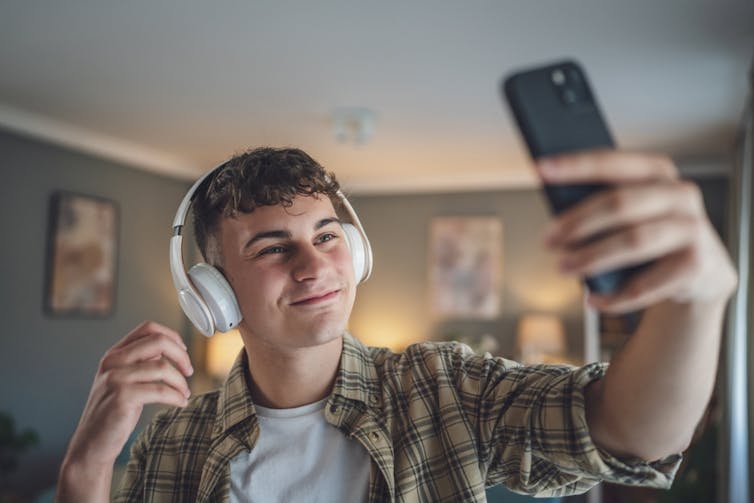
Teenage boy taking selfie
Age verification can include uploading a selfie that is analysed by AI.
Miljan Zivkovic/Shutterstock

If enforced, the Online Safety Act may not only restrict access to pornography and other recognised extreme content, but it could also help stem the flow of knife sales.

Research shows exposure to knife crime news on social media is linked to symptoms similar to PTSD. Research by one of us (Charlotte Coleman) and colleagues has previously shown that negative effects of seeing knife imagery may be more severe for girls and those who already feel unsafe.

Even on strongly regulated platforms, though, some harmful material can seep through the algorithm and age checks net. Active moderation is therefore a further requirement of the act. This means platforms need to have processes in place to look at user-generated content, assess the potential harm and remove it if appropriate to ensure swift action is taken against content harmful to children.

This may be through proactive moderation (assessing content before it is published), reactive moderation based on user reports, or more likely, a combination of the two.

Even with these changes, invisible online spaces remain. A host of private, encrypted end-to-end messaging services, such as messages on Whatsapp and snaps on Snapchat, are impenetrable to Ofcom and the platform managers, and rightly so. It is a vital fundamental right that people are free to communicate with their friends and family privately without fear of monitoring or moderation.

However, that right may also be abused. Negative content, bullying and threats may also be circulated through these services. This remains a significant problem to be addressed and one that is not currently solved by the Online Safety Act.

These invisible online spaces may be an area that, for now, will remain in the hands of parents and carers to monitor and protect. It is clear that there are still many challenges ahead.


Get your news from actual experts, straight to your inbox. Sign up to our daily newsletter to receive all The Conversation UK’s latest coverage of news and research, from politics and business to the arts and sciences.

The Conversation

Charlotte Coleman has previously received funding from UKRI to understand the negative online experiences of UK police staff.

Jess Scott-Lewis does not work for, consult, own shares in or receive funding from any company or organisation that would benefit from this article, and has disclosed no relevant affiliations beyond their academic appointment.

ref. Online Safety Act: what are the new measures to protect children on social media? – https://theconversation.com/online-safety-act-what-are-the-new-measures-to-protect-children-on-social-media-261126

Nipple-covered sea creatures and aquariums filled with tears – Sea Inside’s alternative perspective on oceans in crisis

Source: The Conversation – UK – By Pandora Syperek, Tutor, History of Design, V&A/Royal College of Art, and Teaching Fellow, Institute for Creative Futures, Loughborough University

There has been a conspicuous turn to the sea as inspiration for art and exhibitions since the mid-2010s. This is a trend we have charted in our ongoing collaborative research project, Curating the Sea. So prolific has this become, that there are even gallery spaces dedicated entirely to the sea in contemporary art.

The sea has, of course, been the subject of art throughout history. However, our investigation into contemporary art and exhibitions has revealed a shift from celebrations of oceanic abundance and wonder towards more political projects.

In our research, we have argued for the importance of curation as a way to confront the issues facing the oceans today. So it was only natural that we turn our hands to curating our own exhibition about the sea, based on our extensive collaborative research.

Sea Inside is part of the current season at the Sainsbury Centre in Norwich, which asks, “can the seas survive us?”


Looking for something good? Cut through the noise with a carefully curated selection of the latest releases, live events and exhibitions, straight to your inbox every fortnight, on Fridays. Sign up here.


Western art has tended to frame the ocean as an unfathomable and formidable force in the tradition of the sublime: art that produces or is inspired by the strongest emotions the mind is capable of feeling, often arising from the encounter with the natural world. Sea Inside counters this perspective. Collectively, artworks in the exhibition portray the sea not as a surreal or alien space, but as an entity that is intimately connected to humans.

Many Indigenous and diasporic communities have long been aware of the profound human connection to the sea. In our exhibition, Shuvinai Ashoona’s coloured pencil drawings illustrate the intermingling of Inuit mythology with everyday life in the Canadian Arctic. In one scene, mythical marine creatures populate a dentist’s office.

Meanwhile, Tyler Eash’s sculpture features a shell of the critically endangered abalone mollusc. They are known as “grandmother shells” among North American west coast Indigenous cultures as they are commonly passed down through families by female elders. The work speaks to ties of kinship (human and animal), their fragility and resilience.

A new sculpture we commissioned by the artist Gabriella Hirst explores tales of men being swallowed by whales alongside the industrial exploitation of whales in the 19th century. This inside-out journey from the whale’s belly to lighting up European cities (as whale blubber was used in oil lamps) aligns the perceived threat of these animals with capitalistic justifications for their slaughter. The sculpture is made from agricultural plastic, itself a product of the petrochemical industry that largely replaced whaling as a source of energy, lighting and everyday objects.

Beyond eco-realism

The perspective Sea Inside offers is found not only in the artworks’ subject matter but also their approach.

There has been a tendency towards a documentary approach within ecologically oriented exhibitions. This risks relegating art to a tool of climate communication and even replicating the sort of technological interventions into the landscape – and seascape – that the respective artworks and exhibitions call into question.

The artworks in Sea Inside examine the uses and limits of visual mediums for understanding the sea. Hiroshi Sugimoto’s photograph of a natural history diorama reframes this three-dimensional reconstruction of a seabed from hundreds of millions of years before the advent of humans, whereas Kasia Molga’s miniature aquaria entangle human tears and marine life.

Artists in the exhibition play with historical display practices and their ability to bring ocean life into human spaces while endeavouring to overcome the sense of detachment they have at times created.

In a video work by El Morgan, the artist aligns jellyfish breeding in a lab with her own experience of assisted reproduction. In doing so she momentarily suspends the distance from such radically different lifeforms and expands our understandings of gestation.

Likewise, Laure Prouvost’s speculative “cooling system” for global warming – a beautiful Murano glass shower-head that looks like an amorphous sea creature covered in nipples – reimagines models of care as both more-than-human and global.

Works such as these provide playful and humorous approaches to thinking through a topic with a serious undercurrent: our fragile ocean ecologies.

The artworks in Sea Inside offer ways of engaging with the existential threats facing our oceans that are emotive, imaginative and often very funny. They reflect on material culture, architecture and technology to acknowledge the aesthetic dimensions of an era that has been termed the Anthropocene, after the human impact on the planet, and even the Hydrocene in recognition of the centrality of water to our current epoch.

These subtler responses to the sea within offer visions of promise for the oceans’ and our own mutual survival.

Sea Inside is on show at the Sainsbury Centre, Norwich, until October 26 2025.


Get your news from actual experts, straight to your inbox. Sign up to our daily newsletter to receive all The Conversation UK’s latest coverage of news and research, from politics and business to the arts and sciences.

The Conversation

Sarah Wade works in the Department of Art History & World Art Studies, University of East Anglia, based at the Sainsbury Centre. Her ocean related research has received funding from University of East Anglia and the Paul Mellon Centre for Studies in British Art. She is a member of the Museums Association.

Pandora Syperek does not work for, consult, own shares in or receive funding from any company or organisation that would benefit from this article, and has disclosed no relevant affiliations beyond their academic appointment.

ref. Nipple-covered sea creatures and aquariums filled with tears – Sea Inside’s alternative perspective on oceans in crisis – https://theconversation.com/nipple-covered-sea-creatures-and-aquariums-filled-with-tears-sea-insides-alternative-perspective-on-oceans-in-crisis-260146

Could climate anxiety be a form of pre-traumatic stress disorder? A psychologist explains the research

Source: The Conversation – UK – By Geoff Beattie, Professor of Psychology, Edge Hill University

Malchevska/Shutterstock

We are living in an age of anxiety. People face multiple existential crises such as climate change and conflicts that could potentially escalate into nuclear war.

So how do people cope with competing threats like this? And what happens to climate anxiety when wars suddenly erupt and compete for our attention?

Climate change affects our physical and mental health, directly through extreme climate-related droughts, wildfires and intense storms. It also affects some people indirectly through so-called “climate anxiety”. This term covers a range of negative emotions and states, including not just anxiety, but worry and concern, hopelessness, anger, fear, grief and sadness.

A team of researchers led by Caroline Hickman from the University of Bath surveyed 10,000 children and young people (aged 16 to 25 years) in ten countries (Australia, Brazil, Finland, France, India, Nigeria, Philippines, Portugal, the UK and the US). They found that 45% of respondents said their feelings about climate change negatively affected their daily lives. It was worse for respondents from developing countries.

Climate anxiety can potentially serve a positive function. Anger, for example, can push people to act to help mitigate the effects of climate change.

But it can also lead to “eco-paralysis”, a feeling of being overwhelmed, inhibiting people from taking any effective action, affecting their sleep, work and study, as a result of them dwelling endlessly on the problem.

Climate anxiety is not included in the American Psychiatric Association’s authoritative guide to the diagnosis of mental disorders. In other words, it is not officially recognised as a mental disorder.

graphic of woman looking at planet Earth, surrounded by extreme weather
Climate anxiety relates to other forms of clinical anxiety.
Malchevska/Shutterstock

Some say this is a good thing. The author and Stanford academic Britt Wray wrote: “The last thing we want is to pathologise this moral emotion, which stems from an accurate understanding of the severity of our planetary health crisis.”

But if it is not officially recognised, will people take it seriously enough? Will they just dismiss people who suffer from it as “snowflakes” – too sensitive and too easily hurt by the hard realities of life. This is a major dilemma.

I explore how climate anxiety relates to other types of clinical anxiety in my recent book, Understanding Climate Anxiety, recognising that there are adaptive and non-adaptive forms of anxiety.

According to Steven Taylor, a clinical psychologist from the University of British Columbia, adaptive anxiety can “motivate climate activism, such as efforts to reduce one’s carbon footprint”. Maladaptive anxiety, however, may “take the form of anxious passivity”, he warned, where the person feels anxious but utterly helpless.

Identifying different types of climate anxiety, understanding their precursors and how they interact with personality is a major psychological challenge. Identifying ways of alleviating climate anxiety and making it more adaptive, and focused on possible climate mitigation, is a major societal challenge.

But there’s another important issue. Some global leaders, including Donald Trump, don’t believe in human-induced climate change, claiming it’s “one of the great scams”. He seems to view climate anxiety as an overblown reaction to propaganda pumped out by a biased media.

This can make the experience much worse for those who feel anxious but then having their feelings dismissed.

Some psychologists argue that climate anxiety can be a form of pre-traumatic stress disorder. This hypothesis arose from observations of climate scientists and their growing feelings of anger, distress, helplessness and depression as the climate situation has worsened.

In 2015, researchers devised a new clinical measure to assess pre-traumatic stress reactions using items found in the diagnostic and statistical manual for post-traumatic stress disorder, but now focused on the future rather than the past, asking about “repeated, disturbing dreams of a possible future stressful experience”, for example.

They tested Danish soldiers before their deployment in Afghanistan and found that “involuntary intrusive images and thoughts of possible future events … were experienced at the same level as post-traumatic stress reactions to past events before and during deployment”.

They also found that soldiers who experienced higher levels of pre-traumatic stress before deployment had an increased risk of post-traumatic stress disorder after their return from the war zone. Their hypervigilance primed their nervous system to react more strongly when anything untoward occurred.

This would suggest that we need to take stress reactions to future anticipated events such as climate change very seriously.

The crisis response

But how important is climate anxiety in the context of these other threats? Researchers assessed the emotional state and mental health of people aged 18 to 29 years in five countries (China, Portugal, South Africa, the US and UK) focusing on three global issues: climate change, an environmental disaster (the Fukushima nuclear accident in Japan), and the wars in Ukraine and the Middle East.

They found the strongest emotional engagement was with the ongoing wars, with climate change a close second, and the radiation leak third. The strongest emotional responses to the wars were concern, sadness, helplessness, disgust, outrage and anger. For climate change, the strongest responses were concern, sadness, helplessness, disappointment and anxiety.

All three crises made young people feel concerned, sad, and very importantly helpless, but climate change has this burning level of anxiety added into the bubbling mix.

It seems that climate anxiety still has this undiminished power regardless of all the other awful things that are currently happening in the world, and I suspect the stigma of being dismissed as “snowflakes” makes this particular fear response all the more unbearable.


Don’t have time to read about climate change as much as you’d like?_

Get a weekly roundup in your inbox instead. Every Wednesday, The Conversation’s environment editor writes Imagine, a short email that goes a little deeper into just one climate issue. Join the 45,000+ readers who’ve subscribed so far.


The Conversation

Geoff Beattie has received funding from the British Academy and the AHRC to investigate psychological barriers to climate change mitigation and the effects of climate change on emotional responses.

ref. Could climate anxiety be a form of pre-traumatic stress disorder? A psychologist explains the research – https://theconversation.com/could-climate-anxiety-be-a-form-of-pre-traumatic-stress-disorder-a-psychologist-explains-the-research-260849

Porn websites now require age verification in the UK – the privacy and security risks are numerous

Source: The Conversation – UK – By Eerke Boiten, Professor of Cybersecurity, Head of School of Computer Science and Informatics, De Montfort University

As of July 25 2025, people in the UK accessing web services with pornographic content will have to prove they are over 18 years of age. This development has been in the works for a while. It was proposed in 2014 by the video-on-demand regulator, and legislated for introduction in 2019 through the British Board of Film Classification.

It is of course important to stop children from accessing inappropriate material online. But, as often with technological solutions to societal problems, all available methods of age checking come with significant downsides in terms of privacy, security and human rights.

A strict separation between sites that do or do not have pornography means the definition of pornography, (not in itself illegal in the UK, becomes crucial. Tech companies are likely to use conservative algorithms (“overblocking”) in response. Historically this has affected sex education online, making it harder for young people to find sexual health advice or explore LGBT+ identities.

The failure to implement the law in 2019 was blamed on an administrative error, but the problems with technological solutions also played a role. Technology in this area has barely progressed, but nevertheless the regulator Ofcom ghas now said that several methods are capable of being highly effective.

The methods Ofcom suggests now come into two categories, which I will describe here as direct and indirect.

With direct methods, visitors will have to prove to the website that they are over 18. The most obvious way is by sharing both photo ID, such as a passport, and then also a selfie as proof that the passport belongs to them (in cybersecurity terminology, the passport is a “credential” and the selfie serves to “bind” the credential to the user).

Most people would obviously object to submitting these to a porn site. Part of the reason for this is that this would fully identify users, and allow the site to associate their identity to their preferences in browsing.

Anonymity on the internet may have got a bad name because of online “trolls”, but it has a serious positive human rights dimension, particularly also for children. Freedom of expression and association can be exercised much more safely if online anonymity is an option.

Anonymous access to any sites relating to sex can be viewed as liberating people to exercise their right to a sex life without interference or shame. Most age verification methods undermine anonymity to some extent, even if not as obviously and completely as passports and selfies do.

Indirect methods use an intermediary organisation to verify the person’s age. There are lobby groups associated with these organisations that have been influential in policy making for UK online safety for the last decade. Another strong influence has been politicians’ belief in the economic potential of the UK “safety tech” sector.

Users prove their age once with the intermediary, leading to a credential that may be used – typically multiple times – on the website without providing personal data. This looks like a nice clean solution, requiring trust in the intermediary but not in the “porn site”, until you consider “binding” – how do you know it’s the same user?

Borrowing or stealing of such credentials may be minor risks, but a black market in them could provide ways for teenagers to circumvent age restrictions (alongside virtual private networks VPNs, an encryption method which stop a user’s internet traffic from being intercepted by third parties).

Any method to “detect abuse” would involve surveillance, such as tracking IP addresses or using information about the person’s electronic device). This raises further challenges about fairness.

Intermediaries do all promise to delete or protect the information used for the proof of age, after varying periods. This limits the associated security and hence privacy risks, but does not eliminate them.

There are also incidental indirect methods, where an existing third party happens to know we are over 18. This includes banks (the “open banking” verification method), credit cards (not allowed under 18 in the UK), or mobile phone companies that can confirm a person has been able to get their porn filter removed, proving they must be over 18.

All indirect methods have so-called “linkability” privacy issues. The credential becomes an identifier, which allows the website, the intermediary, or both to link different visits to the same site or to other sites, and build up a picture like a browsing history that will become more individual and more intrusive over time.

Age estimation

Finally there are methods that do not actually verify your age but only estimate it. One way is via your email address and detecting how much “adult behaviour”, such as buying insurance, it has been involved with.

For most of us who do not use throw-away email addresses, it drives home the extent to which our main email address forms the key to mass online surveillance of everything we do. Maybe we would rather not be reminded. It certainly seems excessive for proving our age.

A lot of commercial effort has also gone into face-based age estimation technology. As with human age checking for alcohol in supermarkets, it is very approximate and unfair on people who do not look their age. In both cases, another verification method needs to be added as a backup.

To make the online world safer for kids, technological measures have had adverse effect on freedom that go beyond just removing porn. As a result, additional online surveillance gets put in place for many of us. Creating additional sensitive databases of information also sets up targets for cybercriminals.

Even more seriously, the “database state” offers potential for the kind of repressive mass surveillance that privacy activists have been warning of for decades. In that context, can we really afford to add to internet surveillance?


Get your news from actual experts, straight to your inbox. Sign up to our daily newsletter to receive all The Conversation UK’s latest coverage of news and research, from politics and business to the arts and sciences.

The Conversation

Eerke Boiten has in the past received funding from various research funding organisations, none of it relating to the topic of this article.

ref. Porn websites now require age verification in the UK – the privacy and security risks are numerous – https://theconversation.com/porn-websites-now-require-age-verification-in-the-uk-the-privacy-and-security-risks-are-numerous-261592

Dealing with wildfires requires a whole-of-society approach

Source: The Conversation – Canada – By Kevin Kriese, Senior Wildfire and Land Use Analyst, Centre for Global Studies, University of Victoria

As the summer heat intensifies, people across Canada are facing the full brunt of wildfire season. Communities are being evacuated and properties are being destroyed as fires grow in size.

Over the past decade, wildfires in Canada have broken numerous records, including the area burned in the largest single fire in recent history.

More frequent fires are unsettling communities, causing rapid changes to ecosystems and having a negative impact on society and our economy.

Increased wildfire risk is driven by a variety of factors, including more extreme fire weather (high temperatures, low humidity and powerful winds) made worse by climate change, fire deficits, the accumulation of fuels like trees and other organic materials on the landscape and changing land-use and settlement patterns.

Our new research from the POLIS Wildfire Resilience Project at the University of Victoria explores how beneficial fires — fire that maximizes ecological benefits and minimizes risks to communities — can help build wildfire resilience.

What are beneficial fires?

Fire is a natural, necessary and inevitable part of many ecosystems in Canada. Historically, wildfire created a mosaic of diverse ecosystems and habitat conditions, which supported healthy watersheds and contributed to the cultures and livelihoods of Indigenous Peoples.

Beneficial fire typically includes Indigenous cultural burning, prescribed fire and managed wildfire. These fires are managed for their ecological, cultural and community benefits, while minimizing adverse effects.

One reason we’re seeing more catastrophic fires now is because of a history of widespread wildfire suppression, which can allow fuels to accumulate. When fuels accumulate, the risk from wildfire increases.

In certain places and contexts, suppression remains the appropriate approach. It will continue to play a critical role in keeping communities safe and conserving ecosystem services like clean water and special places. But suppression alone is not viable or desirable. Instead, a suite of proactive actions from a variety of stakeholders is required.

In British Columbia, Indigenous communities are returning cultural burning to their territories. A burn by the ʔaq̓am First Nation, with support from the BC Wildfire Service and local fire departments, was credited with helping save lives and homes from the St. Mary’s wildfire in summer 2024.

Later in 2024, portions of a wildfire near the Wet’suwet’en community of Witset were allowed to burn while firefighting efforts focused on the part of the fire that threatened the community. This approach protected the village of Witset while still allowing the fire to create ecological benefits.

Despite increasing awareness that some fires are beneficial, community opposition to cultural and prescribed fires — as well as to letting wildfires burn — persists. This opposition stems from a longstanding fears of fire and the very real threats posed to communities, people and property.

A whole-of-society approach

Until people feel safe from wildfire, the ability to return fire to the landscape will be limited and pressure for maximum suppression will likely continue. However, when people feel safe in their homes and communities, they may be more likely to accept more beneficial fire on the landscape.

Risk reduction programs, such as FireSmart, take a holistic approach to wildfire resilience and include practical measures proven to reduce property loss.

Homeowners who live near fire-prone ecosystems (referred to as the wildland-urban interface) can take simple actions, such as removing flammable material within 1.5 metres of buildings, while communities can plan effective evacuation routes.

Experience in other jurisdictions indicates that voluntary measures, like FireSmart, are more effective when combined with mandatory minimum standards for fire-resistant building construction, vegetation management and landscaping.

Reducing risk and increasing beneficial fires requires co-ordinated action from a diverse array of parties. For example, creating home-hardening requirements demands updated provincial building codes and local government plans that consider wildfire resilience.

When a diverse array of entities is required to work towards a common goal, co-ordination and collaboration are vital and a whole-of-society approach is required. This type of approach fosters innovation, local agency and broader accountability — ultimately resulting in better outcomes on the ground.

There are calls for this approach at national and international levels. Recent examples include the Canadian Council of Forest Ministers’ Canadian Wildland Fire Prevention and Mitigation Strategy and the G7 Kananaskis Wildfire Charter.

Diverse actions needed

Crown governments have historically worked in a top-down wildfire management model: provincial and territorial governments are in charge and select partners, such as industry, have been engaged to carry out specific actions.

We are beginning to see a shift to greater sharing of responsibilities, partnerships, recognition of Indigenous authorities and increased local action. For example, B.C. has committed to “integrate traditional practices and cultural uses of fire into wildfire prevention and land management practices and support the reintroduction of strategized burning.”

As Canadians face another intense wildfire season, in which we’ve already experienced loss of life and property, meaningful action across all of society is essential.

Provincial governments must work in collaboration with Indigenous, local and federal governments, as well as industry, civil society, practitioners, local experts and communities.

Individuals can take action to reduce the risk to their homes by managing the vegetation around their homes and using more fire-resistant building materials. Communities can engage in risk reduction and resilience planning. And governments at all levels can facilitate changes in how we manage our landscape to increase beneficial fires.

Taken together, these diverse actions across all of society will be crucial for protecting people and ecosystems as we all learn to live with fire.

The Conversation

Kevin Kriese is a member of the Liberal Party of Canada.

Andrea Barnett receives funding from the Gordon and Betty Moore Foundation.

Oliver Brandes receives funding from Gordon and Betty Moore Foundation and the BC Real Estate Foundation.

ref. Dealing with wildfires requires a whole-of-society approach – https://theconversation.com/dealing-with-wildfires-requires-a-whole-of-society-approach-260568

Canada’s new drug pricing guidelines are industry friendly

Source: The Conversation – Canada – By Joel Lexchin, Professor Emeritus of Health Policy and Management, York University, Canada

Drug pricing in Canada just got more industry-friendly.

Canadian drug prices are already the fourth highest in the industrialized world. Now, with the release of new guidelines for the staff at the Patented Medicine Prices Review Board (PMPRB) at the end of June, the situation is poised to potentially get even worse.

The review board is the federal agency that was set up 1987 to ensure that the prices for patented drugs are not “excessive.”

Comparing prices

Up until now, one of the criteria the PMPRB used in making the decision about what was an excessive price was to compare the proposed Canadian price for a new drug with the median price in 11 other countries. The median is the 50 per cent mark; in other words, the price in half of the other countries was below what’s proposed for Canada, and the price in the other half was above the proposed Canadian price. Under the new guidelines, set to take effect on Jan. 1, 2026, the Canadian price can be up to the highest in those other 11 countries.

Right now, the median price in the 11 countries Canada is compared to is 15 per cent below the price of patented drugs in Canada. The highest international price, which will be the new standard, is 21 per cent above the median Canadian price, meaning Canadian prices for new drugs will be significantly higher than they otherwise would have been.

Sometimes a drug is not available in any of the 11 other countries when it comes onto the Canadian market. In that case, the company can price the drug at whatever level it wants and keep it at that price until it comes up for its annual price review. The executive director of the PMPRB told the Globe and Mail that this would incentivize drugmakers to bring their products to the Canadian market first.

Incentivizing drug companies may be a reasonable idea, but that’s not part of the mandate of the PMPRB. As laid out in Section 83 of the Patent Act, its mandate is to ensure drug prices aren’t excessive.

Additional therapeutic value

In the past, one of the factors that the PMPRB took into account in determining if prices were excessive was the additional therapeutic value of a new drug compared to what was already on the market. The lower the value, the lower the price. In this regard, the PMPRB was advised by its Human Drug Advisory Panel, an independent group of experts.

The ranking of new drugs against existing ones was also of significant value to Canadian clinicians. It helped them to decide on the best treatment option for their patients and countered the hype about new drugs that came from the manufacturers.

Since the new guidelines have abandoned looking at therapeutic improvement of new drugs, that leaves only one remaining Canadian source for that type of information, the Therapeutics Letter, a bimonthly publication targeting identified problematic therapeutic issues in a brief, simple and practical manner.

Complaints about prices can be made by federal, provincial and territorial health ministers and by senior officials who are authorized to represent Canadian publicly funded drug programs. “Other parties who have concerns about the list prices … are encouraged to raise their concerns with their relevant Minister(s) of Health or Canadian publicly-funded drug program (sic).” This advice is cold comfort for people working low-wage jobs who aren’t covered by provincial and territorial drug plans and don’t have any access to their health minister.

If there is an in-depth review of a new drug’s pricing — a preparatory step to determine whether there should be a formal hearing to investigate if the price is excessive — it is only the manufacturer that is allowed to submit information to the PMPRB. Clinicians who prescribe the drug, patients who take the drug, and organizations and individuals that pay for the drug do not have that same right.

Donald Trump’s on-again, off-again tariffs are already threatening to drive up drug prices and make prescription drugs inaccessible to many Canadians. Higher drug prices will also almost certainly affect Canada’s already limited pharmacare program. Higher prices for new drugs will make an expanded pharmacare plan more expensive and less appealing to the federal government. The new PMPRB guidelines help ensure higher drug prices and no pharmacare expansion.

The Conversation

Between 2022-2025, Joel Lexchin received payments for writing a brief for a legal firm on the role of promotion in generating prescriptions for opioids, for being on a panel about pharmacare and for co-writing an article for a peer-reviewed medical journal on semaglutide. He is a member of the Boards of Canadian Doctors for Medicare and the Canadian Health Coalition. He receives royalties from University of Toronto Press and James Lorimer & Co. Ltd. for books he has written. He has received funding from the Canadian Institutes of Health Research in the past.

ref. Canada’s new drug pricing guidelines are industry friendly – https://theconversation.com/canadas-new-drug-pricing-guidelines-are-industry-friendly-261062

The US has sanctioned UN special rapporteur Francesca Albanese – here’s why she’s the wrong target

Source: The Conversation – UK – By Alvina Hoffmann, Lecturer in Diplomatic Studies, Department of Politics and International Studies, SOAS, University of London

The United States has imposed sanctions against the UN’s special rapporteur in the Palestinian territories, Francesca Albanese. It’s an unprecedented situation. The US secretary of state, Marco Rubio, cited as the reason her direct engagement with the International Criminal Court “in efforts to investigate, arrest, detain, or prosecute nationals of the United States or Israel”.

The statement also described Albanese’s “threatening letters to dozens of entities worldwide, including major American companies” as an escalation of her strategies. The sanctions were framed as preventing “illegitimate ICC overreach and abuse of power” and as part of Trump’s Executive Order 14203 on imposing sanctions on the ICC.

This raises the question: who are special rapporteurs and why would Albanese’s performance of her role elicit such a strong reaction from the US? Special rapporteurs are independent human rights experts, part of the UN Human Rights Council’s special procedures system established in 1979. There are 46 “thematic mandates” on issues such as extrajudicial killings, enforced disappearances and the environment, and 14 “country mandates”, including in Palestine.

Experts on human rights from academia, advocacy, law and other relevant professional fields are appointed to fulfil a variety of tasks. These include undertaking country visits, sending communications to states about individual cases of human rights violations, developing international human rights standards, engaging in advocacy and providing technical cooperation based on their legal and thematic expertise.

In 1967, 22 years after it was set up, the United Nations established institutional provisions for independent experts on human rights. This happened first in 1967 when it appointed an ad hoc working group of experts on apartheid and racial discrimination in southern Africa. In 1968 the same group of experts was appointed to investigate “Israeli Practices Affecting the Human Rights of the Palestinian People and Other Arabs of the Occupied Territories”. This is still in place today.

Neither South Africa nor Israel allowed experts to enter their territories to inspect their human rights record at the time. But in 2003, nearly a decade after it first held democratic elections, South Africa issued a standing invitation to all thematic special procedures, meaning they committed themselves, at least in theory, to always accept requests to visit from rapporteurs.

Attacks on individual rapporteurs

Albanese, a specialist in international human rights law, is the eighth rapporteur since the creation of her mandate in 1993. She was appointed to this pro bono position in 2022 for three years, and her mandate was recently renewed for another period of three years.

It was her most recent report from June 30 which led to her being sanctioned by the US. The report focused on the role of the corporate sector in “colonial endeavours and associated genocides” and named over 60 companies as “complicit”.

A host of institutions and leading human rights figures have come to her defence. Agnes Callamard, a former special rapporteur on extrajudicial killings, now the secretary general of Amnesty international noted the “chilling effects for all special rapporteurs” of the US decision. Top UN human rights officials denounced this dangerous precedent and called for its reversal.

In February 2024, the government of Israel declared Albanese persona non grata in response to her remark that “the victims of the October 7 massacre were not murdered because of their Jewishness, but in response to Israeli oppression”. As with the newly imposed sanctions, she called this step a distraction and called upon the world to keep their focus on Gaza.

Diplomatic immunity

Special rapporteurs are granted diplomatic immunity which, in theory, should enable them to speak up or write critical reports without the fear of reprisals. But in 1989 and 1999 the ICJ had to intervene with an advisory opinion on two cases when this status was jeopardised after the home countries of two special rapporteurs tried to restrict their freedom of speech. This involved Romanian national Dumitru Mazilu, tasked with writing a report on “Human rights and youth”, and Malaysian national Dato’ Param Cumaraswamy, special rapporteur on the independence of judges and lawyers.

Special rapporteurs wrote a collective letter denouncing the second case, when the Malaysian government filed several legal proceedings against Cumaraswamy. The body of experts called this “judicial harassment of a special rapporteur” and “a challenge to the status of the United Nations as a whole, its officials and its experts on mission”.

Special rapporteurs occupy an ambiguous institutional position. They take their mandate from the Human Rights Council, but they act in their personal capacity, and hence are not considered to be UN officials. In practice, they need to balance relations carefully between the UN secretariat, civil society, state representatives and, at times, their own countries.

The advisory opinions helped clarify that it was the secretary general, as the head of the United Nations, that entrusts them with the privileges of diplomatic immunity. The arrangement also leaves the door open for national courts to disagree with the secretary general. This enabled individual countries in some cases to exercise some form of control over their own nationals.

The recent attack on Albanese adds to the broader budgetary crisis of the UN, as the Trump administration is withholding funds of about US$1.5 billion (£1.2 billion) in addition to other countries such as China, Russia and Saudi Arabia. These are serious challenges for the UN human rights and humanitarian aid programmes. As past cases of attacks against individual rapporteurs have shown, it is important for all rapporteurs to stand together as one body and defend the integrity of the system as a whole.

Despite these attacks on her integrity and person, Albanese maintains faith in the human rights law instruments. As she stated during a public talk I attended at SOAS University of London in November 2024, we are yet to unlock the full potential of these instruments. This can only be done as a collective.

The Conversation

Alvina Hoffmann has previously been funded by the Economic and Social Research Council (UKRI).

ref. The US has sanctioned UN special rapporteur Francesca Albanese – here’s why she’s the wrong target – https://theconversation.com/the-us-has-sanctioned-un-special-rapporteur-francesca-albanese-heres-why-shes-the-wrong-target-261788

Ukrainian protests: Zelensky faces biggest threat to his presidency since taking power

Source: The Conversation – UK – By Jennifer Mathers, Senior Lecturer in International Politics, Aberystwyth University

Protests have erupted in Kyiv and other Ukrainian cities against a new law that threatens the independence of Ukraine’s anti-corruption institutions. The legislation was hastily passed on July 22 by parliament and signed by the Ukrainian president, Volodymyr Zelensky, that same day.

It places Ukraine’s national anti-corruption bureau and its special anti-corruption prosecutor’s office under the direct control of the prosecutor general, one of Zelensky’s appointed officials. Zelensky has argued that the measure was necessary to address Russian infiltration of anti-corruption bodies.

Critics of the measure, however, believe the real purpose of the law is to give the president the power to quash ongoing investigations into alleged corruption by members of his inner circle. These include his close ally and former deputy prime minister, Oleksiy Chernyshov.

Politicians from opposition parties and civil society activists also regard the new law as an example of the president attempting to take advantage of wartime conditions to silence critics and consolidate power.

The protests have involved thousands of ordinary people. This includes veterans of the war against Russia’s invasion, some with visible war injuries such as missing limbs. Anger at the attempt to curb the independence of anticorruption bodies has broken the informal agreement between the government and Ukrainian society to show a united front to the world while the war continues.

The protests may be the most serious domestic political challenge Zelensky has faced since he was elected president in 2019.

Ukrainians protest after Zelensky signs law clamping down on anticorruption agencies.

Formally, Zelensky’s political position is secure. His Servant of the People party holds the majority of seats in parliament and governs without the constraints of coalition partners. Zelensky and his party will also not face voters anytime soon. There is a ban on holding elections during martial law, which is due to continue for the duration of the war.

Zelensky is not unpopular in Ukraine. According to a survey conducted in June by the Kyiv International Institute of Sociology, Zelensky’s personal popularity was running at 65%. This is down from the heady heights of 90% in the first few months after Russia’s 2022 invasion, but up significantly from 52% in December 2024.

However, Zelensky was quick to respond to the street protests by promising to reverse the new law. He said he would submit a new bill to parliament to restore independence to the agencies. The speed of his response reveals the sensitivity of the president – and indeed most Ukrainian politicians – to criticism on the corruption issue.

Why corruption is a big issue

Corruption is a topic that resonates strongly with Ukrainian society. Anger at the corruption of Viktor Yanukovych’s presidency fuelled the Maidan protests of 2013 and 2014, which began in response to his decision to break off negotiations with the EU and instead pursue closer political and economic ties with Russia.

The “revolution of dignity” that followed robustly rejected Yanukovych’s leadership and his policies, and ultimately saw him ousted from power. The revolution was a resounding demonstration of the strength of Ukraine’s civil society and its determination to hold its elected officials to account.

Any suggestion that Ukraine is failing to address corruption is also a matter of great concern for Ukraine’s international supporters. This is especially the case for major lenders such as the International Monetary Fund. Its willingness to disperse the large loans that help keep the Ukrainian economy functioning depends on Kyiv reaching the good governance milestones it sets.

European leaders have expressed concern at the new law and the possibility that Zelensky may be taking a backwards step when it comes to dealing with corruption.

President of the European Commission, Ursula von der Leyen, phoned Zelensky to express her strong concerns and ask for an explanation for diluting the independence of anti-corruption bodies. French and German leaders have also indicated that they intend to hold discussions with Zelensky about the issue.

Meanwhile, Russia has been quick to take advantage of the protests in Ukraine. According to intelligence from Ukraine’s ministry of defence, Moscow has already distributed doctored photographs of the protesters that show them holding pro-Russian signs. It has falsely claimed that Ukrainians are coming on to the streets to demand an immediate end to the war.

So far, there are no indications that these protests will spill over from demanding the reversal of one controversial piece of legislation into calls for a change of government. Some protesters have even been explicit in their remarks to the media that they are broadly supportive of Zelensky, but are calling on him to take action on this specific issue.

However, Zelensky cannot afford to be complacent. He needs to act quickly to keep his domestic and international supporters on side. A great deal of effort has been expended to demonstrate Ukraine’s commitment to democratic values and its suitability to join western institutions like the EU and Nato. Any hint of backsliding on anti-corruption could undermine that message.

Ukrainians continue to be remarkably united in their support for the war effort and their approval of the armed forces. But the mobilisation process is itself tainted with corruption. Ordinary citizens are reluctant to respond to the state’s call for more soldiers when it is widely known that the family members of powerful and wealthy Ukrainians are able to avoid military service and instead lead comfortable lives abroad.

Zelensky cannot afford to let dissatisfaction with corruption grow. Even if it does not threaten his hold on power today, society’s anger at corrupt practices and the inequalities they create is already damaging the war effort. Ukraine’s political leaders need to demonstrate that their commitment to democracy is as strong as that of the society that they lead.

The Conversation

Jennifer Mathers does not work for, consult, own shares in or receive funding from any company or organisation that would benefit from this article, and has disclosed no relevant affiliations beyond their academic appointment.

ref. Ukrainian protests: Zelensky faces biggest threat to his presidency since taking power – https://theconversation.com/ukrainian-protests-zelensky-faces-biggest-threat-to-his-presidency-since-taking-power-261876