Football and faith could return to the Supreme Court – this time, over loudspeakers

Source: The Conversation – USA (3) – By Charles J. Russo, Joseph Panzer Chair in Education and Research Professor of Law, University of Dayton
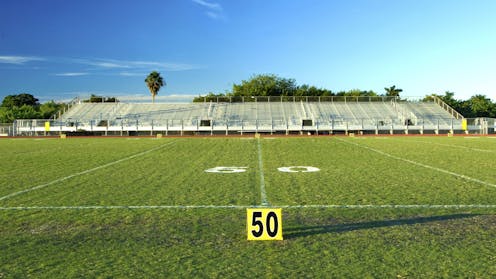
Private schools want to pray over the loudspeaker – at a public facility, during games run by a state association. John Coletti/Photodisc via Getty Images

With the start of another high school football season around the corner, a long-simmering dispute has heated up: prayers at games.

Kennedy v. Bremerton, the case of a high school football coach praying on the field after games, has been in the spotlight since the Supreme Court’s 2022 ruling. But another football controversy first emerged in 2015, when two Christian schools in Florida made it to the state championships. The games were run by the state’s high school athletic association, a government body.

Association officials barred the teams from conducting a joint prayer over the loudspeaker at the public stadium before kickoff. Allowing a prayer, they said, would violate federal and constitutional law. The First Amendment’s establishment clause forbids the government from establishing an official religion, from giving preference to a specific religion and from giving favor to or disfavoring religion in general.

Officials at one of the schools, Cambridge Christian, filed suit, arguing that banning the prayer violated its right to free speech and to the free exercise of religion. Lower courts entered orders in the association’s favor, but attorneys for the school petitioned the Supreme Court to hear the case.

As a faculty member who teaches and researches law relating to religion and education, I believe the justices are likely to take the case – and that its outcome could be consequential. I say this because the Supreme Court’s recent record in First Amendment cases has been more friendly to religious plaintiffs than ever in its history.

A police officer with his back to the camera stands outside the Supreme Court.
The Supreme Court is expected to announce this fall whether it will hear Cambridge Christian’s case.
AP Photo/Mariam Zuhaib

Government speech

Following multiple rounds of litigation, Cambridge Christian School v. Florida High School Athletic Association reached a federal appeals court in September 2024. The 11th Circuit unanimously affirmed an order upholding the association’s policy not to allow prayer over the public address system.

The 11th Circuit based its findings in its view that prayer would be a form of “government speech”: that it would be perceived as representing the state association, not just the Christian schools. While the First Amendment limits the government’s ability to regulate private speech, the government is free to regulate its own speech.

Therefore, the court held that association officials did not violate the school’s right to free speech or free exercise of religion.

In part, the 11th Circuit relied on a similar Supreme Court case from 2000, which also examined prayer at a high school football game: Santa Fe Independent School District v. Doe.

In the Santa Fe ruling, the justices invalidated a board’s policy of allowing prayer over the public-address system “by a speaker representing the student body, under the supervision of school faculty.” Such a policy violated the First Amendment’s establishment clause, they determined, because “an objective Santa Fe High School student will unquestionably perceive the inevitable pregame prayer as stamped with her school’s seal of approval.”

Endorsement test

According to reasoning known as the “endorsement test,” a message violates the establishment clause if someone listening would reasonably assume that the government is endorsing religion. This test originated in Lynch v. Donnelly, a 1984 dispute over a public Christmas display in a Rhode Island park owned by a nonprofit.

Recently, however, the Supreme Court explicitly rejected the endorsement test – potentially strengthening Cambridge Christian’s case. The court rejected it and a similar set of criteria, called the “Lemon test,” in another football-related case, 2022’s Kennedy v. Bremerton School District.

The majority opinion upheld the right of a football coach in a public high school, Joseph Kennedy, to pray silently on the field at the end of games. The justices explained that the establishment clause does not “require the government to single out private religious speech for special disfavor,” adding that the court “long ago abandoned Lemon and its endorsement test offshoot.”

A man with silver hair who is wearing a short-sleeved blue polo stands before microphones, as a half-dozen people stand around him.
Former assistant football coach Joseph Kennedy after his case, Kennedy vs. Bremerton School District, was argued before the Supreme Court on April 25, 2022.
Win McNamee/Getty Images

The Lemon test“ was the standard the Supreme Court had used since 1971 to evaluate interactions between the government and religion. Under Lemon, there were three key criteria for whether a law or government speech violated the establishment clause. To be permitted, a governmental action must have a secular purpose, and its main effect cannot either advance or inhibit religion. Lastly, the action “must not foster ‘an excessive government entanglement with religion.‘”

In Bremerton, repudiating Lemon, the justices declared that courts should instead assess establishment clause claims based on “historical practices and understandings.”

If the Supreme Court agrees to hear Cambridge Christian’s appeal, the justices will face two issues. The first is whether communal prayer over a loudspeaker before a state athletic association game is indeed government speech – especially because officials permitted a wide array of nonreligious private speech over the loudspeaker. The second issue is whether the endorsement factor of the government-speech doctrine revives the endorsement test.

Recent record

If the justices agree to hear Cambridge Christian, it must be viewed against the court’s recent history in disputes over religion. The majority has often been friendly toward religious plaintiffs in cases under both religion clauses of the Constitution: establishment and free exercise.

In recent years, for example, the justices allowed aid to faith-based school students, found that a board could not prevent Kennedy from praying silently on the field after games, and granted employees time off to worship.

Two important issues remain to be seen: first, whether the justices will continue expanding the boundaries of religious freedom; and second, whether Cambridge Christian will generate such a result.

Regardless of how the Supreme Court rules – and whether it does rule – Florida has already adopted a law requiring athletic associations to allow participating high schools “to make brief opening remarks, if requested … using the public address system at the event.”

Come fall 2025, the Supreme Court will decide whether to hear the case. If so, its judgment may clarify whether private speech using public PA systems becomes governmental speech. Because the 11th Circuit relied on the endorsement test that the Supreme Court expressly repudiated, it seems likely that the justices will hear the appeal and rule in Cambridge Christian’s favor.

If the court does agree to review Cambridge Christian, it may well expand the parameters of religious expression in public – not just at football games.

The Conversation

Charles J. Russo does not work for, consult, own shares in or receive funding from any company or organization that would benefit from this article, and has disclosed no relevant affiliations beyond their academic appointment.

ref. Football and faith could return to the Supreme Court – this time, over loudspeakers – https://theconversation.com/football-and-faith-could-return-to-the-supreme-court-this-time-over-loudspeakers-262104

Your phone is covered in germs: a tech expert explains how to clean it without doing damage

Source: The Conversation – Global Perspectives – By Meena Jha, Head Technology and Pedagogy Cluster CML-NET, CQUniversity Australia

nikkimeel/Shutterstock

We wash our hands, sanitise shopping trolleys and wipe down cafe tables. But what about our phones? We touch these devices dozens of times a day, and take them everywhere from the kitchen to the dining table, and even the bathroom.

Phones can be contaminated with many kinds of potential germs. When was the last time you wiped down yours – and with what?

If you use the wrong cleaning agents or tools, you could strip your phone’s protective coatings, degrade waterproof seals, or even affect its touch sensitivity.

Do phones really need cleaning?

Touchscreens get covered in fingerprints and smudges, so there are aesthetic and functional reasons to wipe down your screen.

Another reason comes down to potential health concerns. Whenever mobile phones are swabbed for microorganisms, scientists inevitably find hundreds of species of bacteria and viruses.

While not all of these cause sickness, the potential for transmission is there. We use phones while in the bathroom and then put them near our mouths, touch them while eating, and pass them between people in meetings, cafes, parties and classrooms.

Unlike hands, which can be washed many times a day, phones are rarely cleaned properly – if at all.

If you do want to sanitise your phone, it’s also important to not damage it in the process.

Some cleaning products will damage your phone

You might think a quick swipe with a household cleaner or hand sanitiser is a clever shortcut to keeping your phone clean. However, many of these products can actually degrade your device’s surface and internal components over time.

For example, both Apple and Samsung advise against using bleach, hydrogen peroxide, vinegar, aerosol sprays, window cleaners or high-concentration alcohol wipes (above 70%) on their devices.

Most smartphones are coated with an oleophobic layer – a thin film that helps resist fingerprints and smudges. Harsh chemicals such as alcohols, acetone or ammonia-based cleaners can strip this coating, making your screen more vulnerable to smudging, and diminished touch responsiveness.

Vinegar, a common DIY disinfectant, can corrode aluminium or plastic edges due to its high acidity. Bleach and hydrogen peroxide, though highly effective as disinfectants, are also too aggressive for the delicate materials used in consumer electronics.

High-alcohol content wipes may dry out plastics and make them brittle with repeated use.

In short: if the cleaner is tough enough to disinfect your kitchen bench, it is probably too harsh for your phone.

A smartphone outdoors on a table with water beading on its screen.
The oleophobic coating on a device screen can help repel fingerprints – but can be destroyed with harsh cleaning chemicals.
Shuvro Mojumder/Unsplash

How should I clean my phone then?

The good news is that cleaning your phone properly is simple and inexpensive. You just need to follow the guidelines backed by major manufacturers. You should also unplug and remove any protective cases or accessories when cleaning your phone.

Most tech companies recommend using 70% isopropyl alcohol wipes (not higher), soft microfibre cloths, and anti-static soft-bristled brushes made of nylon, horsehair or goat hair to clean delicate areas like speaker grills and charging ports.

During the COVID pandemic, Apple revised its cleaning guidelines to permit the use of Clorox disinfecting wipes and 70% isopropyl alcohol on iPhones, provided they are used gently to avoid damaging screen coatings or allowing moisture to seep into the device.

Samsung offers similar advice, recommending users wipe down their phones with a microfibre cloth lightly dampened with a 70% alcohol solution, while steering clear of direct application to ports and openings.

Prevent accidental damage when using these tips

Never spray liquid directly onto the phone, as moisture can seep into ports and internal components, leading to short circuits or corrosion.

Submerging your phone in any cleaning solution is also risky, even for water-resistant models: the seals that prevent water from getting in, such as rubber gaskets, adhesives, nano-coatings and silicone layers, can degrade over time.

Avoid using paper towels, tissues, or rough cloths which may leave scratches on the screen or shed lint that clogs openings.

Finally, be cautious about over-cleaning. Excessive wiping or scrubbing can wear down protective coatings, making your phone more susceptible to fingerprints, smudges, and long-term surface damage.

How often should I clean my phone?

While there is no strict rule for how often you should clean your phone, giving it a proper wipe-down at least once a week under normal use would make sense.

If you regularly take your phone into high-risk environments such as public transport, hospitals, gyms, or bathrooms it is wise to clean it more frequently.

If you’re serious about hygiene, cleaning not just your hands but one of the things you touch most every single day makes sense.

Doing it wrong can slowly damage your device. But doing it right is simple, affordable, and doesn’t take much time.

The Conversation

Meena Jha does not work for, consult, own shares in or receive funding from any company or organisation that would benefit from this article, and has disclosed no relevant affiliations beyond their academic appointment.

ref. Your phone is covered in germs: a tech expert explains how to clean it without doing damage – https://theconversation.com/your-phone-is-covered-in-germs-a-tech-expert-explains-how-to-clean-it-without-doing-damage-259908

New Trump tariffs: early modelling shows most economies lose – the US more than many

Source: The Conversation – Global Perspectives – By Niven Winchester, Professor of Economics, Auckland University of Technology

Getty Images

The global rollercoaster ride of United States trade tariffs has now entered its latest phase.

President Donald Trump’s April 2 “Liberation Day” announcement placed
reciprocal tariffs on all countries. A week later, amid financial market turmoil, these tariffs were paused and replaced by a 10% baseline tariff on most goods.

On July 31, however, the Trump Administration reinstated and expanded the reciprocal tariff policy. Most of these updated tariffs are scheduled to take effect on August 7.

To evaluate the impact of these latest tariffs, we also need to take into account recently negotiated free trade agreements (such as the US-European Union deal), the 50% tariffs imposed on steel and aluminium imports, and tariff exemptions for imports of smartphones, computers and other electronics.

For selected countries, the reciprocal tariffs announced on April 2 and the revised values of these tariffs are shown in the table below. The revised additional tariffs are highest for Brazil (50%) and Switzerland (39%), and lowest for Australia and the United Kingdom (10%).

For most countries, the revised tariffs are lower than the original ones. But Brazil, Switzerland and New Zealand are subject to higher tariffs than those announced in April.

In addition to the tariffs displayed above, Canadian and Mexican goods not registered as compliant with the US-Mexico-Canada Agreement are subject to tariffs of 35% and 25% respectively.

Economic impacts

The economic impacts of the revised tariffs are examined using a global model of goods and services markets, covering production, trade and consumption.

A similar model was used to assess the impacts of the original reciprocal tariffs and the outcome of a US-China trade war.

GDP impacts of the tariffs are displayed in the table below. The impacts of the additional tariffs are evaluated relative to trade measures in place before Trump’s second term. Retaliatory tariffs are not considered in the analysis.

An economic own goal

The tariffs reduce US annual GDP by 0.36%. This equates to US$108.2 billion or $861 per household per year (all amounts in this article are in US dollars).

The change in US GDP is an aggregate of impacts involving several factors.

The tariffs will compel foreign producers to lower their prices. But these price decreases only partially offset the cost of the tariffs, so US consumers pay higher prices.

Businesses also pay more for parts and materials. Ultimately, these higher prices hurt the US economy.

The tariffs decrease US merchandise imports by $486.7 billion. But as they drive up the cost of US supply chains and shift more workers and resources into industries that compete with imports, away from other parts of the economy, they also decrease US merchandise exports by $451.1 billion.

Global impacts

For most other countries, the additional tariffs reduce GDP. Switzerland’s GDP decreases by 0.47%, equivalent to $1,215 per household per year. Proportional GDP decreases are also relatively large for Thailand (0.44%) and Taiwan (0.38%).

In dollar terms, GDP decreases are relatively large for China ($66.9 billion) and the European Union ($26.6 billion).

Australia and the United Kingdom gain from the tariffs ($0.1 billion and $0.07 billion respectively), primarily due to the relatively low tariffs levied on these countries.

Despite facing relatively low additional tariffs, New Zealand’s GDP decreases by 0.15% ($204 per household) as many of its agricultural exports compete with Australian commodities, which are subject to an even lower tariff.

Although the revised reciprocal tariffs are, on average, lower than those announced on April 2, they are still a substantial shock to the global trading system.

Financial markets have been buoyant since Trump paused reciprocal tariffs on April 9, partly on the hope that the tariffs would never be imposed. US tariffs of at least 10% to 15% now appear to be the new norm.

As US warehouses run down inventories and stockpiles, there could be a rocky road ahead.

The Conversation

Niven Winchester has previously received funding from the Productivity Commission and the Ministry of Foreign Affairs and Trade to estimate the impacts of potential trade policies. He is affiliated with Motu Economic & Public Policy Research.

ref. New Trump tariffs: early modelling shows most economies lose – the US more than many – https://theconversation.com/new-trump-tariffs-early-modelling-shows-most-economies-lose-the-us-more-than-many-262491

How do you feel about doing exams? Our research unearthed 4 types of test-takers

Source: The Conversation – Global Perspectives – By Andrew J. Martin, Scientia Professor and Professor of Educational Psychology, UNSW Sydney

Johnny Greig/ Getty Images

If you had to do a test, how would you respond? Would you relish the chance to demonstrate your knowledge? Or worry you were about to fall short of the mark and embarrass yourself?

Research tells us students’ attitudes towards taking tests or doing exams can have an impact on their performance. This is because what they think about themselves, the test questions, and the consequences of the test can impact their motivation and focus during the test.

To date, this research has largely grouped students into two main types of test-takers. One group sees tests as a challenge they can cope with. Another sees tests as a threat they will not be able to handle.

But some studies have suggested these groupings may be too broad to give useful support to students.

In our new study, the largest of its kind, we explored Australian high school students taking a science test. By capturing diverse psychological data, such as students’ brainwaves and stress responses, we found there are four types of test-takers.

Our study

We studied 244 male and female students from three Sydney schools in years 8 to 10 as they did a science test.

It is the largest study of its kind to collate diverse information on students’ brain wave activity, physiological responses and self-reported attitudes while they are doing a test.

This is significant because this kind of research is usually done in labs with large functional magnetic resonance imaging (fMRI) machines, a setting quite different from a real classroom. Our approach allowed us to get a well-rounded look at the different psychological indicators at play when students do a test.

The students were part of a larger research project looking at science engagement. The test was developed by our research team, with guidance from science teachers.

How we set up our research

Students wore an electroencephalogram (EEG) headset during the test to capture their brain activity, via alpha and theta waves.

The alpha waves measured how much students were focusing on the test and the theta waves looked at the strain on their working memory (which students need to use to solve problems in a test). Both these capacities can be disrupted if a person feels threatened or stressed.

Students also wore a biometric wristband that measured their sweat glands. In our study, lower “electrodermal activity” scores indicated a calmer and more positive state, and higher scores indicated stress.

Midway through the test, students reported how confident they were about meeting the demands of the test and how anxious they felt about not meeting the demands.

We then used a statistical technique called latent profile analysis to help us identify different types of test-takers. This technique enables researchers to identify subgroups based on certain variables.

4 types of test-takers

We were able to identify four groups of students who had distinct patterns on these different measures.

1. Confident striders: these students took the test “in their stride”. They reported high confidence and low anxiety, and recorded an optimal balance of attention and working memory. Their wristband readings indicated they were calm. They made up 27% of the group.

2. Confident battlers: also reported they were confident and low in anxiety, but other data suggested they were battling behind the scenes. Their wristband readings suggested their “fight or flight” system was aroused. Their brain waves also showed their working memory did not have as much capacity to problem-solve as the confident striders, which also indicates a level of stress. They made up 8% of the group.

3. Ambivalents: these students were average across all of the indicators, reflecting that they didn’t see the test as a challenge or a threat. They made up 38% of the group.

4. Fearers: reported low confidence and high anxiety. Their wristband readings indicated they were stressed, and their brain wave readings showed they were not directing much direction to the actual test. They made up 27% of the group.

How did these test-takers perform on the test?

We then looked at the test performance for each of these four test-takers. Not surprisingly, confident striders were the highest achievers. Confident battlers also did well on the test, but not as well as striders. Ambivalents scored lower on the test, but not as low as fearers.

These results were measured against students’ previous science results (in school tests and assignments), because we wanted to know whether students performed above or below their usual level. This was to ensure we were measuring the impact of students’ psychological approach to the test, rather than just how good they are at science.

Taken together, our findings suggest that believing in themselves, confronting any fearful thoughts, and having a clear mind to concentrate on the task, puts students in the strongest position to perform well.

What can teachers do?

Our findings also provide guidance for teachers to target the factors that defined the test-takers.

  • To help build confidence, students can be taught how to challenge doubts about themselves. This can include reminding students of their strengths as they approach the test. For example, students could reflect on how well they conducted the experiments in their science lessons if the test includes questions about those experiments.

  • To ease anxiety, students can be taught constructive ways to think about challenging schoolwork. For example, students can remind themselves of the knowledge they have learned that will be helpful. Students can also be taught to use breathing and mindfulness exercises to ease stress. This can reduce a physical stress response and help focus their attention on the task at hand.

  • To optimise working memory, for in-class assessments teachers can match the test to students’ abilities and prior learning. This means the test is challenging enough, but not so overwhelming that it excessively burdens working memory while they are problem solving. This can also help build confidence ahead of other, higher-stakes exams.

The Conversation

Andrew J. Martin received funding from the Australian Research Council and The King’s School for this research. He also receives funding from Commonwealth and state departments of education.

Emma Burns receives funding from the Australian Research Council, is an associate editor for the Australian Educational Researcher and is on the board of the Australian Educational Research Organisation.

Joel Pearson receives funding from The Australian Research Council.

Rebecca J. Collie receives funding from Commonwealth and State Departments of Education. She has also received funding from the Australian Research Council.

Roger Kennett received funding from the Australian Research Council and The King’s School for this research.

ref. How do you feel about doing exams? Our research unearthed 4 types of test-takers – https://theconversation.com/how-do-you-feel-about-doing-exams-our-research-unearthed-4-types-of-test-takers-261552

Why do some clothes shrink in the wash? A textile scientist explains how to ‘unshrink’ them

Source: The Conversation – Global Perspectives – By Nisa Salim, Director, Swinburne-CSIRO National Testlab for Composite Additive Manufacturing, Swinburne University of Technology

Ricardo Gomez Angel/Unsplash

When your favourite dress or shirt shrinks in the wash, it can be devastating, especially if you followed the instructions closely. Unfortunately, some fabrics just seem to be more prone to shrinking than others – but why?

Understanding more about the science of textile fibres can not only help you prevent the shrinkage of clothing, but also might help you “rescue” the occasional garment after a laundry accident.

It’s all down to the fibres

To know more about clothing shrinkage, we first need to understand a little about how textiles are made.

Common textile fibres, such as cotton and linen, are made from plants. These fibres are irregular and crinkled in their natural form. If you zoom deeper inside them, you’ll see millions of tiny, long-chain cellulose molecules that naturally exist in coiled or convoluted shapes.

Extreme close-up of a sewing thread shows the individual fibres, made up of millions of invisible convoluted cellulose molecules.
Hadrian/Shutterstock

During textile manufacturing, these fibres are mechanically pulled, stretched and twisted to straighten and align these cellulose chains together. This creates smooth, long threads.

On a chemical level, there are also links between the chains called hydrogen bonds. These strengthen the fibre and the thread and make it more cohesive.

Threads are woven or knitted into fabrics, which locks in the tension that holds those fibres side by side.

However, these fibres have good “memory”. Whenever they’re exposed to heat, moisture or mechanical action (such as agitation in your washing machine), they tend to relax and return to their original crinkled state.

This fibre memory is why some fabrics wrinkle so easily and why some of them may even shrink after washing.

Cotton fabric under 40x magnification, showing the threads ‘locked’ in against each other.
Kateryna Kon/Shutterstock

How does washing shrink the fabric?

To understand shrinkage, we again need to zoom down to the molecular level. During laundering, hot water helps to increase the energy level of fibres – this means they shake more rapidly which disrupts the hydrogen bonds holding them in place.

The way a fabric is knitted or woven also plays a role. Loosely knitted fabrics have more open spaces and loops, making them more susceptible to shrinkage. Tightly woven fabrics are more resistant because the threads are locked into place with less room to move.

Additionally, cellulose is hydrophilic – it attracts water. Water molecules penetrate inside the fibres, causing swelling and making them more flexible and mobile. Adding to all this is the tumble and twist action inside the washing machine.

The whole process makes the fibres relax and recoil back to their natural, less stretched, crinkled state. As a result, the garment shrinks.

It’s not just hot water – here’s why

This doesn’t just happen with hot water, as you may have experienced yourself with clothes made of rayon, for example.

Cold water can still penetrate into fibres, making them swell, along with the mechanical action of the tumbling in the washing machine. The effect is less dramatic with cold water, but it can happen.

To minimise shrinkage, you may use cold water, the lowest spin speed or the gentlest cycle available, especially for cotton and rayon. Machine labels don’t always fully explain the impact of spin speed and agitation. When in doubt, choose a “delicate” setting.

What about wool?

Different fibres shrink in different ways; there is no single mechanism that fits all.

While cellulose-based fabrics shrink as described above, wool is an animal-derived fibre made of keratin proteins. Its surface is covered in tiny, overlapping scales called cuticle cells.

Wool fibre under a microscope with the cuticles visible as overlapping scales.
snap the reel/Shutterstock

During washing, these cuticles open up and interlock with neighbouring fibres causing fibre entanglement or “felting”. This makes the clothing feel denser and smaller – in other words, it shrinks.

Why don’t synthetics shrink as much?

Synthetic fibres such as polyester or nylon are made from petroleum-based polymers, engineered for stability and durability.

These polymers contain more crystalline regions that are highly ordered and act as an internal “skeleton”, preventing the fibres from crinkling.

The weave of nylon stockings under a microscope shows how the threads are much smoother and more crystalline than natural fibres.
Alexander Klepnev/Wikimedia Commons, CC BY

Textile scientists and engineers are also working on fabrics that resist shrinkage through advanced material design. Among promising innovations are blended yarns that combine natural and synthetic fibres.

Some researchers are working on shape-memory polymers that can change shape – or return to a previous shape – in response to temperature or water, for example. This is different to stretch fabrics (such as those used in activewear) that are made up of highly elastic fibres which “bounce back” to their original state after stretching.

How can I unshrink a piece of clothing?

If a favourite garment has shrunk in the wash, you can try to rescue it with this simple method.

Gently soak the item in lukewarm water mixed with hair conditioner or baby shampoo (approximately one tablespoon per litre). Then, carefully stretch the fabric back into shape and dry it flat or under gentle tension – for example, by pegging the garment to a drying rack.

The reason this works is because conditioners have chemicals known as cationic surfactants. These will temporarily lubricate the fibres, making them more flexible and allowing you to gently pull everything back into place.

This process can’t completely reverse extreme shrinkage but it can help recover some of the lost size, making the clothes wearable again.

The Conversation

Nisa Salim does not work for, consult, own shares in or receive funding from any company or organisation that would benefit from this article, and has disclosed no relevant affiliations beyond their academic appointment.

ref. Why do some clothes shrink in the wash? A textile scientist explains how to ‘unshrink’ them – https://theconversation.com/why-do-some-clothes-shrink-in-the-wash-a-textile-scientist-explains-how-to-unshrink-them-259388

By firing the Bureau of Labor Statistics chief, the Trump administration raises concerns that it may further restrict the flow of essential government information

Source: The Conversation – USA (2) – By Sarah James, Assistant Professor of Political Science, Gonzaga University

Do government programs work? It’s impossible to find out with no data. Andranik Hakobyan/iStock via Getty Images Plus

President Donald Trump’s firing of Bureau of Labor Statistics Commissioner Erika McEntarfer on Aug. 1, 2025, after an unfavorable unemployment report has been drawing criticism for its potential to undercut the agency’s credibility. But it’s not the first time that his administration has taken steps that could weaken the integrity of some government data.

Consider the tracking of U.S. maternal mortality, which is the highest among developed nations. Since 1987, the Centers for Disease Control and Prevention has administered the Pregnancy Risk Assessment Monitoring System to better understand when, where and why maternal deaths occur.

In April 2025, the Trump administration put the department in charge of collecting and tracking this data on leave.

So far, there are no indications that any BLS data has been deleted or disrupted. But there have been reports of that occurring in other agencies of all kinds.

The White House is also collecting less information about everything from how many Americans have health insurance to the number of students enrolled in public schools, and making government-curated data of all kinds off-limits to the public. President Donald Trump is also trying to get rid of entire agencies, like the Department of Education, that are responsible for collecting important data tied to poverty and inequality.

His administration has also begun deleting websites and respositories that share government data with the public.

Why data is essential for the safety net

I study the role that data plays in political decision-making, including when and how government officials decide to collect it. Through years of research, I’ve found that good data is essential – not just for politicians, but for journalists, advocates and voters. Without it, it’s much harder to figure out when a policy is failing, and even more difficult to help people who aren’t politically well connected.

Since Trump was sworn in for a second time, I have been keeping an eye on the disruption, removal and defunding of data on safety net programs such as food assistance and services for people with disabilities.

I believe that disrupting data collection will make it harder to figure out who qualifies for these programs, or what happens when people lose their benefits. I also think that all this missing data will make it harder for supporters of safety net programs to rebuild them in the future.

Why the government collects this data

There’s no way to find out whether policies and programs are working without credible data collected over a long period of time.

For example, without a system to accurately measure how many people need help putting food on their tables, it’s hard to figure out how much the country should spend on the Supplemental Nutrition Assistant Program, formerly known as food stamps, the federal supplemental nutrition program for women, infants and children, known as WIC, and related programs. Data on Medicaid eligibility and enrollment before and after the passage of the Affordable Care Act in 2010 offers another example. National data showed that millions of Americans gained health insurance coverage after the ACA was rolled out.

Many institutions and organizations, such as universities, news organizations, think tanks, and nonprofits focused on particular issues like poverty and inequality or housing, collect data on the impact of safety net policies on low-income Americans.

No doubt these nongovernmental data collection efforts will continue, and maybe even increase. However, it’s highly unlikely that these independent efforts can replace any of the government’s data collection programs – let alone all of them.

The government, because it takes the lead in implementing official policies, is in a unique position to collect and store sensitive data collected over long periods of time. That’s why the disappearance of thousands of official websites can have very long-term consequences.

What makes Trump’s approach stand out

The Trump administration’s pausing, defunding and suppressing of government data marks a big departure from his predecessors.

As early as the 1930s, U.S. social scientists and local policymakers realized the potential for data to show which policies were working and which were a waste of money. Since then, policymakers across the political spectrum have grown increasingly interested in using data to make government work better.

This focus on data grew starting in 2001, when President George W. Bush made holding government accountable to measurable outcomes a top priority.

He saw data as a powerful tool for reducing waste and assessing policy outcomes. His signature education reform, the No Child Left Behind Act, radically expanded the collection and reporting of student achievement data at K-12 public schools.

George W. Bush speaks against a school locker backdrop, next to an American flag and another flag. Above him are the words 'Strengthening our schools.'
President George W. Bush speaks about education in 2005 at a high school in Falls Church, Va., outlining his plans for the No Child Left Behind Act.
Alex Wong/Getty Images)

How this contrasts with the Obama and Biden administrations

Presidents Barack Obama and Joe Biden emphasized the importance of data for evaluating the impact of their policies on low-income people, who have historically had little political clout.

Obama initiated a working group to identify ways to collect, analyze and incorporate more useful data into safety net policies. Biden implemented several of the group’s suggestions.

For example, he insisted on the collection of demographic data and its analysis when assessing the impacts of new safety net policies. This approach shaped how his administration handled changes in home loan practices, the expansion of broadband access and the establishment of outreach programs for enrolling people in Medicaid and Medicare.

Why rebuilding will be hard

It’s harder to make a case for safety net programs when you don’t have relevant data. For example, programs that help low-income people see a doctor, get fresh food and find housing can be more cost-effective than simply having them continue to live in poverty.

Blocking data collection may also make restoring government funding after a program gets cut or shut down even more challenging. That’s because it will be more challenging for people who in the past benefited from these programs to persuade their fellow taxpayers that there is a need for investing in a expanding program or creating a new one.

Without enough data, even well-intended policies in the future may worsen the very problems they’re meant to fix, long after the Trump administration has concluded.

This article was updated on Aug. 4, 2025, with the BLS news.

The Conversation

Sarah James does not work for, consult, own shares in or receive funding from any company or organization that would benefit from this article, and has disclosed no relevant affiliations beyond their academic appointment.

ref. By firing the Bureau of Labor Statistics chief, the Trump administration raises concerns that it may further restrict the flow of essential government information – https://theconversation.com/by-firing-the-bureau-of-labor-statistics-chief-the-trump-administration-raises-concerns-that-it-may-further-restrict-the-flow-of-essential-government-information-259760

What we’ve learned in ten years about county lines drug dealing

Source: The Conversation – UK – By Jenna Carr, Graduate Teaching Fellow and Sociology PhD Researcher, University of Liverpool

ThomasDeco/Shutterstock

A decade ago, the National Crime Agency identified a new drug supply method. Before then, drug supply was predominantly between user-dealers – people supplying their social circles to fund their drug use, rather than for commercial gain.

In 2015, police outside of London identified a pattern of more frequent arrests of young people and vulnerable adults, implicated in drug supply outside of their local areas. They were also frequently suspected to be associated with members of criminal gangs. Thus, “county lines” was born.

The National Crime Agency used the term “county lines” to describe the phone or “deal” line used to organise the sale of drugs – mainly heroin and crack cocaine – from cities with oversaturated supplies, to rural, coastal areas with less supply.

The deal line was controlled by gang members based in the inner city area, such as London or Liverpool, known as “exporter” areas. The sale of drugs would be completed by a young or vulnerable person who had been exploited and sometimes trafficked out of their home areas to rural “importer” areas, such as north Wales and Cornwall. The crossing of local authority and police boundaries made county lines difficult to police, and to safeguard those who had been exploited.

County lines is notably violent. It involves gang violence, knife crime, drug misuse, sexual exploitation and modern-day slavery.

Ten years on, county lines as a supply model continues to evolve. A recent assessment by the National Police Chiefs’ Council found that the practice is becoming more localised, with fewer lines running between police force boundaries, and more running from one end of a force to the other end. It is also no longer limited to the supply of class A substances, with police reporting seizures of cannabis, cash and weapons.

Researchers are now suggesting that the term “county lines” itself is outdated, and instead should be replaced with a term that focuses more on the exploitation involved, rather than drug supply.

Who gets involved

County lines affects both children and vulnerable adults. The government has estimated 14,500 children to be at risk of child criminal exploitation, but this is likely to be an underestimation. Particular risk factors include being between 15 and 17 years old, experiences of neglect and abuse, economic vulnerability, school exclusion and frequent episodes of missing from home.

Cuckooing, where a gang will take over homes as a base for drug supply, largely affects vulnerable adults, rather than children.

One challenge in responding to county lines is that vulnerability can be difficult to recognise.
Victims and perpetrators of exploitation are often one and the same. Often, victims will be unwilling to cooperate with police, out of fear of legal consequences and repercussions from their exploiters.

Those who have been exploited into participating in county lines often do not accept that they are a victim – they may think they are profiting from their involvement, both financially and socially. The ongoing cost of living crisis draws young and vulnerable people into county lines as a response to poverty and lack of legitimate and financially viable opportunities.

Responding to county lines

My ongoing research looks at the development of county lines policy and responses to the problem over the last ten years. Responses to county lines have been mainly led by law enforcement, with coordinated police “crackdowns”. But research shows that high-profile police operations are largely symbolic, and have the effect of drawing vulnerable people into the criminal justice system, which creates further harm.

One important development has been the use of the Modern Slavery Act to prosecute county lines. The purpose of this is to offer a legal defence for someone who has been exploited into selling drugs. But research has shown, rather than acting as a safeguard and a defence, it acts as a “gateway into criminalisation”.

If someone crosses the boundary of being a victim to becoming a perpetrator of exploitation, they can also find themselves being subjected to punitive criminal justice responses under the Modern Slavery Act. This is especially true for black men and boys, who have historically been treated more harshly, for example through stop and search, in relation to drug crime.

It’s become clear that county lines is an issue that criminal justice alone cannot respond to. Those who are at risk require safeguarding, not criminalisation. To this end, the government funds a specialist county lines victim support service that operates in the four main exporter locations.

But the availability of this support service only in exporter locations shows that the county lines response is a postcode lottery. Police forces in importer areas have fewer resources to dedicate to training officers to deal with complex county lines cases. A consistent national approach is still required.

What’s next?

The current government is planning to make child criminal exploitation and cuckooing specific criminal offences through new legislation. This has been celebrated as a success by child safety charities.

But should more criminalisation be the priority? Research shows that drug prohibition and punitive responses are ineffective at preventing young people and vulnerable adults becoming involved in county lines. The demand for drugs and structural issues such as poverty are fuelling county lines – policing alone cannot address this.

Instead of punitive legal responses, public health and addressing the demand for drugs should be priority. Investment is needed in support services and social care, which have been decimated by austerity cuts, to build a society where vulnerable people do not need to become involved in drug supply.


Want more politics coverage from academic experts? Every week, we bring you informed analysis of developments in government and fact check the claims being made.

Sign up for our weekly politics newsletter, delivered every Friday.


The Conversation

Jenna Carr does not work for, consult, own shares in or receive funding from any company or organisation that would benefit from this article, and has disclosed no relevant affiliations beyond their academic appointment.

ref. What we’ve learned in ten years about county lines drug dealing – https://theconversation.com/what-weve-learned-in-ten-years-about-county-lines-drug-dealing-261438

What the world can learn from Korea’s 15th-century rain gauge

Source: The Conversation – UK – By Mooyoung Han, Professor of Environmental Engineering, Seoul National University

The rain gauge with a statue of King Sejong the Great in Seoul, Korea. KoreaKHW/Shutterstock

Droughts and floods are becoming more frequent and more severe across the globe. The cause is often rain — either too little or too much. The monsoon regions of the world, where societies have weathered cycles of drought and deluge for thousands of years, hold essential lessons about rainwater monitoring and conservation.

In Korea, one such lesson dates back to the 15th century. In 1441, during the reign of King Sejong, Korea established the world’s first official rain gauge (cheugugi) — a cylindrical copper instrument — and also created a state-administered rain monitoring network.

This wasn’t just a technical invention; it was part of a wider policy. On September 3 of that year, according to the Annals of the Choson Dynasty (a Unesco Memory of the World record), local magistrates across the country were ordered to measure rainfall regularly and report it to the central government.

This system represented one of the earliest forms of climate data governance and set a precedent for valuing rain as a measurable, manageable and fairly governed resource — a public good to be shared and respected. It also reflected a philosophical tradition in Korea of respecting rain not as a curse, but as a gift — one that must be understood, welcomed and shared.

India too has a rich tradition of rainwater harvesting, spanning from the Vedic period and the Indus–Sarasvati Valley civilisation (3,000–1,500BC) to the 19th century. Throughout diverse ecological zones, Indian communities developed decentralised systems to capture and store rainwater. The archaeological site of Dholavira in Gujarat, for example, featured sophisticated reservoirs designed to collect monsoon runoff.

Historical records, including ancient inscriptions, temple documents and folk traditions, indicate that these systems were not only engineered but also governed, with established rules for sharing, maintaining and investing in water as a communal resource. In some regions of India, every third house had its own well. Although these practices declined during colonial rule, they are now being revived by local communities, government initiatives, and non-governmental organisations.

The revival of traditional wells is gaining momentum, particularly in urban areas facing water scarcity. For example in the city of Bengaluru in southern India, local communities and organisations are using age-old well-digging techniques to tap into shallow aquifers. These efforts are often supported by the state or central government, as well as specialists and organisations including the Biome Environmental Trust, Aga Khan Trust for Culture, Indian National Trust for Art and Cultural Heritage, and the Centre for Science and Environment.

India’s current prime minister has also launched a campaign called Jal Shakti Abhiyan: Catch the Rain as part of a nationwide effort to restore and promote community-led rainwater harvesting.

Reviving ancient wisdom

In Korea, there’s also been a resurgence of this ancient wisdom in modern contexts. Although urban initiatives like the Star City rainwater management system show promise, the movement towards reviving old practices like rainwater harvesting is still growing.

Meanwhile in Cambodia, the Rain School Initiative empowers students and teachers to manage rainwater for drinking and climate education. Rainwater is not just a technical solution — it is a cultural key to resilience. It offers autonomy, sustainability and hope.

That is why we propose to establish UN Rain Day on September 3, in recognition of Korea’s historical contribution and in celebration of global rain literacy. It is a symbolic date that reminds us how rain has shaped civilisations and how it can shape our future — if only we choose to listen to the wisdom of water.

Designating international days has proven effective in raising awareness and catalysing global action. For instance, World Water Day (March 22) has spurred international cooperation and policymaking on water issues since its establishment in 1993. World Toilet Day (November 19) has elevated the global conversation around sanitation and public health.

A UN Rain Day would spotlight rain as a vital yet often overlooked resource. This is something that’s especially crucial for climate adaptation in monsoon regions and beyond.


Don’t have time to read about climate change as much as you’d like?

Get a weekly roundup in your inbox instead. Every Wednesday, The Conversation’s environment editor writes Imagine, a short email that goes a little deeper into just one climate issue. Join the 45,000+ readers who’ve subscribed so far.


The Conversation

The authors do not work for, consult, own shares in or receive funding from any company or organisation that would benefit from this article, and have disclosed no relevant affiliations beyond their academic appointment.

ref. What the world can learn from Korea’s 15th-century rain gauge – https://theconversation.com/what-the-world-can-learn-from-koreas-15th-century-rain-gauge-261530

How letting your mind wander can reset your brain

Source: The Conversation – UK – By Anna Kenyon, Senior Lecturer in Population Health, University of Lancashire

The brain needs time off, too. baranq/ Shutterstock

Every day, we’re faced with constant opportunities for stimulation. With 24/7 access to news feeds, emails and social media, many of us find ourselves scrolling endlessly, chasing our next hit of dopamine. But these habits are fuelling our stress – and our brains are begging for a break.

What our brains really need is some much needed time off from concentrating. By not consciously focusing on anything and allowing the mind to drift, this can reduce stress and improve cognitive sharpness.

This can often be easier said than done. But attention restoration theory (Art) can help you learn to give your brain space to drift. While this might sound like a fancy name for doing nothing, the theory is supported by neuroscience.

Attention restoration theory was first put forward by psychologists Rachel and Stephen Kaplan in 1989. They theorised that spending time in nature can help to restore focus and attention.

They proposed there are two distinct types of attention: directed attention and undirected attention. Directed attention refers to deliberate concentration – such as studying, navigating through a busy place or posting on social media. Basically, it’s any activity where our brain’s attention is being directed at a specific task.

Undirected attention is when we’re not consciously trying to focus on anything – instead allowing things to gently capture our attention without trying. Think listening to chirping birds or watching leaves gently rustling in the breeze. In these instances, your attention naturally drifts without having to force your focus.

Without time for undirected attention, it’s thought that we experience “attentional fatigue”. This can make it increasingly difficult to focus and concentrate, while distractions become more likely to grab our attention.

In the past, we encountered many situations in our daily lives that we might classify as “boring”. Moments such as waiting for the bus or standing in the supermarket queue. But these dull moments also gave our minds a chance to switch off.

Now, our smartphones give us the opportunity for constant entertainment. Being able to constantly expose ourselves to intense, gripping stimuli offers little mental space for our overworked brains to recover.

But attention restoration theory shows us how important it is to create space for moments that allow our brains to “reset”.

Restoring attention

The origins of Kaplan and Kaplan’s theory can actually be traced back to the 19th century. American psychologist William James was the first to formulate the concept of “voluntary attention” – attention that requires effort. James’ ideas were published against the backdrop of the broader cultural movement of Romanticism, which lauded nature.

Romantic ideas about the restorative power of nature have since been backed by research – with numerous studies showing links between time in nature and lower stress levels, better attention, improvements in mental health, mood and better cognitive function.

The restorative benefits of nature are backed by neuroscience, too. Neuroimaging has shown that activity in the amygdala – the part of the brain associated with stress and anxiety – was reduced when people were exposed to natural environments. But when exposed to urban environments, this activity was not reduced.

A young woman looks at her phone while waiting for the bus.
Many of us have grown used to filling every moment of our day with distraction.
Head over Heels/ Shutterstock

Numerous studies have also since backed up Kaplan and Kaplan’s theory that time in nature can help to restore attention and wellbeing. One systematic review of 42 studies found an association with exposure to natural environments and improvements in several aspects of cognitive performance – including attention.

A randomised controlled trial using neuroimaging of the brain found signs of lower stress levels in adults who took a 40-minute walk in a natural environment, compared to participants who walked in an urban environment. The authors concluded that the nature walk facilitated attention restoration.

Research has even shown that as little as ten minutes of undirected attention can result in a measurable uptick in performance on cognitive tests, as well as a reduction in attentional fatigue. Even simply walking on a treadmill while looking at a nature scene can produce this cognitive effect.

Time in nature

There are many ways you can put attention restoration theory to the test on your own. First, find any kind of green space – whether that’s your local park, a river you can sit beside or a forest trail you can hike along. Next, make sure you put your phone and any other distractions away.

Or, when you face boring moments during your day, instead of picking up your phone try seeing the pause as an opportunity to let your mind wander for a bit.

Each of us may find certain environments to be more naturally supportive in allowing us to switch off and disengage the mind. So if while trying to put attention restoration theory into practice you find your brain pulling you back to structured tasks (such as mentally planning your week), this may be sign you should go someplace where it’s easier for your mind to wander.

Whether you’re watching a ladybird crawl across your desk or visiting a vast expanse of nature, allow your attention to be undirected. It’s not laziness, it’s neurological maintenance.

The Conversation

Anna Kenyon has received research funding from the National Academy for Social Prescribing & Natural England, the University of Lancashire, West Yorkshire Health and Care Partnership and the Institute for Citizenship, Society & Change. She is an Associate member of the Faculty of Public Health.

ref. How letting your mind wander can reset your brain – https://theconversation.com/how-letting-your-mind-wander-can-reset-your-brain-259854

Five things I wish people knew about supplements – by a nutritionist

Source: The Conversation – UK – By Rachel Woods, Senior Lecturer in Physiology, University of Lincoln

Kaboompics.com, CC BY-SA

From collagen powders to immunity gummies, supplements are everywhere – in our Instagram feeds, on supermarket shelves and filling our bathroom cabinets. Promising better sleep, glowing skin, sharper focus or even a longer life, they’re marketed as quick fixes for modern health woes.

As a nutritionist, I’m often asked whether supplements are worth the money – and the answer is: it depends. Based on online claims, you might think they can cure almost anything.

While some supplements do have a valuable role in certain circumstances, they are often misunderstood and frequently oversold. Yet many people are unaware of the risks, the limitations and the marketing tricks behind the labels.

Here are five things I wish more people knew before buying supplements.

1. Start with food, not supplements

If you can get a nutrient from your diet, that is almost always the better option. The UK’s Food Standards Agency defines a food supplement as a product “intended to correct nutritional deficiencies, maintain an adequate intake of certain nutrients, or support specific physiological functions”. In other words, supplements are there to support your diet, not replace real foods.

Whole foods offer much more than isolated nutrients. For example, oily fish like salmon provides not just omega-3 fats, but also protein, vitamin D, selenium and other beneficial compounds. These interact in ways we don’t fully understand, and their combined effect is difficult, if not impossible, to replicate in supplement form.

Scientists have tried to isolate the “active ingredients” in fruit and vegetables to recreate their benefits in pills, but without success. The advantages seem to come from the complete food, not one compound.

That said, there are circumstances where supplements are necessary. For instance, folic acid is recommended before and during pregnancy to reduce the risk of neural tube defects in the foetus. Vitamin D is advised during winter months when sunlight is limited. People following a vegan diet may need vitamin B12, since it is mostly found in animal products.

2. You might not realise you’re taking too much

It is far easier to take too much of a supplement than it is to overdo it with food. In the short term, this might lead to side effects such as nausea or diarrhoea. But long-term overuse can have serious consequences.

Many people take supplements for years without knowing whether they need them or how much is too much. Fat-soluble vitamins like A, D, E, and K are stored in the body rather than excreted. Too much vitamin D, for example, can lead to a build-up of calcium, which may damage the kidneys and heart, as well as weakening bones. High doses of vitamin A can cause liver damage, birth defects in pregnancy, and decreased bone density.

Even water-soluble vitamins can cause problems, with long-term overuse of vitamin B6 being linked to nerve damage.

Since most people don’t regularly check their blood nutrient levels, they often don’t realise something is wrong until symptoms appear.

3. Don’t trust social media advice

Spend a few minutes online and you will probably see supplements promoted as “immune-boosting”, “natural”, or “detoxifying”. These words can sound convincing, but they have no scientific definition. They are marketing terms.

The Food Standards Agency is clear that supplements “are not medicinal products” and “cannot exert a pharmacological, immunological or metabolic action”. Yet many online claims suggest otherwise. This kind of marketing, sometimes called “healthwashing”, gives the impression that supplements have powers they do not. Supplements are not subject to the same testing and regulation as medicines. This means they can be poorly formulated, wrongly dosed, or mislabelled.

The Advertising Standards Authority (ASA) has rules about how health claims can be made, including on social media. But enforcement is difficult, especially with influencer marketing and affiliate schemes. Multi-level marketing (MLM) schemes add further complexity. Sellers, often with no medical or scientific training, promote products using personal anecdotes rather than evidence. While the ASA provides specific guidance on how MLM sellers can advertise supplements, these rules are frequently ignored, are rarely enforced and often slip through regulatory gaps, meaning there are some truly astonishing claims being made.

4. The supplement industry is more about sales than science

The global supplement market is worth over £100 billion. Like any major industry, its goal is growth and profit. This influences how products are developed and marketed.
If a supplement truly worked, it would be recommended by doctors, not influencers.

Some supplements are supported by evidence, but they tend to be the less eye-catching ones, such as iron or vitamin D. Many others are advertised with claims that stretch far beyond what the research shows and are often promoted by people with no formal training in nutrition or healthcare.

5. Some supplements aren’t safe for everyone

Being available over the counter does not mean a supplement is safe. Even products labelled as “natural” can interact with medicines or cause harm.

St John’s Wort, sometimes used for low mood, can have dangerous side effects if taken alongside some antidepressants, birth control and blood pressure medications. Vitamin K can interfere with blood thinners like warfarin. High-dose iron can cause digestive problems and affect how some antibiotics are absorbed.

Many supplements haven’t been tested for safety in pregnant people. Others, like high-dose vitamin A, are known to be harmful in pregnancy and can pass through breast milk. If you’re pregnant, breastfeeding, taking medication or managing a health condition, speak to a pharmacist, GP or dietitian before starting a new supplement.

Supplements can support health when there is a specific need, but they are not a cure-all. Before spending money on a product with big promises, ask yourself: do I really need this, or would I be better off spending the money on nutritious food?

The Conversation

Rachel Woods does not work for, consult, own shares in or receive funding from any company or organisation that would benefit from this article, and has disclosed no relevant affiliations beyond their academic appointment.

ref. Five things I wish people knew about supplements – by a nutritionist – https://theconversation.com/five-things-i-wish-people-knew-about-supplements-by-a-nutritionist-262099