In 1962, Dunedin farmer Alan MacLeod said to his wife Joan and six kids, ‘how about going for a drive’?’
Little did they know the ‘harebrained scheme’ Alan had cooked up would see them travelling the world in a homemade house truck a year later.
He wanted to reconnect the family with their MacLeod ancestry on the Island of Skye in Scotland, and visit friends he had made fighting in the Italian campaign in World War II.
Hannah Bulloch has written a book about her grandparents decision to take six kids around the world on a house truck.
Supplied by Otago University Press
– Published by EveningReport.nz and AsiaPacificReport.nz, see: MIL OSI in partnership with Radio New Zealand
We live in a time often characterized as a polycrisis. One of those crises is human-caused climate change, an issue currently being discussed by delegates at the COP30 climate talks in Belém, Brazil.
Another is disinformation, much of which has been focused on climate change. A third potential crisis comes from the implications of artificial intelligence for society and the planet.
When it comes to AI and climate change, there are a variety of opinions, from the optimistic to the pessimistic and the skeptical. Given the overarching concerns about environmental harms of AI, it is surprising to some that AI is front and centre at COP30, which I am currently attending.
Both COP30 President André Aranha Corrêa do Lago and Simon Stiell, executive director of the United Nations Framework Convention on Climate Change, have noted the importance of AI and other aspects of technology for addressing climate change.
Additionally, there was a session introducing the AI Climate Institute. A key goal of the AI Climate Institute is to enable Global South countries to design, adapt and implement their own AI-based climate solutions.
In these and other forums, there were discussions about digital decarbonization technologies and advances in data transparency for emissions. Proponents argued these initiatives were designed to help countries harness technology to meet their climate goals.
Announcement of the Declaration on Information Integrity on Climate Change at COP30, in Belém, Brazil, on Nov. 12, 2025. (David Tindall)
When it comes to AI and climate change, there is a tendency for people to think about the increased environmental and climate change harms that AI will bring. In this regard, there has been a lot of recent media coverage on the potential of increased carbon emissions, water use and environmental damage as a result of mining for critical minerals.
A key issue is the emissions produced by data centres. As many commentators have said — including Stiell — data centres need to have electrical power sources if AI is to be aligned with climate action.
How is AI relevant to addressing climate change?
AI is already being applied in climate change mitigation. At COP30, former United States vice president Al Gore gave a presentation about the role of Climate TRACE in addressing climate change. Climate TRACE is a non-profit coalition of organizations that have been developing an inventory of exactly where greenhouse gas emissions are coming from to help governments, organizations and companies to reduce or eliminate these emissions.
Climate TRACE uses satellite imagery, remote sensing, artificial intelligence and machine learning to estimate emissions. In his presentation, Gore demonstrated visual examples in a slide show.
AI can play a role in reducing emissions in a number of ways. One, as noted above, is by tracking emissions. Another is by making energy systems more efficient and thus reducing emissions through energy savings.
Reducing energy use and emissions were not the only type of efficiencies discussed at COP30. Conservation of water use and increased efficiencies in agricultural production were also highlighted. An example is the AI for Climate Action Award that was given to a team from Laos this year for a project using AI for farming and irrigation.
Al Gore speaking about Climate TRACE at COP30 in Belém, Brazil on Nov. 12, 2025. (David Tindall)
Scientific research has demonstrated that machine learning can assist local governments in their decisions about options for climate adaptation. AI can be an integral part of an early warning system.
It can be used to predict floods using sensor data, predict wildfires using satellite and weather data, monitor social media for disaster response and identify areas at risk of landslides.
AI tools involved in these various processes include machine learning, deep learning, natural-language processing and computer vision. Consistent with overarching concerns at COP30 about the importance of social and climate justice, proponents of community AI applications emphasized the need for transparency, affordability of data and AI systems and the sovereignty of community data.
AI can be considered a triple-edged sword. Unregulated expansion of AI has the potential to do enormous environmental harm and magnify misinformation and disinformation.
However, principled development of AI, powered by clean energy sources, also has the potential to significantly reduce carbon emissions, provide early warning to communities of climate threats, reduce the costs of adapting to a changing climate and enhance our understanding of climate change.
David Tindall receives funding from from the Social Sciences and Humanities Research Council of Canada, a body that funds academic research. He has an affiliation with Cllimate Reality Canada. In this voluntary role he occassionally gives unpaid talks on climate change.
Source: The Conversation – UK – By Leonie Fleischmann, Senior Lecturer in International Politics, City St George’s, University of London
The UN security council has voted to adopt a resolution endorsing US president Donald Trump’s plan to end the war in Gaza. However, while the resolution references a credible pathway to Palestinian self-determination and statehood, the road to such an outcome is far from determined.
The resolution, which received 13 votes in favour and none against, with abstentions from Russia and China, paves the way for a Trump-chaired transitional authority to supervise Gaza’s reconstruction and recovery. It also authorises the arrival of peacekeepers for an international stabilisation force to oversee border areas, provide security and demilitarise the Gaza Strip.
These proposals were first outlined in late September, when Trump unveiled a 20-point plan to end the conflict in Gaza. The White House reported at the time that the plan had “galvanised a chorus of international praise as the potential pivotal turning point” for ending the war between Israel and Hamas.
It was a result of this plan and diplomatic efforts led by Steve Witkoff, the US special envoy to the Middle East, that a ceasefire was put into effect on October 10. This ceasefire has seen a partial withdrawal of Israeli troops from parts of Gaza and the return of all the living – and most of the deceased – hostages to Israel.
However, the ceasefire remains fragile and Israel has reportedly violated it consistently with continued attacks. Torrential rain is also causing floods across the Gaza Strip, bringing more devastation to the war-torn area. It is thus vital that progress is made towards rebuilding the lives of Palestinians in Gaza.
But it remains uncertain whether Trump’s plan will provide a complete solution. As is often the problem with internationally imposed plans, the wording is vague and therefore open to interpretation and manipulation. Specifically, clause 19 of the plan is ambiguous.
It states that only once the Palestinian Authority (PA), the body that exercises administrative responsibility over Palestinians in the West Bank, has reformed itself and the rebuilding of Gaza is under way, “the conditions may finally be in place for a credible pathway to Palestinian self-determination and statehood”. This leaves plenty of room for the path to be knocked off course.
Barriers to statehood
There are four significant barriers to establishing a Palestinian state. First is that there are no concrete details within Trump’s plan about what a future Palestinian state will look like. None of the main sticking points around achieving a two-state solution have been ironed out.
These include questions around the status of Jerusalem, which Israelis and Palestinians both want as their capital city. There are also disagreements around where to draw the line between Israel and a future Palestine, as well as the “right of return” for the millions of Palestinian refugees currently living abroad.
A second barrier to Palestinian statehood is that it will not be quick or easy to meet the conditions required for a political process towards a two-state solution to begin. The PA is accused of facing a “crisis of legitimacy”. The president of the PA, Mahmoud Abbas, and Fatah, its dominant political party, are deeply unpopular among Palestinians.
In a September 2024 poll conducted by the Palestinian Centre for Policy and Survey Research, just 6% of Palestinians said they would vote for Abbas in an election. And the PA itself is widely criticised for systemic corruption, nepotism, clientelism and bureaucratic malfeasance. Reform and regaining the support of Palestinians will be difficult to achieve.
Rebuilding Gaza will also be no easy feat. The UN estimates that reconstruction alone will cost US$50 billion (£38 billion), with even the most optimistic projections suggesting it will take a decade to rebuild. At what point during these processes will it be deemed the appropriate time to return to the question of a Palestinian state?
The third barrier is Hamas which, having rejected the UN’s resolution, threatens to derail the peace plan entirely. Hamas wrote on Telegram after the resolution passed that the plan “imposes an international guardianship mechanism on the Gaza Strip, which our people and their factions reject”.
Some commentators have argued that the imposition of external control over Gaza, and the tying of Palestinian statehood to externally generated conditions, reflects “a continuation of colonialist logic rather than a genuine pathway to self-determination”. If the Palestinians are going to achieve self-determination, they need to do so on their own terms.
Hamas has now reiterated its refusal to disarm, arguing that its fight against Israel is legitimate resistance. Israel and its western allies have made the disarmament of Hamas a non-negotiable demand for ending the war.
The fourth, and probably most significant, barrier is that the Israeli government remains staunchly opposed to the formation of a Palestinian state. Israel’s prime minister, Benjamin Netanyahu, did applaud Trump for his efforts to secure peace in a social media post following the UN vote.
However, he then told his cabinet that Israel’s opposition to a Palestinian state remains “firm and unchanged”. Netanyahu later confirmed that Israel supported only the steps within the plan that insist upon “full demilitarisation, disarmament and the deradicalisation of Gaza”.
Far-right leaders in his governing coalition, alongside violent settlers, are at the same time changing facts on the ground in the West Bank. They are doing so by establishing Israeli government-sanctioned settlements on Palestinian land, which are considered illegal under international law. The construction of these settlements amounts to de facto annexation, thwarting the possibility of future Palestinian sovereignty.
We are a long way off from concrete discussions of Palestinian statehood. But despite the many problems in Trump’s plan, it does provide some hope that at least the Palestinians in Gaza will be able to begin to rebuild their lives. Efforts must be made to ensure neither Hamas or Israel make any moves to derail this potential.
Leonie Fleischmann does not work for, consult, own shares in or receive funding from any company or organisation that would benefit from this article, and has disclosed no relevant affiliations beyond their academic appointment.
Source: The Conversation – UK – By Susan Gourvenec, Royal Academy of Engineering Chair in Emerging Technologies – Intelligent & Resilient Ocean Engineering, University of Southampton
Sustainable seaweed farming contributes to a blue ocean economy. Kanurism/Shutterstock
The ocean has long been treated as boundless – a frontier for extraction and a sink for waste. This perception has driven decades of exploitation and neglect, pushing marine systems toward irreversible decline. Yet with urgent, collective action, recovery remains within reach, offering renewed global benefits for people, nature and economies.
The world is at a fork in the road regarding the environmental and economic health of our ocean, and the welfare of those who depend on it. Decisions made now will determine whether we perpetuate an unsustainable “grey” ocean economy (one that is dominated by unsustainable and unjust practices) or take a path to a regenerative and just “blue” economy that supports equitable outcomes for communities, ecosystems and economic systems.
Our team’s recent study captures a snapshot of the current ocean economy, forecasts to the mid-century, and outlines different ways forward.
If the world carries on the “business as usual” path, the ocean economy will remain dominated by fossil fuel extraction, overfishing, unsustainable aquaculture and polluting shipping. Ocean health will be further burdened by the influx of land-based waste.
This raises the risk of environmental collapse and deepens global inequality by disproportionately affecting people who are least responsible for those damaging activities. This destabilises the ocean economy.
Seafood production will rise through aquaculture as climate change, overfishing and illegal, unregulated and unreported fishing reduce potential for wild catch, with forecasted harvests still exceeding sustainable limits. And shipping emissions remain a major challenge, as International Maritime Organization’s targets face delays due to slow technological progress and adoption.
From grey to blue
But it doesn’t have to be this way. Growing pressure from civil society, non-governmental organisations and grassroot campaigners is prompting corporations, private sector coalitions, financiers and governments to make the bold shifts needed for a blue economy.
Future ocean strategies must address the inequities at the heart of unsustainable ocean-based sectors that create a persistent tension between environmental protection and rising global demands.
The blue economy offers a path forward. Responsible ocean stewardship can drive prosperity, reduce inequality and safeguard ecosystems. Evidence shows that investing in offshore wind, sustainable seafood, cleaner shipping, and mangrove restoration could yield benefits over five times the cost by 2050. Transformative action can break from a legacy of extractivism and shift the grey ocean economy toward a blue economy that benefits all.
Moving towards a blue economy now will be easier, cheaper and fairer than dealing with the consequences later. This involves five key steps: reduce fossil fuels, increase renewables, improve the sustainability of fishing and shipping, plus cut polluting waste from land-based agriculture and coastal cities – which must be planned and implemented inclusively and equitably.
Glimmers of blue already exist in the ocean economy around the globe.
Countries such as Denmark, France, Ireland and Costa Rica have banned fossil fuel exploration and production. This proves that with strong political will, nationwide transformation is possible.
While New Zealand was one of the first to go down this path, the current government recently reversed the ban – demonstrating that without additional legally binding requirements or collective responsibility, governments can always backtrack.
Denmark, once the EU’s largest oil producer, is now the country with the largest proportion of electricity produced from wind power, with nearly half of that capacity offshore. A transformation that took less than two decades.
International policy to eliminate government subsidies that support environmentally destructive fishing practices can drive global action. Communities can also drive initiatives for sustainable food production. For example, hundreds of fishers in Mauritius, are diversifying and growing seaweed as a nutrient-rich food source and sustainably sourced fertiliser.
Mangroves play a key role in building ocean resilience and contribute to a blue economy. Craig139/Shutterstock
Countries including Pakistan and Madagascar have restored mangroves to reduce flood risk and support sustainable fishing while benefiting biodiversity and storing carbon.
Some UN initiatives are tackling ocean pollution from land-based activities such as litter, including plastic pollution, run-off from fertilisers and sewage. For example, farmers in countries including Ecuador, India, Kenya and Vietnam are switching to less polluting fertilisers and reducing agricultural plastic waste. This has prevented over 51,000 tonnes of hazardous pesticides and 20,000 tonnes of plastic waste from being released into the ocean.
Intentional change in policies, laws, and institutions that manage human activities affecting marine environments can curb corporate control and promote equity in ocean governance – helping shape a blue economy. This can include recognising the ocean as a living entity with its own rights, planning ocean use with fairness in mind, and sharing knowledge and money to support nature-based solutions.
Charting a path to a blue economy is essential to prevent severe climate disruption and irreversible harm to marine ecosystems and society. The health of our ocean – and our planet – hinges on the strategies we adopt and the decisions we make now.
Don’t have time to read about climate change as much as you’d like?
Part of the research contributing to this article was funded by the UK Government Development, Concepts and Doctrine Centre to support the Global Strategic Trends Programme https://www.gov.uk/government/publications/global-strategic-trends-out-to-2055. Susan Gourvenec is supported by the Royal Academy of Engineering through the Chairs in Emerging Technologies scheme.
Source: The Conversation – UK – By Lynn Abrams, Chair of Modern History, School of Humanities, University of Glasgow
Knitters and crafters had been anticipating Channel 4’s new craft show Game of Wool for some time. Knitting, so long the poor relation of the textile crafts, was finally to take centre stage on primetime television.
Hosted by former Olympic diver and knitting convert Tom Daley, the show draws on the creative and technical skills of Di Gilpin and Shelia Greenwell – two of Scotland’s most high-profile hand-knitting specialists as judges. Game of Wool was set to join the BBC’s Great British Sewing Bee as a window onto the skills of amateur makers.
Yet, shortly after the first episode aired, the show found itself at the centre of a right old stooshie (a good Scottish word for a row). Advocates of Fair Isle knitting – the two-coloured stranded knitting technique and style with its origins in the eponymous island in Shetland – made their feelings known about the competitors’ first task: to knit a Fair Isle tank top in just 12 hours.
Online discussion groups were scathing about the task itself and the workarounds required – chunky wool, large gauge needles – to knit such a garment in such a short space of time.
The distinctive Fair Isle technique and style, with rows of two-coloured stranded design containing large motifs such as the “OXO” pattern alternating with “peerie” (small) patterned rows, had been misleadingly represented, it was claimed.
So why did a competitive task on a game show engender such a spirited debate?
Fair Isle motifs have been deployed frequently outside Fair Isle and Shetland by top designers and knitwear manufacturers. The term Fair Isle is often used to denote almost any kind of multi-coloured knitwear. And yet while its origins are disputed, inhabitants of this small island and the larger archipelago of Shetland have been knitting Fair Isle garments for generations, developing individual colourways and motifs.
Traditionally Fair Isle garments were knitted using local wool from Shetland sheep, in natural harmonising colours such as black, moorit (brown) and fawn, or with yarn dyed indigo (blue), madder (red) and yellow.
It was in the 1920s that the “all-over” Fair Isle sweater (a garment knitted entirely in stranded colourwork) was popularised by the Prince of Wales, leading to high demand for the colourful styles far beyond their original location. By the 1930s Shetland knitters were experimenting with new patterns, colours and materials. And manufacturers in Shetland and elsewhere (including overseas), appropriated the hand-knitted designs for machine-knitted garments once machines capable of knitting Fair Isle patterns became available.
Culture, tradition and livelihoods
So what is at stake for the knitting community in Shetland when a game show seemingly misappropriates a traditional craft practice? The issues for Shetland’s contemporary knitting community concern the economic and cultural viability and authenticity of a craft with long and deep associations with this place.
Knitting here through the 19th and much of the 20th centuries, before the arrival of the oil industry, was an essential occupation for the majority of women. Whether knitting was conducted on needles or on a hand-operated knitting machine, it was poorly rewarded. Knitters still struggle to command fair prices for their garments in a marketplace dominated by mass-produced knitwear.
The modern knitting economy of the islands has a vibrant face, attracting thousands of textile tourists and knitting practitioners each year, not least during the annual Shetland Wool Week in October. But this craft needs protecting and maintaining if it is to survive.
Just one example of the vulnerability of this indigenous craft to the economic and cultural power of the fashion industry was the incorporation of independent knitwear designer-maker Mati Ventrillon’s designs into Chanel’s 2016 Métiers d’art collection without attribution.
For Ventrillon, her designs, referencing historic local motifs and colours, are inseparable from Fair Isle the place, and her own life there as a knitter, crofter (a smallholding farmer in the Highlands) and member of a community of just 60 people.
In the wake of the furore that followed the Chanel show, she told the Business of Fashion: “All of these extra things – the things that I have to do, that I can’t ignore – they’re all part of the reason why these are luxury items. You’re not only paying for the quality of the knitting, but for the hardship and the challenging lifestyle that is required to live and work off this island. And it has to be from this island because where else can Fair Isle knitwear come from, but Fair Isle?”
Ultimately Game of Wool has cast a valuable spotlight on a heritage craft under threat despite its global profile. SOK, the Shetland Organisation of Knitters, has been founded in the wake of this debate, to preserve, promote and protect Shetland’s heritage knitting skills and culture.
Place matters. The craft product and the skills required to make a knitted garment embody a relationship between maker and place expressed through distinctiveness of materials, style, colourways, motifs and techniques. And although the power and reach of mass production has, in many cases, diluted this relationship, the original context of Fair Isle production remains important to both those who make it and those who wear it.
Looking for something good? Cut through the noise with a carefully curated selection of the latest releases, live events and exhibitions, straight to your inbox every fortnight, on Fridays. Sign up here.
Lynn Abrams received funding from UKRI for the research project “Fleece to Fashion. Economies and Culture of Knitting in Scotland” https://fleecetofashion.gla.ac.uk/
Source: The Conversation – UK – By Matthew Flinders, Founding Director of the Sir Bernard Crick Centre for the Public Understanding of Politics, University of Sheffield
Conspiratorial narratives have always swirled around the corridors of Number 10. Studies of the British style of government have, for decades, explored the role of unofficial briefings and the leaking of information to embarrass colleagues or put an issue on the agenda.
Recent allegations of a plot by associates of Keir Starmer were designed to smoke out a perceived impending leadership challenge to the prime minister, and focused attention squarely on Wes Streeting who denied being involved in a plot.
It was a pre-emptive strike in the form of a briefing strategy in an attempt to forestall a phantom coup. This odd episode quickly fizzled out. But now the furore has calmed down, a question emerges: what does it tell us about the state of Starmer’s government and British politics more generally?
The answer is that it points to the emergence of a new and increasingly paranoid style in British politics – one which revolves around exaggeration, suspicion and conspiratorial fantasy.
The notion of a paranoid style was first developed by historian Richard Hofstadter in relation to American politics, especially in the context of fears of communist sympathies during the early cold war. Put simply, it describes a model of political reasoning in which everything is seen through a conspiratorial lens.
All prime ministers are paranoid. Such paranoia comes from having to sit and smile around a cabinet table when you know that most of your hyper-competitive colleagues hanker after your job.
John Grigg’s biographies of the first world war prime minister David Lloyd George suggest he was generally convinced his colleagues were always about to oust him. Anthony Eden entered into a paranoid atmosphere over what became the 1956 Suez canal crisis that saw Britain humiliated on the world stage.
Harold Wilson governed with a profound and persistent suspicion about the security services, and in the the late 1960s his levels of paranoia spiked whenever Roy Jenkins received positive reviews for his helmsmanship of the Treasury. Towards the end of her time in No. 10, Margaret Thatcher developed a fortress mentality based on a belief that ministers were “not on her side”.
If this is the traditional or “old” style of paranoia, Starmer is now projecting something very different. His is not a paranoia primarily born of concern for external threats or stalking horses. It reflects a deeper awareness that a vacuum exists at the apex of British government, and at some point this weakness will lead to a challenge.
Being a vanilla politician was good for Starmer in opposition. Being bland, avoiding contentious topics and promoting pragmatism provided very little for opponents to attack. But there is a widespread feeling in Westminster that, in office, the lack of clear ideological conviction has left the government rudderless and notably unable to offer the British public a positive vision about where they want to take the country and why (and at what cost).
It is in this context that Starmer now faces more challenges from backbench Labour MPs, after unveiling an overhaul of the UK’s asylum policies. Not a good position for a prime minister with the worst popularity ratings since polling began.
Systemic conspiracism
For Hofstadter, a paranoid style was characterised by apocalyptic crisis language, conspiratorial explanations of political events and attribution of national decline to hidden forces. It involved moral dualism (“patriots v traitors”) and an existential sense of dispossession (“the country is being stolen”).
See the link to British politics? Think I’m paranoid?
This paranoid style is not linked to an individual politician’s supposed clinical or psychological condition. This is systemic conspiracism, not personal suspicion.
It emerges out of a wider social-psychological pathology and a collapse in trust in the institutions and processes of democratic politics, combined with the social amplification of siege narratives that constantly promote polarisation.
Since Brexit, this paranoid style has become normalised in Britain. A country once famed for its stability, governing competence and broadly balanced civic culture is now dominated by a paranoid culture. Unlike historical instances that were confined to individual leaders, this is is now diffuse, populist-inflected and embedded across the political spectrum.
The climate of British politics has and is therefore changing. It is in recognising this broader shift that we can have a deeper understanding of the slow death of Starmer’s government. The old rules no longer apply, and the “good chaps” don’t know how to govern.
Or maybe I am just paranoid.
Matthew Flinders does not work for, consult, own shares in or receive funding from any company or organisation that would benefit from this article, and has disclosed no relevant affiliations beyond their academic appointment.
The cognitive benefits of exercise even lasted into the next day.Lopolo/ Shutterstock
Attention deficit hyperactivity disorder (ADHD) is the most common disability diagnosis in children globally. It’s estimated to affect around 8% of children aged 3-12 years, and around 6% of teenagers aged 12-18 years.
ADHD can make school difficult for children – affecting their behaviour in class, their attendance and their academic performance. But research my colleagues and I conducted has shown why physical activity may be one way of helping children with ADHD to thrive in school.
To conduct our research, we had 27 children aged 9-11 years (all with ADHD) complete two trials.
The first trial involved a 30-minute exercise circuit that also engaged their brains. The exercise circuit involved several stations. For instance, at one station the children played “Simon Says,” while at another, they did a coordination task where they had to bounce and pass a basketball with alternating hands with a classmate.
The second trial acted as a control, so the children didn’t do any activity but instead rested in their seats in their classroom.
To determine whether the one-off exercise game supported the children with ADHD, they also completed three cognitive tests on a laptop. These were done before the exercise, immediately after the exercise and the morning after the exercise. The tests were also repeated at the same time of day during the rested control period for comparison.
The first cognitive test was the Stroop test, which measures a person’s ability to suppress an impulse. The second test was the Sternberg Paradigm, which measured short-term memory. The third was a visual search test, which measured perception (the process of organising and interpreting information).
Interestingly, the children with ADHD performed better on each of the cognitive tests following the exercise activity when compared with doing no exercise.
But while the children answered the questions accurately, it did take them slightly longer to do so. This is an important finding, given that children with ADHD typically struggle with impulsivity (those hasty acts that occur without thought). Showing that exercise can help these children to slow down and achieve more correct answers feels promising for supporting them in the school environment.
Another important finding from our study was that the benefits of the cognitively engaging exercise (which was performed in the afternoon) extended into the following morning. This is one of the first studies to show that the benefits of exercise in children with ADHD persist into the next day.
This was a small study and more research is needed. But it again feels promising that these benefits continue into the day after the exercise has taken place supporting both children and their teachers for an extended period.
Our study has also shown that it doesn’t take a lot of intense exercise to help children with ADHD in the classroom. The activity was short, simple and could easily be delivered by teachers during the school day.
Exercise and learning
Importantly, our study does not stand alone in showing that one-off bouts of exercise are beneficial for supporting children with ADHD.
Other studies have shown that games-based activities in particular tend to be more beneficial in improving cognitive outcomes in children with ADHD.
Other types of exercise, such as running, can also have benefits for learning. Master1305/ Shutterstock
For instance, a review we conducted revealed that physical activity which has a cognitive component has greater cognitive benefits for children with ADHD compared with longer-duration exercises (such as running and cycling).
That said, there are also benefits observed from doing longer bouts of exercise. For instance, research has shown that a one off bout of running or cycling for between 20-45 minutes at a moderate intensity also benefits inhibitory control and cognitive flexibility (defined as switching between thinking patterns and managing multiple concepts simultaneously).
But current evidence suggests that just 20 minutes of endurance exercise is sufficient to boost cognitive benefits in children with ADHD.
A growing body of evidence also suggests that not only can a one-off bout of exercise be useful, but that the benefits of movement can extend across several different domains of cognitive function – all of which tend to be impaired with ADHD. These include attention, inhibitory control (related to impulsivity) and cognitive flexibility.
This may all sound promising, but the physical activity levels of children with ADHD are a major concern. It has recently been reported that children with ADHD are 21% less likely to meet the physical activity guidelines than their peers.
Some of the barriers to physical activity for children with ADHD include low motivation, low self-efficacy (a belief in their ability) and difficulties managing big emotions in an environment that can feel overwhelming.
Much more research is needed to support children with ADHD to engage with exercise. But what is promising is the variety of exercises that can improve cognitive function in children with the condition – from endurance sports to mixed martial arts and games-based activities.
Karah Dring receives funding from The Waterloo Foundation to conduct some of the studies included in this article.
This work was supported by The Waterloo Foundation.
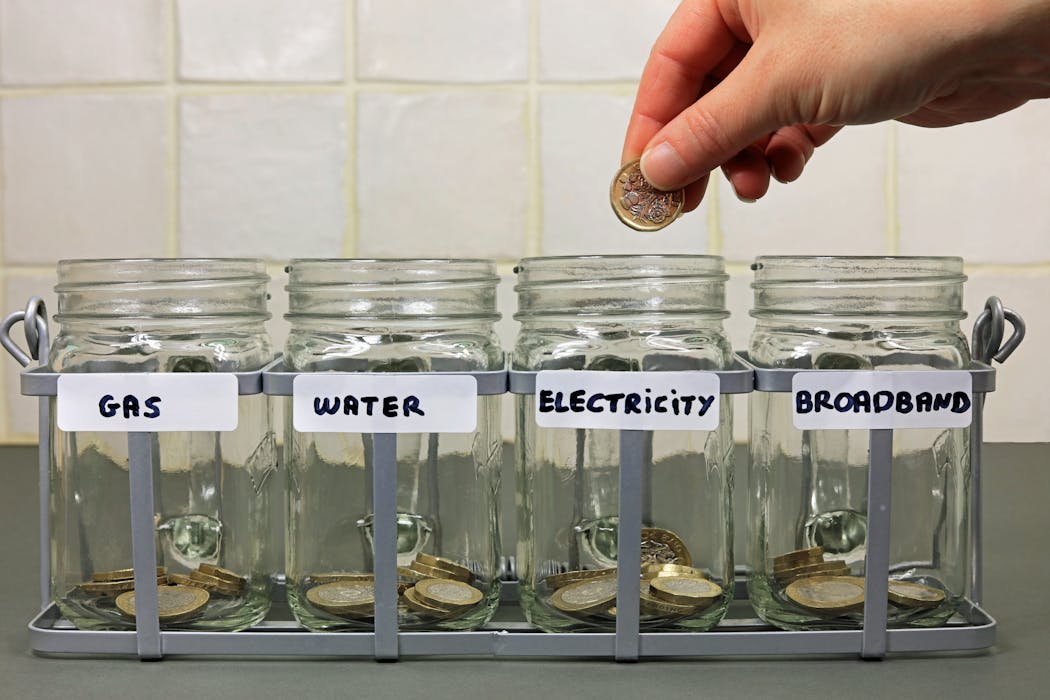
UK inflation has dropped to 3.6% but it remains well above the Bank of England’s 2% target. Beyond broader global uncertainties, there are also factors within our own homes that are quietly sustaining this stubborn issue. Namely, automatic annual price uplifts in everyday contracts for things like mobile phones and utilities.
UK inflation is expected to become the highest in the G7 this year and next. In turn, surging costs for fuel, raw materials and transport are putting pressure on businesses.
And these pressures can seriously threaten profits. This is particularly true for fixed-price contracts for anything from telecoms and insurance services to utilities and public procurement agreements.
To safeguard themselves, many suppliers now seek to include automatic price-adjustment provisions (known as indexation clauses) in their agreements. These link contract prices to an external index such as consumer prices or their own costs.
Inflation-linked pricing has already driven above-inflation increases in mobile and broadband bills. Communications regulator Ofcom banned mid-contract price rises linked to inflation from this year. This came after it found that around six in ten broadband and mobile customers faced annual rises linked to inflation plus a fixed 3.9%.
As a result of the move, many companies have switched to fixed annual price rises, stated in pounds and pence, at the time of signing. This change has improved transparency, but the underlying issue remains.
Annual price increases are often set above the actual inflation rate. When prices are automatically adjusted by more than inflation (through inflation-plus clauses, or what has been called “turbo price indexation”) they can create a multiplier effect. Higher prices feed into higher costs and expectations, which in turn push inflation up further.
This self-reinforcing cycle makes it harder for inflation to return to the Bank of England’s 2% target and amplifies cost-of-living pressures.
The problem extends far beyond telecoms. Public-sector and business-to-business contracts often include similar clauses, embedding annual price increases regardless of economic conditions. For instance, one UK catering contract we saw stated: “All prices quoted are subject to a 10% increase as of 1 October annually.”
Government procurement rules acknowledge the practice. The Ministry of Defence’s spending watchdog instructs defence contractors and the MoD to build in an “escalation factor” to reflect expected inflation when determining allowable costs. At least for government contracts, this escalation factor is meant to capture the estimated effects of inflation rather than being fixed at an earlier date or detached from a price index.
Although these clauses were originally meant to protect firms from rising costs, they now risk locking in inflation. This sustains price increases even when cost pressures ease.
It also weakens the effectiveness of monetary policy – in this case, interest rate changes – because when companies automatically increase prices, higher interest rates take longer to slow inflation. And of course, it erodes the purchasing power of households on fixed incomes.
Breaking the inflation loop
New regulation aimed at improving transparency (as with the Ofcom case) is an important precedent. It’s also a model for other regulators in sectors such as energy, insurance and public procurement, where competition remains weak. However, Ofcom’s approach could be refined in three ways.
First, where consumers lack bargaining power (especially in sectors such as utilities, insurance or business services) regulators should act more broadly to limit unfair contract terms and prevent automatic price increases that go beyond inflation. And they should continue to pursue more competition in their sectors as a long-term goal.
Second, regulators could restrict unconditional price increases that are not linked to inflation or clear cost measures. Inflation caps could be introduced instead. For example, price increases could track the Bank of England’s 2% target, with a small margin of adjustment based on the previous year’s average. This would still give suppliers some flexibility to cover real cost changes, while preventing excessive or uneven increases.
Third, transparency is essential. Beyond Ofcom’s ban on inflation-linked price rises in telecoms, regulators could force suppliers to separate the original base price from the uplifted portion that reflects inflation or indexation.
Showing both figures would make it easier for customers to see how the increase has been calculated. This would allow clearer comparisons within a company’s own deals – for example, between flexible and fixed-price contracts – and across producers.
Beyond this, the rules around public bodies’ contracts could be modernised. Automatic annual price increases written into “escalation clauses” should be replaced with adjustments explicitly linked to recent or forecast inflation. This would ensure that public contracts reflect actual economic conditions, rather than guaranteeing price increases by default.
Voluntary codes of practice could also have a place. Industry bodies, for example in telecoms or catering, could adopt clearer and more transparent pricing standards. Requiring firms to publish the formulas they use in consumer and business-to-business contracts would make it easier for customers to compare.
Most recently, the Competition and Markets Authority launched a major consumer-protection drive focused on online pricing practices – a sign that regulators are scrutinising how companies present and justify price increases.
For consumers, it’s worth checking contracts carefully before signing – especially small-print clauses referring to “annual adjustments”, “indexation” or “inflation-linked increases”. These can lock in automatic price hikes that may exceed inflation. Asking providers to explain how these clauses work, or negotiating fixed-price terms, can help avoid unexpected costs later on.
At the end of the day, the government, Bank of England and regulators should be working together to ensure that indexed contracts do not undermine efforts to bring inflation down. Recognising and reviewing inflation-linked pricing practices could help explain why UK inflation remains stubbornly above target – and why monetary policy and interest rate changes alone may not be sufficient to bring it down.
The authors do not work for, consult, own shares in or receive funding from any company or organisation that would benefit from this article, and have disclosed no relevant affiliations beyond their academic appointment.
Across TikTok and university campuses, young men are rewriting what masculinity looks like today, sometimes with matcha lattes, Labubus, film cameras and thrifted tote bags.
At Toronto Metropolitan University, a “performative male” contest recently drew a sizeable crowd by poking fun at this new TikTok archetype of masculinity. “Performative man” is a new Gen Z term describing young men who deliberately craft a soft, sensitive, emotionally aware aesthetic, signalling the rejection of “toxic masculinity.”
At “performative male” contests, participants compete for laughs and for women’s attention by reciting poetry, showing off thrifted fashion or handing out feminine hygiene products to show they’re one of the “good” guys.
This raises an important question: in a moment when “toxic masculinity” is being called out, why do public responses to softer versions of masculinity shift between curiosity, irony and judgment?
Why Gen Z calls it “performative”
Gen Z’s suspicions toward these men may be partially due to broader shifts in online culture.
As research on social media shows, younger users value authenticity as a sign of trust. If millennials perfected the “curated self” of filtered selfies and highlight reels, Gen Z has made a virtue of realness and spontaneity.
Against this backdrop, the performative man stands out because he looks like he’s trying too hard to be sincere. The matcha latte, the film camera, the tote bag — these are products, not values. Deep, thoughtful people, the logic goes, shouldn’t have to announce it by carrying around a Moleskine notebook and a copy of The Bell Jar.
But as philosopher Judith Butler explained, all gender is “performative” in that it’s made real through repeated actions. Sociologists Candace West and Don Zimmerman call this “doing gender” — the everyday work we do to communicate we’re “men” or “women.”
This framing helps explain why the “performative man” can appear insincere, not because he’s fake, but because gender is always performed and policed, destined to look awkward before it seems “natural.”
In this context, many public commentators argue these men are just rebranding themselves as self-aware, feminist-adjacent and “not like other guys” to seek better dating opportunities.
Sociologists Tristan Bridges and C.J. Pascoe would call this “hybrid masculinity” — a term that describes how privileged men consolidate status by adopting progressive or queer aesthetics to reap rewards and preserve their authority.
This echoes many critiques of performative men: they use the language of feminism and therapy without altering their approach to sharing space, attention or authority.
The truth is we may not yet have the tools to recognize change, given that much of our world is created to be shared and consumed on social media, and male dominance seems hard to change.
A positive sign is that, rather than being defensive, many male creators are leaning into the joke and using parody as a way to explore what a more sensitive man might look like.
And perhaps the “performative male” trend holds up a mirror to our own contradictions. We demand authenticity but consume performance; we beg men to change but critique them when they try; we ask for vulnerability yet recoil when it looks too forced.
The “performative male” may look ironic, but he’s also experimenting with what it means to be a man today.
Whether that experiment leads to lasting change or just another online trend remains unclear, but it’s a glimpse of how masculinity is being rewritten, latte by latte.
Jillian Sunderland has previously received funding from Social Sciences and Humanities Research Council (SSHRC) Grant and the Ontario Graduate Scholarship (OGS) Award.
Time itself isn’t difficult to grasp: we all understand it, despite our persistent struggle to describe it. The problem is one of articulation: a failure to precisely draw the right boundaries around the nature of time both conceptually and linguistically.(Donald Wu/Unsplash), CC BY
The nature of time has plagued thinkers for as long as we’ve tried to understand the world we live in. Intuitively, we know what time is, but try to explain it, and we end up tying our minds in knots.
St. Augustine of Hippo, a theologian whose writings influenced western philosophy, captured a paradoxical challenge in trying to articulate time more than 1,600 years ago:
“What then is time? If no one asks me, I know; if I want to explain it to a questioner, I do not know.”
Nearly a thousand years earlier, Heraclitus of Ephesus offered a penetrating insight. According to classical Greek philosopher Plato’s Cratylus:
“Heraclitus is supposed to say that all things are in motion and nothing at rest; he compares them to the stream of a river, and says that you cannot go into the same water twice.”
Superficially, this can sound like another paradox — how can something be the same river and yet not the same? But Heraclitus adds clarity, not confusion: the river — a thing that exists — continuously changes. While it is the same river, different waters flow by moment to moment.
While the river’s continuous flux makes this plain, the same is true of anything that exists — including the person stepping into the river. They remain the same person, but each moment they set foot in the river is distinct.
The key issue isn’t one most physicists would even consider relevant. Nor is it a challenge that philosophers have managed to resolve.
Time itself isn’t difficult to grasp: we all understand it, despite our persistent struggle to describe it. As Augustine sensed, the problem is one of articulation: a failure to precisely draw the right boundaries around the nature of time both conceptually and linguistically.
Specifically, physicists and philosophers tend to conflate what it means for something to exist and what it means for something to happen — treating occurrences as if they exist. Once that distinction is recognized, the fog clears and Augustine’s paradox dissolves.
The source of the issue
In basic logic, there are no true paradoxes, only deductions that rest on subtly mishandled premises.
Not long after Heraclitus tried to clarify time, Parmenides of Elea did the opposite. His deduction begins with a seemingly valid premise — “what is, is; and what is not, is not” — and then quietly smuggles in a crucial assumption. He claims the past is part of reality because it has been experienced, and the future must also belong to reality because we anticipate it.
Therefore, Parmenides concluded, both past and future are part of “what is,” and all of eternity must form a single continuous whole in which time is an illusion.
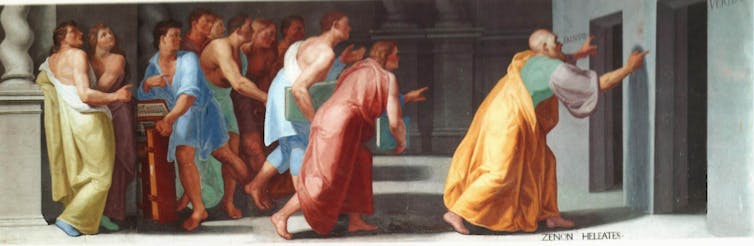
Parmenides’ pupil, Zeno, devised several paradoxes to support this view. In modern terms, Zeno would argue that if you tried walking from one end of a block to the other, you’d never get there. To walk a block, you must first walk half, then half of what remains, and so on — always halving the remaining distance, never reaching the end.
The Greek philosopher Zeno of Elea showing his followers the doors of Truth and Falsehood in a 16th century fresco at the El Escorial in Madrid. (El Escorial, Madrid)
But of course you can walk all the way to the end of the block and beyond — so Zeno’s deduction is absurd. His fallacy lies in removing time from the picture and considering only successive spatial configurations. His shrinking distances are matched by shrinking time intervals, both becoming small in parallel.
Zeno implicitly fixes the overall time available for the motion — just as he fixes the distance — and the paradox appears only because time was removed. Restore time, and the contradiction disappears.
Parmenides makes a similar mistake when claiming that events in the past and future — things that have happened or that will happen — exist. That assumption is the problem: it is equivalent to the conclusion he wants to reach. His reasoning is circular, ending by restating his assumption — only in a way that sounds different and profound.
Space-time models
An event is something that happens at a precise location and time. In Albert Einstein’s theories of relativity, space-time is a four-dimensional model describing all such occurrences: each point is a particular event, and the continuous sequence of events associated with an object forms its worldline — its path through space and time.
But events don’t exist; they happen. When physicists and philosophers speak of space-time as something that exists, they’re treating events as existent things — the same subtle fallacy at the root of 25 centuries of confusion.
It describes a three-dimensional universe filled with stars, planets and galaxies that exist. And in the course of that existence, the locations of every particle at every instance are individual space-time events. As the universe exists, the events that happen moment by moment trace out worldlines in four-dimensional space-time — a geometric representation of everything that happens during that course of existence; a useful model, though not an existent thing.
The resolution
Resolving Augustine’s paradox — that time is something we innately understand but cannot describe — is simple once the source of confusion is identified.
Events — things that happen or occur — are not things that exist. Each time you step into the river is a unique event. It happens in the course of your existence and the river’s. You and the river exist; the moment you step into it happens.
Philosophers have agonized over time-travel paradoxes for more than a century, yet the basic concept rests on the same subtle error — something science fiction writer H.G. Wells introduced in the opening of The Time Machine.
In presenting his idea, the Time Traveller glides from describing three-dimensional objects, to objects that exist, to moments along a worldline — and finally to treating the worldline as something that exists.
That final step is precisely the moment the map is mistaken for the territory. Once the worldline, or indeed space-time, is imagined to exist, what’s to stop us from imagining that a traveller could move throughout it?
Occurrence and existence are two fundamentally distinct aspects of time: each essential to understanding it fully, but never to be conflated with the other.
Speaking and thinking of occurrences as things that exist has been the root of our confusion about time for millennia. Now consider time in light of this distinction. Think about the existing things around you, the familiar time-travel stories and the physics of space-time itself.
Once you recognize ours as an existing three-dimensional universe, full of existing things, and that events happen each moment in the course of that cosmic existence — mapping to space-time without being reality — everything aligns. Augustine’s paradox dissolves: time is no longer mysterious once occurrence and existence are separated.
Daryl Janzen does not work for, consult, own shares in or receive funding from any company or organisation that would benefit from this article, and has disclosed no relevant affiliations beyond their academic appointment.