Wikipedia’s ‘neutrality’ has always been complicated. New rules will make questioning it harder

Source: The Conversation – Global Perspectives – By Heather Ford, Professor, Communications, University of Technology Sydney

Franckreporter / Getty Images

Last month, the American non-profit organisation behind Wikipedia issued draft guidelines for researchers studying how neutral Wikipedia really is. But instead of supporting open inquiry, the guidelines reveal just how unaware the Wikimedia Foundation is of its own influence.

These new rules tell researchers – some based in universities, some at non-profit organisations or elsewhere – not just how to study Wikipedia’s neutrality, but what they should study and how to interpret their results. That’s a worrying move.

As someone who has researched Wikipedia for more than 15 years – and served on the Wikimedia Foundation’s own Advisory Board before that – I’m concerned these guidelines could discourage truly independent research into one of the world’s most powerful repositories of knowledge.

Telling researchers what to do

The new guidelines come at a time when Wikipedia is under pressure.

Tech billionaire Elon Musk, who was until recently also a senior adviser to US President Donald Trump, has repeatedly accused Wikipedia of being biased against American conservatives. On X (formerly Twitter), he told users to “stop donating to Wokepedia”.

In another case, a conservative think tank in the United States was caught planning to “target” Wikipedia volunteers it claimed were pushing antisemitic content.

Until now, the Wikimedia Foundation has mostly avoided interfering in how people research or write about the platform. It has limited its guidance to issues such as privacy and ethics, and has stayed out of the editorial decisions made by Wikipedia’s global community of volunteers.

But that’s changing.

In March this year, the foundation established a working group to standardise Wikipedia’s famous “neutral point of view” policies across all 342 versions in different languages. And now the foundation has chosen to involve itself directly in research.

Its “guidance” directly instructs researchers on both how to carry out neutrality research and how to interpret it. It also defines what it believes are open and closed research questions for people studying Wikipedia.

In universities, researchers are already guided by rules set by their institutions and fields. So why do the new guidelines matter?

Because the Wikimedia Foundation has lots of control over research on Wikipedia. It decides who it will work with, who gets funding, whose work to promote, and who gets access to internal data. That means it can quietly influence which research gets done – and which doesn’t.

Now the foundation is setting the terms for how neutrality should be studied.

What’s not neutral about the new guidelines

The guidelines fall short in at least three ways.

1. They assume Wikipedia’s definition of neutrality is the only valid one. The rules of English Wikipedia say neutrality can be achieved when an article fairly and proportionally represents all significant viewpoints published by reliable sources.

But researchers such as Nathaniel Tkacz have shown this idea isn’t perfect or universal. There are always different ways to represent a topic. What constitutes a “reliable source”, for example, is often up for debate. So too is what constitutes consensus in those sources.

2. They treat ongoing debates about neutrality as settled. The guidelines say some factors – such as which language Wikipedia is written in, or the type of article – are the main things shaping neutrality. They even claim Wikipedia gets more neutral over time.

But this view of steady improvement doesn’t hold up. Articles can become less neutral, especially when they become the focus of political fights or coordinated attacks. For example, the Gamergate controversy and nationalist editing have both created serious problems with neutrality.

The guidelines also leave out important factors such as politics, culture, and state influence.

3. They restrict where researchers should direct their research. The guidelines say researchers must share results with the Wikipedia community and “communicate in ways that strengthen Wikipedia”. Any criticism should come with suggestions for improvement.

That’s a narrow view of what research should be. In our wikihistories project, for example, we focus on educating the public about bias in the Australian context. We support editors who want to improve the site, but we believe researchers should be free to share their findings with the public, even if they are uncomfortable.

Neutrality is in the spotlight

Most of Wikipedia’s critics aren’t pushing for better neutrality. They just don’t like what Wikipedia says.

The reason Wikipedia has become a target is because it is so powerful. Its content shapes search engines, AI chatbot answers, and educational materials.

The Wikimedia Foundation may see independent and critical research as a threat. But in fact, this research is an important part of keeping Wikipedia honest and effective.

Critical research can show where Wikipedians strive to be neutral but don’t quite succeed. It doesn’t require de-funding Wikipedia or hunting down its editors. It doesn’t mean there aren’t better and worse ways of representing reality.

Nor does it mean we should discard objectivity or neutrality as ideals. Instead, it means understanding that neutrality isn’t automatic or perfect.

Neutrality is something to be worked towards. That work should involve more transparency and self-awareness, not less – and it must leave space for independent voices.

The Conversation

Heather Ford receives funding from the Australian Research Council. She was previously a member of the Wikimedia Foundation Advisory Board.

ref. Wikipedia’s ‘neutrality’ has always been complicated. New rules will make questioning it harder – https://theconversation.com/wikipedias-neutrality-has-always-been-complicated-new-rules-will-make-questioning-it-harder-262706

Often parents and schools disagree about whether something is ‘bullying’: what happens next?

Source: The Conversation – Global Perspectives – By Karyn Healy, Honorary Principal Research Fellow in Psychology, The University of Queensland

Monkey Business Images/ Shutterstock

Bullying in schools can can have a devastating impact on victims. Research shows it can lead to reduced academic performance depression, anxiety and even suicidal behaviour. So, preventing and reducing bullying is an urgent priority for governments as well as families and schools.

However, a common obstacle to addressing bullying is that parents and schools often disagree about whether a particular situation constitutes bullying.

A study in Norwegian schools found that when parents think their child is being bullied, around two-thirds of the time, the school does not agree. There are also cases in which the school says a child is bullying others, but the child’s parents don’t agree.

Why is it so complicated? How can parents approach this situation?

What does ‘bullying’ mean?

When we look at the definition of bullying, it is not surprising disagreements occur. Identifying bullying is not clear-cut.

The definition used in Australian schools captures the key elements defined by international research. Bullying is a form of aggression that:

  • is hurtful for the victim

  • happens repeatedly over time

  • involves an intent to harm

  • involves a power imbalance, with victims feeling unable to stop the problem.


Read more:
With a government review underway, we have to ask why children bully other kids


After a report of bullying, what does the school do?

When a student or parent reports bullying, usually the first thing a school does is talk with students, teachers and parents, and observe interactions between students.

However, there are many challenges in working out whether behaviour is bullying.

First, bullying often occurs when adults are not around and students often don’t tell teachers, so direct observation is not always possible.

Second, even if a teacher is present, social forms of bullying can be very subtle, such as turning away to exclude someone, or using a mocking facial expression, so it can be easily overlooked.

Third, determining whether there is “intent to harm” can be difficult as students accused of bullying may claim (rightly or wrongly) they were “only joking” or not intending to hurt or upset.

Fourth, the issue of power is not easy to determine. If the student is older or physically bigger, or if multiple students are involved in bullying, a power difference may seem apparent. But when power is based on popularity, a power difference may not be clear. There are also cases in which students may deliberately accuse others of bullying to get them into trouble (which may in itself constitute bullying).

Finally, not all aggressive behaviour is bullying. For example, conflict that involves arguments or fights between equals is not bullying, as there is no power imbalance. However, this situation can still be upsetting.

A more difficult situation occurs when the victim of bullying reacts aggressively – such as when they lash out angrily to taunts. The aggressive response of the victim may be more visible to teachers than the bullying that provoked the outburst, and this can make the direction of bullying difficult for schools to ascertain.

What if the school and parents disagree?

A school may not prioritise limited resources to resolve cases they do not see as bullying. This can leave the student languishing and can be very distressing for families.

However, research shows parents’ reports that their child has been bullied predict an increased risk of later child anxiety and depression, regardless of whether school staff concur or were even asked if the child was bullied.

So whether or not the school initially agrees a child is being bullied, it is important to improve the situation.

What can be done?

Sometimes, by taking steps to address the situation, the school can find out if bullying is occurring.

For example, sometimes children are upset by behaviours that may seem innocuous – such as humming, tapping or standing close. If this behaviour is not intended to hurt, we would expect children to reduce this when made aware it is upsetting. However, if the behaviour increases or continues, even with reminders, there would be more reason to believe it is deliberately intended to provoke (and is bullying).

One helpful strategy for parents is to keep a careful record of the child’s experiences – exactly what the child experiences and how it impacts them. This can help establish a pattern of hurtful behaviours over time.

It’s important for parents to maintain a good relationship and ongoing communication with the school (however difficult). As bullying can be a complex and evolving issue, good communication can help ensure issues are promptly managed.

The parent can coach the child to manage the situation – for example, to ask in a friendly and confident way for other students to stop when they are doing things they don’t like. The parent can also help the child plan when they would ask a teacher for help.

By working together, and understanding the problem better over time, schools and families can address behaviour that is hurtful – whether or not there is initial agreement it is “bullying”.


If this article has raised issues for you, or if you’re concerned about someone you know, call Lifeline on 13 11 14 or Kids Helpline on 1800 55 1800.

The Conversation

Karyn Healy has received funding from QIMR Berghofer Medical Research Institute, the Australian Research Council and Australian government Emerging Priorities Program and is an honorary Principal Research Fellow with The University of Queensland. Karyn is a co-author of the Resilience Triple P parenting program. Resilience Triple P and all Triple P programs are owned by the University of Queensland. The university has licensed Triple P International Pty Ltd to publish and disseminate Triple P programs worldwide. Royalties stemming from published Triple P resources are distributed to the Parenting and Family Support Centre, School of Psychology, Faculty of Health and Behavioural Sciences and contributory authors. No author has any share or ownership in Triple P International Pty Ltd.

ref. Often parents and schools disagree about whether something is ‘bullying’: what happens next? – https://theconversation.com/often-parents-and-schools-disagree-about-whether-something-is-bullying-what-happens-next-261474

56 million years ago, Earth underwent rapid global warming. Here’s what it did to pollinators

Source: The Conversation – Global Perspectives – By Vera Korasidis, Lecturer in Environmental Geoscience, The University of Melbourne

Pollinators play a vital role in fertilising flowers, which grow into seeds and fruits and underpin our agriculture. But climate change can cause a mismatch between plants and their pollinators, affecting where they live and what time of year they’re active. This has happened before.

When Earth went through rapid global warming 56 million years ago, plants from dry tropical areas expanded to new areas – and so did their animal pollinators. Our new study, published in Paleobiology today, shows this major change happened in a remarkably short timespan of just thousands of years.

Can we turn to the past to learn more about how interactions between plants and pollinators changed during climate change? That’s what we set out to learn.

A major warming event 56 million years ago

In the last 150 years, humans have raised atmospheric carbon dioxide concentrations by more than 40%. This increase in carbon dioxide has already warmed the planet by more than 1.3°C.

Current greenhouse gas concentrations and global temperature are not only unprecedented in human history but exceed anything known in the last 2.5 million years.

To understand how giant carbon emission events like ours could affect climate and life on Earth, we’ve had to go deeper into our planet’s history.

Fifty-six million years ago there was a major, sudden warming event caused by the release of a gigantic amount of carbon into the atmosphere and ocean. This event is known as the Paleocene-Eocene Thermal Maximum.

For about 5,000 years, huge amounts of carbon entered the atmosphere, likely from a combination of volcanic activity and methane release from ocean sediments. This caused Earth’s global temperature to rise by about 6°C and it stayed elevated for more than 100,000 years.

Although the initial carbon release and climate change were perhaps ten times slower than what’s happening today, they had enormous effects on Earth.

Earlier studies have shown plants and animals changed a lot during this time, especially through major shifts in where they lived. We wanted to know if pollination might also have changed during this rapid climate change.

Paleobotanist Scott Wing, palynologist Vera Korasidis and colleagues searching for new pollen samples in Wyoming from 56 million-year-old rocks.
Richard Barclay

Hunting for pollen fossils in the badlands

We looked at fossil pollen from the Bighorn Basin, Wyoming – a deep and wide valley in the northern Rocky Mountains in the United States, full of sedimentary rocks deposited 50 to 60 million years ago.

The widespread badlands of the modern Bighorn Basin expose remarkably fossil-rich sediments. These were laid down by ancient rivers eroding the surrounding mountains.

We studied fossil pollen because we wanted to understand changes in pollination. Pollen is invaluable for this because it is abundant, widely dispersed in air and water, and resistant to decay – easily preserved in ancient rocks.

We used three lines of evidence to investigate pollination in the fossil record:

  • fossil pollen preserved in clumps
  • how living plants related to the fossils are pollinated today, and
  • the total variety of pollen shapes.
56 million-year-old fossil pollen clumps collected from Wyoming and photographed on the National Museum of Natural History’s scanning electron microscope.
Vera Korasidis

What did we discover?

Our findings show pollination by animals became more common during this interval of elevated temperature and carbon dioxide. Meanwhile, pollination by wind decreased.

The wind-pollinated plants included many related to deciduous broad-leaved trees still common in moist northern hemisphere temperate regions today.

By contrast, the plants pollinated by animals were related to subtropical palms, silk-cotton trees and other plants that typically grow in dry tropical climates.

The decline in wind pollination was likely due to the local extinction of populations of wind-pollinated plants that grew in the Bighorn Basin.

Distant photo of a tall tree with a symmetrical canopy and amber trunk.
A silk-cotton tree (Ceiba pentandra) relies on the wind for pollination.
Klaus Schönitzer/Wikimedia Commons, CC BY-SA

The increase in animal-pollinated plants means that plants from regions with warmer, drier climates had spread poleward and moved into the Bighorn Basin.

Earlier studies have shown these changes in the plants of the Bighorn Basin were related to the climate being hotter and more seasonally dry than before – or after – this interval of rapid climate change.

Pollinating insects and other animals likely moved 56 million years ago along with the plants they pollinated. Their presence in the landscape helped new plant communities establish in the hot, dry climate. It may have provided invaluable resources to animals such as the earliest primates, small marsupials, and other small mammals.

A lesson for our future

What lessons does this ancient climate change event have to offer when we think about our own future?

The large carbon release at the beginning of the Paleocene-Eocene Thermal Maximum clearly resulted in major global warming. It dramatically altered ecosystems on land and in the sea.

In spite of these dramatic changes, most land species and ecological interactions seem to have survived. This is likely because the event occurred at about one-tenth the rate of current anthropogenic climate change.

The forests that returned to the region after more than 100,000 years of hot, dry climate were very similar to those that existed before. This suggests that in the absence of major extinction, forest ecosystems and their pollinators could reestablish into very similar communities even after a very long period of altered climate.

The key for the future may be keeping rates of environmental change slow enough to avoid extinctions.

The Conversation

Vera Korasidis received funding from the University of Melbourne Elizabeth and Vernon Puzey Fellowship Award.

Scott Wing’s fieldwork was supported by the Roland W. Brown fund of the Department of Paleobiology, and by the MacMillan Fund of the National Museum of Natural History.

ref. 56 million years ago, Earth underwent rapid global warming. Here’s what it did to pollinators – https://theconversation.com/56-million-years-ago-earth-underwent-rapid-global-warming-heres-what-it-did-to-pollinators-260297

Trump administration cuts to terrorism prevention departments could leave Americans exposed

Source: The Conversation – USA – By Kris Inman, Professor of African Studies and Security Studies, Georgetown University

Ghanaian special forces take part in U.S. military-led counterterrorism training near Jacqueville, Ivory Coast, on Feb. 16, 2022. AP Photo/Sylvain Cherkaoui

Staff at the State Department’s Office of Countering Violent Extremism and Bureau of Conflict and Stabilization Operations, which led U.S. anti-violent extremism efforts, were laid off, the units shuttered, on July 11, 2025.

This dismantling of the country’s terrorism and extremism prevention programs began in February 2025. That’s when staff of USAID’s Bureau of Conflict Prevention and Stabilization were put on leave.

In March, the Center for Prevention Programs and Partnerships at the Department of Homeland Security, which worked during the Biden administration to prevent terrorism with a staff of about 80 employees, laid off about 30% of its staff. Additional cuts to the center’s staff were made in June.

And on July 11, the countering violent extremism team at the U.S. Institute of Peace, a nonpartisan organization established by Congress, was laid off. The fate of the institute is pending legal cases and congressional funding.

President Donald Trump in February had called for nonstatutory components and functions of certain government entities, including the U.S. Institute of Peace, to “be eliminated to the maximum extent consistent with applicable law.”

These cuts have drastically limited the U.S. government’s terrorism prevention work. What remains of the U.S. capability to respond to terrorism rests in its military and law enforcement, which do not work on prevention. They react to terrorist events after they happen.

As a political scientist who has worked on prevention programs for USAID, the U.S. Institute for Peace, and as an evaluator of the U.S. strategy that implemented the Global Fragility Act, I believe recent Trump administration cuts to terrorism prevention programs risk setting America’s counterterrorism work back into a reactive, military approach that has proven ineffective in reducing terrorism.

The US war against terrorism

Between 9/11 and 2021, the cost of the U.S. war on terrorism was $8 trillion and 900,000 deaths, according to a Brown University study. Nonetheless, terrorism has continued to expanded in geographic reach, diversity and deadliness.

Though it was territorially defeated in Syria in 2019, the Islamic State – designated a foreign terrorist organization by the U.S. government – has expanded globally, especially in Africa. Its nine affiliates on the continent have joined several al-Qaida-linked groups such as al-Shabab.

The Islamic State has expanded through a decentralized model of operations. It has networks of affiliates that operate semi-autonomously and exploit areas of weak governance in places such as Mali and Burkina Faso. That makes them difficult to defeat militarily.

A building with an arched rood and multiple windows.
The U.S. Institute of Peace in Washington, D.C., on March 18, 2025.
Roberto Schmidt/AFP via Getty Images

These terrorist organizations threaten the U.S. through direct attacks, such as the ISIS-linked attack in New Orleans on Jan. 1, 2025, that killed 14 people.

These groups also disrupt the global economy, such as Houthi attacks on trade routes in the Red Sea.

To understand why terrorism and extremism continue to grow, and to examine what could be done, Congress charged the U.S. Institute of Peace in 2017 to convene the Task Force on Extremism in Fragile States.

This bipartisan task force found that while the U.S. military had battlefield successes, “after each supposed defeat, extremist groups return having grown increasingly ambitious, innovative, and deadly.”

The task force recommended prioritizing and investing in prevention efforts. Those include strengthening the ability of governments to provide social services and helping communities identify signs of conflict – and helping to provide tools to effectively respond when they see the signs.

The report contributed to the Global Fragility Act, which Trump signed in 2019 to fund $1.5 billion over five years of prevention work in places such as Libya, Mozambique and coastal West Africa.

Programs funded by the Global Fragility Act included USAID’s Research for Peace, which monitored signs of terrorism recruitment, trained residents in Côte d’Ivoire on community dialogue to resolve disputes, and worked with local leaders and media to promote peace. All programming under the act has shut down due to the elimination of prevention offices and bureaus.

What the US has lost

The State Department issued a call for funding in July 2025 for a contractor to work on preventing terrorists from recruiting young people online. It stated: “In 2024, teenagers accounted for up to two-thirds of ISIS-linked arrests in Europe, with children as young as 11 involved in recent terrorist plots.”

In the same month, the department canceled the program due to a loss of funding.

It’s the kind of program that the now defunct Office of Countering Violent Extremism would have overseen. The government evidently recognizes the need for prevention work. But it dismantled the expertise and infrastructure required to design and manage such responses.

Lost expertise

The work done within the prevention infrastructure wasn’t perfect. But it was highly specialized, with expertise built over 2½ decades.

Chris Bosley, a former interim director of the violence and extremism program at the U.S. Institute of Peace who was laid off in July, told me recently, “Adequate investment in prevention programs isn’t cheap, but it’s a hell of a lot cheaper than the decades of failed military action, and more effective than barbed wire – tools that come too late, cost too much, and add fuel to the very conditions that perpetuate the threats they’re meant to address.”

For now, the U.S. has lost a trove of counterterrorism expertise. And it has removed the guardrails – community engagement protocols and conflict prevention programs – that helped avoid the unintended consequences of U.S. military responses.

Without prevention efforts, we risk repeating some of the harmful outcomes of the past. Those include military abuses against civilians, prisoner radicalization in detention facilities and the loss of public trust, such as what happened in Guantanamo Bay, in Bagram, Afghanistan, and at various CIA black sites during the George W. Bush administration.

Counterterrorism prevention experts expect terrorism to worsen. Dexter Ingram, the former director of the State Department’s Office of Countering Violent Extremism who was laid off in July, told me: “It seems like we’re now going to try shooting our way out of this problem again, and it’s going to make the problem worse.”

Four men dressed in military gear walk along a city street.
Federal agents patrol New Orleans, La., following a terrorist attack on Jan. 1, 2025.
Andrew Caballero-Reynolds/AFP via Getty Images

What can be done?

Rebuilding a prevention-focused approach with expertise will require political will and bipartisan support.

U.S. Reps. Sara Jacobs, a Democrat from California, and Mike McCaul, a Texas Republican, have introduced a bill that would reauthorize the Global Fragility Act, extending it until 2030. It would allow the U.S. government to continue preventing conflicts, radicalization and helping unstable countries. The measure would also improve the way various government agencies collaborate to achieve these goals.

But its success hinges on securing funding and restoring or creating new offices with expert staff that can address the issues that lead to terrorism.

This analysis was developed with research contributions from Saroy Rakotoson and Liam Painter at Georgetown University.

The Conversation

Kris Inman does not work for, consult, own shares in or receive funding from any company or organization that would benefit from this article, and has disclosed no relevant affiliations beyond their academic appointment.

ref. Trump administration cuts to terrorism prevention departments could leave Americans exposed – https://theconversation.com/trump-administration-cuts-to-terrorism-prevention-departments-could-leave-americans-exposed-261630

Eddington ends with a dark joke about disability – but its punchline is centuries old

Source: The Conversation – Canada – By Billie Anderson, Ph.D. Candidate, Media Studies, Western University

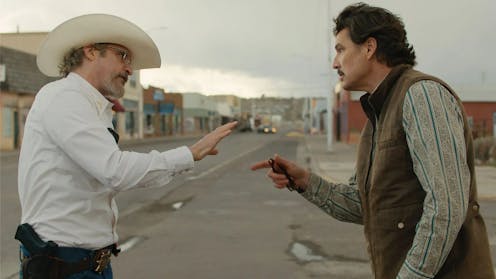
Joaquin Phoenix, left, who plays small-town sheriff Joe Cross, and Pedro Pascal, who plays the town’s mayor, Ted Garcia, in a scene from Ari Aster’s film ‘Eddington.’ (A24)

This story contains spoilers about ‘Eddington,’ ‘Midsommar’ and ‘Hereditary.’

Ari Aster’s new film Eddington is a political satire set in a small American town, where a feud between Sheriff Joe Cross (Joaquin Phoenix) and Mayor Ted Garcia (Pedro Pascal) begins with disagreement over pandemic policy, but quickly escalates into a chaotic, paranoid power struggle. What starts as a clash of ego spirals into increasingly violent and absurd confrontations.

In the film’s closing minutes, Joe is abruptly stabbed in the head by someone described as “anti-fascist terrorist” after an extended shootout. He survives, and the next time we see him he’s a quadriplegic wheelchair user and non-verbal.

By the end, Joe has been appointed mayor, either by default or out of public pity. The last shot leaves him as the town’s figurehead alongside a giant AI data centre in the desert: a monument to the forces that now shape human life, governance and identity.

It’s brutal, cynical, mean-spirited and a tad esoteric. But Aster seems to be offering a scathing portrait of American politics and the men like Joe who populate it: stubborn, self-righteous, vaguely libertarian; men clinging to authority, even as the world moves on without them.

There’s irony in the film’s portrayal of anarchic protesters, live-streamers and the failed machismo of Joe’s character arc. But when the laughter of the climax fades, what remains is something all too familiar: disability as the poetic consequence of bad behaviour. Not as an ongoing human experience, but as karmic spectacle.

Disability as consequence, not condition

Joe’s fate follows a centuries-old narrative pattern in which disability is framed as punishment, poetic justice or moral revelation. From medieval Christian theology to contemporary satire, bodily difference has long been used to symbolize inner failing. Impairment stands in for sin, ego, corruption or spiritual deficiency.

Enlightenment rationalism and eugenics-era pseudoscience cemented this association, casting disabled bodies as physically manifest proof of social and moral inferiority.

Cinema inherited these tropes, and still leans on them. As disability studies scholars David Mitchell and Sharon Snyder argue, disability is often introduced not to explore a character’s complexity, but to serve as a metaphorical crutch or shortcut to meaning.

Cinematic trailer for Ari Aster’s 2025 film ‘Eddington.’

The disabled body often appears when something needs to be revealed, resolved or punished. In Eddington, Joe’s fate is exactly that.

Disability arrives not as an opening to new experience but as closure: a visual and symbolic transformation from dangerous man to inner object. Joe is no longer speaking, acting or choosing.

The film seems to punish him, not for a single action, but for what he represents: a particular kind of white male authority figure that is combative, self-righteous and increasingly out of touch.

While Joe does oppose the mayor’s early pandemic policies, including mask mandates, his real “crime” in the film is his stubbornness and inflated self-control. He doubles down on personal power, even as systems collapse around him. His disability, then, functions as justice: a final, ironic version of the control he fought so hard to maintain.

He has become a site for meaning-making — a silent figure whose stillness now says everything about the futility of power, the absurdity of authority, the fall of the American sheriff, the political centrist.

Familiar patterns in Aster’s work

Ari Aster’s earlier films follow similar patterns. In Hereditary (2018) Charlie’s facial difference and neurodivergence signal otherness and fragility; her death becomes the hinge on which the horror turns.

In Midsommar (2019), Ruben, a disabled oracle, is portrayed as both holy and someone without personal agency: a vessel for prophecy rather than a fully developed character.

Across Aster’s filmography, disability tends to show up not as life, but as a symbol; as curse, as mysticism, as moral sign. Eddington takes that formula and strips it down even further: Joe becomes disabled at the moment the movie decides he’s no longer needed. It’s efficient, final and familiar.

Disability as visual rhetoric

As disability studies scholar Rosemarie Garland-Thomson writes, disabled bodies are often positioned as visual rhetoric. They are something to be interpreted, not inhabited.

Joe’s silence and stillness as a result of him becoming disabled don’t invite audiences to understand his experience; they invite us to read him, as if his body were a sentence the director had written.

We do see a glimpse of care: Joe appears to be tended to by a man who is now also his mother-in-law’s partner. But even this is played for laughs.

There’s no reckoning with long-term adaptation, no real engagement with the material realities of disability. The body remains an object, not a subject, and once it serves a rhetorical function, the camera moves on.

The real pandemic disabled millions

The symbolic use of disability hits differently given the film’s setting. Eddington is a pandemic movie — a chaotic satire of COVID-era paranoia, misinformation and isolation.

But COVID-19 hasn’t just destabilized governments, upended social norms and exacerbated online political turmoilit has disabled people.

Millions globally now live with long COVID, facing chronic pain, fatigue, cognitive impairment and dramatic changes to their work, social lives and health-care access.


Read more:
People with long COVID continue to experience medical gaslighting more than 3 years into the pandemic


The pandemic is a mass disabling event, not a metaphor. And yet, Eddington engages with disability only as a punchline. It becomes an ironic punishment for a man too arrogant to admit his limits. The joke lands harder when it treats disability as poetic justice instead of ongoing reality.

Toward fuller representation

Disability studies invites us to consider disability not as a narrative end point, but as a relational and continuous experience shaped by care networks, access barriers, evolving identities and collective adaptation.

What if Eddington had stayed with Joe after his injury? What if it explored his new position not through silence or shame, but through the messy human realities of interdependence?

What if the satire had gone further, asking not just what happens to a sheriff when he’s taken down, but what happens to power when it must rely on care? What if Joe had died and his mother-in-law had become mayor as a serious disruption of legacy politics?

Absurdism and dark comedy about the body aren’t the problem. But the symbolic shorthand of disability as justice carries weight, especially when disabled people continue to be marginalized, disbelieved and erased in the very real world that Eddington pretends to parody.

A sharper satire would engage with disability as part of the social fabric that challenges the audience to reckon with embodiment, dependence and mutual obligation. It could surprise audiences by refusing the easy exit of moral symbolism. It could be more rewarding, radical — and frankly, more intellectual — than another joke equating impairment with comeuppance.

The portrayal of disability in Eddington is not malicious, but it is predictable. It continues a long tradition of using disability to signal judgement, irony or narrative finality.

But real life doesn’t offer such clean punctuation. Disability is not the end of a story, but the start of a more complex, embodied and political one. Until cinema catches up, satires like Eddington will continue to undermine what they claim to critique.

The Conversation

Billie Anderson does not work for, consult, own shares in or receive funding from any company or organisation that would benefit from this article, and has disclosed no relevant affiliations beyond their academic appointment.

ref. Eddington ends with a dark joke about disability – but its punchline is centuries old – https://theconversation.com/eddington-ends-with-a-dark-joke-about-disability-but-its-punchline-is-centuries-old-262780

‘Better Than Chocolate’ highlights lost 90s decade of lesbian Canadian cinema

Source: The Conversation – Canada – By Tamara de Szegheo Lang, Adjunct Assistant Professor, Department of Film and Media, Queen’s University, Ontario

“If coming out of the closet was really as much fun as it is for the sexually adventurous youths in Better Than Chocolate, then everybody would be doing it, even straight people.”

So wrote film critic Bruce Kirkland in his 1999 review of the lesbian romantic comedy by Canadian filmmaker Anne Wheeler.

film poster showing a woman's naked back who is being embraced by another woman
‘Better Than Chocolate’ was released in 1999.
(Wikipedia/Trimark Pictures/IMBD)

Kirkland pointed out that real life for queer and trans community members was “tougher, harsher and nastier” than portrayed in the 90-minute romp, but also wrote: “To hell with reality, at least for an hour-and-a-half. This movie is a little treasure and offers a lot of pleasure.”

The endearing rom-com won audience choice awards at a number of gay and lesbian film festivals, including in its hometown of Vancouver.

Today, more than a quarter century later, with hate crimes against queer and trans people on the rise and legal protections, especially in the United States, being threatened or ripped away, the film’s lens on romance — and the joy, safety and complications of being in community — may resonate with contemporary viewers and offer a brief reprieve from the heaviness of the political fight.

Like many Canadian lesbian-driven films from the 1990s, it also serves as an example of filmmakers working in queer communities to highlight once-censored voices, and reflects the sheer ingenuity and creative force of community collaboration in this moment — something that has been underrepresented in broader histories of queer and Canadian national cinema.

Whirlwind romance

In Better Than Chocolate, bookstore employee Maggie (Karyn Dwyer) and nomadic artist Kim (Christina Cox) start a whirlwind romance, moving in together within a matter of hours (echoing the classic U-Haul lesbian stereotype).

Their love story is complicated by the arrival of Maggie’s mother Lila (Wendy Crewson), a judgmental woman fresh off a divorce who doesn’t know her daughter is a lesbian. Comedic chaos ensues as the two young lovebirds navigate romantic, familial and community conflicts, all of which are neatly wrapped up by the end.

Though Better Than Chocolate may ultimately be a feel-good comedy, the film captures a community under attack from outside and within.

Skinheads harass Maggie and Kim, culminating in violence. Judy (Peter Outerbridge) is accosted for being transgender and is consistently misgendered by other lesbians.

The Canadian Border Services Agency purposefully targets neurotic bookstore owner, Frances (played by actor, author, playwright and Canadian lesbian icon Ann-Marie Macdonald), for selling queer literature.

Lesbian-centred 90s film

Better Than Chocolate is only one in a wave of lesbian-centred 90s films made in Canada. In this decade, creatives produced at least 12 narrative feature-length lesbian-centred films, several documentaries and over 400 short films.

Some echo Better Than Chocolate’s romantic tone, but the wave includes a diversity of genres – including erotic thrillers, family dramas and experimental dreamscapes.

Some of these films are well-recognized in the Canadian film canon, including Deepa Mehta’s Fire (1996) and Patricia Rozema’s When Night is Falling (1995), while others have been largely forgotten and prove hard to access today, like Patricia Rivera Spencer’s Dreamers of the Day (1990) and Jeanne Crépeau’s Revoir Julie (1998).

Ecosystem behind lesbian Canadian film

Canadian economic, social and artistic contexts offered a vital creative ecosystem that facilitated such a vibrant era of lesbian-driven cinema.

Feminist filmmaking collectives in the 1970s — like Women in Focus (Vancouver), intervisions/ARC (Toronto) and Reel Life (Halifax) — alongside the launch of Studio D at the National Film Board of Canada in 1974 — provided dedicated space for training talent and for producing films about women’s issues.

A woman smiling.
Anne Wheeler.
(www.annewheeler.com)

Wheeler came up through Studio D, co-directing the studio’s first film in 1975.

Canadian artists also had access to several funding sources, including federal, provincial and local arts councils. Beginning in the late 80s, such funding sources were soliciting more diverse content, a result of community activism driven by marginalized artists.

Importantly, a growing network of queer film festivals aided the development of an invested audience willing to pay to watch queer stories.

From 1985 to 2000, at least 11 annual queer festivals were founded in Canada, including Reel Pride (Winnipeg, 1985); Out on Screen (Vancouver, 1988); image+nation (Montréal, 1989); London Lesbian Film Festival (London, 1991); and Inside Out (Toronto, 1991).

With increasing venues to screen queer work and growing audiences came the demand for more films.

A Vancouver lesbian story

Alongside the broader Canadian context, local contexts also encouraged more filmmakers to tell lesbian stories.

Wheeler had long been committed to making films about lesser-represented Western Canada. While most of her films were set in Alberta, Better Than Chocolate moved her focus to Vancouver and its local queer politics.

The dramatic subplot between bookstore owner Frances and the Canada Border Services Agency (CBSA) is a clear reference to the then-ongoing Supreme Court of Canada case involving Little Sister’s Book and Art Emporium in Vancouver.

Little Sister’s, a queer bookstore, had been targeted for years by the CBSA, which would delay shipments while confiscating and sometimes damaging materials that it considered obscene.

The film publicized the homophobia of the CBSA, with Frances comedically demanding to know why books such as Little Red Riding Hood had been confiscated.

As we discovered in our archival research, Janine Fuller, the manager of Little Sister’s, provided feedback on an early draft of the screenplay. A flyer from the film’s production company was also used to raise the visibility of the court case.

Local community ties

The film’s community ties extended further. As noted in archival documents and the film’s press package, Canadian trans activist and performance artist Star Maris inspired the filmmakers when crafting the character of Judy. Her song, “I’m Not a Fucking Drag Queen,” was solicited for use within the film.

Vancouver’s lesbian community was invited to participate as extras in a bar scene, with an advertisement stating, “This is an excellent opportunity to meet new friends, party with old ones, have much fun being in a movie.”

Finally, as Anne Wheeler told Eye Weekly in 1999: “Right from the development phase on, we had a group of 12 young lesbian women whom we consulted with and they told us very specifically what they did and didn’t want to see. … So we set out very intentionally to break the mould and dispose of the old perceptions about gay women.”

In returning to Better Than Chocolate and other films, queer audiences may find entertaining gems, but may also be reminded of the power of survival of queer communities.

Better Than Chocolate is now available on CTV. Don’t stop there! In addition to films named above, check out these other Canadian lesbian-centred 90s feature films.

Tokyo Cowboy (1994)

Skin Deep (1994)

Devotion (1995)

Cat Swallows Parakeet and Speaks (1996)

High Art (1998)

2 Seconds (1998)

Emporte-Moi (1999)

The Conversation

Tamara de Szegheo Lang receives funding from the Social Sciences and Humanities Research Council of Canada (SSHRC)
for the project “Bodies on Fire: Rekindling Canada’s Decade of Lesbian-Driven Filmmaking.”

Dan Vena receives funding from the Social Sciences and Humanities Research Council of Canada (SSHRC) for the project “Bodies on Fire: Rekindling Canada’s Decade of Lesbian-Driven Filmmaking.”

ref. ‘Better Than Chocolate’ highlights lost 90s decade of lesbian Canadian cinema – https://theconversation.com/better-than-chocolate-highlights-lost-90s-decade-of-lesbian-canadian-cinema-259494

As the status quo shifts, we’re becoming more forgiving when algorithms mess up

Source: The Conversation – Canada – By Hamza Tariq, PhD Student, Cognitive Psychology, University of Waterloo

New inventions — like the printing press, magnetic compasses, steam engines, calculators and the internet — can create radical shifts in our everyday lives. Many of these new technologies were met with some degree of skepticism by those who lived through the transition.

Over the past 30 years alone, we’ve seen our relationship with the internet transform dramatically — it’s fundamentally changed how we search for, remember and learn information; how we evaluate and trust information; and, more recently, how we encounter and interact with artificial intelligence.


Read more:
AI can be responsibly integrated into classrooms by answering the ‘why’ and ‘when’


As new technologies and ways of doing things emerge, we fixate on their flaws and errors, and judge them more harshly than what we’re already familiar with. These apprehensions are not unwarranted. Today, important debates continue around accountability, ethics, transparency and fairness in the use of AI.

But how much of our aversion is really about the technology itself, and how much is driven by the discomfort of moving away from the status quo?

Algorithm aversion

As a PhD student in cognitive psychology, I study human judgment and decision-making, with a focus on how we evaluate mistakes, and how context, like the status quo, can shape our biases.

In my research with cognitive psychologists Jonathan A. Fugelsang and Derek J. Koehler, we tested how people evaluate errors made by humans versus algorithms depending on what they saw as the norm.

Despite algorithms’ track record of consistently outperforming humans in several prediction and judgment tasks, people have been hesitant to use algorithms. This mistrust goes back as far as the 1950s, when psychologist Paul Meehl argued that simple statistical models could make more accurate predictions than trained clinicians. Yet the response from experts at the time was far from welcoming. As psychologist Daniel Kahneman would later put it, the reaction was marked by “hostility and disbelief.”

That early resistance continues to echo in more recent research, which shows that when an algorithm makes a mistake, people tend to judge and punish it more harshly than when a human makes the same error. This phenomenon is now called algorithm aversion.

Defining convention

We examined this bias by asking participants to evaluate mistakes made by either a human or by an algorithm. Before seeing the error, we told them which option was considered the conventional one — described as being historically dominant, widely used and typically relied upon in that scenario.

In half the trials, the task was said to be traditionally done by humans. In the other half, we reversed the roles, indicating that the role had traditionally been done by an algorithmic agent.

When humans were framed as the norm, people judged algorithmic errors more harshly. But when algorithms were framed as the norm, people’s evaluations shifted. They were now more forgiving of algorithmic mistakes, and harsher on humans making the same mistakes.

This suggests that people’s reactions may have less to do with algorithms versus humans, and more to do with whether something fits their mental picture of how things are supposed to be done. In other words, we’re more tolerant when the culprit is also the status quo. And we’re tougher on mistakes that come from what feels new or unfamiliar.

Intuition, nuance and skepticism

Yet, explanations for algorithm aversion continue to make intuitive sense. A human decision-maker, for instance, might be able to consider the nuances of real life like an algorithmic system never could.

But is this aversion really just about the non-human limitations of algorithmic technologies? Or is part of the resistance rooted in something broader — something about shifting from one status quo to another?

These questions, viewed through the historic lens of human relationships with past technologies, led us to revisit common assumptions about why people are often skeptical and less forgiving of algorithms.

Signs of that transition are all around us. After all, debates around AI haven’t slowed its adoption. And for a few decades now, algorithmic tech has already been helping us navigate traffic, find dates, detect fraud, recommend music and movies, and even help diagnose illnesses.

And while many studies document algorithm aversion, recent ones also show algorithm appreciation — where people actually prefer or defer to algorithmic advice in a variety of different situations.

We’re increasingly leaning on algorithms, especially when they’re faster, easier and appear just as (or more) reliable. As that reliance grows, a shift in how we view technologies like AI — and their errors — seems inevitable.

This shift from outright aversion to increasing tolerance suggests that how we judge mistakes may have less to do with who makes them and more to do with what we’re accustomed to.

The Conversation

Hamza Tariq has received funding from the Natural Sciences and Engineering Council (NSERC) of Canada.

ref. As the status quo shifts, we’re becoming more forgiving when algorithms mess up – https://theconversation.com/as-the-status-quo-shifts-were-becoming-more-forgiving-when-algorithms-mess-up-261166

The bacteria killing sea stars in the Pacific: How our team uncovered a decade-long mystery

Source: The Conversation – Canada – By Melanie Prentice, Research Associate, University of British Columbia

A sunflower sea star in Knight Inlet on the British Columbia coast. (Grant Callegari/Hakai Institute)

In 2013, a mysterious epidemic swept across the Pacific Coast of North America, rapidly turning billions of sea stars from Mexico to Alaska into goo.

Its name, sea star wasting disease (SSWD), describes what you might have seen if you wandered the shores of the Pacific Northwest at that time: contorted sea star bodies and fragmented arms littered the sea floor, as the tissues of sea stars melted away within a matter of days.

In the more than 10 years that has followed, SSWD has been described as the largest epidemic ever recorded in a wild marine species, and one of the 10 greatest unsolved ocean mysteries. Attempts to identify the pathogen responsible have turned up more questions than answers, until now.

We have recently published the findings of our five-year research project into the cause of SSWD.

Our team included multi-national and multi-disciplinary researchers from academic, government and non-profit institutions, a collaboration that was critical for the success of this work.

Together, we conducted laboratory experiments and analyzed data from wild outbreaks of SSWD to identify the pathogen responsible: a novel strain of the bacterium Vibrio pectenicida.

The significance of sea stars

An explainer on sea star wasting disease. (Hakai Institute).

Aside from the devastating loss of these charismatic rocky-shore inhabitants, the implications of this epidemic reverberate throughout the ecosystems sea stars inhabit.

More than two dozen species appear to be afflicted by SSWD, which vary in their susceptibility to the disease. Most susceptible is the sunflower sea star, a voracious marine predator and the largest species of sea star. They can grow to the size of a bicycle tire and have as many as 24 arms.

Almost six billion sunflower sea stars have been lost to SSWD, placing them on the critically endangered species list. With them, the kelp forest ecosystems they help to regulate have disappeared.

Sunflower sea stars keep kelp forests thriving by preying on sea urchins. With the rapid disappearance of these predators, unchecked urchin populations increased rapidly, mowing down kelp forests and replacing these lush, biodiverse ecosystems with urchin barrens.

The loss of kelp has had knock-on effects for the numerous species that rely on it for food and habitat. Alongside this staggering loss of biodiversity, millions of dollars from fishing and tourism are lost to impacted communities.

Although harder to quantify, the ecosystem services of kelp forests are also impacted, including water filtration which improves water quality, sediment stabilization that protects coastlines from erosion and storms, and carbon capture that helps mitigate the effects of climate change.

Recovery of kelp forests, and the species reliant upon them, requires a deeper understanding of SSWD and the sea stars devastated by it. The first step in our research was to identify the culprit responsible, however, the task proved more difficult than we initially anticipated.

a group or large starfish with several arms
A group of sunflower sea stars with SSWD in Knight Inlet, B.C.
(Grant Callegari/Hakai Institute)

A pathogen is revealed

Among the many possible pathogens suspected of causing the SSWD epidemic, it is unsurprising that the culprit turned out to be in the Vibrio species group.

From multiple diseases in corals to cholera in humans, the abundance of harmful Vibrio species in our oceans is on the rise with climate change as these bacteria favour warmer waters.

However, narrowing in on the specific culprit was not an easy undertaking. Vibrio pectenicida has some unusual characteristics not observed in other Vibrio species, allowing it to evade detection for more than a decade.

This was originally considered a risky and potentially unanswerable question. However, years of laboratory experiments and field sampling recently culminated in successful mortality-inducing experiments using a pure culture isolated by Amy Chan, a research scientist at the University of British Columbia, of the novel Vibrio pectenicida strain.

Named FHCF-3, it stands apart from previously identified strains (different genetic variants) by less than three per cent of its genome. Such strains have been isolated from diseased scallop larvae in France, crabs in the United Kingdom and, most recently, geoduck larvae from the Pacific Northwest.

Whether or not these strains can cause SSWD remains to be answered, but the potential implications are clear; with a large host range, broad geographic distribution, and propensity for warm seawater temperatures anticipated with advancing climate change, this pathogen is one to watch.

a five armed starfish on a rock underwater, some of its arms are disintegrating.
A cookie sea star with SSWD near Calvert Island, B.C.
(Grant Callegari/Hakai Institute)

No time to waste

Like removing a blindfold, the identification of the pathogen causing SSWD unveils new opportunities for research and management of the species and ecosystems affected.

First on the list is developing a diagnostic test that can detect the genetic sequence of the pathogen. This would allow researchers to test sea star or seawater samples for its presence.

Much like the COVID-19 test eased humanity out of lockdowns, this test will help inform marine management by helping diagnose healthy versus sick sea stars, and identifying locations best suited for reintroduction efforts.

Another target of future research is to identify resilient sea stars (those that can either prevent infection entirely or fight it off once it takes hold) for conservation breeding.

Resilient individuals, particularly of highly vulnerable species like sunflower sea stars, will be vital for recovery efforts in a warming ocean where Vibrio pectenicida is already widespread.

Despite the odds, the identification of the SSWD pathogen provides a new hopeful vision for our oceans and their inhabitants; one where disease-resilient sunflower sea stars once again roam the sea floor among thriving kelp forests replete with vibrant marine life.

The Conversation

Melanie Prentice receives funding from The Tula Foundation and The Nature Conservancy of California.

Alyssa-Lois Gehman receives funding from the Tula Foundation and The Nature Conservancy. She is affiliated with the Hakai Institute

Drew Harvell receives funding from The Nature Conservancy.

Grace Crandall receives funding from The Nature Conservancy.

ref. The bacteria killing sea stars in the Pacific: How our team uncovered a decade-long mystery – https://theconversation.com/the-bacteria-killing-sea-stars-in-the-pacific-how-our-team-uncovered-a-decade-long-mystery-259875

South Sudan’s new chief justice has a chance to reform the judiciary – if he’s allowed to do his job

Source: The Conversation – Africa (2) – By Mark Deng, McKenzie Postdoctoral Research Fellow, The University of Melbourne

South Sudan’s chief justice, Chan Reec Madut, was sacked in late May 2025 after more than 13 years on the bench. Madut leaves behind a legacy of inefficiency and accusations of judicial graft. But the sacking violated South Sudan’s 2011 transitional constitution and the law. Ultimately, the president’s decision threatens the rule of law and judicial independence. Constitutional scholar Mark Deng discusses this worrying development.

What was envisaged for South Sudan’s post-independence judiciary?

South Sudan won independent statehood following an internationally supervised referendum in 2011. The transitional constitution, drafted after the referendum, is the country’s founding law. It provides for the establishment of the three arms of government – legislature, executive and judiciary – with distinct powers and functions. The judiciary exercises judicial power and enforces the rule of law in the country. It has five levels of courts, the Supreme Court of South Sudan being the highest.

To shield courts from political whims, judges are appointed to, and removed from, office by the president of the republic only on the recommendation of the judicial service commission. There are constitutional grounds for removing a judge, relating to gross misconduct or incompetence or mental infirmity. Subject to these grounds and others, a judge may serve until the age of 70.

The chief justice is the head of the judiciary of South Sudan. His responsibilities include administering and supervising lower courts. He has power to issue judicial circulars and directives to lower courts to ensure proper and efficient administration of justice in the country.

What challenges are facing the judiciary?

The judiciary has been facing many challenges that threaten its independence and, by extension, the proper administration of justice. The most notable is political interference.

This has manifested itself in at least two ways. The first is that courts or individual judges face constant threats by the members of the executive branch and the military seeking to get rulings in their favour. For example, a report by the International Commission of Jurists cited a case in which a military general used a threat of force to obtain an outcome favourable to him.

The second is President Salva Kiir’s behaviour towards judges. He has, for example, been sacking judges without following the constitutional procedures that require the judicial service commission to conduct a full and proper investigation before a judge may be removed. This has rendered courts powerless, particularly in relation to enforcing the constitutional limits of power and the rule of law on the political branches of the government.

The sacking of chief justice Madut is the latest and most alarming. It implies that judges serve at the president’s pleasure, much like the government ministers. It also divests the judicial service commission of its constitutional functions.

What’s known about the outgoing chief justice?

Madut had worked as a judge in Sudan prior to South Sudan’s independence in 2011. He also served as the deputy chair of Southern Sudan referendum commission. Kiir appointed him as the chief justice of South Sudan on 15 August 2011, replacing John Wuol Makec.

Madut’s tenure was characterised by corruption through nepotism and favouritism. In 2013, for example, he appointed 78 legal assistants, including his daughter, without following the formal recruitment process.

Perhaps of most concern to many people in South Sudan was Madut’s meddling in purely political matters. In 2015, for example, he wrote a letter to Kiir to congratulate him for expanding the number of states from 10 to 28. The letter was inappropriate for three reasons. First, the creation of the 28 states was a political matter for parliament. Second, it was contentious because the president lacked power to create more states in the country at the time. Third, it was apparent that the president’s decision was going to be challenged in the Supreme Court, over which Madut was presiding.

Indeed, opposition parties challenged it as unconstitutional. Because of his expressed support for the creation of the 28 states, Madut was deemed to have a conflict in the case. Consequently, he was asked to recuse himself from the constitutional panel set up to hear the case but he refused. The majority of the Supreme Court judges upheld the president’s decision.

Kiir did not explain what prompted Madut’s sacking. However, it could be the sum of all these accusations that led to this course of action. Whatever the case, the end result of the president’s sacking of judges unilaterally is the erosion of the rule of law and undermining of judicial independence. In short, it is his will that matters now, not the constitution.

Who is the new chief justice and what is his record?

Benjamin Baak Deng is the new chief justice. Kiir appointed him on 28 May 2025 from within the Supreme Court of South Sudan, on which he was also serving as a judge. He has a PhD in international environmental law and had worked as a judge in Sudan from the 1980s to the early 2000s. Like all the South Sudanese who were working in Sudan, he relocated to Southern Sudan during the interim period (2005–2011).

In June 2022, he was appointed to the judicial reform committee mandated by the 2018 revitalised agreement. The committee was mandated with a comprehensive review of the judiciary and its performance and to recommend measures to address the challenges facing it. It finalised its work in March 2024 and submitted its report (yet to be made public) to the president of the republic. Deng is widely regarded as a man of integrity, competence and hard work.

What are the top priorities for the new chief justice?

There are at least four. The first is to resolve the massive case backlog and improve efficiency in deciding cases. The second is to improve working conditions for judges. This would include ensuring a safe workplace and providing judges with modern work equipment.

The third is to uncompromisingly maintain and protect the independence of the judiciary from the political branches. The former chief justice lost public trust and confidence because of his pandering to the executive government, which he did in the most overt way in some instances.

The challenge is that he will be dealing with the same president who has shown little interest in observing his constitutional limits. But the president spoke during Deng’s swearing-in and pledged his commitment to respecting and protecting the independence of the judiciary:

the judiciary must operate independently and remain free from political interference.

It remains to be seen whether the president will put his words into action this time round.

The final area of immediate focus is addressing the under-representation of women in the judiciary. Of the 117 judges in the country, only 21 are women. Women’s under-representation in the judiciary is largely a product of patriarchy, particularly customary practices that traditionally do not allow women to be in a position of authority and to have access to education.

The transitional constitution and the 2018 revitalised agreement obligate the government to take affirmative action to address gender imbalances. At least 35% must be women in every institution of government in South Sudan. The 21 women judges equate to 18%. There are many young women lawyers or law graduates within and outside South Sudan who could be trained and appointed as judges.

The new chief justice has the opportunity to reform the judiciary into an institution that effectively enforces the rule of law and administers justice impartially and efficiently. However, his success will also depend on the commitment of the government to provide the resources required and the space to exercise independence.

The Conversation

Mark Deng does not work for, consult, own shares in or receive funding from any company or organisation that would benefit from this article, and has disclosed no relevant affiliations beyond their academic appointment.

ref. South Sudan’s new chief justice has a chance to reform the judiciary – if he’s allowed to do his job – https://theconversation.com/south-sudans-new-chief-justice-has-a-chance-to-reform-the-judiciary-if-hes-allowed-to-do-his-job-262351

Are African countries aware of their own mineral wealth? Ghana and Rwanda offer two very different answers

Source: The Conversation – Africa – By Gerald Arhin, Research Fellow in the Political Economy of Climate Compatible Development , UCL

Imagine running a business for over a century without knowing what’s in your warehouse. That’s essentially what many African countries are doing with their mineral wealth. Governments across the continent still have very little knowledge of what lies beneath their soil.

Between the 18th and 20th centuries, European colonial powers exploited African mineral wealth for their industrialisation. Post-independence, many African nations nationalised their mining sectors. International pressure led to privatisation in the 1980s. This weakened the motivation and capacity of governments to develop long-term strategies. They have more incentive to export minerals for foreign exchange in the short term.

As political economists, we have been researching the governance of Ghana’s and Rwanda’s minerals sectors for over a decade. We conducted research into why some African nations are investing more than others in geological investigations. These are studies that examine where minerals can be found and what their economic potential is. We focused on Ghana and Rwanda because of their different levels of commitment to investing in geological investigations.

We found that intense political competition forces Ghanaian governments to have short-term priorities. This makes geological investigations (a long-term, risky venture) unappealing to ruling elites. In contrast, the Rwandan Patriotic Front government has invested in geological surveys over the last decade.

Beyond economic and technical costs, context-specific political dynamics – interests, ideas and power relations – shape the decision to invest in geological mapping.

A mixed search

Ghana is rich in several minerals and is Africa’s largest producer of gold, which is its highest export earner. Minerals generated US$11 billion in revenue in 2024.

The country is also rich in diamonds, manganese and bauxite. It recently discovered lithium in commercial quantities. Lithium is a “critical mineral” for the energy transition and this discovery will be of interest to investors.


Read more:
The world is rushing to Africa to mine critical minerals like lithium – how the continent should deal with the demand


Rwanda is a producer of tin, tantalum and tungsten. It also has commercial deposits of gemstones, silica sands, kaolin, vermiculite, diatomite, clays, limestone and gold.

Policy experts and international organisations often encourage governments to invest in geological mapping of their minerals. This is to enhance greater investment in the sector and boost the country’s gains from its resources. But these investigations are costly and lucrative findings aren’t guaranteed.

Some African governments have limited commitment to investing in geological mapping. Others, such as Uganda, Morocco, Botswana and South Africa, have put resources into it. For example, the Ugandan government announced its intention to expand national geological mapping coverage from 50% to 100%.

Ghana’s lack of geological knowledge

The roots of the knowledge gap stretch back to colonialism. European powers meticulously mapped African minerals, but kept the data for themselves. Today, the British Geological Survey holds over 300,000 geological reports and maps from other countries. Much of it is gathering dust in archives rather than helping African governments understand their own resources.

Even basic geological knowledge often sits in London, Paris or Brussels rather than in Accra, Kigali or Nairobi.

Take Ghana, which has been mining gold for over a century yet still lacks comprehensive geological surveys.

We found that the country’s competitive political system, where power alternates between two main parties almost every eight years, stands in the way of long-term planning. Successive Ghanaian governments have relied on private mining companies to conduct geological investigations. There is limited monitoring of whether investigations are carried out before extracting minerals. This approach has obvious flaws. Firstly, companies may not share all their findings. Secondly, the government doesn’t have control over information about its own resources.

We also found evidence of a darker political calculation. Through licensing, political elites are able to maintain lucrative relationships with mining companies. Comprehensive geological mapping might force more transparent, competitive bidding processes that could disrupt these arrangements. This includes vested political interests extending into the small scale and artisanal mining space.

Rwanda’s different path

Rwanda tells a different story. Since 1994, the governing Rwandan Patriotic Front has increasingly taken control of all aspects of the society. As part of this drive it has developed longer-term ambitions in relation to its development strategies.

The country has chosen to know more about what lies beneath its land and has taken steps to improve its capabilities.

Firstly, it revised its mining law. The Rwandan government had initially invited foreign mining companies to obtain permits on a first come, first served basis. Though permit holders were required to invest in geological investigations before extraction, there was limited monitoring of what firms were doing. This is similar to what was taking place in Ghana.

Secondly, the Rwandan government even established its own mining company, Ngali Mining, to invest directly in exploration.

Thirdly, it has attracted investment in geological surveys, with some support from donors. In this way, it directly employs geological investigation firms rather than relying on mining firms to invest in investigations themselves.

The results are impressive: between 2012 and 2016, the government attracted four different sets of North American and European firms to conduct extensive mapping studies.

Fourth, as a result of these surveys, the government re-categorised existing mining areas into 52 separate areas for mineral exploration. As a result, the Rwandan government now attracts investment to these areas because there is more understanding of which minerals exist there.

It’s important to note that Rwanda imports many of its minerals from neighbouring Democratic Republic of Congo and then re-exports them. Importing and re-exporting DRC minerals earns Rwanda immediate foreign exchange earnings. This is particularly evident in rising Rwandan gold exports in recent years. Thus, even where governments may be keen to invest in geological investigations, when other short-term priorities exist it is less easy to sustain long-horizon goals in domestic mining sectors.

Breaking the knowledge barrier

The global demand for minerals is soaring.

This has made developing comprehensive knowledge of underground resources more urgent for African countries. However, our research suggests that simply throwing more money at geological surveys won’t reorganise domestic minerals sectors if political incentives favour short-term interests.

Understanding the political dynamics is the first step towards unlocking Africa’s mineral potential. Only by learning more about the power structures that shape these decisions can countries begin to map their way to more sustainable mineral wealth.

The Conversation

Gerald Arhin is currently a Research Fellow in the Political Economy of Climate Compatible Development at University College London (UCL) where he works on the FCDO funded Climate Compatible Growth (CCG) project.

Pritish Behuria is currently a recipient of a British Academy Mid-Career Fellowship Grant (MFSS24/240043).

ref. Are African countries aware of their own mineral wealth? Ghana and Rwanda offer two very different answers – https://theconversation.com/are-african-countries-aware-of-their-own-mineral-wealth-ghana-and-rwanda-offer-two-very-different-answers-261703