Moose have lived in Colorado for centuries – unpacking the evidence from history, archaeology and oral traditions

Source: The Conversation – USA – By William Taylor, Assistant Professor and Curator of Archaeology, University of Colorado Boulder

Moose may have been in Colorado longer than previously thought. Illustration courtesy of Ettore Mazza, CC BY-ND

Moose are on the loose in the southern Rockies.

In July 2025, a young wandering bull was captured roaming a city park in Greeley, Colorado. A spate of similar urban sightings alongside some aggressive moose encounters has elevated moose management and conservation into a matter of public debate, especially across metro Denver and the Colorado Front Range.

In Rocky Mountain National Park, a recent study found that moose and elk might be to blame for far-reaching changes to valley ecosystems, as their browsing reduces important plants like willows, depriving beavers of habitat and materials for their wetland engineering. Park wildlife are generally not managed through hunting, but the park has tried techniques like fencing moose away from wetland zones. Publicly, discussion has swirled around further mitigation measures to slow or eliminate moose populations.

At the heart of this debate is a basic question – do moose belong in the southern Rockies at all?

During much of the last century, moose were apparently rare in Colorado. The animals are absent from some early 20th century official wildlife tallies. Then, in 1978, the Colorado Division of Wildlife – now Colorado Parks and Wildlife – released a group of moose into North Park in north-central Colorado. At the time, biologists understood their efforts to be a reintroduction, but in the years since, wildlife managers have shifted their thinking about the place of moose in local ecosystems.

In the decades that followed, the moose expanded their range and numbers. Today, informal estimates by Colorado Parks and Wildlife put the moose population at around 3,500 animals. Under increased moose browsing pressure and a shifting climate, some mountain wetland environments are changing.

A large brown moose with giant antlers stands in front of tan fences. The moose is surrounded by aspen leaves changing colors into their yellow fall hues.
A young bull moose munches on aspen leaves as he passes homes along Newlin Gulch Trail in Parker, Colo., in 2013.
Helen H. Richardson/The Denver Post via Getty Images

Should these changes be thought of as human-made ecological wounds caused by releasing moose? The National Park Service seems to think so.

Statements from 2025 on the park service website, and other public messaging from wildlife officials, assert that Colorado has never supported a breeding population of moose – only the occasional transient visitor. The factual basis for this idea seems to hinge heavily on an unpublished internal report from 2015, which identified only a few archaeological or historical records of moose near the park.

We are a team of archaeologists, paleoecologists and conservation paleobiologists studying the ancient animals of the Rockies.

Understanding moose and their interactions with people centuries ago means carefully analyzing different traces that survive the passage of time. These can range from the bones of animals themselves to indirect clues preserved in everything from lake sediments to historical records.

Are moose actually native to Colorado?

As scientists studying the past, we know that reconstructing the ancient geographic ranges of animals is difficult. Archaeological sites with animal bones can be a great tool to understand the past, especially for tracing the food choices of ancient humans. But such sites can be rare, and even when they are well preserved and well studied, it can take lots of care and scientific research to identify the species of each bone.

Harder still is determining the intimate details of ancient animals’ lives, including how and where they lived, died or reproduced. Such key details can be especially opaque for moose, who are solitary and elusive. Because of this, moose may not end up in human diets, even where both species have established populations. A comprehensive review of archaeological sites from across Alaska and some areas of the Canadian Yukon, where moose are common today and have likely been present since the end of the last Ice Age, found that moose were nearly absent until the past few centuries. In fact, moose often comprised less than 0.1% of the total number of bones in very large collections, if they appeared at all. In some areas, cultural reasons like taboos against moose hunting can also prevent them from ending up in archaeological bone tallies.

In new research published as a preprint in advance of peer review, we took a closer look at the idea that moose were absent from Colorado before 1978. We combed through newspaper records, photo archives and early travel diaries and identified dozens of references to moose sightings in Colorado spanning the first records in 1860 through the decade of moose reintroduction in the 1970s.

Moose sightings appear in the very earliest written records of the area that would become Rocky Mountain National Park. In his 1863 diary, Milton Estes described happening upon a large moose alongside a band of elk while on a hunting trip.

“Since elk were common I picked out Mr. Moose for my game,” he wrote.

Milton thought he had bagged “the first and only moose that had ever been killed so far south.” He was wrong.

Our archival research turned up even earlier sightings of moose in the area, along with many more across the region in the decades that followed. Diaries, newspapers and photo records from the past two centuries show the presence of not only young bulls, which at times can range widely, but also cows and calves, a sign that local breeding was taking place in Colorado before reintroduction.

These sightings recorded in diaries and newspapers don’t have to stand on their own. Moose appear in older placenames around the state, like the area once known as Moose Park along the road from Lyons to Estes Park. Written accounts from the late 19th and early 20th centuries among Ute, Shoshone and Arapaho peoples describe moose stories, hunts and songs. And though historical records don’t go too much further back than the mid-19th century in Colorado, archaeological records do.

Our survey of Colorado sites turned up ancient moose at Jurgens, near Greeley, dated to more than 9,000 years ago, and even moose bone tools among the ruins of Mesa Verde, only a few centuries ago.

This question of whether moose are native to the southern Rockies is not just a philosophical one – its answer will shape management decisions by the National Park Service and others.

Official narrative minimizes moose presence

The contemporary idea of moose as non-native animals reflects a different understanding than was common only a few decades ago. In the 1940s, some biologists described moose as a native species that had been “extirpated except for stragglers.” As recently as the early 1970s, Rocky Mountain National Park officials understood their moose work as a reintroduction of “wild animals once native to the park.” Our findings suggest that the valid knowledge of earlier scientists has since faded or been replaced, repositioning moose as ecological outsiders.

As moose-human conflicts and shifting wetland ecologies prompt hard conversations over how to manage moose, a range of options have been discussed in public discourse. These include courses of action such as the reintroduction of carnivores like wolves, or targeted hunting access for tribes or the public.

If moose are ‘invasive,’ they can be removed

For federal agencies, labels like “invasive” or “non-native” carry legal connotations and can be used to enable other measures, like eradication.

In Olympic National Park, where mountain goats were deemed invasive and ecologically impactful, biologists undertook an extermination campaign that involved shooting the animals from helicopters, despite warnings from archaeologists as long ago as the late 1990s that the data behind their argument was flawed.

As the animal and plant communities of our Rockies change rapidly in a warming world, this kind of policy would not only be unsupported by scientific evidence, but also likely to impede the ability of our animal communities to survive, adapt and thrive.

The historical evidence indicates that moose are not foreign intruders. Archival, archaeological and anthropological data shows that moose have been in the southern Rockies for centuries, if not millennia. Rather than treat moose as a threat, we urge Rocky Mountain National Park and other agencies to work in partnership with tribes, paleoecologists and the public to carefully develop historically grounded management plans for this Colorado native.

The Conversation

John Wendt previously worked for Rocky Mountain National Park as a seasonal employee in 2012.

Joshua Miller and William Taylor do not work for, consult, own shares in or receive funding from any company or organization that would benefit from this article, and have disclosed no relevant affiliations beyond their academic appointment.

ref. Moose have lived in Colorado for centuries – unpacking the evidence from history, archaeology and oral traditions – https://theconversation.com/moose-have-lived-in-colorado-for-centuries-unpacking-the-evidence-from-history-archaeology-and-oral-traditions-261060
Inside an urban heat island, one street can be much hotter than its neighbor – new tech makes it easier to target cooling projects

Source: The Conversation – USA (2) – By Dan O’Brien, Professor of Public Policy and Urban Affairs and Director of the Boston Area Research Initiative, Northeastern University

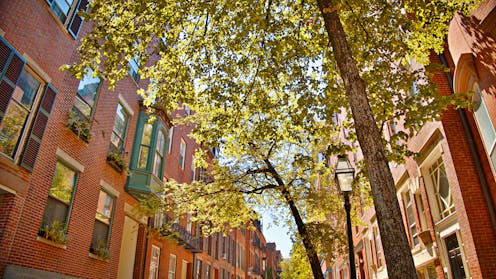
A tree canopy can make a big difference in temperature for people on the street below. The challenge is getting trees where they’re needed most. Andrey Denisyuk/Moment via Getty Images

It’s summer, and it’s been hot, even in northern cities such as Boston. But not everyone is hit with the heat in the same way, even within the same neighborhood.

Take two streets in Boston at 4:30 p.m. on a recent day, as an example. Standing in the sun on Lewis Place, the temperature was 94 degrees Fahrenheit (34.6 degrees Celsius). On Dudley Common, it was 103 F (39.2 C). Both streets were hot, but the temperature on one was much more dangerous for people’s health and well-being.

The kicker is that those two streets are only a few blocks apart. The difference epitomizes the urban heat island effect, created as pavement and buildings absorb and trap heat, making some parts of the city hotter.

A clement-and-brick open space with a few trees to one side, but mostly open to the sun and surrounded by dark, paved streets.
The shade of a few nearby trees doesn’t keep Dudley Common from heating up several degrees more than neighboring streets.
Dan O’Brien

A closer look at the two streets shows some key differences:

  • Dudley Common is public open space sandwiched between two thoroughfares that create a wide expanse of pavement lined with storefronts. There aren’t many trees to be found.

  • Lewis Place is a residential cul-de-sac with two-story homes accompanied by lots of trees.

This comparison of two places within a few minutes’ walk of each other puts the urban heat island effect under a microscope. It also shows the limits of today’s strategies for managing and responding to heat and its effects on public health, which are generally attuned to neighborhood or citywide conditions.

A map showing part of Roxbury, Mass., with circles around two blocks
The top circle is Dudley Common. The bottom is Lewis Place, where trees keep the cul-de-sac several degrees cooler.
Imagery ©2025 Airbus Maxar Technologies, map data Google ©2025

Even within the same neighborhood, some places are much hotter than others owing to their design and infrastructure. You could think of these as urban heat islets in the broader landscape of a community.

Sensing urban heat islets

Emerging technologies are making it easier to find urban heat islets, opening the door to new strategies for improving health in our communities.

While the idea of reducing heat across an entire city or neighborhood is daunting, targeting specific blocks that need assistance the most can be faster and a much more efficient use of resources.

Doing that starts with making urban heat islets visible.

In Boston, I’m part of a team that has installed more than three dozen sensors across the Roxbury neighborhood to measure temperature every minute for a better picture of the community’s heat risks, and we’re in the process of installing 25 more. The Common SENSES project is a collaboration of community-based organizations, including the Dudley Street Neighborhood Initiative and Project Right Inc.; university researchers like me who are affiliated with Northeastern University’s Boston Area Research Initiative; and Boston city officials. It was created to pursue data-driven, community-led solutions for improving the local environment.

Data from those sensors generate a real-time map of the conditions in the neighborhood, from urban heat islets like Dudley Common to cooler urban oases, such as Lewis Place.

A map showing temperatures in different neighborhoods
Temperature varied substantially in Boston’s Roxbury neighborhood at 4:30 p.m. on July 25, 2025. These are some of the readings captured by the Common SENSES heat sensors.
Common SENSES

These technologies are becoming increasingly affordable and are being deployed in communities around the world to pinpoint heat risks, including Miami, Baltimore, Singapore and Barcelona. There are also alternatives when long-term installations prove too expensive, such as the U.S.’s National Oceanic and Atmospheric Administration volunteer science campaign, which has used mobile sensors to generate one-time heat maps for more than 50 cities.

Making cooler communities, block by block

Although detailed knowledge of urban heat islets is becoming more available, we have barely scratched the surface of how they can be used to enhance people’s health and well-being.

The sources of urban heat islets are rooted in development – more buildings, more pavement and fewer trees result in hotter spaces. Many projects using community-based sensors aspire to use the data to counteract these effects by identifying places where it would be most helpful to plant trees for shade or install cool roofs or cool pavement that reflect the heat.

Two men in reflective construction vests paint a stretch of road a light color. The difference between the dark and light is evident.
Workers in Los Angeles apply a cool pavement coating to reflect heat rather than absorbing it.
John McCoy/MediaNews Group/Los Angeles Daily News via Getty Image

However, these current efforts do not fully capitalize on the precision of sensors. For example, Los Angeles’ massive investment in cool pavement has focused on the city broadly rather than overheated neighborhoods. New York City’s tree planting efforts in some areas failed to anticipate where trees could be successfully planted.

Most other efforts compare neighborhood to neighborhood, as if every street within a neighborhood experiences the same temperature. London, for example, uses satellite data to locate heat islands, but the resolution isn’t precise enough to see differences block by block.

In contrast, data pinpointing the highest-risk areas enables urban planners to strategically place small pocket parks, cool roofs and street trees to help cool the hottest spaces. Cities could incentivize or require developers to incorporate greenery into their plans to mitigate existing urban heat islets or prevent new ones. These targeted interventions are cost-effective and have the greatest potential to help the most people.

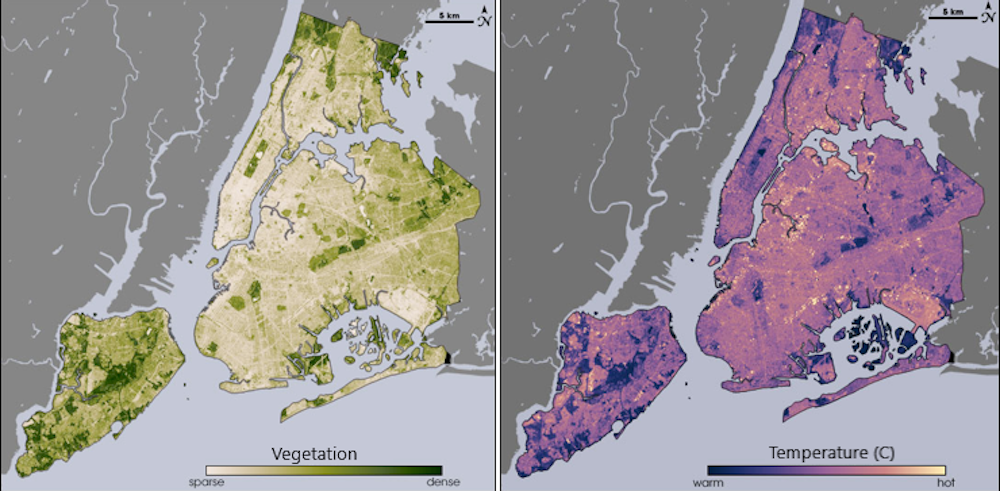
Two maps of New York City show how vegetation matches cooler areas by temperature.
Comparing maps of New York’s vegetation and temperature shows the cooling effect of parks and neighborhoods with more trees. In the map on the left, lighter colors are areas with fewer trees. Light areas in the map on the right are hotter.
NASA/USGS Landsat

But this could go further by using the data to create more sophisticated alert systems. For example, the National Weather Service’s Boston office released a heat advisory for July 25, the day I measured the heat in Dudley Common and Lewis Place, but the advisory showed nearly the entirety of the state of Massachusetts at the same warning level.

What if warnings were more locally precise?

On certain days, some streets cross a crucial threshold – say, 90 F (32.2 C) – whereas others do not. Sensor data capturing these hyperlocal variations could be communicated directly to residents or through local organizations. Advisories could share maps of the hottest streets or suggest cool paths through neighborhoods.

A street with trees.
Trees in the yards of homes on Lewis Place in Roxbury help keep the street several degrees cooler than nearby paved open spaces such as Dudley Common.
Dan O’Brien

There is increasing evidence of urban heat islets in many urban communities and even suburban ones. With data showing these hyperlocal risks, policymakers and project coordinators can collaborate with communities to help address areas that many community members know from experience tend to be much hotter than surrounding areas in summer.

As one of my colleagues, Nicole Flynt of Project Right Inc., likes to say, “Data + Stories = Truth.” If communities act upon both the temperature data and the stories their residents share, they can help their residents keep cool — because it’s hot out there.

The Conversation

Dan O’Brien has received funding from the National Science Foundation’s Smart & Connected Communities program for work associated with this article (award #2230036).

ref. Inside an urban heat island, one street can be much hotter than its neighbor – new tech makes it easier to target cooling projects – https://theconversation.com/inside-an-urban-heat-island-one-street-can-be-much-hotter-than-its-neighbor-new-tech-makes-it-easier-to-target-cooling-projects-261917

Inside the search for sustainable aviation fuels, which are on the federal chopping block

Source: The Conversation – USA (2) – By Li Qiao, Professor of Aeronautics and Astronautics, Purdue University

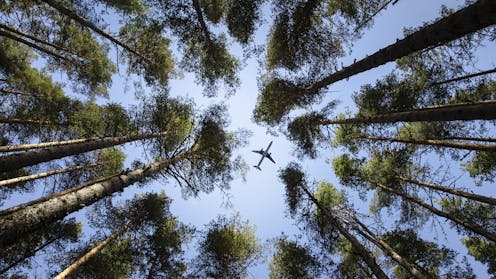
Researchers are working to make aviation fuel more environmentally friendly. Tsvetomir Hristov/Moment via Getty Images

The federal spending law passed in early July 2025, often called the One Big Beautiful Bill Act, significantly reduces federal funding for efforts to create renewable or sustainable types of fuel that can power aircraft over long distances while decreasing the damage aviation does to the global climate.

Aviation contributed about 2.5% of global carbon emissions in 2023. It’s particularly hard to reduce emissions from planes because there are few alternatives for large, portable quantities of energy-dense fuel. Electric batteries with enough energy to power an international flight, for instance, would be much larger and heavier than airplane fuel tanks.

One potential solution, which I work on as an aerospace engineer, is a category of fuel called “sustainable aviation fuel.” Unlike conventional jet fuel, which is refined from petroleum, sustainable aviation fuels are produced from renewable and waste resources — such as used cooking oil, agricultural leftovers, algae, sewage and trash. But they are similar enough to conventional jet fuels that they work in existing aircraft tanks and engines without any major modifications.

Prior to Donald Trump’s second term as president, the U.S. government had set some bold targets: by 2030, producing 3 billion gallons of this type of fuel every year, and by 2050, producing enough to fuel every U.S. commercial jet flight. But there’s a long journey ahead.

A military jet flies above the clouds with a refueling hose connected to it, stretching out of the picture.
A U.K. Royal Air Force jet is refueled by a tanker carrying a mix of standard jet fuel and sustainable aviation fuel.
Leon Neal/Getty Images

A range of source materials

The earliest efforts to create sustainable aviation fuels relied on food crops – turning corn into ethanol or soybean oil into biodiesel. The raw materials were readily available, but growing them competed with food production.

The next generation of biofuels are using nonfood sources such as algae, or agricultural waste such as manure or stalks from harvested corn. These don’t compete with food supplies. If processed efficiently, they also have the potential to emit less carbon: Algae absorb carbon dioxide during their growth, and using agricultural waste avoids its decomposition, which would release greenhouse gases.

But these biofuels are harder to produce and more expensive, in part because the technologies are new, and in part because there are not yet logistics systems in place to collect, transport and process large quantities of source material.

Some researchers are working to create biofuels with the help of genetically modified bacteria that convert specific raw materials into biofuel. In one method, algae are grown to produce sugars or oils, which are then fed to engineered bacteria that turn them into usable fuels, such as ethanol, butanol or alkanes. In another effort, photosynthetic microbes such as cyanobacteria are modified to directly convert sunlight and carbon dioxide into fuel.

All these approaches – and others being explored as well – aim to create sustainable, carbon-neutral alternatives to fossil fuels. Exciting as it sounds, most of this technology is still locked away in labs, not available in airports.

Blends are being tested

At present, the U.S. Federal Aviation Administration allows airlines to fuel their aircraft with blends of up to 50% sustainable aviation fuel, mixed with conventional jet fuel. The exact percentage depends on how the fuel was made, which relates to how chemically and physically similar it is to petroleum-based jet fuel, and therefore how well it will work in existing aircraft tanks, pipes and engines.

There are two major hurdles to wider adoption: cost and supply. Sustainable fuels are much more expensive than traditional jet fuel, with cost differences varying by process and raw material. For instance, the raw price of Jet-A, the most common petroleum-based aviation fuel, had a wholesale price averaging US$2.34 a gallon in 2024, but one type of sustainable fuel wholesaled at about $5.20 a gallon that year.

The federal budget enacted in July 2025 reduces government subsidies, effectively raising the cost of making these fuels.

In part because of cost, sustainable fuel is produced only in small quantities: In 2025, global production is expected to be about 2 million metric tons of the fuel, which is less than 1% of the worldwide demand for aviation fuel. There is international pressure to increase demand – starting in January 2025, all jet fuel supplied at airports in the European Union must include at least 2% sustainable fuel, with minimum percentages increasing over time.

A Wall Street Journal video reports on how trash can be converted into sustainable aviation fuel.

Planes can use these fuels

Companies such as General Electric and Rolls-Royce have shown that the jet engines they manufacture can run perfectly on sustainable fuels.

However, sustainable aviation fuels can have slightly different density and energy content from standard jet fuel. That means the aircraft’s weight distribution and flight range could change.

And other parts of the aircraft also have to be compatible, such as those that store, pump and maintain the balance of the fuel. That includes valves, pipes and rubber seals. As a visiting professor at Boeing in the summer of 2024, I learned that it and other aircraft manufacturers are working closely with their suppliers to ensure sustainable aviation fuels can be safely and reliably integrated into every part of the aircraft.

Those finer details are why headlines you may have seen about flights that burn “100% sustainable aviation fuel” are not quite the full story. Usually, the fuel on those flights contains a small amount of conventional jet fuel or special additives. That’s because sustainable fuels lack some of the aromatic chemical compounds found in fossil-based fuels that are required to maintain proper seals throughout the aircraft’s fuel system.

Good promise, with work ahead

While many details remain, sustainable aviation fuels offer a promising way to reduce the carbon footprint of air travel without reinventing or redesigning entire airplanes. These fuels can significantly cut carbon dioxide emissions from aircraft in use today, helping reduce the severity of climate change.

The work will take research, and investment from governments, manufacturers and airlines around the world, whether or not the U.S. is involved. But one day, the fuel powering your flight could be much greener than it is now.

The Conversation

Li Qiao receives funding from Boeing (subcontract from FAA).

ref. Inside the search for sustainable aviation fuels, which are on the federal chopping block – https://theconversation.com/inside-the-search-for-sustainable-aviation-fuels-which-are-on-the-federal-chopping-block-254861

For Syrian Druze, latest violence is one more chapter in a centuries-long struggle over autonomy

Source: The Conversation – USA (3) – By Rami Zeedan, Associate Professor, University of Kansas

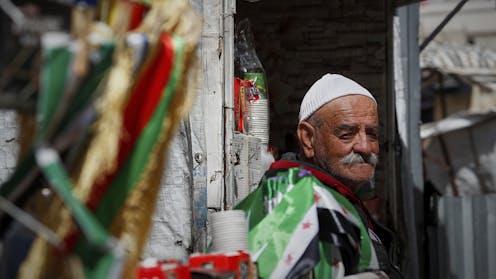
An elderly Druze man stands near Syria’s new flag and the multicolored Druze flag in Al Karama Square in the city of Sweida on March 4, 2025. AP Photo/Omar Sanadiki

Fighting has flared on and off in southern Syria for nearly a month, despite a fragile ceasefire. Violence in July 2025 left more than 1,600 people dead, according to the Syrian Observatory for Human Rights, including at least 166 civilians. The group, which is based in the United Kingdom, also recorded 401 cases of extrajudicial executions by state security forces.

The full extent of the destruction and humanitarian crisis is still emerging in areas around Sweida, a region that’s home to most of the country’s Druze minority. Fighting first flared in mid-July after Bedouins attacked a Druze resident at a checkpoint.

As violence between Druze militias and Bedouin fighters escalated, Syrian forces entered to purportedly calm the tensions. But forces aligned with the Syrian government have been accused of targeting the Druze, including atrocities such as a massacre at a local hospital and executing unarmed civilians. Despite the U.S.-brokered ceasefire, access to Sweida remains restricted, with only limited aid allowed in.

At the core of the conflict lies Syria’s long-standing challenges integrating peripheral regions and minorities, which has proved particularly dangerous for the Druze. Many leaders in the new regime have roots in the extremist Islamic militia Hayat Tahrir al-Sham, or HTS, which grew out of a group affiliated with al-Qaida, prompting concerns that the central government will try to impose its religious and cultural norms.

As Druze studies scholars, we believe the crisis in Sweida encapsulates Syrians’ key challenges: protecting the country’s diversity and balancing regional autonomy with unity.

Ottoman history

The Druze broke off from the Ismaili school of Shiite Islam during the Fatimid Caliphate, an empire that ruled large parts of North Africa and the Middle East.

In the 11th century, the community established a distinct religious identity and today has about 1 million to 1.5 million members. Most live in the Middle East, with smaller diaspora communities around the world. The largest center is in Hawran, an area in present-day southern Syria that includes the city of Sweida.

Four men in black clothing and white caps, seen from the back, hold a rainbow-striped flag as they stand in a vast field.
Druze men walk in the Israeli-controlled Golan Heights, home to a large Druze community.
AP Photo/Ariel Schalit

Many roots of the Druze’s challenges today date back to the Ottoman period – particularly concerns about autonomy. In 1837-1838, the community in Hawran led a rebellion against Muhammad Ali Pasha, the Ottoman governor of Egypt, to resist forced disarmament and conscription.

The nine-month conflict ended with an agreement to exempt the Druze from serving in his military. More broadly, this event showcased Druze commitment to autonomy and self-defense as a way to preserve their identity and defend their religious freedom.

Importantly, the uprising also led to the establishment of the Hajari sheikhdom, the oldest of the Syrian Druze community’s three recognized religious authorities. Sheikh Abu Hussein Ibrahim al-Hajari, who led resistance against Egyptian forces, is the great-grandfather of Sheikh Hikmat Al-Hijri, the current Druze leader seeking autonomy in Syria.

Throughout the late Ottoman period, the Druze continued to resist disarmament and conscription. They managed to maintain significant autonomy well into the 20th century, often ruled by a local Druze emir, and retain the freedom to practice their own faith and culture.

Modern Syrian state

A new challenge to Druze autonomy came after World War I, however. The French gained control of a mandate in present-day Syria and Lebanon and established the autonomous state of Jabal al-Druze. They later imposed direct rule, prompting the Druze to launch an armed rebellion under the leadership of Sultan Pasha al-Atrash, whom many Syrians still revere as a hero.

A black-and-white photograph of a bearded man in robes and a white headscarf sitting inside a tent.
Sultan Pasha al-Atrash, who led the Syrian revolt of 1925.
G. Eric and Edith Matson Photograph Collection/Library of Congress via Wikimedia Commons

Though the rebellion began in Sweida, it quickly became a nationwide movement for liberty, unity and independence from the French: the Great Syrian Revolt, which lasted from 1925-27.

The country eventually gained independence in 1946, but the Druze continued to face challenges. In 1949, for example, military officer Adib al-Shishakli seized control of the Syrian government. He accused the Druze of apostasy, treason and collusion with external powers, including Israel. In 1953, Shishakli launched an assault on Sweida and shelled Druze villages, killing about 300 civilians.

Under the Baath regimes, which lasted from 1963-2024, Druze officers were purged from the upper military ranks. The community was politically marginalized, and Druze areas in the south were excluded from economic development, leaving them chronically impoverished.

Syrian civil war

The start of the Syrian civil war, which began in the wake of 2011’s “Arab Spring” protests, put the Druze in a difficult position.

Initially, some had supported Bashar Assad’s regime, hoping it would protect their community from the war. However, they opposed military service. As time went on, the Druze tried to maintain neutrality, embracing the slogan “Syrian blood is forbidden to be shed by Syrians.”

Originally, the many rebel groups fighting Assad’s forces included both secular and Islamic militias. Islamic groups gradually took control of the revolution, however, making the Druze even less compelled to join.

As the war intensified, they held protests for political and economic change. Druze leader Sheikh Wahid al-Balous formed local defense forces called Harakat Rijal Al-Karama, the Men of Dignity, to protect their towns and shelter defecting soldiers, preserving order and some degree of autonomy.

This didn’t shield the Druze from the war’s ravages. Despite the Druze’s nonviolent stance, their communities were targeted at times for their religious identity and refusal to back the regime.

In 2023, amid a deepening economic crisis, the Druze launched a peaceful uprising demanding regime change, economic reform and political freedom.

New government

Assad fled the country in December 2024, and an interim government was put in place under Ahmad al-Sharaa. Many Druze in Sweida deeply distrust al-Sharaa and his associates, however, and are nervous that the new government will rein in their freedoms.

During the war, he led the Islamist militia HTS, which evolved from the al-Qaida affiliate Jabhat al-Nusra. Jabhat al-Nusra was responsible for the Qalb Loze massacre in 2015, which killed about two dozen Druze civilians. Jubhat al-Nusra and the Islamic State group also clashed with Druze communities in Sweida and Hadar, a Druze village in the Syrian portion of the Golan Heights, causing hundreds of deaths.

In January 2025, al-Sharaa vowed to create an inclusive country, calling “all Syrians to participate in building a new homeland.” But the new government has since raised concern among minority communities.

The transitional constitution, for example, grants the president broad powers over the legislature and judiciary branches – and HTS members occupy all key positions in the president’s Cabinet.

After coming to power, al-Sharaa attempted to assert federal control. The government moved to disarm other militias, including Kurd, Alawite and Druze self-defense groups, and sidelined local leaders.

Distrust intensified in March and April as fighters aligned with the new government massacred Alawites in coastal communities. Then, in late April, a fabricated recording of a Druze religious man insulting the Prophet Muhammad incited sectarian violence against Druze towns near Damascus. The accused man denied he had made the recording, and Syria’s Ministry of Interior confirmed it was fake as well. Security forces were deployed to the area, and the violence killed more than 100 Druze fighters and civilians, according to the Syrian Observatory for Human Rights.

The conflict ended with a ceasefire agreement, under which the interim government delegated security in Sweida to local forces and would safeguard the highway to Damascus – the district’s link to the outside world. The agreement also lifted a siege on Druze villages near Damascus and Sweida.

The July conflict, however, was sparked by a Bedouin checkpoint that blocked the same highway, and it escalated when the government deployed armed forces from outside the district – violations of the agreement’s terms.

Two small white trucks with many soldiers standing on top of them drive through a wide city street.
Syrian security forces deploy in the city of Jaraman, near Damascus, on April 30, 2025.
Bakr Al Kasem/Anadolu via Getty Images

Look to the future

Al-Hijri, the most prominent of the three Druze clerics in Syria, has been especially critical of the transitional government. He has called for a secular, decentralized Syrian state that guarantees minority rights and their regional autonomy.

To many minority groups, it seems the recent brutality in Alawite, Christian and Druze areas was not intended just to impose the state’s exclusive authority to hold weapons, but also to suppress their democratic aspirations and national participation.

Ultimately, the core issue is the Syrian government’s failure to include and protect all citizens: Druze, Alawites, Christians, Kurds, Bedouins and other Sunni Muslims alike. Without change, we fear the promise of a democratic post-Assad Syria remains hollow and the new regime risks repeating its predecessors’ failures.

What is happening in Sweida is not a local crisis: For Syrians and the international community, we believe, it is a critical test of the country’s future and the region’s stability.

The Conversation

The authors do not work for, consult, own shares in or receive funding from any company or organization that would benefit from this article, and have disclosed no relevant affiliations beyond their academic appointment.

ref. For Syrian Druze, latest violence is one more chapter in a centuries-long struggle over autonomy – https://theconversation.com/for-syrian-druze-latest-violence-is-one-more-chapter-in-a-centuries-long-struggle-over-autonomy-261910

Schools are looking for chaplains, but the understanding of who – and what – chaplains are varies widely

Source: The Conversation – USA (3) – By Wendy Cadge, Professor of Sociology and President, Bryn Mawr College

Navy Chaplain Judy Malana sings during the funeral service for former first lady Rosalynn Carter on Nov. 29, 2023, in Plains, Ga. Photo by Alex Brandon – Pool/Getty Images

There is an ongoing push to make chaplains available in public schools across the United States. Chaplains, also called spiritual caregivers, are religious professionals who work in secular institutions and can be of any tradition or none at all.

Indiana is currently considering a bill that would allow chaplains in public schools to provide “support services.” Florida passed a law in 2024 to allow school districts to bring in volunteer chaplains. Texas started to allow public school chaplains in 2023 – the first state to do so.

A poll conducted by the AP-NORC Center asked Americans in June 2025 if they would allow “religious chaplains providing support services for students” in public schools. More than half – 58% – said they would. What is meant by “support services” is unclear.

These debates raise issues about religion in schools and the separation of church and state. But as sociologists of religion studying chaplaincy for over 20 years, we know that most people in the U.S. have never met one and could have widely varying understanding of who chaplains are and the kinds of services they provide.

Have you met a chaplain?

In 2022, the Chaplaincy Innovation Lab, a think tank that we formed to bring chaplains, theological educators, clinical educators and social scientists into conversation about spiritual care, partnered with the Gallup organization to conduct the first national survey that asked Americans about their experience with chaplains. A nationally representative group of 1,096 people took the survey online.

Before we asked people about their experiences with chaplains, we worked with a panel of 28 leading experts in professional chaplaincy to agree on a shared definition: “Clergy or other religious guides or spiritual caregivers who serve people outside of churches or other houses of worship, in settings such as hospitals, the military, prisons, or institutions of higher education, to name a few examples.”

We found that about 18% of American adults – almost 1 in 5 – had interacted with a chaplain based on this definition. We further found that about 68% of those who had met a chaplain did so in health care settings such as hospitals, outpatient clinics and hospices.

Follow-up interviews with 50 of the survey respondents showed that people have a wide range of definitions of the term chaplain – they are rarely thinking the same things. Many people told us about congregational leaders, and almost as many told us about spiritual connections they share with their friends, families and people in their community.

The term chaplain does not have a legal definition in the U.S. at the federal or state level. As a result, anyone can call themselves a chaplain at any time and for any reason. People do not need to have a license, unlike medical professionals, hairdressers, heavy vehicle drivers and others, to call themselves a chaplain.

Training and certification

However, the training requirements for being employed as a chaplain can vary widely across sectors.

Health care organizations generally require that chaplains hold a graduate-level degree from an accredited seminary or divinity school, on-the-job training called clinical pastoral education, and in some cases board certification to demonstrate competency and professionalism.

Federal agencies such as the Department of Defense, the Department of Veterans Affairs and the Federal Bureau of Prisons are required to have chaplains to ensure that service members, veterans and incarcerated people can freely practice their religion.

The educational requirements at each federal agency differ from health care and from each other. Each federal agency outsources the religious training and certification to religious organizations called endorsing agencies or endorsers. To preserve the separation of church and state, it is these religious endorsing agencies, not the government, that decide whether a given person is qualified and prepared to be a chaplain.

Several people stand mournfully while holding candles and one woman puts her hand around the shoulder of a  younger woman in a consoling gesture.
Yale University chaplain Sharon Kugler consoles a student during a candlelight vigil held in New Haven, Conn., on Sept. 14, 2009, following the disappearance of another Yale student.
AP Photo/Thomas Cain

Role of chaplains

Chaplains in health care work with patients, family members and caregivers; they also provide spiritual care to their fellow employees. Military chaplains have similar duties but also advocate for the rights of service members to freely practice their religion. College and university chaplains increasingly serve secular campuses by providing spiritual care to those who need it, as well as ethical guidance and volunteer service opportunities to all students.

Additionally, chaplains have worked with everyone from homeless people in Denver to protesters in Atlanta, urban cyclists in Boston and NASCAR drivers and fans – groups that can have very different spiritual needs.

As chaplains have frequently told us, every day is an improvisation.

Schools and chaplaincy

Several states are moving forward with adding chaplains to public schools, and to our knowledge none are focused on the education or training that other settings require of professional chaplains.

According to Indiana’s Senate Bill 523, a chaplain can be anyone with either a bachelor’s or master’s degree in “divinity, theology, religious studies or a related field” and two to four years of “counseling experience.”

Training in chaplaincy is not required, nor are counseling credentials. People who are hired as school counselors in Indiana must be licensed – but there is no such thing as a chaplaincy license.

Florida did not define chaplains when it passed House Bill 931 to bring in volunteer chaplains. No requirements for the chaplains were set, other than a background check.

What this means is that school chaplain positions would likely draw people without formal training. People who will work in schools might not be trained chaplains or professional chaplains – just people who call themselves a chaplain. And that, we believe, would be an extremely troubling trend.

Given the nuances of a chaplain’s role and qualifications, it’s hard to really assess what people want or mean when 58% of people say they support chaplains in public schools.

The Conversation

Wendy Cadge receives funding from the Templeton Religion Trust

Amy Lawton receives funding from the Templeton Religion Trust.

ref. Schools are looking for chaplains, but the understanding of who – and what – chaplains are varies widely – https://theconversation.com/schools-are-looking-for-chaplains-but-the-understanding-of-who-and-what-chaplains-are-varies-widely-261440

My daily surveys suggest British earwigs are declining drastically

Source: The Conversation – UK – By John Murray, Senior Research Fellow, School of Environment, Earth and Ecosystem Sciences, The Open University

The common earwig. Henri Koskinen/Shutterstock

Every morning for the past 32 years, I have been counting earwigs. Here at Marshalls Heath, a small nature reserve in Hertfordshire, the only site where these nocturnal insects have been so systematically monitored for so long, the number of common earwigs has declined dramatically.

Using a light trap (equipment that entices nocturnal flying insects towards an artificial light and into a box until they can be counted and released in the morning), I found 282 earwigs in a single night in 1996. In 2024, only 31 adults were trapped in that entire year.

My new study, published in the Entomologist’s Record and Journal of Variation, indicates how this catastrophic decline appears to be due to very late frosts, with much higher numbers in the 1990s linked to runs of sunny, dry summers. I have had other anecdotal reports of declines in numbers in other parts of the UK, so this could be a more widespread phenomenon.

Most gardeners regard earwigs as a pest because they eat some leaves and flower petals. But their favourite foods also include woolly apple aphids, codling moth caterpillars and pear psyllid – these are all tiny insects that feed on apples and pears. In commercial orchards, earwigs are introduced to eat other insects and control apple and pear pests.

Like many insects, earwigs break down waste and decompose dead matter – this improves soil structure and helps create a healthy landscape. They also provide a source of food for some birds and small mammals.

A frosty decline

My research shows that the cause of the decline at Marshalls Heath is due to a number of factors. Years of exceptionally high numbers of earwigs were those when summer sunshine had been greatest and rainfall lowest in the two previous years, and when autumns had been cool and the springs dry – weather in the current year had no effect on numbers. But this does not explain their sudden drop in numbers in 2020.

Man crouched next to light trap with white hat holding red notebook
John Barrett Murray has used a light trap to catch, count and then release earwigs.
John Barrett Murray, CC BY-NC-ND

A key part of the puzzle is how adult female earwigs behave towards their young. Unusually for an insect, studies dating back to 1941 have shown that the mother defends and incubates her eggs and cares for her newly-hatched young in an underground nest.

As the young earwigs (called nymphs) grow, they may accompany their mother when she forages at night on the ground outside the nest, always returning back to the underground nest during daylight hours. But as soon as the nymphs moult for the first time, when they are about 5mm long, the mother abandons them to fend for themselves.


Read more:
Earwigs are the hero single mothers of the insect world – and good for your garden too


This is a critical stage in the young insect’s life, and my new study shows that the earlier the nymphs reach this free-roaming phase, the higher are their chances of survival. A delay of one month can be fatal, since they are vulnerable to disease, starvation and predation by birds and small mammals.

To reach this stage earlier, it appears that the fewer the late spring frosts, the better. In 2011, when nymphs moulted early, there were only eight ground frosts in April and May. In 2021, when adult numbers crashed, there were 32 late frosts, and according to the Met Office, it was the frostiest April since records began.

So what next? Trends over the past four years at Marshalls Heath show adult numbers of between 31 and 47 earwigs per year. In 2025 so far, I have only caught seven adults and nine nymphs.

So there is no sign of any revival in these numbers. However, the hot dry summer this year is just what might favour the survival of these insects in the years to come. If we have a cool autumn and a dry spring, followed by similar conditions next year, I’m hoping to record larger numbers in 2027.


Don’t have time to read about climate change as much as you’d like?

Get a weekly roundup in your inbox instead. Every Wednesday, The Conversation’s environment editor writes Imagine, a short email that goes a little deeper into just one climate issue. Join the 45,000+ readers who’ve subscribed so far.


The Conversation

John Murray volunteers as warden for the Marshalls Heath nature reserve.

ref. My daily surveys suggest British earwigs are declining drastically – https://theconversation.com/my-daily-surveys-suggest-british-earwigs-are-declining-drastically-262558

Politicians are using social media to campaign – new research tells us what works and what doesn’t

Source: The Conversation – UK – By Emma Connolly, Research Fellow, Digital Speech Lab, UCL

Shutterstock.

By the time the next US election takes place in 2028, millennial and gen Z voters – who already watch over six hours of media content a daywill make up the majority of the electorate. As gen alpha (people born between 2010 and 2024) also comes of voting age, social media platforms such as TikTok and Instagram or their future equivalents can play a role in political success – if political actors can capitalise on it.

On these platforms, politics mixes with entertainment, creating fertile ground for memes and viral content that shape public opinion in real time – particularly in the US. But going viral isn’t simple, as my new research shows, and political actors have so far have struggled to make the most of it. If content doesn’t feel authentic, isn’t accompanied by clear messaging, or adapted to different platforms, then it’s unlikely to be successful.

Also, viral content spreads quickly, sometimes unpredictably, and across platforms that all behave differently. The algorithms behind viral spread are specific to each platform – and not transparent. This makes the impact of viral activity difficult to measure and hard to track. This presents a challenge to politicians and campaigns looking to capitalise on it.

My recently published research investigated this. I mapped and visualised the “Kamala IS brat” phenomenon as it moved across X, Instagram and TikTok in the run-up to the 2024 US election. The aim of the research was to investigate the anatomy of a viral movement: what made it spread on each platform, how long did it last, and who was driving it.

I found that viral political content that emerges on X spreads by a mix of strategic communication, and letting the audience do the rest. It often spreads to TikTok through catchy adaptations, and moves slightly slower on Instagram, but “explainer” content with images, for instance – often from a mix of everyday users and mainstream media outlets keeps – it visible.

Viral content moves between platforms, adapting to the environment of each as it is transformed into audio and visual forms. My research found that using audio was particularly powerful: turning quotes into soundbites and superimposing dance trends onto political backgrounds made for hugely shareable combinations, and the more surreal, the better.

Most people think that going viral is short-lived, but this study – and other research – has found that digital content has a “long tail”: it pops up, resurges and re-emerges, days, weeks, or even months later, offering new chances to reconnect with audiences.

This was particularly apparent on X, where content was re-used and re-contextualised in satirical and humorous ways. This wasn’t always positive. In the data I analysed, Republican supporters used the phrase “Kamala IS brat” to try and switch the narrative into something negative but it’s likely that this increased visibility as views are driven by influential public figures and shared by meme accounts.

Kamala Harris used social media in her 2024 campaign, but she didn’t win.

For politicians, this potential for re-emergence means that successful social media engagement is not just about strategic planning, it’s more about understanding how audiences remix and repost content in ways that can be hard to predict.

It’s not about rigidly tailoring content to each platform either, but about adapting to their styles. Effective digital strategists work with, not for, their audience, and make the most of moments that can’t always be planned in advance. Canada’s prime ministerial candidate, Mark Carney, for instance, embraced the hashtag #elbowsupCanada during his successful 2025 campaign.

The research also found that posting the right type of content is important – and short-form content works best. Social media platforms use a mix of recommender and social algorithms, that are politically intuitive. A high number of followers can still help to increase visibility, but getting the content right can extend viral reach, regardless of how many followers an account has.

Donald Trump regularly posts his decisions on Truth Social social media network.

TikTok’s algorithm in particular is set up for exploration, and Instagram’s Threads already pushes political content to users, not necessarily from accounts that they follow. Research suggests that users of any platform expect to see political content, whether they’re looking for it or not.

Given the potential for viral activity to reach a huge – and increasingly politically significant – audience, the challenge remains for political actors to turn social media engagement into electoral gain.

Many are trying, with varying levels of success. Harris’s digital-first strategy took an innovative approach – giving creative licence to a rapid response team of 25-year-olds. The digital campaign itself was considered a blueprint for PR success, but it ultimately failed to translate into votes. This was probably because it wasn’t accompanied by clear, concise messaging.

Other political hopefuls, such as Arizonan activist Deja Foxx and Democratic mayoral candidate Zohran Mamdani, are also capitalising on social media engagement. While Foxx recently lost in her bid to become the first gen Z woman to be elected to Congress, her approach, based on catchy content and influencer tactics, turned a long-shot candidacy into a very competitive campaign.

Mamdani has had more tangible success. His effective use of social media visuals, and multilingual engagement expanded his reach, and were credited with helping him win New York City’s Democratic mayoral primary in June.

So, if politicians can get it right, there is growing evidence that capitalising on going viral can influence political success.

Social media won’t win an election on its own, but looking ahead to 2028, it’s increasingly likely to be a part of a winning campaign. Young voters are far from a monolith, but what they do have in common is where they spend their time: on social media. TikTok remains the fastest-growing platform among this age group. Far from just providing entertainment, many use it to get their news, and engage in politics. Campaigns can’t afford to ignore it.

The Conversation

Emma Connolly does not work for, consult, own shares in or receive funding from any company or organisation that would benefit from this article, and has disclosed no relevant affiliations beyond their academic appointment.

ref. Politicians are using social media to campaign – new research tells us what works and what doesn’t – https://theconversation.com/politicians-are-using-social-media-to-campaign-new-research-tells-us-what-works-and-what-doesnt-261509

Mexico’s tourism protests are a symptom of longstanding inequality in Latin American cities

Source: The Conversation – UK – By Nicolas Forsans, Professor of Management and Co-director of the Centre for Latin American & Caribbean Studies, University of Essex

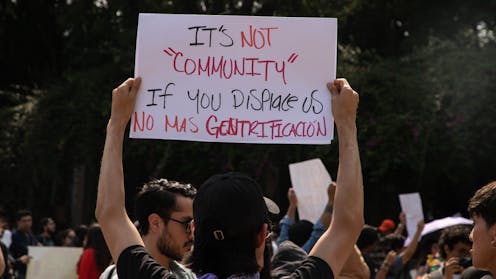
A protester holds a sign reading ‘it’s not community if you displace us’ during a demonstration against gentrification in Mexico City. Octavio Hoyos / Shutterstock

When thousands of residents took to the streets of Mexico City in July chanting “Gringo, go home”, news headlines were quick to blame digital nomads and expats. The story seemed simple: tech-savvy remote workers move in, rents go up and locals get priced out.

But that’s not the whole tale. While digital migration has undeniably accelerated housing pressures in Latin America, the forces driving resentment towards gentrification there run far deeper. The recent protests are symptoms of several structural issues that have long shaped inequality in the region’s cities.

Long before digital nomad visas became policy buzzwords after the pandemic, Latin America’s cities were changing at speed. In 1950, around 40% of the region’s population was urban. This figure had increased to 70% by 1990.

Nowadays, about 80% of people live in bustling cities, making Latin America the world’s most urbanised region. And by 2050, cities are expected to host 90% of the region’s population. Such rapid urbanisation has proved a magnet for international investors, tourists and, more recently, digital nomads.

In Latin America, gentrification has often involved large-scale redevelopment and high-rise construction, driven by state policies that prioritise economic growth and city branding over social inclusion.

Governments have re-branded entire working-class or marginalised areas as “innovation corridors” or “creative districts”, as in the La Boca neighbourhood of Buenos Aires, to attract investment. Neighbourhood re-branding has fostered resentment among locals and, in Buenos Aires, policies supporting self-managed social housing.

The introduction of integrated urban public transport systems has, while improving city access for marginalised communities, also triggered property speculation in once-isolated communities. In the Colombian city of Medellín, for instance, this has driven up prices and displaced long-time residents from hillside neighbourhoods like Comuna 13.

This is not an isolated case. A study from 2024 found that transport projects in Latin America are frequently leveraged by governments to attract private investment, effectively using mobility as a tool for urban restructuring rather than social equity.

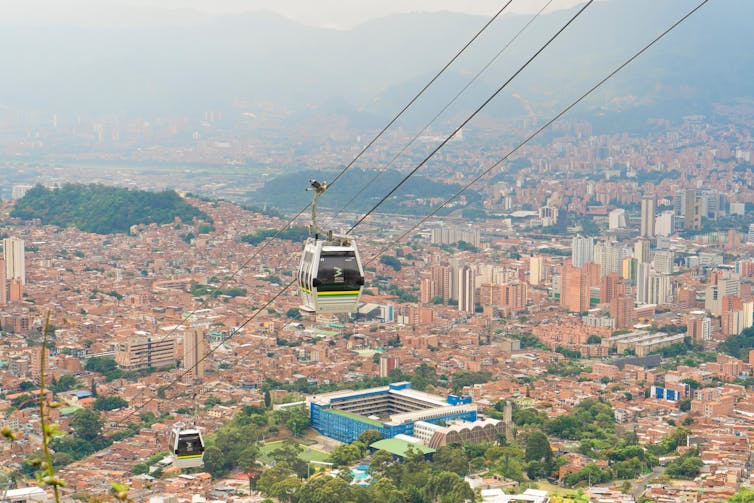
A cable car above the city of Medellín.
The expansion of the public transportation system in Medellín has been associated with increased property values in once-isolated communities.
Alexander Canas Arango / Shutterstock

Researchers call the urban development seen in Latin America “touristification”. This is a form of extractivism where – just like raw materials are removed from the earth for export – urban heritage, culture and everyday life are “mined” for economic value.

In the Barranco district of the Peruvian capital, Lima, heritage is marketed for tourism. But while the district’s bohemian and artistic identity has become a distinctive tourism asset, Barranco now faces challenges that threaten its sociocultural diversity and authenticity. The price of land there increased by 22% between 2014 and 2017, compared with just 4% in San Insidro, which is considered the wealthiest district of metropolitan Lima.

In Chile, the designation of Valparaíso’s historic quarter as a Unesco world heritage site in 2003 led to an increase in heritage-led tourism. Persistent outward migration of long-term residents from the city centre has led to a severe decline in the residential function of the world heritage area – and with it, the loss of vibrant local life.

Symptoms of deeper issues

Protests against high rents and displacement in Latin America are often framed as direct responses to gentrification. However, academic research and policy analysis suggest these protests are symptoms of much deeper structural issues.

Latin America is one of the most unequal regions in the world. Limited access to things like quality education and formal employment means many urban residents are already vulnerable before gentrification pressures begin. More than half of the current generation’s inequality in Latin America is inherited from the past, with estimates ranging from 44% to 63% depending on the country and measure used.

Cities in the region also have long histories of spatial and social segregation, with marginalised groups concentrated in under-resourced neighbourhoods. Gentrification often exacerbates this by pushing these populations further to the periphery.

Cartagena, a port city with roots in colonial-era divisions, possibly exemplifies the greatest urban segregation in Colombia’s history. Spaniards and other Europeans lived in the fortified centre, while enslaved people were confined to poorer neighbourhoods like Getsemaní outside the walls.

Recently, urban planning decisions have been taken there that favour certain groups over others. Only the colonial legacy linked to Europeans has been protected. Getsemaní, once populated with slaves’ homes and workshops, is now home to luxury hotels, restaurants and housing.

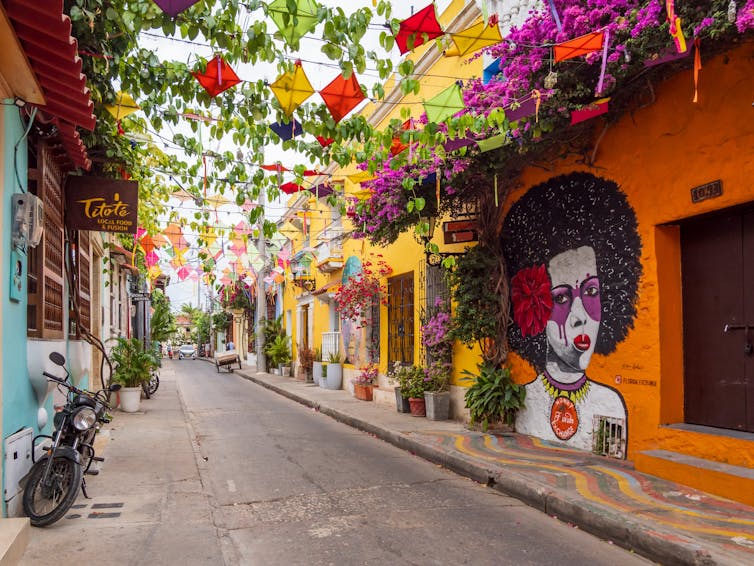
The colourful streets of the Getsemaní neighbourhood of Cartagena.
The colourful streets of Getsemaní, a neighbourhood in Cartagena, Colombia.
Nowaczyk / Shutterstock

Finally, a large share of Latin America’s urban workforce is employed informally. Informality, where workers lack job security and social protections, is not just an unfortunate effect of economic development. It is an integral part of how global capitalism and urbanisation unfold in Latin America.

It reflects the failure of state and market systems to meet the needs of the majority. Rising rents and living costs driven by gentrification disproportionately hurt those who have few resources to absorb such shocks.

Protesters in Mexico aren’t just angry at an influx of remote workers sipping flat whites. They are responding to decades of urban inequality, neglect and exclusion. What is emerging is a continent-wide battle over who gets to live in, profit from and shape the future of Latin American cities.

The region’s urban future doesn’t have to mirror its past. But getting there means moving beyond simplistic narratives about foreign renters or digital workers, and tackling the structural issues that have long shaped inequality in Latin America’s cities.

The Conversation

Nicolas Forsans does not work for, consult, own shares in or receive funding from any company or organisation that would benefit from this article, and has disclosed no relevant affiliations beyond their academic appointment.

ref. Mexico’s tourism protests are a symptom of longstanding inequality in Latin American cities – https://theconversation.com/mexicos-tourism-protests-are-a-symptom-of-longstanding-inequality-in-latin-american-cities-261634

How RFK Jr is systematically undermining vaccines around the world

Source: The Conversation – UK – By Christina Pagel, Professor of Operational Research, Director of the UCL Clinical Operational Research Unit, UCL

NEW YORK CITY, USA – March 7, 2025: Stand up for Science rally against DOGE cuts to scientific research in Washington Square Park in Manhattan.
Christopher Penler/Shutterstock

Vaccines are one of the greatest public health success stories of all time. Over the past 50 years, they’ve saved an estimated 154 million lives. But in the US, both access to vaccines and public trust in them are being systematically undermined – not by conspiracy theorists online, but from within the highest levels of government.

In January 2025, Robert F. Kennedy Jr – long associated with vaccine misinformation – was confirmed as US health secretary. Despite being pressed during his Senate confirmation hearings, Kennedy insisted he was not anti-vaccine and pledged to maintain scientific standards.

Seven months later, his actions tell a different story.

Kennedy has launched a sweeping assault on the US vaccine infrastructure: gutting oversight committees, sowing doubt about settled science, politicising ingredient safety, limiting access to vaccines and halting funding for research. His strategy doesn’t involve outright bans. But the cumulative effect may prove just as damaging.

In the US, the Advisory Committee on Immunization Practices (ACIP) plays a central role in vaccine policy, offering evidence-based recommendations on schedules. Until recently, its members were respected experts in immunology, epidemiology and infectious disease – all vetted, conflict-checked and publicly accountable.

In May 2025, Kennedy overrode ACIP’s recommendation on COVID-19 vaccination for pregnant women and young children. The following month, he disbanded the 17-member committee, citing alleged conflicts of interest. In their place, Kennedy appointed a smaller panel that included people with well-documented anti-vaccine views.

This broke decades of precedent. For the first time, ACIP’s membership was handpicked by the health secretary without standard vetting, training or safeguards to ensure independence.

In July, the ousted ACIP members published a commentary in the New England Journal of Medicine, warning the recommendation process was facing “seismic disruption”. In August, Kennedy banned respected scientific societies from advising ACIP, claiming they were too biased. This removed yet another check on the panel’s independence.

Meanwhile, Kennedy has reopened long-closed debates. He has called for “reassessment” of the childhood vaccine schedule, standard vaccine ingredients, and reportedly even the thoroughly debunked claim that the MMR vaccine is linked to autism. The latter has been refuted by multiple peer-reviewed studies, including a meta-analysis involving over 1.2 million children.

At ACIP’s first meeting under new leadership, Kennedy’s panel reviewed thimerosal, a mercury-based preservative used in some flu vaccines. CDC scientists were scheduled to present their evidence but were dropped from the agenda. Instead, the only evidence came from Lyn Redwood, a vaccine critic and co-founder of the World Mercury Project, an initiative that preceded Kennedy’s own Children’s Health Defense group.

Her presentation appeared to include at least one non-existent study, yet ACIP went on to ban thimerosal from flu shots – a decision Kennedy later extended to all US vaccines.

Though thimerosal was already used in very few vaccines, the way it was removed – based on flawed evidence and limited expert input – sets a dangerous precedent.

Kennedy has also criticised aluminium hydroxide, used in many vaccines to boost the immune response. His review article contradicts a large body of peer-reviewed evidence that supports its safety. Aluminium salts are found in vaccines against hepatitis A and B, meningococcal disease and tetanus.

Restricting access and innovation

The ripple effects of Kennedy’s changes go beyond oversight. In July, ACIP announced it would review recommendations for childhood vaccines, hepatitis B at birth, and the MMRV combination vaccine — a single shot that protects against measles, mumps, rubella, and varicella (chickenpox).

These guidelines help determine what vaccines are covered by public insurers like Medicaid. Weakening them could make vaccines unaffordable for low-income families.

Kennedy has also targeted the Vaccine Compensation Program, which provides payouts for rare adverse effects while protecting vaccine supply from litigation. He is considering expanding eligibility to include autism, despite consensus refuting any link, and may allow more lawsuits. These changes could deter pharmaceutical companies from offering vaccines in the US.

Kennedy has insisted that all new vaccines must undergo new placebo-controlled trials, ignoring the fact that new vaccines already follow this standard. Only modified versions of approved vaccines – like annual flu shots – are currently exempt, for ethical reasons.

If Kennedy bans widely used ingredients like aluminium salts, companies may be forced to reformulate vaccines – triggering unnecessary full clinical trials (the multi-phase process typically required for entirely new vaccines) and delaying access to boosters.

In May, vaccine manufacturer Moderna withdrew its application for a combined COVID-flu vaccine, citing regulatory difficulties. Days later, Kennedy’s department cancelled US$700 million (£550 million) in funding for a Moderna bird flu vaccine, followed by cuts to HIV vaccine research and mRNA platforms for cancer prevention.

Other countries may continue vaccine research, but the US’s retreat leaves a major gap.

Destabilising global trust

Perhaps most troubling is the messaging. Kennedy has repeatedly questioned the need for childhood vaccines, spread misinformation, inflated the risks and downplayed the threat of measles.

He has also attacked medical journals as corrupt and threatened to bar government scientists from publishing in respected outlets such as The Lancet and The New England Journal of Medicine — two of the world’s most prestigious peer-reviewed journals. Instead, he has proposed state-run alternatives. His own review on Aluminium Hydroxide was published in a non-peer-reviewed outlet.

In just a few months as health secretary, Kennedy has reshaped vaccine policy and public trust in the US. He has repeatedly claimed that the scientific and medical establishment is corrupt and that consensus cannot be trusted. This rhetoric is especially dangerous at a time when vaccine uptake is already low and falling.

But the consequences don’t stop at national borders. When coverage drops in one country, the risk of disease outbreaks increases globally, as seen in the recent measles outbreak in Canada.

Kennedy has shown both determination and ingenuity in undermining vaccine science, often through methods that are complex, obscure, or hard to explain publicly. Without issuing a single ban, he has weakened the foundations of vaccine availability and trust in the US.

In the 19th century, the average life expectancy in the US was around 40 years . Many children died of infections that are now preventable. In an age when the deadly realities of diseases like measles have faded from memory, it’s chilling to consider the possibility of returning to a pre-vaccine era.

The Conversation

Christina Pagel receives funding from University College London to explore and document vulnerabilities of UK Arms Length Bodies to political interference.

She also founded and runs TrumpActionTracker.info , a website documenting actions of the Trump administration that fall within authoritiarian domains.

Sheena Cruickshank does not work for, consult, own shares in or receive funding from any company or organisation that would benefit from this article, and has disclosed no relevant affiliations beyond their academic appointment.

ref. How RFK Jr is systematically undermining vaccines around the world – https://theconversation.com/how-rfk-jr-is-systematically-undermining-vaccines-around-the-world-262854

Beyond recognition: the challenges of creating a new Palestinian state are so formidable, is it even possible?

Source: The Conversation – Global Perspectives – By Martin Kear, Sessional Lecturer, Department of Government and International Relations, University of Sydney

Australia will recognise a Palestinian state at the UN General Assembly meeting in September, joining the United Kingdom, Canada and France in taking the historic step.

Recognising a Palestinian state is at one level symbolic – it signals a growing global consensus behind the rights of Palestinians to have their own state. In the short term, it won’t impact the situation on the ground in Gaza.

Practically speaking, the formation of a future Palestinian state consisting of the West Bank, Gaza Strip and East Jerusalem is far more difficult to achieve.

The Israeli government has ruled out a two-state solution and reacted with fury to the moves by the four G20 members to recognise Palestine. Israeli Prime Minister Benjamin Netanyahu called the decision “shameful”.

So, what are the political issues that need to be resolved before a Palestinian state becomes a reality? And what is the point of recognition if it doesn’t overcome these seemingly intractable obstacles?

Settlements have exploded

The first problem is what to do about Israeli settlements in the West Bank and East Jerusalem, which the International Court of Justice has declared are illegal.

Since 1967, Israel has constructed these settlements with two goals in mind: prevent any future division of Jerusalem, and expropriate sufficient territory to make a Palestinian state impossible. There are now more than 500,000 settlers in the West Bank and 233,000 in East Jerusalem.

Palestinians see East Jerusalem as an indispensable part of any future state. They will never countenance a state without it as their capital.

In May, the Israeli government announced it would also build 22 new settlements in the West Bank and East Jerusalem – the largest settler expansion in decades. Defence Minister Israel Katz described this as a “strategic move that prevents the establishment of a Palestinian state that would endanger Israel”.

The Israeli government has also moved closer to fully annexing the West Bank in recent months.

Geographical complexities of a future state

Second is the issue of a future border between a Palestinian state and Israel.

The demarcations of the Gaza Strip, West Bank and East Jerusalem are not internationally recognised borders. Rather, they are the ceasefire lines, known as the “Green Line”, from the 1948 War that saw the creation of Israel.

However, in the Six-Day War of 1967, Israel captured and occupied the West Bank, Gaza, East Jerusalem, Egypt’s Sinai Peninsula (since returned), and Syria’s Golan Heights. And successive Israeli governments have used the construction of settlements in the occupied territories, alongside expansive infrastructure, to create new “facts on the ground”.

Israel solidifies its hold on this territory by designating it as “state land”, meaning it no longer recognises Palestinian ownership, further inhibiting the possibility of a future Palestinian state.

For example, according to research by Israeli professor Neve Gordon, Jerusalem’s municipal boundaries covered approximately seven square kilometres before 1967. Since then, Israeli settlement construction has expanded its eastern boundaries, so it now now covers about 70 square km.

Israel also uses its Separation Wall or Barrier, which runs for around 700km through the West Bank and East Jerusalem, to further expropriate Palestinian territory.

According to a 2013 book by researchers Ariella Azoulay and Adi Ophir, the wall is part of the Israeli government’s policy of cleansing Israeli space of any Palestinian presence. It breaks up contiguous Palestinian urban and rural spaces, cutting off some 150 Palestinian communities from their farmland and pastureland.

The barrier is reinforced by other methods of separation, such as checkpoints, earth mounds, roadblocks, trenches, road gates and barriers, and earth walls.


Read more:
Explainer: what is the two-state solution to the Israeli-Palestinian conflict?


Then there is the complex geography of Israel’s occupation in the West Bank.

Under the Oslo Accords of the 1990s, the West Bank was divided into three areas, labelled Area A, Area B and Area C.

In Area A, which consists of 18% of the West Bank, the Palestinian Authority exercises majority control. Area B is under joint Israeli-Palestinian authority. Area C, which comprises 60% of the West Bank, is under full Israeli control.

Administrative control was meant to be gradually transferred to Palestinian control under the Oslo Accords, but this never happened.

Areas A and B are today separated into many small divisions that remain isolated from one another due to Israeli control over Area C. This deliberate ghettoisation creates separate rules, laws and norms in the West Bank that are intended to prevent freedom of movement between the Palestinian zones and inhibit the realisation of a Palestinian state.

Who will govern a future state?

Finally, there are the conditions that Western governments have placed on recognition of a Palestinian state, which rob Palestinians of their agency.

Chief among these is the stipulation that Hamas will not play a role in the governance of a future Palestinian state. This has been backed by the Arab League, which has also called for Hamas to disarm and relinquish power in Gaza.

Fatah and Hamas are currently the only two movements in Palestinian politics capable of forming a government. In a May poll, 32% of respondents in both Gaza and the West Bank said they preferred Hamas, compared with 21% support for Fatah. One-third did not support either or had no opinion.

Mahmoud Abbas, leader of the Palestinian Authority, is deeply unpopular, with 80% of Palestinians wanting him to resign.


Read more:
The politics of recognition: Australia and the question of Palestinian statehood


A “reformed” Palestinian Authority is the West’s preferred option to govern a future Palestinian state. But if Western powers deny Palestinians the opportunity to elect a government of their choosing by dictating who can participate, the new government would likely be seen as illegitimate.

This risks repeating the mistakes of Western attempts to install governments of their choosing in Iraq and Afghanistan. It also plays into the hands of Hamas hardliners, who mistrust democracy and see it as a tool to impose puppet governments in Palestine, as well as Israel’s narrative that Palestinians are incapable of governing themselves.

Redressing these issues and the myriad others will take time, money and considerable effort. The question is, how much political capital are the leaders of France, the UK, Canada and Australia (and others) willing to expend to ensure their recognition of Palestine results in an actual state?

What if Israel refuses to dismantle its settlements and Separation Wall, and moves ahead with annexing the West Bank? What are these Western leaders willing or able to do? In the past, they have been unwilling to do more than issue strongly worded statements in the face of Israeli refusals to advance the two-state solution.

Given these doubts around the political will and actual power of Western states to compel Israel to agree to the two-state solution, it begs the question: what and who is recognition for?

The Conversation

Martin Kear does not work for, consult, own shares in or receive funding from any company or organisation that would benefit from this article, and has disclosed no relevant affiliations beyond their academic appointment.

ref. Beyond recognition: the challenges of creating a new Palestinian state are so formidable, is it even possible? – https://theconversation.com/beyond-recognition-the-challenges-of-creating-a-new-palestinian-state-are-so-formidable-is-it-even-possible-262493