How can you be sure your clothing has been produced ethically?

Source: The Conversation – Global Perspectives – By Aayushi Badhwar, Lecturer in Enterprise and Technology, RMIT University

Naomi Rahim/Getty Images/Canva

Today’s consumers are swimming in a sea of information. Products are marketed with big, bold words such as “sustainable”, “ethical” and “organic”. They sound good, they catch our attention, and they make us feel better about what we buy.

The reality is, in today’s market, figuring out which claims are true is no easy task.

One big reason is greenwashing, when brands use these buzzwords to sell products without living up to what the words actually mean. In fashion especially, these terms are thrown around so often that their meaning has been watered down. Instead of being about genuine change, they are often just a sales tool.

So, how can you know what to look out for?

Who should take responsibility for green claims?

Greenwashing takes many forms. Sometimes brands know they are misleading; this is direct greenwashing. Other times, it’s indirect, when brands simply do not know the full story of their own supply chains. A T-shirt, for example, might start as raw cotton in one country, get processed into fabric in another, sewn into a garment, and then shipped overseas for sale.

At each stage, there are different suppliers, factories and workers. The brand has limited visibility over what happens in these tiers. When a brand claims it produces ethically, but does not, that is greenwashing. If it involves exploitation or forced labour, it then becomes modern slavery, turning greenwashing into something more dangerous.

This raises a big question: who is responsible? The obvious answer is the brands. They design, order, and sell the products, and they profit from them. Consumers are paying for these goods, so they should have access to credible information, not just vague claims or nice-sounding labels.

The fashion industry is constantly in the spotlight for problems in its supply chains. Stories about poor working conditions, environmental damage, and lack of transparency pop up all the time. But just like a viral trend on social media, the attention often fades quickly, and people move on to the next story.

Certifications aren’t perfect

There are many certifications in the fashion industry trying to help, but they are not foolproof. A label might promise ethical sourcing, but that does not guarantee transparency or prove that every step was ethical.

A large portion of China’s cotton comes from the Xinjiang region, which has long been linked to forced labour; concerns were highlighted in a United Nations report in 2022. Another example is deforestation in Brazil, where cotton from affected areas was certified under the “Better Cotton” scheme. Many major brands – like ASICS producing the Australian Olympic uniforms – have faced scrutiny for sourcing cotton from controversial regions.

Tracing global supply chains is hard. But the responsibility does not disappear just because it’s complicated.

In Australia, the Modern Slavery Act took effect in January 2019 to tackle issues such as forced labour and exploitation. Penalties include heavy fines or jail time.

However, there is a major loophole, as only companies with an annual revenue over A$100 million are required to report under the act. For big corporations, even if they are caught, the penalty can be tiny compared to the profits they have made.

This is not just an Australian problem, it’s global. For example, luxury brand Dior was placed under judicial administration after being found negligent for failing to act against worker exploitation in its subcontracted supply chain in Italy. The pattern is often the same; a company gets accused, sometimes even fined, but the cost is minimal compared to their annual revenue, so it’s barely a setback.

Is there a role for government?

So, should the responsibility rest only with brands? Not entirely. Governments also benefit from these companies through taxes and trade. They profit indirectly when the companies profit, and they benefit from the jobs these companies provide.

A stronger approach would involve government bodies and brands working with supply chain mapping companies, such as Textile Genesis, TrusTrace or FibreTrace. These platforms, often powered by blockchain and artificial intelligence, track a product through every stage of production.

Blockchain – which uses a decentralised database – can be a game changer.

Unlike websites or paper trails, blockchain data cannot be altered without leaving trace. Once recorded, the information is permanent, and it can be shared across manufacturers, brands and government bodies to maintain real-time disclosure.

When products enter a country, the ethical claims behind them could be verified in real time, instead of relying on brands to respond after an allegation is made.

The upfront cost is high and adoption might be slow. But in the long run it could save money on compliance, audits and damage control, while also building consumer trust.

Brands would still make profits, but consumers would have the confidence the products they are buying live up to the claims. Instead of government agencies being passive players, they would actively enforce that products meet the standards consumers expect.

In short, brands need to be held accountable, but so do governments. Greenwashing, modern slavery, and unethical sourcing will keep slipping through the cracks, unless they both work together.

The tools to make the fashion industry more transparent and honest already exist; it’s just a matter of using them.

The Conversation

Aayushi Badhwar does not work for, consult, own shares in or receive funding from any company or organisation that would benefit from this article, and has disclosed no relevant affiliations beyond their academic appointment.

ref. How can you be sure your clothing has been produced ethically? – https://theconversation.com/how-can-you-be-sure-your-clothing-has-been-produced-ethically-262800

70 years of data show extreme heat is already wiping out tropical bird populations

Source: The Conversation – Global Perspectives – By James Watson, Professor in Conservation Science, School of the Environment, The University of Queensland

DeAgostini/Getty Images

Human-driven climate change threatens many species, including birds. Most studies on this topic focus on long-term climate trends, such as gradual rises in average temperatures or shifts in rainfall patterns. But extreme weather events are becoming more common and intense, so they warrant further attention.

Our new research shows extreme heat is having a particularly severe effect on tropical birds. We found increased exposure to extreme heat has reduced bird populations in tropical regions by 25–38% since 1950.

This is not just a temporary dip – it’s a long-term, cumulative effect that continues to build as the planet warms.

Our research helps explain why bird numbers are falling even in wild places relatively untouched by humans, such as some very remote protected tropical forests. It underscores the urgent need to reduce greenhouse gas emissions, to conserve the remaining biodiversity.

Digging into huge global datasets

We analysed data from long-term monitoring of more than 3,000 bird populations worldwide between 1950 and 2020. This dataset captures more than 90,000 scientific observations.

Although there are some gaps, the dataset offers an unmatched view of how bird populations have changed over time. Some parts of the world such as western Europe and North America were better represented than others, but all continents were covered.

We matched this bird data with detailed daily weather records from a global climate database that stretches back to 1940. This allowed us to track how bird populations responded to specific changes in daily temperatures and rainfall, including extreme heat.

We also looked at average yearly temperatures, total annual rainfall, and episodes of unusually heavy rainfall.

Using another dataset that reflects human industrial activity over time, we accounted for human pressures such as land development and human population density.

By combining all these sources of data, we created computer models to evaluate how climate factors and human impacts influence bird population growth.

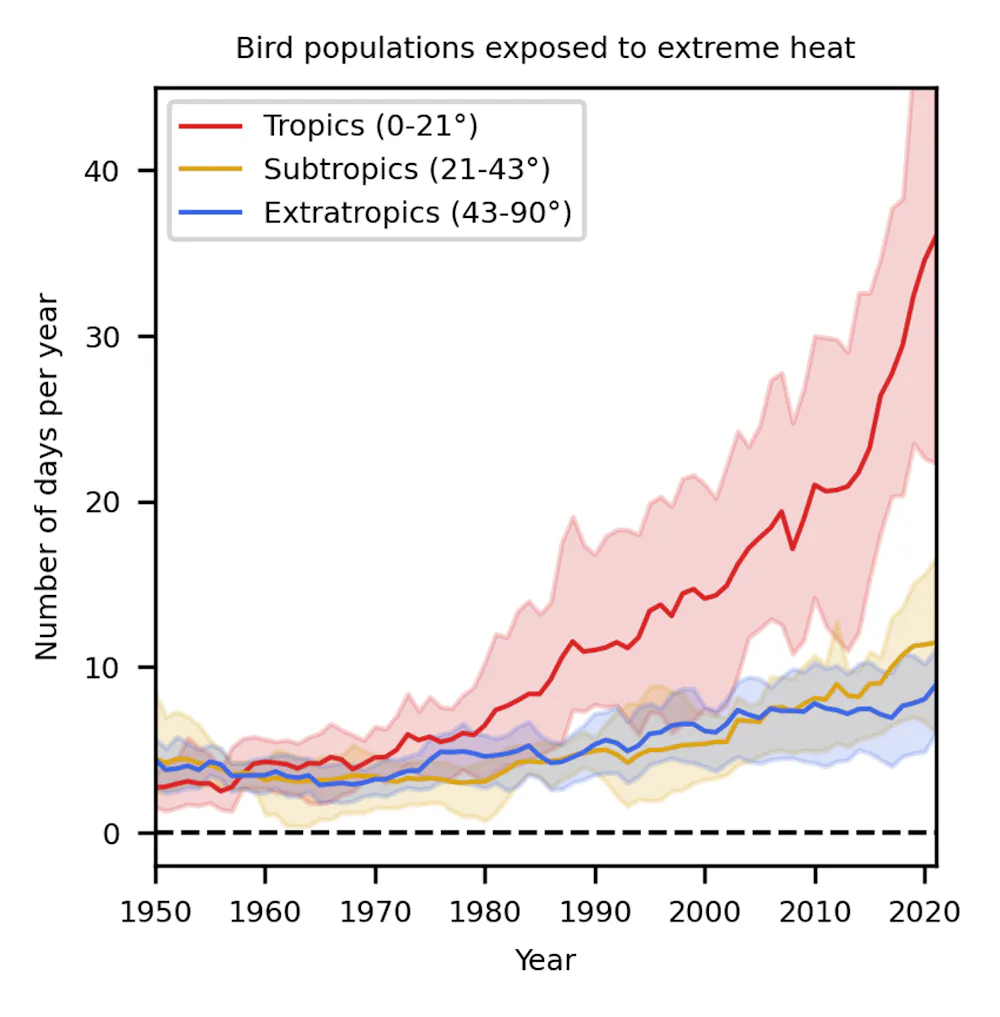
Our research confirmed the work of other climate scientists showing extreme heat events have increased dramatically over the past 70 years, especially near the equator.

Birds in tropical regions are now experiencing dangerously hot days about ten times more often than they did in the past.

A chart showing the number of very hot days per year over time for the tropics (steep increase), subtropics and extratropics
Tropical birds have experienced a 10-fold increase in exposure to extreme heat over the past 60 years.
Kotz, M. et al. (2025) Nature Ecology & Evolution

What we found: extreme heat is the biggest climate threat to birds

While changes in average temperature and rainfall do affect birds, we found the increasing number of dangerously hot days had the greatest effect – especially in tropical regions.

This is a major concern because tropical birds often have small home ranges and are highly specialised in terms of the habitats and climates they persist in. In many cases tropical birds exist within a small range of heat tolerance.

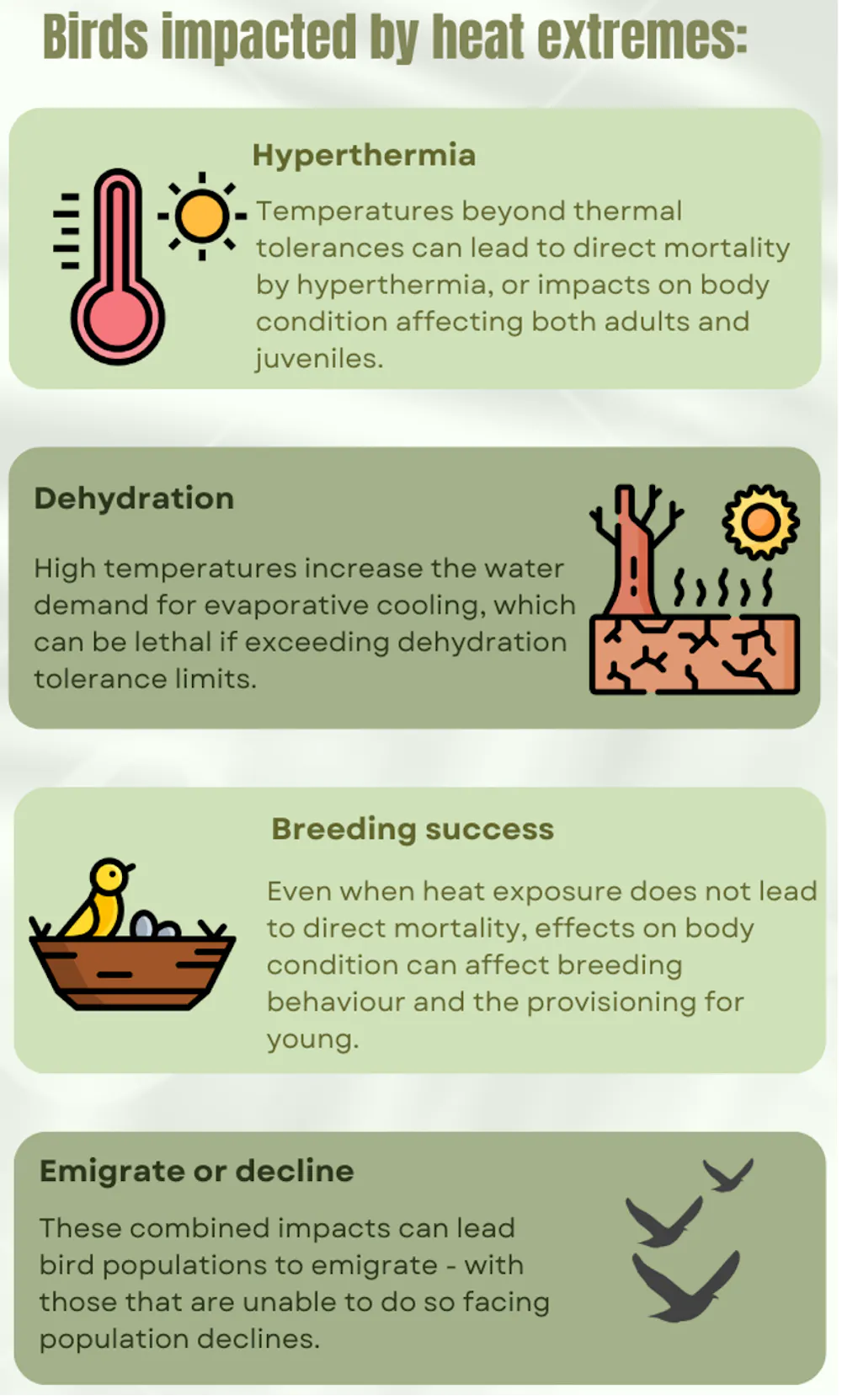
At temperatures beyond a bird’s limit of endurance, they go into hyperthermia, where their body temperature rises uncontrollably. In this state, birds may adopt a drooped-wing posture to expose more skin for heat loss, hold their beaks open and pant rapidly, spread their feathers, and become lethargic or disoriented. In severe cases, they lose coordination, fall from perches, or even collapse unconscious.

Side profile of a black-collared barbet (_Lybius torquatus_) resting on a branch, The Panhandle, Okavango Delta, Botswana.
A black-collared barbet (Lybius torquatus) from Botswana.
Sergey Dereliev

If they survive the experience, they can suffer long-term damage such as heat-induced organ failure and reduced reproductive capacity. Heat exposure reduces breeding success by lowering adult body condition and reducing time spent foraging – because the birds must rest or seek shade during the hottest hours.

It also causes heat stress in eggs and nestlings. In extreme events, nestlings may die from hyperthermia, or parents may abandon nests to save themselves.

Heat also increases a bird’s demand for water — not because they sweat (birds lack sweat glands) but because they lose water rapidly through evaporative cooling. This happens mainly via panting (respiratory evaporation) and, in some species, gular fluttering (rapid vibration of throat skin to increase airflow), as well as evaporation through the skin. As temperatures climb, these processes accelerate, causing significant dehydration unless birds can drink more frequently or access moister food.

Our study found that across tropical areas, the impact of climate change on birds is perhaps even greater now than the impact of direct human activities such as logging, mining or farming. This is not to say habitat destruction due to these activities is not a serious issue – it clearly is a major concern to tropical biodiversity. But our study highlights the challenges climate change is already bringing to birds in tropical regions.

Infographic describing how birds are impacted by heat extremes
Extreme heat is bad for birds in more than one way.
James Watson, Maximilian Kotz and Tatsuya Amano with icons from Flaticon, design by Canva.

A clear warning

Our research highlights the importance of focusing not just on average climate trends, but also on extreme events. Heatwaves are no longer rare, isolated incidents – they are becoming a regular part of life in many parts of the world.

If climate change continues unchecked, tropical birds – and likely many other animals and plants – will face increasing threats to their survival. Change may be too fast and too extreme for many species to adapt.

And as tropical regions host a huge share of the world’s biodiversity, including nearly half of all bird species, the ripple effects could be far-reaching.

Conservation strategies must take this into account. Protecting habitats from human industrial development remains important, but it’s no longer enough on its own. Proactive action to help species adapt to climate change needs to be part of wildlife protection plans – especially in the tropics.

Ultimately if we are to preserve global biodiversity, slowing down and eventually reversing climate change is essential. That means cutting greenhouse gas emissions, investing in ways to draw down existing carbon dioxide levels, and supporting policies that reduce our impact on the planet. The fate of tropical birds – and countless other species – depends on it.

Tropical bird population declined by one-third since 1980 due to climate change, featuring the study’s lead author Maximilian Kotz (Potsdam Institute for Climate Impact Research)

The Conversation

James Watson has received funding from the Australian Research Council, National Environmental Science Program, South Australia’s Department of Environment and Water, Queensland’s Department of Environment, Science and Innovation as well as from Bush Heritage Australia, Queensland Conservation Council, Australian Conservation Foundation, The Wilderness Society and Birdlife Australia. He serves on the scientific committee of BirdLife Australia and has a long-term scientific relationship with Bush Heritage Australia and Wildlife Conservation Society. He serves on the Queensland government’s Land Restoration Fund’s Investment Panel as the Deputy Chair.

Maximilian Kotz receives funding from European Union’s Horizon 2020 research and innovation programme under a Marie Sklodowska-Curie grant.

Tatsuya Amano receives funding from the Australian Research Council Future Fellowship and Discovery Project.

ref. 70 years of data show extreme heat is already wiping out tropical bird populations – https://theconversation.com/70-years-of-data-show-extreme-heat-is-already-wiping-out-tropical-bird-populations-259892

Whales and dolphins regularly hang out with each other – new study

Source: The Conversation – Global Perspectives – By Olaf Meynecke, Research Fellow in Marine Science and Manager Whales & Climate Program, Griffith University

drewsulockcreations/Getty

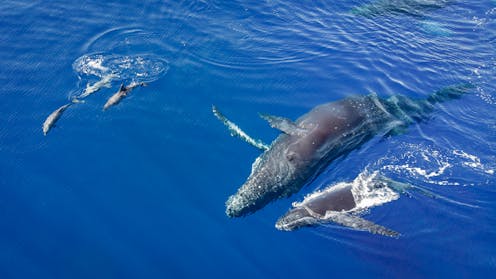
As the annual humpback whale migration is underway with thousands of whales passing by the Australian coast, there are reports of dolphins joining the mass movement.

But this isn’t a one off. In fact, our new study, published today in Discover Animals, shows interspecies interactions between dolphins and whales are widespread and frequent around the world.

An astonishing interaction

There have been several reports of whale and dolphin interaction in the past.

One that astonished the public back in 2004 featured a humpback whale in Hawaii repeatedly lifting a bottlenose dolphin on its head.

Researchers suggested such close contact between whales and dolphins is likely very rare – and maybe related to care giving.

But other forms of interactions resembling joint feeding, play and harassment are now being frequently documented thanks to drone technology. Many are also featured on social media.

A ‘whale’s-eye view’ of the world

For our new study, we undertook an analysis of 199 independent whale-dolphin interaction events involving 19 different species. These interactions spanned two decades and occurred across 17 countries.

We drew from social media platforms – such as Facebook, YouTube and Instagram – and footage contributed by citizens to get a variety of observations.

Each entry was carefully reviewed to identify the species involved, validate the interaction and categorise behaviours. Two additional cases came from camera tags attached to humpback whales. These offered an underwater “whale’s-eye view” of their encounters with dolphins.

We categorised behaviours such as rolling, tail slaps, bow riding, and rubbing, and classified dolphin positions relative to whale body parts such as head, flank and tail fluke.

Having fun or fighting?

The study contradicted earlier assumptions that interspecies interactions between dolphins and whales are very rare.

The most common interaction was dolphins swimming near the whale’s head (akin to bow riding). This accounted for 80% of observed dolphin positions. Humpback whales were the most involved whale species, while bottlenose dolphins led the dolphin side.

Based on videos we analysed, dolphins initiated most interactions through bow riding, swimming in formation, or even touching whales.

In more than one-quarter of the events, the whales responded in seemingly similar ways. For example, humpback whales often rolled, exposed their bellies, or gently turned toward dolphins.

Tail slaps and other signs of distress or aggression were rare (roughly 5% of cases).

As a result of this, we classified more than one-third of all interactions between humpback whales and dolphins as positive or possible social play.

The two camera-tag videos revealed previously undocumented interaction. Dolphins were observed following humpback whales not only at the surface but down to the ocean floor. They maintained eye contact or even touched the whales’ head – suggesting intentional, possibly social, engagement.

Reflecting advanced emotional capabilities

The findings reshape our understanding of how social marine mammals interact across species. They suggest interspecies interaction among marine mammals may be far more prevalent and complex than previously believed.

Dolphins may seek out whales as companions for stimulation, play or even courtship-like behaviour. Meanwhile, certain whale species, particularly humpback whales, may not only tolerate but also engage with dolphins in a social capacity.

This interspecies dynamic adds a new dimension to marine mammal social ecology and could point to cultural elements in whale and dolphin societies. The playfulness, cooperation and apparent enjoyment observed in many interactions reflect advanced cognitive and emotional capabilities.

The study also demonstrates the power of new technologies and community science. Social media and drones proved invaluable for collecting a range of diverse behavioural data that traditional surveys might miss.

Social media data has limitations, such as geographic and observer bias caused by different angles, heights, equipment and frequency of use of social media. But it does complement other data and helps uncover previously unknown behaviours.

Whales and dolphins don’t just coexist but also seek each other out. Future studies incorporating acoustic recordings and longer observation periods could further unravel the motivations and meanings behind these fascinating encounters.

The Conversation

Olaf Meynecke receives funding from the Whales and Climate Research Program through a private, charitable trust and is a board member of the not for profit organisation Humpbacks and Highrises Inc.

ref. Whales and dolphins regularly hang out with each other – new study – https://theconversation.com/whales-and-dolphins-regularly-hang-out-with-each-other-new-study-260196

Australia to recognise Palestine state next month at the United Nations

Source: The Conversation – Global Perspectives – By Michelle Grattan, Professorial Fellow, University of Canberra

Prime Minister Anthony Albanese has announced Australia will recognise Palestine as a state at the United Nations leaders’ week in late September.

Unlike some other countries, the government has put no conditions on the recognition, relying on assurances received from the Palestinian Authority, the current Palestinian governing body in the West Bank.

Announcing the decision on Monday, Albanese said he had spoken to Israeli Prime Minister Benjamin Netanyahu last Thursday. In what Albanese said was a long call, Netanyahu argued the case against the proposed Australian action.

“I put the argument to him that we need a political solution, not a military one, because a military response alone has seen the devastation in Gaza, and that has contributed to the massive concern that we see from the international community,” Albanese said.

Albanese told a joint news conference with Foreign Minister Penny Wong “a two-state solution is humanity’s best hope to break the cycle of violence in the Middle East and to bring an end to the conflict, suffering and starvation in Gaza”.

Asked whether this was a symbolic gesture, Albanese said, “This is a practical contribution towards building momentum. This is not Australia acting alone. What we are seeing is a range of countries engaging in detailed dialogue.”

Albanese said that over the past fortnight, he had discussed the issue with UK Prime Minister Keir Starmer, French President Emmanuel Macron, New Zealand Prime Minister Chris Luxon and Japanese Prime Minister Shigeru Ishiba.

He also had a call last week with the Palestinian Authority President Mahmoud Abbas.

Albanese said the Palestinian Authority had committed to there being no role for Hamas in a Palestinian state and reaffirmed it recognised Israel’s right to exist, as well as making other pledges.

Shadow Defence Minister Angus Taylor said there is a risk the decision would be rewarding Hamas for its attacks on Israel on October 7 2023.

When asked earlier about such criticism, Albanese said “Hamas don’t support two states”.

“This is an opportunity to isolate Hamas, that has been forged by the very clear statements of the Palestinian Authority on June 10, and the very clear statements of the Arab League,” he said.

Before the announcement, Netanyahu strongly condemned the move.

He said it was “shameful” and “disappointing” that European countries and Australia would “march into that rabbit hole” and buy “this canard”. He made it clear Israel would not be deterred.

Asked about Australia and other countries moving to recognition, he said, “Well, first of all, those who say that Israel has a right to defend itself are also saying, ‘but don’t exercise that right’.”

He said Israel was applying force judiciously and “they know it”.

“They know what they would do if right next to Melbourne or right next to Sydney you had this horrific attack. I think you would do, at least what we’re doing – probably maybe not as efficiently and as precisely as we’re doing it.”

The Albanese government’s decision, which was reported to a cabinet meeting early Monday, followed years of pressure within the Labor party which has ramped up dramatically in recent months.

Wong spoke at the weekend to US Secretary of State Marco Rubio about Australia’s proposed course.

The Executive Council of Australian Jewry said in a statement about the announcement: “Israel will feel wronged and abandoned by a longstanding ally. The Palestinian Authority will feel that a huge diplomatic prize has been dropped in its lap, despite its consistent failures to reform, democratise and agree to peaceful coexistence alongside a Jewish state. Hamas and other Islamist groups will see that barbarity on a grand scale can lead to desired political transformation”.

The Conversation

Michelle Grattan does not work for, consult, own shares in or receive funding from any company or organisation that would benefit from this article, and has disclosed no relevant affiliations beyond their academic appointment.

ref. Australia to recognise Palestine state next month at the United Nations – https://theconversation.com/australia-to-recognise-palestine-state-next-month-at-the-united-nations-262602

What should I eat (and avoid) while breastfeeding? How does my diet affect baby’s milk?

Source: The Conversation – Global Perspectives – By Therese O’Sullivan, Associate Professor in Nutrition and Dietetics, Edith Cowan University

Natalia Lebedinskaia/Getty Images

Many people are familiar with the saying that a woman is “eating for two” during pregnancy. Although this is an exaggeration, nutritional needs do certainly increase during pregnancy to support the growing baby.

But what’s perhaps less known is that energy needs are actually even slightly higher during breastfeeding than during pregnancy.

Human breastmilk is a dynamic liquid and its composition (including carbohydrates, fats, proteins, vitamins and minerals) varies over the entire breastfeeding period, and even between feeds.

It can change depending on what mum is eating, environmental factors, and what the baby needs, through a biofeedback system (sometimes called “baby backwash”). For example, if a baby is starting to get sick, breastmilk will adjust to include more leukocytes, immune cells that fight infection.

So what should breastfeeding women be eating? And how does a mother’s diet influence the nutritional makeup of her milk?

Nutritional needs increase during breastfeeding

Fully breastfeeding mums can produce around 800 millilitres of milk a day in the first six months after birth, which has an energy content of roughly 3 kilojoules per gram.

Even factoring in using up excess fat stored during pregnancy, mums still need on average an extra 2,000 kilojoules to support milk production. This is roughly equivalent to adding a cheese sandwich, a handful of nuts and a banana on top of normal dietary intake.

Interestingly, requirements don’t drop off after the baby starts solids. In the second six months, milk production is thought to drop to an average of 600ml per day, as babies start to eat solid foods. But because maternal fat stores deplete by this stage, additional energy requirements remain similar.

Some nutrients are particularly important during breastfeeding, including protein, calcium, iron, iodine and vitamins.

For example, compared with a non-pregnant, non-breastfeeding woman, protein requirements increase by almost half when breastfeeding (from 0.75 grams to 1.1 grams per kg of body weight per day).

Meanwhile, iodine requirements almost double (from 150 micrograms per day to 270 micrograms per day). Iodine is important for thyroid function, and can impact baby’s growth and brain development.

It’s important women who are breastfeeding eat a variety of foods, including:

  • high-protein foods (meat, fish, eggs, nuts, seeds, soy-based protein such as tofu and tempeh, legumes such as chickpeas, baked beans and lentils)
  • dairy foods or alternatives (for dairy alternatives, check calcium is included)
  • whole grains
  • fruits and vegetables.

While making all that milk, drinking more water also becomes extremely important. Thirst is a good guide, but around 2.5 litres per day is generally recommended, or more if it’s hot or with exercise.

Is there anything I shouldn’t be eating?

What a mum consumes can pass into her breastmilk. For example, in one study, babies whose mothers drank small amounts of carrot juice while breastfeeding were more accepting of cereal flavoured with carrot juice compared with a control group of babies whose mothers drank water.

It’s therefore important to limit alcohol and caffeine, which can also pass though to the baby. No alcohol is the safest choice, but if you’re planning to have a drink, tools such as the Feed Safe app can be used to estimate when your breastmilk should be free of alcohol.

Up to 200mg of caffeine per day (equivalent to roughly a cup of brewed coffee, an energy or cola drink, or four cups of tea) is considered safe for breastfeeding.

Breastfeeding mums don’t need to take any particular foods out of their diet to prevent allergies in their baby. In fact, experts believe babies exposed to common allergens via breast milk could be less likely to develop allergies to these foods, however we need more research into this question.

Although relatively uncommon, babies can be allergic or intolerant to certain aspects of their mothers’ diet when breastfeeding. They may react in the form of colic or wind, reflux, mucus or blood in their poo, eczema or rash, or appear to be in pain.

In these cases, mum’s diet may need adjustment. The most common culprits include cows’ milk (the protein, not the lactose component), soy and egg.

It’s recommended to remove suspected foods from the diet for a minimum of three weeks. This should ideally be done with supervision from an Accredited Practising Dietitian who specialises in allergy, to ensure the mother’s nutritional needs continue to be met.

4 tips for breastfeeding mums

  1. it’s a good idea to get a blood test to check your vitamin D and iron levels – these can be depleted over pregnancy and are important for breastfeeding. If your levels are low, you can discuss options with your doctor

  2. iodine requirements are so much higher in breastfeeding that an iodine supplement of 150 micrograms a day is recommended to support infant growth and neurodevelopment

  3. have a variety of nutritious snacks that can be eaten with one hand for those late-night feeds, such as peeled boiled eggs, a peanut butter sandwich on wholegrain bread, or avocado and cheese on a rice cake. My personal favourite is homemade rocky road with dark chocolate, nuts, seeds and dried fruit

  4. keep a drink bottle with water nearby when breastfeeding.

Rocky road.
The author’s home-made rocky road, which she gives as a gift to friends with new babies.
Therese O’Sullivan/Author provided

If you’re considering a gift for a family with a new baby, remember new parents’ personal needs often take a back seat when bub arrives, including eating well. Consider a hearty frozen meal, muffins with oats and nuts, a nice stainless steel water bottle, gourmet trail mix or even some homemade rocky road.

The Conversation

Therese O’Sullivan has previously received funding from the Stan Perron Charitable Foundation and the Department of Health Western Australia for a project on antenatal colostrum expressing.

ref. What should I eat (and avoid) while breastfeeding? How does my diet affect baby’s milk? – https://theconversation.com/what-should-i-eat-and-avoid-while-breastfeeding-how-does-my-diet-affect-babys-milk-260423

This isn’t how wars are ended − a veteran diplomat explains how Trump-Putin summit is amateurish and politically driven

Source: The Conversation – USA – By Donald Heflin, Executive Director of the Edward R. Murrow Center and Senior Fellow of Diplomatic Practice, The Fletcher School, Tufts University

U.S. President Donald Trump and Russian President Vladimir Putin will meet in Alaska on Aug. 15, 2025. Here, they arrive for a group photo at the G20 Summit in Osaka on June 28, 2019. Brendan Smialowski/AFP via Getty Images Brendan Smialowski / AFP via Getty Images

A hastily arranged summit between President Donald Trump and Russian President Vladimir Putin is set for Aug. 15, 2025, in Alaska, where the two leaders will discuss a peace deal between Russia and Ukraine. Ukrainian President Volodymyr Zelenskyy will not attend, barring a last-minute change. The Conversation’s politics editor Naomi Schalit interviewed longtime diplomat Donald Heflin, now teaching at Tufts University’s Fletcher School, to get his perspective on the unconventional meeting and why it’s likely to produce, as he says, a photograph and a statement, but not a peace deal.

How do wars end?

Wars end for three reasons. One is that both sides get exhausted and decide to make peace. The second, which is more common: One side gets exhausted and raises its hand and says, “Yeah, we’re ready to come to the peace table.”

And then the third is – we’ve seen this happen in the Mideast – outside forces like the U.S. or Europe come in and say, “That’s enough. We’re imposing our will from the outside. You guys stop this.”

What we’ve seen in the Russia-Ukraine situation is neither side has shown a real willingness to go to the conference table and give up territory.

So the fighting continues. And the role that Trump and his administration are playing right now is that third possibility, an outside power comes in and says, “Enough.”

Now you have to look at Russia. Russia is maybe a former superpower, but a power, and it’s got nuclear arms and it’s got a big army. This is not some small, Middle Eastern country that the United States can completely dominate. They’re nearly a peer. So can you really impose your will on them and get them to come to the conference table in seriousness if they don’t want to? I kind of doubt it.

Two people standing on rubble next to bombed-out multistory buildings.
Residents of Kramatorsk, Ukraine, step out of their car amid residential buildings bombed by Russian forces on Aug. 10, 2025.
Pierre Crom/Getty Images

How does this upcoming Trump-Putin meeting fit into the history of peace negotiations?

The analogy a lot of people are using is the Munich Conference in 1938, where Great Britain met with Hitler’s Germany. I don’t like to make comparisons to Nazism or Hitler’s Germany. Those guys started World War II and perpetrated the Holocaust and killed 30 or 40 million people. It’s hard to compare anything to that.

But in diplomatic terms, we go back to 1938. Germany said, “Listen, we have all these German citizens living in this new country of Czechoslovakia. They’re not being treated right. We want them to become part of Germany.” And they were poised to invade.

The prime minister of Great Britain, Neville Chamberlain, went and met with Hitler in Munich and came up with an agreement by which the German parts of Czechoslovakia would become part of Germany. And that would be it. That would be all that Germany would ask for, and the West gave some kind of light security guarantees.

Czechoslovakia wasn’t there. This was a peace imposed on them.

And sure enough, you know, within a year or two, Germany was saying, “No, we want all of Czechoslovakia. And, P.S., we want Poland.” And thus World War II started.

Two men shaking hands; one wearing a military uniform with a Nazi swastika on an armband.
German dictator Adolf Hitler, right, shakes hands with British Prime Minister Neville Chamberlain during their meeting at Godesberg, Germany, on Sept. 23, 1938.
New York Times Co./Getty Images

Can you spell out the comparisons further?

Czechoslovakia wasn’t at the table. Ukraine’s not at the table.

Again, I’m not sure I want to compare Putin to Hitler, but he is a strongman authoritarian president with a big military.

Security guarantees were given to Czechoslavakia and not honored. The West gave Ukraine security guarantees when that country gave up its nuclear weapons in 1994. We told them, “If you’re going to be brave and give up your nuclear weapons, we’ll make sure you’re never invaded.” And they’ve been invaded twice since then, in 2014 and 2022. The West didn’t step up.

So history would tell us that the possibilities for a lasting peace coming out of this summit are pretty low.

What kind of expertise is required in negotiating a peace deal?

Here’s what usually happens in most countries that have a big foreign policy or national security establishment, and even in some smaller countries.

The political leaders come up with their policy goal, what they want to achieve.

And then they tell the career civil servants and foreign service officers and military people, “This is what we want to get at the negotiating table. How do we do that?”

And then the experts say, “Oh, we do this and we do that, and we’ll assign staff to work it out. We’ll work with our Russian counterparts and try to narrow the issues down, and we’ll come up with numbers and maps.”

With all the replacement of personnel since the inauguration, the U.S. not only has a new group of political appointees – including some, like Marco Rubio, who, generally speaking, know what they’re doing in terms of national security – but also many who don’t know what they’re doing. They’ve also fired the senior level of civil servants and foreign service officers, and a lot of the mid-levels are leaving, so that expertise isn’t there.

That’s a real problem. The U.S. national security establishment is increasingly being run by the B team – at best.

How will this be a problem when Trump meets Putin?

You have two leaders of two big countries like this, they usually don’t meet on a few days’ notice. It would have to be a real crisis.

This meeting could happen two or three weeks from now as easily as it could this week.

And if that happened, you would have a chance to prepare. You’d have a chance to get all kinds of documents in front of the American participants. You would meet with your Russian counterparts. You’d meet with Ukrainian counterparts, maybe some of the Western European countries. And when the two sides sat down at the table, it would be very professional.

They would have very similar briefing papers in front of them. The issues would be narrowed down.

None of that’s going to happen in Alaska. It’s going to be two political leaders meeting and deciding things, often driven by political considerations, but without any real idea of whether they can really be implemented or how they could be implemented.

Could a peace deal possibly be enforced?

Again, the situation is kind of haunted by the West never enforcing security guarantees promised in 1994. So I’m not sure how well this could be enforced.

Historically, Russia and Ukraine were always linked up, and that’s the problem. What’s Putin’s bottom line? Would he give up Crimea? No. Would he give up the part of eastern Ukraine that de facto had been taken over by Russia before this war even started? Probably not. Would he give up what they’ve gained since then? OK, maybe.

Then let’s put ourselves in Ukraine’s shoes. Will they want to give up Crimea? They say, “No.” Do they want to give up any of the eastern part of the country? They say, “No.”

I’m curious what your colleagues in the diplomatic world are saying about this upcoming meeting.

People who understand the process of diplomacy think that this is very amateurish and is unlikely to yield real results that are enforceable. It will yield some kind of statement and a photo of Trump and Putin shaking hands. There will be people who believe that this will solve the problem. It won’t.

The Conversation

Donald Heflin does not work for, consult, own shares in or receive funding from any company or organization that would benefit from this article, and has disclosed no relevant affiliations beyond their academic appointment.

ref. This isn’t how wars are ended − a veteran diplomat explains how Trump-Putin summit is amateurish and politically driven – https://theconversation.com/this-isnt-how-wars-are-ended-a-veteran-diplomat-explains-how-trump-putin-summit-is-amateurish-and-politically-driven-262995

GPT-5: has AI just plateaued?

Source: The Conversation – UK – By Michael Rovatsos, Professor of Artificial Intelligence, University of Edinburgh

OpenAI claims that its new flagship model, GPT-5, marks “a significant step along the path to AGI” – that is, the artificial general intelligence that AI bosses and self-proclaimed experts often claim is around the corner.

According to OpenAI’s own definition, AGI would be “a highly autonomous system that outperforms humans at most economically valuable work”. Setting aside whether this is something humanity should be striving for, OpenAI CEO Sam Altman’s arguments for GPT-5 being a “significant step” in this direction sound remarkably unspectacular.

He claims GPT-5 is better at writing computer code than its predecessors. It is said to “hallucinate” a bit less, and is a bit better at following instructions – especially when they require following multiple steps and using other software. The model is also apparently safer and less “sycophantic”, because it will not deceive the user or provide potentially harmful information just to please them.

Altman does say that “GPT-5 is the first time that it really feels like talking to an expert in any topic, like a PhD-level expert”. Yet it still doesn’t have a clue about whether anything it says is accurate, as you can see from its attempt below to draw a map of North America.

It also cannot learn from its own experience, or achieve more than 42% accuracy on a challenging benchmark like “Humanity’s Last Exam”, which contains hard questions on all kinds of scientific (and other) subject matter. This is slightly below the 44% that Grok 4, the model recently released by Elon Musk’s xAI, is said to have achieved.

The main technical innovation behind GPT-5 seems to be the introduction of a “router”. This decides which model of GPT to delegate to when asked a question, essentially asking itself how much effort to invest in computing its answers (then improving over time by learning from feedback about its previous choices).

The options for delegation include the previous leading models of GPT and also a new “deeper reasoning” model called GPT-5 Thinking. It’s not clear what this new model actually is. OpenAI isn’t saying it is underpinned by any new algorithms or trained on any new data (since all available data was pretty much being used already).

One might therefore speculate that this model is really just another way of controlling existing models with repeated queries and pushing them to work harder until it produces better results.

What LLMs are

It was back in 2017 when researchers at Google found out that a new type of AI architecture was capable of capturing tremendously complex patterns within long sequences of words that underpin the structure of human language.

By training these so-called large language models (LLMs) on large amounts of text, they could respond to prompts from a user by mapping a sequence of words to its most likely continuation in accordance with the patterns present in the dataset. This approach to mimicking human intelligence became better and better as LLMs were trained on larger and larger amounts of data – leading to systems like ChatGPT.

Ultimately, these models just encode a humongous table of stimuli and responses. A user prompt is the stimulus, and the model might just as well look it up in a table to determine the best response. Considering how simple this idea seems, it’s astounding that LLMs have eclipsed the capabilities of many other AI systems – if not in terms of accuracy and reliability, certainly in terms of flexibility and usability.

The jury may still be out on whether these systems could ever be capable of true reasoning, or understanding the world in ways similar to ours, or keeping track of their experiences to refine their behaviour correctly – all arguably necessary ingredients of AGI.

In the meantime, an industry of AI software companies has sprung up that focuses on “taming” general purpose LLMs to be more reliable and predictable for specific use cases. Having studied how to write the most effective prompts, their software might prompt a model multiple times, or use numerous LLMs, adjusting the instructions until it gets the desired result. In some cases, they might “fine-tune” an LLM with small-scale add-ons to make them more effective.

OpenAI’s new router is in the same vein, except it’s built into GPT-5. If this move succeeds, the engineers of companies further down the AI supply chain will be needed less and less. GPT-5 would also be cheaper to users than its LLM competitors because it would be more useful without these embellishments.

At the same time, this may well be an admission that we have reached a point where LLMs cannot be improved much further to deliver on the promise of AGI. If so, it will vindicate those scientists and industry experts who have been arguing for a while that it won’t be possible to overcome the current limitations in AI without moving beyond LLM architectures.

Old wine into new models?

OpenAI’s new emphasis on routing also harks back to the “meta reasoning” that gained prominence in AI in the 1990s, based on the idea of “reasoning about reasoning”. Imagine, for example, you were trying to calculate an optimal travel route on a complex map. Heading off in the right direction is easy, but every time you consider another 100 alternatives for the remainder of the route, you will likely only get an improvement of 5% on your previous best option. At every point of the journey, the question is how much more thinking it’s worth doing.

This kind of reasoning is important for dealing with complex tasks by breaking them down into smaller problems that can be solved with more specialised components. This was the predominant paradigm in AI until the focus shifted to general-purpose LLMs.

GPT-5 phone in front of a computer screen
No more gold rush?
JarTee

It is possible that the release of GPT-5 marks a shift in the evolution of AI which, even if it is not a return to this approach, might usher in the end of creating ever more complicated models whose thought processes are impossible for anyone to understand.

Whether that could put us on a path toward AGI is hard to say. But it might create an opportunity to move towards creating AIs we can control using rigorous engineering methods. And it might help us remember that the original vision of AI was not only to replicate human intelligence, but also to better understand it.

The Conversation

Michael Rovatsos has received funding from the Cisco University Research Program Fund that supports research involving Large Language Models (LLMs), in-kind contributions in the form of cloud credits from Google to use LLMs they provide, and public funding from UK Research and Innovation and the European Commission. He has also provided consultancy to UK government departments. He is a member of the Scottish Government’s Tech Council and affiliated with the Alan Turing Institute.

ref. GPT-5: has AI just plateaued? – https://theconversation.com/gpt-5-has-ai-just-plateaued-262963

I’m a physicist who studies fossils, and I recently discovered preserved blood vessels in the world’s largest T. rex

Source: The Conversation – Canada – By Jerit Leo Mitchell, Physics PhD Candidate, University of Regina

Advanced technologies reveal new information about ancient fossils. (J. Mitchell), CC BY

Despite the fact that much of the current research in paleontology focuses on trying to find traces of organic remains in fossils, dinosaur DNA has unfortunately never been recovered.

A lot of what we know about dinosaurs comes from preserved bones and teeth that are dug out of the ground. These hard tissues alone, however, are limited in the information they provide.

Soft tissues are extremely rare in the fossil record, but can help provide a much more life-like reconstruction of ancient life. This includes things like muscles and ligaments, pigments or even skin (like scales or feathers), which contain detailed information on how dinosaurs lived and what they looked like.

Another interesting soft tissue that can be found in bones are blood vessels. My research team and I discovered blood vessels preserved in a Tyrannosaurus rex fossil, and our findings were recently published in Scientific Reports.

CBC News Saskatchewan reports on an unexpected discovery in a Tyrannosaurus rex fossil.

As an undergraduate physics student at the University of Regina, I joined a research team using particle accelerators to study fossils. There, I first discovered blood vessels in a bone from a T. rex using advanced 3D models. It’s been nearly six years since that moment; I am now working on my PhD where I use my background in physics to advance analysis techniques in fossil research.

An extraordinary specimen

The vessels were found in a remarkable T. rex specimen nicknamed Scotty. Held in the Royal Saskatchewan Museum’s collection in Canada, Scotty is the largest T. rex ever unearthed. The fossil also remains one of the most complete specimens of T. rex.

Scotty appeared to have had a rough life 66 million years ago; many of the recovered bones appeared to have injuries, possibly due to a fight with another dinosaur, or disease. One bone in particular, a section of rib, features a large partially healed fracture.

In general, after bones experience a traumatic event like a fracture, there is a huge increase in the activity of blood vessels in the affected area as part of the healing process. We believe this is what was found in Scotty’s rib: an extensive network of mineralized vessels that we were able to examine using reconstructed 3D models.

a boomerang shaped fossil bone with the fracture labelled
A fossil from Scotty the T. rex, showing a fractured bone.
(J. Mitchell), CC BY

Revolutionizing paleontology research

When analyzing fossil bones, there are two main challenges. The first is how to examine the interior of the bones without damaging the fossil. And second, the bones are very large and can be quite dense due to the fossilization process, where minerals replace and fill in original organic materials.

At first, we thought we could perform an computed topography (CT) scan of the bone, similar to what is used for medical purposes, which allows imaging of bones without damaging them. While this solves the first problem, the second problem means that a conventional medical CT machine is not nearly powerful enough to penetrate the dense bone.

For our examination, we used synchrotron light, special high-intensity x-rays. These are produced at select particle accelerator labs, and allow us to investigate microstructures such as blood vessels in the bone with ease.

Synchrotron x-rays can also be useful for chemical analysis. We found the vessels were preserved as iron-rich mineralized casts, a common form of fossilization, but in two distinct layers. This layering is due to the complicated environmental history that led to the exceptional preservation seen in Scotty’s rib.

3D printed bone fragments
3D-printed models of the vessel structures found in Scotty’s rib bone.
(J. Mitchell), CC BY

Written in blood vessels

By analyzing blood vessels produced by an incompletely healed fracture, we can hopefully learn how T. rex healed, helping speculation on how Scotty was able to survive after sustaining injuries. This could lead to evolutionary information comparing the vessel structures seen in Scotty to other dinosaur species, as well as modern relatives to dinosaurs like birds.

The results may also help future fossil exploration by guiding scientists to target bones that show signs of injury or disease, potentially increasing the chances of discovering more vessels or other types of preserved soft tissues.

With cross-disciplinary research and novel applications of advanced technologies, there is so much potential to recreate the past lives of dinosaurs like never before.

The Conversation

Jerit Leo Mitchell receives funding from Mitacs Accelerate and the Sylvia Fedoruk Centre for Nuclear Innovation.

ref. I’m a physicist who studies fossils, and I recently discovered preserved blood vessels in the world’s largest T. rex – https://theconversation.com/im-a-physicist-who-studies-fossils-and-i-recently-discovered-preserved-blood-vessels-in-the-worlds-largest-t-rex-261786

The creatine boom: Trends and facts about supplements and use

Source: The Conversation – Canada – By Scott Mills, PhD Candidate, Kinesiology and Health Studies, University of Regina

Creatine supplementation is booming among those seeking greater muscle size and performance.

Although creatine is certainly not a new discovery, with research dating back to the 1830s, its popularity and sales have continued to grow, and have expanded beyond bodybuilders and athletes to clinical applications and benefits beyond muscle performance.

Today, creatine stands as one of the most researched supplements, and new findings continue to support its use for consistent and measurable results in bodybuilding, fitness and overall health.

While creatine is naturally found in foods like red meat and seafood, and also produced naturally in the body, supplementation has surged in popularity, especially among young men.

This growth in popularity is largely due to young men’s desire to increase muscle size and muscle strength. Several meta-analyses have looked at the effects of creatine supplementation during resistance training on properties of muscle, and support its use and effectiveness when combined with resistance training.

Simply put, creatine can help maintain energy levels, especially during short-duration, high-intensity exercise like weight training.

Creatine’s role in the body

From a physiological perspective, once in the body, the majority of creatine is stored in the muscle as phosphocreatine (PCr). In this form, it can help maintain energy levels through the maintenance of adenosine triphosphate (ATP), which is the body’s primary energy currency.

Because creatine supplementation increases intramuscular levels of creatine, it may enable resistance training at a higher intensity and for longer durations, leading to greater gains in the gym.

Although creatine’s impact on muscle performance may be more well known, it does not paint the whole picture. Research is revealing creatine’s positive impact outside the muscular system, showing positive effects on the storage and metabolism of glucose, blood-flow dynamics, anti-inflammatory effects and positive benefits for cognition and brain function, to name a few.

Dosage and safety

From a research perspective, dosage recommendations for men can vary, but typically either five grams of creatine daily, or a customized dosage based on bodyweight of (0.1 grams per kilogram per day) have been shown to be well-tolerated and effective for increasing muscle performance.

From a food intake perspective, to consume about five grams of creatine in the diet, an individual would have to consume about 1.15 kilograms of beef, or about a kilogram of pork, for example. This means even a diet that is high in creatine-containing foods may not be enough to maximize its benefits.

The high calorie content of eating enough of these foods to reach the target creatine intake makes supplementation a practical and appealing option, both for ease of consumption and calorie considerations.

Also, from a cost perspective, at about $0.50 per serving, it’s an easy and cost-effective strategy to reach creatine intake goals. With new forms of creatine seemingly being released all the time (capsules, gummies and flavoured powders), it makes it easy to maintain intake.

Regarding the safety of creatine supplementation, a position stand paper by the International Society of Sports Nutrition concluded that creatine supplementation poses no greater adverse effects in healthy individuals compared to placebo, even with higher dosages.

With that being said, creatine hasn’t been immune to its share of negative claims. Anecdotally, creatine may have some whispers of undesirable side-effects; however, research looking at common myths and misconceptions of creatine (including concerns about water retention, hair loss and dehydration) have largely removed many of the fears.

Resistance training is key

It’s important to note that while creatine consumption on its own may still show some positive effects, it is largely creatine consumption in combination with resistance training that leads to benefits.

Resistance training can increase measures of muscle growth and performance (muscle power, muscle strength and muscle endurance) and it’s the combination of creatine with resistance training that will maximize its effects. So resistance training is a paramount component to the positive effects of creatine.

Of course, creatine is not an essential nutrient. Individuals can see improvements in muscle growth and muscle performance while focusing on the intake of high-quality and nutrient-rich foods, a well-designed individualized resistance training program, combined with adequate high-quality sleep and proper stress management without the need to supplement creatine.

A healthy lifestyle is the foundation of well-being, including the groundwork for effectively building muscle.

Creatine supplementation has made its way into the hands of those seeking the secret to greater muscle size and performance. It is well researched and widely accepted, and it continues to increase in popularity due to the positive effects when paired with a solid resistance training program, its safe risk profile when consumed at evidence-based dosages and its low-cost.

While creatine supplementation is not essential, it may be a practical, affordable and effective choice for those seeking muscle growth benefits and beyond.

The Conversation

Scott Mills does not work for, consult, own shares in or receive funding from any company or organisation that would benefit from this article, and has disclosed no relevant affiliations beyond their academic appointment.

ref. The creatine boom: Trends and facts about supplements and use – https://theconversation.com/the-creatine-boom-trends-and-facts-about-supplements-and-use-261817

DIY air cleaners are an easy and cost-effective way to help ventilate homes during wildfires

Source: The Conversation – Canada – By Anne-Marie Nicol, Associate Professor, Health Sciences, Simon Fraser University

In recent decades, the number and severity of wildfires across Canada has increased due to climate change and a more wildfire-prone landscape.

While wildfires can wreak havoc in their immediate area, wildfire smoke can travel thousands of kilometres, putting millions more people at risk from the adverse impacts.

Research on wildfire smoke and health shows that smoke is more than just an irritant. It is increasingly clear that older adults, pregnant people and young children face higher risks to their health, including premature birth, hospitalization and premature death.

One way to reduce smoke exposure is to stay indoors and create a “clean air shelter” by closing the doors, windows and using an air cleaner to remove smoke and other particles from the air.

However, that is easier said than done for many people. While effective, store-bought air cleaners can be expensive and require pricey replacement filters.

In addition, many homes don’t have air conditioners and easily trap heat. Closing all windows means reducing ventilation, and can make hot summer days even more unpleasant. Another option, popularized during the COVID-19 pandemic, is the idea of building your own air cleaner, using easily sourced parts from local hardware stores.

Do-it-yourself air cleaners

An infographic explaining how a DIY air cleaner works
An infographic explaining how a DIY air cleaner works.
(Author provided/The BREATHE Project)

In British Columbia, we started The BREATHE Project to study the impacts of wildfires and distribute information about DIY air cleaners.

A 2023 article by the National Collaborating Centre for Environmental Health compiled evidence on the effectiveness of do-it-yourself (DIY) air cleaners as an alternative to store-bought units.

The results showed that DIY air cleaners are not only more affordable and accessible, but are equally as effective, as long as the correct parts are used and the room size is taken into consideration.

This includes the use of a MERV-13 filter, a minimum 75-watt box fan, duct tape and a shroud cover on the front corners of the fan. One unit can clean a small room, and multiple units can be used for larger spaces.

DIY air cleaners also help reduce other air contaminants including allergens, mold spores, emissions from woodstoves, respiratory pathogens, dust, and traffic related air pollutants.

The U.S. Environmental Protection Agency found similar results in their analysis of DIY air cleaners and determined that the units are safe to use as built.

The BREATHE Project

A short clip about the BREATHE Project and the DIY air cleaner worskshops. (The BREATHE Project)

Our team at Simon Fraser University partnered with the BC Lung Foundation to share this knowledge about cleaner indoor air with communities across British Columbia.

In 2023, we launched a pilot project in the Lower Mainland to find out if workshops about making DIY air cleaners could be feasible. These workshops were held in community centers, libraries, seniors’ centers and neighbourhood houses, with the average participant being over 70 years old and with at least one medical condition.

We were surprised to find that our workshops were fully booked within days of advertising, and that news of our project was quickly spreading by word of mouth within communities.

We used participant feedback to fine-tune our materials and created instructional videos, and a train-the-trainer manual to guide other organizations on how to host similar workshops.

In 2024, we took the project into B.C.’s Interior Health Authority region, where fires were more frequent and more severe.

We named our project BREATHE: Building Resilience to Emerging Airborne Threats and Heat Events and have since added additional resources for communities grappling with the co-exposure of wildfire smoke and extreme heat.

fan blades inside a box with holes for air to pass through held together using duct tape.
A DIY air cleaner being assembled at one of the BREATHE Project’s workshops.
(Author provided/The BREATHE Project)

BREATHE has now partnered with all of B.C.’s health authorities. We have hosted over 90 workshops so far this year, many in northern, rural and remote regions. Workshops have been held in the Cowichan Valley, Lower Mainland, Central Okanagan, the Kootenays and the Northern Rockies.

The project has helped build over 2,500 air cleaners and brought important information about community resilience to people directly impacted by these exposures.

BREATHE also serves as a launchpad for research on the impacts of wildfire smoke on at-risk populations across the province.

Everyone can take steps to protect their health when it is smoky outside. Our resources, including our train-the-Trainer guides and step-by-step videos are free and available on our website. If you are interested in hosting your own workshops, or seeking a collaboration, please reach out through our website.

The Conversation

Anne-Marie Nicol is a Knowledge Mobilization Specialist at the BC Centre for Disease Control.

Prem Gundarah does not work for, consult, own shares in or receive funding from any company or organisation that would benefit from this article, and has disclosed no relevant affiliations beyond their academic appointment.

ref. DIY air cleaners are an easy and cost-effective way to help ventilate homes during wildfires – https://theconversation.com/diy-air-cleaners-are-an-easy-and-cost-effective-way-to-help-ventilate-homes-during-wildfires-261336