Wild Cherry is no female version of Adolescence – but it is a modern feminist tale

Source: The Conversation – UK – By Roberta Garrett, Senior Lecturer in Literature and Cultural Studies, University of East London

Please note this piece contains spoilers for Wild Cherry.

Critics have compared Nicôle Lecky’s six-part BBC thriller, Wild Cherry with the critically acclaimed Netflix drama Adolescence. But that would be unfair.

The former is a glossy thriller that critiques the lives of wealthy Surrey schoolgirls and their mothers, while the latter is a serious and powerful social commentary on the potential impact of misogynist online influencers.

Both dramas address the issue of teens on social media, explore “sexting”, and question the degree to which parents are aware of their teens’ online life. But Adolescence is dialogue-driven, innovative in style and offers a sympathetic view of the parents and their troubled and violent son.

In contrast, Wild Cherry’s thriller/melodrama form mirrors US “eat-the-rich” dramas such as White Lotus by focusing as much on the trappings of wealth (sumptuous interiors, gated communities, expensive landscaping, fancy cars) as on dialogue and plot. It is this aspect that leads to the key problem with Wild Cherry: it satirises the lives of the British upper middle class, while also trying to address the more pressing challenges of mother-and-daughter relations in the digital age.

As Lecky, the series’s show-runner and a key cast member, has stated in an interview: “How do you parent teenage girls when you have grown up in such a different time, without social media?”

Where Adolescence depicts ordinary people in realistic settings, Wild Cherry’s critique of the wealthy initially relies on negative stereotypes of women, girls and mother-daughter relationships. This makes it difficult for viewers to sympathise when the full plot unravels and the pressures and problems of girls’ social media use are brought to the fore.

Mean girls and not-so-perfect mothers

One of the ironies explored in the programme is that the central protagonist, aristocratic Juliet, is basking in praise for writing a parenting guidebook – blissfully unaware her own daughter is pressuring school friends to pose provocatively for a monetised secret online catalogue.

The mothers are portrayed as shallow, competitive and woefully out of touch with their daughters. Reinforcing negative “yummy mummy” stereotypes, the series presents the mothers as either leisured housewives (Juliet) or successful “mumpreneurs” (Lorna, without any obvious reference to her professional activities).

Similarly, the representation of teenage girls – specifically Juliet’s mean-spirited and sullen daughter Allegra, and her closest friend Grace – revisits a multitude of sexist screen stereotypes of young women. Reproducing the mean-girl stereotype analysed by critics such as Alison Winch and depicted onscreen in productions such as Heathers and Gossip Girl, the girls’ friendships are defined through rivalry, bullying and hierarchy.

Wild Cherry also fuels longstanding moral panics around teenage girls’ “dangerous” emergent sexuality by depicting the girls’ sexual self-presentation and their desire to illicit sexual attention.

This stereotype has also been analysed and critiqued by feminist cultural critics, including Valerie Walkerdine and more recently, Jessica Ringrose in relation to depictions of girls’ internet usage. The authoritative voice of the female police officer echoes the programme’s reductive and hostile view of young women, stating: “I don’t put anything past teenage girls” – also the title of the final episode.

Subverting stereotypes

The first four episodes of Wild Cherry present the female characters through a stereotypical lens as pampered middle-aged women, bad mothers and wild daughters whose problems seem entirely self-generated. However, Lecky sets up these female stereotypes only to reveal male manipulation, by both younger and older men, as the central catalyst for the exchange of sexual online images of girls (revealed in episodes five and six).

Wild Cherry therefore becomes a feminist tale, rather than a tale of toxic femininity, as the story takes a turn towards a more sympathetic representation of mothers and daughters in its resolution. The mothers eventually assert agency and take revenge on the male characters, while the teenage girls reject male approval and seek solace from their mums. Mothers and daughters are ultimately united against patriarchal power.

As the story unfolds, Wild Cherry highlights the dangers of girls internet usage linked to male power and control. Yet, the series is no Adolescence. It’s unlikely to be considered serious social commentary due to its sensationalised narrative and – despite the ending – its overriding vision is still a stereotypical one in which mother-daughter relations and female friendship are presented as riven with conflict.

This view conflicts with much research that demonstrates the selfless bond between mothers and daughters. It is also well-established that female friendship brings huge psychological and emotional benefits for women throughout their lives.

These more accurate and uplifting narratives of mothers, daughters and female friendship are represented in popular screen series such as The Gilmore Girls and more recently Ginny and Georgia (mothers and daughters), and Derry Girls, Geek Girls, and Sex Education (teenage girls).

In this sense, Wild Cherry is a missed opportunity to explore girlhood in the digital age from the point of both mothers and daughters in the sympathetic manner that Adolescence did for fathers and sons.


Looking for something good? Cut through the noise with a carefully curated selection of the latest releases, live events and exhibitions, straight to your inbox every fortnight, on Fridays. Sign up here.


The Conversation

The authors do not work for, consult, own shares in or receive funding from any company or organisation that would benefit from this article, and have disclosed no relevant affiliations beyond their academic appointment.

ref. Wild Cherry is no female version of Adolescence – but it is a modern feminist tale – https://theconversation.com/wild-cherry-is-no-female-version-of-adolescence-but-it-is-a-modern-feminist-tale-270381


Half of UK authors fear AI could replace them – what my new research suggests about the future of the novel

Source: The Conversation – UK – By Clementine Collett, BRAID Fellow at the Minderoo Centre for Technology and Democracy, University of Cambridge

In the survey, 39% of novelists reported that their income has already been negatively impacted by GenAI. Antonio Diaz/Shuterstock

Back in 2023, I was completing my doctorate on AI and gender bias and my debut novel, Something About Her, had just been published. It was also the year that many prominent authors including Jodi Picoult, John Grisham and George R.R. Martin filed a lawsuit against OpenAI for using their work to train generative artificial intelligence (a type of AI that creates new content based on user prompts) without permission. This case is still proceeding through the courts, as are many others on similar grounds.

At the time, I remember thinking: we desperately need to know more about the implications of generative artificial intelligence (GenAI) for the novel. As a writer, avid reader and an academic researching the impact of AI on work and society, this felt like a pivotal and crucial time to investigate this.

Particularly as governments around the world continue to ask big questions about how AI is regulated, designed and used.

In 2024, I started researching how hundreds of novelists and publishers were using GenAI across the UK. This consisted of a major survey with 332 literary creatives (258 published novelists, 42 professionals in fiction publishing, 32 literary agents for fiction); six focus groups with 52 writers and publishers; interviews and case studies with creatives and industry experts; and a forum which brought different stakeholders together to discuss the changes and challenges which GenAI is posing to the novel.

What I found was starker than I had anticipated.

The findings, published in my report, The Impact of Generative AI on the Novel, show just how urgently people in the industry want guardrails to be put around AI to help protect this precious art form.

In my survey, 39% of novelists reported that their income has already been negatively affected by GenAI. They cited a range of reasons, including competition from AI-generated books, sabotage of sales due to rip-off AI-generated imitations of books appearing online under the names of real authors, and supplementary streams of income such as copywriting becoming scarce due to increased use of GenAI.

Man sat writing on a park bench
Most (67%) novelists surveyed said they never use AI.
Konstantin Shishkin/Shutterstock

The irony is, of course, that the work of these novelists has likely been used to train GenAI models. Almost two thirds of novelists (59%) reported that they know their work has already been used to train AI without permission or remuneration.

Moreover, there was widespread concern shared about the future of the novel. Fifty-one percent of novelists said they think it’s likely that AI will replace their work entirely.

Literary creatives expressed concern about a loss of creativity and the de-skilling of younger generations through an increased use of GenAI. We already know that one in four children between the ages of eight and 12 are already using AI.

Of the children who use it, four in ten use it for creative tasks. Literary creatives voiced fear around the use of AI within the creative process (where access needs do not require its use) and spoke about how this might affect the development of imagination, empathy, resilience, problem-solving and critical thinking, as well as what this might mean for the future of the art form.

In my survey, 67% of novelists said they never use AI. Where novelists reported that they did use AI, it was most commonly for tasks they deemed to be “non-creative”, such as admin or information search.

There was recognition from many that AI could be useful so long as it is responsibly designed and trained on licensed data. There was not so much an anti-AI sentiment as there was a pro-responsible AI sentiment.

By considering these findings, the UK government can better protect creative industries. The message from novelists, publishers and literary agents is clear – 86% support an opt-in model for AI training based on licensing structures which would enable them to give their informed consent and be fairly remunerated for the use of their work.

There is also a clear call for transparency from AI companies concerning the data used to train their AI models. This would help to facilitate a licensing market and would help creatives to exercise their rights.

Protecting the UK’s thriving literary arts is of urgent importance. The novel is a key foundation of the creative industries, which contributes immense amounts of soft power and £126 billion gross value to the UK economy annually.

Novels offer us so much, both personally and as a society. They entertain, educate and offer catharsis, connection with one another and self-discovery. We must fight to protect the novel, now more than ever.


This article is part of our State of the Arts series. These articles tackle the challenges of the arts and heritage industry – and celebrate the wins, too.


The Conversation

Dr Clementine Collett is funded by the Bridging Responsible AI Divides, BRAID UK, programme with funds received from the Arts and Humanities Research Council, grant number AH/X007146/1.

ref. Half of UK authors fear AI could replace them – what my new research suggests about the future of the novel – https://theconversation.com/half-of-uk-authors-fear-ai-could-replace-them-what-my-new-research-suggests-about-the-future-of-the-novel-270527

‘Mansplaining’ is different from other criticism – and Rachel Reeves is right to call it out

Source: The Conversation – UK – By Louise Ashley, Senior Lecturer in Sociology of Work, Queen Mary University of London

Ahead of delivering a consequential budget, Rachel Reeves, the chancellor of the exchequer, told the Times she was “sick of people mansplaining how to be chancellor to me”. She added: “I recognise that I’ve got a target on me. You can see that in the media; they’re going for me all the time.”

The term “mansplaining” signals a gendered dimension to how Reeves is critiqued. The suggestion is that, as a woman in a highly visible role, she is subject to patronising explanation, implicitly from men, that would not be levelled at a male chancellor. The prime minister backed up this assertion, saying that women in public life are subject to “much more criticism and abuse” than men.

Critics accused her of “playing the sexist card” – using the claim of mansplaining to deflect from questions about her policy record, including tax rises, welfare decisions and budget choices.

Women in public life often experience sexist behaviour but are punished for pointing it out.

This is not a defence of Reeves’s policies, nor a claim that she should be insulated from criticism – no chancellor is. Neither is it to suggest women are beyond critique, or too fragile for political life. Rather, the concern is with how criticism is delivered: the tone, assumptions and gendered framing that often underpin assessments of women in power.

“Mansplaining” typically refers to a particular mode of explanation: one delivered with unwarranted confidence, grounded in an assumption of superior authority – even when directed at a woman who is the expert in the room.

Men and women can be both perpetrators and targets of mansplaining. However, the term has particular force because it reflects deeper cultural patterns in which authority is still coded as male and, more specifically, white and middle or upper class.

Reeves operates in two fields – economics and politics – long dominated by men. The “default expert” in the public imagination remains male. Against this backdrop, separating robust policy challenge from patronising instruction becomes more difficult, especially as female leaders frequently face both.

The authority gap

A large body of research supports what journalist Mary Ann Sieghart terms the “authority gap”. This is the systematic tendency to undervalue women’s expertise, leadership and competence.

Research shows that women politicians are more likely than men to be covered in the media in terms of their appearance, family life or personal traits.

Casual sexism like mansplaining exists in unequal organisational systems. Our research on leadership pipelines shows that women face exclusion from informal decision-making and powerful networks, a pattern also observed in the civil service. In many sectors, this may become more pronounced when gender intersects with ethnicity and class.

The cumulative picture is clear: women must frequently exceed male colleagues simply to be judged equally competent

Credentials may help close this authority gap. Recent research finds that female economists persuade the public more than identical male counterparts but only when they are presented with visible credentials (university affiliation, professor title). Visible credentials don’t have a similar effect for men.

This suggests that for women like Reeves, the issue isn’t simply an absence of credentials – it is that their credentials must do extra work: acting not just as proof of competence, but as a signal of belonging in a role whose default image is male. In other words, Reeves is no less qualified than many previous chancellors, but may have to exceed the “average chancellor” threshold before her authority is assumed.

Doesn’t everyone get insulted in politics?

Critics often argue that Reeves is not unique. Male politicians, they note, face personal ridicule too. Boris Johnson, for example, was routinely mocked as a “buffoon”.

But these insults differ in important ways. As one example, calling Johnson a buffoon does not imply men are inherently unsuited to leadership.

They also do not draw on centuries of stereotypes used to keep men out of power. The cultural script suggesting men lack authority because they are men simply does not exist.

One telling example is the label “Rachel from accounts”, used by some to denigrate Reeves. This is not simply a dig, it is a gendered metaphor that places Reeves in a clerical, subordinate role – the diligent administrator who keeps receipts but does not make strategic decisions.

It reinforces a familiar pattern in which women leaders are recognised as operationally competent, but not as strategic thinkers. This is a dynamic our research identified in evaluations of women political leaders, even when their performance is rated equal to male politicians.

Crucially, there is no male equivalent to “Rachel from accounts”. This is why invoking the “rough and tumble of politics” as an explanation for such insults misses the point.

It is natural to attribute criticism to unfairness rather than mistakes. Women are not exempt from this. But gendered dismissal can coexist with legitimate scrutiny. The critical point is that still, women in public life are expected to navigate both.

Politics will always involve fierce criticism. The issue is whether it must also involve the reinforcement of unequal authority — and whether women in public life are allowed to name the structural patterns shaping their experience.

To move forward, expecting women leaders to refrain from calling out gendered criticism in the name of resilience will not shift the status quo. Organisations and institutions (including media, political commentary, boards, financial teams) must pay close attention to whose expertise is being assumed and whose contributions are being questioned or overlooked.

Until then, women like Reeves will continue to walk the tightrope: expected to endure sexist behaviour, and criticised for noticing it.

The Conversation

The authors do not work for, consult, own shares in or receive funding from any company or organisation that would benefit from this article, and have disclosed no relevant affiliations beyond their academic appointment.

ref. ‘Mansplaining’ is different from other criticism – and Rachel Reeves is right to call it out – https://theconversation.com/mansplaining-is-different-from-other-criticism-and-rachel-reeves-is-right-to-call-it-out-270521

From blood sugar to gut bacteria, how beans can improve your health

Source: The Conversation – UK – By Raysa El Zein, Lecturer, Life Sciences, University of Westminster

Beans, pulses and legumes are affordable and nutritious. Pixel-Shot/ Shutterstock

Celebrity chefs Jamie Oliver, Hugh Fearnley‑Whittingstall and Tom Kerridge have backed a new campaign that is putting the spotlight on beans. The Bang In Some Beans campaign is a bid to double the UK’s intake of beans, legumes and pulses by 2028.

Such a campaign is long overdue. Despite beans on toast being a British favourite, beans, pulses and legumes remain under-consumed in the UK. According to data from the Food Foundation, two-thirds of the UK population eat less than one portion of beans a week.

Beans are one of the most affordable and nutritious foods out there. With food costs continuing to rise and poor nutrition contributing to a growing number of diseases, beans may offer a solution to both problems.

Encouraging greater bean consumption could also help close the UK’s fibre gap, as most of the UK population do not meet the recommended 30g of fibre per day. Beans are one of the simplest, most achievable ways to bridge that gap.

If you still aren’t convinced, here are just a few of the health benefits beans can provide:

1. They can help you manage your weight

Beans are a great source of protein, fibre and micronutrients such as iron, magnesium and potassium. Increasing bean intake could improve your health and reduce chronic disease risk.

Research also shows that people who consume higher amounts of beans have lower body weight, smaller waist circumference and lower blood pressure. These are all associated with reduced risk of multiple chronic diseases including obesity, diabetes and heart disease.

Not only are beans low in calories, their high fibre and protein content can help increase satiety (the feeling of fullness), which is a key factor in appetite regulation and long-term weight management.

2. They’re good for your heart

An abundance of research links eating beans to a healthy heart. Diets rich in beans can significantly lower LDL (“bad”) cholesterol, improve blood pressure and reduce inflammation.

The fibre in beans binds cholesterol in the gut so it can be excreted from the body. Their potassium and magnesium content supports vascular function, which is essential for a healthy heart. This is why, for those managing cardiovascular diseases or hyperlipidaemia, beans should be a cornerstone of a heart healthy diet.

3. They’re good for blood sugar levels

Beans have a low glycaemic index. This means they release energy slowly, which reduces blood sugar spikes. Their fibre and protein content also helps slow carbohydrate absorption, which promotes better blood sugar control. Both factors are important for preventing or managing type 2 diabetes.

Evidence from clinical trials shows incorporating beans into meals also benefits other aspects of blood sugar in people with, or at risk of, type 2 diabetes – such as improving fasting blood sugar and insulin levels.

A randomised controlled trial of over 100 people with type 2 diabetes found that those who consumed at least one cup of legumes daily for three months not only had better blood sugar control, they also had a significant decrease in body weight, waist circumference, cholesterol levels and blood pressure.

4. They can benefit gut health

Beans support gut health by providing both soluble and insoluble fibre. These act as prebiotics, feeding beneficial gut bacteria.

The fermentation of these fibres in the gut also produces short-chain fatty acids, prebiotics which have anti-inflammatory effects and support the colon. Regular consumption contributes to improved digestion and bowel regularity.

A young woman in a supermarket compares two jars of beans.
Beans have many gut health benefits.
BearFotos/ Shutterstock

Boosting your bean consumption

You don’t need to make any sorts of dramatic dietary changes in order to incorporate more beans in your diet. Here are a few simple ways to eat more beans.

1. Start gradually.

Begin with small portions (about half a cup of cooked beans) a few times a week, increasing this as your digestive system adjusts and to avoid flatulance and bloating.

2. Mix up varieties.

Rotate between beans such as chickpeas, kidney beans, lentils, black beans and cannellini beans. Diversity boosts nutrient variety and keeps meals interesting.

3. Add beans to familiar dishes.

Stir beans or other legumes into soups, stews, curries, salads or pasta sauces. Even a handful can make a meaningful difference.

4. Choose canned beans.

These are just as nutritious as dried or fresh beans – just ensure you rinse them well to reduce the sodium content. If you do use dried beans, ensure you soak them overnight and cook them thoroughly to neutralise anti-nutrients such as phytates (which can reduce absorption of other nutrients) and improve their digestibility.

Nutritionally speaking, chickpeas and lentils are good choices, as they’re high in fibre and protein. Black beans contain antioxidants – compounds which have been linked to lower risk of diseases such as cancer, diabetes and Alzheimer’s disease.

Ultimately, the best beans are the ones you can integrate into your diet and will eat regularly.

However, there are some groups of people who should be mindful when increasing their bean intake, as some of the compounds they contain can have a negative impact on health.

People with IBS, IBD or digestive sensitivities may struggle with bloating or gastric discomfort if they consume large amounts of beans. Beans should be introduced into the diet gradually based on how well your body tolerates them.

People with kidney disease may want to be careful due to the high potassium content in beans. In this case, it’s important to consult with a doctor before consuming diets rich in beans.

Those who suffer from low iron or zinc levels may also want to be careful with how they prepare beans. The anti-nutrient compounds in beans can disrupt the absorption of minerals, which is why it’s so important to soak beans and cook them well.

Beans are a nutritional powerhouse. High in fibre, protein and key micronutrients, they support heart, metabolic and gut health while being both affordable and environmentally friendly.

The Conversation

Raysa El Zein does not work for, consult, own shares in or receive funding from any company or organisation that would benefit from this article, and has disclosed no relevant affiliations beyond their academic appointment.

ref. From blood sugar to gut bacteria, how beans can improve your health – https://theconversation.com/from-blood-sugar-to-gut-bacteria-how-beans-can-improve-your-health-269653

The cancer blood test making waves – and what the numbers really show

Source: The Conversation – UK – By John Ferguson, Senior Lecturer in Statistical Science, University of Galway

BLKStudio/Shutterstock.com

Progress in cutting the global toll of cancer remains painfully slow, but a new blood test has sparked unusual levels of hope. Researchers say it could one day make routine screening far more effective by catching cancers earlier, when treatment has the best chance of saving lives.

The Galleri blood test, developed by US firm Grail, is the latest entrant to attract worldwide attention, after early trial results were described as “exciting” by researchers.

A press release claims the test, currently being trialled by the NHS, can detect signals from 50 cancers and correctly identify the disease in 62% of people who receive a positive result.

It also appears to be highly accurate at ruling cancer out, with a reported 99.6% success rate among those who were disease-free. At first glance, these headline figures appear to represent a significant step forward.

But before we reach for the champagne, it’s worth looking more closely at what these numbers really mean. Early promise does not always translate into real-world performance.

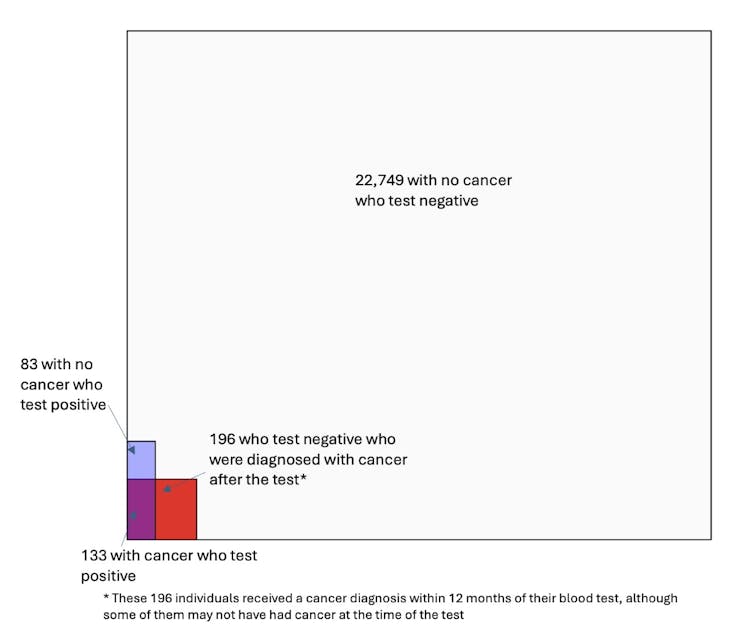
The Pathfinder 2 trial, involving 23,161 people aged over 50 from the US and Canada with no prior cancer diagnosis, produced the figures now circulating widely. Of the 216 participants who tested positive, 133 were later found to have cancer, giving the “positive predictive value” (PPV) of 62% that has been so widely reported.

That metric answers a crucial question: “If I test positive, what’s the chance I actually have cancer?” It also means, however, that 38% of positive results were false alarms.

Specificity – how often a test avoids falsely diagnosing cancer – is equally important, given the anxiety and medical follow-up triggered by an incorrect result. Here, the test performed well: 99.6% of people without cancer received a correct negative result.

Yet even this strong number has implications. If everyone aged over 50 in the UK were tested – more than 26 million people – the same rate would still generate over 100,000 false positives.

What has been less widely discussed is sensitivity, the measure of how many true cancer cases the test actually detects. On this measure, the result was 40.4%, meaning the test missed around three in every five cancers that appeared over the following year.

Galleri test results:

A chart showing how many cancer cases the Galleri test would correctly identify.
The Galleri cancer test in numbers.
John Ferguson, CC BY-SA

The figure that’s been less widely reported

That shortfall may disappoint those hoping for a catch-all screening tool. It also raises the risk that patients could be falsely reassured by a negative result, potentially delaying a diagnosis.

Statisticians caution that the reported PPV, specificity and sensitivity are estimates rather than fixed values, and each comes with uncertainty. They also note that tests often perform less well outside carefully controlled trials, meaning real-world accuracy could be lower.

So, where does this leave the Galleri test? It may well become a useful addition to future screening programmes, provided that negative results are not viewed as definitive by patients or doctors.

But the low sensitivity means many cancers would still be missed in its current form. The test is also expensive – US$949 (£723) in the US – and no evidence yet shows that widely using it reduces cancer deaths.

The early data is encouraging, but perhaps the excitement deserves to be tempered. This technology may be a step forward, but it is not a solution on its own.

The Conversation

John Ferguson does not work for, consult, own shares in or receive funding from any company or organisation that would benefit from this article, and has disclosed no relevant affiliations beyond their academic appointment.

ref. The cancer blood test making waves – and what the numbers really show – https://theconversation.com/the-cancer-blood-test-making-waves-and-what-the-numbers-really-show-270438

Calls for grizzly hunts to return to Western Canada oversimplify a complex ecological issue

Source: The Conversation – Canada – By Tandeep Sidhu, Assistant Professor, University of Manitoba

Highly publicized grizzly bear attacks have ignited calls to reopen grizzly trophy hunts across Western Canada. The most recent push came from the B.C. Wildlife Federation, a conservation and hunting advocacy organization that called for a hunting season on grizzlies after a bear attacked a group of schoolchildren in Bella Coola, B.C., leaving two people critically injured and two others seriously hurt.

The federation made the call while the circumstances of the attack were still unknown. Conservation officers now believe the attack involved a grizzly sow and her cubs. This does not dismiss or mitigate the traumatic nature of the incident, but it raises questions about why the federation would amplify this call during the early stages of an investigation.

Amid calls for British Columbia to revisit its grizzly hunting ban, Todd Loewen, Alberta’s minister for forestry and parks, has indicated he’s considering lifting his province’s ban in response to a growing number of grizzly attacks.

Alberta banned sport hunting of grizzlies in 2006. A similar ban was imposed in B.C. in 2018, drawing criticism from hunters and support from First Nations and the general public.

In 2024, Loewen introduced a framework allowing grizzlies to be killed by wildlife responders, rather than conservation officers, and some have questioned whether the right grizzly was euthanized in the program’s first kill.

The current debate about hunting grizzlies is being increasingly driven by emotion and political pressure.


Read more:
Fierce debate roars to life over grizzly bear hunt


Grizzly encounters are rare

A moral panic is a period marked by widespread, often exaggerated, concern about a perceived threat to a community. It relies on typically sensationalist media reporting echoing the claims of “moral entrepreneurs,” like advocacy groups, to induce public support for policy changes.

The recent grizzly attacks are already being used to fuel such a panic. Yet grizzly encounters are rare and often stem from surprise encounters, people encroaching on grizzly territory or sow grizzlies defending their cubs. The context of these incidents must be considered.

Every year, thousands of people encounter grizzly bears at national and provincial parks, including wildlife photographers, hikers and other naturalists, without incident.

Some people have expressed concerns that grizzlies are venturing away from their traditional habitats. But these observations may be the byproduct of a productive bumper crop season, which leads to a greater dispersion of berries that are crucial for hibernation foraging.

Predator control claims don’t match the evidence

Some hunters cite grizzlies and other predators as a contributor to declining elk populations across the Rockies. However, data from Alberta largely demonstrates that elk populations have trended upward, not downward.

Some evidence suggests elk population declines in mountainous hunting zones. It remains unclear as to why hunting interests would take precedence over natural ecological processes.

Hunting predatory animals is also a space that capitalizes on conspiracy theories and pseudoscience, despite the sector’s desired public image of science-based management and conservation.

For example, the B.C. Wildlife Federation has stated grizzly hunting was banned in B.C. with “no scientific rationale.”

This framing ignores substantial scientific evidence, including non-hunting-related mortalities, continued habitat loss, climate change that’s affecting denning patterns and increasing the risk of human conflict, and the fact that many grizzly populations are classified as “threatened.”

The claim there is no science to warrant a ban on grizzly hunting oversimplifies an inherently complex ecological issue.

Economic arguments miss the larger picture

The hunting industry has long claimed the economic value of trophy hunting. However, grizzly bear tourism creates more jobs and generates more revenue than trophy hunting. New research from the Greater Yellowstone Ecosystem has found that a single grizzly bear generates US$46,000 annually for the local economy.

Beyond this, framing wildlife solely through economic value reproduces a colonial dynamic in which natural resources are assigned value based on their economic and extractive potential.

There is also growing and widespread concern that changes to hunting policies in Alberta are spearheaded at the behest of the hunting industry itself. Loewen’s portfolio involves making decisions surrounding wildlife management, and some critics have raised concerns about his previous ownership of an outfitting business.

Loewen’s family owns Red Willow Outfitters, a hunt-guiding business. While the minister has indicated he’s working with lawyers and the province’s ethics commissioner over potential conflicts of interest, he has implied he doesn’t see any cause for concern.

Colonial dimensions of wildlife management

Grizzly bears, like wolves and bison, have tremendous cultural significance to many First Nations, including the Blackfoot people.

This connection that many First Nations communities have to native wildlife and their knowledge structures was disrupted by settler-colonialism.

These knowledge structures and worldviews are re-emerging. Examples include Indigenous-led stewardship of grizzlies in the Great Bear Rainforest in B.C. and the signing of the Grizzly Bear Treaty, led by the Piikani First Nation, in Alberta.

Reopening grizzly hunting would result in substantial cultural harms to many Indigenous communities. A comparable case unfolded in Wisconsin in 2021, when hunters killed almost one-quarter of the wolf population. Beyond its ecological harms, the hunt caused tremendous sociocultural harms to the Ojibwe.

Conservation and safety are not at odds

Calls to reopen grizzly hunting overlook the need for greater investment in public education and conflict mitigation to protect a threatened species. They also ignore that poaching is a driving cause of grizzly mortality and is likely under-reported.

Many recent attacks have involved sows with cubs, raising questions about how killing grizzlies could bolster conservation when the species is one of the slowest reproducing mammals. While sow grizzlies with cubs would likely be exempt from any hunt, they are responsible for many recent attacks. It is unclear how a hunt could reduce these incidents when the bears most likely to be involved would not be targeted.

The argument for reopening grizzly hunts is not about conservation or public safety. Trophy hunting remains tied to longstanding colonial practices and ideas about establishing masculine dominance, rather than ecological necessity.

Rural communities have demonstrated that existence with grizzlies and wolves is possible. Therefore, the question is not whether coexistence is achievable, but whether there is the political will to facilitate it.

The Conversation

The authors do not work for, consult, own shares in or receive funding from any company or organisation that would benefit from this article, and have disclosed no relevant affiliations beyond their academic appointment.

ref. Calls for grizzly hunts to return to Western Canada oversimplify a complex ecological issue – https://theconversation.com/calls-for-grizzly-hunts-to-return-to-western-canada-oversimplify-a-complex-ecological-issue-270267

‘Without prejudice’: What this 2-word legalese means for the dismissed charges against James Comey and Letitia James

Source: The Conversation – USA – By Ray Brescia, Associate Dean for Research and Intellectual Life, Albany Law School

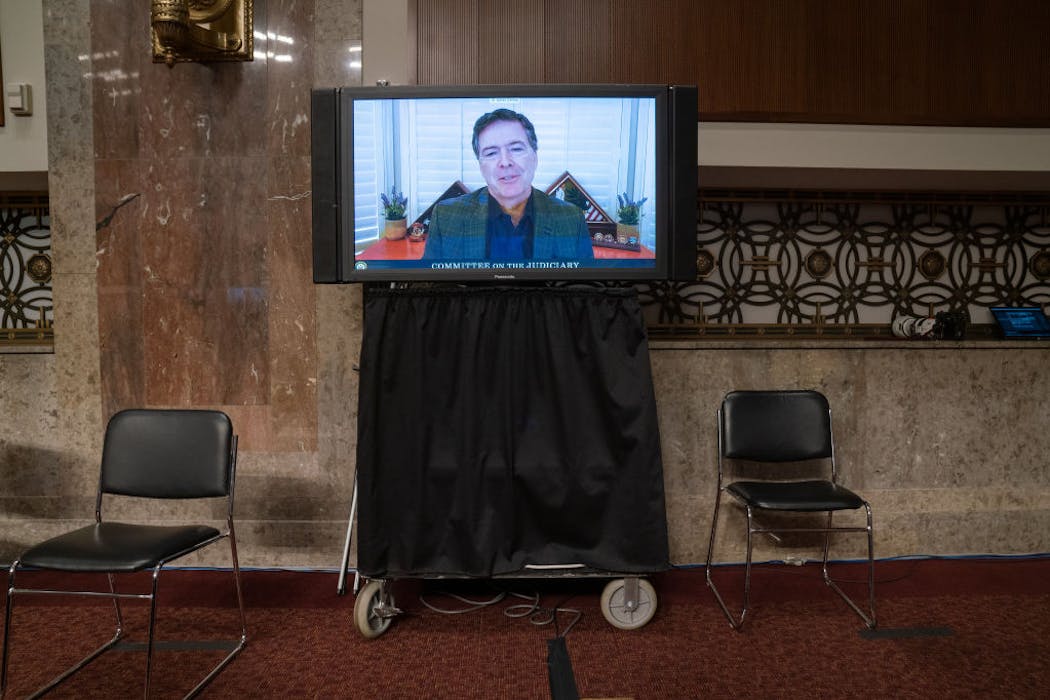
Former FBI Director James Comey is sworn in remotely at a hearing of the Senate Judiciary Committee in Washington on Sept. 30, 2020. Ken Cedeno-Pool/Getty Images

A federal judge on Nov. 24, 2025, dismissed the indictments against former FBI Director James B. Comey and New York Attorney General Letitia James, blocking the Department of Justice’s efforts to prosecute two of President Donald Trump’s perceived adversaries.

But U.S. District Judge Cameron McGowan Currie qualified her dismissals, saying she did so “without prejudice.”

What does that legal term mean?

Unaddressed charges

In her ruling, Currie concluded that the appointment of interim U.S. Attorney Lindsey Halligan, who filed the cases against Comey and James, was unlawful. Currie wrote:

“Because Ms. Halligan had no lawful authority to present the indictment, I will grant Mr. Comey’s motion and dismiss the indictment without prejudice.”

She wrote the same about the case against James.

Currie’s “without prejudice” reference means the dismissal did not address what legal scholars like me call the merits or substance of the underlying criminal charges.

A “without prejudice” dismissal is legalese for “you can try again if you can fix the problems with your case.” Had the judge ruled that the dismissals were “with prejudice,” that would have meant the government could not have brought the cases again.

Here’s what prosecutors would need to fix to be able to bring cases against Comey and James again.

Federal law provides that whenever a U.S. attorney’s position is vacant, the attorney general may appoint an interim U.S. attorney for a period of 120 days. At the end of that period, it’s up to the federal judges of the district where that position is vacant to appoint someone to continue in that role unless and until the president nominates, and the Senate confirms, a U.S. attorney through the normal appointments process.

A woman speaks outdoors in front of microphones.
New York Attorney General Letitia James speaks outside U.S. District Court on Oct. 24, 2025, in Norfolk, Va.
AP Photo/John Clark

The Trump administration appointed Halligan’s predecessor, U.S. Attorney Erik Siebert, in that interim role in January 2025. And when the 120 days from his appointment lapsed, the district judges of the Eastern District of Virginia selected him to continue on in his interim role.

Currie found that when Siebert resigned after his reappointment, that did not empower the Trump administration to appoint a new interim prosecutor. The power still resided with the District Court judges. Because of that, Halligan’s appointment and her efforts to secure the Comey and James indictments were void.

The end of the beginning

The Department of Justice can certainly appeal these rulings and could get them reversed on appeal, or it could refile them after a new U.S. attorney is named in accordance with law.

It may be too late for the case against Comey, however, because the statute of limitations on those charges has already run out. As Currie noted in her Comey ruling, while the statute of limitations is generally suspended when a valid indictment has been filed, an invalid indictment, like the one against Comey, would not have the same effect on the statute of limitations.

That means the time has likely run out on the claims against the former FBI director.

If Currie’s rulings stand, the Justice Department can’t just file the cases again, with Halligan still in this role, unless the Trump administration follows the procedures set forth in the law for her proper appointment.

While this is not the beginning of the end for these prosecutions, it is, at least, the end of the beginning.

The Conversation

Ray Brescia does not work for, consult, own shares in or receive funding from any company or organization that would benefit from this article, and has disclosed no relevant affiliations beyond their academic appointment.

ref. ‘Without prejudice’: What this 2-word legalese means for the dismissed charges against James Comey and Letitia James – https://theconversation.com/without-prejudice-what-this-2-word-legalese-means-for-the-dismissed-charges-against-james-comey-and-letitia-james-270559

Tim Berners-Lee wants everyone to own their own data – his plan needs state and consumer support to work

Source: The Conversation – UK – By Alex Zarifis, Lecturer in Information Systems, University of Southampton

Tim Berners-Lee, the creator of the world wide web, has released an important new book about the problems we face online and how to solve them. It is called This is for Everyone, meaning that the internet should be for all.

The philosophy espoused in the book is that the internet should not be a tool for the concentration of power among an elite. He wants the internet to function in a way that maximises the benefit to society.

His central idea, as he has written before, is that people should own their data. Personal data is any data that can be linked to us, such as our purchasing habits, health information and political opinions.

Everyone owning their data is a radically different approach to what we have today where big tech companies own most of it. This change is needed for two reasons.

The first is specifically about people’s right to privacy, so we don’t all feel like we live in a glass box with everything we do being monitored and having an effect on our careers and the prices we pay for services such as insurance. If AI is steered to make more money for an insurer it will do that, but it will not necessarily treat people fairly.

The second reason is that in a world being shaped by AI and data, if we do not own our data, we will have no power and no say in our future. For most of human history, workers’ labour was needed, and this gave them some power to pursue a fairer deal for themselves.

Most of us have the power to deny our valuable labour if we feel we are not treated fairly, but this may not have the same effect in the future. For many of us, in the highly automated AI driven world we are moving towards, our labour will not always be needed. Our data, however, will be very valuable, and if people own their data, they will still have a voice. When a tech giant owns our data, it holds all the cards.

None of these ideas are new, but as with the creation of the world wide web, Berners-Lee excels in bringing the best ideas together into one coherent, workable vision.

Many people have pet-hates about the internet, some dislike how algorithms sometimes promote controversial views, and others don’t like handing over more personal information for a service than what is necessary. His ability to see the bigger picture is due to the knowledge he has, having had a front row seat to the development of the world wide web from the start.

But what would this look like?

In practice, owning our data would mean having a data wallet app on our phone which internet companies might request access to. The internet companies could offer a small payment, or make their service free in exchange for the access. The individual could choose to manage access themselves on a case-by-case basis, or delegate the management of the data to a trusted third party such as a data union.

Berners-Lee recommends two possible solutions to break free from the oligopolistic situation we are in. The first is for government to intervene and create the regulation that would maximise the social good of the internet limiting the power of big tech.

This is highly unlikely in the United States where big tech is fully supported by the state. While a court in the US recently decided that Google had acted illegally to keep its monopoly status in search, it was not broken up under monopoly laws because it would be “messy”.

Elsewhere, though, for instance in the EU and Australia, there is a concerted effort to limit the negative outcomes for society of the
internet. The EU constantly updates its general data protection regulation so that it offers some protection to citizens’ privacy, while in Australia a world-first social media ban has been passed for children under 16.

Berners-Lee’s vision would require governments to go further. He has repeatedly asked for governments to regulate big tech warning that failing to do so would lead to the internet being “weaponised at scale” to maximise profit not social good. The regulation would seek to broaden competition beyond a small number of giant tech companies.

Beyond state intervention, Berners-Lee presents other ways forward. Perhaps, he contends, people themselves can begin building better alternatives. For example, more people could use social media such as Mastodon.social that is decentralised and does not promote polarising views.

As he sees it, a key part of the problem is that we become tied into platforms run by the giants. Owning our data would go some way to having a fairer relationship. Instead of being locked into an increasingly small number of big tech firms this would open the door to new platforms offering a better deal.

Berners-Lee created the Open Data Institute that tries to bring agreement on new online standards. He is promoting what he calls socially linked data and co-founded Inrupt that offers an online wallet to store all our personal data. This could include our passport, qualifications, and information about our health.

This decentralised model would give people the ability to analyse their data locally within the wallet to gain insights on their finances and health, without giving their data away. They would have the option to share their data, but this would now be from a position of strength.

Access would be given to a specific organisation, to use specific personal data, for a specific purpose. AI, even more so than the internet, gives power to whoever has the data. If the data is shared, so will the power.

Unlikely, but you never know

Despite proposing solutions, his vision is the underdog here. The chances of it prevailing in the face of big tech power are limited. But it is a powerful message that better alternatives are possible. This message can motivate citizens and leaders to push for a fairer internet that maximises social good.

The future of the internet and the future of humanity are interwoven. Will we actively engage to shape the future we want, or will we be helpless passive consumers? The worsening or “enshitification” of services has become an almost inevitable part of the innovation cycle. Many of us now wonder when, not if the service we receive will start to degrade dramatically once we are locked in.

There is dissatisfaction but this has not yet led to people changing their habits, possibly because there have not been better alternatives. Berners-Lee made the world wide web a success because his solution was more decentralised than the alternatives. People are now seeing the results of the overcentralised internet, and they want to go back to those decentralised principles.

Berners-Lee has offered an alternative vision. To succeed it would need to support from both consumers and states. That may seem unlikely, but once, so did the idea that the world would be connected via a single online information sharing platform.

The Conversation

Alex Zarifis does not work for, consult, own shares in or receive funding from any company or organisation that would benefit from this article, and has disclosed no relevant affiliations beyond their academic appointment.

ref. Tim Berners-Lee wants everyone to own their own data – his plan needs state and consumer support to work – https://theconversation.com/tim-berners-lee-wants-everyone-to-own-their-own-data-his-plan-needs-state-and-consumer-support-to-work-269042

School violence doesn’t happen in isolation: what research from southern Africa is telling us

Source: The Conversation – Africa – By Gift Khumalo, Lecturer, Durban University of Technology

School violence is a global public health phenomenon. This is when learners and teachers are the victims of physical and psychological abuse, cyber threats and bullying, fights, gangsterism, and the use of weapons at school.

The consequences of school violence are dire. There are implications for learners, teachers, the school and the community. Violence undermines the learners’ and teachers’ safety. It causes stress, academic decline and behavioural problems. It can contribute to a broader cycle of violence in communities.

School violence is a problem across southern Africa. This includes South Africa, Zimbabwe, Mozambique and Namibia.

In 2008 the regional body, the Southern African Development Community adopted Care and Support for Teaching and Learning framework. It was to prevent violence, create safer schools and foster a positive school ethos.

But there has been limited research unpacking factors that contribute to school violence. We recently undertook a review project to identify and understand those contextual factors.

Our research stems from our shared scholarly interest in issues of violence in educational settings. Our professional backgrounds include school social work, health promotion, social services with children and adolescents, and teaching general education modules at a South African university.

The review of studies of violence suggests that a range of factors contribute to school violence. These include: exposure to domestic violence, socio-economic status, poor family communication, lack of appropriate disciplinary processes at school, intolerance of individual and social differences, and exposure to alcohol and substance use in the community.

What’s needed are clear school policies, teacher training and deployment of school social workers.

The scope

Our project reviewed 24 studies of violence in Southern African Development Community schools. Most of the studies were done in South Africa but some were in Eswatini, Zambia, Malawi and Angola.

We focused on this region for the following reasons.

  • The region comprises low- and low-middle-income countries. Learners experience various socio-economic challenges and structural disparities within their communities and schools.

  • Previous research suggests that communities in the region face crime and violence, gangsterism, high unemployment rates and poverty.


Read more:
Blunting the impact of poor social conditions in South Africa will have big health benefits


  • The Care and Support for Teaching and Learning framework, which is intended to support learners’ enrolment, retention, performance and progression, has not prevented school violence. The limited evidence suggests a need to better understand the specific contextual factors that contribute to this violence.

Our findings from the papers we reviewed indicate that factors contributing to school violence are present in learners’ home environments, communities and schools.

Family environment

Disrespect towards teachers and physical fights are linked to witnessing domestic violence. The family unit’s socio-economic standing is significant. Compared to better-off learners, those from less privileged environments are more likely to violate school rules, steal other learners’ belongings, and bully others for their lunch meals. Learners from food-insecure families enter into transactional relationships with teachers for financial support and “free” groceries.


Read more:
Violence is a normal part of life for many young children: study traces the mental health impacts


Research shows that the inability of parents to support and talk to their children results in children succumbing to peer pressure and becoming involved in gangs and fights. Parents sometimes incite school violence by defending their children’s misconduct and blaming teachers for their children’s behaviour.

We also observed that in schools with children who have disabilities, some parents arrange intimate relationships for their children with other learners, to shield them from exploitation by community members. However, this exposes them to unintended sexual violence in those relationships, as sexual boundaries and consent are not adequately explained to the young couples.


Read more:
Bullies in South African schools were often bullied themselves – insights from an expert


Community environment

The studies we reviewed indicate that the surrounding community has a role in school violence. Learners’ exposure to alcohol and substance use can lead to violence. Specifically, community members sell substances to learners, who then return to school intoxicated, disrupting teaching and learning. In some instances, fights among the boys that start outside school continue in the school premises.


Read more:
After school clubs aren’t always safe spaces: what should be done about it


School environment

Different types of bullying occur among learners. Research shows that most of the perpetrators are boys, ridiculing girls for their achievements and using violence to “prove masculinity” and gain popularity. Boys are ridiculed for not having romantic partners, which often leads to aggression. Peer pressure also causes boys to verbally abuse girls who refuse their advances, and resort to behaviours such as taking pictures of their underwear in class or through toilet windows. Gangs are common and contribute to violence, serving as venues for violent interactions among boys.

Another factor fuelling school violence is lack of understanding and intolerance of demographic and individual diverse identities – like nationality, gender and sexual orientation, physical appearance, culture and religion. Migrant learners are subjected to xenophobic attitudes where they are body shamed and insulted. Learners are the target of homophobic statements because of their gender and sexual identities. Dark-skinned and slender learners are often targeted, with teasing guised as humour.


Read more:
Taunts and bullying drive children with albinism from Tanzanian schools


Way forward

The purpose of this review project was to map the literature on factors contributing to school violence in the Southern African Development Community region. It could be useful in other similar regions too.

We suggest education ministries and schools countries could consider:

  • implementing clear school policies on how to report and respond to incidents of school violence

  • training teachers and school administrators on national and school policies for addressing school violence and promoting professionalism

  • documenting incidents of school violence and developing strategies to create safe environments

  • collaboration among schools, parents and psychosocial support personnel, such as school social workers, to reduce violence in schools.

We argue that different intervention programmes and services need to be adopted to address the root causes of violence. Deploying more school social workers would be part of this effort.

The Conversation

The authors do not work for, consult, own shares in or receive funding from any company or organisation that would benefit from this article, and have disclosed no relevant affiliations beyond their academic appointment.

ref. School violence doesn’t happen in isolation: what research from southern Africa is telling us – https://theconversation.com/school-violence-doesnt-happen-in-isolation-what-research-from-southern-africa-is-telling-us-269288

Côte d’Ivoire’s democratic backslide: elections leave even less space for freedom

Source: The Conversation – Africa (2) – By Jesper Bjarnesen, Senior researcher, The Nordic Africa Institute

Ivorians went to the polls on 25 October 2025 to choose between incumbent president Alassane Ouattara – seeking a fourth five-year term – and one of four candidates who didn’t have the backing of the largest opposition parties.

There was not much of a choice, as the three main opposition candidates were banned from standing. Ouattara claimed another first-round landslide victory with 89.77% of votes cast.

As a researcher, I have followed political developments in Côte d’Ivoire over the past 15 years, and I’m currently involved in a project on boycott movements which uses Côte d’Ivoire as a country case.

This informs my view of the 2025 presidential elections and the democratic outlook for Côte d’Ivoire.

While the country tends to be seen as a regional front runner in terms of its economic performance, the 2025 elections continue a worrying trend of democratic backsliding and political polarisation.

The 27 December legislative elections will be a test of the country’s democratic resilience.

The build-up

In the months leading up to the presidential elections, major opposition candidates were excluded and political apathy took hold in a shrinking space for democratic expression.

Ouattara announced his candidacy in August, despite the widespread objections to his third-term candidacy in 2020 at home and abroad.

As in 2020, critics insisted that Ouattara was overstepping his constitutional mandate of one presidential term, renewable once. He has argued that a 2016 revision gave him the right to run twice.

As election day approached, Côte d’Ivoire’s political landscape was marked by polarisation, repression and uncertainty.

Tensions deepened in early September when the Constitutional Council disqualified five prominent opposition candidates from the race. Former president Laurent Gbagbo, Charles Blé Goudé and Guillaume Soro were excluded due to prior criminal convictions. The two main challengers, Tidjane Thiam and Pascal Affi N’Guessan, were barred on procedural grounds.

Their exclusion more or less handed victory to Ouattara, and his campaign comfortably turned towards ensuring an absolute majority.

In early October, the National Security Council banned public gatherings, except those organised by official candidates, on the grounds of “maintaining public order”. It also imposed additional restrictions on civic mobilisation. It used the letter of the law to serve Ouattara’s interests in limiting protests against his candidacy.

Going against the ban, opposition parties called for daily protests, but the gatherings were generally small and promptly broken up by security forces.

Three days before the elections, Gbagbo denounced what he called a “civil coup” and expressed his support for those “protesting against this electoral robbery”.

On 11 October, protesters in Abidjan took to the streets. These acts of defiance led to some 700 arrests and 80 prison sentences for disturbing public order. Eleven people were killed in clashes between security forces and protesters.

Along with other domestic and international observers, Amnesty International denounced the repression of demonstrations. At the same time, the government deployed 40,000 security personnel across the country.

France, the regional grouping Ecowas and the EU have remained largely silent. They have generally prioritised stability and strategic relations with the Ivorian government over democratic accountability. This passivity risks further eroding the credibility of these international actors while reinforcing narratives of western double standards in the region.

While the excluded opposition parties tried, and largely failed, to mobilise their supporters in the streets, the remaining candidates (all representing small and newly formed political parties and coalitions) chose a different strategy.

Capable Generations Movement leader Simone Ehivet Gbagbo (the former first lady, who was divorced from ex-president Gbagbo in 2023) deplored the elimination of her ex-husband. But in the final weeks of campaigning she insisted that it was too late to call people to the streets. She called for people to vote instead.

Election day

Election day was mostly peaceful across the country, but violent clashes did break out in several towns. The president of the Independent Electoral Commission, Ibrahim Kuibiert Coulibaly, described these incidents as “marginal” and “quickly contained”.

While the election result was never in doubt, the participation rate was less predictable. The confirmed participation rate of 50.1% shows that many voters stayed at home; many out of apathy but also out of concerns over the risk of violent clashes around polling stations.

Provisional results announced on 27 October gave Outtara 89.77% of the votes. Along with other opposition members, Thiam lamented a rigged and divisive electoral process with inadequate participation, and urged nonviolent resistance. He called for the government to engage in dialogue towards reconciliation.

The ruling party and media supportive of Ouattara described the result as a “landslide victory”, particularly celebrating Ouattara’s victories in historical opposition strongholds.

Three days after election day, several leaders of the main opposition parties were summoned by police on the grounds that military-grade weapons had been found in the homes of individuals linked to the 11 October march.

So, while the elections may be said to have unfolded without major incidents, the lack of a genuine contest and the measures taken to restrict opposition cast a shadow over the poll, and over Outtara’s legacy.

What’s next, and what are the prospects for democracy?

In the short to medium term, the major opposition parties could salvage some of their influence in the parliamentary elections on 27 December. Or they may reignite protests.

In the long term, Ouattara would have to step towards outright authoritarianism to justify a fifth candidacy in 2030. It seems more likely that he will finally hand over to a successor from his inner circle.

Even if that happens, serious questions remain regarding the electoral framework. The opposition has long claimed that the independent electoral commission is biased in favour of the incumbent.

The Ouattara presidency is tainted by its record of one-sided electoral competitions, political violence and insecurity, and a shrinking space for public expression.

Given Côte d’Ivoire’s strategic importance to the global north, as a rare ally in the subregion, international actors won’t have much to say about its democratic performance.

Any prospects for reconciliation, political reform and a peaceful transition in 2030 will mainly be in the hands of the ruling party. It will have to encourage dialogue and political inclusion at municipal, provincial and regional levels.

The 27 December legislative elections will offer a better chance to understand the actual distribution of political leverage than the flawed presidential elections.

Amelie Stelter of the department of Peace and Conflict Research, Uppsala University, Sweden contributed to this article

The Conversation

Jesper Bjarnesen receives funding from the Swedish Research Council (VR) through grant number VR2024-00989.

ref. Côte d’Ivoire’s democratic backslide: elections leave even less space for freedom – https://theconversation.com/cote-divoires-democratic-backslide-elections-leave-even-less-space-for-freedom-269469