Mathematics at A-level is going from strength to strength. Maths is the most popular subject choice, and further maths, which is a separate A-level course, has seen the most growth in uptake. Despite this, concerns still remain about the mathematical skills of young people who do not choose to study maths after they are 16.
Students in England who have passed GCSE maths at grade four or above, but who are not taking A-level or AS-level maths, are eligible to take a core maths qualification.
Core maths was introduced in 2014-15 to attempt to remedy a lack in mathematics education after 16. But the number of entries remains well short of what they could be. Many students who would benefit from maths after 16 are not taking this subject.
A 2010 report from the Nuffield Foundation found students in the UK lag their peers in other countries in participation in mathematics after the age of 16. Further research from the Royal Society and higher education charity AdvanceHE showed that as a consequence, many were not well prepared for the demands of their university courses or careers. Survey data has also found that over half of UK adults’ maths skills are low.
Many courses at university include mathematical or quantitative elements, but do not require AS or A-level maths for entry. These include psychology, geography, business and management, sociology, health sciences, biology, education and IT. When many students have not studied mathematics since GCSE, this results in a lack of fluency and confidence in using and applying it.
Core maths consolidates and builds on students’ mathematical understanding. The focus is on using and applying mathematics to authentic problems drawn from study, work and life. This includes understanding and using graphs, statistics and tools such as spreadsheets, as well as understanding risk and probability.
Take-up remains low despite incentives – schools receive an additional £900 in funding for each student who studies core maths. In 2025, 15,327 students took core maths – a 20% increase on 12,810 entries in 2024, which is very encouraging. However, research from the Royal Society in 2022 found that fewer than 10% of the number of A-level students who were not taking A-level mathematics had taken core maths, which will not have changed significantly even with the current numbers.
However, a real incentive for teenagers to study this subject would be if it was rewarded in entry to university. Universities can allow students entry to a course with lower A-level grade profiles than normally required if they also passed core maths, for instance. But the number of universities making this kind of offer is low.
Schools and colleges need stronger signals from universities to induce them to offer students the opportunity to study for a core maths qualification, and to encourage their students to do so. Shifting today’s landscape to one where the vast majority of learners aged 16 to 19 in England are studying some form of mathematics which is relevant to their current and future interests and needs will require reform.
The Royal Society’s 2024 report on mathematical and data education sets out several reforms necessary to develop the mass mathematical, quantitative and data skills needed for the careers of the future. These include compulsory maths and data education in some form until 18. Extending the take up of core maths would be an excellent way to begin achieving this.
Paul Glaister does not work for, consult, own shares in or receive funding from any company or organisation that would benefit from this article, and has disclosed no relevant affiliations beyond their academic appointment.
Source: The Conversation – UK – By David Hastings Dunn, Professor of International Politics in the Department of Political Science and International Studies, University of Birmingham
As a former reality TV star, Donald Trump often gives the impression of playing the part of a US president rather than conducting the business of leading a government seriously. Nowhere has this been more apparent than in his recent summit with Russia’s Vladimir Putin in Alaska, where the two leaders met to discuss ending the war in Ukraine.
The theatre of the occasion had been meticulously planned. Trump rolled out the red carpet for Putin and organised a military flypast, while there were multiple choreographed photo opportunities. Yet what resulted was no peace deal and no prospect of the war ending any time soon.
The very act of meeting and the nature of the interaction were such that the summit instead did considerable damage to the US and broader western position on Ukraine. At the same time, it strengthened Russia’s stance considerably.
Russia used the summit to its strategic advantage, coming away with more concessions than it could have hoped for. Trump’s calls for a ceasefire in Ukraine are now gone and the prospect of additional sanctions on Russia have evaporated. Moscow now has the US president advocating for Ukraine to cede additional territory to Russia over and above the amount it has already taken by force.
The diplomatic mechanism of summitry, which is always a risky endeavour, delivered all this to Putin. I put this down to apparent poor preparation on the US side, including no preconditions, and skilful statecraft by the Russians.
Ending Putin’s isolation
Embracing Russia on equal terms with all the accoutrements of a state visit not only ended Putin’s isolation internationally. It immediately rehabilitated him on the world stage.
The symbolism of this was best demonstrated by the joint statement the two leaders delivered to the media. Putin spoke first and for longer with a well crafted speech. This contrasted sharply with Trump’s short ramble.
By recreating the theatre of a cold war summit, Trump indulged and actively reinforced Putin’s own nostalgic fantasies about Russia being a superpower with hegemonic geopolitical entitlements.
In an interview with Fox News after the summit, Trump said: “It’s good when two big powers get along, especially when they’re nuclear powers. We’re number one, they’re number two in the world.”
Trump’s statement exalted and exaggerated Russia’s position in the international system, while diminishing and sidelining the wealth and interests of European powers.
Putin hinted at future “superpower summits” to come, providing Trump with other opportunities for theatrical photo opportunities and to play the role of peacemaker.
He also suggested that US and Russian investment and business cooperation has tremendous potential “in trade, digital, high tech and space exploration” as well as the Arctic. And ahead of the summit, Putin indicated that he wants to pursue a new nuclear weapons agreement with Trump.
By bringing his treasury and commerce secretaries, Scott Bessent and Howard Lutnick, to Alaska, Trump had clearly taken the bait that there are lucrative opportunities on offer for the US if only the troublesome issue of Ukraine can be quickly settled and moved beyond. This framing was evident in Trump’s assessment that the summit went well and that there was much that the two sides agreed on.
A considerable setback
Trump’s love of the limelight, particularly when it garners the world’s attention, has been a feature of his two presidencies. His meeting with North Korean leader Kim Jong-un during his first administration had all the pomp and performativity of previous summits. Trump left without any agreement or real improvement in relations.
It did, however, succeed in ending the damaging social media spats between the leaders that had unnecessarily escalated real-world tensions. The meeting in Alaska is likely to have the opposite effect.
For Russia, it has reinforced the nostalgic fantasy that it is a superpower with a right to a sphere of influence. Given that Europe has been arguing for three years that it is the Russian mindset that is the problem, not just its current aggression in Ukraine, this is a considerable setback.
Putin was given the opportunity to flatter Trump’s ego about the 2020 election, which the US president claims was rigged, and suggest that the war would never have happened if Trump had been in charge. Now, Ukraine is once again being seen by Trump as the obstacle to peace.
The Russians, by persuading Trump to give up his demand for an immediate ceasefire, have bought themselves more time to make further advances on the battlefield. They have also stalled any further pressure from Washington while they pretend to negotiate seriously.
The only positive outcome of the encounter may be the realisation of European leaders that well prepared summit meetings with Trump are an open opportunity to move the dial back in their direction.
David Hastings Dunn has previously received funding from the ESRC, the Gerda Henkel Foundation, the Open Democracy Foundation and has previously been both a NATO and a Fulbright Fellow.
Sports coaches have always made decisions based on experience, observation and intuition. But they are increasingly relying on hard evidence. Behind the scenes, a quiet revolution is transforming sport – driven not by human skills but by data.
Wearable sensors, video trackers, GPS and health monitors now capture almost everything an athlete does. From their speed and movement to heart rate and positioning, countless data are being recorded.
But how best apply all that data?
I work at the intersection of sports, statistics and artificial intelligence, leading the Modelling, Interdisciplinary, Data, Applied, Statistics (Midas) research team at the University of Luxembourg. Our goal is simple: use data to help athletes and coaches make better decisions.
Whether that’s adjusting tactics pre-match, predicting outcomes or preventing injury, data science is changing the game.
The challenge is to make sense of this plethora of data, which comes from different sources and is of different types. And that is precisely where statistical modelling and machine learning come into play.
By finding patterns in the data – such as why a certain (over-)training has led to reduced performance or even injury, for example – we can provide actionable insights. Indeed, these insights don’t just reveal or explain what has happened, but can also predict what is going to happen – and most importantly why.
To be able to predict as accurately as possible future performances and results and to estimate the risk of injuries, we’ve developed a new approach called statistically enhanced learning (SEL) — a framework that blends statistical modelling with machine learning.
In short, statistical insights can be transformed into features that help predictive algorithms work better. Consider “team strength”. This is an abstract concept we’ve come up with to represent the team’s current playing ability. And we model it out of data from the games teams have previously played.
It isn’t meaningful to use all individual games as input to a predictive algorithm. So we first build a statistical model to estimate team strengths from all these matches (giving more weight to more recent matches), and the estimated team strengths will then be used as input for the predictive algorithm.
Think of it as giving AI smarter inputs, such that it makes smarter predictions. In our studies, this approach consistently improves accuracy and interpretability across different sports.
Working with the Metz women’s handball team, champions of France in 2025, we developed prediction models that achieved over 80% accuracy. In a recent scientific paper, we combine game information (such as day of the week the game takes place, importance of the game) and team’s structure (height, weight, age of players) with the team strengths (which we estimate based on several previous match results) and feed all this into the programme. Without the team strengths, the accuracy would drop by roughly 20%.
Crucially, these models are not black boxes. We use explainable AI techniques so coaches can understand which variables drive the predictions, helping them adjust strategy and prepare more effectively.
Preventing injuries
Another key area is injury prevention. Injuries can derail a season, or even a career. By analysing patterns in performance and workload data, we can identify early warning signs. For example, slight declines in speed, jump height or reaction time may signal that a player is at risk.
Once flagged, coaches and medical staff can step in by adjusting training, adding rest days or tailoring recovery. Instead of reacting after an injury, teams can act proactively to keep athletes healthy.
Clearly our tools do not replace coaches. Rather they enhance their decision-making, be it at the level of tactical preparation or training setup. By turning data into insight, we help teams compete smarter.
Challenges and the future
Of course, this new era brings challenges. Data quality is not always consistent. Not all clubs can afford the same technology. And ethical questions arise around data ownership and athlete privacy. But the direction of travel is clear. Data science is becoming an essential part of sport, not just for top clubs and national teams, but across all levels.
We are also expanding our collaborations. This approach can be used in various sports including football, basketball and rugby. Our aim is to make analytics more accessible, explainable and useful, so that athletes and coaches, not just data scientists, benefit from what we learn.
As fans, we see the goals, the saves, the rallies, the celebrations. What we do not see is the science behind the scenes – the models predicting outcomes, the algorithms flagging risks, the data informing every sprint and substitution.
Sport will always be about passion, talent and human drama. But increasingly, it is also about probability, precision and the quiet power of data. And that might just be one of the most important game changers of all.
Christophe Ley is co-founder of the company GrewIA and President of the Luxembourg Statistical Society.
Source: The Conversation – Africa (2) – By Seth Asare Okyere, Teaching Assistant Professor, University of Pittsburg and Adjunct Associate Professor, Osaka University, University of Pittsburgh
Droughts are a familiar hardship in Ghana’s semi-arid north, where rainfall is erratic and agriculture is the mainstay of rural economies. The economic and environmental effects of drought have been well documented. But less attention is paid to its psychological toll on farmers and their families.
We conducted a study in the Talensi district of Ghana’s Upper East region to assess the impact of drought on the mental wellbeing of peri-urban farmers in semi-arid Ghana. We are a multidisciplinary team of scholars working in the area of resilience, sustainability and more recently psychological wellbeing.
We also investigated whether social capital (people’s social support networks) affected the impact of drought on three mental health outcomes: depression, anxiety and stress.
Based on a survey of 507 farmers, we found that prolonged periods of drought were strongly linked to increased levels of depression, anxiety and stress.
Our research also offers hope, however: personal social capital reduced the severity of these mental health impacts.
Our findings offer important insights for policymakers, especially in the context of climate change, which is intensifying drought conditions in the region. This study is among the first in Ghana – and the broader west African region – to empirically examine the mental health effects of drought on farmers using validated psychological tools.
It opens a crucial conversation about how vulnerability in the era of climate change is addressed. Our study demonstrates that climate adaptation planning is incomplete without integrating psychological wellbeing.
Droughts are slow-onset disasters. Their effects accumulate gradually. But their impact on livelihoods and psychological resilience is deep.
In northern Ghana, where rain-fed agriculture dominates, even short delays in rainfall can trigger food insecurity, livestock losses and economic instability.
In the Talensi district, where we conducted the study, average annual rainfall is around 950mm. But it’s poorly distributed and increasingly erratic. The land has shallow, gravelly soil that has low moisture retention. These environmental conditions, compounded by the lack of irrigation infrastructure, make farmers highly vulnerable to climatic shocks.
For the study, we randomly selected 507 farmers across two communities – Awaredone and Yameriga. These communities combine crop cultivation with livestock rearing. Farmers cultivated mainly millet, rice, maize, cowpea and soybeans. Livestock were cattle, sheep and goats. We conducted our survey between September 2022 and March 2023. We used a combination of validated psychological scales and structured interviews in local languages to assess the impact of drought on mental health outcomes. We then used structural equation modelling to model our findings.
Our results were striking.
Stress levels
Our statistical modelling showed a significant link between the severity of the effects of drought and elevated levels of depression, anxiety, and stress. Farmers experiencing longer or more intense drought periods were more likely to report psychological distress.
Many farmers spoke about the hopelessness they felt when they watched their crops wither, or their animals die. They also spoke of the weight of not being able to provide food or income for the household.
Farmers reported symptoms such as insomnia, irritability, persistent worry, and even suicidal thoughts.
As one farmer we interviewed put it:
When the rains fail, it is not just the crops that die. Sometimes, our spirits die too. But when a neighbour shares food or even just listens, it brings life back.
Not all farmers were equally affected. Those with strong social support networks – including relationships with family, friends, neighbours and community groups – reported better mental health outcomes, even when they experienced the same drought conditions.
This is where the concept of personal social capital comes in. It refers to the resources – emotional, informational, or material – that individuals can access through their social relationships. In rural and peri-urban Ghana, this might mean receiving food from a neighbour, emotional support from relatives, or shared labour during the farming season.
Social capital acted as a buffer, we found. It moderated the relationship between drought and mental health outcomes. In other words, farmers with strong social ties were better equipped to cope with the psychological impacts of drought.
We conclude from our findings that combining social capital with other forms of capital – human, physical, financial and natural – alongside sustainable livelihood diversification programmes could reduce the underlying issues that make people vulnerable to the mental health impacts of drought.
This points to an urgent need to include mental health in disaster response and climate adaptation planning. As climate change intensifies, droughts are expected to become more frequent and severe in Ghana’s northern regions.
We argue that interventions should not only focus on boosting agricultural productivity or providing technical training. Instead, a more integrated approach is needed – one that combines climate adaptation with mental health support and community mobilisation. This is particularly relevant for the region, where health services are overstretched and mental health is often a taboo subject.
Therefore, enhancing social capital – through savings groups, farmer cooperatives, or traditional mutual aid networks – can improve psychological resilience. In practical terms, this might mean strengthening farmer-based organisations, promoting inclusive governance, and incorporating mental health education into climate adaptation services.
Donors and NGOs can also play a role by supporting psychosocial support programmes that are culturally sensitive and locally grounded.
If left unaddressed, the psychological burdens of drought could erode the social fabric of farming communities, reduce productivity, and trap households in cycles of poverty and distress. But if we recognise the value of social support systems – and invest in them – we can build more resilient, healthier communities.
The authors do not work for, consult, own shares in or receive funding from any company or organisation that would benefit from this article, and have disclosed no relevant affiliations beyond their academic appointment.
From August 2024 to July 2025, Canada’s late midlife adults — those between the ages of 55 and 64 — collectively worked more than 100 million hours per month in a wide range of occupations like retail, law, engineering and health care.
Across Canada, baby boomers spent 1,219,000 hours of their 1,342,000 informal volunteer work hours directly helping family members like a parent or a sibling. During the COVID-19 pandemic, a good number were adding another 20 caregiving hours to their work week, whether in their own home or in a family member’s.
Aging and caregiving
Both of us research population and individual aging. We have watched our own siblings feeling caught between supporting parents and supporting their children, deferring their own health needs in the process. This is no surprise, because about one in five midlife women are caring for a child and more than one-third are providing care for an adult.
A recent study estimates that 18 per cent of young adults self-identify with high anxiety and another 13 per cent with depression while almost half worry about losing their jobs.
Research tells us this demographic is unlikely to use community support services for things like meal preparation or fitness for themselves. Around one in four who needed health services had trouble accessing them. Others reported that they either did not get around to accessing services or wanted to go it alone. Research about how they stayed afloat during COVID-19 was lacking and remains largely absent.
How people look at aging
In his book about psychosocial development, Life Cycle Completed, psychologist Erik Erikson remarked that historic change has the power to make people stop and rethink what old age looks like.
Across 20 countries, at age 60, health satisfaction has had a great deal to do with how people see themselves aging.
Before COVID-19, we designed a study that surveyed more than 500 Canadians in their 50s. They were feeling most pessimistic about aging physically, including their state of health. When it came to loss, what resonated most was difficulty making friends and seeing “old age” as a depressing time.
A typical caregiver has been providing 35 hours of care per week. (Shutterstock)
For these 50-somethings, being caught between helping younger generations and tending to their own growth was detrimental to self-confidence. Making time for activities that help people learn about and see good in themselves is time well spent.
In the aftermath of COVID-19, late midlife adults are looking at an uncertain future. Statistics tell us that they currently anticipate poor health as early as age 71, and their own demise around age 81.
Late midlife adults represent one of our nation’s major resources, given the socioeconomic and health-related roles they play as caregivers to young and old. But resources can become depleted: they need care, respect and sensitivity themselves in order to continue in those roles.
It’s time to ask late midlife Canadians about the burdens they’re carrying, if the load is becoming too heavy, and how they are managing the load. This is a conversation well worth having.
Gail Low receives funding from the RTOERO Foundation, University of Alberta, and MacEwan University. She works for MacEwan University and volunteers for the Gateway Association.
Gloria Gutman is Professor Emerita at Simon Fraser University. She is a Past-president of the International Association of Gerontology and Geriatrics, Canadadian Association on Gerontology, and International Network for Prevention of Elder Abuse.
Do we visualize dreams in color or black and white? – Srihan, age 7, West Bengal, India
Dreams are an astonishing state of consciousness. As you sleep, your mind creates fantastic and bizarre stories, rich with visual details – all without any conscious input from you.
Some dreams are boring. Others show you shocking events or magnificent images. I frequently dream of alligators walking upright, wearing sunglasses and yellow T-shirts. Often the alligators are friendly and go on adventures with me, but sometimes they’re aggressive and chase me.
The way the brain operates while you’re dreaming explains why dreams can be so fantastic. A small structure called the amygdala is largely responsible for processing emotional information, and it’s very active while dreaming. In contrast, the brain’s frontal cortex, which helps you plan and strategize, tends to be rather quiet. This pattern explains why dreams can jump from one peculiar scene to the next, with no clear story line. It’s as if you are sailing an emotional wave, without a captain.
Dreams can indeed be emotional and sometimes scary. But dreams can be enjoyable too – maybe you’ve had a dream so delightful you were disappointed to wake up and realize it wasn’t reality.
Are the images in your dreams in vivid color? Perhaps you had a dream about playing Candy Crush and can remember the brightly colored red, purple and yellow candies cascading in your dream.
As a neuroscientist who studies sleep, I can tell you that about 70% to 80% of people report dreaming in color, as opposed to just in shades of black and white. But this estimate may be low, because scientists can’t actually see what a dreamer sees. There’s no sophisticated technology showing them exactly what’s happening in a dreamer’s mind. Instead, they have to rely on what dreamers remember about their dreams.
Researchers record brain and eye activity while they monitor volunteers’ sleep in the lab. Greg Kohuth
Studying sleep in the laboratory
To study dreams, researchers ask people to sleep in laboratories, and they simply wake them while they’re dreaming and then ask them what they were just thinking about. It’s pretty rudimentary science, but it works.
How do scientists know when people are dreaming? Although dreams can occur in any sleep stage, research has long shown that dreams are most likely to occur during rapid eye movement sleep, or REM sleep.
Scientists can identify REM by the electrical activity on your scalp and your eye movements. They do this by using an electroencephalogram, which uses several small electrodes placed directly on the scalp to measure brain activity. During REM, the dreamer’s eyes move back and forth repeatedly. This likely means they’re scanning – that is, looking around in their dream.
That’s when dream researchers wake up their participants. Dreams are really tricky to study because they evaporate so quickly. So instead of asking participants to remember a dream – even one they were having a moment ago – we ask them what they were just “thinking.” Dreamers don’t have time to think or reflect, they just respond – before the dream is lost.
Dreams are full-sensory experiences
There seem to be age differences in color dreaming. Older people report far less color in their dreams than younger people. The prevailing explanation for this is based on the media they experienced while young. If the photographs, movies and television you saw as a child were all in black and white, then you are more likely to report more black-and-white dreams than color dreams.
This phenomenon raises some interesting questions. Are people really dreaming in black and white or just remembering their dreams that way after the fact? Was it as common for people to say they dreamed in black and white before these visual media were invented? There wasn’t any focused research that relied on in-the-moment dream reports back before black-and-white photos and movies existed, so we will never know.
Although visual features dominate, you can also hear, smell, taste and feel things in your dreams. So if you dream about visiting Disneyland, you might hear the music from the parade or smell french fries from a food stand.
You may have also wondered whether blind people dream. They do. If a person becomes blind after age 5 or 6, their dreams will contain visual images. However, someone who is congenitally blind, or becomes blind before about age 5, will not have visual images in their dreams. Instead, their dreams contain more information from the other senses.
Remembering your dreams
Some people may say they don’t dream at all. They do, but many people don’t remember their dreams. The vast majority of dreams are forgotten. That’s because when we’re in REM sleep, the hippocampus, the area of the brain responsible for long-term memory, is largely turned off.
Others may remember a dream immediately upon awakening but quickly forget it. That’s because the hippocampus is a bit sluggish and takes some time to wake up, so you’re not able to create a long-term memory right after waking.
Perhaps the biggest question about dreams is whether they mean anything. People have been discussing this since ancient times. Sigmund Freud, the founder of psychoanalysis, called dreams the “royal road to the unconscious.” He believed they had a profound meaning that’s hidden from the dreamer.
If you would like to remember your dreams better, simply keep a notepad and pen by your bed and practice writing down your dreams right when you wake. This is the best way to remember the fantastical stories your brain creates for you every night.
Hello, curious kids! Do you have a question you’d like an expert to answer? Ask an adult to send your question to CuriousKidsUS@theconversation.com. Please tell us your name, age and the city where you live.
And since curiosity has no age limit – adults, let us know what you’re wondering, too. We won’t be able to answer every question, but we will do our best.
Kimberly Fenn does not work for, consult, own shares in or receive funding from any company or organization that would benefit from this article, and has disclosed no relevant affiliations beyond their academic appointment.
Apart from the geopolitical importance, there are other reasons why this move is critically important. A source of nuclear energy will be necessary for visiting Mars, because solar energy is weaker there. It could also help establish a lunar base and potentially even a permanent human presence on the Moon, as it delivers consistent power through the cold lunar night.
As humans travel out into the solar system, learning to use the local resources is critical for sustaining life off Earth, starting at the nearby Moon. NASA plans to prioritize the fission reactor as power necessary to extract and refine lunar resources.
As a geologist who studies human space exploration, I’ve been mulling over two questions since Duffy’s announcement. First, where is the best place to put an initial nuclear reactor on the Moon, to set up for future lunar bases? Second, how will NASA protect the reactor from plumes of regolith – or loosely fragmented lunar rocks – kicked up by spacecraft landing near it? These are two key questions the agency will have to answer as it develops this technology.
Where do you put a nuclear reactor on the Moon?
The nuclear reactor will likely form the power supply for the initial U.S.-led Moon base that will support humans who’ll stay for ever-increasing lengths of time. To facilitate sustainable human exploration of the Moon, using local resources such as water and oxygen for life support and hydrogen and oxygen to refuel spacecraft can dramatically reduce the amount of material that needs to be brought from Earth, which also reduces cost.
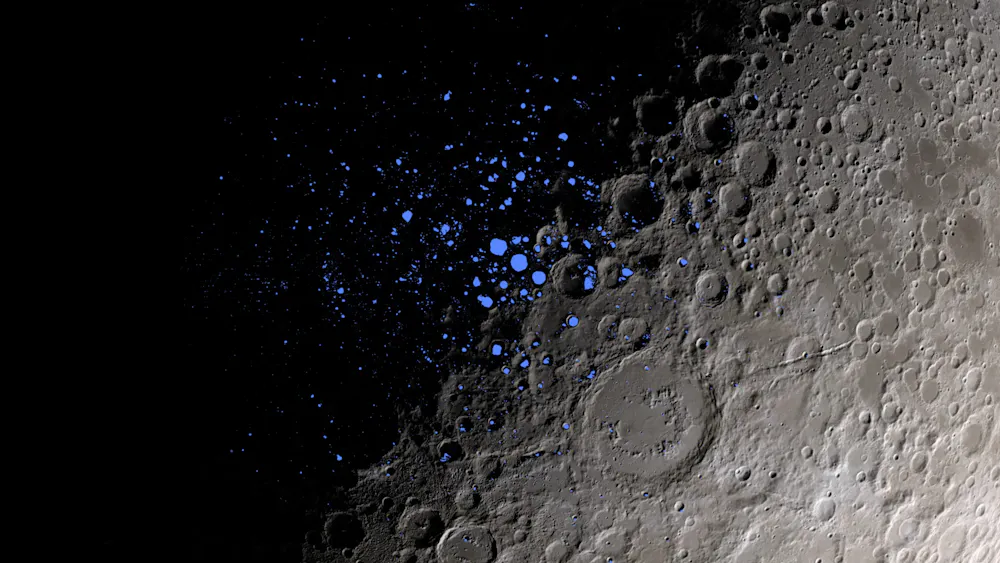
In the 1990s, spacecraft orbiting the Moon first observed dark craters called permanently shadowed regions on the lunar north and south poles. Scientists now suspect these craters hold water in the form of ice, a vital resource for countries looking to set up a long-term human presence on the surface. NASA’s Artemis campaign aims to return people to the Moon, targeting the lunar south pole to take advantage of the water ice that is present there.
Dark craters on the Moon, parts of which are indicated here in blue, never get sunlight. Scientists think some of these permanently shadowed regions could contain water ice. NASA’s Goddard Space Flight Center
In order to be useful, the reactor must be close to accessible, extractable and refinable water ice deposits. The issue is we currently do not have the detailed information needed to define such a location.
The good news is the information can be obtained relatively quickly. Six lunar orbital missions have collected, and in some cases are still collecting, relevant data that can help scientists pinpoint which water ice deposits are worth pursuing.
These datasets give indications of where either surface or buried water ice deposits are. It is looking at these datasets in tandem that can indicate water ice “hot prospects,” which rover missions can investigate and confirm or deny the orbital observations. But this step isn’t easy.
Luckily, NASA already has its Volatiles Investigating Polar Exploration Rover mission built, and it has passed all environmental testing. It is currently in storage, awaiting a ride to the Moon. The VIPER mission can be used to investigate on the ground the hottest prospect for water ice identified from orbital data. With enough funding, NASA could probably have this data in a year or two at both the lunar north and south poles.
The VIPER rover would survey water at the south pole of the Moon.
How do you protect the reactor?
Once NASA knows the best spots to put a reactor, it will then have to figure out how to shield the reactor from spacecraft as they land. As spacecraft approach the Moon’s surface, they stir up loose dust and rocks, called regolith. It will sandblast anything close to the landing site, unless the items are placed behind large boulders or beyond the horizon, which is more than 1.5 miles (2.4 kilometers) away on the Moon.
Scientists already know about the effects of landing next to a pre-positioned asset. In 1969, Apollo 12 landed 535 feet (163 meters) away from the robotic Surveyor 3 spacecraft, which showed corrosion on surfaces exposed to the landing plume. The Artemis campaign will have much bigger lunar landers, which will generate larger regolith plumes than Apollo did. So any prepositioned assets will need protection from anything landing close by, or the landing will need to occur beyond the horizon.
Until NASA can develop a custom launch and landing pad, using the lunar surface’s natural topography or placing important assets behind large boulders could be a temporary solution. However, a pad built just for launching and landing spacecraft will eventually be necessary for any site chosen for this nuclear reactor, as it will take multiple visits to build a lunar base. While the nuclear reactor can supply the power needed to build a pad, this process will require planning and investment.
Human space exploration is complicated. But carefully building up assets on the Moon means scientists will eventually be able to do the same thing a lot farther away on Mars. While the devil is in the details, the Moon will help NASA develop the abilities to use local resources and build infrastructure that could allow humans to survive and thrive off Earth in the long term.
Recovery and mental resilience support the development of neuroplasticity, which helps athletes like Allyson Felix stay sharp. AP Photo/Charlie Riedel
In a world where sports are dominated by youth and speed, some athletes in their late 30s and even 40s are not just keeping up – they are thriving.
Novak Djokovic is still outlasting opponents nearly half his age on tennis’s biggest stages. LeBron James continues to dictate the pace of NBA games, defending centers and orchestrating plays like a point guard. Allyson Felix won her 11th Olympic medal in track and field at age 35. And Tom Brady won a Super Bowl at 43, long after most NFL quarterbacks retire.
The sustained excellence of these athletes is not just due to talent or grit – it’s biology in action. Staying at the top of their game reflects a trainable convergence of brain, body and mindset. I’m a performance scientist and a physical therapist who has spent over two decades studying how athletes train, taper, recover and stay sharp. These insights aren’t just for high-level athletes – they hold true for anyone navigating big life changes or working to stay healthy.
Increasingly, research shows that the systems that support high performance – from motor control to stress regulation, to recovery – are not fixed traits but trainable capacities. In a world of accelerating change and disruption, the ability to adapt to new changes may be the most important skill of all. So, what makes this adaptability possible – biologically, cognitively and emotionally?
The amygdala and prefrontal cortex
Neuroscience research shows that with repeated exposure to high-stakes situations, the brain begins to adapt. The prefrontal cortex – the region most responsible for planning, focus and decision-making – becomes more efficient in managing attention and making decisions, even under pressure.
During stressful situations, such as facing match point in a Grand Slam final, this area of the brain can help an athlete stay composed and make smart choices – but only if it’s well trained.
In contrast, the amygdala, our brain’s threat detector, can hijack performance by triggering panic, freezing motor responses or fueling reckless decisions. With repeated exposure to high-stakes moments, elite athletes gradually reshape this brain circuit.
They learn to tune down amygdala reactivity and keep the prefrontal cortex online, even when the pressure spikes. This refined brain circuitry enables experienced performers to maintain their emotional control.
Creating a brain-body loop
Brain-derived neurotrophic factor, or BDNF, is a molecule that supports adapting to changes quickly. Think of it as fertilizer for the brain. It enhances neuroplasticity: the brain’s ability to rewire itself through experience and repetition. This rewiring helps athletes build and reinforce the patterns of connections between brain cells to control their emotion, manage their attention and move with precision.
In moments like these, higher BDNF availability likely allows him to regulate his emotions and recalibrate his motor response, helping him to return to peak performance faster than his opponent.
Rewiring your brain
In essence, athletes who repeatedly train and compete in pressure-filled environments are rewiring their brain to respond more effectively to those demands. This rewiring, from repeated exposures, helps boost BDNF levels and in turn keeps the prefrontal cortex sharp and dials down the amygdala’s tendency to overreact.
This kind of biological tuning is what scientists call cognitive reserve and allostasis – the process the body uses to make changes in response to stress or environmental demands to remain stable. It helps the brain and body be flexible, not fragile.
Importantly, this adaptation isn’t exclusive to elite athletes. Studies on adults of all ages show that regular physical activity – particularly exercises that challenge both body and mind – can raise BDNF levels, improve the brain’s ability to adapt and respond to new challenges, and reduce stress reactivity.
Programs that combine aerobic movement with coordination tasks, such as dancing, complex drills or even fast-paced walking while problem-solving have been shown to preserve skills such as focus, planning, impulse control and emotional regulation over time.
After an intense training session or a match, you will often see athletes hopping on a bike or spending some time in the pool. These low-impact, gentle movements, known as active recovery, help tone down the nervous system gradually.
Serbian tennis player Novak Djokovic practices meditation, which strengthens the mental pathways that help with stress regulation. AP Photo/Kin Cheung
Over time, this convergence creates a trainable loop between the brain and body that is better equipped to adapt, recover and perform.
Lessons beyond sport
While the spotlight may shine on sporting arenas, you don’t need to be a pro athlete to train these same skills.
The ability to perform under pressure is a result of continuing adaptation. Whether you’re navigating a career pivot, caring for family members, or simply striving to stay mentally sharp as the world changes, the principles are the same: Expose yourself to challenges, regulate stress and recover deliberately.
While speed, agility and power may decline with age, some sport-specific skills such as anticipation, decision-making and strategic awareness actually improve. Athletes with years of experience develop faster mental models of how a play will unfold, which allows them to make better and faster choices with minimal effort. This efficiency is a result of years of reinforcing neural circuits that doesn’t immediately vanish with age. This is one reason experienced athletes often excel even if they are well past their physical prime.
Physical activity, especially dynamic and coordinated movement, boosts the brain’s capacity to adapt. So does learning new skills, practicing mindfulness and even rehearsing performance under pressure. In daily life, this might be a surgeon practicing a critical procedure in simulation, a teacher preparing for a tricky parent meeting, or a speaker practicing a high-stakes presentation to stay calm and composed when it counts. These aren’t elite rituals – they’re accessible strategies for building resilience, motor efficiency and emotional control.
Humans are built to adapt – with the right strategies, you can sustain excellence at any stage of life.
Fiddy Davis Jaihind Jothikaran does not work for, consult, own shares in or receive funding from any company or organization that would benefit from this article, and has disclosed no relevant affiliations beyond their academic appointment.
Source: The Conversation – USA – By Benjamin Jensen, Professor of Strategic Studies at the Marine Corps University School of Advanced Warfighting; Scholar-in-Residence, American University School of International Service
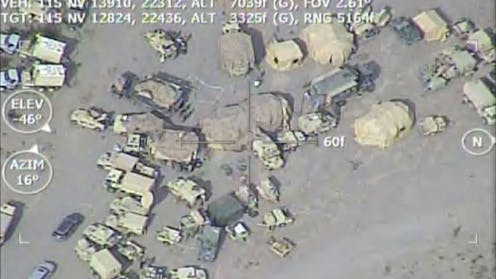
This U.S. Army command post, seen from a drone, is loaded with modern technology but uses a centuries-old structure.Col. Scott Woodward, U.S. Army
Despite two centuries of evolution, the structure of a modern military staff would be recognizable to Napoleon. At the same time, military organizations have struggled to incorporate new technologies as they adapt to new domains – air, space and information – in modern war.
The sizes of military headquarters have grown to accommodate the expanded information flows and decision points of these new facets of warfare. The result is diminishing marginal returns and a coordination nightmare – too many cooks in the kitchen – that risks jeopardizing mission command.
AI agents – autonomous, goal-oriented software powered by large language models – can automate routine staff tasks, compress decision timelines and enable smaller, more resilient command posts. They can shrink the staff while also making it more effective.
As an international relations scholar and reserve officer in the U.S. Army who studies military strategy, I see both the opportunity afforded by the technology and the acute need for change.
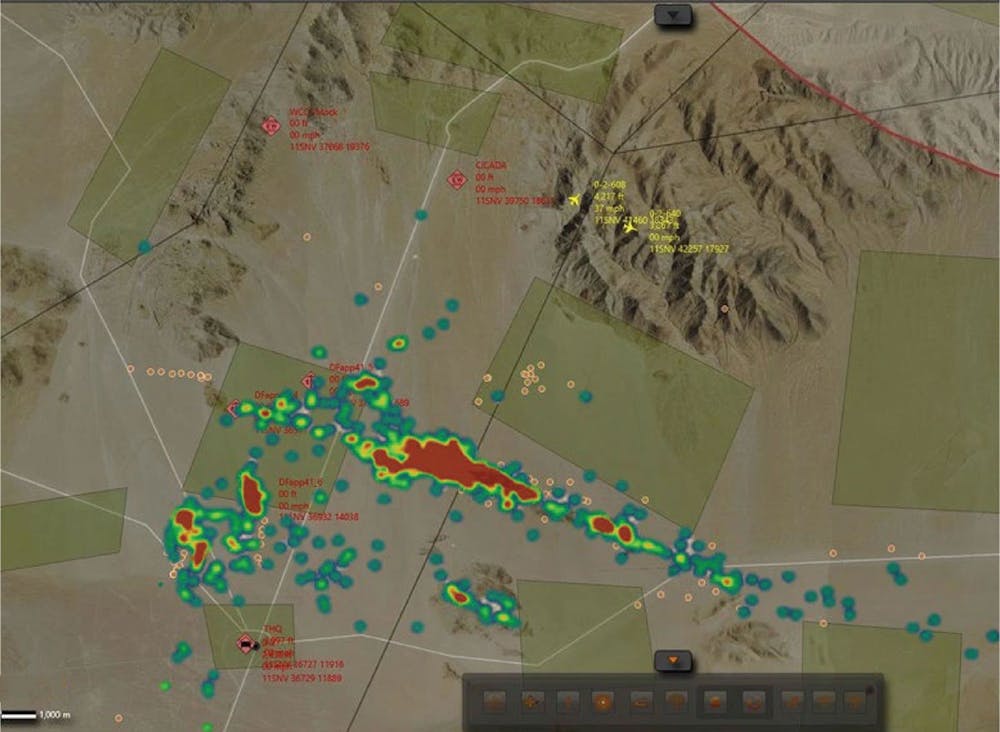
That need stems from the reality that today’s command structures still mirror Napoleon’s field headquarters in both form and function – industrial-age architectures built for massed armies. Over time, these staffs have ballooned in size, making coordination cumbersome. They also result in sprawling command posts that modern precision artillery, missiles and drones can target effectively and electronic warfare can readily disrupt.
Russia’s so-called “Graveyard of Command Posts” in Ukraine vividly illustrates how static headquarters where opponents can mass precision artillery, missiles and drones become liabilities on a modern battlefield.
This satellite image shows the electronic emissions of a brigade combat team training at Fort Irwin, Calif. The bright red areas are emissions from command posts. Col. Scott Woodward, U.S. Army
The role of AI agents
Military planners now see a world in which AI agents – autonomous, goal-oriented software that can perceive, decide and act on their own initiative – are mature enough to deploy in command systems. These agents promise to automate the fusion of multiple sources of intelligence, threat-modeling, and even limited decision cycles in support of a commander’s goals. There is still a human in the loop, but the humans will be able to issue commands faster and receive more timely and contextual updates from the battlefield.
These AI agents can parse doctrinal manuals, draft operational plans and generate courses of action, which helps accelerate the tempo of military operations. Experiments – including efforts I ran at Marine Corps University – have demonstrated how even basic large language models can accelerate staff estimates and inject creative, data-driven options into the planning process. These efforts point to the end of traditional staff roles.
There will still be people – war is a human endeavor – and ethics will still factor into streams of algorithms making decisions. But the people who remain deployed are likely to gain the ability to navigate mass volumes of information with the help of AI agents.
These teams are likely to be smaller than modern staffs. AI agents will allow teams to manage multiple planning groups simultaneously.
For example, they will be able to use more dynamic red teaming techniques – role-playing the opposition – and vary key assumptions to create a wider menu of options than traditional plans. The time saved not having to build PowerPoint slides and updating staff estimates will be shifted to contingency analysis – asking “what if” questions – and building operational assessment frameworks – conceptual maps of how a plan is likely to play out in a particular situation – that provide more flexibility to commanders.
Designing the next military staff
To explore the optimal design of this AI agent-augmented staff, I led a team of researchers at the bipartisan think tank Center for Strategic & International Studies’ Futures Lab to explore alternatives. The team developed three baseline scenarios reflecting what most military analysts are seeing as the key operational problems in modern great power competition: joint blockades, firepower strikes and joint island campaigns. Joint refers to an action coordinated among multiple branches of a military.
In the example of China and Taiwan, joint blockades describe how China could isolate the island nation and either starve it or set conditions for an invasion. Firepower strikes describe how Beijing could fire salvos of missiles – similar to what Russia is doing in Ukraine – to destroy key military centers and even critical infrastructure. Last, in Chinese doctrine, a Joint Island Landing Campaign describes the cross-strait invasion their military has spent decades refining.
Any AI agent-augmented staff should be able to manage warfighting functions across these three operational scenarios.
The research team found that the best model kept humans in the loop and focused on feedback loops. This approach – called the Adaptive Staff Model and based on pioneering work by sociologist Andrew Abbott – embeds AI agents within continuous human-machine feedback loops, drawing on doctrine, history and real-time data to evolve plans on the fly.
In this model, military planning is ongoing and never complete, and focused more on generating a menu of options for the commander to consider, refine and enact. The research team tested the approach with multiple AI models and found that it outperformed alternatives in each case.
Gen. Mark Milley, former chairman of the Joint Chiefs of Staff, describes on ‘60 Minutes’ the dramatic upheaval AI is poised to cause in military operations.
AI agents are not without risk. First, they can be overly generalized, if not biased. Foundation models – AI models trained on extremely large datasets and adaptable to a wide range of tasks – know more about pop culture than war and require refinement. This makes it important to benchmark agents to understand their strengths and limitations.
Second, absent training in AI fundamentals and advanced analytical reasoning, many users tend to use models as a substitute for critical thinking. No smart model can make up for a dumb, or worse, lazy user.
Seizing the ‘agentic’ moment
To take advantage of AI agents, the U.S. military will need to institutionalize building and adapting agents, include adaptive agents in war games, and overhaul doctrine and training to account for human-machine teams. This will require a number of changes.
First, the military will need to invest in additional computational power to build the infrastructure required to run AI agents across military formations. Second, they will need to develop additional cybersecurity measures and conduct stress tests to ensure the agent-augmented staff isn’t vulnerable when attacked across multiple domains, including cyberspace and the electromagnetic spectrum.
Third, and most important, the military will need to dramatically change how it educates its officers. Officers will have to learn how AI agents work, including how to build them, and start using the classroom as a lab to develop new approaches to the age-old art of military command and decision-making. This could include revamping some military schools to focus on AI, a concept floated in the White House’s AI Action Plan released on July 23, 2025.
Absent these reforms, the military is likely to remain stuck in the Napoleonic staff trap: adding more people to solve ever more complex problems.
Benjamin Jensen led a research project that was a collaboration between CSIS and Scale AI. He did not personally receive any funding from the company.
Drawing on almost 35 years of work in Philadelphia and other cities to understand what makes neighborhoods safer, I believe the surest returns come from prevention strategies aimed at young people who are not yet enmeshed in robberies, shootings and gang activity.
Homicides in Philadelphia are at their lowest levels in 25 years. In my view, this is an opportunity to redirect even youth who are already involved in violence away from the costly and counterproductive cycle of incarceration and into targeted, relationship-focused intervention programs that are humane, voluntary and effective.
At least two such programs exist here in Philadelphia – but on a modest scale.
It was designed by former School Safety Chief and now Philadelphia Police Commissioner Kevin Bethel, School Safety Officer and Program Manager Kevin Rosa, criminal justice researcher Brandy Blasko and me.
Students who have been involved in fights or show other risk factors for violence and street gang involvement are referred to the program.
The initative’s core idea is simple: Earn students’ trust through consistent, credible mentorship and step in when needed. Stepping in means teaching conflict resolution skills, running engaging workshops, buying a meal, or intervening when a fight is brewing or a student is on the verge of being expelled.
Each week a team of administrators, counselors, school safety officers and community outreach workers, most of whom are based in the school, review every participant’s progress. They track follow-through on referrals and coordinate communication with families and school staff.
The tightly managed, relationship-driven safety net gives students quicker access to help and makes the school climate calmer and safer.
Prior to 2023, on average, five Bartram High students were victims of firearm assault – at least one fatally – each school year.
At the 2025 National Conference on Juvenile Justice, program leaders presented evidence of an 80% decrease in firearm assaults by students and a 31% decrease in student-on-student assaults that did not involve guns. They also reported a 92% decrease in gang-involved group assaults, a 67% drop in student-on-staff assaults and a 62% drop in school incidents involving police.
More rigorous analysis needs to be done to verify that the program itself produced these results and some other factor wasn’t involved.
The program costs roughly $120,000 to serve 30 to 35 teenagers over a school year. That covers two full-time case managers, one part-time program manager and a small discretionary fund. The fund can be used for things such as local trips to museums, paying guest speakers and incentives for participant milestones.
Community-based support in West and Southwest Philly
The nonprofit YEAH Philly launched its Violent Crime Initiative in late 2020 for young people ages 15–24 from West and Southwest Philadelphia who have been charged with a violent or gun-related offense.
It takes the same relationship-based playbook the Youth Violence Reduction Initiative uses and amplifies it.
Court advocacy, cash stipends and intensive case management stay on tap for as long as a young person wants them. Since its inception, the voluntary program has served almost 200 people. Currently, 22 Philly youth receive Violent Crime Initiative services.
Flexible funding enables case managers to address nearly any support need that arises, going well beyond standard program budgets. This could mean a young person receives full tuition support for a two-year dental technician program while also attending intensive remedial writing workshops. Meanwhile, a partnership with Project HOME can secure them subsidized housing at Kate’s Place in Center City.
The approach emphasizes connection, case management and skill-building – key elements shown to help young people thrive when supported by caring, consistent adults.
I analyzed arrest data following a cohort of 93 young people who received Violent Crime Initiative services between January 2020 and April 2025. Among participants with two or more prior arrests, the rearrest rate was 60%. That’s compared to over 80% documented in a 2023 report prepared for the Philadelphia district attorney’s office that analyzed data on Philadelphia juveniles arrested in 2016. However, we haven’t been collecting data on all of the Violent Crime Initiative participants for as long, so the two figures are not perfectly comparable.
The power of credible, caring adults
Fostering deep engagement with positive role models is not a feel-good add-on. It is evidence-based public safety policy.
Research shows clearly that one of the most reliable turning points for high-risk youth is a stable, caring relationship with an adult who refuses to give up on them. This can be a teacher, coach, grandparent or any other trusted adult who provides consistent positive support and guidance and opens doors to new opportunities.
My own research on how and why young people leave street gangs underscores just how powerful such relationships can be. I also led a three-study synthesis with colleagues from Arizona State University and the University of Colorado-Boulder that reviewed research involving 784 former gang members in 13 U.S. cities. We wanted to understand what actually moves young people out of gang life.
The clearest pattern was positive relationships. “Push” forces, such as fatigue from violence or pressure from police, opened the exit door for many. But lasting change required equally strong “pulls” toward stable, positive relationships.
Data-sharing enables early intervention
After decades of evaluating both successful and failed public safety initiatives, I can say the biggest hurdle to developing cost-effective policies that reduce youth violence is the lack of coordinated, cross-agency use of data.
Cities need more than justice system records to guide their efforts. They need integrated information from schools, housing, behavioral health and community services.
With the right tools, early warning signs such as chronic school absence, school and neighborhood fights, and gun carrying can be flagged and young people matched with evidence-based programs and services they choose to participate in, rather than being mandated by the court, before a major crisis occurs.
Philadelphia already has the technical backbone for this work.
The Integrated Data for Evidence & Action or, “IDEA,” warehouse is a secure, city-run system that links administrative records across agencies. It allows officials to analyze patterns of risk across education, justice, housing and health systems, and it is used to support policy priorities such as Mayor Cherelle Parker’s public safety goal of reducing homicides by 20%.
Philadelphia also uses multidisciplinary planning meetings to configure services after a juvenile is released from incarceration – but only after incarceration. The meetings bring together the young people and their families with probation officers; attorneys; school, court and community representatives; behavioral health clinicians; and case management teams to coordinate supports that ease reentry and reduce recidivism.
Philadelphia city leaders could apply this coordinated approach earlier in a young person’s life and replace expensive and counterproductive confinement with voluntary, relationship-centered programming, using data from the IDEA warehouse to address early risk, pilot new ideas and track outcomes in real time.
Caterina G. Roman consults for the Office of School Safety within the School District of Philadelphia which runs the Youth Violence Reduction Initiative. She is also supported by the Neubauer Family Foundation as the evaluation partner for YEAH Philly’s Violence Crime Initiative. She is a member of the Advisory Board for Everytown for Gun Safety’s Community Safety Fund.