Five of the most common injuries that can happen while climbing and bouldering

Source: The Conversation – UK – By Dan Baumgardt, Senior Lecturer, School of Psychology and Neuroscience, University of Bristol
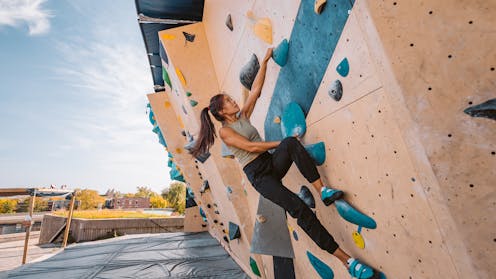
Fingers, toes and everything in between may be at risk of injury. Maridav/ Shutterstock

Climbing and bouldering have become increasingly popular pastimes. In 2021, competitive climbing even become one of the official games at the Tokyo Olympics.

But while climbing is a great way to test the body to its extremes, it’s not risk free. It puts all sorts of stresses and strains on many parts of the body, which can lead a whole host of injuries if you’re not careful.

1. Rotator cuff tears

The main upper body muscles that are used when climbing are those which allow for pull ups and maintaining stability. Lots of these are found in the shoulders and on the back of the body.

Take latissimus dorsi, for instance. This broad sheet of muscle attaches the back to the arms, which enables us to perform a pullup when hanging from a handhold. These muscles (the “lats” as they’re often called) are particularly prized for their ability to give a broad strong back. It’s uncommon (but possible) to injure your lats since they’re large and powerful.

More vulnerable upper body muscles include the rotator cuff group and deltoids (or delts). These muscles can give you strong, defined shoulders (which some have nicknamed “boulder shoulders”) when trained.

Strength in the shoulder muscles is integral for climbing as it not only helps with reaching, but it importantly stabilises the arms – holding them in their sockets and preventing them from dislocating. When hanging from a rock face, shoulder strength is essential.

In climbing, slipping or catching a bad hold can strain these muscle groups, causing rotator cuff tears. This occurs when the tendon partially or fully tears away from where they attach at the shoulder. Rotator cuff tears will result in pain, weakness and limited movement.

This injury is becoming progressively more common in climbers. While in some cases rest can be enough to allow the tear to repair itself, in more severe cases surgery will be required to repair the tear. This can take months – and sometimes even a full year – to recover.

2. Finger pulley strain

The hand is a masterpiece of mechanical engineering which enables climbers to establish purchase on the smallest of handholds and prevents slipping. This is why having a strong grip is important for any climber. But the stress from gripping handholds can injure the muscles in the forearm, wrists and fingers.

Imagine going to grip the wall, only for your hand to slip. You’ll need to suddenly rush and grab another hold in order to avoid falling. In doing so, extreme stress is placed on the fingers and their tendons and ligaments.

This can sometimes lead to a finger pulley injury, where the bands of tissue holding the tendons in place either get strained or rupture – sometimes with a pop.

These are the most common injuries in climbers, affecting around 12% of people. Finger pulley injuries may require an operation to fix if the tear is large enough – and will require several months for recovery.

3. Trigger finger

Overuse of a certain muscle group can cause the tendons to become inflamed – leading to pain and problems in movement.

Take trigger finger, a climbing injury which usually develops over time as a result of prolonged stress. This results in inflammation and thickening of the muscle tendon, which then causes the finger to stick in a curled position – as if it were poised around the trigger of a gun.
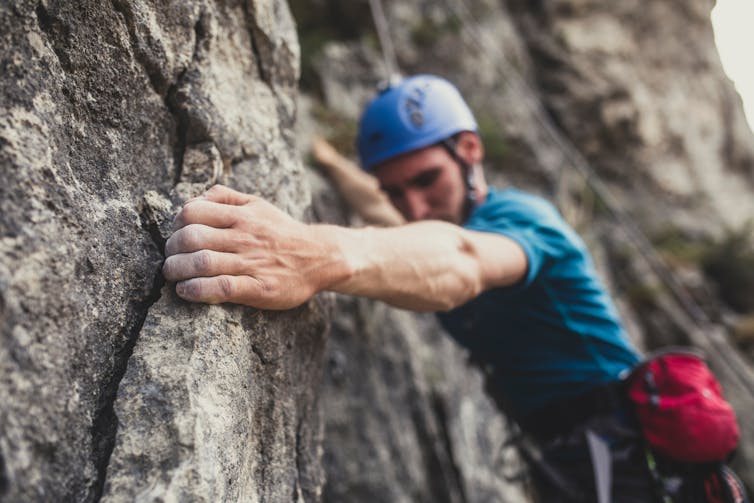
A man wearing a blue helmet tightly grips a crack in the rock face he's climbing.
Trigger finger is the result of prolonged stress and inflammation.
LStockStudio/ Shutterstock

In order to get it back to a straightened position, the patient may need to take hold and pull it straight. Because the problem will usually recur many times, it may require splinting, an anti-inflammatory steroid injection or surgery to treat.

4. Claw toes

While we might think the upper body does most of the work while climbing, the lower body’s muscles still play a really important role – helping us push ourselves upwards. Strong quads and glutes are particularly important in climbing.

Falls, slips and sudden twists can cause all sorts of lower body injuries while climbing, including meniscal tears of the knees and sprained ankles.

Foot injuries can also occur – such as claw (or hammer) toes. This is where the toes take on a claw-shaped deformity, usually due to a muscular imbalance in the foot. In climbers, this may result from wearing tight-fitting climbing shoes, forcing the toes into cramped positions – or from overworking the foot muscles with prolonged gripping on to footholds.

5. Frostbite and Flappers

Skin and soft tissue injuries are very common in climbers – everything from cuts, abrasions and blisters. Some may even experience frostbite if they ever decide to climb outdoors at altitude.

In fact, blisters with hanging skin are commonly referred to as “flappers” within the climbing circle. Anyone who’s had a blister can understand how painful and irritating they are. Good grip technique and hand care are instrumental for preventing and treating them. Keeping wounds clean and moisturising the skin are good ideas. Also, to avoid infection, make sure you don’t pick at or pop any blisters, and ensure they can heal properly.


Read more:
How to treat a wound – without using superglue, grout or vodka, like some people


.

Hang in there

Climbing and bouldering are great whole body workouts, but in this lies a problem – the risk of overtraining syndrome, a condition which can result in widespread aches and pains, along with mental health issues such as depression. One study found that the majority of climbing injuries were associated with overuse, rather than traumatic causes – and the majority of these were in novices.

To avoid any sort of injury the next time you go climbing, treat your session like a gym workout. Do a proper warm up before starting and cool down after finishing, with some light cardio, stretches or lunges.

Proper kit, including climbing shoes and chalk for the hands also help with your grip. But fundamentally, instruction on technique and a responsible teacher or partner to keep you safe are worth their weight in gold.

The Conversation

Dan Baumgardt does not work for, consult, own shares in or receive funding from any company or organisation that would benefit from this article, and has disclosed no relevant affiliations beyond their academic appointment.

ref. Five of the most common injuries that can happen while climbing and bouldering – https://theconversation.com/five-of-the-most-common-injuries-that-can-happen-while-climbing-and-bouldering-262813

Glass half empty? Nutrition studies shouldn’t just focus on what parents do wrong

Source: The Conversation – Canada – By Jennifer Black, Associate Professor of Food, Nutrition and Health, University of British Columbia

If it takes a village to raise a child, it also takes a village to care for children’s food needs.

Children’s health and nutrition outcomes are nurtured directly by family caregivers, but also by a broader “village” of policymakers and governments, health and education systems, social services and civil-society groups, as well as others working at both national and local levels.

Lessons learned from academic research studies help today’s multi-sector villages improve health policies, medical treatments and approaches for preventing children’s food- and eating-related problems.

Yet, medical research studies focus more on what parents are doing wrong than they do on the social conditions and resources that families and communities need to improve kids’ nutrition.

In our recent paper, we found that studies published in medical journals are stuck in a rut, repeating some outdated tropes and assumptions. The recipe to care well for school-aged children’s food needs is due for a refresh.

Food care

We are food and nutrition researchers and dietitians who have painstakingly reviewed a breadth of food and nutrition studies, including authoring rigorous reviews about childhood nutrition and family food practices.

Our team recently combed through two leading medical research databases to find out what questions, theories and measurements health researchers commonly use to study the processes involved in caring for school-aged children’s food and nutrition needs.

We couldn’t find a term that described exactly what we were looking for, so we proposed a concept and research framework called “food care.” We described the concept of food care as “the processes of feeling concern or interest about food, or taking action to provide food necessary for the health, welfare, maintenance, or protection of oneself or someone else.”

We found lots of valuable studies about what children eat, risk factors for sub-optimal diets and describing how parents feed their kids.

But overall, studies largely ignored the most important elements of our food care framework. This includes social and political factors and the emotional, cognitive and physical work that goes hand-in-hand with nourishing children.

These issues are well established in other fields of social science, but health research continues to largely overlook them.

Blaming parents

Health research about children’s food care largely centres on the family, including parents’ food practices and household conditions that shape what and how children eat. While this field is progressing, when (if at all) studies about school-aged children talked about food care, children’s eating and nutrition challenges were most often described as issues that stemmed from parents’ shortcomings.

Both the food care measures themselves and the child outcomes most commonly studied were more often than not described as harmful. Three-quarters of studies we analyzed focused on how parental actions increased children’s risks of feeding problems, disordered eating, excess weight or poor mental health.

The four main categories of food care that researchers focused on in the 20 studies analyzed included:

  • Caregivers’ feeding practices
  • Parents’ actions focused on children’s body size or weight
  • Ways that parents cultivate healthy eating
  • Mealtime interactions

In studies where many factors were measured, research conclusions often focused squarely on things parents were doing “wrong” or should improve.

Even when the size of the effects found were very small, or little meaningful impact of parental actions were identified, research conclusions were often still tinged with parent-blaming. Fingers were pointed at parents described as doing “too little” to foster healthy dietary choices, but also at those described as overzealous and trying too hard. Parents could seldom catch a break in these studies.

On the flip side, researchers rarely mentioned or tried to assess how parents’ food care efforts contributed to building healthy relationships, connections, trust or family traditions or bonds, psychological attachment, health benefits or mental well-being for children or other family members, or the benefits of food care for the wider community.

Assumptions baked into research

Researchers are currently working in an era in which “intensive parenting” is the cultural ideology and norm. Intensive mothering, as coined by sociologist Sharon Hayes, reflects ideas about “good” mothering that are child-centred, emotionally absorbing, labour-intensive and expert-guided.

While health studies seldom named their own assumptions about gender roles or parenting beliefs, intensive mothering approaches seeped into the types of recommendations found across many studies.

These ways of thinking sometimes lay beneath assumptions and recommendations that parents should always try harder, spend more time, money and labour. Or research language presumed that parents — and particularly mothers — are, or should be, the main party responsible for children’s health outcomes.

Such ideas also showed up in study recommendations that tended to blame parents for outcomes that may be out of their control, clinically irrelevant or benign, while overlooking the benefits of food care and the often invisible work of feeding a family.

Similar trends were called out in the field of psychology nearly 40 years ago when psychologist Paula Caplan suggested “blaming mothers for their children’s psychological problems has a long and, unfortunately, respected history.”

Parents, as children’s primary caregivers and first teachers, do influence children’s eating patterns, behaviours and habit development. But they do so in a broad and complex social context that is influenced by political, historical and community conditions. These conditions are under-examined in discussions of family food work in medical studies.

Recommendations from some of these studies suggested that medical professionals should provide parents with more guidance about healthy eating and food-related parenting strategies. But authors seldom mentioned structural supports such as policies, programs or tangible resources that would help parents succeed.

Yet parents contend with lots of conflicting factors and considerations when deciding what, when, where and how to feed their children. In many cases, it’s not as simple as just following available dietary advice.

What’s needed to provide quality food care

Evidence from medical research contributes to improved pediatric nutrition policies, programs and clinical practice. But research in leading medical journals about what and how to feed school-aged children remains largely disconnected from the complex realities of family life and the political forces that shape it.

The sample of studies we analyzed largely overlooked measuring and talking about the important ingredients needed to provide good quality food care for children. These include affording and accessing nutritious food, safe food storage and preparation facilities, resources, time, childcare and available school food programs, food literacy knowledge and skills, neighbourhood food environments and overarching institutional and social policies and conditions that foster food care.

These topics were occasionally mentioned on the fringes and have long been topics of study in some corners of sociology, political science and food studies research.

But it’s time that medical researchers and those who read and use nutrition studies take a closer look at the unnamed assumptions baked into research to make sure we’re not perpetuating one-size-fits all tropes about how parents — namely mothers — can “do better” while discounting the effort parents are already putting into feeding their children.

Health researchers can progress by more actively reflecting on their own assumptions about gender roles, good parenting, healthy eating and idealized family meals, and how these understandings are infused into scholarly work and the ways we measure and talk about how to feed children well.

In the 1980s, family food researcher Marjorie DeVault pointed out how important it is to name and study the valuable daily work of feeding families, but there remains much work to be done.

The Conversation

Jennifer Black has recently received research funding from the Social Sciences and Humanities Research Council of Canada, the Canadian Institutes of Health Research, and Michael Smith Health Research BC among other financial supports from the University of British Columbia.

Georgia Middleton does not work for, consult, own shares in or receive funding from any company or organisation that would benefit from this article, and has disclosed no relevant affiliations beyond their academic appointment.

ref. Glass half empty? Nutrition studies shouldn’t just focus on what parents do wrong – https://theconversation.com/glass-half-empty-nutrition-studies-shouldnt-just-focus-on-what-parents-do-wrong-262479

Elite schools in South Africa: how quiet gatekeeping keeps racial patterns in place

Source: The Conversation – Africa – By Samantha Kriger, Lecturer, Cape Peninsula University of Technology

In South Africa, children’s admission to a particular public school is decided by province. Each provincial education department manages its own digital admissions system. The Western Cape province introduced an online admissions portal in 2018 which became fully operational in 2024. The aim was to make school placement more transparent. This is important because historically, under apartheid, South African education was racially segregated and unequally funded. White schools received the best resources.

Education researcher Samantha Kriger took a closer look at what actually happens in admissions to schools in the Western Cape that used to be exclusively white (known as Model C schools). She set out her findings in a book coauthored with education academic Jonathan Jansen. Though Who Gets In and Why was published in 2020, she says the circumstances remain the same in most of these schools. Here she answers some questions about what she found.

How is the admissions portal supposed to work?

Parents apply online to a minimum of three and maximum of ten schools, via the Western Cape education department admissions portal. The schools receive the applications via the portal and assess them based on provincial guidelines. That implies schools can discriminate between applications.

Schools submit a list of accepted, declined and waiting-list learners to the province via the portal.

Why and how did you research school admissions?

We wanted to know why formerly white schools still looked much as they had under apartheid (with high enrolment of white pupils).

The initial research included school data from the Centralised Education Management Information System, the official data management system used by the Western Cape Education Department. This digital database records and tracks all key information about learners, teachers and schools in the province. The data revealed that many former “Model C” schools continued to preserve their historically exclusive enrolment criteria.

Under apartheid Model C schools were whites-only public schools. In 1990 they were semi-privatised, giving their governing bodies greater control over finances, admissions and staffing.


Read more:
South Africa’s no-fee school system can’t undo inequality


We used a qualitative case study approach, focusing on 30 historically white primary schools in the wealthier southern suburbs of Cape Town. All the schools allowed us to visit and shared information about their admissions processes.

As researchers we visited sites and interviewed principals, admissions officers, staff and stakeholders (such as estate agents and provincial education officials). We also analysed school documents and enrolment data. The study used pseudonyms to protect participant anonymity.

We then analysed admissions practices in relation to broader political, policy and socio-economic contexts.

Some of the schools were wealthy institutions, as measured by the school location and facilities, tuition fees and the range of extramural activities that they offered. Others were not wealthy.

What did you find?

The majority of the schools maintained their white enrolment. This was not simply the result of lingering residential segregation, but was often tied to school-level practices and socio-economic gatekeeping.

These schools frequently employ subtle, yet effective, admissions strategies that indirectly exclude lower-income, predominantly Black families. For example they choose applicants from specific feeder areas with high property prices, emphasise English or Afrikaans proficiency tests, or charge high school fees. Strong alumni networks and parent bodies, historically dominated by white families, also play a role in sustaining existing demographics by influencing school governance and admissions decisions.

South Africa’s public education policy promotes equal access. Yet we found that, in practice, these schools filter who gets in.

In South Africa, prior to 1994, the racially segregated education system privileged white learners while systematically underfunding schools for Black African, Coloured and Indian communities. More than 30 years later, deep inequalities persist because race and class remain closely linked.

High-fee former white schools often exclude, in practice, many Black, Indian and Coloured families who cannot afford the costs or meet other socio-economic entry barriers.


Read more:
What young people have to say about race and inequality in South Africa


Admissions criteria such as language preference, application deadlines, early registration practices and school proximity can function as indirect mechanisms of exclusion.

For example, many parents are unaware that certain schools “lock in” preferred candidates years before formal Grade R or Grade 1 enrolment. This often occurs through unofficial feeder systems, where pre-primary schools enrol children as young as two years old, typically at a substantial financial cost. By the time applications open to the general public, most places have already been informally allocated.

This dynamic is evident in high school admissions too. Preference is frequently given to learners from designated primary schools. Candidates without prior affiliation may stand a chance only if they bring added value, such as athletic excellence, or musical or artistic abilities that align with the school’s interests.

These practices can unintentionally disadvantage families from lower socio-economic backgrounds who engage the system later or lack access to early-stage enrolment opportunities.

Language requirements are often framed as necessary for ensuring that learners can cope with the school’s curriculum. But they may indirectly exclude applicants from homes that mostly use African languages. For many black African families, especially those from lower-income or rural backgrounds, limited exposure to English or Afrikaans before school entry can disadvantage their children in admissions assessments or interviews.

The emphasis on early “lock in” and complex documentation also benefits families who are digitally literate, well-resourced and socially networked.

Another troubling finding was the role of parental profiling in admissions. Some schools assess the social standing of families, including their income, occupation, and perceived “fit” with the school’s culture.

Why does it matter that school admissions work this way?

The implications are serious. While the constitution and education policy mandate non-discrimination and the right to basic education, the reality is that access to elite public schools remains stratified. This is not only by geography or academic ability but by social capital. The effect is to reinforce existing race and class divides.


Read more:
South Africa can’t crack the inequality curse. Why, and what can be done


If transformation in education is to be more than cosmetic, policies must be matched with oversight, transparency, and a commitment to dismantling the quiet mechanisms of exclusion.

The Conversation

Samantha Kriger does not work for, consult, own shares in or receive funding from any company or organisation that would benefit from this article, and has disclosed no relevant affiliations beyond their academic appointment.

ref. Elite schools in South Africa: how quiet gatekeeping keeps racial patterns in place – https://theconversation.com/elite-schools-in-south-africa-how-quiet-gatekeeping-keeps-racial-patterns-in-place-258720

2 in 3 Africans will live in cities by 2050: how planners can put this to good use

Source: The Conversation – Africa – By Astrid R.N. Haas, Research associate at African Centre for Cities, University of Cape Town

Africa’s population is projected to nearly double by 2050, with 80% of that growth being concentrated in urban areas, leaving two out of three Africans living in cities. This expansion of cities at an unprecedented rate will bring both challenges and opportunities for African countries. In this edited extract from a discussion with the OECD’s Women Leading Change podcast series, feminist urban economist Astrid R.N. Haas explores three pillars for inclusive and sustainable growth: governance, planning and financing.

What can policymakers do to plan effectively for this rapid growth?

Policymakers must be more proactive. They need to anticipate future needs for infrastructure, services and housing. And they need to plan and invest in those spaces.

To do this, national policymakers must treat urbanisation not just as a city issue, but as a national priority. If they work properly, cities are engines of growth for the whole country. National strategies must support cities with appropriate policies, financing mechanisms and investments.

So African institutions must fit the purpose and context. Institutions must have clear responsibilities to avoid fragmented decision making. Administrative structures must underpin this, not only from a sectoral but also from a geographic perspective.

One challenge is that local governments are often positioned under the authority of national governments, and in many contexts, working at the local level may not carry the same level of recognition or prestige as national roles, despite the critical responsibilities they shoulder.

The one place that is working to overcome this is South Africa, where the municipal government is a separate sphere of government but equal to the other levels. Here the national treasury is working towards developing a single remuneration framework so that employees performing the same tasks in different spheres of government are compensated equitably.

More thought needs to go into how to support other cities across the continent in a similar way, ensuring they are adequately staffed in terms of numbers and skills. It is about making local government a more attractive place for talent to work and grow.

Most importantly, effort needs to go into making sure governance structures are both legitimate and responsive to citizens. Local government, as the level of government closest to the people, plays a critical role in this. Local authorities must be equipped to engage with residents and incorporate their priorities into decision-making.

What steps can governments take to create long term financing strategies?

African governments must plan beyond the typical two-, three- or five-year horizons. Long-term planning is often challenging because it doesn’t align with shorter political cycles. But infrastructure and service delivery require sustained, long-term investment and commitment.

We also need to think carefully about which services and investments should be the responsibility of government, and which can be delivered by the private sector. Policymakers play a crucial role in prioritising interventions that offer the greatest public benefit, whether by boosting productivity, advancing key social goals like livability through expanded social housing and services, or, ideally, both. Once priorities are set, investments must be appropriately balanced between public and private actors to ensure impact and equity.

How can policymakers guide sustainable and economically productive urban growth?

By making investments in the places people are moving to. This can be done through projections and then urban expansion planning. And here the OECD is at the forefront of some innovative work on data production for African cities.

Together with the United Cities and Local Governments, an association of local and regional governments, they’ve also produced what is probably the most comparable data on subnational financing: the World Observatory on Subnational Government Finance and Investment.

Used well, data like this can help more equitable decisions to be made. These tools can show us where populations are expanding, where services are lagging, and how people move and work across urban areas. Policymakers can then respond with targeted investments that improve livelihoods and expand opportunity. Therefore, for people like me who work with cities, data is an invaluable resource.

A note of caution is also in order. It’s not just about what the data shows, it’s also about what it leaves out. Who’s missing from the numbers? Who isn’t represented? What don’t we see? And why?

If people are underrepresented in official data sets, they risk being forgotten in policymaking too. That is why it is so important that institutions like the OECD not only produce data, but also help identify and fill these gaps. Governments also need to find ways to complement official statistics to “see the unseen” and build a fuller picture of urban life.

An example is the role of women in the informal food economy, urban agriculture, and service sectors. Their contributions are immense, yet often invisible in the data. That invisibility poses a major challenge for urban planning.

Can municipal financing be reimagined to prioritise gender equity and inclusivity?

Most cities around the world have been designed predominantly by men, and, more specifically, by white men from privileged backgrounds. As a result, even today, in cities across Europe and the US, urban spaces continue to reflect patriarchal notions of livability. They often fail to account for the different ways that women and other marginalised groups experience life in cities.

In Africa most urban spaces are yet to be built as most countries have yet to fully urbanise. So there is this unique opportunity to design cities from the outset that are truly inclusive. And here, municipal financing is key. Where we get the money from, and how we spend it, will ultimately shape the urban outcomes that define our cities for generations.

On the revenue side, African countries must carefully examine how both formal taxes and informal fees affect different groups, men, women, and other marginalised communities, and consider who is bearing the greatest burden.

The expenditure side is, in some ways, deemed to be more straightforward. However, it involves trade-offs as African countries need to invest in infrastructure and services that expand not only economic but also social opportunity, such as accessible public transport, affordable childcare, and adequate public spaces.

Borrowing is another critical component of the municipal finance equation. If you look at the OECD-UCLG data, you’ll see that very few African cities currently have access to capital markets. This severely limits their ability to finance the infrastructure they need.

Even where borrowing becomes possible, it carries long-term responsibilities. Borrowing is not just a short-term financial tool; it’s an intergenerational contract. The funds borrowed today will be repaid not only by current taxpayers but by future generations as well.

The full discussion is available via this link.

The Conversation

Astrid R.N. Haas does not work for, consult, own shares in or receive funding from any company or organisation that would benefit from this article, and has disclosed no relevant affiliations beyond their academic appointment.

ref. 2 in 3 Africans will live in cities by 2050: how planners can put this to good use – https://theconversation.com/2-in-3-africans-will-live-in-cities-by-2050-how-planners-can-put-this-to-good-use-251414

African migration: 5 trends and what’s driving them

Source: The Conversation – Africa (2) – By Kevin J.A. Thomas, Distinguished Professor of Sociology, Rice University, Rice University

The Donald Trump administration issued an executive order in June 2025 banning nationals from 12 countries from travelling to the United States. It also imposed entry restrictions on nationals from seven others.

About half of the countries affected by these measures are in Africa. This raises concerns about the future of African migration to the US.

The restrictions are among several new threats and opportunities that affect the dynamics of African migration.

I am a social demographer and in a recent study my co-author and I identified trends that will shape the future of African migration flows and are different from migration patterns of the past. There are at least five emerging trends:

  • Migration between African countries is not following colonial labour migration patterns.

  • Africans are migrating to new destinations (for example in South America and Asia).

  • There’s more diversity in the types of African migrants, based on who they are, why they are migrating and how they are doing it.

  • There is significant migration to Africa from non-African countries (like China).

  • Institutions (such as municipal and traditional authorities) have an expanding role in migration.

I argue that these trends are likely to be accelerated by changes in Africa’s demography. For example, the continent is expected to have the world’s largest population of youth by 2050.

The tendency to migrate is typically concentrated in younger age groups. So Africa’s large youth population is likely to shape the course of future international migration flows more than migrant populations elsewhere.

Shaping the trends

One factor shaping the trends is the expansion of efforts to regulate African international migration. Trump’s executive order is only one example of these strategies.

Many western countries have developed new policies that directly or indirectly restrict the opportunities available for migration from Africa.

For example, there is Canada’s Strong Borders Act, tabled as a bill in June 2025. There are fears it will restrict refugee protections and cause refugee applicants in Canada without legal status to live in hiding. These consequences could negatively affect the resettlement of African refugees in the country.

As part of the tighter controls, countries in the west are restricting Africans’ access to visas. Africans applying for visas to travel to Europe experience disproportionately high rates of visa rejections.


Read more:
Africans who apply for Schengen visas face high rejection rates – migration scholar explains why


Such restrictions are not accounted for in major theories of migration, most of which focus on the influence of economic, social and political factors. It’s possible that these restrictions by themselves will negatively affect overall African migration flows.

The second driver of trends in African migration is the changing patterns within the continent.

The number of Africans migrating to other African countries has always been higher than the number migrating to the west. In the past, these intra-continental migrations revolved around the movement of labour migrants to facilitate the colonial extraction of resources in countries such as Côte d’Ivoire and South Africa.

In recent years, however, the dynamics of these movements have been changing. For example, the fastest growing destinations for Africans on the continent are now in Central Africa. The United Nations’ estimates of international migrants living in African countries indicates that between 1990 and 2020, the number of migrants increased from 2,740 to 230,618 in Equatorial Guinea; from 33,517 to 656,434 in Angola; and from 74,342 to 547,494 in Chad.

Other new destinations are also emerging on the continent. According to the International Organisation for Migration, these include Egypt, Morocco, Burkina Faso and Ethiopia.

These changes suggest that factors like better economic opportunities and the search for safe havens from conflict are causing many Africans to migrate to destinations that are different from those that were most attractive to African migrants during the colonial period.

A third important driver of trends has been a change in the global destinations to which Africans now migrate. As opportunities for migration to the west decline, African migrants are increasingly exploring opportunities for migration to Asia, South America and Australia.

Africans have been arriving in Asian countries such as China and Japan in significant numbers over the past three decades to study or pursue business opportunities.

For example, it’s estimated there are now around 500,000 Africans living in China.

Many are entrepreneurs in business hubs such as Guangzhou. But they also include Africans who have settled in large numbers in places such as Hong Kong, Shanghai and Beijing.

The African-born populations living in Australia, Israel, Japan and Russia are also increasing. For example, although there were very few African immigrants in Japan before 1980, by 2015 there were about 12,000.

African migrants are also increasingly travelling to Central and South American countries, either as transit destinations in their efforts to migrate to the US or as countries of permanent settlement.

Migrants from Africa are also increasingly willing to take risks while migrating to high-income countries. This has resulted in the loss of thousands of lives among migrants attempting to travel to Europe by crossing the Saharan desert and the Mediterranean Sea.

There is no doubt that policy restrictions that affect African migration to western countries will have many negative consequences. However, migration flows always adapt to support the welfare of communities around the world.

The Conversation

Kevin J.A. Thomas does not work for, consult, own shares in or receive funding from any company or organisation that would benefit from this article, and has disclosed no relevant affiliations beyond their academic appointment.

ref. African migration: 5 trends and what’s driving them – https://theconversation.com/african-migration-5-trends-and-whats-driving-them-261511

Swimming in the Seine: an old pastime resurfaces in the age of global warming

Source: The Conversation – France – By Julia Moutiez, Doctorante en Architecture et Enseignante à l’École d’architecture de Paris Val-de-Seine, Université Paris Nanterre – Université Paris Lumières

Bathing on a hot day in Paris, 1932. Agence Rol / Gallica / BNF

As the 2024 Olympic Games drew near, the promise of being able to swim in the Seine turned into a media countdown: first as part of the official sporting events and then for the general public. As bids for the Olympic and Paralympic Games have become less and less popular due to the staggering costs involved and the difficulty of justifying them in terms of benefits for local communities, allowing Parisians to swim in the river flowing through Paris was heavily promoted ahead of last summer’s Games.

This kind of media framing, however, has overlooked current and historical realities. River bathing was widely practised over the last few centuries, and in the Seine, it has survived to the present day despite bans on swimming. Additionally, the practice does not only include recreational or sporting dimensions – it is also climate-related, at a time when rising temperatures suggest that compliance with the Paris Agreement will be a difficult, if not impossible task.

A centuries-old bathing tradition

While bathing in the Seine in 2024 was sometimes presented as a novel project, it is key to remember that swimming in Paris is a centuries-old practice. Traces of bathing facilities have been found in the capital dating back to the 13th century. However, the practice is difficult to document in detail as such traces are few, except in cases of major pieces of infrastructure. Over the centuries, swimming continued for hygiene, refreshment and leisure purposes, gradually spreading beyond the city limits.

It was not until the 17th century that the first documented boom in bathing practices in the Seine took place, as evidenced by the introduction of the first prohibitions on bathing and the emergence of the first facilities specifically designed for river bathers. Whether for washing, relaxing or socialising, these facilities were primarily set up to keep bathers safe from the current, and to conceal their nudity on the riverbanks. From the end of the 18th century onwards, these facilities became more complex: additional services were added to improve the comfort of swimmers and the first swimming schools appeared on the Seine.

At the end of the 19th century, floating baths became increasingly popular on the Seine and the Marne outside Paris, while the first-heated swimming pools were built in the capital.

A long-standing practice despite bans

Bans on swimming in the Seine have been numerous over the centuries, though they never completely eradicated the practice.

Historians Isabelle Duhau and Laurence Lestel trace the first restrictions back to the 17th century, when the provosts of merchants and aldermen expressed concern about public nudity on the banks of the river. Until the end of the 19th century, restrictions on swimming in the capital were always based on concerns about nudity. A second reason, that of hindering navigation, appeared in an ordinance of 1840. This was regularly amended until the prefectural decree of 1923, which is still in force today and prohibits bathing in rivers and canals throughout the former département (administrative unit) of the Seine.

However, these bans did not put an end to swimming. After 1923, bathing establishments continued to operate. They even experienced a boom in the interwar period, especially in the suburbs. Photos show that swimming was quite popular during heatwaves.

It was not until the second half of the 20th century that swimming in the Seine became less common, mainly due to the spread of public swimming pools, which offered a more artificial and controlled environment for this form of leisure.

And it was not until 1970, with the ban on swimming in the Marne, that the issue of water quality was raised, even though water quality was already being measured and questioned before then.

Indefatigable bathers

Even today, however, there are still occasional, activist, or even regular swimmers taking to Paris’s waterways. Sporting competitions have brought athletes to the Seine, for example in 2012 for the Paris triathlon, and in a more gradual way in recent years.

In amateur sports, cold-water swimmers also began training in the canals a few years ago, despite the ban. To deal with the risks posed by water temperatures, and possibly police surveillance, these swimmers set their own safety rules: they watch out for each other from the bank and wear life jackets and caps so they are always clearly visible. To date, none of these swimmers has ever been fined by the police.

In recent years, others have also taken a dip for more political reasons. In 2005, members of the Green Party (including its future leader Cécile Duflot) swam in the Seine on World Water Day to raise awareness about how polluted it was.

Diving in the Seine to raise awareness about river pollution also isn’t a new idea. It’s actually the trademark of the NGO European River Network, founded in 1994 and known for its Big Jump events, annual group swims calling for better water quality. Around the same period in the Paris region, the Marne Vive union was created to make the river swimmable again and protect its flora and fauna. In association with local elected officials, it has also been organising Big Jumps since the early 2000s.

In recent times, members of the Bassines Non Merci collective also took dips in Paris to protest against the appropriation of water resources, ahead of planned demonstrations against schemes for large agricultural water reservoirs in the Poitou region.

Other activists have also taken action to make Parisian waterways more suitable for swimming again. The Laboratoire des baignades urbaines expérimentales (Laboratory for Experimental Urban Swimming) organized collective “pirate” swims and shared them on social media and in the press to get local authorities to take up the issue.

Finally, despite the general ban on swimming throughout Paris, it should be noted that swimming is, once again, permitted under certain conditions in the Bassin de la Villette and the Canal Saint-Martin in the summer. For several years, the city has been organising its own collective swimming events, which are supervised and limited in terms of space and time. This is one of the paradoxes of urban swimming in Paris: on the one hand, public authorities are making efforts to improve water quality, in particular by opening sites where people can swim; on the other, they are reinforcing the general ban on swimming in the Seine, for example through more prominent signposting.

The many European versions of urban bathing

Looking at urban swimming practices in Europe, there are many cities where residents already bathe within city limits. These include Basel, Zurich, Bern, Copenhagen, Vienna, Amsterdam, Bruges, Munich and others. That said, putting together a comprehensive list remains tricky because of differences in how urban regulations are applied across Europe, where swimming might be allowed, tolerated, banned, or just accepted.


A weekly e-mail in English featuring expertise from scholars and researchers. It provides an introduction to the diversity of research coming out of the continent and considers some of the key issues facing European countries. Get the newsletter!


In these different cities, the widespread practice of swimming may have been a goal, or it may be a byproduct of water sanitation policies. Copenhagen, for example, isn’t crossed by a river but by an inlet. In the 1990s, the city renovated its aging sanitation system and restored the port, in particular to prevent overflowing. It is also building on national policies, implemented since the 1970s, aimed at preserving water quality and aquatic biodiversity.

These developments, carried out by separate departments and for sometimes different purposes, gradually improved the water quality in the Danish capital, which then sought to highlight the new environmental standards it had achieved. The initial focus was on developing water-based leisure activities. Ideas included areas for fishing and wildlife observation, and plans for an aquarium and the development of canoeing. Ultimately, the focus shifted to a swimming area inaugurated in the early 2000s called Harbour Bath. The site was initially intended as temporary but was made permanent due to its success. Some 20 years later, urban swimming has become an asset that Copenhagen is keen to promote, for example by distributing maps of swimming areas to tourists.

The links between open water swimming and improved water quality are varied. The practice may be used to raise awareness of the need to improve water quality, or to gain support from the general public and elected officials for sanitation projects.

In Europe, numerous directives aimed at preserving biodiversity and water quality have prompted municipalities to clean up the waterways running through areas under their jurisdiction. In this context, then Paris Mayor Jacques Chirac pledged in 1988 to swim in the Seine following reports of the return of numerous fish species, indicating an improvement in the river’s condition. In this video, however, Chirac was not claiming to make the Seine swimmable again for all Parisians. Rather, he was just trying to demonstrate that its water quality had improved.

River bathing in the age of global warming

Another motivation is becoming increasingly important in the creation of urban waterways: providing people with access to cool places in the face of increasingly frequent heatwaves.

Another motivation for allowing swimming in urban waterways is becoming increasingly important: providing people with access to cool places during frequent heatwaves. Paris is particularly vulnerable to climate change due to its dense landscape. A recent scientific study ranks it as one of Europe’s most dangerous cities in the event of a heatwave.

The urban heat-island effect is particularly strong in Paris, and the city’s housing is not well suited to cope with heatwaves. Waterways are seen as a potential solution to the problem of cooling off outside the home. But riverbanks are often very exposed to the sun, which means that only direct contact with water can effectively cool the body – at least to a certain extent. Paris has therefore set up temporary swimming areas, initially in the form of removable pools, before allowing direct access to canals. The Bassin de la Villette, for example, is part of the city council’s Parcours Fraîcheur (Cooling Route) plan, and is also included in its heatwave plan.

Swimming in the Seine was also mentioned in 2015 in the city’s adaptation strategy, in the context of a general overhaul of municipal water policies that was initiated with the decision to take over Eau de Paris, the company responsible for the city’s water supply and wastewater collection.

A decade later, and after the success of the Paris Olympics where swimmers competed in the Seine, the future of swimming in Paris is still uncertain. But one thing is clear: rarely has the subject of urban bathing generated so much discussion, interest, and media coverage.

The Conversation

Julia Moutiez ne travaille pas, ne conseille pas, ne possède pas de parts, ne reçoit pas de fonds d’une organisation qui pourrait tirer profit de cet article, et n’a déclaré aucune autre affiliation que son organisme de recherche.

ref. Swimming in the Seine: an old pastime resurfaces in the age of global warming – https://theconversation.com/swimming-in-the-seine-an-old-pastime-resurfaces-in-the-age-of-global-warming-263386

Colorado’s subalpine wetlands may be producing a toxic form of mercury – that’s a concern for downstream water supplies

Source: The Conversation – USA (2) – By Eve-Lyn Hinckley, Associate Professor of Biogeochemistry, University of Colorado Boulder

The drinking water used in many of Colorado’s cities passes through mountain wetlands. Eve-Lyn Hinckley

The wetlands found across the Rocky Mountains of Colorado just below tree line are magical places. Dripping with mosses and deep green sedges, these open expanses flanked by evergreens are a breathtaking sight for passing hikers. Moose graze there, and elk gather during their mating season.

These subalpine wetlands are also crucial for regulating the supply of clean water from the highlands to metropolitan regions downslope, including Denver.

However, new research shows the wetlands also harbor a health risk. In a new study, my research group found that just below the surface of subalpine wetland soils, the perfect conditions exist for the production of methylmercury, a potent, toxic form of the heavy metal mercury that can threaten the health of wildlife and people.

As rising temperatures thaw ice and erode the mountain rocks, and mercury pollution from power plants around the world falls with rain, this toxic form of mercury can be produced in the wetlands.

The Goldilocks problem

Methylmercury is a neurotoxin that biomagnifies and bioaccumulates, meaning it becomes more concentrated as it moves up the food chain. Predatory birds and fish high on the food chain are most susceptible to its devastating effects on the nervous and reproductive systems, as are the human populations that consume them.

In the 1950s, hundreds of people in Minamata and Niigata, Japan, died from methylmercury poisoning connected to ingesting water, fish and shellfish from near where chemical plants were discharging mercury into the water.

Mercury methylation is a fickle process. The bacteria involved require sources of inorganic mercury and energy, as well as oxygen-free conditions.

Sulfate concentrations are particularly important. Like in “Goldilocks and the Three Bears,” too much or too little sulfate is unsatisfactory to the methylating microbes – those creating methylmercury. Too little sulfate, and they won’t stimulate mercury methylation. Too much sulfate, and mercury gets sequestered in mineral form, minimizing its risk to living organisms.

Yet, when moderate sulfate concentrations mix with inorganic mercury and organic carbon in a low-oxygen environment, the conditions are dangerously “just right,” as Goldilocks would say, and methylmercury production is high.

New evidence of methylmercury

Prior to our study, most wetlands found to have methylmercury pollution were in lowland areas, such as the Florida Everglades, where the process is fed by sulfate runoff from agriculture fields. However, our study demonstrates that methylmercury production occurs in seemingly remote mountain locations, too.

There are a few reasons why conditions in Colorado’s subalpine wetlands are just right.

First, the soil has ample organic matter, providing a deep store of energy in the form of carbon to fuel methylation. In Colorado’s subalpine wetlands, thick soils are rich in layer upon layer of ancient organic matter that saturates with snowmelt flowing from the highest peaks.

Second, mercury pollution from industrial centers reaches the Rocky Mountains. Most of the mercury that enters subalpine wetlands has actually traveled all the way from China and India. Eventually, it falls out of the atmosphere in rain or dust, and high elevations receive more of it than low elevations.

Third – and this is the key stimulating effect for methylating bacteria – subalpine wetlands receive excess sulfate from warming alpine areas in elevations above them. As rising air temperatures drive the thawing of ice and quicker rates of mineral weathering, more sulfate than was already in the ground flows into streams to the subalpine region.

The result is that these ingredients mix in the flooded, often oxygen-free environment of the wetland soils, and bacteria have everything they need to produce methylmercury.

Our study showed that the concentrations of methylmercury are higher at the outlet than the inlet of subalpine wetlands that we studied in the Colorado Rockies, providing further evidence that wetlands can be a source of the contaminant.

Apart from the local effects of methylmercury on wildlife, our discovery highlights a concern for water supplies. Over 3 million people in the Boulder-Denver metropolitan area rely on clean, fresh water from the mountains. Contamination of the source area by methylmercury may have large-scale ramifications, such as costly treatment measures, for the entire Colorado Front Range’s drinking water supply.

How to lower the risk

High-elevation ecosystems around the world are experiencing many effects that can feed the production of methylmercury.

In every state in the U.S., there is at least one mercury toxicity warning for surface waters, typically urging people not to eat fish or shellfish caught there or to limit the amount they eat. Greater production of methylmercury, and its threat to food and water sources, is now a part of our changing world.

So, what can be done to avoid the risk?

Lowering mercury deposition requires curbing industrial emissions. In 2013, over 140 nations, including the U.S., signed the Minamata Convention on Mercury, committing to regulate and monitor industrial mercury sources. Remaining committed to this agreement is critical.

Reducing the flow of sulfate from ice and rock weathering in the mountains – another key ingredient to this process – requires addressing climate change.

People, governments and industries can take many steps to slow the rise of air temperatures that are increasing ice thaw, from not driving gas-powered vehicles as much to regulating carbon dioxide emissions from power plants and factories. Our new research on methylmercury shows another reason why taking steps to slow climate change are worth the effort.

The Conversation

Eve-Lyn Hinckley receives funding from The National Science Foundation.

ref. Colorado’s subalpine wetlands may be producing a toxic form of mercury – that’s a concern for downstream water supplies – https://theconversation.com/colorados-subalpine-wetlands-may-be-producing-a-toxic-form-of-mercury-thats-a-concern-for-downstream-water-supplies-259008

Before celebrating big gifts, charities must watch out for fake donors

Source: The Conversation – USA (2) – By Sarah Webber, Associate Professor of Accounting, University of Dayton

A New York philanthropist and personal assistant to billionaires, Matthew Christopher Pietras, allegedly stole millions from his employers and donated large sums to prominent charities to maintain a facade of status, wealth and generosity.

Those schemes came to light when the Metropolitan Opera became aware that a US$10 million donation Pietras made in his own name used funds he had allegedly pilfered from a member of the Soros family which was among his employers.

The next day, May 30, 2025, Pietras was found dead. An investigation into the origin of his donations is underway.

The 40-year-old belonged to many prominent nonprofit boards, attended galas, rubbed shoulders with elite donors, and lived a lavish lifestyle filled with luxury goods and private plane travel. He often made charitable gifts under his own name, and he frequently requested public recognition for them – a practice that helped build his persona.

I research nonprofit fraud. Previously, I’ve written about the importance of researching charities before donating to make sure charitable gifts are not wasted on swindlers. The Pietras case exposes the flip side of donor fraud.

Sometimes, people give stolen funds or find other fraudulent means to pretend to give their own money to a legitimate charity. This cautionary tale can remind nonprofits of the importance of checking out any donors who make large or unusual gifts.

What happens after the fraud is exposed

If Pietras’ crimes are proven, the Metropolitan Opera, Manhattan’s Frick Collection and the other charities that received money from Pietras will most likely have to issue refunds to the people he swindled. Even if the charity was acting in good faith, it should prepare to return those funds, according to laws that pertain to fraudulent transfers.

There is a narrow exception to this rule.

When a charitable nonprofit unwittingly accepts a donation made with stolen money and spends it before the theft is discovered, a court may recognize the charity as an innocent recipient.

In legal terms, this is known as the “good faith purchaser” defense.

This recognition may limit or eliminate the charity’s legal obligation to issue a refund, particularly if the money has already been spent on the charity’s mission, the organization reasonably believed the donation was legitimate, and giving it back to the victim of theft could significantly harm the charity.

But if that happens, fraudsters can’t claim a tax deduction for making that gift, and they may retroactively owe extra tax penalties.

If a charity hasn’t yet spent the fraudulently given funds, a court could require a refund – especially if victims or insurers file lawsuits to recover that money.

In most cases, if donations are proven to come from stolen funds, the charity may be legally required to return them. The fact that a donation was received in good faith doesn’t automatically allow the charity to keep the money once it is identified as stolen.

How snookered charities should respond

It is often in a charity’s best interest to be proactive about returning the stolen funds rather than awaiting a court order forcing them to do so.

The Metropolitan Opera took this route. It returned the $10 million to Gregory Soros, the youngest son of billionaire investor and philanthropist George Soros, that it received the day before Pietras’ scheme was discovered.

Taking that step is a good look. But charities don’t really have a choice because they cannot quickly spend any funds that are identified as potentially stolen. Once they’re stuck in this legal limbo, nonprofits must hang onto the funds and await a legal resolution .

Some similarities with Madoff scandal

I believe that the Pietras case mirrors the Bernard Madoff scandal in that both men donated to charities to burnish their social status.

Madoff, the disgraced financier who died in prison in 2021, operated a massive Ponzi scheme that deceived his clients with too-high-to-be-true returns and then depleted their savings once it collapsed.

Madoff also used stolen funds to make large charitable donations through his family foundation. His philanthropy made his fake image as an ace investor appear legitimate and it expanded his access to the wealthy people he preyed upon.

Man in a suit and tie, shown in profile, looks forlorn.
Bernard Madoff exits federal court in March 2009 in New York City, prior to being convicted of swindling tens of billions of dollars in a massive Ponzi scheme that harmed charities as well as individual investors.
Mario Tama/Getty Images

As with Madoff, Pietras’ illusion of generosity allegedly became a tool for his deception, allowing him to move comfortably among the wealthy and well connected while avoiding getting caught.

Madoff defrauded investors of an estimated $50 billion to $64 billion. The 2008 revelations about his scheme’s shocking scale shook confidence in financial and charitable institutions.

In the aftermath, numerous nonprofits that had invested their own assets with Madoff either lost significant sums or were forced to return past donations as part of legal clawback efforts to compensate victims.

When being wary is warranted

Charities must exercise due diligence before accepting a gift. This means they have a duty to investigate any unusually large donations – such as one that’s the biggest they’ve ever received.

Regardless of a gift’s size, this duty also applies when a gift seems to be larger than the donor could be reasonably expected to afford.

Charities don’t need to act like banks or lenders, which are required to verify the financial assets of clients. But they should ask questions when the circumstances require. Acting in good faith requires charitable institutions to be reasonably certain that donated funds are not stolen.

In Pietras’ case, he reportedly began by donating sums that were small enough to not raise suspicion.

Too-good-to-be-true giving

The consequences of not exercising due diligence can be costly and embarrassing.

For example, consider what happened to Florida A&M University in May 2024, when it announced a record-breaking $237 million gift from Texas entrepreneur Gregory Gerami. The donation consisted of 14 million shares in Gerami’s privately held Batterson Farms Corp.

An investigation later determined that Gerami couldn’t afford to make that gift and that Florida A&M had failed to check into his finances. The university’s president and other top leaders were forced to resign in the embarrassing fallout.

Orange and green letters spell out FAMU on a college campus.
When Gregory Gerami, a young entrepreneur, promised to give Florida A&M University in Tallahassee, Fla., a $237 million donation with money he didn’t have, it did real damage to the school and its leaders.
AP Photo/Mark Wallheiser

Asking donors hard and even uncomfortable questions before celebrating any huge gift can help charities avoid the headaches that come with being deceived by fraudulent donations.

Thorough vetting at the outset ensures that a celebrated gift enhances the charity’s work without entangling it in future disputes or negative publicity from a fraudulent gift.

The Conversation

My employer, University of Dayton, is a partner organization with The Conversation.

ref. Before celebrating big gifts, charities must watch out for fake donors – https://theconversation.com/before-celebrating-big-gifts-charities-must-watch-out-for-fake-donors-262470

Most air cleaning devices have not been tested on people − and little is known about their potential harms, new study finds

Source: The Conversation – USA (3) – By Amiran Baduashvili, Associate Professor of Medicine, University of Colorado Anschutz Medical Campus

Some portable air cleaners generate chemicals such as ozone, formaldehyde and hydroxyl radicals to kill microbes. ArtistGNDphotography/E+ via Getty Images

Portable air cleaners aimed at curbing indoor spread of infections are rarely tested for how well they protect people – and very few studies evaluate their potentially harmful effects. That’s the upshot of a detailed review of nearly 700 studies that we co-authored in the journal Annals of Internal Medicine.

Many respiratory viruses, such as COVID-19 and influenza, can spread through indoor air. Technologies such as HEPA filters, ultraviolet light and special ventilation designs – collectively known as engineering infection controls – are intended to clean indoor air and prevent viruses and other disease-causing pathogens from spreading.

Along with our colleagues across three academic institutions and two government science agencies, we identified and analyzed every research study evaluating the effectiveness of these technologies published from the 1920s through 2023 – 672 of them in total.

These studies assessed performance in three main ways: Some measured whether the interventions reduced infections in people; others used animals such as guinea pigs or mice; and the rest took air samples to determine whether the devices reduced the number of small particles or microbes in the air. Only about 8% of the studies tested effectiveness on people, while over 90% tested the devices in unoccupied spaces.

We found substantial variation across different technologies. For example, 44 studies examined an air cleaning process called photocatalytic oxidation, which produces chemicals that kill microbes, but only one of those tested whether the technology prevented infections in people. Another 35 studies evaluated plasma-based technologies for killing microbes, and none involved human participants. We also found 43 studies on filters incorporating nanomaterials designed to both capture and kill microbes – again, none included human testing.

Why it matters

The COVID-19 pandemic showed just how disruptive airborne infections can be – costing millions of lives worldwide, straining health systems and shutting down schools and workplaces. Early studies showed that the COVID-19 virus was spreading through air. Logically, improving indoor air quality to clear the virus from air became a major focus as a way to keep people safe.

Finding effective ways to remove microbes from indoor air could have profound public health benefits and might help limit economic damage in future pandemics. Engineering infection controls could protect people from infection by working in the background of daily life, without any effort from people.

Young girl reading in classroom
Installing effective air cleaners in schools, health care facilities and other public spaces has a potential to protect people from infections.
Bruce Ayres/Stockbyte via Getty Images

Companies producing portable air cleaners that incorporate microbe-killing technologies have made ambitious claims about how effectively they purify air and prevent infections. These products are already marketed to consumers for use in day care centers, schools, health care clinics and workplaces. We found that most of them have not been properly tested for efficacy. Without solid evidence from studies on people, it’s impossible to know whether these promises match reality. Our findings suggest that consumers should proceed with caution when investing in air cleaning devices.

The gap between marketing claims and evidence of effectiveness might not be surprising, but there is more at stake here. Some of these technologies generate chemicals such as ozone, formaldehyde and hydroxyl radicals to kill microbes – substances that can potentially harm people if inhaled. The safety of these products should be the baseline requirement before they are widely deployed. Yet, of the 112 studies assessing many of these pathogen-killing technologies, only 14 tested for harmful byproducts. This is a stark contrast to pharmaceutical research, where safety testing is standard practice.

What still isn’t known

Over 90% of all studies tested these technologies by looking at the air itself – for example, measuring how well experimental gases, dust particles or microbes were cleared from the air. The idea is that cleaner air should mean lower chances of infection. But when it comes to air cleaning, researchers don’t yet know how strongly these air measurements reflect actual reduction in infections for people.

Identifying the safest and most effective options will require assessing these technologies for toxic byproducts and evaluating them in real-world settings that include people. Also, standardizing how effectiveness and potential harms are measured will help inform evidence-based decisions about improving air quality in homes, schools, health care facilities and other indoor spaces.

The Research Brief is a short take on interesting academic work.

The Conversation

Amiran Baduashvili, MD, through the University of Colorado, received funding from the National Institute of Occupational Safety and Health for the study discussed in this article.

Lisa Bero, through the University of Colorado, received funding from the National Institute of Occupational Safety and Health for the study discussed in this article.

ref. Most air cleaning devices have not been tested on people − and little is known about their potential harms, new study finds – https://theconversation.com/most-air-cleaning-devices-have-not-been-tested-on-people-and-little-is-known-about-their-potential-harms-new-study-finds-262913

Do big gigs alter economies? What the Oasis tour reveals about how we spend

Source: The Conversation – UK – By Marcel Lukas, Senior Lecturer in Banking and Finance and Vice-Dean Executive Education, University of St Andrews

ComposedPix/Shutterstock

When Oasis returned to British stadiums this summer, hotel prices around venues jumped and flights filled fast. Commentators predicted that economic figures could show an “Oasis bump” – and indeed, air fares were the biggest driver of July’s inflation rise to 3.8% from 3.6% in June.

The idea is simple: a sudden wave of visitors meets fixed capacity, so prices rise. But, in truth, the more useful story is what this says about how people choose to spend, and how we should read one noisy month in the data.

Start with the mechanics. The UK consumer prices index is a weighted basket. Most of this “shopping basket” of things we all spend our money on – which includes things such as food, clothing and housing – moves slowly. A few small categories, such as accommodation and air travel, move a lot from month to month because they are priced in the month people travel.

Schedule a stadium show on a weekend during the school holidays and you get a tidy, temporary lift in those sub-indices. That can nudge the national figure for a month before easing back when the calendar quietens.

What did people actually spend? Industry and banking estimates suggest the Oasis tour drove very large ancillary outlays. Barclays anticipated total spend across the 17 UK dates would be roughly £1 billion, with an average around £766 per fan once tickets, travel, accommodation, food and drink, and merchandise are included.

In other words, most of the economic footprint sits in event tourism and hospitality rather than in the ticket itself. That is exactly where we see price spikes around concert weekends.

Do fans simply pay whatever it costs? Not quite. People do “pay up” for the event and associated expenses on the day, but most do not treat this as an impulse purchase. The pattern described in recent spending surveys and analyses is one of ring-fencing. Plan months ahead, set a budget, book early to manage risk and trim lower-priority items before and after the trip. Think of it less as a night out and more as a short break.

Three ideas help explain why this pattern holds. First, the economics of a rare event: stadium capacity is fixed and for dedicated fans a reunion is not easily substituted. So demand is less sensitive to price in the short term. That encourages dynamic pricing and a lively resale market, which can push some seat prices well above face value.

Second, the “experience economy”: many consumers now prioritise shared, memorable experiences over goods, and say they are willing to spend more for them.

Third, nostalgia: reviews framed these shows as a return to a formative time for many of the band’s fans from the first time around. Research on nostalgia and consumer choice suggests that nostalgia can lower how sensitive consumers are to prices because the purchase is tied to identity and memory, not just entertainment.

Demographics matter too. Oasis’s core audience is now mostly middle-aged: generation X and older millennials. They are in peak earning years, value convenience, and tend to bundle spend on travel, accommodation and eating out around a big night.

That mix increases certainty for venues and host cities, and it flattens the demand curve around the event itself. The result is a bigger, more predictable local footprint during the tour window, followed by a return to normal once the tour moves on.

Keep perspective

There are tensions though. Dynamic pricing can help artists capture value that would otherwise leak to resellers, yet it risks alienating fans if it feels opaque or unfair.

For host cities, the main effect is indirect. When shows sell out, pricing mostly changes who attends and when they book. Higher face values tilt audiences toward out-of-town, higher-spending fans, which pushes up hotel demand and average room rates, as well as lifting food and drink takings near venues.

Earlier ticket sales also let hotels set higher prices further in advance. Only if pricing deters enough buyers to shift the mix toward day-trippers – or leaves seats unsold – do you tend to see a smaller spike in accommodation and travel prices.

And we should be careful with “impact” headlines. Economic development researchers have long warned that some event-impact studies overstate benefits by ignoring substitution – money that would have been spent locally anyway – or by using multipliers that are too generous.

Even so, two features strengthen the case that large tours leave a visible mark. Many attendees travel from outside the host city, bringing in genuinely new money. And the price spikes in accommodation and air travel during event weekends are real enough to show up in the monthly statistics, even if only briefly.

So how should we read these statistics? Keep perspective. One month of higher services inflation such as air fares can reflect the calendar more than a change in underlying momentum. The data often show a partial “payback” in the following month as prices normalise.

For cities and businesses, the lesson is practical. Tours are scheduled long in advance. Planning for transport, staffing and clear pricing helps visitors spend well without overwhelming residents.

And for consumers, the advice is simple. If a special event matters to you, treat it like any other big purchase. Set a budget early, book with a plan and decide in advance what you will trim before or after. The evidence suggests most fans already do just that.

Will a reunion tour change the path of inflation? No. Will it show up as a blip for a month? Quite possibly. The deeper lesson is about how culture and money meet in 2025. Shared experiences carry a premium because people judge them to be “worth it” and plan around them. That is not reckless spending. It is the experience economy at work.

The Conversation

Marcel Lukas is a fellow of the ONS Economic Expert Working Group. He received funding from the British Academy, UKRI and Interface in the past. Marcel Lukas is Vice-Dean of Executive Education at the University of St Andrews. All opinions expressed are solely his own and do not express the views or opinions of his employers or the ONS.

ref. Do big gigs alter economies? What the Oasis tour reveals about how we spend – https://theconversation.com/do-big-gigs-alter-economies-what-the-oasis-tour-reveals-about-how-we-spend-263474