How the Trump administration changed the rules of international diplomacy – by a former British ambassador

Source: The Conversation – UK – By Nicholas Westcott, Professor of Practice in Diplomacy, Dept of Politics and International Studies, SOAS, University of London

The Trump administration’s policies are making life more complicated for US diplomats abroad.

In the past few days, senior US diplomats in two friendly countries – France and Denmark – have been summoned to receive diplomatic protests from the host government. This is unusual.

Denmark has called in the US charge d’affaires (as the ambassador has not yet been confirmed) after intelligence reports suggested there were covert efforts by the US in Greenland to stir up opposition to Danish rule.

And in Paris, the new US ambassador, Charles Kushner, was summoned after publicly criticising the Macron government for not doing more to curb anti-semitism – but sent one of his staff instead.

Trump’s approach to diplomatic relations dispenses with the usual niceties, the traditional courtesies, and cuts to the chase: who’s bigger than who? The suggestion is that if it is Trump, then he expects you to do what he wants. Where a foreign government continues to disagree with his policy, he seems willing to support efforts, as in Greenland, to change the government or publicly pressure them to change.

US president Theodore Roosevelt (1901-1909) advised his successors to speak softly and carry a big stick. Trump clearly prefers to speak loudly and use the stick liberally, especially on the country’s allies. This is a new US diplomatic game.

All of this prompts the questions: what is the proper role for an ambassador abroad, and how should diplomatic relations be conducted? As I have set out in my recent book How to be a Diplomat – drawing on 35 years as a British diplomat working in Africa, the Middle East, the US and the EU – there are rules, customs and practices, but these are not always observed.

The Vienna Convention of 1961, which sought to codify this practice, made clear that ambassadors should be respected as representatives of another sovereign state through the granting of appropriate diplomatic privileges and immunities. But that in turn, they should respect the host government by not criticising it in public or seeking to interfere directly in its internal affairs.

The role of the ambassador

Ambassadors act as a mouthpiece for their government, and it is common for governments not to agree with each other. Ambassadors are there to represent, but also to explain, persuade and negotiate on points of difference.

For that, you need to be able to talk to the host government. Insulting them in public, as Kushner did through his op-ed in a US newspaper, does not encourage dialogue or lead to fruitful outcomes.

There are well-established ways to manage such differences. Formal protests from one government to another are usually communicated through a diplomatic communication known as a note verbale using a formal course of action called a démarche – delivered either by an ambassador to the host government, or by summoning the ambassador of the country concerned to the foreign ministry to meet the foreign minister or most senior official.

Ambassadors can be summoned too over the misbehaviour of their staff or citizens in the country concerned, or to expel some of their staff for undertaking activities incompatible with their status – the customary circumlocution for spying.

If relations deteriorate further, an ambassador can be declared persona non grata, effectively expelled, or formally “withdrawn for consultations”, though a charge d’affaires will often remain to ensure a means of communication between the governments continues.

While British ambassador to the Ivory Coast, I was PNG’d by President Laurent Gbagbo after I had, together with the rest of the diplomatic corps in Abidjan, asked him to respect the result of the 2010 election and stand down. (In the end, he went before I did.)

The ultimate diplomatic sanction – usually the last step before war is declared – is to break off diplomatic relations entirely, withdraw all staff, and close the embassy.

When US vice-president J.D. Vance visited Greenland in March 2025, he criticised Denmark’s governance of the territory.

In Trump’s first administration, his ambassador to Germany, Richard Grenell, ruffled feathers with implied support for the far-right in Europe, including the AfD, and criticism of Angela Merkel’s chancellorship.

An infuriated German government had as little contact with him as possible after that, though he was never actually expelled. The same fate is likely to befall Kushner in France: he may become politically popular in Washington and Tel Aviv, but could become operationally useless in France.

Trump, however, has not hesitated to dish it out to foreign ambassadors at home as well as governments abroad. In 2019, he effectively forced out the British ambassador to Washington, Kim Darroch, by refusing to meet him after some mildly critical comments in a classified internal report were leaked to the British press. When then-foreign secretary Boris Johnson refused to back Darroch up, he had no option but to resign.

Foreign affairs

During the cold war, both the US and Soviet governments were, on occasion, actively involved in trying to install more sympathetic governments in third countries – most memorably in Iran in 1953, Czechoslovakia 1968 and Chile in 1973. But ambassadors were usually left out of the action, which was undertaken by other agencies.

The question is whether this US administration’s approach constitutes a re-writing of the diplomatic rules, or just a return to the status quo before 1945. At that point, the world decided through the UN to try to bring more order and rules to international relations, rather than allowing the great power free-for-all which had led to two world wars.

In reality, the balance of power has always underpinned diplomacy. But even great powers (the biggest nations) came to realise that some rules were useful, which is why the UN still exists.

Diplomacy will continue come what may. And the jury is still out on whether Trumpian realpolitik will actually deliver better outcomes for American people than the previous way of working he is trying to ditch.

The Conversation

Nicholas Westcott does not work for, consult, own shares in or receive funding from any company or organisation that would benefit from this article, and has disclosed no relevant affiliations beyond their academic appointment.

ref. How the Trump administration changed the rules of international diplomacy – by a former British ambassador – https://theconversation.com/how-the-trump-administration-changed-the-rules-of-international-diplomacy-by-a-former-british-ambassador-264053
What exactly are you eating? The nutritional ‘dark matter’ in your food

Source: The Conversation – UK – By David Benton, Professor Emeritus (Human & Health Sciences), Medicine Health and Life Science, Swansea University

When scientists cracked the human genome in 2003 – sequencing the entire genetic code of a human being – many expected it would unlock the secrets of disease. But genetics explained only about 10% of the risk. The other 90% lies in the environment – and diet plays a huge part.

Worldwide, poor diet is linked to around one in five deaths among adults aged 25 years or older. In Europe, it accounts for nearly half of all cardiovascular deaths.

But despite decades of advice about cutting fat, salt or sugar, obesity and diet-related illness have continued to rise. Clearly, something is missing from the way we think about food.

For years, nutrition has often been framed in fairly simple terms: food as fuel and nutrients as the body’s building blocks. Proteins, carbohydrates, fats and vitamins – about 150 known chemicals in total – have dominated the picture. But scientists now estimate our diet actually delivers more than 26,000 compounds, with most of them still uncharted.

Here is where astronomy provides a useful comparison. Astronomers know that dark matter makes up about 27% of the universe. It doesn’t emit or reflect light, and so it cannot be seen directly but its gravitational effects reveal that it must exist.

Nutrition science faces something similar. The vast majority of chemicals in food are invisible to us in terms of research. We consume them every day, but we have little idea what they do.

Some experts refer to these unknown molecules as “nutritional dark matter”. It’s a reminder that just as the cosmos is filled with hidden forces, our diet is packed with hidden chemistry.

When researchers analyse disease, they look at a vast array of foods, although any association often cannot be matched to known molecules. This is the dark matter of nutrition – the compounds we ingest daily but haven’t been mapped or studied. Some may encourage health, but others may increase the risk of disease. The challenge is finding out which do what.

Foodomics

The field of foodomics aims to do exactly that. It brings together genomics (the role of genes), proteomics (proteins), metabolomics (cell activity) and nutrigenomics (the interaction of genes and diet).

These approaches are starting to reveal how diet interacts with the body in ways far beyond calories and vitamins.

Take the Mediterranean diet (filled with fruits, vegetables, whole grains, legumes, nuts, olive oil and fish, with limited red meat and sweets), for example, which is known to reduce the risk of heart disease.

But why does it work? One clue lies in a molecule called TMAO (trimethylamine N-oxide), produced when gut bacteria metabolise compounds in red meat and eggs. High levels of TMAO increase the risk of heart disease. But garlic, for example, contains substances that block its production. This is one example of how diet can tip the balance between health and harm.

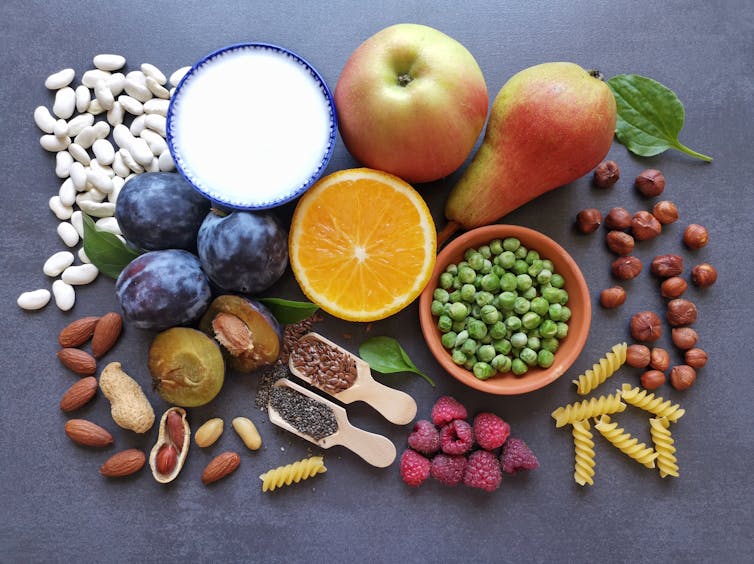
A selection of different types of food laid out against a grey surface
Beyond the food on your plate lies a universe of different molecules.
Danijela Maksimovic/Shutterstock

Gut bacteria also play a major role. When compounds reach the colon, microbes transform them into new chemicals that can affect inflammation, immunity and metabolism.

For example, ellagic acid – found in various fruits and nuts – is converted by gut bacteria into urolithins. These are a group of natural compounds that help keep our mitochondria (the body’s energy factories) healthy.

This shows how food is a complex web of interacting chemicals. One compound can influence many biological mechanisms, which in turn can affect many others. Diet can even switch genes on or off through epigenetics – changes in gene activity that don’t alter DNA itself.

History has provided stark examples of this. For example, children born to mothers who endured famine in the Netherlands during the second world war were more likely to develop heart disease, type 2 diabetes and schizophrenia later in life. Decades on, scientists found their gene activity had been altered by what their mothers ate – or didn’t eat – while pregnant.

Mapping the food universe

Projects such as the Foodome Project are now attempting to catalogue this hidden chemical universe. More than 130,000 molecules have already been listed, linking food compounds to human proteins, gut microbes and disease processes. The aim is to build an atlas of how diet interacts with the body, and to pinpoint which molecules really matter for health.


Read more:
Do food additives cause symptoms of ADHD? It’s more complicated than you think


The hope is that by understanding nutritional dark matter, we can answer questions that have long frustrated nutrition science. Why do certain diets work for some people but not others? Why do foods sometimes prevent, and sometimes promote, disease? Which food molecules could be harnessed to develop new drugs, or new foods?

We are still at the beginning. But the message is clear – the food on our plate is not just calories and nutrients, but a vast chemical landscape we are only starting to chart. Just as mapping cosmic dark matter is transforming our view of the universe, uncovering nutritional dark matter could transform how we eat, how we treat disease and how we understand health itself.

The Conversation

David Benton does not work for, consult, own shares in or receive funding from any company or organisation that would benefit from this article, and has disclosed no relevant affiliations beyond their academic appointment.

ref. What exactly are you eating? The nutritional ‘dark matter’ in your food – https://theconversation.com/what-exactly-are-you-eating-the-nutritional-dark-matter-in-your-food-262290

The tyranny of front gardens: we cut and trim them out of social pressure, not pleasure

Source: The Conversation – UK – By Rachel Lauwerijssen, Researcher in Green Infrastructure, University of Manchester

FahC2025

Look at the front gardens in a typical suburban street and you’re unlikely to be surprised by much. Tidy little lawns and hedges, a few prim flowers, perhaps a well-kept wooden fence. You probably barely notice unless it’s in a poor state – or there’s something eccentric like a stone fountain. “Why would anyone have that eyesore?” people probably tut as they walk by.

The other thing you’re very likely to see is the owners out doing the gardening. Many will surely be out as I write, doing some final manicuring before autumn sets in.

This is fun for gardening enthusiasts, but most of us with front gardens make them boring more out of social pressure than personal choice. They may say our homes are supposed to be our castles, but we treat our front gardens more like they belong to someone else.

Mother doing gardening while child plays on grass
Crazy slaving.
Phil and Maria, CC BY-SA

This applies across cultures. In recent years, it has been demonstrated by several studies in the UK and US, as well as in my research in the Netherlands.

I interviewed 20 older adults for my 2024 study about their relationship with their gardens. They all lived in the small cities of Breda and Tilburg, about halfway between Rotterdam and Antwerp. When I talked to Josje and Kees, a couple living in the suburbs of Breda who had the luxury of a front and back garden, Josje told me:

Our garden was green, but maintaining it was an obligatory thing … What you did is mowing the lawn and other amenities to keep it tidy, but not because you had green fingers.

This image of the “perfect” suburban front garden forces people into gardening even if they dislike it. As many as 70% of Dutch people have access to a front garden, and on average they spend 45 minutes per week looking after it. For many, these 45 minutes are clearly just a weekly necessity.

I also talked to Gerda and Willem, who lived on the same street, and Gerda’s comments gave an insight into the social pressure that gets attached to front gardens:

The street has become more beautiful now that everyone is paying more attention to the garden and trying to keep it tidy – except for one.

Clearly you wouldn’t want to be that person. And this isn’t all about the middle classes. In a study in an economically deprived area in the north of England in 2021, one respondent said:

You don’t want visitors to think you live in a dump, you don’t want them to pity you … It gives you pride, not just in your house but in the whole area. It makes it look like your area has not just been left to rot.

The sense of community and social control is reinforced when neighbours greet one another in apparently throwaway comments. “Morning – nice weather for gardening, isn’t it?” one of my interviewees said when he saw another outside. It’s friendly on one level, but there’s a subtext about moral duty as well.

The state of someone’s front garden influences how others perceive you and your house. Tidy and manicured garden? You must be middle class and have a nice, tidy house. A garden full of weeds and dirt? You must be working class, antisocial or renting.

There is even stigma around relaxing in your front garden. A 2023 UK study, which did focus-group interviews with people from different social classes and parts of England, had a contributor who said:

I think sitting out the front, people would say either this person’s got too much time or he’s looking at the neighbourhood gossip.

What happens round the back

Back gardens are a whole different can of worms. These are spaces of privacy and self-expression, where homeowners are more likely to go rogue with their designs. If you’re going to see cacti or palm trees, or statues or Japanese rock gardens, this is the place to look.

Among those who take biodiversity more seriously, you’ll maybe see microhabitats like ponds, nests and insect boxes. Those who prioritise self-sufficiency are increasingly setting up greenhouses and allotment-style plots to grow and harvest seasonal vegetables.

Back gardens are where people kick back, talk to family and friends, and let the children play. It’s where we’re less likely to worry if the grass is a bit longer than usual, since there’s probably tall enough fencing or hedging that the neighbours can’t see what’s going on.

Back gardens were particularly vital for restoring people and improving their wellbeing during the COVID-19 pandemic – for those lucky enough to have them.

So, if you want to know what a person is really like, check out their back garden. Although I should add, it is a little different in the Netherlands – where the culture is to usually have all curtains open, sending out a message that there’s nothing to hide in this house. That may or may not impose a little more conformity than in other countries, but that’s a research question for another day.

The Conversation

Rachel Lauwerijssen does not work for, consult, own shares in or receive funding from any company or organisation that would benefit from this article, and has disclosed no relevant affiliations beyond their academic appointment.

ref. The tyranny of front gardens: we cut and trim them out of social pressure, not pleasure – https://theconversation.com/the-tyranny-of-front-gardens-we-cut-and-trim-them-out-of-social-pressure-not-pleasure-264136

How to poop outdoors in a way that won’t harm the environment and other hikers

Source: The Conversation – USA (2) – By Shari Edelson, Ph.D. Candidate in Recreation, Park and Tourism Management, Penn State

A pilot program to distribute waste bags to hikers on Mount Elbert in Colorado successfully cut down the amount of human waste on the massive mountain. Shari Edelson, CC BY-ND

If you’re one of the 63 million Americans who went hiking last year, chances are you’ve found yourself needing to go, with no toilet in sight.

Aside from personal inconvenience, why is this such a big deal?

Human fecal contamination is a public health concern in natural areas. Pathogens in human poop can remain active for a long time – over a year in outdoor environments – meaning that waste left behind today can cause severe gastrointestinal disease and other sicknesses for future visitors. Fecal waste can enter waterways after storms or snowmelt, harming water quality. Finally, it can be upsetting – or at the least, unpleasant – to encounter someone else’s poop and used toilet paper in nature.

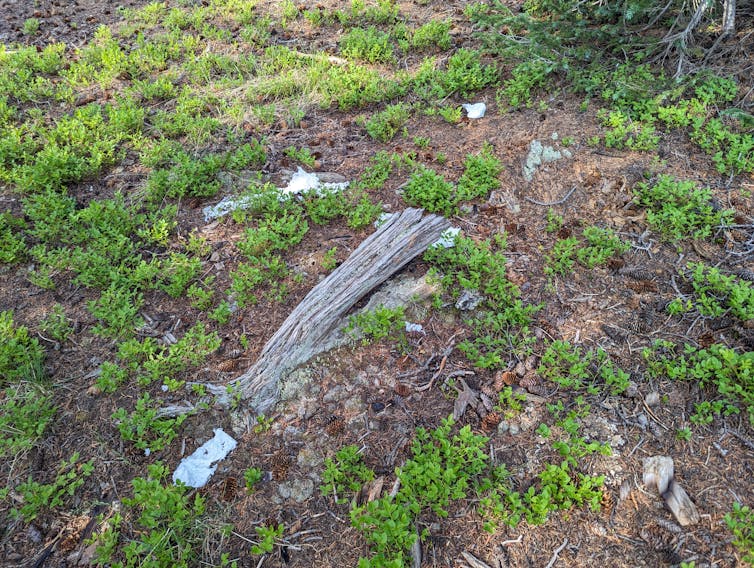
Used and tattered toilet paper is scattered throughout the forest floor near grasses, logs and sticks.
Toilet paper waste on Mount Elbert in the San Isabel National Forest in Colorado.
Shari Edelson, CC BY-ND

As a researcher and a Ph.D. candidate who study human impacts on parks and protected areas, we have been thinking quite a lot about poop and ways people can tread more lightly on the landscape. Our focus is on Leave No Trace, an environmental education framework – created by an organization with the same name – that helps people implement minimal-impact practices in the outdoors.

Poop is causing problems in parks and protected areas

From the Appalachian Trail and Mount Everest – known as Sagarmatha in Nepali – to national parks in Norway and Aotearoa – known as New Zealand to English speakers, researchers have documented the negative impacts our bodily wastes are causing in the sensitive environments where we seek recreation and restoration.

In Colorado, the problem has gotten so bad that land managers have decided to take action. In the Eagle-Holy Cross District of the White River National Forest, for example, the U.S. Forest Service now requires visitors to take their human waste out with them.

A raging river courses alongside a rocky shoreline within a verdant forest. A wooden bridge crosses over the water.
A footbridge on the Chimney Tops Trail in the Great Smoky Mountains near the Appalachian Trail.
Shari Edelson, CC BY-ND

Best practices for dealing with your poo in the great outdoors

One of us – Derrick Taff – works as a science adviser to Leave No Trace, an organization that has educated outdoor recreationists on this issue for more than 30 years and has provided concrete guidance based on scientific research.

The first rule of thumb is to avoid the possibility of contamination entirely by not leaving waste in natural areas to begin with. Toilet facilities are regarded as the most effective method to reduce human waste in the backcountry. If there’s a toilet at the trailhead, use it before you head out.

Current research we’re doing in Grand Teton National Park in Wyoming and San Isabel National Forest in Colorado confirms that hikers prefer to use trailhead toilets when they’re available.

But as anyone who’s been out in the woods is aware, remote wilderness areas do not necessarily offer such infrastructure. Access for maintenance and waste removal costs are major barriers for land management agencies considering installing backcountry toilets.

And then there’s the very real likelihood that even when trailhead facilities do exist, you may be far away when nature calls. In our own research, pending publication, we surveyed hikers on Colorado’s Mount Elbert. Up to 70% of those needing to poop ended up doing so in the backcountry despite the presence of a trailhead toilet.

Issues develop because hikers aren’t prepared

This issue may persist because people aren’t aware of the current rules. In our soon-to-be-published study of Grand Teton hikers, 66% of backcountry trail visitors reported that they had not received any information on how to dispose of human waste in the park.

A wide, peaceful river flows into a thick forest. Imposing jagged peaks pierce the sky. Snow is visible within the mountain's crevices.
The view from String Lake in Grand Teton National Park.
Shari Edelson, CC BY-ND

Other reasons why people may not follow the rules are because they may consider them onerous or unimportant.

Research shows that clear, actionable messaging including relevant environmental and moral appeals does make a difference in shifting people’s behaviors in the outdoors. Although individual choices may seem inconsequential, they add up to big impacts in the aggregate.

How to poop in the backcountry

So what to do when there really is no potty? Leave No Trace advises us of two main options.

The first is to dig a little pit, commonly called a cat hole, and deposit your poop in there. Can’t aim? No worries – Just poop next to the hole and scoop it in afterward.

The use of cat holes is recommended in areas where it’s possible to dig roughly the length of your hand deep in the soil, where moist ground indicates that material buried there will decompose, and where digging is not likely to disturb fragile environments. Make sure you’re about 70 steps away from any water source, trail or campsite to avoid water contamination and reduce the likelihood that someone else will accidentally come upon your waste.

You can typically leave toilet paper in a cat hole, but check local regulations and carry it out in a sealed bag if not. Never leave wet wipes behind. They don’t biodegrade.

Outdoor companies are now making lightweight trowels designed for digging cat holes in the backcountry. But there are also places where it’s difficult if not impossible to dig a cat hole because of snow, frozen ground, shallow soil or exposed bedrock, or where leaving human waste in the outdoors is not recommended due to environmental conditions. These typically include high-mountain zones above tree line, alpine environments inhabited by delicate and slow-growing flora, and deserts and other arid places characterized by low soil moisture.

In places like this, it’s best to remove all poop and toilet paper and dispose of it in a proper location such as a trash can at the trailhead or even back at your home. Before you recoil in horror, remember that dog owners do this with their pets’ waste when on a walk.

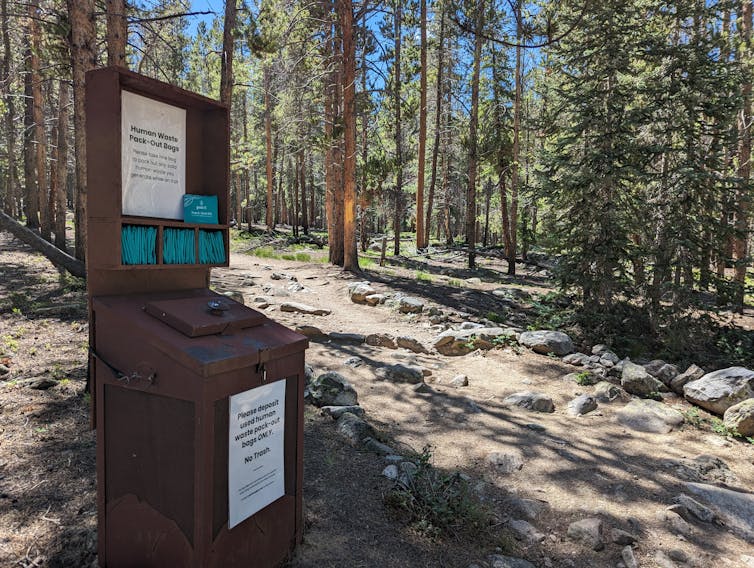
Wag bags – short for waste aggregation and gelling – are used to pack out poop. Wag bag kits typically include an inner and an outer bag as well as a drying agent to prevent odor and leakage. Our current research, as well as a recent study of Norwegian park users, has demonstrated that people are willing to use them.

A brown box stands near a trail in the forest. Numerous turquoise bags are folded and placed on shelves. A sign, with black lettering on white laminated paper, is attached to the kiosk. One reads:
A kiosk offers free wag bags at the beginning of the Mount Elbert summit trail near Leadville, Colo. Wag bags are commonly used by hikers as self-contained receptacles for feces.
Shari Edelson, CC BY-ND

Our study found that among people who defecated while on a hike to the summit of Mount Elbert, 30% used a wag bag to carry their waste off the mountain, and 87% expressed willingness to use one on future trips.

These results suggest that people are willing to do the right thing when given the proper tools and information, and that it’s possible to effectively teach people how to care for our wild spaces.

The Conversation

Shari Edelson has received research funding from the National Park Service, the National Science Foundation and PACT Outdoors.

B. Derrick Taff is an Assistant Dean of Research and Graduate Education in the College of Health and Human Development, and an Associate Professor in the Department of Recreation, Park and Tourism Management at Penn State University; he also serves as the Leave No Trace organization’s science advisor. Derrick is the Suzie and Allen Martin Professor through Penn State University.

ref. How to poop outdoors in a way that won’t harm the environment and other hikers – https://theconversation.com/how-to-poop-outdoors-in-a-way-that-wont-harm-the-environment-and-other-hikers-262426

Are high school sports living up to their ideals?

Source: The Conversation – USA (2) – By Jedediah Blanton, Assistant Professor of Kinesiology, Recreation and Sport Studies, University of Tennessee

Most coaches want to be able to do more than teach their athletes to win faceoffs and dodge defenders. Hannah Foslien/The Washington Post via Getty Images

Coach Smith was an easy hire as the head coach of a new high school lacrosse team in Tennesseee: She had two decades of coaching experience and a doctorate in sport and exercise science.

After signing the paperwork, which guaranteed a stipend of US$1,200, Smith – we’re using a pseudonym to protect her identity – had four days to complete a background check, CPR and concussion training and a Fundamentals of Coaching online course. After spending $300 to check all these boxes, the job was hers.

The Tennessee Secondary School Athletic Association’s mission statement highlights how high school athletes should be molded into good citizens and have their educational experiences enhanced by playing sports.

Yet Coach Smith hadn’t received any guidance on how to accomplish these goals. She didn’t know how a high school coach would be evaluated – surely it went beyond wins, losses and knowing CPR – or how to make her players better students and citizens.

Over the past 15 years, our work has focused on maximizing the benefits of high school sports and recognizing what limits those benefits from being reached. We want to know what high school sports aspire to be and what actually happens on the ground.

We have learned that Coach Smith is not alone; this is a common story playing out on high school fields and courts across the country. Good coaching candidates are getting hired and doing their best to keep high school sports fixtures in their communities. But coaches often feel like they’re missing something, and they wonder whether they’re living up to those aspirations.

Does the mission match reality?

Dating back to the inception of school-sponsored sport leagues in 1903, parents and educators have long believed that interscholastic sports are a place where students develop character and leadership skills.

Research generally backs up the advantages of playing sports. In 2019, high school sports scholar Stéphanie Turgeon published a review paper highlighting the benefits and drawbacks of playing school sports. She found that student-athletes were less likely to drop out, more likely to be better at emotional regulation and more likely to contribute to their communities. While athletes reported more stress and were more likely to drink alcohol, Turgeon concluded that the positives outweighed the negatives.

The governing body of high school sports in the U.S., the National Federation of State High School Associations, oversees 8 million students. According to its mission statement, the organization seeks to establish “playing rules that emphasize health and safety,” create “educational programs that develop leaders” and provide “administrative support to increase opportunities and promote sportsmanship.”

Digging deeper into the goals of sports governing bodies, we recently conducted a study that reviewed and analyzed the mission statements of all 51 of the member state associations that officially sponsor high school sports and activities.

In their missions, most associations described the services they provided – supervising competition, creating uniform rules of play and offering professional development opportunities for coaches and administrators. A majority aimed to instill athletes with life skills such as leadership, sportsmanship and wellness. Most also emphasized the relationship between sports and education, either suggesting that athletics should support or operate alongside schools’ academic goals or directly create educational opportunities for athletes on the playing field. And a handful explicitly aspired to protect student-athletes from abuse and exploitation.

Interestingly, seven state associations mentioned that sports participation is a privilege, with three adding the line “and not a right.” This seems to conflict with the National Federation of State High School Associations, which has said that it wants to reach as many students as possible. The organization sees high school sports as a place where kids can further their education, which is a right in the U.S. This is important, particularly as youth sports have developed into a multibillion-dollar industry fueled by expensive travel leagues and club teams.

We also noticed what was largely missing from these mission statements. Only two state athletic associations included a goal for students to “have fun” playing sports. Research dating back to the 1970s has consistently shown that wanting to have fun is usually the No. 1 reason kids sign up for sports in the first place.

Giving coaches the tools to succeed

Missions statements are supposed to guide organizations and outline their goals. For high school sports, the opportunity exists to more clearly align educational initiatives and evaluation efforts to fulfill their missions.

If high school sports are really meant to build leadership and life skills, you would think that the adults running these programs would be eager to acquire the skill set to do this. Sure enough, when we surveyed high school coaches across the country in 2019, we found that 90% reported that formal leadership training programs were a good idea. Yet less than 12% had actually participated in those programs.

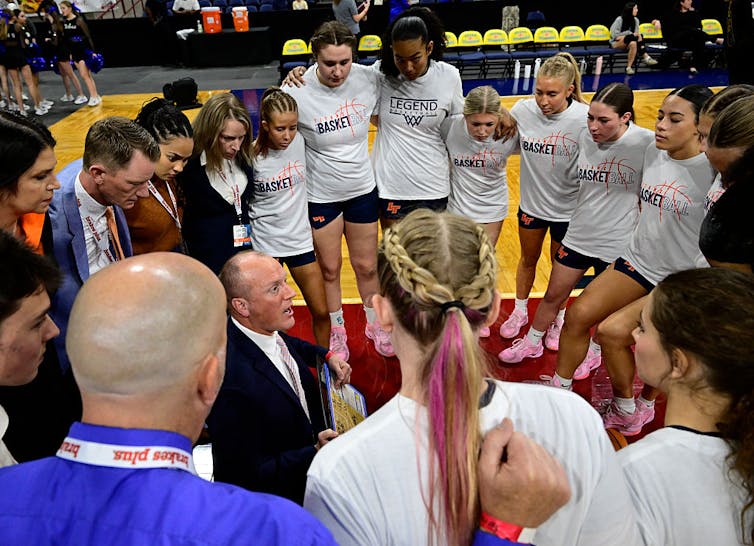
High school girl basketball players stand in a circle around a male coach who's crouching and speaking to them.
Few high school coaches are required to complete leadership training.
Andy Cross/MediaNews Group/The Denver Post via Getty Images

A recent study led by physical education scholar Obidiah Atkinson highlighted this disconnect. While most states require training for coaches, the depth and amount of instruction varied significantly, with little emphasis on social–emotional health and youth development. In another study we conducted, we spoke with administrators. They admitted that coaches rarely receive training to effectively teach the leadership and life skills that high school sports promise to deliver.

This type of training is available; we helped the National Federation of State High School Associations create three free courses explicitly focused on developing student leadership. Thousands of students and coaches have completed these courses, with students reporting that the courses have helped them develop leadership as a life skill. And it’s exciting to see that the organization offers over 60 courses reaching millions of learners on topics ranging from Heat Illness Prevention and Sudden Cardiac Arrest, to Coaching Mental Wellness and Engaging Effectively with Parents.

Yet, our research findings suggest that if these aspirational missions are to be taken seriously, it’s important to really measure what matters.

Educational programs can be evaluated to determine whether and how they are helping coaches and students, and coaches ought to be evaluated and retained based on their ability to help athletes learn how to do more than kick a soccer ball or throw a strike. Our findings highlight the opportunity for high school athletic associations and researchers to work together to better understand how this training is helping coaches to meet the promises of high school sports.

Taking these steps will help to make sure coaches like Coach Smith have the tools, support and feedback they need to succeed.

The Conversation

Jedediah Blanton received funding from the Michigan High School Athletic Association. The contract was to build online courses for the NFHS Learn platform.

Scott Pierce has consulted with the Michigan High School Athletic Association and Illinois High School Association to support student leadership initiatives. He has received funding from the Michigan High School Athletic Association. The contract was to build online courses for the NFHS Learn platform.

ref. Are high school sports living up to their ideals? – https://theconversation.com/are-high-school-sports-living-up-to-their-ideals-256770

Balancing kratom’s potential benefits and risks − new legislation in Colorado seeks to minimize harm

Source: The Conversation – USA (3) – By David Kroll, Professor of Natural Products Pharmacology & Toxicology, University of Colorado Anschutz Medical Campus

Kratom, an herbal supplement, is now being regulated in Colorado. AR30mm/iStock via Getty Images

David Bregger had never heard of kratom before his son, Daniel, 33, died in Denver in 2021 from using what he thought was a natural and safe remedy for anxiety.

By his father’s account, Daniel didn’t know that the herbal product could kill him. The product listed no ingredients or safe-dosing information on the label. And it had no warning that it should not be combined with other sedating drugs, such as the over-the-counter antihistamine diphenhydramine, which is the active ingredient in Benadryl and other sleep aids.

As the fourth anniversary of Daniel’s death approaches, a recently enacted Colorado law aims to prevent other families from experiencing the heartbreak shared by the Bregger family. Colorado Senate Bill 25-072, known as the Daniel Bregger Act, addresses what the state legislature calls the deceptive trade practices around the sale of concentrated kratom products artificially enriched with a chemical called 7-OH.

The Daniel Breggar Act seeks to limit potency and underage access to kratom, an herbal supplement.

7-OH, known as 7-hydroxymitragynine, has also garnered national attention. On July 29, 2025, the U.S. Food and Drug Administration issued a warning that products containing 7-OH are potent opioids that can pose significant health risks and even death.

As kratom and its constituents are studied in greater detail, the Centers for Disease Control and Prevention and university researchers have documented hundreds of deaths where kratom-derived chemicals were present in postmortem blood tests. But rarely is kratom deadly by itself. In a study of 551 kratom-related deaths in Florida, 93.5% involved other substances such as opioids like fentanyl.

I study pharmaceutical sciences, have taught for over 30 years about herbal supplements like kratom, and I’ve written about kratom’s effects and controversy.

Kratom – one name, many products

Kratom is a broad term used to describe products made from the leaves of a Southeast Asian tree known scientifically as Mitragyna speciosa. The Latin name derives from the shape of its leaves, which resemble a bishop’s miter, the ceremonial, pointed headdress worn by bishops and other church leaders.

Small capsules are full of a green powder made from the dried kratom leaves which are also in the picture.
People report buying kratom powder from online retailers and putting it into capsules or making it into tea for consumption.
Everyday better to do everything you love/iStock via Getty Images

Kratom is made from dried and powdered leaves that can be chewed or made into a tea. Used by rice field workers and farmers in Thailand to increase stamina and productivity, kratom initially alleviates fatigue with an effect like that of caffeine. In larger amounts, it imparts a sense of well-being similar to opioids.

In fact, mitragynine, which is found in small amounts in kratom, partially stimulates opioid receptors in the central nervous system. These are the same type of opioid receptors that trigger the effects of drugs such as morphine and oxycodone. They are also the same receptors that can slow or stop breathing when overstimulated.

In the body, the small amount of mitragynine in kratom powder is converted to 7-OH by liver enzymes, hence the opioid-like effects in the body. 7-OH can also be made in a lab and is used to increase the potency of certain kratom products, including the ones found in gas stations or liquor stores.

And therein lies the controversy over the risks and benefits of kratom.

Natural or lab made: All medicines have risks

Because kratom is a plant-derived product, it has fallen into a murky enforcement area. It is sold as an herbal supplement, normally by the kilogram from online retailers overseas.

In 2016, I wrote a series of articles for Forbes as the Drug Enforcement Administration proposed to list kratom constituents on the most restrictive Schedule 1 of the Controlled Substances Act. This classification is reserved for drugs the DEA determines to possess “no currently accepted medical use and a high potential for abuse,” such as heroin and LSD.

But readers countered the DEA’s stance and sent me more than 200 messages that primarily documented their use of kratom as an alternative to opioids for pain.

Others described how kratom assisted them in recovery from addiction to alcohol or opioids themselves. Similar stories also flooded the official comments requested by the DEA, and the public pressure presumably led the agency to drop its plan to regulate kratom as a controlled substance.

Kratom is under growing scrutiny.

But not all of the stories pointed to kratom’s benefits. Instead, some people pointed out a major risk: becoming addicted to kratom itself. I learned it is a double-edged sword – remedy to some, recreational risk to others. A national survey of kratom users was consistent with my nonscientific sampling, showing more than half were using the supplement to relieve pain, stress, anxiety or a combination of these.

Natural leaf powder vs. artificially concentrated extracts

After the DEA dropped its 2016 plan to ban the leaf powder, marketers in the U.S. began isolating mitragynine and concentrating it into small bottles that could be taken like those energy shots of caffeine often sold in gas stations and convenience stores. This formula made it easier to ingest more kratom. Slowly, sellers learned they could make the more potent 7-OH from mitragynine and give their products an extra punch. And an extra dose of risk.

People who use kratom in the powder form describe taking 3 to 5 grams, the size of a generous tablespoon. They put the powder in capsules or made it into a tea several times a day to ward off pain, the craving for alcohol or the withdrawal symptoms from long-term prescription opioid use. Since this form of kratom does not contain very much mitragynine – it is only about 1% of the powdered leaf – overdosing on the powder alone does not typically happen.

That, along with pushback from consumers, is why the Food and Drug Administration is proposing to restrict only the availability of 7-OH and not mitragynine or kratom powder. The new Colorado law limits the concentration of kratom ingredients in products and restricts their sales and marketing to consumers over 21.

Even David Bregger supports this distinction. “I’m not anti-kratom, I’m pro-regulation. What I’m after is getting nothing but leaf product,” he told WPRI in Rhode Island last year while demonstrating at a conference of the education and advocacy trade group the American Kratom Association.

Such lobbying with the trade group last year led the American Kratom Association to concur that 7-OH should be regulated as a Schedule 1 controlled substance. The association acknowledges that such regulation is reasonable and based in science.

Benefits amid the ban

Despite the local and national debate over 7-OH, scientists are continuing to explore kratom compounds for their legitimate medical use.

A $3.5 million NIH grant is one of several that is increasing understanding of kratom as a source for new drugs.

Researchers have identified numerous other chemicals called alkaloids from kratom leaf specimens and commercial products. These researchers show that some types of kratom trees make unique chemicals, possibly opening the door to other painkillers. Researchers have also found that compounds from kratom, such as 7-OH, bind to opioid receptors in unique ways. The compounds seem to have an effect more toward pain management and away from potentially deadly suppression of breathing. Of course, this is when the compounds are used alone and not together with other sedating drugs.

Rather than contributing to the opioid crisis, researchers suspect that isolated and safely purified drugs made from kratom could be potential treatments for opioid addiction. In fact, some kratom chemicals such as mitragynine have multiple actions and could potentially replace both medication-assisted therapy, like buprenorphine, in treating opioid addiction and drugs like clonidine for opioid withdrawal symptoms.

Rigorous scientific study has led to this more reasonable juncture in the understanding of kratom and its sensible regulation. Sadly, we cannot bring back Daniel Bregger. But researchers can advance the potential for new and beneficial drugs while legislators help prevent such tragedies from befalling other families.

The Conversation

David Kroll does not work for, consult, own shares in or receive funding from any company or organization that would benefit from this article, and has disclosed no relevant affiliations beyond their academic appointment.

ref. Balancing kratom’s potential benefits and risks − new legislation in Colorado seeks to minimize harm – https://theconversation.com/balancing-kratoms-potential-benefits-and-risks-new-legislation-in-colorado-seeks-to-minimize-harm-261914

Treaties like the ECHR protect everyone in the UK, not just migrants

Source: The Conversation – UK – By Alice Donald, Professor, Middlesex University

Reform UK has laid out plans for an “emergency programme” to address illegal immigration. The party argues its plans, which include expanding immigration detention capacity from the current roughly 2,200 places to 24,000, would enable the deportation of up to 600,000 people over a parliamentary term.

The plans would require removing legal protections against mass deportation without due process. Specifically, Reform has called for repealing the Human Rights Act (HRA) 1998 and permanently withdrawing the UK from the European Convention on Human Rights (ECHR). Nigel Farage has also proposed disapplying for five years the 1951 Refugee Convention, the UN Convention against Torture and the Council of Europe anti-trafficking convention, although these treaties do not, in fact, allow for temporary suspension.

Beyond the apparent logistical challenges are serious political repercussions. The Good Friday Agreement requires the rights and freedoms in the ECHR and recourse to the European Court of Human Rights to be part of the law in Northern Ireland. Withdrawing would require a renegotiation of the agreement. A showdown would also ensue with the devolved assemblies in Wales, Scotland and Northern Ireland.

Reform has touted its plan as a “legal reset”. But it is better understood as a total rejection of the UK’s postwar international commitments to protect the human rights of everyone within its jurisdiction.

These commitments, and others, have cemented the UK at the heart of the rules-based international order. This is the foundational idea that countries are bound by the legal commitments they make to each other and everyone within their jurisdiction. Successive governments have viewed this as both a moral imperative and a core aspect of the UK’s foreign and defence policies.

Reform’s plan would be an unprecedented and drastic rupture with almost eight decades of commitment to human rights protections. It would have far-reaching implications for all people in the UK, not just refugees.

How the ECHR protects everyone

If the UK withdrew from the ECHR, everyone living in the UK would lose the ability to take cases to the European Court of Human Rights if they fail to get justice domestically.

ECHR rights have been invoked to protect victims of domestic abuse, children and disabled people. The right to private and family life, the application of which has been (inaccurately) criticised for preventing deportation, is the same right relied on to protect privacy in the workplace or from surveillance, to uphold the dignity of older and disabled people in residential care, and to secure legal protection for LGBTQ+ people.

The ECHR alone has provided redress to victims of crime who have been failed by state investigations, like the survivors and bereaved families of the Hillsborough disaster or the victims of the “black cab rapist” John Worboys. Ironically, Reform UK has repeatedly argued for protection of free speech, which is protected primarily by the ECHR.

The wider cost of UK withdrawal from international treaties would be the loss of influence and reputation. These treaties are benchmarks for international cooperation, and foundational to international order. Pulling out of the UN convention against torture and the anti-trafficking convention would signal the UK’s abandonment of global principles to combat torture, modern slavery, sexual exploitation and trafficking, including the illegal trade in human organs.

Far from enabling the UK to control migration, a do-it-alone stance would harm the ability of future governments to do so. Removing the UK from the negotiating table would forfeit the opportunity to shape and benefit from cooperation to tackle a global challenge. We have seen this before: UK withdrawal from the EU took it out of the Dublin system and ongoing EU-wide efforts to manage migration and returns, just as small boat arrivals increased.

Beyond this, removals require treaties with other countries. Treaties require political will, mutual benefit, time and trust that the signatories will hold to their commitments. Where these are lacking, as evidenced by the failed and costly Rwanda policy, receiving countries can extract a very high price from the UK.

Could the rights be replaced?

To implement these plans, a Reform government would need to pass legislation through parliament to repeal the Human Rights Act (HRA). If successful, this would pave the way for the UK to give notice to the Council of Europe to withdraw from the ECHR.

Without the HRA, there is no equivalent protection to the ECHR elsewhere in UK law. The common law, a body of law developed over centuries by judicial decisions as distinct from laws passed by parliament, would continue to provide some protection for rights, including personal liberty, access to justice, the right to a fair trial and the prohibition of torture.


Read more:
How the UK could reform the European convention on human rights


Common law principles would still guide British judges when making decisions about mass detention and deportation without due process. It is also possible that a new bill of rights could be enacted, containing a similar or identical catalogue of rights to the ECHR.

The most important difference would be how rights would be protected in practice. Would any replacement, like the HRA, oblige public authorities and the government to uphold rights in their decisions and actions? And would it allow higher courts to declare a law incompatible with human rights, flagging to parliament that the law should be reconsidered?

Human rights protections are invisible to most people living in the UK. The expectation that police and your local council must treat you fairly, that health and care services must respect your dignity, and that there will be legal remedy if the state fails you, is so normalised that it would be inconceivable to think it could disappear within the UK.

But it is the invisible integration of individual rights within the UK system that makes this both a lived and legal reality. Stripping away these protections would leave us all naked.


Want more politics coverage from academic experts? Every week, we bring you informed analysis of developments in government and fact check the claims being made.

Sign up for our weekly politics newsletter, delivered every Friday.


The Conversation

Alice Donald is a member of the Labour Party.

Joelle Grogan does not work for, consult, own shares in or receive funding from any company or organisation that would benefit from this article, and has disclosed no relevant affiliations beyond their academic appointment.

ref. Treaties like the ECHR protect everyone in the UK, not just migrants – https://theconversation.com/treaties-like-the-echr-protect-everyone-in-the-uk-not-just-migrants-264057

The UK’s food system is built on keeping prices low – but this year’s droughts show up its failings

Source: The Conversation – UK – By Manoj Dora, Professor in Sustainable Production and Consumption, Anglia Ruskin University

1000 Words/Shutterstock

This year’s drought has once again put farmers in the spotlight, with yields in some crops falling by as much as 50%. But behind the headlines of empty reservoirs and wilting fields lies a bigger problem: the way the UK’s food system is organised, managed and governed.

For generations, UK food policy has prioritised stable, low prices above all else. This dates right back to Britain’s repeal of the Corn Laws in 1846 and the birth of free trade in grain. While the policy was meant to keep bread affordable, its influence has endured. The idea that food must remain cheap and price-stable, often at the expense of resilience in the face of climate shocks, is embedded.

These days, it means supermarket shelves stay full and prices rise more slowly than in many other European countries. But the model comes at a hidden cost: it strips resilience out of the supply chain. When extreme weather hits, the whole system wobbles – and consumers end up paying anyway.

The UK produces about 62% of the food it consumes, but only 53% of the fresh vegetables. The rest comes from imports – often from climate-vulnerable regions such as Spain, Italy and North Africa.

That dependence once diversified risk. Now, when multiple regions are hit by droughts or floods, there are far fewer alternatives.

In the UK, supermarkets run “just-in-time” logistics systems meaning produce is delivered to distribution centres and stores exactly when it is needed, with little or no stock held in reserve.

This model is designed to cut costs and reduce waste, and for highly perishable items like fresh fruit and vegetables it can seem essential. But it also makes the system brittle – when harvests fail or imports are delayed, shelves empty quickly.

Strategic storage – whether in the form of grain reserves, frozen produce or regional “cold-chain” hubs – could provide resilience without undermining freshness for short-life products.

At the moment though, farmers deliver crops straight from the field to distribution centres, leaving no buffer in case of a bad harvest. And contracts are often one-sided. If a crop doesn’t meet strict cosmetic standards, or if a retailer changes its order, farmers carry the loss.

All of this means that as soon as weather reduces supply, shortages ripple through the chain and the consumer sees higher prices. In June 2025, food inflation climbed to 4.5% year-on-year – the fastest rise since early 2024.

But the UK still throws away 9.5 million tonnes of food every year, worth around £19 billion. About 60% of that is wasted by households, but supermarkets are far from blameless.

Retailers discard more than 200,000 tonnes of fresh produce annually, often because it doesn’t meet strict appearance standards. Farmers report ploughing perfectly edible crops back into the soil when contracts are cancelled due to faulty demand forecasts.

This isn’t just bad for the environment, it undermines food security. In a year when farmers are struggling to produce crops, the idea that a third of food is lost or wasted worldwide highlights how poorly managed the system really is.

Should consumer expectations change?

The uncomfortable truth is that resilience may mean less predictability. The current model shields consumers from seasonal variations by spreading risk along the chain – usually on to farmers or overseas producers. But this comes at the expense of long-term stability.

If instead consumers accepted that prices might fluctuate more in the short term – reflecting the true cost of climate shocks – supply chains could be redesigned for resilience. Farmers could be paid fairly to invest in adaptation, and retailers could prioritise secure contracts over the cheapest imports.

a head of brocolli growing on the plant
British broccoli yields have been hit by the droughts and farmers are warning of shortages and smaller plants.
hxdbzxy/Shutterstock

In the long run, that would protect households from the more damaging spikes caused when the system fails. But lower-income households already spend a far greater share of their income on food, so short-term price increases must be accompanied by targeted government support to tackle food insecurity.

So, what would a more secure food system look like? Based on my research, three changes stand out.

1. Stronger local networks: Investing in regional hubs for processing and storage would mean that food from Scotland, Wales, Northern Ireland and England could be better connected and there would be less reliance on imports. Government should fund infrastructure and planning support, retailers should commit to long-term contracts that make local hubs viable and producers can collaborate to share facilities.

2. Fairer contracts: There’s a need for greater risk-sharing between farmers, processors and supermarkets so that a bad harvest doesn’t bankrupt producers. At present, retailers hold most of the power, often setting strict standards and cancelling orders at short notice. But if farmers keep shouldering all the risk, many could exit the sector – leaving retailers with less choice and more volatility.

3. Policy that values resilience: The government should support producers to adapt for the long term with things like drought-resistant crops and water stewardship. This is a better strategy than one-off subsidies after each crisis – as happens at the moment.

Food security is national security. Yet in the UK, it is still treated as a matter of weekly prices. Every drought, flood or heatwave exposes the same fragility – a system designed to deliver cheap food today, but incapable of absorbing tomorrow’s shocks.

If consumers want affordable food in the long run, it’s time to stop asking how to keep prices low and start asking how to keep food supplies secure. That means fairer treatment of farmers, smarter use of resources and consumers willing to accept some short-term price volatility. Otherwise, the next bad year will not be the exception, it will be the rule.

The Conversation

Manoj Dora does not work for, consult, own shares in or receive funding from any company or organisation that would benefit from this article, and has disclosed no relevant affiliations beyond their academic appointment.

ref. The UK’s food system is built on keeping prices low – but this year’s droughts show up its failings – https://theconversation.com/the-uks-food-system-is-built-on-keeping-prices-low-but-this-years-droughts-show-up-its-failings-263939

Ultra-processed foods vs minimally processed foods: how can you tell the difference?

Source: The Conversation – UK – By Aisling Pigott, Lecturer, Dietetics, Cardiff Metropolitan University

Minimally processed foods are whole foods that are altered only to make them safer or easier to prepare. GoodStudio/ Shutterstock

If you’ve ever tried to lose weight, you’ve probably been told that cooking your own meals is the way to go. This has been backed up by a recent study, which found that people who ate home-cooked, minimally processed foods lost twice the weight to those who ate mainly ultra-processed, ready-made foods.

The recent study, which was published in Nature Medicine, involved 50 adults who were randomly assigned to eat either a diet high in ultra-processed foods or one with mostly minimally-processed foods. Both diets were designed to meet the UK’s national dietary guidelines.

Both groups lost weight, which makes sense as they consumed fewer calories than they usually did. However, the group that consumed mostly minimally processed foods ultimately consumed fewer calories overall – thereby losing more weight. They also saw slightly greater improvements to other measures of their health, such as having lower fat mass, reduced triglyceride levels (linked to heart health) and fewer cravings for unhealthy foods at the end of the study.

The ultra-processed foods group still lost weight and saw some improvements in blood lipids (fat) and blood glucose (sugar), but these changes were generally smaller than those seen in the minimally processed foods group.

As a dietitian, this is both an interesting and important piece of research – even though the results are not entirely surprising. In fact, a surprising result is that the consumption of ultra-processed food still resulted in weight loss.

The minimally processed diet group consumed fewer calories overall, which would explain why this group lost more weight. But the fact that this group saw greater improvements in other areas of their health highlights how health encompasses far more than calories or a number on the scales.

Why processing matters

Despite the bad press, food processing plays an essential role in food safety and preservation.

But how much processing a food has undergone seems to be the factor associated with worse health outcomes. These foods tend to have less fibre, more added fats, sugars and salt. This is because they’re designed to be tasty and long-lasting.

The most common definition of an ultra-processed foods are foods which are industrially produced and which contain extracts of original foods alongside additives and industrial ingredients. Think crisps or frozen ready meals.

The food system in much of the world has become increasingly reliant on ultra-processed foods, with these foods contributing to about half of food intake in the UK, Europe and the US. But there’s clear evidence that high intake of ultra-processed foods is linked with poorer health outcomes, including obesity, type 2 diabetes, heart disease and certain cancers.

A person's hand reaches over an assortment of ultra-processed foods to chooses a minimally processed fruit instead.
Ultra-processed foods contain ingredients you wouldn’t normally find in your kitchen at home.
Natalia Mels/ Shutterstock

The more calorie-rich, less nutritious foods we consume, the more our health will suffer – as this recent study has confirmed. But how can you work out which foods are classified as “ultra-processed” and which are only “minimally processed”? In short, this depends on how much processing a food product has undergone to be ready for consumption.

Ultra-processed foods are industrially formulated products made mostly from ingredients extracted from foods (such as oils, starches and proteins) and additives.

Examples include: sugary breakfast cereals, flavoured yoghurts with sweeteners and thickeners, soft drinks, instant noodles, packaged biscuits and cakes, mass-produced bread with emulsifiers and reconstituted meat products – such as chicken nuggets.

Minimally processed foods are whole foods that are altered only to make them safer or easier to prepare. Importantly, this processing doesn’t change their nutritional value.

Examples include: fresh, frozen or bagged vegetables and fruit, plain yoghurt or milk, whole grains (such as oats or brown rice), eggs, fresh or frozen fish, and tinned beans or tomatoes without added sugar or salt.

Including minimally processed foods

It can sometimes feel overwhelming to work out whether a food is ultra-processed or minimally processed.

Some advice that is often suggested for working out whether a food is ultra-processed include checking to see if a product contains more than five to ten ingredients and considering if it contains ingredients you wouldn’t use at home.

In addition to the number of ingredients, it’s also the type of ingredients that matter. Ultra-processed foods often contain added sugars, refined starches, emulsifiers, stabilisers and flavourings that serve cosmetic purposes (such as improving colour, texture or taste), rather than preserving the food’s freshness or safety.

Minimally processed foods will not contain these types of ingredients, nor will they have as many ingredients on their label.

It’s also important to be aware of smoked meats. While this is a common preservation method, most commercially available smoked meats – such as bacon, ham or sausages – are considered ultra-processed because of the curing agents and other additives they contain. While plain smoked fish (such as smoked salmon) is still classed as a processed food, it uses fewer curing agents and additives than other smoked meat products.

A diet rich in minimally processed foods usually means more fibre, more nutrients and fewer calories – all of which can support weight and long-term health, as this recent study showed. So if you’re keen to include more minimally processed foods in your diet, here are a few tips to help you get more onto your plate:

  • build meals around vegetables, whole grains and pulses
  • use tinned or frozen products for convenience and to save time while cooking
  • choose plain dairy products without sugar or fruit purees, then add your own fruits, nuts and seeds for flavour
  • healthy meals don’t have to be complicated. Aim to include a protein source, a wholegrain carbohydrate and plenty of veggies or fruits at each meal
  • batch cook meals when you have time and freeze them if possible.

As a dietitian, it’s important to point out that there’s a distinction between the potential harms of excessive consumption of ultra-processed foods and the essential role processing can play in ensuring food safety, preservation and accessibility.

It’s also important not to panic about enjoying the occasional biscuit or ready meal, and we should avoid demonising convenience foods – especially for those who face barriers such as limited mobility or lack of cooking facilities. Because remember, the group that ate a diet high in ultra-processed foods but met dietary guidelines still lost weight and saw health benefits in the study.

Eating well doesn’t mean that you need to completely eliminate ultra-processed foods. But shifting the balance towards eating more minimally processed foods, with more home-cooked meals where possible, is a step in the right direction.

The Conversation

Aisling Pigott receives funding from Research Capacity Building Collaborative (RCBC) / Health and Care Research Wales (HCRW)

ref. Ultra-processed foods vs minimally processed foods: how can you tell the difference? – https://theconversation.com/ultra-processed-foods-vs-minimally-processed-foods-how-can-you-tell-the-difference-262669

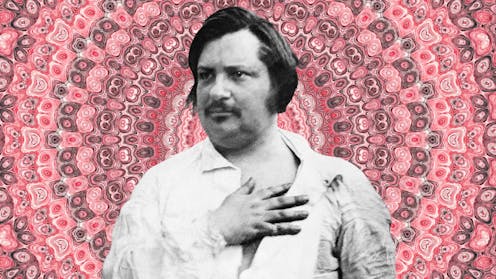
Honoré de Balzac’s La Comédie Humaine is a Hindu mandala

Source: The Conversation – UK – By Harsh Trivedi, Teaching Associate French, School of Languages, Arts and Societies., University of Sheffield

Daguerrotype of Honoré de Balzac by Louis-Auguste Bisson (1842). Wiki Commons/Canva., CC BY-SA

The 19th-century novelist Honoré de Balzac was Catholic, French to the core and obsessed with the material details of French society. Yet there is something profoundly Hindu in the way he sought to understand the world.

Balzac was born in the final year of the 18th century. As he began his career, European literature was turning away from the abstraction of the previous century’s Enlightenment and towards realism. Realist writers, including the French novelist Stendhal, insisted that to understand the human condition, they first had to know local customs, political and economic pressures – and the inner lives of individuals.

Balzac was the supreme example of this shift. His vast work La Comédie Humaine (1829-48) was made up of nearly 100 interconnected novels and stories. It sought to map French society, not by generalising from above, but by diving into the specific lives of his characters.

In the preface to the work, Balzac declared: “French society would be the real author; I should only be the secretary.” He described society as a zoological landscape populated by distinct species and insisted that truth emerged from a complete inventory of these types: “the dress, the manners, the speech, the dwelling of a prince, a banker, an artist, a citizen, a priest, and a pauper are absolutely unlike, and change with every phase of civilisation.”


This article is part of Rethinking the Classics. The stories in this series offer insightful new ways to think about and interpret classic books and artworks. This is the canon – with a twist.


In his novel Le Père Goriot (1835), Balzac devoted the entire opening chapter to the description of a grim boarding house. The copious descriptions of the layout, decoration and even smells serve as a physical embodiment of the moral, social, economic and physiological condition of the dwellers.

In the serial novel Illusions Perdues (1837–1843), meanwhile, he dissected the Parisian press, provincial printing shops and the cruel economy of literary fame. Even the cut of a waistcoat, the price of paper, or the decor of a salon became data for understanding society.

Though his work is known for character typology (grouping them by traits), no two characters of the same “type” are alike. This showed his commitment to individuality within universal archetypes.

Other novelists including Gustave Flaubert, Émile Zola, Charles Dickens and Leo Tolstoy, all treated the individual as the key to the social whole. But Balzac articulated the method most systematically: he aimed to know everything about a society by knowing each part in all its messy detail.

Balzac’s mandala

This method resembles a central idea in Hindu philosophy. The formula tat tvam asi (that thou art), from the Sanskrit Hindu text Chandogya Upanishad (8th to 6th century BC), says that the individual self (ātman) is identical to the universal essence (brāhman). It’s the idea that understanding the universe comes from realising that the universe is within the self.

The Hindu scripture Bhagavad Gita offers a similar vision, where the deity Krishna declares: “I am the Self, O Gudakesha, seated in the hearts of all creatures. I am the beginning, the middle, and the end of all beings.”

Balzac was no expert on Hinduism. But he does have a character (Louis Lambert) write about it in La Comédie Humaine:

Sivaism, Vishnuism, and Brahmanism, the three primitive creeds, originating as they did in Tibet, in the valley of the Indus, and on the vast plains of the Ganges, ended their warfare some thousand years before the birth of Christ by adopting the Hindoo Trimourti. The Trimourti is our Trinity.

The passage wrongly asserts that Shaivism, Vaishnavism and Brahmanism emerged as separate “creeds”, when in fact they are interrelated and complementary currents within Hindu thought. The claim that they resolved their differences by adopting the Trimurti, and that this was the origin of the Christian Trinity, reflects a common orientalist tendency. It misunderstands Hindu ideas and co-opts them into a Christian framework.

Portrait of Honoré de Balzac in a cream dressing gown
Portrait of Honoré de Balzac by Louis Boulanger (1836).
Museum of Fine Arts of Tours

But this misreading makes the structural parallel all the more interesting. Balzac didn’t import Hindu ideas; the resemblance emerges from his method. La Comédie Humaine is structured like a mandala: a layered map of a universe made from precise local detail.

In Hindu traditions, a mandala is not merely a symbol but a sacred diagram of the cosmos. Later Hindu and Buddhist cosmology develops it into a meditative tool – an intricate geometric pattern centred on the self and the divine. A mandala places a sacred centre at the heart of an ordered arrangement, expressing the idea that the universal is embedded in the particular. Each part reflects the whole, and the path to the centre is through a journey inward, detail by detail.

Balzac’s work functions similarly. La Comédie Humaine’s order arises not from a single philosophical system, but from mapping the interlocking elements of social existence. Like a mandala, it invites readers to move inward; from the material facts of a boarding house or a printing press to the inner motives of his characters.

Balzac explains his method of structuring La Comédie Humaine in the preface:

It was no small task to depict the two or three thousand conspicuous types of a period… This multitude of lives needed a setting – a gallery. Hence the very natural division … into the Scenes of Private, Provincial, Parisian, Political, Military, and Country Life. … Each has its own sense and meaning, and answers to an epoch in the life of man.

In this sense, Balzac’s realism is not merely descriptive but architectural: a literary mandala of modern society. The affinity with the Hindu mandala suggests that La Comédie Humaine, which has more than 2,000 characters, enacts a recognisably Hindu way of knowing: to know the world, one must first know its inward forms.

Balzac’s Catholic worldview, his (often) moralising narrator, his encyclopaedic ambition, all root him in 19th-century France. But the kinship with Hindu inwardness points to something deeper. His great realist novel, for all its materialism, remains part of a broader human project – to understand the universe by beginning with the self.

Beyond the canon

As part of the Rethinking the Classics series, we’re asking our experts to recommend a book or artwork that tackles similar themes to the canonical work in question, but isn’t (yet) considered a classic itself. Here is Harsh Trivedi’s suggestion:

For readers seeking complex but entertaining social narratives outside the western canon, Sacred Games by Vikram Chandra (2006) offers an Indian counterpart to Balzac’s realism.

Set in contemporary Mumbai, the novel intricately weaves crime, politics and mythology. The ripples of the many characters’ actions interlock like a mandala, forming a complex, layered fiction. The protagonist, Sartaj Singh, first appeared in Chandra’s earlier short story collection Love and Longing in Bombay (1997), showcasing his use of recurring characters and interconnected narratives reminiscent of Balzac’s La Comédie Humaine.

This article features references to books that have been included for editorial reasons, and may contain links to bookshop.org. If you click on one of the links and go on to buy something from bookshop.org The Conversation UK may earn a commission.


Looking for something good? Cut through the noise with a carefully curated selection of the latest releases, live events and exhibitions, straight to your inbox every fortnight, on Fridays. Sign up here.


The Conversation

Harsh Trivedi does not work for, consult, own shares in or receive funding from any company or organisation that would benefit from this article, and has disclosed no relevant affiliations beyond their academic appointment.

ref. Honoré de Balzac’s La Comédie Humaine is a Hindu mandala – https://theconversation.com/honore-de-balzacs-la-comedie-humaine-is-a-hindu-mandala-262151