Google’s top New Zealand searches of 2025 revealed

Source: Radio New Zealand

The most popular search topics in New Zealand in 2025 on Google included Kiwi sports stars and celebrities like David Parker, Liam Lawson and Lorde, overseas celebrities like Ozzy Osbourne and Jimmy Kimmel, and notable news stories like the death of Charlie Kirk.

The most popular search topics in New Zealand in 2025 on Google included Kiwi sports stars and celebrities like David Parker, Liam Lawson and Lorde, overseas celebrities like Ozzy Osbourne and Jimmy Kimmel, and notable news stories like the death of Charlie Kirk. Photo: File / RNZ / AFP

Labubu. Viral ice cream. Tom Phillips, wind warnings, and how to make butter.

Google has announced the top trending searches for New Zealand in 2025, and it’s a snapshot of the wild, weird year that’s nearly over.

The single biggest search term in Aotearoa this year had little to do with New Zealand – it was the American conservative activist Charlie Kirk, who was not well known here before his death in September.

But right up there in the top ten were also the death of Tom Phillips after a four-year search for the missing man and his children, weather events like Cyclone Alfred and the long-dead American serial killer Ed Gein, subject of a popular Netflix series.

Oh, and the All Blacks. There’s always the All Blacks.

Google New Zealand’s communications and public affairs manager Carrie Jones told Morning Report the results provided interesting data about what Kiwis are thinking about.

“This list of top trending searches spanned pop culture, lifestyle, sports, news – and they’re the queries that had the greatest spike in interest this year as compared to last year.

“So they give us a really good insight into what Kiwis were curious about.

“This year the searches paint a picture of a population that was pragmatic, hyper-vigilant and digitally aware.

“One thing that is consistent year on year is we are sports mad and the All Blacks are actually the most-referenced search term of the past five years.”

Lorde performs during her Ultrasound World Tour in Austin, Texas at the Moody Center on 17 September, 2025.

With a new album out, Lorde remained a top search topic in New Zealand this year. Photo: Supplied / Universal Music

When it came to Kiwi searches, boxer Joseph Parker, ACT Party deputy leader Brooke van Velden, former Green MP Benjamin Doyle, singer Lorde and F1 driver Liam Lawson were among the top queries.

Celebrities who passed away in 2025 were also frequently searched, such as Ozzy Osbourne, Gene Hackman and Diane Keaton.

Another hot spot in the top 10 was health searches.

“Interestingly in our overall searches list we saw searches for COPD treatment and osteoporosis treatment, perhaps showing Kiwis taking health matters into their own hands,” she said.

Jones said Google has also seen a sharp increase in people using search as a real-time safety tool for events like cyclones, tsunami warnings and storms.

“Our desire for information about these immediate weather hazards has never been more pronounced.”

“Kiwis are searching for urgency around local matters such as wind warnings, rainfall warnings and tsunami warnings and also showing interest in engagement and political processes. So we saw searches for how to make a submission for the Treaty Principles Bill, for example.”

Jones said that last search showed a desire to participate rather than just gather information.

“We see a shift from lots of reading, maybe just looking for headlines, moving more to actionable paths to engagement. So, ‘how to make a submission to the Treaty Principles Bill’ shows Kiwis’ interest and a desire to be involved, rather than just participate and read.”

Google is also seeing a move to tools like visual search and its own AI fuelled searches. Jones acknowledged there were some concerns about the use of artificial intelligence.

“I think there is a natural scepticism of new technology. I think there is real excitement around the opportunity that AI can present and how it can make a real difference in our society, whether it’s through health care or across different industries.”

Kiwis were also keen to search for various viral trends like “Barbie AI” image generators or that “viral ice cream” or explaining that darned ‘six seven’ thing all the kids are talking about.

And with food, “There were two main flavours that came through our searches this year,” Jones said.

“So we had Dubai chocolate, pistachio cream and matcha coming through, people wanted to know how to make Dubai chocolate, how to make pistachio cream. That was sort of the unexpected flavour duo of 2025.”

Courtesy of Google, here’s the full lists of trends in New Zealand for 2025:

US media personality Charlie Kirk gives a thumbs up as he arrives to speak during the presidential inaugural parade inside Capitol One Arena, in Washington, DC, on January 20, 2025. (Photo by ANGELA WEISS / AFP)

Slain American political commentator Charlie Kirk was New Zealand’s top overall search in 2025. Photo: ANGELA WEISS / AFP

Overall searches

  • Charlie Kirk
  • COPD treatment
  • Osteoporosis treatment
  • Tom Phillips
  • All Blacks vs France
  • Ozzy Osbourne
  • Cyclone Alfred
  • Iran
  • Ed Gein
  • Club World Cup

Kiwis

  • Joseph Parker
  • Benjamin Doyle
  • Lorde
  • Liam Lawson
  • Daniel Hillier
  • Kai Kara France
  • David Nyika
  • Brooke Van Velden
  • Chris Wood
  • Stuart Nash

Deaths

  • Charlie Kirk
  • Tom Phillips
  • Michelle Trachtenberg
  • Gene Hackman
  • Hulk Hogan
  • Diane Keaton
  • Val Kilmer
  • David Lynch
  • Robert Redford
  • Jane Goodall

People

  • Belle Gibson
  • D4vd
  • Diogo Jota
  • Pope
  • Andy Byron
  • Luke Combs
  • Jimmy Kimmel
  • Tyler Robinson
  • Kendrick Lamar
  • Prince Andrew

Local moments

  • Wind warning
  • Rainfall warning
  • Tsunami warning
  • Thunderstorm warning
  • Cyclone Tam
  • Treaty Principles Bill Submission
  • Metallica Auckland
  • Tongariro Fire
  • Measles
  • Sail GP Auckland

Global moments

  • Cyclone Alfred
  • Iran
  • Day of the Dead
  • LA Fires
  • Labubu
  • Russia Earthquake
  • KPop Demon Hunters
  • Bianca Censori Grammys
  • 67
  • Air India Crash

How to…

  • How to make butter
  • How to invest money in shares
  • How to make buttermilk
  • How to get rid of bed bugs
  • How to screenshot on Macbook
  • How to watch All Blacks vs France
  • How to soft boil an egg
  • How to say Happy Matariki in te reo Maori
  • How to clear cache on Chrome
  • How to calculate a tax refund

Definitions:

  • Plancha
  • Taki
  • Parens
  • Loris
  • Hubris
  • Atria
  • Ziti
  • Ouroboros
  • Orgo
  • Seitan

Internet trends/memes

  • Action Figure Trend
  • Mango Ice Cream
  • Barbie AI Trend
  • Revenge Saving Financial Trend
  • Peach Ice Cream
  • What is the 6 7 Trend
  • Squishy Toy Trend
  • Polaroid Trend
  • Starter Pack Trend

Sports events

  • Club World Cup
  • India vs England
  • Auckland FC
  • India vs Australia
  • Champions Trophy
  • New Zealand vs Pakistan
  • Super Rugby Fantasy
  • All Blacks vs Australia
  • New Zealand vs West Indies

Sign up for Ngā Pitopito Kōrero, a daily newsletter curated by our editors and delivered straight to your inbox every weekday.

– Published by EveningReport.nz and AsiaPacificReport.nz, see: MIL OSI in partnership with Radio New Zealand
Epstein survivor: ‘I froze, and I couldn’t speak, I was mute’

Source: Radio New Zealand

Jess Michaels is a Jeffrey Epstein survivor; the late convicted sex offender raped her in 1991.

His attack shattered her sense of safety, derailed her career, and took a deep toll on her health.

But she’s found new purpose, standing alongside other survivors and speaking out as an advocate.

(FILES) This undated handout photo obtained July 11, 2019 courtesy of the New York State Sex Offender Registry shows Jeffrey Epstein. Jeffrey Epstein was not murdered, did not blackmail prominent figures and did not keep a "client list," the FBI and Justice Department said Monday, debunking notable conspiracy theories about the disgraced US financier. The conclusions came after an "exhaustive review" of the evidence amassed against Epstein, who died by suicide in a New York prison in 2019 after being charged with sex trafficking, the agencies said in a joint memorandum. (Photo by HO / New York State Sex Offender Registry / AFP) / RESTRICTED TO EDITORIAL USE - MANDATORY CREDIT "AFP PHOTO / NEW YORK STATE SEX OFFENDER REGISTRY/HANDOUT" - NO MARKETING - NO ADVERTISING CAMPAIGNS - DISTRIBUTED AS A SERVICE TO CLIENTS

Jess Michaels was introduced to Jeffrey Epstein in 1991.

AFP PHOTO / NEW YORK STATE SEX OFFENDER REGISTRY/HANDOUT

– Published by EveningReport.nz and AsiaPacificReport.nz, see: MIL OSI in partnership with Radio New Zealand

FDA claims on COVID-19 vaccine safety are unsupported by reliable data – and could severely hinder vaccine access

Source: The Conversation – USA (3) – By Frank Han, Assistant Professor of Pediatric Cardiology, University of Illinois Chicago

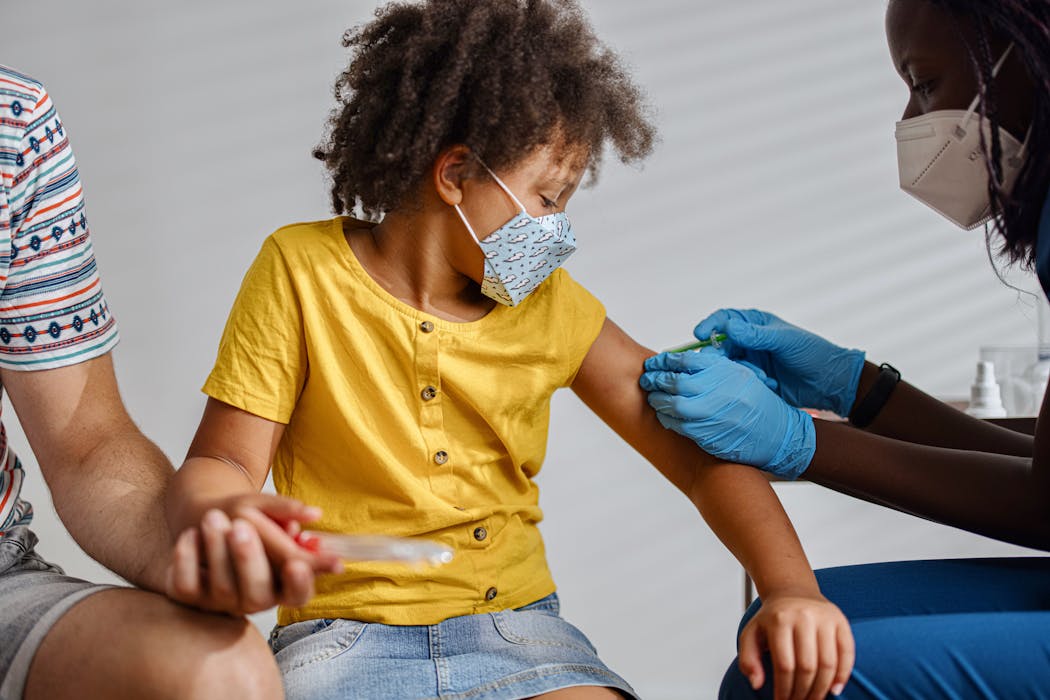
The FDA has provided no evidence that children died because of receiving a COVID-19 vaccine. Anchiy/E+ via Getty Images

The Food and Drug Administration is seeking to drastically change procedures for testing vaccine safety and approving vaccines, based on unproven claims that mRNA-based COVID-19 vaccines caused the death of at least 10 children.

The agency detailed its plans in a memo released to staff on Nov. 28, 2025, which was obtained by several news outlets and published by The Washington Post.

Citing an internal, unpublished review, the memo, written by the agency’s top vaccine regulator, Vinay Prasad, attributes the children’s deaths to myocarditis, an inflammation of the heart muscle. And it says the deaths were reported to the Vaccine Adverse Event Reporting System, or VAERS, but provides no evidence that the vaccines caused the deaths.

The death of children due to an unsafe vaccine is a serious allegation. I am a pediatric cardiologist who has studied the link between COVID-19 vaccines and heart-related side effects such as myocarditis in children. To my knowledge, studies to date have shown such side effects are rare, and severe outcomes even more so. However, I am open to new evidence that could change my mind.

But without sufficient justification and solid evidence, restricting access to an approved vaccine and changing well-established procedures for testing vaccines would carry serious consequences. These moves would limit access for patients, create roadblocks for companies and worsen distrust in vaccines and public health.

In my view, it’s important for people reading about these FDA actions to understand how the evidence on a vaccine’s safety is generally assessed.

Determining cause of death

The FDA memo claims that the deaths of these children were directly related to receiving a COVID-19 immunization.

From my perspective as a clinician, it is awful that any child should die from a routine vaccination.

However, health professionals like me owe it to the public to uphold the highest possible standards in investigating why these deaths occurred. If the FDA has evidence demonstrating something that national health agencies worldwide have missed – widespread child deaths due to myocarditis caused by the COVID-19 vaccine – I don’t doubt that even the most pro-vaccine physician will listen. So far, however, no such evidence has been presented.

While a death logged in VAERS is a starting point, on its own it is insufficient to conclude whether a vaccine caused the death or other medical causes were to blame.

To demonstrate a causal link, FDA staff and physicians must align the VAERS report with physicians’ assessments of the patient, as well as data from other sources for monitoring vaccine safety. These include PRISM, which logs insurance claims data, and the Vaccine Safety Datalink, which tracks safety signals in electronic medical records.

It’s known that most deaths logged only in VAERS of children who recently received vaccines have been incorrectly attributed to the vaccines – either by accident or in some cases on purpose by anti-vaccine activists.

Heart-related side effects of COVID-19 vaccines

In his Substack and Twitter accounts, Prasad has said that he believes the rate of severe cardiac side effects after COVID-19 vaccination is severely underestimated and that the vaccines should be restricted far more than they currently are.

In a July 2025 presentation, Prasad quoted a risk of 27 cases per million of myocarditis in young men who received the COVID-19 vaccine. A 2024 review suggested that number was a bit lower – about 20 cases out of 1 million people. But that same study found that unvaccinated people had greater risk of heart problems after a COVID-19 infection than vaccinated people. In a different study, people who got myocarditis after a COVID-19 vaccination developed fewer complications than people who got myocarditis after a COVID-19 infection.

Existing vaccine safety infrastructure in the U.S. successfully identifies dangers posed by vaccines – and did so during the COVID-19 pandemic. Today, most COVID-19 vaccines in the U.S. rely on mRNA technology. But as vaccines were first emerging during the COVID-19 pandemic, two pharmaceutical companies, Janssen and AstraZeneca, rolled out a vaccine that used a different technology, called a viral vector. This type of vaccine had a very rare but genuine safety problem that was detected.

A report in VAERS is at most a first step to determining whether a vaccine caused harm.

VAERS, the Vaccine Safety Datalink, clinical investigators in the U.S. and their European counterparts detected that these vaccines did turn out to cause blood clotting. In April 2021, the FDA formally recommended pausing their use, and they were later pulled from the market.

Death due to myocarditis from COVID-19 vaccination is exceedingly rare. Demonstrating that it occurred requires proof that the person had myocarditis, evidence that no other reasonable cause of death was present, and the absence of any additional cause of myocarditis. These factors cannot be determined from VAERS data, however – and to date, the FDA has presented no other relevant data.

A problematic vision for future vaccine approvals

Currently, vaccines are tested both by seeing how well they prevent disease and by how well they generate antibodies, which are the molecules that help your body fight viruses and bacteria.

Some vaccines, such as the COVID-19 vaccine and the influenza vaccine, need to be updated based on new strains. The FDA generally approves these updates based on how well the new versions generate antibodies. Since the previous generation of vaccines was already shown to prevent infection, if the new version can generate antibodies like the previous one, researchers assume its ability to prevent infection is comparable too. Later studies can then test how well the vaccines prevent severe disease and hospitalization.

The FDA memo says this approach is insufficient and instead argues for replacing such studies with many more placebo-controlled trials – not just for COVID-19 vaccines but also for widely used influenza and pneumonia vaccines.

That may seem reasonable theoretically. In practice, however, it is not realistic.

Today’s influenza vaccines must be changed every season to reflect mutations to the virus. If the FDA were to require new placebo-controlled trials every year, the vaccine being tested would become obsolete by the time it is approved. This would be a massive waste of time and resources.

A pharmacy with a sign advertising flu shots
Influenza vaccines must be updated for every flu season.
Jacob Wackerhausen/iStock via Getty Images Plus

Also, detecting vaccine-related myocarditis at the low rate at which it occurs would have required clinical trials many times larger than the ones that were done to approve COVID-19 mRNA vaccines. This would have cost at least millions of dollars more, and the delay in rolling out vaccines would have also cost lives.

Placebo-controlled trials would require comparing people who receive the updated vaccine with people who remain unvaccinated. When an older version of the vaccine is already available, this means purposefully asking people to forgo that vaccine and risk infection for the sake of the trial, a practice that is widely considered unethical. Current scientific practice is that only a brand-new vaccine may be compared against placebo.

While suspected vaccine deaths should absolutely be investigated, stopping a vaccine for insufficient reasons can lead to a significant drop in public confidence. That’s why it’s essential to thoroughly and transparently investigate any claims that a vaccine causes harm.

Vaccine vs illness

To accurately gauge a vaccine’s risks, it is also crucial to compare its side effects with the effects of the illness it prevents.

For COVID-19, data consistently shows that the disease is clearly more dangerous. From Aug. 1, 2021, to July 31, 2022, more than 800 children in the U.S. died due to COVID-19, but very few deaths from COVID-19 vaccines in children have been been verified worldwide. What’s more, the disease causes many more heart-related side effects than the vaccine does.

Meanwhile, extensive evidence shows that COVID-19 vaccination reduces the risk of hospitalization by more than 70% and the risk of severe illness in adolescent children by 79%. Studies also show it dramatically reduces their risk of developing long COVID, a condition in which symptoms such as extreme fatigue or weakness persist more than three months after a COVID-19 infection.

Reporting only the vaccines’ risks, and not their benefits, shows just a small part of the picture.

The Conversation

I am a fellow of the American Academy of Pediatrics and regularly go on social media to share pro vaccine information.

ref. FDA claims on COVID-19 vaccine safety are unsupported by reliable data – and could severely hinder vaccine access – https://theconversation.com/fda-claims-on-covid-19-vaccine-safety-are-unsupported-by-reliable-data-and-could-severely-hinder-vaccine-access-271028

At Donald Trump’s prompting, Benjamin Netanyahu seeks a pardon – but insists he has done nothing wrong

Source: The Conversation – UK – By John Strawson, Emeritus Professor of Law, University of East London

The interesting thing about Benjamin Netanyahu’s call on Israel’s president, Isaac Herzog, to pardon him for charges of bribery, fraud and breach of trust, is that he has not been found guilty on any of them.

The trial is made up of three separate but related cases and began in May 2020. They’ve been paused regularly, especially since the country began its military campaign in Gaza, and are thought likely to continue for years.

Netanyahu’s 111-page pardon application does not admit guilt. Instead it’s a sustained attack on Israel’s legal system. In particular it alleges that the cases against him have involved illegal interrogations and unlawful manipulation in the collection of evidence. He argues that the charges against him undermine national unity and impair his ability to do his job as the country’s leader.

In short this is not Netanyahu asking for a pardon so much as an attempt by the prime minister to portray himself as a great man wronged by the elite.

Significantly it comes just a few months before the next election will have be called in Israel. As Herzog has said the application will could “unsettle” the Israeli public.

The latest developments in the long-running saga of the Israeli prime minister’s trial began in October. The US president, Donald Trump, in his speech to the Knesset to celebrate the apparent success of his peace plan for Gaza, called for the pardon.

Having recently humiliated Netanyahu at a meeting in the White House by making him apologise to Qatar for his airstrike on Hamas officials in Doha, Trump – ever the deal maker – thought he could sweeten things for his staunch ally by making such a public appeal. The US president has since followed this up with a formal letter to the Israeli president.

Donald Trump calls for Netanyahu to be pardoned.

Trump seems to be under the impression that Israel’s president has the same widely discretionary powers that he exercises. He has just pardoned the former president of Honduras, Juan Orlando Hernandez, who had been sentenced to 45 years during the Biden years for drug trafficking and has a well established track record of pardoning his allies.

But Israel has a complex system that may take weeks to work through. First the pardon must be submitted to the Ministry of Justice to consider before it goes to the president. The president then has to ask his own legal advisor for her view.

The reaction to Netanyahu’s pardon application has predictably divided Israelis along political lines.

Opposition party leaders are overwhelmingly opposed to the grant of a pardon, especially as Netanyahu has not accepted guilt. Opposition leader Yair Lapid has said that no pardon can be given unless Netanyahu admits guilt. Yair Golan, the leader of the Democrats, also says that only the guilty can apply for pardon.

Former prime minister, Naftali Bennett – a frontrunner to succeed Netanyahu should the opposition coalition win the election – has a more nuanced view. He argues that a pardon should be given but on condition that Netanyahu retires from office.

Netanyahu’s government colleagues have of course welcomed the application and agree with Netanyahu’s criticisms of Israel’s justice system. Environment minister, Idit Silman – a fellow member of Likud, Netanyahu’s party – has gone so far as to suggest that any refusal to grant the pardon will result in the justice officials involved being sanctioned by the Trump administration.

Undermining due process

All of this places Herzog in a delicate position. The judicial reforms which the current government initiated when it took office in December 2022, which have drawn the anger of many in Israel who perceive them as an attempt to emasculate what was once a robust legal system, have continued during the war in Gaza.

The government and its supporters already treat Israel’s Supreme Court with contempt. This was amply demonstrated on December 1 when a hearing on the government’s attempt to sack the attorney general was cancelled after the government boycotted the hearing.

It is also a moot point whether the president is legally able to pardon anyone who has not been convicted of a crime or at least been admitted guilt. There have been two cases where pardons were granted without convictions.

These related to a 1984 trial in which two operatives working for Israeli intelligence agency Shin Bet were charged with the summary execution of two Palestinians who were hijacking a bus. It was considered that a full trial could compromise security – so on the basis of the admission of guilt a pardon was given.

It has been suggested that Herzog could offer a conditional pardon dependent on Netanyahu not returning to office after the next election, whatever the result. But the Israeli prime minister seems in no mood to admit to any wrongdoing on his part – let alone retreat from political life. Instead, his application for a pardon is a demand that the Israel public rally round him and a statement that disunity has been caused by the trial not by his actions.

This has echoes of the way in which Trump dealt with the litigation against him after his first term. He used it as proof of the bias and indeed the corruption of the legal system at the service of the elite.

In this period of populist politics this stance evidently did him no harm as he was reelected. Netanyahu must be hoping the same politics work for him. But unlike Trump, it was under his watch the most catastrophic intelligence and military failures took place on October 7 2023.

The Israeli electorate may well not accept his excuses for that traumatic day. They may instead see his pardon application as another self-serving act of a politician who is putting himself first.

The Conversation

John Strawson does not work for, consult, own shares in or receive funding from any company or organisation that would benefit from this article, and has disclosed no relevant affiliations beyond their academic appointment.

ref. At Donald Trump’s prompting, Benjamin Netanyahu seeks a pardon – but insists he has done nothing wrong – https://theconversation.com/at-donald-trumps-prompting-benjamin-netanyahu-seeks-a-pardon-but-insists-he-has-done-nothing-wrong-271136

Disability rights are shaped by the narratives embedded in policies like the Accessible Canada Act and MAID

Source: The Conversation – Canada – By Alfiya Battalova, Assistant Professor in Justice Studies, Royal Roads University

This year’s International Day of Persons with Disabilities centres on “fostering disability inclusive societies for advancing social progress.”

The theme recognizes persistent barriers faced by disabled people: disproportionate poverty, employment discrimination, inadequate social protection and the denial of dignity and autonomy in care systems.

Accessibility gains and losses

In 2022, the disability rate for people aged 15 years and over in Canada was 27 per cent. Nearly eight million people identified as having one or more disabilities, an increase of 1.7 million people over 2017, when the disability rate was 22 per cent.

The United Nations’ latest review of Canada’s implementation of the UN Convention on the Rights of Persons with Disabilities praised Canada’s progress in adopting the Accessible Canada Act and accessibility legislation at the provincial/territorial levels.

At the same time, the committee identified several areas of deep concern, such as the expansion of Medical Assistance in Dying (MAID) for disabled people whose death is not foreseeable. The report warns that inadequate supports risk normalizing death as a “solution” to poverty, lack of services and discrimination, and that the concept of choice can create a false dichotomy, enabling death without guaranteeing support.

All policies tell stories

All policies convey narratives and stories that carry values. They deal with questions of “why” as well as “how.”

Narratives distil and reflect a particular understanding of social and political relations. A story about disability as a phenomenon can be told from different perspectives. A medical model of disability views disability as a personal problem, a social model focuses on removing the barriers, and a human rights model introduces a language of rights and their protection. We often hear deficit-based stories rooted in the medical model about disability.

The Accessible Canada Act (ACA) and Medical Assistance in Dying (MAID) Track 2 in Canada tell contradictory stories about disability rights and state responsibility.

A young person using crutches shakes hands with a person holding open a door
The Accessible Canada Act is framed as a landmark piece of human rights legislation, emphasizing inclusion, accessibility and the removal of barriers.
(Pixabay)

The ACA is framed as a landmark piece of human rights legislation, emphasizing inclusion, accessibility and the removal of barriers to ensure full participation for people with disabilities, with a vision of a barrier-free Canada by 2040. Disability activists played a central role in its development, and the law is celebrated for its systemic, proactive approach to tackling exclusion and discrimination, offering rights to consultation, representation and accessible information.

In contrast, the MAID regime, especially after the expansion through Bill C-7, has been criticized for normalizing assisted death as a response to suffering caused by lack of access to medical, disability and social support, rather than addressing the underlying barriers and systemic failures that the ACA promises to remove.


Read more:
A dangerous path: Why expanding access to medical assistance in dying keeps us up at night


Research shows that the odds for having unmet needs for health-care services, medications, assistive aids or devices, or help with everyday activities increases with disability severity. A coalition of disability rights organizations and two personally affected individuals have filed a Charter challenge with the Ontario Superior Court of Justice opposing Track 2 of the MAID law, which extends eligibility to people whose death is not reasonably foreseeable.

Narrative accounts like the ones below, and research in bioethics, highlights that many people seek MAID not because they are terminally ill, but because they face poverty, inadequate housing and lack of care. This reveals a troubling contradiction: while the ACA proclaims a commitment to inclusion and support, MAID often functions as a default solution for those failed by the very systems the ACA aims to fix.


Read more:
Ontario Chief Coroner reports raise concerns that MAID policy and practice focus on access rather than protection


The stories told by these two policies — on one hand, the promise of full inclusion and on the other, the normalization of state-facilitated death for those marginalized by inadequate support — reveal a profound tension in Canada’s approach to disability rights and social responsibility.

Troubling cases

Cases are emerging where people access MAID due to intolerable suffering caused by systemic failures. There is a story of 66-year-old Normand Meunier who requested medical assistance in dying following a hospital stay last year that left him with a severe bedsore. He died a few weeks later.

The coroner’s report on Meunier’s case highlights the need for guaranteed and prompt access to therapeutic mattresses for patients with spinal cord injuries. Québec coroner Dave Kimpton also calls on the province to create an advisory committee aimed at preventing and treating bedsores with new tools and training. Kimpton observes:

“It is now undeniable to me, after this research, that the body of someone with a spinal cord injury speaks a different language, and that health-care professionals must learn to decode it if they are to anticipate and effectively manage medical complications.”

The stories of disabled people advocating for life-saving treatment is an example of continuing devaluation of disabled lives. Jeremy Bray of Manitoba pleaded for continued coverage of medication for his Type 2 spinal muscular atrophy. In British Columbia, Charleigh Pollock’s family fought for continued coverage of the medication for her neurological disorder. These stories individualize disability and promote a medical model approach.

Disability justice, as championed by the late activist Alice Wong and her Disability Visibility project, insists that storytelling is not “add-on” advocacy — it is evidence that exposes how policies like MAID, income-testing and institutionalization feel on the ground. Wong’s work demonstrates that disabled people’s stories are a powerful form of resistance, providing evidence that disabled people exist in societies that often erase them.

In her book Dispatches from Disabled Country, activist, educator and researcher Catherine Frazee provides an alternative vision of living with a disability. She uses a metaphor of Disabled Country to describe a “place of refuge for outlaws from the rules of fitting in a place where the value of human life is intrinsic, not contingent on a place that yields itself to our being and our capacity to flourish.”

Re-examining Canada’s disability policy story

From a policy-research perspective, understanding these narrative dynamics is essential for evaluating the effects of laws such as the ACA and for anticipating the implications of MAID expansion.

Scholars argue that policy narratives influence everything from budget priorities to program eligibility criteria and institutional cultures. They also shape how disabled people imagine their futures — an increasingly important dimension of well-being research.

As Canada reflects on the International Day of Persons with Disabilities, emerging evidence underscores the importance of aligning disability policy with the lived realities documented through research, monitoring processes and personal accounts.

Examining the narratives embedded in policy frameworks can help clarify how laws and institutions either support or hinder long-term flourishing for disabled people, and can offer insights into how stories told in policies ultimately align with societal values.

The Conversation

Alfiya Battalova does not work for, consult, own shares in or receive funding from any company or organisation that would benefit from this article, and has disclosed no relevant affiliations beyond their academic appointment.

ref. Disability rights are shaped by the narratives embedded in policies like the Accessible Canada Act and MAID – https://theconversation.com/disability-rights-are-shaped-by-the-narratives-embedded-in-policies-like-the-accessible-canada-act-and-maid-271094

How European colonisation has created more animal hybrids

Source: The Conversation – UK – By Lachie Scarsbrook, Postdoctoral Research Fellow, Genetics, School of Archaeology, University of Oxford

Pawel Papis/Shutterstock

Humans have moved plants and animals well beyond their native ranges, across barriers that normally prevent dispersal. As a result, people have increased the rates of hybridisation between populations that were once isolated for thousands, or even millions, of years.

Animal hybrids are a controversial issue among scientists, as they often suffer from health issues.

But our new study of Australian dingoes, published in the journal PNAS, found that hybridisation with introduced European dogs might have had evolutionary benefits.

New species can evolve when a subset of the population becomes separated, often by physical barriers like mountains or oceans. Over time, these isolated populations accumulate unique genetic mutations, some of which become fixed. If these populations spend long enough apart, they become so different they can no longer interbreed.

Although they were once domestic, dingoes became isolated from other dogs around 3,500 years ago and evolved into free-living apex predators. Some scientists argue that the dingoes’ distinct appearance and behaviour warrant their recognition as a new species. Others claim that hybridisation with domestic dogs, which were brought to the continent by Europeans from the late-18th century onwards, has blurred this boundary.

Dingoes were translocated to K’gari (Fraser Island) by the Butchulla people before the arrival of Europeans.
CC BY

Humans have been moving animals around for millennia. When farmers spread from the Near East into Europe around 8,500 years ago, for example, the domestic pigs that accompanied them came into contact and mated with European wild boar. In some cases where there were no closely related native populations, however, such as the import of exotic animals during the Roman period, escapees formed feral populations. Dingoes fit into this second category.

Species translocations and hybridisation accelerated during the colonial period, which reshaped local ecosystems. Hybrid offspring can lose the unique traits that allowed their parent populations to thrive in their specific habitats. Other effects are invisible, and can only be teased out of genetic studies.

For instance, across Asia, diversity in wild red jungle fowl populations is being lost through interbreeding with domestic chickens. In the Americas, almost all traces of Indigenous dog diversity was wiped out through hybridisation with introduced European dogs.

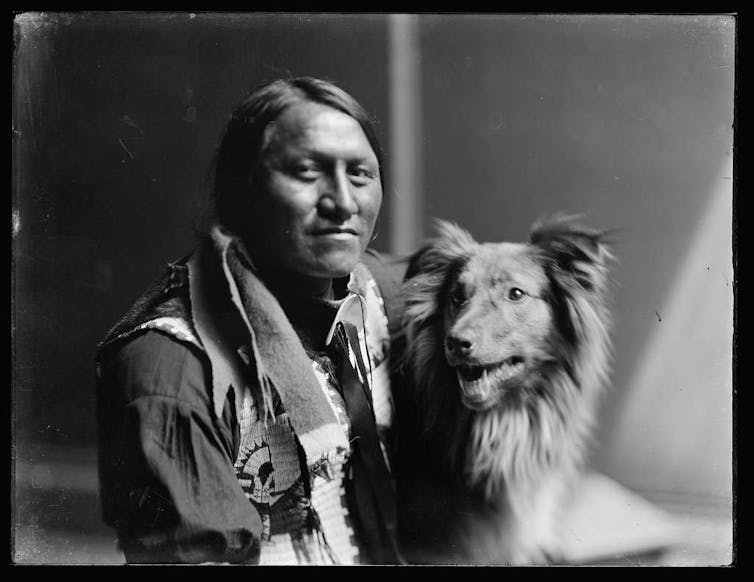
Charging Thunder (George Edward Williams), who was born into the Oglala Lakota tribe of the Sioux Nation, with a shepherd-type dog brought to the Americas by Europeans. Cultural practices involving Indigenous dogs were actively persecuted.
CC BY

Hybridisation can also be beneficial. The acquisition of alleles (a different version of a gene) from another population may improve an animal’s survival in new environments, or make them resistant to new diseases.

The ancestors of modern human populations on the Tibetan Plateau, for example, inherited an allele of the EPAS1 gene from Denisovans (a closely related human species) that improved their ability to live at high altitudes.


Read more:
How breeding with an ancient human species gave Tibetans their head for heights


The dingo debate

Since dingoes were only isolated from other dog populations for a few thousand years, it is not a surprise that they can readily interbreed. The “purity” of dingoes is therefore a great source of conflict between conservationists, farmers and policy makers, and is used by both sides to justify policies to either protect or persecute dingoes.

White dingo with brown markings.
An unusually coloured dingo spotted in Kosciuszko national park, New South Wales.
Michelle J Photography, Cooma NSW Australia, CC BY-NC-ND

Some genetic studies have suggested that dingo-dog hybridisation has not taken place, while others indicate most dingo populations have some level of European dog ancestry. A fundamental issue with these studies is that they require comparison against a “pure” reference population. Given centuries of overlap between dingoes and dogs, it is almost impossible to be sure that modern populations do not have mixed ancestry.

To circumvent this issue, our study sequenced genomes from ancient dingo bones recovered from caves on the Nullarbor Plain in southern Australia. Crucially, this included dingoes that lived and died prior to the arrival of the First Fleet in 1788. Establishing a precolonial baseline of ancestry for dingoes allowed us to to pinpoint the degree of European dog ancestry in dingo populations across Australia today.

Our genetic analysis showed that most dingoes living in the northwest of Australia did not have any detectable European dog ancestry. The opposite was true in the southeast, where almost a quarter of the genome of some dingoes came from European dogs.

Further investigation found that the European ancestry was in fact broken up into small chunks throughout the genome of dingoes, indicating that interbreeding took place at least ten generations (or 30 years) ago.

Aerial baiting with 1080 poison is used to kill introduced mammalian species across Australia and New Zealand.
CC BY-SA

In fact, most of the hybrid mating coincided with the outset of aerial baiting programs in the mid-20th century, when poisoned meat was dropped from helicopters to kill dingoes en masse. This reinforces similar findings in Scottish wildcats, which shows local populations were resistant to interbreeding with invasive (domestic cat) populations until their own numbers declined to the point where finding a suitable mate (another wildcat) became too difficult.

Diversity is the key to success

Superficially, gene flow between dingoes and European dogs sounds like a negative outcome. Our research, however, suggests that dingoes have actually benefited. Hybridisation has led to an increase in genetic diversity in dingoes across southeast Australia, potentially offsetting the negative effects of inbreeding.

We also found evidence that a few alleles, which were transmitted from dogs to dingoes via interbreeding, may provide better protection against infectious diseases brought to the continent by European dogs.

Despite being an introduced species, dingoes are now adapted to Australia’s varied ecosystems. Based on our results, we suggest that instead of prioritising “purity”, future conservation efforts should focus on maintaining large enough populations for natural selection to operate effectively, so that dingoes can maintain their position as Australia’s apex predator.

Hybrids are becoming increasingly common as humans and their domesticates continue to encroach into wild habitats, from Scottish salmon to Andean alpacas. In order to understand the impacts, both positive and negative, of this hybridisation, our results suggest we must first look to the past.

The Conversation

Laurent Frantz receives funding from the European Research Council, and the Deutsche Forschungsgemeinschaft

Greger Larson and Lachie Scarsbrook do not work for, consult, own shares in or receive funding from any company or organisation that would benefit from this article, and have disclosed no relevant affiliations beyond their academic appointment.

ref. How European colonisation has created more animal hybrids – https://theconversation.com/how-european-colonisation-has-created-more-animal-hybrids-264624

Wicked: what lies beneath correcting the way people speak?

Source: The Conversation – UK – By Emma Humphries, Research Fellow, School of Arts, English and Languages, Queen’s University Belfast

“Pink goes good with green.” This is a lesson we learned from Glinda (Ariana Grande) in Wicked part one. But do you remember the line that comes after that?
“Goes well with green.”

A small, easily missed comment from the green-skinned outsider Elphaba (Cynthia Erivo), but one that reveals something important about language and common usage. Hierarchies of “correct” and “incorrect” language are not just found in grammar books and classrooms, but in popular culture too.

From “holding space” to “sex cardigans”, Wicked continues to dominate popular culture, but one thing that has been overlooked is Elphaba’s insistence on correct language.

In the first film, we see Elphaba ostracised and eventually positioned as public enemy number one by the Oz propaganda machine. From the film’s very opening, a flashforward to citizens celebrating Elphaba’s death, her unpopularity is made clear in the song No One Mourns The Wicked.

One way in which the filmmakers signal Elphaba’s unlikeability is through her often awkward, borderline rude social encounters, including when she first meets her frenemy, Glinda. It’s safe to say that the two characters don’t hit it off and Elphaba’s correction seems to upset Glinda.

Glinda: I could care less what others think.

Elphaba: Couldn’t.

Glinda: What?

Elphaba: You couldn’t care less what other people think. Though, I … I doubt that.

In the land of Oz, where people “pronuncify” and “rejocify”, are “disgusticified” and “moodified”, Elphaba’s comments demonstrate the idea that there is only one correct way to use language and that incorrect language should be corrected.

From stage to cinema

Elphaba’s corrections are not in the original stage musical. They were added to the film. The adaptation of a stage show for film offers an opportunity to modernise and change parts of the story that have been controversial or become outdated.

One excellent example of this in Wicked is its improvement of the stage show’s depiction of disability. The addition of language policing, however, is more disappointing. Because when we correct someone’s language, it’s about much more than the words themselves.

Correcting language is not neutral. When we place value on using language correctly, those who fall short often find themselves judged and discriminated against.

The policing of correct language can be seen as a gatekeeping tool, deciding who belongs and who is excluded. This has inevitable consequences for diversity. The way we speak, write and sign can reflect many aspects of our identities: where and how we grew up, our gender, age and race.

Rules and rebellion

With the run time of the films almost doubling that of the stage show, there is much more time devoted to character development in the films. Elphaba’s language pedantry has been added to demonstrate how she can rub people up the wrong way. However, it also suggests an adherence to authority and to socially constructed rules that stands in contrast to her character more broadly.

Elphaba is an outsider who starts the film wanting to be “degreenified”, but by the end of Wicked part one and as a main storyline in Wicked: For Good, she is willing to sacrifice her safety and reputation to do what is morally right, rather than what is socially acceptable.

Adherence to the strict rules of correct language suggests the opposite: a tendency to want to be accepted and to uphold the societal status quo. Elphaba resists social norms in every other respect, yet the film makes her a standard grammar enforcer.

Given that this trait is absent from part two, rather than undermining her personality as a resister, perhaps this further signals Elphaba’s journey from wishing to fit in to fully embracing her outsider status. Indeed, Elphaba’s insistence on correctness speaks to a broader challenge facing anyone positioned as an outsider: having to work that much harder to be accepted.

Glinda’s (famous) need to be popular and her interests in social climbing align with traits of a language enforcer, yet her behaviour tells a different story. She corrects language only once and it concerns her original name, Galinda. When Dr Dillamond, a professor at Shiz University – who also happens to be a goat – struggles to pronounce the “gah” in Galinda, Glinda corrects his pronunciation and berates him.

This moment, present in both the stage musical and the film, does not reflect a desire to uphold the prescriptive rules of the language, but rather a personal motivation. Glinda’s name is central to her self-image and public persona, and protecting that matters to her.

Beyond Oz

In an era when equality, diversity and inclusion initiatives are being rolled back, and languages other than English face renewed marginalisation, Wicked offers a case study in how linguistic hierarchies operate under the radar of popular culture. But there are plenty other examples. Think about Ross in Friends, Ted in How I Met Your Mother and Sheldon in The Big Bang Theory – all notorious language correctors.

Elphaba’s corrections are more than just a shorthand to signal an abrasive character. They reflect the linguistic hierarchies and gatekeeping that exist beyond Oz. Using language “correctly” is a marker of belonging and shows adherence to societal norms.

Across the two films, Elphaba moves from wanting to conform and erase a stigmatised part of her identity, her skin colour, towards rebellion against convention. It’s clear she questions blind adherence to political power, but perhaps this extends further to questioning the rules we construct around language.


Looking for something good? Cut through the noise with a carefully curated selection of the latest releases, live events and exhibitions, straight to your inbox every fortnight, on Fridays. Sign up here.


The Conversation

Emma Humphries receives funding from The Leverhulme Trust and is currently employed by Queen’s University Belfast.

ref. Wicked: what lies beneath correcting the way people speak? – https://theconversation.com/wicked-what-lies-beneath-correcting-the-way-people-speak-270639

Inside the Regency ballroom: what you’d experience on a night out with Jane Austen

Source: The Conversation – UK – By Hillary Burlock, British Academy Postdoctoral Fellow in the Department of History, University of Liverpool

The ballrooms of Jane Austen’s Britain have been hailed in literature and period dramas as a marriage market where young men and women could meet and mingle. The ballroom set the scene for Elizabeth Bennet and Mr Darcy’s first encounter at Meryton’s assembly rooms in Pride and Prejudice (1813), and where Catherine Moreland and Henry Tilney bantered in Bath in Northanger Abbey (1817).

Austen herself frequented balls in Basingstoke and Southampton. The ballroom was the place to see and be seen, the focal point for socialising during “the season”. The season took place during the winter months and involved a concentrated period of public entertainments like balls, concerts and card assemblies (in which guests met to play card games).

Ball-goers needed months to prepare for these events. This included ordering gloves and shoes, and buying new gowns or dressing up old ones. Austen deliberately kept her china crepe dress from being seen before the next ball, observing that the ballroom “was a place where you would be judged”.


Read more:
Jane Austen perfected the love story – but kept her own independence


Ladies and gentlemen also needed to polish their dance steps. From an early age, they were instructed in how to dance, bow and curtsy, walk and greet people of differing ranks. Mastering these basics of deportment was essential, as they would be scrutinised in the ballroom.

While in Bath in 1740, Elizabeth Robinson (future leader of the 18th-century English women’s intellectual circle the Bluestockings) observed that the education of another woman was lacking, writing: “[as] for her Curtsey where she got that I cannot guess, but I will venture to say, not from the Dancing School”.


This article is part of a series commemorating the 250th anniversary of Jane Austen’s birth. Despite having published only six books, she is one of the best-known authors in history. These articles explore the legacy and life of this incredible writer.


In Northanger Abbey, Catherine Moreland’s first ball at the Upper Rooms in Bath is filled with anxiety, as: “The season was full, the room crowded, and the two ladies squeezed in as well as they could. As for Mr Allen, he repaired directly to the card-room, and left them to enjoy a mob by themselves.”

To quell the “mob”, the ballroom was managed by a master of ceremonies, who had the role of facilitating introductions, enforcing the rules and mediating disputes.

Balls opened with the minuet (a French social dance) performed by one couple at a time. A well-danced minuet was a source of pride for genteel society, as some revelled in exhibiting their accomplishments. But it was also a source of anxiety.

When a young woman named Eliza Smith married the Austens’ wealthy neighbour William Chute in 1793, she was so nervous about dancing that her mother wrote: “I am glad for your Sake there are no Minuets at Basingstoke, I know the terror you have in dancing not that you have any occasion for such fears.”

Assessing dance skill was central to the experience of the ballroom, making it even more important for dancers to try to put their best foot forward. Sixteen-year-old Elizabeth Canning (cousin of the prime minister George Canning) wrote to her mother from Bath in December 1792 that: “I was very much entertained with the bad minuet-dancers, especially with a Mr Badcock who was obliged to stand up with seven, or eight Ladies successively, to the great diversion of the Spectators.”

illustration of a man and woman dancing
A couple dance The Devonshire Minuet.
Lewis Walpole Library

After the minuets, country dances filled the evening, with a column of men standing opposite their female partners. Relieved the minuets were over, Miss Canning wrote: “At last the Country dances began, there was great humming, & hawing whether or no I should dance … & I declared … that I should like to dance if I could get some mighty smart partner.”

Young ladies recorded triumphant lists of dance partners, and, indeed, Austen recalled dancing with Stephen Terry, T. Chute, James Digweed and Catherine Bigg one evening, observing: “There was a scarcity of men in general, and a still greater scarcity of any that were good for much … There was commonly a couple of ladies standing up together, but not often any so amiable as ourselves.”

For the most part, men were expected to ask women to dance with them. According to dance manuals by Thomas Wilson and G.M.S. Chivers, the ballroom occasionally saw two women or two men dancing together.

While it is assumed that it was the lady’s prerogative to accept or decline invitations to dance, she could not afford to refuse an offer unless she had no intention to dance at all “and consequently may be considered no lady”. In Pride and Prejudice, though Elizabeth Bennet would prefer not to dance with Mr Collins at the Netherfield Ball, refusing him would mean losing the opportunity to dance altogether.

The film Becoming Jane (2007) dramatised Austen’s experiences at balls.

However, Austen herself found a way of skirting around these rules at the Kempshott ball. Writing to her sister Cassandra in 1798 she explained that: “One of my gayest actions was sitting down two dances in preference to having Lord Bolton’s eldest son for my partner, who danced too ill to be endured.” Austen was an excellent dancer herself, proudly proclaiming that she could dance 20 dances in an evening “without any fatigue”.

Balls at the assembly rooms lasted for about five hours until precisely 11 or 12am, when, upon a signal from the master of ceremonies, the dancing concluded, even in the middle of a dance. Grudgingly, the dancers changed their dance pumps for sturdier shoes and donned their cloaks, with sedan chairs and carriages ready to whisk them home to their lodgings by the light of the moon.


Looking for something good? Cut through the noise with a carefully curated selection of the latest releases, live events and exhibitions, straight to your inbox every fortnight, on Fridays. Sign up here.


This article features references to books that have been included for editorial reasons, and may contain links to bookshop.org. If you click on one of the links and go on to buy something from bookshop.org The Conversation UK may earn a commission.

The Conversation

Hillary Burlock receives funding from the British Academy as a Postdoctoral Fellow.

ref. Inside the Regency ballroom: what you’d experience on a night out with Jane Austen – https://theconversation.com/inside-the-regency-ballroom-what-youd-experience-on-a-night-out-with-jane-austen-270628

Limiting jury trials will harm minority ethnic victims and defendants, research shows

Source: The Conversation – UK – By Tara Lai Quinlan, Associate Professor in Law and Criminal Justice, University of Birmingham

Sebra/Shutterstock

The right to trial by jury dates back to at least the 12th century. The government’s proposals to limit it in England and Wales, many argue, run counter to the UK’s core democratic principles. And as others have pointed out, scrapping jury trials for some crimes is unlikely to solve the massive backlog in the crown courts.

Our research suggests that there is another reason why it is a bad idea to scrap jury trials. They can play a vital role in reducing racial discrimination in the criminal justice system.

The proposals laid out by justice secretary David Lammy would have a disproportionately negative impact on people of colour – both defendants and victims – for whom jury trials give a glimmer of hope in a criminal justice system where “ethnic minorities (excluding white minorities) appear to be over-represented”.

Government data repeatedly shows black, Asian and minority ethnic defendants are less likely to plead guilty than white defendants, and more likely to take their cases to trial. Lammy’s own 2017 review of racial inequality in the justice system suggests this is driven by a perception that the plea-bargaining process is unfair to defendants of colour, and that only a jury of peers will give them a fair trial.

Once black defendants choose a jury trial, research shows they are “more likely … to obtain acquittals or reductions in charges as a result”, compared to black defendants who plead guilty without opting for a trial.

A jury of 12 people brings a broader array of diverse perspectives and opinions which enhance the quality of discussions in deliberations, particularly in cases involving an ethnic minority defendant. Defendants should have their fate decided by people who might better understand their experiences, backgrounds and motivations.

Lammy’s 2017 review emphasised the importance of juries in making the criminal justice system more legitimate, particularly for people of colour: “Juries deliberate as a group through open discussion. This both deters and exposes prejudice or unintended bias: judgements must be justified to others.”

Sentencing is also disproportionate for defendants of colour when compared to white defendants, following both jury trials and plea agreements. Research has found that explicit or implicit judicial biases – whether judges stereotype the defendant, how they interpret sentencing recommendations from prosecutors and defence counsel, or how they apply aggravating and mitigating factors – may all contribute to these disparities.

Empirical evidence from other jurisdictions shows that more diverse juries are fairer to black defendants. Indeed, studies repeatedly show that all-white juries much more readily convict black defendants. Juries with even one black member are less likely to do so.

The UK’s Contempt of Court Act limits this type of research with live juries. But there is enough evidence from other jurisdictions to suggest that retaining juries, and ensuring those juries are diverse, is essential for protecting the fair trial rights of people of colour generally, and black people in particular.

Justice for victims

Jury trials are also essential for black victims and their families. Since 2022, we have worked with the family and friends of Dea-John Reid, a 14-year-old black boy who was racially abused and chased through the streets of Birmingham by a group of white boys and men who fatally stabbed him in broad daylight.

In their 2022 trial, the perpetrators were acquitted of racially aggravated murder, with only the principal offender found guilty of manslaughter by a jury of one Asian and 11 white members. Dea-John’s family felt that the lack of diversity on the jury, which did not have a single black member, could have meant they were less likely to see Dea-John as a worthy victim. Research shows that black men and boys are stereotyped as suspects – even when they are victims of crime.

Since 2022, we have worked with the family’s campaign, which supports retaining jury trials, but wants them to be more ethnically diverse, particularly in cases involving black victims. Our research has documented the campaign and is addressing critical gaps in UK research on jury diversity.

Diversity in the judiciary

Lammy’s proposals for reform include expanding the use of bench trials. This means that more cases would be heard by a single judge alone.

The judiciary in England and Wales is neither sufficiently diverse nor representative of the population. While black, Asian or minority ethnic people make up around 22% of the population, as of 2025, they make up only 11% of all court judges.

Lammy’s proposal also goes against what the public wants. In 2024, we surveyed 1,000 members of the public, 75% of whom stated explicitly that they believed the UK should have jury trials.

While most of our respondents believed that jury trials were fair (51%) and trustworthy (60%), they also felt strongly that more diverse juries were fairer (61%). Around half of people (51%) believed juries should look like the communities they serve. We found that for people of colour, taking part in jury service was viewed as even more important than for white respondents.

When it comes to perceptions of fairness and trust in the courts, we found important racial differences. Our research found that people of colour trust judges and the courts at lower rates than white people. People of colour in our survey were also more likely than white people to believe that judges treat them more unfairly compared to white people. And most of our respondents believed that more diversity in the judiciary is needed.

If Lammy remains committed to reducing inequality in the criminal justice system for people of colour, rather than reducing jury trials, he should be increasing them, and the diversity on them, to ensure justice for all.

The Conversation

The authors do not work for, consult, own shares in or receive funding from any company or organisation that would benefit from this article, and have disclosed no relevant affiliations beyond their academic appointment.

ref. Limiting jury trials will harm minority ethnic victims and defendants, research shows – https://theconversation.com/limiting-jury-trials-will-harm-minority-ethnic-victims-and-defendants-research-shows-270869

Maga explained: how personality and context shape radical movements

Source: The Conversation – UK – By Magnus Linden, Associate Professor of Psychology, Lund University

It’s often said that Donald Trump’s power base in the Maga movement has contributed to the radicalisation of the Republican party. Political scientists worry about the implications of this for the future of American democracy itself.

One example of that radicalisation was the attack on the US Capitol on January 6 2021 in an attempt to overturn the result. Exacerbating that radicalisation is the movement’s hostility towards much of the mainstream media. This is something that has been amplified by the US president himself, who has famously referred to the media as “the enemy of the American people”.

But how has this radical movement movement emerged from the socially conservative Republican Party? The rise of Maga has marked an important political shift in America that has many liberal-minded people scratching their heads. Psychology studies can offer insights that can help explain the Maga movement’s motivations.

1. Fused identity

Identity is central to understanding the way Maga holds together as a group and can also explain many of its motives. Trump has been able to mobilise his base effectively by communicating that shared identity. And it’s this sense of common identity and purpose that has been so important in the development of Maga as a powerful political movement.

The almost absolute faith in Trump’s leadership has a lot to do with negative resentment of other groups that he singles out for criticism, particularly migrants, liberals and feminists. But it is actually a positive identification with white nationalism that is a stronger indicator of the sort of person who might identify with Maga.

Maga supporters unite around a shared perception of threat to their status, often related to issues of race and immigration. But it is also seen to be motivated by the desire to cultivate belonging and group pride as a way to regain lost esteem.

Some researchers also believe that even the act of wearing a Maga hat is a sign of what is known as “identity fusion” – when boundaries between the self and the group blur. When this occurs, wearing a Maga hat may be a symbol of who I am rather than just who I voted for.

This is significant since identity fusion is associated with reported willingness to undertake more extreme actions such as hurting people and damaging property to uphold the Trump community and to achieve his aims.

2. Moral self-righteousness

Maga members also tend to adhere to the idea that one’s own ethnic group is more morally pure than others. Maga ideology tends to divide America into “good” and “evil” groups, with themselves as good and out-groups, such as the ones mentioned above, cast as evil. This positions “true Americans”, the people who built the nation, patriots who have “had enough”, as part of the former.

Since it frames politics as a struggle over “right values and lifestyles”, such rhetoric heightens the risk of malignant moral superiority. When communicated by a leader, it creates in followers the sense that they have an obligation to act against these “evil” forces which threaten their group.

When this sense of superiority is threatened, it can lead to aggression, such as the assault on the US Capitol .

3. The right to dominate other groups

Aggressiveness in political groups such as Maga is also connected to what is known as “social dominance orientation”. This relates to belief in a hierarchy – the idea that one social group has the right to dominate other groups.

Research shows people who believe in hierarchy are more likely to disregard basic democratic principles. They see society as a “competitive jungle” where groups struggle for power and dominance.

As a result, they view groups that differ from them as inferior. This justifies any actions that maintain their in-group status.

This holds true even if – as in the case of Maga-followers – it means a belief in violence in response to unwelcome social and cultural changes. Polling has found that Maga supporters are also far more likely to believe that there will be a civil war in the US and that violence in order to advance the movement’s political objectives would be justified.

4. Aggressive followership

There’s a scientific debate about what draws people to authoritarian leaders. Some scholars emphasise the tendency to want to submit to authority, high levels of aggression when sanctioned and adherence to conventional values such as traditional views on religion and sexuality. Others focus more on a preference for conformity over personal autonomy.

But they agree on one point: authoritarian followers submit to leaders who stress the superiority of their social group and who they consider to be capable of handling the threats they see as coming from other groups.

Research on the Maga movement from 2016 shows that Trump supporters were more likely than other supporters of other Republican party candidates to score high on one facet of authoritarianism: the willingness to resort to aggression towards people seen to go against social norms if encouraged by someone they’ve accepted as an authority figure. But they don’t appear to score as highly on two other facets: submission to established authorities and an adherence to conventional values.

This suggests that authoritarianism among the Maga movement has evolved into a more distinct profile, characterised primarily by a prejudiced aggressiveness towards other social groups.

History tells us that radical political movements tend to pop up when the societal context is perceived as threatening. In this process, some people have personal dispositions that make them more prone to follow authoritarian leaders. So it’s important to take both personality and context into account when trying to understand movements such as Maga.

The Conversation

Claire Campbell works for Ulster University. She receives receives funding from PEACE PLUS for research on peace building.

Fredrik Björklund and Magnus Linden do not work for, consult, own shares in or receive funding from any company or organisation that would benefit from this article, and have disclosed no relevant affiliations beyond their academic appointment.

ref. Maga explained: how personality and context shape radical movements – https://theconversation.com/maga-explained-how-personality-and-context-shape-radical-movements-270191