Sweden’s mining industry is threatening the Indigenous Sami people’s way of life

Source: The Conversation – UK – By Georgia de Leeuw, Resercher, Lund University

“There is so much intrusion from all sides and corners,” a Sami reindeer herder tells me, reacting to a government decision to grant a mining permit in Gállok in the Sápmi region in Sweden’s far north.

Sápmi is the communal land of the Indigenous Sami people. Their land ranges through northern parts of Norway, Sweden, Finland and Russia.

This particular reindeer herding community in Sápmi has already been affected by expansion of huge levels of industry related to forestry and hydropower. And now there’s a planned iron ore project. A new mine and its associated infrastructure will place additional pressures on grazing lands and migratory routes.

The mining plans are a sign that history is repeating itself, another reindeer herder tells me. It is important to resist “for myself and for my children and everyone who comes after us who wants to live the life that I have lived”.

The plans to bring more industry into these lands are symbolic of how the Sami way of life has been ignored in the past. Over hundreds of years Sweden has seized land and resources in Sápmi.

Indigenous Sami land has historically, and continues to be, framed as the “land of the future”, a space that is presented as open for extraction and can be sacrificed for national development.

Industries such as mining, forestry, energy production, land intense green industry projects, and infrastructure expansion place cumulative pressure on Sami lands. In addition, the way that Sami people use land is also affected by climate change. As snow and weather conditions change, there is reduced access to pastures and lichen upon which reindeer feed.

Mining operations have been shown to displace livelihoods such as Sami reindeer herding, by cutting off animal migration routes and viable grazing lands. This threatens Indigenous cultural survival.

For instance, a freight train carrying ore that runs across reindeers’ west-east migration may pose risks to their lives or lead them away from their pastures. As a result, the land where the reindeer can graze is reduced and less accessible.

The benefits of mining to those who live in the north, where much of Swedish mining is located, is minimal. Locals report frustration about decades of failed promises that they will see significant local development from mining. They note that prominent mining towns such as Kiruna have had mines for generations in the hope of municipal development, but still do not have sufficient social service provisions. For instance, they lack access to maternity wards and other healthcare services.

Meanwhile, land disappears due to industrial expansion. For instance, in Malmberget in the high north, which is being dismantled due to the impact of mining.

What next?

Meanwhile, earlier this year a poster campaign appeared on the walls of Stockholm’s subway terminals, saying: “You are more mine than you think.” The campaign was organised by the information platform The Swedish Mine (Svenska Gruvan), which is a joint initiative by mining and processing companies to inform the public about the importance of mining in people’s daily lives.

Emma Härdmark, director of communications of Svemin (the Swedish Association for Mines, Mineral and Metal Production), said in an interview with a Swedish newspaper, Resumé, that the idea is to “move the mine closer to people”, by drawing parallels between the minerals and metals that are present in the human body and those extracted in the Swedish mines.

For instance, the calcium in our bones that we need to “move, stand up or give someone a hug” can also be obtained from limestone, which is needed for the cement and concrete used to build homes, schools, bridges and hospitals.

One of the lines in the campaign is that “without iron, both the body and society come to a halt”. Iron helps transport oxygen through the human body to help us “breathe, move and live”, it says. In the same way, iron also helps keep society alive, observers are told.

Stockholm commuters see posters saying that: “You have a heart of stone.” Since the human body resembles the materials we find in nature, “having a heart of stone may not be so bad after all,” it suggests to people in Stockholm. It is thanks to this stone heart, the campaign insists, that “you are more alive than ever before”.

This campaign differs from other mining and industry narratives which commonly aim to convince viewers of the remoteness of mining relative to people and nature. Previous information videos produced by mining companies such as LKAB, or Svemin, an association representing about 70 mining and production companies, make use of imagery of unspoiled nature, the sky reflecting in tranquil lakes, and a fisherman strolling through a meadow, for instance.

In these information videos the camera often shifts between undisturbed nature and mining tunnels, suggesting harmonious coexistence of extraction, alongside but unnoticed by, nature and people.

Sami people are not often visible in mining literature. However, in Q&A sections of the Swedish Mine and Svemin homepages, it is stated that the mining industry works to reach solutions for coexistence with Sami communities and minimal impact on land use interests such as reindeer herding.

Sami people question this claim to coexistence. A Sami artist reflects in an interview with me on the threat to Indigenous livelihoods when faced with extractive industrial expansion: “It’s almost as if you have a reindeer in a paddock and then you put a wolf in the paddock and tell them, you are supposed to get along and coexist. In the end, the one will eat the other.”

While Swedish mining is commonly presented as environmentally and socially benign, harms from extraction are numerous. Information about where mining takes place and who is living close to its negative impacts are often left out of campaigns like these. Meanwhile, Stockholm, where the poster campaign is taking place, is unaffected by the negative impact of mining. Those who have to deal with the daily realities of mining are hundreds of miles away.


Don’t have time to read about climate change as much as you’d like?

Get a weekly roundup in your inbox instead. Every Wednesday, The Conversation’s environment editor writes Imagine, a short email that goes a little deeper into just one climate issue. Join the 47,000+ readers who’ve subscribed so far.


The Conversation

Georgia de Leeuw received funding from Forskraftstiftelsen Theodor Adelswärds Minne, the Lars Hierta Memorial Foundation, the Royal Swedish Agricultural Academy, and Letterstedtska föreningen for fieldwork during her PhD.

ref. Sweden’s mining industry is threatening the Indigenous Sami people’s way of life – https://theconversation.com/swedens-mining-industry-is-threatening-the-indigenous-sami-peoples-way-of-life-268344
Can entrepreneurship be taught? Here’s the neuroscience

Source: The Conversation – UK – By Victor (Vik) Perez, Associate Professor of Practice, Xi’an Jiaotong-Liverpool University

SiljeAO/Shutterstock

Despite countless programmes and initiatives, rates of entrepreneurial intention — a marker of how willing people are to start new ventures — remains stagnant. But what if the secrets to entrepreneurial success lie not in textbooks but within the brain itself?

Imagine an approach that doesn’t just teach the mechanics of entrepreneurship but actively enhances the skills that make aspiring entrepreneurs successful? We know these include focus, creativity, resilience, cognitive flexibility, emotional regulation and an ability to make decisions under uncertainty.

And what if these critical abilities of the entrepreneurial mindset could be nurtured through neuroscience? This concept is at the core of a shift proposed in my recent book Entrepreneurship and neuroscience: researching brain-driven entrepreneurship.

By integrating advanced neuro-technologies into the research, teaching and practice of entrepreneurship, our work presents an alternative framework for fostering entrepreneurial behaviour from the ground up.

Entrepreneurship research has evolved through several distinct phases. The economic era (1870–1940) examined how entrepreneurs influenced markets. Meanwhile, the social and psychological era (1940–1970) focused on uncovering the traits and motivations that drive them. More recently, the managerial era (1920-2022) framed entrepreneurship as a structured, step-by-step process.

I and others are now proposing the “brain-driven” era of entrepreneurship education. This focuses on reshaping how we understand and support entrepreneurial success. Unlike previous approaches, this new perspective places entrepreneurial cognitive enhancement at its core, leveraging insights from neuroscience.

For example, researchers including myself have identified electroencephalography (EEG) and structured cognitive training protocols — grounded in neuroscience — as promising tools for assessing mental states. They are also key to enhancing cognitive functions linked to entrepreneurial success.

EEG headcaps can measure electrical activity in the brain.
villemel/Shutterstock

While conventional tools such as interviews, questionnaires and behavioural observation capture surface-level behaviour and self-reported experiences, EEG goes deeper – measuring the brain’s electrical activity. This makes it possible to explore attention, working memory, cognitive workload and emotional regulation in more detail.

A study at the University of Kobe indicates that EEG can detect the subtle interplay between emotions and entrepreneurial decision-making. In the experiment, participants were briefly shown emotionally charged words — such as “joyful” or “awful” — before making decisions in a risk-based game. The aim was to test whether emotional cues might subtly shift risk-taking behaviour.

While their choices didn’t change in statistically clear ways, the brain data told a different story. Participants with higher entrepreneurial intention showed distinct patterns of neural activity in response to emotional cues.

This was particularly in areas associated with attention and making meaning of things. This suggests that even when behaviour appears unchanged, the brain may be processing emotional information in ways that shape how decisions are made under uncertainty.

Brain activity in the frontal and parietal areas also revealed that those with stronger entrepreneurial intentions responded more efficiently to emotional cues. This suggests their brains may be wired to handle emotionally charged decisions differently.

While cognitive functions such as sustained attention, emotional regulation and cognitive flexibility are increasingly recognised as essential for entrepreneurial success, EEG enables us to observe how these abilities operate in real time. These capacities are central to navigating uncertainty, adapting to changing conditions and making rapid, high-stakes decisions.

Brain-aligned cognitive training

Emerging “brain-aligned methods” shed light on how to gently train the brain to support entrepreneurial development. These approaches focus on strengthening core cognitive functions increasingly associated with entrepreneurial performance.

At Xi’an Jiaotong-Liverpool University’s recent Technopreneurship Summer School, we let students take part in cognitive training. This included exercises such as maintaining focus on moving visual stimuli to strengthen sustained attention. This involved engaging in short design challenges like building a simple robot prototype and reflecting aloud on their mental processes.

This application of neuroscience within entrepreneurship education has also sparked innovation beyond classroom-based interventions. While the field is still emerging, studies in music neuroscience suggest that specific sound patterns and frequencies can influence attention, mood and cognitive performance.

A development called cognitive performance music
offers an early glimpse into how music might complement cognitive training. This is basically music designed to sharpen cognitive focus, sustain deep motivation and strengthen the cognitive dimensions of an entrepreneurial mindset.

A well-recognised example is Steve Reich’s minimalist composition Piano Phase, which has been shown to foster neural synchronisation and sustained attentional engagement across listeners. The world’s first album in this genre, Take the Leap, was produced using a proprietary neuro-algorithm developed through my ongoing work on brain-driven approaches to entrepreneurial learning.

Another example is structured frameworks like the WNYLE Method, a pioneering brain-based entrepreneurial training approach designed to enhance the cognitive and emotional capacities that drive entrepreneurial actions. It draws on neuroscience, cinematic storytelling, thematic music and guided mental exercises. Ultimately, the method follows a carefully designed sequence that mirrors how the brain processes attention, emotion and reflection for deeper learning.

These innovations highlight the potential of neuroscience to enhance how students cultivate essential skills that can be of use both inside and outside the classroom.

As neuroscience moves from the lab to the lecture hall, a new frontier is emerging — one where cognitive optimisation becomes a core component of entrepreneurial readiness.

We have long known that learning reshapes the brain’s structure and function. This underscores the strength of neuroscience to enhance entrepreneurship education. It isn’t just about imparting knowledge, but by developing the cognitive agility needed to thrive in an unpredictable world.

And perhaps the most exciting part? This is only the beginning.

The Conversation

Victor (Vik) Perez does not work for, consult, own shares in or receive funding from any company or organisation that would benefit from this article, and has disclosed no relevant affiliations beyond their academic appointment.

ref. Can entrepreneurship be taught? Here’s the neuroscience – https://theconversation.com/can-entrepreneurship-be-taught-heres-the-neuroscience-250695

Nasa robot rover shows that sparks fly in dust storms on Mars

Source: The Conversation – UK – By Martin Fullekrug, Reader, Department of Electronic & Electrical Engineering, University of Bath

Sometimes you get a small electric shock from touching your car door handle on a dry summer’s day.

The source of these shocks is a spark discharge, occurring between your body and the body of the car. These sparks happen from accumulation of static electric charge – often arising from two different materials rubbing together. This process – named triboelectric charging – was discovered in ancient Greece, where it was observed that some materials are attracted by amber when rubbed.

Triboelectricity is commonly demonstrated in classroom experiments: by rubbing plastic sticks with cat fur, or by rubbing a balloon on your hair.

Now we know that, if you were returning to a parked car on Mars, you could experience a similar shock. A new study has, for the first time, directly demonstrated electrical discharges on the red planet.

The same triboelectric process operates in volcanic eruptions on Earth, where charge is accumulated by ash particles colliding. In volcanic plumes, the build up of charge can initiate very large lightning discharges – the big cousin of smaller spark discharges. Lightning discharges are even more common in thunderstorms, however, where interactions between soft hail (graupel) and ice crystals cause charge separation.

On Earth, dust storms and dust devils – a relatively short-lived whirlwind formed from rising columns of warm air – are known to substantially electrify, through collisions between dust particles. Typically, sufficient electrification to lead to spark or lightning discharges is not achieved, owing to the ~1 bar pressure at the surface. Conversely, on Mars, the lower pressure (about 1-10% of that on Earth) means that spark discharges are likely at lesser levels of electrification.

For several decades, it has been thought that dust devils on Mars may be able to produce spark discharges. Many lab experiments shaking sand around in a low-pressure carbon dioxide atmosphere, like that of Mars, have recorded highly charged dust and discharges.

However, until now, there have been no direct observations of Martian discharges. There have been several clues to the existence of charging in the Martian atmosphere, such as dust stuck to the wheels of a Nasa rover, for example.

Nasa's Perseverance rover.
The data comes from instruments on Nasa’s Perseverance rover.
Nasa/JPL/Caltech

The new – and genuinely serendipitous – observations published in Nature show that electrical discharges are present in the Martian atmosphere.

These results stemmed from a small loop in the wire connecting a microphone on the Perseverance rover to the on-board electronics. This wire, and the microphone system connected to it, proved to be an unexpectedly effective accidental lightning detector. The SuperCam microphone was intended to observe the acoustic environment of Mars, however, small electrical transients were also detected.

In investigating the source of these transient events, it was found that some of them were followed by sounds. The authors convincingly showed that the transients were caused by spark discharges, with electromagnetic signals picked up by the coil being followed by acoustic signals from the microphone. These observations are similar to seeing a flash of light and later hearing the subsequent thunder.

From investigating the time difference between the acoustic and electrical signals, the authors find that the spark discharges occur in the vicinity of the Martian lander – just a few metres away. Further, it was found that these occurrences were more common during dust storms, or when dust devils sweep over the rover.

Generally, two independent sources of corroborating information are considered necessary for unambiguous evidence of a new phenomenon. For example, lightning at Saturn is supported by separate observations from both spacecraft and Earth. When the discharges are weak, however, detection at a distance is much less achievable or even impossible. For these weak events on Mars, in-atmosphere detection is needed. Although the same signal system was used to detect them, the electrical and acoustic signals were conveyed in very different ways.

An analogous situation might be a radio broadcast made from near a thunderstorm. The effect of a lightning strike might cause a crackle of interference to be picked up by an analogue (not internet) radio, shortly before you heard thunder on the broadcast. The same radio provides these two signals, however they would seem to be observed independently.

The finding that electrical discharges occur on Mars has various implications. Atmospheric electricity can cause chemical reactions, such as the formation of complex molecules, perhaps linked to the origins of life. There are also practical applications for future space missions.

Dust was a significant problem during the Apollo missions landing on the lunar surface, as it easily penetrates any mechanical systems. Dust protection is an important part of planning for human travel to Mars. All these problems are exacerbated when the dust creates sparks, as it could result in electronic circuits malfunctioning.

Fortunately, you won’t have to worry much when a dust devil approaches during your next road trip on desert tracks; you can just drive through it, although the experience might remind you that on Mars you might see some sparks in the dust.

The Conversation

Blair McGinness has previously received funding from STFC.

Karen Aplin receives funding from the UK Space Agency,

Martin Fullekrug does not work for, consult, own shares in or receive funding from any company or organisation that would benefit from this article, and has disclosed no relevant affiliations beyond their academic appointment.

ref. Nasa robot rover shows that sparks fly in dust storms on Mars – https://theconversation.com/nasa-robot-rover-shows-that-sparks-fly-in-dust-storms-on-mars-270985

Why China is watching Trump’s Venezuela campaign closely

Source: The Conversation – UK – By Tom Harper, Lecturer in International Relations, University of East London

Donald Trump’s campaign against Venezuela escalated recently with the US president announcing that the country’s airspace should be considered “closed”. This is a move that has preceded US military interventions in the past, perhaps most notably in Iraq in 2003.

It remains to be seen whether Trump’s declaration will be followed by military action or is just a means of raising the pressure on the Venezuelan leader, Nicolás Maduro, in an attempt to force him from office. But regardless of what happens next, what has been notable is the reaction of China.

In a December 3 briefing, Chinese foreign ministry spokesperson Lin Jian said that closing Venezuelan airspace would violate international norms and infringe on national sovereignty. Jian added that China rejects interference in Venezuela’s internal affairs “under any pretext” and called on all parties to keep Latin America a “zone of peace”.

This stance is no great surprise. China has developed strong relationships with several Latin American countries, including Venezuela, as part of a broader strategy to expand its presence in regions long dominated by the US. Trump’s threats of military action could jeopardise the influence China has built there.

China has been involved in Latin America for centuries. But its ties to the region have grown rapidly over the past 25 years or so, with China becoming an indispensable partner to many Latin American countries. Brazil is a clear example of this indispensability.

The election of Jair Bolsonaro’s right-wing government in 2018 led to expectations that Brazil would tilt towards Washington. However, such expectations were soon dampened due to China’s role as a major consumer of Brazilian goods. By 2020, China was Brazil’s largest trading partner, accounting for over 30% of total exports from the country.

Ties between Brazil and China have only deepened under Bolsonaro’s successor, Luiz Inácio Lula da Silva. This has been helped by the intensification of the US-China trade war, which has seen Brazil become a crucial alternative source of agricultural products such as soybeans that China has historically imported from the US.

This relationship has enabled China to exert economic pressure on the US. Brazil’s large soybean exports to China have increased the global supply, which has suppressed prices for all suppliers – including those in US.

China has been a similarly indispensable partner to Venezuela since the days of Maduro’s predecessor, Hugo Chávez, who took power in the Latin American state in 1999. Chávez was a keen advocate of a multipolar international order, a concept that has gained traction as Beijing’s political and economic power has grown.

Over the years, China has become the main destination for Venezuelan oil. In 2024, China bought around 268,000 barrels of oil from Venezuela on average every day – a figure that, in reality, is likely to be higher as Venezuelan oil is routinely mislabelled to bypass US sanctions.

Venezuelan oil is key for China. Beijing has been attempting to diversify its sources of natural resources in recent years as part of efforts to retain its global advantage in cheap manufacturing and wean itself off a dependency on Middle Eastern oil. Trump’s threats to intervene militarily in Venezuela may, at least in part, be aimed at challenging Chinese interests.

Indeed, the White House issued an official statement on December 2 affirming the Trump administration’s commitment to the Monroe Doctrine. Signed in 1823, the doctrine said the US would reject other countries’ influence in Latin America. A new “Trump Corollary” to the doctrine states that “the American people – not foreign nations nor globalist institutions – will always control their own destiny in our hemisphere”.

Xi Jinping shaking hands with Hugo Chávez.
Xi meeting Chávez on a state visit to Venezuela in 2009.
Harold Escalona / Shutterstock

Challenging Chinese influence

Any US military action in Venezuela will probably increase paranoia across the region. Trump warned recently that any country he believes is making illegal drugs destined for the US is vulnerable to a military attack, and singled out Colombia.

On December 2, Trump told reporters at the White House that he “heard” Colombia was “making cocaine”. “They have cocaine plants”, he added. The Colombian president, Gustavo Petro, hit back immediately on social media, saying: “To threaten our sovereignty is to declare war”.

But China is unlikely to step in militarily to defend countries in Latin America from US aggression. While China has used its developmental influence there to pursue some political objectives – most notably persuading El Salvador, the Dominican Republic and Honduras to renounce diplomatic recognition of Taiwan in recent years – its engagement with Latin America has largely been transactional.

China’s strategy in Latin America is driven primarily by economic considerations, and Beijing has generally been reluctant to enter into formal alliances with states there. This hesitance to commit to defending its partners could strain relations with countries in the region that may expect Beijing to support them in the event of a crisis.

However, Trump’s Latin America campaign does provide China with some opportunities. Just as European countries concerned about Russia’s expansionist intentions have become a key market for American arms, it’s possible that Latin America becomes a lucrative destination for Chinese weaponry.

Venezuela is already buying Chinese arms, varying from riot control equipment to missiles and – possibly in the future – fighter jets. China has also sold military equipment to Argentina, Bolivia and Ecuador.

The US appears to be taking an increasingly active interest in Latin America. As outlined in its recently published National Security Strategy, the Trump administration is looking to readjust the US’s “global military presence to address urgent threats” in the western hemisphere.

Having carefully built up its influence in Latin America over many years, China’s leadership will be keeping a keen eye on how events unfold there in the months ahead.

The Conversation

Tom Harper does not work for, consult, own shares in or receive funding from any company or organisation that would benefit from this article, and has disclosed no relevant affiliations beyond their academic appointment.

ref. Why China is watching Trump’s Venezuela campaign closely – https://theconversation.com/why-china-is-watching-trumps-venezuela-campaign-closely-271229

Wood-burning stoves face new restrictions – but a loophole from Britain’s smog years is fuelling the problem

Source: The Conversation – UK – By James Heydon, Associate Professor, Environmental Criminology, University of Nottingham

terekhov igor / shutterstock

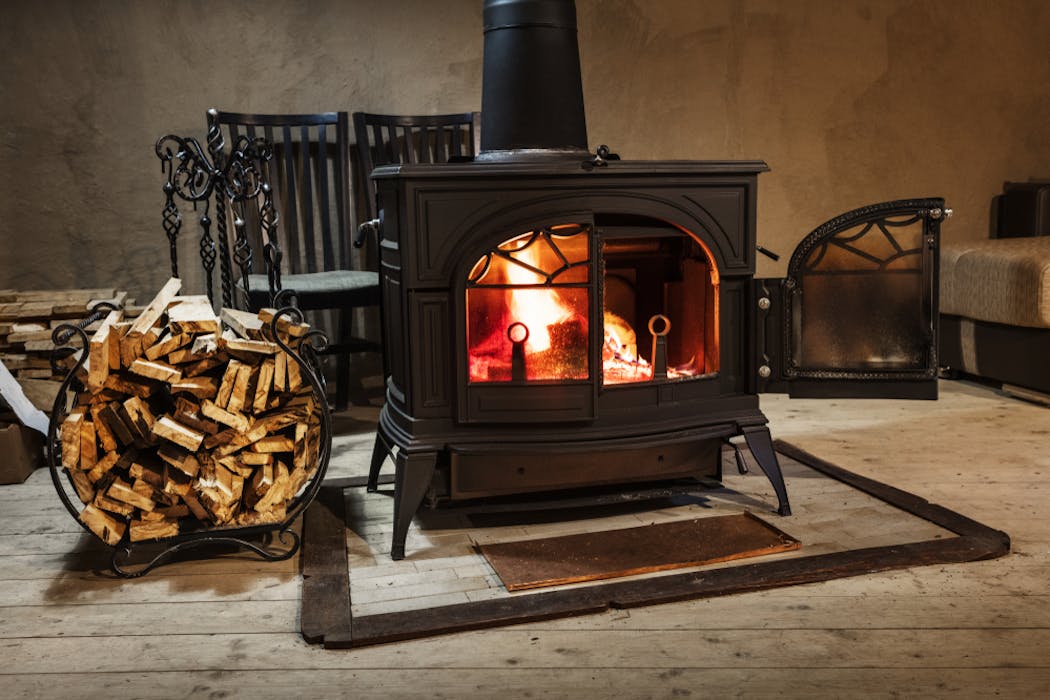
Wood-burning stoves are booming in the UK, a cosy response to high energy prices and cost of living pressures. But this comes with a hidden cost.

So-called domestic burning is now a leading source of one of the most harmful forms of air pollution, and the UK government’s new environment improvement plan acknowledges the scale of this problem. Yet the tools the UK relies on to control stove emissions were built for a different era – and may not be up to the job.

In the new plan, domestic burning – the use of wood to heat homes – is recognised as a primary contributor to particulate matter pollution, particularly PM2.5.

PM2.5 is considered highly dangerous as the particles are so small – less than 2.5 micrometres across – that the body has difficulty keeping them out. Once inhaled, they penetrate deep into the lungs, pass into the bloodstream and enter nearly every organ, contributing to heart and lung disease. Crucially, experts generally agree that a “safe” level of exposure has yet to be determined.

Although domestic burning features prominently in the new plan, the UK already has one of the world’s longest-standing regimes for controlling stove emissions. The Clean Air Act 1956, introduced after lethal London smogs killed more than 12,000 people in three months, enabled local authorities to create smoke control areas (SCAs) to restrict which appliances and fuels could be used.

Despite some alterations, this system has barely changed in almost 70 years. In fact, SCAs cover very little of England, Wales and Scotland, and enforcement is extremely difficult. Only a fraction of public complaints ever result in a fine.

More importantly, even perfect enforcement would not solve the core problem. SCAs were designed to reduce visible smoke, not invisible PM2.5. Modern “Defra-approved” and “EcoDesign” stoves are exempt because they emit less visible smoke.

But even under ideal operating conditions, they still emit significant levels of PM2.5 – more than 300 times that of a gas boiler. Since 2010, more than 2,500 stove models have been exempted from SCA rules, steadily widening the loophole and gradually weakening the system’s ability to control PM2.5.

This is particularly concerning as wood burning is becoming more popular. The share of UK households using solid fuel increased from 8% in 2018-19 to 11.7% in 2022-23. Installations are also increasing, with the proportion of newly inspected homes containing a stove growing from 7% in 2009 to just over 10% by 2024.

This raises the risk of what researchers call the “dematerialisation fallacy”, where
efficiency gains in individual appliances are cancelled out by growing overall use. Labelling appliances as “cleaner” can unintentionally accelerate this trend by giving the impression that modern stoves are environmentally benign.

New air quality targets

The Environment Improvement Plan introduces two different PM2.5 targets. The first aims to cut annual average concentrations by 46% by 2030, while the second seeks a 30% reduction in the amount of particulates people actually breathe, compared with 2018 levels.

This is intended to maximise public health benefits, since the first target could technically be met by cleaning up a small number of hotspots, while leaving many still exposed to harmful pollution.

These stricter air quality standards bring the UK more in line with EU and World Health Organization targets. However, as the UK’s Air Quality Expert Group recently noted, their achievement will require more “overt” intervention in people’s everyday lives. The plan’s success therefore hinges on wider public engagement and effective communication of air quality issues.

Barriers to cleaner air

Unfortunately, air quality remains relatively low on the public agenda and can become embroiled in wider political disagreements – while domestic burning is often deeply valued.

In a 2024 UK government survey of over 600 people who had burned solid fuels at their property in the past 12 months, 61% considered burning to be a “right everyone should enjoy”.

Of indoor burners, 52% considered it a “necessity” – despite most (99% in England) living in homes connected to mains gas or electricity. What’s more, 39% did not consider burning to be a significant source of air pollution, and 53% did not worry about the potential health impacts.

Economic justifications have also become more pronounced. Household energy bills are much higher today than they were just a few years ago, and the increased cost of living has eroded incomes.

In the same survey, 62% of burners cited financial reasons, while almost half (48%) gave aesthetic reasons for burning. Research from 2020 – when energy and living was cheaper – had these motivations reversed, highlighting how changing circumstances can shift burning justifications.

Comparing the cost of wood burning with central heating is not straightforward. Prices vary depending on the type of wood, the efficiency of the stove, how much of the home is heated, and whether fuel is bought in bulk or sourced for free. What is considered costly also differs between households.

However, recent modelling indicates wood burning is generally more expensive than central heating. Only when most wood is obtained at little or no cost does burning become cheaper, with gas and heat pump systems remaining the more cost-efficient choice in most scenarios.

In this context, the environment improvement plan has its work cut out. While it doesn’t explain how it will achieve the new targets, the plan does commit to consulting on new interventions – a much-needed step, given the limitations of the SCA regime.

Much rests on this consultation. The UK is far from alone in grappling with domestic burning, and a wide range of interventions is available beyond the much-needed reform of the SCAs. These include advertising controls, installation restrictions within certain areas, burn bans during high pollution or low wind episodes, public awareness campaigns, educational resources for schools, and wider access to cleaner heating technologies for those without alternatives.

Ultimately, the complexity of the issue means no single intervention will solve the problem. The environment improvement plan holds much potential, but its success will depend on what comes next.

Cutting emissions from domestic burning requires helping people to understand the health risks, challenging the idea that modern stoves are harmless, and providing practical alternatives for those who rely on burning.

If the government is serious about meeting its new air quality targets, it must treat behaviour, information and public engagement seriously as central pillars of its strategy.

The Conversation

James has previously received funding from Welsh Government’s Local Air Quality Management Fund. He is a member of the Welsh Government Clean Air Advisory Panel, and Promoting Awareness of Air Quality Delivery Group. James also sits on the Scottish Government’s Air Quality Advisory Group.

ref. Wood-burning stoves face new restrictions – but a loophole from Britain’s smog years is fuelling the problem – https://theconversation.com/wood-burning-stoves-face-new-restrictions-but-a-loophole-from-britains-smog-years-is-fuelling-the-problem-271165

Why we need weird stories for a warming world

Source: The Conversation – UK – By Trang Dang, Visiting Lecturer in English Literature, Nottingham Trent University

jose_xeraco86/Shutterstock

For centuries, nature has been the backdrop to human drama: a stage humanity dominates, exploits, or saves. But what if the planet isn’t just a setting, but a character in its own right – sometimes collaborator, sometimes adversary, sometimes utterly indifferent?

This is the kind of question explored in New Weird fiction, a genre where ecosystems mutate, landscapes rebel and the line between human and nonhuman dissolves. It’s a form of storytelling that asks us to look again at the world we think we know and to question where we fit within it.

The roots of the “weird” go back to the late 19th and early 20th century, to writers like H. P. Lovecraft, Arthur Machen and M. R. James. Their unsettling tales explored incomprehensible forces and cosmic horror. The “Old Weird”, as it’s now known by researchers, borrows from horror, fantasy and science fiction, refusing to stay within the boundaries of any one genre. These writers were fascinated by the limits of human understanding and by realities beyond reason.

The New Weird, which emerged in the 1980s, revived this fascination but with a contemporary twist. Its unruly mix of styles and ideas reflects the complexity – and confusion – of living through today’s ecological crisis.


The climate crisis has a communications problem. How do we tell stories that move people – not just to fear the future, but to imagine and build a better one? This article is part of Climate Storytelling, a series exploring how arts and science can join forces to spark understanding, hope and action.


In the same way that the weird unsettles genre boundaries, it also unsettles the human perspective. Where classic stories centre on human mastery over nature, New Weird fiction turns that hierarchy inside out. It imagines worlds where the human is no longer in control, where the nonhuman acts with agency and where our categories – living or dead, organic or artificial, natural or unnatural – start to blur.

This sense of disorientation isn’t just a stylistic choice. It mirrors the reality of the climate crisis, which has exposed the limits of our ability to understand or predict the world. When wildfires create their own weather systems, or melting permafrost releases ancient viruses, we are reminded that nonhumans don’t follow the rules we’ve set for them. The New Weird invites readers to experience that loss of control not as failure, but as a way to think differently about coexistence.

The ecology of the unknown

One of the most striking examples of New Weird fiction is Jeff VanderMeer’s Southern Reach trilogy. Its first award-winning volume, Annihilation (2014), describes “Area X” – a mysterious wilderness that appears on the US coast. Despite years of investigation by a government agency, the Southern Reach, no one can explain what it is or how it works. The more they study it, the stranger – and more powerful – it becomes.

In Area X, fungi glow, animals behave with eerie intelligence and the landscape seems to rewrite itself. It’s as if the ecosystem has decided to evolve on its own terms. Humans who enter the area are transformed in bizarre and often disturbing ways, blurring the boundary between observer and environment.

For VanderMeer, this isn’t just horror for horror’s sake. The story suggests that nonhuman worlds are full of mysteries that exceed our comprehension. In a time when humans are destabilising the climate, Area X becomes a metaphor for the planet itself – reacting, mutating and asserting its presence. Like the climate system, it doesn’t offer neat explanations or resolutions. Readers, like the novel’s characters, are left searching for meaning in the face of overwhelming strangeness.

These unsettling narratives don’t comfort us with solutions. Instead, they ask us to sit with uncertainty – to feel the planet’s vitality and volatility. The lack of closure in stories like Annihilation keeps us questioning long after we finish reading, mirroring the ongoing and unresolved nature of ecological crisis.

Embracing the monstrous

The New Weird also distances itself from the prejudice of earlier writers, such as Lovecraft’s racism and misogyny. Where Lovecraft imagined difference as monstrous and terrifying, New Weird writers often treat the monstrous as something to be understood or even embraced.

In Acceptance, the final book of the Southern Reach trilogy, the Biologist – one of the main characters – comes to terms with her complex relationship to Area X. What others might see as a nightmare, she begins to understand in a new way. For her, the strange quality of the light and the teeming abundance of life in Area X evoke not fear, but ecstasy.

This vision suggests a different kind of relationship with the world, one that acknowledges the messiness, danger and beauty of ecological entanglement. In this way, the New Weird aligns with contemporary ecological thinkers such as Donna Haraway, Anna Tsing and Timothy Morton, who call for embracing uncertainty and complexity rather than seeking to control or purify the natural world.

Their ideas, like VanderMeer’s fiction, reject the fantasy of a harmonious, stable ecosystem existing for human benefit. Instead, they depict an Earth that is active, unpredictable and deeply interconnected, a place where beauty and horror coexist.

As the planet changes, perhaps our storytelling needs to change, too. The New Weird offers no easy answers, but it helps us practise a different kind of attention: one that accepts uncertainty, honours complexity and feels the pulse of a living, unpredictable Earth.

It reminds us that the world is stranger and more alive than we imagine, and that our old stories of control and mastery no longer serve us.


Looking for something good? Cut through the noise with a carefully curated selection of the latest releases, live events and exhibitions, straight to your inbox every fortnight, on Fridays. Sign up here.


This article features references to books that have been included for editorial reasons, and may contain links to bookshop.org. If you click on one of the links and go on to buy something from bookshop.org The Conversation UK may earn a commission.

The Conversation

Trang Dang does not work for, consult, own shares in or receive funding from any company or organisation that would benefit from this article, and has disclosed no relevant affiliations beyond their academic appointment.

ref. Why we need weird stories for a warming world – https://theconversation.com/why-we-need-weird-stories-for-a-warming-world-269156

A brief history of mulled wine – from health tonic to festive treat

Source: The Conversation – UK – By Sara Read, Lecturer in English, Loughborough University

When frost sparkles in the morning and our breath is visible as we venture outside, thoughts turn to winter warming treats like mulled wine – a drink full of ingredients that have become synonymous with Christmas.

Mulled wine is made by adding spices such as cinnamon, cloves, ginger, mace and nutmeg to sweetened red wine, which is then warmed gently. Across Europe and Scandinavia, it can be purchased in many pubs, bars and festive markets – while supermarket shelves groan with bottles of readymade mulled wines for you to heat at home.

There are many different English recipes out there, including some dating back to the 14th century – from a collection of manuscripts that later became known as The Forme of Cury. The beverage made by following this recipe would certainly have packed a punch, as it contains several spices from the ginger family including galangal, in addition to the more familiar ones.

And before wine was known as mulled, drinking wine flavoured with spices has a long history. There is a mention of drinking spiced wine in the biblical poem the Song of Solomon, which states: “I would give you spiced wine to drink.”


Read more:
Five historical hot cocktails that are perfect for cold weather


It is thought that spice-infused wine was introduced to Britain by the Romans. An older name for it was “hippocras”, although this was mainly taken as a health tonic – made from spice-infused red or white wine and taken hot or cold.

A man drinking wine.
An illustration from a medieval manuscript showing ‘ypocras’ being made.
Wikimedia

In The Merchant’s Tale from Geoffrey Chaucer’s Canterbury Tales (1392), the wealthy, elderly knight January takes “ypocras, clarre, and vernage / Of spices hote, to encrese his corrage” (hypocras, clary, and vernage / of spices hot to increase his courage). January sups these three types of spiced wine to boost his virility on his wedding night for his young bride, May.

Diarist and civil servant Samuel Pepys also mentions taking “half-a-pint of mulled sack” – a sweetened Spanish wine – in an almost medicinal way to comfort himself in the middle of a working morning in March 1668, when things had been going wrong for him.

The name mulled wine comes from the Old English mulse – an archaic name for any drink made of honey mixed with water or wine, derived from the Latin word for honey (mel) and still used in modern Welsh as mêl. From mulse we get “musled”, which was used to describe anything that has been “mingled with honey”.

Before the growth of the global sugar trade, honey was the main way that food and drink was sweetened. Vin chaud, the French equivalent of mulled wine, is traditionally sweetened with honey. England imported spiced wine from Montpellier in large quantities from the 13th century, but only those of social status, like Chaucer’s knight January, would have been able to indulge in those days.

Warm sweet and spiced wine continued to be drunk for health and enjoyment throughout the centuries. But in the 18th century, mulled wine evolved again, as reflected in a recipe in Elizabeth Raffald’s The Experienced English House-keeper (1769) for a warm drink thickened with egg yolks:

Grate half a nutmeg into a pint of wine and sweeten to your taste with loaf sugar. Set it over the fire. When it boils, take it off to cool.

Beat the yolks of four eggs exceeding well, add to them a little cold wine, then mix them carefully with your hot wine a little at a time. Pour this backwards and forwards several times till it looks fine and bright.

Set it on the fire and heat a little at a time till it is quite hot and pretty thick, and pour it backwards and forwards several times.

Send it in chocolate cups and serve it up with dry toast, cut in long narrow pieces.

The result of this method is a frothy, velvety smooth confection, enjoyed with dipping toast or biscuits.

Our ancestors didn’t associate mulled wines with Christmas, so it seems likely that the pairing was popularised by Charles Dicken’s 1843 novella A Christmas Carol – like so much of what we now regard as a traditional Christmas.

After Mr Scrooge has seen the error of his miserly ways, he says to Bob Cratchit: “We will discuss your affairs this very afternoon, over a Christmas bowl of Smoking Bishop, Bob!” Smoking Bishop is a recipe for mulled wine that combines port in the wine and uses dried oranges for an added flavour note. The smoke refers to the steam rising from this hot drink.

So this year, as you cup your hands around the warm mug and inhale the fragrant steam coming off your mulled wine, think of the long history you are a part of.


Looking for something good? Cut through the noise with a carefully curated selection of the latest releases, live events and exhibitions, straight to your inbox every fortnight, on Fridays. Sign up here.


The Conversation

Sara Read does not work for, consult, own shares in or receive funding from any company or organisation that would benefit from this article, and has disclosed no relevant affiliations beyond their academic appointment.

ref. A brief history of mulled wine – from health tonic to festive treat – https://theconversation.com/a-brief-history-of-mulled-wine-from-health-tonic-to-festive-treat-271341

Vaccine committee votes to scrap universal hepatitis B shots for newborns despite outcry from children’s health experts

Source: The Conversation – USA (3) – By David Higgins, Assistant Professor of Pediatrics, University of Colorado Anschutz Medical Campus

For the past 34 years, the Centers for Disease Control and Prevention has recommended that all babies receive their first hepatitis B vaccine at birth. FatCamera/E+ via Getty Images

The committee advising the Centers for Disease Control and Prevention on vaccine policy voted on Dec. 5, 2025, to stop recommending that all newborns be routinely vaccinated against the hepatitis B virus – undoing a 34-year prevention strategy that has nearly eliminated early childhood hepatitis B infections in the United States.

Before the U.S. began vaccinating all infants at birth with the hepatitis B vaccine in 1991, around 18,000 children every year contracted the virus before their 10th birthday – about half of them at birth. About 90% of that subset developed a chronic infection.

In the U.S., 1 in 4 children chronically infected with hepatitis B will die prematurely from cirrhosis or liver cancer.

Today, fewer than 1,000 American children or adolescents contract the virus every year – a 95% drop. Fewer than 20 babies each year are reported infected at birth.

I am a pediatrician and preventive medicine specialist who studies vaccine delivery and policy. Vaccinating babies for hepatitis B at birth remains one of the clearest, most evidence-based ways to keep American children free of this lifelong, deadly infection.

What spurred the change?

In September 2025, the Advisory Committee on Immunization Practices, or ACIP, an independent panel of experts that advises the CDC, debated changing the recommendation for a dose of the hepatitis B vaccine at birth, but ultimately delayed the vote.

This committee regularly reviews vaccine guidance. However, since Secretary of Health and Human Services Robert F. Kennedy Jr. disbanded the entire committee and handpicked new members, its activity has drastically departed from business as usual. The committee has long-standing procedures for evaluating evidence on the risks and benefits of vaccines, but these procedures were not followed in the September meeting and were not followed for this most recent decision.

The committee’s new recommendation keeps the hepatitis B vaccine at birth for infants whose mothers test positive for the virus. But the committee now advises that infants whose mothers test negative should consult with their health care provider. Parents and health care providers are instructed to weigh vaccine benefits, vaccine risks and infection risks using “individual-based decision-making” or “shared clinical decision-making.”

The hepatitis B vaccine has an outstanding safety record and has been administered to billions of infants at birth.

On the surface, this sounds reasonable. But while parents have always been free to discuss benefits and risks with their health care providers to make a decision on what’s best for their child, this change is not based on any new evidence, and it introduces uncertainty into a recommendation that has long been clear.

As a doctor, I am already seeing this uncertainty play out in the clinic. I recently had new parents ask to postpone the hepatitis B vaccine until adolescence because they believed federal health leaders had evidence that people only become infected through sexual activity or contaminated needle use.

After a brief conversation, they came to understand that this was inaccurate — children can be infected not only at birth but also through routine household or child care exposures, including shared toothbrushes or even a bite that breaks the skin. In the end, they chose to vaccinate, but this experience highlights how easily well-intentioned parents can be misled when guidance is not clear and consistent.

Why the CDC adopted universal hepatitis B shots

Hepatitis B is a virus that infects liver cells, causing inflammation and damage. It is spread through blood and bodily fluids and is easily transmitted from mother to baby during delivery.

The hepatitis B vaccine has been available since the early 1980s. Before 1991, public health guidance recommended giving newborns the hepatitis B vaccine only if they were at high risk of being infected – for example, if they were born to a mother infected with hepatitis B.

That targeted plan failed. Tens of thousands of infants were still infected each year.

Some newborns were exposed when their mothers weren’t screened; others were exposed after their mothers were infected late in pregnancy, after their initial screening. And like any lab test, the screening can have false negative results, be misinterpreted or not be communicated properly to the baby’s care team.

Recognizing these gaps, in 1991 the CDC recommended hepatitis B vaccination for every child starting at birth, regardless of maternal risk.

The U.S. adopted a policy of vaccinating all babies from birth because the number of people with hepatitis B infections was, and remains, relatively high, and because many mothers do not receive prenatal care, so their infections go undetected.

Meanwhile, in some European countries, like Denmark, only babies with certain risk factors receive the vaccine at birth. That’s because in those countries, hepatitis B infections are much less prevalent and pregnant mothers are more widely tested due to universal health care. Due to these differences, that approach is not effective in the United States. In fact, most World Health Organization member countries do recommend a universal birth dose.

Vaccinating at birth

The greatest danger for infants contracting hepatitis B is at birth, when contact with a mother’s blood can transmit the virus. Without preventive treatment or vaccination, 70% to 90% of infants born to infected mothers will become infected themselves, and 90% of those infections will become chronic. The infection in these children silently damages their liver, potentially leading to liver cancer and death.

Newborn lying on exam table touching doctor's stethoscope
Children are most likely to get infected by hepatitis B at birth, when contact with their mother’s blood can transmit the virus.
Ekkasit Jokthong/iStock via Getty Images Plus

About 80% of parents choose to vaccinate their babies at birth. If parents choose to delay vaccination due to this new recommendation, it will leave babies unprotected during this most vulnerable window, when infection is most likely to lead to chronic infection and silently damage the liver.

A research article published on Dec. 3, 2025, estimates that if only infants born to mothers infected with hepatitis B received the vaccine, an additional 476 perinatal hepatitis B infections would occur each year.

The hepatitis B vaccines used in the U.S. have an outstanding safety record. The only confirmed risk is an allergic reaction called anaphylaxis that occurs in roughly 1 in 600,000 doses, and no child has died from such a reaction. Extensive studies show no link to other serious conditions.

How children get exposed to hepatitis B

Infants and children continue to be vulnerable to hepatitis B long after birth.

Children can become infected through household contacts or in child care settings by exposures as ordinary as shared toothbrushes or a bite that breaks the skin. Because hepatitis B can survive for a week on household surfaces, and many carriers are unaware they are infected, even babies and toddlers of uninfected mothers remained at risk.

Full protection against hepatitis B requires a three-dose vaccine series, given at specific intervals in infancy. Anything short of the full series leaves children vulnerable for life.

In addition to changing the birth dose recommendation, the committee is now advising parents to consult with their health care provider about checking children’s antibody levels after one or two doses of the vaccine to determine whether additional doses are needed. While such testing is sometimes recommended for people in high-risk groups after they get all three doses to confirm their immune system properly responded to the vaccine, it is not a substitute for completing the series.

The recommendation for all babies to receive the vaccine at birth and for infants to complete the full vaccine series is designed to protect every child, including those who slip through gaps in maternal screening or encounter the virus in everyday life. A reversion to the less effective risk-based approach threatens to erode this critical safety net.

Portions of this article originally appeared in a previous article published on Sept. 9, 2025.

The Conversation

Dr. Higgins is affiliated with the American Academy of Pediatrics, Immunize Colorado, and Colorado Chooses Vaccines. These are volunteer roles.

ref. Vaccine committee votes to scrap universal hepatitis B shots for newborns despite outcry from children’s health experts – https://theconversation.com/vaccine-committee-votes-to-scrap-universal-hepatitis-b-shots-for-newborns-despite-outcry-from-childrens-health-experts-271202

Why we created a phone-sized device to take blood diagnostics out of the lab into the real world

Source: The Conversation – Global Perspectives – By Parth Shinde, Researcher, Birla Institute of Technology and Science

When your doctor thinks you might have an infection or an allergy, a simple blood test should give answers within hours. But for much of the world, that test can take days – or never happen at all. The problem is not usually the test itself, but an overlooked step between taking your blood and performing the diagnosis.

In most hospitals in high-income countries, separating plasma from blood is so routine that most people never think about it. A nurse takes your blood, sends it to the lab, and a machine called a centrifuge spins it at high speed to separate the liquid plasma from the cells. Lab staff then look for signs of infection, immune responses or bacteria, and your doctor uses those results to decide on treatment.

But centrifuges need electricity, regular checks and trained staff. When these things are not available or the lab is overwhelmed, testing slows down.

This doesn’t just affect rural clinics or refugee camps. This can also happen during busy winter months in emergency departments in wealthy countries. If plasma cannot be separated quickly with a consistent, high-grade quality, care is delayed even when fast tests are ready to use.

The scale of the issue became clear when my colleagues and I watched how doctors work day to day. A common pattern emerged as people with long-running, allergy-type symptoms were often told something like: “For now, try antihistamines, and if things get worse, we can arrange a test.” Tests were not avoided because they didn’t exist, but because they were too slow, too costly, or too far away.

A quiet bottleneck

This raised a basic question about healthcare: if diagnosis is the first step towards treatment, then why is it held back by cost, infrastructure and geography? The answer lies in sample preparation and testing – the quiet bottleneck at the centre of the process.

It was now clear the first biggest barrier to point-of-care testing was dependence on specialised equipment. The challenge became obvious: remove that dependency and testing could happen in the clinic or anywhere.

The problem appears in different ways in different countries, but the underlying pattern stays the same. In India, where I am based, many people can reach a doctor but avoid testing due to its delayed results and high costs. So, treatment is often based on symptoms.

During dengue surges in Brazil and Indonesia, tuberculosis care in rural South Africa, and COVID or RSV waves in the US and UK, care slowed not because tests were missing, but because samples relied on busy, centralised labs that patients or hospitals could not easily access.

In many field clinics and emergency health camps, teams have to depend heavily on equipment. A team might plan to run thousands of tests in a day, but they end up doing far fewer because someone has to separate plasma from every sample of blood before the test can even start.

A potential solution came from an unexpected place: paper towel. If you’ve ever dipped the end of a piece of paper towel in water, you will have noticed that the water “climbs” up the paper. My colleagues and I developed a device we call HemoSift that uses this principle (called “capillary action”) to separate red blood cells from the straw-coloured plasma (the part of blood needed for testing).

HemoSift uses capillary action to pull blood through tiny channels, and along the way something simple happens: plasma moves ahead while the red blood cells fall behind, the way faster and slower traffic sort themselves into different lanes. In under five minutes, it produces cell-free plasma with no pumps, no power and no moving parts.

A photo of the HemoSift device.
The HemoSift device.
Parth Shinde, CC BY

HemoSift has passed benchtop testing with blood-like fluids at the nanofabrication and microfluidics facility at IIT Bombay and has moved into early testing using donated patient blood samples. More samples are now being tested to build strong and reliable data.

HemoSift encourages us to rethink where diagnosis takes place. Instead of asking how to push more laboratory services into more locations, it asks why diagnosis needs to rely on a lab at all.

By removing the infrastructure barrier, rapid testing could reach places where it was previously impossible: rural health posts, mobile clinics, refugee camps, or overstretched emergency departments during outbreaks.

The aim of our device – which my colleagues and I are now developing at our startup, Tvashtr Biotech – is not to replace laboratories, but to widen the places where diagnosis can happen. With a simple plastic device, a healthcare worker could give a patient not only attention, but an answer – wherever they meet.

This article was commissioned in conjunction with Prototypes for Humanity, a global initiative that showcases and accelerates academic innovation to solve social and environmental challenges. The Conversation is the media partner of Prototypes for Humanity 2025.

The Conversation

This article was commissioned in conjunction with Prototypes for Humanity, a global initiative that showcases and accelerates academic innovation to solve social and environmental challenges. The Conversation is the media partner of Prototypes for Humanity 2025.

Parth Shinde is the Founder and owns shares at Tvashtr Biotech.

ref. Why we created a phone-sized device to take blood diagnostics out of the lab into the real world – https://theconversation.com/why-we-created-a-phone-sized-device-to-take-blood-diagnostics-out-of-the-lab-into-the-real-world-271437

Your Party: if the name sounds terrible, there’s a good reason for it

Source: The Conversation – UK – By Nicholas Dickinson, Lecturer in Politics, University of Exeter

When independent MPs Jeremy Corbyn and Zarah Sultana launched their new political venture in July 2025, they did so under a name that seemed almost deliberately empty: “Your Party”. Initially dismissed as a placeholder, the name is now official, having been narrowly confirmed by members at the party’s inaugural conference in November.

The name won just 37% of the vote against alternatives including “For the Many”, “Popular Alliance” and “Our Party”. The contested nature of this choice, and the peculiar blandness of the winning option, reflects a deeper crisis in how the far left names itself in the contemporary era.

Ten years ago, my research into 20th-century British Marxist groups revealed that these organisations once operated within what I characterise as a coherent naming culture. Terms like “communist”, “workers” and “socialist” were commonly used and carried substantial symbolic weight. Throughout the 20th century, British Leninist groups used these terms not merely as brands but mechanisms to articulate their identity, legitimacy and relationship to the revolutionary tradition.

The patterns were remarkably consistent within each tradition. Orthodox communist groups emerging from the Communist Party of Great Britain (CPGB), which was founded in 1920, showed complete conformity – every single one retained “Communist party” in its name, even decades after splitting from the CPGB.

Anti-revisionist groups, influenced by Maoism, displayed a different pattern. Of the 11 groups I studied, nine used “communist”. More significantly, seven appended “Marxist-Leninist” to their names – an attempt to reconnect some of the smallest and most peripheral groups, often with only a handful of members, back to a grander tradition of messianic leaders.

Most revealing were the Trotskyist groups. Of 13 major organisations, only five used “communist” at any point. Of the remainder, six instead opted for “socialist” in their name and six included the word “revolutionary”. The word “workers” featured in four names. This diversity masked fundamental instability in leftist politics. Most Trotskyist groups changed their names at least twice.

The left’s endless internecine disputes on nomenclature were infamously satirised in Monty Python’s riff on the idea of the Judean People’s Front. It’s hard not to detect some of these dynamics also at play in Your Party’s troubled launch.

Do you want to join The People’s Front of Judea or the Judean People’s Front?

When Lenin rebranded “social democracy” as “communism” in 1917, he was not simply changing a label but investing enormous symbolic capital in a term that would shape leftwing politics for seven decades. The Communist Party of Great Britain, founded in 1920, became the anchor of this naming culture in Britain, with splinter groups and rivals forced to negotiate their position relative to these established terms.

This naming system became increasingly dysfunctional over time. By the 1970s, even terms like “party” had become almost impossible to define coherently within the Leninist tradition. Was a “party” the revolutionary vanguard waiting for its moment in history, or a conventional electoral organisation competing for votes?

When the Socialist Workers Party emerged in 1977 from its predecessor International Socialist, it attempted to embody both definitions simultaneously, presenting itself as both a mass political party and a disciplined Leninist cadre. This contradiction contributed to rapid, often confusing shifts in strategy that alienated members and observers alike.

Whose party?

Your Party emerges from the wreckage of this collapsed naming system. The term “communist” was largely unusable in British politics by 1991. “Marxist-Leninist” had become a punchline even within the far left. “Workers” sounded antiquated in a deindustrialised Britain. Even “socialist” carries decades of baggage. What remained? A name so generic it barely qualified as one at all.

The genius and the problem of the name Your Party are inseparable. The name refuses to make the traditional ideological commitments that far-left names once signalled. It does not claim to be the vanguard party, does not invoke workers or socialism, and does not even claim ownership of itself through terms like “our party” – which, tellingly, came last in the naming vote. Instead, it performs a nominal sleight-of-hand, suggesting both maximal democracy (“it’s yours!”) and minimal commitment.

This vagueness might appear strategically savvy in an age of widespread distrust of traditional party structures. But the chaotic conference that ratified the name suggests otherwise. The bitter disputes over collective versus individual leadership, the expulsions of members, and Sultana’s boycott of the first day all point to unresolved issues. When 20th-century Trotskyist groups battled over whether to call themselves a “league”, “tendency” or “party”, those were not merely semantic disputes but arguments about organisational structure and democratic accountability, encoded in nomenclature.

Your Party attempts to avoid these arguments by adopting a name that articulates no clear position. But the politics of naming cannot be escaped so easily. What does “Your” signify when members cannot agree on basic questions of leadership or membership rules? Whose party is it, ultimately?

The polling data tells a sobering story. Support for Your Party fell from 18% in July 2025 to just 12% by November, while the Green party, with its clear brand identity, experienced a membership surge. Perhaps voters and activists sense the same problem that plagued late 20th-century Leninist groups – when you cannot articulate what your name signifies, you cannot sustain a coherent political project.

The collapse of Leninist naming culture reflected the exhaustion of a symbolic system where words like communist and workers had been stretched to accommodate too many contradictions. Your Party represents an attempt to build something new without that vocabulary. But in trying to avoid the old mistakes, it may have created a new one – a name so empty that it cannot provide the symbolic foundation a political organisation requires.

The Conversation

Nicholas Dickinson does not work for, consult, own shares in or receive funding from any company or organisation that would benefit from this article, and has disclosed no relevant affiliations beyond their academic appointment.

ref. Your Party: if the name sounds terrible, there’s a good reason for it – https://theconversation.com/your-party-if-the-name-sounds-terrible-theres-a-good-reason-for-it-271419