God and Nollywood: how Pentecostal churches have shaped Nigerian film

Source: The Conversation – Africa – By Elizabeth Olayiwola, Senior Lecturer in Broadcast, Film, and Multimedia, University of Abuja

In Nigeria today, one doesn’t have to attend a church service to hear a sermon. The pulpit has moved – onto screens, into living rooms, and across YouTube.

Along with this shift, a fascinating genre has emerged: Nigerian evangelical cinema. These films blend entertainment with Pentecostal spirituality, turning prayers into special effects and spiritual battles into dramatic storylines.

This transformation is not accidental. It reflects a wider trend in which religion and media intersect to shape how Nigerians – and increasingly, Africans in the diaspora – understand the spiritual world.

As a media scholar I have been researching the Nigerian evangelical screen world for over a decade. As I show in my latest study in the book Contemporary African Screen Worlds, the rise of evangelical cinema is tied to Nigeria’s Pentecostal boom and the explosion of Nollywood, the country’s vast film industry, in the 1990s.

In the early days of Nollywood, films were distributed on video cassettes and shown in communal venues, including church halls. They spread to TV, where audiences embraced early Nollywood productions like Agbara Nla (The Ultimate Power) produced in 1993 by Mount Zion Faith Ministries International. Broadcast as a series, it dramatised spiritual warfare between Christians and demonic agents and became a national phenomenon.

The ministry, founded in 1985, houses Mount Zion Film Productions, the most prolific Christian film company in Nigeria.

Evangelical films blur the line between devotion and drama, prayer and performance. My study shows that they are not just niche productions aimed at church audiences. Their impact is far greater. The films reveal how millions of Nigerians imagine the spiritual world, how they navigate everyday crises, and how religion adapts to new technologies.

The Nigerian evangelical film culture also shows how a range of networks can build and push a cinematic culture forward, offering lessons to industries around the world about the power of leveraged networks.

How it all started

At the centre of this story is Mike Bamiloye, co-founder of Mount Zion Faith Ministries. Established by a small group of college graduates, it began with church stage plays before moving into video and TV.

Like the Yoruba theatre tradition from which it drew some of its inspiration, Mount Zion toured churches and neighbouring countries, staging plays and building audiences.

With fewer entertainment options available back then, TV audiences embraced Agbara Nla. The film tells the story of a village that is constantly punished by the forces of darkness because of a malevolent herbalist. God sends a young Christian missionary couple to battle him and deliver the community from evil.

What made Agbara Nla and similar films resonate was their familiarity. Nigerians had long been exposed to supernatural storylines. In the 1960s through to the 1980s, they occurred in Yoruba travelling theatre productions, a popular form of entertainment.

Later, the supernatural was kept alive in Nollywood’s many occult-themed films. Often involving witchcraft and magic, these films tend to tap into a blend of Christian and traditional Nigerian cosmologies. They revolve around the idea of spiritual warfare, of good versus evil and God versus the Devil.

Evangelical filmmakers simply retooled the formula, swapping out witchdoctors for pastors, charms for prayer, and gods for Christ.

A man directs actors dressed in simple white outfits. One kneels holding a sacred object, others lie passed out on the ground.
The power of the gods on display in a Nollywood film.
Bestvillage/Wikimedia Commons, CC BY-SA

In many evangelical films, prayer is not just words muttered in the quiet of the heart. It is dramatised, given visual form, and staged as a battle with unseen forces. A woman kneeling in prayer might suddenly find herself in a parallel “spirit realm” where angels and demons clash. Her whispered incantations are translated into fireballs, lightning bolts, or shields of protection.

The effect is powerful. For Christian audiences, these films make visible what is usually invisible: the spiritual consequences of prayer. They confirm a belief that prayer works, not metaphorically but literally, in the everyday struggles of life.

Social messages

These films are more than just entertainment. They carry social messages too. One striking feature I’ve discussed in my earlier research is their focus on women.

Women are often depicted as especially vulnerable to spiritual attack – but also as powerful prayer warriors. In many films, a woman’s reproductive life – her fertility, sexuality, or motherhood – is given spiritual significance.


Read more:
How Nollywood films help Kenyan housemaids make sense of their lives


This framing reflects Pentecostal theology, where sex itself is sometimes cast as an act with spiritual consequences. So these kinds of Nollywood stories both challenge and reinforce gender norms.

On one hand, women are shown exercising spiritual authority. On the other, their bodies are often treated as sites of moral or spiritual conflict.

Entrepreneurship of faith

Behind the scenes, evangelical Nollywood also illustrates a different kind of creativity: entrepreneurship. Many film makers juggle ministry with business innovation, building networks of production, distribution and audience engagement. Evangelical film maker Opeyemi Akintunde, for example, started with short web stories, moved into publishing, and went on to adapt her work into films circulated on YouTube and in cinemas.

This entrepreneurial spirit is part of a broader pattern across Africa. Studies have shown how Pentecostal media – from films to radio to social media – are reshaping both religious practice and cultural economies.

In Nigeria, the church itself provides infrastructure, from funding and publicity to venues and technical equipment, making film ministry possible.

Beyond Nigeria

Studies have also shown how Nollywood is spreading, embraced by a global audience. The influence of Nigerian evangelical cinema is not limited to Nigeria.


Read more:
The rise of African prophets: the unchecked power of the leaders of Pentecostal churches


Riding on Nigeria’s transnational churches, these films and their film-making style today reach audiences across Africa, Europe and the US. Diaspora churches screen them during services; people watch them on their phones for inspiration or moral guidance.

This global circulation highlights the adaptability of both African Pentecostalism and Nollywood – and their capacity to shape imaginations (and souls) far beyond their local roots.

The Conversation

Elizabeth Olayiwola does not work for, consult, own shares in or receive funding from any company or organisation that would benefit from this article, and has disclosed no relevant affiliations beyond their academic appointment.

ref. God and Nollywood: how Pentecostal churches have shaped Nigerian film – https://theconversation.com/god-and-nollywood-how-pentecostal-churches-have-shaped-nigerian-film-264279

Mark Carney lifted some tariffs against the U.S. Was that a wise tactical move, or a bad blunder?

Source: The Conversation – Canada – By Nargess Kayhani, Associate professor of Economics, Mount Saint Vincent University

Trade disputes between the United States and Canada are nothing new. They date back as far as the late 19th century.

What began as two neighbouring countries seeking to expand their markets and assert economic sovereignty has evolved into a broad range of conflicts.

These historical trade disputes have included accusations of unfair subsidies, protectionist tariffs, and, more recently, concerns over national security, fentanyl and border security.

Softwood lumber, one of the most important items on the list of Canadian exports to the U.S., has been consistently under attack by different American administrations. The disputes go back to as early as 1980s and are still one of the major sources of trade interruptions between the two countries.

Other important areas of trade disputes are agricultural products, namely dairy, beef and grain as well as steel and aluminum, auto and aerospace industries.


Read more:
Boycotting U.S. products allows Canadians to take a rare political stand in their daily lives


Trump’s tariffs

Earlier in 2025, the U.S. administration under President Donald Trump even violated the existing Canada-U.S.Mexico Trade Agreement (CUSMA) by imposing tariffs on products that were supposed to be exempt under the provisions of the deal.

This action has had negative economic effects on both the U.S. and Canada. In the words of Tiff Macklem, governor of the Bank of Canada, “restoring open trade is important for jobs, growth and price stability in Canada.”

South of the border, the tariffs imposed on Canadian products are likely raising costs for American consumers and businesses, though calculating the precise increase is complex because manufacturing components cross the Canada-U.S. border many times.

Carney’s move

Though some might call it weakness, Prime Minister Mark Carney’s recent move to lift the retaliatory tariffs on U.S. goods covered under CUSMA, while retaining tariffs on auto, steel and aluminum, is arguably a wise strategy.

The end goal is to minimize economic damage to Canada. According to Carney, this tariff removal on about 85 per cent of Canada-U.S. trade is consistent with the commitment under CUSMA.

Furthermore, such alignment with the U.S. could create a guarantee for the continuation of trade and security talks currently ongoing between the two countries.

Some argue that such a strategic decision will benefit Canadian consumers by making imports cheaper, reducing inflationary pressure on the Canadian economy and giving Canadians a sense of relief knowing that a trade deal will be achieved.

While the statistics don’t explicitly link the removal of Canadian retaliatory tariffs with the downward pressure on inflation or boosting Canadian consumption, it is generally accepted that lower prices for imported goods increase purchasing power.

Alternate trade relationships

Is Carney buying time? Does he have a long-term plan for Canada and the direction of trade?

While the prime minister is seemingly trying to keep negotiations productive in the lead-up to CUSMA’s renegotiation in 2026, his government has also started negotiating with many other countries (especially in Europe) to secure more reliable trading partners.

In June 2025, Carney said:

“We will need to dramatically reduce our reliance on the United States. We will need to pivot our trade relationships elsewhere.”

These echo similar comments he’s made over the past several months, including these remarks:

“Our old relationship with the United States, a relationship based on steadily increasing integration, is over. The system of open global trade anchored by the United States — a system that Canada has relied on since the Second World War, a system that, while not perfect, has helped deliver prosperity for our country for decades — is over.”

An unpredictable U.S.

By offering tariff relief on non-strategic goods while retaining protections for key sectors of the Canadian economy — steel, aluminum and automobiles — Carney isn’t surrendering. As an economist, I believe he’s being strategic.

Canadians should keep in mind that the federal government is not dealing with a reasonable American administration under Trump. It is predictably unpredictable.

Managing relations with such a partner is a profound challenge in diplomacy, simply because negotiators cannot rely on the U.S. government acting in good faith and adhering to the provisions of existing trade deals.

To effectively handle this situation, the Canadian government must have a plan that integrates strategy, patience and psychological insight. It should also have multiple back-up plans in case there is a sudden shift in U.S. trade policy and action. I argue that what Carney has done so far is an astute tactical manoeuvre.

The Conversation

Nargess Kayhani does not work for, consult, own shares in or receive funding from any company or organisation that would benefit from this article, and has disclosed no relevant affiliations beyond their academic appointment.

ref. Mark Carney lifted some tariffs against the U.S. Was that a wise tactical move, or a bad blunder? – https://theconversation.com/mark-carney-lifted-some-tariffs-against-the-u-s-was-that-a-wise-tactical-move-or-a-bad-blunder-264177

How environmental RNA can give us a real-time picture of freshwater biodiversity

Source: The Conversation – Canada – By Wendy Morgado Gamero, PhD candidate in Biology, McGill University

Researchers used environmental RNA in water from Lake Hertel near Montréal to monitor aquatic biodiversity. (Jiaqian AirplaneFan), CC BY

As climate change and human activity threaten freshwater ecosystems like lakes and rivers, it’s more important than ever to know how the species who inhabit them are being impacted. But traditional methods of monitoring species, such as catching animals, are challenging to implement and can miss rapid changes.

What if we could track life without capturing or directly observing individual animals? It turns out we can, by reading the DNA and RNA they leave behind in the water.

Every living thing leaves tiny traces in their environment — skin cells, waste or microscopic fragments we cannot see. These fragments carry genetic material unique to each species on Earth.

So, when scientists sample one bottle of water, a few grams of soil, or even filter the air, they are actually collecting what’s called environmental DNA (eDNA) or RNA (eRNA), which can tell us which species are (or have been) present in an area.

Recent studies have demonstrated that eRNA, previously considered too unstable for field use, can be reliably detected in freshwater ecosystems.

Our research

DNA molecules take time to completely disappear in the aquatic environment. That means eDNA might come from organisms living there now — or from ones that disappeared weeks ago.

However, RNA breaks down quickly. That fragility turns out to be an advantage: it gives us a snapshot of what’s alive and active in the moment, offering a powerful new way of tracking living organisms in real time.

At McGill University’s Gault Nature Reserve, researchers use the Large Experimental Array of Ponds (LEAP): 96 cattle-tank “ponds,” each holding about 1,000 litres of water drawn from nearby Lake Hertel. Known as mesocosms, they allow the researchers to test how freshwater communities respond to rapid changes in their environment like pH and temperature.

A mesocosm is a human-made outdoor tank that mimics a real freshwater ecosystem — big enough to include microbes, plankton and natural water, yet controlled so scientists can test isolated factors and repeat experiments. You can think of them as giant outdoor aquariums for science.

In our study, we worked with the large mesocosms at LEAP. We added a solution containing only DNA and RNA of water fleas (Daphnia pulex), a common freshwater organism absent from Lake Hertel, to the water mesocosm without the fleas themselves.

This allowed us to track how eDNA and eRNA behave across time once they enter the water. We subsequently transferred 10 per cent of the water volume into the next mesocosms, until reaching a dilution of 10,000 times of the eDNA and eRNA solution. We collected water samples starting right after we added the solution to the first tanks and continued for 24 days, nine times in total.

We used digital PCR to measure how DNA and RNA concentrations changed over time, a highly sensitive technology that can detect very low concentrations of genetic material. This method was also widely used during the COVID-19 pandemic to track the virus in wastewater. By applying it to our freshwater samples, we could precisely quantify how quickly DNA and RNA faded, and compare their persistence under the same conditions.

We also tested differences among RNA types: messenger RNA (mRNA), which carries short-lived instructions that tell cells how to make proteins, and ribosomal RNA (rRNA), which forms part of the cell’s protein-making machinery and is more stable.

What we found in the water

We discovered that RNA degraded much faster than DNA once it was released into the water. Interestingly, we observed differences among RNA types: mRNA degraded faster than rRNA.

Still, we were able to detect both DNA and RNA even after the water had been diluted 10,000 times across the mesocosms. This demonstrates that, even though RNA breaks down quickly, sensitive tools like digital PCR can still detect it, showing its potential for tracking active life in freshwater systems.

Our study demonstrates that environmental RNA — a molecule that disappears soon after an organism dies — can reveal recent biological activity in real time.

In particular, mRNA, the most fragile RNA, can provide a better snapshot of active life in aquatic systems. This provides scientists and environmental managers with a faster means of detecting changes and taking action to protect freshwater ecosystems.

Several large black round tubes of water on the ground
Mesocosms at the Large Experimental Array of Ponds (LEAP) at McGill University’s Gault Nature Reserve.
(Vincent Fugère)

What eRNA can tell us next

Environmental RNA could reveal not only which species are currently alive, but also their health status or even their life stage. For example, one study demonstrated that changes in gene activity resulting from heat stress can be detected in mRNA from the water, providing information about the health of organisms in ecosystems.

Another study found that eRNA can distinguish between tadpoles and adult amphibians, making it possible to track life stages in the wild without needing to catch animals.

These findings suggest that eRNA could become a powerful, non-invasive tool for biodiversity monitoring. With further research, environmental RNA could help us not only track life in freshwater ecosystems, but also reveal how species are adapting in a rapidly changing world.

The Conversation

This study was supported by a Natural Sciences and Engineering Research Council of Canada (NSERC) Discovery Grant, the Genome Canada BIOSCAN–Canada initiative through the 2020 Large-Scale Applied Research Project Competition (Genomic Solutions for Natural Resources and the Environment), and the Government of Canada’s New Frontiers in Research Fund (NFRF).

Orianne Tournayre does not work for, consult, own shares in or receive funding from any company or organisation that would benefit from this article, and has disclosed no relevant affiliations beyond their academic appointment.

ref. How environmental RNA can give us a real-time picture of freshwater biodiversity – https://theconversation.com/how-environmental-rna-can-give-us-a-real-time-picture-of-freshwater-biodiversity-263713

Civil servant exodus: How employees wrestle with whether to stay, speak up or go

Source: The Conversation – USA (3) – By Jaime L. Kucinskas, Associate Professor of Sociology, Hamilton College

Federal civil servants work for a nonpartisan agency, not a specific administration. Kevin Carter/Getty Images

For many Americans, work is not just about earning a paycheck. It is a centerpiece of their lives, and they want their job to be meaningful.

Decades of research suggest this is true for most federal civil servants, who aim to serve not only their organizations and their missions, but also the public and the nation. Over the course of President Donald Trump’s first administration, from 2017-21, we spoke with dozens of federal civil servants. They described their jobs as a calling aligned with their ideals – to serve the government, uphold democracy and serve the public.

Turbulent change during Trump’s first term, however, tested many workers. Over a quarter of the civil servants we spoke with ultimately left the federal government.

Since the start of his second term, Trump has attempted a far more sweeping overhaul of the federal bureaucracy. More than 50,000 federal workers have been fired or targeted for layoffs. The U.S. Agency for International Development was shuttered, for example, and more than 80% of employees have been fired from AmeriCorps and the Consumer Financial Protection Bureau. Another 154,000 federal workers accepted the government’s buyout offers, which are structured as “deferred resignations.”

Yet there are similarities with Trump’s first term, such as his and his appointees’ attacks on civil servants’ loyalty and the administration’s efforts to punish dissent.

Our interviews from Trump’s first term – the basis for the 2025 book “The Loyalty Trap” – may give insight into what civil servants are experiencing today. In some ways, their concerns are unique to government work. Yet they also face a challenge many workers confront during dramatic changes at their organization, regardless of their field: whether to stay or go.

Two people in raincoats stand outside, with one holding a sign that says 'Hands off public servants.'
People protest federal cuts outside the Colorado State Capitol in Denver on May 6, 2025.
Helen H. Richardson/MediaNews Group/The Denver Post via Getty Images

Nonpartisan workforce

The federal civil service is composed primarily of career professionals who work for a mission-driven agency, not just a specific administration. These employees consider themselves nonpartisan, prepared to serve presidents from either party.

When a new administration takes over, whether Democratic or Republican, it installs political appointees to lead the agencies that execute federal law. These agencies help develop federal regulations, enforce laws and regulations, provide services and carry out policies. Career civil servants expect to carry out appointees’ instructions, and are under legal and ethical obligations to do so.

The ethical code and oath of office civil that servants swear to upon starting their positions require them to uphold the Constitution, laws and ethical principles, and to “faithfully discharge the duties of [their] office.” They may not “use public office for private gain” and are required to report any “waste, fraud, abuse, and corruption.”

Federal employees expect significant changes in policy direction and describe it as part of the job. As one State Department worker told us in 2018:

“The president is elected by the people and can define his or her own foreign policy, and our job as career officers of the State Department is to enact that person’s policy. So I have no problem — I have my own moral questions about what the president’s foreign policy choices are – but from a commitment and service oath that I’ve taken to work at the State Department, it is my job to implement the intent of the president and the Secretary of State.”

Loyalty trap

Under the first Trump administration, however, many interviewees described a new level of abrupt change and politicization, where personal loyalty to the president seemed prioritized over their agencies’ missions and norms.

Civil servants must abide by the Hatch Act, which forbids some kinds of political activities, like hosting fundraisers – rules meant to shield them from political pressure and keep promotions merit-based. During the first term, however, Trump officials repeatedly violated the Hatch Act, according to a 2021 federal probe.

In this environment during the first Trump administration, “Loyalty [was] to not question,” said a senior officer at the Environmental Protection Agency. Amid increasing mistrust and suspicion, she believed that “whenever you raised a question in this environment, you were thought to be leaking as well.” This cut against some civil servants’ understanding that it was their job, as longtime agency workers and experts, to provide the best advice possible.

Emphasis on personal loyalty was difficult for some of them to reconcile with loyalty to the missions of their agencies or to the public interest, particularly as many policies took a sharp turn. By January 2021, around three-quarters of the regulations, guidance documents and agency memos the Trump administration issued that were challenged in court had been invalidated or withdrawn, according to research at New York University.

Some civil servants working to bolster democracy around the world and at home, for example, were disturbed by shifts in foreign policy. The president frequently praised authoritarian leaders with poor human rights records – such as Vladimir Putin of Russia, Kim Jung Un of North Korea and Reçep Tayyip Erdogan of Turkey – while giving the cold shoulder to allies in Europe.

“The thrust of U.S. foreign policy has generally followed a pretty predictable path,” observed one longtime member of the State Department, who had worked under both Republican and Democratic administrations. “This administration has come in and has basically disregarded the overall imperative that we have to promote democracy and to promote transparency.”

Around 80% of our interviewees said they were experiencing moral dissonance as a result of the sense that their own values, job standards and political leaders’ expectations did not align. These workers were experiencing what we call a “loyalty trap”: the sense of being caught between following higher-ups’ directives and complying with other professional and ethical obligations.

Eyeing the exits

German economist Albert Hirschman’s 1970 book, “Exit, Voice, and Loyalty,” helps explain what workers do when they believe their organization is in decline. Hirschman argued that loyalty to an organization can delay a worker’s decision to leave and motivate them to speak up and push for improvement.

A corner of a computer screen showing a form with options for an employee to select.
A federal worker terminated from her job at the Department of Housing and Urban Development reads over an email asking if she wants to come back to work and be put on administrative leave.
Joseph Prezioso/AFP via Getty Images

Other studies since then have also examined how loyalty shapes workers’ decisions. Research on industries from journalism to mining and taxi operations suggests that when employees feel they have no opportunity to voice dissent and influence the group’s direction, even the most loyal workers may eventually decide to exit.

However, loyalty to the mission of an organization can shape a worker’s decision in complex ways. Sociologist Elizabeth A. Hoffman, for example, studied workers in conventional versus cooperative, employee-owned businesses. She found that employees in a cooperative food distribution company – who expressed strong allegiance to the company and their co-workers – were more likely to mention exiting in response to grievances than their counterparts in a conventional company. She concluded that the cooperative’s workers’ greater “zeal” for the group’s mission actually made them more likely to consider leaving when they felt frustrated or betrayed.

These findings echo themes among civil servants we spoke with who wound up leaving the government – people who valued public service but doubted their power to use their voice to do work as they saw fit.

Civil servants’ exits can be costly for them and their families – but also for their governments, as public administration scholars have found in countries around the world. Experienced workers’ departure can result in the loss of institutional knowledge, and they are often replaced with political loyalists. A 2023 review of almost 100 studies – including research from more than 150 countries – concluded that governments where employees were hired based on their education and work experience, not their politics, had less corruption, more efficiency and greater public trust.

Under the current U.S. administration – which is openly punishing dissent among civil servants – we expect an even greater number of employees to contemplate departure.

The Conversation

The authors do not work for, consult, own shares in or receive funding from any company or organization that would benefit from this article, and have disclosed no relevant affiliations beyond their academic appointment.

ref. Civil servant exodus: How employees wrestle with whether to stay, speak up or go – https://theconversation.com/civil-servant-exodus-how-employees-wrestle-with-whether-to-stay-speak-up-or-go-261985

How Frank Rizzo, a high school dropout, became Philadelphia’s toughest cop and a harbinger of MAGA politics

Source: The Conversation – USA – By Timothy J Lombardo, Associate Professor of History, University of South Alabama

Mayor Frank Rizzo poses for a portrait on Jan. 3, 1977. Santi Visalli via Getty Images

In August 2025, the city of Philadelphia agreed to return a statue of Frank Rizzo to the supporters that commissioned the memorial in 1992.

The 2,000-pound bronze tribute to the former police commissioner-turned-mayor had stood in front of the city’s Municipal Services Building from 1998 until 2020, when then-mayor Jim Kenney ordered it removed days after protesters attempted to topple it during the protests that followed the murder of George Floyd.

While the agreement states that the statue cannot be placed in public view, conservatives have still hailed its return as a triumph for Rizzo’s legacy. In the ongoing culture wars over historical memory and memorialization, Rizzo’s supporters have declared their repossession of the statue a victory over the “woke mayor” who unlawfully removed it.

As a historian and native Philadelphian, I have written extensively about the city. My first book, which will be rereleased with a new preface in February 2026, traces the rise of Rizzo’s political appeal and contextualizes his supporters’ politics in the broader history of the rise of the right.

My work recognizes Rizzo not only as the quintessential backlash politician of the 1960s and 1970s, but also as a harbinger of today’s identity-based populism that favors social and cultural victories over economic redistribution.

As police commissioner from 1967 to 1971 and mayor from 1972 to 1979, Rizzo became a hero to the white, blue-collar Philadelphians who clamored for “law and order” and railed against liberal policymaking. Until he died in 1991, while running a third campaign to retake the mayor’s office, Rizzo was an avatar of what I call “blue-collar conservatism.”

Understanding Rizzo’s career and political popularity can help explain the persistent appeal of this identity-based populism in the 21st century.

Large bronze statue of man with red paint splashed across his head and chest
Police officers guard the Frank Rizzo statue as protesters clash with police near City Hall in May 2020 after the murder of George Floyd.
Bastiaan Slabbers/NurPhoto via Getty Images

Rizzo, from cop to mayor

Francis Lazzaro Rizzo was born in South Philadelphia, in the mostly Italian-American neighborhood his parents settled in after immigrating from Calabria, Italy.

In a city where police work was often a family affair, Rizzo followed his father’s footsteps into the Philadelphia Police Department a few years after dropping out of high school.

Early on, he drew praise from superiors for his clean-cut image and aggressive policing. In the 1950s, Rizzo fortified that reputation while patrolling predominantly Black neighborhoods in West Philadelphia and leading raids on gay meeting places in Center City.

As deputy commissioner in the 1960s, Rizzo directly confronted the city’s civil rights movement. Among other exploits, he commanded the response to the Columbia Avenue Uprising in 1964, when North Philadelphia residents responded to an all-too-common act of police brutality with three days of urban disorder.

He also faced down protesters seeking to integrate Girard College, an all-white city-operated boarding school for orphaned boys in the heart of predominantly Black North Philadelphia.

While serving as acting commissioner in 1967, Rizzo led a throng of baton-wielding police into a crowd of high schoolers demanding education reform. The scene ended with police chasing down and beating mostly Black youngsters in front of the Board of Education headquarters.

Rizzo was promoted to commissioner later that year.

While African Americans and white liberals decried his “Gestapo tactics,” Rizzo grew increasingly popular among the city’s white, blue-collar residents.

Black men barefoot, handcuffed and wearing only underwear are lined up facing a building as police with guns watch over them
Members of the Philadelphia Black Panther Party are handcuffed and stripped by Philadelphia police after Frank Rizzo ordered an early morning raid of their Columbia Avenue headquarters on Aug. 31, 1970.
Courtesy of the Special Collections Research Center, Temple University Libraries, Philadelphia, PA.

He capitalized on their enthusiasm in 1971, when he campaigned and won his first election for mayor as both a Democrat and the self-proclaimed “toughest cop in America.”

For two terms he rewarded his supporters by opposing and limiting liberal programs they had fought, like public housing, school desegregation and affirmative action. When dissatisfied Democrats challenged his reelection in 1975, Rizzo vowed revenge by saying he would “make Atilla the Hun look like a fa—t.”

Finally, while campaigning for an amendment to Philadelphia’s Home Rule Charter to allow him to run for a third consecutive mayoral term, Rizzo told an all-white audience of public housing opponents to “vote white” for charter change.

Populism then and now

Rizzo’s record makes clear why protesters targeted his statue in 2020. When Mayor Kenney ordered it removed, he called it “a deplorable monument to racism, bigotry and police brutality for members of the Black community, the LGBTQ community and many others.”

While Rizzo and his supporters were certainly part of the late 1960s backlash against civil rights and liberalism generally, his populism was more complex and durable than that narrative suggests.

He also offered affirmation to a beleaguered white, blue-collar identity. His supporters raved about his forceful policing and cheered his anti-liberalism as a last line of defense against policies they considered threats to their livelihoods. Just as important, they saw themselves reflected in the rough-talking high school dropout who worked his way up to the most powerful position in Philadelphia.

When Rizzo first ran for mayor, one of his supporters told a reporter that “He’ll win because he isn’t a Ph.D. He’s one of us. Rizzo came up the hard way.”

That kind of identity-based populism offered social and cultural victories even when it did little to address the declining economy that struck urban America in the 1970s. So while Rizzo’s populism had few answers for deindustrialization, in 1972 he was able to temporarily halt construction on a public housing project in an all-white section of his native South Philadelphia.

Man in suit shakes hands with woman alongside stacks of boxes while factory workers gather around
Mayoral candidate Frank Rizzo campaigns in a Philadelphia factory.
Dick Swanson/The Chronicle Collection via Getty Images

Trump’s similar appeal

Donald Trump offers a similar populist appeal in the 21st century. In fact, he has drawn comparisons to Rizzo since his first presidential campaign.

Like Rizzo, Trump’s appeal is more social and cultural than economic. Critics have argued that Trump’s promotion of traditional Republican economic policies belie the notion that he is a populist. Trump’s populism, however, lies not in his ability to deliver working-class prosperity, but conservative victories in the nation’s long-standing culture wars.

Trump’s policies may not fulfill his promise to lower the cost of groceries or health care, but mass deportations reward those who fear a changing American identity.

Sending troops into cities may not address the cost-of-living crisis, but it delights those who see disorder in urban society.

Trump’s attempt to recast national history museums in a patriotic mold may not usher in a new “Golden Age of America,” but it promises a victory to opponents of “woke” history.

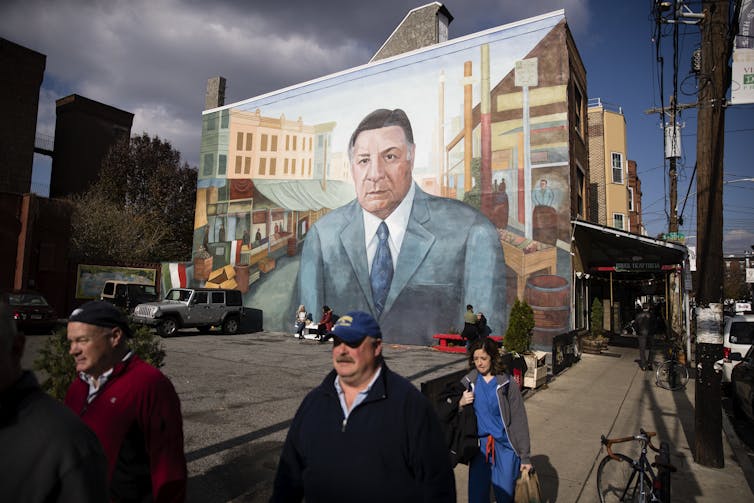
Large mural depicting man in blue suit and tie covers entire side of row home
A large mural in South Philadelphia that paid tribute to Frank Rizzo was painted over in June 2020.
AP Photo/Matt Rourke

Redistributive vs. identity populism

Despite the lopsided attention Trump’s social and cultural populism receives, a kind of progressive, redistributive populism persists in many American cities. This populism promises a redirection of resources from elites and toward working people.

In Philadelphia in 2023, the multicultural, left-populist Working Families Party won the two at-large seats reserved for minority-party representation in the city’s legislature. Currently, Zohran Mamdani’s upstart campaign for mayor of New York seems to be reviving a long tradition of progressive urban populism.

Redistributive populism, however, remains at odds with the identity populism once championed by Rizzo and now by Trump. While the Trump administration’s policies may promise social and cultural victories, they have done little to affect the economic prospects of working-class Americans.

Read more of our stories about Philadelphia.

The Conversation

Timothy J Lombardo does not work for, consult, own shares in or receive funding from any company or organization that would benefit from this article, and has disclosed no relevant affiliations beyond their academic appointment.

ref. How Frank Rizzo, a high school dropout, became Philadelphia’s toughest cop and a harbinger of MAGA politics – https://theconversation.com/how-frank-rizzo-a-high-school-dropout-became-philadelphias-toughest-cop-and-a-harbinger-of-maga-politics-263229

You can be exposed to PFAS through food, water, even swimming in lakes – new maps show how risk from ‘forever chemicals’ varies

Source: The Conversation – USA (2) – By Ruohao Zhang, Assistant Professor of Agricultural Economics, Penn State

Since the 1940s, companies have been using PFAS – perfluoroalkyl and polyfluoroalkyl substances – to make products easier to use, from Teflon nonstick pots to waterproof rain gear, stain-resistant carpet and firefighting foam.

The chemicals’ resistance to heat, oils, stains, grease and water makes them useful. However, that same chemical stability also makes them linger in the environment – and in the human body. Studies have suggested that some types of PFAS can contribute to health harms, including thyroid disease, liver damage and kidney and testicular cancer.

The U.S. Environmental Protection Agency has concluded that there is no safe level of human exposure for two of the most common PFAS compounds: perfluorooctanoic acid (PFOA) and perfluorooctanesulfonic acid (PFOS). It set drinking water standards limiting their acceptable levels in water systems in 2024.

However, drinking water isn’t the only way people are exposed to PFAS today.

Two cows look over a wooden hay trough with a barn in the background.
Cattle have been found with high levels of PFAS, including at this farm in Maine. Sludge used on crops has been tied to the spread of PFAS.
Adam Glanzman/Bloomberg via Getty Images

To better understand the ways people are being exposed to PFAS, we and a team of colleagues examined four exposure pathways – drinking water contamination, food contamination, recreational exposure and industrial emissions, such as from Superfund sites, airports, military bases and manufacturing plants – across three Great Lakes states: Michigan, New York and Pennsylvania.

An interactive map and online dashboard we created lets residents look up their communities’ known PFAS exposure risks. The results offer insights for people across the United States who share similar living environments, dietary choices and lifestyles.

PFAS exposure patterns

The extensive use and improper disposal of products containing these “forever chemicals” have led to their widespread presence in the environment. They have made their way into farm fields, drinking water and water bodies, where fish and shellfish can ingest the chemicals and humans can swim in PFAS-contaminated water.

In an analysis of the three states, we found that the average person consumes about three times more PFAS through food than through drinking water.

We looked at 19 food items in which PFAS have been detected, including seafood, such as clams, crab and shrimp, which have the highest levels of PFAS. Other foods beyond these 19 may also expose people to PFAS, so the totals may underestimate the actual intake.

For water contamination, we found that PFAS had been detected in 1,272 out of 2,593 tested public water facilities in Michigan, New York and Pennsylvania, collectively serving a population of about 23 million people.

We also found distinct patterns of PFAS exposure.

Among the three states, Pennsylvania has the highest risk of PFAS exposure from food and water, while Michigan has the lowest. Michigan’s lower risk likely reflects its significantly lower PFAS contamination in drinking water, which may be due to its PFAS water-testing and regulation.

Michigan map is mostly light colors, but with darker reds in the Upper Peninsula.
Areas of Michigan believed to have higher PFAS risk through food are in dark red, according to the PFAS Exposure Risk Dashboard. Overall, Michigan’s PFAS exposure from food is believed to be low compared with other Great Lakes states.
PFAS Exposure Risk Dashboard

Notably, our analysis found that most dietary PFAS risk comes from butter, olive oil and shrimp. Seafood typically contains much higher PFAS concentrations than butter or olive oil – polluted rivers bring these chemicals into marine environments, and fish and shellfish gradually accumulate and magnify it through the food chain. However, substantially greater consumption of butter and olive oil makes those products potentially large dietary sources of PFAS.

It’s important to note that not all sources of the foods we examined have the same PFAS risk, and the analysis did not assess the health effects from the PFAS exposure levels detected.

We found that intake of foods that can contain PFAS is higher in Pennsylvania and New York than in Michigan, driven largely by greater seafood and olive oil consumption, likely reflecting the influence of Mediterranean cuisines. Higher seafood consumption there is consistent with proximity to the coast.

Comparing Detroit, Philadelphia and NYC

Zooming in on individual cities offers more insight:

Detroit has an above-average risk of PFAS exposure through food compared with other locations in Michigan, and the highest amount among the three major urban centers we looked at. Ground beef and baked tilapia, two products in which PFAS has been detected in the North Central regional market, contribute to Detroit’s relatively higher food-related PFAS exposure risk compared with cities in other states, in addition to high consumption of bacon, sausage and crab.

Detroit’s public drinking water hasn’t been tested for PFAS, so residents’ risk level from water is unknown.

New York City has minimal PFAS exposure risk from its public drinking water and much lower PFAS levels than surrounding suburban areas. Its risk of dietary intake of PFAS comes primarily from consumption of butter and olive oil.

A map of the Philadelphia area showing some areas with high water PFAS levels, mostly in suburban areas around the city
Areas of the Philadelphia region with high PFAS readings are in dark blue. Gray areas lack data.
PFAS Exposure Risk Dashboard

Philadelphia’s public drinking water has also been found to be at minimal risk, with significantly lower PFAS contamination than in surrounding suburban areas. However, it has relatively high consumption of shrimp, bacon and sausage. We found that the city and its region also have a high risk of exposure to PFAS from recreation on water bodies compared with other regions. Studies are only beginning to understand the risks from PFAS exposure through skin.

Among smaller cities, Rochester, New York, and its surrounding area, particularly along Lake Ontario, also stands out for its higher risks from recreational exposure to PFAS compared with other regions. A 2024 study of PFAS in the Great Lakes found that airborne pollution was contributing to contamination in the five lakes, particularly Lake Ontario, along with PFAS from industry-lined rivers.

A map of New York showing dark areas believed to have higher recreation risk, particularly south of Lake Ontario
Areas of western New York, particularly along Lake Ontario, have some of the higher recreational PFAS concerns in New York according to the map.
PFAS Exposure Risk Dashboard

How to reduce your PFAS exposure

In general, we recommend several actions to help mitigate PFAS exposure risk.

Households served by public water systems with high levels of PFAS may want to use drinking water filtration systems.

People can also reduce their exposure by adjusting their dietary choices by eating less of those foods with the potential to have PFAS contamination.

Our dashboard also includes a map of recreational sites near PFAS-contaminated water bodies.

The dashboard reflects the goal of our study – not only to inform, but also to empower individuals and communities to make healthier choices. Local governments and advocacy groups can also use the data to prioritize policies to reduce exposure.

Where to learn more

Several official and unofficial resources are also available to help the public understand PFAS contamination across the U.S.

The EPA created an online PFAS Analytic Tool that shows locations of PFAS contamination in natural water, drinking water systems, and industrial emissions through interactive maps. The Environmental Working Group, a science and advocacy group, provides a map highlighting PFAS-contaminated sites and affected public water systems.

These resources offer valuable insights into contamination locations, but they do not directly assess human exposure or individual risk.

As the research on PFAS continues to develop and policies evolve, the need for information becomes increasingly important for public understanding and prevention. We hope our study inspires people to become more informed and more engaged in protecting themselves and their families from environmental pollution exposure.

Jiahui Guo, a Ph.D. student at Penn State, and Yongwang Ren, a postdoctoral researcher at Kansas State University, contributed to this article.

The Conversation

This project is funded by Illinois-Indiana Sea Grant, Grant Number: NA22OAR4170654-T1-01.

ref. You can be exposed to PFAS through food, water, even swimming in lakes – new maps show how risk from ‘forever chemicals’ varies – https://theconversation.com/you-can-be-exposed-to-pfas-through-food-water-even-swimming-in-lakes-new-maps-show-how-risk-from-forever-chemicals-varies-261632

Hidden treasures of America’s national parks are closer than you might think

Source: The Conversation – USA (2) – By Jeffrey C. Hallo, Professor of Parks, Recreation and Tourism Management, Clemson University

When people think about national parks, they often think about the most famous ones – places like Yellowstone, Yosemite, Denali, Acadia, Glacier, Everglades and the Great Smoky Mountains. These are among the nation’s most sought-after destinations, with awe-inspiring scenery, abundant wildlife and places for adventure and recreation.

Admission is free at most of them, and at the rest, it’s competitive with the cost of a family meal deal at a fast-food joint.

But there is much more to the nation’s park system than just the 63 places formally designated as national parks. The National Park Service also manages nearly 400 other areas designated for their national significance as battlefields, military or historic sites, lakeshores, seashores, monuments, parkways, recreation areas, trails, rivers and preserves.

As a scholar of parks, recreation and tourism who has also published a children’s book about the wonders of the National Park System, I have seen how important these places are to Americans. And when the nation grapples with political divisions, civil unrest, social change or pandemics, these public lands – whether technically national parks or other elements in the wider system – are debated and fought over, protested in and used as an example. But they also provide places to find peace and restoration.

These sites of national significance are in every state in the U.S. – and hold surprising treasures no less wondrous than the big-name destinations, potentially right around the corner from your home.

Cliffs with hollowed-out sections rise above blue water. Trees grow on the clifftops.
Sea caves on Lake Superior provide stunning natural beauty at a national park that’s less well-known than some others.
Royalbroil via Wikimedia Commons, CC BY-SA

Enjoyment at the waterfront

America’s coastlines, shorelines, lakes and rivers are often prime destinations for vacationers, but access to them can be limited by private development, and parking and admission fees can be costly.

National parks help protect wide swaths of public access to these popular destinations and the affordability of visiting them for generations to come. Almost all of these water-focused parks allow swimming, beach or shore access, boating and fishing.

For example, Cumberland Island National Seashore in Georgia is an idyllic island with wild horses, historic mansions, uncrowded beaches and a maritime forest where you can hunt for fossilized shark teeth and camp among the Spanish moss-covered oak trees.

Point Reyes National Seashore in California has tule elk and elephant seal herds, a picturesque red-roofed lighthouse and fog-swept cliffs along the Pacific Ocean. Apostle Islands National Lakeshore in Wisconsin has sea caves to explore on kayaks.

Backcountry exploration

When people seek a break from the pace of modern life and the demands of being digitally connected, national parks contain expanses of backcountry, where signs of civilization are sparse, and where profound natural beauty, adventure and solitude are still available.

In Michigan’s Isle Royale National Park, you can see moose and hear wolves howl in the island’s wilderness. In South Carolina’s Congaree National Park, you can canoe or kayak on backwater creeks among some of the largest and tallest trees in eastern North America.

In Idaho, Craters of the Moon National Monument & Preserve allows visitors to explore an otherworldly volcanic landscape of lava flows, cinder cones and lava tubes. Primitive roads there allow people to drive into the backcountry to experience solitude without hiking.

National parks also offer a break from looking at this world entirely: 44 properties in the National Park Service system are certified as International Dark Sky Parks, where the nighttime environment is protected from invasive light pollution by laws and local regulations.

People walk across a stone bridge toward a wooded area.
At Hot Springs National Park in Arkansas, visitors can walk right from a city center into the park.
Ron Buskirk/UCG/Universal Images Group via Getty Images

A break from urban life

In America’s suburbs, and even in the heart of major cities, national park lands bring history, nature, leisure and urban life together. These parks reinforce the idea that national parks aren’t just for long-distance vacations but rather for daily life, enjoyment and reflection not far from home.

For example, the Mississippi National River & Recreation Area in Minnesota offers roughly 4 million residents of the Minneapolis-St. Paul metropolitan area mostly free access to over 70 miles of the river for all manner of waterborne and shoreline recreation. And just outside of New York City, off Long Island’s south shore, Fire Island National Seashore provides an easy escape to a rare coastal wilderness for undisturbed hikes through dunes and salt marshes.

Hot Springs National Park in Arkansas is one of the only national parks fully integrated into a small city. An area first preserved by Congress for public recreation in 1832 – 40 years before Yellowstone became the first official national park – it offers miles of trails that feel wild, despite their proximity to the downtown area. Its historic Bathhouse Row provides opportunities for bathing in thermal waters, and the park encourages visitors to drink the natural waters at the numerous spring-fed fountains in the town.

If a stronger drink is needed, Hot Springs is the only national park that has a brewery within its boundaries, using the park’s thermal spring water in its beers.

A sign reads 'Stonewall National Monument' next to a fence adorned with rainbow flags.
The Stonewall National Monument in New York City is one of many locations that recognize efforts to improve equality and social justice throughout U.S. history.
AP Photo/Pamela Smith

Lessons from history and culture

The National Park System also preserves America’s history and culture – and reminds people of the country’s collective mistakes and triumphs. The parks help Americans apply the many lessons of history to current issues. Americans can learn what we as a nation and as a collective of people have done – and what we have always yearned to do.

Independence National Historical Park in Philadelphia showcases the birthplace of American democracy, where the Declaration of Independence and Constitution were debated and signed, establishing a new democracy with sweeping goals of equality and opportunity for everyone.

Manzanar National Historic Site in California and Kalaupapa National Historical Park in Hawaii keep alive the stories of forced internments of people who were deemed dangerous or undesirable, reminding Americans that there have been times the nation did not live up to its ideals.

Minuteman Missile National Historic Site in South Dakota and Manhattan Project National Historical Park, with sites in Tennessee, New Mexico and Washington, shed light on the technology and politics of warfare.

And Belmont-Paul Women’s Equality National Monument in Washington, D.C., César E. Chávez National Monument in California and Stonewall National Monument in the heart of New York City – along with many other similar national parks – teach Americans about the generations-long ongoing struggles for civil rights and social justice.

U.S. national parks are more numerous, complex and full of wonder and opportunities for discovery than any one person could fully grasp – whether a self-proclaimed superfan or a credentialed expert. There is always more to discover, with more stories to hear and more places to see and explore.

There are likely lesser-known gems very close by for you to visit. Take a friend, a child or someone who has never been there before. People who use parks love them, and parks supported by love are protected – by all of us.

The Conversation

Jeffrey C. Hallo receives funding from the National Park Service.

ref. Hidden treasures of America’s national parks are closer than you might think – https://theconversation.com/hidden-treasures-of-americas-national-parks-are-closer-than-you-might-think-262585

A first connection can make a big difference when it comes to sticking with a career

Source: The Conversation – USA (2) – By Soon Hyeok Choi, Assistant Professor of Real Estate Finance, Rochester Institute of Technology

People often say that a single spark can light a fire.

In careers, that spark is often a person. It might be someone early in life who cracks open a door, offers encouragement, or quietly shows what success can look like. What’s less obvious is how profoundly that very first connection can shape everything that comes afterward.

Consider 23-time Grand Slam tennis champion Serena Williams. Williams has often spoken about the crucial role played by her first coach – and father – Richard Williams. His belief in her abilities and his willingness to expose her to competitive tennis from an early age ensured she gained experience long before most of her peers. In this, she’s not alone – in sports, a first coach can recognize potential before anyone else does.

Or consider Misty Copeland, the first Black female principal dancer at American Ballet Theatre. At 13, a Boys & Girls Club teacher, Cynthia Bradley, recognized her potential and brought her into formal ballet training; within four years Copeland earned a spot in ABT’s Studio Company. In 2015, she became ABT’s first Black female principal, a milestone built on that early mentorship. Those first advocates opened doors to elite training, scholarships and professional networks that sustained a long, barrier-breaking career.

Anecdotes like these are powerful, but they also raise questions. Do early connections cause long-term success, or do they simply come more easily to people already positioned to succeed? After all, a young athlete with supportive and affluent parents might have access to better training and competition regardless of who their first coach is. This chicken-and-egg problem is hard to untangle – unless you look at a setting where chance plays a role. That’s where my research comes in.

Real estate as a natural laboratory

I’m a professor of real estate finance, and I noticed that the residential real estate brokerage industry can mimic a random experimental setting. Since only a small number of people are active in housing markets at any given time, agents can’t choose exactly who they work with. That means a new agent’s first counterparty broker – that is, the agent on the other side of the deal – depends on who happens to be representing clients at the same time and place. In many cases, that first connection is essentially a matter of luck.

So my colleagues and I analyzed more than 20 years of home sales data from Charlotte, North Carolina, covering more than 40,000 unique real estate agents and 417,000 home sales between 2001 and 2023. We found that new agents who land their first deal with a well-connected power broker are about 25% more likely to still be in the business a year later. Since many agents struggle to close a second deal within a year of their first, this significantly boosts their chances of building a lasting career.

The first handshake and lasting spark

What makes these first encounters so powerful is not only the transfer of skills but also the shaping of confidence and identity. A young musician invited to join an orchestra by a respected conductor begins to see himself as part of that world. A student encouraged by a scientist to enter a national competition begins to imagine a place for herself in research. An athlete who trains with an Olympic medalist begins to visualize competing at the highest levels. In each case, the first connection changes the sense of what is possible.

Our study also found that new agents at the greatest risk of leaving the field – those with fewer early sales – benefit the most from starting out with a well-connected partner. The same dynamic appears in sports, where struggling athletes often flourish under coaches with deep relationships and credibility, and in education, where students on the verge of disengaging can be reenergized by respected teachers who open doors to programs, competitions and networks. These mentors do more than teach. They change trajectories.

The lesson for those just beginning their careers: Seek out people who are respected and generous with their experience. Observing how they work, think and solve problems can shape your own professional identity.

For those who are more established, the takeaway is equally important: Offering a hand to someone new, making an introduction or simply offering encouragement can set in motion a sequence of events that shape a life.

The Conversation

Soon Hyeok Choi does not work for, consult, own shares in or receive funding from any company or organization that would benefit from this article, and has disclosed no relevant affiliations beyond their academic appointment.

ref. A first connection can make a big difference when it comes to sticking with a career – https://theconversation.com/a-first-connection-can-make-a-big-difference-when-it-comes-to-sticking-with-a-career-263892

Scientific objectivity is a myth – cultural values and beliefs always influence science and the people who do it

Source: The Conversation – USA – By Sara Giordano, Associate Professor of Interdisciplinary Studies, Kennesaw State University

People are at the heart of the scientific enterprise. Matteo Farinella, CC BY-NC

Even if you don’t recall many facts from high school biology, you likely remember the cells required for making babies: egg and sperm. Maybe you can picture a swarm of sperm cells battling each other in a race to be the first to penetrate the egg.

For decades, scientific literature described human conception this way, with the cells mirroring the perceived roles of women and men in society. The egg was thought to be passive while the sperm was active.

The opening credits of the 1989 movie ‘Look Who’s Talking’ animated this popular narrative, with speaking sperm rushing toward the nonverbal egg to be the first to fertilize it.

Over time, scientists realized that sperm are too weak to penetrate the egg and that the union is more mutual, with the two cells working together. It’s no coincidence that these findings were made in the same era when new cultural ideas of more egalitarian gender roles were taking hold.

Scientist Ludwik Fleck is credited with first describing science as a cultural practice in the 1930s. Since then, understanding has continued to build that scientific knowledge is always consistent with the cultural norms of its time.

Despite these insights, across political differences, people strive for and continue to demand scientific objectivity: the idea that science should be unbiased, rational and separable from cultural values and beliefs.

When I entered my Ph.D. program in neuroscience in 2001, I felt the same way. But reading a book by biologist Anne Fausto-Sterling called “Sexing the Body” set me down a different path. It systematically debunked the idea of scientific objectivity, showing how cultural ideas about sex, gender and sexuality were inseparable from the scientific findings. By the time I earned my Ph.D., I began to look more holistically at my research, integrating the social, historical and political context.

From the questions scientists begin with, to the beliefs of the people who conduct the research, to choices in research design, to interpretation of the final results, cultural ideas constantly inform “the science.” What if an unbiased science is impossible?

Emergence of idea of scientific objectivity

Science grew to be synonymous with objectivity in the Western university system only over the past few hundred years.

In the 15th and 16th centuries, some Europeans gained traction in challenging the religiously ordained royal order. Consolidation of the university system led to shifts from trust in religious leaders interpreting the word of “god,” to trust in “man” making one’s own rational decisions, to trust in scientists interpreting “nature.” The university system became an important site for legitimizing claims through theories and studies.

Previously, people created knowledge about their world, but there were not strict boundaries between what are now called the humanities, such as history, English and philosophy, and the sciences, including biology, chemistry and physics. Over time, as questions arose about how to trust political decisions, people split the disciplines into categories: subjective versus objective. The splitting came with the creation of other binary oppositions, including the closely related emotionality/rationality divide. These categories were not simply seen as opposite, but in a hierarchy with objectivity and rationality as superior.

A closer look shows that these binary systems are arbitrary and self-reinforcing.

Science is a human endeavor

The sciences are fields of study conducted by humans. These people, called scientists, are part of cultural systems just like everyone else. We scientists are part of families and have political viewpoints. We watch the same movies and TV shows and listen to the same music as nonscientists. We read the same newspapers, cheer for the same sports teams and enjoy the same hobbies as others.

All of these obviously “cultural” parts of our lives are going to affect how scientists approach our jobs and what we consider “common sense” that does not get questioned when we do our experiments.

Beyond individual scientists, the kinds of studies that get conducted are based on what questions are deemed relevant or not by dominant societal norms.

For example, in my Ph.D. work in neuroscience, I saw how different assumptions about hierarchy could influence specific experiments and even the entire field. Neuroscience focuses on what is called the central nervous system. The name itself describes a hierarchical model, with one part of the body “in charge” of the rest. Even within the central nervous system, there was a conceptual hierarchy with the brain controlling the spinal cord.

My research looked more at what happened peripherally in muscles, but the predominant model had the brain at the top. The taken-for-granted idea that a system needs a boss mirrors cultural assumptions. But I realized we could have analyzed the system differently and asked different questions. Instead of the brain being at the top, a different model could focus on how the entire system communicates and works together at coordination.

Every experiment also has assumptions baked in – things that are taken for granted, including definitions. Scientific experiments can become self-fulfilling prophecies.

For example, billions of dollars have been spent on trying to delineate sex differences. However, the definition of male and female is almost never stated in these research papers. At the same time, evidence mounts that these binary categories are a modern invention not based on clear physical differences.

But the categories are tested so many times that eventually some differences are discovered without putting these results into a statistical model together. Oftentimes, so-called negative findings that don’t identify a significant difference are not even reported. Sometimes, meta-analyses based on multiple studies that investigated the same question reveal these statistical errors, as in the search for sex-related brain differences. Similar patterns of slippery definitions that end up reinforcing taken-for-granted assumptions happen with race, sexuality and other socially created categories of difference.

Finally, the end results of experiments can be interpreted in many different ways, adding another point where cultural values are injected into the final scientific conclusions.

Settling on science when there’s no objectivity

Vaccines. Abortion. Climate change. Sex categories. Science is at the center of most of today’s hottest political debates. While there is much disagreement, the desire to separate politics and science seems to be shared. On both sides of the political divide, there are accusations that the other side’s scientists cannot be trusted because of political bias.

RFK Jr, Donald Trump and Dr. Oz seated at a table with flags behind them
It can be easier to spot built-in bias in scientific perspectives that conflict with your own values.
Jim Watson/AFP via Getty Images

Consider the recent controversy over the U.S. Centers for Disease Control and Prevention’s vaccine advisory panel. Secretary of Health and Human Services Robert F. Kennedy Jr. fired all members of the Advisory Committee on Immunization Practices, saying they were biased, while some Democratic lawmakers argued back that his move put in place those who would be biased in pushing his vaccine-skeptical agenda.

If removing all bias is impossible, then, how do people create knowledge that can be trusted?

The understanding that all knowledge is created through cultural processes does allow for two or more differing truths to coexist. You see this reality in action around many of today’s most controversial subjects. However, this does not mean you must believe all truths equally – that’s called total cultural relativism. This perspective ignores the need for people to come to decisions together about truth and reality.

Instead, critical scholars offer democratic processes for people to determine which values are important and for what purposes knowledge should be developed. For example, some of my work has focused on expanding a 1970s Dutch model of the science shop, where community groups come to university settings to share their concerns and needs to help determine research agendas. Other researchers have documented other collaborative practices between scientists and marginalized communities or policy changes, including processes for more interdisciplinary or democratic input, or both.

I argue a more accurate view of science is that pure objectivity is impossible. Once you leave the myth of objectivity behind, though, the way forward is not simple. Instead of a belief in an all-knowing science, we are faced with the reality that humans are responsible for what is researched, how it is researched and what conclusions are drawn from such research.

With this knowledge, we have the opportunity to intentionally set societal values that inform scientific investigations. This requires decisions about how people come to agreements about these values. These agreements need not always be universal but instead can be dependent on the context of who and what a given study might affect. While not simple, using these insights, gained over decades of studying science from both within and outside, may force a more honest conversation between political positions.

The Conversation

Sara Giordano does not work for, consult, own shares in or receive funding from any company or organization that would benefit from this article, and has disclosed no relevant affiliations beyond their academic appointment.

ref. Scientific objectivity is a myth – cultural values and beliefs always influence science and the people who do it – https://theconversation.com/scientific-objectivity-is-a-myth-cultural-values-and-beliefs-always-influence-science-and-the-people-who-do-it-259137

What I’ve learned from photographing (almost) every British wildflower

Source: The Conversation – UK – By Richard Milne, Senior Lecturer in Plant Evolutionary Biology, University of Edinburgh

The author’s project took him all over Britain. Montage images: Pajor Pawel/Shutterstock (background); Richard Milne (flowers)

The wildflowers of Britain include all manner of treasures – yet many people are only aware of a few, such as bluebells and foxgloves. A lot of its other flora are rare because of Britain’s location at the northern, western or even southern edges of their natural geographic – and hence climatic – ranges.

In fact, Britain has over 1,000 native species of wildflower, including 50 kinds of orchid, a few species like sundew that use sticky tentacles to eat insects, and others such as toothwort that live as parasites, plugging their roots into other plants to suck on their sap like botanical mosquitoes. There are even a few species, such as the ghost and bird’s-nest orchids, that extort all their food from soil fungi.


Many people think of plants as nice-looking greens. Essential for clean air, yes, but simple organisms. A step change in research is shaking up the way scientists think about plants: they are far more complex and more like us than you might imagine. This blossoming field of science is too delightful to do it justice in one or two stories.

This story is part of a series, Plant Curious, exploring scientific studies that challenge the way you view plantlife.


I’ve been an obsessive plant hunter since I was seven years old. Wishing to

ref. What I’ve learned from photographing (almost) every British wildflower – https://theconversation.com/what-ive-learned-from-photographing-almost-every-british-wildflower-263656