Terror threat in Nigeria: what the killing of a general tells us about the fight against ISWAP

Source: The Conversation – Africa (2) – By Saheed Babajide Owonikoko, Researcher, Centre for Peace and Security Studies, Modibbo Adama University of Technology

The killing of Nigeria’s Brigadier General Musa Uba, in mid-November 2025, by the Islamic State West Africa Province, ISWAP, risks boosting the morale of insurgents while demoralising Nigerian troops fighting insurgency.

The rank of brigadier general is one of the highest in the military. A brigadier general typically commands a brigade, which consists of approximately 4,000 troops. Uba was the commander of the 25 Task Force Brigade in Damboa local government area of Borno State.

The death of an officer of this rank isn’t unprecedented. But it is rare. Brigadier General Zirkushu Dzarma was killed in November 2021 with four other soldiers when ISWAP rammed a bomb-laden car into his official vehicle.

Uba’s case differs, however. He was captured – and then killed – during active engagement with the insurgents.

The circumstances around his capture and killing provide insights into two aspects of Nigeria’s security challenges. The first is that it tells us a great deal about technological adaptability of ISWAP. The second is that it highlights the weaknesses in Nigeria’s counter-terrorism efforts.

I am a scholar researching terrorism and counter-terrorism in the Lake Chad region and I have been studying ISWAP’s terror activities and Lake Chad countries’ response.

Based on this work I would argue that the capture and killing of Brigadier General Musa Uba shows two things. First, it points to ISWAP’s increased capability in rapid intelligence, surveillance and reconnaissance. Secondly, it underscores poor coordination between Nigeria’s military authority and counter-terrorism units, as well as poor technological improvements despite increased defence spending.

Accounts of what happened

According to media reports, Brigadier General Uba led his troops, along with members of the Civilian Joint Task Force, on a routine patrol in the ISWAP-dominated area of Damboa on 14 November 2025. They encountered an ambush by ISWAP around Wajiroko village. Two soldiers and two civilian task force members were killed.

The brigadier general managed to leave the point of attack but became separated from the forces and found himself alone in ISWAP territory.

He began coordinating his rescue using WhatsApp on his personal phone. As his WhatsApp messages published in the local media revealed, he had agreed with the rescue team on what to do and how to proceed. A helicopter was reportedly deployed to locate and rescue him, but he could not be found.

Three days later, ISWAP said it had captured and killed him. In its media outlet, Amaq, it claimed that as soon as it had received intelligence about the brigadier general, it deployed a group of fighters to search for him.

A key question this raises is: how did ISWAP determine Uba’s location while the army rescue team couldn’t?

I think that technology might have aided ISWAP in quickly detecting his hideout. This is based on evidence that shows ISWAP’s growing use of technology to enhance its activities in recent years. For example, it’s now using drones for intelligence, surveillance, reconnaissance and attacks. In 2022 it released video of military camps and vehicles it filmed using drones to spy on the Nigerian army and the Multinational Joint Task Force in Wajiroko.

How the military responded

News broke in the local media in the early hours of 16 November that the brigadier general leading the ambushed troop was missing. This suggested that ISWAP might have kidnapped him.

The military leadership in Abuja rebutted the news, explaining that the troops were able to fight back and force the terrorists to withdraw. They also debunked the news of the abduction of the brigadier general by ISWAP, saying he successfully led troops back to base.

ISWAP said it had captured him on the morning of 15 November. The Nigerian Army leadership released their rebuttal around 1pm the same day.

Either the military leaders were deliberately covering the truth, or they were not in close and reliable contact with their counter-terrorism units.

This raises questions about communication between the military authority and various units which leads to the issue of the battlefield communication between troops and military authority.

In contemporary warfare and counter-terrorism, troops ought to wear a Global Positioning System (GPS) device attached to their uniforms or equipment.

GPS is one component of the broader positioning, navigation and timing system, which constantly transmits the locations of troops. If something goes wrong, commanders or rescue teams can quickly see exactly where they are without waiting for calls or searching blindly.

This appears not to have been the case.

Between the evening of 14 November, when the troops were ambushed, and early in the morning of 15 November, when the brigadier general was captured, Nigerian military leadership could not evacuate him from the dangerous location despite the short distance of 88km between Maiduguri, the headquarters of Operation Hadin Kai, and Damboa.

The most likely explanation for this is that it didn’t have the necessary intelligence to do so.

This raises the question of whether Nigeria’s military has been investing enough in its technological capabilities. The country invests heavily in the military. In the 2025 budget, 6.57 trillion naira (US$4.5 billion) – about 12.45% of the total budget – was approved for security and defence. The question is whether this money is being spent in ways that equip the military to fight ever-more sophisticed insurgency groups.

With the gradual shift in terrorism and counter-terrorism towards a technology war, the Nigerian military authority must understand that investing in technological capabilities, including tracking technology, is not a luxury. It is a necessity.

The Conversation

Saheed Babajide Owonikoko does not work for, consult, own shares in or receive funding from any company or organisation that would benefit from this article, and has disclosed no relevant affiliations beyond their academic appointment.

ref. Terror threat in Nigeria: what the killing of a general tells us about the fight against ISWAP – https://theconversation.com/terror-threat-in-nigeria-what-the-killing-of-a-general-tells-us-about-the-fight-against-iswap-270644

Africa’s power grabs are rising – the AU’s mixed response is making things worse

Source: The Conversation – Africa (2) – By Richard Fosu, Lecturer in International Relations, Monash University

Hardly a month goes by without news of another unconstitutional change of government on the African continent.

These can take one of three forms.

The first is a military coup d’état or violent change of (democratically) elected government. The second is the refusal of an incumbent government to relinquish power after losing an election. And finally, manipulating constitutions to win or extend term limits of an incumbent government.

We study peace and conflict in Africa, as well as African Union law. We set out these three categories in a paper we published in 2023. In it we analysed unconstitutional changes of government in Africa between 2001 and 2022.

We found that there had been 20 coup d’états, six instances of constitutional manipulation and four attempts by incumbents to hang onto power after losing elections.

These patterns have persisted since the publication of our study. The most recent was the military takeover in Guinea-Bissau in late November 2025.

With the persistence of unconstitutional changes of government, particularly what has been described as a coup resurgence in Africa, we analysed the African Union’s stance on these three forms of regime change.

The African Charter on Democracy, Elections and Good Governance of 2007 prohibits unconstitutional changes of government. It prescribes sanctions to restore constitutional order when they occur.

We found that for the majority of coup d’états (17 out of 20 in our dataset), the AU was strict in enforcing the sanctions prescribed by the charter to restore constitutional order. However, its response to incumbents’ attempts to hang onto power after losing elections and constitutional manipulations to extend term limits has been mixed at best.


Read more:
Presidential term limits help protect democracy – long ones can be dangerous


These findings led us to look at how the AU can strengthen continental democratic mechanisms to prevent the so-called African coup belt from widening further.

We conclude from our findings that the AU needs to do two things.

Firstly, avoid unconstitutional changes of government. The way to do it is to:

  • foster a true democratic culture in African states

  • set clear rules on matters such as constitutional changes that are often manipulated by incumbents to stay in power

  • enforce these rules without fear or favour.

Secondly, the AU, the Economic Community of West African States (Ecowas) and other regional bodies must apply firm sanctions to civilian leaders who manipulate the law to stay in power, just as they do to military coup makers.

A history of coups

The euphoria that swept across Africa following independence from European colonial rule in the late 1950s and 1960s was short-lived.

Many African countries plunged into decades of political instability, socioeconomic crises and civil wars. One of the major factors that drove this period was the lack of strong systems of democratic participation and peaceful transfers of power.

With no meaningful space for inclusive political participation and peaceful transitions, military coups and countercoups, rebel movements and other violent means of ascending power became the norm.

Between 1956 and 2001, there were 80 successful coup d’états, 108 failed coup attempts and 139 coup plots in sub-Saharan Africa.


Read more:
Coups in west Africa have five things in common: knowing what they are is key to defending democracy


In 2000, African leaders decided at a summit in Togo to adopt the Lomé Declaration. This condemned coup d’états and other unconstitutional changes of government. It was the first continental instrument to lay out a framework for a collective African response to unconstitutional changes of government.

This was followed by the 2007 African charter on democracy and the Malabo Protocol on an African criminal court in 2014.

These three instruments provide for various sanctions targeted at African states and individuals complicit in breaching democratic principles.

Despite these, several African states have still recorded transitions of power that are unconstitutional. And the AU’s response has been mixed.

The AU’s mixed response

These are some of the examples we identified.

In 2010, the AU supported an international effort to remove Laurent Gbagbo after he refused to hand over power after losing elections in Côte d’Ivoire.

Yahya Jammeh’s refusal to step down from power after losing elections in 2016 in The Gambia was also met with a stern response from the AU. It said it “will not recognise” Jammeh. Ecowas considered “removing him using mililtary force” if he refused to hand over power peacefully.

But there have been some notable failures to take action.

For instance, Ali Bongo’s flawed electoral win in Gabon in 2016 did not attract concrete action from the AU. Nor was any action taken over the delayed elections in the Democratic Republic of Congo under Joseph Kabila in 2018.


Read more:
Who do Africans trust most? Surveys show it’s not the state (more likely the army)


The most glaring failure in building democratic principles in Africa has been the lack of sanctions from the AU when incumbents manipulate constitutions to extend term limits.

From Burundi to Côte d’Ivoire, through Togo to Zimbabwe, we found no evidence in our dataset where the AU has directly responded to instances of constitutional manipulations.

Yet, in recent history, constitutional manipulations have been the major precipitants of military interventions. Recent coups in Gabon, Guinea, Chad and Sudan were all preceded by constitutonal manipulation to extend or abolish term limits.

We found that when the democratic space shrinks and people feel they have no way to express dissent, the risk of popular uprisings increases. The military often seizes on these moments to intervene.

What needs to happen

The continental treaties on democracy and good governance require strict adherence to democratic principles and respect for the principles of democratic changes of government.

For them to be effective, the following steps need to be taken.

Firstly, democratic principles must be clearly defined. For instance, does amending a constitution to abolish presidential term limits to benefit an incumbent violate these principles? How about engineering the disqualification of opposition candidates through machinations like politically motivated prosecutions?

Secondly, clear rules must be established on matters like term limits.

Thirdly, the AU, Ecowas and other regional bodies must stop coddling pseudo-democrats whose conduct invites coups. They must stop supervising and endorsing sham elections that keep these leaders in power.

Finally, the AU can demonstrate its commitment to democracy and good governance by refusing to reward autocrats. This could mean not appointing autocrats to important bodies, such as the AU Peace and Security Council (which is charged with monitoring democracy and good governance on the continent), or awarding them chairmanship positions.

Dr Christopher Nyinevi, who works with the Ecowas Court of Justice in Abuja, Nigeria, is a co-author of this article.

The Conversation

Richard Fosu does not work for, consult, own shares in or receive funding from any company or organisation that would benefit from this article, and has disclosed no relevant affiliations beyond their academic appointment.

ref. Africa’s power grabs are rising – the AU’s mixed response is making things worse – https://theconversation.com/africas-power-grabs-are-rising-the-aus-mixed-response-is-making-things-worse-271137

South Africa’s water, energy and food crisis: why fixing one means fixing them all

Source: The Conversation – Africa – By Thulani Ningi, Research associate, University of Fort Hare

South Africa faces serious water, energy and food problems. Drought, overuse and ageing infrastructure strain water supplies. Coal-fired electricity is not sustainable in the long term and causes high greenhouse gas emissions. Tens of millions of people can’t afford enough food because of rising prices. These crises are interconnected: water is needed to grow food and cool power plants; and energy is needed to pump and treat water and grow food. Problems in one area affect the others. Agricultural economists Thulani Ningi and Saul Ngarava and environmental law specialist Alois Mugadza were part of a team that researched uncoordinated funding and planning in food, water and energy. They explain what needs to change.

What are South Africa’s water, energy and food problems?

Water: Millions of South Africans still don’t have reliable access to clean water, proper toilets, or steady electricity.

The country has limited water sources, and has experienced changing climate (floods and drought).

Energy: The country suffered from regular power cuts between 2007 and 2024.


Read more:
Woman-headed households in rural South Africa need water, sanitation and energy to fight hunger – G20 could help


A big part of the problem is that South Africa still depends heavily on coal for energy. The transition to green energy is slow and largely depends on individuals, businesses and families to buy solar systems. However renewables are now cheaper in many parts of the country.

Food insecurity: High levels of hunger, with about one in four families going to bed hungry, show how the system isn’t working well. About 23% of children in South Africa live in severe food poverty.

How are food, energy and water funded now?

Apart from receiving government funding, these sectors are funded by institutions like the World Bank, European Investment Bank and African Development Bank, as well as local institutions such as the Public Investment Corporation and Land Bank.

Our research found that funding decisions about water, energy and food are usually made separately.


Read more:
Africa needs to manage food, water and energy in a way that connects all three


This makes it difficult to get funding for projects that could solve problems across all three areas at once. For example, using solar power to pump water for irrigating crops could help with energy, water and food needs all at the same time.

Our research found that one of the main funding problems is that the current financing model is highly centralised. Decisions are taken in national offices about local projects. Big institutions like the Public Investment Corporation and Land Bank dominate decision-making.

Communities are rarely consulted, even though they understand their own challenges in managing drought or securing food best. They’re also not chosen to lead projects.

In addition, international funding tends to go towards big infrastructure projects, rather than helping local communities get basic services like clean water and toilets.


Read more:
South Africa’s scarce water needs careful management — study finds smaller, local systems offer more benefits


Another problem is that local municipalities sometimes lack the technical capacity, skilled personnel and financial management systems to deliver effectively. For example, a national plan to roll out solar-powered water pumps in small towns might not happen if the municipalities lack the ability to procure the pumps or maintain them.

Many municipalities are also mired in corruption and mismanagement, which undermines their ability to act on plans or use funds appropriately.

The current financing model slows down progress, wastes resources, and fails to build the resilience needed for a just transition, away from coal and towards renewable energy.

How should water, energy and food projects be funded?

Water, energy and food should be funded through financing hubs. These could pool funding from different sectors and sources specifically to support integrated projects.

Development finance institutions should also use blended finance, which means combining public and private money, to fund climate-friendly infrastructure. In practice, this works by using government or donor funds to reduce the risk for private investors. This makes solar energy, water systems, or sustainable farming projects more attractive to private investors.


Read more:
Development finance: how it works, where it goes, why it’s needed


We also suggest that decentralised funding instruments be set up. These include:

  • Provincial green funds – locally managed public funds that support environmentally friendly projects, like renewable energy or sustainable farming, within a specific province.

  • Local water, energy and food financing trusts – these would fund projects that meet the needs of specific communities.

  • Water, energy and food communities – there should be localised funding mechanisms allowing communities to self-finance and self-govern their own initiatives. Communities could come together and decide on projects, and finance these themselves. But a proper framework needs to be in place to prevent abuse of finance going to these initiatives.

  • Community development finance institutions – locally rooted financial organisations that provide loans and support to underserved communities for projects like small businesses, housing and basic services.

Banks and government agencies should check how big projects affect all three – water, energy and food – before approving a project in one area. Departments should share information, work together on projects, and keep track of money openly. These steps make the system clearer, fairer and easier to understand.

What needs to happen to get there?

Finance institutions must change how they work. Development banks should require different government departments to set up teams that work across departments. This will ensure that food, water and energy projects are rolled out in a coordinated way.


Read more:
African development banks need scale, urgently. Here’s how it can be done


Local communities should have a say in how money is used. This helps make sure funding matches both national plans and the needs of local people. Community-based organisations like stokvels, cooperatives and catchment partnerships should be explored and developed as alternative funding structures.

Finally, development finance institutions should prioritise pilot projects involving women, youth and smallholder farmers. These can highlight how local leadership drives sustainability and equity.

The Conversation

Thulani Ningi received funding for his PhD studies from the South African National Research Foundation. He is also currently employed as a Socio-Economics Manager at Conservation International, working on Behavioural Incentives for Land Transformation and Natural Grasslands research.

Saul Ngarava receives funding from Project Groundwater funded by the Lincolnshire County Council and Department for Environment, Food and Rural Affairs (DEFRA), through the Flood and Coastal Resilience Innovation Programme, which is managed by the Environment Agency, United Kingdom.

Alois Mugadza does not work for, consult, own shares in or receive funding from any company or organisation that would benefit from this article, and has disclosed no relevant affiliations beyond their academic appointment.

ref. South Africa’s water, energy and food crisis: why fixing one means fixing them all – https://theconversation.com/south-africas-water-energy-and-food-crisis-why-fixing-one-means-fixing-them-all-267374

What our missing ocean float revealed about Antarctica’s melting glaciers

Source: The Conversation – Global Perspectives – By Steve Rintoul, CSIRO Fellow, CSIRO

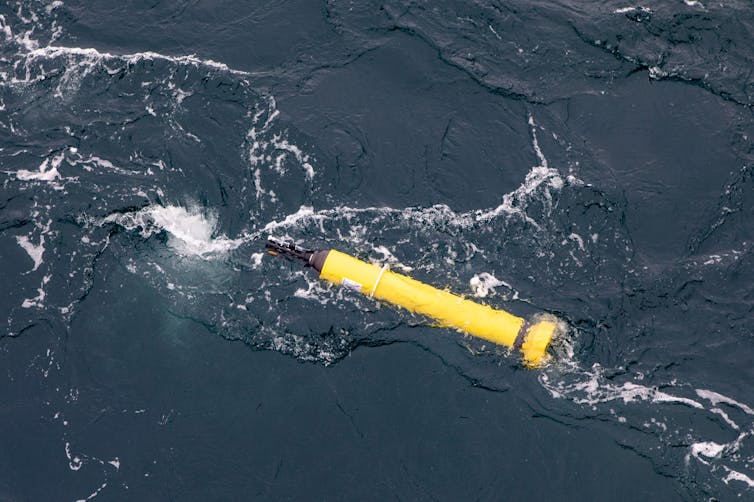
Pete Harmsen, CC BY-ND

Sometimes, we get lucky in science. In this case, an oceanographic float we deployed to do one job ended up drifting away and doing something else entirely.

Equipped with temperature and salinity sensors, our Argo ocean float was supposed to be surveying the ocean around the Totten Glacier, in eastern Antarctica. To our initial disappointment, it rapidly drifted away from this region. But it soon reappeared further west, near ice shelves where no ocean measurements had ever been made.

Drifting in remote and wild seas for two-and-a-half years, the float spent about nine months beneath the massive Denman and Shackleton ice shelves. It survived to send back new data from parts of the ocean that are usually difficult to sample.

Measurements of the ocean beneath ice shelves are crucial to determine how much, and how quickly, Antarctica will contribute to sea-level rise.

Argo floats are autonomous floats used in an international program to measure ocean conditions like temperature and salinity.
Peter Harmsen, CC BY-ND

What are Argo ocean floats?

Argo floats are free-floating robotic oceanographic instruments. As they drift, they rise and fall through the ocean to depths of up to 2 kilometres, collecting profiles of temperature and salinity. Every ten days or so they rise to the surface to transmit data to satellites.

These floats have become a mainstay of our global ocean observing system. Given that 90% of the extra heat stored by the planet over the past 50 years is found in the ocean, these measurements provide the best thermometer we have to track Earth’s warming.

Little buoy lost

We deployed the float to measure how much ocean heat was reaching the rapidly changing Totten Glacier, which holds a volume of ice equivalent to 3.5 metres of global sea-level rise. Our previous work had shown enough warm water was reaching the base of the ice shelf to drive the rapid melting.

To our disappointment, the float soon drifted away from Totten. But it reappeared near another ice shelf also currently losing ice mass and potentially at risk of melting further: the Denman Glacier. This holds ice equivalent to 1.5m of global sea-level rise.

The configuration of the Denman Glacier means it could be potentially unstable. But its vulnerability was difficult to assess because few ocean measurements had been made. The data from the float showed that, like Totten Glacier, warm water could reach the cavity beneath the Denman ice shelf.

Our float then disappeared under ice and we feared the worst. But nine months later it surfaced again, having spent that time drifting in the freezing ocean beneath the Denman and Shackleton ice shelves. And it had collected data from places never measured before.

The Denman Glacier in east Antarctica.
Pete Harmsen, CC BY-ND

Why measure under ice?

As glaciers flow from the Antarctic continent to the sea, they start to float and form ice shelves. These shelves act like buttresses, resisting the flow of ice from Antarctica to the ocean. But if the giant ice shelves weaken or collapse, more grounded ice flows into the ocean. This causes sea level to rise.

What controls the fate of the Antarctic ice sheet – and therefore the rate of sea-level rise – is how much ocean heat reaches the base of the floating ice shelves. But the processes that cause melting in ice-shelf cavities are very challenging to observe.

Ice shelves can be hundreds or thousands of metres thick. We can drill a hole through the ice and lower oceanographic sensors. But this is expensive and rarely done, so few measurements have been made in ice-shelf cavities.

The Denman and Shackleton glaciers.
NASA, CC BY-ND

What the float found

During its nine-month drift beneath the ice shelves, the float collected profiles of temperature and salinity from the seafloor to the base of the shelf every five days. This is the first line of oceanographic measurements beneath an ice shelf in East Antarctica.

There was only one problem: because the float was unable to surface and communicate with the satellite for a GPS fix, we didn’t know where the measurements were made. However, it returned data that provided an important clue. Each time it bumped its head on the ice, we got a measurement of the depth of the ice shelf base. We could compare the float data to satellite measurements to work out the likely path of the float beneath the ice.

These measurements showed the Shackleton ice shelf (the most northerly in East Antarctica) is, for now, not exposed to warm water capable of melting it from below, and therefore less vulnerable.

However, the Denman Glacier is exposed to warm water flowing in beneath the ice shelf and causing the ice to melt. The float showed the Denman is delicately poised: a small increase in the thickness of the layer of warm water would cause even greater melting.

What does this mean?

These new observations confirm the two most significant glaciers (Denman and Totten) draining ice from this part of East Antarctica are both vulnerable to melt caused by warm water reaching the base of the ice shelves.

Between them, these two glaciers hold a huge volume of ice, equivalent to five metres of global sea level rise. The West Antarctic ice sheet is at greater risk of imminent melting, but East Antarctica holds a much larger volume of ice. This means the loss of ice from East Antarctica is crucial to estimating sea level rise.

Both the Denman and Totten glaciers are stabilised in their present position by the slope of the bedrock on which they sit. But if the ice retreated further, they would be in an unstable configuration where further melt was irreversible. Once this process of unstable retreat begins, we are committed. It may take centuries for the full sea-level rise to be realised, but there’s no going back.

In the future, we need an array of floats spanning the entire Antarctic continental shelf to transform our understanding of how ice shelves react to changes in the ocean. This would give us greater certainty in estimating future sea-level rise.

The Conversation

Steve Rintoul receives funding from the Australian Government as part of the Antarctic Science Collaboration Initiative, through
the Australian Antarctic Program Partnership.

Esmee van Wijk receives funding from the Australian Government as part of the Antarctic Science Collaboration Initiative, through the Australian Antarctic Program Partnership.

Laura Herraiz Borreguero receives funding from the Australian Government as part of the Antarctic Science collaboration initiative, through the Australian Antarctic Program Partnership.

Madelaine Gamble Rosevear receives funding from the Australian Research Council.

ref. What our missing ocean float revealed about Antarctica’s melting glaciers – https://theconversation.com/what-our-missing-ocean-float-revealed-about-antarcticas-melting-glaciers-271201

The Ladykillers at 70: how one film turned British whimsy into a darkly comic masterpiece

Source: The Conversation – Global Perspectives – By Ben McCann, Associate Professor of French Studies, University of Adelaide

Silver Screen Collection/Getty Images

Mrs. Wilberforce (Katie Johnson) lives alone in a rickety Victorian house near London’s King’s Cross railway station. She rents a room to Professor Marcus (Alec Guinness), who claims to be a musician, and asks to use the room for practice sessions with his string quintet.

But wait. Professor Marcus and his four associates are in fact plotting an armed robbery and plan to use Mrs. Wilberforce in their dastardly scheme.

What a pleasure it is to revisit The Ladykillers (1955) – a jet-black, peculiarly subversive marriage of genteel English manners and anarchic criminality.

With its cast of eccentrics, dry wit and distinctively British whimsy, this film from London-based Ealing Studios perfectly zig-zags between kind-hearted and creepy. And 70 years on, it is fondly remembered as the closing flourish of the golden age of Ealing comedies.

A comic institution

Ealing Studios, based in the west London suburb of the same name, was founded in 1902, making it the world’s oldest continuously running film studio.

In the late 1940s and early 1950s, under the leadership of Michael Balcon, the studio became known for producing a series of comedies that reflected British values, class tensions and post-war anxieties, often in a light-hearted or ironic way.

Films such as Kind Hearts and Coronets (1949), Passport to Pimlico (1949) and The Lavender Hill Mob (1951) portrayed a particular brand of British humour: ironic, restrained and, above all, socially observant.

These films gently poked fun at the British class system while celebrating quirky individuals and tight-knit neighbourhoods. As Balcon himself later said:

We made films at Ealing that were good, bad and indifferent, but that were indisputably British. They were rooted in the soil of the country.

Earlier successes depicted criminal protagonists whose schemes were both ingenious and only slightly morally dubious. The Ladykillers took this tradition to its logical extreme: the criminals were no longer charming anti-heroes, but grotesque figures, hapless in their execution of the robbery.

The film’s delicious central irony, in keeping with the Ealing ethos, is that the one person capable of undoing the criminal plot is the least likely: a frail old woman with a kettle and a parrot.

A colourful illustrated poster for the 1955 film The Ladykillers, showing cartoonish drawings of five characters above the film title.
The Ladykillers poster art from 1955.
LMPC via Getty Images

Making a masterpiece

The Ladykillers was written by William Rose, who allegedly dreamt the plot and awoke to write it down. This dream-like provenance makes its way into the film.

Scottish-American director Alexander Mackendrick, who had previously worked for Ealing on Whisky Galore! (1949) and The Man in the White Suit (1951), gave the film its distinctive atmosphere of part-grotesque fairy tale and part-suburban farce. As Mackendrick once remarked

the characters are all caricatures, fable figures; none of them is real for a moment.

Mrs. Wilberforce’s house, where most of the action is set, was constructed on an Ealing backlot – a convincing reminder of the sooty urban geography of post-war London.

Prague-born cinematographer Otto Heller used shadow and deep contrast to lend a macabre quality to a comedy that often flirts with horror. A perfect example is when Mrs. Wilberforce opens the door to the professor for the first time.

Alec Guinness’s performance is a revelation. His waxen features, exaggerated false teeth and vulture-like gestures are a far cry from Obi-Wan Kenobi and George Smiley. He turns Professor Marcus into a grotesque parody of a criminal mastermind.

Guinness is abetted by stalwarts such as Herbert Lom and Danny Green. And Peter Sellers gives a nervy performance as Harry, in a role that would mark the beginning of his rise to Hollywood stardom.

A profoundly moral tale

Professor Marcus and his band of misfits mock the pretensions of criminal sophistication, contrasting them with the quiet rectitude of an old woman who represents a vanishing Britain.

They brilliantly capture the contradictions of 1950s London: the post-war optimism laced with paranoia, social deference mingled with subversion, and a genteel facade barely concealing the chaos beneath. It’s little wonder some critics see this Ealing output as deeply political.

Without spoiling the plot, The Ladykillers concludes with a restorative, comic sense of moral order. The criminal enterprise collapses, not due to law enforcement or clever detection, but because of the gang’s own ineptitude and Mrs. Wilberforce’s stubborn innocence and moral clarity.

A beloved film, then and now

The Ladykillers was a critical and commercial smash in the United Kingdom. Critic Penelope Houston applauded its “splendid, savage absurdity”. It was nominated for an Academy Award for Best Original Screenplay and won Katie Johnson a BAFTA for Best British Actress, aged 77.

The film was remade by the Coen Brothers in 2004, this time with Tom Hanks as a Southern gentleman crook. But this version was widely panned, illustrating just how specific the tone of the original was.

Its reputation has only grown since December 1955, with the British Film Institute ranking it among the best British films of the 20th century.

At one point in the film, Professor Marcus cries out

We’ll never be able to kill her. She’ll always be with us, for ever and ever and ever, and there’s nothing we can do about it.

Just like the stubborn, indomitable spirit of Mrs. Wilberforce, The Ladykillers isn’t going anywhere.

The Conversation

Ben McCann does not work for, consult, own shares in or receive funding from any company or organisation that would benefit from this article, and has disclosed no relevant affiliations beyond their academic appointment.

ref. The Ladykillers at 70: how one film turned British whimsy into a darkly comic masterpiece – https://theconversation.com/the-ladykillers-at-70-how-one-film-turned-british-whimsy-into-a-darkly-comic-masterpiece-250781

What’s the difference between a tumour and cancer?

Source: The Conversation – Global Perspectives – By Sarah Sasson, Scientia Senior Lecturer in Medicine (Immunology), UNSW Sydney

National Cancer Institute/Unsplash

The terms tumour and cancer can refer to different types of lumps and bumps. But the terms are often confused and misused – by the general public and even health professionals.

For instance, doctors can use euphemisms such as tumour, mass, lesion or spot when they really mean cancer.

So what’s the difference between a tumour and cancer? And why is it important to use the right terms?

What’s a tumour?

The Oxford dictionary defines a tumour as “any abnormal swelling in or on a part of the body”. They develop in nearly any part, including fat, muscle, bone, nerves and glands.

But not all tumours are cancer, and not all cancers are tumours.

Tumours can be “benign” (not cancer) or “malignant” (cancer).

Some benign tumours are harmless and don’t need treatment. These include lipomas (deposits of fat cells under the skin) or haemangiomas (an overgrowth of blood vessels often looking like reddish-purple birthmarks).

Other benign tumours can cause problems due to their location. These include uterine fibroids, which can cause heavy menstrual bleeding, and benign pituitary adenomas, which can over-produce hormones. Even though these tumours are not cancer, they can be dangerous and doctors sometimes advise surgery to remove them.

What’s cancer?

Cancer develops when normal cells acquire genetic changes, called mutations, that allow them to escape the body’s normal “checks and balances”.

Several hallmarks of cancer were defined more than 25 years ago and include uncontrolled growth and avoiding immune destruction.

Importantly, cancer cells can invade surrounding structures (known as invasion) and spread to other sites (metastasis). These are the key features that distinguish malignant tumours (cancer) from benign ones (not cancer).

Cancers in solid organs – such as the breast, skin or lung – are sometimes called malignant tumours because they form masses. But not all cancers form masses. Blood cancers, such as leukaemia, usually do not.


Read more:
How does cancer spread to other parts of the body?


How are they detected?

Both tumours and cancers can cause lumps and bumps, either detected by the patient (Doc, what’s this lump?) or during investigation for a symptom (Doc, I can’t swallow).

Symptoms differ depending on where the tumour (both benign and malignant) is and what types of cells it is made of. For example, tumours in the gastrointestinal tract (oesophagus, stomach, bowel) can cause symptoms because the mass starts to obstruct the digestive tract.

Imaging such as ultrasound, CT or MRI might be needed to investigate further. The tissue may also be sampled (via a needle or surgery) then a pathologist can look at the sample under the microscope to determine the cell type to determine whether it’s benign or malignant.

How are they managed?

Management can be similar, such as cutting out a benign meningioma (brain tumour) or a malignant basal cell carcinoma (skin cancer).

Management can also be very different. Malignant tumours (cancer) have the potential to spread, and at advanced stages are associated with increased risk of death. So managing cancer is often more time-sensitive and complex.

Treatment for some malignant tumours involves a combination of surgery, radiotherapy and/or systemic treatment, such as chemotherapy, which affects the whole body.

Why it’s important to get the words right

Misusing the words cancer and tumour can be confusing and misleading. This may be because the word “cancer” carries a stigma of sickness and death, even though many cancers have a good outlook.

When talking to patients, it’s important for doctors to “get it right”. Less than half of patients understand that a doctor means cancer if they use euphemisms such as tumour, mass, lesion or spot.

In fact, any type of ambiguous language doctors use when communicating with patients about cancer can increase confusion.

In a nutshell

The terms tumour and cancer are not interchangeable. Solid cancers are tumours and malignant tumours are cancers.

But not all tumours are malignant, and not all cancers are solid.

The Conversation

Megan Barnet receives funding from Boehringer Ingelheim, Takeda Pharmaceuticals, and government-funded grants including the NHMRC.

Sarah Sasson does not work for, consult, own shares in or receive funding from any company or organisation that would benefit from this article, and has disclosed no relevant affiliations beyond their academic appointment.

ref. What’s the difference between a tumour and cancer? – https://theconversation.com/whats-the-difference-between-a-tumour-and-cancer-266363

More women are using steroids – and many don’t know the risks

Source: The Conversation – Global Perspectives – By Samuel Cornell, PhD Candidate in Public Health & Community Medicine, School of Population Health, UNSW Sydney

Scott Webb/Unsplash

When people think of gym goers using steroids, the picture that comes to mind is often of a man pumping iron, like Arnold Schwarzenegger, or modern day shirtless masculinity influencers like “the Liver King”.

But the image is changing. Women now represent a growing share of people who use steroids. And so harm minimisation efforts, currently targeted at men, will need to change too.

It’s not just men

Research shows women are increasingly represented among steroid-using communities, even though precise long-term trend data are limited.

A 2024 systematic review of international studies found about 4% of adult women had used anabolic steroids at least once, up from 1.6% in 2014.

Among women bodybuilders, nearly 17% – around one in six – report using steroids, and rates among women in strength sports or recreational lifting communities are also markedly higher than in the general woman population.

This emerging evidence suggests the gender profile of steroid use is shifting, even if precise historical rates are not available to confirm the exact scale of the increase.

While we don’t have robust national statistics for Australia, data show the weight of steroids seized nationally increased 1,372% between 2011-12 and 2020-21 (from 33.7 kilograms to 496.8kg).

This trend almost certainly mirrors what’s happening overseas: continued, escalating growth of the bodybuilding and fitness communities, including among women in amateur strength sports.

The boom in women’s strength training and weightlifting since 2021 will benefit the physical and mental health of most who partake in it.

But the simultaneous increase in steroid use may be cause for concern without effective harm reduction via education, health promotion and health services engagement.

3 reasons more women are using them

The reasons are complex but three stand out.

First, the rise of strength sports. Women’s participation in powerlifting, weightlifting and bodybuilding has grown rapidly in Australia since the early 2020s.

These sports have opened up new spaces for women to feel strong, confident and physically capable. But they also expose women to online communities where performance-enhancing drugs are normalised.


Read more:
Strongman used to be seen as a super-human novelty sport. Now more women and novices are turning to it


Second, the influence of social media. Platforms such as Instagram, TikTok and YouTube are filled with “fitfluencers” showcasing dramatic transformations. Many of these women are seeking the “perfect body”.

Some openly promote steroid cycles and other chemical shortcuts. Women who follow these influencers – often for training or nutrition advice – can end up in online spaces where performance-enhancing drugs are normal.


Read more:
Get big or die trying: social media is driving men’s use of steroids. Here’s how to mitigate the risks


Third, many women are being encouraged or “brought into” performance-enhancing drugs use by others.

Qualitative research from Australia and Scandinavia shows women often start using steroids through male friends, partners or coaches, who may position these drugs as necessary for progress or competition.

Of course, taking any performance- or image-enhancing drug is not without risks.

The dangers are real

While steroids carry risks for everyone, women may face unique and irreversible side effects.

These include:

  • facial and body hair growth
  • deepening of the voice
  • menstrual changes or infertility
  • breast tissue reduction
  • acne and hair loss
  • clitoral enlargement
  • severe mood changes, including anxiety and irritability, among other symptoms.

And beyond these risks, emerging Australian research shows another danger: many underground steroid products contain toxic contaminants such as lead, arsenic and cadmium – substances linked to cancer, organ damage and cardiovascular disease.

The biggest long-term risks are the ones people rarely talk about: heart disease, stroke, liver damage and mental health problems.

Interviews with women who use steroids show many are less informed than men about these dangers, often because the research has historically focused on male use.

There is also the issue of stigma. Women report being judged more harshly than men when seeking medical help and some avoid health services entirely.

That leaves them more vulnerable to complications.

How do we turn this trend around?

Policing steroid use in isolation won’t work. Nor will repeating the old message that women should simply “just say no.”

The evidence suggests three promising approaches.

1. Better health promotion education that actually speaks to women. Most steroid information online is written for men, by men. Health agencies need to produce clear, accessible, women’s resources that explain risks honestly and without shame.

2. Meeting women where they are. Social media is where many women learn about these drugs, so it should also be where they see accurate information. This may include partnering with credible fitness influencers – especially women – who can explain risks, promote safer training practices and counter misinformation.

3. Reducing stigma in healthcare. Women who use steroids may avoid doctors because they fear judgement. Training clinicians to respond without moralising – the same way we approach other drug-related issues – would make it easier for women to seek support early.

Sonya Weith, a peer educator at Queensland Injectors Voice for Advocacy and Action, provided an expert review of this article.

The Conversation

Samuel Cornell receives funding from an Australian Government Research Training Program Scholarship.

Timothy Piatkowski is affiliated with Queensland Injectors Voice for Advocacy and Action (Vice President & Research Lead) and The Loop Australia (Research Lead QLD),

ref. More women are using steroids – and many don’t know the risks – https://theconversation.com/more-women-are-using-steroids-and-many-dont-know-the-risks-271183

Storms in the Southern Ocean are producing more rain – and the consequences could be global

Source: The Conversation – Global Perspectives – By Steven Siems, Professor in Cloud Microphysics, Monash University

If you ever find yourself on Macquarie Island – a narrow, wind-lashed ridge halfway between Tasmania and Antarctica – the first thing you’ll notice is the wildlife. Elephant seals sprawl across dark beaches. King penguins march up mossy slopes. Albatrosses circle over vast, treeless uplands.

But look more closely and the island is changing. Slopes are becoming boggier. Iconic megaherbs such as Pleurophyllum and Stilbocarpa are retreating.

For years, scientists suspected the culprit was increasing rainfall. Our new research, published in Weather and Climate Dynamics, confirms this – and shows the story goes far beyond one remote UNESCO World Heritage site.

A major – but little observed – climate player

The Southern Ocean plays an enormous role in the global climate system.

It absorbs much of the excess heat trapped by greenhouse gases and a large share of the carbon dioxide emitted by human activity.

Storms in the Southern Ocean also influence weather patterns across Australia, New Zealand and the globe.

Yet it is also one of the least observed places on Earth.

With almost no land masses, only a handful of weather stations, and ubiquitous cloud cover, satellites and simulations struggle to capture what is actually happening there.

That makes Macquarie Island’s climate record from the Bureau of Meteorology and the Australian Antarctic Division exceptionally valuable, providing one of the very few long-term “ground truth” records anywhere in the Southern Ocean.

These high-quality records of the observed daily rainfall and meteorology date back more than 75 years and are commonly used to validate satellite products and numerical simulations.

Rising rainfall

Earlier work has found rainfall at Macquarie Island had risen sharply over recent decades, and ecologists documented waterlogging that harms native vegetation.

But no one has explained how the island’s weather patterns are changing, or directly compared the field observations to our best reconstructions of past weather to assess Southern Ocean climate trends.

To fill this gap, we analysed 45 years (1979–2023) of daily rainfall observations and compared them to a widely used reconstruction of earlier weather, known as the ERA5 reanalysis.

We wanted to understand the meteorology behind the increase in rainfall – that is, whether it was caused by more storms or more intense rainfall during storms. To do this we placed each day in the dataset into one of five synoptic regimes based on pressure, humidity, winds and temperature.

These regimes included low pressure systems, cold-air outbreaks and warm-air advection (the warm air that moves poleward ahead of a cold front).

Storms are producing more rain

Our analysis showed that annual rainfall on Macquarie Island has increased 28% since 1979 – around 260 millimetres per year.

The ERA5 reanalysis, in contrast, shows only an 8% increase — missing most of this change.

The storm track’s gradual move toward Antarctica is well established, and our results show how this larger change is shaping Macquarie Island’s weather today.

Crucially, we found that these changes are not causing the increase in rainfall, as one wet regime (warm air advection) was largely replacing another (low pressure).

Instead, storms now produce more rain when they occur.

A bunch of seals lying in green grass.
Elephant seals on Macquarie Island.
Kita Williams

Why does this matter beyond one island?

If the rainfall intensification we see at Macquarie Island reflects conditions across the Southern Ocean storm belt – as multiple lines of evidence indicate — the consequences are profound.

A wetter storm track means more fresh water entering the upper ocean. This strengthens the different layers in the oceans and reduces the amount of mixing that occurs. In turn, this alters the strength of ocean currents.

Our estimate suggests that in 2023 this additional precipitation equates to roughly 2,300 gigatonnes of additional freshwater per year across the high-latitude Southern Ocean – an order of magnitude greater than recent Antarctic meltwater contributions. And this difference continues to grow.

More rainfall will also affect the salinity of water on the ocean’s surface, which influences the movement of nutrients and carbon. As a result, this could change the productivity and chemistry of the Southern Ocean – one of the world’s most important carbon sinks – in still-uncertain ways.

This increase in rainfall requires a matching increase in evaporation, which cools the ocean, just like our bodies cool when our sweat evaporates. Over the cloudy Southern Ocean, this evaporation is the primary means of cooling the ocean.

Our analysis indicates the Southern Ocean may be cooling itself by 10–15% more than it did in 1979 – simply through the energy cost of evaporation that fuels the extra rainfall. This evaporation is spread over the broader Southern Ocean.

In effect, the Southern Ocean may be “sweating” more in response to climate change.

The next challenge

Macquarie Island is just one tiny speck of land in Earth’s stormiest ocean.

But its long-term rainfall record suggests the Southern Ocean – the engine room of global heat and carbon uptake – is changing faster and more dramatically than we thought.

The next challenge is to determine how far this signal extends across the storm track, and what it means for the climate system we all depend on.


The authors would like the acknowledge Andrew Prata, Yi Huang, Ariaan Purish and Peter May for their contribution to the research and this article.

The Conversation

Steven Siems receives funding from the Australian Research Council.

Zhaoyang Kong does not work for, consult, own shares in or receive funding from any company or organisation that would benefit from this article, and has disclosed no relevant affiliations beyond their academic appointment.

ref. Storms in the Southern Ocean are producing more rain – and the consequences could be global – https://theconversation.com/storms-in-the-southern-ocean-are-producing-more-rain-and-the-consequences-could-be-global-270880

Frank Gehry, the architect of the unconventional, the accidental, and the inspiring, has died at 96

Source: The Conversation – Global Perspectives – By Michael J. Ostwald, Professor of Architectural Analytics, UNSW Sydney

Architect Frank Gehry poses with miniatures of his designs in Los Angeles in 1989.
Bonnie Schiffman/Getty Images

In April 2005, The Simpsons featured an episode where Marge, embarrassed by her hometown’s reputation for being uneducated and uncultured, invites a world-famous architect to design a new concert hall for the city.

The episode cuts to the architect, Frank Gehry (playing himself), outside his house in Santa Monica, receiving Marge’s letter. He is frustrated by the request and crumples the letter, throwing it to the ground. Looking down, the creased and ragged paper inspires him, and the episode cuts to a model of his concert hall for Springfield, which copies the shape of the crumpled letter.

By building Gehry’s design, the people of Springfield hoped to send a signal to the world that a new era of culture had arrived. As it often did, this episode of The Simpsons references a real-life phenomenon, which Gehry was credited with triggering, the “Bilbao effect”.

In 1991, the city of Bilbao in northern Spain sought to enhance its economic and cultural standing by establishing a major arts centre. Gehry was commissioned to design the Bilbao Guggenheim, proposing a 57-metre-high building, a spiralling vortex of titanium and glass, along the banks of the Nervión River.

Mist rises off the river in front of a brilliant glass  and metal building.
Guggenheim Museum, Avenida Abandoibarra, Bilbao, Spain.
Elizabeth Hanchett/Unsplash

Using software developed for aerospace industries, Gehry designed a striking, photogenic building, sharply contrasting with the city’s traditional stone and masonry streetscapes.

Finished in 1997, the response to Gehry’s building was overwhelming. Bilbao was transformed into an international tourist destination, revitalising the city and boosting its cultural credentials and economic prospects. As a result, many cities tried to reproduce the so-called “Bilbao effect” by combining iconic architecture and the arts to encourage a cultural renaissance.

Gehry, who has died at 96, leaves a powerful legacy, visible in many major cities, in the media, in galleries and in popular culture.

An architect’s life

Gehry was born Frank Owen Goldberg in Toronto, Canada, in 1929 and emigrated to Los Angeles in the late 1940s, where he changed his surname to Gehry. He studied architecture and urban planning and established a successful commercial practice in 1962.

It wasn’t until the late 1970s, when he began experimenting with alterations and additions to his own house, that he began to develop his signature approach to architecture. An approach that was both visionary and confronting.

The house looks like a work-in-progress.
Gehry and his son, Alejandro, in the yard in front of his self-designed home, Santa Monica, California, January 1980.
Susan Wood/Getty Images

In 1977, Gehry purchased a colonial bungalow on a typical suburban street in Santa Monica. Soon after, he began peeling back its cladding and exposing its structural frame. He added a jumble of plywood panels, corrugated metal walls, and chain-link fencing, giving the impression of a house in a perpetual state of demolition or reconstruction.

Its fragmented, unfinished expression offended the neighbours but also led to his being exhibited in the landmark 1988 Museum of Modern Art’s Deconstructivist Architecture show.

At this event, Gehry’s house was featured alongside a range of subversive, anti-establishment works, catapulting him to international fame.

The Walt Disney Concert Hall, Los Angeles, California, United States of America.
Tim Cheung/Unsplash

Unlike other architects featured in the exhibition – such as Coop Himmelblau, Rem Koolhaas and Daniel Libeskind – Gehry was not driven by a political or philosophical stance. Instead, he was interested in how people would react to the experience of architecture.

It was only after the Bilbao Guggenheim was completed that the world could see this vision.

Throughout the 2000s, Gehry completed a range of significant buildings, led by the Walt Disney Concert Hall (2003) in Los Angeles, which has a similar style to the Bilbao Guggenheim.

Gehry’s Museum of Pop Culture (2000) in Seattle is a composition of anodised purple, gold, silver and sky-blue forms, resembling the remnants of a smashed electric guitar.

A silver, pink and blue building.
Museum of Pop Culture, Seattle, Washington, United States of America.
Getty Images

The Marqués de Riscal Vineyard Hotel (2006) in Elciego, Spain, features steel ribbons in Burgundy-pink and Verdelho-gold. The Louis Vuitton Foundation (2014) in Paris has 12 large glass sails, swirling around an “iceberg” of concrete panels.

Gehry only completed one building in Australia, the Dr Chau Chak Wing Building (2014) in Sydney. Its design, an undulating form clad in custom-made bricks, was inspired by a crumpled brown paper bag. Marge Simpson would have approved.

Recognition and reflection

The highest global honour an architect can receive is the Pritzker Prize, often called the “Nobel prize for architecture”. Gehry was awarded this prize in 1989, with the jury praising his “controversial, but always arresting body of work” which was “iconoclastic, rambunctious and impermanent”.

While the Pritzker Prize is often regarded as a capstone for a career, most of Gehry’s major works were completed after the award.

A building of metalic ribbons.
Tempranillo vines surround the hotel at Marqués de Riscal winery, Elciego, Spain.
David Silverman/Getty Images

Gehry revelled in experimentation, taking artistic inspiration from complex natural forms and constructing them using advanced technology. Over the last three decades, his firm continued to produce architecture that was both strikingly sculptural and playfully whimsical.

He ultimately regretted appearing on The Simpsons, feeling it devalued the complex process he followed. His architecture was not random; an artist’s eye guided it, and a sculptor’s hand created it. It was not just any crumpled form, but the perfect one for each site and client.

He sometimes joked about completing his home in Santa Monica, even humorously ending his acceptance speech for the Pritzker Prize by saying he might use his prize money to do this. Today, on the corner of 22nd Street and Washington Avenue, partly shielded by trees, Gehry’s house remains forever a work in progress. Its uncompromising yet joyful presence has endured for almost 50 years.

The Conversation

Michael J. Ostwald does not work for, consult, own shares in or receive funding from any company or organisation that would benefit from this article, and has disclosed no relevant affiliations beyond their academic appointment.

ref. Frank Gehry, the architect of the unconventional, the accidental, and the inspiring, has died at 96 – https://theconversation.com/frank-gehry-the-architect-of-the-unconventional-the-accidental-and-the-inspiring-has-died-at-96-266250

Conjoined twin dies after separation surgery

Source: Radio New Zealand

Papua New Guinea conjoined twins.

Papua New Guinea conjoined twins. Photo: Supplied

Rare conjoined twins from Papua New Guinea had a seven-hour operation in Australia to surgically separate them on Sunday, but only one of the boys survived.

Tom and Sawong were rushed into emergency surgery at Sydney Children’s Hospital after Tom began to rapidly deteriorate.

The two-month-olds were medivacced from Port Moresby to Sydney on Thursday following medical advice that they undergo surgery as soon as possible.

A spokesperson for the family, Jurgen Ruh, said Sawong was in a stable condition and the parents were grieving the loss of his brother Tom.

“One body with two souls went into the operating theatre, and after seven hours of procedures we had two bodies and two souls,” Ruh said.

“Sadly we lost Tom but are happy to report that we still have two souls and Sawong has survived the operation.”

Ruh previously told RNZ Pacific the boys’ parents had been through a “rollercoaster” of emotions since the twins were born in a remote village in Morobe province on 9 October.

“They have accepted that they will lose Tom (the weaker twin) and there’s been many tears shed along the way,” he said previously.

The twins were fused at the lower abdomen but have their own limbs and genitals, however they share a single liver, bladder and parts of their gastrointestinal tract.

They also had spina bifida – a neural tube defect that affects the development of a newborn’s spine and spinal cord.

Tom had a congenital heart defect, only one kidney and malformed lungs.

– Published by EveningReport.nz and AsiaPacificReport.nz, see: MIL OSI in partnership with Radio New Zealand